

Historical information
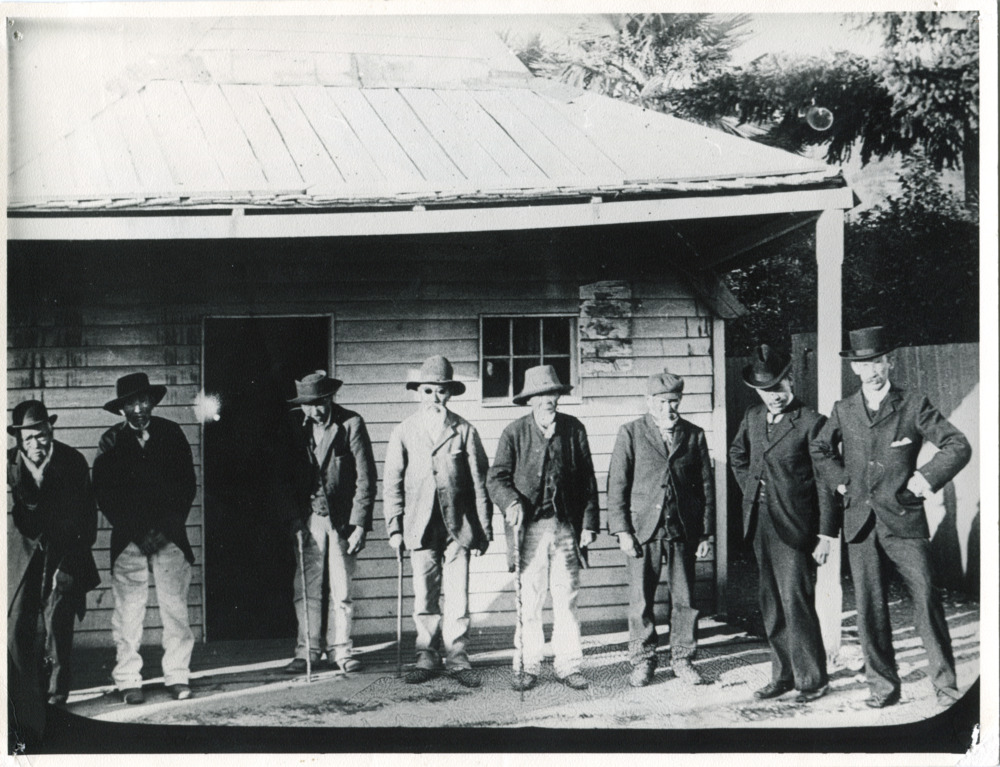
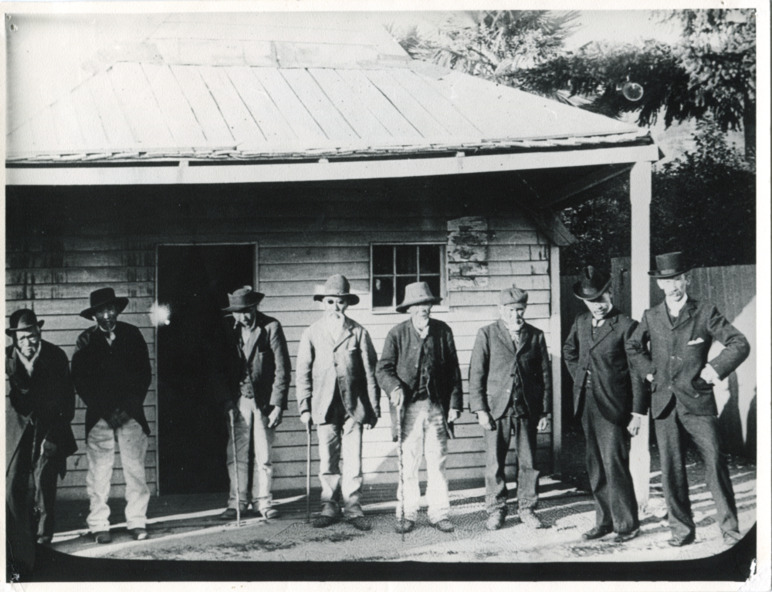
This black and white photograph taken c1900 at a camp in Beechworth, depicts the last six survivors of the Beechworth Chinese mining community. The two men standing on the far right are believed to be local Beechworth men. The man second-from-right is believed to be George Young, a Chinese Presbyterian catechist whose task was to fulfil the Church's remit to evangelise the Chinese population. Beechworth became home to one of the largest Chinese communities in Australia after the 1857 Buckland Riots pushed Chinese miners from their claims and they were forced to relocate their camps. Under the Protectorate system, the Chinese were required to live in camps on the outskirts of town and were subject to many additional controls and regulations. Chinese miners continued to form a large part of the Beechworth population, and surrounds, until gold ran out at the turn of the century.
Significance
This photograph is historically significant for its association with the development of Victoria through the discovery of gold and the first wave of free Chinese immigration to Australia as part of the 1850s gold rush. This photograph is also of social significance for its association with the history of the Chinese community in Beechworth, and the adversity faced by Chinese immigrants during the gold rush as part of a system of Chinese protectorates and segregated camps enforced by the Victorian Government in response to the hostility and violence directed at the Chinese during this period.
Physical description
Black and white rectangular photograph (copy) on matte photographic paper unmounted
Inscriptions & markings
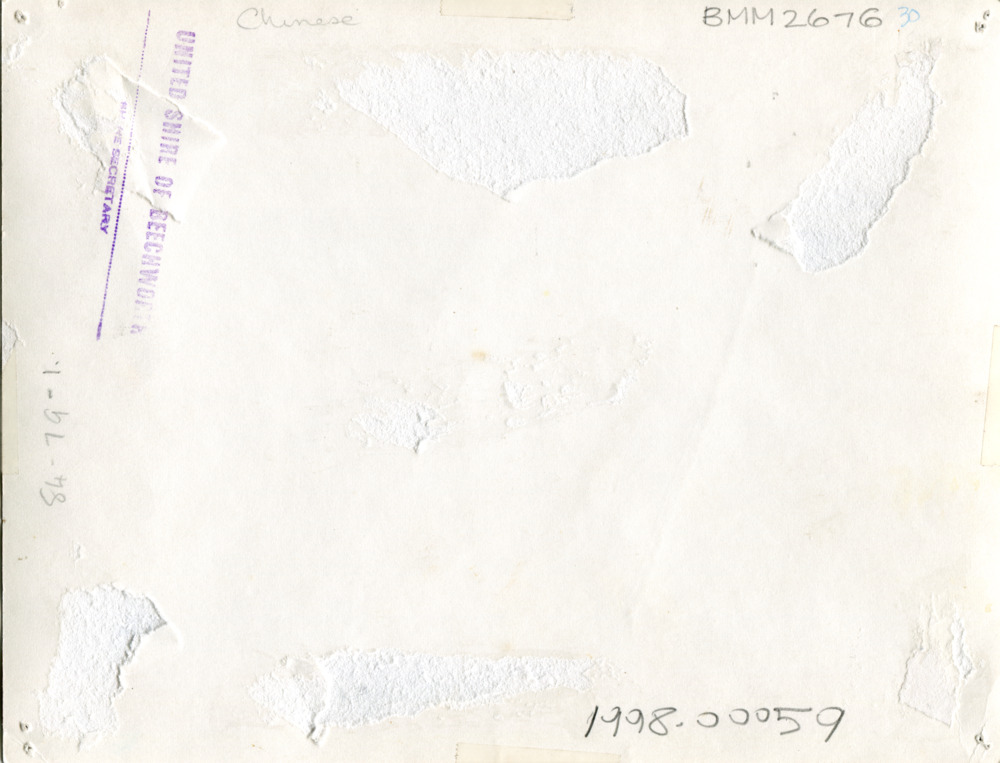
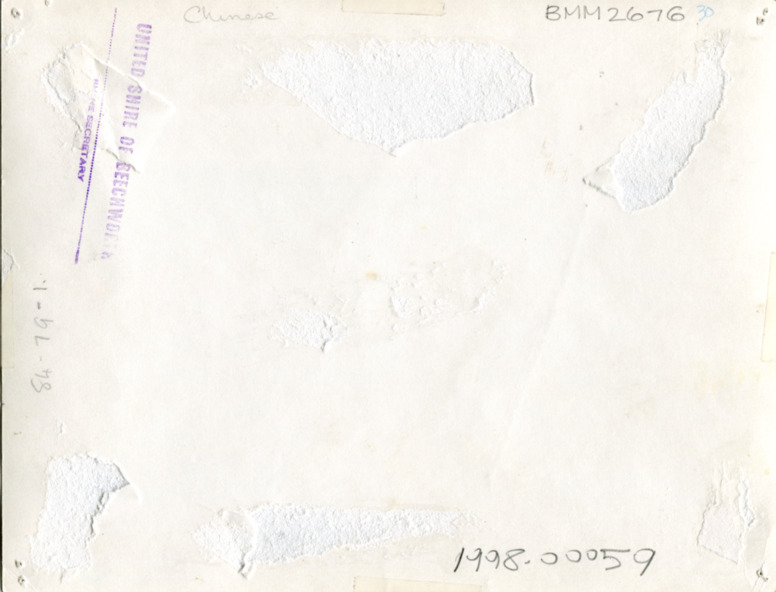
Reverse:
Chinese / BMM2676 /
84-79-1 /
1998.00059 /
'UNITED SHIRE OF BEECHWORTH / SHIRE SECRETARY'
Subjects
References
- Beechworth: A Titan's Field by Carole Woods ISBN/ISSN: ISBN: 0 949905 25 9 Reference to Chinese Minister George Young
- Chinese Heritage: Beechworth
- The Beechworth Gold Rush
- Mining Life