

Historical information
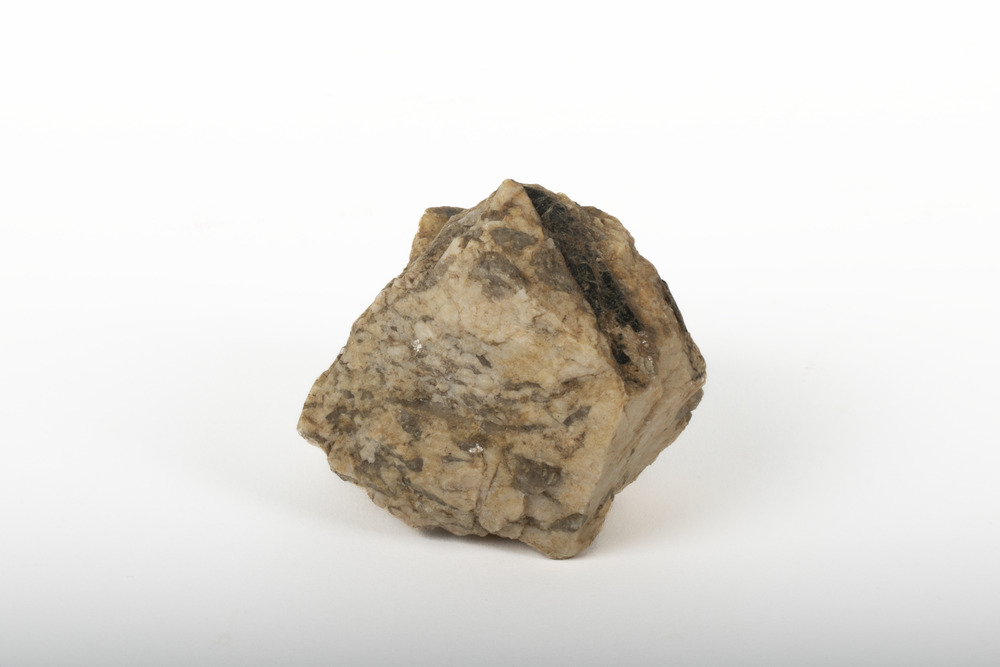
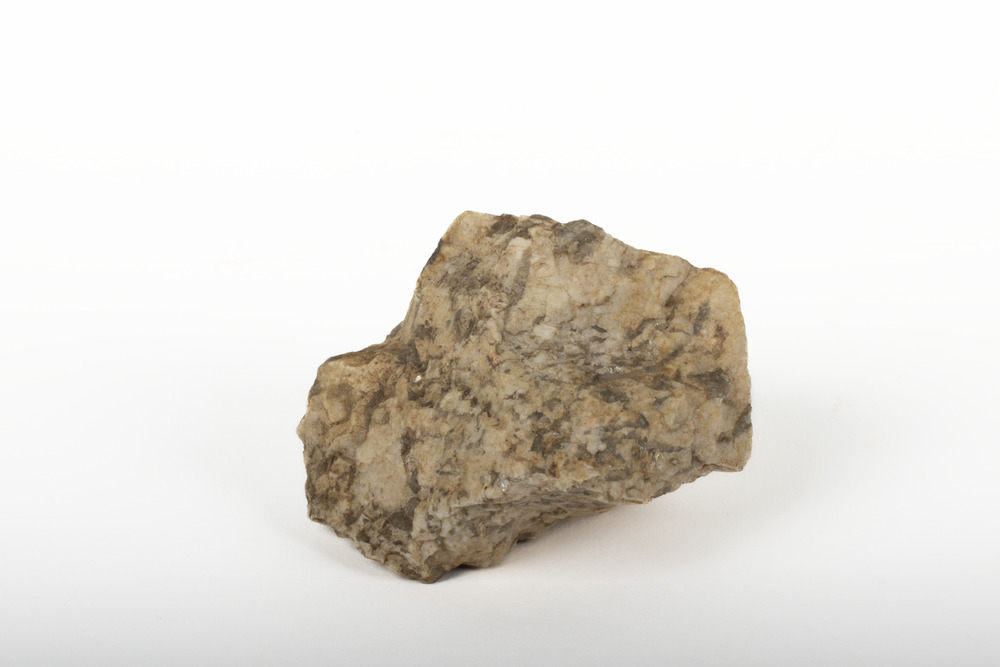
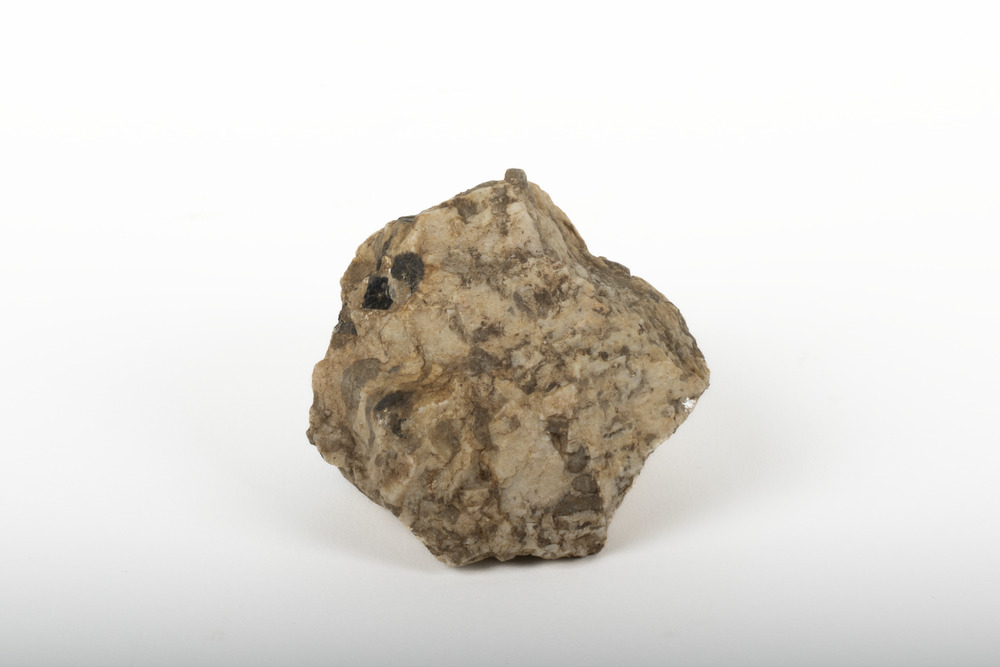
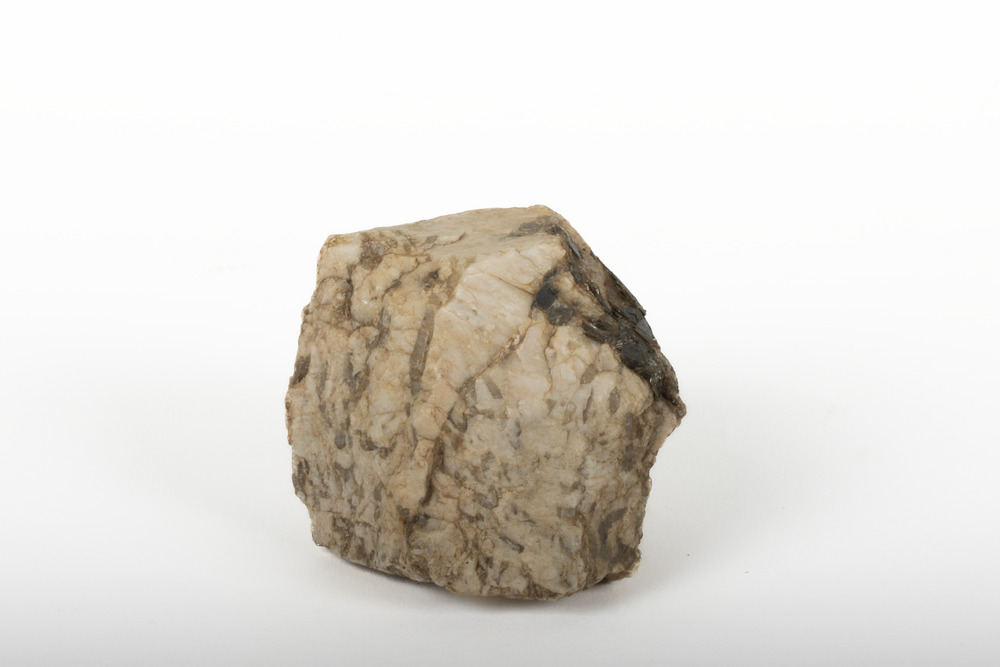
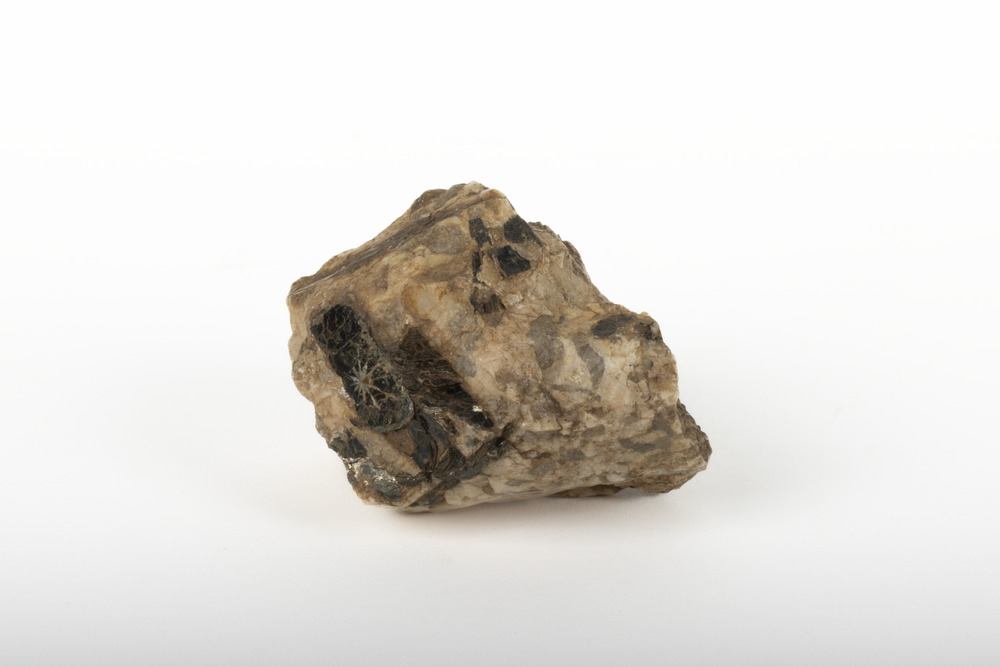
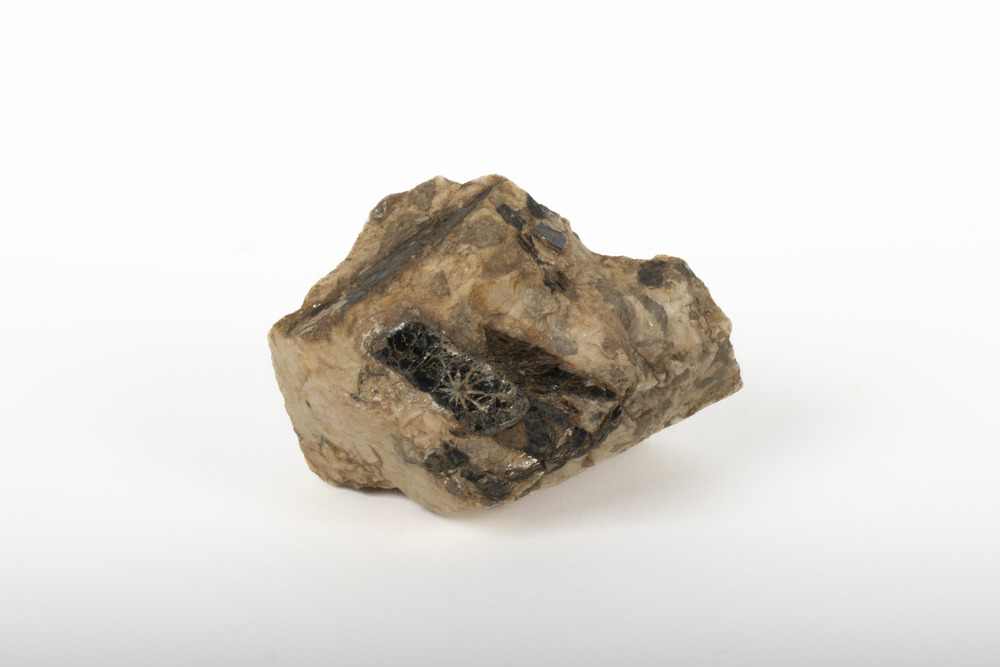
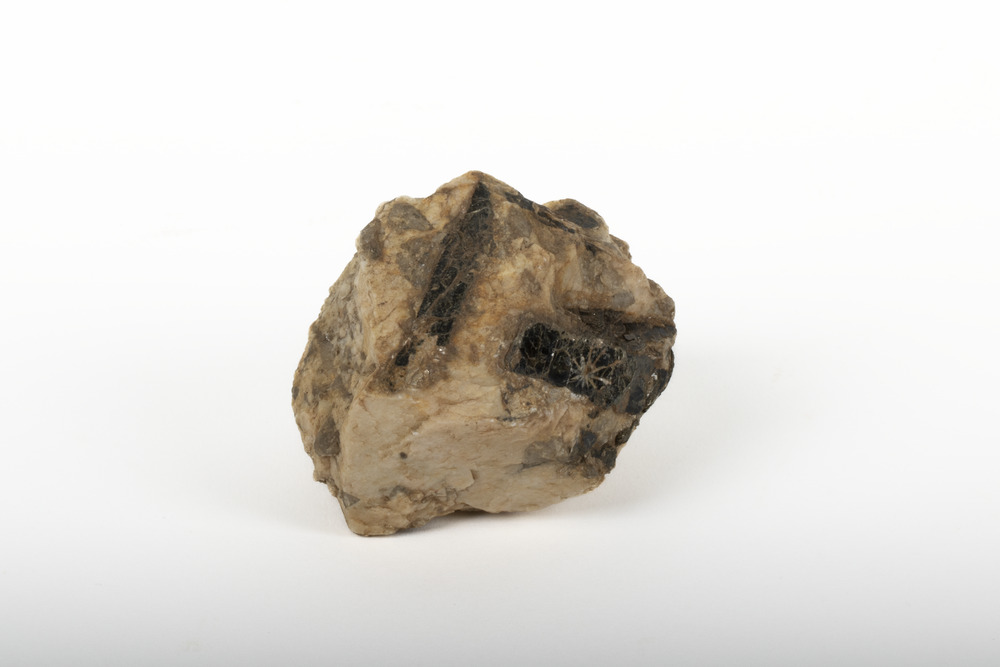
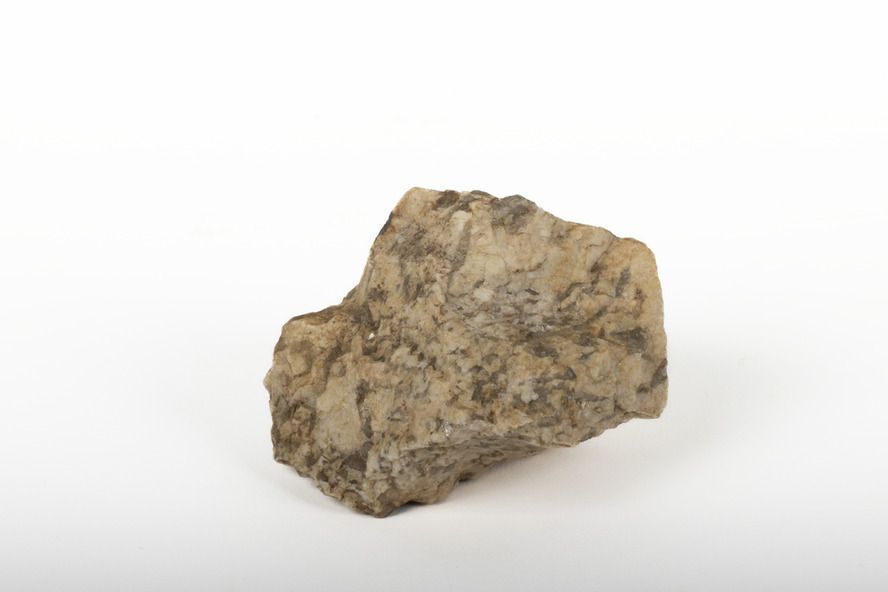
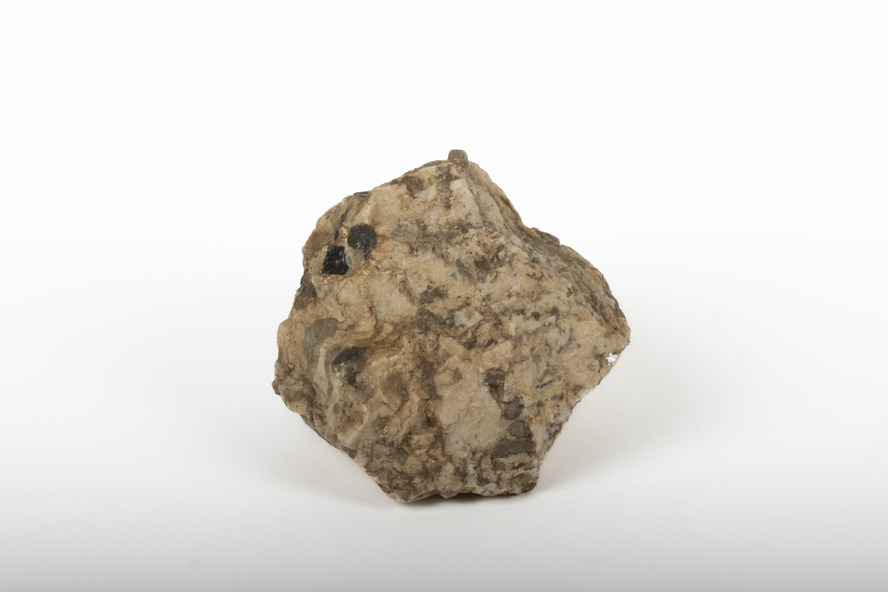
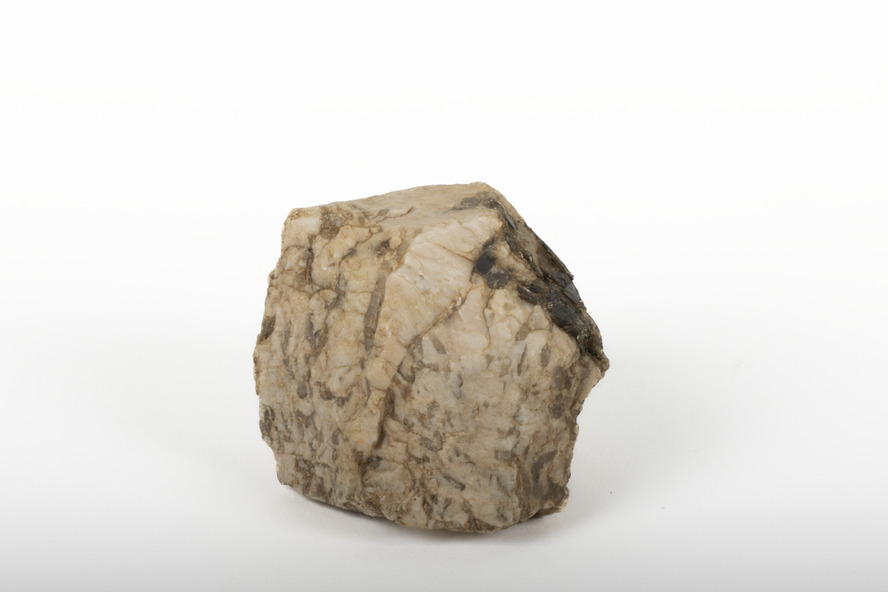
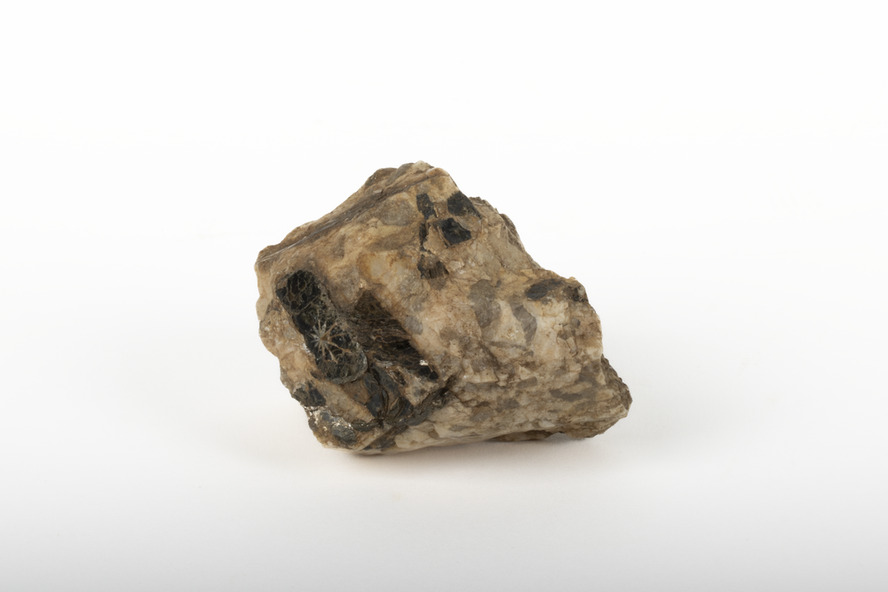
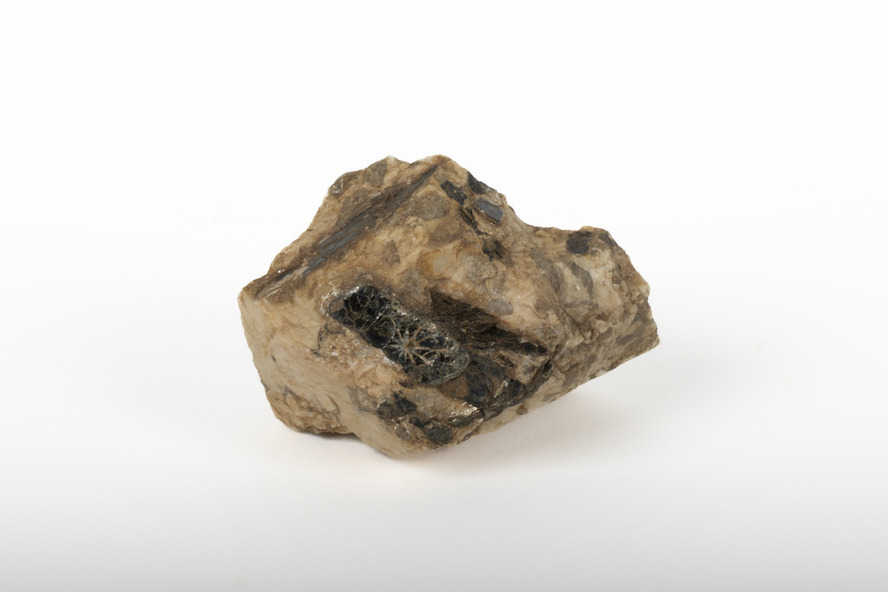
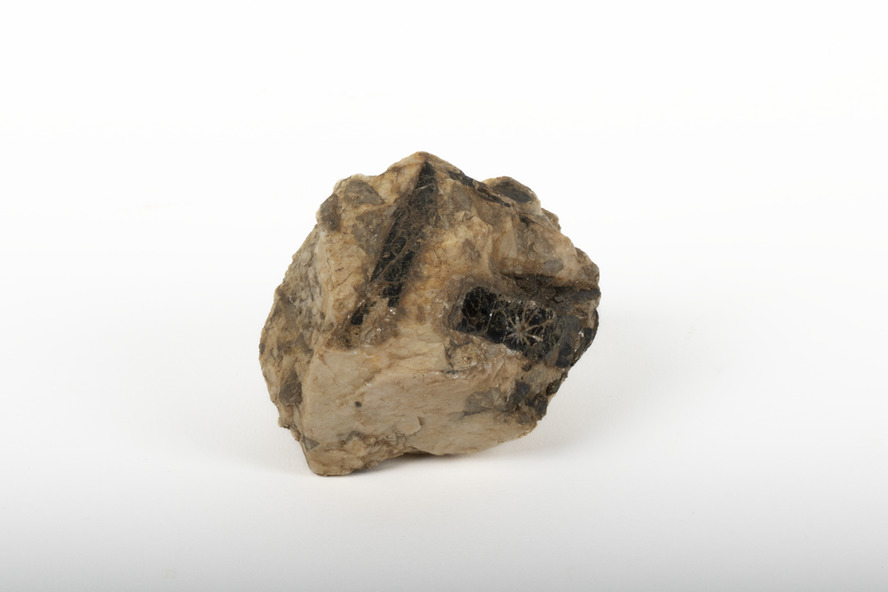
Graphic Granite is an igneous rock formed through magma or lava and is characterised by its unique inter-growth of quartz, crystals and biotite (black mica minerals). Like other granites, graphic granite crystallizes deep within the earth's crust under pressure. When split, graphic granite can reveal interesting structures that may resemble symbols, hieroglyphs or crude attempts at writing.
Significance
This specimen is part of a larger collection of geological and mineral specimens collected from around Australia (and some parts of the world) and donated to the Burke Museum between 1868-1880. A large percentage of these collections were collected in Victoria as part of the Geological Survey in Victoria that began in 1852 in response to the Gold Rush. Collecting these specimens was an important part of Australia's early Geological scientific discovery for mapping the earth's surface.
Physical description
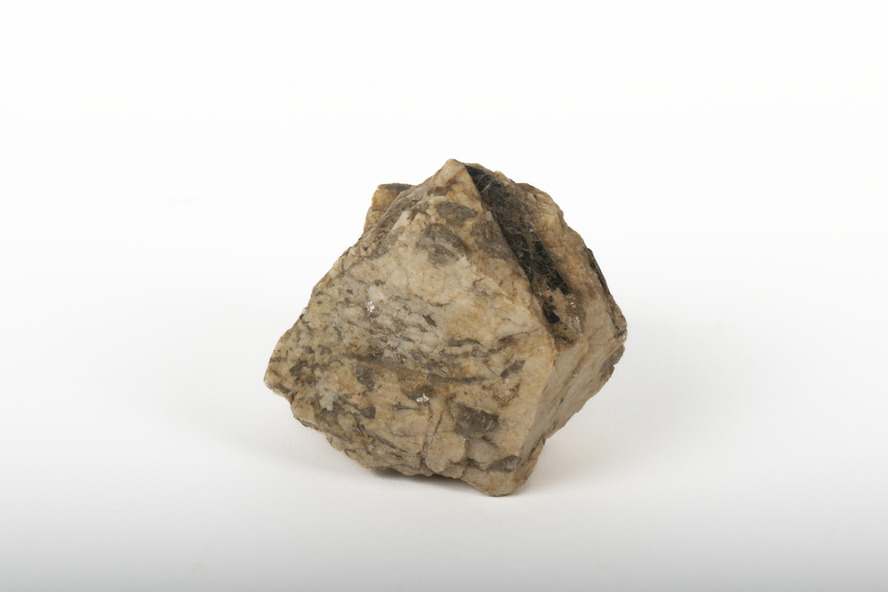
A small textured caramel-coloured rock with brown marbling and indentations revealing pieces of Biotite (Black Mica). A marking with a star-like appearance is visible in the Biotite on the front of the rock.
Subjects
References
- American Mineralogist Description of Graphic granite
- Geology website Description of Biotite