

Historical information
The Forest Fire Danger Index (FFDI) was originally invented by the grandfather of Australian bushfire science, Alan Grant McArthur of the CSIRO, during the 1950s and ‘60s.
Alan lit fires under various weather conditions and calculated their rates of spread under a range of fuel moisture conditions. He published his landmark paper, “Controlled burning in eucalypt forests” in 1962. Leaflet No. 80, as it was known, proved a turning point for forest and fire managers across Australia.
More importantly, Alan was very practical forester and wanted his work to be useful to people in the field, so after several iterations he came up with the now familiar circular slide rule called the Forest Fire Danger Meter (FFDM). The Mk 4 version first appeared in operational use in 1967.
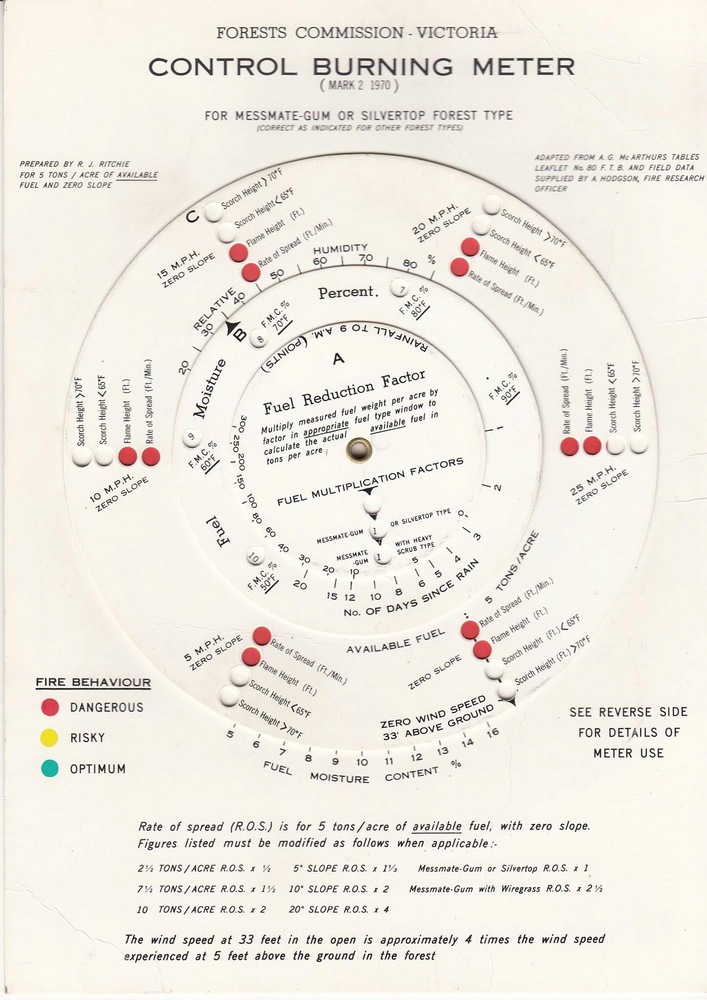
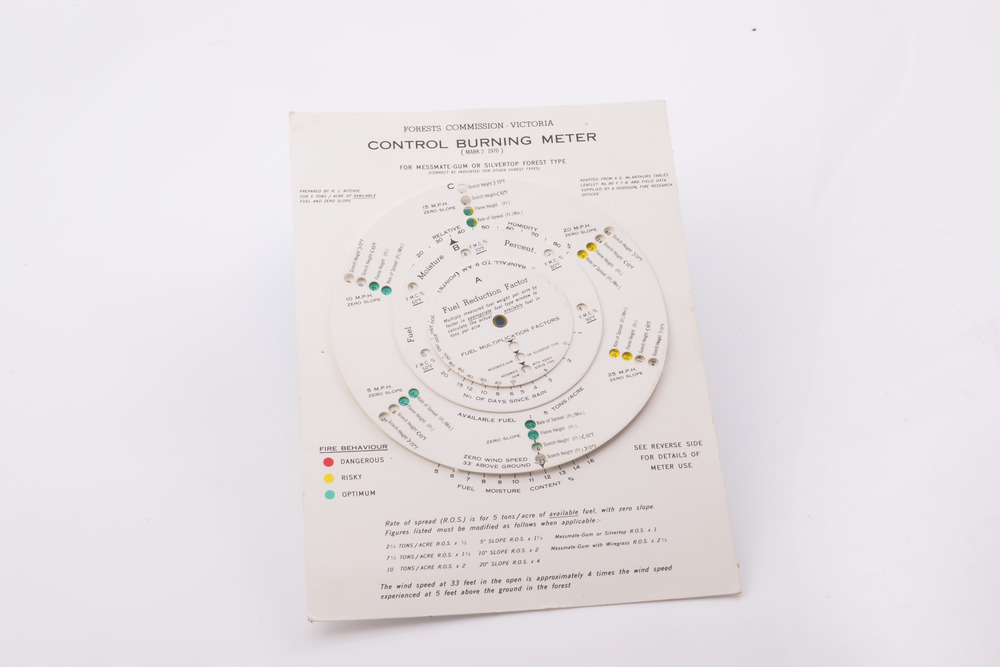
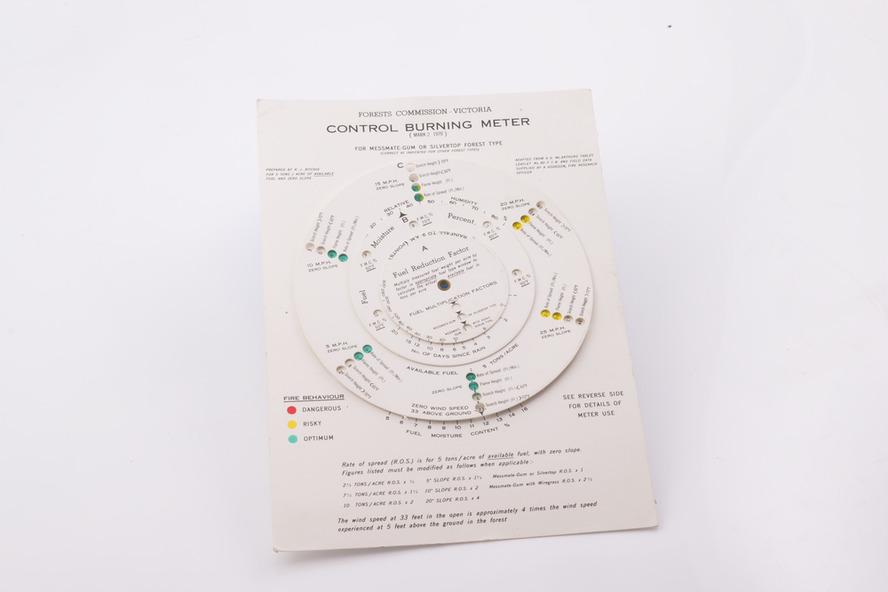
Two Forests Commission staff, Athol Hodgson and Russ Ritchie, built on McArthur’s pioneering work and, by applying their own practical experience, developed a modified version in the late 1960s called the Control Burning Meter which was better suited to Victorian forest conditions.
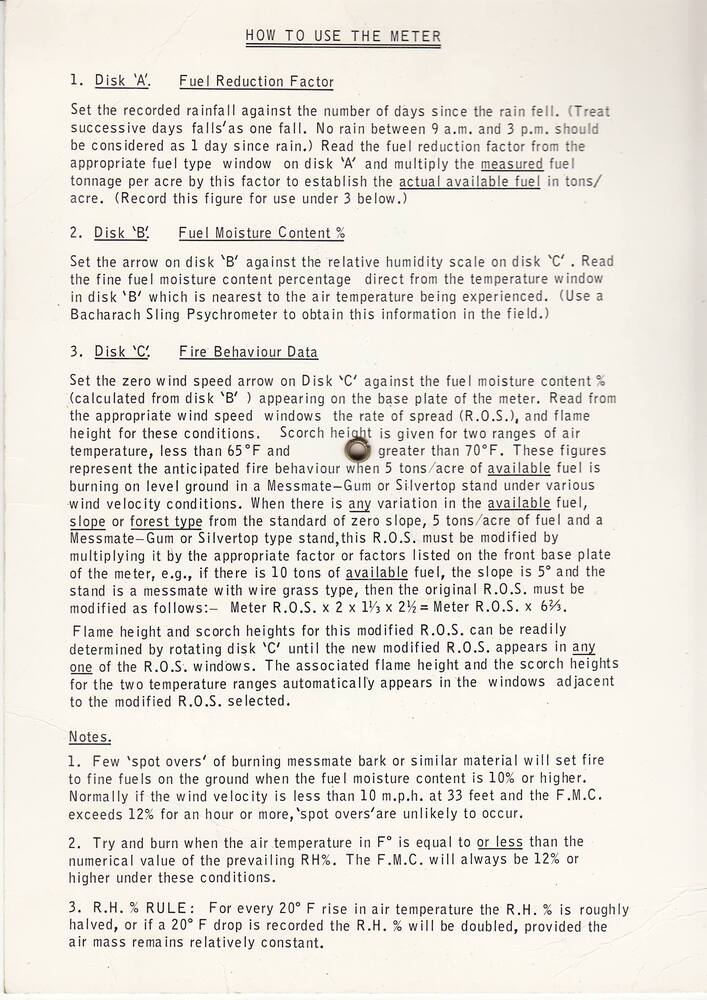
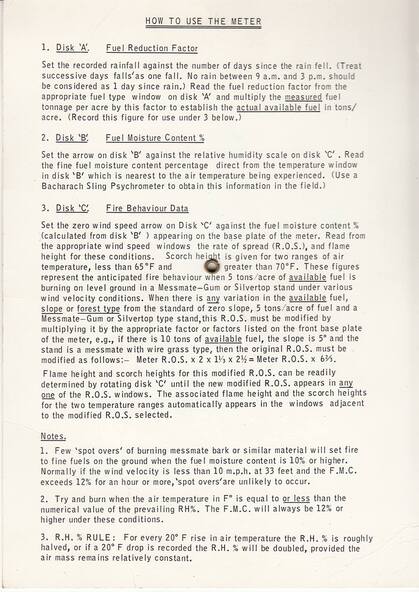
By entering local rainfall records, the fuel load on the area to be burnt, wind speed at 33 feet above ground level and weather bureau estimates of temperature and relative humidity, the meter is used to indicate flame height, and the associated scorch height, that could be expected from lighting a grid of fires at regular intervals on level terrain - an allowance for slope variation was also possible.
Significance
Introduced to the FCV in 1970
Physical description
Control burning meter