

Historical information
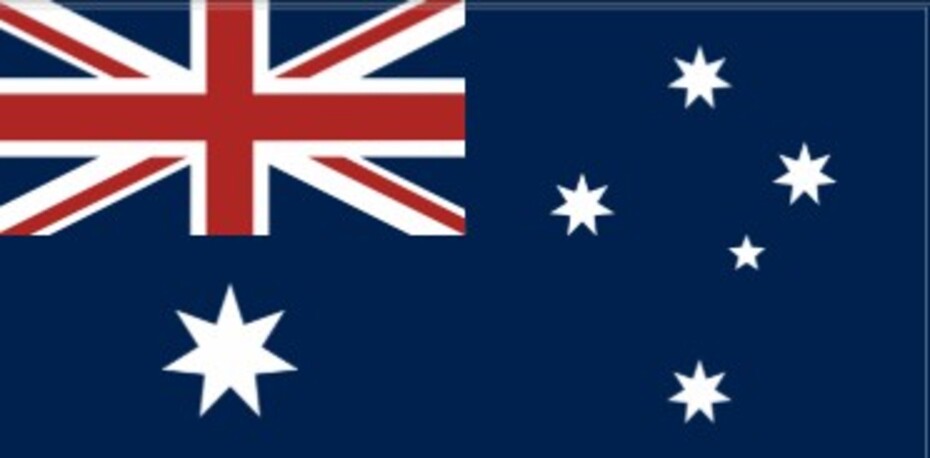
The Australian flag symbolises the nation’s origins, identity, and political structure. Its three core elements, the Union Jack, the Commonwealth Star, and the Southern Cross represent a different layer of Australia’s history and national story.
The Union Jack
- Located in the canton (top-left corner), the position of honour.
- Acknowledges the history of British settlement and the institutions inherited from Britain, the parliamentary democracy, rule of law, and civic rights.
The Commonwealth Star
- Large seven‑pointed star beneath the Union Jack.
- Six points, the six points represent the states, the seventh point represents all territories.
- Represents federation and the unity of Australia as a Commonwealth.
The Southern Cross
- Five stars on the fly side of the flag.
- A constellation visible only in the Southern Hemisphere, long used for navigation by explorers and sailors.
- Holds deep significance in First Nations astronomy, with many cultural stories attached to it.
- Symbolises Australia’s geographical location and its identity as a southern nation.
Significance
The Australian flag was first flown in 1901 after a public design competition with over 32,000 entries. It was officially adopted in 1903 and modified in 1908 to add the seventh point to the Commonwealth Star. It became the official national flag in 1954 under the Flags Act, reflecting Australia’s growing independence from Britain.
Physical description
Australian Flag. This flag is suitable to be flown on a flagpole.
Inscriptions & markings
Manufacturer's Tag: Manufactured in Australia by Carroll & Richardson
