

Historical information
The California Bungalow remains one of the most recognizable architectural styles in Australia. Its elegant design, focus on natural materials, and connection to the outdoors have made it a staple in suburban streetscapes for over a century.
Originally inspired by American architecture, this style has been embraced and adapted to suit Australian conditions, reflecting a shift towards a more relaxed and practical style of residential architecture. Today, these homes are valued not only for their charm but also for their potential to be thoughtfully renovated and extended to meet contemporary needs.
Parts of Australia, particularly the east coast and some southern regions, share a similar climate to Southern California. These environmental similarities, combined with the promotion of American culture, shifted Australia’s architectural gaze from Britain to the United States in the early 1900s. This shift saw the rise of the California Bungalow in Australia, becoming a staple of suburban landscapes in Melbourne, Sydney, and beyond between World War I and World War II.
California Bungalows follow a simpler floor plan than earlier architectural styles, centred around an entrance hallway and leaning towards open-plan living. These family homes were designed to suit the climate and relaxed lifestyle that many Australians sought during the 1920s and beyond.
Physical description
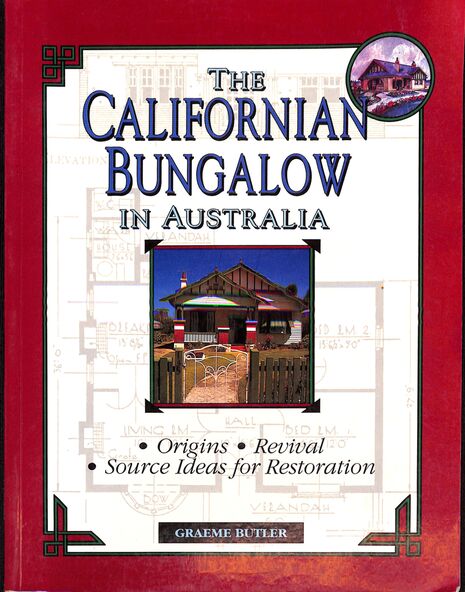
"The Californian Bungalow in Australia" written by Graeme Butler. Contents include: Introduction, Origins, Bungalow Suburbs, External Finishes & Fittings, Interiors, and Bungalow Gardens. Published in Australia by Lothian Books in 2001. Soft cover. Cover has several colors - Colored photo of Californian Bungalow house; surrounded by cream background; cream area then bordered by burgundy/brown border. Titles in different shades of blue. First published in 1992, then 1995, 1997, and 2001. Book includes both color and black and white images. 154 pp. ISBN 0850913551. Contains index.
