

Historical information
FROM - R A NORTHFIELD of Noradjuha
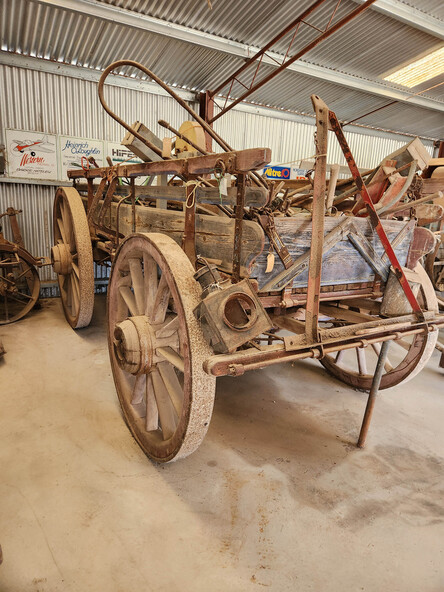
This horse-drawn wagon was owned and used by R. A. Northfield of Noradjuha, a farming district located south of Horsham in Victoria's Wimmera region. Wagons of this type were essential items of farm equipment during the late nineteenth and early twentieth centuries, before motor trucks became widely available. Used behind teams of horses, wagons transported a wide variety of agricultural products and supplies, including bagged wheat, wool bales, hay, fencing materials, firewood, livestock feed and general farm produce. They also served as the principal means of moving goods between farms, railway sidings and rural townships. The heavy construction of the wagon reflects the demanding conditions of broadacre farming in the Wimmera, where large loads often had to be hauled across unsealed roads and paddocks. Such wagons were frequently used for decades and were often repaired and modified as required throughout their working lives.
Significance: This wagon is significant as a representative example of the horse-powered transport technology that supported agricultural development throughout the Wimmera. Before the introduction of tractors and motor vehicles, wagons such as this formed the backbone of rural transport and were indispensable to farming operations. Its association with R. A. Northfield of Noradjuha provides an important local connection to one of the district's farming families and helps document the working methods employed on Wimmera farms during the horse-drawn era. The wagon demonstrates the craftsmanship of traditional wagon building and provides a tangible link to the period when horses supplied the primary motive power for transport and agriculture. As a surviving example of rural transport equipment, it contributes to the understanding of farming, settlement and community life in western Victoria.
Physical description
A substantial horse-drawn farm wagon constructed from timber and iron, mounted on four large wooden-spoked wheels fitted with iron tyres. The wagon features a rectangular timber tray with removable side rails and a robust undercarriage designed to carry heavy agricultural loads. Long timber shafts extend from the front axle assembly for attachment to a horse team. The wagon incorporates a turntable steering mechanism at the front, allowing the front wheels to pivot independently when negotiating corners. Iron braces, fittings and reinforcing straps strengthen the timber construction. The wagon displays considerable wear, weathering and evidence of long service in agricultural use.
