


Artists statement
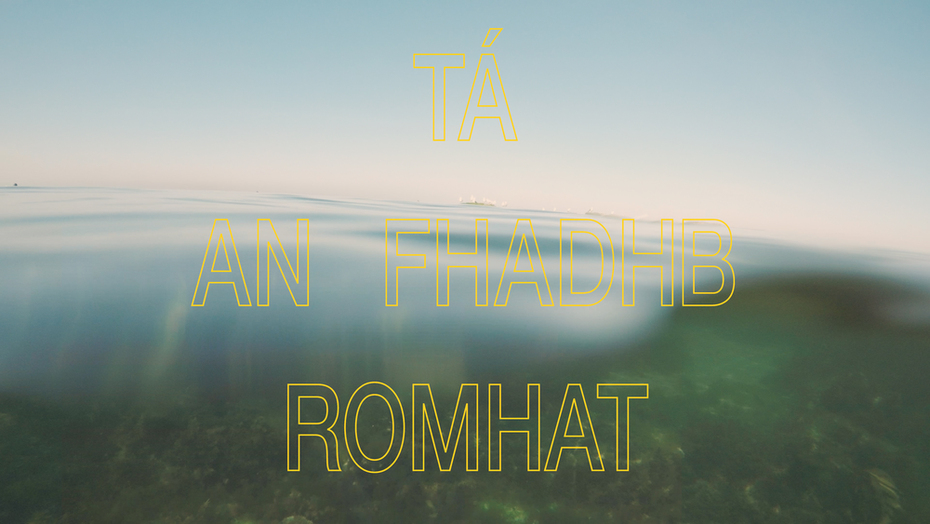
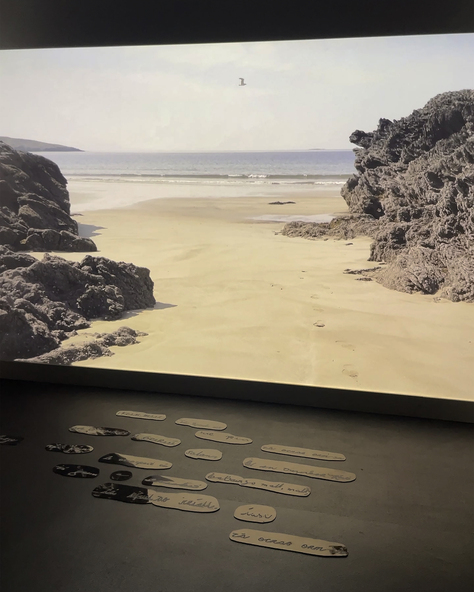
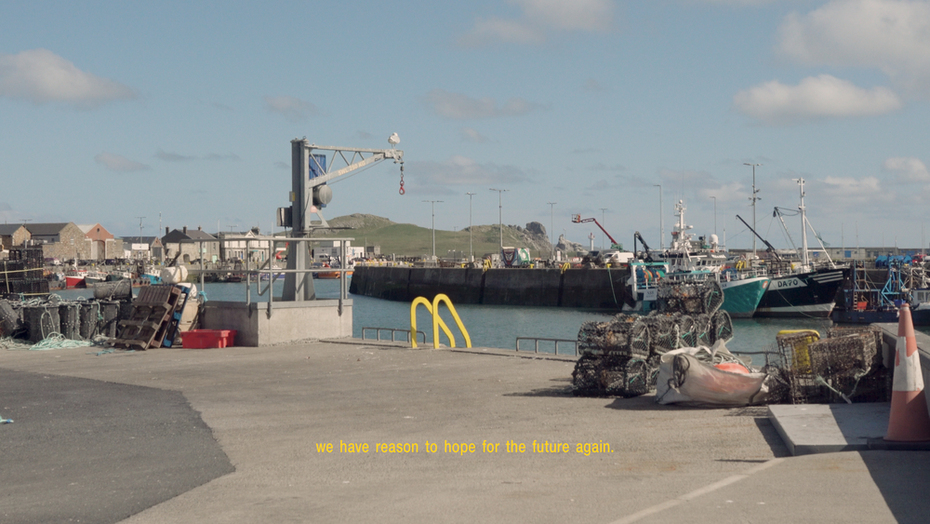
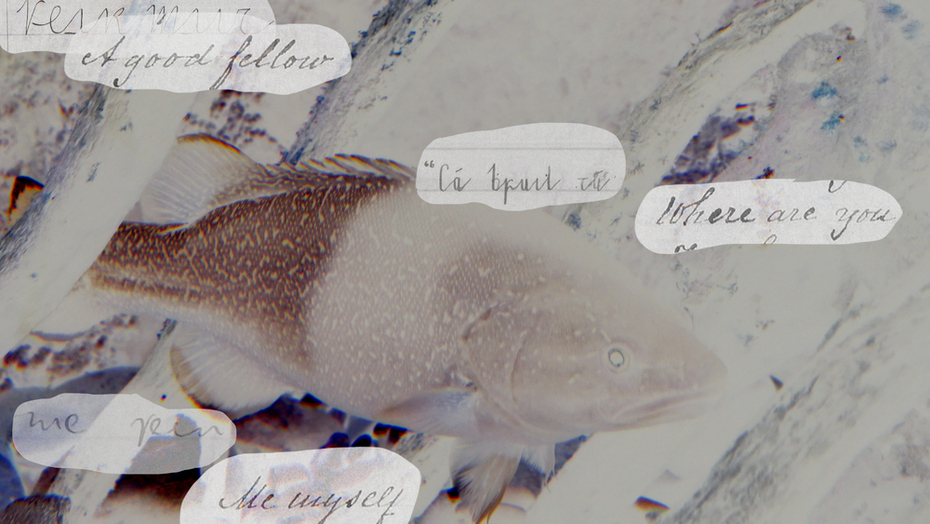
'Tú féin' takes as its starting point a single protagonist constructed by a shifting set of characters: a druid, a goddess, a colonial poet, and contemporary knowledge workers. This poet works on translating the language of fish, writing word lists and dictionaries, following a desire to communicate with fish about the forthcoming catastrophe of the future.
The work references the wisdom attributed to fish in folklore, salmon farming, settler-written wordlists of Indigenous knowledge and language, Irish poetry and the general emphasis on the hyper-production of inspiration that the creative and knowledge industries uphold.
'Tú féin' continues my work with the Irish language to contend with the contradictions of my family’s Irish-Republican and settler histories. I approach these through learning language, archival research and an instinctive, unstructured filming process, each with an eye to the poetics of responsiveness to place and unexpected discoveries. I see learning marginalised languages a means of restructuring a Western framing of the world and proposing alternative possibilities and futures.
In Irish, tú féin means you or yourself, but translates directly as ‘you yourself’, foregrounding the viewer’s culpability as protagonist in the desire to know more.
- Jacqui Shelton
'Tú féin' was selected as the winner of the Darebin Art Prize in 2026, a biennial, acquisitive award celebrating excellence in contemporary art.
Film Credits
Sound by Tim Royall.
The score is made from processed samples of ‘The Wandering Minstrel’ performed by Seamus Ennis.
Eliza Hamilton Dunlop’s ‘Mrs David Milson Kamilaroi vocabulary and Aboriginal songs, 1840’ is held at the Mitchell Library, State Library of New South Wales.
Archival images copyright National Folklore Collection, UCD, used here under Creative Commons Attribution 4.0 International.
Artist Bio
Jacqui Shelton is an artist-curator of settler-Irish descent. Her creative practice is grounded in a process of reading and writing, which manifests in short films, sound works, essays, online works and performance. Shelton is interested in how voice, language, and images can collaborate or undermine one another. Through storytelling, she makes embodied knowledge visible and public to reveal the tensions and poetics of held histories and social constructs.
Shelton’s work has been presented in the Art Gallery of New South Wales, Sydney; Institute of Modern Art, Brisbane; Perth Institute of Contemporary Art; and in Melbourne at Monash University Museum of Art, National Gallery of Victoria, and Australian Centre of Contemporary Art.
