



Historical information
Thought to have originated in Austria in 1869, postcards first gained popularity in Australia in the 1890s.They were used to send short messages to friends and family.
This collection was generated by Mary Emma Elliot of Talgarno.
Talgarno is a rural locality in Victoria, Australia, situated on the southern shoreline of Lake Hume, about 23 km east of Albury-Wodonga. The collection contains postcards from across the world.
Mary Emma Sibley was born in Ironbark, Bendigo in 1859.
She married James Elliot in 1893 and they settled at “Kelso”, Talgarno.
They had two children – Mona and Sibley.
Mary Emma Elliot died in Melbourne in 1944, aged 84 years.
Physical description
This item contains the following:
Twenty Japanese postcards collected by Mrs James Elliot between 1898 and 1915.
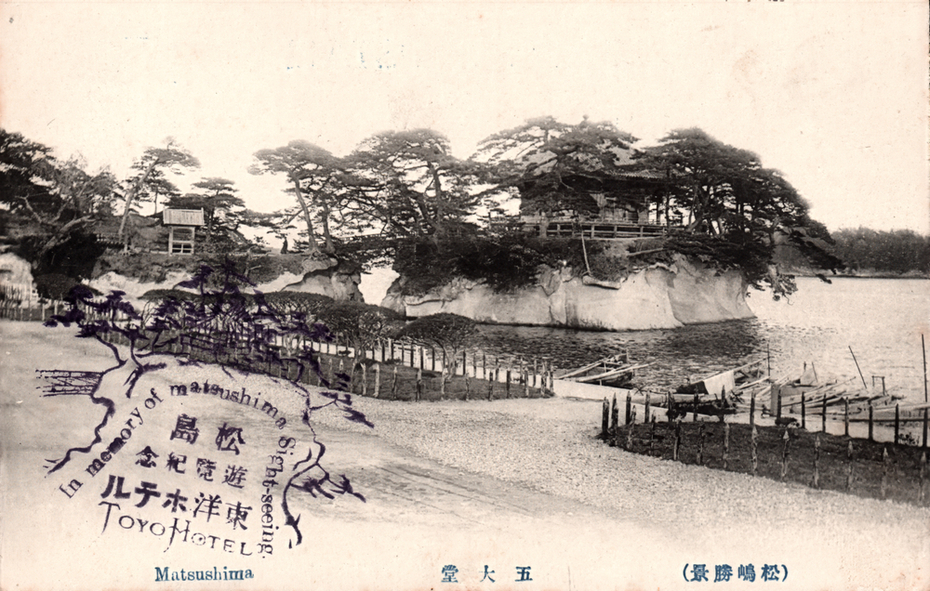
11731.041 This black-and-white card shows a pine-covered rocky island with a pavilion beside the water: On the card is printed “In memory of matsushima sight-seeing. TOYO HOTEL Matsushima The Japanese wording is printed in the older right-to-left direction. Read normally, it translates as:
松島 — Matsushima
遊覽紀念 — Souvenir of sightseeing
東洋ホテル — Toyo Hotel
五大堂 — Godaidō Hall
松島勝景 — Scenic view of Matsushima
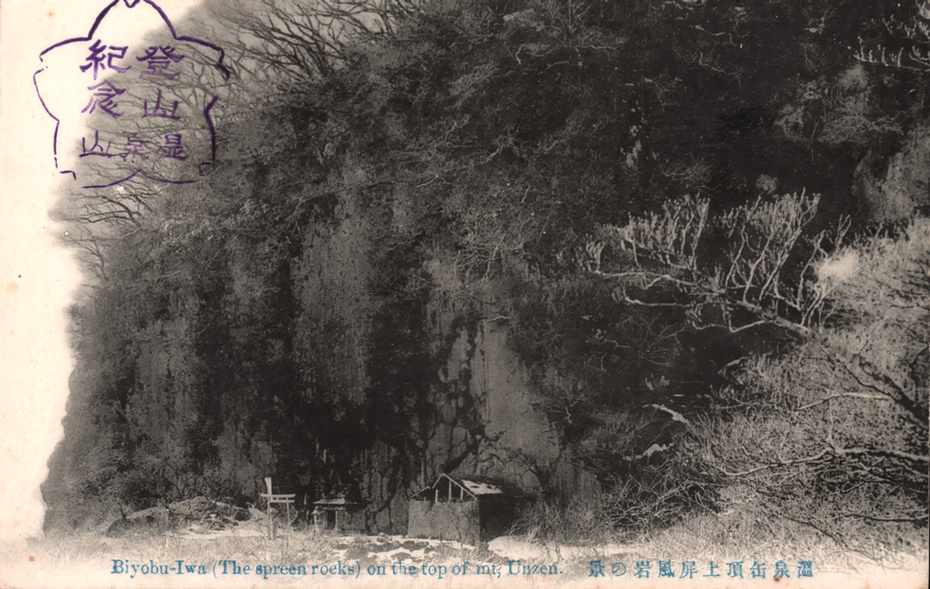
11731.042 This black-and-white card shows a wooded rock face with small shrine structures at its base: On the card is printed “Biyobu-Iwa (The spreen-rocks) on the top of mt, Unzen. The Japanese is written partly in the older right-to-left direction. Read normally, it translates as:
温泉岳頂上屏風岩の景 — “View of Byōbu Rock at the summit of Mount Unzen.”
登山紀念 — “Commemoration of the mountain ascent.”
雲仙岳 — “Mount Unzen.”
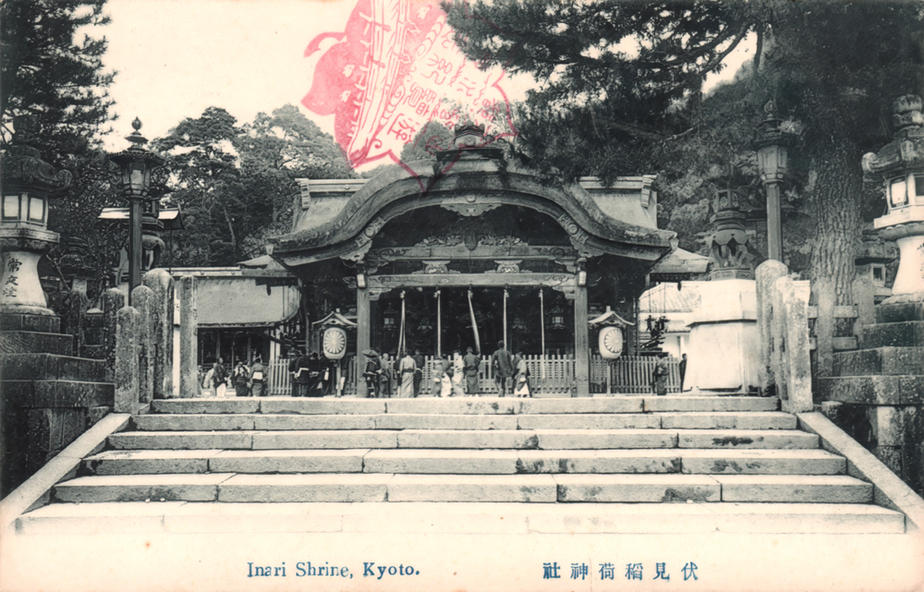
11731.043 This black-and-white card shows the entrance to a shrine at the top of broad stone steps: On the card is printed “Inari Shrine, Kyoto. The Japanese wording translates as:
伏見稲荷神社 — “Fushimi Inari Shrine.”
常夜燈 — “Ever-burning lantern” or “permanent night lantern.”
The shrine name is printed in the older right-to-left order as 社神荷稲見伏.
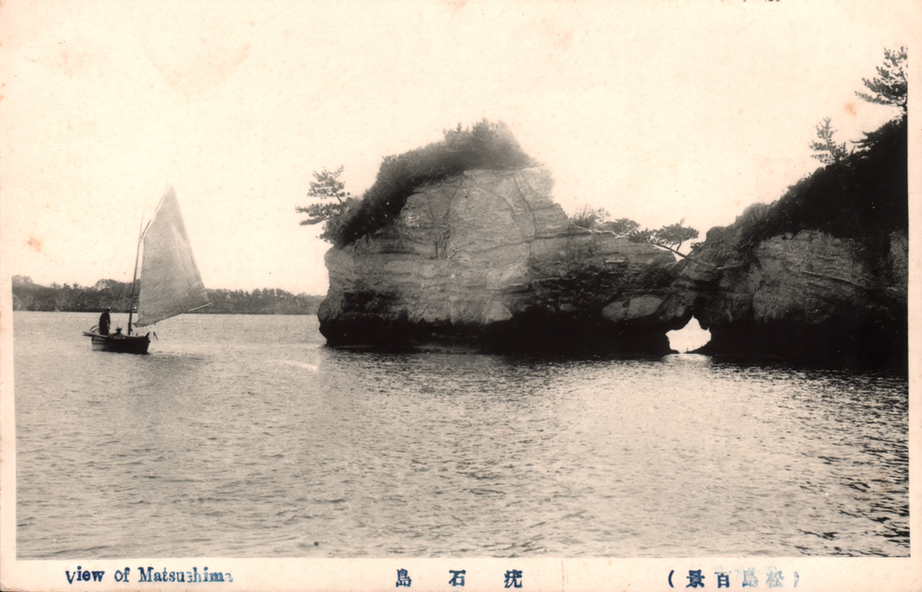
11731.044 This black-and-white card shows a small sailing boat beside a rocky island with a natural arch: On the card is printed “View of Matsushima.
The Japanese is printed in the older right-to-left direction. Read normally, it translates as:
沈石島 — “Sunken Rock Island.”
松島百景 — “One Hundred Views of Matsushima.”
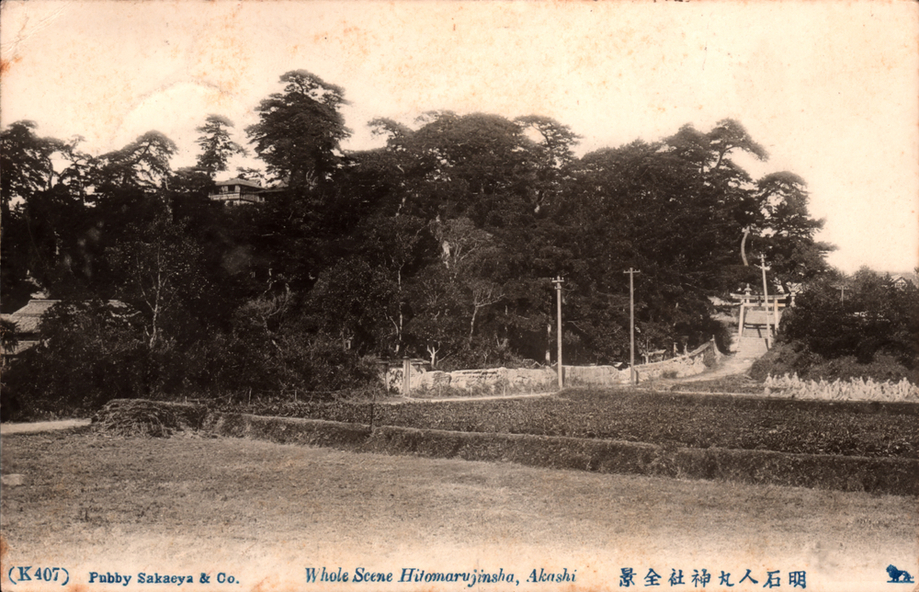
11731.045 This black-and-white card shows fields before a wooded shrine approached through a torii gate: On the card is printed “(K 407) Pubby Sakaeya & Co. Whole Scene Hitomaru-jinsha, Akashi
The Japanese is printed in the older right-to-left direction. Read normally, 明石人丸神社全景 translates as “Complete view of Hitomaru Shrine, Akashi.”
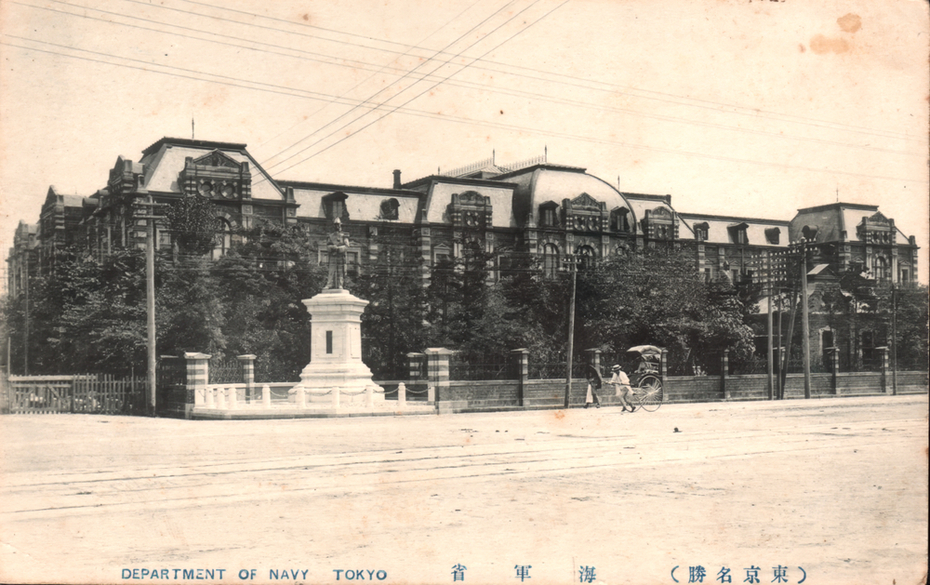
11731.046 This black-and-white card shows a large government building behind a roadside monument: On the card is printed “DEPARTMENT OF NAVY TOKYO
The Japanese is printed in the older right-to-left direction:
海軍省 — “Department of the Navy” or “Navy Ministry.”
東京名勝 — “Famous sights of Tokyo.”
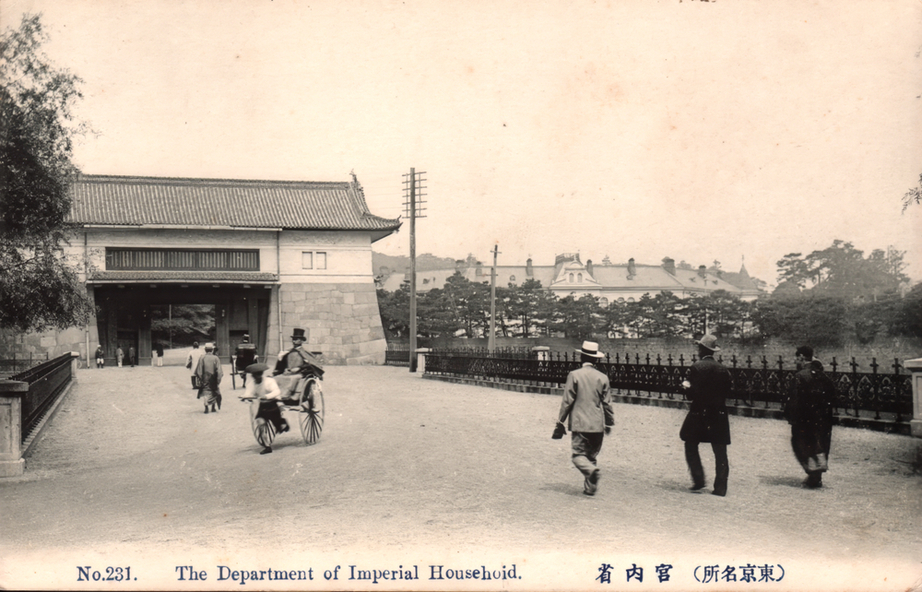
11731.047 This black-and-white card shows pedestrians and a rickshaw approaching a large gateway beside a moat: On the card is printed “No.231. The Department of Imperial Household.
The Japanese is printed in the older right-to-left direction:
宮内省 — “Imperial Household Department” or “Ministry of the Imperial Household.”
東京名所 — “Famous sights of Tokyo.”
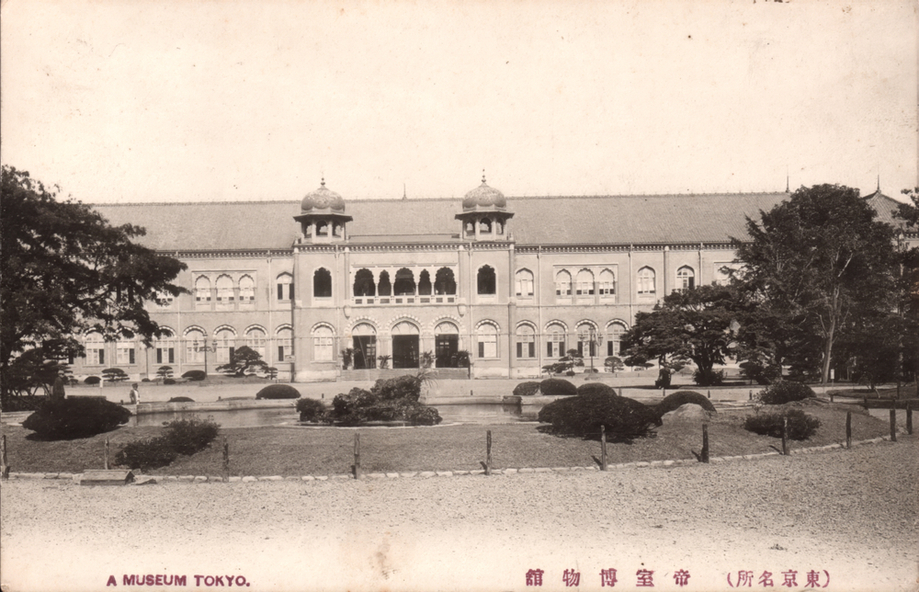
11731.048 This black-and-white card shows a large museum building behind a formal garden: On the card is printed “A MUSEUM TOKYO.
The Japanese is printed in the older right-to-left direction:
帝室博物館 — “Imperial Museum.”
東京名所 — “Famous sights of Tokyo.”
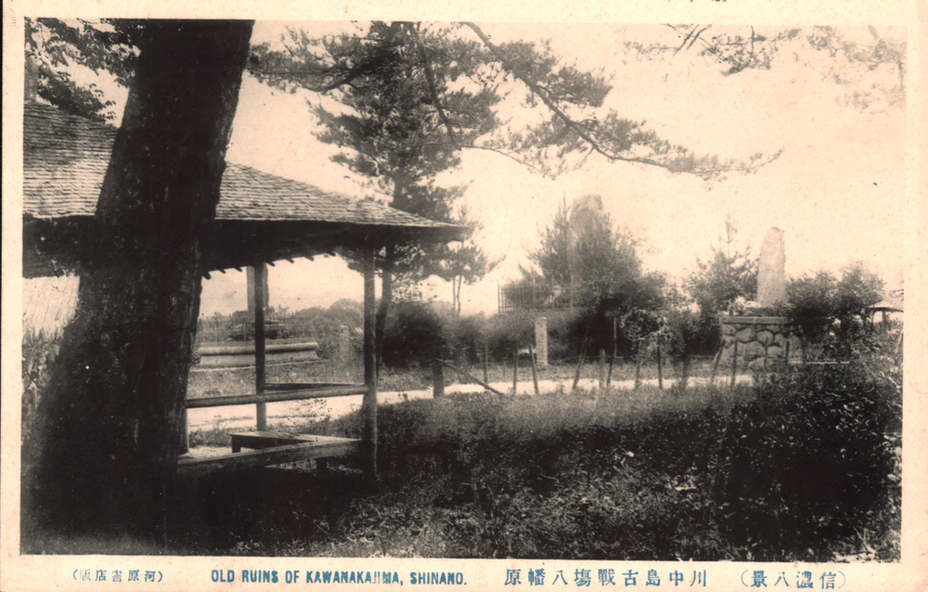
11731.049 This black-and-white card shows a tree-shaded pavilion and stone monument in a garden: On the card is printed “(版店書原河) OLD RUINS OF KAWANAKAJIMA, SHINANO.
The Japanese is printed in the older right-to-left direction:
河原書店版 — “Kawahara Bookshop edition.”
川中島古戰場八幡原 — “Hachimanbara, the old battlefield of Kawanakajima.”
信濃八景 — “Eight Views of Shinano.”
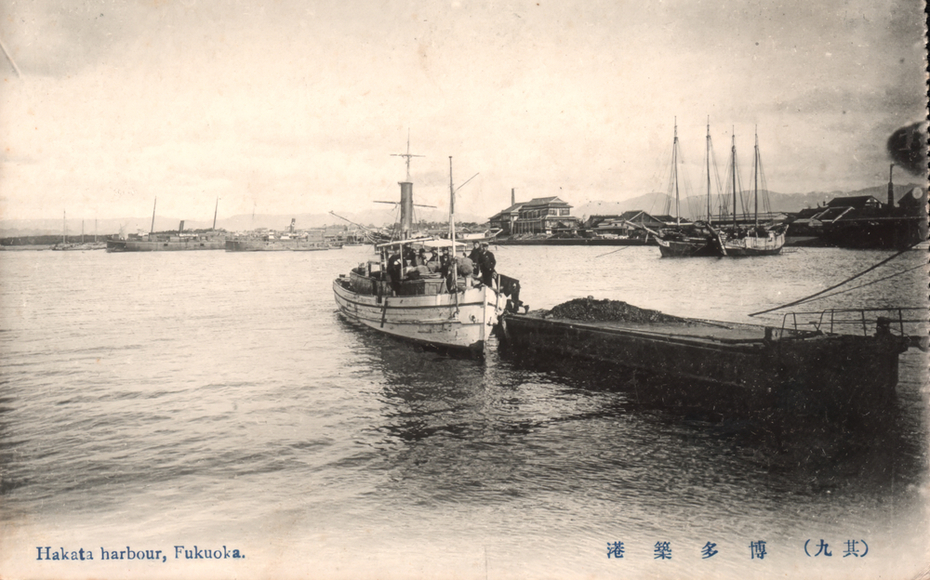
11731.050 This black-and-white card shows boats and sailing ships in a harbour, with a vessel moored beside a quay: On the card is printed “Hakata harbour, Fukuoka.
The Japanese is printed in the older right-to-left direction. Read normally, 博多築港(其九) translates as “Construction of Hakata Harbour (No. 9).”
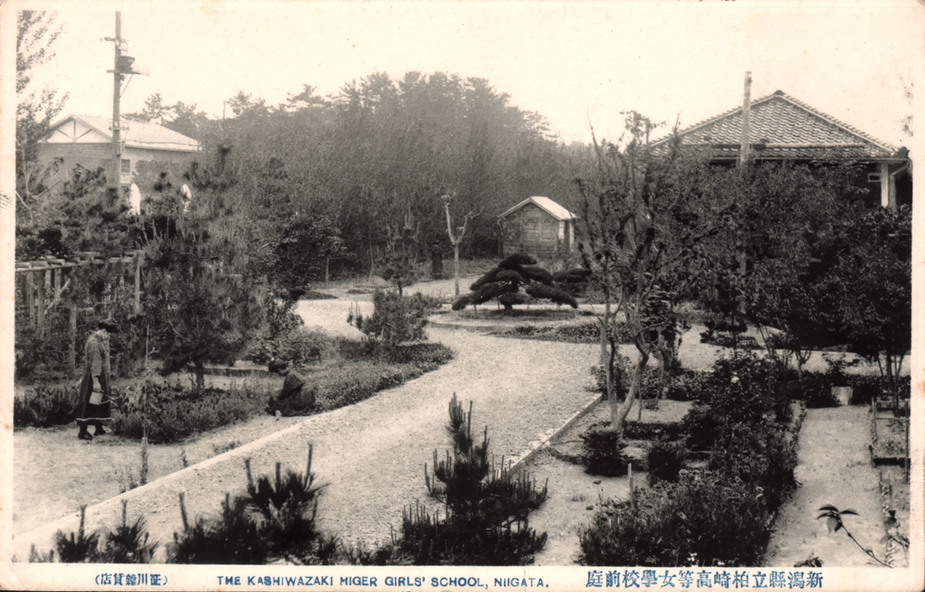
11731.051 This black-and-white card shows a landscaped school garden with paths, trees and buildings: On the card is printed “(店眞寫川正) THE KASHIWAZAKI MIGER GIRLS' SCHOOL, NIIGATA. The Japanese is printed in the older right-to-left direction:
新潟縣立柏崎高等女學校前庭 — “Front garden of Niigata Prefectural Kashiwazaki Higher Girls’ School.”
正川寫眞店 — “Masakawa Photographic Shop.”
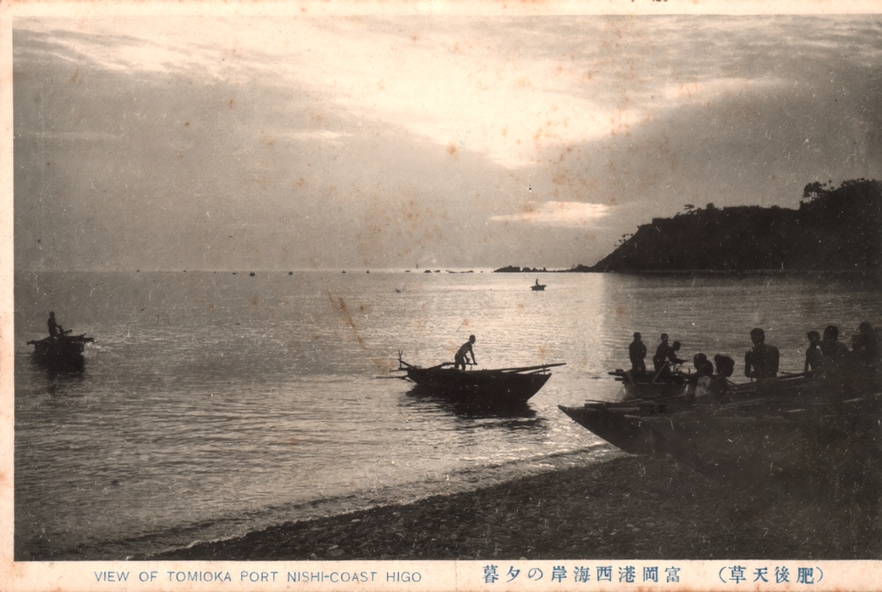
11731.052 This black-and-white card shows small boats and people silhouetted on calm water beside a shoreline at sunset: On the card is printed “VIEW OF TOMIOKA PORT NISHI-COAST HIGO
The Japanese is printed in the older right-to-left direction:
富岡港西海岸の夕暮 — “Dusk on the western shore of Tomioka Harbour.”
肥後天草 — “Amakusa, Higo.”
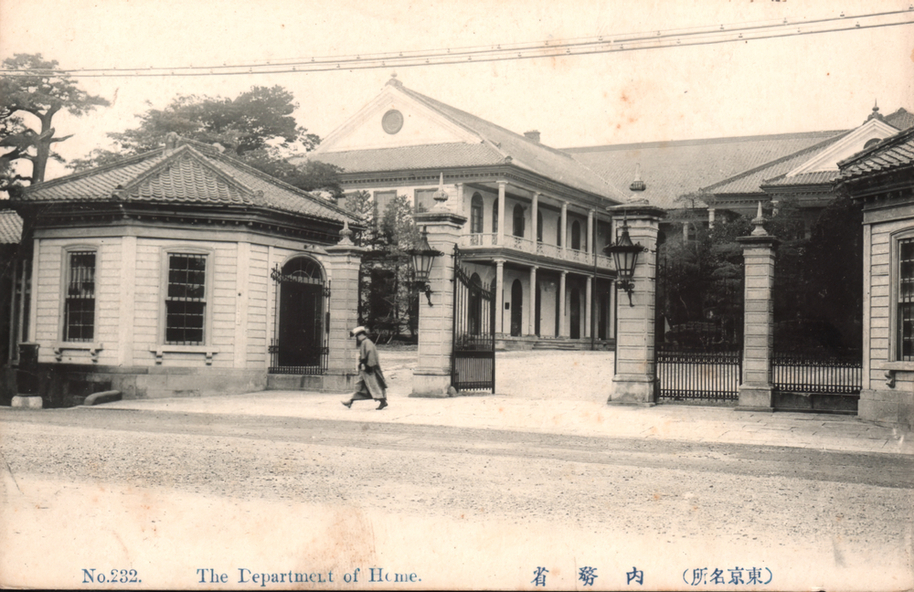
11731.053 This black-and-white card shows the entrance to a large government building, with a pedestrian on the street: On the card is printed “No.232. The DepartmeLt of Hcme. The Japanese is printed in the older right-to-left direction:
内務省 — “Home Ministry” or “Ministry of Home Affairs.”
東京名所 — “Famous sights of Tokyo.”
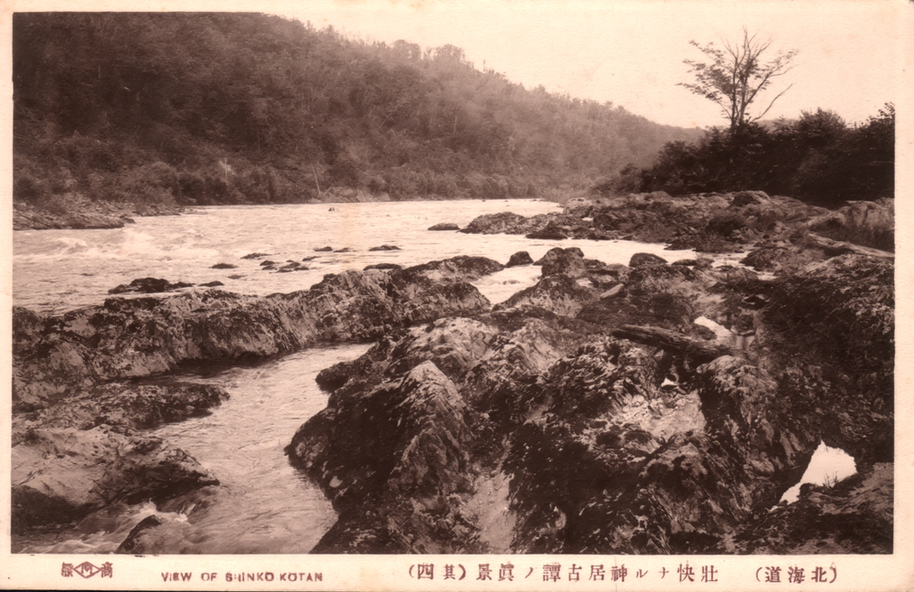
11731.054 This black-and-white card shows a rocky river flowing through a wooded valley: On the card is printed “商標 VIEW OF SHINKO KOTAN The Japanese is printed mainly in the older right-to-left direction. Read normally:
北海道 — “Hokkaidō.”
壮快ナル神居古譚ノ真景 — “A magnificent true view of Kamui Kotan.”
其四 — “No. 4.”
商標 — “Trademark.”
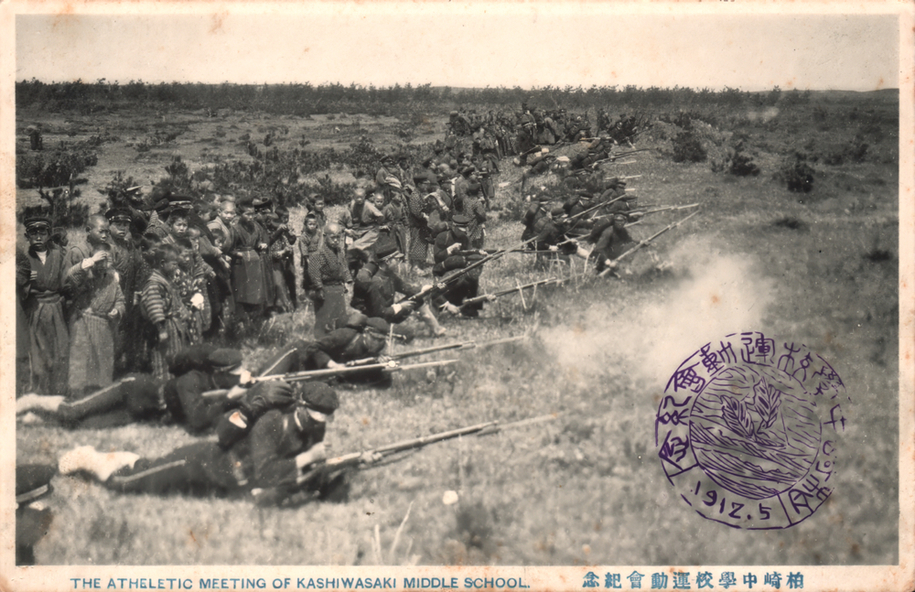
11731.055 This black-and-white card shows students taking part in a rifle-shooting event while spectators watch: On the card is printed “THE ATHLETIC MEETING OF KASHIWASAKI MIDDLE SCHOOL.1917.5.1”. The Japanese is printed in the older right-to-left direction. Read normally, 柏崎中學校運動會紀念 translates as “Commemoration of the Kashiwazaki Middle School athletic meeting.” The circular commemorative stamp also bears the date 1917.5.1.
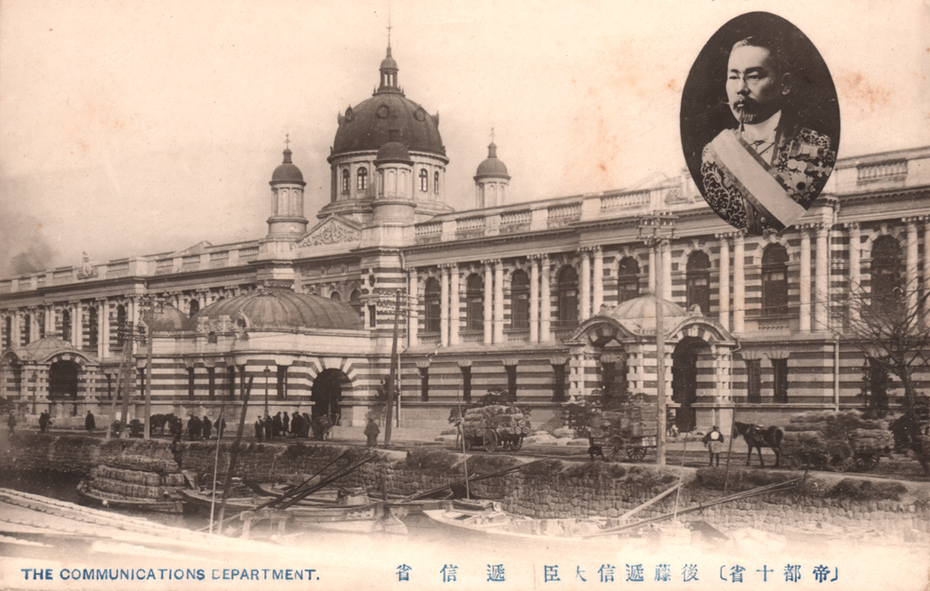
11731.056 This black-and-white card shows a large government building with horse-drawn carts outside and an inset portrait of a uniformed man: On the card is printed “THE COMMUNICATIONS DEPARTMENT. The Japanese is printed in the older right-to-left direction:
遞信省 — “Ministry of Communications.”
後藤遞信大臣 — “Gotō, Minister of Communications.”
帝都十省 — “The ten government ministries of the Imperial Capital.”
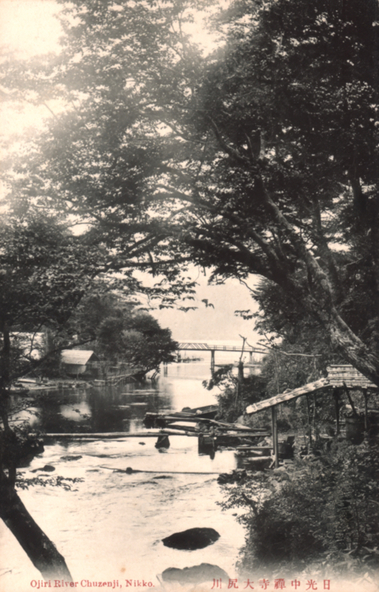
11731.057 This black-and-white card shows a tree-lined river with footbridges and buildings along its banks: On the card is printed “Ojiri River Chuzenji, Nikko. The Japanese is printed in the older right-to-left direction. Read normally, 日光中禪寺大尻川 translates as “Ōjiri River at Chūzenji, Nikkō.”
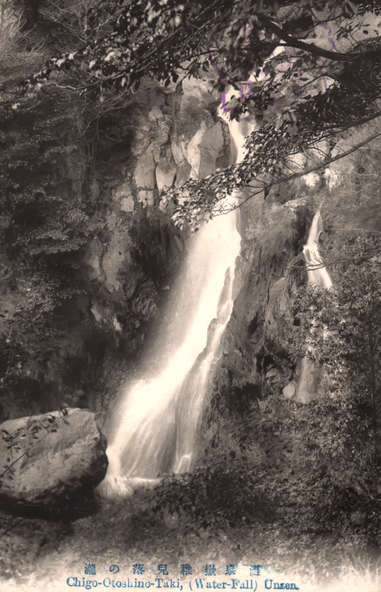
11731.058 This black-and-white card shows a waterfall descending through a wooded rocky gorge: On the card is printed Chigo-Otosbino-Taki, (Water-Fall) Unzen.” The Japanese is printed in the older right-to-left direction. Read normally, 雲仙嶽稚兒落の瀧 translates as “Chigo-otoshi Waterfall, Mount Unzen.”
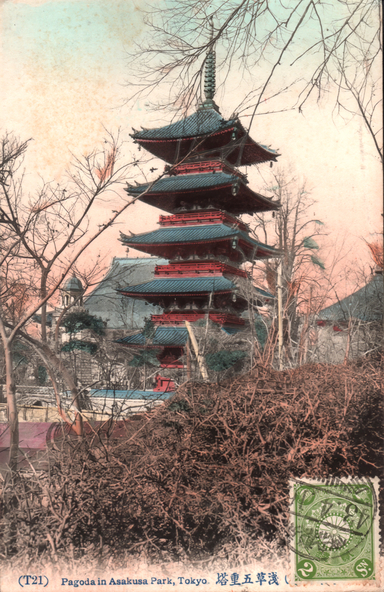
11731.059 This coloured card shows a five-storey pagoda among trees: On the card is printed “(T21) Pagoda in Asakusa Park, Tokyo. The Japanese is printed in the older right-to-left direction. Read normally, 淺草五重塔 translates as “Five-storey Pagoda at Asakusa.”
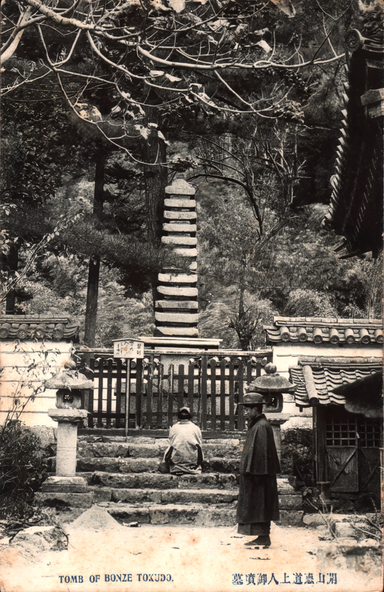
11731.060 This black-and-white card shows a stone tomb monument behind a fence at the top of steps: On the card is printed “TOMB OF BONZE TOKUDO.
The Japanese is printed in the older right-to-left direction. Read normally, 開山德道上人御實墓 translates as “The actual tomb of the founding priest, the Venerable Tokudō.”
