



Historical information
Thought to have originated in Austria in 1869, postcards first gained popularity in Australia in the 1890s.They were used to send short messages to friends and family.
This collection was generated by Mary Emma Elliot of Talgarno.
Talgarno is a rural locality in Victoria, Australia, situated on the southern shoreline of Lake Hume, about 23 km east of Albury-Wodonga. The collection contains postcards from across the world.
Mary Emma Sibley was born in Ironbark, Bendigo in 1859.
She married James Elliot in 1893 and they settled at “Kelso”, Talgarno.
They had two children – Mona and Sibley.
Mary Emma Elliot died in Melbourne in 1944, aged 84 years.
Physical description
This item contains the following:
Twenty Japanese postcards collected by Mrs James Elliot between 1898 and 1915.
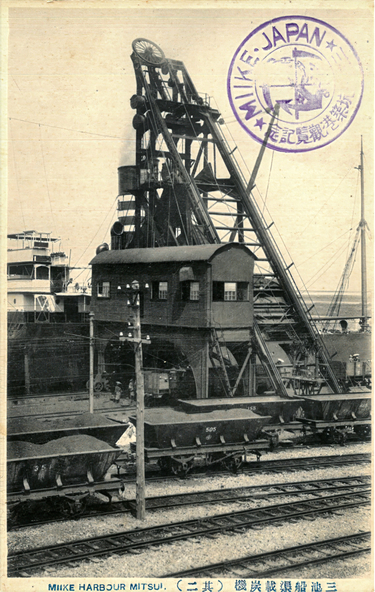
11731.061 This black-and-white card shows a coal-loading machine beside railway coal wagons and a ship. On the card is printed “MIIKE HARBOUR MITSUI. MIIKE-JAPAN 158 505”.
Japanese translation:
三池船渠載炭機(其三)」 — “Miike Dock coal-loading machine (No. 3).”
三池炭坑築港観覧記念」 — “Souvenir of a visit to the Miike Coal Mine harbour works.”
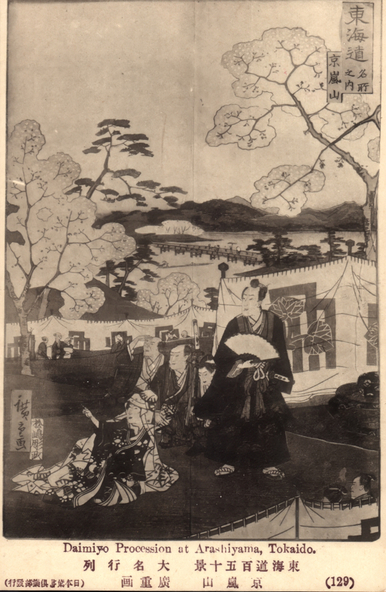
11731.062 This black-and-white card shows a daimyō procession passing through a decorated outdoor setting at Arashiyama. On the card is printed “東海道名所之内 京嵐山 Daimiyo Procession at Arashiyama, Tokaido.(129)”.
Japanese translation:
東海道名所之内」 — “Among the famous places of the Tōkaidō.”
京嵐山」 — “Arashiyama, Kyoto.”
東海道百五十景」 — “One Hundred and Fifty Views of the Tōkaidō.”
大名行列」 — “Daimyō procession.”
廣重画」 — “Drawn by Hiroshige.”
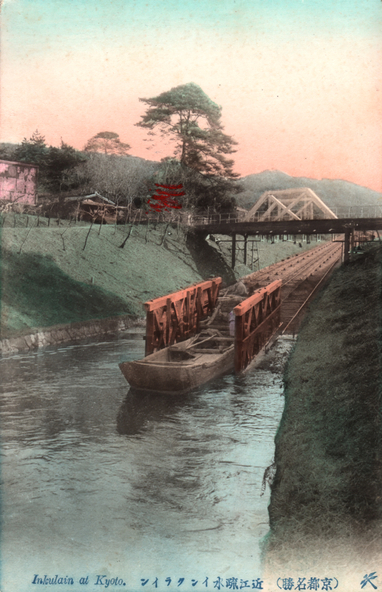
11731.063 This coloured card shows a boat being carried along a canal incline beneath two bridges. On the card is printed “Inkulain at Kyoto.”.
The Japanese is printed from right to left and reads:
(京都名勝)近江疏水インクライン」 — “Incline on the Ōmi Canal, a famous sight of Kyoto.”
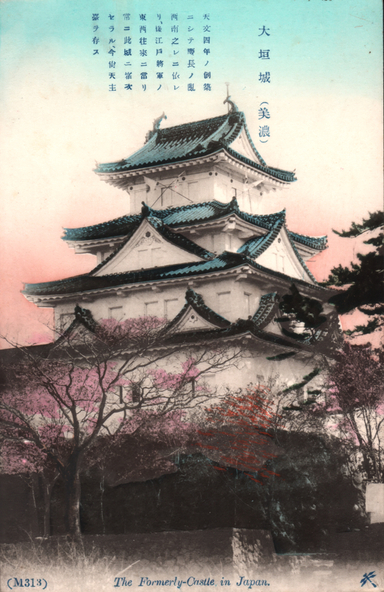
11731.064 This coloured card shows Ōgaki Castle behind trees. On the card is printed “ (M313) The Formerly-Castle in Japan.”
Japanese translation:
大垣城(美濃)」 — “Ōgaki Castle (Mino).”
天文四年ノ創築ニシテ慶長ノ亂西南之レニ依レリ、後江戸將軍ノ東西往來ニ當リ常ニ此城ニ宿次セラル、今尚天主閣ヲ存ス」 — “It was founded in the fourth year of Tenbun. During the Keichō conflict, the southwest depended upon it. Later, when the Edo shoguns travelled east and west, they regularly lodged at this castle. Its castle keep still survives today
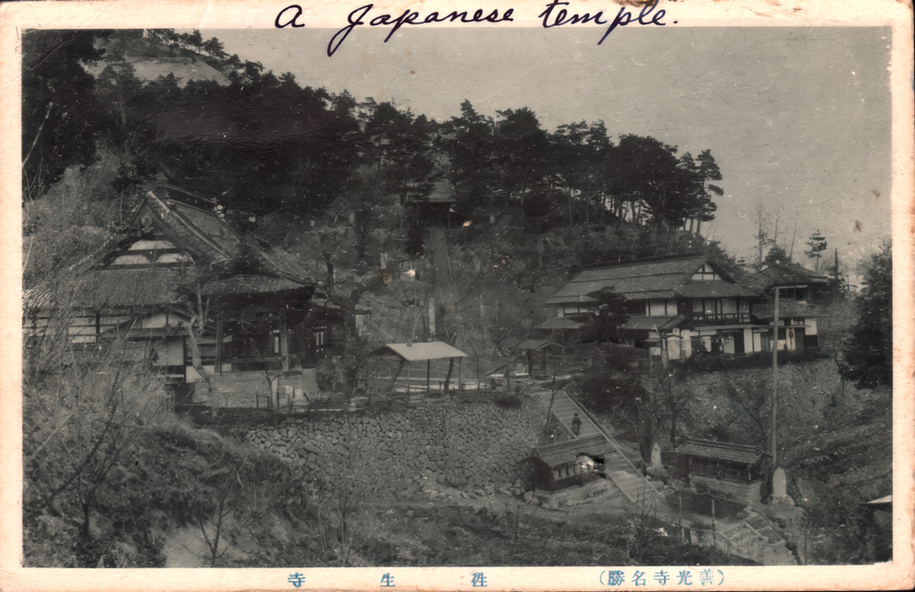
11731.065 This black-and-white card shows temple buildings on a wooded hillside. On the card is printed “寺 生 往 (勝名寺光善)”. A handwritten note reads “A Japanese temple.”
The Japanese is read from right to left:
往生寺(善光寺名勝)」 — “Ōjōji Temple (a famous sight of Zenkō-ji).”
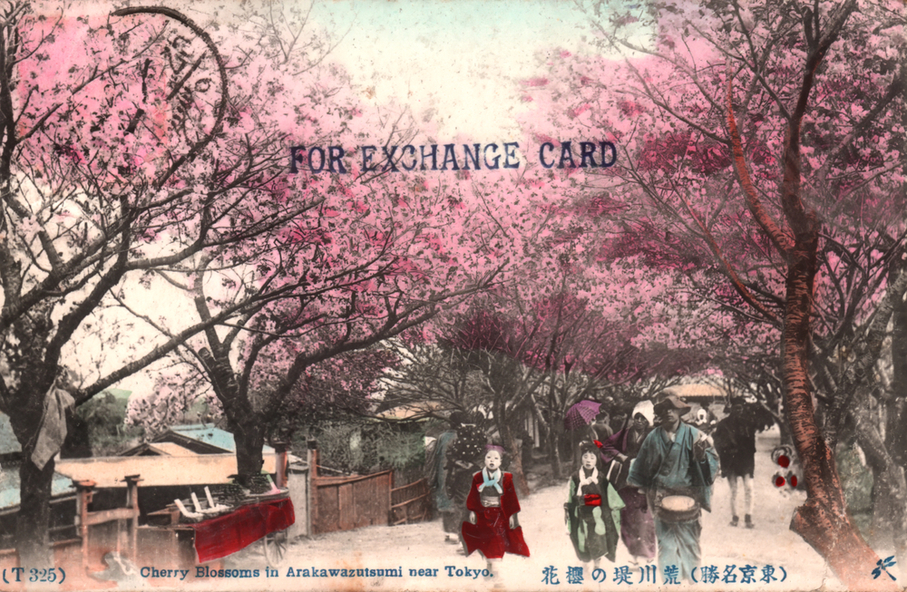
11731.066 This coloured card shows people walking beneath flowering cherry trees. On the card is printed “FOR EXCHANGE CARD. (T 325) Cherry Blossoms in Arakawazutsumi near Tokyo.
The Japanese is printed from right to left and reads:(東京名勝)荒川堤の櫻花」 — “Cherry blossoms on the Arakawa embankment, a famous sight of Tokyo.”
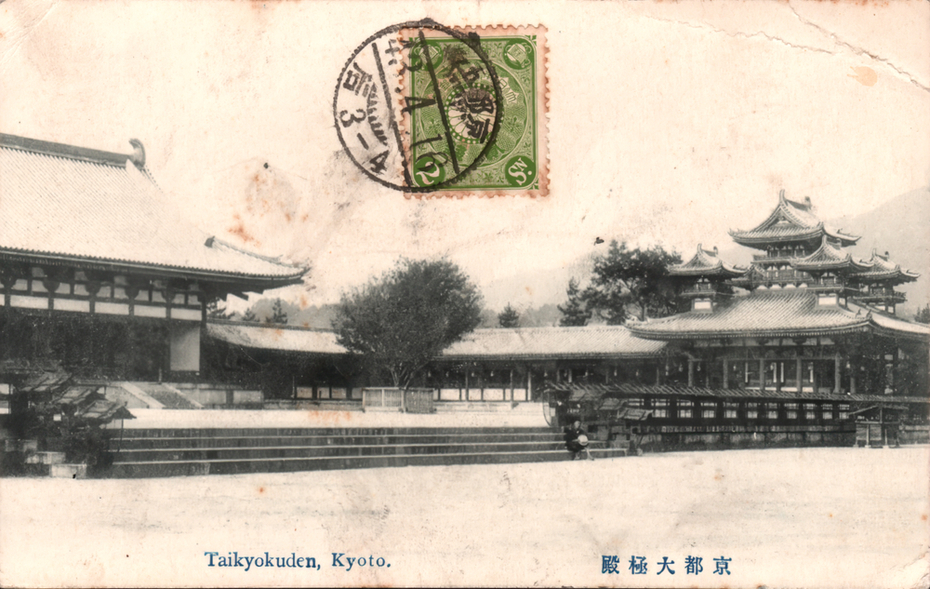
11731.067 This black-and-white card shows a complex of traditional Japanese palace buildings. On the card is printed “Taikyokuden, Kyoto.The Japanese reads: 京都大極殿」 — “The Daigokuden, Kyoto,” or “The Great Hall of State, Kyoto.”
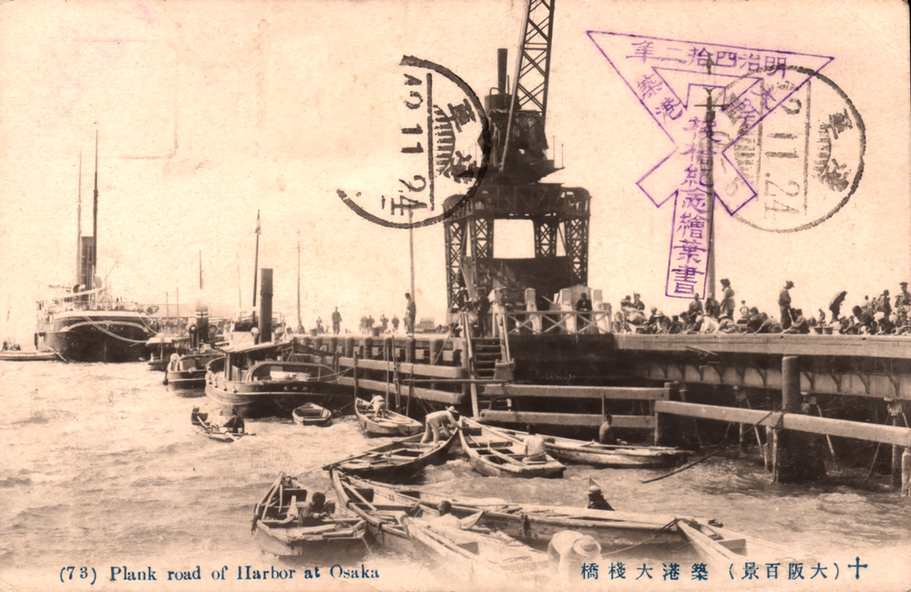
11731.068 This black-and-white card shows small boats beside a harbour pier with a crane and a steamship. On the card is printed “(73) Plank road of Harbor at Osaka. The Japanese is printed from right to left and reads: 十(大阪百景)築港大桟橋」 — “No. 10, the Great Pier at Osaka Harbour (One Hundred Views of Osaka).”
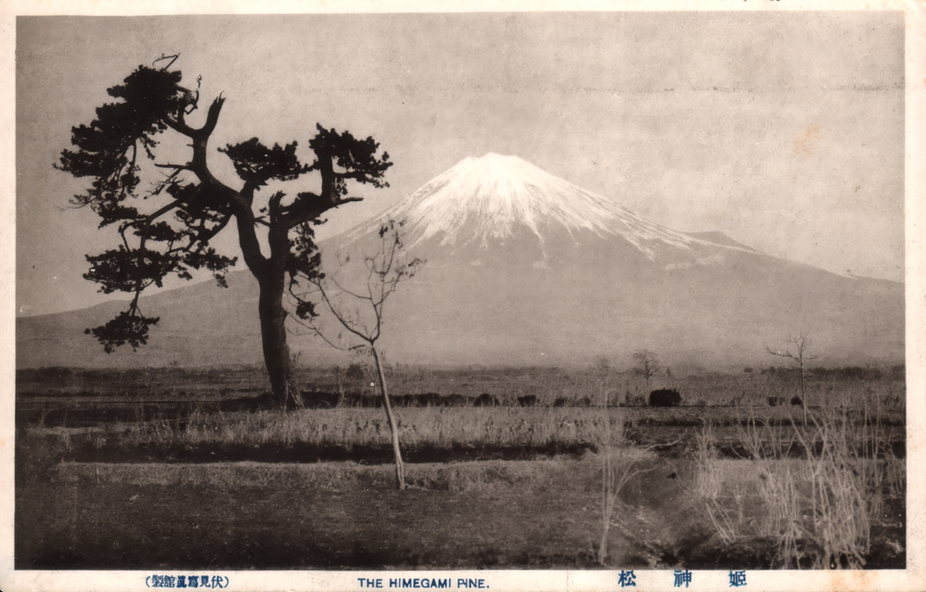
11731.069 This black-and-white card shows a pine tree in a rural landscape with a snow-covered mountain in the background. On the card is printed “THE HIMEGAMI PINE. The Japanese is printed from right to left and reads: 姫神松」 — “The Himegami Pine.” 大月寫眞館製」 — “Produced by Ōtsuki Photography Studio.”
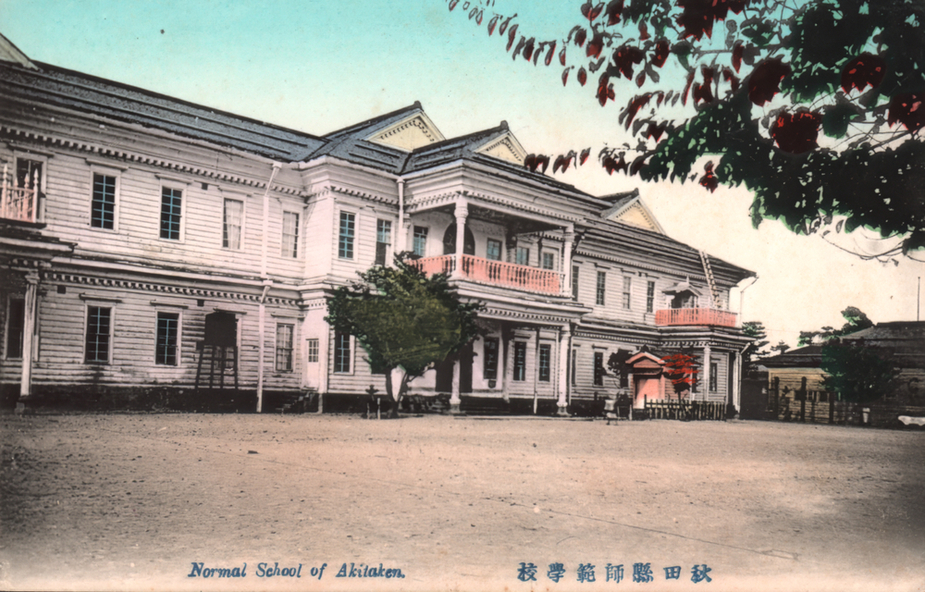
11731.070 This coloured card shows a large two-storey school building with balconies. On the card is printed “Normal School of Akitaken.” The Japanese is printed from right to left and reads:
秋田縣師範學校」 — “Akita Prefectural Normal School.”
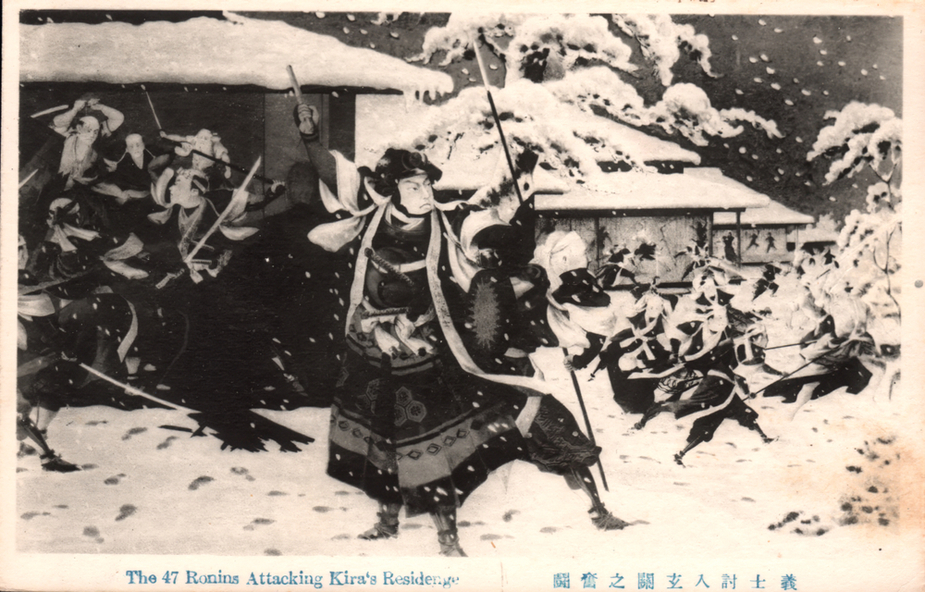
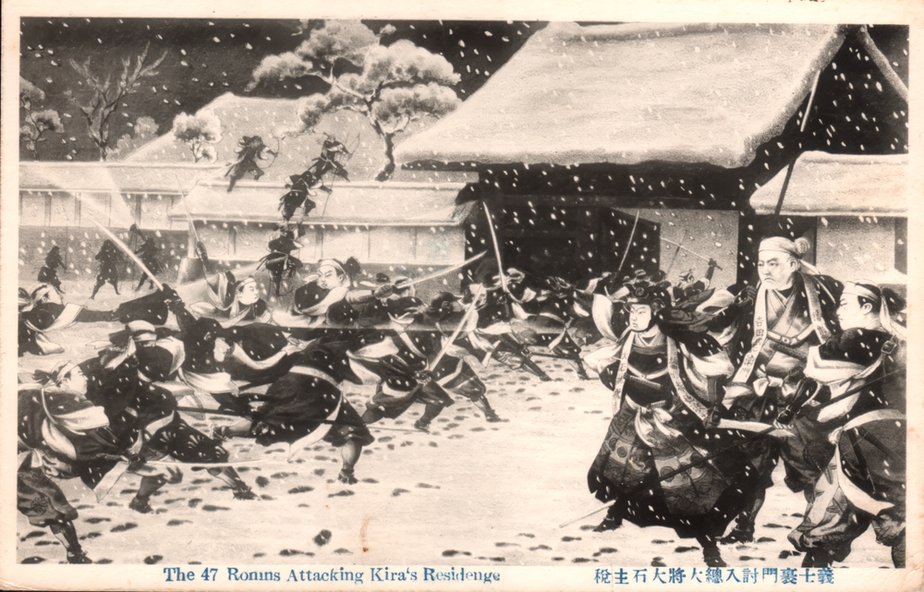
11731.071 This black-and-white card shows armed men fighting outside a residence in a snowy scene. On the card is printed “The 47 Ronins Attacking Kira’s Residency.” The Japanese is printed from right to left and reads: 義士討入玄關之奮闘」 — “The loyal retainers’ fierce fighting at the entrance during the raid.”
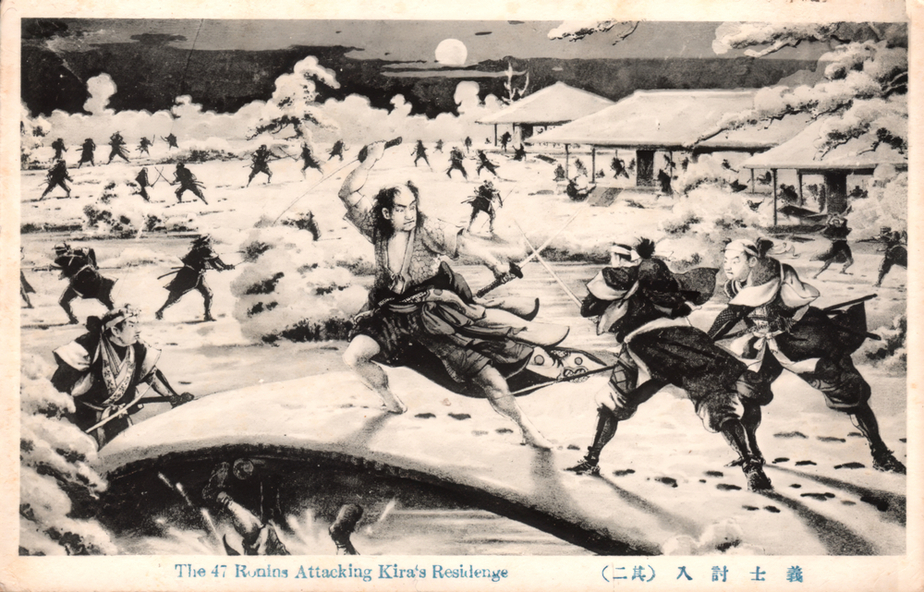
11731.072 This black-and-white card shows armed men fighting in a snow-covered compound. On the card is printed “The 47 Ronins Attacking Kira’s Residence”. The Japanese is printed from right to left and reads: 義士討入(其二)」 — “The loyal retainers’ raid (Part Two).”
11731.073 This black-and-white card shows armed men fighting in a snow-covered courtyard. On the card is printed “The 47 Ronins Attacking Kira’s Residence”. The Japanese is printed from right to left and reads: 義士襲門討入 總大將 大石主稅」 — “The loyal retainers storming the gate during the raid; commander-in-chief Ōishi Chikara.”
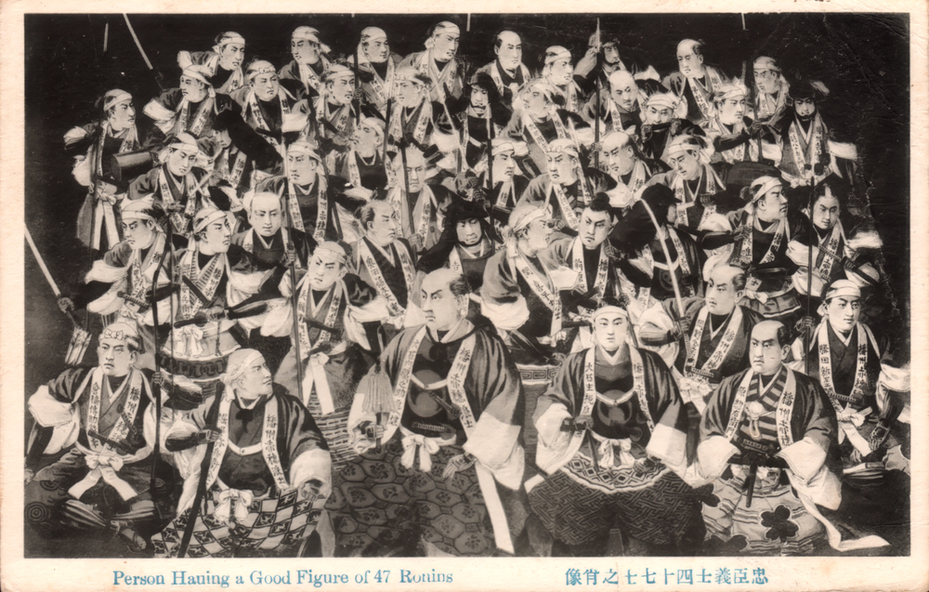
11731.074 This black-and-white card shows a group portrait of the forty-seven rōnin. On the card is printed “Person Hauing a Good Figure of 47 Ronins”. The Japanese is printed from right to left and reads: 忠臣義士四十七士之肖像」 — “Portraits of the Forty-seven Loyal Retainers.”
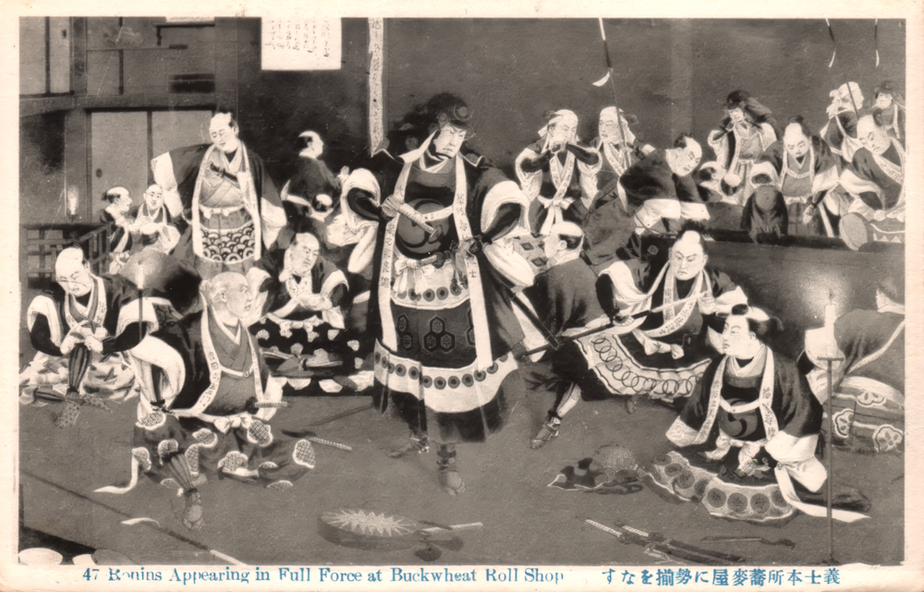
11731.075 This black-and-white card shows a group of rōnin gathered inside a shop. On the card is printed “47 Ronins Appearing in Full Force at Buckwheat Roll Shop”. The Japanese is printed from right to left and reads: 義士本所蕎麥屋に勢揃をなす」 — “The loyal retainers assemble in full force at a soba shop in Honjo.”
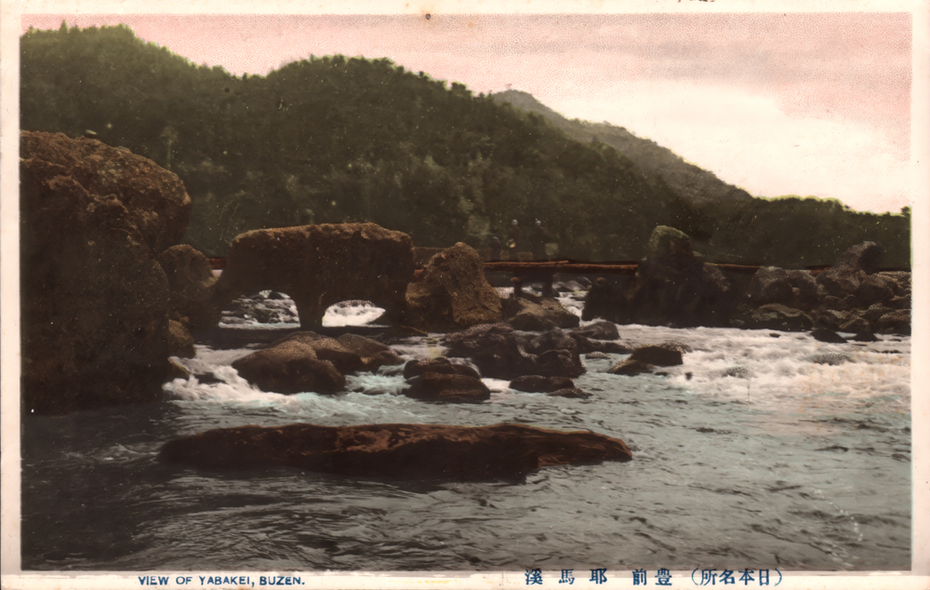
11731.076 This coloured card shows a rocky river crossed by a low stone bridge, with wooded hills behind. On the card is printed “VIEW OF YABAKEI, BUZEN”. The Japanese is printed from right to left and reads:(日本名所)豊前耶馬溪」 — “Yabakei, Buzen—a famous place in Japan.”
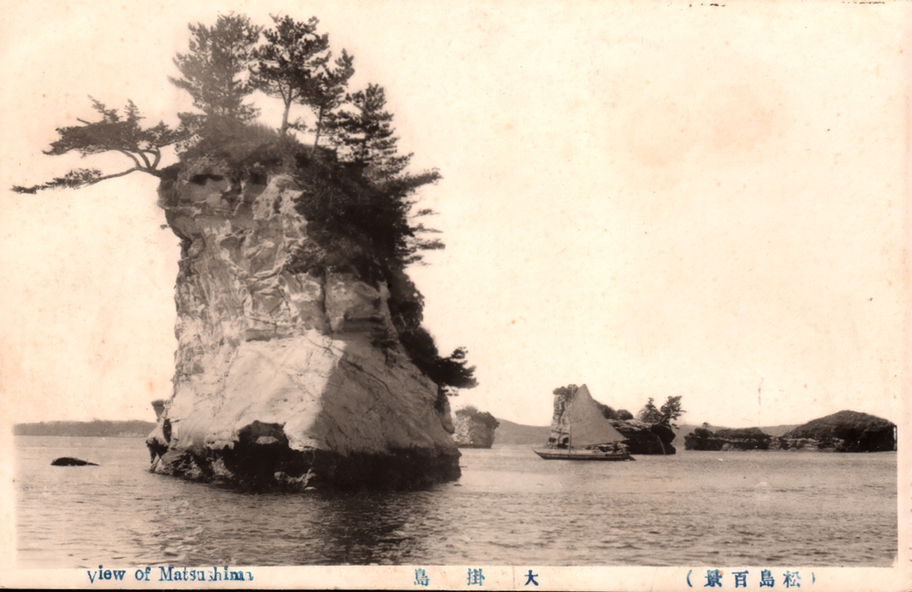
11731.077 This black-and-white card shows a tall rocky islet topped with pine trees, with a sailing boat and smaller islands in the distance. On the card is printed “View of Matsushima”. The Japanese is printed from right to left and reads:(松島百景)大掛島」 — “Ōgake Island (One Hundred Views of Matsushima).”
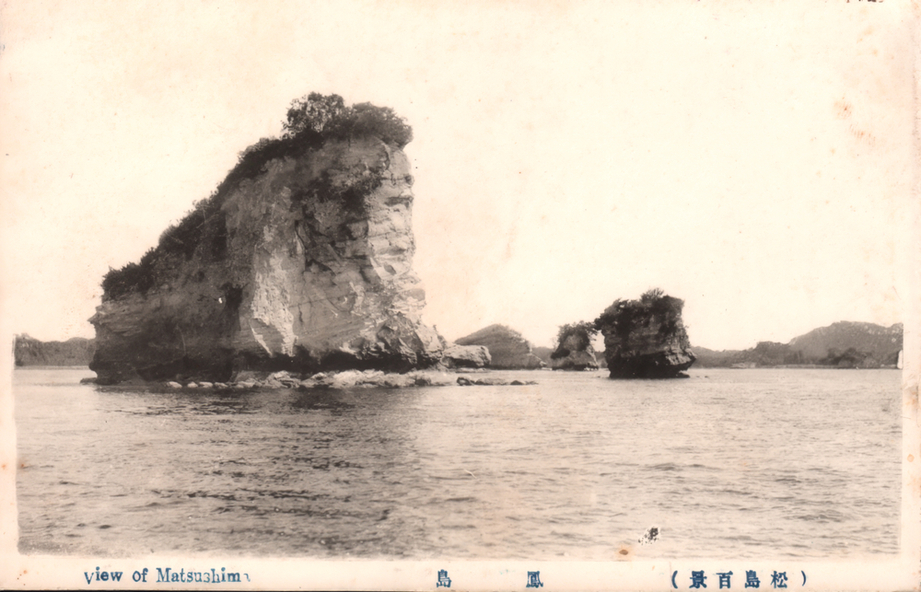
11731.078 This black-and-white card shows rocky islands in a bay. On the card is printed “View of Matsushima”. The Japanese is printed from right to left and reads:
(松島百景)鳳島」 — “Phoenix Island (One Hundred Views of Matsushima).”
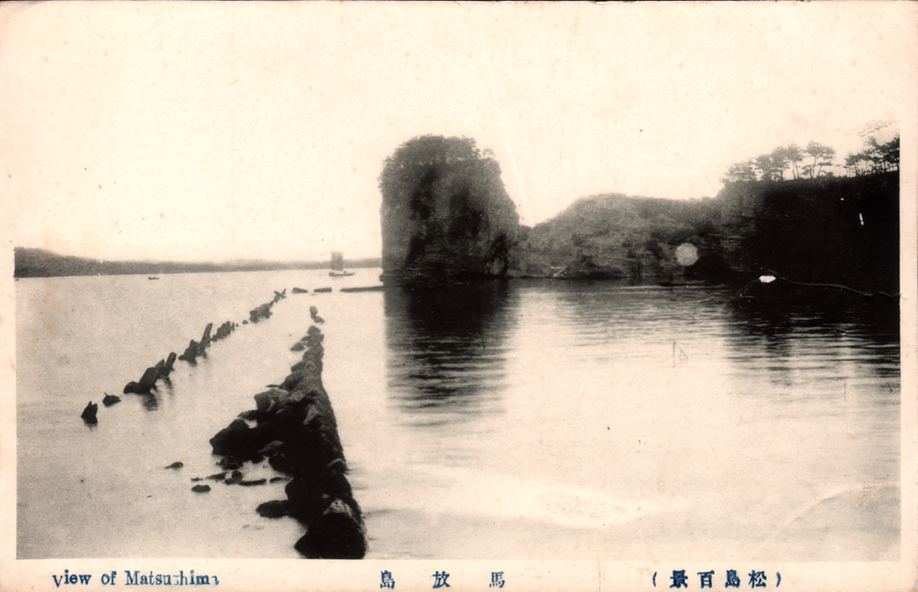
11731.079 This black-and-white card shows rocky islands in a calm bay. On the card is printed “view of Matsushima”. The Japanese is printed from right to left and reads:
(松島百景)馬放島」 — “Mahanashi Island (One Hundred Views of Matsushima).”
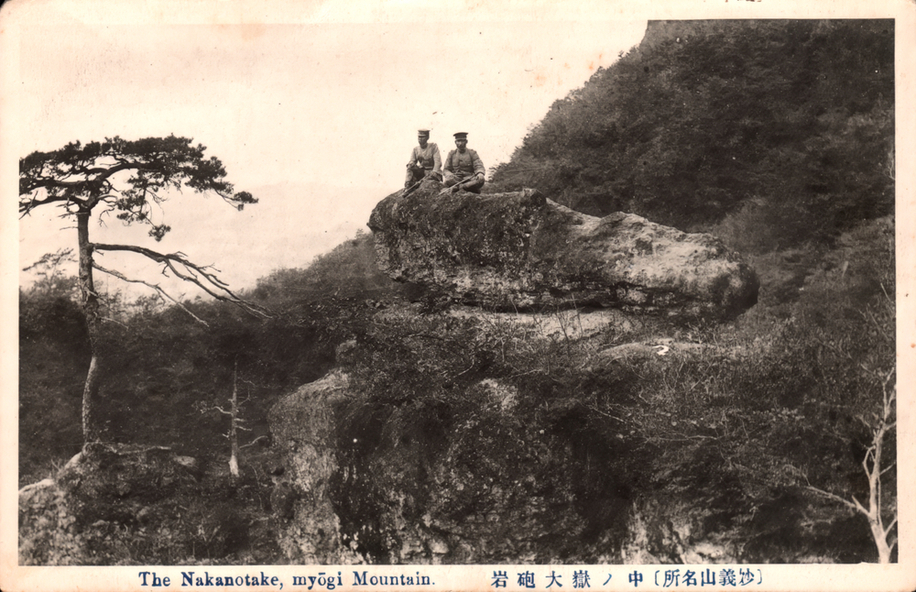
11731.080 This black-and-white card shows two men seated on a large rock outcrop in a wooded mountain landscape. On the card is printed “The Nakanotake, myōgi Mountain.)”. The Japanese is printed from right to left and reads:
(妙義山名所)中ノ嶽大砲岩」 — “Cannon Rock at Nakanotake, a famous sight of Mount Myōgi.”
