



Historical information
Thought to have originated in Austria in 1869, postcards first gained popularity in Australia in the 1890s.They were used to send short messages to friends and family.
This collection was generated by Mary Emma Elliot of Talgarno.
Talgarno is a rural locality in Victoria, Australia, situated on the southern shoreline of Lake Hume, about 23 km east of Albury-Wodonga. The collection contains postcards from across the world.
Mary Emma Sibley was born in Ironbark, Bendigo in 1859.
She married James Elliot in 1893 and they settled at “Kelso”, Talgarno.
They had two children – Mona and Sibley.
Mary Emma Elliot died in Melbourne in 1944, aged 84 years.
Physical description
This item contains the following:
Twenty Japanese postcards collected by Mrs James Elliot between 1898 and 1915.
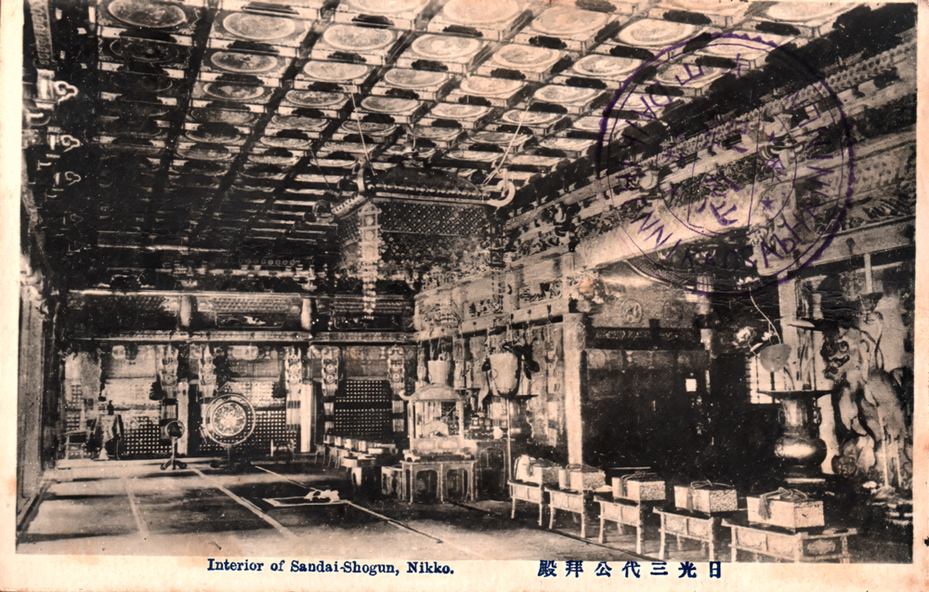
11731.081 This black-and-white card shows the richly decorated interior of a shrine hall. On the card is printed “Interior of Sandai-Shogun, Nikko”. The Japanese 日光三代公拜殿 translates as “Worship Hall of the Third Shogun, Nikkō.”
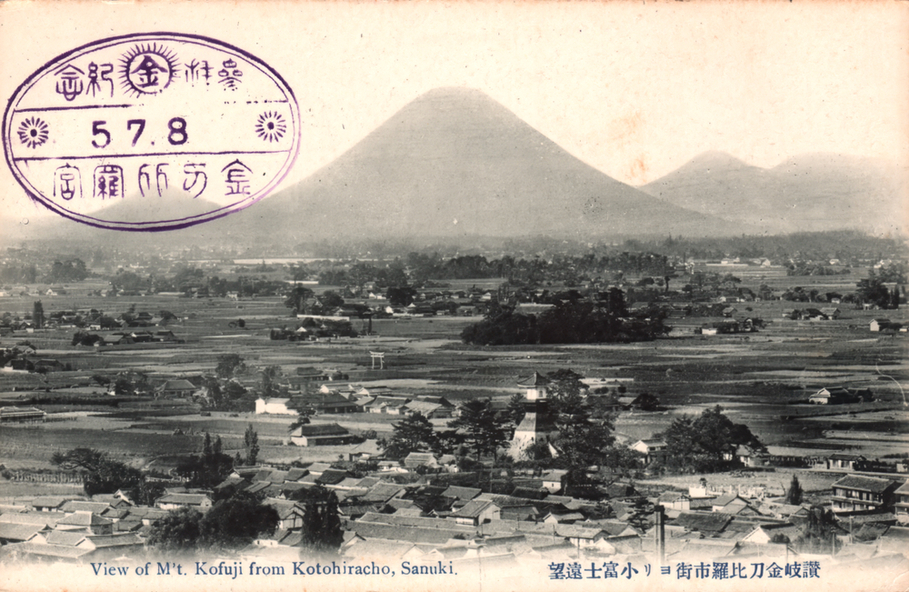
11731.082 This black-and-white card shows a town and fields with a mountain in the background. On the card is printed “View of Mt. Kofuji from Kotohiracho, Sanuki.” The Japanese is printed from right to left and reads 讃岐金刀比羅市街ヨリ小富士遠望, translating as “Distant view of Mount Kofuji from the town of Kotohira, Sanuki.” The Japanese stamp is read mainly from right to left:
参拝記念 — “Commemoration of a visit to the shrine”
金刀比羅宮 — “Kotohira-gū Shrine” or “Konpira Shrine”
The central 金 is the first character of the shrine’s name.
5.7.8 is a date: year 5, seventh month, eighth day; the era name is not shown.
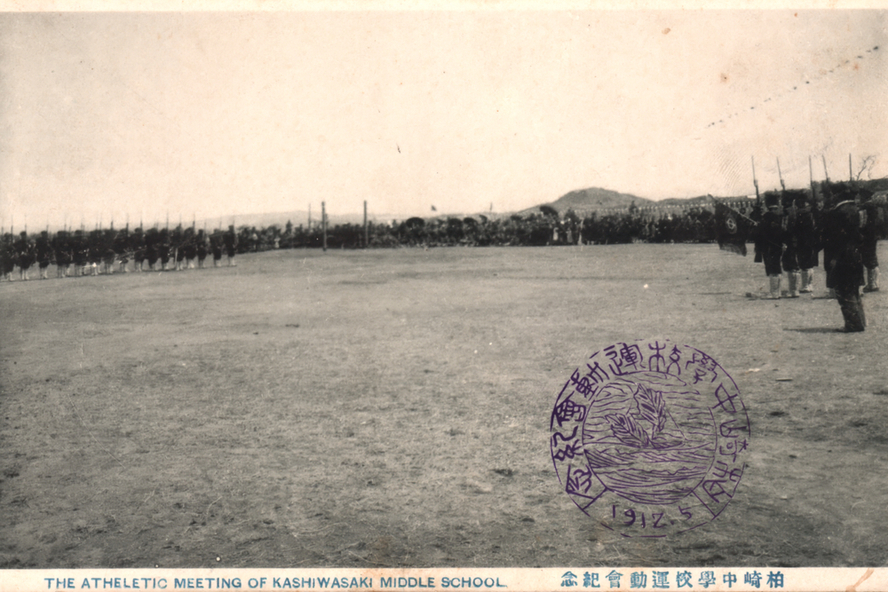
11731.083 This black-and-white card shows students assembled in formation on a school athletic field. On the card is printed “THE ATHELETIC MEETING OF KASHIWASAKI MIDDLE SCHOOL”. The Japanese is printed from right to left and reads 柏崎中學校運動會紀念, translating as “Commemoration of the Kashiwazaki Middle School athletic meeting.” The circular stamp also shows the date 1912.5; some of its surrounding characters are not clear enough to transcribe confidently.
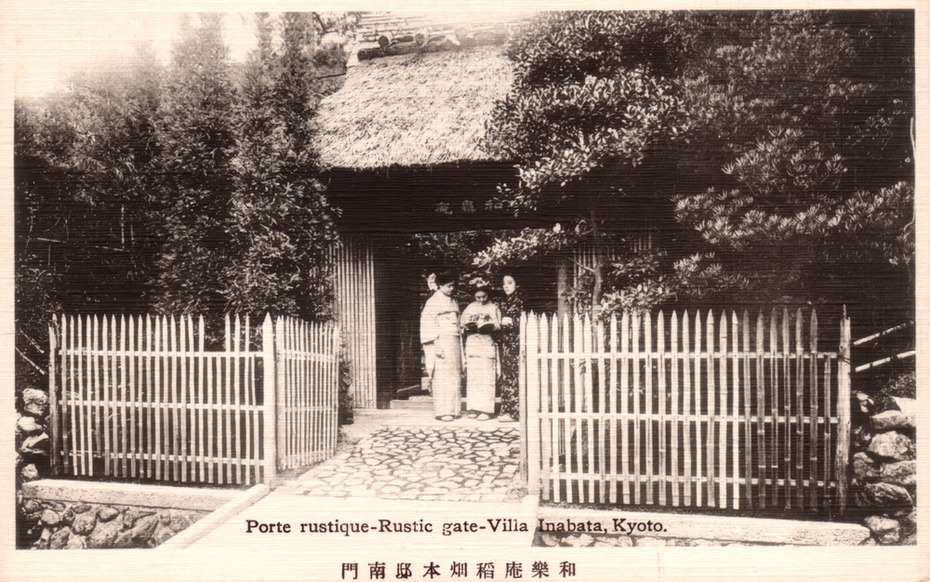
11731.084 This black-and-white card shows three women standing at the rustic entrance gate of a villa. On the card is printed “Porte rustique-Rustic gate-Villa Inabata, Kyoto”. The Japanese is printed from right to left and reads 和樂庵稻畑本邸南門, translating as “South gate of the Inabata main residence, Waraku-an.”
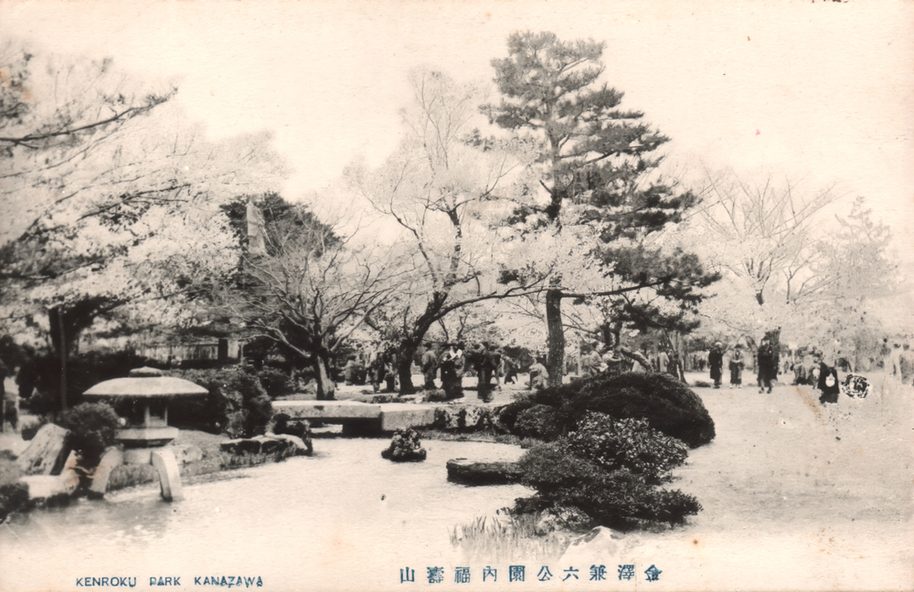
11731.085 This black-and-white card shows a landscaped park with a pond, trees and visitors. On the card is printed “KENROKU PARK KANAZAWA”. The Japanese is printed from right to left and reads 金澤兼六公園内福壽山, translating as “Fukujū Hill in Kenroku Park, Kanazawa.”
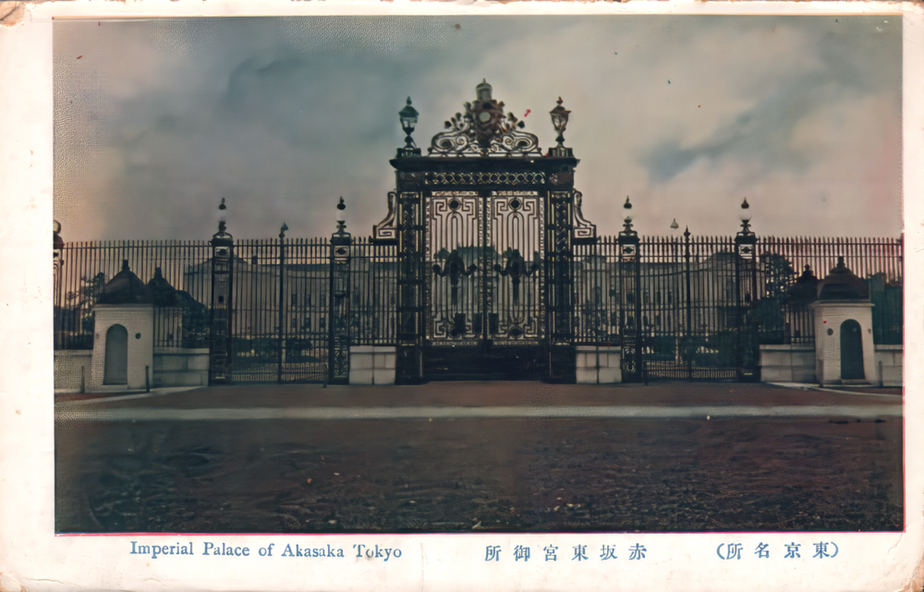
11731.086 This coloured card shows the ornate entrance gates of a palace. On the card is printed “Imperial Palace of Akasaka Tokyo”. The Japanese is printed from right to left and reads (東京名所)赤坂東宮御所, translating as “Akasaka Crown Prince’s Palace (a famous place in Tokyo).”
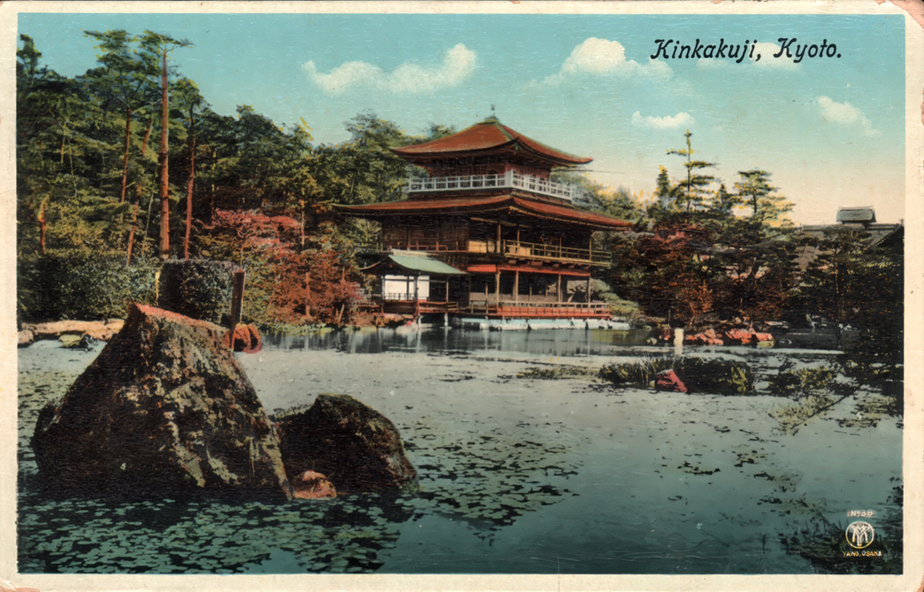
11731.087 This coloured card shows Kinkakuji beside a pond. On the card is printed “Kinkakuji, Kyoto.” and “YANO, OSAKA”. There are no visible Japanese characters. Kinkakuji is the romanised Japanese name 金閣寺, meaning “Temple of the Golden Pavilion.”
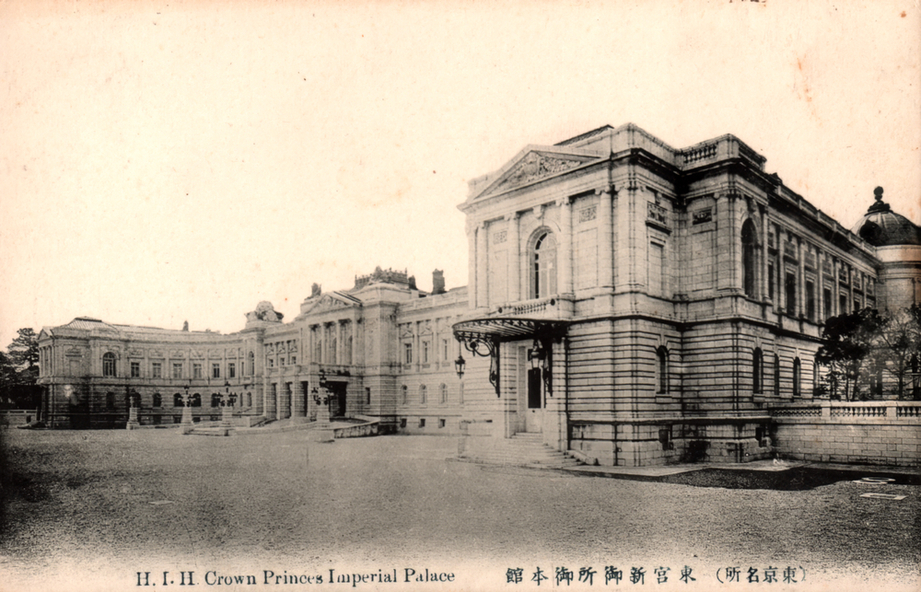
11731.088 This black-and-white card shows the exterior of a large imperial palace building. On the card is printed “H. I. H. Crown Prince’s Imperial Palace”. The Japanese is printed from right to left and reads (東京名所)東宮新御所御本館, translating as “Main building of the Crown Prince’s New Palace (a famous place in Tokyo).”
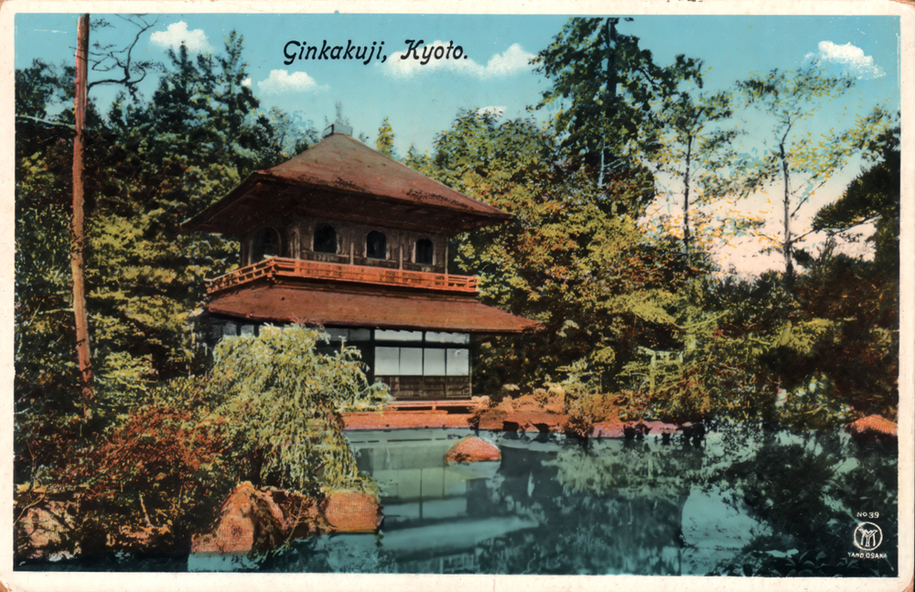
11731.089 This coloured card shows Ginkakuji beside a pond and garden. On the card is printed “Ginkakuji, Kyoto.”, “NO 39” and “YANO, OSAKA”. There are no visible Japanese characters. Ginkakuji is the romanised Japanese name 銀閣寺, meaning “Temple of the Silver Pavilion.”
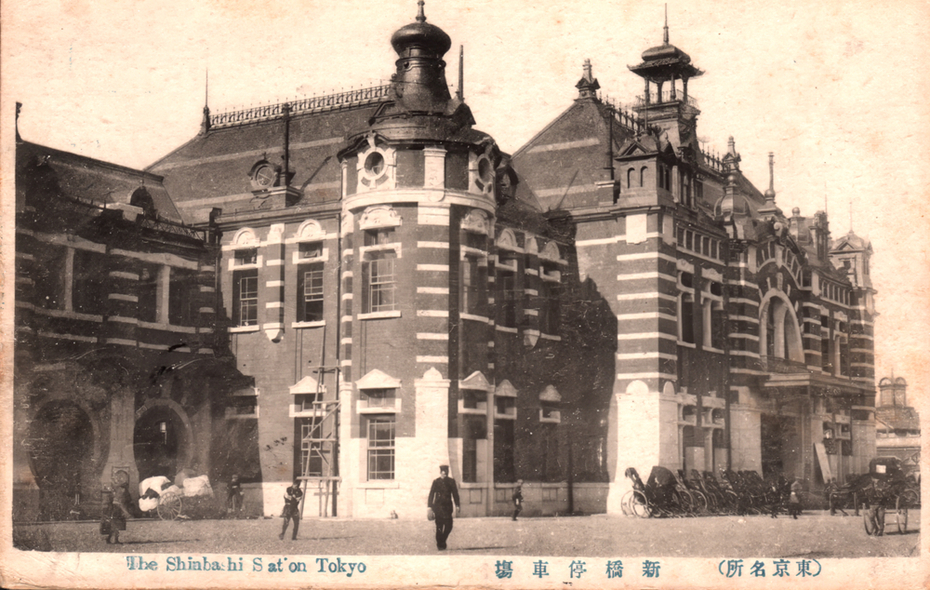
11731.090 This black-and-white card shows the exterior of a large railway station. On the card is printed “The Shinbashi S at'on Tokyo”. The Japanese is printed from right to left and reads (東京名所)新橋停車場, translating as “Shinbashi Railway Station (a famous place in Tokyo).”
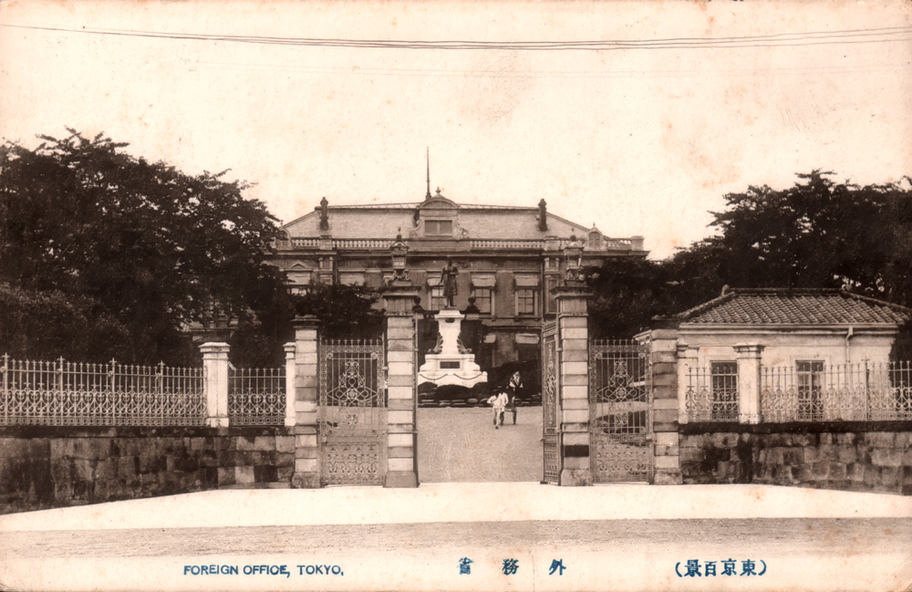
11731.091 This black-and-white card shows the entrance to a government building behind ornamental gates. On the card is printed “FOREIGN OFFICE, TOKYO”. The Japanese is printed from right to left and reads 外務省(東京百景), translating as “Foreign Office (One Hundred Views of Tokyo).”
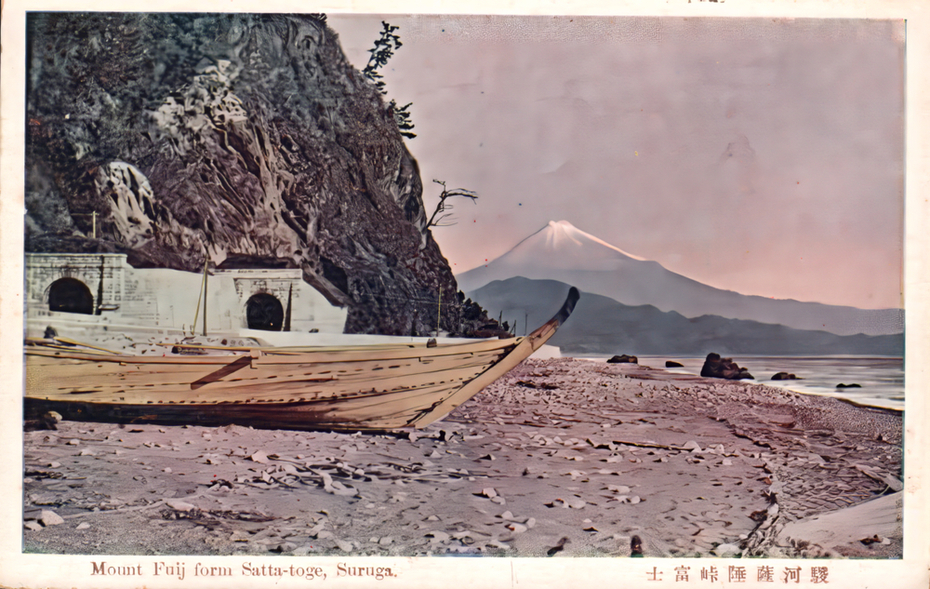
11731.092 This coloured card shows boats on a rocky shore with Mount Fuji in the distance. On the card is printed “Mount Fuji form Satta-toge, Suruga”. The Japanese is printed from right to left and reads 駿河薩埵峠富士, translating as “Mount Fuji from Satta Pass, Suruga.”
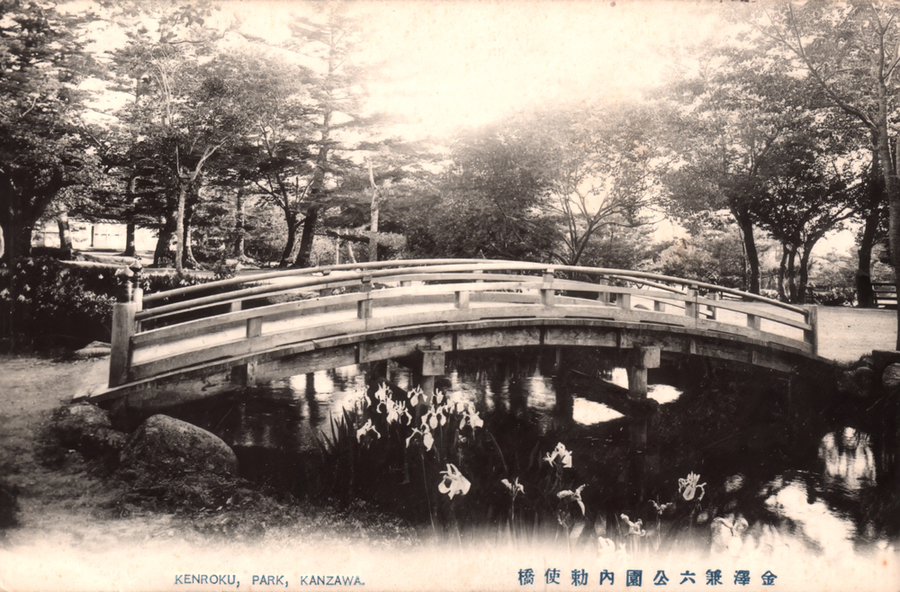
11731.093 This black-and-white card shows an arched wooden bridge over a pond in a landscaped park. On the card is printed “KENROKU, PARK, KANZAWA”. The Japanese is printed from right to left and reads 金澤兼六公園内勅使橋, translating as “Chokushi Bridge in Kenroku Park, Kanazawa.”
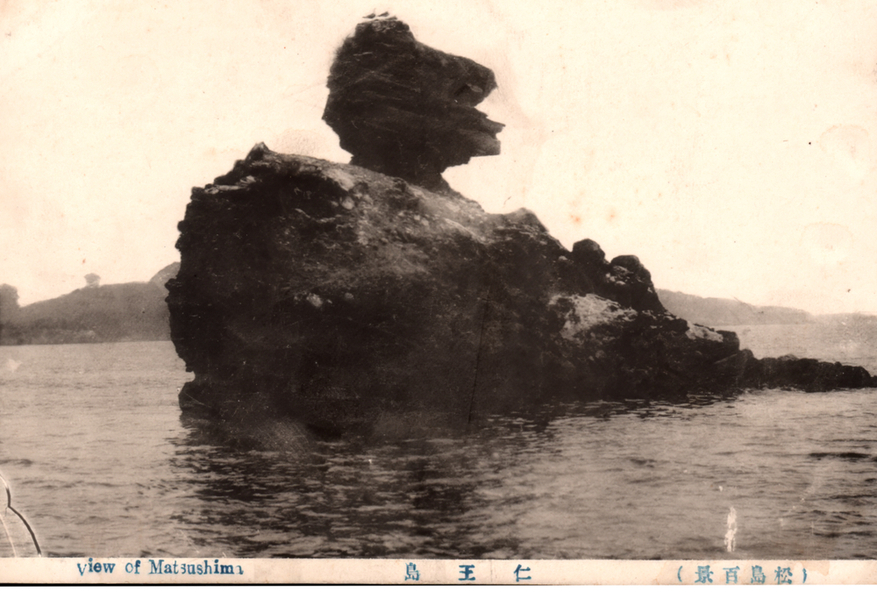
11731.094 This black-and-white card shows a large rock formation rising from the sea. On the card is printed “view of Matsushima”. The Japanese is printed from right to left and reads 仁王島(松島百景), translating as “Niō Island (One Hundred Views of Matsushima).”
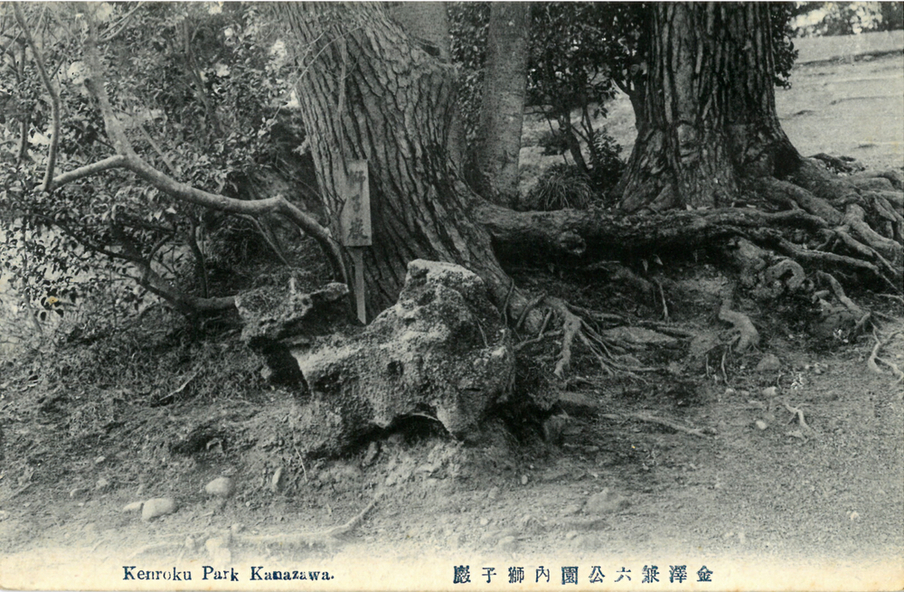
11731.095 This black-and-white card shows a rock formation beneath large trees in a park. On the card is printed “Kenroku Park Kanazawa”. The Japanese is printed from right to left and reads 金澤兼六公園内獅子巖, translating as “Lion Rock in Kenroku Park, Kanazawa.” The sign on the tree reads vertically: 獅子巖 — “Lion Rock” (Shishi-iwa).
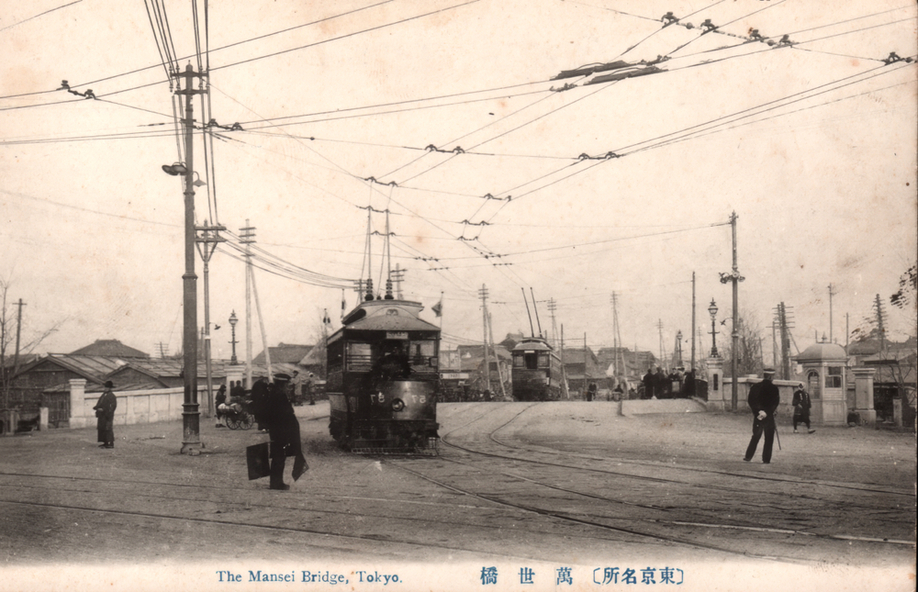
11731.096 This black-and-white card shows electric trams and pedestrians near a bridge. On the card is printed “The Mansei Bridge, Tokyo”. The Japanese is printed from right to left and reads (東京名所)萬世橋, translating as “Mansei Bridge (a famous place in Tokyo).”
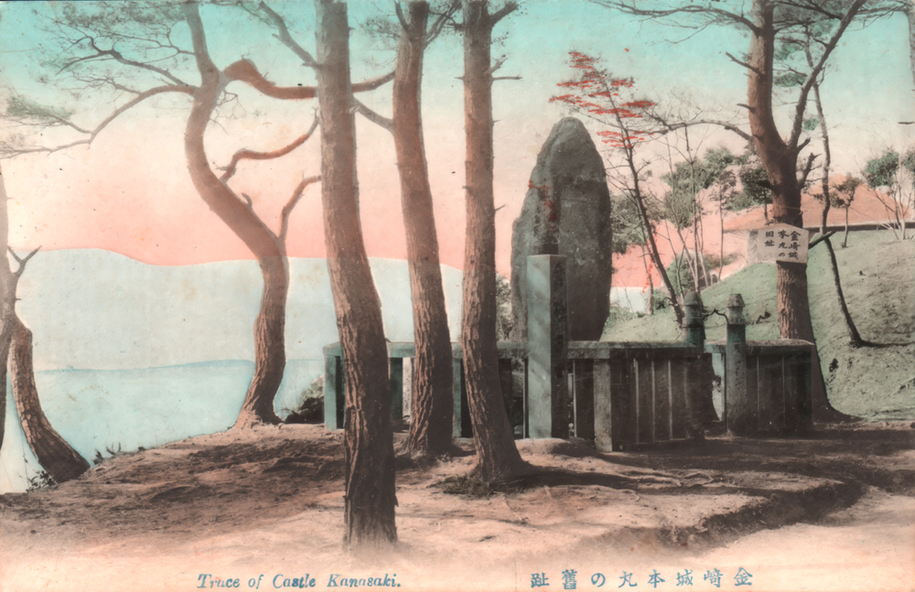
11731.097 This coloured card shows a stone monument among trees beside the water. On the card is printed “Truce of Castle Kannsaki”. The caption is printed from right to left and reads 金崎城本丸の舊趾. The sign uses the modern form 金崎城本丸の旧址. Both translate as “Former site of the main enclosure of Kanegasaki Castle.” The sign on the tree reads: 金崎城 本丸の旧址 This translates as: “Former site of the main enclosure of Kanegasaki Castle.”
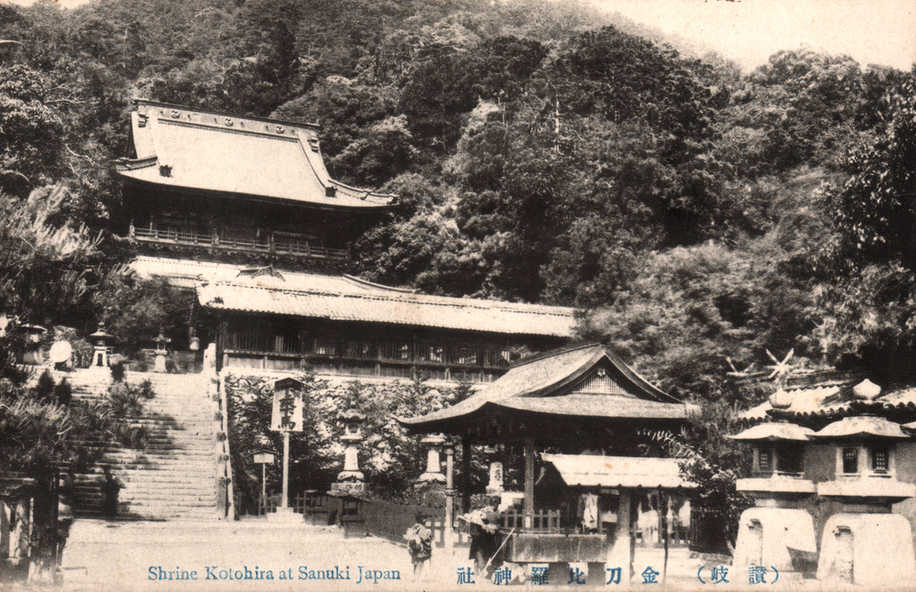
11731.098 This black-and-white card shows shrine buildings and stone steps on a wooded hillside. On the card is printed “Shrine Kotohira at Sanuki Japan”. The Japanese caption is printed from right to left and reads 金刀比羅神社(讃岐), translating as “Kotohira Shrine, Sanuki.” The sign 本宮 translates as “Main Shrine.”
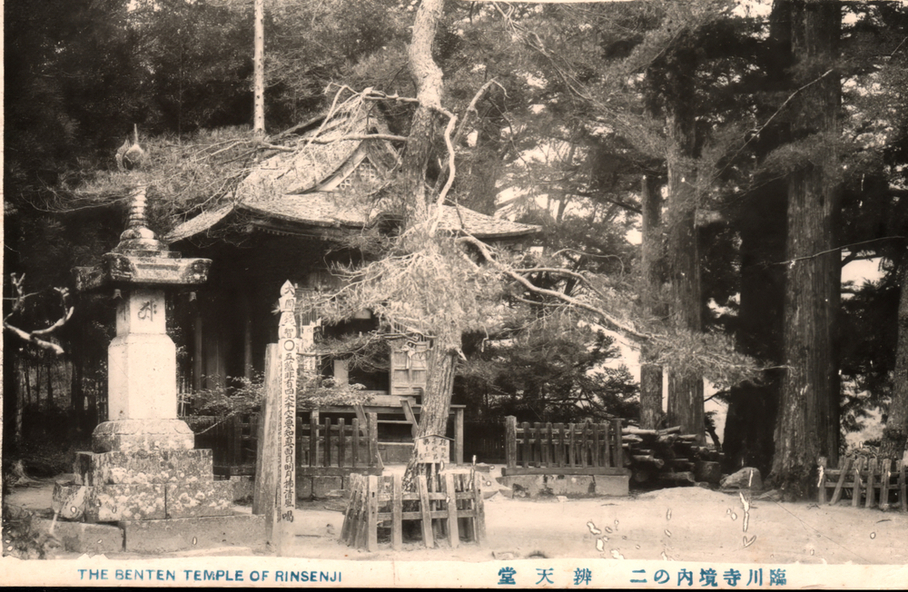
11731.099 This black-and-white card shows a small temple building among trees. On the card is printed “THE BENTEN TEMPLE OF RINSENJI”. The Japanese is printed from right to left and reads 臨川寺境内の辨天堂, translating as “Benten Hall in the grounds of Rinsenji Temple.” The clearest wording on the vertical sign appears to be: 大開帳紀念 — “Commemoration of the grand unveiling of a sacred image” It also includes: 五月廿四日 — “24 May” The remaining characters are too blurred and partly obscured to transcribe reliably.
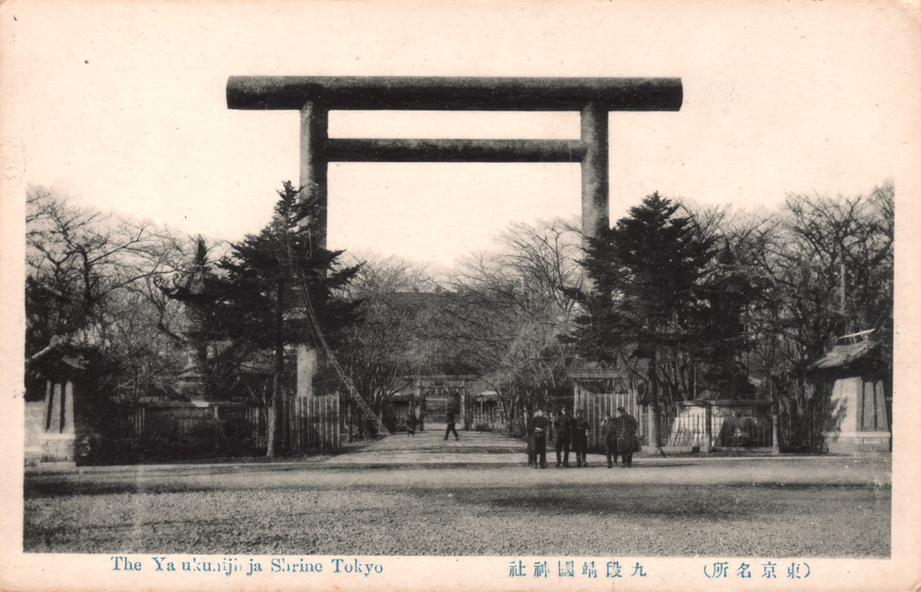
11731.100 This black-and-white card shows a large torii gate at the entrance to a shrine. On the card is printed “The Yasukunjija Shrine Tokyo". The Japanese is printed from right to left and reads 九段靖國神社(東京名所), translating as “Yasukuni Shrine at Kudan (a famous place in Tokyo).”
