



Historical information
Thought to have originated in Austria in 1869, postcards first gained popularity in Australia in the 1890s.They were used to send short messages to friends and family.
This collection was generated by Mary Emma Elliot of Talgarno.
Talgarno is a rural locality in Victoria, Australia, situated on the southern shoreline of Lake Hume, about 23 km east of Albury-Wodonga. The collection contains postcards from across the world.
Mary Emma Sibley was born in Ironbark, Bendigo in 1859.
She married James Elliot in 1893 and they settled at “Kelso”, Talgarno.
They had two children – Mona and Sibley.
Mary Emma Elliot died in Melbourne in 1944, aged 84 years.
Physical description
This item contains the following:
Twenty Japanese postcards collected by Mrs James Elliot between 1898 and 1915.
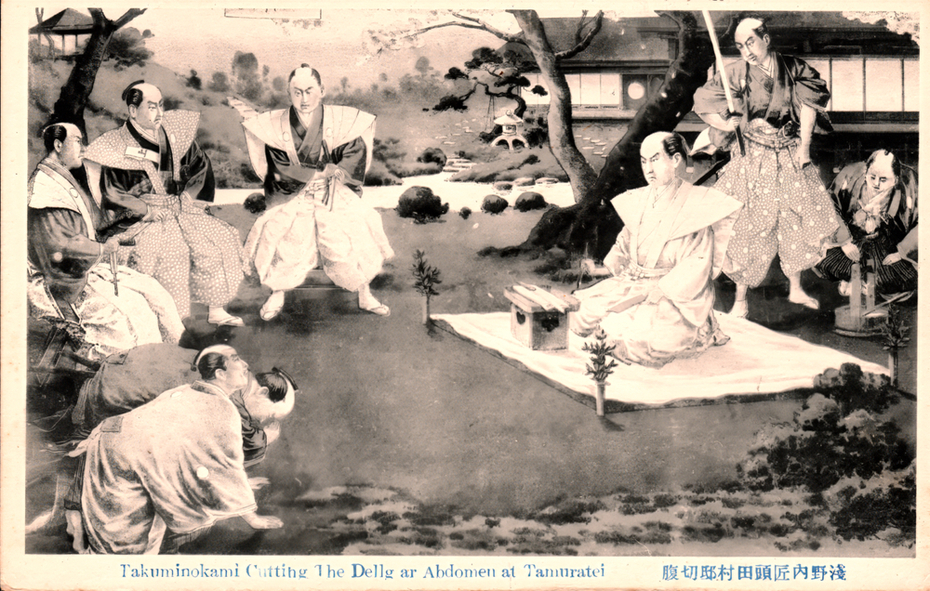
11731.101 This black-and-white card shows a Japanese samurai seated on a mat during a ceremonial abdomen-cutting scene, surrounded by attendants in a garden. On the card is printed “Takuminokami Cutting The Belly or Abdomen at Tamuratei” The Japanese is printed in the traditional right-to-left direction. Read in modern order, it is:
浅野内匠頭田村邸切腹 English translation: “Asano Takumi-no-kami committing seppuku at the Tamura residence.”
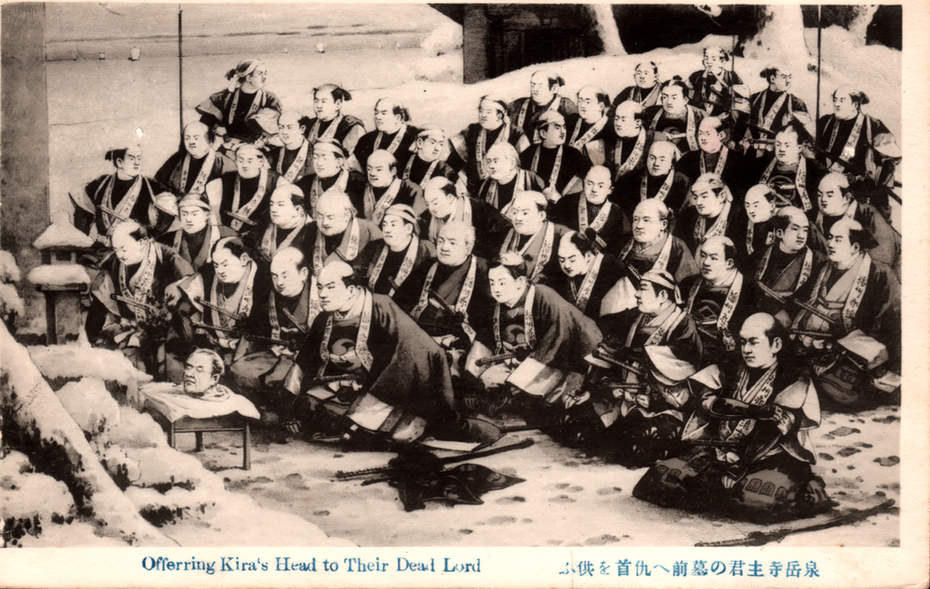
11731.102 This black-and-white card shows a large group of Japanese men kneeling in a snowy setting around a severed head. On the card is printed “Offerring Kira's Head to Their Dead Lord” 泉岳寺主君の墓前へ仇首を供ふ English translation: “Offering the enemy’s head before their lord’s grave at Sengakuji Temple.”
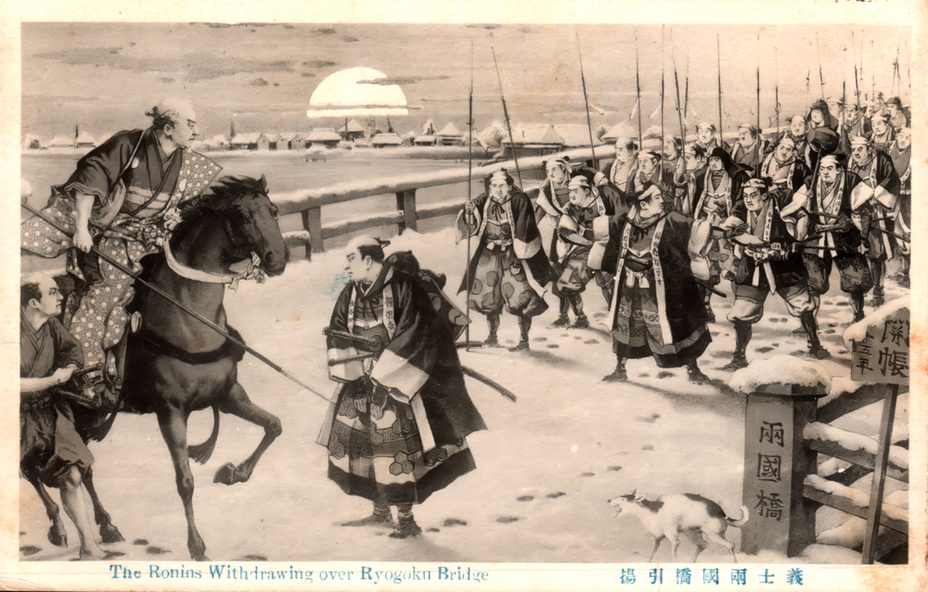
11731.103 This black-and-white card shows a group of Japanese rōnin crossing a snow-covered bridge, with one man on horseback. On the card is printed “The Ronins Withdrawing over Ryogoku Bridge. 義士両國橋引揚 English translation: “The loyal retainers withdrawing over Ryōgoku Bridge.” The clearly readable Japanese on the bridge post is 両國橋, meaning “Ryōgoku Bridge.” The larger characters on the nearby sign read 深川, meaning “Fukagawa.” The smaller characters beside them are not clear enough for me to translate confidently.
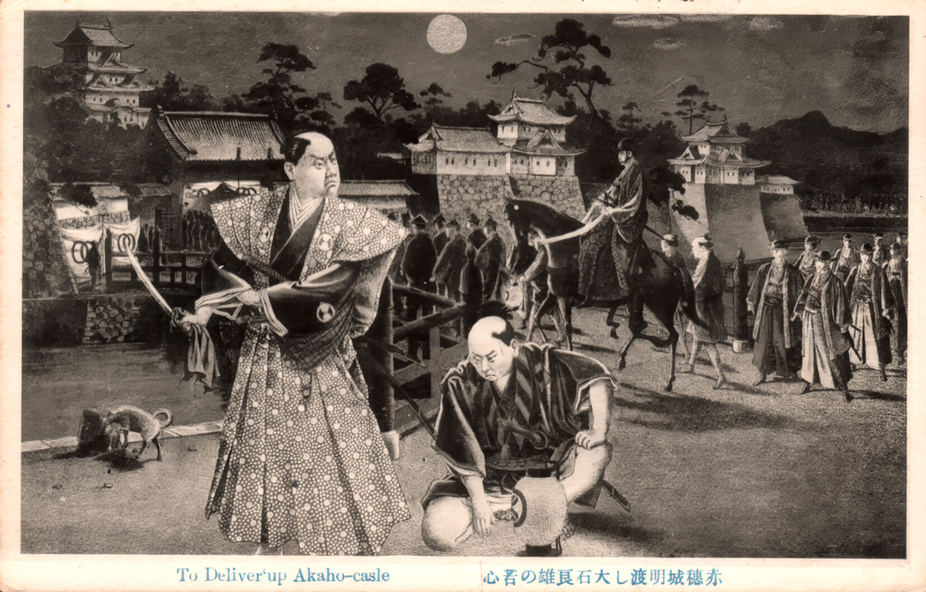
11731.104 This black-and-white card shows Japanese samurai at a castle, with one man standing in the foreground while others approach on horseback and on foot. On the card is printed “To Deliver'up Akaho-casle” The Japanese caption is printed right-to-left. Read in modern order, it is: 赤穂城明渡し大石良雄の苦心 English translation: “Ōishi Yoshio’s difficulties in surrendering Akō Castle.”
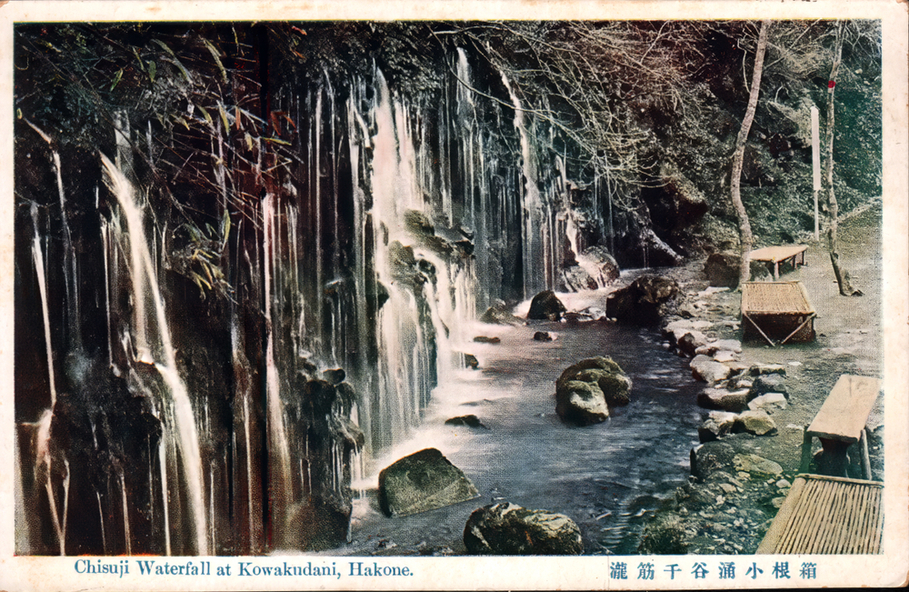
11731.105 This coloured card shows a waterfall cascading over a rock face into a stream. On the card is printed “Chisuji Waterfall at Kowakudani, Hakone.” The Japanese is printed right-to-left. Read in modern order, it is: 箱根小涌谷千筋瀧 English translation: “Chisuji Waterfall at Kowakudani, Hakone.” 瀧 is the older form of 滝, meaning “waterfall.”
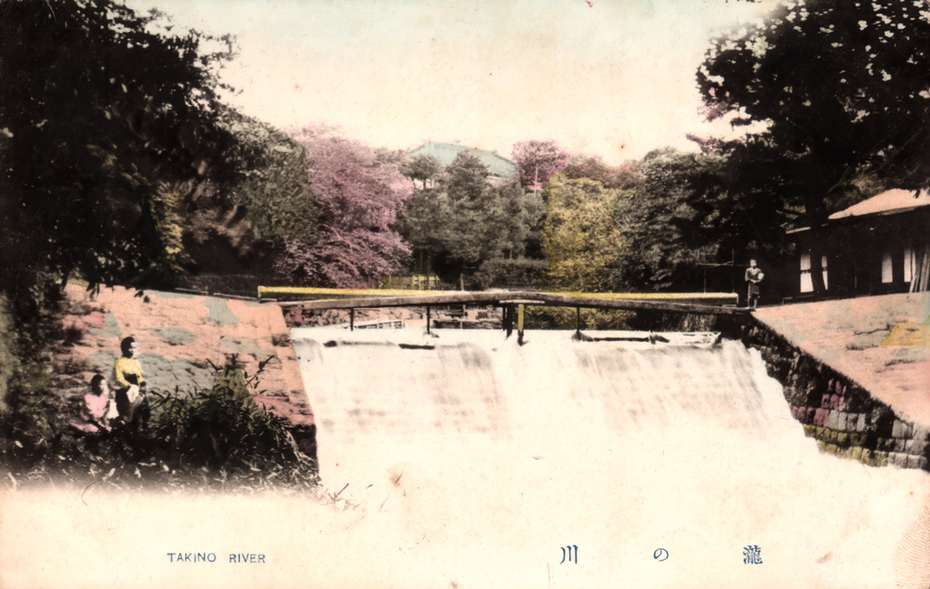
11731.106 This coloured card shows a waterfall or weir across a river, surrounded by trees, with several people nearby. On the card is printed “TAKINO RIVER” The Japanese is printed right-to-left. Read in modern order, it is: 瀧の川 English translation: “Waterfall River” or, more literally, “River of the Waterfall.”
瀧 = waterfall
の = of
川 = river
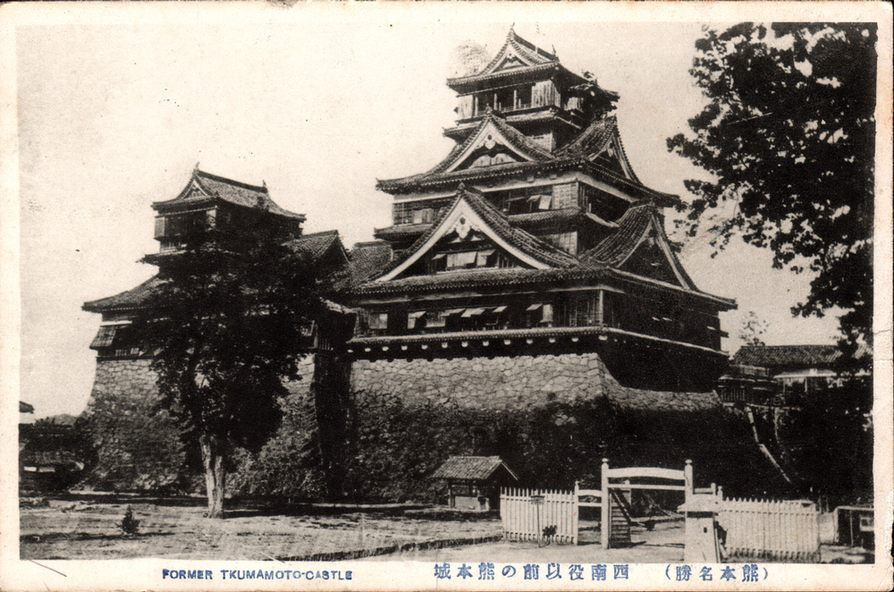
11731.107 This black-and-white card shows a large traditional Japanese castle complex. On the card is printed “FORMER TKUMAMOTO-CASTLE.” The Japanese is printed right-to-left. Read in modern order, it is:(熊本名勝)西南役以前の熊本城 English translation: “(Famous view of Kumamoto) Kumamoto Castle before the Satsuma Rebellion.”
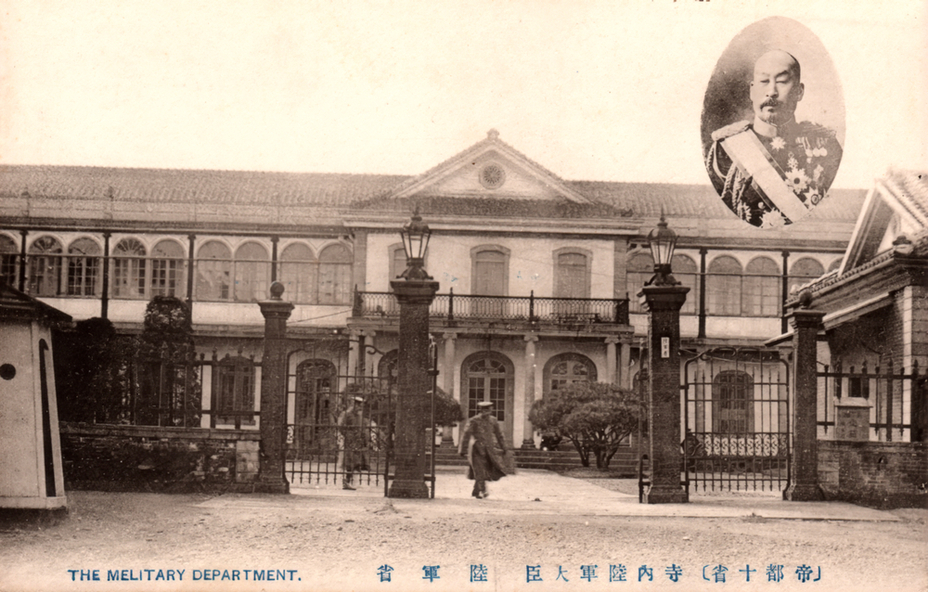
11731.108 This black-and-white card shows the entrance and façade of a large government building, with an inset portrait of a uniformed military officer. On the card is printed “THE MELITARY DEPARTMENT.” The Japanese is printed right-to-left. Read in modern order, the clearly visible characters are:
(帝都十省)寺内陸軍大臣 陸軍省 The principal wording translates as: “Army Ministry — Army Minister Terauchi.”
陸軍省 — “Army Ministry” or “Ministry of the Army”
寺内陸軍大臣 — “Army Minister Terauchi”
帝都 — “Imperial Capital”
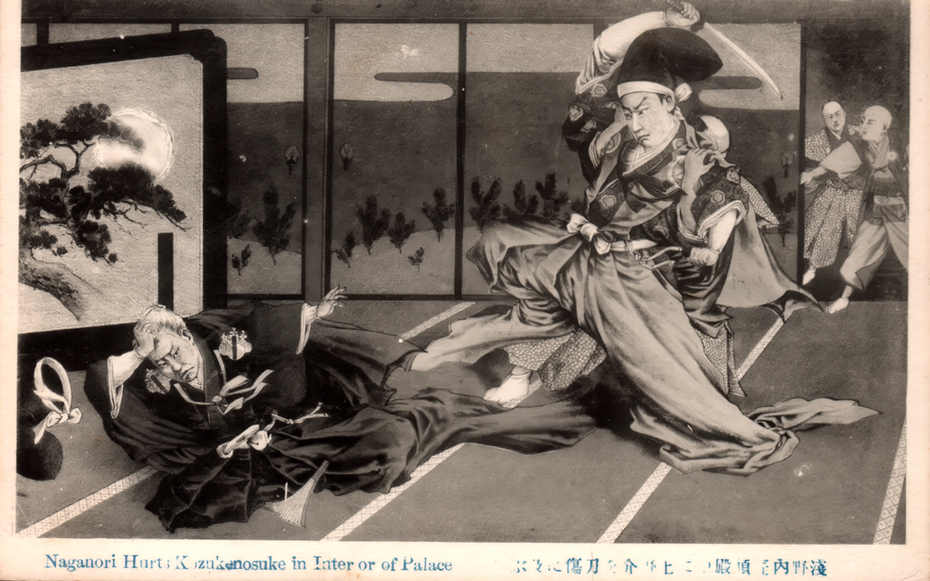
11731.109 This black-and-white card shows a Japanese samurai attacking another man with a sword inside a palace. On the card is printed “Naganori Hurt; Kozukenosuke in Inter or of Palace” The Japanese is printed right-to-left. Read in modern order, it is: 浅野内匠頭殿中にて上野介を刃傷に及ぶ English translation: “Asano Takumi-no-kami wounds Kōzuke-no-suke with a sword inside the palace.”
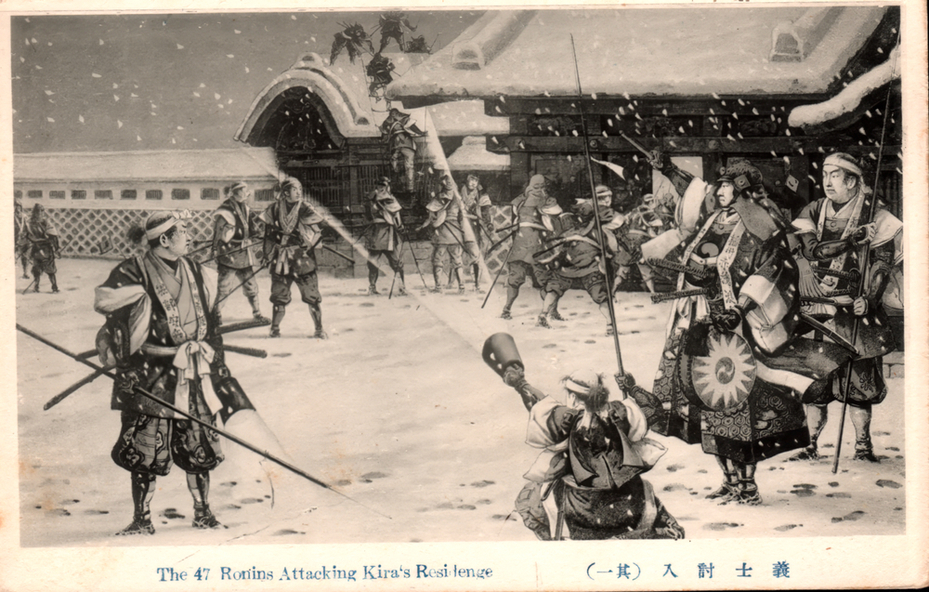
11731.110 This black-and-white card shows armed Japanese samurai attacking a residence in the snow. On the card is printed “The 47 Ronins Attacking Kira's Residence” The Japanese is printed right-to-left. Read in modern order, it is: 義士討入(其一)English translation: “The loyal retainers’ attack (Part One).”
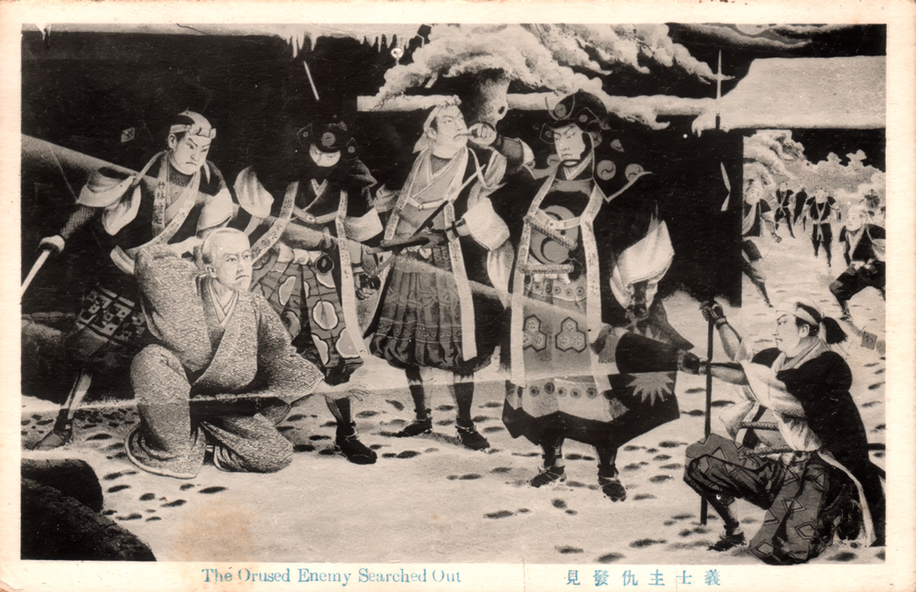
11731.111 This black-and-white card shows a group of armed Japanese samurai surrounding an older man in a snowy setting. On the card is printed “The Orused Enemy Searched Out” The Japanese is printed right-to-left. Read in modern order, it is: 義士主仇發見 English translation: “The loyal retainers discover their lord’s enemy.”
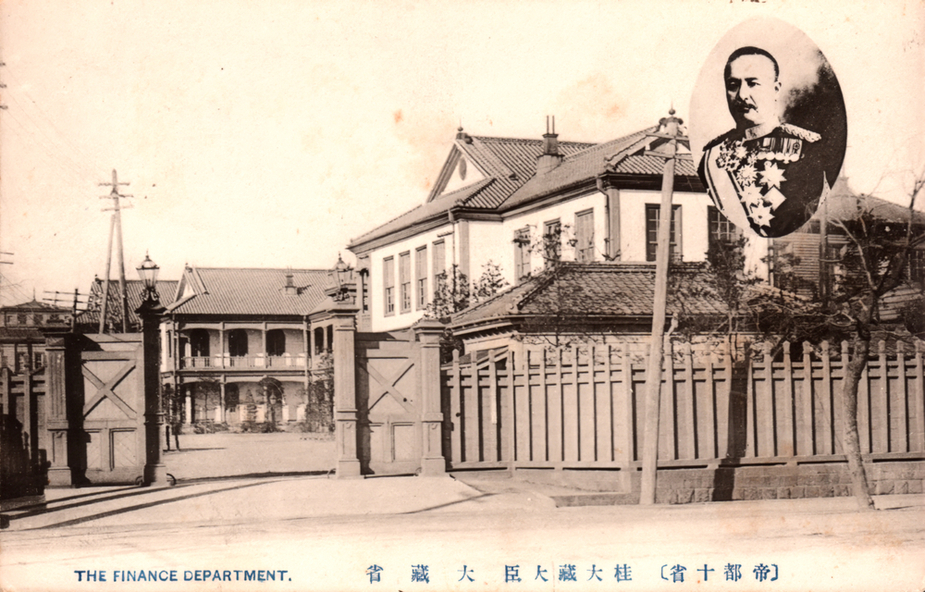
11731.112 This black-and-white card shows the entrance and buildings of a government department, with an inset portrait of a uniformed man. On the card is printed “THE FINANCE DEPARTMENT.” The Japanese is printed right-to-left. Read in modern order, it is:(帝都十省)桂大藏大臣 大藏省 English translation: “(Ten Ministries of the Imperial Capital) Finance Minister Katsura — Ministry of Finance.” 大藏省 — “Ministry of Finance” 桂大藏大臣 — “Finance Minister Katsura” 帝都十省 — “Ten Ministries of the Imperial Capital”
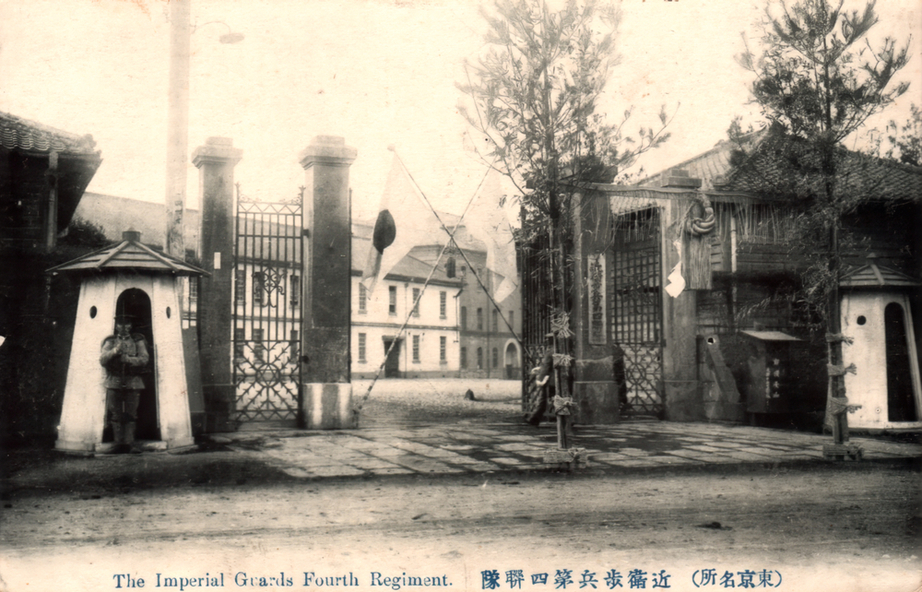
11731.113 This black-and-white card shows the entrance to a military compound, with gated entrances, sentry boxes and guards. On the card is printed “The Imperial Guards Fourth Regiment.” The Japanese is printed right-to-left. Read in modern order, it is:(東京名所)近衛歩兵第四聯隊 English translation: “(Tokyo sight) Fourth Infantry Regiment of the Imperial Guard.”
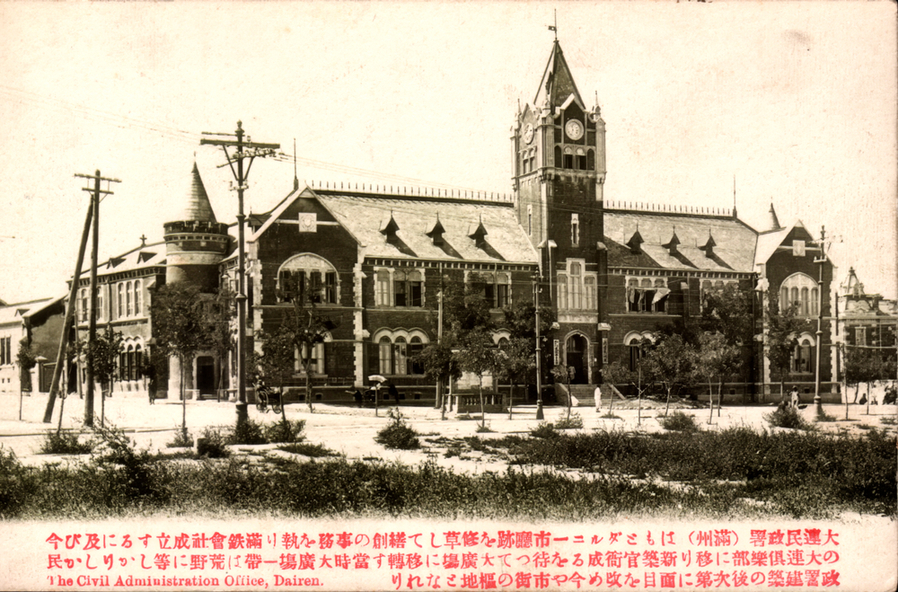
11731.114 This black-and-white card shows a large civic building with a prominent central clock tower. On the card is printed “The Civil Administration Office, Dairen.” together with a Japanese description in red. The Japanese is printed in the traditional right-to-left direction. The main text begins:
大連民政署(満州)はもとダルニー市廳跡を修繕して創設の事務を執り… and continues by describing the office moving to the Dairen Club, then to a newly constructed government building at the Great Square, and the subsequent development of the surrounding area. English translation:
“The Dairen Civil Administration Office (Manchuria) was originally established in the renovated former Dальny municipal offices. When the South Manchuria Railway Company was established, the office moved to what is now the Dairen Club, and later, after a new government building was completed, moved to the Great Square. At that time the area around the Great Square was largely undeveloped wasteland. Following the construction of government buildings, the district gradually changed in appearance and has now become a central part of the city.” The English caption “The Civil Administration Office, Dairen.” corresponds to the principal Japanese subject 大連民政署, meaning “Dairen Civil Administration Office.”
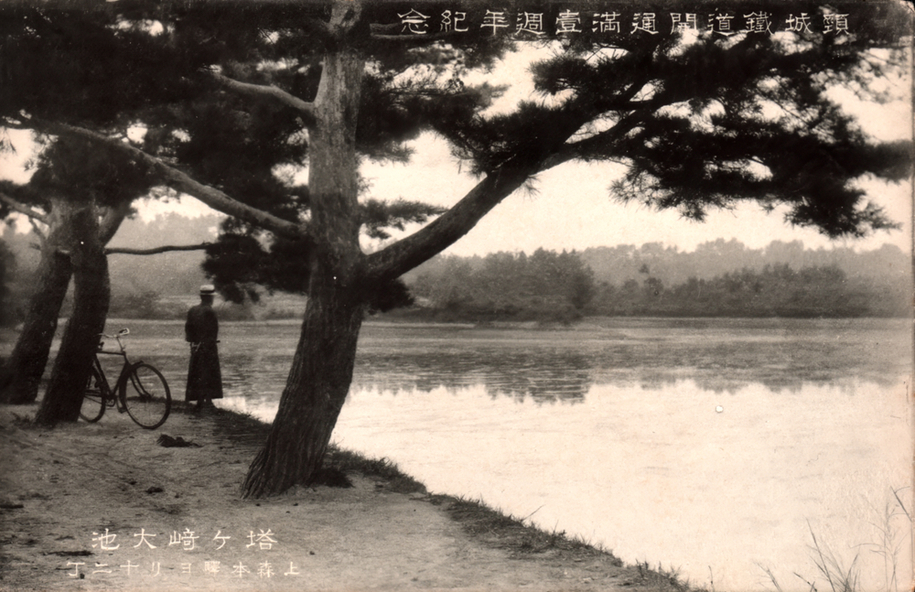
11731.115 This black-and-white card shows a tree-lined pond or lake, with a man standing beside a bicycle on the shore. The Japanese is printed right-to-left. Read in modern order, it is: 鎭城鐵道開通滿壹週年紀念塔ヶ崎大池上森本驛ヨリ十二丁 English translation: “Commemorating the first anniversary of the opening of the Chinjō Railway.” “Tōgasaki Great Pond.” “Twelve chō from Kamimorimoto Station.”
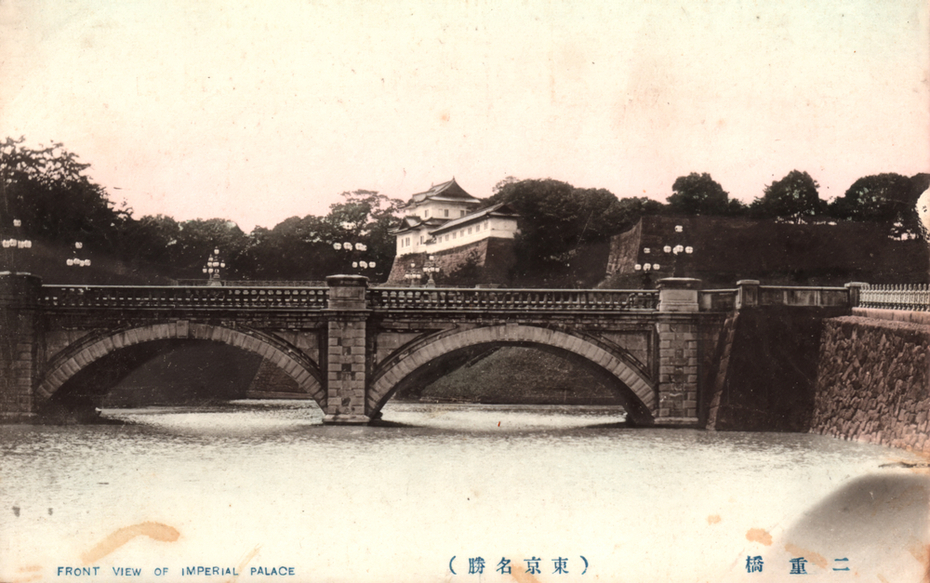
11731.116 This black-and-white card shows a stone arched bridge across a moat in front of the Imperial Palace grounds. On the card is printed “FRONT VIEW OF IMPERIAL PALACE” The Japanese is printed right-to-left. Read in modern order, it is: 二重橋(東京名勝)English translation: “Nijūbashi (Famous sight of Tokyo).” 二重橋 literally means “Double Bridge.”
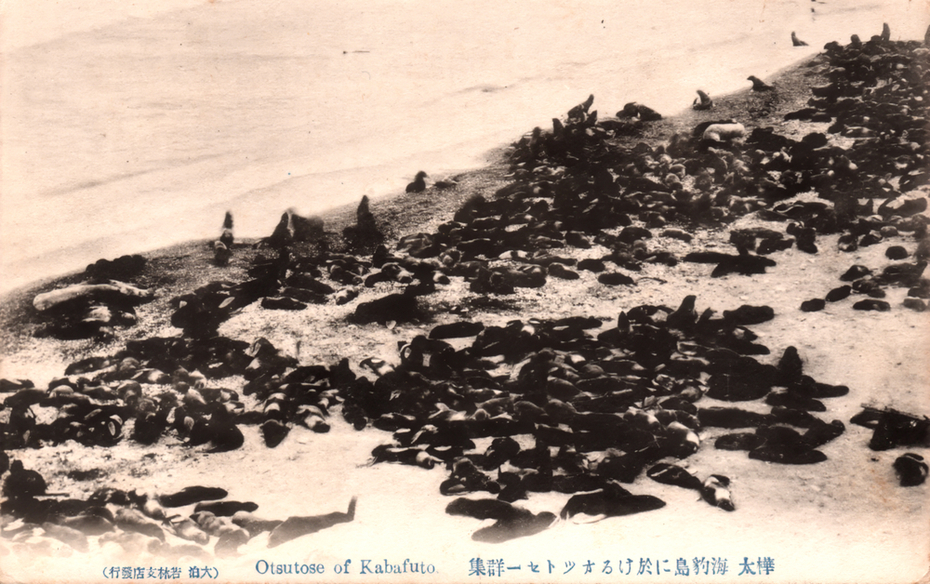
11731.117 This black-and-white card shows a large colony of fur seals gathered on a shoreline. On the card is printed “Otsutose of Kabafuto.”, The principal Japanese caption is printed right-to-left. Read in modern order, it is: 樺太 海豹島に於けるオットセイ一群 English translation: “A group of fur seals on Seal Island, Karafuto.” The smaller Japanese wording reads:(大泊 岩村支店發行)English translation: “Published by the Iwamura Branch, Ōdomari.”
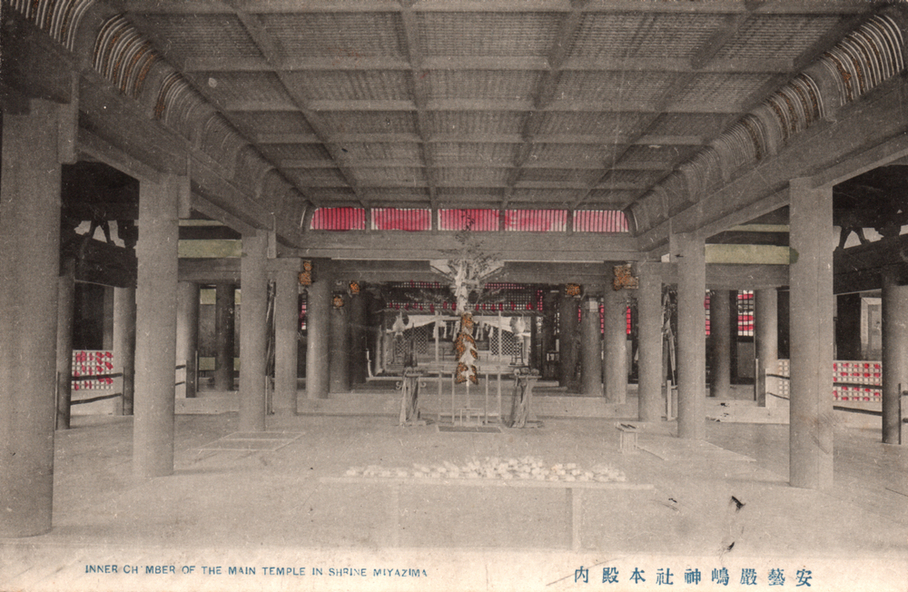
11731.118 This coloured card shows the interior of a Japanese shrine, with large pillars and the inner sanctuary at the centre. On the card is printed “INNER CH'MBER OF THE MAIN TEMPLE IN SHRINE MIYAZIMA” The Japanese is printed right-to-left. Read in modern order, it is: 安藝嚴嶋神社本殿内 Modern characters: 安芸厳島神社本殿内 English translation: “Inside the main sanctuary of Itsukushima Shrine, Aki.”
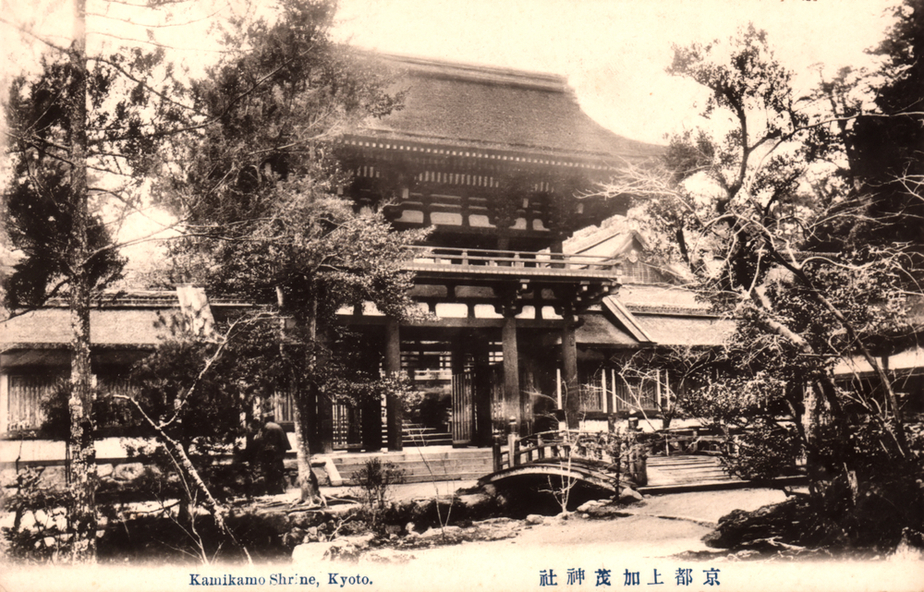
11731.119 This black-and-white card shows the entrance to a traditional Japanese shrine surrounded by trees and garden paths. On the card is printed “Kamikamo Shr'ne, Kyoto.” The Japanese is printed right-to-left. Read in modern order, it is: 京都上加茂神社 English translation: “Kamigamo Shrine, Kyoto.”
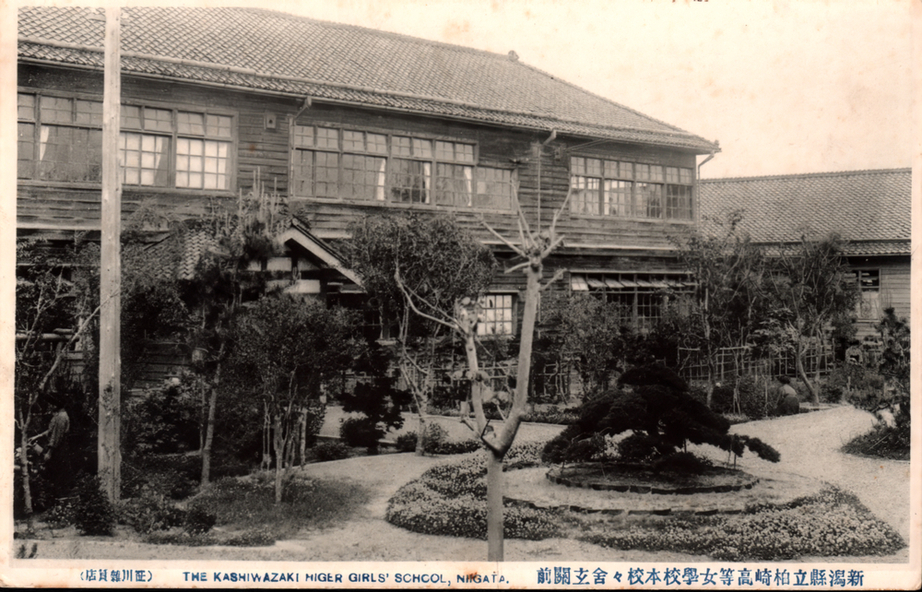
11731.120 This black-and-white card shows a large Japanese school building and its landscaped garden. On the card is printed “ THE KASHIWAZAKI HIGER GIRLS' SCHOOL, NIIGATA. The Japanese is printed right-to-left. Read in modern order, the main caption is: 新潟縣立柏崎高等女學校本校々舎玄關前 Modern characters: 新潟県立柏崎高等女学校本校校舎玄関前 English translation: “In front of the main school building of Niigata Prefectural Kashiwazaki Higher Girls’ School.” The smaller Japanese wording reads: 庄川雜貨店
English translation: “Shōgawa General Store.”
