



Historical information
Thought to have originated in Austria in 1869, postcards first gained popularity in Australia in the 1890s.They were used to send short messages to friends and family.
This collection was generated by Mary Emma Elliot of Talgarno.
Talgarno is a rural locality in Victoria, Australia, situated on the southern shoreline of Lake Hume, about 23 km east of Albury-Wodonga. The collection contains postcards from across the world.
Mary Emma Sibley was born in Ironbark, Bendigo in 1859.
She married James Elliot in 1893 and they settled at “Kelso”, Talgarno.
They had two children – Mona and Sibley.
Mary Emma Elliot died in Melbourne in 1944, aged 84 years.
Physical description
This item contains the following:
Twenty Japanese postcards collected by Mrs James Elliot between 1898 and 1915.
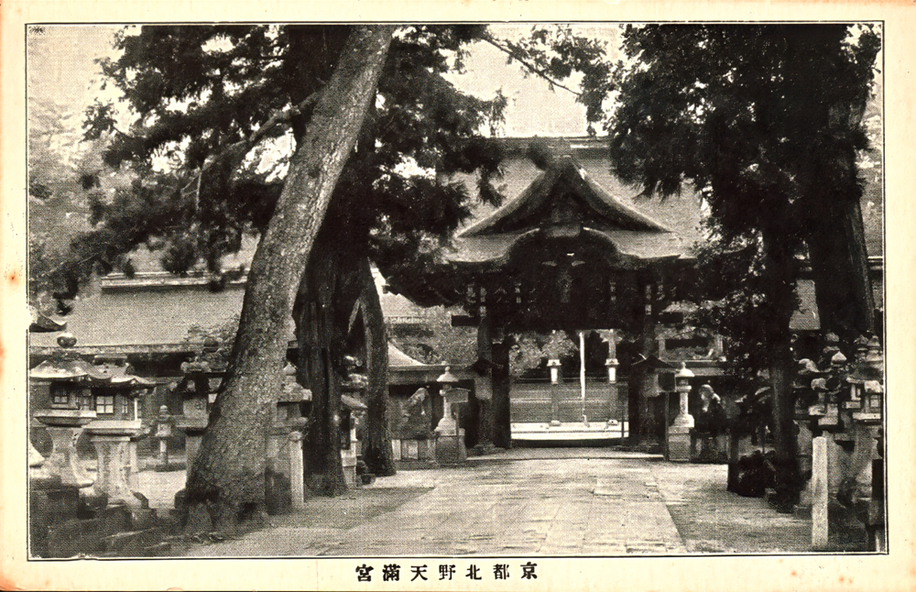
11731.141 This black-and-white card shows a shrine or temple entrance with a central gate, stone lanterns and large trees. On the card is printed “京都北野天滿宮”. The Japanese translates as “Kitano Tenmangū, Kyoto.”
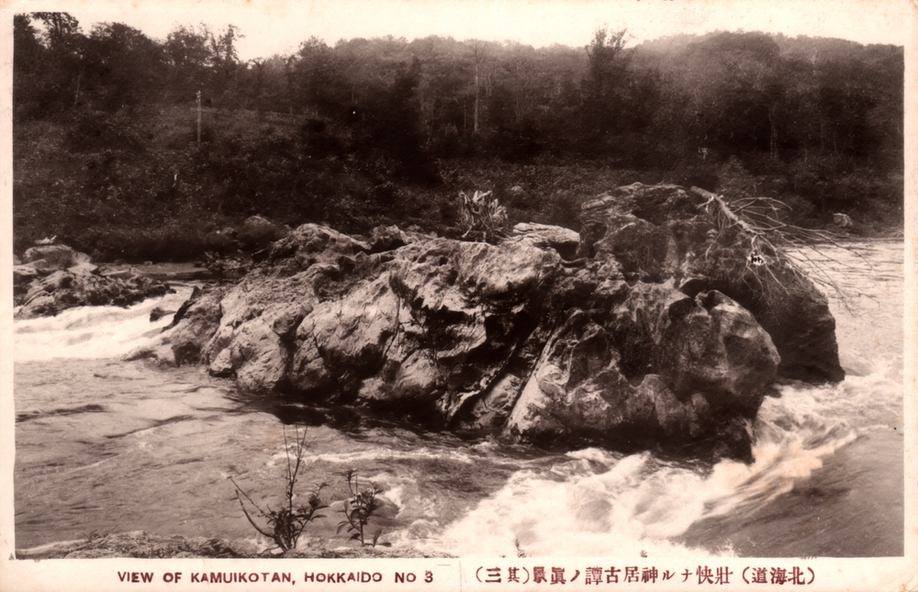
11731.142 This black-and-white card shows a rocky river scene with fast-moving water and wooded banks. On the card is printed “VIEW OF KAMUIKOTAN, HOKKAIDO NO 3” and “(北海道)壯快ナル神居古潭ノ真景(其三)”. The Japanese translates as “True view of the magnificent Kamui Kotan, Hokkaido (No. 3).”
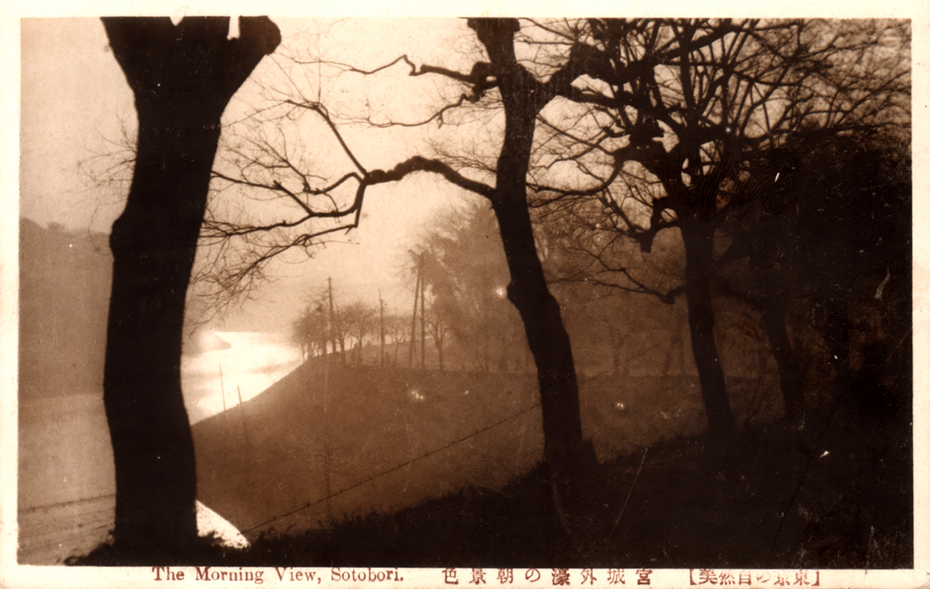
11731.143 This black-and-white card shows a morning waterside view with trees in silhouette along an embankment. On the card is printed “The Morning View, Sotobori.” and “宮城外濠の朝景色”. The Japanese translates as “Morning scenery of the outer moat of the Imperial Palace.”
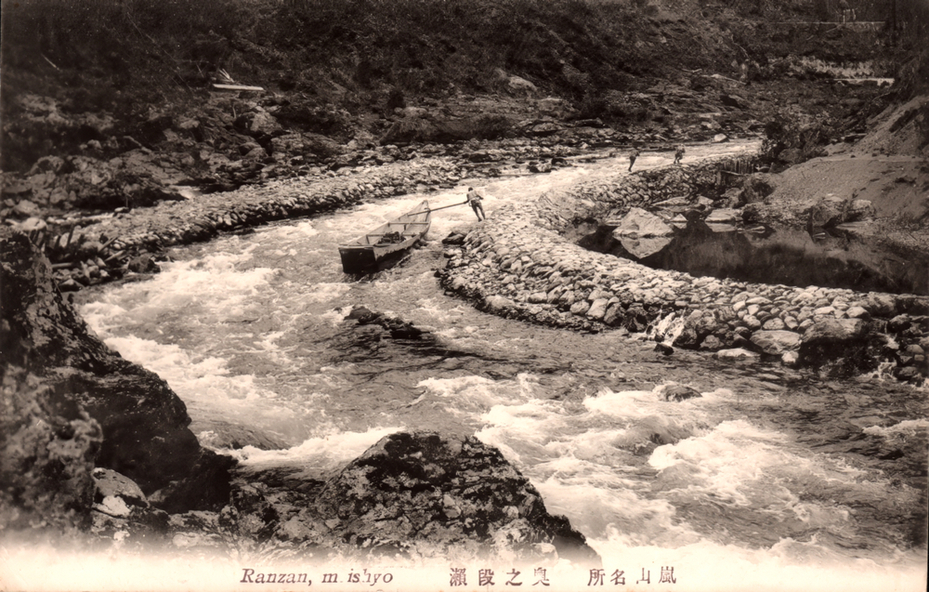
11731.144 This black-and-white card shows a narrow rocky river channel with rapids, a boat and several people along the bank. On the card is printed “Ranzan, m ishyo”, “嵐山名所” and “奥之段瀬”. The Japanese translates as:
嵐山名所 — “Famous place of Arashiyama”
奥之段瀬 — “Okunodan Rapids” / “the rapids at Okunodan”
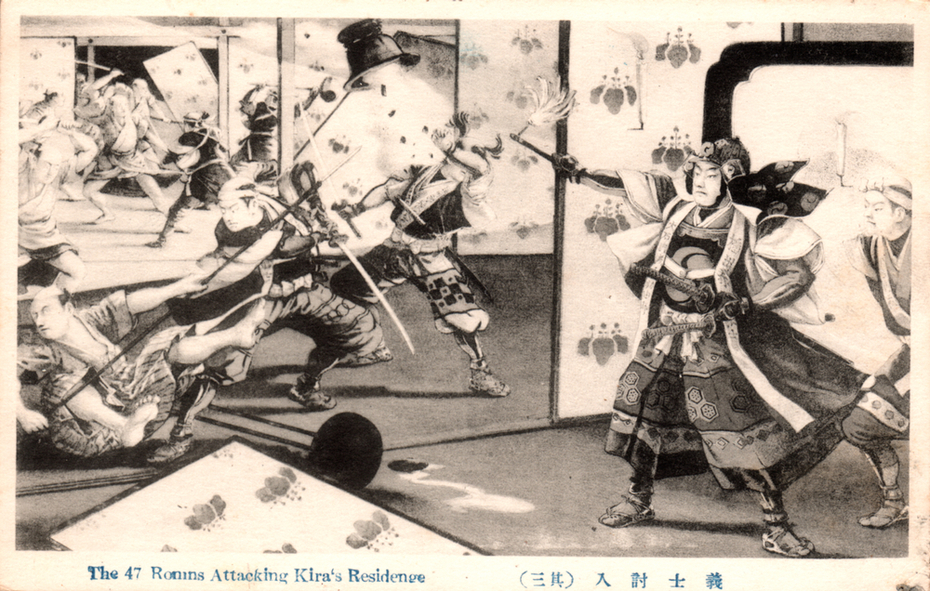
11731.145 This black-and-white card shows armed figures attacking inside a building. On the card is printed “The 47 Ronins Attacking Kira’s Residence” and “義士討入(其貳)”. The Japanese translates as “The loyal samurai attacking” or “The attack by the loyal retainers (No. 2).”
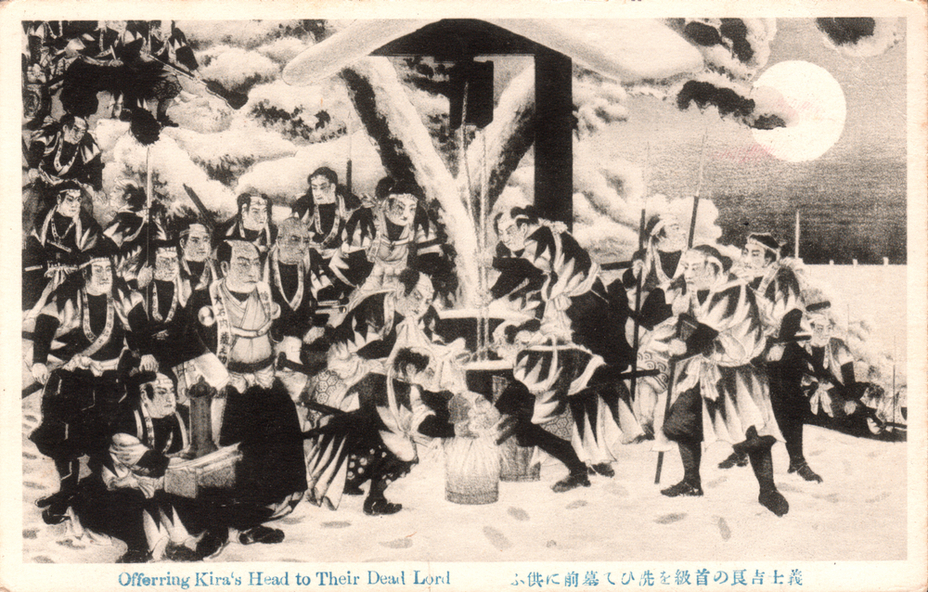
11731.146 This black-and-white card shows a group of samurai gathered in a snowy setting, presenting a severed head before a grave. On the card is printed “Offering Kira’s Head to Their Dead Lord” and “義士吉良の首級を洗ひて墓前に供ふ”. The Japanese 義士吉良の首級を洗ひて墓前に供ふ translates as “The loyal retainers wash Kira’s severed head and offer it before the grave.”
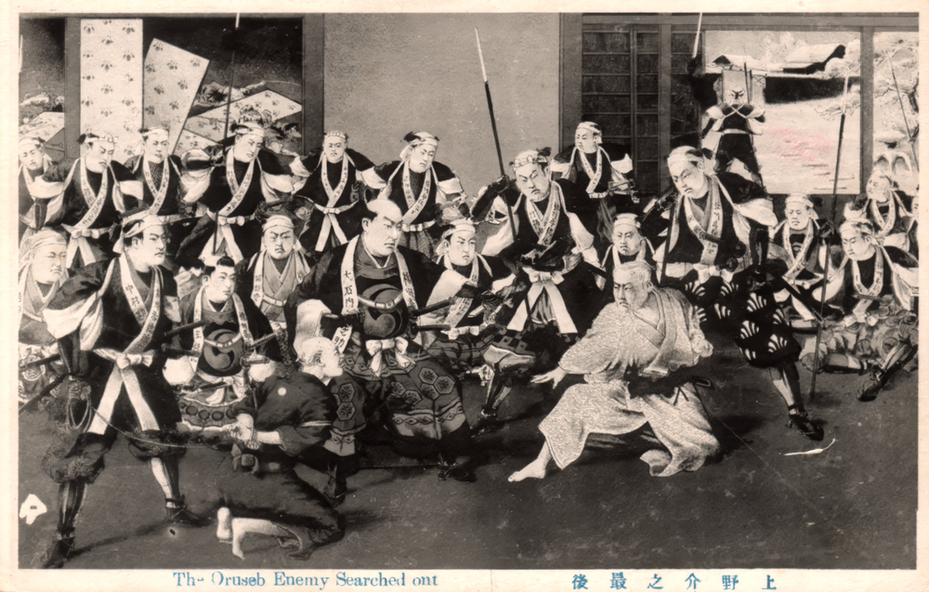
11731.147 This black-and-white card shows armed samurai surrounding a man inside a residence. The clearly legible portion of the English caption reads “Enemy Searched out”; the preceding words are indistinct. On the card is also printed “上野介之最後”. The Japanese 上野介之最後 translates as “The final moments of Kōzuke-no-suke” or “The end of Kōzuke-no-suke.”
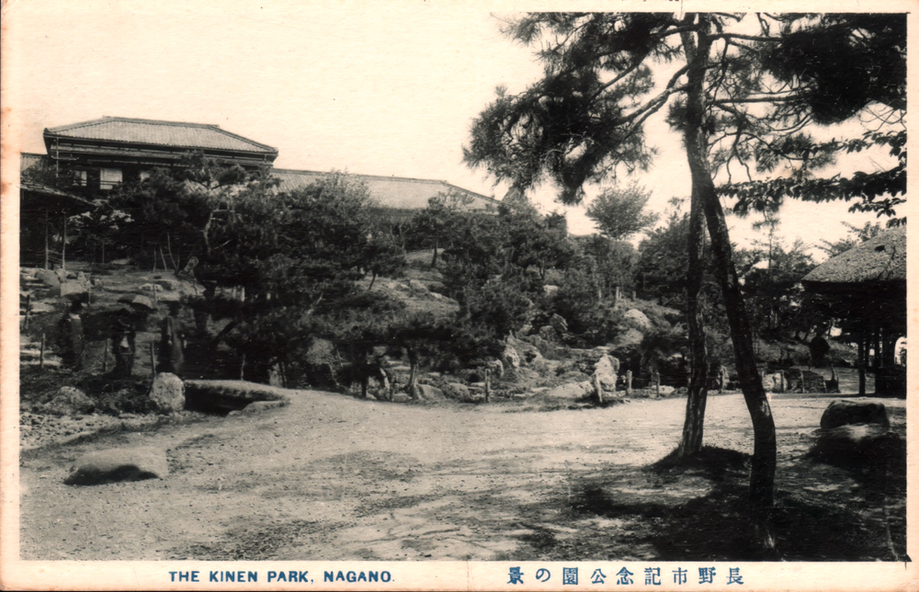
11731.148 This black-and-white card shows a landscaped park with trees, rocks and buildings on a hillside. On the card is printed “THE KINEN PARK, NAGANO.” and “長野市紀念公園の景”. The Japanese 長野市紀念公園の景 translates as “View of Nagano City Memorial Park.”
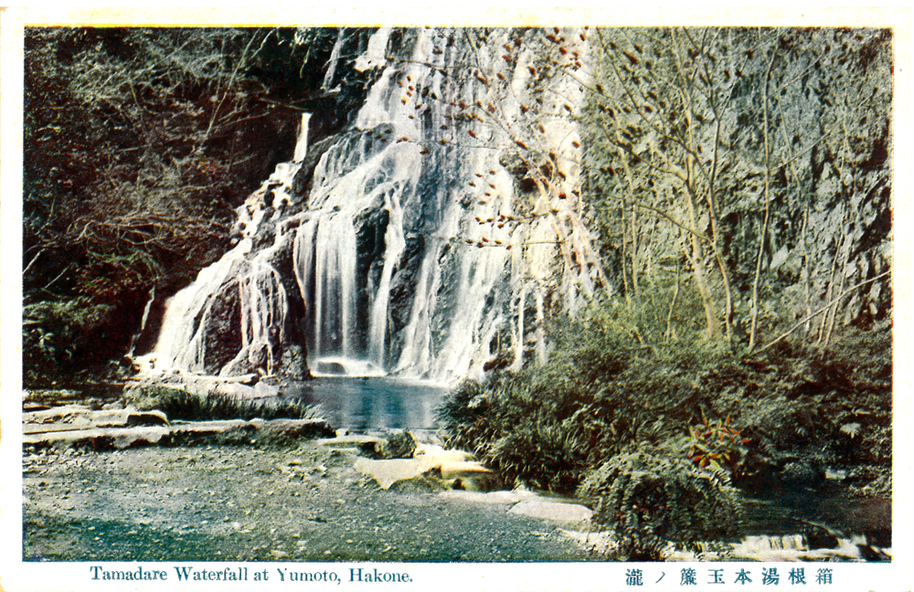
11731.149 This coloured card shows a waterfall descending over a rocky cliff into a pool surrounded by vegetation. On the card is printed “Tamadare Waterfall at Yumoto, Hakone.” and “箱根湯本玉簾ノ瀧”. The Japanese 箱根湯本玉簾ノ瀧 translates as “Tamadare Waterfall at Yumoto, Hakone.”
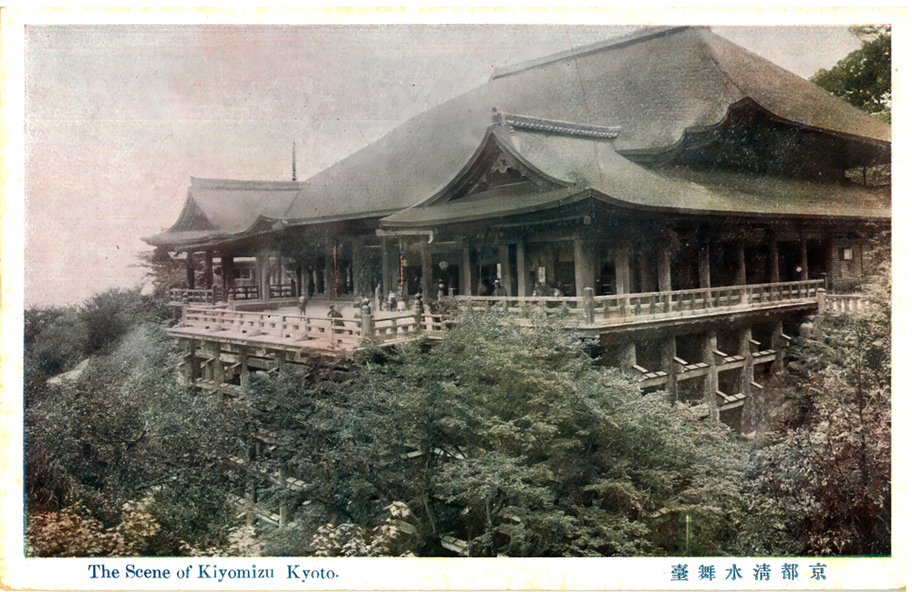
11731.150 This coloured card shows a large temple building projecting over a wooded hillside. On the card is printed “The Scene of Kiyomizu Kyoto.” and “京都清水舞臺”. The Japanese 京都清水舞臺 translates as “The Kiyomizu stage, Kyoto” or “Kiyomizu Temple platform, Kyoto.”
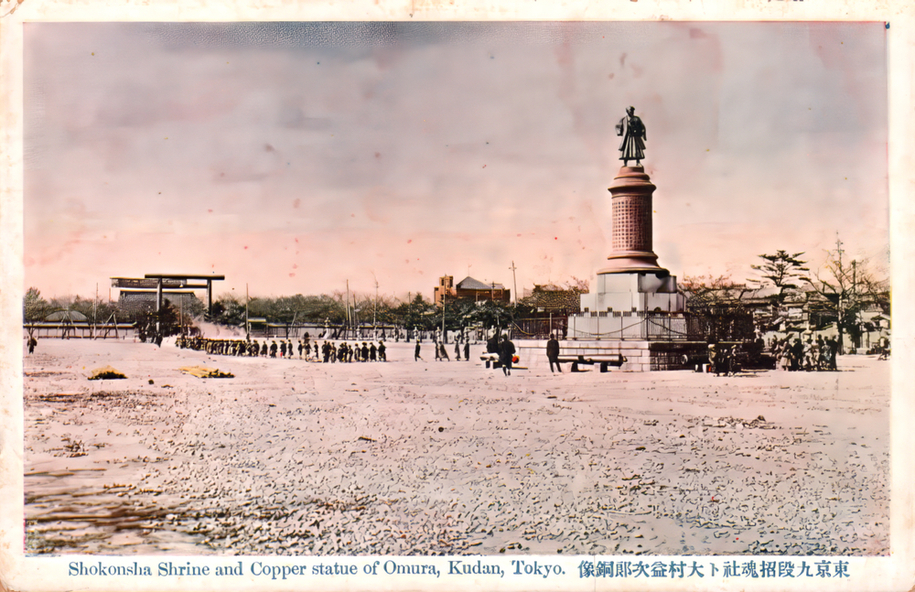
11731.151 This coloured card shows a shrine precinct with a tall statue on a pedestal and people in the open grounds. On the card is printed “Shokonsba Shrine and Copper statue of Omura, Kudan, Tokyo.” and “東京九段招魂社ト大村益次郎銅像”. The Japanese 東京九段招魂社ト大村益次郎銅像 translates as “Shōkonsha Shrine at Kudan, Tokyo, and the bronze statue of Ōmura Masujirō.”
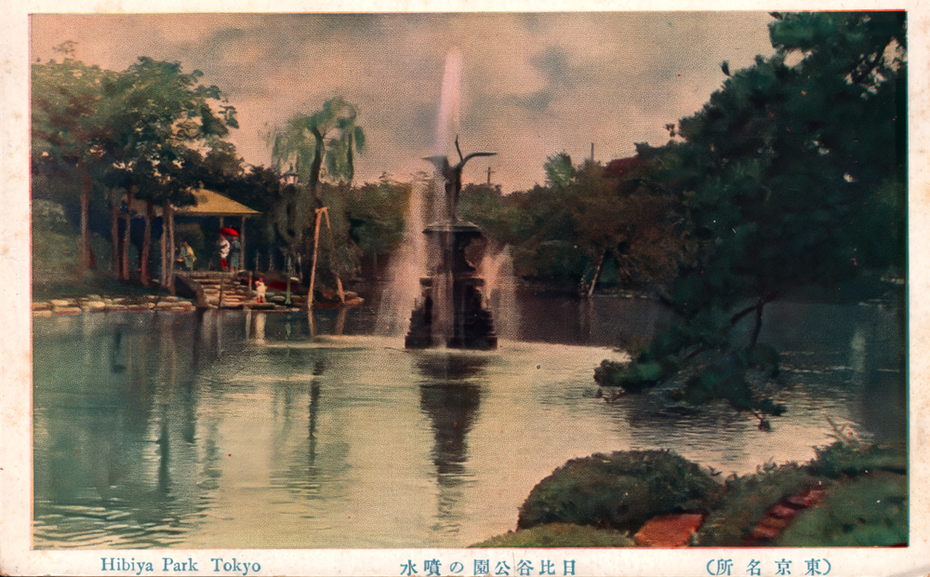
11731.152 This coloured card shows a pond with a fountain surrounded by trees and garden plantings. On the card is printed “Hibiya Park Tokyo”, “日比谷公園の噴水” and “(東京名所)”. The Japanese translates as:
日比谷公園の噴水 — “The fountain in Hibiya Park”
東京名所 — “Famous places of Tokyo” / “Tokyo sights”
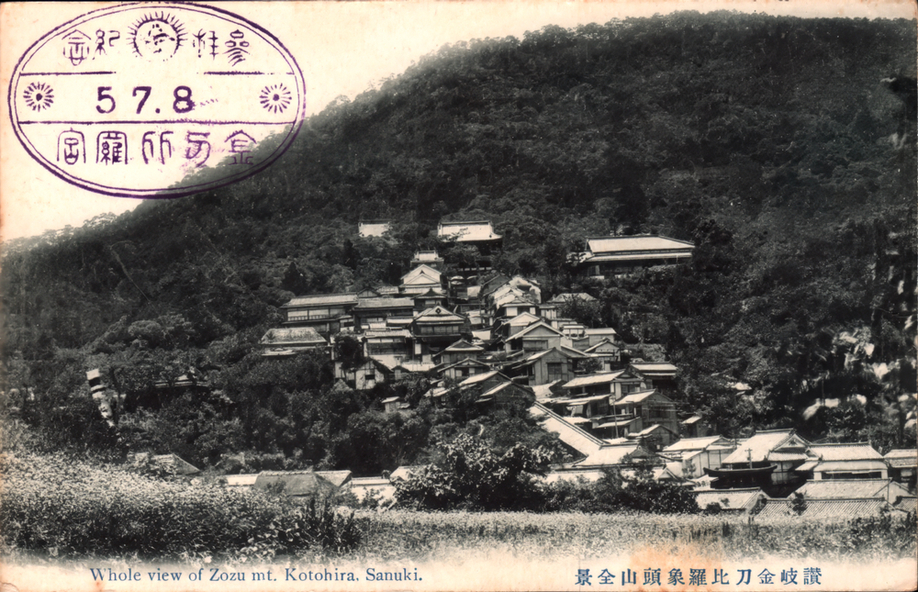
11731.153 This black-and-white card shows buildings extending up a wooded mountainside. On the card is printed “Whole view of Zozu mt. Kotohira, Sanuki.” and “讃岐金刀比羅象頭山全景”. The Japanese 讃岐金刀比羅象頭山全景 translates as “Complete view of Mount Zōzu at Kotohira, Sanuki.” The purple stamp also contains “参拝記念”, “金刀比羅宮” and “5.7.8”. The Japanese translates as:
参拝記念 — “Commemorative visit to the shrine”
金刀比羅宮 — “Kotohira-gū Shrine”
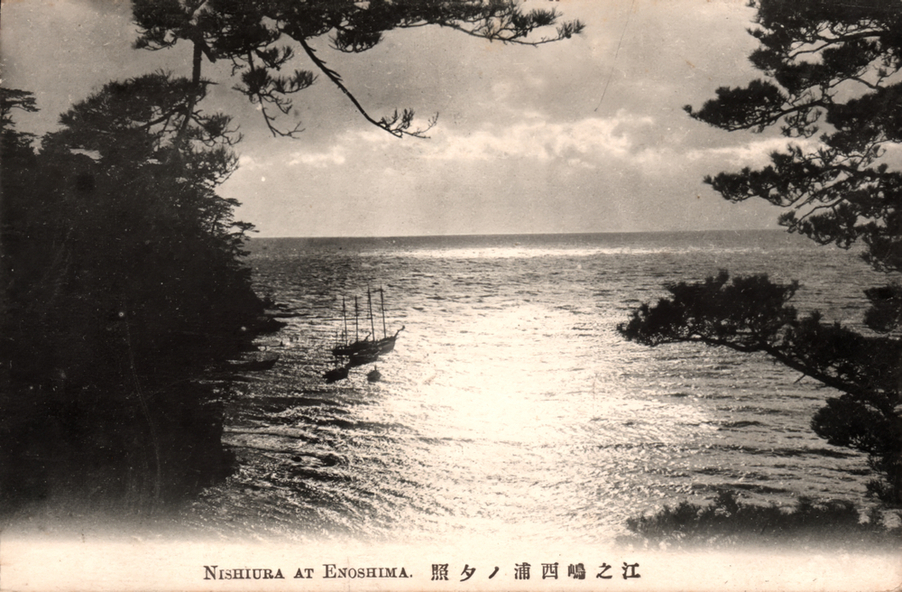
11731.154 This black-and-white card shows a coastal view framed by pine trees, with boats on the water. On the card is printed “NISHIURA AT ENOSHIMA.” and “江之嶋西浦ノ夕照”. The Japanese 江之嶋西浦ノ夕照 translates as “Evening glow at Nishiura, Enoshima” or “Sunset at Nishiura, Enoshima.”
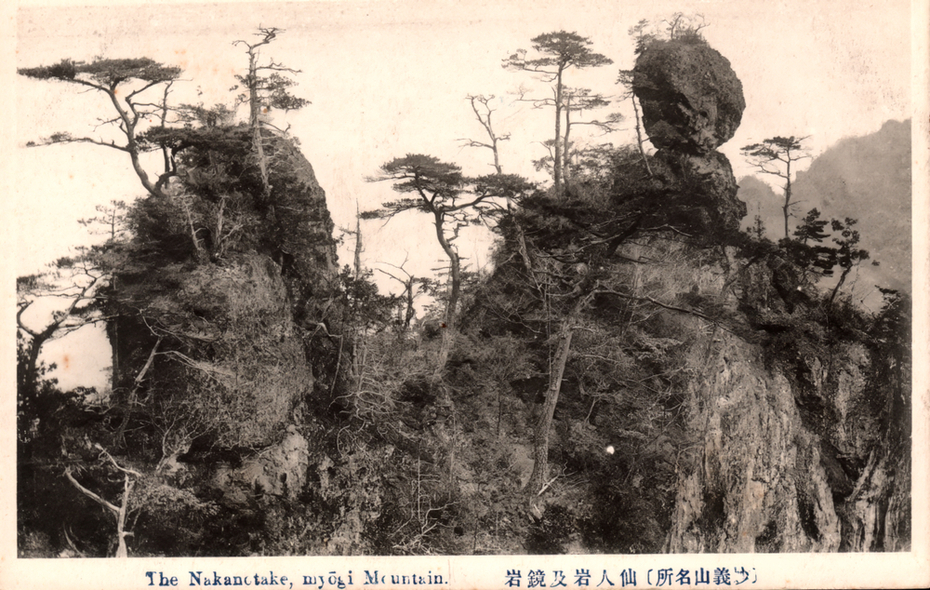
11731.155 This black-and-white card shows steep rocky mountain formations with pine trees growing among the cliffs. On the card is printed “The Nakanotake, myōgi Mountain.” and “(妙義山名所)仙人岩及鏡岩”. The Japanese translates as:
妙義山名所 — “Famous sights of Mount Myōgi”
仙人岩及鏡岩 — “Sennin Rock and Kagami Rock”, literally “Hermit Rock and Mirror Rock.”
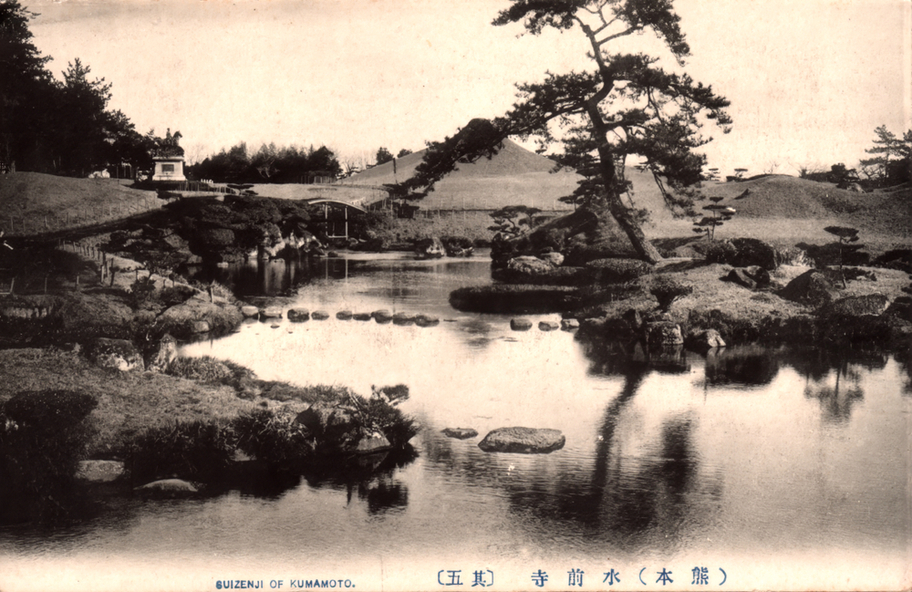
11731.156 This black-and-white card shows a landscaped garden with a pond, rocks, trees and a small bridge. On the card is printed “SUIZENJI OF KUMAMOTO.” and “(熊本)水前寺(其五)”. The Japanese translates as:
熊本 — “Kumamoto”
水前寺 — “Suizenji”
其五 — “No. 5” / “Part Five”
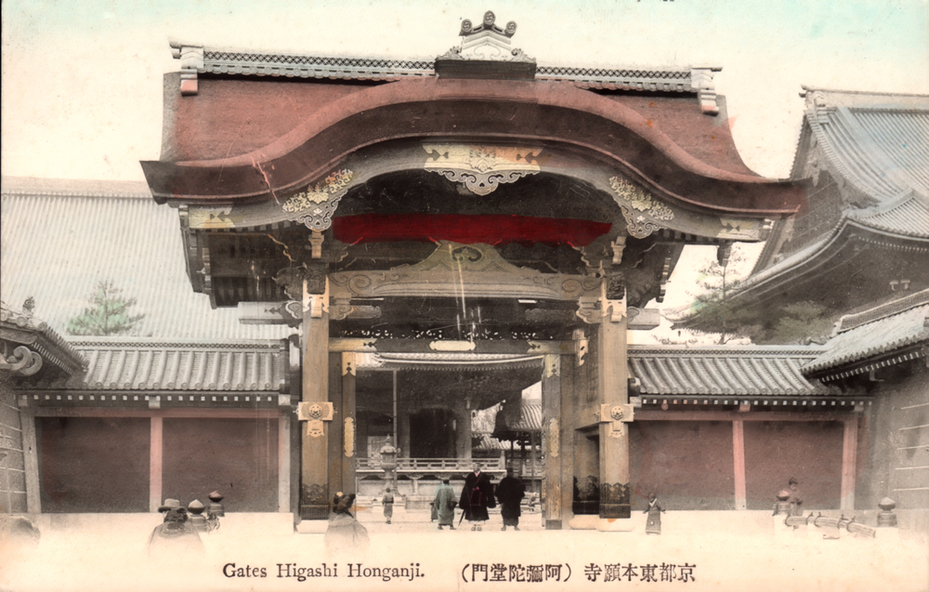
11731.157 This coloured card shows the entrance gate to a large temple complex with people passing through it. On the card is printed “Gates Higashi Honganji.” and “京都東本願寺(阿彌陀堂門)”. The Japanese translates as “Higashi Honganji, Kyoto (Amida Hall Gate).”
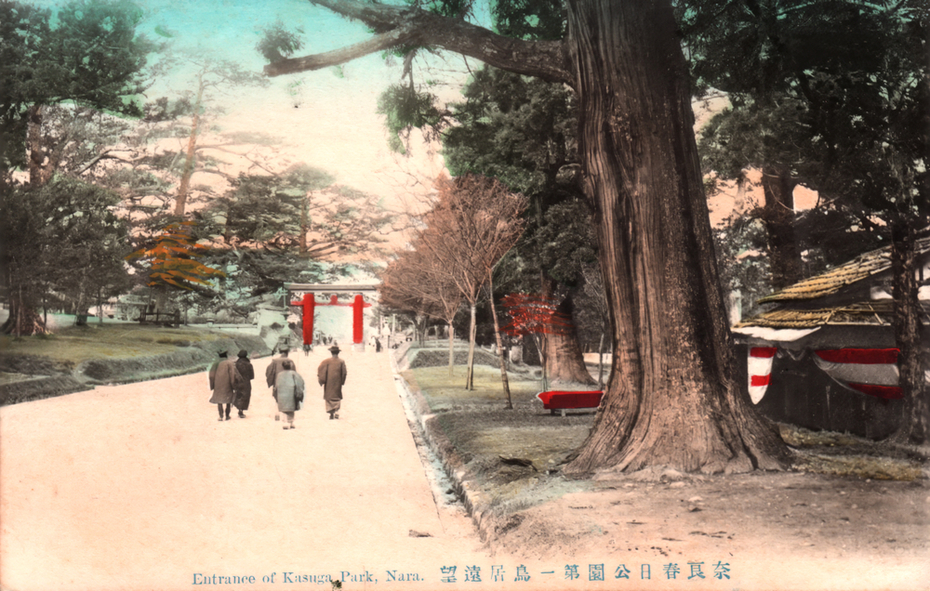
11731.158 This coloured card shows a broad park approach with a large tree, pedestrians and a torii gate in the distance. On the card is printed “Entrance of Kasuga Park, Nara.” and “奈良春日公園第一鳥居遠望”. The Japanese translates as “Distant view of the First Torii of Kasuga Park, Nara.”
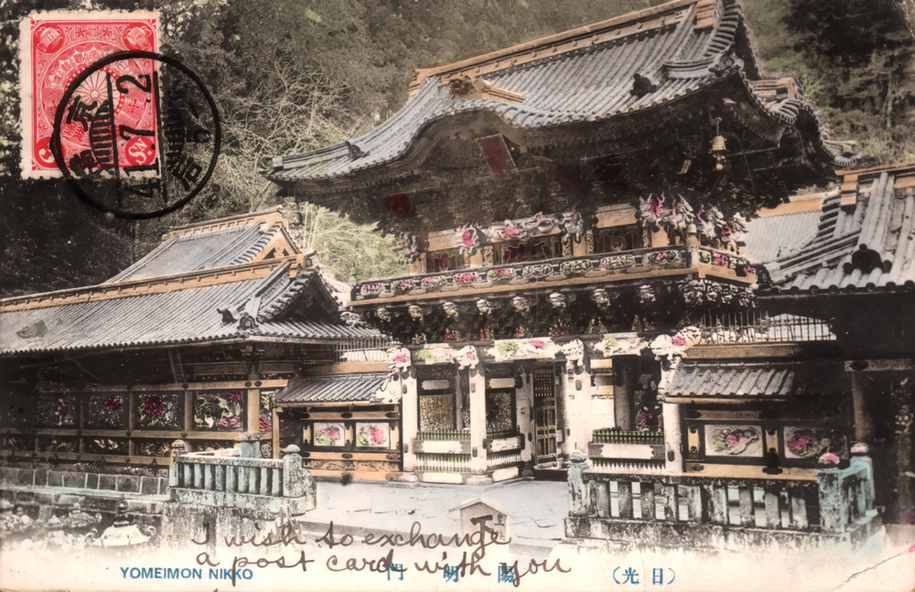
11731.159 This coloured card shows the ornate Yōmeimon Gate of a shrine complex. On the card is printed “YOMEIMON NIKKO” and “(日光)陽明門”. The Japanese translates as “Yōmeimon Gate, Nikkō.” There is also handwritten English across the lower portion reading “I wish to exchange a post card with you”.
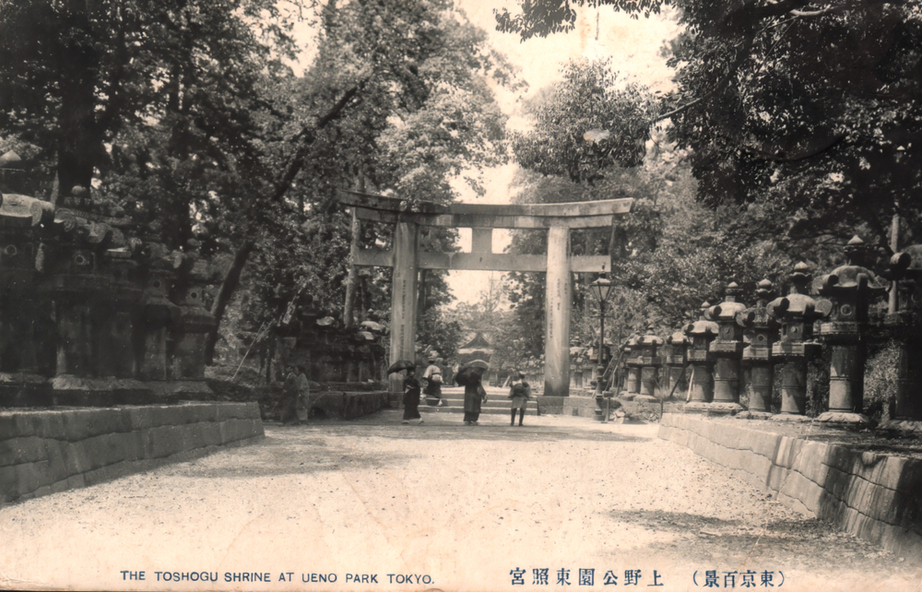
11731.160 This black-and-white card shows a torii gate on a tree-lined approach with rows of stone lanterns and several pedestrians. On the card is printed “THE TOSHOGU SHRINE AT UENO PARK TOKYO.”, “上野公園東照宮” and “(東京百景)”. The Japanese translates as:
上野公園東照宮 — “Tōshōgū Shrine in Ueno Park”
東京百景 — “Hundred Views of Tokyo”
