



Historical information
Thought to have originated in Austria in 1869, postcards first gained popularity in Australia in the 1890s.They were used to send short messages to friends and family.
This collection was generated by Mary Emma Elliot of Talgarno.
Talgarno is a rural locality in Victoria, Australia, situated on the southern shoreline of Lake Hume, about 23 km east of Albury-Wodonga. The collection contains postcards from across the world.
Mary Emma Sibley was born in Ironbark, Bendigo in 1859.
She married James Elliot in 1893 and they settled at “Kelso”, Talgarno.
They had two children – Mona and Sibley.
Mary Emma Elliot died in Melbourne in 1944, aged 84 years.
Physical description
This item contains the following:
Twenty Japanese postcards collected by Mrs James Elliot between 1898 and 1915.
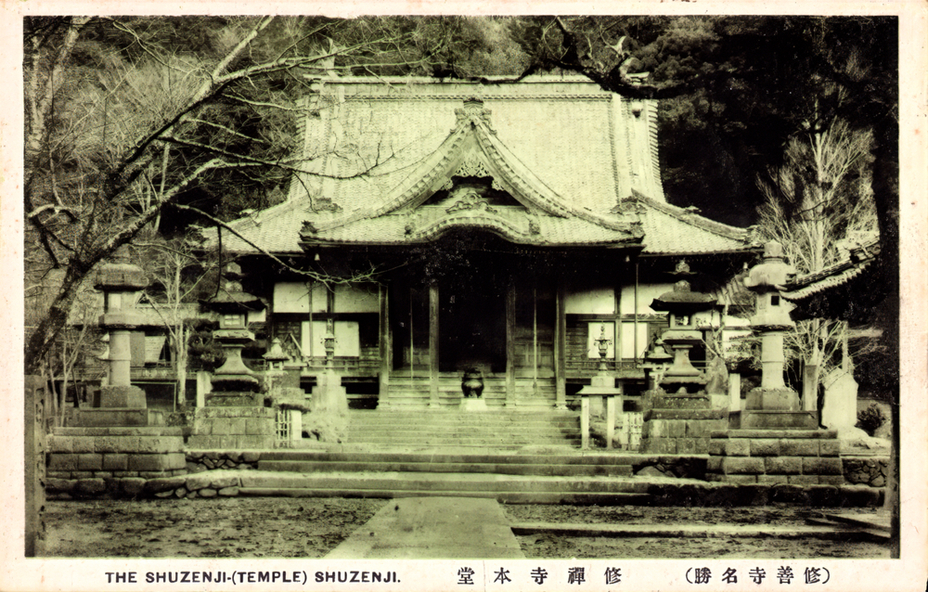
11731.181 This black-and-white card shows the main temple building at Shuzenji, with stone lanterns in front. On the card is printed “THE SHUZENJI-(TEMPLE) SHUZENJI.”, “修善寺本堂” and “(修善寺名勝)”. The Japanese translates as:
修善寺本堂 — “Main hall of Shuzenji Temple”
修善寺名勝 — “Famous sights of Shuzenji”
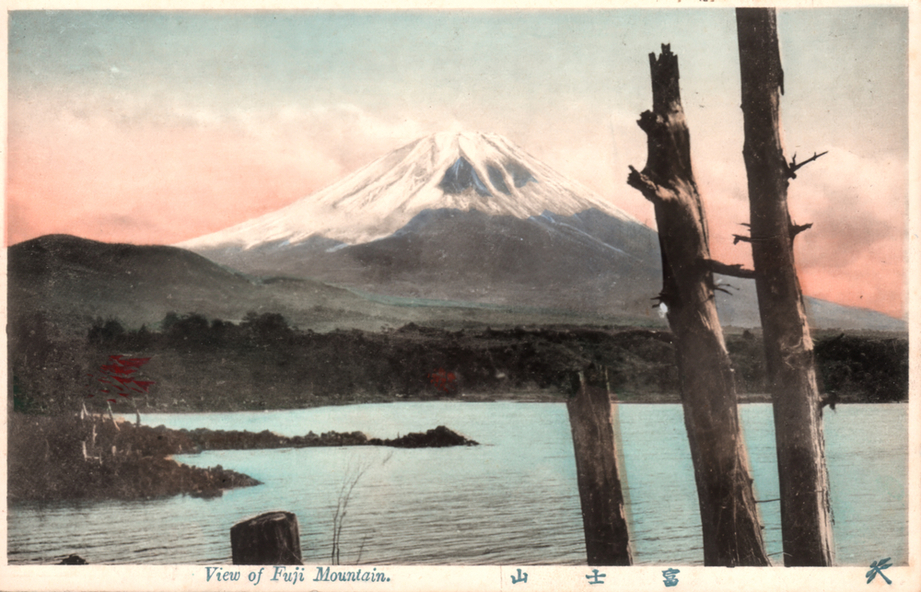
11731.182 This coloured card shows Mount Fuji beyond a lake, with tree trunks in the foreground. On the card is printed “View of Fuji Mountain.” and “富士山”. The Japanese 富士山 translates as “Mount Fuji.”
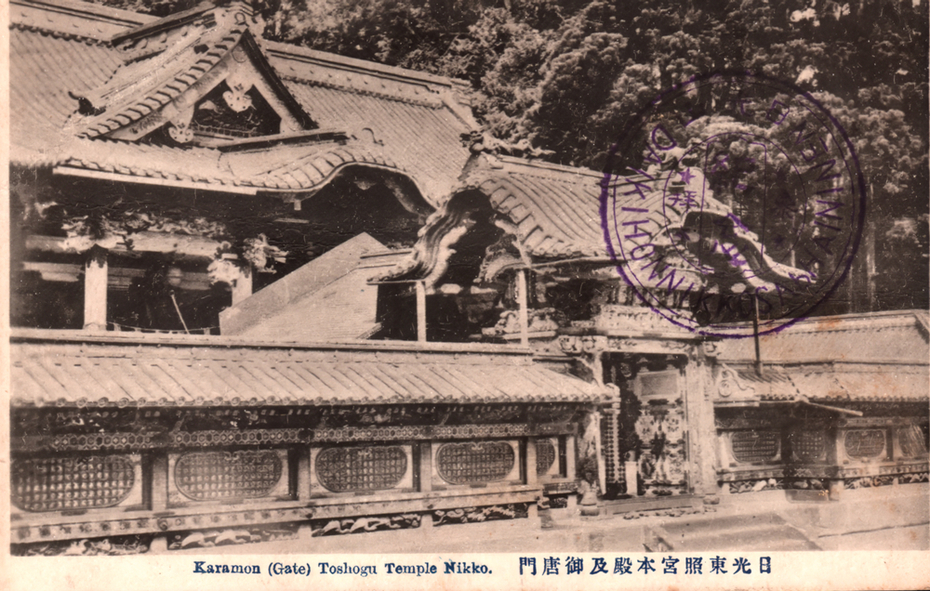
11731.183This black-and-white card shows the ornate buildings and Karamon gate of Tōshōgū at Nikkō. On the card is printed “Karamon (Gate) Toshogu Temple Nikko.” and “日光東照宮本殿及御唐門”. The Japanese 日光東照宮本殿及御唐門 translates as “The main sanctuary and Karamon Gate of Nikkō Tōshōgū.”
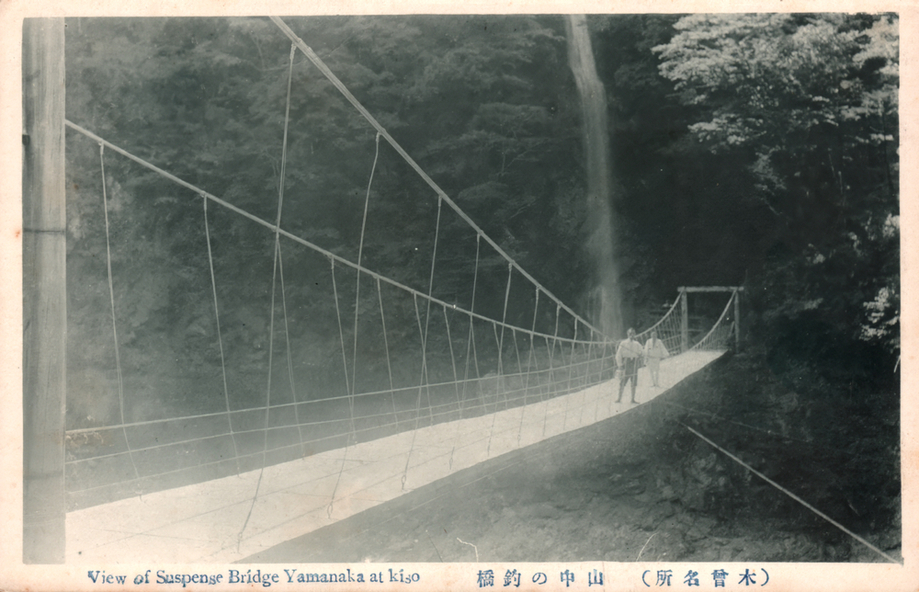
11731.184 This black-and-white card shows a suspension bridge crossing a wooded ravine, with two people standing on the bridge. On the card is printed “View of Suspense Bridge Yamanaka at kiso”, “山中の釣橋” and “(木曾名所)”. The Japanese translates as:
山中の釣橋 — “Suspension bridge at Yamanaka”
木曾名所 — “Famous sights of Kiso”
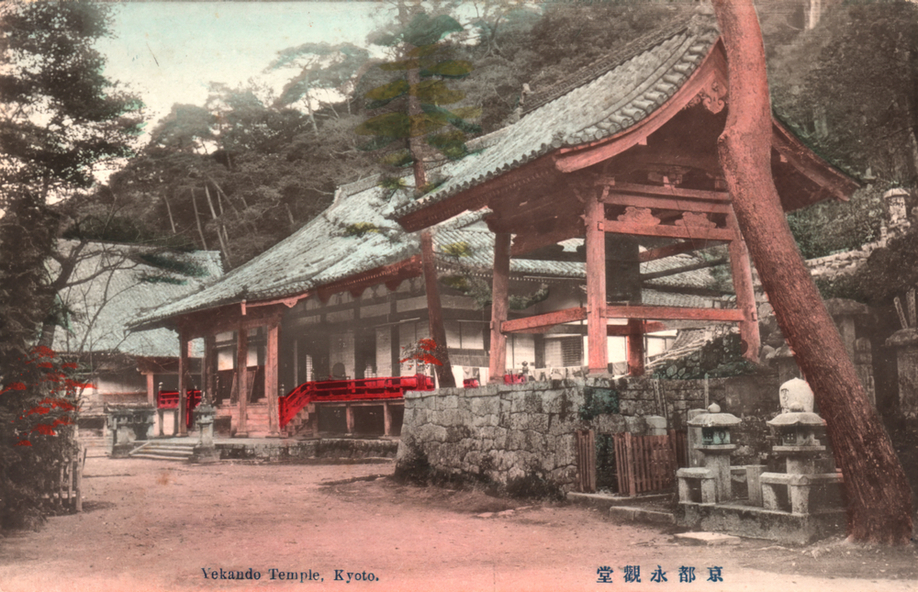
11731.185 This coloured card shows temple buildings among trees, with stone lanterns in the foreground. On the card is printed “Yekando Temple, Kyoto.” and “京都永觀堂”. The Japanese 京都永觀堂 translates as “Eikandō, Kyoto.”
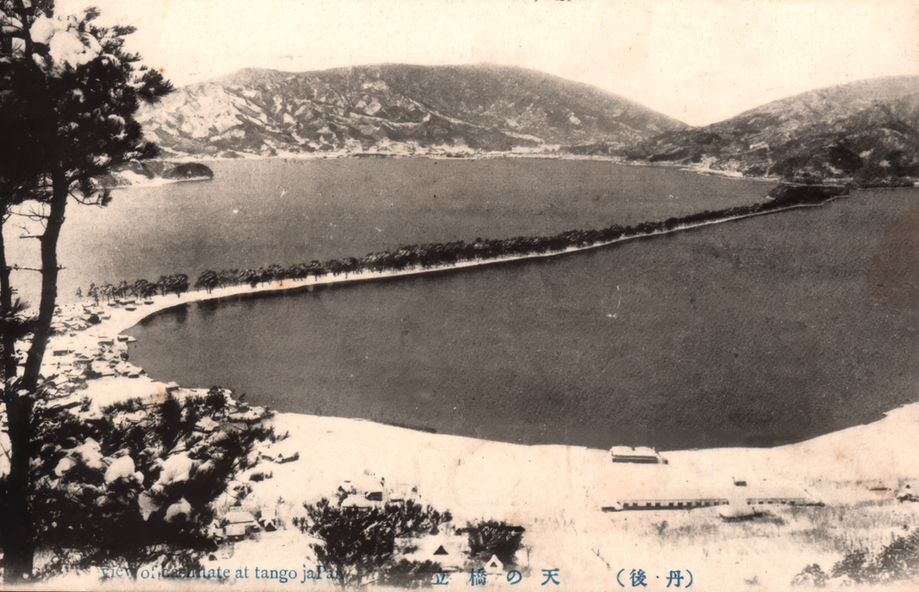
11731.186 This black-and-white card shows a snow-covered coastal landscape with a long narrow sandbar extending across the water. On the card is printed “view of hashidate at tango japan”, “天の橋立” and “(丹後)”. The Japanese translates as:
天の橋立 — “Amanohashidate”
丹後 — “Tango”
Together: “Amanohashidate, Tango.”
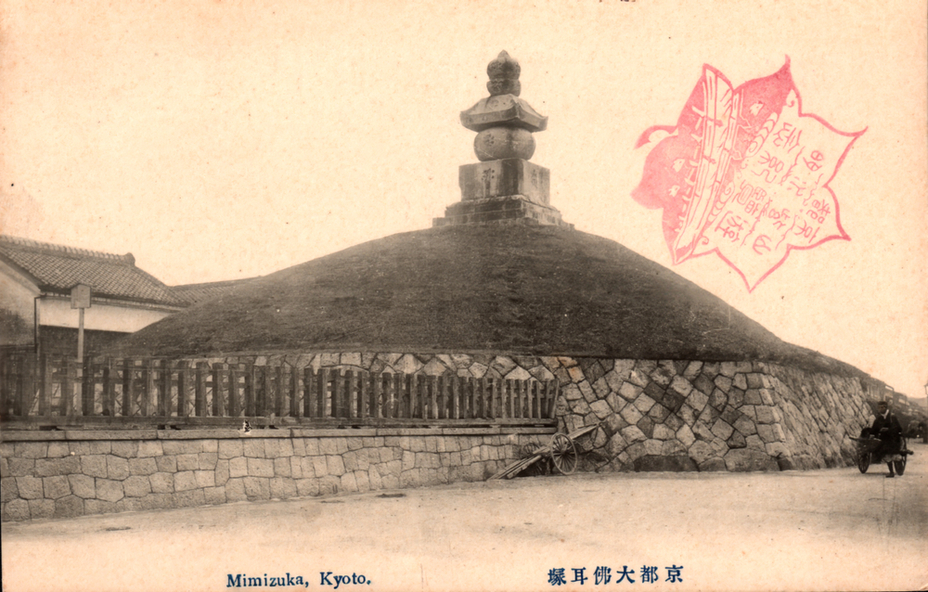
11731.187 This black-and-white card shows a large burial mound with a stone monument on top. On the card is printed “Mimizuka, Kyoto.” and “京都大佛耳塚”. The Japanese 京都大佛耳塚 translates as “Mimizuka (Ear Mound), Great Buddha, Kyoto.”
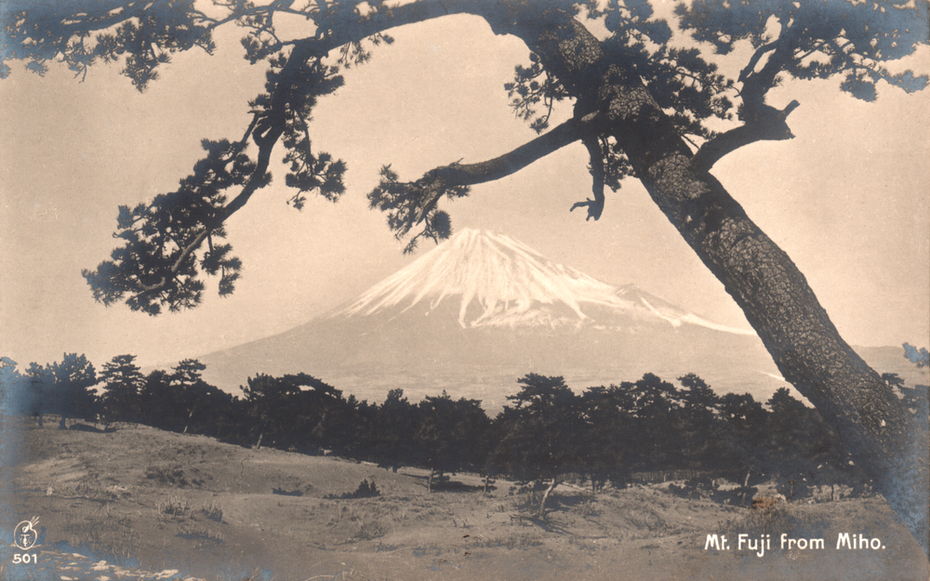
11731.188 This black-and-white card shows Mount Fuji framed by a large pine tree. On the card is printed “Mt. Fuji from Miho.” and “501”.
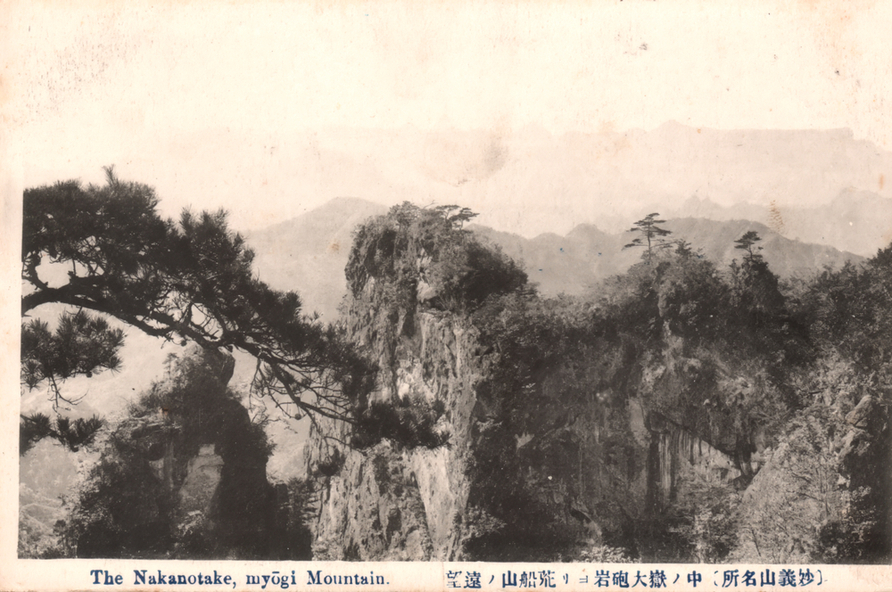
11731.189 This black-and-white card shows steep rocky mountain formations with pine trees. On the card is printed “The Nakanotake, myōgi Mountain.” and “(妙義山名所)中ノ嶽大砲岩ヨリ荒船山ノ遠望”. The Japanese translates as:
妙義山名所 — “Famous sights of Mount Myōgi”
中ノ嶽大砲岩ヨリ荒船山ノ遠望 — “Distant view of Mount Arafune from Cannon Rock at Nakanotake.”
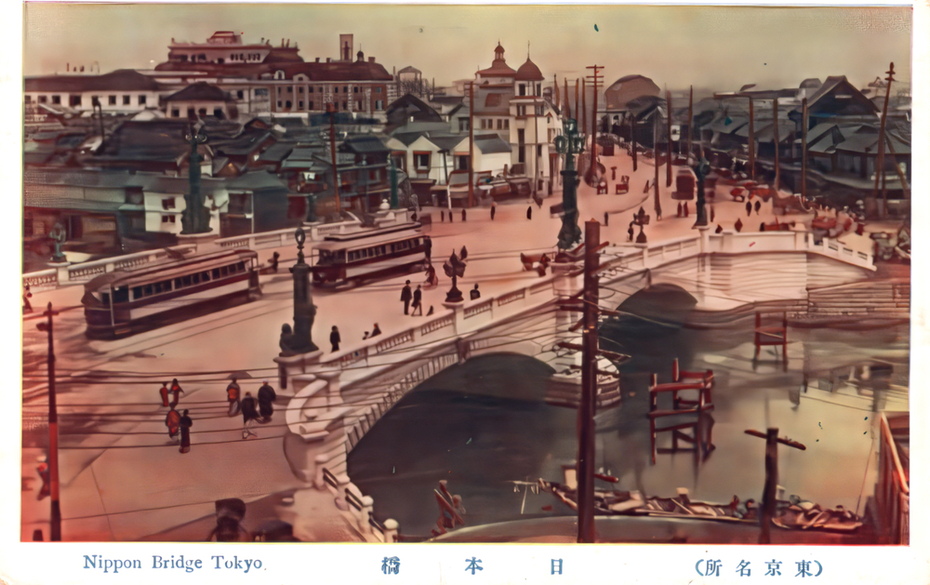
11731.190 This coloured card shows Nihonbashi bridge with trams, pedestrians, buildings and a canal. On the card is printed “Nippon Bridge Tokyo.”, “日本橋” and “(東京名所)”. The Japanese translates as:
日本橋 — “Nihonbashi” / “Japan Bridge”
東京名所 — “Famous places of Tokyo” / “Tokyo sights”.
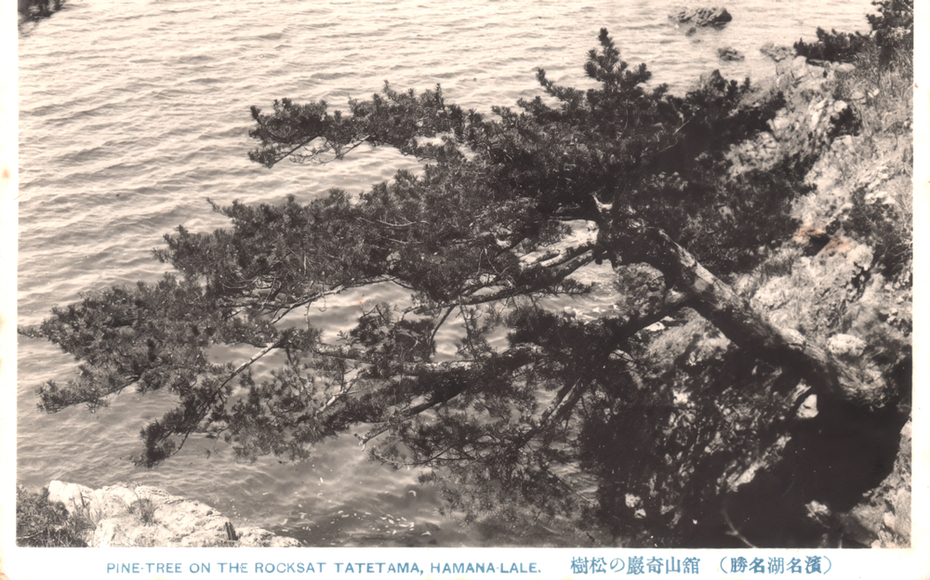
11731.191 This black-and-white card shows a pine tree growing over rocks beside the water. On the card is printed “PINE-TREE ON THE ROCKSAT TATETAMA, HAMANA-LALE.”, “舘山奇巌の松樹” and “(濱名湖名勝)”. The Japanese translates as:
舘山奇巌の松樹 — “Pine tree on the unusual rocks at Tateyama”
濱名湖名勝 — “Scenic sights of Lake Hamana”
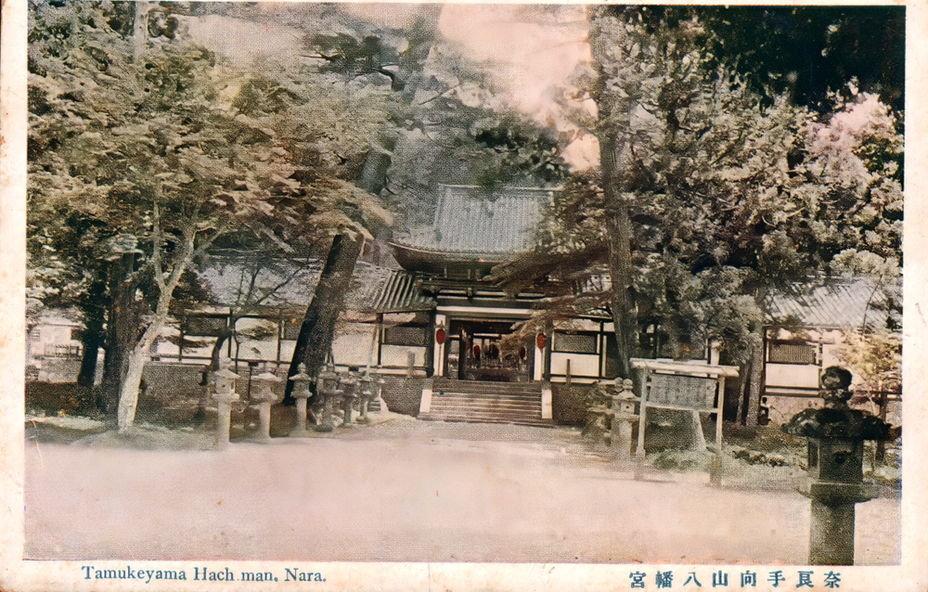
11731.192 This coloured card shows a shrine entrance surrounded by trees and stone lanterns. On the card is printed “Tamukeyama Hach.man. Nara.” and “奈良手向山八幡宮”. The Japanese 奈良手向山八幡宮 translates as “Tamukeyama Hachiman Shrine, Nara.”
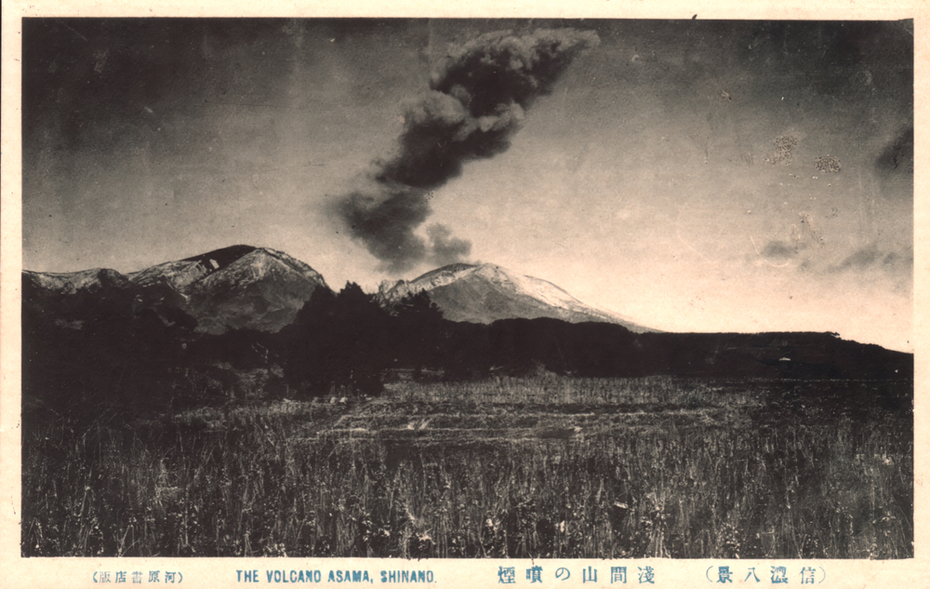
11731.193 This black-and-white card shows Mount Asama emitting a large plume of smoke. On the card is printed “THE VOLCANO ASAMA, SHINANO.”, “浅間山の噴煙”, “(信濃八景)” and “(河原書店版)”. The Japanese translates as:
浅間山の噴煙 — “Volcanic smoke from Mount Asama”
信濃八景 — “Eight Views of Shinano”
河原書店版 — “Kawahara Bookshop edition”
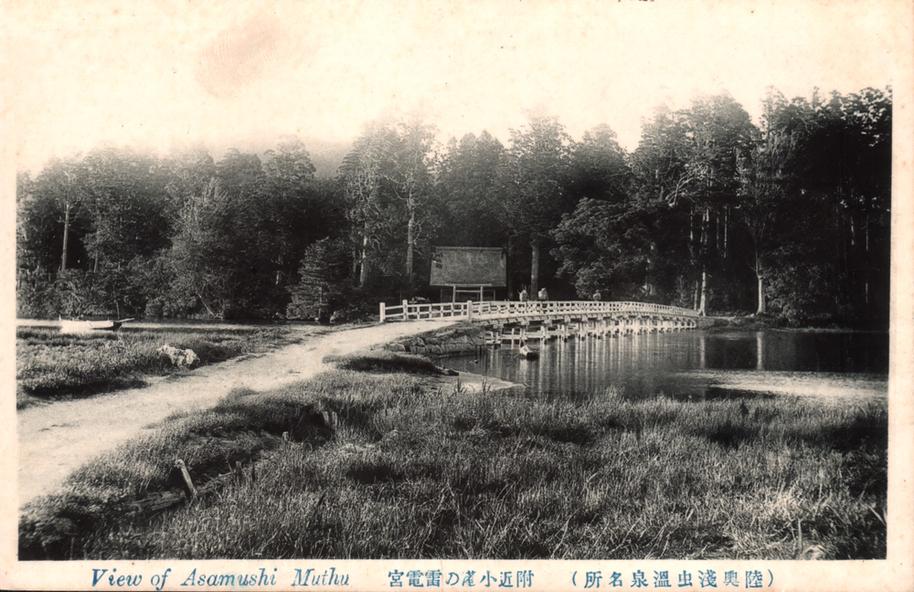
11731.194 This black-and-white card shows a bridge crossing water beside woodland. On the card is printed “View of Asamushi Muthu”, “附近小沼の雷電宮” and “(陸奥浅虫温泉名所)”. The Japanese translates as:
附近小沼の雷電宮 — “Raiden Shrine near Konuma”
陸奥浅虫温泉名所 — “Famous sights of Asamushi Hot Springs, Mutsu”
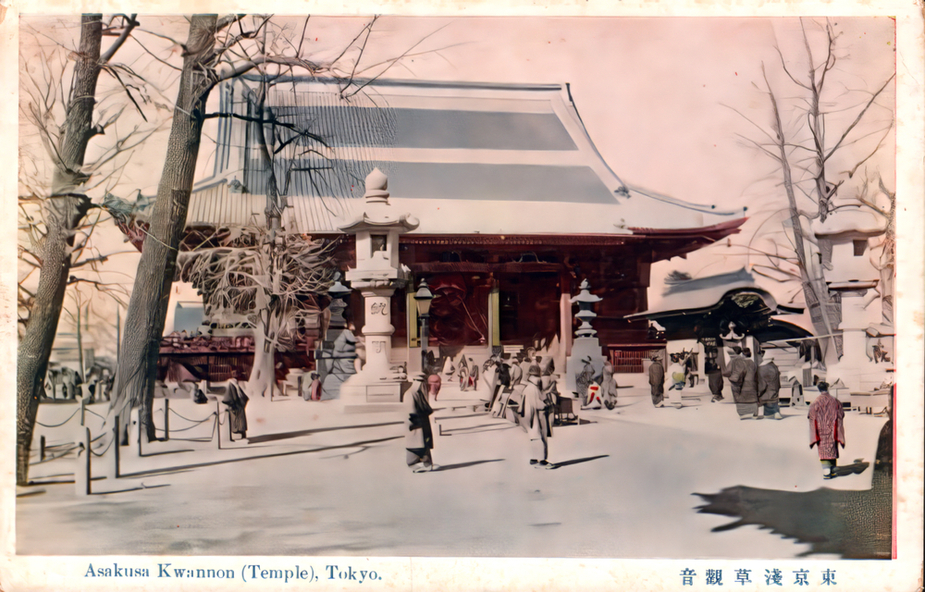
11731.195 This coloured card shows a temple building with visitors in the courtyard. On the card is printed “Asakusa Kwinnon (Temple), Tokyo.” and “東京浅草觀音”. The Japanese 東京浅草觀音 translates as “Asakusa Kannon, Tokyo.”
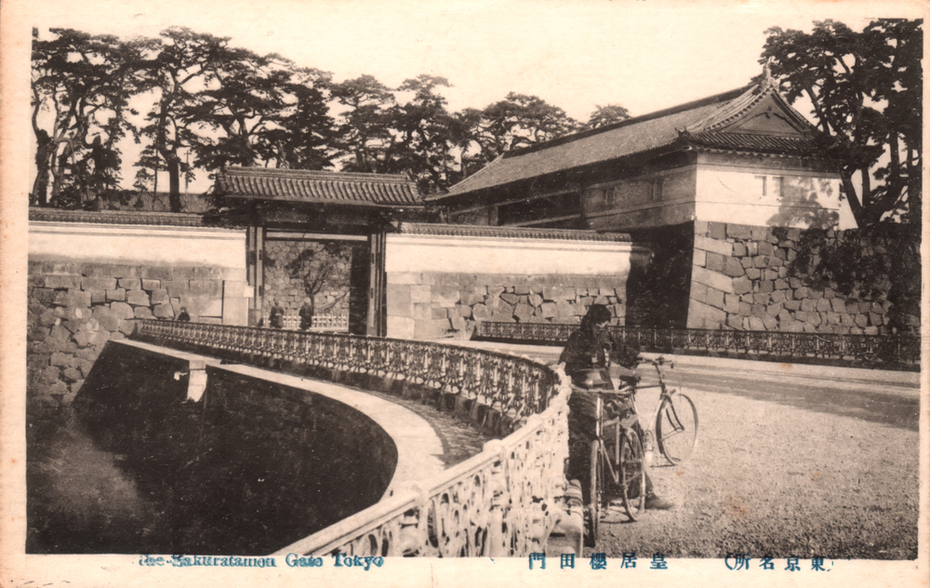
11731.196 This black-and-white card shows the Sakuradamon Gate and stone walls beside a bridge, with bicycles in the foreground. The English caption is partly obscured; the clearly readable portion is “…Sakuradamon Gate Tokyo”. On the card is also printed “皇居櫻田門” and “(東京名所)”. The Japanese translates as:
皇居櫻田門 — “Sakuradamon Gate of the Imperial Palace”
東京名所 — “Famous places of Tokyo”
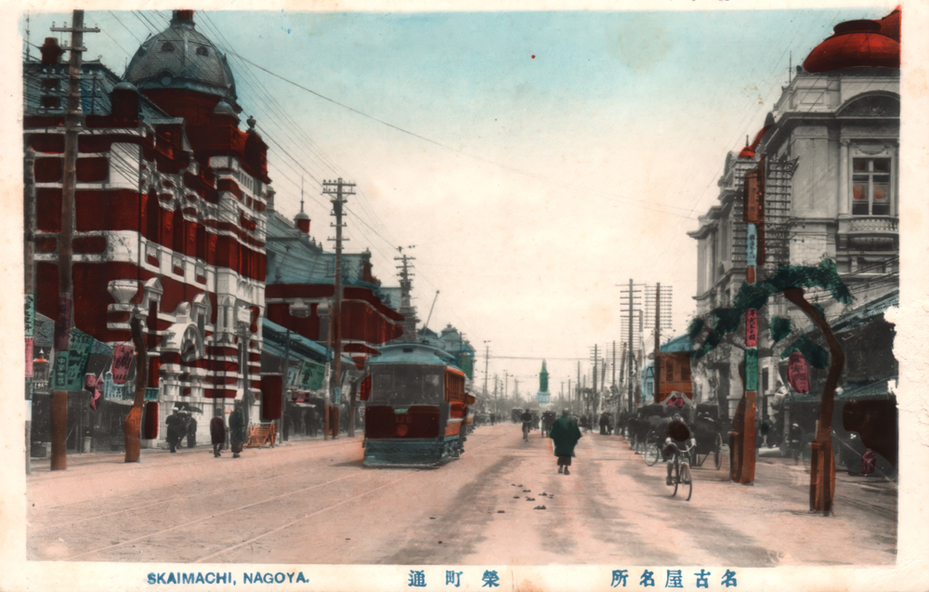
11731.197 This coloured card shows a broad city street with a tram, pedestrians, cyclists and large commercial buildings. On the card is printed “SKAIMACHI, NAGOYA.”, “栄町通” and “名古屋名所”. The Japanese translates as:
栄町通 — “Sakaemachi Street”
名古屋名所 — “Famous places of Nagoya”
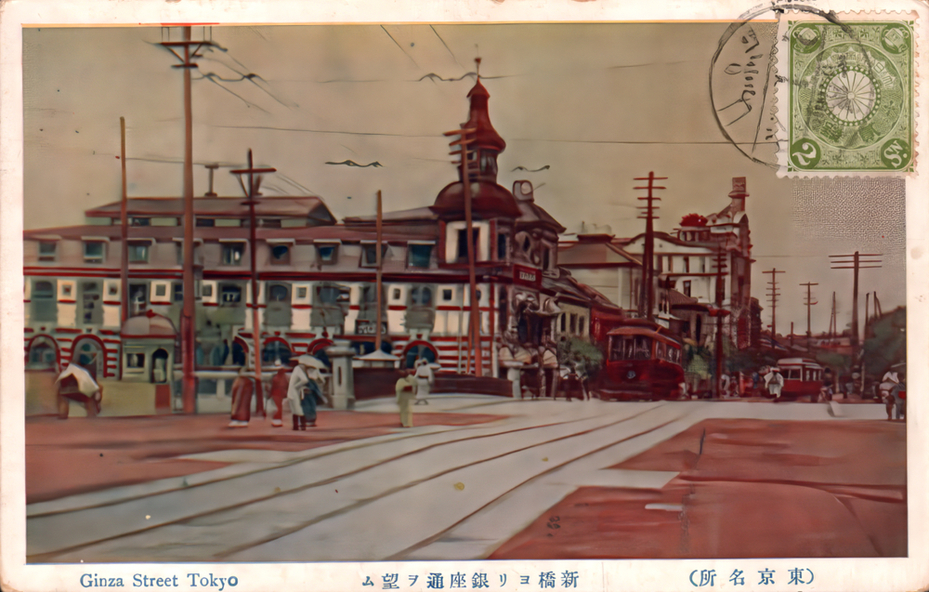
11731.198 This coloured card shows Ginza Street with tram tracks, trams, pedestrians and large buildings. On the card is printed “Ginza Street Tokyo”, “新橋ヨリ銀座通ヲ望ム” and “(東京名所)”. The Japanese translates as:
新橋ヨリ銀座通ヲ望ム — “View of Ginza Street from Shimbashi”
東京名所 — “Famous places of Tokyo”
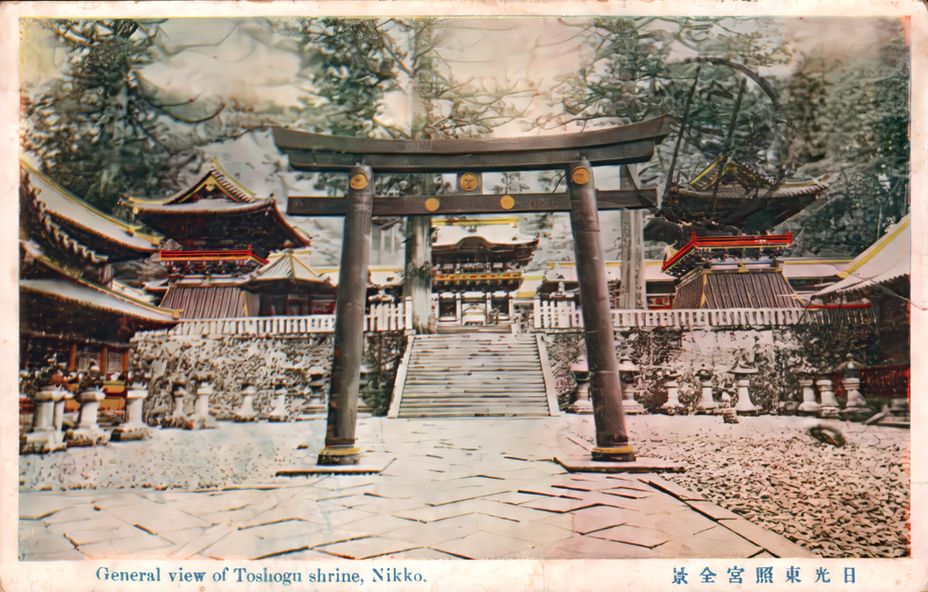
11731.199 This coloured card shows the entrance to the Tōshōgū shrine complex, with a large torii gate and steps. On the card is printed “General view of Toshogu shrine, Nikko.” and “日光東照宮全景”. The Japanese 日光東照宮全景 translates as “Complete view of Nikkō Tōshōgū Shrine.”
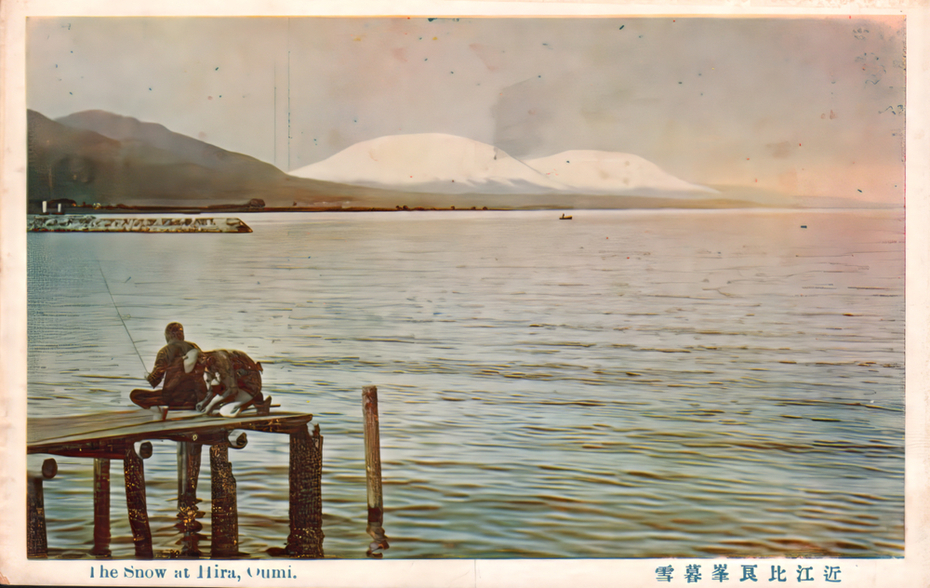
11731.200 This coloured card shows a snow-covered mountain range across a body of water, with two figures on a wooden platform in the foreground. On the card is printed “The Snow at Hira, Oumi.” and “近江比良峯暮雪”. The Japanese 近江比良峯暮雪 translates as “Evening snow on Mount Hira, Ōmi.”
