



Historical information
Thought to have originated in Austria in 1869, postcards first gained popularity in Australia in the 1890s.They were used to send short messages to friends and family.
This collection was generated by Mary Emma Elliot of Talgarno.
Talgarno is a rural locality in Victoria, Australia, situated on the southern shoreline of Lake Hume, about 23 km east of Albury-Wodonga. The collection contains postcards from across the world.
Mary Emma Sibley was born in Ironbark, Bendigo in 1859.
She married James Elliot in 1893 and they settled at “Kelso”, Talgarno.
They had two children – Mona and Sibley.
Mary Emma Elliot died in Melbourne in 1944, aged 84 years.
Physical description
This item contains the following:
Twenty Japanese postcards collected by Mrs James Elliot between 1898 and 1915.
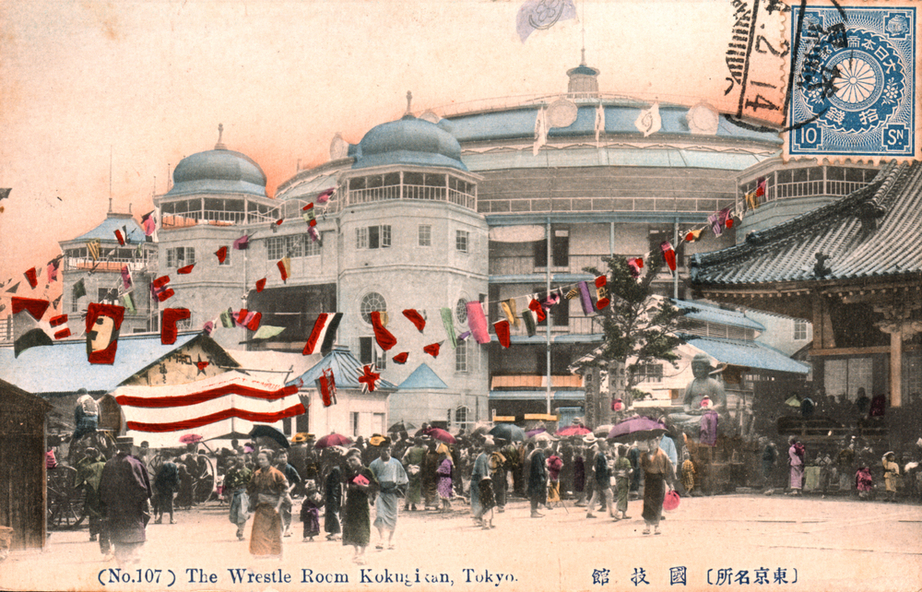
11731.201 This coloured card shows a crowded street outside a large arena building decorated with flags. On the card is printed “(No.107) The Wrestle Room Kokugikan, Tokyo.”, “國技館” and “(東京名所)”. The Japanese translates as:
國技館 — “Kokugikan” / “National Sports Hall”
東京名所 — “Famous places of Tokyo” / “Tokyo sights”
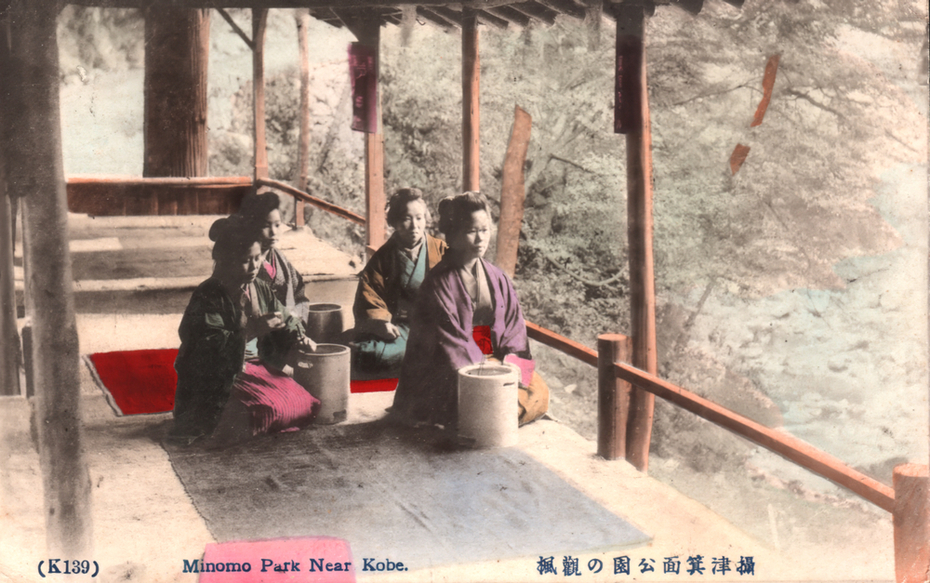
11731.202 This coloured card shows four women seated on a covered veranda overlooking a wooded setting. On the card is printed “(K139) Minomo Park Near Kobe.” and “攝津箕面公園の觀楓”. The Japanese 攝津箕面公園の觀楓 translates as “Maple viewing in Minoo Park, Settsu.”
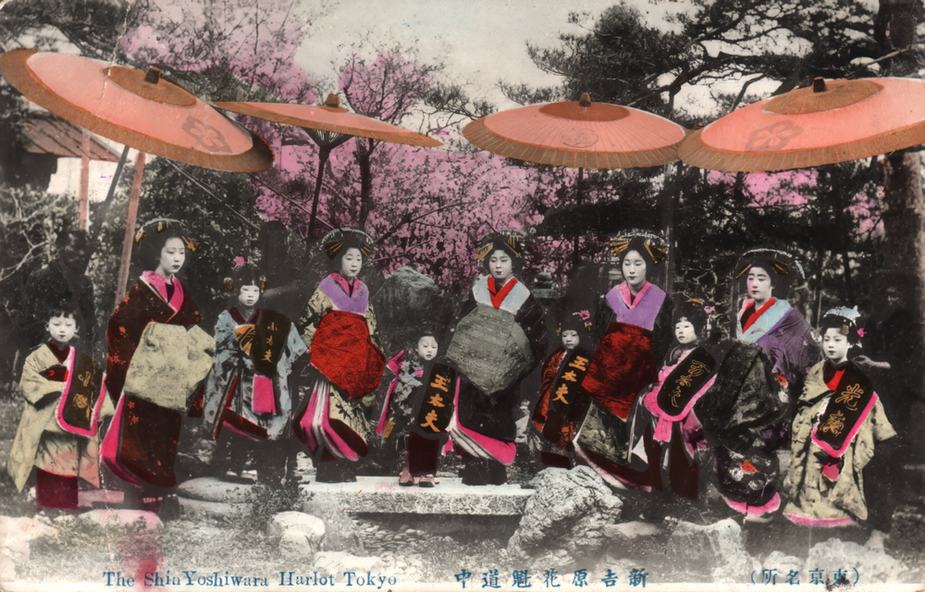
11731.203 This coloured card shows a group of elaborately dressed women and girls beneath parasols. On the card is printed “The Shin Yoshiwara Harlot Tokyo”, “新吉原花魁道中” and “(東京名所)”. The Japanese translates as:
新吉原花魁道中 — “Procession of the oiran of Shin-Yoshiwara”
東京名所 — “Famous places of Tokyo”
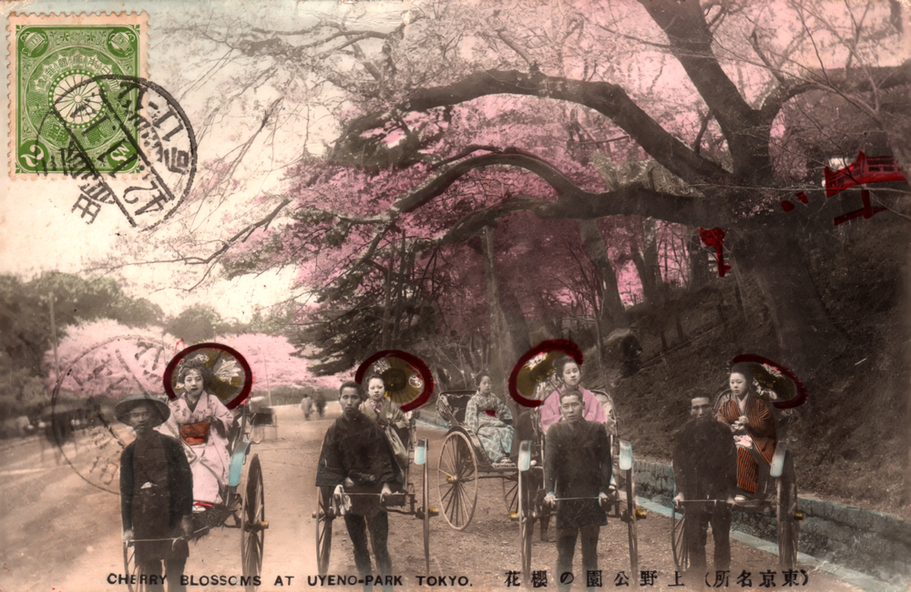
11731.204 This coloured card shows rickshaws carrying women beneath flowering cherry trees. On the card is printed “CHERRY BLOSSOMS AT UYENO-PARK TOKYO.”, “上野公園の櫻花” and “(東京名所)”. The Japanese translates as:
上野公園の櫻花 — “Cherry blossoms in Ueno Park”
東京名所 — “Famous places of Tokyo”
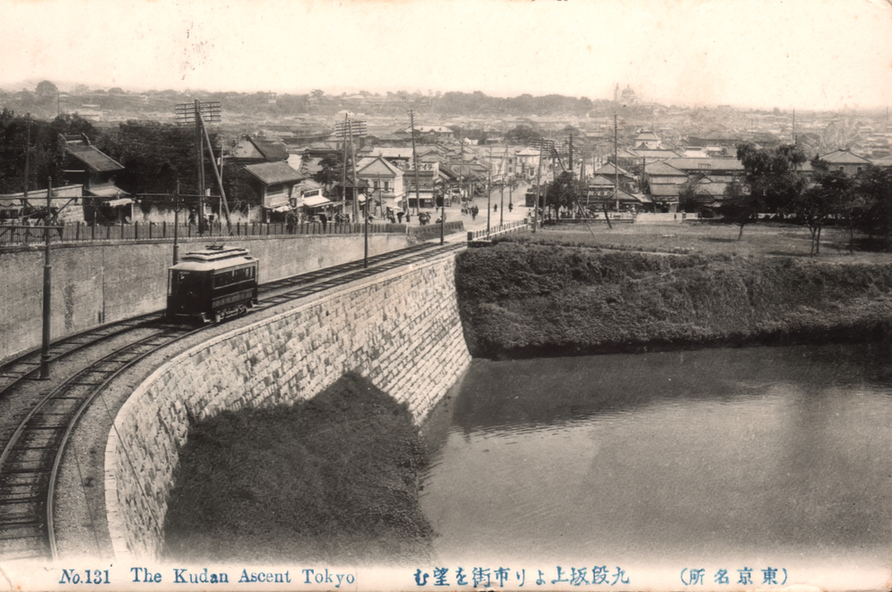
11731.205 This black-and-white card shows a tram travelling beside a moat with a city streetscape in the distance. On the card is printed “No.131 The Kudan Ascent Tokyo”, “九段坂より市街を望む” and “(東京名所)”. The Japanese translates as:
九段坂より市街を望む — “View of the city from Kudan Slope”
東京名所 — “Famous places of Tokyo”
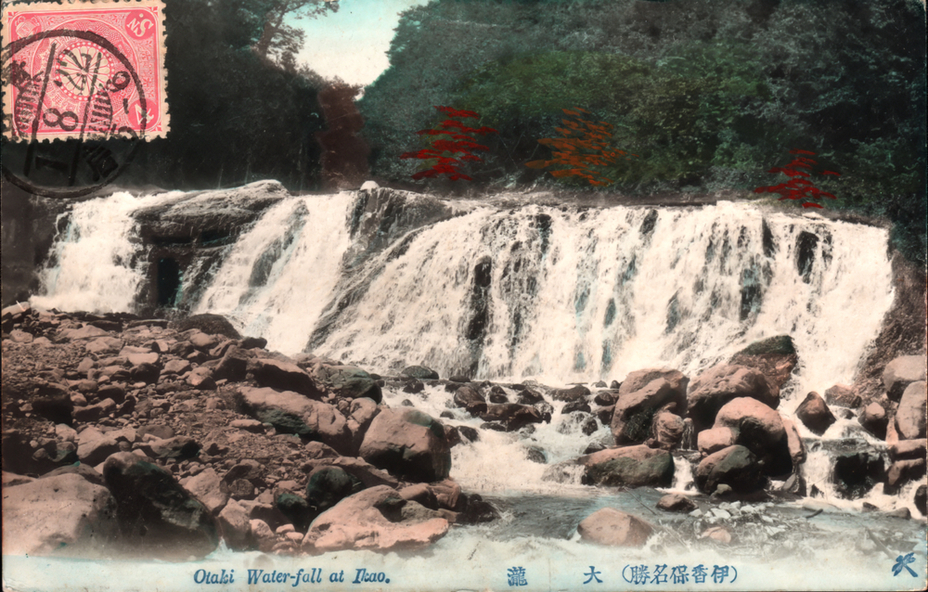
11731.206 This coloured card shows a waterfall cascading over rocky ledges in a wooded setting. On the card is printed “Otaki Water-fall at Itao.”, “大瀧” and “(伊香保名勝)”. The Japanese translates as:
大瀧 — “Great Waterfall” / “Otaki Waterfall”
伊香保名勝 — “Famous scenic places of Ikaho” / “Ikaho beauty spot”
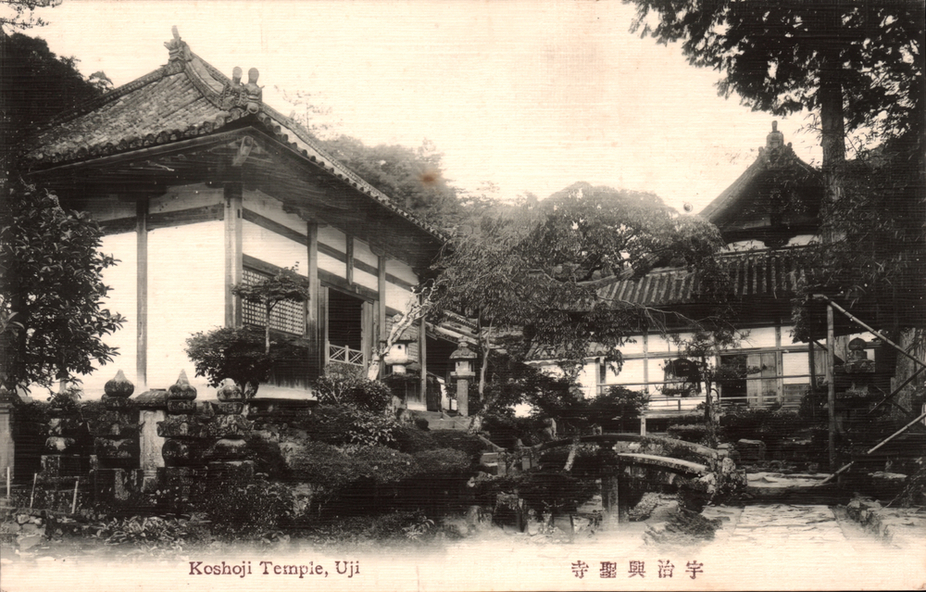
11731.207 This black-and-white card shows temple buildings beside a small pond and bridge. On the card is printed “Koshoji Tempie, Uji” and “宇治興聖寺”. The Japanese translates as:
宇治興聖寺 — “Kōshōji Temple, Uji”
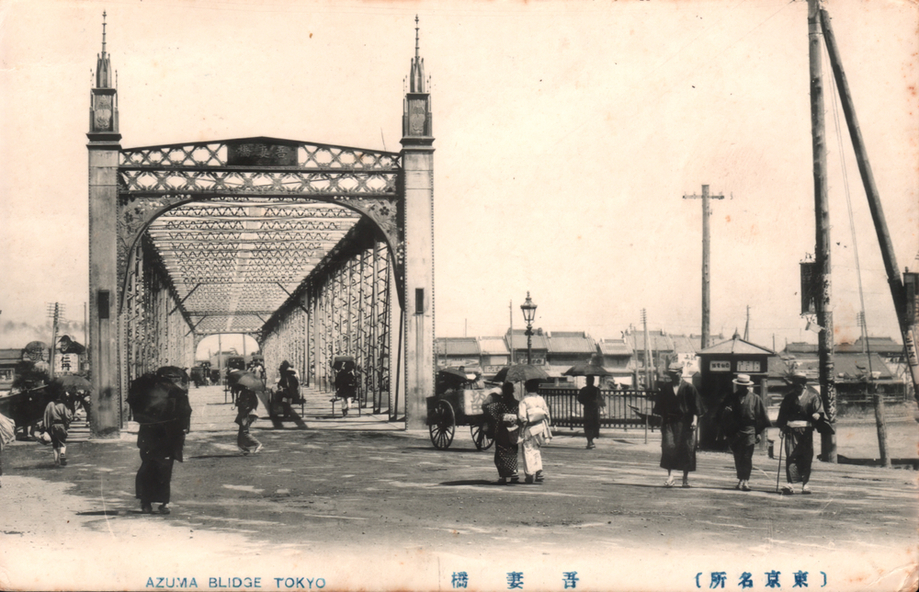
11731.208 This black-and-white card shows a large iron bridge with pedestrians and vehicles. On the card is printed “AZUMA BLIDGE TOKYO”, “吾妻橋” and “(東京名所)”. The Japanese translates as:
吾妻橋 — “Azuma Bridge”
東京名所 — “Famous places of Tokyo” / “Tokyo sights”
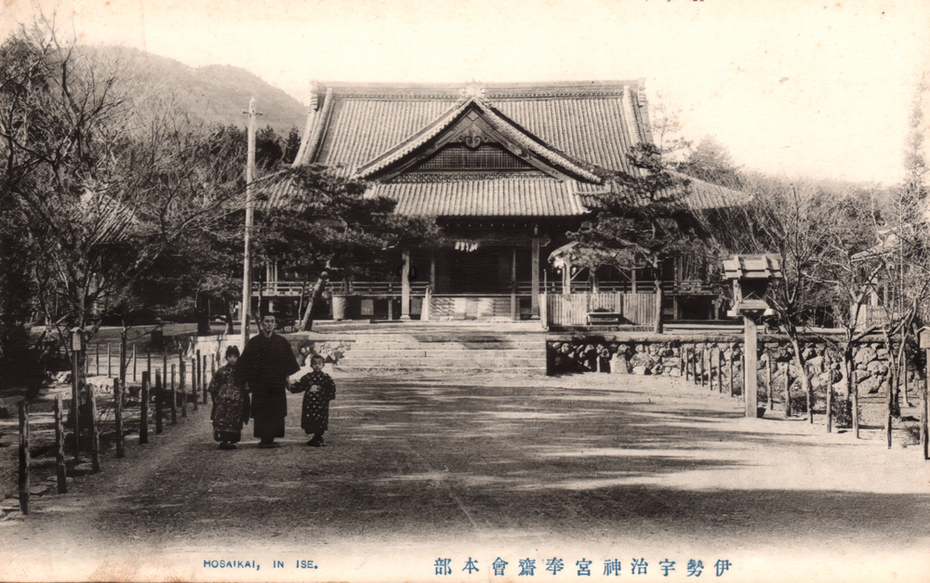
11731.209 This black-and-white card shows a large shrine or temple building at the end of a broad approach path, with an adult and two children in the foreground. On the card is printed “HOSAIKAI, IN ISE.” and “伊勢神宮奉齋會本部”. The Japanese translates as:
伊勢神宮奉齋會本部 — “Headquarters of the Hōsaikai of Ise Jingū” / “Headquarters of the Ise Shrine devotional association”
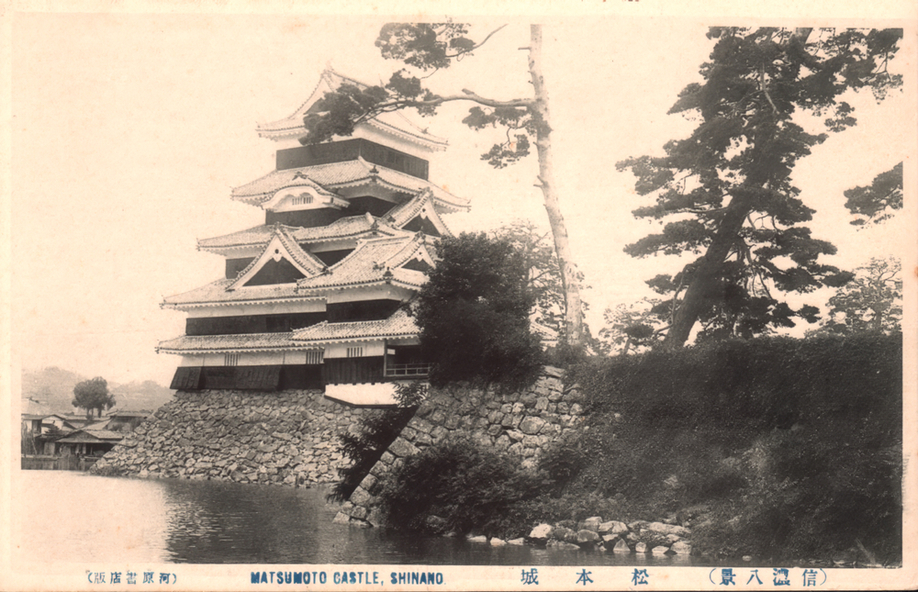
11731.210 This black-and-white card shows a castle beside a moat and stone embankment. On the card is printed “MATSUMOTO CASTLE, SHINANO.”, “松本城” and “(信濃八景)”. The Japanese translates as:
松本城 — “Matsumoto Castle”
信濃八景 — “Eight Views of Shinano”
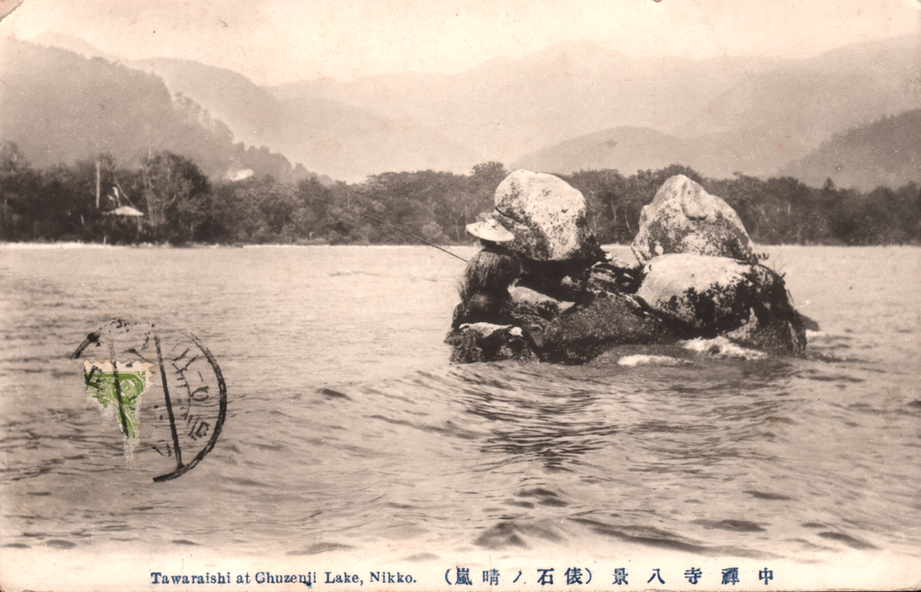
11731.211 This black-and-white card shows a person beside large rocks in a lake, with wooded hills and mountains in the distance. On the card is printed “Tawaraishi at Chuzenji Lake, Nikko.”, “(嵐晴ノ俵石)” and “中禅寺八景”. The Japanese translates as:
嵐晴ノ俵石 — “Tawara Stone after the storm clears”
中禅寺八景 — “Eight Views of Chuzenji”
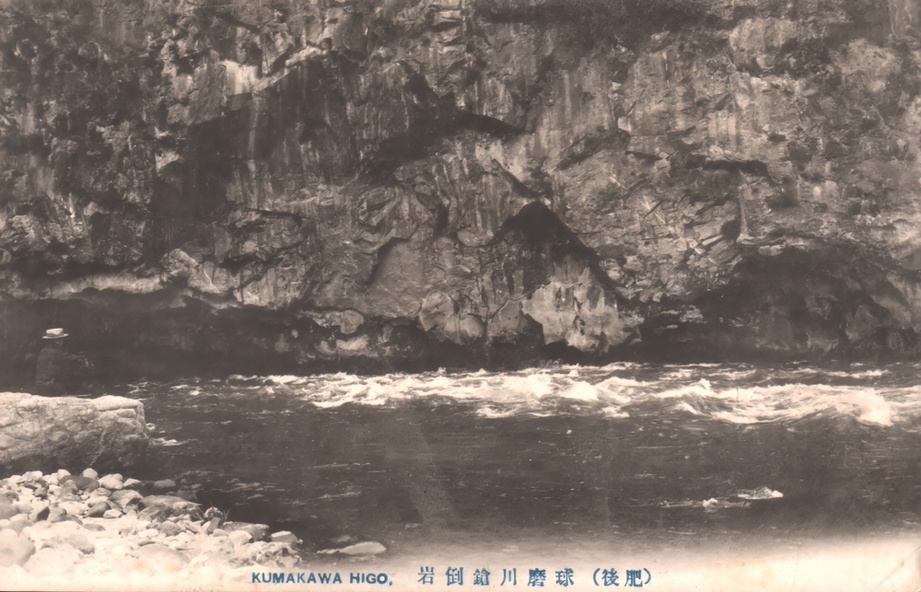
11731.212 This black-and-white card shows a river flowing below a steep rocky cliff. On the card is printed “KUMAKAWA HIGO.” and “球磨川鎧岩(肥後)”. The Japanese translates as:
球磨川 — “Kuma River”
鎧岩 — “Armour Rock” / “Yoroi Rock”
肥後 — “Higo”
Together, the Japanese caption means approximately: “Armour Rock on the Kuma River, Higo.”
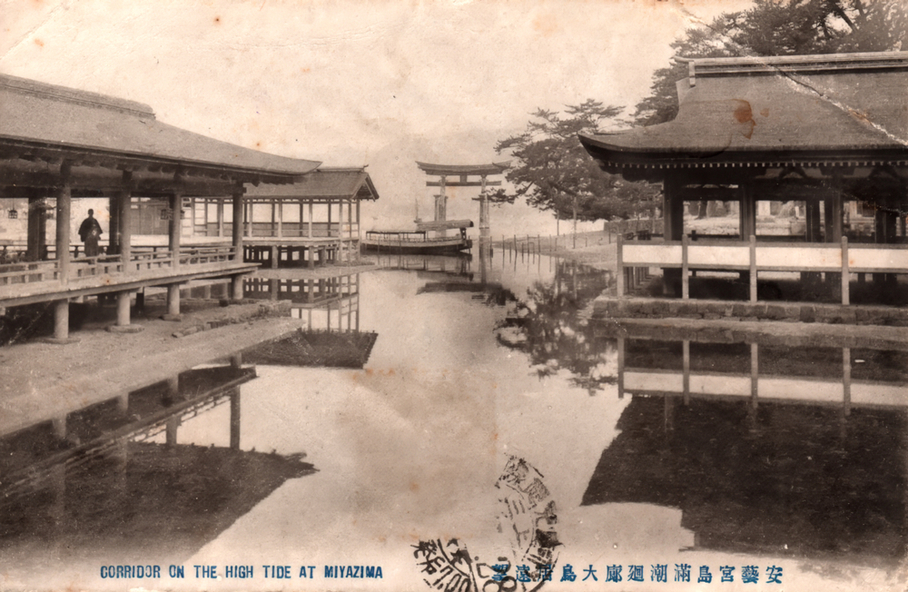
11731.213 This black-and-white card shows covered corridors and shrine buildings over tidal water, with a torii gate in the distance. On the card is printed “CORRIDOR ON THE. HIGH TIDE AT MIYAZIMA” and “安藝宮島満潮廻廊”. The Japanese translates as:
安藝 — “Aki”
宮島 — “Miyajima”
満潮 — “high tide”
廻廊 — “corridor” / “covered passage”
Together, the Japanese caption means: “Corridor at high tide, Miyajima, Aki.”
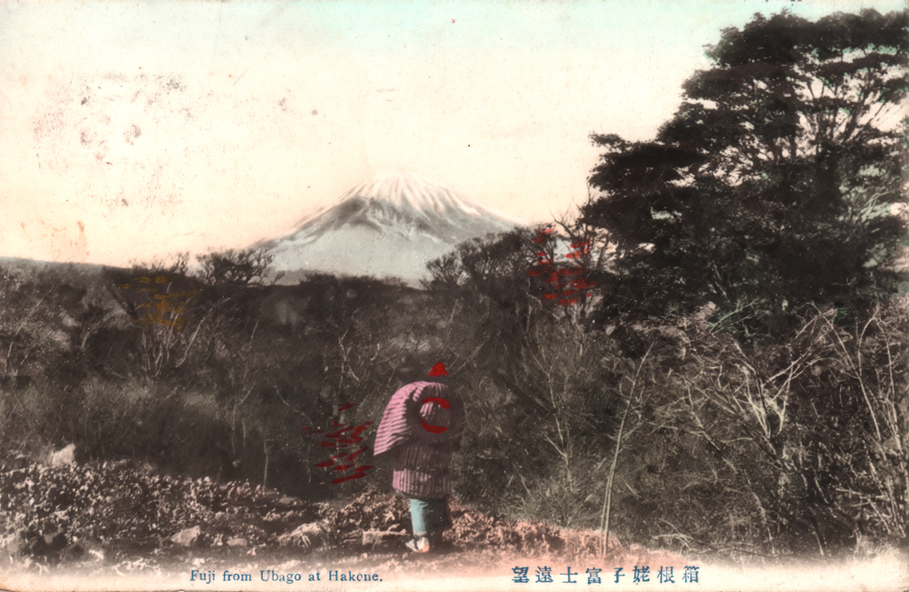
11731.214 This coloured card shows a person standing in the foreground with Mount Fuji rising beyond trees and scrub. On the card is printed “Fuji from Ubago at Hakone.” and “箱根姥子富士遠望”. The Japanese translates as:
箱根 — “Hakone”
姥子 — “Ubago” / “Ubako”
富士遠望 — “distant view of Fuji”
Together, the Japanese caption means: “Distant view of Mount Fuji from Ubago, Hakone.”
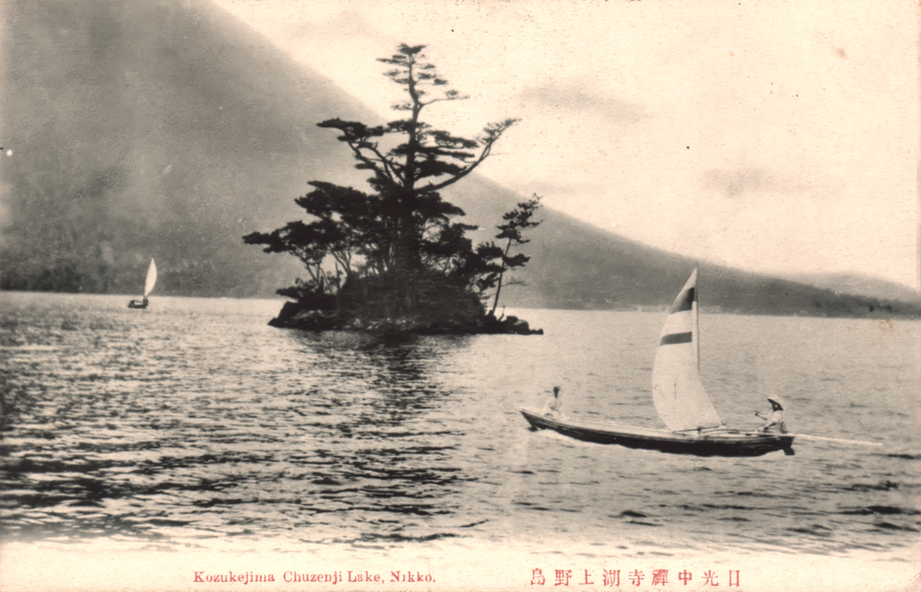
11731.215 This black-and-white card shows small sailboats on a lake beside a tree-covered islet, with hills behind. On the card is printed “Kozukejima Chuzenji Lake, Nikko.” and “日光中禅寺湖上野島”. The Japanese translates as:
日光 — “Nikko”
中禅寺湖 — “Lake Chuzenji”
上野島 — “Kozukejima” / “Kōzuke Island”
Together, the Japanese caption means: “Kozukejima on Lake Chuzenji, Nikko.”
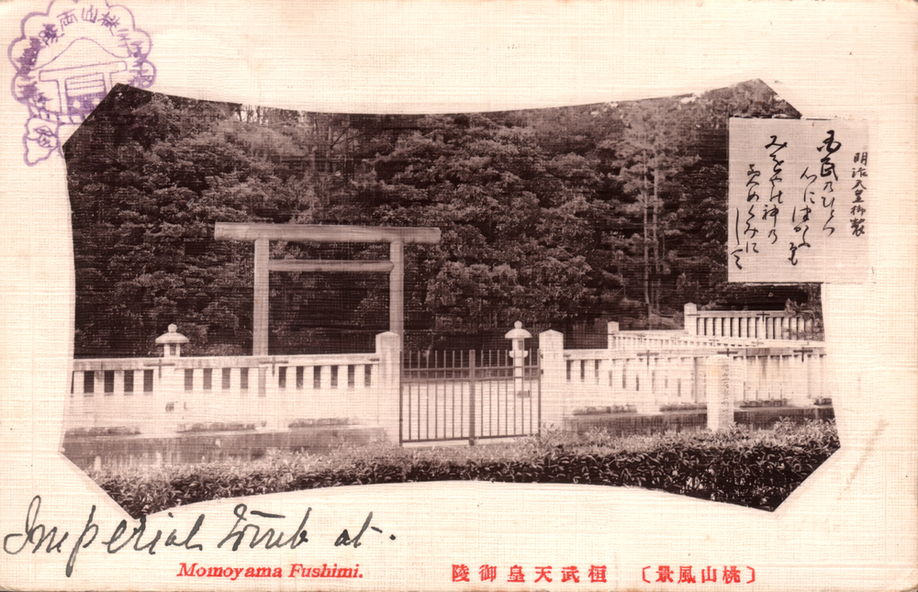
11731.216 This black-and-white card shows the entrance to an imperial mausoleum or shrine precinct, with a torii gate and wooded hillside. On the card is printed “Momoyama Fushimi.” and “桓武天皇御陵〔桃山風景〕”. Japanese translation:
桓武天皇御陵 — “Mausoleum of Emperor Kammu.”
桃山風景 — “View/Scenery of Momoyama.”
The handwritten Japanese panel at upper right begins 明治天皇御製, meaning “A poem composed by Emperor Meiji.”
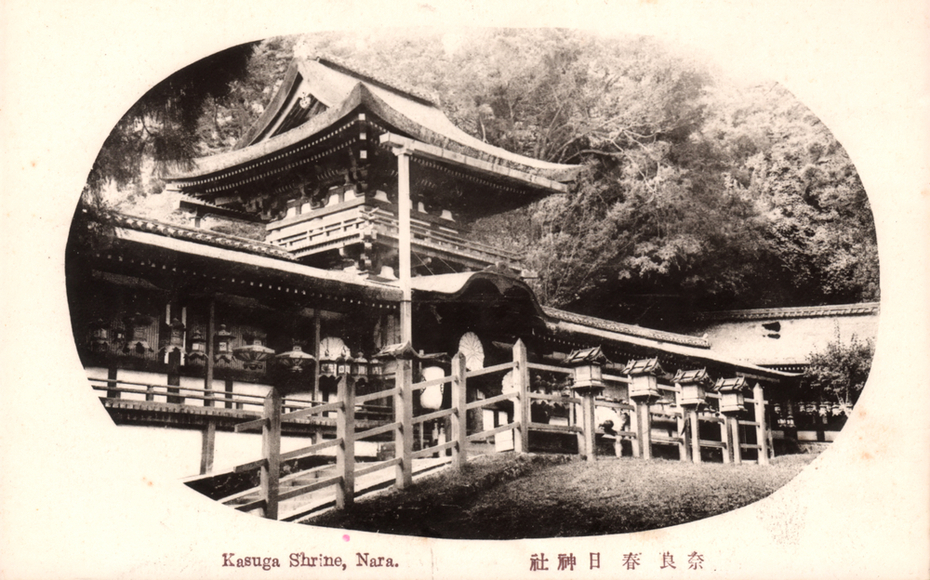
11731.217 This black-and-white card shows the buildings and lantern-lined approach of Kasuga Shrine. On the card is printed “Kasuga Shrine, Nara.” and “奈良 春日 神社”. Japanese translation:
奈良 — “Nara.”
春日神社 — “Kasuga Shrine.”
Together: “Kasuga Shrine, Nara.”
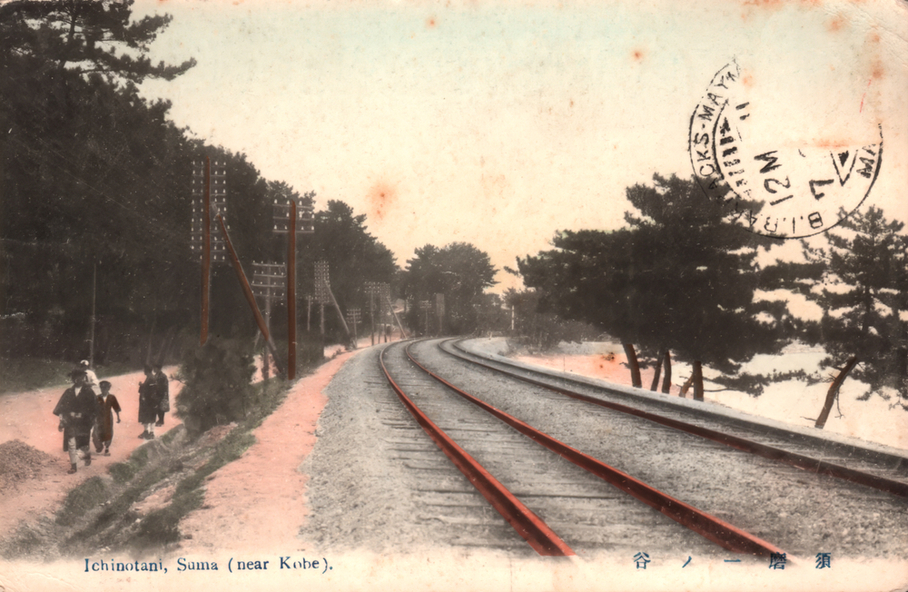
11731.218 This coloured card shows a double-track railway curving through a wooded coastal landscape, with several people walking beside the railway. On the card is printed “Ichinotani, Suma (near Kobe).” and “須磨 一ノ谷”. Japanese translation:
須磨 — “Suma.”
一ノ谷 — “Ichinotani” (Ichi-no-Tani).
Together: “Ichinotani, Suma.”
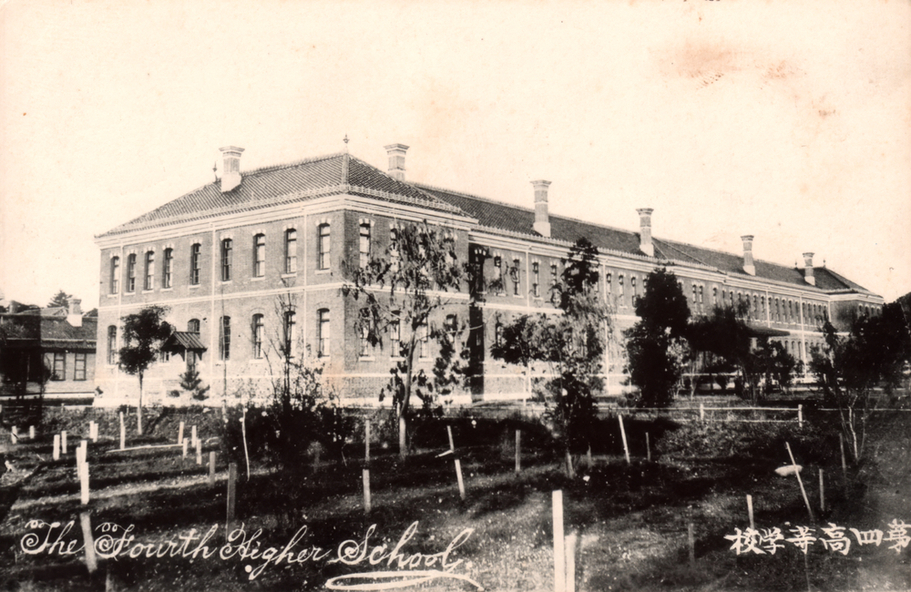
11731.219 This black-and-white card shows a large two-storey institutional school building surrounded by planted grounds. On the card is printed “The Fourth Higher School” and “第四高等学校”. Japanese translation:
第四 — “Fourth.”
高等学校 — “Higher School.”
第四高等学校 — “The Fourth Higher School.”
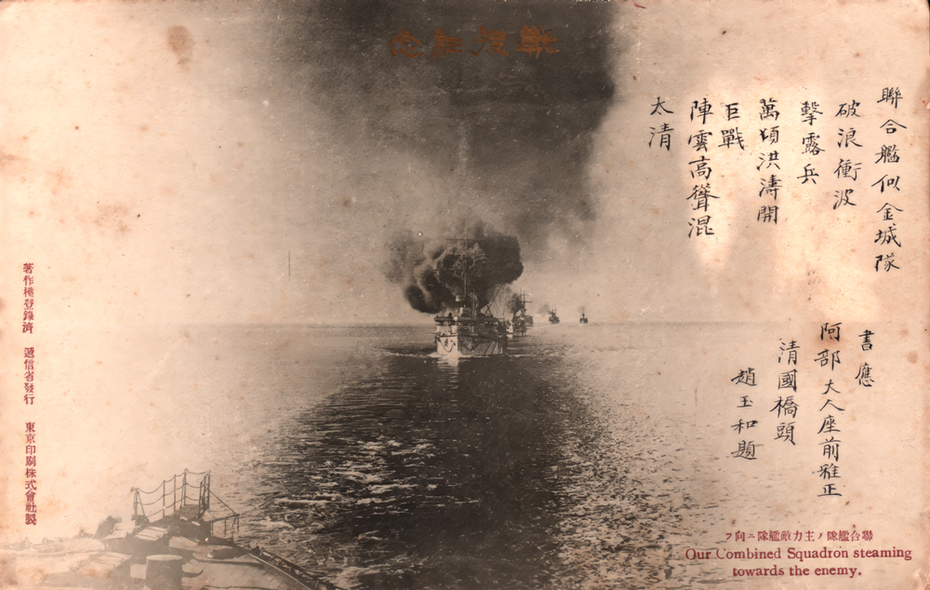
11731.220 This black-and-white card shows a column of warships steaming at sea, with smoke rising from the leading vessels. On the card is printed “Our Combined Squadron steaming towards the enemy.” The card also contains extensive Japanese and Chinese-character text. Clearly readable Japanese/Chinese text and translation:
聯合艦隊 — “Combined Fleet.”
破浪衝波 — approximately “breaking through the waves / surging through the seas.”
擊露兵 — refers to “striking/attacking the Russian forces”; 露 is the historical abbreviation for Russia.
萬頃洪濤開 — approximately “opening a way through the vast surging waves.”
巨艦 — “great/large warships.”
陣雲高簇混 — approximately “battle clouds/smoke gather densely overhead.”
大清 — “Great Qing.”
書應 — “written in response” or “inscribed in response.”
清國橋頭 — “Hashimoto of Qing China” / “Qing China, Hashimoto,” depending on how the signature is intended to be read.
趙玉和題 — “Inscribed by Zhao Yuhe.”
The red vertical publisher text at the left includes 東京印刷株式會社製, meaning “Manufactured by Tokyo Printing Co., Ltd.”
The large vertical inscription appears to be a literary verse concerning the Combined Fleet and its movement against Russian forces.
