

![This coloured card shows the moon over the water at Uotsu Port. On the card is printed “EVENING OF UOTSU PORT.” and “魚津港の夕照(米屋旅館奥座敷ヨリ望ム)”. Japanese translation: 魚津港の夕照 — “Evening glow at Uotsu Port.”
米屋旅館奥座敷ヨリ望ム — “Viewed from the inner guest room of the Komeya Inn.”
The large purple commemorative cancellation includes “大正2.9.21–10.20”, meaning 21 September–20 October, Taishō 2 [1913], and “水族館”, meaning “Aquarium.”](/media/collectors/4f729f7e97f83e03086018f4/items/6a7945ab3c57ee1f79b2dcf8/item-media/6a7945e53c57ee1f79b2e36e/VictorianCollections-large.jpg?cb=6)


![This coloured card shows the moon over the water at Uotsu Port. On the card is printed “EVENING OF UOTSU PORT.” and “魚津港の夕照(米屋旅館奥座敷ヨリ望ム)”. Japanese translation: 魚津港の夕照 — “Evening glow at Uotsu Port.”
米屋旅館奥座敷ヨリ望ム — “Viewed from the inner guest room of the Komeya Inn.”
The large purple commemorative cancellation includes “大正2.9.21–10.20”, meaning 21 September–20 October, Taishō 2 [1913], and “水族館”, meaning “Aquarium.”](/media/collectors/4f729f7e97f83e03086018f4/items/6a7945ab3c57ee1f79b2dcf8/item-media/6a7945e53c57ee1f79b2e36e/VictorianCollections-thumb64.jpg?cb=6)


Historical information
Thought to have originated in Austria in 1869, postcards first gained popularity in Australia in the 1890s.They were used to send short messages to friends and family.
This collection was generated by Mary Emma Elliot of Talgarno.
Talgarno is a rural locality in Victoria, Australia, situated on the southern shoreline of Lake Hume, about 23 km east of Albury-Wodonga. The collection contains postcards from across the world.
Mary Emma Sibley was born in Ironbark, Bendigo in 1859.
She married James Elliot in 1893 and they settled at “Kelso”, Talgarno.
They had two children – Mona and Sibley.
Mary Emma Elliot died in Melbourne in 1944, aged 84 years.
Physical description
This item contains the following:
Twenty Japanese postcards collected by Mrs James Elliot between 1898 and 1915.
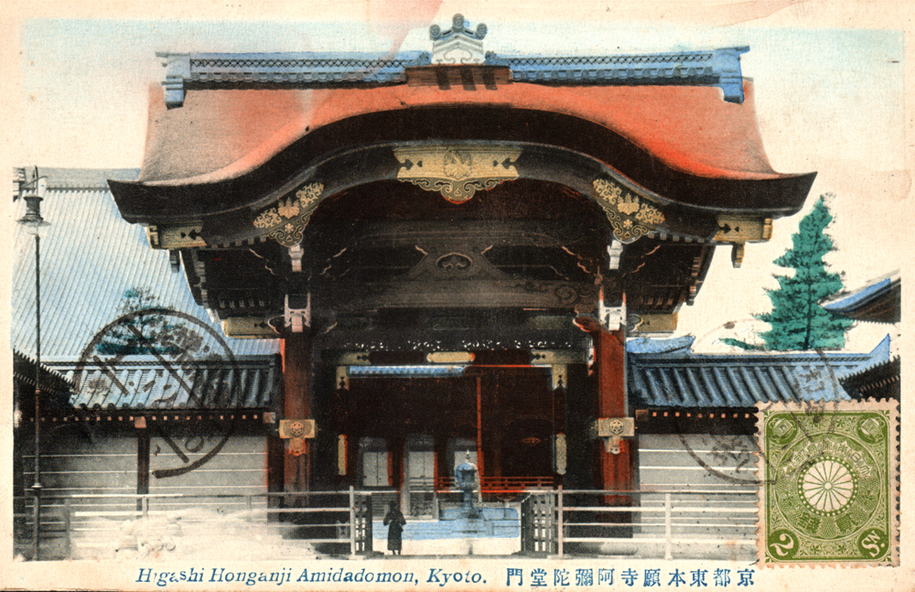
11731.221 This coloured card shows the Amida Hall Gate at Higashi Honganji, Kyoto, with a large traditional roofed gateway. On the card is printed “H'gashi Honganji Amidadomon, Kyoto.” and “京都東本願寺阿彌陀堂門”. Japanese translation: 京都東本願寺阿彌陀堂門 — “Amida Hall Gate, Higashi Honganji, Kyoto.”
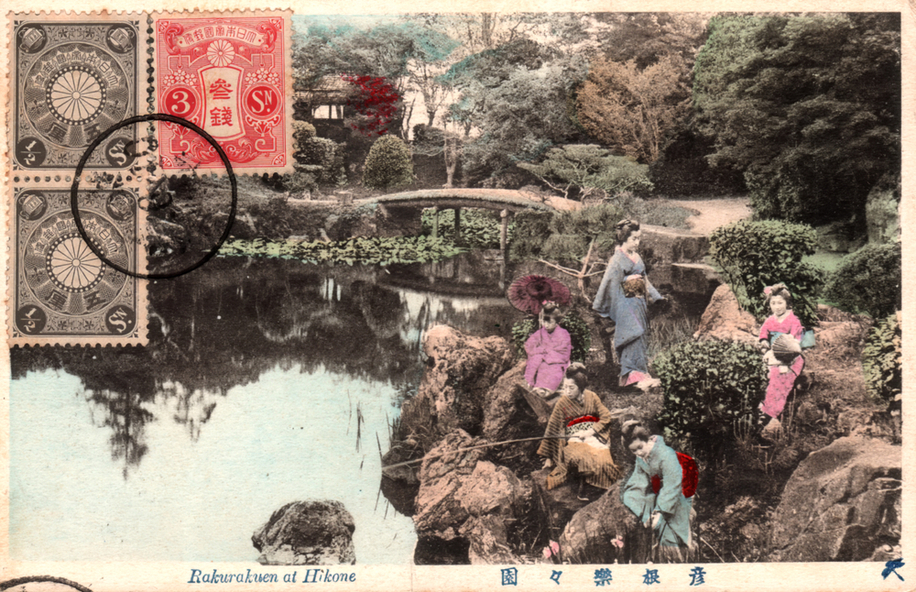
11731.222 This coloured card shows a landscaped Japanese garden with a pond, bridge and several women in kimono. On the card is printed “Rakurakuen at Hikone” and “彦根 樂々園”. Japanese translation: 彦根 樂々園 — “Rakurakuen, Hikone.”
11731.223 This coloured card shows the moon over the water at Uotsu Port. On the card is printed “EVENING OF UOTSU PORT.” and “魚津港の夕照(米屋旅館奥座敷ヨリ望ム)”. Japanese translation: 魚津港の夕照 — “Evening glow at Uotsu Port.”
米屋旅館奥座敷ヨリ望ム — “Viewed from the inner guest room of the Komeya Inn.”
The large purple commemorative cancellation includes “大正2.9.21–10.20”, meaning 21 September–20 October, Taishō 2 [1913], and “水族館”, meaning “Aquarium.”
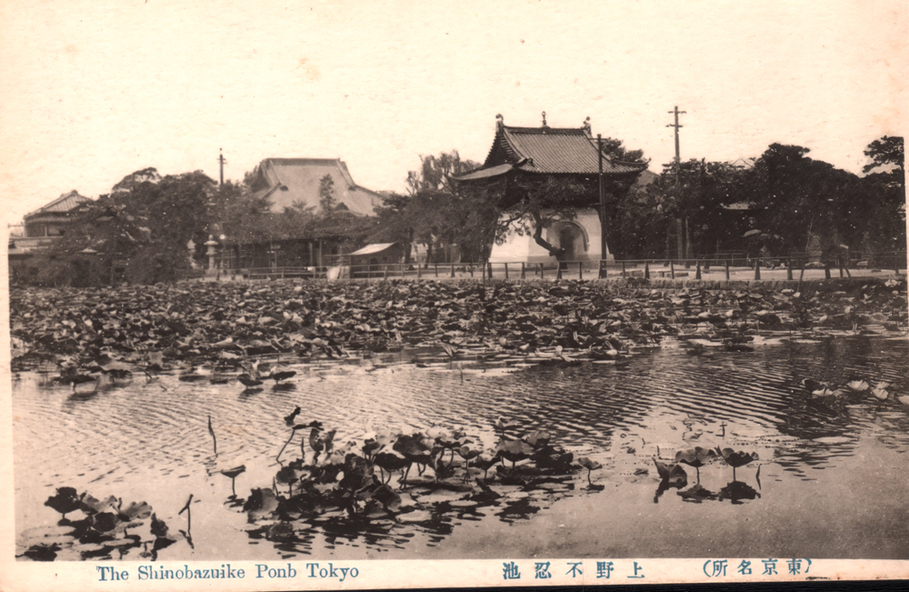
11731.224 This black-and-white card shows Shinobazu Pond in Tokyo, with lotus plants covering much of the water and temple buildings beyond. On the card is printed “The Shinobazuike Ponb Tokyo” and “(東京名所)上野不忍池”. Japanese translation: 東京名所 — “Famous place/sight of Tokyo.” 上野不忍池 — “Shinobazu Pond, Ueno.” Together: “(Famous sight of Tokyo) Shinobazu Pond, Ueno.”
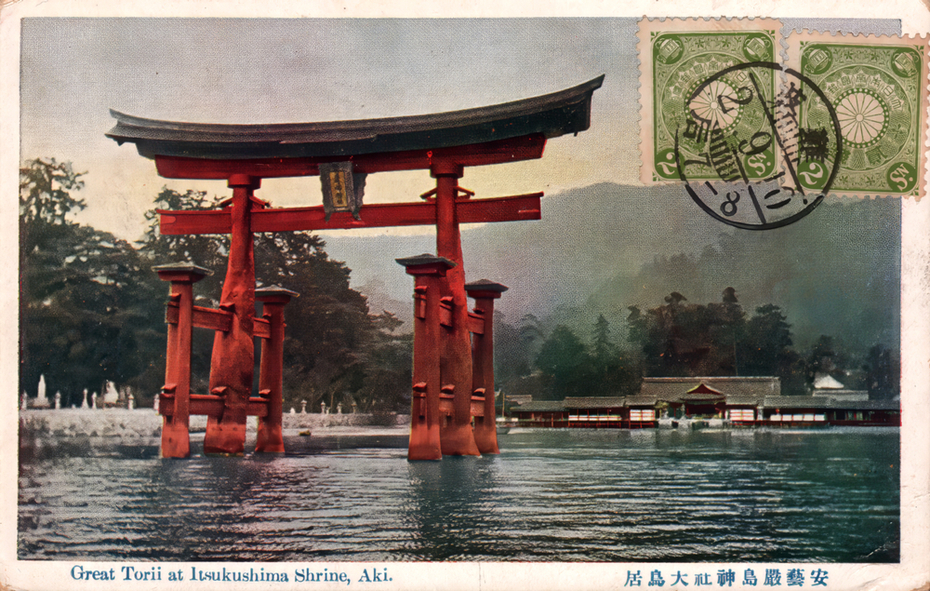
11731.225 This coloured card shows the large torii standing in the water at Itsukushima Shrine. On the card is printed “Great Torii at Itsukushima Shrine, Aki.” and “安藝嚴島神社大鳥居”. Japanese translation: 安藝嚴島神社大鳥居 — “Great Torii of Itsukushima Shrine, Aki.” Here 安藝 is the older character form of 安芸 (Aki).
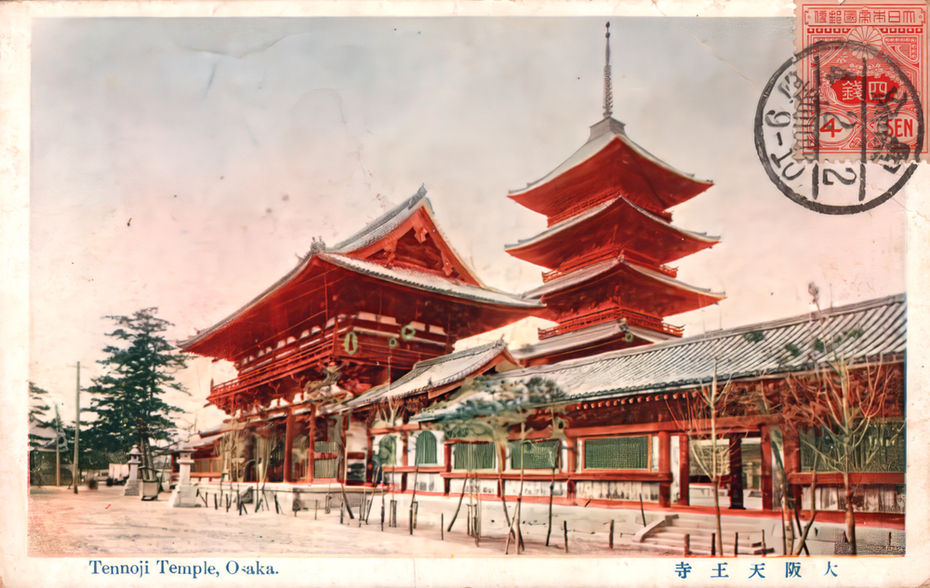
11731.226 This coloured card shows a temple complex with a large entrance building and five-storey pagoda. On the card is printed “Tennoji Temple, O:aka.” and “大阪天王寺”. Japanese translation:
大阪天王寺 — “Tennōji, Osaka” or “Tennōji Temple, Osaka.” The postage stamp reads 大日本帝國郵便 (“Imperial Japanese Post”) and 四錢 / 4 SEN (“4 sen”).
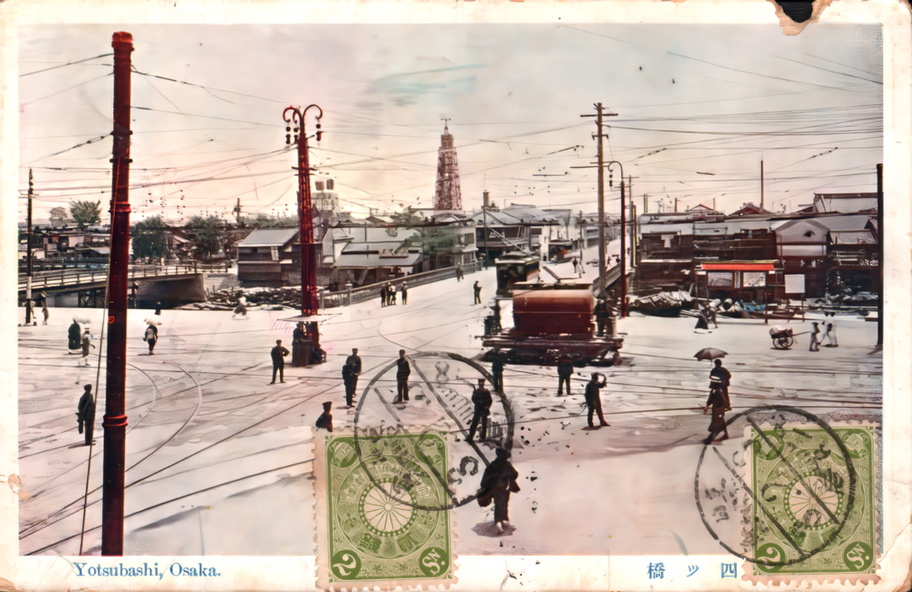
11731.227 This coloured card shows a broad Osaka street intersection with tram tracks, overhead wires, pedestrians and trams. On the card is printed “Yotsubashi, Osaka.” and “四ツ橋”. Japanese translation: 四ツ橋 — “Yotsubashi” (literally, “Four Bridges”).
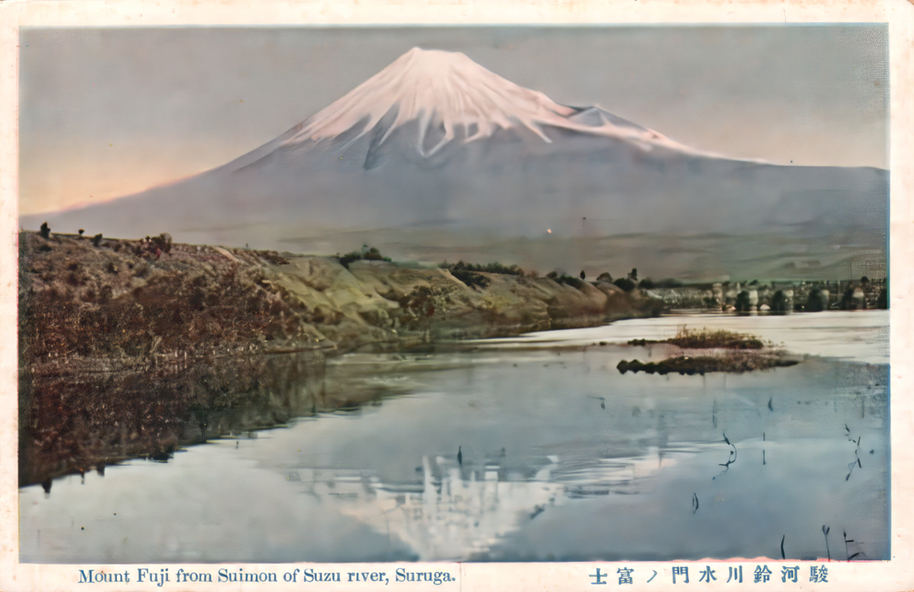
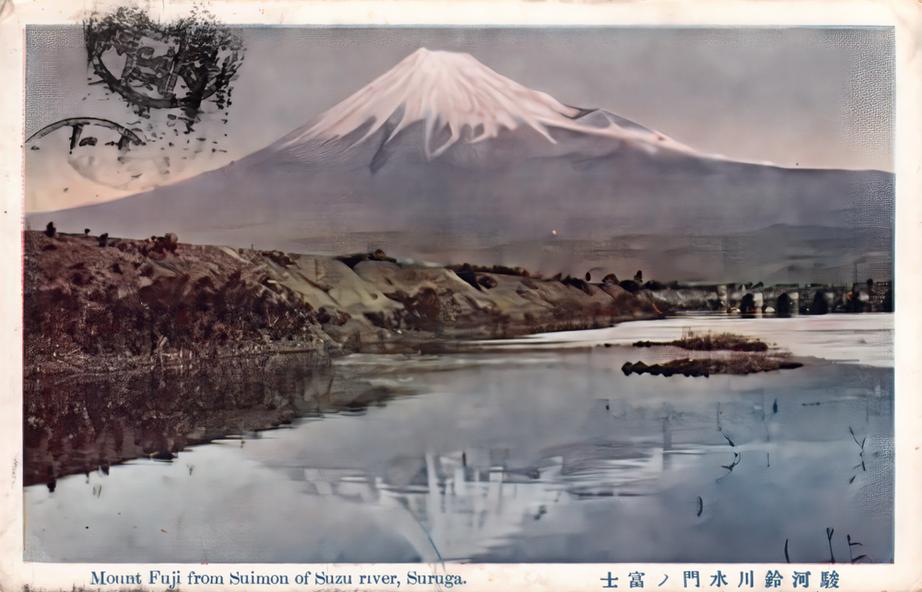
11731.228 This coloured card shows Mount Fuji beyond a river, with the snow-covered mountain dominating the background. On the card is printed “Mount Fuji from Suimon of Suzu river, Suruga.” and “駿河鈴川水門ノ富士”. Japanese translation: 駿河鈴川水門ノ富士 — “Mount Fuji from the sluice/water gate at Suzukawa, Suruga.” Here ノ is the older katakana form used for the possessive “of/from.”
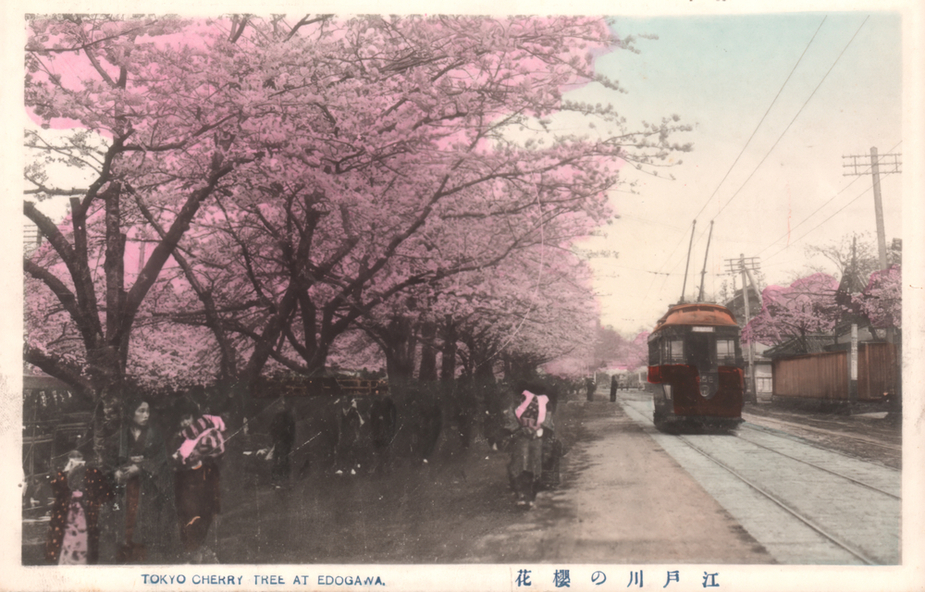
11731.229 This coloured card shows a tram travelling beside a long avenue of flowering cherry trees, with pedestrians beneath the blossoms. On the card is printed “TOKYO CHERRY TREE AT EDOGAWA.” and “江戸川の櫻花”. Japanese translation:
江戸川の櫻花 — “Cherry blossoms at Edogawa” or, more literally, “The cherry blossoms of Edogawa.”
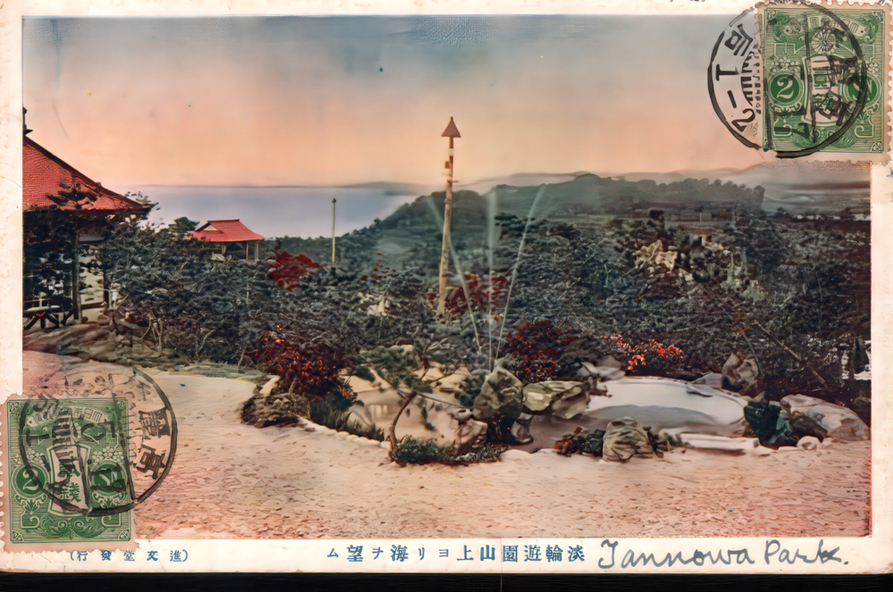
11731.230 This coloured card shows a landscaped hilltop park or garden overlooking the sea. On the card is printed “淡輪遊園山上ヨリ海ヲ望ム” and there is handwritten English reading “Tannowa Park.” Japanese translation: 淡輪遊園山上ヨリ海ヲ望ム — “View of the sea from the hilltop of Tannowa Park.” The small parenthetical publisher inscription at lower left appears to read “(進文堂發行)”, meaning “Published by Shinbundō/Shinmundō.”
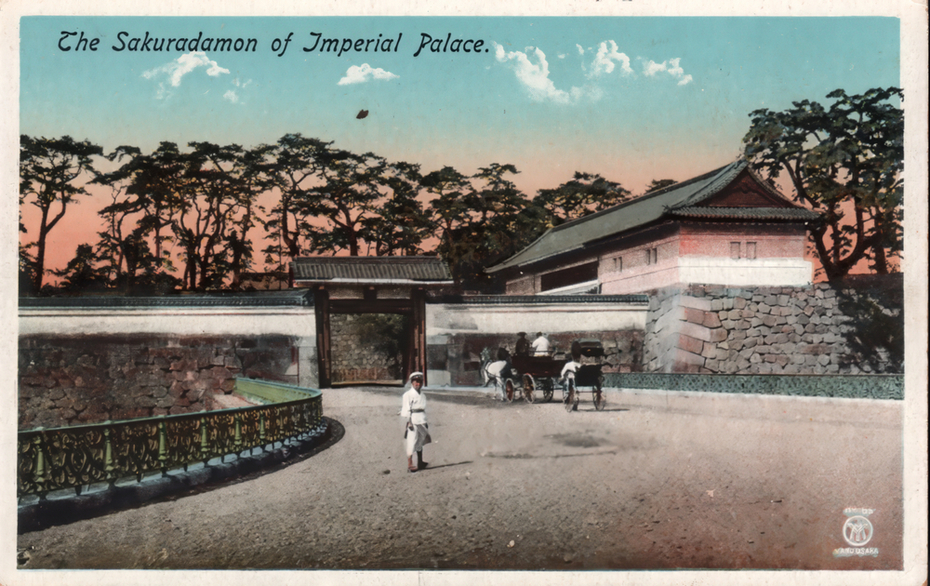
11731.231 This coloured card shows the Sakuradamon entrance of the Imperial Palace, with stone walls, a bridge, gate buildings, pedestrians and rickshaws. On the card is printed “The Sakuradamon of Imperial Palace.”
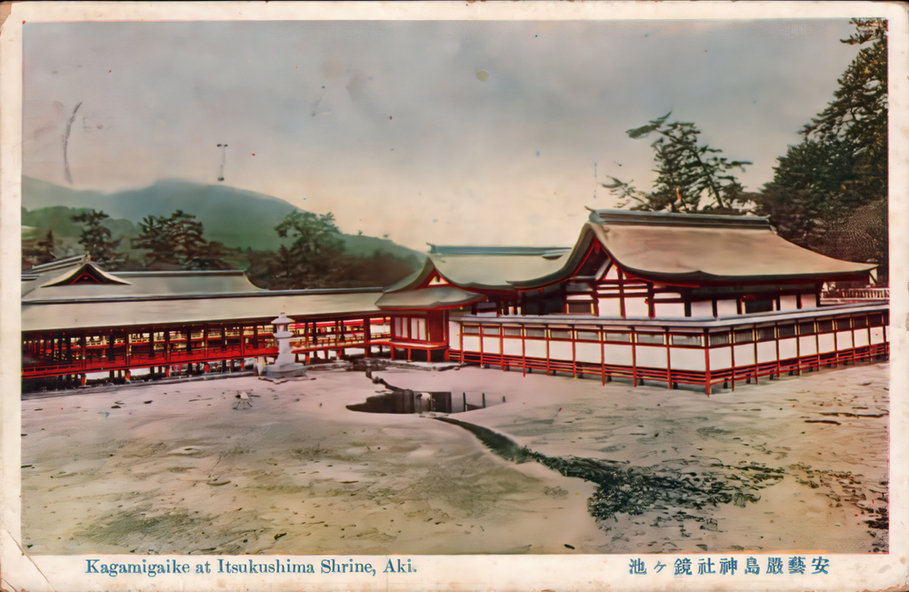
11731.232 This coloured card shows buildings of Itsukushima Shrine, with the tidal ground in the foreground. On the card is printed “Kagamigaike at Itsukushima Shrine, Aki.” and “安藝嚴島神社鏡ヶ池”. Japanese translation:
安藝嚴島神社鏡ヶ池 — “Kagamigaike (Mirror Pond) at Itsukushima Shrine, Aki.”
安藝 — Aki, using the older form of modern 安芸
嚴島神社 — Itsukushima Shrine
鏡ヶ池 — Kagamigaike, literally “Mirror Pond”
11731.233 This coloured card shows Mount Fuji beyond a river, with a bridge visible in the middle distance. On the card is printed “Mount Fuji from Suimon of Suzu river, Suruga.” and “駿河鈴川水門ノ富士”. Japanese translation:
駿河鈴川水門ノ富士 — “Mount Fuji from the water gate at Suzukawa, Suruga.”
駿河 — Suruga
鈴川 — Suzukawa
水門 — water gate / sluice
ノ — “of/from”
富士 — Mount Fuji
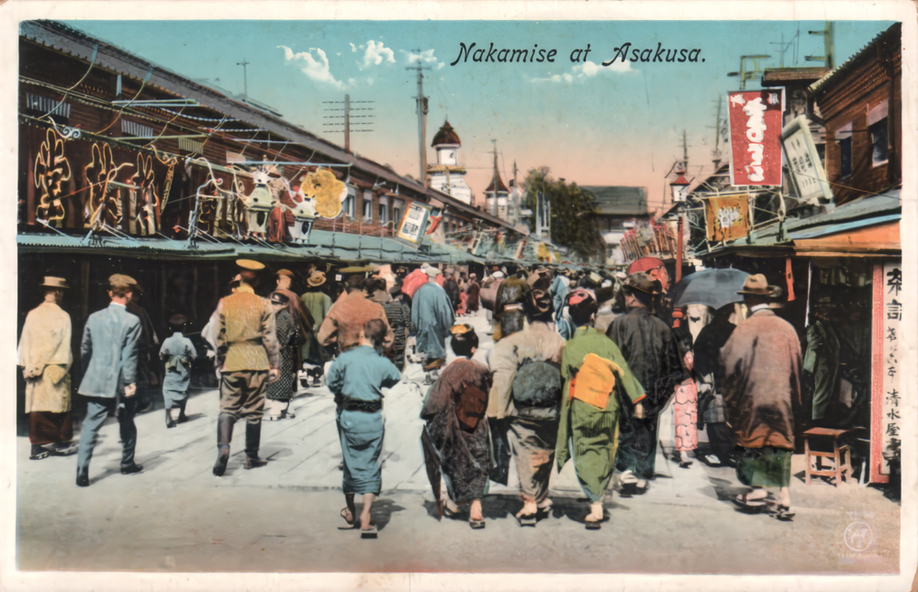
11731.234 This coloured card shows a crowded shopping street at Asakusa, with shops and signs on both sides. On the card is printed “Nakamise at Asakusa.” There is no separate printed Japanese caption along the border. A vertical shop sign at the right reads “寿司”, meaning “sushi.”
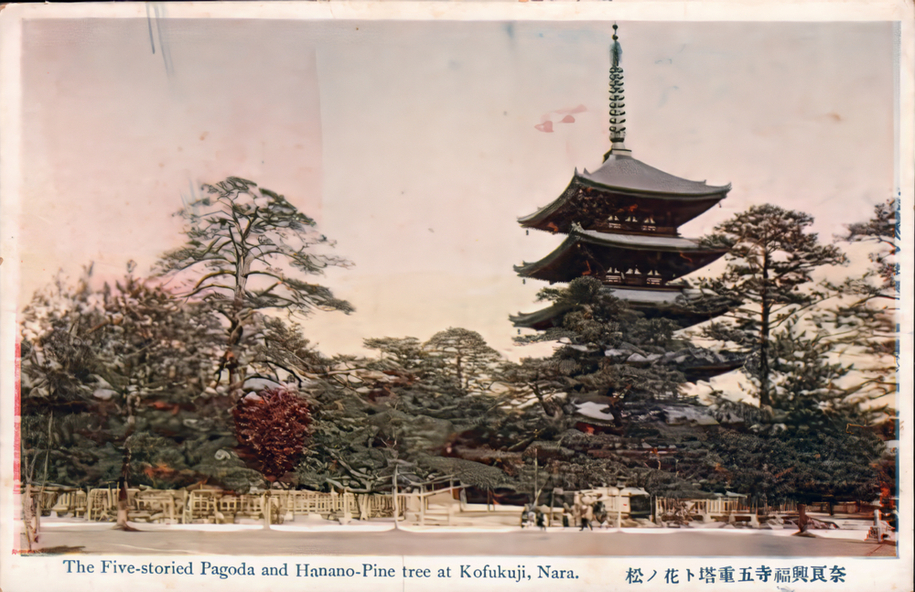
11731.235 This coloured card shows the five-storeyed pagoda of Kōfukuji, surrounded by trees and landscaped grounds. On the card is printed “The Five-storied Pagoda and Hanano-Pine tree at Kofukuji, Nara.” and “奈良興福寺五重塔ト花ノ松”. Japanese translation:
奈良興福寺五重塔ト花ノ松 — “The Five-storeyed Pagoda and Hana-no-Matsu pine at Kōfukuji, Nara.”
奈良 — Nara
興福寺 — Kōfukuji Temple
五重塔 — five-storeyed pagoda
ト — “and”
花ノ松 — Hana-no-Matsu, literally “Flower Pine” or “Pine of Flowers”
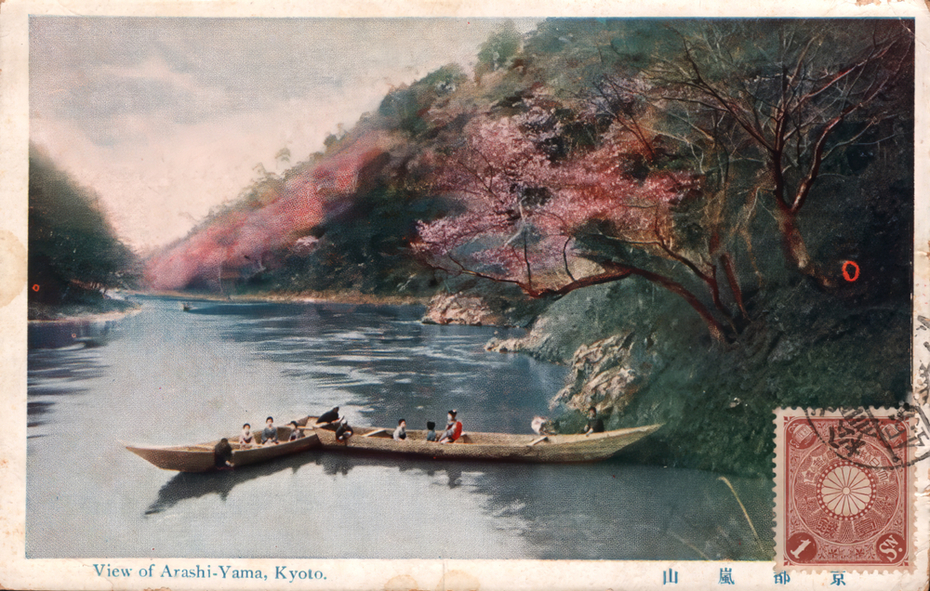
11731.236 This coloured card shows a river at Arashiyama, Kyoto, with wooded hillsides and two boats carrying passengers. On the card is printed “View of Arashi-Yama, Kyoto.” and “京都 嵐山”. Japanese translation: 京都 嵐山 — “Arashiyama, Kyoto.”
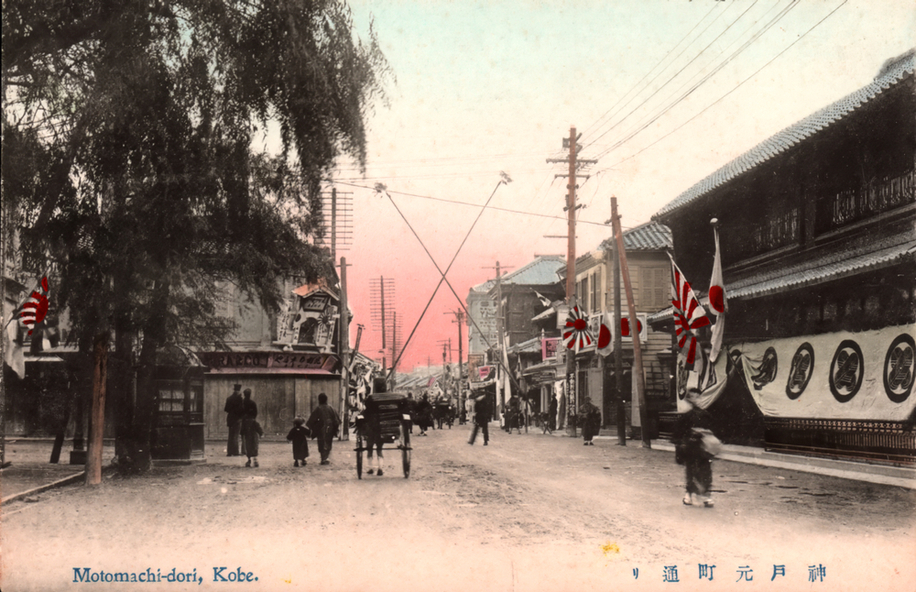
11731.237 This coloured card shows a busy street in Kobe with pedestrians, a rickshaw, shops, utility poles and flags. On the card is printed “Motomachi-dori, Kobe.” and “神戸元町通り”. Japanese translation: 神戸元町通り — “Motomachi-dori, Kobe” or “Motomachi Street, Kobe.”
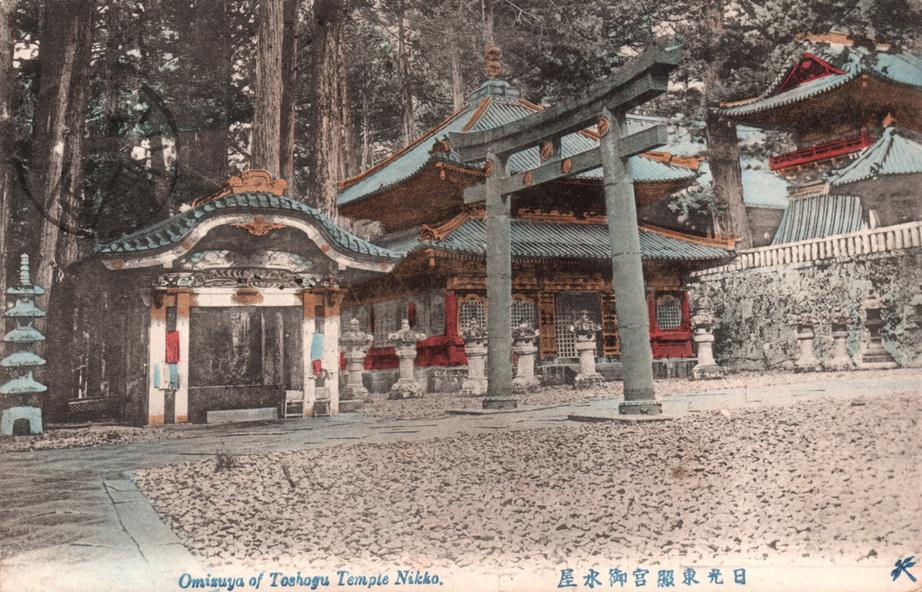
11731.238 This coloured card shows the shrine buildings and torii of the Toshogu complex at Nikko. On the card is printed “Omiya of Toshogu Temple Nikko.” and “日光東照宮御水屋”. Japanese translation: 日光東照宮御水屋 — “The sacred water pavilion at Nikkō Tōshōgū.”
日光 — Nikkō
東照宮 — Tōshōgū
御水屋 — sacred water pavilion / purification water pavilion
The English “Omiya” does not appear to correspond exactly with the Japanese caption.
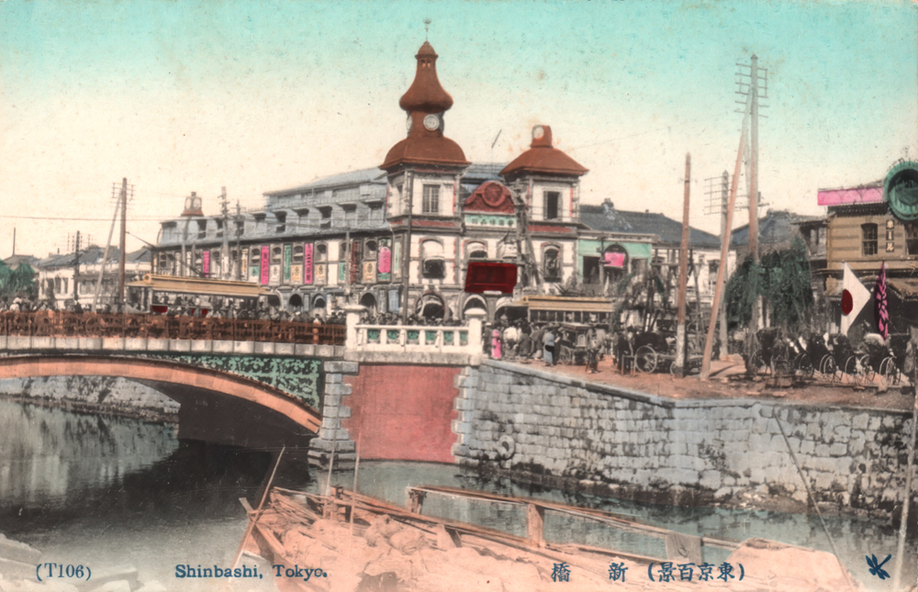
11731.239 This coloured card shows a bridge and canal at Shimbashi, Tokyo, with a large commercial building, pedestrians and street traffic. On the card is printed “(T106) Shimbashi, Tokyo.” and “(東京百景)新橋”. Japanese translation: (東京百景)新橋 — “(One Hundred Views of Tokyo) Shimbashi.”
東京 — Tokyo
百景 — “One Hundred Views”
新橋 — Shimbashi
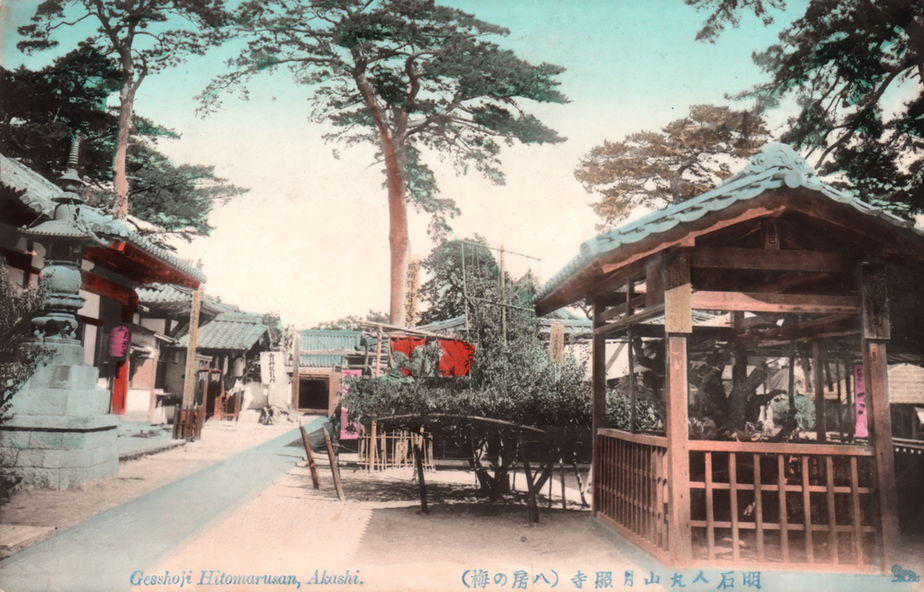
11731.240 This coloured card shows a temple or shrine precinct at Akashi, with traditional buildings, trees and a covered structure. On the card is printed “Gesshoji Hitomaruson, Akashi.” and “明石人丸山月照寺(八房の梅)”. Japanese translation: 明石人丸山月照寺(八房の梅) — “Gesshōji Temple on Hitomaruyama, Akashi (Yatsufusa Plum).”
明石 — Akashi
人丸山 — Hitomaruyama
月照寺 — Gesshōji Temple
八房の梅 — “Yatsufusa Plum,” literally the “eight-clustered plum” or “eight-bunched plum.”
