
Showing 181 items matching "standards association of australia"
-
 Stawell Historical Society Inc
Archive - Finance, Papers
... Rural Finance Land Titles Sales Smith St Sth Standard association of Australia Licence Morias Pty Ltd Agreement Agreement between R.Maxwell & North Western Woollen Mills Melbourne Wool Brokers Authority to buy....Rural Finance Land Titles Sales Smith St Sth Standard association of Australia Licence Morias Pty Ltd Agreement Agreement between R.Maxwell & North Western Woollen Mills Melbourne Wool Brokers Authority to buy. ...Rural Finance Land Titles Sales Smith St Sth Standard association of Australia Licence Morias Pty Ltd Agreement Agreement between R.Maxwell & North Western Woollen Mills Melbourne Wool Brokers Authority to buy.norwellen, industry -
 Ballarat Tramway Museum
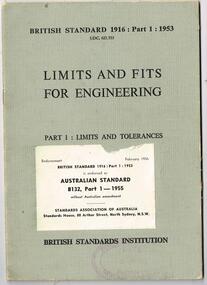
Book, British Engineering Standards Association, Limits and Fits for Engineering - British Standard 1916 - Part 1 - 1953, 1953 and 1969
... Standards Association, titled Limits and Fits for Engineering - British Standard 1916 - Part 1 - 1953, with amendments to July 1969. Has a table of contents, with definitions, specification and tables. BS 1916 .2 - Book - 52 pages + light grey cover, issued by the British Engineering Standards Association, titled Guide to selection of Fits - British Standard 1916 - Part 1 - 1953, has a table of contents with specification, figures, examples and tables. Both copies have an Standards Association of Australia...Standards Association, titled Limits and Fits for Engineering - British Standard 1916 - Part 1 - 1953, with amendments to July 1969. Has a table of contents, with definitions, specification and tables. BS 1916 .2 - Book - 52 pages + light grey cover, issued by the British Engineering Standards Association, titled Guide to selection of Fits - British Standard 1916 - Part 1 - 1953, has a table of contents with specification, figures, examples and tables. Both copies have an Standards Association of Australia ....1 - Book - 52 pages + light grey cover, issued by the British Engineering Standards Association, titled Limits and Fits for Engineering - British Standard 1916 - Part 1 - 1953, with amendments to July 1969. Has a table of contents, with definitions, specification and tables. BS 1916 .2 - Book - 52 pages + light grey cover, issued by the British Engineering Standards Association, titled Guide to selection of Fits - British Standard 1916 - Part 1 - 1953, has a table of contents with specification, figures, examples and tables. Both copies have an Standards Association of Australia paste over sheet on the front cover, referencing the document without amendment as AS B132, dated Feb. 1956.See History of object for stamps. part 1 has "T. Baker" in ink on the top of the first page. trams, tramways, engineers, manufacturing, workshops, machining -
 Ballarat Tramway Museum
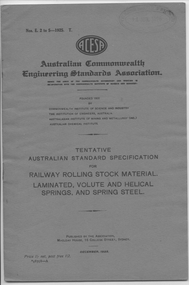
Book, Australian Commonwealth Engineering Standards Association, Set of 5 Australian Standards, 1925 & 1940
... Australian standards for rolling stock issued by the Australian Commonwealth Engineering Standards Association....Dated December 1925. .5 - Book - 12 pages + grey covers, centre stapled issued by Standards Association of Australia, standards H13 and H14 - Bronze (Gun Metal) ingots and castings for General engineering purposes Dated 1940....Australian standards for rolling stock issued by the Australian Commonwealth Engineering Standards Association. ...Australian standards for rolling stock issued by the Australian Commonwealth Engineering Standards Association.Gives details of the 1920s standards in Australia for railway rolling stock.1 - Book - 20 pages + light grey cover, side stapled, issued by the Australian Commonwealth Engineering Standards Association tentative standard E2 to E5 - for Railway Rolling stock material, laminated volute and helical springs and spring steel, dated Dec. 1925. .2 - Book - 40 pages + light grey cover, side stapled, issued by the Australian Commonwealth Engineering Standards Association tentative standard E16 to E21 - for Railway Rolling stock material, steel blooms for railway forgings, axles, locomotive crank axles, wagon and engine tender axles - dated Dec. 1927. .3 - Book - 24 pages + light grey cover, side stapled, issued by the Australian Commonwealth Engineering Standards Association tentative standard E8 to E12 for Railway Rolling stock material - copper plates, rods, tubes and pipes and brass tubes. Dated Dec. 1925 .4 - Book - 20 pages + light grey cover, side stapled, issued by the Australian Commonwealth Engineering Standards Association tentative standard E6 and E7 - railway rolling stock material - steel plates, angles and rivets for locomotives; steel castings. Dated December 1925. .5 - Book - 12 pages + grey covers, centre stapled issued by Standards Association of Australia, standards H13 and H14 - Bronze (Gun Metal) ingots and castings for General engineering purposes Dated 1940..trams, tramways, standards, rolling stock, axles -
 Flagstaff Hill Maritime Museum and Village
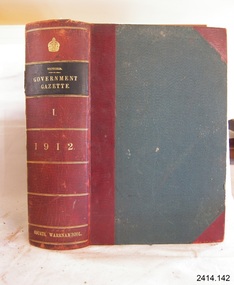
Book - Reference/State Government Notification Gazette, Albert John Mullett, The Victorian Government Gazette 1912 Vol 1 /146, 1912
... Association for the Advancement of Science's 1914 Australian meeting, and the detailed Education Department's Record of War Service (1914–1919) published in 1921. Unfortunately Mullet's tenure intersected with the heavy personal tolls of World War I; his own son, Leslie Holmes Mullett, was killed in action on April 11, 1917, at Bullecourt, France, while serving with the Australian Imperial Force. Mullett's tenure represents a critical transitional period for Australian government publishing. Operating out of the grand Victorian GPO building on Treasury Place, his office maintained high typographic standards...Association for the Advancement of Science's 1914 Australian meeting, and the detailed Education Department's Record of War Service (1914–1919) published in 1921. Unfortunately Mullet's tenure intersected with the heavy personal tolls of World War I; his own son, Leslie Holmes Mullett, was killed in action on April 11, 1917, at Bullecourt, France, while serving with the Australian Imperial Force. Mullett's tenure represents a critical transitional period for Australian government publishing. Operating out of the grand Victorian GPO building on Treasury Place, his office maintained high typographic standards ...The Victoria Government Gazette and other government documents from 1887 were printed and published by Robert S. Brain, Government Printer, Melbourne. Brain held the position of Victorian Government Printer through the 1890s and into the early 1900s. The same imprint appears on other official Victorian publications from that era, such as the annual reports of the Board for the Protection of the Aborigines and the colony's Statistical Register. There wasn't really an editor in the modern sense the Gazette was compiled and issued under the authority of the colonial government, via the Chief Secretary's Department, with Brain's printing office producing and publishing it. In May 1906, James Kemp succeeded him, serving as Government Printer from May 1906 to August 1912, with the title of Acting Government Printer right at the very start of his tenure he was stepping into the role Brain had just vacated, and by later in December 1906 he was signing gazettes in that capacity, apparently before his appointment was made permanent. Then in 1912 Albert John Mullett took over the role starting from January 1912 the same way Kemp had as Acting Government Printer with his appointment made permanent in 1913 where he served all through the 1920s.Hard cover book. The Victorian Government Gazette 1912 Vol 1 /146 Printer: Albert John Mullett Publisher: Albert John Mullett Publisher: Authority of The Colonial Government Date: 1912 Further Information: Textured hard cover bound book leather burgundy colour spine with gilt lettering, covers embossed blue cloth & reinforced corners to front and back cover. non-fictionThe Victoria Government Gazette and other government documents from 1887 were printed and published by Robert S. Brain, Government Printer, Melbourne. Brain held the position of Victorian Government Printer through the 1890s and into the early 1900s. The same imprint appears on other official Victorian publications from that era, such as the annual reports of the Board for the Protection of the Aborigines and the colony's Statistical Register. There wasn't really an editor in the modern sense the Gazette was compiled and issued under the authority of the colonial government, via the Chief Secretary's Department, with Brain's printing office producing and publishing it. In May 1906, James Kemp succeeded him, serving as Government Printer from May 1906 to August 1912, with the title of Acting Government Printer right at the very start of his tenure he was stepping into the role Brain had just vacated, and by later in December 1906 he was signing gazettes in that capacity, apparently before his appointment was made permanent. Then in 1912 Albert John Mullett took over the role starting from January 1912 the same way Kemp had as Acting Government Printer with his appointment made permanent in 1913 where he served all through the 1920s. flagstaff hill, warrnambool, shipwrecked-coast, flagstaff-hill, flagstaff-hill-maritime-museum, maritime-museum, shipwreck-coast, flagstaff-hill-maritime-village, book, the victoria government gazette 1912 1 vol 146, the victoria government gazette 1912, the victoria government gazette -
 Flagstaff Hill Maritime Museum and Village
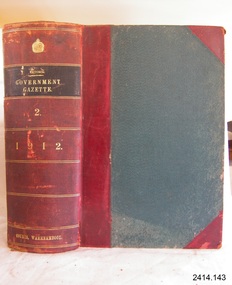
Book - Reference/State Government Notification Gazette, Albert John Mullett, The Victorian Government Gazette 1912 Vol 2 /147, 1912
... Association for the Advancement of Science's 1914 Australian meeting, and the detailed Education Department's Record of War Service (1914–1919) published in 1921. Unfortunately Mullet's tenure intersected with the heavy personal tolls of World War I; his own son, Leslie Holmes Mullett, was killed in action on April 11, 1917, at Bullecourt, France, while serving with the Australian Imperial Force. Mullett's tenure represents a critical transitional period for Australian government publishing. Operating out of the grand Victorian GPO building on Treasury Place, his office maintained high typographic standards...Association for the Advancement of Science's 1914 Australian meeting, and the detailed Education Department's Record of War Service (1914–1919) published in 1921. Unfortunately Mullet's tenure intersected with the heavy personal tolls of World War I; his own son, Leslie Holmes Mullett, was killed in action on April 11, 1917, at Bullecourt, France, while serving with the Australian Imperial Force. Mullett's tenure represents a critical transitional period for Australian government publishing. Operating out of the grand Victorian GPO building on Treasury Place, his office maintained high typographic standards ...The Victoria Government Gazette and other government documents from 1887 were printed and published by Robert S. Brain, Government Printer, Melbourne. Brain held the position of Victorian Government Printer through the 1890s and into the early 1900s. The same imprint appears on other official Victorian publications from that era, such as the annual reports of the Board for the Protection of the Aborigines and the colony's Statistical Register. There wasn't really an editor in the modern sense the Gazette was compiled and issued under the authority of the colonial government, via the Chief Secretary's Department, with Brain's printing office producing and publishing it. In May 1906, James Kemp succeeded him, serving as Government Printer from May 1906 to August 1912, with the title of Acting Government Printer right at the very start of his tenure he was stepping into the role Brain had just vacated, and by later in December 1906 he was signing gazettes in that capacity, apparently before his appointment was made permanent. Then in 1912 Albert John Mullett took over the role starting from January 1912 the same way Kemp had as Acting Government Printer with his appointment made permanent in 1913 where he served all through the 1920s.Hard cover book. The Victorian Government Gazette 1912 Vol 2 /147 Printer: Albert John Mullett Publisher: Albert John Mullett Publisher: Authority of The Colonial Government Date: 1912 Further Information: Textured hard cover bound book leather burgundy colour spine with gilt lettering, covers embossed blue cloth & reinforced corners to front and back cover. non-fictionThe Victoria Government Gazette and other government documents from 1887 were printed and published by Robert S. Brain, Government Printer, Melbourne. Brain held the position of Victorian Government Printer through the 1890s and into the early 1900s. The same imprint appears on other official Victorian publications from that era, such as the annual reports of the Board for the Protection of the Aborigines and the colony's Statistical Register. There wasn't really an editor in the modern sense the Gazette was compiled and issued under the authority of the colonial government, via the Chief Secretary's Department, with Brain's printing office producing and publishing it. In May 1906, James Kemp succeeded him, serving as Government Printer from May 1906 to August 1912, with the title of Acting Government Printer right at the very start of his tenure he was stepping into the role Brain had just vacated, and by later in December 1906 he was signing gazettes in that capacity, apparently before his appointment was made permanent. Then in 1912 Albert John Mullett took over the role starting from January 1912 the same way Kemp had as Acting Government Printer with his appointment made permanent in 1913 where he served all through the 1920s. flagstaff hill, warrnambool, shipwrecked-coast, flagstaff-hill, flagstaff-hill-maritime-museum, maritime-museum, shipwreck-coast, flagstaff-hill-maritime-village, book, the victoria government gazette 1912 1 vol 146, the victoria government gazette 1912, the victoria government gazette -
Flagstaff Hill Maritime Museum and Village
Book - Reference/State Government Notification Gazette, Albert John Mullett, The Victorian Government Gazette 1912 Vol 3 /148, 1912
... Association for the Advancement of Science's 1914 Australian meeting, and the detailed Education Department's Record of War Service (1914–1919) published in 1921. Unfortunately Mullet's tenure intersected with the heavy personal tolls of World War I; his own son, Leslie Holmes Mullett, was killed in action on April 11, 1917, at Bullecourt, France, while serving with the Australian Imperial Force. Mullett's tenure represents a critical transitional period for Australian government publishing. Operating out of the grand Victorian GPO building on Treasury Place, his office maintained high typographic standards...Association for the Advancement of Science's 1914 Australian meeting, and the detailed Education Department's Record of War Service (1914–1919) published in 1921. Unfortunately Mullet's tenure intersected with the heavy personal tolls of World War I; his own son, Leslie Holmes Mullett, was killed in action on April 11, 1917, at Bullecourt, France, while serving with the Australian Imperial Force. Mullett's tenure represents a critical transitional period for Australian government publishing. Operating out of the grand Victorian GPO building on Treasury Place, his office maintained high typographic standards ...The Victoria Government Gazette and other government documents from 1887 were printed and published by Robert S. Brain, Government Printer, Melbourne. Brain held the position of Victorian Government Printer through the 1890s and into the early 1900s. The same imprint appears on other official Victorian publications from that era, such as the annual reports of the Board for the Protection of the Aborigines and the colony's Statistical Register. There wasn't really an editor in the modern sense the Gazette was compiled and issued under the authority of the colonial government, via the Chief Secretary's Department, with Brain's printing office producing and publishing it. In May 1906, James Kemp succeeded him, serving as Government Printer from May 1906 to August 1912, with the title of Acting Government Printer right at the very start of his tenure he was stepping into the role Brain had just vacated, and by later in December 1906 he was signing gazettes in that capacity, apparently before his appointment was made permanent. Then in 1912 Albert John Mullett took over the role starting from January 1912 the same way Kemp had as Acting Government Printer with his appointment made permanent in 1913 where he served all through the 1920s.Hard cover book. The Victorian Government Gazette 1912 Vol 3 /148 Printer: Albert John Mullett Publisher: Albert John Mullett Publisher: Authority of The Colonial Government Date: 1912 Further Information: Textured hard cover bound book leather burgundy colour spine with gilt lettering, covers embossed blue cloth & reinforced corners to front and back cover. non-fictionThe Victoria Government Gazette and other government documents from 1887 were printed and published by Robert S. Brain, Government Printer, Melbourne. Brain held the position of Victorian Government Printer through the 1890s and into the early 1900s. The same imprint appears on other official Victorian publications from that era, such as the annual reports of the Board for the Protection of the Aborigines and the colony's Statistical Register. There wasn't really an editor in the modern sense the Gazette was compiled and issued under the authority of the colonial government, via the Chief Secretary's Department, with Brain's printing office producing and publishing it. In May 1906, James Kemp succeeded him, serving as Government Printer from May 1906 to August 1912, with the title of Acting Government Printer right at the very start of his tenure he was stepping into the role Brain had just vacated, and by later in December 1906 he was signing gazettes in that capacity, apparently before his appointment was made permanent. Then in 1912 Albert John Mullett took over the role starting from January 1912 the same way Kemp had as Acting Government Printer with his appointment made permanent in 1913 where he served all through the 1920s. flagstaff hill, warrnambool, shipwrecked-coast, flagstaff-hill, flagstaff-hill-maritime-museum, maritime-museum, shipwreck-coast, flagstaff-hill-maritime-village, book, the victoria government gazette 1912 1 vol 146, the victoria government gazette 1912, the victoria government gazette -
 Flagstaff Hill Maritime Museum and Village
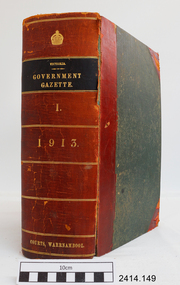
Book - Reference/State Government Notification Gazette, Albert John Mullett, The Victorian Government Gazette 1913 Vol 1 /149 ( Vol Number Mis Print on Volume Title CXLVIX See Note Section), 1913
... Association for the Advancement of Science's 1914 Australian meeting, and the detailed Education Department's Record of War Service (1914–1919) published in 1921. Unfortunately Mullet's tenure intersected with the heavy personal tolls of World War I; his own son, Leslie Holmes Mullett, was killed in action on April 11, 1917, at Bullecourt, France, while serving with the Australian Imperial Force. Mullett's tenure represents a critical transitional period for Australian government publishing. Operating out of the grand Victorian GPO building on Treasury Place, his office maintained high typographic standards...Association for the Advancement of Science's 1914 Australian meeting, and the detailed Education Department's Record of War Service (1914–1919) published in 1921. Unfortunately Mullet's tenure intersected with the heavy personal tolls of World War I; his own son, Leslie Holmes Mullett, was killed in action on April 11, 1917, at Bullecourt, France, while serving with the Australian Imperial Force. Mullett's tenure represents a critical transitional period for Australian government publishing. Operating out of the grand Victorian GPO building on Treasury Place, his office maintained high typographic standards ...The Victoria Government Gazette and other government documents from 1887 were printed and published by Robert S. Brain, Government Printer, Melbourne. Brain held the position of Victorian Government Printer through the 1890s and into the early 1900s. The same imprint appears on other official Victorian publications from that era, such as the annual reports of the Board for the Protection of the Aborigines and the colony's Statistical Register. There wasn't really an editor in the modern sense the Gazette was compiled and issued under the authority of the colonial government, via the Chief Secretary's Department, with Brain's printing office producing and publishing it. In May 1906, James Kemp succeeded him, serving as Government Printer from May 1906 to August 1912, with the title of Acting Government Printer right at the very start of his tenure he was stepping into the role Brain had just vacated, and by later in December 1906 he was signing gazettes in that capacity, apparently before his appointment was made permanent. Then in 1912 Albert John Mullett took over the role starting from January 1912 the same way Kemp had as Acting Government Printer with his appointment made permanent in 1913 where he served all through the 1920s.Hard cover book. The Victorian Government Gazette 1913 Vol 1 /149 Printer: Albert John Mullett Publisher: Albert John Mullett Publisher: Authority of The Colonial Government Date: 1913 Further Information: Textured hard cover bound book leather burgundy colour spine with gilt lettering, covers embossed blue cloth & reinforced corners to front and back cover. non-fictionThe Victoria Government Gazette and other government documents from 1887 were printed and published by Robert S. Brain, Government Printer, Melbourne. Brain held the position of Victorian Government Printer through the 1890s and into the early 1900s. The same imprint appears on other official Victorian publications from that era, such as the annual reports of the Board for the Protection of the Aborigines and the colony's Statistical Register. There wasn't really an editor in the modern sense the Gazette was compiled and issued under the authority of the colonial government, via the Chief Secretary's Department, with Brain's printing office producing and publishing it. In May 1906, James Kemp succeeded him, serving as Government Printer from May 1906 to August 1912, with the title of Acting Government Printer right at the very start of his tenure he was stepping into the role Brain had just vacated, and by later in December 1906 he was signing gazettes in that capacity, apparently before his appointment was made permanent. Then in 1912 Albert John Mullett took over the role starting from January 1912 the same way Kemp had as Acting Government Printer with his appointment made permanent in 1913 where he served all through the 1920s. flagstaff hill, warrnambool, shipwrecked-coast, flagstaff-hill, flagstaff-hill-maritime-museum, maritime-museum, shipwreck-coast, flagstaff-hill-maritime-village, book, the victoria government gazette 1912 1 vol 146, the victoria government gazette 1912, the victoria government gazette -
 Flagstaff Hill Maritime Museum and Village
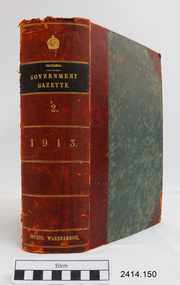
Book - Reference/State Government Notification Gazette, Albert John Mullett, The Victorian Government Gazette 1913 Vol 2 /150, 1913
... Association for the Advancement of Science's 1914 Australian meeting, and the detailed Education Department's Record of War Service (1914–1919) published in 1921. Unfortunately Mullet's tenure intersected with the heavy personal tolls of World War I; his own son, Leslie Holmes Mullett, was killed in action on April 11, 1917, at Bullecourt, France, while serving with the Australian Imperial Force. Mullett's tenure represents a critical transitional period for Australian government publishing. Operating out of the grand Victorian GPO building on Treasury Place, his office maintained high typographic standards...Association for the Advancement of Science's 1914 Australian meeting, and the detailed Education Department's Record of War Service (1914–1919) published in 1921. Unfortunately Mullet's tenure intersected with the heavy personal tolls of World War I; his own son, Leslie Holmes Mullett, was killed in action on April 11, 1917, at Bullecourt, France, while serving with the Australian Imperial Force. Mullett's tenure represents a critical transitional period for Australian government publishing. Operating out of the grand Victorian GPO building on Treasury Place, his office maintained high typographic standards ...The Victoria Government Gazette and other government documents from 1887 were printed and published by Robert S. Brain, Government Printer, Melbourne. Brain held the position of Victorian Government Printer through the 1890s and into the early 1900s. The same imprint appears on other official Victorian publications from that era, such as the annual reports of the Board for the Protection of the Aborigines and the colony's Statistical Register. There wasn't really an editor in the modern sense the Gazette was compiled and issued under the authority of the colonial government, via the Chief Secretary's Department, with Brain's printing office producing and publishing it. In May 1906, James Kemp succeeded him, serving as Government Printer from May 1906 to August 1912, with the title of Acting Government Printer right at the very start of his tenure he was stepping into the role Brain had just vacated, and by later in December 1906 he was signing gazettes in that capacity, apparently before his appointment was made permanent. Then in 1912 Albert John Mullett took over the role starting from January 1912 the same way Kemp had as Acting Government Printer with his appointment made permanent in 1913 where he served all through the 1920s.Hard cover book. The Victorian Government Gazette 1913 Vol 2 /150 Printer: Albert John Mullett Publisher: Albert John Mullett Publisher: Authority of The Colonial Government Date: 1913 Further Information: Textured hard cover bound book leather burgundy colour spine with gilt lettering, covers embossed blue cloth & reinforced corners to front and back cover. non-fictionThe Victoria Government Gazette and other government documents from 1887 were printed and published by Robert S. Brain, Government Printer, Melbourne. Brain held the position of Victorian Government Printer through the 1890s and into the early 1900s. The same imprint appears on other official Victorian publications from that era, such as the annual reports of the Board for the Protection of the Aborigines and the colony's Statistical Register. There wasn't really an editor in the modern sense the Gazette was compiled and issued under the authority of the colonial government, via the Chief Secretary's Department, with Brain's printing office producing and publishing it. In May 1906, James Kemp succeeded him, serving as Government Printer from May 1906 to August 1912, with the title of Acting Government Printer right at the very start of his tenure he was stepping into the role Brain had just vacated, and by later in December 1906 he was signing gazettes in that capacity, apparently before his appointment was made permanent. Then in 1912 Albert John Mullett took over the role starting from January 1912 the same way Kemp had as Acting Government Printer with his appointment made permanent in 1913 where he served all through the 1920s. flagstaff hill, warrnambool, shipwrecked-coast, flagstaff-hill, flagstaff-hill-maritime-museum, maritime-museum, shipwreck-coast, flagstaff-hill-maritime-village, book, the victoria government gazette 1912 1 vol 146, the victoria government gazette 1912, the victoria government gazette -
 Flagstaff Hill Maritime Museum and Village
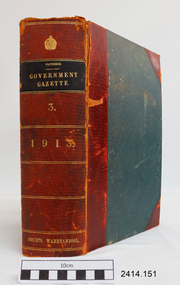
Book - Reference/State Government Notification Gazette, Albert John Mullett, The Victorian Government Gazette 1913 Vol 3 /151, 1913
... Association for the Advancement of Science's 1914 Australian meeting, and the detailed Education Department's Record of War Service (1914–1919) published in 1921. Unfortunately Mullet's tenure intersected with the heavy personal tolls of World War I; his own son, Leslie Holmes Mullett, was killed in action on April 11, 1917, at Bullecourt, France, while serving with the Australian Imperial Force. Mullett's tenure represents a critical transitional period for Australian government publishing. Operating out of the grand Victorian GPO building on Treasury Place, his office maintained high typographic standards...Association for the Advancement of Science's 1914 Australian meeting, and the detailed Education Department's Record of War Service (1914–1919) published in 1921. Unfortunately Mullet's tenure intersected with the heavy personal tolls of World War I; his own son, Leslie Holmes Mullett, was killed in action on April 11, 1917, at Bullecourt, France, while serving with the Australian Imperial Force. Mullett's tenure represents a critical transitional period for Australian government publishing. Operating out of the grand Victorian GPO building on Treasury Place, his office maintained high typographic standards ...The Victoria Government Gazette and other government documents from 1887 were printed and published by Robert S. Brain, Government Printer, Melbourne. Brain held the position of Victorian Government Printer through the 1890s and into the early 1900s. The same imprint appears on other official Victorian publications from that era, such as the annual reports of the Board for the Protection of the Aborigines and the colony's Statistical Register. There wasn't really an editor in the modern sense the Gazette was compiled and issued under the authority of the colonial government, via the Chief Secretary's Department, with Brain's printing office producing and publishing it. In May 1906, James Kemp succeeded him, serving as Government Printer from May 1906 to August 1912, with the title of Acting Government Printer right at the very start of his tenure he was stepping into the role Brain had just vacated, and by later in December 1906 he was signing gazettes in that capacity, apparently before his appointment was made permanent. Then in 1912 Albert John Mullett took over the role starting from January 1912 the same way Kemp had as Acting Government Printer with his appointment made permanent in 1913 where he served all through the 1920s.Hard cover book. The Victorian Government Gazette 1913 Vol 3 /151 Printer: Albert John Mullett Publisher: Albert John Mullett Publisher: Authority of The Colonial Government Date: 1913 Further Information: Textured hard cover bound book leather burgundy colour spine with gilt lettering, covers embossed blue cloth & reinforced corners to front and back cover. non-fictionThe Victoria Government Gazette and other government documents from 1887 were printed and published by Robert S. Brain, Government Printer, Melbourne. Brain held the position of Victorian Government Printer through the 1890s and into the early 1900s. The same imprint appears on other official Victorian publications from that era, such as the annual reports of the Board for the Protection of the Aborigines and the colony's Statistical Register. There wasn't really an editor in the modern sense the Gazette was compiled and issued under the authority of the colonial government, via the Chief Secretary's Department, with Brain's printing office producing and publishing it. In May 1906, James Kemp succeeded him, serving as Government Printer from May 1906 to August 1912, with the title of Acting Government Printer right at the very start of his tenure he was stepping into the role Brain had just vacated, and by later in December 1906 he was signing gazettes in that capacity, apparently before his appointment was made permanent. Then in 1912 Albert John Mullett took over the role starting from January 1912 the same way Kemp had as Acting Government Printer with his appointment made permanent in 1913 where he served all through the 1920s. flagstaff hill, warrnambool, shipwrecked-coast, flagstaff-hill, flagstaff-hill-maritime-museum, maritime-museum, shipwreck-coast, flagstaff-hill-maritime-village, book, the victoria government gazette 1912 1 vol 146, the victoria government gazette 1912, the victoria government gazette -
 Flagstaff Hill Maritime Museum and Village
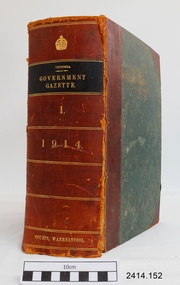
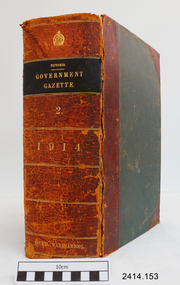
Book - Reference/State Government Notification Gazette, Albert John Mullett, The Victorian Government Gazette 1914 Vol 1 /152, 1914
... Association for the Advancement of Science's 1914 Australian meeting, and the detailed Education Department's Record of War Service (1914–1919) published in 1921. Unfortunately Mullet's tenure intersected with the heavy personal tolls of World War I; his own son, Leslie Holmes Mullett, was killed in action on April 11, 1917, at Bullecourt, France, while serving with the Australian Imperial Force. Mullett's tenure represents a critical transitional period for Australian government publishing. Operating out of the grand Victorian GPO building on Treasury Place, his office maintained high typographic standards...Association for the Advancement of Science's 1914 Australian meeting, and the detailed Education Department's Record of War Service (1914–1919) published in 1921. Unfortunately Mullet's tenure intersected with the heavy personal tolls of World War I; his own son, Leslie Holmes Mullett, was killed in action on April 11, 1917, at Bullecourt, France, while serving with the Australian Imperial Force. Mullett's tenure represents a critical transitional period for Australian government publishing. Operating out of the grand Victorian GPO building on Treasury Place, his office maintained high typographic standards ...The Victoria Government Gazette and other government documents from 1887 were printed and published by Robert S. Brain, Government Printer, Melbourne. Brain held the position of Victorian Government Printer through the 1890s and into the early 1900s. The same imprint appears on other official Victorian publications from that era, such as the annual reports of the Board for the Protection of the Aborigines and the colony's Statistical Register. There wasn't really an editor in the modern sense the Gazette was compiled and issued under the authority of the colonial government, via the Chief Secretary's Department, with Brain's printing office producing and publishing it. In May 1906, James Kemp succeeded him, serving as Government Printer from May 1906 to August 1912, with the title of Acting Government Printer right at the very start of his tenure he was stepping into the role Brain had just vacated, and by later in December 1906 he was signing gazettes in that capacity, apparently before his appointment was made permanent. Then in 1912 Albert John Mullett took over the role starting from January 1912 the same way Kemp had as Acting Government Printer with his appointment made permanent in 1913 where he served all through the 1920s.Hard cover book. The Victorian Government Gazette 1914 Vol 1 /152 Printer: Albert John Mullett Publisher: Albert John Mullett Publisher: Authority of The Colonial Government Date: 1914 Further Information: Textured hard cover bound book leather burgundy colour spine with gilt lettering, covers embossed blue cloth & reinforced corners to front and back cover. non-fictionThe Victoria Government Gazette and other government documents from 1887 were printed and published by Robert S. Brain, Government Printer, Melbourne. Brain held the position of Victorian Government Printer through the 1890s and into the early 1900s. The same imprint appears on other official Victorian publications from that era, such as the annual reports of the Board for the Protection of the Aborigines and the colony's Statistical Register. There wasn't really an editor in the modern sense the Gazette was compiled and issued under the authority of the colonial government, via the Chief Secretary's Department, with Brain's printing office producing and publishing it. In May 1906, James Kemp succeeded him, serving as Government Printer from May 1906 to August 1912, with the title of Acting Government Printer right at the very start of his tenure he was stepping into the role Brain had just vacated, and by later in December 1906 he was signing gazettes in that capacity, apparently before his appointment was made permanent. Then in 1912 Albert John Mullett took over the role starting from January 1912 the same way Kemp had as Acting Government Printer with his appointment made permanent in 1913 where he served all through the 1920s. flagstaff hill, warrnambool, shipwrecked-coast, flagstaff-hill, flagstaff-hill-maritime-museum, maritime-museum, shipwreck-coast, flagstaff-hill-maritime-village, book, the victoria government gazette 1912 1 vol 146, the victoria government gazette 1912, the victoria government gazette -
 Flagstaff Hill Maritime Museum and Village
Book - Reference/State Government Notification Gazette, Albert John Mullett, The Victorian Government Gazette 1914 Vol 2 /153, 1914
... Association for the Advancement of Science's 1914 Australian meeting, and the detailed Education Department's Record of War Service (1914–1919) published in 1921. Unfortunately Mullet's tenure intersected with the heavy personal tolls of World War I; his own son, Leslie Holmes Mullett, was killed in action on April 11, 1917, at Bullecourt, France, while serving with the Australian Imperial Force. Mullett's tenure represents a critical transitional period for Australian government publishing. Operating out of the grand Victorian GPO building on Treasury Place, his office maintained high typographic standards...Association for the Advancement of Science's 1914 Australian meeting, and the detailed Education Department's Record of War Service (1914–1919) published in 1921. Unfortunately Mullet's tenure intersected with the heavy personal tolls of World War I; his own son, Leslie Holmes Mullett, was killed in action on April 11, 1917, at Bullecourt, France, while serving with the Australian Imperial Force. Mullett's tenure represents a critical transitional period for Australian government publishing. Operating out of the grand Victorian GPO building on Treasury Place, his office maintained high typographic standards ...The Victoria Government Gazette and other government documents from 1887 were printed and published by Robert S. Brain, Government Printer, Melbourne. Brain held the position of Victorian Government Printer through the 1890s and into the early 1900s. The same imprint appears on other official Victorian publications from that era, such as the annual reports of the Board for the Protection of the Aborigines and the colony's Statistical Register. There wasn't really an editor in the modern sense the Gazette was compiled and issued under the authority of the colonial government, via the Chief Secretary's Department, with Brain's printing office producing and publishing it. In May 1906, James Kemp succeeded him, serving as Government Printer from May 1906 to August 1912, with the title of Acting Government Printer right at the very start of his tenure he was stepping into the role Brain had just vacated, and by later in December 1906 he was signing gazettes in that capacity, apparently before his appointment was made permanent. Then in 1912 Albert John Mullett took over the role starting from January 1912 the same way Kemp had as Acting Government Printer with his appointment made permanent in 1913 where he served all through the 1920s.Hard cover book. The Victorian Government Gazette 1914 Vol 2 /153 Printer: Albert John Mullett Publisher: Albert John Mullett Publisher: Authority of The Colonial Government Date: 1914 Further Information: Textured hard cover bound book leather burgundy colour spine with gilt lettering, covers embossed blue cloth & reinforced corners to front and back cover. non-fictionThe Victoria Government Gazette and other government documents from 1887 were printed and published by Robert S. Brain, Government Printer, Melbourne. Brain held the position of Victorian Government Printer through the 1890s and into the early 1900s. The same imprint appears on other official Victorian publications from that era, such as the annual reports of the Board for the Protection of the Aborigines and the colony's Statistical Register. There wasn't really an editor in the modern sense the Gazette was compiled and issued under the authority of the colonial government, via the Chief Secretary's Department, with Brain's printing office producing and publishing it. In May 1906, James Kemp succeeded him, serving as Government Printer from May 1906 to August 1912, with the title of Acting Government Printer right at the very start of his tenure he was stepping into the role Brain had just vacated, and by later in December 1906 he was signing gazettes in that capacity, apparently before his appointment was made permanent. Then in 1912 Albert John Mullett took over the role starting from January 1912 the same way Kemp had as Acting Government Printer with his appointment made permanent in 1913 where he served all through the 1920s. flagstaff hill, warrnambool, shipwrecked-coast, flagstaff-hill, flagstaff-hill-maritime-museum, maritime-museum, shipwreck-coast, flagstaff-hill-maritime-village, book, the victoria government gazette 1912 1 vol 146, the victoria government gazette 1912, the victoria government gazette -
 Federation University Historical Collection
Magazine, Ballarat School of Mines Students' Magazine, 1898-1901, 1898-1901
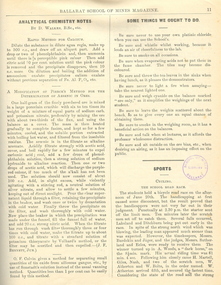
... Australian Mining Standard * The Dandy Duke's Dreadful Demise * The Road Race Vol 3., No 7, September 1900 * Michaelmas Excursion (Melbourne University, Prof Kernot, Applied Mechanics) * Injury to School Property * Return of E. Ditchburn (Boer War) * Mt William Gold-Field visit, pg 3 * The Stoping of Wide Lodes by J.V. Lake (includes cross sections) * Summaries of Notes from the Australian Mining Standard * Notes on Broken Hill Part 2- Its Mines and Minerals by W.J. Williams * Motive Power from the Waves * Electrical Notes * Some Account of Italian Mining (Sarinia, Sicily, Peidmont, Lombardia) by Candido Maglione * Students Association...Australian Mining Standard * The Dandy Duke's Dreadful Demise * The Road Race Vol 3., No 7, September 1900 * Michaelmas Excursion (Melbourne University, Prof Kernot, Applied Mechanics) * Injury to School Property * Return of E. Ditchburn (Boer War) * Mt William Gold-Field visit, pg 3 * The Stoping of Wide Lodes by J.V. Lake (includes cross sections) * Summaries of Notes from the Australian Mining Standard * Notes on Broken Hill Part 2- Its Mines and Minerals by W.J. Williams * Motive Power from the Waves * Electrical Notes * Some Account of Italian Mining (Sarinia, Sicily, Peidmont, Lombardia) by Candido Maglione * Students Association ...Bound copies of the Ballarat School of Mines Students' Magazine, 1898-1901 Vol 1, No. 1, September 1898 * News and Notes (Ballarat School of Mines Museum, J.F. Usher, New British Pharmacopoeia, excursion to Bendigo) * History of the Ballarat School of Mines * Current Topics (Federation, Gladstone, Anglo-American Alliance) * Of Custom * Discovery of Coolgardie * Mining Notes(Clunes, Pitfield, Birthday Mine, Western Australia, Transvaal, Mt Bischoff, Rand Drill Co.) * From the Journals * The Societies - (Student Association, Ballarat Field Club and Science Society, Ballarat Photographic Club) * Original Poetry * Sports * Students' Association Committee Meetings * On the Increase of Temperature of the Earth With Increased Depth Vol 1, No. 2, October 1898 * Notes about some of the Past Students (E.M. Weston, J.A. Porter, H.R. Sleeman, G.E. Sander, B.C.T. Solley, T. Rhys, C. Burbury, D. McDougal, J. Matsen) * Excursion to Daylesford, p.3 * History of the Ballarat School of Mines (continued) * The Soudan * Greater Melbourne * Image of J. Hopkinson, electrical engineer killed ascending the Alps * What is Science * Mining Notes (Pitfield Plains, Victoria United G.M.Co., Lithgow, Avoca, great Cobar, Mt Whycheproof) * Student's Association (women's franchise) * Sports Vol 2, No. 1, March 1899 * News and Notes * History of the Ballarat School of Mines (continued) * Notes of Victorian Geology, 1. Granites, by Thomas S. Hart * Sir William Crookes * Summaries and Notes from the Mining Journals * Students' Association * Sports * The Bush Assayer * Solubility of Gold-Silver Alloys in Potassium Cyanide * Correspondence Vol 2, No. 2, April 1899 * News and Notes (Smythesdale Excursion, New Buildings, A.S. Coyte, R.J. Allan) * History of the Ballarat School of Mines (Continued) * The New Students (J. Owen, A. Clayton Morrisby, A.S. Atkin, J. Alexander Reid, Alfred G. Johnston, L. Lowe, F.H. Dalton, W.M. Robertson, A. Hacke, H.L. Giles, W. Martin, E. Walshe, H.L. Krause, R. Sawyer) * Berringa by Oh'E Jay * Summaries and Notes from the Mining Journals * Mount Magnet to Victoria - A Long Bicycle Trip * 1898 Examination returns * Sports Vol 2, No. 3, May 1899 * Technical Education and the Proposed Affiliation of the Schools of Mines with the Melbourne University. * Laying of the Foundation Stone of the New Classrooms (now Administration Building). Alexander J. Peacock * News and Notes (Past Students - A.S. Lilburn, J.W. Sutherland, J. Richardson, E. Prendergast, J. Wallace, J. Kidd, J. Lake, Mathew Thompson), Coolgardie Exhibition. * Trip to Lal Lal * Students' Association * Summaries and Notes from the Mining Journals * Professor Henry Louis on Mining Education * Corrections Used in Chaining by C.W. Adams * The Black Horse Cyanide Plant * Sports * Completed List of 1898 Examinations Vol 2, No. 4, June 1899 * News and Notes * The Education Problem by D.N. McLean * A Few Hints on Histological Technique by Emil Gutheil * Summaries and Notes from the Mining Journals * Students' Association * A Visit to the Skipton Caves (Mount Widdern, Ormand Hill, volcano, Emu Creek, Mount Kinross, Mount Elephant, Mount Vite Vite, Mount Kinross, Mount Hamiston) * Mount Magnet To Victoria (cont) * The New Engines at the Ballarat Woollen Mills - includes image of the Compound 700 H.P. Engines constructed for the Ballarat Woollen Mills by Austral Otis Company and consulting engineers Monash and Anderson. * Sports * Original Poetry * Correspondence Vol 2, No. 5, July 1899 * News and Notes (E. Byron Moore, Visit to Britannia Gold Mine, J. Bryant, Visit to Last Chance Mine) * A Few Hints on Histological Technique (cont) by Emil Gutheil * Summaries and Notes from the Mining Journals * Professor Alfred Mica Smith (includes image) * Notes on Victorian Geology Part 2 The Trappean Rocks, by Thomas Hart * Origin of Diamonds * Hydraulic Mining by A.E.C. Kerr * Volcanoes by F.G. Bonney * Analytical Chemistry Notes by Daniel Walker * Some Things Out To Do * Sports * Correspondence Vol 2, No. 6, August 1899 *Summaries and notes from the Mining Journals * Some Regulations of the Academy of Mines at Freiberg * A visit to Mt Lyell Smelters * Professor Gilbert J. Dawbarn (includes image) * Air compressor and Transmission of Power by Compressed air by A.E.C. Kerr * Chemistry Notes by Daniel Walker * Mineralogical Notes, Ballarat by Thomas S. Hart * Kalgurli Gold Mines, W.A. * OUr New Lab Vol 2., No 7, September 1899 * Summaries and Notes from the Mining Journals * Some recent Steam Plants at Bendigo by Gilbert Dawbarn * Professor Thomas Stephen Hart (includes image) * Students Association * Notes on Victorian Geology by Thomas Hart * Centrifugal Pumps * A New Chum's Experience by E.M. Weston Vol 2., No 8, October 1899 * The institute of Chemistry Examinations * A New Method of Qualitative Chemical Analysis by Emil Gutheil * Steam Engine Valves and Valve-Gears by Gilbert Dawbarn * Daniel Walker (includes image) * Notes on Victorian Geology by Thomas Hart * Cyaniding Cripple Creek Tellurides (Metallic Extraction Company) * Notes on Two Ballarat Gravel Pumping Plants, G.A. Wilberforce (Eureka Jennings Co and Yarrowee Sluicing Co) * History of the School of Mines (concluded) Vol 3., No 1, March 1900 * A Journey from Natal to Mashomaland with the British Police * A Plea for Research * New Caledonia by C.A.M. Deane * Notes of Victorian Geology - Lower Palaeoroic Rocks by Thomas Hart * Mt Bischoff Mine and Mill * Summaries and Notes from the Mining Journals * Things we Eat and Drink * Farewell to A.S. Coyte Vol 3., No 1, March 1900 * Mining Education * Model Locomotive made by the apprentices of the Phoenix Foundry, p2 * Glimpses of Rhodesian Police Camp Life * New Caledonia (continued) * Summaries from the Mining and Engineering Journals * Boot and Saddle Vol 3., No 3, May 1900 * A Students' Common Room * Geological Excursion to Hardie's Hill * Notes on Victorian Geology by Thomas Hart * The Planet Venus by John Brittain * Summaries and Notes from the Australian Mining Standard * The Assay Ton * Zeehan Smelters * Electrical Notes by Ohe Jay * Trop of the Cricket Club to Stawell * Students' Association * Solid Hydrogen Vol 3., No 4, June 1900 * The Minister of Mines on Mining Education (Minister A.R. Outtrim) * Lal Lal Geology Trip (Thomas Hart) * Rifle Club now defunct, pg 3 * A Contribution to the Mining Geology of Kalgoorlie, W.A. by Ferdinand Krause (includes cross sections) (Wood's Point, Rand, Johannesburg, South Africa, Gaffney's Creek, Walhalla, Shady Creek, Sago Hill at Cardigan, Bunbury) * Summaries and Notes from the Australian Mining Standard (Buninyong Estate Mine) * Monthly Progress Reports of the Geological Survey * Electrical Notes by John M Sutherland (Telagraphone, phonograph, telephone receiver) * Students' Theatre Party (Gordon Todd, Ohe Jaeger, C.S. Wakley) * Opening of the New Buildings - Ministerial Speeches (Outtrim, W.H. Irvine, New Mining Laboratory, Old Chemistry Building, Battery, Model Mine) * Students' Association * Relief of Mafeking * A Critic Criticised * Things We Eat and Drink by Ohe Jay - Oatmeal, Coffee and Cocoa. Vol 3., No 5, July 1900 * Research * Adelaide Varsity Students at Ballarat * The Manchester-Liverpool Mono Railway * Students Association * *A Contribution to the Mining Geology of Kalgoorlie, W.A. by Ferdinand Krause (continued) (includes cross-sections) * Motive Power, address by Charles A. Parsons * Summaries and Notes from the Australian Mining Standard * Sugar Manufacturing by Sugna * Great Creswick Hydraulic Sluicing Plant (THomas Hart, Ballarat School of Mines Mining Class visit) * Reminiscences of a Students Life in Germany * Football - Ballarat School of Mines v Geelong Grammar School (Australian Rules Football) Vol 3., No 6, August 1900 * Cheap Mine Management * Library * Bendigo School of Mines, pg 3 * Notes on Ore Dressing by T, Vincent, Manager The Zeehan (Tas) Silver-Lead Mines Ltd) * Motive Power * Notes on Broken Hill - Its Mines and Minerals by J. Williams * The Concert * Summaries and Notes from the Australian Mining Standard * The Dandy Duke's Dreadful Demise * The Road Race Vol 3., No 7, September 1900 * Michaelmas Excursion (Melbourne University, Prof Kernot, Applied Mechanics) * Injury to School Property * Return of E. Ditchburn (Boer War) * Mt William Gold-Field visit, pg 3 * The Stoping of Wide Lodes by J.V. Lake (includes cross sections) * Summaries of Notes from the Australian Mining Standard * Notes on Broken Hill Part 2- Its Mines and Minerals by W.J. Williams * Motive Power from the Waves * Electrical Notes * Some Account of Italian Mining (Sarinia, Sicily, Peidmont, Lombardia) by Candido Maglione * Students Association * Should Women Have the Vote by Frank Bessemeres * The School Theatre Parly * Past Students * Poetry * Football * Surveying Rules Vol 3., No 8, October 1900 * Ballarat School of Mines Associateship * An Engineering Laboratory * Students' Practical Work * Notes on Broken Hill Part 3 by W.J. Williams * The Lake View Consols by F.S. Earp - Battery Treatment of Sulpo-Telluride Ore * Neglected Mineral Fields - Eurowie and Warrata * A Glimpse Ahead * News and Notes * A.W. G. McPherson, Boer War * Students Association * Ballarat School of Mines Melbourne Excursion to the Government Electric Lighting Station, Austral-Otis Co, Working Mens College * Ballarat School of Mines Concert in Aid of Soldiers Statue Balance Sheet * Football * Cricket Vol 3., No 8b, November 1900 * Position of the Ballarat School of Mines with Regards to Mining Education * Age Limit * Entrance Examination * Presentation t0 Professor Alfred Mica Smith * Image of a Group of Old Ballarat School of Mines Students in Coolgardie and Kalgoorlie. * Students Association Vol 4., No 1, March 1901 * Espirit De Corps * A few Notes on the Testing of Explosives * Round About Inverell, NSW by F. and J. Mawl * On the Choice of Drawing Instruments * Summaries and Notes From the Technical Journals * Annual Examinations 1900 * New Students * Sporting Notes * The Vale of Coolgardie Mine, Bonnievale, W.A. by G. Stephen Hart * News and Notes (Kerr Grant, C.L. Nash, R. Gordon Todd, Vial) * Editorial Notices Vol 4., No 2, Second Term 1901 * The Metallurgical Treatment of Sulpho-Telluride Ores by L.W. Grayson * Some Metallurgical Difficulties of Aluminium * Diehl's Sulphide Process by A.E. C. Kerr * A Californian Gold Mine by A.E. C. Kerr * New Express Locomotives for the Victorian Government (Phoenix Foundry) * An Excursion to Geelong (Electric Light and Traction Company of Australia) * The Linkenback Table for our New Mining Laboratory (Humboldt Company of Colgne) * Death of Thomas Bath * The Late Alfred G. Johnson (Boer War) * An Introduction to Natural Science by Emil Gutheil * The First Annual School Sports Meeting * Concert in Aid of Magazine Funds * The Men That Made the Concert (C.E. Denniston, W.H. Chandler, Mr White, William Litte Jnr, Marriott, Giles McCracken) * Sports * News and Notes Vol 4., No 2, Third Term 1901 * Bagging-Up - A Sketch * Concentration of Difficult Silver-Lead Ores * Estimation of Chlorine, Bromine and Iodine by D. Runting * Summaries of Notes from teh technical Journals * Notes on the Use and Care of Platinum Ware Common Sense * The Machinery at the Tasmania Gold Mine, Beaconsfield, Tasmania * Mining at Walhalla - The Long Tunnel Mine * Past Students * Mapping our of Agricultural Areas, etc, In Dense Vine Lands, North Queensland by R.A. Suter * News and Notes * Concert Balance Sheet e.m. weston, robert brough smyth, mcdougall, bruce, charles burbury, harrie wood, graham j. hopwood, emil gutheil, daniel walker, thomas hart, thomas stephen hart, m. hacker, schnitzler, f.a., ditchfield, l.h, alfred e.c. kerr, charles harvey, campbell, joseph bryant, campbell & ferguson, gilbert j. dawburn, irving, g.b., kerr, a.e.c., john walter sutherland, william robertson, herbert l. krause, alfred mica smith, binh pham, crosbie, d. jack, ditchburn, j., james hiscock, alfred johnston, reid, j.a., kidd, john, james bonwick, james, j.p, overall, d, e.h salmon, gaynor marquand, williams, w.w., williams, william, deane, c.m., vincent, tom, phillips, g.e., hart, d.w., jarnail suingh, rowlands, e., ferdinand m. krause,, easterby, f.l, parsons, r.g., partington, j.r., vial, s.b., meadows, h, atkins, arthur, john braisted burdekin, w.h. corbould, ditchburn, john, hill, john, otto e. jager, mcpherson, g.t, nicholls, c, thom, j.m., crafter, stewart, john brittain, peter lalor, hardy - commissioner, thomas bath, alf johnston, charles campbell, nash, llewellyn, watson, m.a, gardener, eddie, adamson, s.g, alford, l.c, allen, r.j, arthur, d.w.b., burge, a., willia, cairncross, cooper, i, maurice osric copland, maurice copland, dickinson, s., doepel, dunstan, john, loveday dunstan, eeles, terri, flegeltaub, israel, fletcher, a, fyrar, peter, kerr grant, w.kerr, green, gary, betty harris, harris, c.m., hay, a.l., hearn, hill, martin, james, david, johnston, alfred g, kilner, marion, kingston, thomas, lewin, f.c.k., lilburne, arthur m, linahan, colin, macready, w.h, major birlefco, markwald, henry, mccaffrey, mcfarlane, kaye, mciver, s.k, mellins, b, morton, felicity, w. kenneth moss, ken moss, nash, c.w., nash, neville, nickolls, berkeley, osborne, percy, philp, e., playford, william, reid, e, roberts, gordon, ross, f.c., royce, phillip, sawyer, basil, stewart, r.c., todhunter, i, vaisey, a., vincent, john, vinden, sue, wakley, cecil, watt, james, westcott, lewis, charles w. whyte,, vial, s browning, ballarat school of mines students in coolgardie and kalgoorlie, coolgardie, kalgoorlie, claude maitland, a.l. hay, a.s. lilburne, latham watson, arthur kildahl, thomas copeland, f.a. moss, w.a. hearman, cardoc james, alexander fraser, e.o. watt, g.m. roberts, j.j. dunstan, h.v. moss, j.a. hill,, john dunstan, c.m. harris, william h. corbould, j.w. sutherland, ballarat photographic club, ballarat field naturalists club, ballarat field club and science society, photography, geology, excursions, last chance mine, tasmania gold mine, beaconsfield, tasmania, rand, south africa, mount lyell, ballarat school of mines student excursion to mount lyell, h.l. krause, ferdinand krause, krause, hardie's hill, hardie's hill excursion, lal lal, lal lal excursion, lal lal geology excursion, smythesdale, smythesdale excursion, soudan, south african miners, south star mines, wynne and tregurtha battery, ananconda copper mining, arizona copper mining, boiler plates, british guinea, butte copper smelter, daylesford geology camp, daylesford excursion, diehl process, electric power house ballarat, electric pumps, geelong rope factory, gympie, golden horseshoe estate, c johnstone, jack nichol, c. macgennis, alec saunders, alfred g. johnstone, graeme jolly, william purdie, john mann, maxwell l gaunt, sale school of mines, freiberg school of mines, schools of mines, railway locomotive -
Federation University Historical Collection
Magazine - Booklet, Ballarat School of Mines Student's Magazine, May 1900, 1900
... Table of contents: Editorial, News and Notes, Geological excursion to Hardies Hill, Notes on Victorian Geology, the planet Venus, Summaries & notes from the Australian Mining Standard, The Assay ton, Things we eat and drink, Zeehan smelters, Electrical notes, Trip of the cricket club to Stawell, Completed list of examination results, Students' Association, Solid hydrogen, Sports, Answers to correspondence, Editorial notes....Table of contents: Editorial, News and Notes, Geological excursion to Hardies Hill, Notes on Victorian Geology, the planet Venus, Summaries & notes from the Australian Mining Standard, The Assay ton, Things we eat and drink, Zeehan smelters, Electrical notes, Trip of the cricket club to Stawell, Completed list of examination results, Students' Association, Solid hydrogen, Sports, Answers to correspondence, Editorial notes. ballarat school of mines students' magazine t. s. hart john brittain thomas hart zeehan smelters solid hydrogen hardies hill geology excursion venus Pale green booklet of 12 pages Ballarat School of Mines Student's Magazine, May 1900 Magazine Booklet Walter Mercer, Printer, Etc., ...Table of contents: Editorial, News and Notes, Geological excursion to Hardies Hill, Notes on Victorian Geology, the planet Venus, Summaries & notes from the Australian Mining Standard, The Assay ton, Things we eat and drink, Zeehan smelters, Electrical notes, Trip of the cricket club to Stawell, Completed list of examination results, Students' Association, Solid hydrogen, Sports, Answers to correspondence, Editorial notes.Pale green booklet of 12 pagesballarat school of mines, students' magazine, t. s. hart, john brittain, thomas hart, zeehan smelters, solid hydrogen, hardies hill geology, excursion, venus -
Federation University Historical Collection
Booklet, Ballarat School of Mines Student's Magazine, June 1900, 1900
... Krause, Summaries & notes from the Australian mining standard, Monthly progress reports of the geological survey, Electrical notes, Students' Theatre party, Opening of the new buildings, Students' Association, Relief of Mafeking, A critic criticised, Things we eat and drink, Editorial notices....Krause, Summaries & notes from the Australian mining standard, Monthly progress reports of the geological survey, Electrical notes, Students' Theatre party, Opening of the new buildings, Students' Association, Relief of Mafeking, A critic criticised, Things we eat and drink, Editorial notices. ballarat school of mines students' magazine a. r. outtrim f. m. krause dr carty-salmon Pale brown booklet of 12 pages Ballarat School of Mines Student's Magazine, June 1900 Booklet Walter Mercer, Printer, Etc., ...Table of contents: Editorial - the Minister of Mines on Mining Education, News and notes, A contribution to the mining geology of Kalgoorlie, W.A. by F. M. Krause, Summaries & notes from the Australian mining standard, Monthly progress reports of the geological survey, Electrical notes, Students' Theatre party, Opening of the new buildings, Students' Association, Relief of Mafeking, A critic criticised, Things we eat and drink, Editorial notices.Pale brown booklet of 12 pagesballarat school of mines, students' magazine, a. r. outtrim, f. m. krause, dr carty-salmon -
 Federation University Historical Collection
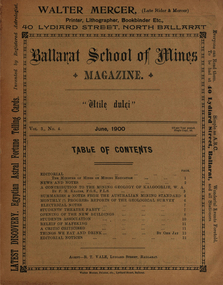
Book - Booklet, Ballarat School of Mines, Student Magazine, June1900, 1900
... Krause), Summaries & notes from the Australian Mining Standard monthly, Progress reports of the Geological Survey, Electrical notes, Students' Theatre Party, Opening of the new buildings, Students Association, Relief of Mafeking, A critic criticised, Things we eat and drink, Editorial notices. ...Australian Mining Standard, S.M.B. Theatre Night, Opening of New Buildings - Ministerial Speeches - Differences of Opinion mining geology of kalgoorlie, w.a. f. m. krause new classrooms administration building students association relief of mafeking alumni c. f. eeles a.b. reid o. e. jager w. a. parramore a. s. burdekin r. g. todd f. h. krause g. mcintyre kalgoorlie geology mafeking ferdinand krause a building Soft covered magazine of 14 pages. ...Editorial, News and Notes, A Contribution to the Mining Geology of Kalgoorlie W.A., Summaries and Notes from the Australian Mining Standard, S.M.B. Theatre Night, Opening of New Buildings - Ministerial Speeches - Differences of OpinionSoft covered magazine of 14 pages. Articles include: New and notes, A contribution to the mining geology of Kalgoorlie, W.A. (by F. M. Krause), Summaries & notes from the Australian Mining Standard monthly, Progress reports of the Geological Survey, Electrical notes, Students' Theatre Party, Opening of the new buildings, Students Association, Relief of Mafeking, A critic criticised, Things we eat and drink, Editorial notices. mining geology of kalgoorlie, w.a., f. m. krause, new classrooms, administration building, students association, relief of mafeking, alumni, c. f. eeles, a.b. reid, o. e. jager, w. a. parramore, a. s. burdekin, r. g. todd, f. h. krause, g. mcintyre, kalgoorlie geology, mafeking, ferdinand krause, a building -
 Federation University Historical Collection
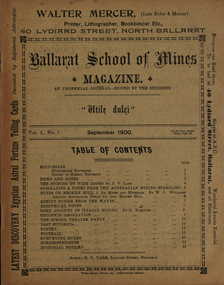
Booklet, Ballarat School of Mines, Student Magazine, September,1900, 1900
... Australian Mining Standard, Notes on Broken Hill, I. Its mines and minerals (by W. J. Williams, Assayer Australian Metal Co. Ltd. Broken Hill), Motive power from the waves, Electrical notes, Some account of Italian mining (by C. Maglione), Students Association...Australian Mining Standard, Notes on Broken Hill, I. Its mines and minerals (by W. J. Williams, Assayer Australian Metal Co. Ltd. Broken Hill), Motive power from the waves, Electrical notes, Some account of Italian mining (by C. Maglione), Students Association ...News and notes, The stoping of wide lodes (by J. V. Lake), Summaries & notes from the Australian Mining Standard, Notes on Broken Hill, I. Its mines and minerals (by W. J. Williams, Assayer Australian Metal Co. Ltd. Broken Hill), Motive power from the waves, Electrical notes, Some account of Italian mining (by C. Maglione), Students Association, The school Theatre Parly, Past Students, Poetry, Football, Surveying rules, correspondence, Editorial notes.Soft covered magazine of 14 pages. stoping of wide lodes, j. v. lake, broken hill, w. j. williams, australian metal co. ltd. broken hill, motive power from the waves, italian mining (by c. maglihone, students association, poetry, football, surveying rules, alumni, arthur coyte, fraser, crittenden, atherton, sander, j. sutherland, roberts, j. dunstan, hurston, moss, arthur e. liburne, kildahl, a. f. baird, e. h. elliott, a. dirge, a. b. reid, o. e. jager, j. a. reid, w. c. wakley, a. s. burdekin, r. g. todd, f. h. krause, g. mcintyre, ferdinand krause -
 City of Moorabbin Historical Society (Operating the Box Cottage Museum)
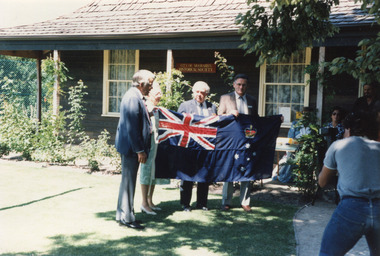
Photograph, Colour 'Reconstruction Box Cottage' Flag Presentation 1985, 1985
... standard newspaper, the leader newspaper pty ltd., fox max , lewis laurie, moorabbin city council, national trust, connard geoff mlc, lawson geoff mlc, kinsey mrs cwa, country womens association, como house south yarra, Written on back of photo a) Flag presentation / Cr. Fox Mr Connard / Mrs Fox Mr Lawson / 24th Feb 1985 b) Mrs Kinsey Pres. CWA Bentleigh / Presenting our Pres. Cr. Fox / with hand made quilt / copy of one now in Como / 24th Feb. Sunday 1985 c) Presentation of Vic. State Flag by / Mr G Connard MLC to our Pres. / Cr Fox / with Mr Lawson MLC 2 x colour photographs of the Australian ...The original small, pioneer cottage was built in the late 1840s to early1850s, by an unknown pioneer. It was located on part of a 30 Acre allotment that was originally part of Dendy’s Special Survey granted in 1841. The doors and window sashes, (made of red deal joinery timber), as well as the brass locks and fittings, are from the original cottage, and were imported from England. The fire-place bricks are from the original cottage, and are sun-dried, (not kiln fired), and are hand-made. Convict marks can be seen on two bricks. There is a small display of external cladding shingles from the original pioneer cottage. These shingles were hand-split, and most likely made from locally collected timber The nails included in this display were used to fasten the shingles on the original cottage, and are also hand-made. The cottage was occupied by William Box and family from 1865 until 1914 when it was sold to William Reitman who resided there until 1950. The enamel nameplate, “Colonial”, on the wall of the cottage, was the name chosen for the original pioneer cottage by Mr William Reitman, when he purchased the property in around 1915, for 1200 Pounds approximately. In 1974 Mr Lewis, a timber specialist, found the dilapidated building on property he had recently purchased in Jasper Rd and suggested it be reconstructed and relocated. Moorabbin Council agreed and the cottage was rebuilt just about 250 metres from its original site. The cost of the rebuild was met by 'Victoria's 150th Committee, plus a small grant from the City of Moorabbin, and Mr Laurie Lewis donated much of the timber for the reconstruction. The re-constructed cottage plan has followed faithfully the original dimensions, and plan of the original pioneer cottage, and as many original items from that cottage’s long occupation have been incorporated. The photographs in Album 1 record the progress of the reconstruction from February 1984 to the First Public Open Day November 18th 1984 and this Flag Raising Celebration in February 1985.These 3 photographs taken at the 'Reconstructed Box Cottage' on Sunday 24th February 1985 show the Presentation of the Australian Flag and the Victorian State Flag by Mr Geoff Connard MLC to CMHS President and Moorabbin City Council Cr. Max Fox and CMHS members. Mrs Kinsey, President, Country Womens' Association Bentleigh presented a hand made Quilt, that is a copy of the one exhibited at Como House, South Yarra, to CMHS President Cr. Max Fox . Mr Geoff Lawson MLC and CMHS member was also present.. Mrs H. Deam and Mr A. Smith, CMHS members, took these photographs to record the progress of the ‘Reconstruction’ from February 1984 to November 1984 and this Celebration in 1985. Although 'Box Cottage' is a re-construction, it is an unique museum that, being located in the midst of a modern community in Ormond Victoria, can educate and demonstrate many aspects of the early settler’s way of life in Victoria. As such, it is an invaluable resource for students and all kinds of visitors. 2 x colour photographs of the Australian Flag and the Victorian State Flag presentation at Box Cottage in Joyce Park February 24th 1985 1 x colour photograph of the presentation of a Quilt by the Country Womens' Association Bentleigh at Box Cottage in Joyce Park February 24th 1985 Written on back of photo a) Flag presentation / Cr. Fox Mr Connard / Mrs Fox Mr Lawson / 24th Feb 1985 b) Mrs Kinsey Pres. CWA Bentleigh / Presenting our Pres. Cr. Fox / with hand made quilt / copy of one now in Como / 24th Feb. Sunday 1985 c) Presentation of Vic. State Flag by / Mr G Connard MLC to our Pres. / Cr Fox / with Mr Lawson MLCbrighton, moorabbin, highett, ormond, mckinnon, cottages, pioneers, colonial, dendy henry, box william, box elizabeth, reitman william, convicts lewis timber co. ltd., deam h, smith arthur, museums, box alonzo, moody & smith builders highett, the moorabbin standard newspaper, the leader newspaper pty ltd., fox max , lewis laurie, moorabbin city council, national trust, connard geoff mlc, lawson geoff mlc, kinsey mrs cwa, country womens association, como house south yarra, -
 Orbost & District Historical Society
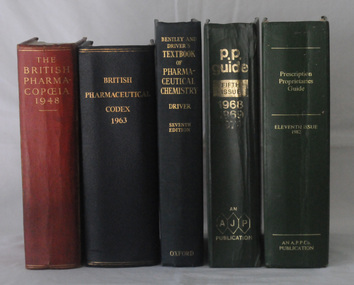
textbooks, 1948 - 1982
... Australian Medical Heritage Society Inc" These reference books have an association with Orbost. Historical works in pharmacy show the evolution of therapeutics and the development of diverse treatment and are therefore a useful research tool. pharmacies-orbost reference-books-pharmacy medicine drugs Five heavy reference books. They contain detailed information on drugs and other pharmaceutical materials with standards ...These reference books were used in the Orbost pharmacy by various chemists. . Chemists who worked in Orbost included Henry Cottman; James Alfred Dubois Williams; Harry Arthur Murray; Miss P.E .Mason (Phyllis Estelle?); Miss Sybil Monica Buzza; Thomas James Frayer; Australia Shaw; James David Torley; John William Zimmer; Dalkeith William Steele; William Thomas Hollingsworth; E.E. Cohen; R.S. Anderson; Frances John Perry Faith Everard Pardew and Charles Anthony Wurf. "n Britain, the Medical Act of 1858 charged the General Medical Council with the "production of a book containing the list of medicines and compounds, and the manner of preparing them together with the true weights and measures by which they are to be mixed and prepared". The British Pharmacopoeia thus became the official reference book and superseded other previous manuals" (from .South Australian Medical Heritage Society Inc" These reference books have an association with Orbost. Historical works in pharmacy show the evolution of therapeutics and the development of diverse treatment and are therefore a useful research tool. Five heavy reference books. They contain detailed information on drugs and other pharmaceutical materials with standards for substances. Details of each book are in the catalogue folder.pharmacies-orbost reference-books-pharmacy medicine drugs -
 Eltham District Historical Society Inc
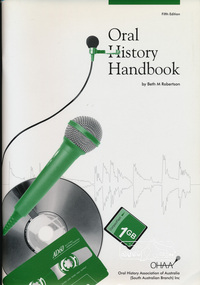
Book, Oral History Association of Australia (South Australian Branch), Oral History Handbook by Beth M Robertson, 2006
... Contents: Introducing Oral History Preparing for the Interview Copyright and Oral History Developing Questionnaires Recording Equipment Digital Recording Standards Interviewing Techniques Summaries and Transcripts Funding for Oral History Guidelines of Ethical Practice Commissioning Oral History Recommended Reading The Oral History Handbook has been published by the Oral History Association South Australia since 1983, and is significant in that it is well established as the national standard. ...Contents: Introducing Oral History Preparing for the Interview Copyright and Oral History Developing Questionnaires Recording Equipment Digital Recording Standards Interviewing Techniques Summaries and Transcripts Funding for Oral History Guidelines of Ethical Practice Commissioning Oral History Recommended Reading The Oral History Handbook has been published by the Oral History Association South Australia since 1983, and is significant in that it is well established as the national standard. The author draws on 25 years experience of practising and teaching oral history techniques and preserving sound recordings.viii, 104 p. : ill. ; ISBN 0646454447 -
 Geoffrey Kaye Museum of Anaesthetic History
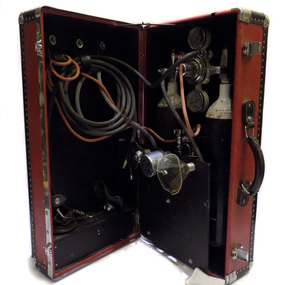
Equipment - Resuscitator Unit, c. 1960
... In 1981, the Australian Standards Association stated that the RM head failed to meet its revised standards and it was withdrawn from the market. ...In 1981, the Australian Standards Association stated that the RM head failed to meet its revised standards and it was withdrawn from the market. ...Mechanical resuscitation devices, such as the Pulmotor and Lungmotor, were popular in the early part of the twentieth century. Their use waned in the 1920s as significant bodies like the British Medical Research Council and American Red Cross refused to endorse them. The most popular of the resuscitators to emerge in the 1930s was the E&J (Ericson and Johnson) resuscitator. The device was soon widely available, vigorously promoted with support from many medical practitioners. They were soon to be found in hospitals, emergency services like the ambulance and fire brigade, and voluntary life-saving organisations. In Australia, Norman James, director of anaesthesia at the Royal Melbourne Hospital, developed an interest in equipment for ambulances and the resuscitation of drowning victims. Little in the way of practical, portable equipment was available to either the ambulances or the voluntary life-saving organisations, such as Surf Life Saving Australia (SLSA); American resuscitators, like the E&J, were expensive and bulky to import. James designed a simple portable resuscitation device for local use after being approached by Jack Conabere, secretary of the Elwood Life Saving Club (ELSC). The resulting Royal Melbourne Hospital resuscitator, or the R.M. resuscitator as it was marketed, was a simpler, manual version of those available overseas. It was gas driven with a plunger, marked “Press”, and a safety valve. The small working unit attached directly to the facemask. Once the patient was positioned facedown and the airway cleared of debris, the mask was placed firmly over the face. The plunger allowed gas to flow and lung inflation; releasing the plunger allowed expiration. This simple resuscitator was marketed by Commonwealth Industrial Gases (CIG) and became very popular in Australia with volunteer and professional rescue organisations. It represents one of the many innovations in resuscitation equipment that resulted from cooperation between volunteer life savers and medical practitioners. Norman James worked closely with Jack Conabere and the Government Pathologist to develop the equipment. ELSC was the first life saving club to use the resuscitator on the beach. While conducting an early training exercise on 23 December 1951, they used it to successfully resuscitate a man who had drowned after capsizing his home made yacht. The R.M. resuscitator was also used in more inventive ways. At Fairfield Hospital in Melbourne, a group of physiotherapists and doctors did some innovative work with polio patients, teaching them glossopharyngeal (or “frog”) breathing, as a means of becoming less dependent on ventilators. In 1981, the Australian Standards Association stated that the RM head failed to meet its revised standards and it was withdrawn from the market. Red leather suitcase with black leather trim with metal studs. There are clip locks for locking the suitcase in the closed position. The suitcase contains equipment for oxygen resuscitation. There is a space allocated for two oxygen cylinders, however there are no cylinders present.Embossed into metal plaque: The C.I.G. / Oxy-viva / PORTABLE UNIVERSAL OXYGEN RESUSCITATORresuscitation, portable, surf life saving australia, royal melbourne hospital, rm resuscitator -
 Bendigo Historical Society Inc.
Document - The Victorian Country Volleyball Council (VCVC) Records, 1974 -1985
... standard of presentation. Without doubt, this event now ranks as one of the best volleyball events in Australia. Source: 2022 Country Championship regulations The management of the Country Championships by the Victorian Country Championship Commission certainly achieved the objective of raising the standard of presentation, and delivering a consistently high quality event. However, the demands on Host Associations...standard of presentation. Without doubt, this event now ranks as one of the best volleyball events in Australia. Source: 2022 Country Championship regulations The management of the Country Championships by the Victorian Country Championship Commission certainly achieved the objective of raising the standard of presentation, and delivering a consistently high quality event. However, the demands on Host Associations ...Volleyball has been played in regional Victoria since the early-1960’s. During those early days, most competitions, like the founders of our great sport, were run by, or in conjunction with, the YMCA. Competitions were running at the Ballarat School of Mines and the YMCA’s of Bendigo, Geelong and Warrnambool. In August 1966, an invitation was extended by the Victorian Amateur Volleyball Association to play in the first State-wide event at Monash University. Geelong and Bendigo accepted the invitation with Melbourne represented by Sisu. For Bendigo players at least, this was the first exposure to ‘international rules’, which prevented upward scoops with open hands, introduced an action called a ‘dig’ and seemed to penalise most overhead actions using the fingers as ‘double hits’! Over the next few years, the sport expanded through the YMCA movement with weekly competitions starting up in Ararat, Warrnambool and Latrobe Valley. The Victorian Regional Council of YMCA’s proposed the first Victorian YMCA Championship in Warrnambool on 30th March 1968 with an entry fee of $4.00 per team. The sport continued to grow with additional regional associations affiliating with the Victorian Amateur Volleyball Association (now VVI) who provided the coaching and refereeing assistance needed to raise the standard of play. In 1970, the YMCA Championships started to give way to the Victorian Country Championships with the first ever event held in Bendigo. In 1973, a re-organisation of the VAVA saw the proposal to create separate Victorian Country and Metropolitan Volleyball Councils. The VCVC was established in 1974 and took over the organisation of the Victorian Country Championships. For the next 10-12 years, the Country Championships grew in stature with the inclusion of two divisions for open men and women and junior divisions for boys and girls. Representative teams successfully contested Australian Country Championships between Victoria, South Australia and New South Wales on several occasions. In October 1985, the VCVC voluntarily wound up the Council and handed the responsibility for the Country Championships back to Volleyball Victoria, who by that time had full-time State Executive and Coaching Directors. Since that time, the Long Weekend in June has continued to be the date of the major annual volleyball event for most regional associations, even though in 1986 the Junior Country Championships were wound up in favour of state and national schools events. A number of regional associations have ceased to exist, as have a number of regional tournaments. Regional leagues were created in both the Gippsland and Central, North-West regions, with Gippsland the only one to survive. Some associations have successfully competed in the State League competitions at various times. Following the experience gained by a number of regional administrators working on the Sydney Olympic Games, a proposal to revamp the Victorian Country Championship was put to VVI in early 2002. Later that year, the Volleyball Victoria Country Championships Commission was formed to implement the recommendations of the review and take control of the event into the future. These championships now provide regional players and officials an opportunity to participate in a consistently well-managed event, using many international protocols and a high standard of presentation. Without doubt, this event now ranks as one of the best volleyball events in Australia. Source: 2022 Country Championship regulations The management of the Country Championships by the Victorian Country Championship Commission certainly achieved the objective of raising the standard of presentation, and delivering a consistently high quality event. However, the demands on Host Associations began to take their toll, with several Associations declining the opportunity to host the event due to the high workload. Similarly, the workload of the volunteer Commissioners also took its toll, with the Commission unable to fill casual vacancies. In 2023, the Commission handed the organisation of the Championships back to VVI, who with paid staff, were better equipped to manage the event.This item contains an introduction to the VCVC, a coloured photo of the 50th Anniversary of the Country Championships at Bendigo, 2018. L-R John (Joe) Rosso (Geelong Women's Coach), Malcolm Qualtrough (Life Member Moe, Latrobe Valley, and Volleyball Victoria), Murray Mansfield (Life Member Bendigo, Volleyball Victoria and Volleyball Australia.); and an original Country Championship logo.victorian country volleyball council, vcvc, victorian amateur volleyball association, volleyball victoria -
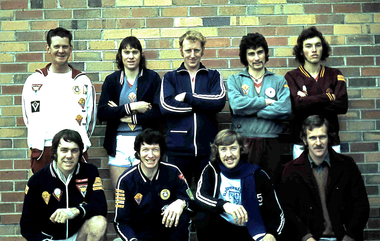 Bendigo Historical Society Inc.
Document - The Victorian Country Volleyball Council (VCVC) Meetings, Reports and Correspondence, 1974 -1979
... standard of presentation. Without doubt, this event now ranks as one of the best volleyball events in Australia. Source: 2022 Country Championship regulations The management of the Country Championships by the Victorian Country Championship Commission certainly achieved the objective of raising the standard of presentation, and delivering a consistently high quality event. However, the demands on Host Associations...standard of presentation. Without doubt, this event now ranks as one of the best volleyball events in Australia. Source: 2022 Country Championship regulations The management of the Country Championships by the Victorian Country Championship Commission certainly achieved the objective of raising the standard of presentation, and delivering a consistently high quality event. However, the demands on Host Associations ...Volleyball has been played in regional Victoria since the early-1960’s. During those early days, most competitions, like the founders of our great sport, were run by, or in conjunction with, the YMCA. Competitions were running at the Ballarat School of Mines and the YMCA’s of Bendigo, Geelong and Warrnambool. In August 1966, an invitation was extended by the Victorian Amateur Volleyball Association to play in the first State-wide event at Monash University. Geelong and Bendigo accepted the invitation with Melbourne represented by Sisu. For Bendigo players at least, this was the first exposure to ‘international rules’, which prevented upward scoops with open hands, introduced an action called a ‘dig’ and seemed to penalise most overhead actions using the fingers as ‘double hits’! Over the next few years, the sport expanded through the YMCA movement with weekly competitions starting up in Ararat, Warrnambool and Latrobe Valley. The Victorian Regional Council of YMCA’s proposed the first Victorian YMCA Championship in Warrnambool on 30th March 1968 with an entry fee of $4.00 per team. The sport continued to grow with additional regional associations affiliating with the Victorian Amateur Volleyball Association (now VVI) who provided the coaching and refereeing assistance needed to raise the standard of play. In 1970, the YMCA Championships started to give way to the Victorian Country Championships with the first ever event held in Bendigo. In 1973, a re-organisation of the VAVA saw the proposal to create separate Victorian Country and Metropolitan Volleyball Councils. The VCVC was established in 1974 and took over the organisation of the Victorian Country Championships. For the next 10-12 years, the Country Championships grew in stature with the inclusion of two divisions for open men and women and junior divisions for boys and girls. Representative teams successfully contested Australian Country Championships between Victoria, South Australia and New South Wales on several occasions. In October 1985, the VCVC voluntarily wound up the Council and handed the responsibility for the Country Championships back to Volleyball Victoria, who by that time had full-time State Executive and Coaching Directors. Since that time, the Long Weekend in June has continued to be the date of the major annual volleyball event for most regional associations, even though in 1986 the Junior Country Championships were wound up in favour of state and national schools events. A number of regional associations have ceased to exist, as have a number of regional tournaments. Regional leagues were created in both the Gippsland and Central, North-West regions, with Gippsland the only one to survive. Some associations have successfully competed in the State League competitions at various times. Following the experience gained by a number of regional administrators working on the Sydney Olympic Games, a proposal to revamp the Victorian Country Championship was put to VVI in early 2002. Later that year, the Volleyball Victoria Country Championships Commission was formed to implement the recommendations of the review and take control of the event into the future. These championships now provide regional players and officials an opportunity to participate in a consistently well-managed event, using many international protocols and a high standard of presentation. Without doubt, this event now ranks as one of the best volleyball events in Australia. Source: 2022 Country Championship regulations The management of the Country Championships by the Victorian Country Championship Commission certainly achieved the objective of raising the standard of presentation, and delivering a consistently high quality event. However, the demands on Host Associations began to take their toll, with several Associations declining the opportunity to host the event due to the high workload. Similarly, the workload of the volunteer Commissioners also took its toll, with the Commission unable to fill casual vacancies. In 2023, the Commission handed the organisation of the Championships back to VVI, who with paid staff, were better equipped to manage the event.This item contains Minutes, Reports of the Council Meetings from 1974 to 1975; it includes the following documents: 11171.2p Colour photo of the 1974 Bendigo YMCA Volleyball Team at the Country Championships in the Latrobe Valley 11171.2a Minutes Inaugral Meeting Warrnambbool Aug 1974 11171.2b Minutes of Meeting Ballarat Sept 1974 11171.2c Minutes of Meeting Warrnambool Mar 1975 11171.2d Minutes of Meeting Ballarat Sept 1975 11171.2d1 Minutes of AGM Ballarat Sept 1975 11171.2e Minutes of AGM Morwell Dec1975 11171.2f Minutes of Meetings Warrnambbol March 1976 11171.2g Minutes of Meetings Warrnambool June 1976 11171.2h Minutes of Meetings Ballarat Sept 1976 11171.2i Minutes of Meetings Warrnambool March 1977 11171.2j Minutes of Meetings St Kilda April 1977 11171.2k Draft Constitution 11171.2l Minutes of Meeting Geelong June 1977 11171.2m Minutes of Meetings Geelong June 1978 11171.2n Minutes of Meetings St Kilda Nov 1978 11171.2o Minutes of Meeting Wangaratta April 1979victorian country volleyball council, vcvc, victorian amateur volleyball association, volleyball victoria -
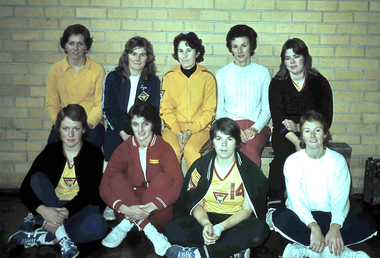 Bendigo Historical Society Inc.
Document - The Victorian Country Volleyball Council (VCVC) Correspondence and Reports, 1974
... standard of presentation. Without doubt, this event now ranks as one of the best volleyball events in Australia. Source: 2022 Country Championship regulations The management of the Country Championships by the Victorian Country Championship Commission certainly achieved the objective of raising the standard of presentation, and delivering a consistently high quality event. However, the demands on Host Associations...standard of presentation. Without doubt, this event now ranks as one of the best volleyball events in Australia. Source: 2022 Country Championship regulations The management of the Country Championships by the Victorian Country Championship Commission certainly achieved the objective of raising the standard of presentation, and delivering a consistently high quality event. However, the demands on Host Associations ...Volleyball has been played in regional Victoria since the early-1960’s. During those early days, most competitions, like the founders of our great sport, were run by, or in conjunction with, the YMCA. Competitions were running at the Ballarat School of Mines and the YMCA’s of Bendigo, Geelong and Warrnambool. In August 1966, an invitation was extended by the Victorian Amateur Volleyball Association to play in the first State-wide event at Monash University. Geelong and Bendigo accepted the invitation with Melbourne represented by Sisu. For Bendigo players at least, this was the first exposure to ‘international rules’, which prevented upward scoops with open hands, introduced an action called a ‘dig’ and seemed to penalise most overhead actions using the fingers as ‘double hits’! Over the next few years, the sport expanded through the YMCA movement with weekly competitions starting up in Ararat, Warrnambool and Latrobe Valley. The Victorian Regional Council of YMCA’s proposed the first Victorian YMCA Championship in Warrnambool on 30th March 1968 with an entry fee of $4.00 per team. The sport continued to grow with additional regional associations affiliating with the Victorian Amateur Volleyball Association (now VVI) who provided the coaching and refereeing assistance needed to raise the standard of play. In 1970, the YMCA Championships started to give way to the Victorian Country Championships with the first ever event held in Bendigo. In 1973, a re-organisation of the VAVA saw the proposal to create separate Victorian Country and Metropolitan Volleyball Councils. The VCVC was established in 1974 and took over the organisation of the Victorian Country Championships. For the next 10-12 years, the Country Championships grew in stature with the inclusion of two divisions for open men and women and junior divisions for boys and girls. Representative teams successfully contested Australian Country Championships between Victoria, South Australia and New South Wales on several occasions. In October 1985, the VCVC voluntarily wound up the Council and handed the responsibility for the Country Championships back to Volleyball Victoria, who by that time had full-time State Executive and Coaching Directors. Since that time, the Long Weekend in June has continued to be the date of the major annual volleyball event for most regional associations, even though in 1986 the Junior Country Championships were wound up in favour of state and national schools events. A number of regional associations have ceased to exist, as have a number of regional tournaments. Regional leagues were created in both the Gippsland and Central, North-West regions, with Gippsland the only one to survive. Some associations have successfully competed in the State League competitions at various times. Following the experience gained by a number of regional administrators working on the Sydney Olympic Games, a proposal to revamp the Victorian Country Championship was put to VVI in early 2002. Later that year, the Volleyball Victoria Country Championships Commission was formed to implement the recommendations of the review and take control of the event into the future. These championships now provide regional players and officials an opportunity to participate in a consistently well-managed event, using many international protocols and a high standard of presentation. Without doubt, this event now ranks as one of the best volleyball events in Australia. Source: 2022 Country Championship regulations The management of the Country Championships by the Victorian Country Championship Commission certainly achieved the objective of raising the standard of presentation, and delivering a consistently high quality event. However, the demands on Host Associations began to take their toll, with several Associations declining the opportunity to host the event due to the high workload. Similarly, the workload of the volunteer Commissioners also took its toll, with the Commission unable to fill casual vacancies. In 2023, the Commission handed the organisation of the Championships back to VVI, who with paid staff, were better equipped to manage the event.This item contains Correspondence of the Council in 1974; it include. the following documents: 11171.3n 1974 Bendigo YMCA Volleyball Team at the Country Championships in the Latrobe Valley. 11171.3a Notices of the Inaugural Meeting Warrnambool Aug 1974 11171.3b Reasons for the creation of the VCVC 11171.3c Letter from Ballarat YMCA Volleyball Association 11171.3d Letters to and from the Latrobe Valley Volleyball Association 11171.3e Letter from the Ararat Volleyball Association 11171.3f Letter to the Latrobe Valley Volleyball Association 11171.3g Agenda of Meeting in Ballarat Sept 1974 11171.3h Letter to the Geelong Amateur Volleyball Asscoiation 11171.3i Letter from the Victorian Amateur Volleyball Association to Warnambool Association 11171.3j Opening Balance of VCVC Account 11171.3k Letter from the Latrobe Valley Volleyball Association 11171.3l Letter from the Geelong Amateur Volleyball Association 11171.3m Guide for the running of the Victorian Country Championshipsvictorian country volleyball council, vcvc, victorian amateur volleyball association, volleyball victoria -
Bendigo Historical Society Inc.
Document - The Victorian Country Volleyball Council (VCVC) Correspondence and Country Chapionship Reports, 1975
... standard of presentation. Without doubt, this event now ranks as one of the best volleyball events in Australia. Source: 2022 Country Championship regulations The management of the Country Championships by the Victorian Country Championship Commission certainly achieved the objective of raising the standard of presentation, and delivering a consistently high quality event. However, the demands on Host Associations...standard of presentation. Without doubt, this event now ranks as one of the best volleyball events in Australia. Source: 2022 Country Championship regulations The management of the Country Championships by the Victorian Country Championship Commission certainly achieved the objective of raising the standard of presentation, and delivering a consistently high quality event. However, the demands on Host Associations ...Volleyball has been played in regional Victoria since the early-1960’s. During those early days, most competitions, like the founders of our great sport, were run by, or in conjunction with, the YMCA. Competitions were running at the Ballarat School of Mines and the YMCA’s of Bendigo, Geelong and Warrnambool. In August 1966, an invitation was extended by the Victorian Amateur Volleyball Association to play in the first State-wide event at Monash University. Geelong and Bendigo accepted the invitation with Melbourne represented by Sisu. For Bendigo players at least, this was the first exposure to ‘international rules’, which prevented upward scoops with open hands, introduced an action called a ‘dig’ and seemed to penalise most overhead actions using the fingers as ‘double hits’! Over the next few years, the sport expanded through the YMCA movement with weekly competitions starting up in Ararat, Warrnambool and Latrobe Valley. The Victorian Regional Council of YMCA’s proposed the first Victorian YMCA Championship in Warrnambool on 30th March 1968 with an entry fee of $4.00 per team. The sport continued to grow with additional regional associations affiliating with the Victorian Amateur Volleyball Association (now VVI) who provided the coaching and refereeing assistance needed to raise the standard of play. In 1970, the YMCA Championships started to give way to the Victorian Country Championships with the first ever event held in Bendigo. In 1973, a re-organisation of the VAVA saw the proposal to create separate Victorian Country and Metropolitan Volleyball Councils. The VCVC was established in 1974 and took over the organisation of the Victorian Country Championships. For the next 10-12 years, the Country Championships grew in stature with the inclusion of two divisions for open men and women and junior divisions for boys and girls. Representative teams successfully contested Australian Country Championships between Victoria, South Australia and New South Wales on several occasions. In October 1985, the VCVC voluntarily wound up the Council and handed the responsibility for the Country Championships back to Volleyball Victoria, who by that time had full-time State Executive and Coaching Directors. Since that time, the Long Weekend in June has continued to be the date of the major annual volleyball event for most regional associations, even though in 1986 the Junior Country Championships were wound up in favour of state and national schools events. A number of regional associations have ceased to exist, as have a number of regional tournaments. Regional leagues were created in both the Gippsland and Central, North-West regions, with Gippsland the only one to survive. Some associations have successfully competed in the State League competitions at various times. Following the experience gained by a number of regional administrators working on the Sydney Olympic Games, a proposal to revamp the Victorian Country Championship was put to VVI in early 2002. Later that year, the Volleyball Victoria Country Championships Commission was formed to implement the recommendations of the review and take control of the event into the future. These championships now provide regional players and officials an opportunity to participate in a consistently well-managed event, using many international protocols and a high standard of presentation. Without doubt, this event now ranks as one of the best volleyball events in Australia. Source: 2022 Country Championship regulations The management of the Country Championships by the Victorian Country Championship Commission certainly achieved the objective of raising the standard of presentation, and delivering a consistently high quality event. However, the demands on Host Associations began to take their toll, with several Associations declining the opportunity to host the event due to the high workload. Similarly, the workload of the volunteer Commissioners also took its toll, with the Commission unable to fill casual vacancies. In 2023, the Commission handed the organisation of the Championships back to VVI, who with paid staff, were better equipped to manage the event.This item contains Correspondence of the Council in 1975 andreports on the Country Championships for that year; it include. the following documents: 11171.4a Three letters from VAVA Secretary Wolfgang Gollong 11171.4b Letter from Ballarat YMCA Volleyball Association 11171.4c Letter from Swan Hill Volleyball Association 11171.4d Letter from Geelong Amateur Volleyball Association 11171.4e Letter from Latrobe Valley Volleyball Association April 1975 11171.4f Letter from the Ballarat YMCA Volleyball Association 11171.4g Three letters from VAVA Secretary Wolfgang Gollong 11171.4h Letter to Joe Hiller re refereeing at the Country Championships 11171.4i Letter to Eric Hayman President of VAVA re Asian Championships 11171.4j Letter from Ballarat Volleyball re registration of players 11171.4k Letter from Bendigo YMCA Volleyball association list of office bearers 11171.4l Letter from Ballarat Volleyball re rule books 11171.4m Letter from Ballarat re referees for finals 11171.4n Letter from VAVA apology from Eric Hayman 11171.4o 1975 Country Championships Conditions 11171.4p 1975 Country Championships Teams Registration forms 11171.4q 1975 Country Championships Team entry forms 11171.4r Letters from VAVA re State Coaches 11171.4s Treasurer Report Sept 1975 11171.4t Letter to all associations re contact information 11171.4u Telegram from Swan Hill Volleyball 11171.4v Letter to VAVA Secretary re Meeting Wangaratta June 1975 11171.4w Notices from VAVA re Australian Tournaments 11171.4x List of Accommodation for Bendigo Country Championships 11171.4y VCVC Financial Statement 32 Aug 1976 11171.4z Two letters from VAVA Olympic team Appeal and Coaches Course 11171.4aa Agenda VCVC Meetings Morwell Dec 1975 11171.4ab Letter from Ballarat Volleyball re Australian Volleyball Constitution 11171.4ac VCVC List of Executive Contactsvictorian country volleyball council, vcvc, victorian amateur volleyball association, volleyball victoria -
Bendigo Historical Society Inc.
Document - The Victorian Country Volleyball Council (VCVC) Correspondence and Country Championship Reports, 1976
... standard of presentation. Without doubt, this event now ranks as one of the best volleyball events in Australia. Source: 2022 Country Championship regulations The management of the Country Championships by the Victorian Country Championship Commission certainly achieved the objective of raising the standard of presentation, and delivering a consistently high quality event. However, the demands on Host Associations...standard of presentation. Without doubt, this event now ranks as one of the best volleyball events in Australia. Source: 2022 Country Championship regulations The management of the Country Championships by the Victorian Country Championship Commission certainly achieved the objective of raising the standard of presentation, and delivering a consistently high quality event. However, the demands on Host Associations ...Volleyball has been played in regional Victoria since the early-1960’s. During those early days, most competitions, like the founders of our great sport, were run by, or in conjunction with, the YMCA. Competitions were running at the Ballarat School of Mines and the YMCA’s of Bendigo, Geelong and Warrnambool. In August 1966, an invitation was extended by the Victorian Amateur Volleyball Association to play in the first State-wide event at Monash University. Geelong and Bendigo accepted the invitation with Melbourne represented by Sisu. For Bendigo players at least, this was the first exposure to ‘international rules’, which prevented upward scoops with open hands, introduced an action called a ‘dig’ and seemed to penalise most overhead actions using the fingers as ‘double hits’! Over the next few years, the sport expanded through the YMCA movement with weekly competitions starting up in Ararat, Warrnambool and Latrobe Valley. The Victorian Regional Council of YMCA’s proposed the first Victorian YMCA Championship in Warrnambool on 30th March 1968 with an entry fee of $4.00 per team. The sport continued to grow with additional regional associations affiliating with the Victorian Amateur Volleyball Association (now VVI) who provided the coaching and refereeing assistance needed to raise the standard of play. In 1970, the YMCA Championships started to give way to the Victorian Country Championships with the first ever event held in Bendigo. In 1973, a re-organisation of the VAVA saw the proposal to create separate Victorian Country and Metropolitan Volleyball Councils. The VCVC was established in 1974 and took over the organisation of the Victorian Country Championships. For the next 10-12 years, the Country Championships grew in stature with the inclusion of two divisions for open men and women and junior divisions for boys and girls. Representative teams successfully contested Australian Country Championships between Victoria, South Australia and New South Wales on several occasions. In October 1985, the VCVC voluntarily wound up the Council and handed the responsibility for the Country Championships back to Volleyball Victoria, who by that time had full-time State Executive and Coaching Directors. Since that time, the Long Weekend in June has continued to be the date of the major annual volleyball event for most regional associations, even though in 1986 the Junior Country Championships were wound up in favour of state and national schools events. A number of regional associations have ceased to exist, as have a number of regional tournaments. Regional leagues were created in both the Gippsland and Central, North-West regions, with Gippsland the only one to survive. Some associations have successfully competed in the State League competitions at various times. Following the experience gained by a number of regional administrators working on the Sydney Olympic Games, a proposal to revamp the Victorian Country Championship was put to VVI in early 2002. Later that year, the Volleyball Victoria Country Championships Commission was formed to implement the recommendations of the review and take control of the event into the future. These championships now provide regional players and officials an opportunity to participate in a consistently well-managed event, using many international protocols and a high standard of presentation. Without doubt, this event now ranks as one of the best volleyball events in Australia. Source: 2022 Country Championship regulations The management of the Country Championships by the Victorian Country Championship Commission certainly achieved the objective of raising the standard of presentation, and delivering a consistently high quality event. However, the demands on Host Associations began to take their toll, with several Associations declining the opportunity to host the event due to the high workload. Similarly, the workload of the volunteer Commissioners also took its toll, with the Commission unable to fill casual vacancies. In 2023, the Commission handed the organisation of the Championships back to VVI, who with paid staff, were better equipped to manage the event.This item contains Correspondence of the Council in 1976 and reports on the Country Championships for that year; it includes the following documents: 11171.5a Letter from Swan Hill Volleyball Association President 11171.5b Letter from the ehuca and District YMCA Youth Clubs 11171.5c Letter from VAVA re contact details of country associations 11171.5d Letter from the Swan Hill Volleyball Association 11171.5e Letters to and from the VAVA and VCVC 11171.5f Invoice for Olympic Team Appeal Biros 11171.5g Invoice for Olympic Team Appeal Biros to all Associations 11171.5h Letter to the Echuca and District YMCA Youth Clubs 11171.5i Letter from the Warrnambool Volleyball Association 11171.5j Letter to the VAVA 11171.5k Country Championships, Roster for Referees and Draw 11171.5l Country Championships Team Registrations 1976 11171.5m Voting Slips to approve Albury Wodonga to join the VCVC 11171.5n Letter from Geelong Volleyball association 11171.5o Letter of apology from VAVA for non attendance at the Country Championships 11171.5p Letter from the Goulburn Valley Volleyball Association 11171.5q Letters to and from the Ballarat Volleyball Association 11171.5r Letter to the VAVA Treasurer Mark Perrott 11171.5s Letter from the Geelong Amateur Volleyball Association Registration fees 11171.5t Letter from VAVA Treasurer Mark Perrott 11171.5u Three letters from the VAVA and Department of Youth Sport and recreation 11171.5v Study of Voluntary Workers 11171.5w Letter from Latrobe Valley Volleyball Association 11171.5x Letter from Ballarat Volleyball re their tournament 11171.5y Notice of AGM Sept 1976 at Ballarat 11171.5z Goulburn Valley Volleyball Association Letter Office Bearers 11171.5aa Three letters from the VAVA 11171.5ab Letter from Ballarat Association requesting a referee 11171.5ac Letter from Geelong Volleyball re monies paid 11171.5ad Circular from VAVA Chinese Reciprocal Visitvictorian country volleyball council, vcvc, victorian amateur volleyball association, volleyball victoria -
Bendigo Historical Society Inc.
Document - The Victorian Country Volleyball Council (VCVC) Correspondence and Country Championship Reports, 1977
... standard of presentation. Without doubt, this event now ranks as one of the best volleyball events in Australia. Source: 2022 Country Championship regulations The management of the Country Championships by the Victorian Country Championship Commission certainly achieved the objective of raising the standard of presentation, and delivering a consistently high quality event. However, the demands on Host Associations...standard of presentation. Without doubt, this event now ranks as one of the best volleyball events in Australia. Source: 2022 Country Championship regulations The management of the Country Championships by the Victorian Country Championship Commission certainly achieved the objective of raising the standard of presentation, and delivering a consistently high quality event. However, the demands on Host Associations ...Volleyball has been played in regional Victoria since the early-1960’s. During those early days, most competitions, like the founders of our great sport, were run by, or in conjunction with, the YMCA. Competitions were running at the Ballarat School of Mines and the YMCA’s of Bendigo, Geelong and Warrnambool. In August 1966, an invitation was extended by the Victorian Amateur Volleyball Association to play in the first State-wide event at Monash University. Geelong and Bendigo accepted the invitation with Melbourne represented by Sisu. For Bendigo players at least, this was the first exposure to ‘international rules’, which prevented upward scoops with open hands, introduced an action called a ‘dig’ and seemed to penalise most overhead actions using the fingers as ‘double hits’! Over the next few years, the sport expanded through the YMCA movement with weekly competitions starting up in Ararat, Warrnambool and Latrobe Valley. The Victorian Regional Council of YMCA’s proposed the first Victorian YMCA Championship in Warrnambool on 30th March 1968 with an entry fee of $4.00 per team. The sport continued to grow with additional regional associations affiliating with the Victorian Amateur Volleyball Association (now VVI) who provided the coaching and refereeing assistance needed to raise the standard of play. In 1970, the YMCA Championships started to give way to the Victorian Country Championships with the first ever event held in Bendigo. In 1973, a re-organisation of the VAVA saw the proposal to create separate Victorian Country and Metropolitan Volleyball Councils. The VCVC was established in 1974 and took over the organisation of the Victorian Country Championships. For the next 10-12 years, the Country Championships grew in stature with the inclusion of two divisions for open men and women and junior divisions for boys and girls. Representative teams successfully contested Australian Country Championships between Victoria, South Australia and New South Wales on several occasions. In October 1985, the VCVC voluntarily wound up the Council and handed the responsibility for the Country Championships back to Volleyball Victoria, who by that time had full-time State Executive and Coaching Directors. Since that time, the Long Weekend in June has continued to be the date of the major annual volleyball event for most regional associations, even though in 1986 the Junior Country Championships were wound up in favour of state and national schools events. A number of regional associations have ceased to exist, as have a number of regional tournaments. Regional leagues were created in both the Gippsland and Central, North-West regions, with Gippsland the only one to survive. Some associations have successfully competed in the State League competitions at various times. Following the experience gained by a number of regional administrators working on the Sydney Olympic Games, a proposal to revamp the Victorian Country Championship was put to VVI in early 2002. Later that year, the Volleyball Victoria Country Championships Commission was formed to implement the recommendations of the review and take control of the event into the future. These championships now provide regional players and officials an opportunity to participate in a consistently well-managed event, using many international protocols and a high standard of presentation. Without doubt, this event now ranks as one of the best volleyball events in Australia. Source: 2022 Country Championship regulations The management of the Country Championships by the Victorian Country Championship Commission certainly achieved the objective of raising the standard of presentation, and delivering a consistently high quality event. However, the demands on Host Associations began to take their toll, with several Associations declining the opportunity to host the event due to the high workload. Similarly, the workload of the volunteer Commissioners also took its toll, with the Commission unable to fill casual vacancies. In 2023, the Commission handed the organisation of the Championships back to VVI, who with paid staff, were better equipped to manage the event.This item contains Correspondence of the Council in 1977 and reports on the Country Championships for that year; it includes the following documents: 11171.6a Letter from the Broken Hill YMCA Volleyball Association re tournament 11171.6b Letter from VAVA re State Coaches costs 11171.6c Circular of Fund Raising Proposals 11171.6d Letter from VAVA re Broken Hill Tournament 11171.6e Letter re amendments to the VAVA constitution 11171.6f Letter from Albury Wodonga wishing to enter the Country Championships 11171.6g Letter from Geelong Volleyball registration for Country Championships 11171.6h Circular - Sale of Rule Books 11171.6i Letter from VAVA re Rothmans Coaches Tour 11171.6j Letter from VAVA Secretary re championships, coaching and etc. 11171.6k VCVC Notice of AGM 11171.6l Letter from Latrobe Valley Volleyball with proposals for running the Country Championships 11171.6m Letters from Swan Hill and Ballarat re country Championships 11171.6n Letter from Goulburn Valley Volleyball 11171.6o Quotation from Waterwheel Press Shepparton 11171.6p Letters from VAVA to VCVC 11171.6q VCVC President's Report 1976-1977 11171.6r Letter from the Goulburn Valley Amateur Volleyball Association 11171.6s Letter from the Ararat and District YMCA Youth Clubs 11171.6t Letter from VAVA re Swan Hill Volleyball Association 11171.6u Letter to VAVA re Horsham and Warracknabeal Volleyball 11171.6v Letter to VCVC from Swan Hill Volleyball 11171.6w Letter from Wanganui Park High School 11171.6x Letter from the Ballarat Association 11171.6y Letter from Goulburn Valley Volleyball re coaching assistance 11171.6z Letter from Mrs Lozenicins re her son Arijs death 11171.6aa Letter from Ballarat Volleyball re Thomas Santamaria Coaching 11171.6ab Letter from Bob Kenter Latrobe Valley Volleyball Association (contact the BHS for details) 11171.6ac Letter from the Australian Volleyball Federation to VCVC President - news 11171.6ad Letter from VAVA to VCVC 11171.6ae Letter from VCVC President re coaching calendar for the year 11171.6af Letter from Wallabies Volleyball Club re Morwell tournament Grand Final 11171.6ag Letter from Goulburn Valley re Under 17 Country Championships 11171.6ah Letter from Warrnambool Association re services of Thomas Santamaria 11171.6ai Wallabies Volleyball Club re Russell Newman elected as Secretary 11171.6aj Letter from the Hamilton Memorial Stadium re their competition 11171.6ak Letter from Bendigo re rules of the Country Chamionships (Contact BHS for details) 11171.6al Letter to albury Wodonga Association re VCVC office bearers 11171.6am Letter from Murray Mansfield accepting his nomination for the VCVC Executive 11171.6an Letter to Tom Stevens Bendigo - thanks for his eork on the VCVC Constitution 11171.6ao Country Chamionships Entry and Registration forms 11171.6ap Procedure and Report on the VCVC 1977 Country Championships 11171.6aq Men's and Women's Volleyball Drawvictorian country volleyball council, vcvc, victorian amateur volleyball association, volleyball victoria -
Bendigo Historical Society Inc.
Document - The Victorian Country Volleyball Council (VCVC) Correspondence and Country Championship Reports, 1978
... standard of presentation. Without doubt, this event now ranks as one of the best volleyball events in Australia. Source: 2022 Country Championship regulations The management of the Country Championships by the Victorian Country Championship Commission certainly achieved the objective of raising the standard of presentation, and delivering a consistently high quality event. However, the demands on Host Associations...standard of presentation. Without doubt, this event now ranks as one of the best volleyball events in Australia. Source: 2022 Country Championship regulations The management of the Country Championships by the Victorian Country Championship Commission certainly achieved the objective of raising the standard of presentation, and delivering a consistently high quality event. However, the demands on Host Associations ...Volleyball has been played in regional Victoria since the early-1960’s. During those early days, most competitions, like the founders of our great sport, were run by, or in conjunction with, the YMCA. Competitions were running at the Ballarat School of Mines and the YMCA’s of Bendigo, Geelong and Warrnambool. In August 1966, an invitation was extended by the Victorian Amateur Volleyball Association to play in the first State-wide event at Monash University. Geelong and Bendigo accepted the invitation with Melbourne represented by Sisu. For Bendigo players at least, this was the first exposure to ‘international rules’, which prevented upward scoops with open hands, introduced an action called a ‘dig’ and seemed to penalise most overhead actions using the fingers as ‘double hits’! Over the next few years, the sport expanded through the YMCA movement with weekly competitions starting up in Ararat, Warrnambool and Latrobe Valley. The Victorian Regional Council of YMCA’s proposed the first Victorian YMCA Championship in Warrnambool on 30th March 1968 with an entry fee of $4.00 per team. The sport continued to grow with additional regional associations affiliating with the Victorian Amateur Volleyball Association (now VVI) who provided the coaching and refereeing assistance needed to raise the standard of play. In 1970, the YMCA Championships started to give way to the Victorian Country Championships with the first ever event held in Bendigo. In 1973, a re-organisation of the VAVA saw the proposal to create separate Victorian Country and Metropolitan Volleyball Councils. The VCVC was established in 1974 and took over the organisation of the Victorian Country Championships. For the next 10-12 years, the Country Championships grew in stature with the inclusion of two divisions for open men and women and junior divisions for boys and girls. Representative teams successfully contested Australian Country Championships between Victoria, South Australia and New South Wales on several occasions. In October 1985, the VCVC voluntarily wound up the Council and handed the responsibility for the Country Championships back to Volleyball Victoria, who by that time had full-time State Executive and Coaching Directors. Since that time, the Long Weekend in June has continued to be the date of the major annual volleyball event for most regional associations, even though in 1986 the Junior Country Championships were wound up in favour of state and national schools events. A number of regional associations have ceased to exist, as have a number of regional tournaments. Regional leagues were created in both the Gippsland and Central, North-West regions, with Gippsland the only one to survive. Some associations have successfully competed in the State League competitions at various times. Following the experience gained by a number of regional administrators working on the Sydney Olympic Games, a proposal to revamp the Victorian Country Championship was put to VVI in early 2002. Later that year, the Volleyball Victoria Country Championships Commission was formed to implement the recommendations of the review and take control of the event into the future. These championships now provide regional players and officials an opportunity to participate in a consistently well-managed event, using many international protocols and a high standard of presentation. Without doubt, this event now ranks as one of the best volleyball events in Australia. Source: 2022 Country Championship regulations The management of the Country Championships by the Victorian Country Championship Commission certainly achieved the objective of raising the standard of presentation, and delivering a consistently high quality event. However, the demands on Host Associations began to take their toll, with several Associations declining the opportunity to host the event due to the high workload. Similarly, the workload of the volunteer Commissioners also took its toll, with the Commission unable to fill casual vacancies. In 2023, the Commission handed the organisation of the Championships back to VVI, who with paid staff, were better equipped to manage the event.This item contains Correspondence of the Council in 1978 and reports on the Country Championships for that year; it includes the following documents: 11171.7a Circular to Associations - entry forms for Country Championships 11171.7b From Albury Wodonga seeking affiliation with the VCVC 11171.7c VCVC Financial Statement April 14th 1978 11171.7d Report on bulk purchasing of equipment 11171.7e Report on bulk purchasing of equipment 11171.7f Australian Volleyball Federation update on rules 11171.7g Proposed budget for running of 1978 Championships 11171.7h Letter from Bob Kenter Latrobe Valley re Tomas Santamaria Coaching 11171.7i Wangaratta Accomodation list 11171.7j VCVC Financial Statements Nov 1978 11171.7k Final report on bulk purchase of equipment 11171.7l Minutes of AGM at Geelong June 1977 11171.7m Minutes of meeting held at the Mont Matre Motor Inn St Kilda April 1978 11171.7n Application by the Mildura Volleyball Association to join VCVC 11171.7o Letter from Ballarat in a bid to hold the Country Chamionships 11171.7p Goulburn Valley Volleyball report on the country championships 11171.7q Letter from Latrobe Valley asking for copy of the constitution 11171.7r Thank you card on the death of (Eric) Walter Livingstone Hayman 11171.7s Notice of AGM Nov 1978 11171.7t Letter from the Castlemaine Festival asking for an exhibit 11171.7u Letter to VAVA President references to good work done by the coaching director 11171.7v Records Secretary Annual report Nov 1978 11171.7w Ararat Volleyball association asking to join VCVC 11171.7x Letter from Bob Kenter re Coaching Director's program 11171.7y Letter from Kyneton Volleyball Association re affiliation 11171.7z Goulburn Valley Volleyball asking for financial assistance 11171.7aa Australian Volleyball Federation advertisement for Executive Director 11171.7ab Ballarat Volleyball list of office bearers 11171.7ac Letter from tertiary PE student Bendigo asking for information 11171.7ad Letter from tertiary PE student Bendigo asking for information 11171.7ae Letter from the Melbourne Volleyball Council to VCVC 11171.7af Letter from Bruce D. Hulley and Co. - Australian Sports Development Promotion Programme 11171.7ag VCVC Coaching director's Program to Aug 1979victorian country volleyball council, vcvc, victorian amateur volleyball association, volleyball victoria -
Bendigo Historical Society Inc.
Document - The Victorian Country Volleyball Council (VCVC) Correspondence and Country Championship Reports, 1979
... standard of presentation. Without doubt, this event now ranks as one of the best volleyball events in Australia. Source: 2022 Country Championship regulations The management of the Country Championships by the Victorian Country Championship Commission certainly achieved the objective of raising the standard of presentation, and delivering a consistently high quality event. However, the demands on Host Associations...standard of presentation. Without doubt, this event now ranks as one of the best volleyball events in Australia. Source: 2022 Country Championship regulations The management of the Country Championships by the Victorian Country Championship Commission certainly achieved the objective of raising the standard of presentation, and delivering a consistently high quality event. However, the demands on Host Associations ...Volleyball has been played in regional Victoria since the early-1960’s. During those early days, most competitions, like the founders of our great sport, were run by, or in conjunction with, the YMCA. Competitions were running at the Ballarat School of Mines and the YMCA’s of Bendigo, Geelong and Warrnambool. In August 1966, an invitation was extended by the Victorian Amateur Volleyball Association to play in the first State-wide event at Monash University. Geelong and Bendigo accepted the invitation with Melbourne represented by Sisu. For Bendigo players at least, this was the first exposure to ‘international rules’, which prevented upward scoops with open hands, introduced an action called a ‘dig’ and seemed to penalise most overhead actions using the fingers as ‘double hits’! Over the next few years, the sport expanded through the YMCA movement with weekly competitions starting up in Ararat, Warrnambool and Latrobe Valley. The Victorian Regional Council of YMCA’s proposed the first Victorian YMCA Championship in Warrnambool on 30th March 1968 with an entry fee of $4.00 per team. The sport continued to grow with additional regional associations affiliating with the Victorian Amateur Volleyball Association (now VVI) who provided the coaching and refereeing assistance needed to raise the standard of play. In 1970, the YMCA Championships started to give way to the Victorian Country Championships with the first ever event held in Bendigo. In 1973, a re-organisation of the VAVA saw the proposal to create separate Victorian Country and Metropolitan Volleyball Councils. The VCVC was established in 1974 and took over the organisation of the Victorian Country Championships. For the next 10-12 years, the Country Championships grew in stature with the inclusion of two divisions for open men and women and junior divisions for boys and girls. Representative teams successfully contested Australian Country Championships between Victoria, South Australia and New South Wales on several occasions. In October 1985, the VCVC voluntarily wound up the Council and handed the responsibility for the Country Championships back to Volleyball Victoria, who by that time had full-time State Executive and Coaching Directors. Since that time, the Long Weekend in June has continued to be the date of the major annual volleyball event for most regional associations, even though in 1986 the Junior Country Championships were wound up in favour of state and national schools events. A number of regional associations have ceased to exist, as have a number of regional tournaments. Regional leagues were created in both the Gippsland and Central, North-West regions, with Gippsland the only one to survive. Some associations have successfully competed in the State League competitions at various times. Following the experience gained by a number of regional administrators working on the Sydney Olympic Games, a proposal to revamp the Victorian Country Championship was put to VVI in early 2002. Later that year, the Volleyball Victoria Country Championships Commission was formed to implement the recommendations of the review and take control of the event into the future. These championships now provide regional players and officials an opportunity to participate in a consistently well-managed event, using many international protocols and a high standard of presentation. Without doubt, this event now ranks as one of the best volleyball events in Australia. Source: 2022 Country Championship regulations The management of the Country Championships by the Victorian Country Championship Commission certainly achieved the objective of raising the standard of presentation, and delivering a consistently high quality event. However, the demands on Host Associations began to take their toll, with several Associations declining the opportunity to host the event due to the high workload. Similarly, the workload of the volunteer Commissioners also took its toll, with the Commission unable to fill casual vacancies. In 2023, the Commission handed the organisation of the Championships back to VVI, who with paid staff, were better equipped to manage the event.This item contains Correspondence of the Council in 1979 and reports on the Country Championships for that year; it includes the following documents: 11171.8a Department of Youth Sport and Recreation Courses for 1979 11171.8b From VAVA General Coaches Course Level 2 11171.8c VAVA Executive Officers List 11171.8d Letter from Ballarat asking for promotional posters 11171.8e To Mildura Volleyball re affiliation 11171.8f To Wangaratta Volleyball re costs for Country Championships 11171.8g To all associations re tournament rules and registration fees 11171.8h To all associations re VCVC Meeting March 1979 11171.8i Calendar of events for the VAVA Referee's Commission 11171.8j To VAVA re possible grant for U17 Championships at Wangaratta 11171.8k To Ann Mansfield re Volleyball Equipment stock 11171.8l Estonia Sports Club South Australia notication of annual tournament 11171.8m Country Volleyball Championships Team Entry Form 11171.8n From Geelong Volleyball asking for promotional posters 11171.8o To Kyneton Volleyball information for affiliation 11171.8p Australian Volleyball Federation advertising for coaches 11171.8q Wangaratta Volleyball Executive Details 11171.8r From J. A. Sporting Goods Price list 11171.8s To Horsham Volleyball re affiliation 11171.8t To Ararat Volleyball re affiliation 11171.8u Wangaratta U7 Championship referee's list and accomodation 11171.8v Notice of change of date of General Meeting 11171.8w Latrobe Valley Volleyball Association team colours 11171.8x 1979 Country Championships Shepparton list of accomodation 11171.8y Warrnambool Country Championships Team Entry Form 11171.8z From Goulburn Valley Volleyball contact details 11171.8aa From Kyneton Volleyball deference of affiliation 11171.8ab Notice of General Meeting at Wangaratta 11171.8ac Stawell Volleyball possible affiliation 11171.8ad Men's Volleyball draw 21-22 April 11171.8ae Wangaratta Volleyball U17 Championships Costs and schedule 11171.8af To Stawell Association re affiliation 11171.8ag VCVC Financial Statement 1978-79 11171.8ah VCVC Letter to the Shire of Nathalia 11171.8ai Letter re Fort Street Volleyball Club poaching players 11171.8aj Letter re Fort Street Volleyball Club poaching players 11171.8ak Letter to Coaches Commission re tournament 11171.8al VCVC Notice of general meeting in April 11171.8am VCVC re AGM Dates 1979 11171.8an VCVC re AGM Dates 1979 11171.8ao VCVC re AGM Dates 1979 11171.8ap Letter to Sports Services re design for tracksuit badge 11171.8aq VAVA Minutes of Executive Meeting Nov 1979 11171.8ar Country Championships Shaepparton Report 1979victorian country volleyball council, vcvc, victorian amateur volleyball association, volleyball victoria -
Bendigo Historical Society Inc.
Document - The Victorian Country Volleyball Council (VCVC) Correspondence and Country Championship Reports, 1979
... standard of presentation. Without doubt, this event now ranks as one of the best volleyball events in Australia. Source: 2022 Country Championship regulations The management of the Country Championships by the Victorian Country Championship Commission certainly achieved the objective of raising the standard of presentation, and delivering a consistently high quality event. However, the demands on Host Associations...standard of presentation. Without doubt, this event now ranks as one of the best volleyball events in Australia. Source: 2022 Country Championship regulations The management of the Country Championships by the Victorian Country Championship Commission certainly achieved the objective of raising the standard of presentation, and delivering a consistently high quality event. However, the demands on Host Associations ...Volleyball has been played in regional Victoria since the early-1960’s. During those early days, most competitions, like the founders of our great sport, were run by, or in conjunction with, the YMCA. Competitions were running at the Ballarat School of Mines and the YMCA’s of Bendigo, Geelong and Warrnambool. In August 1966, an invitation was extended by the Victorian Amateur Volleyball Association to play in the first State-wide event at Monash University. Geelong and Bendigo accepted the invitation with Melbourne represented by Sisu. For Bendigo players at least, this was the first exposure to ‘international rules’, which prevented upward scoops with open hands, introduced an action called a ‘dig’ and seemed to penalise most overhead actions using the fingers as ‘double hits’! Over the next few years, the sport expanded through the YMCA movement with weekly competitions starting up in Ararat, Warrnambool and Latrobe Valley. The Victorian Regional Council of YMCA’s proposed the first Victorian YMCA Championship in Warrnambool on 30th March 1968 with an entry fee of $4.00 per team. The sport continued to grow with additional regional associations affiliating with the Victorian Amateur Volleyball Association (now VVI) who provided the coaching and refereeing assistance needed to raise the standard of play. In 1970, the YMCA Championships started to give way to the Victorian Country Championships with the first ever event held in Bendigo. In 1973, a re-organisation of the VAVA saw the proposal to create separate Victorian Country and Metropolitan Volleyball Councils. The VCVC was established in 1974 and took over the organisation of the Victorian Country Championships. For the next 10-12 years, the Country Championships grew in stature with the inclusion of two divisions for open men and women and junior divisions for boys and girls. Representative teams successfully contested Australian Country Championships between Victoria, South Australia and New South Wales on several occasions. In October 1985, the VCVC voluntarily wound up the Council and handed the responsibility for the Country Championships back to Volleyball Victoria, who by that time had full-time State Executive and Coaching Directors. Since that time, the Long Weekend in June has continued to be the date of the major annual volleyball event for most regional associations, even though in 1986 the Junior Country Championships were wound up in favour of state and national schools events. A number of regional associations have ceased to exist, as have a number of regional tournaments. Regional leagues were created in both the Gippsland and Central, North-West regions, with Gippsland the only one to survive. Some associations have successfully competed in the State League competitions at various times. Following the experience gained by a number of regional administrators working on the Sydney Olympic Games, a proposal to revamp the Victorian Country Championship was put to VVI in early 2002. Later that year, the Volleyball Victoria Country Championships Commission was formed to implement the recommendations of the review and take control of the event into the future. These championships now provide regional players and officials an opportunity to participate in a consistently well-managed event, using many international protocols and a high standard of presentation. Without doubt, this event now ranks as one of the best volleyball events in Australia. Source: 2022 Country Championship regulations The management of the Country Championships by the Victorian Country Championship Commission certainly achieved the objective of raising the standard of presentation, and delivering a consistently high quality event. However, the demands on Host Associations began to take their toll, with several Associations declining the opportunity to host the event due to the high workload. Similarly, the workload of the volunteer Commissioners also took its toll, with the Commission unable to fill casual vacancies. In 2023, the Commission handed the organisation of the Championships back to VVI, who with paid staff, were better equipped to manage the event.This item contains Correspondence of the Council in 1979 and reports on the Country Championships for that year; it includes the following documents: 11171.9a Draft VAVA Constitution 11171.9b VAVA Draft Constitution Changes 11171.9c VAVA Executive meeting April 1979 11171.9d Seymour Amateur Volleyball Association re affiliation 11171.9e VAVA Minutes and Agenda Executive Meeting April 1979 11171.9f Disqualification of Players in Melbourne from all associations 11171.9g Latrobe Valley Volleyball association executive list 11171.9h Country Championships 1979 team entry forms 11171.9i Graham Watson transfer form 11171.9j Volleyball Equipment price list 11171.9k VAVA News to all country associations 11171.9l Swan Hill Association re score pad order 11171.9m Letter from Ararat Student re history of volleyball in Australia 11171.9n Letter to Hamilton Volleyball (Memorial Stadium) - promotional posters 11171.9o Draft No 2 VAVA Constitution 11171.9p From Goulburn Valley Association - referee request 11171.9q To Goulburn Valley Association Requesting Player registration details 11171.9r Letter explaing new VAVA draft constitution 11171.9s Australian Volleyball Federation Secretary's Report 1978-79 11171.9t VAVA Agenda for Sept Executive Meeting 11171.9u VAVA Notice of Executive Meeting Aug 1979 11171.9v Letters from members available for match against south Australia 1-2 Dec 11171.9w Australian Volleyball Federation Mailing List 11171.9x Paperwork for VAVA Executive Meeting Sept 1979 11171.9y VAVA Notice of AGM Nov 1979 11171.9z Bendigo YMCA Volleyball association Executive list 11171.9aa VAVA Executive Meeting Details Oct 1979 11171.9ab VAVA Executive Minutes and notices Nov 1979 11171.9ac Australian Volleyball Federation new National Executive Director 11171.9ad VAVA Request fro secondhand equipment 11171.9ae VAVA Minutes of Special General meeting to amend the constitution 11171.9af Notice of VAVA Executive meeting 11171.9ag The Ray Riordan Sports Admin Newsletter 11171.9ah The Ray Riordan Sports Admin Newsletter 11171.9ai VCVC Minutes of General Meeting April 1979 11171.9aj VCVC General Meeting Notices Nov 1979 11171.9ak VAVA 1979 registration Fees 11171.9al VAVA Minutes of Executive Meeting Feb 1979 11171.9am VAVA Minutes of Executive Meeting March 1979 11171.9an VAVA Proposed Referee Commission 11171.9ao VAVA Survey of Facilities 11171.9ap VAVA Office-bearers 1979 11171.9aq Bendigo Trophy Centre Change of Owners 1978 11171.9ar VAVA Promotional Material Resources 11171.9as VAVA Resource Material 11171.9at Department of Youth Sport and Recreation Training Video Pamphlet 11171.9au VAVA Grants for 1979-80victorian country volleyball council, vcvc, victorian amateur volleyball association, volleyball victoria -
Bendigo Historical Society Inc.
Document - The Victorian Country Volleyball Council (VCVC) Correspondence and Country Championship Reports, 1980
... standard of presentation. Without doubt, this event now ranks as one of the best volleyball events in Australia. Source: 2022 Country Championship regulations The management of the Country Championships by the Victorian Country Championship Commission certainly achieved the objective of raising the standard of presentation, and delivering a consistently high quality event. However, the demands on Host Associations...standard of presentation. Without doubt, this event now ranks as one of the best volleyball events in Australia. Source: 2022 Country Championship regulations The management of the Country Championships by the Victorian Country Championship Commission certainly achieved the objective of raising the standard of presentation, and delivering a consistently high quality event. However, the demands on Host Associations ...Volleyball has been played in regional Victoria since the early-1960’s. During those early days, most competitions, like the founders of our great sport, were run by, or in conjunction with, the YMCA. Competitions were running at the Ballarat School of Mines and the YMCA’s of Bendigo, Geelong and Warrnambool. In August 1966, an invitation was extended by the Victorian Amateur Volleyball Association to play in the first State-wide event at Monash University. Geelong and Bendigo accepted the invitation with Melbourne represented by Sisu. For Bendigo players at least, this was the first exposure to ‘international rules’, which prevented upward scoops with open hands, introduced an action called a ‘dig’ and seemed to penalise most overhead actions using the fingers as ‘double hits’! Over the next few years, the sport expanded through the YMCA movement with weekly competitions starting up in Ararat, Warrnambool and Latrobe Valley. The Victorian Regional Council of YMCA’s proposed the first Victorian YMCA Championship in Warrnambool on 30th March 1968 with an entry fee of $4.00 per team. The sport continued to grow with additional regional associations affiliating with the Victorian Amateur Volleyball Association (now VVI) who provided the coaching and refereeing assistance needed to raise the standard of play. In 1970, the YMCA Championships started to give way to the Victorian Country Championships with the first ever event held in Bendigo. In 1973, a re-organisation of the VAVA saw the proposal to create separate Victorian Country and Metropolitan Volleyball Councils. The VCVC was established in 1974 and took over the organisation of the Victorian Country Championships. For the next 10-12 years, the Country Championships grew in stature with the inclusion of two divisions for open men and women and junior divisions for boys and girls. Representative teams successfully contested Australian Country Championships between Victoria, South Australia and New South Wales on several occasions. In October 1985, the VCVC voluntarily wound up the Council and handed the responsibility for the Country Championships back to Volleyball Victoria, who by that time had full-time State Executive and Coaching Directors. Since that time, the Long Weekend in June has continued to be the date of the major annual volleyball event for most regional associations, even though in 1986 the Junior Country Championships were wound up in favour of state and national schools events. A number of regional associations have ceased to exist, as have a number of regional tournaments. Regional leagues were created in both the Gippsland and Central, North-West regions, with Gippsland the only one to survive. Some associations have successfully competed in the State League competitions at various times. Following the experience gained by a number of regional administrators working on the Sydney Olympic Games, a proposal to revamp the Victorian Country Championship was put to VVI in early 2002. Later that year, the Volleyball Victoria Country Championships Commission was formed to implement the recommendations of the review and take control of the event into the future. These championships now provide regional players and officials an opportunity to participate in a consistently well-managed event, using many international protocols and a high standard of presentation. Without doubt, this event now ranks as one of the best volleyball events in Australia. Source: 2022 Country Championship regulations The management of the Country Championships by the Victorian Country Championship Commission certainly achieved the objective of raising the standard of presentation, and delivering a consistently high quality event. However, the demands on Host Associations began to take their toll, with several Associations declining the opportunity to host the event due to the high workload. Similarly, the workload of the volunteer Commissioners also took its toll, with the Commission unable to fill casual vacancies. In 2023, the Commission handed the organisation of the Championships back to VVI, who with paid staff, were better equipped to manage the event.This item contains Correspondence of the Council in 1980 and reports on the Country Championships for that year; it includes the following documents: 11171.10a Two day VCVC Conference 1980 11171.10b VCVC Representative Team against South Australian Country Teams 11171.10c Maffra Sale Volleyball Affiliation Correspondence 11171.10d VAVA Notices and Sports Administrators Newsletters 11171.10e VCVC letters re Maffra Sale and Leongatta Volleyball Affiliation 11171.10f VAVA re Use of State Director of Coaching 11171.10g Goulburn Valley Volleyball re concerns over Country Championship Regulations 11171.10h To Mildura Volleyball re affiliation and structure in Australia 11171.10i To Leongatta Volleyball Association acceptance of affiliation 11171.10j VCVC re Maffra Sale Affiliation 11171.10k VAVA Notice of Meeting postponement 11171.10l Goulburn Valley Amateur Volleyball Association application for Country Championships 11171.10m Latrobe Valley Volleyball Association list of office bearers 11171.10n VAVA Treasurer Vacancy 11171.10o VAVA Proposal for appointment of an Executive Director 11171.10p VCVC Re Country Championship finances 11171.10q VCVC Record Secretary's Report Oct 1980 11171.10r VAVA Notice of 1980 AGM 11171.10s VCVC Financial Statements Oct 1980 11171.10t Letter from John Fricons - apology for non attendance 11171.10u Notice of VAVA AGM 13 Dec 1980 11171.10v VAVA re 1981 Calendar of Events 11171.10w VCVC Re Swan Hill Appeal against fine 11171.10x VAVA letter re publicity guide sheet 11171.10y South Australian Volleyball Council re interstate games 11171.10z Ballarat Amateur Volleyball Association Tournament notification 11171.10aa South Australian Volleyball Association appointment of State Executive Director 11171.10ab Bendigo YMCA Volleyball Association list of office bearers 11171.10ac To South Australian Volleyball Association re interstate teams 11171.10ad Secretary financial statement May 1980 11171.10ae Notice of AGM June 1980 11171.10af Secretary Petty Cash Statement 11171.10ag re New VCVC Constitution and By-laws 11171.10ah Entry Form and Info Country Championships 1980 11171.10ai Reports on the U20 Country Championships 1980 11171.10aj Reports on the U17 Country Championships 1980victorian country volleyball council, vcvc, victorian amateur volleyball association, volleyball victoria
