
Showing 275 items matching "for male use"
-
 The Beechworth Burke Museum
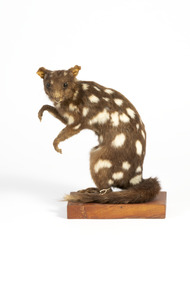
Animal specimen - Eastern quoll, Trustees of the Australian Museum, 1860-1880
... Their large home ranges can extend for several kilometres in each direction from a smaller core range, and the range of a male quoll often overlaps those of several females. An interesting feature of their behaviour is the use of shared latrine (toilet) sites in open spaces such as rock ledges, for marking their territory and other social functions. ...Their large home ranges can extend for several kilometres in each direction from a smaller core range, and the range of a male quoll often overlaps those of several females. An interesting feature of their behaviour is the use of shared latrine (toilet) sites in open spaces such as rock ledges, for marking their territory and other social functions. ...Four species of quoll occur in Australia: the northern, spotted-tailed, eastern and western quolls. Once, most parts of Australia were inhabited by at least one of the species.Captain Cook collected quolls along the east coast in 1770, and recorded "quoll" as their local Aboriginal name. Quolls were often seen by early settlers, who called them "native cat", "native polecat" and "spotted marten", names based on familiar European animals. Since 1770, all four species have declined dramatically in numbers. This is mainly because of habitat loss or change across Australia, and introduced predators such as foxes and cats. Quolls are carnivorous marsupials with a pointed snout, a long tail and brown to black fur distinctively spotted with white. They are lively, attractive animals, with bright eyes, a moist pink nose and many sharp teeth. Like most Australian mammals, quolls are mainly active at night. Typically, they spend the day in one of their many dens, although spotted-tailed quolls and northern quolls sometimes forage and bask in the sunshine. Their large home ranges can extend for several kilometres in each direction from a smaller core range, and the range of a male quoll often overlaps those of several females. An interesting feature of their behaviour is the use of shared latrine (toilet) sites in open spaces such as rock ledges, for marking their territory and other social functions. Male quolls travel widely during the breeding season, with mating occurring during winter. All four species have a gestation period of 21 days. Because they are marsupial mammals, their young are born tiny and undeveloped and must work their way to the pouch, where they attach themselves to a teat to feed. Only the spotted-tailed quoll has a true pouch. In the other species, the young are protected by shallow folds of skin around the teats. As the pups grow, they dangle from the mother's belly; later, she carries them on her back. Quolls reach sexual maturity at one year. They have a naturally short life span, with smaller quolls living an average of only two years, and the larger spotted-tailed quoll about four to five years. The northern quoll is particularly short-lived. This specimen is part of a collection of almost 200 animal specimens that were originally acquired as skins from various institutions across Australia, including the Australian Museum and the National Museum of Victoria, as well as individuals such amateur anthropologist Reynell Eveleigh Johns between 1860-1880. These skins were then mounted by members of the Burke Museum Committee and put-on display in the formal space of the Museum’s original exhibition hall where they continue to be on display. This display of taxidermy mounts initially served to instruct visitors to the Burke Museum of the natural world around them, today it serves as an insight into the collecting habits of the 19th century. This specimen is part of a significant and rare taxidermy mount collection in the Burke Museum. This collection is scientifically and culturally important for reminding us of how science continues to shape our understanding of the modern world. They demonstrate a capacity to hold evidence of how Australia’s fauna history existed in the past and are potentially important for future environmental research. This collection continues to be on display in the Museum and has become a key part to interpreting the collecting habits of the 19th century.Average sized quoll with brown fur with white spots on body but absence on the long tail which is furry unlike the smooth body fur. The quoll has a small had with a pointed snout lined with sharp teeth, and thin membraned ears that are slightly covered in fur. The forelegs of the quoll are slightly smaller than the hindlegs, with all four legs featuring sharp clawed paws.On mounting board: BMM5984/ On Catalogue Tag (attached to left hindleg): Native Cat./ Catalogue. Page 50./ burke museum, taxidermy, taxidermy mount, fauna, animal, animalia, reynell eveleigh johns, quoll, native cat, dasyurus -
 The Beechworth Burke Museum
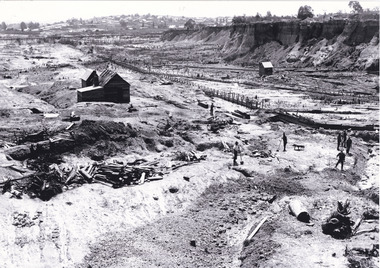
Photograph, unknown
... males, females and Chinese). The search for gold is ingrained into the history of Victoria and therefore, images like this one which portray an open cut sluicing site can reveal important information for society and technology for the date when the photograph was taken. This image is of important historical significance for its ability to convey information about sluicing and the methods used ...This reproduced photograph is of Pennyweight Flat near Beechworth, a notable area of the 1850's gold rush in Victoria. Donald Fletcher, migrating to Beechworth from Scotland in 1855, had substantial claims at Pennyweight Flat and was amongst the first in the district to utilise hydraulic sluicing and water diverting methods.The flat is said to have seen a flurry of 200 miners to the area around 1857, and by 1861 when work commenced on extending Fletcher's tail race the census recorded 644 people residing there (European males, females and Chinese).The search for gold is ingrained into the history of Victoria and therefore, images like this one which portray an open cut sluicing site can reveal important information for society and technology for the date when the photograph was taken. This image is of important historical significance for its ability to convey information about sluicing and the methods used to find gold in 1910. It also shows a location where sluicing was undertaken which provides insight into the impact of sluicing on the environment at a time when it was done. This image is important for current research into the history of Beechworth and surrounding area including Victoria's North East. The Rocky Mountain Extended Gold Sluicing Company was a long running and very active mine that was one of the most successful and largest in the district. Therefore, this image has the capacity to be beneficial for research into society and the motivations of those living and working in this region during this period and therefore, has social significance. The Beechworth Burke Museum has additional images relating to gold sluicing which can be analysed and studied alongside images like this one. When the mine closed in 1921, in a liquidation sale, Zwar purchased the tunnel and clear water supply that ran under the town of Beechworth. He directed the water to his tannery and over time built a major industry in leather works that was a major employer in Beechworth. In growing his leather business, Zwar installed crude oil engines for electricity in his factory. He oversaw working with local council to introduce electricity to Beechworth via a sub-station on Albert Street. In 1927 Electric street lamps replaced gas lamps in the streets of Beechworth. Black and white rectangular reproduced photograph printed on glossy photographic paperObverse: Reverse: 84.222.5/ digital print/ rocky mountain extended gold sluicing company, gold, sluicing, gold sluicing, hydraulic sluicing, gold mine, open cut mining, mining, gold mining, north-east victoria, beechworth, burke museum -
 The Beechworth Burke Museum
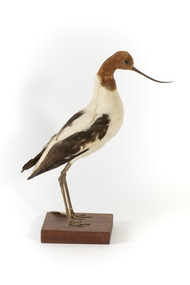
Animal specimen - Red Necked Avocat, Trustees of the Australian Museum, 1860-1880
... It is known for its distinctively upturned bill, the males of this species have a slightly more upturn to their bill than the female. This style of bill is unusual among birds and is used to assist them forage in the water of shallow wetlands. ...It is known for its distinctively upturned bill, the males of this species have a slightly more upturn to their bill than the female. This style of bill is unusual among birds and is used to assist them forage in the water of shallow wetlands. ...This particular species is native to Australia and can be located throughout the mainland, preferably in the south-western interior. It is known for its distinctively upturned bill, the males of this species have a slightly more upturn to their bill than the female. This style of bill is unusual among birds and is used to assist them forage in the water of shallow wetlands. These birds feed on aquatic insects, crustaceans and seeds. The name of this species is derived from the distinctive chestnut brown/red colouring of the head and neck. Interestingly, the call of this bird has been described as a "yapping" sound which is similar to the sound of dogs barking when performed by a flock in flight. This specimen is part of a collection of almost 200 animal specimens that were originally acquired as skins from various institutions across Australia, including the Australian Museum in Sydney and the National Museum of Victoria (known as Museums Victoria since 1983), as well as individuals such as amateur anthropologist Reynell Eveleigh Johns between 1860-1880. These skins were then mounted by members of the Burke Museum Committee and put-on display in the formal space of the Museum’s original exhibition hall where they continue to be on display. This display of taxidermy mounts initially served to instruct visitors to the Burke Museum of the natural world around them, today it serves as an insight into the collecting habits of the 19th century.This specimen is part of a significant and rare taxidermy mount collection in the Burke Museum. This collection is scientifically and culturally important for reminding us of how science continues to shape our understanding of the modern world. They demonstrate a capacity to hold evidence of how Australia’s fauna history existed in the past and are potentially important for future environmental research. This collection continues to be on display in the Museum and has become a key part to interpreting the collecting habits of the 19th century.This Red Necked Avocat specimen is stylized in a standing position upon a wooden platform. There is a pale brown identification tag tied around its left leg. The bird has long pale grey coloured legs and a characteristic long, thin and black upturned bill. The plumage of this species is largely white. It has a chestnut brown/red coloured head which is where this species gets its name. The wings are white with black tips.25c. / Avocet / Catalogue, page, 36. / taxidermy mount, taxidermy, animalia, burke museum, beechworth, australian museum, skin, reynell eveleigh johns, bird, australian birds, large bird, red necked avocat, avocat -
 The Beechworth Burke Museum
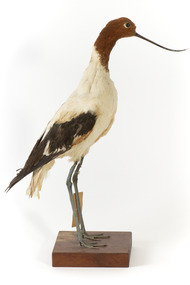
Animal specimen - Red-Necked Avocat, Trustees of the Australian Museum, 1860-1880
... It is known for its distinctively upturned bill, the males of this species have a slightly more upturn to their bill than the female. This style of bill is unusual among birds and is used to assist them forage in the water of shallow wetlands. ...It is known for its distinctively upturned bill, the males of this species have a slightly more upturn to their bill than the female. This style of bill is unusual among birds and is used to assist them forage in the water of shallow wetlands. ...This particular species is native to Australia and can be located throughout the mainland, preferably in the south-western interior. It is known for its distinctively upturned bill, the males of this species have a slightly more upturn to their bill than the female. This style of bill is unusual among birds and is used to assist them forage in the water of shallow wetlands. These birds feed on aquatic insects, crustaceans and seeds. The name of this species is derived from the distinctive chestnut brown/red colouring of the head and neck. Interestingly, the call of this bird has been described as a "yapping" sound which is similar to the sound of dogs barking when performed by a flock in flight. This specimen is part of a collection of almost 200 animal specimens that were originally acquired as skins from various institutions across Australia, including the Australian Museum in Sydney and the National Museum of Victoria (known as Museums Victoria since 1983), as well as individuals such as amateur anthropologist Reynell Eveleigh Johns between 1860-1880. These skins were then mounted by members of the Burke Museum Committee and put-on display in the formal space of the Museum’s original exhibition hall where they continue to be on display. This display of taxidermy mounts initially served to instruct visitors to the Burke Museum of the natural world around them, today it serves as an insight into the collecting habits of the 19th century.This specimen is part of a significant and rare taxidermy mount collection in the Burke Museum. This collection is scientifically and culturally important for reminding us of how science continues to shape our understanding of the modern world. They demonstrate a capacity to hold evidence of how Australia’s fauna history existed in the past and are potentially important for future environmental research. This collection continues to be on display in the Museum and has become a key part to interpreting the collecting habits of the 19th century.This Red Necked Avocat specimen is stylized in a standing position upon a wooden platform. There is a pale brown identification tag tied around its left leg. The bird has long pale grey coloured legs and a characteristic long, thin and black upturned bill. The plumage of this species is largely white. It has a chestnut brown/red coloured head which is where this species gets its name. The wings are white with black tips.24c. / Avocat / Catalogue, page, 36. /taxidermy mount, taxidermy, animalia, burke museum, beechworth, australian museum, skin, reynell eveleigh johns, bird, australian birds, large bird, red necked avocat, avocat -
 The Beechworth Burke Museum
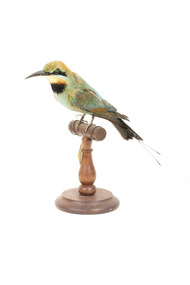
Animal specimen - Rainbow Bee-Eater, Trustees of the Australian Museum, 1860-1880
... Male Bee-Eaters have longer streamers than the females. They are insectivores and use techniques to remove threats to themselves; eg. they will remove wasp's stingers to avoid the poison. ...Male Bee-Eaters have longer streamers than the females. They are insectivores and use techniques to remove threats to themselves; eg. they will remove wasp's stingers to avoid the poison. ...The Rainbow Bee-Eater is native to Australia, living across the mainland, except in desert areas. Male and female birds are both brightly coloured, the primary difference being the length of their tail streamers. Male Bee-Eaters have longer streamers than the females. They are insectivores and use techniques to remove threats to themselves; eg. they will remove wasp's stingers to avoid the poison. They nest in sand and dig a long tunnel, at the end is a 'chamber' where they lay the eggs. This specimen is part of a collection of almost 200 animal specimens that were originally acquired as skins from various institutions across Australia, including the Australian Museum in Sydney and the National Museum of Victoria (known as Museums Victoria since 1983), as well as individuals such as amateur anthropologist Reynell Eveleigh Johns between 1860-1880. These skins were then mounted by members of the Burke Museum Committee and put-on display in the formal space of the Museum’s original exhibition hall where they continue to be on display. This display of taxidermy mounts initially served to instruct visitors to the Burke Museum of the natural world around them, today it serves as an insight into the collecting habits of the 19th century.This specimen is part of a significant and rare taxidermy mount collection in the Burke Museum. This collection is scientifically and culturally important for reminding us of how science continues to shape our understanding of the modern world. They demonstrate a capacity to hold evidence of how Australia’s fauna history existed in the past and are potentially important for future environmental research. This collection continues to be on display in the Museum and has become a key part to interpreting the collecting habits of the 19th century. The Rainbow Bee-Eater is a uniquely beautiful species of bird with strikingly bright colouring. The plumage is green, blue, chestnut and yellow. The build of this specimen is small and graceful and the bill is slender and curved. This Bee-Eater has two distinct streamers that extend from the base of the tail. The glass eyes provided to this specimen are dark black in colour; however, in life, this specimen has red eyes which contrast with the black stripe of colour that is located from the base of the bill to the ears. Below the black stripe, is a smaller pale blue colour. The throat is orange-yellow and the breast is green. The tail is black with a blue tinge to the plumage closer to the rear of the torso. The colouring on this particular specimen has faded significantly, but it provides a good example of what this specimen looked like while alive.Label: 5a / Australian Bee-Eater / See catalogue page 7 / taxidermy mount, taxidermy, animalia, burke museum, beechworth, australian museum, skin, reynell eveleigh johns, bird, rainbow bee-eater -
 Bendigo Military Museum
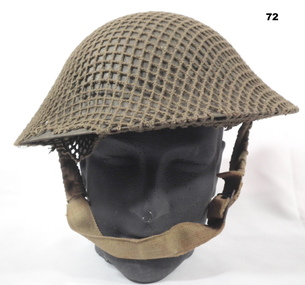
Headwear - HELMET, STEEL - BRITISH PATTERN, c. WW2
... used in both WW1 and WW2. This example dates from the WW2 era. uniform - army costume - male protective headgear Nil British pattern steel helmet, dark olive in colour. ...British pattern steel army helmet as used in both WW1 and WW2. This example dates from the WW2 era.British pattern steel helmet, dark olive in colour. Outside of the helmet is covered in dark olive green mesh which is secured with olive green cotton cord. A bolt head is prominent on the crown of the helmet and corresponds to a nut and thread on the inside. This nut and bolt secures a black rubber pad. A sweat band in black synthetic material is secured to the inside rim of the helmet. An adjustable webbing chin strap with brass buckle is attached with clips to each side.Niluniform - army, costume - male, protective headgear -
 Bendigo Military Museum
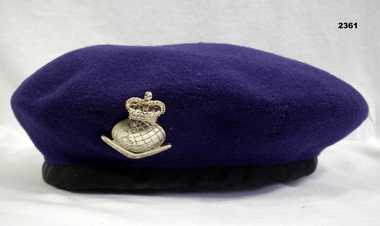
Headwear - BERET & RASVY BADGE, Christies, Beret and Royal Australian Survey Corps Badge
... The "purple" beret was and is used extensively around Australia on ceremonial occasions such as Anzac Day. uniforms - army costume - male, headwear numismatics-badges, military Royal Australian Survey Corps RASvy Beret, woollen, purple colour with a gold anodized badge - Crown over globe, boomerang with Royal Australian Survey Corps. ...This "Purple" Beret sold by Christies in Sydney was produced for the Queensland Ex Survey Corps Association and was not authorised for Service use. The authorised Royal Australian Survey Corps beret was dark blue. The "purple" beret was and is used extensively around Australia on ceremonial occasions such as Anzac Day.Beret, woollen, purple colour with a gold anodized badge - Crown over globe, boomerang with Royal Australian Survey Corps.uniforms - army, costume - male, headwear, numismatics-badges, military, royal australian survey corps, rasvy -
 Warrnambool and District Historical Society Inc.
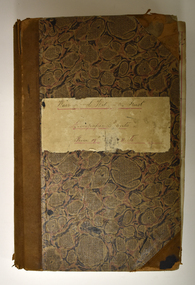
Administrative record (Collection) - Warrnambool Waterside Workers' Federation, John Esam, Warrnambool, Waterside Workers' Federation, Warrnambool Branch, 1902-1955
... Membership was open to any male, 'except Asiatics and subjects not naturalised and resident in Australia', aged 20 years or older and intending to follow the occupation of waterside worker. This collection is of considerable value as it provides us with a history of fifty years of an important Workers' Union in Warrnambool. The Minutes and the membership details are of great use ...Donated to the Warrnambool & District Historical Society by John Esam, Secretary of the Warrnambool Waterside Workers' Federation 1942-1950Administrative records and associated material held by the Warrnambool Waterside Workers' Federation to 1955Kept in W.D.H.S. Archives Room in Ledgers Section in archival boxSeven items of the Warrnambol Waterside Workers' Federation including Minute Books, Booklet containing Constitution and Rules, Membership records, Financial records and Correspondence re the dissolution of the Warrnambool branchwaterside workers in warrnambool, belfast & koroit steam navigation company, warrnambool waterside workers' federationwaterside workers in warrnambool, belfast & koroit steam navigation company, warrnambool waterside workers' federation -
 Bendigo Military Museum
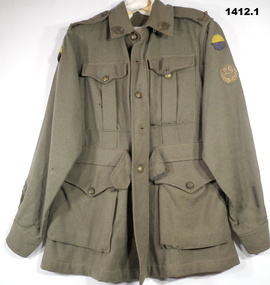
Uniform - JACKET AND SLOUCH HAT - WW1, Dalter Lucas & Sons (1910) Ltd, 1918
... It appears to be of a similar style to those issued to Gurkha troops due to the thickness of the felt, the three rows of stitching around the brim and the use of a press stud to pin up the left hand side of the brim. uniforms military clothing costume accessories - male .2) Pressed into the hat band appears to be; “Dalter Lucas & sons (1910) Ltd, BURY 1918” .1) Coat, Battle Dress, Kahki, includes 2 x “Australia” shoulder badges, 2 x “Rising Sun” epaulette badges, 2 x “yellow over purple” colour patches, 3 x “service chevrons”, 1 x “Empire Wounded stripe”, 1 x “Lewis Gun” cloth badge, all metal buttons intact as well as waist belt. .2) Hat, Slouch, kahki fur felt, cotton pugaree, leather head band, Rising sun badge, no chin strap. ...Slouch hat and Uniform jacket belonging to Edwin James JONES No 3511 AIF. Refer 1367.5 for his service history. The hat was manufactured in 1918 by Dalter Lucas & Sons Bury, UK. It appears to be of a similar style to those issued to Gurkha troops due to the thickness of the felt, the three rows of stitching around the brim and the use of a press stud to pin up the left hand side of the brim..1) Coat, Battle Dress, Kahki, includes 2 x “Australia” shoulder badges, 2 x “Rising Sun” epaulette badges, 2 x “yellow over purple” colour patches, 3 x “service chevrons”, 1 x “Empire Wounded stripe”, 1 x “Lewis Gun” cloth badge, all metal buttons intact as well as waist belt. .2) Hat, Slouch, kahki fur felt, cotton pugaree, leather head band, Rising sun badge, no chin strap..2) Pressed into the hat band appears to be; “Dalter Lucas & sons (1910) Ltd, BURY 1918”uniforms, military clothing, costume accessories - male -
 Kiewa Valley Historical Society
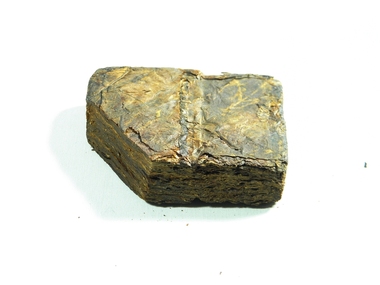
Plug Tobacco, Circa 1900s
... used as a smokeless digestion of nicotine from the tobacco leaf. It was harvested by the tobacco growers before tailor made cigarettes became available. It was mainly regarded as more of a male...used as a smokeless digestion of nicotine from the tobacco leaf. It was harvested by the tobacco growers before tailor made cigarettes became available. It was mainly regarded as more of a male ...This item (tobacco plug, as it was referred to) was used as a smokeless digestion of nicotine from the tobacco leaf. It was harvested by the tobacco growers before tailor made cigarettes became available. It was mainly regarded as more of a male item as it required to expectorate unwanted mouth juices. Ladies rarely used chewing tobacco. Most hotels and drinking rooms (men only in this era) had special spittoons to catch the waste.This item was used at a time when it was socially acceptable to chew tobacco (1800s to early 1900s). The associated health problems (lung and other related cancers including emphysema) eventually became the social and political incentive to curb the tobacco industry in the Kiewa Valley. Harvesting tobacco also had extreme risks such as "Green Tobacco " sickness. In Victoria the economical viability of the tobacco industry was extinguished in 2006. The tobacco drying sheds are still standing in the Kiewa Valley and in nearby regions. This item was also used by miners underground retrieving gold.This work environment was strictly a non smoke one.Square (small corner cut off) of compressed tobacco leaves, brown in colour and dried. Known at the time of use as a Plug.tobacco, chewing, plug, nicotine, smokeless, rural industry -
 Kiewa Valley Historical Society
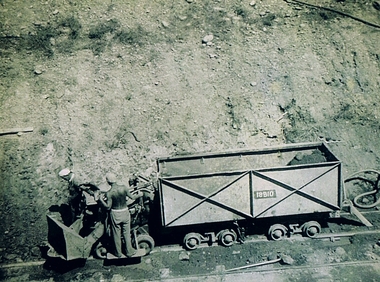
Photograph Shovel Truck, Shovel Loading Rail Truck, circa 1950s
... This was typical for workmen of this heritage, others used caps or hats or no head covering at all (the macho male look)The photograph of this item was one of many depicting great achievements and opening up the region. ...This was typical for workmen of this heritage, others used caps or hats or no head covering at all (the macho male look)The photograph of this item was one of many depicting great achievements and opening up the region. ...This item shows the excavation of the side of a railway track using a pneumatic shovel and a rail mounted truck by two workmen. The period covered was well before State Health and Safety requirements, such as helmets, became law. It also details that the workmen were from European heritage as their head coverings were a handkerchief knotted at each corner. This was typical for workmen of this heritage, others used caps or hats or no head covering at all (the macho male look)The photograph of this item was one of many depicting great achievements and opening up the region. A visual link or time capsule of the 1950s rural/mining sectors clashing with the established rural industriesThis photo depicts the time (1950's) and place (Bogong and Mount Beauty) where construction workers had an immense impact, not only on the physical environment but also on the social and economic development of the Victorian Alps region. The fast expansion of smaller settlements brought about increased pressures on the welfare viability of certain subgroups within the region e.g. farming, droving and commerce (caravan hawkers versus static shops). These changes brought about a heightened awareness by both local and State Governments to upgrade not only facilities within the region but also access to the region. Black and white photo of two workmen on a rail mounted shovel truck. The photo is of good definition allowing a clear view of the subject matter. The paper is semi gloss.On the back of the photo, paper suppliers etchings are "Kodak XtraLife II paper"mining, hydro electricity, victorian alps, construction camps, earth moving machines -
 Kiewa Valley Historical Society
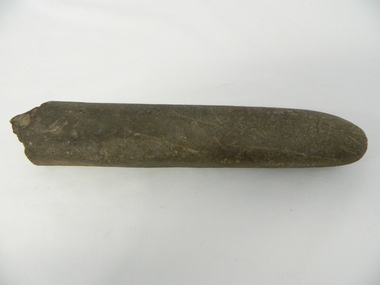
Grinder / Pounding Stone, Dhudhuroa language Aboriginal tribe, pre British/European colonisation
... used for sharpening axe heads as well as pounding food items. This item has a very significant historical and social aspect to it. Firstly it demonstrates the division of labour within a indigenous tribe. It was an era when the female had a definitive role within the family and the broader social indigenous tribal group of, gathering and preparing non animal(hunted) food. Hunted food was the domain of the initiated males ...This stone Grinder or pounder was used as part of an indigenous grinding food preparation method, by the original inhabitants of the Kiewa Valley and its region. In conjunction with its grinding stone was used not only to grind seeds and but also to dig up eatable roots and leaves and served with the regions Bogong moth. This method of food preparation has survived in its basic form for centuries and is still used by master chiefs in modern eateries. This item has been registered with Aboriginal Affairs in Wangaratta, Victoria. Dhudhuroa elder Alan Murray has examined this tool, in Feb 2015, and said it was also used for sharpening axe heads as well as pounding food items. This item has a very significant historical and social aspect to it. Firstly it demonstrates the division of labour within a indigenous tribe. It was an era when the female had a definitive role within the family and the broader social indigenous tribal group of, gathering and preparing non animal(hunted) food. Hunted food was the domain of the initiated males of the tribe.Secondly it demonstrates the ability to fashion implements from raw materials(rock) into effective tools for the purpose of preparing a meal for human consumption. This was in an era where inter family and intra family participation in an indigenous tribal social protective environment was at a very high level. The Kiewa Valley/Mount Bogong region was an area where annual "get together" indigenous tribes for feasting, bartering and settling of disputes highlighting the importance of a regional gathering. Grooved stone, carved to a cylindrical shape with a relative pointed end tip one side (grinding or pounding end) and a rough other end (holding end} Made from Rhyolite stoneThere is a worn grove in the top side due to this tool being used for axe sharpening. indigenous, aboriginal, stone grinding, meal preparation, natural environment, pounding stone -
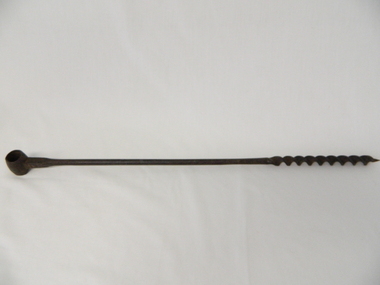 Kiewa Valley Historical Society
Drill Auger, Circa early 1900s
... male ego was at its pinnacle i.e. the harder the tasks the more of a man was required. Hard manual work was not only the "way to go" but also a necessity. Evolution of cheap portable electric/battery powered tools opened up a more efficient method available, especially to those with less muscle strength. This item personifies the rugged environment of the rural workplace. The Kiewa Valley with its main emphasis on farming and grazing provided ample opportunity to use ...This item wasused before diesel, electric and battery drilling apparatus were used by farmers, and other trades requiring a portable yet reliable method of drilling holes. As this item is a 3/4 inch hole drill it would be suitable for fencing and providing holes for structural studs. As with all outdoor farm equipment, man power was required (be it the farmer or farm hands). Fitness of the operator was at a high standard but protective gloves were not highly thought of as it was before occupational, health and safety regulations became mandatory over all manual handling activities, be they on rural properties or town/city factories. This period was one where the male ego was at its pinnacle i.e. the harder the tasks the more of a man was required. Hard manual work was not only the "way to go" but also a necessity. Evolution of cheap portable electric/battery powered tools opened up a more efficient method available, especially to those with less muscle strength. This item personifies the rugged environment of the rural workplace. The Kiewa Valley with its main emphasis on farming and grazing provided ample opportunity to use this construction implement. The manufacturer being a Scottish tool company is very significant in the era when this hole maker was in high demand. British steel products were of high grade and had a good record of reliability. The reliability of any tool was a solid factor for farmers and tradesmen in this semi-isolated region (Circa early 1900s) within the Kiewa Valley and its regional area. This factor,although not as crucial, post 1960s, when Asian manufacturers entered the market place and produced cheaper tools and transportation and supplies was more frequent and reliable, the need for the more expensive British made tools diminished considerably. After the influx of tradesmen from war torn Europe (post 1945) and the increased availability of tradesmen in the Kiewa Valley and its region the price of tools was and still is not as crucial and the cost of all required tools has become a minimal part of the equation. It is only with the emerging younger trades person, farmer and grazier, who have more, "one eye on production costs" and no "old ties to the motherland" inert mind set that quality tools such as this auger and other hand tools "must be made to last a life time" is no longer part of the modern work environment.This cast iron, hand operated Auger has a short barrel shaped cylinder at one end (known as the "Eye") and at the other end a Helical screw blade (screws the cutting edge into wooden material, thereby creating a hole 3/4 inch diameter in the wood) . The barrel section at the top permits a metal or wooden leverage plank to be inserted. The main rod has a 180mm long cutting/screw blade running from the bottom up towards the "eye" end. From the end of the screw blade to the handle is 380mm and cylindrical, but this changes at 550mm from the "eye" end to a 14mm x 10mm rectangular shape shaft.This shaft end is welded to the "Eye".On the shaft below the "eye" is stamped " MATHESON GLASGOW" on the front side and a spade (cards) symbol on the back.auger, hand drill, fencing, tool, rural trades, brace & bit -
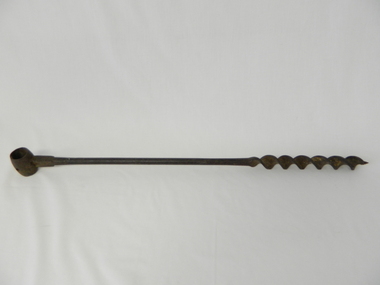 Kiewa Valley Historical Society
Drill Auger, Circa early 1900's
... male ego was at its pinnacle i.e. the harder the tasks the more of a man was required. Hard manual work was not only the "way to go" but also a necessity. Evolution of cheap portable electric/battery powered tools opened up a more efficient method available, especially to those with less muscle strength. This item personifies the rugged environment of the rural workplace. The Kiewa Valley with its main emphasis on farming and grazing provided ample opportunity to use ...This item was before diesel, electric and battery drilling apparatus were used by farmers, and other trades requiring a portable yet reliable method of drilling holes. As this item is a 3/4 inch hole drill it would be suitable for fencing and providing holes for structural studs. As with all outdoor farm equipment, man power was required (be it the farmer or farm hands). Fitness of the operator was at a high standard but protective gloves were not highly thought of as it was before occupational, health and safety regulations became mandatory over all manual handling activities, be they on rural properties or town/city factories. This period was one where the male ego was at its pinnacle i.e. the harder the tasks the more of a man was required. Hard manual work was not only the "way to go" but also a necessity. Evolution of cheap portable electric/battery powered tools opened up a more efficient method available, especially to those with less muscle strength.This item personifies the rugged environment of the rural workplace. The Kiewa Valley with its main emphasis on farming and grazing provided ample opportunity to use this construction implement. The manufacturer being a Scottish tool company is very significant in the era when this hole maker was in high demand. British steel products were of high grade and had a good record of reliability. The reliability of any tool was a solid factor for farmers and tradesmen in this semi-isolated region (Circa early 1900s) of the Kiewa Valley and its regional area. This factor,although not as crucial, post 1960s, when Asian manufacturers entered the market place and produced cheaper tools and transportation and supplies was more frequent and reliable, the need for the more expensive British made tools diminished considerably. After the influx of tradesmen from war torn Europe (post 1945) and the increased availability of tradesmen in the Kiewa Valley and its region the price of tools is not as crucial and the cost of all required tools has become a minimal part of the equation. It is only with the emerging younger trades person, farmer and grazier, who have more, "one eye on production costs" and no "old ties to the motherland" inert mind set that quality tools such as this auger and other hand tools "must be made to last a life time" is no longer part of the modern work environment.This cast iron hand operated drill, has a short barrel-shaped cylinder, known as "the eye" welded across the main rod and is 30mm in circumference. It also has a hole drilled to allow a screw to be fastened onto the hand stock ( not available).The main rod is solid for 400mm and then has been flattened and coiled (Helical screw blade) for another 200mm. At the end of the larger screw blade there is a smaller gauged starter blade with a pointer thread 15mm long. This Auger produces a 1/8th inch hole (metric measurement not used at time of manufacture) See KVHS 0469 for 3/4 inch hole and KVHS 0471 for another 1/8th inch hole.A number 5 stamped on the flat sideauger, hand drill, fencing, tool, rural trades, brace & bit -
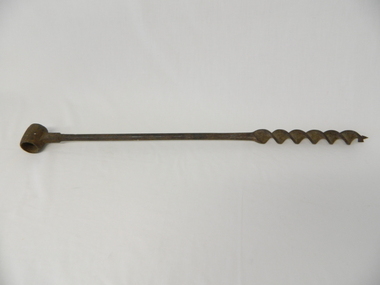 Kiewa Valley Historical Society
Drill Auger, Circa early 1900's
... male ego was at its pinnacle i.e. the harder the tasks the more of a man was required. Hard manual work was not only the "way to go" but also a necessity. Evolution of cheap portable electric/battery powered tools opened up a more efficient method available, especially to those with less muscle strength. This item personifies the rugged environment of the rural workplace. The Kiewa Valley with its main emphasis on farming and grazing provided ample opportunity to use ...This item was before diesel, electric and battery drilling apparatus were used by farmers, and other trades requiring a portable yet reliable method of drilling holes. As this item is a 3/4 inch hole drill it would be suitable for fencing and providing holes for structural studs. As with all outdoor farm equipment, man power was required (be it the farmer or farm hands). Fitness of the operator was at a high standard but protective gloves were not highly thought of as it was before occupational, health and safety regulations became mandatory over all manual handling activities, be they on rural properties or town/city factories. This period was one where the male ego was at its pinnacle i.e. the harder the tasks the more of a man was required. Hard manual work was not only the "way to go" but also a necessity. Evolution of cheap portable electric/battery powered tools opened up a more efficient method available, especially to those with less muscle strength.This item personifies the rugged environment of the rural workplace. The Kiewa Valley with its main emphasis on farming and grazing provided ample opportunity to use this construction implement. The manufacturer being a Scottish tool company is very significant in the era when this hole maker was in high demand. British steel products were of high grade and had a good record of reliability. The reliability of any tool was a solid factor for farmers and tradesmen in this semi-isolated region (Circa early 1900s) of the Kiewa Valley and its regional area. This factor,although not as crucial, post 1960s, when Asian manufacturers entered the market place and produced cheaper tools and transportation and supplies was more frequent and reliable, the need for the more expensive British made tools diminished considerably. After the influx of tradesmen from war torn Europe (post 1945) and the increased availability of tradesmen in the Kiewa Valley and its region the price of tools is not as crucial and the cost of all required tools has become a minimal part of the equation. It is only with the emerging younger trades person, farmer and grazier, who have more, "one eye on production costs" and no "old ties to the motherland" inert mind set that quality tools such as this auger and other hand tools "must be made to last a life time" is no longer part of the modern work environment.This cast iron hand operated drill, has a short barrel-shaped cylinder, known as "the eye" welded across the main rod and is 30mm in circumference. It also has a hole drilled to allow a screw to be fastened onto the hand stock ( not available).The main rod is solid for 400mm and then has been flattened and coiled (Helical screw blade) for another 200mm. At the end of the larger screw blade there is a smaller gauged starter blade with a pointer thread 15mm long. This Auger produces a 1/8th inch hole (metric measurement not used at time of manufacture) See KVHS 0469 for 3/4 inch hole and KVHS 0470 for another 1/8th inch hole.auger, hand drill, fencing, tool, rural trades, brace & bit -
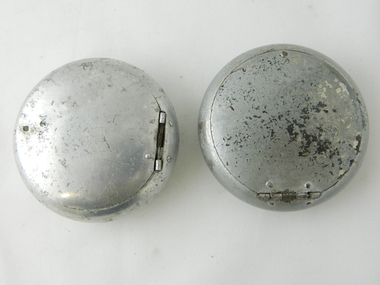 Kiewa Valley Historical Society
Ash Tray Pocket, Circa mid to late 1900s
... use cigarette smoking in public places. Before the anti cigarette smoking revolution, it was both fashionable and manly to either roll your own cigarette or open up a packet of "tailor made's". In the rural and man's man environment the roll your own provided a visual acknowledgement that the user was "true blue" Aussie male and not a city boy. ...use cigarette smoking in public places. Before the anti cigarette smoking revolution, it was both fashionable and manly to either roll your own cigarette or open up a packet of "tailor made's". In the rural and man's man environment the roll your own provided a visual acknowledgement that the user was "true blue" Aussie male and not a city boy. ...This flip top pocket steel ash tray was at the beginning of the social "cleaning up" of cigarette ash and related products. This cigarette waste container was for those occasions when it was polite not to throw the cigarette ash and used up cigarettes "buts" on the ground, or if working in any rural area during a dry fire prone season, when discarding burning cigarette waste could set up a severe "bush" fire. It was also at the beginning of an intensive look at the affects of smoking upon the health of users. Later in the 1900s was a time when medical evidence supported a ground swell of the anti smoking movement which resulted in further restrictions of the use cigarette smoking in public places. Before the anti cigarette smoking revolution, it was both fashionable and manly to either roll your own cigarette or open up a packet of "tailor made's". In the rural and man's man environment the roll your own provided a visual acknowledgement that the user was "true blue" Aussie male and not a city boy. The cycle of use of cigarettes has drastically changed from when this item was first used. Today's society (post 2000) has produced a ground swell of government and non government organisations whose aim is provide a cigarette "ash" free environment and society. This is highlighted in the beginning of the 2000 millennium by a cigarette "Free" Australia campaign, and the pocket flip top personal ash tray as a practical solution for butt litter disposal.This pocket ash tray not only was used when social graces required it to, but also provided a container for any unfinished cigarettes or stogies (cheap half used cigars). In rural areas (open fresh air countryside), where time was always made available for the "smoko" (Australian rest period), at any time, especially after some hard physical work, the ability to have a self contained ashing apparatus, not to offend the gentler folk, was a pre-requisite . The rural environment, in the days of these cigarette ash containers,was one which could range from harsh and unforgiving to mild and relaxing. Smoking could be enjoyed anywhere and at any time without too much "fussing" around. This ash tray was mobile, convenient, unobtrusive and regarded by the user as being considerate to those around. It also eliminated the tell tale evidence that the "no smoking" signs had been ignored. The Kiewa Valley was like many rural ares that found it hard for smokers to come to grips with a governmental "non smoking policy" to indoor recreational and other "confined space" environments. Tin plated mild steel round container with a lid. The opening lid is spring loaded, hinged top, circular and fixed by a clasp, pop- riveted (4) onto the main housing. Opposite the hinge the lid is held closed by a small metal ball fitting tightly to the top wall of the container. The lid is opened by the use of a fingernail positioned at junction of lid to body. This edge is bevelled to allow access. personal effects, tobacco waste products, smoking accessories -
 Kiewa Valley Historical Society
Ash Tray Pocket
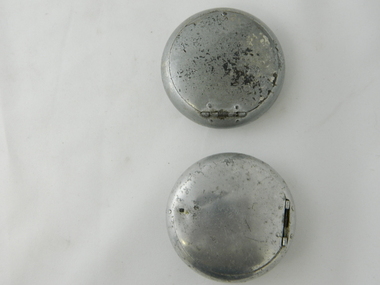
... use cigarette smoking in public places. Before the anti cigarette smoking revolution, it was both fashionable and manly to either roll your own cigarette or open up a packet of "tailor made's". In the rural and man's man environment the roll your own provided a visual acknowledgement that the user was "true blue" Aussie male and not a city boy. ...use cigarette smoking in public places. Before the anti cigarette smoking revolution, it was both fashionable and manly to either roll your own cigarette or open up a packet of "tailor made's". In the rural and man's man environment the roll your own provided a visual acknowledgement that the user was "true blue" Aussie male and not a city boy. ...This flip top pocket aluminium ash tray was at the beginning of the social "cleaning up" of cigarette ash and related products. This cigarette waste container was for those occasions when it was polite not to throw the cigarette ash and used up cigarettes "buts" on the ground, or if working in any rural area during a dry fire prone season, when discarding burning cigarette waste could set up a severe "bush" fire. It was also at the beginning of an intensive look at the affects of smoking upon the health of users. Later in the 1900s was a time when medical evidence supported a ground swell of the anti smoking movement which resulted in further restrictions of the use cigarette smoking in public places. Before the anti cigarette smoking revolution, it was both fashionable and manly to either roll your own cigarette or open up a packet of "tailor made's". In the rural and man's man environment the roll your own provided a visual acknowledgement that the user was "true blue" Aussie male and not a city boy. The cycle of use of cigarettes has drastically changed from when this item was first used. Today's society (post 2000) has produced a ground swell of government and non government organisations whose aim is provide a cigarette "ash" free environment and society. This is highlighted in the beginning of the 2000 millennium by a cigarette "Free" Australia campaign, and the pocket flip top personal ash tray as a practical solution for butt litter disposal.This light weight aluminium pocket ash tray not only was used when social graces required it to, but also provided a container for any unfinished cigarettes or stogies (cheap half used cigars). In rural areas (open fresh air countryside), where time was always made available for the "smoko" (Australian rest period), at any time, especially after some hard physical work, the ability to have a self contained ashing apparatus, not to offend the gentler folk, was a pre-requisite . The rural environment, in the days of these cigarette ash containers,was one which could range from harsh and unforgiving to mild and relaxing. Smoking could be enjoyed anywhere and at any time without too much "fussing" around. This ash tray was mobile, convenient, unobtrusive and regarded by the user as being considerate to those around. It also eliminated the tell tale evidence that the "no smoking" signs had been ignored. The Kiewa Valley was like many rural ares that found it hard for smokers to come to grips with a governmental "non smoking policy" to indoor recreational and other "confined space" environments. The covered lid reduces odors and eliminates ashes from being blown around.Aluminium round container with a lid. The opening lid is spring loaded, hinged top, circular and fixed by a clasp, pop- riveted (4) onto the main housing. Opposite the hinge the lid is held closed by a small metal ball fitting tightly to the top wall of the container. The lid is opened by the use of a fingernail positioned at junction of lid to body. This edge is bevelled to allow access.personal effects, tobacco waste products, smoking accessories, tobacco -
 Kiewa Valley Historical Society
Pipe Tobacco Smoking, Circa 1900s
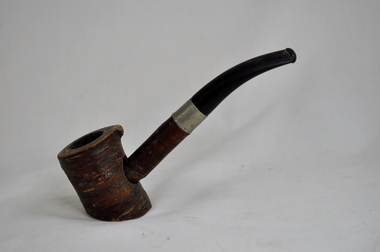
... male or female) of the mid and late 1900s because it was relatively inexpensive to purchase and was regarded as a "beginners pipe". It is the type of pipe well suited to the rural backdrop. In the late 1900s, with the health related restrictions placed on public smoking these tobacco pipes were not immune from the legislation, and even though the pipe smoke was not as offensive as cigarette smoke it still came under the umbrella of smoking. Pipes were also used...male or female) of the mid and late 1900s because it was relatively inexpensive to purchase and was regarded as a "beginners pipe". It is the type of pipe well suited to the rural backdrop. In the late 1900s, with the health related restrictions placed on public smoking these tobacco pipes were not immune from the legislation, and even though the pipe smoke was not as offensive as cigarette smoke it still came under the umbrella of smoking. Pipes were also used ...Pipe smoking has been in vogue for centuries, and in Australia it was a symbol of the "discerning smoker" such as the landed gentry, men of professional status or student. This pipe, however,of the "corncob" style, would have suited the younger professional or student/undergraduate(male or female) of the mid and late 1900s because it was relatively inexpensive to purchase and was regarded as a "beginners pipe". It is the type of pipe well suited to the rural backdrop. In the late 1900s, with the health related restrictions placed on public smoking these tobacco pipes were not immune from the legislation, and even though the pipe smoke was not as offensive as cigarette smoke it still came under the umbrella of smoking. Pipes were also used in the process of inhaling illicit drugs i.e. marijuana, but this use was limited to a very few. Smoking in the second millennium is being phased out as a social habit in Australia but may affect the few "private" smoker and has, as the United States prohibition era (alcoholic drinks) did, spawn an illicit trade in cheap contraband tobacco.This type of pipe lends itself well to the rural setting of the Kiewa Valley and although it is a bit rough in appearance its corncob barrel blended into the environment. The Kiewa Valley region was up until the late 1900s part of the Australian Tobacco Industry and the levels of men smoking pipes was enhanced by the ready supply, "off the fields", of tobacco leaves and the attitude to city based smoking restrictions was one of resentment.This pipe has a straight stem and its "style" is corncob. Originally made from corn cobs the pipe was light in weight and easy to hold in the mouth. The pipe has a permanent filter and a black coloured tin band at the stem/shank junction. The stem fits into the wooden shank which is fastened into the bowl. The stem is made from clear plastic (orange in colour). This stem is longer(70mm) than the shank(45mm). Both are horizontal and extrude 7mm from the bottom of the bowl.tobacco, pipe smoking, smoking accessories -
 Eltham District Historical Society Inc
Photograph, Shire of Eltham Historical Society Banner; Shire of Eltham, "As We Are" Community Banner Project, 1986, 1986
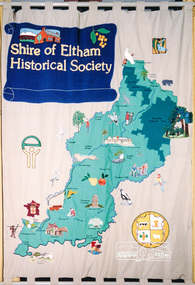
... use. The banner now hangs proudly in our Local History Centre. The Historical Society Banner: Jud Degan worked with this group. The banner was designed by a male...use. The banner now hangs proudly in our Local History Centre. The Historical Society Banner: Jud Degan worked with this group. The banner was designed by a male ...Tracey Naughton was the former Shire of Eltham Community Arts Officer and was responsible for developing the 'As We Are' project which encouraged a number of local community groups to develop banners. The Society was keen to be involved and the project was kicked off following a talk to the Society's members by Tracey in April 1986. The banner was completed and displayed with a number of other banners at the Eltham Community Centre in October 1986. It was then carried proudly for the first time in front of the Society's Parade Float in the 1986 Eltham Community Festival Parade and subsequent parades through to 1990. In December 1994 the Shire of Eltham ceased to exist and following council amalgamation and the establishment of the new Shire of Nillumbik, the Society's name (Shire of Eltham Historical Society) had become somewhat irrelevant and it was revised in 1995 to Eltham District Historical Society. The immediate downstream impact of this change was the rendering of the Society's Banner to history after only eight years of use. The banner now hangs proudly in our Local History Centre. The Historical Society Banner: Jud Degan worked with this group. The banner was designed by a male member and sewed by women. Sewing the banner renewed the group's knowledge of the area in an innovative way and, in turn, this has renewed the energy of the members to participate in the Society. The emphasis in this banner was to create a work of high standard which would last as part of the area's future heritage. The women particularly gained a sense of the history of their craft skills, enjoying the combination of hand embroidery and new machine embroidery skills shared by Jud. (The banner habits of the Eltham tribes : Eltham Shire "as we are" Community Banner Project report / by Jacky Talbot, Shire of Eltham, Feb. 1987, p49)Colour photographactivities, banner project, local history centre -
 Kiewa Valley Historical Society
Pouch Tobacco, unknown, circa 1900s
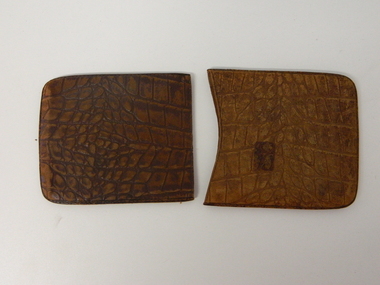
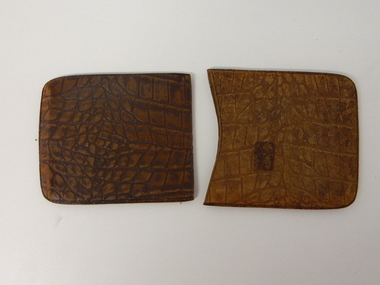
... These type of tobacco pouches were used mostly by the outdoor/outback type of male. They were a product of an earlier period in time when males in the outback were considered "red back" adventurers. ...These type of tobacco pouches were used mostly by the outdoor/outback type of male. They were a product of an earlier period in time when males in the outback were considered "red back" adventurers. ...These type of tobacco pouches were used mostly by the outdoor/outback type of male. They were a product of an earlier period in time when males in the outback were considered "red back" adventurers. This pouch is more of a statement than a useful tobacco pouch. It comes from a younger time in bush folk law when the outback appearances was in fashion and before the "new age" male emerged(circa early 1900s).This tobacco pouch was admired in the outback scene and spoke of adventure and "the wild". It was a time when travel in the outback was, in the top end of Australia especially, considered unsafe and "frontier" type adventure filled environment. It was a time when colloquially speaking 'men were men', in other words tough and resourceful, and could tackle anything. This attitude was more so in isolated country areas such as in the Kiewa Valley before "the sensitive new age" male evolved. The pouch presents the early presentation of the outback male as rugged, independent and resourceful. The Kiewa Valley and the tobacco fields, especially during the construction stages of the Hydro Electricity Scheme, was the right environment for such a display.This tobacco pouch is the bottom or main containment pouch for rubbed tobacco leaf to be smoked either as "roll your own" cigarettes or in a pipe. The pouch is of crocodile skin and is light brown on one side and darker brown on the other. The pocket is fashioned with the top section curved to allow fingers to remove the top cover, see KVHS 0059(2). The pocket has fine, but strong stitching holding the bottom and sides together. It is made of relatively medium thick hide and the crocodile markings are both outside and inside. See KVHS 00059(2) for insert pouchThe markings are crocodile in shape.loose tobacco, pipe smoking, rural smoking, red neck workers. -
 Kiewa Valley Historical Society
Pouch Tobacco, unknown, mid 1900s
... These type of tobacco pouches were used mostly by the outdoor/outback type of male. They were a product of an earlier period in time when males in the outback were considered "red back" adventurers. ...These type of tobacco pouches were used mostly by the outdoor/outback type of male. They were a product of an earlier period in time when males in the outback were considered "red back" adventurers. ...These type of tobacco pouches were used mostly by the outdoor/outback type of male. They were a product of an earlier period in time when males in the outback were considered "red back" adventurers. This pouch is more of a statement than a useful tobacco pouch. It comes from a younger time in bush folk law when the outback appearances was in fashion and before the "new age" male emerged(circa early 1900s).This tobacco pouch was admired in the outback scene and spoke of adventure and "the wild". It was a time when travel in the outback was, in the top end of Australia especially, considered unsafe and "frontier" type adventure filled environment. It was a time when colloquially speaking 'men were men', in other words tough and resourceful, and could tackle anything. This attitude was more so in isolated country areas such as in the Kiewa Valley before "the sensitive new age" male was evolved. The pouch presents the early presentation of the outback male as rugged, independent and resourceful. The Kiewa Valley and the tobacco fields, especially during the construction stages of the Hydro Electricity Scheme, was the right environment for such a display.This tobacco pouch is the bottom or main containment pouch for rubbed tobacco leaf to be smoked either as "roll you own" cigarettes or in a pipe. The pouch is of crocodile skin and is light brown on one side and darker brown on the other. The pocket is fashioned with the top section curved to allow fingers to remove the top cover, see KVHS 0059(2). The pocket has fine , but strong stitching holding the bottom and sides together. It is made of relatively medium thick hide and the crocodile markings are both outside and inside. See KVHS 00059(01) for main pouchCrocodile markings (not hand made)loose tobacco, pipe smoking, rural smoking, rural red neck workers., tobacco -
 Kiewa Valley Historical Society
Lighter Lift Arm, Circa 1930's to 1940's
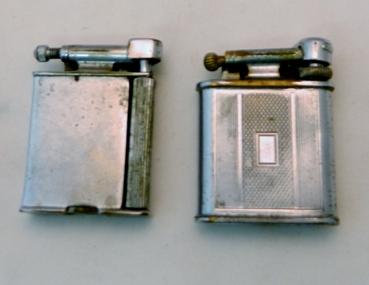
... This cigarette or pipe lighter was in use in the mid 1900's when the majority of users were men. Ladies did smoke but mainly not in "public" The activity was still regarded as a male activity. ...This cigarette or pipe lighter was in use in the mid 1900's when the majority of users were men. Ladies did smoke but mainly not in "public" The activity was still regarded as a male activity. ...This cigarette or pipe lighter was in use in the mid 1900's when the majority of users were men. Ladies did smoke but mainly not in "public" The activity was still regarded as a male activity. Middle to Upper "Class" of women nearly always had a gentleman "at hand" that would "light up" her cigarette. This was seen as a "social" activity only but later in the mid 1900's onward it was quite acceptable for both sexes to "smoke" at anytime.This type of lighter was male orientated due to the degree of lighting the flint with the horizontal movement required a strong thumb action across the lighting wheel. It is significant to rural areas such as the Kiewa Valley as the majority of men (especially during and after World War II) regarded smoking as a way to ease off the "tension" of hard work. The socio-economics of the Australian work place changed after the emancipation of women in the "workforce" after the World War II depleted the male workforce for the duration of the War and changed the Australian ethics of women in all aspects of both city and rural working "so called" male only occupations.This Polo Swift lift arm cigarette/pipe lighter has a chrome plated shell and is fueled by petrol. To operate this lighter you lift the "snuffer" arm exposing the wick, then scrape the flint wheel to create a spark from the adjacent flint(resting on the brass ignition wheel).At the bottom of the lift arm station "POLO". Each side of the lighter are "Art Deco line running from the top of the lighter to the bottom. Between these is a rectangular box with "diamond crossed lines"early hand lighters, smoking in the 1930's, cigarette lighter, tobacco, cigerettes, lighter -
 Kiewa Valley Historical Society
Lighter Lift Arm, circa early 1900s
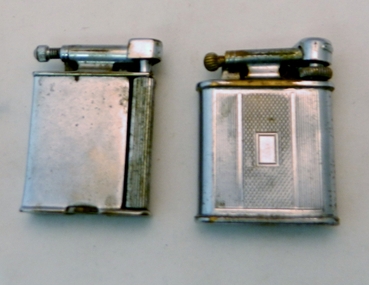
... This cigarette or pipe lighter was in use in the mid 1900's when the majority of users were men. Ladies did smoke but mainly not in "public" The activity was still regarded as a male activity. ...This cigarette or pipe lighter was in use in the mid 1900's when the majority of users were men. Ladies did smoke but mainly not in "public" The activity was still regarded as a male activity. ...This cigarette or pipe lighter was in use in the mid 1900's when the majority of users were men. Ladies did smoke but mainly not in "public" The activity was still regarded as a male activity. Middle to Upper "Class" of women nearly always had a gentleman "at hand" that would "light up" her cigarette. This was seen as a "social" activity only but later in the mid 1900's onward it was quite acceptable for both sexes to "smoke" at anytime.This type of lighter was male orientated due to the degree of lighting the flint with the horizontal movement required a strong thumb action across the lighting wheel. It is significant to rural areas such as the Kiewa Valley as the majority of men (especially during and after World War II) regarded smoking as a way to ease off the "tension" of hard work. The socio-economics of the Australian work place changed after the emancipation of women in the "workforce" after the World War II depleted the male workforce for the duration of the War and changed the Australian ethics of women in all aspects of both city and rural working "so called" male only occupations.This Roller Beacon lift arm cigarette/pipe lighter has a chrome plated brass shell and is fueled by petrol. To operate this lighter you lift the "snuffer" arm(long roller lift arm) exposing the horizontal external flint tube, then scrape the flint wheel to create a spark (to light the wick) from the adjacent flint(resting on the brass ignition wheel).At the base to the left of the "filler" screw "PATENT No. 485037, 818155" underneath "REG. DES. N" on the filler screw "ROLLER REG" underneath "TRADE MARK". To the right of the "filler", "THE ROLLER BEACON MADE IN ENGLAND"early hand lighters, smoking in the 1930's, cigarette lighter, cigarette, tobacco -
 Eltham District Historical Society Inc
Photograph, Early Goldmine
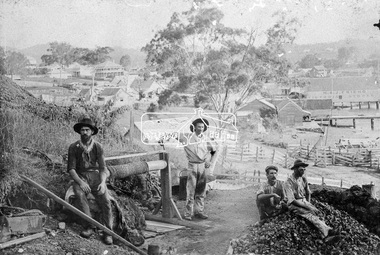
... Four male gold miners pose for the camera on their mine site on top of a hill. It appears they are using the underground hard-rock method of mining to extract gold encased in rock. ...Four male gold miners pose for the camera on their mine site on top of a hill. It appears they are using the underground hard-rock method of mining to extract gold encased in rock. ...Four male gold miners pose for the camera on their mine site on top of a hill. It appears they are using the underground hard-rock method of mining to extract gold encased in rock. There is a rope winch near by and a pile of rubble on top of the mine shaft. In the background is a developed unknown rural town. "H & J Friend Victoria Stores" is written on the side of a building.This photo forms part of a collection of photographs gathered by the Shire of Eltham for their centenary project book, "Pioneers and Painters: 100 years of the Shire of Eltham" by Alan Marshall (1971). The collection of over 500 images is held in partnership between Eltham District Historical Society and Yarra Plenty Regional Library (Eltham Library) and is now formally known as 'The Shire of Eltham Pioneers Photograph Collection.' It is significant in being the first community sourced collection representing the places and people of the Shire's first one hundred years.Digital imagesepp, shire of eltham pioneers photograph collection, other areas, gold mining, gold miners, h & j friend, winch -
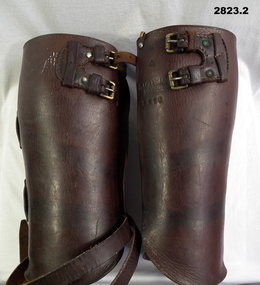 Bendigo Military Museum
Uniform - LEGGINGS, 1928
... costume - male uniform trades-leatherworking metal craft- brassware military history - army Passchendaele barracks trust .1) & .2) Stamped into the leather near the buckles: “15 [up arrow] RG, A Joakman Maker 1928” .1) Handwritten in red ink: “A00” in black ink inside top area: “28” 1.) & .2) Pair of dark brown coloured leather leggings, rectangular shape used in a cylindrical shape with 2 straps & brass buckles. ...1.) & .2) Pair of dark brown coloured leather leggings, rectangular shape used in a cylindrical shape with 2 straps & brass buckles..1) & .2) Stamped into the leather near the buckles: “15 [up arrow] RG, A Joakman Maker 1928” .1) Handwritten in red ink: “A00” in black ink inside top area: “28”costume - male uniform, trades-leatherworking, metal craft- brassware, military history - army, passchendaele barracks trust -
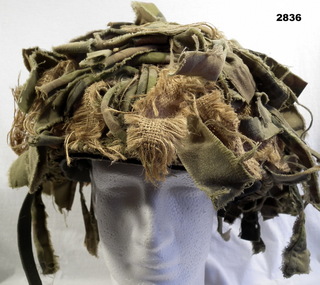 Bendigo Military Museum
Headwear - STEEL HELMET, Post WW2
... American style helmet used by the Australian Army. uniforms - army costume - male headwear trades-leatherworking Inside: “WHI869 Cat No 8415.50.758.5792” Helmet, steel with fibreglass lining, leather band & green webbing on inside of lining. ...American style helmet used by the Australian Army.Helmet, steel with fibreglass lining, leather band & green webbing on inside of lining. Green material chin strap secured with metal buckle. Helmet covered with strips of camouflage material & hessian.Inside: “WHI869 Cat No 8415.50.758.5792”uniforms - army, costume - male headwear, trades-leatherworking -
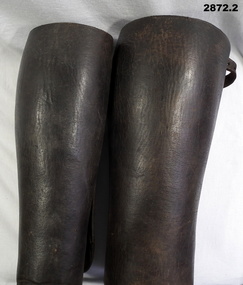 Bendigo Military Museum
Uniform - LEGGINGS, Possible WW1 onwards
... uniforms - army costume - male Leggings Passchendaele barracks trust .1) & .2) Leggings, pair, dark brown leather, rectangular shape used in a cylindrical shape with 1 strap & brass buckle. ....1) & .2) Leggings, pair, dark brown leather, rectangular shape used in a cylindrical shape with 1 strap & brass buckle.uniforms - army, costume - male, leggings, passchendaele barracks trust -
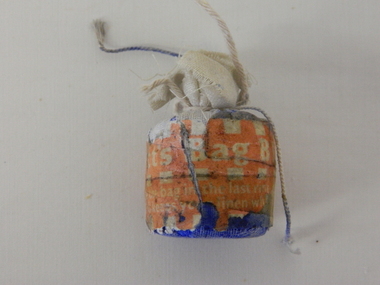 Kiewa Valley Historical Society
Bag Whitening Agent Reckitts, circa early 1900s
... The Manufacturer, Ricketts, was one of the first manufacturers to employ women in equal proportions with males (a rarity before 1914). This product was used to improve the appearance of white fabrics. ...The Manufacturer, Ricketts, was one of the first manufacturers to employ women in equal proportions with males (a rarity before 1914). This product was used to improve the appearance of white fabrics. ...This little bag of "whitener" additive for the washing of white clothes was manufactured in Hull in the United Kingdom mid and later 1900's. The Manufacturer, Ricketts, was one of the first manufacturers to employ women in equal proportions with males (a rarity before 1914). This product was used to improve the appearance of white fabrics. This ability to use a product that would "whiten" clothes chemically rather than the "hard boiling" of clothes was a time saver and a lot easier on the fabrics. This is a boon to rural families where time was of the essence (boiling took time). The blue coloring was introduced because the white colour perception is enhanced by the blue (fadeable and not permanent). The "washing machine industry" of the late 1900's emphasised "whitening" agents that were not so haphazard in producing blue stains, and allowed a "gentle" washing action. This item is very significant in detailing the early 1900's rural household domestic "chore" of washing white clothes to a "social" standard of cleanliness. White shirts were the mark cleanliness that those outside of the family judged the family unit by. The best clothes were worn to church on Sundays. Hard and mostly rural activities/work in the Kiewa Valley encompassing farming, crop cultivation, cattle/sheep and "field work" to do with the SEC Vic Hydro Scheme involved provided a stain prone environment. As appearances, of clothing, was on the whole not significant it was a different scenario at social and religious scenes. The ability to attain "brilliant" white shirts, dresses and bonnets by a less drastic method to that of "boiling" of clothes in vats, was a boon of that "era". The anti establishment revolt came later in the 1950's onward took longer to migrate from the cities and larger rural townships to eventually sneak into the Kiewa valley.This "blue bag" is a whitening agent wrapped in flannel or muslin, or sold ready bagged (1 ounce).It was used in the final rinse to "whiten white coloured clothes" The string was used to facilitate finger grip onto the "bag" after the wash had finished for easy removal to stop the hand and other surfaces from being stained by the blue colour residue drips.domestic and commercial laundries, starch and whitening additive, washing brightener -
 Kiewa Valley Historical Society
Catheters - male and female
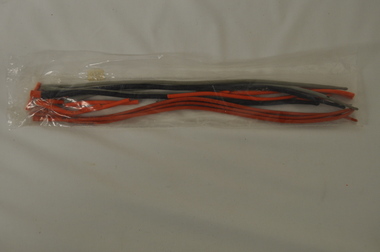
... Provenance: Used in the Tawonga District General Hospital which was remote and therefore required good equipment. tawonga medical equipment. hospital equipment. catheter. mt beauty Curved hollow orange rubber strips (male) slightly varying widths Straight hollow grey rubber strips (female) slightly varying widths Catheters - male and female ...This medical / hospital equipment was used in the Tawonga District General Hospital which was built in the 1950s specifically for the increase in population due to the Kiewa Hydro Scheme.Historical: Shows the development of scientific hospital equipment. Provenance: Used in the Tawonga District General Hospital which was remote and therefore required good equipment. Curved hollow orange rubber strips (male) slightly varying widths Straight hollow grey rubber strips (female) slightly varying widthstawonga, medical equipment. hospital equipment. catheter. mt beauty -
 Kiewa Valley Historical Society
Book - Home Business, Success Publishing Company, Ltd, The Simple Ready Reckoner - Success Series by Charles Platt
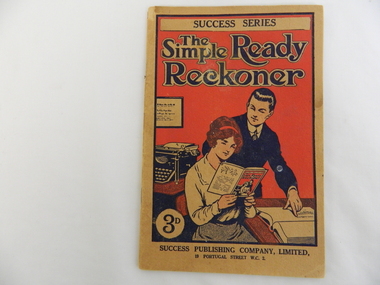
... Thin soft covered red, black, fawn, brown book with picture of a female sitting down looking at this book while the male points to the ledger as if to show her how (the book) can be used. The book has a list of numbers - a Discount Table - giving how much a number of items cost at a given price. eg. 10 books at 3/- each = 30/-...This book may have been used in a Kiewa Valley business or farm. business money accounting Thin soft covered red, black, fawn, brown book with picture of a female sitting down looking at this book while the male points to the ledger as if to show her how (the book) can be used. ...The picture on the front of this book depicts the female as the weaker sex unable to understand or work out numbers.This book may have been used in a Kiewa Valley business or farm.Thin soft covered red, black, fawn, brown book with picture of a female sitting down looking at this book while the male points to the ledger as if to show her how (the book) can be used. The book has a list of numbers - a Discount Table - giving how much a number of items cost at a given price. eg. 10 books at 3/- each = 30/-business, money, accounting
