
Showing 110 items matching " petroleum"
-
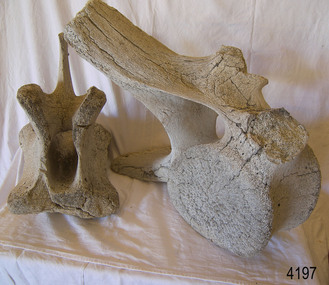 Flagstaff Hill Maritime Museum and Village
Animal specimen - Whale bone, Undetermined
... In short, whales were a valuable natural resource the same as wood, minerals, or petroleum we now pump from the ground. Oil From Whale’s Blubber Oil was the main product sought from whales, and it was used to lubricate machinery and to provide illumination by burning it in lamps. ...In short, whales were a valuable natural resource the same as wood, minerals, or petroleum we now pump from the ground. Oil From Whale’s Blubber Oil was the main product sought from whales, and it was used to lubricate machinery and to provide illumination by burning it in lamps. ...Prior to carrying out a detailed condition report of the cetacean skeletons, it is useful to have an understanding of the materials we are likely to encounter, in terms of structure and chemistry. This entry invites you to join in learning about the composition of whale bone and oil. Whale bone (Cetacean) bone is comprised of a composite structure of both an inorganic matrix of mainly hydroxylapatite (a calcium phosphate mineral), providing strength and rigidity, as well as an organic protein ‘scaffolding’ of mainly collagen, facilitating growth and repair (O’Connor 2008, CCI 2010). Collagen is also the structural protein component in cartilage between the whale vertebrae and attached to the fins of both the Killer Whale and the Dolphin. Relative proportions in the bone composition (affecting density), are linked with the feeding habits and mechanical stresses typically endured by bones of particular whale types. A Sperm Whale (Physeter macrocephalus Linnaeus, 1758) skeleton (toothed) thus has a higher mineral value (~67%) than a Fin Whale (Balaenoptera physalus Linnaeus, 1758) (baleen) (~60%) (Turner Walker 2012). The internal structure of bone can be divided into compact and cancellous bone. In whales, load-bearing structures such as mandibles and upper limb bones (e.g. humerus, sternum) are largely composed of compact bone (Turner Walker 2012). This consists of lamella concentrically deposited around the longitudinal axis and is permeated by fluid carrying channels (O’Connor 2008). Cancellous (spongy) bone, with a highly porous angular network of trabeculae, is less stiff and thus found in whale ribs and vertebrae (Turner Walker 2012). Whale oil Whales not only carry a thick layer of fat (blubber) in the soft tissue of their body for heat insulation and as a food store while they are alive, but also hold large oil (lipid) reserves in their porous bones. Following maceration of the whale skeleton after death to remove the soft tissue, the bones retain a high lipid content (Higgs et. al 2010). Particularly bones with a spongy (porous) structure have a high capacity to hold oil-rich marrow. Comparative data of various whale species suggests the skull, particularly the cranium and mandible bones are particularly oil rich. Along the vertebral column, the lipid content is reduced, particularly in the thoracic vertebrae (~10-25%), yet greatly increases from the lumbar to the caudal vertebrae (~40-55%). The chest area (scapula, sternum and ribs) show a mid-range lipid content (~15-30%), with vertically orientated ribs being more heavily soaked lower down (Turner Walker 2012, Higgs et. al 2010). Whale oil is largely composed of triglycerides (molecules of fatty acids attached to a glycerol molecule). In Arctic whales a higher proportion of unsaturated, versus saturated fatty acids make up the lipid. Unsaturated fatty acids (with double or triple carbon bonds causing chain kinks, preventing close packing (solidifying) of molecules), are more likely to be liquid (oil), versus solid (fat) at room temperature (Smith and March 2007). Objects Made From the Whaling Industry We all know that men set forth in sailing ships and risked their lives to harpoon whales on the open seas throughout the 1800s. And while Moby Dick and other tales have made whaling stories immortal, people today generally don't appreciate that the whalers were part of a well-organized industry. The ships that set out from ports in New England roamed as far as the Pacific in hunt of specific species of whales. Adventure may have been the draw for some whalers, but for the captains who owned whaling ships, and the investors which financed voyages, there was a considerable monetary payoff. The gigantic carcasses of whales were chopped and boiled down and turned into products such as the fine oil needed to lubricate increasing advanced machine tools. And beyond the oil derived from whales, even their bones, in an era before the invention of plastic, was used to make a wide variety of consumer goods. In short, whales were a valuable natural resource the same as wood, minerals, or petroleum we now pump from the ground. Oil From Whale’s Blubber Oil was the main product sought from whales, and it was used to lubricate machinery and to provide illumination by burning it in lamps. When a whale was killed, it was towed to the ship and its blubber, the thick insulating fat under its skin, would be peeled and cut from its carcass in a process known as “flensing.” The blubber was minced into chunks and boiled in large vats on board the whaling ship, producing oil. The oil taken from whale blubber was packaged in casks and transported back to the whaling ship’s home port (such as New Bedford, Massachusetts, the busiest American whaling port in the mid-1800s). From the ports it would be sold and transported across the country and would find its way into a huge variety of products. Whale oil, in addition to be used for lubrication and illumination, was also used to manufacture soaps, paint, and varnish. Whale oil was also utilized in some processes used to manufacture textiles and rope. Spermaceti, a Highly Regarded Oil A peculiar oil found in the head of the sperm whale, spermaceti, was highly prized. The oil was waxy, and was commonly used in making candles. In fact, candles made of spermaceti were considered the best in the world, producing a bright clear flame without an excess of smoke. Spermaceti was also used, distilled in liquid form, as an oil to fuel lamps. The main American whaling port, New Bedford, Massachusetts, was thus known as "The City That Lit the World." When John Adams was the ambassador to Great Britain before serving as president he recorded in his diary a conversation about spermaceti he had with the British Prime Minister William Pitt. Adams, keen to promote the New England whaling industry, was trying to convince the British to import spermaceti sold by American whalers, which the British could use to fuel street lamps. The British were not interested. In his diary, Adams wrote that he told Pitt, “the fat of the spermaceti whale gives the clearest and most beautiful flame of any substance that is known in nature, and we are surprised you prefer darkness, and consequent robberies, burglaries, and murders in your streets to receiving as a remittance our spermaceti oil.” Despite the failed sales pitch John Adams made in the late 1700s, the American whaling industry boomed in the early to mid-1800s. And spermaceti was a major component of that success. Spermaceti could be refined into a lubricant that was ideal for precision machinery. The machine tools that made the growth of industry possible in the United States were lubricated, and essentially made possible, by oil derived from spermaceti. Baleen, or "Whalebone" The bones and teeth of various species of whales were used in a number of products, many of them common implements in a 19th century household. Whales are said to have produced “the plastic of the 1800s.” The "bone" of the whale which was most commonly used wasn’t technically a bone, it was baleen, a hard material arrayed in large plates, like gigantic combs, in the mouths of some species of whales. The purpose of the baleen is to act as a sieve, catching tiny organisms in sea water, which the whale consumes as food. As baleen was tough yet flexible, it could be used in a number of practical applications. And it became commonly known as "whalebone." Perhaps the most common use of whalebone was in the manufacture of corsets, which fashionable ladies in the 1800s wore to compress their waistlines. One typical corset advertisement from the 1800s proudly proclaims, “Real Whalebone Only Used.” Whalebone was also used for collar stays, buggy whips, and toys. Its remarkable flexibility even caused it to be used as the springs in early typewriters. The comparison to plastic is apt. Think of common items which today might be made of plastic, and it's likely that similar items in the 1800s would have been made of whalebone. Baleen whales do not have teeth. But the teeth of other whales, such as the sperm whale, would be used as ivory in such products as chess pieces, piano keys, or the handles of walking sticks. Pieces of scrimshaw, or carved whale's teeth, would probably be the best remembered use of whale's teeth. However, the carved teeth were created to pass the time on whaling voyages and were never a mass production item. Their relative rarity, of course, is why genuine pieces of 19th century scrimshaw are considered to be valuable collectibles today. Reference: McNamara, Robert. "Objects Made From the Whaling Industry." ThoughtCo, Jul. 31, 2021, thoughtco.com/products-produced-from-whales-1774070.Whale bone was an important commodity, used in corsets, collar stays, buggy whips, and toys.Whale bone in two pieces. Advanced stage of calcification as indicated by deep pitting. Off white to grey.None.flagstaff hill, warrnambool, shipwrecked-coast, flagstaff-hill, flagstaff-hill-maritime-museum, maritime-museum, shipwreck-coast, flagstaff-hill-maritime-village, whale bones, whale skeleton, whales, whale bone, corsets, toys, whips -
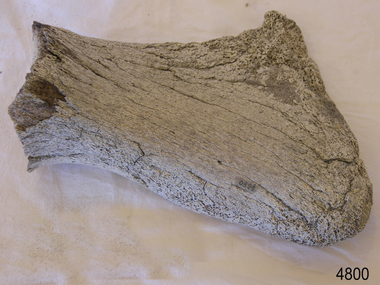 Flagstaff Hill Maritime Museum and Village
Animal specimen - Whale bone, Undetermined
... In short, whales were a valuable natural resource the same as wood, minerals, or petroleum we now pump from the ground. Oil From Whale’s Blubber Oil was the main product sought from whales, and it was used to lubricate machinery and to provide illumination by burning it in lamps. ...In short, whales were a valuable natural resource the same as wood, minerals, or petroleum we now pump from the ground. Oil From Whale’s Blubber Oil was the main product sought from whales, and it was used to lubricate machinery and to provide illumination by burning it in lamps. ...Prior to carrying out a detailed condition report of the cetacean skeletons, it is useful to have an understanding of the materials we are likely to encounter, in terms of structure and chemistry. This entry invites you to join in learning about the composition of whale bone and oil. Whale bone (Cetacean) bone is comprised of a composite structure of both an inorganic matrix of mainly hydroxylapatite (a calcium phosphate mineral), providing strength and rigidity, as well as an organic protein ‘scaffolding’ of mainly collagen, facilitating growth and repair (O’Connor 2008, CCI 2010). Collagen is also the structural protein component in cartilage between the whale vertebrae and attached to the fins of both the Killer Whale and the Dolphin. Relative proportions in the bone composition (affecting density), are linked with the feeding habits and mechanical stresses typically endured by bones of particular whale types. A Sperm Whale (Physeter macrocephalus Linnaeus, 1758) skeleton (toothed) thus has a higher mineral value (~67%) than a Fin Whale (Balaenoptera physalus Linnaeus, 1758) (baleen) (~60%) (Turner Walker 2012). The internal structure of bone can be divided into compact and cancellous bone. In whales, load-bearing structures such as mandibles and upper limb bones (e.g. humerus, sternum) are largely composed of compact bone (Turner Walker 2012). This consists of lamella concentrically deposited around the longitudinal axis and is permeated by fluid carrying channels (O’Connor 2008). Cancellous (spongy) bone, with a highly porous angular network of trabeculae, is less stiff and thus found in whale ribs and vertebrae (Turner Walker 2012). Whale oil Whales not only carry a thick layer of fat (blubber) in the soft tissue of their body for heat insulation and as a food store while they are alive, but also hold large oil (lipid) reserves in their porous bones. Following maceration of the whale skeleton after death to remove the soft tissue, the bones retain a high lipid content (Higgs et. al 2010). Particularly bones with a spongy (porous) structure have a high capacity to hold oil-rich marrow. Comparative data of various whale species suggests the skull, particularly the cranium and mandible bones are particularly oil rich. Along the vertebral column, the lipid content is reduced, particularly in the thoracic vertebrae (~10-25%), yet greatly increases from the lumbar to the caudal vertebrae (~40-55%). The chest area (scapula, sternum and ribs) show a mid-range lipid content (~15-30%), with vertically orientated ribs being more heavily soaked lower down (Turner Walker 2012, Higgs et. al 2010). Whale oil is largely composed of triglycerides (molecules of fatty acids attached to a glycerol molecule). In Arctic whales a higher proportion of unsaturated, versus saturated fatty acids make up the lipid. Unsaturated fatty acids (with double or triple carbon bonds causing chain kinks, preventing close packing (solidifying) of molecules), are more likely to be liquid (oil), versus solid (fat) at room temperature (Smith and March 2007). Objects Made From the Whaling Industry We all know that men set forth in sailing ships and risked their lives to harpoon whales on the open seas throughout the 1800s. And while Moby Dick and other tales have made whaling stories immortal, people today generally don't appreciate that the whalers were part of a well-organized industry. The ships that set out from ports in New England roamed as far as the Pacific in hunt of specific species of whales. Adventure may have been the draw for some whalers, but for the captains who owned whaling ships, and the investors which financed voyages, there was a considerable monetary payoff. The gigantic carcasses of whales were chopped and boiled down and turned into products such as the fine oil needed to lubricate increasing advanced machine tools. And beyond the oil derived from whales, even their bones, in an era before the invention of plastic, was used to make a wide variety of consumer goods. In short, whales were a valuable natural resource the same as wood, minerals, or petroleum we now pump from the ground. Oil From Whale’s Blubber Oil was the main product sought from whales, and it was used to lubricate machinery and to provide illumination by burning it in lamps. When a whale was killed, it was towed to the ship and its blubber, the thick insulating fat under its skin, would be peeled and cut from its carcass in a process known as “flensing.” The blubber was minced into chunks and boiled in large vats on board the whaling ship, producing oil. The oil taken from whale blubber was packaged in casks and transported back to the whaling ship’s home port (such as New Bedford, Massachusetts, the busiest American whaling port in the mid-1800s). From the ports it would be sold and transported across the country and would find its way into a huge variety of products. Whale oil, in addition to be used for lubrication and illumination, was also used to manufacture soaps, paint, and varnish. Whale oil was also utilized in some processes used to manufacture textiles and rope. Spermaceti, a Highly Regarded Oil A peculiar oil found in the head of the sperm whale, spermaceti, was highly prized. The oil was waxy, and was commonly used in making candles. In fact, candles made of spermaceti were considered the best in the world, producing a bright clear flame without an excess of smoke. Spermaceti was also used, distilled in liquid form, as an oil to fuel lamps. The main American whaling port, New Bedford, Massachusetts, was thus known as "The City That Lit the World." When John Adams was the ambassador to Great Britain before serving as president he recorded in his diary a conversation about spermaceti he had with the British Prime Minister William Pitt. Adams, keen to promote the New England whaling industry, was trying to convince the British to import spermaceti sold by American whalers, which the British could use to fuel street lamps. The British were not interested. In his diary, Adams wrote that he told Pitt, “the fat of the spermaceti whale gives the clearest and most beautiful flame of any substance that is known in nature, and we are surprised you prefer darkness, and consequent robberies, burglaries, and murders in your streets to receiving as a remittance our spermaceti oil.” Despite the failed sales pitch John Adams made in the late 1700s, the American whaling industry boomed in the early to mid-1800s. And spermaceti was a major component of that success. Spermaceti could be refined into a lubricant that was ideal for precision machinery. The machine tools that made the growth of industry possible in the United States were lubricated, and essentially made possible, by oil derived from spermaceti. Baleen, or "Whalebone" The bones and teeth of various species of whales were used in a number of products, many of them common implements in a 19th century household. Whales are said to have produced “the plastic of the 1800s.” The "bone" of the whale which was most commonly used wasn’t technically a bone, it was baleen, a hard material arrayed in large plates, like gigantic combs, in the mouths of some species of whales. The purpose of the baleen is to act as a sieve, catching tiny organisms in sea water, which the whale consumes as food. As baleen was tough yet flexible, it could be used in a number of practical applications. And it became commonly known as "whalebone." Perhaps the most common use of whalebone was in the manufacture of corsets, which fashionable ladies in the 1800s wore to compress their waistlines. One typical corset advertisement from the 1800s proudly proclaims, “Real Whalebone Only Used.” Whalebone was also used for collar stays, buggy whips, and toys. Its remarkable flexibility even caused it to be used as the springs in early typewriters. The comparison to plastic is apt. Think of common items which today might be made of plastic, and it's likely that similar items in the 1800s would have been made of whalebone. Baleen whales do not have teeth. But the teeth of other whales, such as the sperm whale, would be used as ivory in such products as chess pieces, piano keys, or the handles of walking sticks. Pieces of scrimshaw, or carved whale's teeth, would probably be the best remembered use of whale's teeth. However, the carved teeth were created to pass the time on whaling voyages and were never a mass production item. Their relative rarity, of course, is why genuine pieces of 19th century scrimshaw are considered to be valuable collectibles today. Reference: McNamara, Robert. "Objects Made From the Whaling Industry." ThoughtCo, Jul. 31, 2021, thoughtco.com/products-produced-from-whales-1774070.Whale bone was an important commodity, used in corsets, collar stays, buggy whips, and toys.Whale bone piece. Advanced stage of calcification as indicated by deep pitting. Off white to grey.None.flagstaff hill, warrnambool, shipwrecked-coast, flagstaff-hill, flagstaff-hill-maritime-museum, maritime-museum, shipwreck-coast, flagstaff-hill-maritime-village, whales, whale bone, corsets, toys, whips -
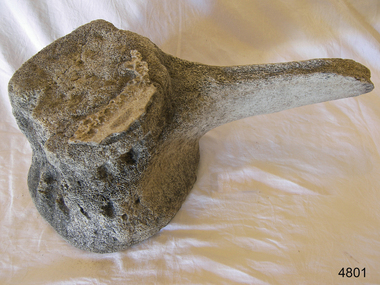 Flagstaff Hill Maritime Museum and Village
Animal specimen - Whale bone, Undetermined
... In short, whales were a valuable natural resource the same as wood, minerals, or petroleum we now pump from the ground. Oil From Whale’s Blubber Oil was the main product sought from whales, and it was used to lubricate machinery and to provide illumination by burning it in lamps. ...In short, whales were a valuable natural resource the same as wood, minerals, or petroleum we now pump from the ground. Oil From Whale’s Blubber Oil was the main product sought from whales, and it was used to lubricate machinery and to provide illumination by burning it in lamps. ...Prior to carrying out a detailed condition report of the cetacean skeletons, it is useful to have an understanding of the materials we are likely to encounter, in terms of structure and chemistry. This entry invites you to join in learning about the composition of whale bone and oil. Whale bone (Cetacean) bone is comprised of a composite structure of both an inorganic matrix of mainly hydroxylapatite (a calcium phosphate mineral), providing strength and rigidity, as well as an organic protein ‘scaffolding’ of mainly collagen, facilitating growth and repair (O’Connor 2008, CCI 2010). Collagen is also the structural protein component in cartilage between the whale vertebrae and attached to the fins of both the Killer Whale and the Dolphin. Relative proportions in the bone composition (affecting density), are linked with the feeding habits and mechanical stresses typically endured by bones of particular whale types. A Sperm Whale (Physeter macrocephalus Linnaeus, 1758) skeleton (toothed) thus has a higher mineral value (~67%) than a Fin Whale (Balaenoptera physalus Linnaeus, 1758) (baleen) (~60%) (Turner Walker 2012). The internal structure of bone can be divided into compact and cancellous bone. In whales, load-bearing structures such as mandibles and upper limb bones (e.g. humerus, sternum) are largely composed of compact bone (Turner Walker 2012). This consists of lamella concentrically deposited around the longitudinal axis and is permeated by fluid carrying channels (O’Connor 2008). Cancellous (spongy) bone, with a highly porous angular network of trabeculae, is less stiff and thus found in whale ribs and vertebrae (Turner Walker 2012). Whale oil Whales not only carry a thick layer of fat (blubber) in the soft tissue of their body for heat insulation and as a food store while they are alive, but also hold large oil (lipid) reserves in their porous bones. Following maceration of the whale skeleton after death to remove the soft tissue, the bones retain a high lipid content (Higgs et. al 2010). Particularly bones with a spongy (porous) structure have a high capacity to hold oil-rich marrow. Comparative data of various whale species suggests the skull, particularly the cranium and mandible bones are particularly oil rich. Along the vertebral column, the lipid content is reduced, particularly in the thoracic vertebrae (~10-25%), yet greatly increases from the lumbar to the caudal vertebrae (~40-55%). The chest area (scapula, sternum and ribs) show a mid-range lipid content (~15-30%), with vertically orientated ribs being more heavily soaked lower down (Turner Walker 2012, Higgs et. al 2010). Whale oil is largely composed of triglycerides (molecules of fatty acids attached to a glycerol molecule). In Arctic whales a higher proportion of unsaturated, versus saturated fatty acids make up the lipid. Unsaturated fatty acids (with double or triple carbon bonds causing chain kinks, preventing close packing (solidifying) of molecules), are more likely to be liquid (oil), versus solid (fat) at room temperature (Smith and March 2007). Objects Made From the Whaling Industry We all know that men set forth in sailing ships and risked their lives to harpoon whales on the open seas throughout the 1800s. And while Moby Dick and other tales have made whaling stories immortal, people today generally don't appreciate that the whalers were part of a well-organized industry. The ships that set out from ports in New England roamed as far as the Pacific in hunt of specific species of whales. Adventure may have been the draw for some whalers, but for the captains who owned whaling ships, and the investors which financed voyages, there was a considerable monetary payoff. The gigantic carcasses of whales were chopped and boiled down and turned into products such as the fine oil needed to lubricate increasing advanced machine tools. And beyond the oil derived from whales, even their bones, in an era before the invention of plastic, was used to make a wide variety of consumer goods. In short, whales were a valuable natural resource the same as wood, minerals, or petroleum we now pump from the ground. Oil From Whale’s Blubber Oil was the main product sought from whales, and it was used to lubricate machinery and to provide illumination by burning it in lamps. When a whale was killed, it was towed to the ship and its blubber, the thick insulating fat under its skin, would be peeled and cut from its carcass in a process known as “flensing.” The blubber was minced into chunks and boiled in large vats on board the whaling ship, producing oil. The oil taken from whale blubber was packaged in casks and transported back to the whaling ship’s home port (such as New Bedford, Massachusetts, the busiest American whaling port in the mid-1800s). From the ports it would be sold and transported across the country and would find its way into a huge variety of products. Whale oil, in addition to be used for lubrication and illumination, was also used to manufacture soaps, paint, and varnish. Whale oil was also utilized in some processes used to manufacture textiles and rope. Spermaceti, a Highly Regarded Oil A peculiar oil found in the head of the sperm whale, spermaceti, was highly prized. The oil was waxy, and was commonly used in making candles. In fact, candles made of spermaceti were considered the best in the world, producing a bright clear flame without an excess of smoke. Spermaceti was also used, distilled in liquid form, as an oil to fuel lamps. The main American whaling port, New Bedford, Massachusetts, was thus known as "The City That Lit the World." When John Adams was the ambassador to Great Britain before serving as president he recorded in his diary a conversation about spermaceti he had with the British Prime Minister William Pitt. Adams, keen to promote the New England whaling industry, was trying to convince the British to import spermaceti sold by American whalers, which the British could use to fuel street lamps. The British were not interested. In his diary, Adams wrote that he told Pitt, “the fat of the spermaceti whale gives the clearest and most beautiful flame of any substance that is known in nature, and we are surprised you prefer darkness, and consequent robberies, burglaries, and murders in your streets to receiving as a remittance our spermaceti oil.” Despite the failed sales pitch John Adams made in the late 1700s, the American whaling industry boomed in the early to mid-1800s. And spermaceti was a major component of that success. Spermaceti could be refined into a lubricant that was ideal for precision machinery. The machine tools that made the growth of industry possible in the United States were lubricated, and essentially made possible, by oil derived from spermaceti. Baleen, or "Whalebone" The bones and teeth of various species of whales were used in a number of products, many of them common implements in a 19th century household. Whales are said to have produced “the plastic of the 1800s.” The "bone" of the whale which was most commonly used wasn’t technically a bone, it was baleen, a hard material arrayed in large plates, like gigantic combs, in the mouths of some species of whales. The purpose of the baleen is to act as a sieve, catching tiny organisms in sea water, which the whale consumes as food. As baleen was tough yet flexible, it could be used in a number of practical applications. And it became commonly known as "whalebone." Perhaps the most common use of whalebone was in the manufacture of corsets, which fashionable ladies in the 1800s wore to compress their waistlines. One typical corset advertisement from the 1800s proudly proclaims, “Real Whalebone Only Used.” Whalebone was also used for collar stays, buggy whips, and toys. Its remarkable flexibility even caused it to be used as the springs in early typewriters. The comparison to plastic is apt. Think of common items which today might be made of plastic, and it's likely that similar items in the 1800s would have been made of whalebone. Baleen whales do not have teeth. But the teeth of other whales, such as the sperm whale, would be used as ivory in such products as chess pieces, piano keys, or the handles of walking sticks. Pieces of scrimshaw, or carved whale's teeth, would probably be the best remembered use of whale's teeth. However, the carved teeth were created to pass the time on whaling voyages and were never a mass production item. Their relative rarity, of course, is why genuine pieces of 19th century scrimshaw are considered to be valuable collectibles today. Reference: McNamara, Robert. "Objects Made From the Whaling Industry." ThoughtCo, Jul. 31, 2021, thoughtco.com/products-produced-from-whales-1774070. Whale bone was an important commodity, used in corsets, collar stays, buggy whips, and toys.Whale bone vertebrae. Advanced stage of calcification as indicated by deep pitting. Off white to grey.None.flagstaff hill, warrnambool, shipwrecked-coast, flagstaff-hill, flagstaff-hill-maritime-museum, maritime-museum, shipwreck-coast, flagstaff-hill-maritime-village, whales, whale bone, corsets, toys, whips -
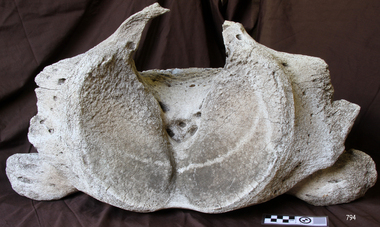 Flagstaff Hill Maritime Museum and Village
Animal specimen - Whale Vertebrae, Undetermined
... In short, whales were a valuable natural resource the same as wood, minerals, or petroleum we now pump from the ground. Oil From Whale’s Blubber Oil was the main product sought from whales, and it was used to lubricate machinery and to provide illumination by burning it in lamps. ...In short, whales were a valuable natural resource the same as wood, minerals, or petroleum we now pump from the ground. Oil From Whale’s Blubber Oil was the main product sought from whales, and it was used to lubricate machinery and to provide illumination by burning it in lamps. ...Prior to carrying out a detailed condition report of the cetacean skeletons, it is useful to have an understanding of the materials we are likely to encounter, in terms of structure and chemistry. This entry invites you to join in learning about the composition of whale bone and oil. Whale bone (Cetacean) bone is comprised of a composite structure of both an inorganic matrix of mainly hydroxylapatite (a calcium phosphate mineral), providing strength and rigidity, as well as an organic protein ‘scaffolding’ of mainly collagen, facilitating growth and repair (O’Connor 2008, CCI 2010). Collagen is also the structural protein component in cartilage between the whale vertebrae and attached to the fins of both the Killer Whale and the Dolphin. Relative proportions in the bone composition (affecting density), are linked with the feeding habits and mechanical stresses typically endured by bones of particular whale types. A Sperm Whale (Physeter macrocephalus Linnaeus, 1758) skeleton (toothed) thus has a higher mineral value (~67%) than a Fin Whale (Balaenoptera physalus Linnaeus, 1758) (baleen) (~60%) (Turner Walker 2012). The internal structure of bone can be divided into compact and cancellous bone. In whales, load-bearing structures such as mandibles and upper limb bones (e.g. humerus, sternum) are largely composed of compact bone (Turner Walker 2012). This consists of lamella concentrically deposited around the longitudinal axis and is permeated by fluid carrying channels (O’Connor 2008). Cancellous (spongy) bone, with a highly porous angular network of trabeculae, is less stiff and thus found in whale ribs and vertebrae (Turner Walker 2012). Whale oil Whales not only carry a thick layer of fat (blubber) in the soft tissue of their body for heat insulation and as a food store while they are alive, but also hold large oil (lipid) reserves in their porous bones. Following maceration of the whale skeleton after death to remove the soft tissue, the bones retain a high lipid content (Higgs et. al 2010). Particularly bones with a spongy (porous) structure have a high capacity to hold oil-rich marrow. Comparative data of various whale species suggests the skull, particularly the cranium and mandible bones are particularly oil rich. Along the vertebral column, the lipid content is reduced, particularly in the thoracic vertebrae (~10-25%), yet greatly increases from the lumbar to the caudal vertebrae (~40-55%). The chest area (scapula, sternum and ribs) show a mid-range lipid content (~15-30%), with vertically orientated ribs being more heavily soaked lower down (Turner Walker 2012, Higgs et. al 2010). Whale oil is largely composed of triglycerides (molecules of fatty acids attached to a glycerol molecule). In Arctic whales a higher proportion of unsaturated, versus saturated fatty acids make up the lipid. Unsaturated fatty acids (with double or triple carbon bonds causing chain kinks, preventing close packing (solidifying) of molecules), are more likely to be liquid (oil), versus solid (fat) at room temperature (Smith and March 2007). Objects Made From the Whaling Industry We all know that men set forth in sailing ships and risked their lives to harpoon whales on the open seas throughout the 1800s. And while Moby Dick and other tales have made whaling stories immortal, people today generally don't appreciate that the whalers were part of a well-organized industry. The ships that set out from ports in New England roamed as far as the Pacific in hunt of specific species of whales. Adventure may have been the draw for some whalers, but for the captains who owned whaling ships, and the investors which financed voyages, there was a considerable monetary payoff. The gigantic carcasses of whales were chopped and boiled down and turned into products such as the fine oil needed to lubricate increasing advanced machine tools. And beyond the oil derived from whales, even their bones, in an era before the invention of plastic, was used to make a wide variety of consumer goods. In short, whales were a valuable natural resource the same as wood, minerals, or petroleum we now pump from the ground. Oil From Whale’s Blubber Oil was the main product sought from whales, and it was used to lubricate machinery and to provide illumination by burning it in lamps. When a whale was killed, it was towed to the ship and its blubber, the thick insulating fat under its skin, would be peeled and cut from its carcass in a process known as “flensing.” The blubber was minced into chunks and boiled in large vats on board the whaling ship, producing oil. The oil taken from whale blubber was packaged in casks and transported back to the whaling ship’s home port (such as New Bedford, Massachusetts, the busiest American whaling port in the mid-1800s). From the ports it would be sold and transported across the country and would find its way into a huge variety of products. Whale oil, in addition to be used for lubrication and illumination, was also used to manufacture soaps, paint, and varnish. Whale oil was also utilized in some processes used to manufacture textiles and rope. Spermaceti, a Highly Regarded Oil A peculiar oil found in the head of the sperm whale, spermaceti, was highly prized. The oil was waxy, and was commonly used in making candles. In fact, candles made of spermaceti were considered the best in the world, producing a bright clear flame without an excess of smoke. Spermaceti was also used, distilled in liquid form, as an oil to fuel lamps. The main American whaling port, New Bedford, Massachusetts, was thus known as "The City That Lit the World." When John Adams was the ambassador to Great Britain before serving as president he recorded in his diary a conversation about spermaceti he had with the British Prime Minister William Pitt. Adams, keen to promote the New England whaling industry, was trying to convince the British to import spermaceti sold by American whalers, which the British could use to fuel street lamps. The British were not interested. In his diary, Adams wrote that he told Pitt, “the fat of the spermaceti whale gives the clearest and most beautiful flame of any substance that is known in nature, and we are surprised you prefer darkness, and consequent robberies, burglaries, and murders in your streets to receiving as a remittance our spermaceti oil.” Despite the failed sales pitch John Adams made in the late 1700s, the American whaling industry boomed in the early to mid-1800s. And spermaceti was a major component of that success. Spermaceti could be refined into a lubricant that was ideal for precision machinery. The machine tools that made the growth of industry possible in the United States were lubricated, and essentially made possible, by oil derived from spermaceti. Whalebone The bones and teeth of various species of whales were used in a number of products, many of them common implements in a 19th century household. Whales are said to have produced “the plastic of the 1800s.” The bone of the whale which was most commonly used wasn’t technically a bone, it was baleen, a hard material arrayed in large plates, like gigantic combs, in the mouths of some species of whales. The purpose of the baleen is to act as a sieve, catching tiny organisms in sea water, which the whale consumes as food. As baleen was tough yet flexible, it could be used in a number of practical applications. And it became commonly known as whalebone. Perhaps the most common use of whalebone was in the manufacture of corsets, which fashionable ladies in the 1800s wore to compress their waistlines. One typical corset advertisement from the 1800s proudly proclaims, “Real Whalebone Only Used.” Whalebone was also used for collar stays, buggy whips, and toys. Its remarkable flexibility even caused it to be used as the springs in early typewriters. The comparison to plastic is apt. Think of common items which today might be made of plastic, and it's likely that similar items in the 1800s would have been made of whalebone. Baleen whales do not have teeth. But the teeth of other whales, such as the sperm whale, would be used as ivory in such products as chess pieces, piano keys, or the handles of walking sticks. Pieces of scrimshaw, or carved whale's teeth, would probably be the best remembered use of whale's teeth. However, the carved teeth were created to pass the time on whaling voyages and were never a mass production item. Their relative rarity, of course, is why genuine pieces of 19th century scrimshaw are considered to be valuable collectibles today. Reference: McNamara, Robert. "Objects Made From the Whaling Industry." ThoughtCo, Jul. 31, 2021, thoughtco.com/products-produced-from-whales-1774070.Whale bone during the 17th, 18th, 19th and early 20th centuries was an important industry providing an important commodity. Whales from these times provided everything from lighting & machine oils to using the animal's bones for use in corsets, collar stays, buggy whips, and many other everyday items then in use.Whale bone Vertebrae with advanced stage of calcification as indicated by deep pitting. Off white to grey.None.warrnambool, flagstaff-hill, flagstaff-hill-maritime-museum, maritime-museum, shipwreck-coast, flagstaff-hill-maritime-village, whale bones, whale skeleton, whales, whale bone, corsets, toys, whips, whaleling industry, maritime fishing, whalebone -
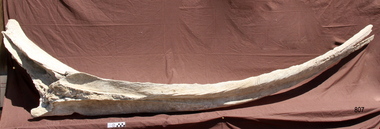 Flagstaff Hill Maritime Museum and Village
Animal specimen - Whale Jaw Bone, Undetermined
... In short, whales were a valuable natural resource the same as wood, minerals, or petroleum we now pump from the ground. Oil From Whale’s Blubber Oil was the main product sought from whales, and it was used to lubricate machinery and to provide illumination by burning it in lamps. ...In short, whales were a valuable natural resource the same as wood, minerals, or petroleum we now pump from the ground. Oil From Whale’s Blubber Oil was the main product sought from whales, and it was used to lubricate machinery and to provide illumination by burning it in lamps. ...Prior to carrying out a detailed condition report of the cetacean skeletons, it is useful to have an understanding of the materials we are likely to encounter, in terms of structure and chemistry. This entry invites you to join in learning about the composition of whale bone and oil. Whale bone (Cetacean) bone is comprised of a composite structure of both an inorganic matrix of mainly hydroxylapatite (a calcium phosphate mineral), providing strength and rigidity, as well as an organic protein ‘scaffolding’ of mainly collagen, facilitating growth and repair (O’Connor 2008, CCI 2010). Collagen is also the structural protein component in cartilage between the whale vertebrae and attached to the fins of both the Killer Whale and the Dolphin. Relative proportions in the bone composition (affecting density), are linked with the feeding habits and mechanical stresses typically endured by bones of particular whale types. A Sperm Whale (Physeter macrocephalus Linnaeus, 1758) skeleton (toothed) thus has a higher mineral value (~67%) than a Fin Whale (Balaenoptera physalus Linnaeus, 1758) (baleen) (~60%) (Turner Walker 2012). The internal structure of bone can be divided into compact and cancellous bone. In whales, load-bearing structures such as mandibles and upper limb bones (e.g. humerus, sternum) are largely composed of compact bone (Turner Walker 2012). This consists of lamella concentrically deposited around the longitudinal axis and is permeated by fluid carrying channels (O’Connor 2008). Cancellous (spongy) bone, with a highly porous angular network of trabeculae, is less stiff and thus found in whale ribs and vertebrae (Turner Walker 2012). Whale oil Whales not only carry a thick layer of fat (blubber) in the soft tissue of their body for heat insulation and as a food store while they are alive, but also hold large oil (lipid) reserves in their porous bones. Following maceration of the whale skeleton after death to remove the soft tissue, the bones retain a high lipid content (Higgs et. al 2010). Particularly bones with a spongy (porous) structure have a high capacity to hold oil-rich marrow. Comparative data of various whale species suggests the skull, particularly the cranium and mandible bones are particularly oil rich. Along the vertebral column, the lipid content is reduced, particularly in the thoracic vertebrae (~10-25%), yet greatly increases from the lumbar to the caudal vertebrae (~40-55%). The chest area (scapula, sternum and ribs) show a mid-range lipid content (~15-30%), with vertically orientated ribs being more heavily soaked lower down (Turner Walker 2012, Higgs et. al 2010). Whale oil is largely composed of triglycerides (molecules of fatty acids attached to a glycerol molecule). In Arctic whales a higher proportion of unsaturated, versus saturated fatty acids make up the lipid. Unsaturated fatty acids (with double or triple carbon bonds causing chain kinks, preventing close packing (solidifying) of molecules), are more likely to be liquid (oil), versus solid (fat) at room temperature (Smith and March 2007). Objects Made From the Whaling Industry We all know that men set forth in sailing ships and risked their lives to harpoon whales on the open seas throughout the 1800s. And while Moby Dick and other tales have made whaling stories immortal, people today generally don't appreciate that the whalers were part of a well-organized industry. The ships that set out from ports in New England roamed as far as the Pacific in hunt of specific species of whales. Adventure may have been the draw for some whalers, but for the captains who owned whaling ships, and the investors which financed voyages, there was a considerable monetary payoff. The gigantic carcasses of whales were chopped and boiled down and turned into products such as the fine oil needed to lubricate increasing advanced machine tools. And beyond the oil derived from whales, even their bones, in an era before the invention of plastic, was used to make a wide variety of consumer goods. In short, whales were a valuable natural resource the same as wood, minerals, or petroleum we now pump from the ground. Oil From Whale’s Blubber Oil was the main product sought from whales, and it was used to lubricate machinery and to provide illumination by burning it in lamps. When a whale was killed, it was towed to the ship and its blubber, the thick insulating fat under its skin, would be peeled and cut from its carcass in a process known as “flensing.” The blubber was minced into chunks and boiled in large vats on board the whaling ship, producing oil. The oil taken from whale blubber was packaged in casks and transported back to the whaling ship’s home port (such as New Bedford, Massachusetts, the busiest American whaling port in the mid-1800s). From the ports it would be sold and transported across the country and would find its way into a huge variety of products. Whale oil, in addition to be used for lubrication and illumination, was also used to manufacture soaps, paint, and varnish. Whale oil was also utilized in some processes used to manufacture textiles and rope. Spermaceti, a Highly Regarded Oil A peculiar oil found in the head of the sperm whale, spermaceti, was highly prized. The oil was waxy, and was commonly used in making candles. In fact, candles made of spermaceti were considered the best in the world, producing a bright clear flame without an excess of smoke. Spermaceti was also used, distilled in liquid form, as an oil to fuel lamps. The main American whaling port, New Bedford, Massachusetts, was thus known as "The City That Lit the World." When John Adams was the ambassador to Great Britain before serving as president he recorded in his diary a conversation about spermaceti he had with the British Prime Minister William Pitt. Adams, keen to promote the New England whaling industry, was trying to convince the British to import spermaceti sold by American whalers, which the British could use to fuel street lamps. The British were not interested. In his diary, Adams wrote that he told Pitt, “the fat of the spermaceti whale gives the clearest and most beautiful flame of any substance that is known in nature, and we are surprised you prefer darkness, and consequent robberies, burglaries, and murders in your streets to receiving as a remittance our spermaceti oil.” Despite the failed sales pitch John Adams made in the late 1700s, the American whaling industry boomed in the early to mid-1800s. And spermaceti was a major component of that success. Spermaceti could be refined into a lubricant that was ideal for precision machinery. The machine tools that made the growth of industry possible in the United States were lubricated, and essentially made possible, by oil derived from spermaceti. Baleen, or "Whalebone" The bones and teeth of various species of whales were used in a number of products, many of them common implements in a 19th century household. Whales are said to have produced “the plastic of the 1800s.” The "bone" of the whale which was most commonly used wasn’t technically a bone, it was baleen, a hard material arrayed in large plates, like gigantic combs, in the mouths of some species of whales. The purpose of the baleen is to act as a sieve, catching tiny organisms in sea water, which the whale consumes as food. As baleen was tough yet flexible, it could be used in a number of practical applications. And it became commonly known as "whalebone." Perhaps the most common use of whalebone was in the manufacture of corsets, which fashionable ladies in the 1800s wore to compress their waistlines. One typical corset advertisement from the 1800s proudly proclaims, “Real Whalebone Only Used.” Whalebone was also used for collar stays, buggy whips, and toys. Its remarkable flexibility even caused it to be used as the springs in early typewriters. The comparison to plastic is apt. Think of common items which today might be made of plastic, and it's likely that similar items in the 1800s would have been made of whalebone. Baleen whales do not have teeth. But the teeth of other whales, such as the sperm whale, would be used as ivory in such products as chess pieces, piano keys, or the handles of walking sticks. Pieces of scrimshaw, or carved whale's teeth, would probably be the best remembered use of whale's teeth. However, the carved teeth were created to pass the time on whaling voyages and were never a mass production item. Their relative rarity, of course, is why genuine pieces of 19th century scrimshaw are considered to be valuable collectibles today. Reference: McNamara, Robert. "Objects Made From the Whaling Industry." ThoughtCo, Jul. 31, 2021, thoughtco.com/products-produced-from-whales-1774070.Whale bone during the 17th, 18th, 19th and early 20th centuries was an important industry providing an important commodity. Whales from these times provided everything from lighting & machine oils to using the animal's bones for use in corsets, collar stays, buggy whips, and many other everyday items then in use.Whale jaw bone one side, long & curved with advanced stage of calcification off white to grey.None.warrnambool, flagstaff-hill, flagstaff-hill-maritime-museum, maritime-museum, shipwreck-coast, flagstaff-hill-maritime-village, whale bones, whale skeleton, whales, whale bone, corsets, toys, whips, whaleling industry, maritime fishing, whalebone -
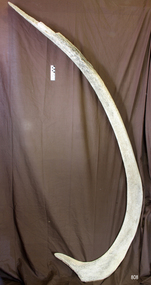 Flagstaff Hill Maritime Museum and Village
Animal specimen - Whale Rib Bone, Undetermined
... In short, whales were a valuable natural resource the same as wood, minerals, or petroleum we now pump from the ground. Oil From Whale’s Blubber Oil was the main product sought from whales, and it was used to lubricate machinery and to provide illumination by burning it in lamps. ...In short, whales were a valuable natural resource the same as wood, minerals, or petroleum we now pump from the ground. Oil From Whale’s Blubber Oil was the main product sought from whales, and it was used to lubricate machinery and to provide illumination by burning it in lamps. ...Prior to carrying out a detailed condition report of the cetacean skeletons, it is useful to have an understanding of the materials we are likely to encounter, in terms of structure and chemistry. This entry invites you to join in learning about the composition of whale bone and oil. Whale bone (Cetacean) bone is comprised of a composite structure of both an inorganic matrix of mainly hydroxylapatite (a calcium phosphate mineral), providing strength and rigidity, as well as an organic protein ‘scaffolding’ of mainly collagen, facilitating growth and repair (O’Connor 2008, CCI 2010). Collagen is also the structural protein component in cartilage between the whale vertebrae and attached to the fins of both the Killer Whale and the Dolphin. Relative proportions in the bone composition (affecting density), are linked with the feeding habits and mechanical stresses typically endured by bones of particular whale types. A Sperm Whale (Physeter macrocephalus Linnaeus, 1758) skeleton (toothed) thus has a higher mineral value (~67%) than a Fin Whale (Balaenoptera physalus Linnaeus, 1758) (baleen) (~60%) (Turner Walker 2012). The internal structure of bone can be divided into compact and cancellous bone. In whales, load-bearing structures such as mandibles and upper limb bones (e.g. humerus, sternum) are largely composed of compact bone (Turner Walker 2012). This consists of lamella concentrically deposited around the longitudinal axis and is permeated by fluid carrying channels (O’Connor 2008). Cancellous (spongy) bone, with a highly porous angular network of trabeculae, is less stiff and thus found in whale ribs and vertebrae (Turner Walker 2012). Whale oil Whales not only carry a thick layer of fat (blubber) in the soft tissue of their body for heat insulation and as a food store while they are alive, but also hold large oil (lipid) reserves in their porous bones. Following maceration of the whale skeleton after death to remove the soft tissue, the bones retain a high lipid content (Higgs et. al 2010). Particularly bones with a spongy (porous) structure have a high capacity to hold oil-rich marrow. Comparative data of various whale species suggests the skull, particularly the cranium and mandible bones are particularly oil rich. Along the vertebral column, the lipid content is reduced, particularly in the thoracic vertebrae (~10-25%), yet greatly increases from the lumbar to the caudal vertebrae (~40-55%). The chest area (scapula, sternum and ribs) show a mid-range lipid content (~15-30%), with vertically orientated ribs being more heavily soaked lower down (Turner Walker 2012, Higgs et. al 2010). Whale oil is largely composed of triglycerides (molecules of fatty acids attached to a glycerol molecule). In Arctic whales a higher proportion of unsaturated, versus saturated fatty acids make up the lipid. Unsaturated fatty acids (with double or triple carbon bonds causing chain kinks, preventing close packing (solidifying) of molecules), are more likely to be liquid (oil), versus solid (fat) at room temperature (Smith and March 2007). Objects Made From the Whaling Industry We all know that men set forth in sailing ships and risked their lives to harpoon whales on the open seas throughout the 1800s. And while Moby Dick and other tales have made whaling stories immortal, people today generally don't appreciate that the whalers were part of a well-organized industry. The ships that set out from ports in New England roamed as far as the Pacific in hunt of specific species of whales. Adventure may have been the draw for some whalers, but for the captains who owned whaling ships, and the investors which financed voyages, there was a considerable monetary payoff. The gigantic carcasses of whales were chopped and boiled down and turned into products such as the fine oil needed to lubricate increasing advanced machine tools. And beyond the oil derived from whales, even their bones, in an era before the invention of plastic, was used to make a wide variety of consumer goods. In short, whales were a valuable natural resource the same as wood, minerals, or petroleum we now pump from the ground. Oil From Whale’s Blubber Oil was the main product sought from whales, and it was used to lubricate machinery and to provide illumination by burning it in lamps. When a whale was killed, it was towed to the ship and its blubber, the thick insulating fat under its skin, would be peeled and cut from its carcass in a process known as “flensing.” The blubber was minced into chunks and boiled in large vats on board the whaling ship, producing oil. The oil taken from whale blubber was packaged in casks and transported back to the whaling ship’s home port (such as New Bedford, Massachusetts, the busiest American whaling port in the mid-1800s). From the ports it would be sold and transported across the country and would find its way into a huge variety of products. Whale oil, in addition to be used for lubrication and illumination, was also used to manufacture soaps, paint, and varnish. Whale oil was also utilized in some processes used to manufacture textiles and rope. Spermaceti, a Highly Regarded Oil A peculiar oil found in the head of the sperm whale, spermaceti, was highly prized. The oil was waxy, and was commonly used in making candles. In fact, candles made of spermaceti were considered the best in the world, producing a bright clear flame without an excess of smoke. Spermaceti was also used, distilled in liquid form, as an oil to fuel lamps. The main American whaling port, New Bedford, Massachusetts, was thus known as "The City That Lit the World." When John Adams was the ambassador to Great Britain before serving as president he recorded in his diary a conversation about spermaceti he had with the British Prime Minister William Pitt. Adams, keen to promote the New England whaling industry, was trying to convince the British to import spermaceti sold by American whalers, which the British could use to fuel street lamps. The British were not interested. In his diary, Adams wrote that he told Pitt, “the fat of the spermaceti whale gives the clearest and most beautiful flame of any substance that is known in nature, and we are surprised you prefer darkness, and consequent robberies, burglaries, and murders in your streets to receiving as a remittance our spermaceti oil.” Despite the failed sales pitch John Adams made in the late 1700s, the American whaling industry boomed in the early to mid-1800s. And spermaceti was a major component of that success. Spermaceti could be refined into a lubricant that was ideal for precision machinery. The machine tools that made the growth of industry possible in the United States were lubricated, and essentially made possible, by oil derived from spermaceti. Baleen, or "Whalebone" The bones and teeth of various species of whales were used in a number of products, many of them common implements in a 19th century household. Whales are said to have produced “the plastic of the 1800s.” The "bone" of the whale which was most commonly used wasn’t technically a bone, it was baleen, a hard material arrayed in large plates, like gigantic combs, in the mouths of some species of whales. The purpose of the baleen is to act as a sieve, catching tiny organisms in sea water, which the whale consumes as food. As baleen was tough yet flexible, it could be used in a number of practical applications. And it became commonly known as "whalebone." Perhaps the most common use of whalebone was in the manufacture of corsets, which fashionable ladies in the 1800s wore to compress their waistlines. One typical corset advertisement from the 1800s proudly proclaims, “Real Whalebone Only Used.” Whalebone was also used for collar stays, buggy whips, and toys. Its remarkable flexibility even caused it to be used as the springs in early typewriters. The comparison to plastic is apt. Think of common items which today might be made of plastic, and it's likely that similar items in the 1800s would have been made of whalebone. Baleen whales do not have teeth. But the teeth of other whales, such as the sperm whale, would be used as ivory in such products as chess pieces, piano keys, or the handles of walking sticks. Pieces of scrimshaw, or carved whale's teeth, would probably be the best remembered use of whale's teeth. However, the carved teeth were created to pass the time on whaling voyages and were never a mass production item. Their relative rarity, of course, is why genuine pieces of 19th century scrimshaw are considered to be valuable collectibles today. Reference: McNamara, Robert. "Objects Made From the Whaling Industry." ThoughtCo, Jul. 31, 2021, thoughtco.com/products-produced-from-whales-1774070.Whale bone during the 17th, 18th, 19th and early 20th centuries was an important industry providing an important commodity. Whales from these times provided everything from lighting & machine oils to using the animal's bones for use in corsets, collar stays, buggy whips, and many other everyday items then in use.Whale rib bone with advanced stage of calcification as indicated by brittleness. None.warrnambool, flagstaff-hill, flagstaff-hill-maritime-museum, maritime-museum, shipwreck-coast, flagstaff-hill-maritime-village, whale bones, whale skeleton, whales, whale bone, corsets, toys, whips, whaleling industry, maritime fishing, whalebone -
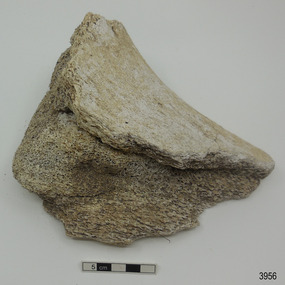 Flagstaff Hill Maritime Museum and Village
Animal specimen - Whale bone, Undetermined
... In short, whales were a valuable natural resource the same as wood, minerals, or petroleum we now pump from the ground. Oil From Whale’s Blubber Oil was the main product sought from whales, and it was used to lubricate machinery and to provide illumination by burning it in lamps. ...In short, whales were a valuable natural resource the same as wood, minerals, or petroleum we now pump from the ground. Oil From Whale’s Blubber Oil was the main product sought from whales, and it was used to lubricate machinery and to provide illumination by burning it in lamps. ...Prior to carrying out a detailed condition report of the cetacean skeletons, it is useful to have an understanding of the materials we are likely to encounter, in terms of structure and chemistry. This entry invites you to join in learning about the composition of whale bone and oil. Whale bone (Cetacean) bone is comprised of a composite structure of both an inorganic matrix of mainly hydroxylapatite (a calcium phosphate mineral), providing strength and rigidity, as well as an organic protein ‘scaffolding’ of mainly collagen, facilitating growth and repair (O’Connor 2008, CCI 2010). Collagen is also the structural protein component in cartilage between the whale vertebrae and attached to the fins of both the Killer Whale and the Dolphin. Relative proportions in the bone composition (affecting density), are linked with the feeding habits and mechanical stresses typically endured by bones of particular whale types. A Sperm Whale (Physeter macrocephalus Linnaeus, 1758) skeleton (toothed) thus has a higher mineral value (~67%) than a Fin Whale (Balaenoptera physalus Linnaeus, 1758) (baleen) (~60%) (Turner Walker 2012). The internal structure of bone can be divided into compact and cancellous bone. In whales, load-bearing structures such as mandibles and upper limb bones (e.g. humerus, sternum) are largely composed of compact bone (Turner Walker 2012). This consists of lamella concentrically deposited around the longitudinal axis and is permeated by fluid carrying channels (O’Connor 2008). Cancellous (spongy) bone, with a highly porous angular network of trabeculae, is less stiff and thus found in whale ribs and vertebrae (Turner Walker 2012). Whale oil Whales not only carry a thick layer of fat (blubber) in the soft tissue of their body for heat insulation and as a food store while they are alive, but also hold large oil (lipid) reserves in their porous bones. Following maceration of the whale skeleton after death to remove the soft tissue, the bones retain a high lipid content (Higgs et. al 2010). Particularly bones with a spongy (porous) structure have a high capacity to hold oil-rich marrow. Comparative data of various whale species suggests the skull, particularly the cranium and mandible bones are particularly oil rich. Along the vertebral column, the lipid content is reduced, particularly in the thoracic vertebrae (~10-25%), yet greatly increases from the lumbar to the caudal vertebrae (~40-55%). The chest area (scapula, sternum and ribs) show a mid-range lipid content (~15-30%), with vertically orientated ribs being more heavily soaked lower down (Turner Walker 2012, Higgs et. al 2010). Whale oil is largely composed of triglycerides (molecules of fatty acids attached to a glycerol molecule). In Arctic whales a higher proportion of unsaturated, versus saturated fatty acids make up the lipid. Unsaturated fatty acids (with double or triple carbon bonds causing chain kinks, preventing close packing (solidifying) of molecules), are more likely to be liquid (oil), versus solid (fat) at room temperature (Smith and March 2007). Objects Made From the Whaling Industry We all know that men set forth in sailing ships and risked their lives to harpoon whales on the open seas throughout the 1800s. And while Moby Dick and other tales have made whaling stories immortal, people today generally don't appreciate that the whalers were part of a well-organized industry. The ships that set out from ports in New England roamed as far as the Pacific in hunt of specific species of whales. Adventure may have been the draw for some whalers, but for the captains who owned whaling ships, and the investors which financed voyages, there was a considerable monetary payoff. The gigantic carcasses of whales were chopped and boiled down and turned into products such as the fine oil needed to lubricate increasing advanced machine tools. And beyond the oil derived from whales, even their bones, in an era before the invention of plastic, was used to make a wide variety of consumer goods. In short, whales were a valuable natural resource the same as wood, minerals, or petroleum we now pump from the ground. Oil From Whale’s Blubber Oil was the main product sought from whales, and it was used to lubricate machinery and to provide illumination by burning it in lamps. When a whale was killed, it was towed to the ship and its blubber, the thick insulating fat under its skin, would be peeled and cut from its carcass in a process known as “flensing.” The blubber was minced into chunks and boiled in large vats on board the whaling ship, producing oil. The oil taken from whale blubber was packaged in casks and transported back to the whaling ship’s home port (such as New Bedford, Massachusetts, the busiest American whaling port in the mid-1800s). From the ports it would be sold and transported across the country and would find its way into a huge variety of products. Whale oil, in addition to be used for lubrication and illumination, was also used to manufacture soaps, paint, and varnish. Whale oil was also utilized in some processes used to manufacture textiles and rope. Spermaceti, a Highly Regarded Oil A peculiar oil found in the head of the sperm whale, spermaceti, was highly prized. The oil was waxy, and was commonly used in making candles. In fact, candles made of spermaceti were considered the best in the world, producing a bright clear flame without an excess of smoke. Spermaceti was also used, distilled in liquid form, as an oil to fuel lamps. The main American whaling port, New Bedford, Massachusetts, was thus known as "The City That Lit the World." When John Adams was the ambassador to Great Britain before serving as president he recorded in his diary a conversation about spermaceti he had with the British Prime Minister William Pitt. Adams, keen to promote the New England whaling industry, was trying to convince the British to import spermaceti sold by American whalers, which the British could use to fuel street lamps. The British were not interested. In his diary, Adams wrote that he told Pitt, “the fat of the spermaceti whale gives the clearest and most beautiful flame of any substance that is known in nature, and we are surprised you prefer darkness, and consequent robberies, burglaries, and murders in your streets to receiving as a remittance our spermaceti oil.” Despite the failed sales pitch John Adams made in the late 1700s, the American whaling industry boomed in the early to mid-1800s. And spermaceti was a major component of that success. Spermaceti could be refined into a lubricant that was ideal for precision machinery. The machine tools that made the growth of industry possible in the United States were lubricated, and essentially made possible, by oil derived from spermaceti. Baleen, or "Whalebone" The bones and teeth of various species of whales were used in a number of products, many of them common implements in a 19th century household. Whales are said to have produced “the plastic of the 1800s.” The "bone" of the whale which was most commonly used wasn’t technically a bone, it was baleen, a hard material arrayed in large plates, like gigantic combs, in the mouths of some species of whales. The purpose of the baleen is to act as a sieve, catching tiny organisms in sea water, which the whale consumes as food. As baleen was tough yet flexible, it could be used in a number of practical applications. And it became commonly known as "whalebone." Perhaps the most common use of whalebone was in the manufacture of corsets, which fashionable ladies in the 1800s wore to compress their waistlines. One typical corset advertisement from the 1800s proudly proclaims, “Real Whalebone Only Used.” Whalebone was also used for collar stays, buggy whips, and toys. Its remarkable flexibility even caused it to be used as the springs in early typewriters. The comparison to plastic is apt. Think of common items which today might be made of plastic, and it's likely that similar items in the 1800s would have been made of whalebone. Baleen whales do not have teeth. But the teeth of other whales, such as the sperm whale, would be used as ivory in such products as chess pieces, piano keys, or the handles of walking sticks. Pieces of scrimshaw, or carved whale's teeth, would probably be the best remembered use of whale's teeth. However, the carved teeth were created to pass the time on whaling voyages and were never a mass production item. Their relative rarity, of course, is why genuine pieces of 19th century scrimshaw are considered to be valuable collectibles today. Reference: McNamara, Robert. "Objects Made From the Whaling Industry." ThoughtCo, Jul. 31, 2021, thoughtco.com/products-produced-from-whales-1774070.Whale bone was an important commodity, used in corsets, collar stays, buggy whips, and toys.Whale bone piece. Advanced stage of calcification as indicated by deep pitting. Off white to grey.None.flagstaff hill, warrnambool, shipwrecked-coast, flagstaff-hill, flagstaff-hill-maritime-museum, maritime-museum, shipwreck-coast, flagstaff-hill-maritime-village, whales, whale bone, corsets, toys, whips -
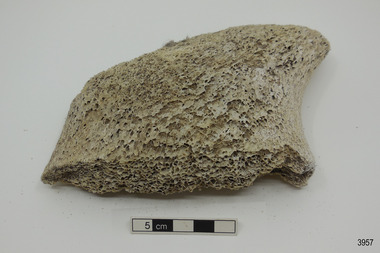 Flagstaff Hill Maritime Museum and Village
Animal specimen - Whale bone, Undetermined
... In short, whales were a valuable natural resource the same as wood, minerals, or petroleum we now pump from the ground. Oil From Whale’s Blubber Oil was the main product sought from whales, and it was used to lubricate machinery and to provide illumination by burning it in lamps. ...In short, whales were a valuable natural resource the same as wood, minerals, or petroleum we now pump from the ground. Oil From Whale’s Blubber Oil was the main product sought from whales, and it was used to lubricate machinery and to provide illumination by burning it in lamps. ...Prior to carrying out a detailed condition report of the cetacean skeletons, it is useful to have an understanding of the materials we are likely to encounter, in terms of structure and chemistry. This entry invites you to join in learning about the composition of whale bone and oil. Whale bone (Cetacean) bone is comprised of a composite structure of both an inorganic matrix of mainly hydroxylapatite (a calcium phosphate mineral), providing strength and rigidity, as well as an organic protein ‘scaffolding’ of mainly collagen, facilitating growth and repair (O’Connor 2008, CCI 2010). Collagen is also the structural protein component in cartilage between the whale vertebrae and attached to the fins of both the Killer Whale and the Dolphin. Relative proportions in the bone composition (affecting density), are linked with the feeding habits and mechanical stresses typically endured by bones of particular whale types. A Sperm Whale (Physeter macrocephalus Linnaeus, 1758) skeleton (toothed) thus has a higher mineral value (~67%) than a Fin Whale (Balaenoptera physalus Linnaeus, 1758) (baleen) (~60%) (Turner Walker 2012). The internal structure of bone can be divided into compact and cancellous bone. In whales, load-bearing structures such as mandibles and upper limb bones (e.g. humerus, sternum) are largely composed of compact bone (Turner Walker 2012). This consists of lamella concentrically deposited around the longitudinal axis and is permeated by fluid carrying channels (O’Connor 2008). Cancellous (spongy) bone, with a highly porous angular network of trabeculae, is less stiff and thus found in whale ribs and vertebrae (Turner Walker 2012). Whale oil Whales not only carry a thick layer of fat (blubber) in the soft tissue of their body for heat insulation and as a food store while they are alive, but also hold large oil (lipid) reserves in their porous bones. Following maceration of the whale skeleton after death to remove the soft tissue, the bones retain a high lipid content (Higgs et. al 2010). Particularly bones with a spongy (porous) structure have a high capacity to hold oil-rich marrow. Comparative data of various whale species suggests the skull, particularly the cranium and mandible bones are particularly oil rich. Along the vertebral column, the lipid content is reduced, particularly in the thoracic vertebrae (~10-25%), yet greatly increases from the lumbar to the caudal vertebrae (~40-55%). The chest area (scapula, sternum and ribs) show a mid-range lipid content (~15-30%), with vertically orientated ribs being more heavily soaked lower down (Turner Walker 2012, Higgs et. al 2010). Whale oil is largely composed of triglycerides (molecules of fatty acids attached to a glycerol molecule). In Arctic whales a higher proportion of unsaturated, versus saturated fatty acids make up the lipid. Unsaturated fatty acids (with double or triple carbon bonds causing chain kinks, preventing close packing (solidifying) of molecules), are more likely to be liquid (oil), versus solid (fat) at room temperature (Smith and March 2007). Objects Made From the Whaling Industry We all know that men set forth in sailing ships and risked their lives to harpoon whales on the open seas throughout the 1800s. And while Moby Dick and other tales have made whaling stories immortal, people today generally don't appreciate that the whalers were part of a well-organized industry. The ships that set out from ports in New England roamed as far as the Pacific in hunt of specific species of whales. Adventure may have been the draw for some whalers, but for the captains who owned whaling ships, and the investors which financed voyages, there was a considerable monetary payoff. The gigantic carcasses of whales were chopped and boiled down and turned into products such as the fine oil needed to lubricate increasing advanced machine tools. And beyond the oil derived from whales, even their bones, in an era before the invention of plastic, was used to make a wide variety of consumer goods. In short, whales were a valuable natural resource the same as wood, minerals, or petroleum we now pump from the ground. Oil From Whale’s Blubber Oil was the main product sought from whales, and it was used to lubricate machinery and to provide illumination by burning it in lamps. When a whale was killed, it was towed to the ship and its blubber, the thick insulating fat under its skin, would be peeled and cut from its carcass in a process known as “flensing.” The blubber was minced into chunks and boiled in large vats on board the whaling ship, producing oil. The oil taken from whale blubber was packaged in casks and transported back to the whaling ship’s home port (such as New Bedford, Massachusetts, the busiest American whaling port in the mid-1800s). From the ports it would be sold and transported across the country and would find its way into a huge variety of products. Whale oil, in addition to be used for lubrication and illumination, was also used to manufacture soaps, paint, and varnish. Whale oil was also utilized in some processes used to manufacture textiles and rope. Spermaceti, a Highly Regarded Oil A peculiar oil found in the head of the sperm whale, spermaceti, was highly prized. The oil was waxy, and was commonly used in making candles. In fact, candles made of spermaceti were considered the best in the world, producing a bright clear flame without an excess of smoke. Spermaceti was also used, distilled in liquid form, as an oil to fuel lamps. The main American whaling port, New Bedford, Massachusetts, was thus known as "The City That Lit the World." When John Adams was the ambassador to Great Britain before serving as president he recorded in his diary a conversation about spermaceti he had with the British Prime Minister William Pitt. Adams, keen to promote the New England whaling industry, was trying to convince the British to import spermaceti sold by American whalers, which the British could use to fuel street lamps. The British were not interested. In his diary, Adams wrote that he told Pitt, “the fat of the spermaceti whale gives the clearest and most beautiful flame of any substance that is known in nature, and we are surprised you prefer darkness, and consequent robberies, burglaries, and murders in your streets to receiving as a remittance our spermaceti oil.” Despite the failed sales pitch John Adams made in the late 1700s, the American whaling industry boomed in the early to mid-1800s. And spermaceti was a major component of that success. Spermaceti could be refined into a lubricant that was ideal for precision machinery. The machine tools that made the growth of industry possible in the United States were lubricated, and essentially made possible, by oil derived from spermaceti. Baleen, or "Whalebone" The bones and teeth of various species of whales were used in a number of products, many of them common implements in a 19th century household. Whales are said to have produced “the plastic of the 1800s.” The "bone" of the whale which was most commonly used wasn’t technically a bone, it was baleen, a hard material arrayed in large plates, like gigantic combs, in the mouths of some species of whales. The purpose of the baleen is to act as a sieve, catching tiny organisms in sea water, which the whale consumes as food. As baleen was tough yet flexible, it could be used in a number of practical applications. And it became commonly known as "whalebone." Perhaps the most common use of whalebone was in the manufacture of corsets, which fashionable ladies in the 1800s wore to compress their waistlines. One typical corset advertisement from the 1800s proudly proclaims, “Real Whalebone Only Used.” Whalebone was also used for collar stays, buggy whips, and toys. Its remarkable flexibility even caused it to be used as the springs in early typewriters. The comparison to plastic is apt. Think of common items which today might be made of plastic, and it's likely that similar items in the 1800s would have been made of whalebone. Baleen whales do not have teeth. But the teeth of other whales, such as the sperm whale, would be used as ivory in such products as chess pieces, piano keys, or the handles of walking sticks. Pieces of scrimshaw, or carved whale's teeth, would probably be the best remembered use of whale's teeth. However, the carved teeth were created to pass the time on whaling voyages and were never a mass production item. Their relative rarity, of course, is why genuine pieces of 19th century scrimshaw are considered to be valuable collectibles today. Reference: McNamara, Robert. "Objects Made From the Whaling Industry." ThoughtCo, Jul. 31, 2021, thoughtco.com/products-produced-from-whales-1774070.Whale bone was an important commodity, used in corsets, collar stays, buggy whips, and toys.Whale bone piece. Advanced stage of calcification as indicated by deep pitting. Off white to grey.None.flagstaff hill, warrnambool, shipwrecked-coast, flagstaff-hill, flagstaff-hill-maritime-museum, maritime-museum, shipwreck-coast, flagstaff-hill-maritime-village, whales, whale bone, corsets, toys, whips -
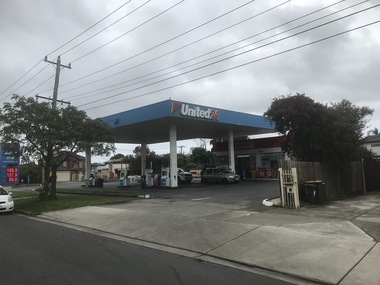 Sunshine and District Historical Society Incorporated
Photograph - Albion Photographs 2021, John Alchin, 2021
... 5569.01 - Ballarat Rd 559 Albion - United Petroleum 2021 Photo 01.JPG 5569.02 - Ballarat Rd 527 Albion - A.R.C. 2021 Photo 02.JPG 5569.03 - Ballarat Rd 527 Albion - A.R.C. 2021 Photo 03.JPG 5569.04 - Adelaide St 70 Albion 2021 Photo 04.JPG 5569.05 - Adelaide St No 62 Albion 2021 Photo 01.JPG 5569.06 - Adelaide St No 62 Albion 2021 Photo 02.JPG 5569.07 - Sydney St 16 Albion - Albion Baptist Church 2021 Photo 02.JPG 5569.08 - Sydney St 16 Albion - Albion Baptist Church 2021 Photo 03.JPG 5569.09 - Sydney St 16 Albion - Albion Baptist Church 2021 Photo 04.JPG 5569.10 - Sydney St 16 Albion - Albion Baptist Church 2021 Photo 05.JPG 5569.11 - Sydney St 16 Albion - Albion Baptist Church 2021 Photo 06.JPG 5569.12 - Selwyn St 61A Albion - Albion Community House & Garden 2021 Photo 01.JPG 5569.13 - Selwyn St 61A Albion - Albion Community House & Garden 2021 Photo 02.JPG 5569.14 - Selwyn St 61A Albion - Albion Community House & Garden 2021 Photo 03.JPG 5569.15 - Adelaide Street 63 Albion - Albion Primary School 2021 Photo 01.JPG 5569.16 - Albion Railway Station 2021 Photo 01.JPG 5569.17 - Albion Railway Station 2021 Photo 02.JPG 5569.18 - Selwyn Park - Albion Tennis Courts 2021 Photo 01.JPG 5569.19 - Hulett St 3 Albion - Allen Foundary Hulett St Albion 2021 Photo 01.JPG 5569.20 - Hulett St 3 Albion - Allen Foundary Hulett St Albion 2021 Photo 02.JPG 5569.21 - Ballarat Rd 507 2021 Photo 02.JPG 5569.22 - Ballarat Rd 509 - 511 Albion 2021 Photo 01.JPG 5569.23 - Ballarat Rd 509 - 511 Albion 2021 Photo 02.JPG 5569.24 - Ballarat Rd 582 Albion 2021 Photo 01.JPG 5569.25 - Kororoit Creek Albion 2021 Photo 01.JPG 5569.26 - Kororoit Creek Albion 2021 Photo 05.JPG 5569.27 - Bill Goldsworthy Scoreboard Sunshine Baseball Club Barclay Reserve Albion 2021 Photo 01.JPG 5569.28 - Ian Anderson Scoreboard Sunshine Baseball Club Barclay Reserve Albion 2021 Photo 01.JPG 5569.29 - Derrimut St 2 Albion 2021 Photo 01.JPG 5569.30 - Derrimut St 41 Albion 2021 Photo 01.JPG 5569.31 - Derrimut St 61 Albion 2021 Photo 01.JPG 5569.32 - Hulett St Albion - Energy Park 2021 Photo 01.JPG 5569.33 - Hulett St Albion - Energy Park 2021 Photo 02.JPG 5569.34 - Hulett St Albion - Energy Park 2021 Photo 03.JPG 5569.35 - Coolamon St ReserveAlbion 2021 Photo 01.JPG 5569.36 - Ferguson St 9 Albion 2021 Photo 01.JPG 5569.37 - John Darling Flour Mills 2021 Photo 01.JPG 5569.38 - John Darling Flour Mills 2021 Photo 02.JPG 5569.39 - Kamarooka St Reserve 2021 Photo 01.JPG 5569.40 - King Edward Ave 14 Albion.JPG 5569.41 - King Edward Ave 27 - Donald Ross Court Flats Albion 2021 Photo 01.JPG 5569.42 - Methodist Church Tennis Courts Derrimut St Albion 2021 Photo 01.JPG 5569.43 - Ballarat Rd 547 Albion - North Cyprus Turkish Community Centre of Victoria 2021 Photo 01.JPG 5569.44 - Ballarat Rd 547 Albion - North Cyprus Turkish Community Centre of Victoria 2021 Photo 03.JPG 5569.45 - Sydney St 70 - 72 Albion - P.M.G. ...Ballarat Road Adelaide Street Sydney Street Selwyn Street Hulett Street Derrimut Street Coolamon Street Ferguson Street Kamarooka Street King Edward Avenue Ridley Street Talmage Street Albion United Petroleum A.R.C. Albion Baptist Church Albion Community House And Garden Albion Primary School Albion Railway Station Albion Tennis Club Selwyn Park Allen Foundary Kororoit Creek Sunshine Baseball Club Barclay Reserve Bill Goldsworthy Ian Anderson Engery Park John Darling Flour Mills Albion Methodist Church North Cyprus Turkish Community Centre P.M.G. ...These photographs provide a visual record of assorted buildings, street views, and notable locations throughout Albion in 2021.This photograph collection documents Albion in 2021.5569.01 - Ballarat Rd 559 Albion - United Petroleum 2021 Photo 01.JPG 5569.02 - Ballarat Rd 527 Albion - A.R.C. 2021 Photo 02.JPG 5569.03 - Ballarat Rd 527 Albion - A.R.C. 2021 Photo 03.JPG 5569.04 - Adelaide St 70 Albion 2021 Photo 04.JPG 5569.05 - Adelaide St No 62 Albion 2021 Photo 01.JPG 5569.06 - Adelaide St No 62 Albion 2021 Photo 02.JPG 5569.07 - Sydney St 16 Albion - Albion Baptist Church 2021 Photo 02.JPG 5569.08 - Sydney St 16 Albion - Albion Baptist Church 2021 Photo 03.JPG 5569.09 - Sydney St 16 Albion - Albion Baptist Church 2021 Photo 04.JPG 5569.10 - Sydney St 16 Albion - Albion Baptist Church 2021 Photo 05.JPG 5569.11 - Sydney St 16 Albion - Albion Baptist Church 2021 Photo 06.JPG 5569.12 - Selwyn St 61A Albion - Albion Community House & Garden 2021 Photo 01.JPG 5569.13 - Selwyn St 61A Albion - Albion Community House & Garden 2021 Photo 02.JPG 5569.14 - Selwyn St 61A Albion - Albion Community House & Garden 2021 Photo 03.JPG 5569.15 - Adelaide Street 63 Albion - Albion Primary School 2021 Photo 01.JPG 5569.16 - Albion Railway Station 2021 Photo 01.JPG 5569.17 - Albion Railway Station 2021 Photo 02.JPG 5569.18 - Selwyn Park - Albion Tennis Courts 2021 Photo 01.JPG 5569.19 - Hulett St 3 Albion - Allen Foundary Hulett St Albion 2021 Photo 01.JPG 5569.20 - Hulett St 3 Albion - Allen Foundary Hulett St Albion 2021 Photo 02.JPG 5569.21 - Ballarat Rd 507 2021 Photo 02.JPG 5569.22 - Ballarat Rd 509 - 511 Albion 2021 Photo 01.JPG 5569.23 - Ballarat Rd 509 - 511 Albion 2021 Photo 02.JPG 5569.24 - Ballarat Rd 582 Albion 2021 Photo 01.JPG 5569.25 - Kororoit Creek Albion 2021 Photo 01.JPG 5569.26 - Kororoit Creek Albion 2021 Photo 05.JPG 5569.27 - Bill Goldsworthy Scoreboard Sunshine Baseball Club Barclay Reserve Albion 2021 Photo 01.JPG 5569.28 - Ian Anderson Scoreboard Sunshine Baseball Club Barclay Reserve Albion 2021 Photo 01.JPG 5569.29 - Derrimut St 2 Albion 2021 Photo 01.JPG 5569.30 - Derrimut St 41 Albion 2021 Photo 01.JPG 5569.31 - Derrimut St 61 Albion 2021 Photo 01.JPG 5569.32 - Hulett St Albion - Energy Park 2021 Photo 01.JPG 5569.33 - Hulett St Albion - Energy Park 2021 Photo 02.JPG 5569.34 - Hulett St Albion - Energy Park 2021 Photo 03.JPG 5569.35 - Coolamon St ReserveAlbion 2021 Photo 01.JPG 5569.36 - Ferguson St 9 Albion 2021 Photo 01.JPG 5569.37 - John Darling Flour Mills 2021 Photo 01.JPG 5569.38 - John Darling Flour Mills 2021 Photo 02.JPG 5569.39 - Kamarooka St Reserve 2021 Photo 01.JPG 5569.40 - King Edward Ave 14 Albion.JPG 5569.41 - King Edward Ave 27 - Donald Ross Court Flats Albion 2021 Photo 01.JPG 5569.42 - Methodist Church Tennis Courts Derrimut St Albion 2021 Photo 01.JPG 5569.43 - Ballarat Rd 547 Albion - North Cyprus Turkish Community Centre of Victoria 2021 Photo 01.JPG 5569.44 - Ballarat Rd 547 Albion - North Cyprus Turkish Community Centre of Victoria 2021 Photo 03.JPG 5569.45 - Sydney St 70 - 72 Albion - P.M.G. Depot 2021 Photo 01.JPG 5569.46 - Ridley St 4 Albion - House Under Redevelopment 2021 Photo 01.JPG 5569.47 - Rocks Kororoit St South Side off Forrest St 2021 Photo 01.JPG 5569.48 - Selwyn Park 2021 Photo 07.JPG 5569.49 - Selwyn Park 2021 Photo 08.JPG 5569.50 - Ballarat Rd 576 Albion St. Albans Train Red Rattler Photo 01.JPG 5569.51 - Sunshine Baseball Club Barclay Reserve Albion 2021 Photo 01.JPG 5569.52 - Sunshine Baseball Club Barclay Reserve Albion 2021 Photo 02.JPG 5569.53 - Norm McArthur Field Sunshine Baseball Club Barclay Reserve Albion 2021 Photo 01.JPG 5569.54 - Talmage St - Gum Trees Photo 01.JPG 5569.55 - Sydney St 67 - Yen Ming Tang Buddhist Meditation Centre 2021 Photo 01.JPG ballarat road, adelaide street, sydney street, selwyn street, hulett street, derrimut street, coolamon street, ferguson street, kamarooka street, king edward avenue, ridley street, talmage street, albion, united petroleum, a.r.c., albion baptist church, albion community house and garden, albion primary school, albion railway station, albion tennis club, selwyn park, allen foundary, kororoit creek, sunshine baseball club, barclay reserve, bill goldsworthy, ian anderson, engery park, john darling flour mills, albion methodist church, north cyprus turkish community centre, p.m.g. depot, norm mcarthur, yen ming tang buddhist meditation centre -
 Narre Warren and District Family History Group
Book, Narre Warren & District Family History Group Inc, Casey Cardinia Collection - Upper Beaconsfield / Dewhurst Information File, 2021
... Primary 17/09/2008 A stitch in time for a village – Nola Gregson 2/04/2008 Life in the rally fast lane – Glad Fish 12/10/2005 Church celebrates two decades 7/01/2009 Salisbury House Sojourns 20/12/2006 Sleeping giant a pot of gold 12/12/2007 Fred’s legend lives on 7/03/2007 All fired up about history – Go to Blazes 29/10/2025 Brigade Celebrates a Century 25/03/2009 Goats deliver fine rewards, no butts 6/09/2017 Upper Beac in the 30s - Don Begg 26/05/2010 101 Cheers for Gladys - Gladys Edwards 26/05/2010 Little school that could 13/02/2008 Ash Wednesday Always There 13/02/2008 Nightmare Remains Fresh 13/02/2008 Family Survives “Evil, Horrible Day” 18/01/2017 Des McKenna Made the World a Better Place 12/06/2013 Scout Chief Tracks Award - Bob Taylor UNKNOWN Windrush - property 16/04/2008 Diving Into a Life of Passion - Barry Andrewartha 13/02/2013 Glimpse Into Heart of Hell - Ash Wednesday 13/02/2013 Through the Eyes of the Survivors 13/02/2013 Hell on Earth in the Hills - Ash Wednesday 11/01/2018 Milestone for Maroons 9/07/1905 Upper Beaconsfield Community Centre - pamphlet 23/02/2022 A Day Straight From Hell - Ash Wednesday - pamphlet 26/01/2022 Carmel a “Force For Good” - Carmel McKenna 27/04/2022 Crowds Return for Service 17/07/2019 Moving With the Times 1/05/2019 Honouring the Fallen 4/01/2007 Fire Bale-Out 22/02/2023 Reflecting on the Firestorm 22/02/2023 Locals United in Aftermath 7/09/2016 Hansen Hangs up his Whistle - Rob Hansen 30/08/2023 Tribute to Camel McKenna 22/05/2024 A Taste of Family Legacy - The Carlei Winery 20/04/2015 Finally a Mark of Respect - Cecil Henry Foott 2/10/2024 100 and Tough as Nails - Alexandra Krywokulski 1/10/2025 Final Goodbyes to Bob - Bob Taylor 17/09/2025 Farewell, Mr Community - Bob Taylor 31/10/2018 Reward Our Volunteers - Malcolm Graham Relevant names relating to the articles in the folder are: 10th Field Ambulance, Ulick a'Beckett, Akhoona Park, Ken Aldred, Gertie Alers, Barry Andrewartha, Belinda Andrewartha, Phil Anning, Jessica Anstice, Arch Brown Reserve, Gordon Atkin, Joyce Attreed, Kevin Bailey, Megan Bailey, Ian Baird, Sue Baird, Simon Baldwin, Brad Battin, Henry Bayer, John Bayer, Louis Bayer, Beaconsfield Football Club, Beaconsfield Golf Club, Beaconsfield Scouts, Colin Begg, Don Begg, Flora Begg, Peg Bellair, Matt Bennett MP, Chloe Bentley, Bill Berglun, C P Berglund, J Berry, Berwick & District Garden Club, Berwick Lions Club, John Bevan, Albert Reginald (Bob) Bickham, Emily Bishop, Frances Bishop, Graeme Bishop, Hannah Bishop, Lachlan Bishop, Ryan Bishop, Tom Black, Robert Blaikie, Transport Blakistons, Nancy Boura, Geoff Brooks, Wally Brown, Buckley Ridges, Eric Bumpstead, Meg Burch, Alex Burgess, Dorothy Burgess, Road Burglund, Carl Butler, Betty Buttler, Wendy Byrne, Sr Cahill, Yvonne, Father Caldwall, Brian, David Carlei, Mary Carlei, Sergio Carlei, Carlei Winery & Microbrewery, family Carpenter, Road Carpenter, Ron Carroll, Andrew Castelli, CD Wilson and Sons, Eric Chaplin, Eric Chapman, Pauline Chauncey, Ted Clynch, Graham Cockerell, Jeanette Cockerell, Clive Colles, Dan Colles, Gwyn Colles, Simon Conn, Coonawarra vineyard, Isabelle Cooper, Miss Corder, Jane, Miss Corder, Mary, H Coulson, Bob Coventry, Anne Crawford, Critchley Parker Junior Reserve, John Crosbie, Geoff Davidson, Arthur Day, Hilary Day, Heather De Crespigny, Paul Desmond, Margaret Doolan, Lily Dowie-Crinton, Eva Dowling, Joe Dowling, Muriel Dowling, Robin Dowling, Paul Dunlop, Betty Edwards, Dick Edwards, Gladys Edwards, Harold Edwards, Maureen Edwards, Paul Edwards, Mrs Edwards, Mary, Wendy Eldridge, Dot Evans, Jim Evans, Corey Everitt, Val Ewenson, Brian Fiddes, Tara Firth, Glad Fish, Nick Fish, Bob Florance, Kath Florance, Ann Fogarty, Sarah Fogarty, Cecil Henry Foott, Helen Fyfe, Monsinor Gallagher, George Woods Memorial Rally, Les Gilpin, Ellen Glismann, Jack Glismann, Hans Glissman, John Glissman, Diane Golemark, Adam Lindsay Gordon, Malcolm Graham, George Grant, Peter Gray, Sue Gray, Nola Gregson, Dennis Griffin, Malcolm Griffin, Mark Griffin, Warwick Griffin, Captain Griffiths, Stan Hamilton, Tom Hamilton, Elinor Hansen, Fenella Hansen, Gilda Hansen, Rob Hansen, Dawn Hanson, Iain Hanson, Claud Harris, Ellen Harris, Joan Harris, Kaine Harris, Lorraine Harris, Rosetta Harris, Roy Harris, Solomon Harris, Val Harris, Penny Harris Jennings, Harris Petroleums, Roy Hayball, Nancy Heap, Peggy Heap, Samuel Heap, Bill Herman, Win Holmes, Alistair Horne, Christine Horne, Francis Michael Horne, Frank Horne, Gerard Horne, Kevin Horne, Pearl Horner, Alma Horrigan, Ern Horrigan, Mrs Horrigan, John Howard, Helen Hudson, Concie Hughes, Helen Hughes, Graham Hunter, Robert Irving, Barbara Jackson, Julie Jamieson, Johnny Nathans General Store, Kim Johns, Fred Keeble, Mrs Keeble, Russell Keeble, Graeme Kidd, Emma Kincraik, George Crabtree Kincraik, Janet Kincraik, Betty Knapton, Bill Knapton, Frank Knapton, Nancy Knapton, W J Knapton, Afraa Kori, Alexandra Krzywokulski, John Krzywokulski, Krystine Krzywokulski, Peter Krzywokulski, Ted Krzywokulski, Emily Chapman Laing, Bill Lang, Pam Larkworthy, Phillip Lewis, Sylvia Lewis, Colleen Long, Eddie (Dasha) Lowen, Andrew Ludsy, Brad Mars, John McConchie, Julie McConchie, Fay McCoubrie, David McCulloch, Janet McCulloch, Richard McCurdy, Ian McDonald, Matt McDonald, Peter McHugh, Anthony McKenna, Bernadette McKenna, Carmel McKenna, Catherine McKenna, Damien McKenna, Daniel McKenna, Danny McKenna, Desmond James (Des) McKenna, James McKenna, Jeanne McKenna, John McKenna, Josephine McKenna, Kevin McKenna, Marie McKenna, Matthew McKenna, Michael McKenna, Patrick McKenna, Paul McKenna, Phillip McKenna, Terry McKenna, Lyn McLeod, Murray McLeod, Alison Medwin, Barry Medwin, Joan Medwin, Kerry Medwin, Judy Meeking, Cr Peter Meeking, Jim (Frosty) Miller, Glad Mitchell, Val Mitchell, Montuna Golf Course, Cr Mick Morland, Lillian Morris, Maida Mossop, Mundra, Sheila Murfitt, Ron Murphy, David Myers, Doug Nathan, Johnny Nathan, Ross Neilson, Bill Noblet, Fred Noblet, Palma Noblet, David Norbury, Gloria O'Connor, Gwenda Oldmeadow, Leigh Oldmeadow, Melinda Oldmeadow, Sarah Oldmeadow, Larry Osborn, Harold Osborne, Cr Brett Owen, Will Owen, Neil Paxton, Bob Phelps, Margaret Phillips, Pine Grove Hotel, Debbie Pinney, Ian Pinney, Brian Pockett, Roy Pryor, Sue Pryor, Company Raleigh, Regina Rich, Rev Roger Rich, Mary Riddiford, Jane Rivett-Carnac, Cameron Rocke, Marianne Rocke, Bruce Rogers, Elise Ross, Eldred Royle, Captain Alex Rushall, Salisbury Guesthouse, Jamie Salter, Eva Sansom, Frank Sansom, Cambodia Santehaep, Betty Savory, Fred Savory, Helen Savory, Keith Shelton, Sue Shelton, George Silberbauer, Keira Slootjes, Fred Sluman, Barry Smith, Di Smith, Helen Smith, South West Gippsland Football League, Shaun Spencer, Ron Spinks, Nicole Sprinks, St Bedes Old Mentonians Football Club, St Francis Xavier College, St Johns Anglican Church, St Margarets Berwick Grammar, St Michaels Church, Terry Stephenson, Matt Stevic, Andrew Stoddart, Stoney Creek Brewery, Alistair Taylor, Bob Taylor, David Taylor, Eleanor Taylor, Miss Taylor, Robert Waddell (Bob) Taylor, Ron Taylor, Valerie Taylor, Teckaba Guesthouse, The Grayn Restaurant, Dennis Thistlewaite, Ian Thomas, Dave Thompson, Those Bloody McKennas, Tom Piper Ltd, Hallmon Tremberth, Millicent Tremberth, Truleen Downs Alpaca Farm, Hugh Trumble, Marcus Uhe, Vacuum Oil Co, View Hills Manor, Tom Warne, John Wells, Andrew Wencel, Campbell Westcott, Jacob Westcott, Riki White, Charles Wilson, John Wilson, Stewart Wilson, Sylvia Wilson, Trevor Wilson, Wilson Quarries, Bunny Wingle, Marie Womersley, Mark Woodbridge, Colin Wright. ...Primary 17/09/2008 A stitch in time for a village – Nola Gregson 2/04/2008 Life in the rally fast lane – Glad Fish 12/10/2005 Church celebrates two decades 7/01/2009 Salisbury House Sojourns 20/12/2006 Sleeping giant a pot of gold 12/12/2007 Fred’s legend lives on 7/03/2007 All fired up about history – Go to Blazes 29/10/2025 Brigade Celebrates a Century 25/03/2009 Goats deliver fine rewards, no butts 6/09/2017 Upper Beac in the 30s - Don Begg 26/05/2010 101 Cheers for Gladys - Gladys Edwards 26/05/2010 Little school that could 13/02/2008 Ash Wednesday Always There 13/02/2008 Nightmare Remains Fresh 13/02/2008 Family Survives “Evil, Horrible Day” 18/01/2017 Des McKenna Made the World a Better Place 12/06/2013 Scout Chief Tracks Award - Bob Taylor UNKNOWN Windrush - property 16/04/2008 Diving Into a Life of Passion - Barry Andrewartha 13/02/2013 Glimpse Into Heart of Hell - Ash Wednesday 13/02/2013 Through the Eyes of the Survivors 13/02/2013 Hell on Earth in the Hills - Ash Wednesday 11/01/2018 Milestone for Maroons 9/07/1905 Upper Beaconsfield Community Centre - pamphlet 23/02/2022 A Day Straight From Hell - Ash Wednesday - pamphlet 26/01/2022 Carmel a “Force For Good” - Carmel McKenna 27/04/2022 Crowds Return for Service 17/07/2019 Moving With the Times 1/05/2019 Honouring the Fallen 4/01/2007 Fire Bale-Out 22/02/2023 Reflecting on the Firestorm 22/02/2023 Locals United in Aftermath 7/09/2016 Hansen Hangs up his Whistle - Rob Hansen 30/08/2023 Tribute to Camel McKenna 22/05/2024 A Taste of Family Legacy - The Carlei Winery 20/04/2015 Finally a Mark of Respect - Cecil Henry Foott 2/10/2024 100 and Tough as Nails - Alexandra Krywokulski 1/10/2025 Final Goodbyes to Bob - Bob Taylor 17/09/2025 Farewell, Mr Community - Bob Taylor 31/10/2018 Reward Our Volunteers - Malcolm Graham Relevant names relating to the articles in the folder are: 10th Field Ambulance, Ulick a'Beckett, Akhoona Park, Ken Aldred, Gertie Alers, Barry Andrewartha, Belinda Andrewartha, Phil Anning, Jessica Anstice, Arch Brown Reserve, Gordon Atkin, Joyce Attreed, Kevin Bailey, Megan Bailey, Ian Baird, Sue Baird, Simon Baldwin, Brad Battin, Henry Bayer, John Bayer, Louis Bayer, Beaconsfield Football Club, Beaconsfield Golf Club, Beaconsfield Scouts, Colin Begg, Don Begg, Flora Begg, Peg Bellair, Matt Bennett MP, Chloe Bentley, Bill Berglun, C P Berglund, J Berry, Berwick & District Garden Club, Berwick Lions Club, John Bevan, Albert Reginald (Bob) Bickham, Emily Bishop, Frances Bishop, Graeme Bishop, Hannah Bishop, Lachlan Bishop, Ryan Bishop, Tom Black, Robert Blaikie, Transport Blakistons, Nancy Boura, Geoff Brooks, Wally Brown, Buckley Ridges, Eric Bumpstead, Meg Burch, Alex Burgess, Dorothy Burgess, Road Burglund, Carl Butler, Betty Buttler, Wendy Byrne, Sr Cahill, Yvonne, Father Caldwall, Brian, David Carlei, Mary Carlei, Sergio Carlei, Carlei Winery & Microbrewery, family Carpenter, Road Carpenter, Ron Carroll, Andrew Castelli, CD Wilson and Sons, Eric Chaplin, Eric Chapman, Pauline Chauncey, Ted Clynch, Graham Cockerell, Jeanette Cockerell, Clive Colles, Dan Colles, Gwyn Colles, Simon Conn, Coonawarra vineyard, Isabelle Cooper, Miss Corder, Jane, Miss Corder, Mary, H Coulson, Bob Coventry, Anne Crawford, Critchley Parker Junior Reserve, John Crosbie, Geoff Davidson, Arthur Day, Hilary Day, Heather De Crespigny, Paul Desmond, Margaret Doolan, Lily Dowie-Crinton, Eva Dowling, Joe Dowling, Muriel Dowling, Robin Dowling, Paul Dunlop, Betty Edwards, Dick Edwards, Gladys Edwards, Harold Edwards, Maureen Edwards, Paul Edwards, Mrs Edwards, Mary, Wendy Eldridge, Dot Evans, Jim Evans, Corey Everitt, Val Ewenson, Brian Fiddes, Tara Firth, Glad Fish, Nick Fish, Bob Florance, Kath Florance, Ann Fogarty, Sarah Fogarty, Cecil Henry Foott, Helen Fyfe, Monsinor Gallagher, George Woods Memorial Rally, Les Gilpin, Ellen Glismann, Jack Glismann, Hans Glissman, John Glissman, Diane Golemark, Adam Lindsay Gordon, Malcolm Graham, George Grant, Peter Gray, Sue Gray, Nola Gregson, Dennis Griffin, Malcolm Griffin, Mark Griffin, Warwick Griffin, Captain Griffiths, Stan Hamilton, Tom Hamilton, Elinor Hansen, Fenella Hansen, Gilda Hansen, Rob Hansen, Dawn Hanson, Iain Hanson, Claud Harris, Ellen Harris, Joan Harris, Kaine Harris, Lorraine Harris, Rosetta Harris, Roy Harris, Solomon Harris, Val Harris, Penny Harris Jennings, Harris Petroleums, Roy Hayball, Nancy Heap, Peggy Heap, Samuel Heap, Bill Herman, Win Holmes, Alistair Horne, Christine Horne, Francis Michael Horne, Frank Horne, Gerard Horne, Kevin Horne, Pearl Horner, Alma Horrigan, Ern Horrigan, Mrs Horrigan, John Howard, Helen Hudson, Concie Hughes, Helen Hughes, Graham Hunter, Robert Irving, Barbara Jackson, Julie Jamieson, Johnny Nathans General Store, Kim Johns, Fred Keeble, Mrs Keeble, Russell Keeble, Graeme Kidd, Emma Kincraik, George Crabtree Kincraik, Janet Kincraik, Betty Knapton, Bill Knapton, Frank Knapton, Nancy Knapton, W J Knapton, Afraa Kori, Alexandra Krzywokulski, John Krzywokulski, Krystine Krzywokulski, Peter Krzywokulski, Ted Krzywokulski, Emily Chapman Laing, Bill Lang, Pam Larkworthy, Phillip Lewis, Sylvia Lewis, Colleen Long, Eddie (Dasha) Lowen, Andrew Ludsy, Brad Mars, John McConchie, Julie McConchie, Fay McCoubrie, David McCulloch, Janet McCulloch, Richard McCurdy, Ian McDonald, Matt McDonald, Peter McHugh, Anthony McKenna, Bernadette McKenna, Carmel McKenna, Catherine McKenna, Damien McKenna, Daniel McKenna, Danny McKenna, Desmond James (Des) McKenna, James McKenna, Jeanne McKenna, John McKenna, Josephine McKenna, Kevin McKenna, Marie McKenna, Matthew McKenna, Michael McKenna, Patrick McKenna, Paul McKenna, Phillip McKenna, Terry McKenna, Lyn McLeod, Murray McLeod, Alison Medwin, Barry Medwin, Joan Medwin, Kerry Medwin, Judy Meeking, Cr Peter Meeking, Jim (Frosty) Miller, Glad Mitchell, Val Mitchell, Montuna Golf Course, Cr Mick Morland, Lillian Morris, Maida Mossop, Mundra, Sheila Murfitt, Ron Murphy, David Myers, Doug Nathan, Johnny Nathan, Ross Neilson, Bill Noblet, Fred Noblet, Palma Noblet, David Norbury, Gloria O'Connor, Gwenda Oldmeadow, Leigh Oldmeadow, Melinda Oldmeadow, Sarah Oldmeadow, Larry Osborn, Harold Osborne, Cr Brett Owen, Will Owen, Neil Paxton, Bob Phelps, Margaret Phillips, Pine Grove Hotel, Debbie Pinney, Ian Pinney, Brian Pockett, Roy Pryor, Sue Pryor, Company Raleigh, Regina Rich, Rev Roger Rich, Mary Riddiford, Jane Rivett-Carnac, Cameron Rocke, Marianne Rocke, Bruce Rogers, Elise Ross, Eldred Royle, Captain Alex Rushall, Salisbury Guesthouse, Jamie Salter, Eva Sansom, Frank Sansom, Cambodia Santehaep, Betty Savory, Fred Savory, Helen Savory, Keith Shelton, Sue Shelton, George Silberbauer, Keira Slootjes, Fred Sluman, Barry Smith, Di Smith, Helen Smith, South West Gippsland Football League, Shaun Spencer, Ron Spinks, Nicole Sprinks, St Bedes Old Mentonians Football Club, St Francis Xavier College, St Johns Anglican Church, St Margarets Berwick Grammar, St Michaels Church, Terry Stephenson, Matt Stevic, Andrew Stoddart, Stoney Creek Brewery, Alistair Taylor, Bob Taylor, David Taylor, Eleanor Taylor, Miss Taylor, Robert Waddell (Bob) Taylor, Ron Taylor, Valerie Taylor, Teckaba Guesthouse, The Grayn Restaurant, Dennis Thistlewaite, Ian Thomas, Dave Thompson, Those Bloody McKennas, Tom Piper Ltd, Hallmon Tremberth, Millicent Tremberth, Truleen Downs Alpaca Farm, Hugh Trumble, Marcus Uhe, Vacuum Oil Co, View Hills Manor, Tom Warne, John Wells, Andrew Wencel, Campbell Westcott, Jacob Westcott, Riki White, Charles Wilson, John Wilson, Stewart Wilson, Sylvia Wilson, Trevor Wilson, Wilson Quarries, Bunny Wingle, Marie Womersley, Mark Woodbridge, Colin Wright. ...Folder containing various newspaper clippings and other informative articles about the Upper Beaconsfield / Dewhurst area. There is a table of contents at the start of the folder listing the publication dates and titles of each article. The dates the articles were published, and the titles of the articles are listed below: 7/03/2012 Town Icon is 100 - Frances Bishop 10/11/2004 Barren ground to a garden of Eden – Jim and Dot Evans 14/07/2005 Big tick given for Red Cross 8/08/2007 Farewell to a volunteer – Peg Bellair 17/11/2004 Oh, for the days in the old school yard – Upper Beac. Primary 17/09/2008 A stitch in time for a village – Nola Gregson 2/04/2008 Life in the rally fast lane – Glad Fish 12/10/2005 Church celebrates two decades 7/01/2009 Salisbury House Sojourns 20/12/2006 Sleeping giant a pot of gold 12/12/2007 Fred’s legend lives on 7/03/2007 All fired up about history – Go to Blazes 29/10/2025 Brigade Celebrates a Century 25/03/2009 Goats deliver fine rewards, no butts 6/09/2017 Upper Beac in the 30s - Don Begg 26/05/2010 101 Cheers for Gladys - Gladys Edwards 26/05/2010 Little school that could 13/02/2008 Ash Wednesday Always There 13/02/2008 Nightmare Remains Fresh 13/02/2008 Family Survives “Evil, Horrible Day” 18/01/2017 Des McKenna Made the World a Better Place 12/06/2013 Scout Chief Tracks Award - Bob Taylor UNKNOWN Windrush - property 16/04/2008 Diving Into a Life of Passion - Barry Andrewartha 13/02/2013 Glimpse Into Heart of Hell - Ash Wednesday 13/02/2013 Through the Eyes of the Survivors 13/02/2013 Hell on Earth in the Hills - Ash Wednesday 11/01/2018 Milestone for Maroons 9/07/1905 Upper Beaconsfield Community Centre - pamphlet 23/02/2022 A Day Straight From Hell - Ash Wednesday - pamphlet 26/01/2022 Carmel a “Force For Good” - Carmel McKenna 27/04/2022 Crowds Return for Service 17/07/2019 Moving With the Times 1/05/2019 Honouring the Fallen 4/01/2007 Fire Bale-Out 22/02/2023 Reflecting on the Firestorm 22/02/2023 Locals United in Aftermath 7/09/2016 Hansen Hangs up his Whistle - Rob Hansen 30/08/2023 Tribute to Camel McKenna 22/05/2024 A Taste of Family Legacy - The Carlei Winery 20/04/2015 Finally a Mark of Respect - Cecil Henry Foott 2/10/2024 100 and Tough as Nails - Alexandra Krywokulski 1/10/2025 Final Goodbyes to Bob - Bob Taylor 17/09/2025 Farewell, Mr Community - Bob Taylor 31/10/2018 Reward Our Volunteers - Malcolm Graham Relevant names relating to the articles in the folder are: 10th Field Ambulance, Ulick a'Beckett, Akhoona Park, Ken Aldred, Gertie Alers, Barry Andrewartha, Belinda Andrewartha, Phil Anning, Jessica Anstice, Arch Brown Reserve, Gordon Atkin, Joyce Attreed, Kevin Bailey, Megan Bailey, Ian Baird, Sue Baird, Simon Baldwin, Brad Battin, Henry Bayer, John Bayer, Louis Bayer, Beaconsfield Football Club, Beaconsfield Golf Club, Beaconsfield Scouts, Colin Begg, Don Begg, Flora Begg, Peg Bellair, Matt Bennett MP, Chloe Bentley, Bill Berglun, C P Berglund, J Berry, Berwick & District Garden Club, Berwick Lions Club, John Bevan, Albert Reginald (Bob) Bickham, Emily Bishop, Frances Bishop, Graeme Bishop, Hannah Bishop, Lachlan Bishop, Ryan Bishop, Tom Black, Robert Blaikie, Transport Blakistons, Nancy Boura, Geoff Brooks, Wally Brown, Buckley Ridges, Eric Bumpstead, Meg Burch, Alex Burgess, Dorothy Burgess, Road Burglund, Carl Butler, Betty Buttler, Wendy Byrne, Sr Cahill, Yvonne, Father Caldwall, Brian, David Carlei, Mary Carlei, Sergio Carlei, Carlei Winery & Microbrewery, family Carpenter, Road Carpenter, Ron Carroll, Andrew Castelli, CD Wilson and Sons, Eric Chaplin, Eric Chapman, Pauline Chauncey, Ted Clynch, Graham Cockerell, Jeanette Cockerell, Clive Colles, Dan Colles, Gwyn Colles, Simon Conn, Coonawarra vineyard, Isabelle Cooper, Miss Corder, Jane, Miss Corder, Mary, H Coulson, Bob Coventry, Anne Crawford, Critchley Parker Junior Reserve, John Crosbie, Geoff Davidson, Arthur Day, Hilary Day, Heather De Crespigny, Paul Desmond, Margaret Doolan, Lily Dowie-Crinton, Eva Dowling, Joe Dowling, Muriel Dowling, Robin Dowling, Paul Dunlop, Betty Edwards, Dick Edwards, Gladys Edwards, Harold Edwards, Maureen Edwards, Paul Edwards, Mrs Edwards, Mary, Wendy Eldridge, Dot Evans, Jim Evans, Corey Everitt, Val Ewenson, Brian Fiddes, Tara Firth, Glad Fish, Nick Fish, Bob Florance, Kath Florance, Ann Fogarty, Sarah Fogarty, Cecil Henry Foott, Helen Fyfe, Monsinor Gallagher, George Woods Memorial Rally, Les Gilpin, Ellen Glismann, Jack Glismann, Hans Glissman, John Glissman, Diane Golemark, Adam Lindsay Gordon, Malcolm Graham, George Grant, Peter Gray, Sue Gray, Nola Gregson, Dennis Griffin, Malcolm Griffin, Mark Griffin, Warwick Griffin, Captain Griffiths, Stan Hamilton, Tom Hamilton, Elinor Hansen, Fenella Hansen, Gilda Hansen, Rob Hansen, Dawn Hanson, Iain Hanson, Claud Harris, Ellen Harris, Joan Harris, Kaine Harris, Lorraine Harris, Rosetta Harris, Roy Harris, Solomon Harris, Val Harris, Penny Harris Jennings, Harris Petroleums, Roy Hayball, Nancy Heap, Peggy Heap, Samuel Heap, Bill Herman, Win Holmes, Alistair Horne, Christine Horne, Francis Michael Horne, Frank Horne, Gerard Horne, Kevin Horne, Pearl Horner, Alma Horrigan, Ern Horrigan, Mrs Horrigan, John Howard, Helen Hudson, Concie Hughes, Helen Hughes, Graham Hunter, Robert Irving, Barbara Jackson, Julie Jamieson, Johnny Nathans General Store, Kim Johns, Fred Keeble, Mrs Keeble, Russell Keeble, Graeme Kidd, Emma Kincraik, George Crabtree Kincraik, Janet Kincraik, Betty Knapton, Bill Knapton, Frank Knapton, Nancy Knapton, W J Knapton, Afraa Kori, Alexandra Krzywokulski, John Krzywokulski, Krystine Krzywokulski, Peter Krzywokulski, Ted Krzywokulski, Emily Chapman Laing, Bill Lang, Pam Larkworthy, Phillip Lewis, Sylvia Lewis, Colleen Long, Eddie (Dasha) Lowen, Andrew Ludsy, Brad Mars, John McConchie, Julie McConchie, Fay McCoubrie, David McCulloch, Janet McCulloch, Richard McCurdy, Ian McDonald, Matt McDonald, Peter McHugh, Anthony McKenna, Bernadette McKenna, Carmel McKenna, Catherine McKenna, Damien McKenna, Daniel McKenna, Danny McKenna, Desmond James (Des) McKenna, James McKenna, Jeanne McKenna, John McKenna, Josephine McKenna, Kevin McKenna, Marie McKenna, Matthew McKenna, Michael McKenna, Patrick McKenna, Paul McKenna, Phillip McKenna, Terry McKenna, Lyn McLeod, Murray McLeod, Alison Medwin, Barry Medwin, Joan Medwin, Kerry Medwin, Judy Meeking, Cr Peter Meeking, Jim (Frosty) Miller, Glad Mitchell, Val Mitchell, Montuna Golf Course, Cr Mick Morland, Lillian Morris, Maida Mossop, Mundra, Sheila Murfitt, Ron Murphy, David Myers, Doug Nathan, Johnny Nathan, Ross Neilson, Bill Noblet, Fred Noblet, Palma Noblet, David Norbury, Gloria O'Connor, Gwenda Oldmeadow, Leigh Oldmeadow, Melinda Oldmeadow, Sarah Oldmeadow, Larry Osborn, Harold Osborne, Cr Brett Owen, Will Owen, Neil Paxton, Bob Phelps, Margaret Phillips, Pine Grove Hotel, Debbie Pinney, Ian Pinney, Brian Pockett, Roy Pryor, Sue Pryor, Company Raleigh, Regina Rich, Rev Roger Rich, Mary Riddiford, Jane Rivett-Carnac, Cameron Rocke, Marianne Rocke, Bruce Rogers, Elise Ross, Eldred Royle, Captain Alex Rushall, Salisbury Guesthouse, Jamie Salter, Eva Sansom, Frank Sansom, Cambodia Santehaep, Betty Savory, Fred Savory, Helen Savory, Keith Shelton, Sue Shelton, George Silberbauer, Keira Slootjes, Fred Sluman, Barry Smith, Di Smith, Helen Smith, South West Gippsland Football League, Shaun Spencer, Ron Spinks, Nicole Sprinks, St Bedes Old Mentonians Football Club, St Francis Xavier College, St Johns Anglican Church, St Margarets Berwick Grammar, St Michaels Church, Terry Stephenson, Matt Stevic, Andrew Stoddart, Stoney Creek Brewery, Alistair Taylor, Bob Taylor, David Taylor, Eleanor Taylor, Miss Taylor, Robert Waddell (Bob) Taylor, Ron Taylor, Valerie Taylor, Teckaba Guesthouse, The Grayn Restaurant, Dennis Thistlewaite, Ian Thomas, Dave Thompson, Those Bloody McKennas, Tom Piper Ltd, Hallmon Tremberth, Millicent Tremberth, Truleen Downs Alpaca Farm, Hugh Trumble, Marcus Uhe, Vacuum Oil Co, View Hills Manor, Tom Warne, John Wells, Andrew Wencel, Campbell Westcott, Jacob Westcott, Riki White, Charles Wilson, John Wilson, Stewart Wilson, Sylvia Wilson, Trevor Wilson, Wilson Quarries, Bunny Wingle, Marie Womersley, Mark Woodbridge, Colin Wright. non-fictiondewhurst (vic.), frances bishop -
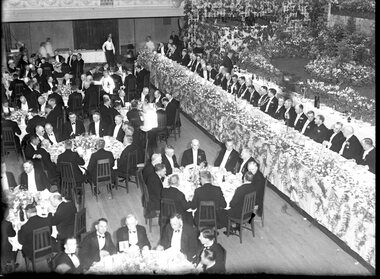 City of Melbourne Libraries
Photograph, Bull, Hugh Jones, 1897-1993, Lord Mayor's Dinner, Melbourne Town Hall
... He was an early director of what is now Ampol, and helped the development of the petroleum industry in Australia after visiting the USA in 1943 and 1946. ...He was an early director of what is now Ampol, and helped the development of the petroleum industry in Australia after visiting the USA in 1943 and 1946. ...Photographer notations on slide: "General View Of Lord Mayor's Dinner At Town Hall Nov 1936 B112" Published: The Age, Tuesday 10 November 1936, page 13 Published title: LORD MAYOR'S BANQUET Published caption: The brilliant scene inside the Melbourne Town Hall last night during the Lord Mayor’s banquet. Trove article identifier: http://nla.gov.au/nla.news-article205939431 Description: 700 guests (all men) are seated around numerous tables in the Melbourne Town Hall for the Lord Mayor's dinner in November 1936. Before the stage is a top table of 35 men, all dressed smartly in black dinner suits, with either a black or white bow tie. Many are wearing their medals. The Lord Mayor has on his Mayoral chains, and to his right is the Governor of Victoria, Lord Huntingfield. The stage is heavily decorated with fresh flowers. Research by project volunteer, Louise McKenzie: This image takes up one quarter of the photographic space on page 13 of The Age on 10 November 1936, reflecting the importance of the event and also the sheer dramatics of the image: 700 guests (all men), a top table of 35, and all dressed smartly in black dinner suits, with either a black or white bow tie. Many are wearing their medals. The Lord Mayor has on his Mayoral chains, and to his right is the Governor of Victoria, Lord Huntingfield. Further to his right is a man with an impressive sash across his chest. It is a very animated, and rather informal, moment. Banks of fresh flowers smother the stage, which is decorated in the manner of a terrace at an English stately home. Tables are laden with food, drink and decorations, and the wait staff (men and women) are also formally dressed, in the manner of Downton Abbey. It is spectacular, dramatic, and luxurious, and perpetuates the proud descriptor of “Marvellous Melbourne” as conferred by London Journalist George Augustus Sala when he visited the city in 1885. During its 1880s boom, Melbourne was the second-largest city in the British Empire, after London, and reputedly the richest city in the world. At times the expression was used with some irony, but "...in Victoria’s centenary year, 1934, with the city mired in another depression, a publisher bravely entitled a book of souvenir photographs Marvellous Melbourne, claiming that the subject ‘still finds apt expression in the happy one-time sobriquet’.” This photo seems to reflect an ongoing pride in Melbourne and a desire for it to live up to its descriptor and celebrate its post-centenary era in style. So it is no surprise to find that on page 11 of The Age on the same day, a second photo is to be found – a cropped view of one table – along with a very detailed description of the night, its purpose, and a surprise announcement. But, who was the Lord Mayor in whose honour the dinner was held? In 1934, the Lord Mayor of Melbourne was Cr. Alexander George Wales, (born Richmond, 11 October 1885, died Elsterwick, 31 May 1962). His father was a contractor and quarry-owner, but was blinded in an industrial accident in 1899. Consequently Alexander, then aged 14, left Brunswick State School to become a railway labourer working at a quarry, and in 1903 joined the Commonwealth public service as a clerk and began studying at night school, determined to improve himself. In 1907 he was appointed secretary of the Albion Quarrying Co. (in which the family had an interest), then its managing director and chairman. As the Australian Dictionary of Biography notes, he was instrumental in expanding the company’s interests, "...becoming director of the Hardware Co. of Australia Pty Ltd, the Twentieth Century Building and Investment Society, the Albion Sand Co. and the Geelong Brick Co.”. His public career began in 1914 when he was elected to the Brunswick council. He was mayor 1917-18, and in 1925 progressed to the Melbourne City Council where he remained for 29 years, being a member of most council committees. He served three successive terms as lord mayor (1934-37), was Chairman of the council’s decorations committee for Melbourne’s centenary, president of the Metropolitan Fire Brigades Board (1936), and Chairman of the Public Works Committee (1937-39). In 1936 he was elected to the Legislative Council with United Australia Party support, but later resigned over possible State government contract tender irregularities. Wales received "the customary reward” of a knighthood and was invested at Buckingham Palace by King George VI whose coronation he attended in 1937. He was an early director of what is now Ampol, and helped the development of the petroleum industry in Australia after visiting the USA in 1943 and 1946. He was impressed by that country’s wartime shipbuilding efforts and supported closer ties with the USA. “While president (1947-48) of the Melbourne Chamber of Commerce, Wales was a vocal critic of the Federal Labor Government, ...a staunch anti-socialist ... and a focus for conservative opposition to the Curtin and Chifley governments...” He is described as “a natural leader in business and civic politics,... a powerful force in the Melbourne City Council... opposing democratic reforms such as the creation of a Greater Melbourne Council and the abolition of plural voting, but advocat[ing] the redevelopment of city-owned property like the Eastern and Western markets...” So, this Lord Mayor’s dinner marks the third successive term in office for Governor Cr. A G Wales. The room is filled with powerful and influential men, and provided a platform for the Premier of Victoria, Albert Dunstan (1882-1950, United Country party) to announce that if the City Council would bear half the cost the State Government would build a bridge at Punt Road “at once”. He announced that the Government proposed to have the bridge built by the Country Roads Board, and allow the City Council to pay its share on convenient terms, and further, it would investigate the shared provision of more Yarra bridges. The proposal for the Punt Road Bridge was met with applause as the Yarra River constituted a serious traffic barrier. On 12 November 1936, two days after the Lord Mayor’s dinner, The Age published an article, “Building without a Plan”. It questions the appropriateness of the next Yarra bridge being the one at Punt Road, and encourages a “proper procedure” to look at the provision of additional Yarra bridges as a whole. But in fact this topic had been canvassed back in August when Melbourne City Council’s public works committee had recommended the replacement of the footbridge at Punt Road with a bridge, and if the Country Roads Board would declare this portion of Punt Road, including the river crossing, a State Highway, this could give the Board authority to construct the bridge and allocate the cost. Hence the reference at the dinner to a shared expense. Still an integral part of traffic management today, the Hoddle Bridge carries Punt Road over the Yarra River between Richmond and South Yarra in Melbourne. It is a five-lane road bridge with narrow footpaths on either side. It is of continuous reinforced concrete T-beam construction with five segmental arched spans, supported on transverse piers, and linked by concrete cross-beams. “The piers terminate in a series of tapered concrete pillars with Art Deco-styled steamlined decoration. Each pillar supports a Victorian-style lamp. The infill railings are geometric-patterned painted metal. Construction began in late 1937, and it was opened by Premier Albert Dunstan on 22 December 1938. It replaced an earlier footbridge, which in turn had replaced a punt service. The bridge (originally referred to as Punt Road Bridge) was named after Robert Hoddle, who planned central Melbourne’s Hoddle Grid, the grid of streets which form Melbourne’s central business district. Hoddle arrived in Australia from the UK in 1823 and went on to carry out surveys in NSW and Queensland before arriving in Melbourne in 1837. He designed layouts for both Melbourne and Williamstown, and later Geelong and other Victorian country areas. He was keen that major streets be at least 30 metres wide. ”With remarkable foresight he provided for wide boulevards from the city to the suburbs, but the subdivisions of early speculators in inner suburbs created the bottle-necks of today. After the separation of the colony in 1851, he became Victoria’s first surveyor-general... and advocated the provision of three-chain (60 m) roads and the widening of all existing main roads from one (20 m) to three chains." However, he was met with constant opposition and in 1853, was eased out of office. As a small and interesting aside: Hoddle was appointed auctioneer for the first sale of crown land in Melbourne on 1 June 1837. His commission was 57 pounds 12s 7d. and he bought two allotments for himself at a cost of 54 pounds. After he died his second wife married Richard Buckhurst Buxton, a member of the family which in 1860s Melbourne established the Australian property dynasty of Buxton Real Estate, Becton, MAB Corporation etc. Returning to the dinner and The Age article of 10 November 1836: Another topic of the after-dinner speeches was a reference to the upcoming Armistice Day. “The Minister of Customs (Mr White) said the proximity of Armistice day reminded us that eighteen years ago we had high hopes of prolonged peace.” The term “Armistice Day” was coined after WWI: “At 11 am on 11 November 1918, the guns on the Western Front fell silent after more than four years of continuous warfare. The Germans called for an armistice (suspension of fighting) in order to secure a peace settlement. They accepted the allied terms on unconditional surrender. Therefore on the 11th hour of the 11th day of the 11th month, a minute’s silence is observed and dedicated to those soldiers who died fighting to protect the nation. Originally known as Armistice Day, it was renamed Remembrance Day after World War Two to commemorate those who were killed in both World Wars. Today it refers to the loss of Australian lives from all wars and conflicts, accompanied by the words, "We will remember them, Lest we forget"." There was comment at the dinner about the need to remain firm in supporting the “democratic government in the British Empire to avoid a “plunge into savagery”. There was a grave responsibility on the British people to keep democracy alive, and that could not be done without adequate defence forces... Many weak governments in non-British countries had been swept aside by strong-fisted dictators, who now were the real threat to peace”. With the benefit of hindsight these were very pertinent comments and tragically prophetic. The Melbourne Shrine of Remembrance had only been dedicated two years earlier, at a ceremony attended by the Duke of Gloucester, son of King George V. Over 300,000 citizens attended: one third of the population of Melbourne. It became the location for the Anzac Day Dawn Service. Originally the march travelled from the Shrine into the city, however, in 1936, this was reversed, and the Shrine became the termination point for Anzac Day Marches. Also significant in 1936, was the installation of a statue in the west forecourt of the Shrine: “The Man with the Donkey” (aka 'Private John Simpson and his Little Donkey'). The work is said to represent the “valour and compassion of the Australian soldier”. Its full citation, according to the City of Melbourne City Collection is: West Side of Base: "The / Man with his Donkey / Gallipoli, April 25 to May 19 / in Commemoration / of the valour and compassion / of the Australian Soldier" AFTER LANDING AT GALLIPOLI, SIMPSON, WITH HIS LITTLE DONKEY, WORKED ALONE, DAY AND NIGHT TAKING WATER TO THE FRONT LINE AND CARRYING THE WOUNDED BACK TO THE DRESSING STATIONS. HE AND HIS DONKEY WERE KILLED BY A SHRAPNEL SHELL ON THE 19TH MAY, 1915. SIMPSON WAS MENTIONED IN DISPATCHES BY SIR IAN HAMILTON, COMMANDER-IN-CHIEF OF THE MEDITERRANEAN EXPEDITIONARY FORCE. / Erected by Public Subscription under auspices of the / Red Cross Society. East Side of Base: Private John Simpson." Their summary in background states: "A bronze figure of Simpson and his donkey with a wounded man on the donkey's back on a granite pedestal. Private John Simpson Kirkpatrick’s intrepid and short-lived exploits during the Gallipoli campaign have made him a popular figure of World War One. He has been mythologised to represent the lauded values of the digger, and he symbolises all those who went into battle unarmed. Born in England in 1892, he came to Australia in 1910. He enlisted to make his way back to England, but as a member of the 3rd Field Ambulance AIA was sent to Gallipoli. After just three weeks of bearing wounded soldiers across Shrapnel Gully on the back of his donkey, Simpson was killed by shrapnel fire. Simpson’s story became a powerful propaganda tool for enlistment in Australia, but following the war he was quickly forgotten. With the Shrine of Remembrance nearing completion in 1933, the memory of Simpson was rekindled to commemorate all who gave their lives to help others during the war. One plaque reads: ‘The / Man with his donkey / Gallipoli … / In commemoration / of the valour and compassion / of the Australian soldier’. In 1935, Wallace Anderson’s design for the memorial was selected though a competition organised by the Australian Red Cross. Anderson had served during the war and worked at the Australian War Memorial after his return. His Man with the Donkey was cast in Italy, and after some debate was sited near the shrine. Unveiled 20th June, 1936." The sculptor, Victorian-born William Wallace Anderson (1888-1975), served in France during WWI and afterwards produced a number of bronze war memorials and memorial portraits, predominantly in Victoria. “His most famous work is that of Simpson and his Donkey (1935), which he completed after winning a competition conducted by the Victorian Division of the Australian Red Cross. Anderson’s fee was 350 pounds; the cast, made by the Chiurazzi Foundry, Naples, Italy, cost 40 pounds. The work... has become well known as a symbol of the Anzac tradition.” A debate as to the siting of the statue arose from a strong view expressed by General Sir John Monash that no representation of individual members of the Australian Defence Force be located on the Shrine itself. Hence its location off to the northwest of the forecourt, in a garden of rosemary. And finally we return to the photo of the grand Lord Mayor’s dinner! An article in The Argus of 4 November 1936 refers to “Brilliant Scene at Lord Mayor’s Ball – Hall Becomes a Garden”. So now it becomes clear why the Town Hall, location of the Lord Mayor’s Dinner on 10 November 1934, only 6 days later, is so lavishly decorated. The floral decorations from the Ball are still in place - an early example of “recycling”, which is gratifying to note at a time of Depression. The reporter has captured the scene with enthusiasm: “Hundreds of tiny rose lights, hidden among pink roses, transformed the Melbourne Town Hall into a magical garden last night, when the Lord Mayor and Lady Mayoress (Councillor A. C. Wales, M.L.C., and Mrs. Wales) entertained about 3,500 guests at a ball. His Excellency the Governor (Lord Huntingfield) and Lady Huntingfield were present, while Rear-Admiral and Mrs. Lane Poole and officers from the visiting squadron were among the special guests. The balconies all round the hall were hidden by a white trellis, covered with pink blossoms and greenery. Rosy flowers were issued up every pillar, and great golden lamps, hanging from the door, were seated in greenery and trails of sweet peas. The organ gallery was converted into a terrace garden with stone steps leading to banks of pink azaleas, pink pelargoniums, masses of calceolarias, and the lovely deep mauve and blue of cinerarias. Slender Japanese maples and poplar trees grew from the higher slopes amid thickets of hostas, while a fascinating illusion was created by the lofty conservatory windows, which formed the background, and which were tinted cerulean blue to simulate the sky seen through glass. Large fern baskets hung from the conservatory roof, and the whole scene was enclosed in trellises of blossom. In the entrance palm green shrubs stood like sentinels round the passed floor, and flowers bloomed in misty golds. The long corridor upstairs leading to the council chamber was lined with an avenue of poplar trees in tubs. In the Lower Town Hall great banks of calceolarias and azaleas decked the upper dais, and each supper table was adorned with a different coloured flower with sprays of roses and Japanese maple laid on the snowy cloths. The adjoining supper-rooms were fragrant with the scent of huge bowls of stock in mauve, purple, and pink, while the white walls were covered with palm leaves and flowers. The roof garden below the clock tower was enclosed as a buffet with rose wreathed walls, and flowers were arranged attractively in the Lady Mayoress's rooms." References: LORD MAYOR'S BANQUET. CENTURY MAKERS AT THE M.C.G. BEFORE THE CHANGE. (1936, November 10). The Age (Melbourne, Vic. : 1854 - 1954), p. 13. Retrieved September 4, 2024, from http://nla.gov.au/nla.news-article205939431 'Portrait of Sir George Wales (Lord Mayor 1934-1937)', City Collection, City of Melbourne, https://citycollection.melbourne.vic.gov.au/portrait-of-sir-george-wales-lord-mayor-1934-37/ Graeme Davison, 'Marvellous Melbourne', eMelbourne, https://www.emelbourne.net.au/biogs/EM00906b.htm THE LORD MAYOR'S BANQUET. (1936, November 10). The Age (Melbourne, Vic. : 1854 - 1954), p. 11. Retrieved September 26, 2024, from http://nla.gov.au/nla.news-article205939643 BRILLIANT SCENE AT LORD MAYOR'S BALL Hall Becomes a Garden (1936, November 4). The Argus (Melbourne, Vic. : 1848 - 1957), p. 14. Retrieved September 26, 2024, from http://nla.gov.au/nla.news-article11932746 'Hoddle Bridge', Wikipedia, https://en.wikipedia.org/wiki/Hoddle_Bridge 'Hoddle Bridge', Victorian Heritage Database Report, Victorian Heritage Council, https://vhd.heritagecouncil.vic.gov.au/places/195689/download-report David Dunstan, 'Wales, Sir Alexander George (1885–1962)', Australian Dictionary of Biography, National Centre of Biography, Australian National University, https://adb.anu.edu.au/biography/wales-sir-alexander-george-8951/text15737, published first in hardcopy 1990, accessed online 26 September 2024. Marjorie J. Tipping, 'Hoddle, Robert (1794–1881)', Australian Dictionary of Biography, National Centre of Biography, Australian National University, https://adb.anu.edu.au/biography/hoddle-robert-2190/text2823, published first in hardcopy 1966, accessed online 26 September 2024. BUILDING WITHOUT A PLAN. (1936, November 12). The Age (Melbourne, Vic. : 1854 - 1954), p. 8. Retrieved September 26, 2024, from http://nla.gov.au/nla.news-article205949762 NEW BRIDGE AT PUNT ROAD (1936, August 12). The Argus (Melbourne, Vic. : 1848 - 1957), p. 10. Retrieved September 26, 2024, from http://nla.gov.au/nla.news-article11902131 'The Shrine of Remembrance', Beaconsfield’s Soldiers: https://beaconsfield.org.au/digitalmemorial/shrine-introduction/ 'Shrine of Remembrance', Wikipedia, https://en.wikipedia.org/wiki/Shrine_of_Remembrance Ken Scarlett, 'Anderson, William Wallace (1888–1975)', Australian Dictionary of Biography, National Centre of Biography, Australian National University, https://adb.anu.edu.au/biography/anderson-william-wallace-9362/text16441, published first in hardcopy 1993, accessed online 26 September 2024. 'Man with the Donkey', City Collection, City of Melbourne, https://citycollection.melbourne.vic.gov.au/man-with-the-donkey-aka-private-john-simpson-and-his-little-donkey/ 'Remembrance Day', Australian Army, https://www.army.gov.au/about-us/history-and-research/traditions/remembrance-day Photographer notations on slide: "General View Of Lord Mayor's Dinner At Town Hall Nov 1936 B112".melbourne town hall, mayors, lord mayors, centenaries, bridges, dinners, clothing and dress, festive decorations, dances and balls, eating and drinking, shrine of remembrance, governors, monuments and memorials, 1930-1939, plants -
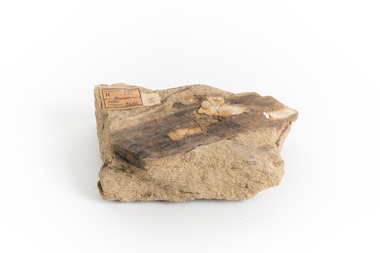 The Beechworth Burke Museum
Geological specimen - Yellow Sandstone
... Sandstones are economically important as major reservoirs for both petroleum and water, as building materials, and as valuable sources of metallic ores. ...This specimen is from Barefoot Hills, Victoria. Sandstones are economically important as major reservoirs for both petroleum and water, as building materials, and as valuable sources of metallic ores. Most significantly, they are the single most useful sedimentary rock type for deciphering Earth history. This specimen is part of a larger collection of geological and mineral specimens collected from around Australia (and some parts of the world) and donated to the Burke Museum between 1868-1880. A large percentage of these specimens were collected in Victoria as part of the Geological Survey of Victoria that begun in 1852 (in response to the Gold Rush) to study and map the geology of Victoria. Collecting geological specimens was an important part of mapping and understanding the scientific makeup of the earth. Many of these specimens were sent to research and collecting organisations across Australia, including the Burke Museum, to educate and encourage further study.A sedimentary rock composed mostly of quartz sand. Sandstone is the second most common sedimentary rock after shale. Sandstones consist of sand-sized grains principally quartz, feldspar and rock fragments. The two major classes of sandstone are arenite and wacke. the colour of sandstone varies from grey, yellow, red and white reflecting the variation in mineral content and cement and is gritty to touch (like sandpaper).Geological survey / R.... S 61 / Loc Bareboot Hills / Sheet / 24SE / 94 /burke museum, beechworth, indigo shire, beechworth museum, geological, geological specimen, mineralogy, sandstone, yellow sandstone, victoria, barefoot hills -
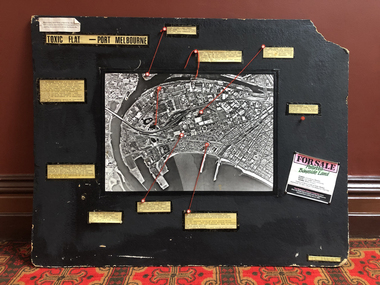 Port Melbourne Historical & Preservation Society
Mixed media, Robert Frost, Toxic Flat - Port Melbourne, 1987
... Produced by Robert Frost of Alfred Street for use in Bay Street informational stalls by Port Melbourne 'Residents' Picket Group' against the SCDC Bayside development, 1988 public action campaigns environmental issues town planning - proposals shelved - bayside fishermans bend industry - manufacturing robert frost residents picket group british petroleum group elders ixl glazebrook paints csiro state electricity commission Large black display board with captions of environmental information connected by string to points on an aerial photo of Port Melbourne/Fishermen's Bend; indicates sources of contamination in Port Melbourne and on the bend. ...Produced by Robert Frost of Alfred Street for use in Bay Street informational stalls by Port Melbourne 'Residents' Picket Group' against the SCDC Bayside development, 1988Large black display board with captions of environmental information connected by string to points on an aerial photo of Port Melbourne/Fishermen's Bend; indicates sources of contamination in Port Melbourne and on the bend.public action campaigns, environmental issues, town planning - proposals shelved - bayside, fishermans bend, industry - manufacturing, robert frost, residents picket group, british petroleum group, elders ixl, glazebrook paints, csiro, state electricity commission -
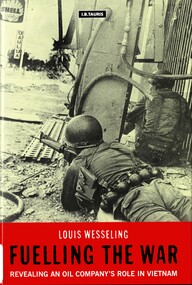 National Vietnam Veterans Museum (NVVM)
Book, Wesseling, Louis, Fuelling the War: Revealing an Oil Company's Role in Vietnam, 2000
... Shell Oil Company Vietnam War 1961-1975 Petroleum industry and trade -- Vietnam US Helicopters Saigon South Vietnamese Vietcong American Embassy Military Officers Senior Officials April 1975, Saigon, US helicopters cumbersomely lift off from the roof of the American Embassy, heavily laden with fleeing diplomats, military officers and senior officials. ...April 1975, Saigon, US helicopters cumbersomely lift off from the roof of the American Embassy, heavily laden with fleeing diplomats, military officers and senior officials.April 1975, Saigon, US helicopters cumbersomely lift off from the roof of the American Embassy, heavily laden with fleeing diplomats, military officers and senior officials.shell oil company, vietnam war, 1961-1975, petroleum industry and trade -- vietnam, us helicopters, saigon, south vietnamese, vietcong, american embassy, military officers, senior officials -
 Port Melbourne Historical & Preservation Society
Photograph - Demolition, various establishments on Port Melbourne foreshore, Ron Laing, 1986 - 1999
... Missions to Seamen Industry - Manufacturing Centenary Bridge Built Environment - Industrial Demolitions Ron LAING British Petroleum Oil Co Commonwealth Government Engine Works Telecom One of 104 colour photographs covering the demolition of all the establishments on the foreshore between Beacon Road and Princes Street (i.e. ...Part of Ron LAING's collection of photographs taken around Port Melbourne over a thirteen year period. Donated to the PMH&PS by the photographer.One of 104 colour photographs covering the demolition of all the establishments on the foreshore between Beacon Road and Princes Street (i.e. 'Bayside' site): BP, Engine Works, PMG (Telecom), Seamen's Mission, Centenary Bridge and Princes Street flats, from 1986missions to seamen, industry - manufacturing, centenary bridge, built environment - industrial, demolitions, ron laing, british petroleum oil co, commonwealth government engine works, telecom -
Glen Eira Historical Society
Newsletter - CAULFIELD RSL
... Waratah Cellars Glenhuntly Road Glen Huntly Road Taverna John Taverna Robyn Gaylard Bernie Auhl Ron Yob Loretta Muir Frank Morris Tony Blaney Matt James Bob Kevin Brennan Davey Kathleen Wreath Laying Ceremonies May Carl One Petroleum Co. Ager Michelle Major Taus Joe Geier Noel Blore Peter Creaney John Wadley Geoffrey Oliver Mavis I. ...This file contains one item about the Caulfield RSL’s newsletter: 1/Five issues (nos. 26, 33, 35, 42, and 44) of Furfs, the official newsletter of the Caulfield RSL, dated 12/2000, 05/2004, 10/2005, 12/2007, and 11/2009 respectively. The issues vary in size (numbering 12, 6, 1, 8, and 8 pages, respectively) and consequently, in terms of breadth of content. Most, however, report on the Club’s recent activities, list the current administrative staff, eulogise recently deceased members, and contain advertisements for goods and services of interest to members. All except the shortest also contain numerous black-and-white photographs of members participating in various events. No. 42 also has an article on the progress of the Club history including mention of a 1963 ABC Four Corners episode with footage inside and outside the Club as well as interviews with members.furfs, advertisements, gould tony, moore hedley, frances ken, stewart r. k, whybrow john, mclean tom, elsternwick, canfield bill, anzac day, remembrance day, middlemiss glenys, middlemiss brian, sayers john, rodda alby, st. george’s road, remembrance day service, president’s dinner, annett michael colonel, dejussing clive, stacey carole, white thomas sir, fuller joan, edwards m. t., greer j., warburton jimmy, decker john, mcbean j., mclean s. mrs., gibson ray, rigby jack, oakley trevor, paul’s steak house, wear well dry cleaners, mclean susan, caulfield lions clubs, glen eira district lions, ‘my brother jack’ short story award, ‘glenmore’, everett kevin, lee kenneth c., sneddon bruce n., perignon george j., bradley john m., kennedy colin j., waratah cellars, glenhuntly road, glen huntly road, taverna john, taverna robyn, gaylard bernie, auhl ron, yob loretta, muir frank, morris tony, blaney matt, james bob, kevin brennan, davey kathleen, wreath laying ceremonies, may carl, one petroleum co., ager michelle major, taus joe, geier noel, blore peter, creaney john, wadley geoffrey, oliver mavis i., browne donald d., ross john, kidd william, rea alan m., pollock rob, pollock florence, sell patricia miss, fidler n., dew d., mayell w., booth vincent, booth lois, johnson carl, ‘the ole tin hat’, centre road, bentleigh, rigby pat, eade charles, howell davie, blore jeff, russell paul, morse r. e., long bridford f. r., harkensee keith r., collins williams h., daniels albert e., stephani detleef p. von, walton alan l., canfield william g., barclay henry i., rose frank w., sherriff william g., may donald c., fergus mark l., sorel peter a., chivers keith, scarffe richard a., dalgleish maggie, sampson stan, jacobs frank, ware les, powell massey, merlo harry, perini leo, milnes ‘bluey’, carmody jack, edwards michael terrence, orrock george, lyon stan, raines barbara, raines laurie, hall ron, metherall murray, blore geoff, walker keith, davis max, doyle tom, reece jim, jewell bill, o’neill roe, ferrari ron, fogarty des, sinclair bill, mitchell j., harris l., boughton h. ms., townsend d. mrs., decker j., larkin r., elder g., sell p., clarke john, mclean t., kean phyllis m., booth geoffrey e., donoghue clifton s., durham leonard c., ford john w., nitsche neil h., davidson kelvin r., werba adele, pleydell max, price colin, taberner laurie, condron neil, leech gail, green barry rev’d, veteran’s lunch, devlin joseph h., murray mark blodwen, jackman david d., hall erica d., hackman james f., thompson pauline l., gassick betty m. le, logan george, wilson tony, slater bob, cobby a. h. (harry) air commodore, steinberg alison mrs., astill bob, reed donald, niewland hans, bodelier berry, little harold, hawkes stewart, limbue ram bahadur, kirkwood robert, rai bharansher, mclean susan, mcbean jon, white michael sgt., caspar freddie -
 National Wool Museum
Sticker
... 'Golden Fleece' petrol sticker. Golden Fleece Petroleum Company GOLDEN FLEECE Sticker ...'Golden Fleece' petrol sticker.GOLDEN FLEECEgolden fleece petroleum company -
National Wool Museum
Ashtray
... Golden Fleece Petroleum Company GOLDEN FLEECE Wembley / ware Golden Fleece and Caltex information from the Caltex website. ...Golden Fleece and Caltex information from the Caltex website. Golden Fleece ashtray by Wembley Ware.GOLDEN FLEECE Wembley / waregolden fleece petroleum company -
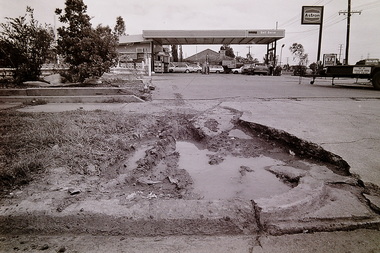 Sunshine and District Historical Society Incorporated
Photograph - Astron Service Station 563 Ballarat Road Albion 1991 Photographs, Adam Ellwood, 1st October 1991
... The site has been redeveloped into a new United Petroleum Service station and a Pie Face outlet. ...These photographs formed part of a regular feature in The Sunshine Advocate highlighting the condition of local roads, parks, nature strips and other public spaces. In most cases, the locations were reported to the newspaper directly by local residents.These photographs are of the original Astron Service Station located at this site. The site has been redeveloped into a new United Petroleum Service station and a Pie Face outlet.Street Watch Ballarat Road 96.1astron service station, ballarat road, albion -
 National Wool Museum
Sign
... Yellow plastic merino sheep sign- used to advertise Golden Fleece petrol pumps. merino sheep golden fleece petroleum company sign golden fleece petroliana One half of a yellow plastic moulded sign in the form of a merino sheep- used to advertise Golden Fleece petrol pumps. ...Yellow plastic merino sheep sign- used to advertise Golden Fleece petrol pumps.One half of a yellow plastic moulded sign in the form of a merino sheep- used to advertise Golden Fleece petrol pumps.merino sheep, golden fleece petroleum company, sign, golden fleece, petroliana
