
Showing 265 items matching "social studies"
-
 Bendigo Historical Society Inc.
Book - WHITE HILLS READING ROOM COLLECTION: MINUTES BOOK 1900-1907
... CLUBS Social white hills reading room Hardcover minutes book of the White Hills Reading Room Committee from 1900 to 1907. The book is in poor condition spine coming apart. White Hills and East Bendigo Heritage Study ...Hardcover minutes book of the White Hills Reading Room Committee from 1900 to 1907. The book is in poor condition spine coming apart. White Hills and East Bendigo Heritage Study - Stage 2 2016 vol 2 citations FINAL_0.pdfclubs, social, white hills reading room -
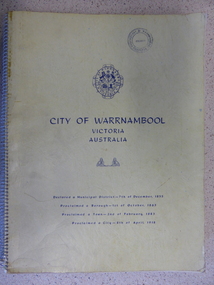 Warrnambool and District Historical Society Inc.
Book, City of Warrnambool, 1961
... There is a very comprehensive study on each of the sections. The population at this time was 15697. This report has social, historical and research significance. ...This book is a report on the development of the city of Warrnambool in 1960. The seven sections it covers are, 1 Town Planning and beautification 2 Culture and Education 3 Town promotion and tourism 4 Recreation and youth work 5 Industrial development 6 Town Development 7 Community organization. There is a very comprehensive study on each of the sections. The population at this time was 15697. This report has social, historical and research significance. It is a comprehensive study of the city as it was in 1960, listing clubs, organisations schools and sporting clubs. It provides information on any development such as the Olympic pool and St Pius X1 school in West Warrnambool and the building of the Pontings store on the Lava St corner. It relates facets of our history which have changed dramatically in the last 60 years with the report on Peter Hand’s tobacconist having 3 vehicles covering the district travelling 4700 miles a month selling cigarettes. It provides statistical evidence for organisations such as Australia Post, train and freight services and the hospitals.Large yellow soft card cover with spiral binding. Title and city details are printed in blue on cover with city logo towards top of front cover. Pages are not numbered. It is divided into seven sections, each denoted by blue page with section title printed in blue on page.Circular stamp on front cover,” Warrnambool Standard Proprietary Limited.” K L Arnel town clerk. warrnambool 1960, warrnambool directory 1960 -
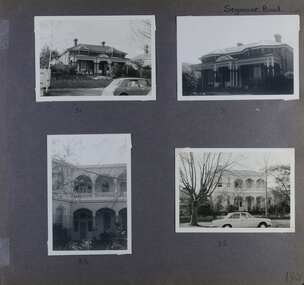 Glen Eira Historical Society
Album - Album page, Seymour Road, Circa 1972
... Study) was originally named Beemery. Victorian Heritage Database HO62 Bellecourt 85 Seymour Road ELSTERNWICK https://vhd.heritagecouncil.vic.gov.au/places/35585 (as of 22/08/2021) "Beemery" at 85 Seymour Road, is an imposing ltalianate villa with arcaded asymmetrical facade built in 1891 for Charles Langdon. It has aesthetic, historical and social ...This album was created in approximately 1972 as part of a project by the Caulfield Historical Society to assist in identifying buildings worthy of preservation. The album is related to a Survey the Caulfield Historical Society developed in collaboration with the National Trust of Australia (Victoria) and Caulfield City Council to identify historic buildings within the City of Caulfield that warranted the protection of a National Trust Classification. Principal photographer thought to be Trevor Hart, member of Caulfield Historical Society. Most photographs were taken between 1966-1972 with a small number of photographs being older and from unknown sources. All photographs are black and white except where stated, with 386 photographs over 198 pages. As at 22/08/2021, 51 Seymour Road is included in the HO179 Beemery Park Precinct which C204glen Amendment seeks to add to the Glen Eira Planning Scheme (amongst others). This is not yet finalised. Bellecourt (so named in 1989 according to Andrew Ward's Heritage Study) was originally named Beemery.Victorian Heritage Database HO62 Bellecourt 85 Seymour Road ELSTERNWICK https://vhd.heritagecouncil.vic.gov.au/places/35585 (as of 22/08/2021) "Beemery" at 85 Seymour Road, is an imposing ltalianate villa with arcaded asymmetrical facade built in 1891 for Charles Langdon. It has aesthetic, historical and social significance. Its aesthetic value rests with the facade which is highly representative of a not uncommon villa form of the late Victorian period. Its historical value derives from its association with the Langdon family in Caulfield (compare "Rosecraddock", "Tarqua" and "Hengar"). Its social value derives from its ability to demonstrate a lifestyle in late Victorian Caulfield.Page 190 of Photograph Album with four photographs of two different properties on Seymour Road.Handwritten: Seymour Road [top right] / 51 [under top left photo] / 51 [under top right photo] / 85 [under bottom left photo] / 85 [under bottom right photo] / 190 [bottom right]trevor hart, elsternwick, seymour road, late victorian, caulfield, beemery, bellecourt, house names, langdon family, charles langdon, cast iron work, verandahs, polychromatic brickwork, italianate style, arched balconies -
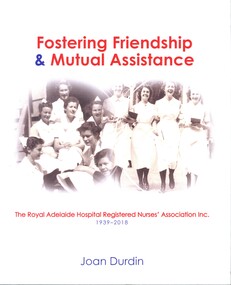 Alfred Hospital Nurses League - Nursing History Collection
Book - Illustrated Book, Joan Durdin, Fostering friendship & mutual assistance: the Royal Adelaide Hospital Registered Nurses' Association Inc. 1939-2018, 2018
... Royal Adelaide Hospital-History Royal Adelaide Hospital Registered Nurses Association-History Nurses Nursing Nursing-study and teaching-South Australia-history A history of the Royal Adelaide Hospital Registered Nurses Association Inc., from its foundation in 1939 (by Lucy Daw, Adelaide Hospital Matron) until 1918. Its motto "fostering friendship and mutual assistance' underlines its role in providing a social ...A history of the Royal Adelaide Hospital Registered Nurses Association Inc., from its foundation in 1939 (by Lucy Daw, Adelaide Hospital Matron) until 1918. Its motto "fostering friendship and mutual assistance' underlines its role in providing a social and helpful organization for RAH nurses.Illustrated book. Full title (red and navy-blue ink) and author's name (navy-blue ink) are printed on the front cover. Abbreviated title (red ink) and author's name (navy-blue ink) are printed on spine. Also on front cover are two black and white photos of groups of nurses. On the back cover are two black and white photos: one is of the Frome Road frontage of the Margaret Graham Nurses Home; the other is of three nurses walking. Also on the back cover is a coloured photo of the Royal Adelaide Hospital nurses' badge.non-fictionA history of the Royal Adelaide Hospital Registered Nurses Association Inc., from its foundation in 1939 (by Lucy Daw, Adelaide Hospital Matron) until 1918. Its motto "fostering friendship and mutual assistance' underlines its role in providing a social and helpful organization for RAH nurses.royal adelaide hospital-history, royal adelaide hospital registered nurses association-history, nurses, nursing, nursing-study and teaching-south australia-history -
 Alfred Hospital Nurses League - Nursing History Collection
Book - Illustrated Book, Elizabeth M.Jamieson et al, Trends in nursing history; their social, international and ethical relationships, 1968
... study at the end of each chapter Inside front cover is a small white sticker on which the previous catalogue number is written. On the front-end page is a black stamp "ALFRED HOSPITAL NURSES LEAGUE' At the bottom of the front-end page, and also on the title page are rectangular purple stamps "ALFRED HOSPITAL 16 SEP 1976 SCHOOL OF NURSING LIBRARY' Illustrated book with red cover, full title and authors surnames printed in white on front cover. Abbreviated title, edition, authors surnames and publisher's name printed in white on spine Trends in nursing history; their social ...A history of nursing from the beginnings of civilization up to the 1960's. the book also highlights the viewpoint that nursing transcends national boundaries and national culture. Includes questions for study at the end of each chapterIllustrated book with red cover, full title and authors surnames printed in white on front cover. Abbreviated title, edition, authors surnames and publisher's name printed in white on spinenon-fictionA history of nursing from the beginnings of civilization up to the 1960's. the book also highlights the viewpoint that nursing transcends national boundaries and national culture. Includes questions for study at the end of each chapternursing-history, nurses -
 Port Melbourne Historical & Preservation Society
Document - Digital Book, Clio DAWSON, From Soldier to Citizen: Social Repatriation and Shell Shock in Melbourne, 1915-193, December 2025
... This thesis is presented by Clio DAWSON to the School of Historical and Philosophical Studies in partial fulfilment of the requirements for the degree Bachelor of Arts (Honours) in the field of History in the School of Historical and Philosophical Studies Faculty of Arts The University of Melbourne From Soldier to Citizen: Social Repatriation and Shell Shock in Melbourne, 1915-193 Document Digital Book Clio DAWSON ...Author visited PMHPS and discussed the Women's Welcoming Committee.Digital document. This thesis is presented by Clio DAWSON to the School of Historical and Philosophical Studies in partial fulfilment of the requirements for the degree Bachelor of Arts (Honours) in the field of History in the School of Historical and Philosophical Studies Faculty of Arts The University of Melbournewar - world war i, clio dawson, shell shock, women, women's welcome home committee -
Port Melbourne Historical & Preservation Society
Document - Research report, Heritage study of "Clareville" and McCormack Gallery", Robyn Clinch, Heritage Study of "Clareville"and the "McCormack Gallery" Port Melbourne, Jan 2008
... Submitted as part of the requirements for the subject "Heritage Planning"at RMIT University for the degree of Master of Social Science Environment. w Built Environment - Civic Built Environment - Domestic Port Melbourne Temperance Hall Town Planning Heritage Robyn CLINCH Clareville McCormack Gallery Frederick WILLIAMS William Hutcheson GRESHAM Jane DIXON Maxwell INGLES John GALL James John BARTLETT Edward W M SUFFOLK Ann McGRATH SUFFOLK Edward Dicker MATHEWS Elizabeth Payne Beck MATHEWS Thomas McCORMACK Mathew McCORMACK Catherine Larkin McCORMACK Maryann Farnan McCORMACK Alexander James DOIG Alice Bevan DOIG Stephen SPADIER Harriet Jane Blackell SPADIER Cricketers Arms Hotel Heritage Study of "Clareville"and the "McCormack Gallery" Port Melbourne - A4 bound with red plastic comb. 62 pages with red back. ...Submitted as part of the requirements for the subject "Heritage Planning"at RMIT University for the degree of Master of Social Science Environment.wHeritage Study of "Clareville"and the "McCormack Gallery" Port Melbourne - A4 bound with red plastic comb. 62 pages with red back. Contains comparative studies from Port and South Melbourne, photos and mapsbuilt environment - civic, built environment - domestic, port melbourne temperance hall, town planning, heritage, robyn clinch, clareville, mccormack gallery, frederick williams, william hutcheson gresham, jane dixon, maxwell ingles, john gall, james john bartlett, edward w m suffolk, ann mcgrath suffolk, edward dicker mathews, elizabeth payne beck mathews, thomas mccormack, mathew mccormack, catherine larkin mccormack, maryann farnan mccormack, alexander james doig, alice bevan doig, stephen spadier, harriet jane blackell spadier, cricketers arms hotel -
Port Melbourne Historical & Preservation Society
Book - Heritage study, former Temperance Hall, Port Melbourne, Jan 2008
... Completed by donor as part of the requirements for the subject "Heritage Planning" at RMIT University for the degree of Master of Social Science (Environment and Planning) Port Melbourne Temperance Hall Built Environment - Civic Robyn CLINCH Social Activities Town Planning Heritage Port Melbourne Dispensary Independent Order of Rechabites Heritage study of the former Temperance Hall, including a study of selected comparative buildings in the locality. ...Completed by donor as part of the requirements for the subject "Heritage Planning" at RMIT University for the degree of Master of Social Science (Environment and Planning)Heritage study of the former Temperance Hall, including a study of selected comparative buildings in the locality. White 86 page book with clear and red plastic cover/binding. January 2008port melbourne temperance hall, built environment - civic, robyn clinch, social activities, town planning, heritage, port melbourne dispensary, independent order of rechabites -
Port Melbourne Historical & Preservation Society
Book, Charles Wilson, The History of Unilever. A Study in economic growth and social change. Vols I & II, 1954
... The History of Unilever. A Study in economic growth and social change. Vols I & II..."The History of Unilever. A Study in economic growth and social change. Vols I & II" Books written by Charles Wilson, Fellow of Jesus College, Cambridge. ...Industry - Manufacturing Business and Traders - Soaps/candles J Kitchen & Sons Pty Ltd Unilever Australia (Holdings) Ltd Apollo Candle Co "The History of Unilever. A Study in economic growth and social change. Vols I & II" Books written by Charles Wilson, Fellow of Jesus College, Cambridge. ..."The History of Unilever. A Study in economic growth and social change. Vols I & II" Books written by Charles Wilson, Fellow of Jesus College, Cambridge. Published 1954. J Kitchen & Sons and Apollo Company in Australia includedindustry - manufacturing, business and traders - soaps/candles, j kitchen & sons pty ltd, unilever australia (holdings) ltd, apollo candle co -
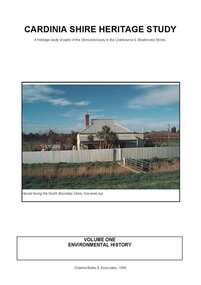 Narre Warren and District Family History Group
Book, Graeme Butler & Associates, Cardinia Shire Heritage Study : a heritage study of parts of the Shire previously in the Cranbourne & Sherbrooke Shires. Vol 1 : Key Findings and Recommendations Vol 2 : Heritage Place and Precinct Citations, 1998
... Rather, it is meant to be a summary of the various ways in which people have used and reacted to the natural environment, altering it so as to create economic, social, cultural and educational uses for themselves and their neighbours. [from the introduction] Cardinia Shire Heritage Study : a heritage study of parts of the Shire previously in the Cranbourne & Sherbrooke Shires. ...This Environmental History of the Cardinia Shire incorporates the Environmental History of the former Shire of Pakenham, compiled by Carlotta Kellaway for Graeme Butler & Associates and the Environmental History of those areas of the Shire formerly in the Shires of Cranbourne and Sherbrooke, compiled by Jill Barnard for Graeme Butler and Associates. An environmental history, which is meant as a guide to the identification of sites of significance within a shire, cannot be a complete social history of that shire. Rather, it is meant to be a summary of the various ways in which people have used and reacted to the natural environment, altering it so as to create economic, social, cultural and educational uses for themselves and their neighbours. [from the introduction]non-fictionThis Environmental History of the Cardinia Shire incorporates the Environmental History of the former Shire of Pakenham, compiled by Carlotta Kellaway for Graeme Butler & Associates and the Environmental History of those areas of the Shire formerly in the Shires of Cranbourne and Sherbrooke, compiled by Jill Barnard for Graeme Butler and Associates. An environmental history, which is meant as a guide to the identification of sites of significance within a shire, cannot be a complete social history of that shire. Rather, it is meant to be a summary of the various ways in which people have used and reacted to the natural environment, altering it so as to create economic, social, cultural and educational uses for themselves and their neighbours. [from the introduction] cardinia shire (vic.), heritage studies, tivoli berry farm (clematis), carramar (emerald), nobelius heritage park, dalmore public hall, horace hardy farm complex, emerald lake park, the grange (koo wee rup), glen afton (yannathan), myrtlewood (yannathan), vay view farm (lang lang), emerald railway station, timber bridges (yallock creek), emerald county clud, oak lee (emerald), sycamore lodge (emerald), cambden wollybutt row (emerald), silver birches (emerald), lang lang cemetery, old monomeith homestead sites, monomeith park (monomeith), dustings garage (koo wee rup), koo wee rup public hall, koo wee rup lockup, wattle theatre (koo wee rup), harewood (koo wee rup), warook homestead (monomeith), old yallock, st john's roman catholic church (koo wee rup), royal hotel (koo wee rup), budgeree (yannathan), cascades guest house (clematis), rutter farm (tooradin), koo wee rup swamp drains, upper ferntree gully to gembrook railway, great southern railway, misson's butchers shop & residence (lang lang), english scottish & australian bank (lang lang), clematis park, row houses (lang lang) -
 Narre Warren and District Family History Group
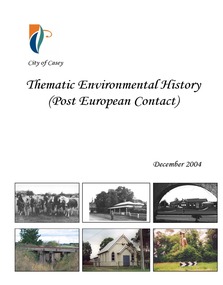
Book, Context Pty Ltd, City of Casey Heritage Study 2004 (Post European Contact) Volume 1: Thematic Environmental History, 2004
... .) -- history heritage studies An explanation of the themes and activities that have been important in shaping the present day City of Casey (the study area), which was created in 1994 and comprises parts of the former Cities of Berwick, Cranbourne and Knox. Not intended to be a complete social or political history, but a summary of-human use and impact upon the landscape in the years since first contact with indigenous inhabitants. ...An explanation of the themes and activities that have been important in shaping the present day City of Casey (the study area), which was created in 1994 and comprises parts of the former Cities of Berwick, Cranbourne and Knox. Not intended to be a complete social or political history, but a summary of-human use and impact upon the landscape in the years since first contact with indigenous inhabitants. It is not a chronological record but organised with themes providing a context to help with identifying heritage places. This publication can be downloaded from the City of Casey website.non-fictionAn explanation of the themes and activities that have been important in shaping the present day City of Casey (the study area), which was created in 1994 and comprises parts of the former Cities of Berwick, Cranbourne and Knox. Not intended to be a complete social or political history, but a summary of-human use and impact upon the landscape in the years since first contact with indigenous inhabitants. It is not a chronological record but organised with themes providing a context to help with identifying heritage places. This publication can be downloaded from the City of Casey website.city of casey (vic.) -- history, heritage studies -
Warrnambool and District Historical Society Inc.
Numismatics, Coin :English Crown 1844, 1844
... This coin was minted in the eighth year of the reign of one of England's longest ruling monarchs.It is of historical and social significance with the study of coins having considerable interest for many people. english coins coin half crown english coin crown warrnambool Obverse " Victoria Dei Gratia 1844." ...English currency before decimalisation in the 1970's consisted of pounds, shillings and pence with twelve pennies to the shilling and twenty shillings to the pound.Coins ranged from farthings which were one quarter of a penny through to pennies, threepence, sixpence, shillings ,half crowns and crowns. Most coins had a variety of common names such as a " bob" for a shilling a "quid for a pound and a tanner for a sixpence. This coin is the equivalent of five shillings and is known as a crown. The text around the obverse, "Victoria Dei Gratia 1844". On the reverse the text of Regina Fid Def"Britanniarum translates as Queen of Britain and defender of the faith.The text around the edge, DECUS ET TUTAMEN ANNO REGNI VIII translates as " an ornament and a safeguard. Coins were thus stamped in an effort to reduce the incidence of penny pinching whereby small amounts of precious metal were shaved from the edge of coins and still passed as full value coins.This coin was minted in the eighth year of the reign of one of England's longest ruling monarchs.It is of historical and social significance with the study of coins having considerable interest for many people. Large silver coin with image of Queen Victoria on the obverse or heads side of the coin and a coat of arms with crown at the top surrounded by a wreath of leaves is on the reverse. Text is around the edge of both sides with text also stamped into the edge of the coin as well. Obverse " Victoria Dei Gratia 1844." Reverse "Regina Fid Def"Britanniarum"On edge of coin is "DECUS ET TUTAMEN ANNO REGNI VIII english coins, coin half crown, english coin crown, warrnambool -
 Wheen Bee Foundation
Publication, Schwarz, Michael P. and Hogendoorn, Katja (editors), Social insects at the turn of the Millennium: 13th Congress of the International Union for the Study of Social Insects (IUSSI), Adelaide, Australia, 29 December 1998-3 January 1999, 1998
... Social insects at the turn of the Millennium: 13th Congress of the International Union for the Study of Social Insects (IUSSI), Adelaide, Australia, 29 December 1998-3 January 1999...Social insects at the turn of the Millennium: 13th Congress of the International Union for the Study of Social Insects (IUSSI), Adelaide, Australia, 29 December 1998-3 January 1999 Publication Schwarz, Michael P. and Hogendoorn, Katja (editors) ... -
 Wheen Bee Foundation
Publication, Michener, C. D, The social behaviour of the bees: a comparative study (Michener, C. D.), Cambridge, 1974, 1974
... The social behaviour of the bees: a comparative study (Michener, C. D.), Cambridge, 1974...The social behaviour of the bees: a comparative study (Michener, C. D.), Cambridge, 1974 Publication Michener, C. ... -
 Victorian Apiarists Association
Publication, Honeybee Ecology - A Study of Adaption in Social Life (Thomas D. Seeley), 1985
... Honeybee Ecology - A Study of Adaption in Social Life (Thomas D. Seeley)...Soft Cover Book with white cover with bee drawings on front, 192 pages Honeybee Ecology - A Study of Adaption in Social Life (Thomas D. Seeley) Publication ...Soft Cover Book with white cover with bee drawings on front, 192 pages -
 Ballarat and District Irish Association
Image, James Ryan, c1864, 1864
... During his long career he served as Minister for Agriculture (1932–1947), Minister for Health and Social Welfare (1947–1948 and 1951–1954) and Minister for Finance (1957–1965). (Wikipedia) While studying at university in 1913 Ryan became a founder-member of the Irish Volunteers and was sworn into the Irish Republican Brotherhood the following year. ...During his long career he served as Minister for Agriculture (1932–1947), Minister for Health and Social Welfare (1947–1948 and 1951–1954) and Minister for Finance (1957–1965). (Wikipedia) While studying at university in 1913 Ryan became a founder-member of the Irish Volunteers and was sworn into the Irish Republican Brotherhood the following year. ...Ryan was an Irish politician. He was elected to the First Dáil at the 1918 general election and, apart from the Third Dáil (1922–1923), held his seat for Wexford until his retirement at the 1965 general election. During his long career he served as Minister for Agriculture (1932–1947), Minister for Health and Social Welfare (1947–1948 and 1951–1954) and Minister for Finance (1957–1965). (Wikipedia) While studying at university in 1913 Ryan became a founder-member of the Irish Volunteers and was sworn into the Irish Republican Brotherhood the following year. During the Easter Rising in 1916 Ryan was the medical officer in the General Post Office (GPO). He was, along with James Connolly, one of the last people to leave the GPO when the evacuation took place. Following the surrender of the patriots Ryan was deported to Stafford Jail in England and subsequently at Frongoch. He was released in August 1916. Ryan rejoined the Volunteers immediately after his release from prison, and in June 1917 he was elected Commandant of the Wexford Battalion. His political career began the following year when he was elected as a Sinn Féin candidate for the constituency of Wexford South in the 1918 general election. Like his fellow Sinn Féin MPs Ryan refused to attend the Westminster Parliament. Instead he attended the proceedings of the First Dáil on 21 January 1919. As the War of Independence went on Ryan became Brigade Commandant of South Wexford and was also elected to Wexford County Council, serving as chairman on one occasion. In September 1919 he was arrested by the British and interned on Spike Island and later Beare Island until he was released after the truce with the other TDs to attend the deliberations of the Dáil concerning the Anglo-Irish Treaty which he voted against. Ryan was later imprisoned again during the subsequent Civil War, however, while interned he won back his Dáil seat as an abstentionist Sinn Féin TD at the 1923 general election. (Wikipedia)Image of a bearded man known as James Ryan. -
 Sunshine and District Historical Society Incorporated
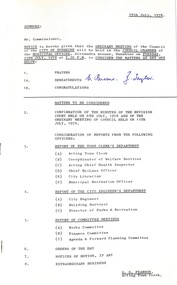
Administrative record - City of Sunshine - Commissioner Mr Alexander "Alex" George Gillon Collection 1976 - 1982 Attachments for the Ordinary Meeting of Council to be Held on 25th July 1978, City of Sunshine, 25th July 1978
... Cannon, Testro & Coburn Letter Lease - Italo-Australian Co-Operative Social Club Ltd Supplementary Valuations for the Western, Central, Southern and River Wards of the City of Sunshine The Local Government Engineers Association of Victoria Overseas Study Tours 1979 Western Region Commission Future Role and Objectives of the Commission The Retail Association of Victoria Nighttime Trading...Cannon, Testro & Coburn Letter Lease - Italo-Australian Co-Operative Social Club Ltd Supplementary Valuations for the Western, Central, Southern and River Wards of the City of Sunshine The Local Government Engineers Association of Victoria Overseas Study Tours 1979 Western Region Commission Future Role and Objectives of the Commission The Retail Association of Victoria Nighttime Trading Stapled foolscap sized document. ...Attachments for the Ordinary Meeting of Council to be Held on 25th July 1978 Patrick J. Cannon, Testro & Coburn Letter Lease - Italo-Australian Co-Operative Social Club Ltd Supplementary Valuations for the Western, Central, Southern and River Wards of the City of Sunshine The Local Government Engineers Association of Victoria Overseas Study Tours 1979 Western Region Commission Future Role and Objectives of the Commission The Retail Association of Victoria Nighttime Trading city of sunshine, alexander "alex" george gillon, italo-australian co-operative social club, furlong road, st. albans -
 Sunshine and District Historical Society Incorporated
Administrative record - City of Sunshine - Commissioner Mr Alexander "Alex" George Gillon Collection 1976 - 1982 - Minutes of the ordinary meeting of council held on 25th July 1978, City of Sunshine, 25th July 1978
... Minutes of the meeting of the sunshine city council held on 25th July 1978 Report of the Town Clerk's Department Report of the Town Clerk Lease Italo-Australian Co-Operative Social Club Ltd Supplementary Valuations Overseas Study Tours 1979 Municipal Association of Victoria Appointments Metropolitan Sectional Council Municipal Association of Victoria The Hub Sports Centre Prices Western Region Commission Report of the Co-Ordinator of Welfare Services Special Bus Replacement Willis Street Pre-School Centre Proposal for the Funding of Emergency Relief in the Western Region Family Day Care Family Day Care conference Tenancy Issues Use of Midway Hostel for Emergency Accommodation Home Help Designated Officer's Register Community Youth Support Scheme Deer Park Report of the Acting Chief Health Inspector Prosecutions Proceedings Sunshine Magistrates Court Immunisation Health Act Food Analyses Head Lice Infant Welfare Officers Western Region Environmental Committee Food Poisoning (Oysters) Butcher Shops Extended Opening Report of the Medical Officer of Health Report of the Chief By-Laws Officer Prohibited Parking Withers Street Supervision of School Crossings Main Road East / St. ...Burton Crescent Minutes of the meeting of the sunshine city council held on 25th July 1978 Report of the Town Clerk's Department Report of the Town Clerk Lease Italo-Australian Co-Operative Social Club Ltd Supplementary Valuations Overseas Study Tours 1979 Municipal Association of Victoria Appointments Metropolitan Sectional Council Municipal Association of Victoria The Hub Sports Centre Prices Western Region Commission Report of the Co-Ordinator of Welfare Services Special Bus Replacement Willis Street Pre-School Centre Proposal for the Funding of Emergency Relief in the Western Region Family Day Care Family Day Care conference Tenancy Issues Use of Midway Hostel for Emergency Accommodation Home Help Designated Officer's Register Community Youth Support Scheme Deer Park Report of the Acting Chief Health Inspector Prosecutions Proceedings Sunshine Magistrates Court Immunisation Health Act Food Analyses Head Lice Infant Welfare Officers Western Region Environmental Committee Food Poisoning (Oysters) Butcher Shops Extended Opening Report of the Medical Officer of Health Report of the Chief By-Laws Officer Prohibited Parking Withers Street Supervision of School Crossings Main Road East / St. ...Minutes of the meeting of the sunshine city council held on 25th July 1978 Report of the Town Clerk's Department Report of the Town Clerk Lease Italo-Australian Co-Operative Social Club Ltd Supplementary Valuations Overseas Study Tours 1979 Municipal Association of Victoria Appointments Metropolitan Sectional Council Municipal Association of Victoria The Hub Sports Centre Prices Western Region Commission Report of the Co-Ordinator of Welfare Services Special Bus Replacement Willis Street Pre-School Centre Proposal for the Funding of Emergency Relief in the Western Region Family Day Care Family Day Care conference Tenancy Issues Use of Midway Hostel for Emergency Accommodation Home Help Designated Officer's Register Community Youth Support Scheme Deer Park Report of the Acting Chief Health Inspector Prosecutions Proceedings Sunshine Magistrates Court Immunisation Health Act Food Analyses Head Lice Infant Welfare Officers Western Region Environmental Committee Food Poisoning (Oysters) Butcher Shops Extended Opening Report of the Medical Officer of Health Report of the Chief By-Laws Officer Prohibited Parking Withers Street Supervision of School Crossings Main Road East / St. Albans High School and Rosamond Road / Maribyrnong High School Report of the City Librarian Children's Book Night Report of the Municipal Recreation Officer Albion Rovers Soccer Club Hours Club may use Selwyn Park for the Playing of Soccer Department of Youth, Sport and Recreation Commonwealth Games Appeal week Report of the Manager of the Sunshine Swimming Pool and the Deer Park Swimming Pool Report of the City Engineer Town Planning Car Parking Policy Melbourne Metropolitan Parking Study Planning Permit Application Factory Lot 37 Western Avenue Planning Permit Application Single Storey Units Lots 39, 40, 41, 42 & 44 Madden Street Maidstone Planning Permit Application Panel Beating Lot 4 McIntyre Road Planning Permit Application Petrol Filling Station, Bank, Child Minding Centre and Library Highpoint West Shopping Centre Rosamond Road Planning Permit Application Illuminated Facia Sign 29A Sun Crescent Planning Permit Application Extension to Existing Factory Warehouse and Caretaker's Dwelling and Addition of Offices McIntyre Road and Cromer Avenue Planning Permit Application Illuminated Facia Sign Sun Crescent C.S.C. Homes Pty Ltd, Sun Crescent Planning 7 C.S.C. Estate Agency Planning Permit Application Service Premises & Caretaker's Dwelling Lot 1 Ballarat Road Planning Permit Application Extension to Existing Warehouse Lot 13 McIntyre Road Planning Permit Application Re-building of Existing Shop 105 Anderson Road West Corner of Fraser Street Planning Permit Application Warehouse Corner McIntyre Road and Balwin Avenue Planning Permit Application Extension to Existing Car Sales Yard and Motor Repair Station 31 St. Albans Road Planning Permit Application Car Sales Yard Ballarat Road South West Corner Hampshire Road Planning Permit Application 3 Factories Market Road Brooklyn Consolidation of Title Station Road and Main Road West Shell Co of Australia Drainage Construction Subdivision Plantation Street and The Esplanade Plan of Consolidation Hulett Street Boral Albion Reid Strata Subdivision of 2 Carter Street Consolidation of Title Rosamond Road and White Street Contract Playground Equipment Various Reserves Tenders for Surplus Vehicles Tender for Tractor Mower Use of Asphalt Plant Melbourne City Council Hulett Street Private Street Scheme Declaration of Sewage Areas No 3513 & 3499 Sewage Facilities to Premises St. Albans Report of the Building Surveyor Ruinous and Dangerous Building Lots 6 & 7 Furlong Road Sunshine North Ruinous and Dangerous Building 28 - 30 Ridley Street Albion Relocation of Housee to Lot 26 Adams Street St. Albans Flats Lots 3 & 4 Ballarat Road Deer Park Seminar Residential Slab Construction 31st August 1978 Report of the Director of Parks & Recreation Reserves Development Reserves Active Usage Patterns Bon Thomas Reserve Development Orders of the Day Accounts Submitted for Payment as at 3rd July 1978 Extraordinary Business Report of the City Engineer Ex G.U.D. Premise Burton Crescent Maribyrnong Intersection Ballarat Road / Station Street Statcon Signal Programme Deferred Payment of Costs city of sunshine, alexander "alex" george gillon, italo-australian co-operative social club, furlong road, st. albans, the hub, sun crescent, sunshine, willis street pre-school centre, willis street, midway hostel, williamson road, maribyrnong, withers street, main road east, st. albans high school, rosamond road, maribyrnong high school, albion rovers soccer, selwyn park, selwyn street, albion, sunshine swimming pool, kennedy street, deer park swimming pool, deer park, western avenue, madden street, maidstone, mcintyre road, highpoint west shopping centre, cromer avenue, sunshine north, ballarat road, anderson road, fraser street, balwin avenue, st. albans road, hampshire road, market road, brooklyn, main road west, plantation street, the esplanade, hulett street, boral albion reid, carter street, white street, ridley street, adams street, bon thomas reserve, quinn street, g.u.d., burton crescent -
 Sunshine and District Historical Society Incorporated
Administrative record - City of Sunshine - Commissioner Mr Alexander "Alex" George Gillon Collection 1976 - 1982 - Notice of Ordinary Meeting of to be held on Tuesday 25th July 1978, City of Sunshine, 19th July 1978
... Notice of Ordinary Meeting of to be held on Tuesday 25th July 1978 Report of the Town Clerk's Department Report of the Town Clerk Lease Italo-Australian Co-Operative Social Club Ltd Supplementary Valuations Overseas Study Tours 1979 Municipal Association of Victoria Appointments Metropolitan Sectional Council Municipal Association of Victoria The Hub Sports Centre Prices Western Region Commission Report of the Co-Ordinator of Welfare Services Special Bus Replacement Willis Street Pre-School Centre Proposal for the Funding of Emergency Relief in the Western Region Family Day Care Family Day Care conference Tenancy Issues Use of Midway Hostel for Emergency Accommodation Home Help Designated Officer's Register Community Youth Support Scheme Deer Park Report of the Acting Chief Health Inspector Prosecutions Proceedings Sunshine Magistrates Court Immunisation Health Act Food Analyses Head Lice Infant Welfare Officers Western Region Environmental Committee Food Poisoning (Oysters) Butcher Shops Extended Opening Report of the Medical Officer of Health Report of the Chief By-Laws Officer Prohibited Parking Withers Street Supervision of School Crossings Main Road East / St. ...Albans Road Hampshire Road Market Road Main Road West Station Road Plantation Street The Esplanade Hulett Street Carter Street White Street Ridley Street Adams Street Bon Thomas Reserve Quinn Street Boral Albion Reid Notice of Ordinary Meeting of to be held on Tuesday 25th July 1978 Report of the Town Clerk's Department Report of the Town Clerk Lease Italo-Australian Co-Operative Social Club Ltd Supplementary Valuations Overseas Study Tours 1979 Municipal Association of Victoria Appointments Metropolitan Sectional Council Municipal Association of Victoria The Hub Sports Centre Prices Western Region Commission Report of the Co-Ordinator of Welfare Services Special Bus Replacement Willis Street Pre-School Centre Proposal for the Funding of Emergency Relief in the Western Region Family Day Care Family Day Care conference Tenancy Issues Use of Midway Hostel for Emergency Accommodation Home Help Designated Officer's Register Community Youth Support Scheme Deer Park Report of the Acting Chief Health Inspector Prosecutions Proceedings Sunshine Magistrates Court Immunisation Health Act Food Analyses Head Lice Infant Welfare Officers Western Region Environmental Committee Food Poisoning (Oysters) Butcher Shops Extended Opening Report of the Medical Officer of Health Report of the Chief By-Laws Officer Prohibited Parking Withers Street Supervision of School Crossings Main Road East / St. ...Notice of Ordinary Meeting of to be held on Tuesday 25th July 1978 Report of the Town Clerk's Department Report of the Town Clerk Lease Italo-Australian Co-Operative Social Club Ltd Supplementary Valuations Overseas Study Tours 1979 Municipal Association of Victoria Appointments Metropolitan Sectional Council Municipal Association of Victoria The Hub Sports Centre Prices Western Region Commission Report of the Co-Ordinator of Welfare Services Special Bus Replacement Willis Street Pre-School Centre Proposal for the Funding of Emergency Relief in the Western Region Family Day Care Family Day Care conference Tenancy Issues Use of Midway Hostel for Emergency Accommodation Home Help Designated Officer's Register Community Youth Support Scheme Deer Park Report of the Acting Chief Health Inspector Prosecutions Proceedings Sunshine Magistrates Court Immunisation Health Act Food Analyses Head Lice Infant Welfare Officers Western Region Environmental Committee Food Poisoning (Oysters) Butcher Shops Extended Opening Report of the Medical Officer of Health Report of the Chief By-Laws Officer Prohibited Parking Withers Street Supervision of School Crossings Main Road East / St. Albans High School and Rosamond Road / Maribyrnong High School Report of the City Librarian Children's Book Night Report of the Municipal Recreation Officer Albion Rovers Soccer Club Hours Club may use Selwyn Park for the Playing of Soccer Department of Youth, Sport and Recreation Commonwealth Games Appeal week Report of the Manager of the Sunshine Swimming Pool and the Deer Park Swimming Pool Report of the City Engineer Town Planning Car Parking Policy Melbourne Metropolitan Parking Study Planning Permit Application Factory Lot 37 Western Avenue Planning Permit Application Single Storey Units Lots 39, 40, 41, 42 & 44 Madden Street Maidstone Planning Permit Application Panel Beating Lot 4 McIntyre Road Planning Permit Application Petrol Filling Station, Bank, Child Minding Centre and Library Highpoint West Shopping Centre Rosamond Road Planning Permit Application Illuminated Facia Sign 29A Sun Crescent Planning Permit Application Extension to Existing Factory Warehouse and Caretaker's Dwelling and Addition of Offices McIntyre Road and Cromer Avenue Planning Permit Application Illuminated Facia Sign Sun Crescent C.S.C. Homes Pty Ltd, Sun Crescent Planning 7 C.S.C. Estate Agency Planning Permit Application Service Premises & Caretaker's Dwelling Lot 1 Ballarat Road Planning Permit Application Extension to Existing Warehouse Lot 13 McIntyre Road Planning Permit Application Re-building of Existing Shop 105 Anderson Road West Corner of Fraser Street Planning Permit Application Warehouse Corner McIntyre Road and Balwin Avenue Planning Permit Application Extension to Existing Car Sales Yard and Motor Repair Station 31 St. Albans Road Planning Permit Application Car Sales Yard Ballarat Road South West Corner Hampshire Road Planning Permit Application 3 Factories Market Road Brooklyn Consolidation of Title Station Road and Main Road West Shell Co of Australia Drainage Construction Subdivision Plantation Street and The Esplanade Plan of Consolidation Hulett Street Boral Albion Reid Strata Subdivision of 2 Carter Street Consolidation of Title Rosamond Road and White Street Contract Playground Equipment Various Reserves Tenders for Surplus Vehicles Tender for Tractor Mower Use of Asphalt Plant Melbourne City Council Hulett Street Private Street Scheme Declaration of Sewage Areas No 3513 & 3499 Sewage Facilities to Premises St. Albans Report of the Building Surveyor Ruinous and Dangerous Building Lots 6 & 7 Furlong Road Sunshine North Ruinous and Dangerous Building 28 - 30 Ridley Street Albion Relocation of Housee to Lot 26 Adams Street St. Albans Flats Lots 3 & 4 Ballarat Road Deer Park Seminar Residential Slab Construction 31st August 1978 Report of the Director of Parks & Recreation Reserves Development Reserves Active Usage Patterns Bon Thomas Reserve Development Orders of the Day Accounts Submitted for Payment as at 3rd July 1978 city of sunshine, alexander "alex" george gillon, italo-australian co-operative social club, furlong road, st. albans, the hub, sun crescent, sunshine, willis street pre-school centre, willis street, midway hostel, williamson road, maribyrnong, main road east, st. albans high school, rosamond road, maribyrnong high school, albion rovers soccer club, selwyn park, selwyn street, albion, sunshine swimming pool, kennedy street, deer park swimming pool, deer park, western avenue, madden street, maidstone, mcintyre road, sunshine north, highpoint west shopping centre, cromer avenue, ballarat road, anderson road, fraser street, balwin avenue, st. albans road, hampshire road, market road, main road west, station road, plantation street, the esplanade, hulett street, carter street, white street, ridley street, adams street, bon thomas reserve, quinn street, boral albion reid -
 Sunshine and District Historical Society Incorporated
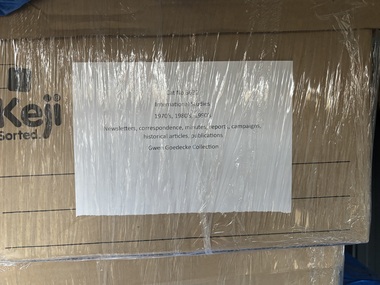
Archive - Gwen Goedecke Collection - International Studies
... Australian International Studies Association Newsletters| Communist Party of Australia - Newsletters, conferences, newspaper articles, Australian Communist Publication 1995, excerpts from "Book of the Rule - How the Government is Ruled" (2004)| Indonesia - "Life of the Poor in Indonesian Cities" Monash University (1978) "The Life of a Jakarta Street Trader" Working Paper #9 and #13 by Lea Jellinek - Monash University (1977)| Jewish Study Group - Invitations to events 1980 to 1991| Germany - "NATO's plans are a menace to Peace" (1979) by Erich Honecker, newsclippings - Nazi War Criminals (1983)| Vietnam - publications "Vietnam Today" bulletin of the Australia - Vietnam Society (1983)| "Vietnam - Social + Cultural Background" - Van Nha Nguyen (1978)| USSR - The Soviet Peace Committee publication "XX Century + Peace" Magazine #7 (1987 - 1990), A statement re: Mikail Gorbachev's August 1986 televised statement on the moratium on nuclear explosions (1986), speech by Mikhail Gorbachev in Vladivostok (July 1986), Soviet News Bulletins by the Press Office in the USSR Embassy in Canberra (1974 - 1980s), publications - "News Times", a Soviet Weekly of World Affairs (11974 - 1980), Australian - USSR Friendship Society Inc (1979 - 1991), Journals, bulletns, newsletters, Australia - Russia + Affiliates Friendship Society (formerly Australia - USSR Friendship Society) 2 newsletters (March - Nov 1994), Australia - Ussr Association notces, journal articles, newsletters (1987 - 1991), newsclippimgs (70s, 80s), publication "Why was the World Misled?"...Australian International Studies Association Newsletters| Communist Party of Australia - Newsletters, conferences, newspaper articles, Australian Communist Publication 1995, excerpts from "Book of the Rule - How the Government is Ruled" (2004)| Indonesia - "Life of the Poor in Indonesian Cities" Monash University (1978) "The Life of a Jakarta Street Trader" Working Paper #9 and #13 by Lea Jellinek - Monash University (1977)| Jewish Study Group - Invitations to events 1980 to 1991| Germany - "NATO's plans are a menace to Peace" (1979) by Erich Honecker, newsclippings - Nazi War Criminals (1983)| Vietnam - publications "Vietnam Today" bulletin of the Australia - Vietnam Society (1983)| "Vietnam - Social + Cultural Background" - Van Nha Nguyen (1978)| USSR - The Soviet Peace Committee publication "XX Century + Peace" Magazine #7 (1987 - 1990), A statement re: Mikail Gorbachev's August 1986 televised statement on the moratium on nuclear explosions (1986), speech by Mikhail Gorbachev in Vladivostok (July 1986), Soviet News Bulletins by the Press Office in the USSR Embassy in Canberra (1974 - 1980s), publications - "News Times", a Soviet Weekly of World Affairs (11974 - 1980), Australian - USSR Friendship Society Inc (1979 - 1991), Journals, bulletns, newsletters, Australia - Russia + Affiliates Friendship Society (formerly Australia - USSR Friendship Society) 2 newsletters (March - Nov 1994), Australia - Ussr Association notces, journal articles, newsletters (1987 - 1991), newsclippimgs (70s, 80s), publication "Why was the World Misled?" ... -
 Uniting Church Archives - Synod of Victoria
Badge - Lapel badge, Presbyterian Fellowship Association
... study of the Bible and other sources of inspiration. To assist youth to grow to full and true maturity by helping to meet their spiritual needs in physical, mental and social realms. ...study of the Bible and other sources of inspiration. To assist youth to grow to full and true maturity by helping to meet their spiritual needs in physical, mental and social realms. ...B006.1 associated with St George's PFA, St Kilda. Membership of the PFA was symbolised by the wearing of the badge. Badges were received by new members only at a special Badge Presentation Service. The letters "PFA" stand out clearly on the badge with the letter "F" the largest because Christian Fellowship is central - with God and and one another. Around the letters is a ring of blue. A ring is an emblem of love and blue traditionally stands for truth of loyalty. Behind the letters are a white St Andrew's cross. Around the edge of the badge are serrations which point outwards and symbolise the reaching out of the Fellowship to the world. The aim of the PFA was "to unite youth in the fellowship of service of the Kingdom of God." Its objectives were "to present to youth the Gospel of Jesus as good news for them, the community and mankind, and as a call to vigorous and faithful activity for Christ's Kingdom in collaboration with all who seek that Kingdom. to help them understanding of the life and teaching of Jesus Christ through study of the Bible and other sources of inspiration. To assist youth to grow to full and true maturity by helping to meet their spiritual needs in physical, mental and social realms. To unite the youth of the Presbyterian Church into a Fellowship of worship, study, recreation and service directed toward the achievement of these objectives." Source: "PFA Handbook", 1960.Seven Presbyterian Fellowship Association round blue and white enameled lapel badges. B006.1 PFA lapel sterling silver badge.PFApresbyterian fellowship association -
 Villa Alba Museum
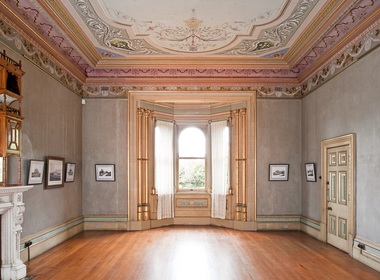
Photograph - Drawing Room, Villa Alba, 2011
... social and aesthetic reasons. Its cultural significance results from the unrivalled quality of the late Victorian hand-painted decoration of its interiors. The Villa Alba Museum is committed to the collection, study...social and aesthetic reasons. Its cultural significance results from the unrivalled quality of the late Victorian hand-painted decoration of its interiors. The Villa Alba Museum is committed to the collection, study ...Built between 1882 and 1884 for the banker William Greenlaw and with interior decoration by the Paterson Brothers, Villa Alba is important to the state of Victoria for architectural, historic, social and aesthetic reasons. Its cultural significance results from the unrivalled quality of the late Victorian hand-painted decoration of its interiors. The Villa Alba Museum is committed to the collection, study and display of 19th century interior decorative finishes, and the components of 19th and 20th century interior decoration.The photograph is one of a series of views of the interior commissioned from the photographer Russell Winnell by the Board of Management of Villa Alba Museum in 2011.Decoration of painted services is original to 1884.villa alba museum, interior design - 19th century, drawing rooms - 19th century, paterson brothers - decorators - melbourne, russell winnell photography -
 Victorian Aboriginal Corporation for Languages
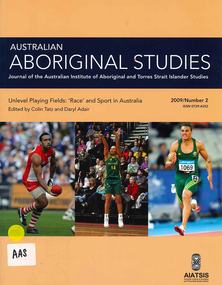
Periodical, Australian Institute of Aboriginal and Torres Strait Islander Studies, Australian Aboriginal studies : journal of the Australian Institute of Aboriginal and Torres Strait Islander Studies, 2009
... social and historical experiences of Indigenous communities. These activities include customs of play that are normally not associated with European notions of competitive sport. Overall, this paper surveys research undertaken into traditional games among Indigenous Australians, as well as proposals for much needed further study in this area. ...social and historical experiences of Indigenous communities. These activities include customs of play that are normally not associated with European notions of competitive sport. Overall, this paper surveys research undertaken into traditional games among Indigenous Australians, as well as proposals for much needed further study in this area. ...Darkness and a little light: ?Race? and sport in Australia Colin Tatz (AIATSIS & Australian National University) and Daryl Adair (University of Technology Sydney) Despite ?the wonderful and chaotic universe of clashing colors, temperaments and emotions, of brave deeds against odds seemingly insuperable?, sport is mixed with ?mean and shameful acts of pure skullduggery?, villainy, cowardice, depravity, rapaciousness and malice. Thus wrote celebrated American novelist Paul Gallico on the eve of the Second World War (Gallico 1938 [1988]:9-10). An acute enough observation about society in general, his farewell to sports writing also captures the ?clashing colors? in Australian sport. In this ?land of the fair go?, we look at the malice of racism in the arenas where, as custom might have it, one would least want or expect to find it. The history of the connection between sport, race and society - the long past, the recent past and the social present - is commonly dark and ugly but some light and decency are just becoming visible. Coming to terms: ?Race?, ethnicity, identity and Aboriginality in sport Colin Tatz (AIATSIS & Australian National University) Notions of genetic superiority have led to some of the world?s greatest human calamities. Just as social scientists thought that racial anthropology and biology had ended with the cataclysm of the Second World War, so some influential researchers and sports commentators have rekindled the pre-war debate about the muscular merits of ?races? in a new discipline that Nyborg (1994) calls the ?science of physicology?. The more recent realm of racial ?athletic genes?, especially within socially constructed black athletic communities, may intend no malice but this search for the keys to their success may well revive the old, discredited discourses. This critical commentary shows what can happen when some population geneticists and sports writers ignore history and when medical, biological and sporting doctrines deriving from ?race? are dislocated from any historical, geographic, cultural and social contexts. Understanding discourses about race, racism, ethnicity, otherness, identity and Aboriginality are essential if sense, or nonsense, is to be made of genetic/racial ?explanations? of sporting excellence. Between the two major wars boxing was, disproportionately, a Jewish sport; Kenyans and Ethiopians now ?own? middle- and long-distance running and Jamaicans the shorter events; South Koreans dominate women?s professional golf. This essay explores the various explanations put forward for such ?statistical domination?: genes, biochemistry, biomechanics, history, culture, social dynamics, the search for identity, alienation, need, chance, circumstances, and personal bent or aptitude. Traditional games of a timeless land: Play cultures in Aboriginal and Torres Strait Islander communities Ken Edwards (University of Southern Queensland) Sports history in Australia has focused almost entirely on modern, Eurocentric sports and has therefore largely ignored the multitude of unique pre- European games that are, or once were, played. The area of traditional games, especially those of Aboriginal and Torres Strait Islander peoples, is an important aspect of the cultural, social and historical experiences of Indigenous communities. These activities include customs of play that are normally not associated with European notions of competitive sport. Overall, this paper surveys research undertaken into traditional games among Indigenous Australians, as well as proposals for much needed further study in this area. Culture, ?race? and discrimination in the 1868 Aboriginal cricket tour of England David Sampson As a consequence of John Mulvaney?s important historical research, the Aboriginal cricket and performance tour of Britain in 1868 has in recent decades become established as perhaps the most famous of all public events in contact history involving Aborigines, white settlers and the British metropolis. Although recognition of its importance is welcome and significant, public commemorations of the tour have enveloped the tour in mythologies of cricket and nation. Such mythologies have obscured fundamental aspects of the tour that were inescapable racial and colonial realities of the Victorian era. This reappraisal of the tour explores the centrality of racial ideology, racial science and racial power imbalances that enabled, created and shaped the tour. By exploring beyond cricketing mythology, it restores the central importance of the spectacular performances of Aboriginal skills without which the tour would have been impossible. Such a reappraisal seeks to fully recognise the often trivialised non-cricketing expertise of all of the Aboriginal performers in 1868 for their achievement of pioneering their unique culture, skills and technologies to a mass international audience. Football, ?race? and resistance: The Darwin Football League, 1926?29 Matthew Stephen (Northern Territory Archive Service) Darwin was a diverse but deeply divided society in the early twentieth century. The Commonwealth Government introduced the Aboriginals Ordinance 1911 in the Northern Territory, instituting state surveillance, control and a racially segregated hierarchy of whites foremost, then Asians, ?Coloureds? (Aborigines and others of mixed descent) and, lastly, the so-called ?full-blood? Aborigines. Sport was important in scaffolding this stratification. Whites believed that sport was their private domain and strictly controlled non-white participation. Australian Rules football, established in Darwin from 1916, was the first sport in which ?Coloured? sportsmen challenged this domination. Football became a battleground for recognition, rights and identity for all groups. The ?Coloured? community embraced its team, Vesteys, which dominated the Northern Territory Football League (NTFL) in the 1920s. In 1926, amidst growing racial tension, the white-administered NTFL changed its constitution to exclude non-white players. In reaction, ?Coloured? and Chinese footballers formed their own competition - the Darwin Football League (DFL). The saga of that colour bar is an important chapter in Australia?s football history, yet it has faded from Darwin?s social memory and is almost unknown among historians. That picture - Nicky Winmar and the history of an image Matthew Klugman (Victoria University) and Gary Osmond (The University of Queensland) In April 1993 Australian Rules footballer Nicky Winmar responded to on-field racist abuse by lifting his jersey and pointing to his chest. The photographic image of that event is now famous as a response to racial abuse and has come to be seen as starting a movement against racism in football. The racial connotations in the image might seem a foregone conclusion: the power, appeal and dominant meaning of the photograph might appear to be self-evident. But neither the fame of the image nor its racial connotation was automatic. Through interviews with the photographers and analysis of the use of the image in the media, we explore how that picture came to be of such symbolic importance, and how it has remained something to be re-shown and emulated. Rather than analyse the image as a photograph or work of art, we uncover some of its early history and explore the debates that continue to swirl around its purpose and meaning. We also draw attention to the way the careful study of photographs might enhance the study of sport, race and racism. ?She?s not one of us?: Cathy Freeman and the place of Aboriginal people in Australian national culture Toni Bruce (University of Waikato) and Emma Wensing (Independent scholar) The Sydney 2000 Olympic Games generated a national media celebration of Aboriginal 400 metre runner Cathy Freeman. The construction of Freeman as the symbol of national reconciliation was evident in print and on television, the Internet and radio. In contrast to this celebration of Freeman, the letters to the editor sections of 11 major newspapers became sites for competing claims over what constitutes Australian identity and the place of Aboriginal people in national culture. We analyse this under-explored medium of opinion and discuss how the deep feelings evident in these letters, and the often vitriolic responses to them, illustrate some of the enduring racial tensions in Australian society. Sport, physical activity and urban Indigenous young people Alison Nelson (The University of Queensland) This paper challenges some of the commonly held assumptions and ?knowledges? about Indigenous young people and their engagement in physical activity. These include their ?natural? ability, and the use of sport as a panacea for health, education and behavioural issues. Data is presented from qualitative research undertaken with a group of 14 urban Indigenous young people with a view to ?speaking back? to these commentaries. This research draws on Critical Race Theory in order to make visible the taken-for-granted assumptions about Indigenous Australians made by the dominant white, Western culture. Multiple, shifting and complex identities were expressed in the young people?s articulation of the place and meaning of sport and physical activity in their lives. They both engaged in, and resisted, dominant Western discourses regarding representations of Indigenous people in sport. The paper gives voice to these young people in an attempt to disrupt and subvert hegemonic discourses. An unwanted corroboree: The politics of the New South Wales Aboriginal Rugby League Knockout Heidi Norman (University of Technology Sydney) The annual New South Wales Aboriginal Rugby League Knockout is so much more than a sporting event. Involving a high level of organisation, it is both a social and cultural coming together of diverse communities for a social and cultural experience considered ?bigger than Christmas?. As if the planning and logistics were not difficult enough, the rotating-venue Knockout has been beset, especially since the late 1980s and 1990s, by layers of opposition and open hostility based on ?race?: from country town newspapers, local town and shire councils, local business houses and, inevitably, the local police. A few towns have welcomed the event, seeing economic advantage and community good will for all. Commonly, the Aboriginal ?influx? of visitors and players - people perceived as ?strangers?, ?outsiders?, ?non-taxpayers? - provoked public fear about crime waves, violence and physical safety, requiring heavy policing. Without exception, these racist expectations were shown to be totally unfounded. Research report: Recent advances in digital audio recorder technology provide considerable advantages in terms of cost and portability for language workers.b&w photographs, colour photographs, tablessport and race, racism, cathy freeman, nicky winmar, rugby league, afl, athletics, cricket, digital audio recorders -
 Victorian Aboriginal Corporation for Languages
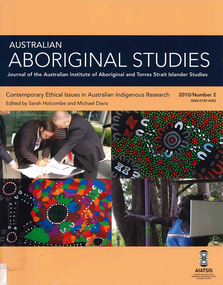
Periodical, Australian Institute of Aboriginal and Torres Strait Islander Studies, Australian Aboriginal studies : journal of the Australian Institute of Aboriginal and Torres Strait Islander Studies, 2010
... Studies and draws upon both actual and hypothetical examples of issues that may arise when requests are made for Indigenous material. Specific concerns about ethical practices in collecting data and the subsequent control of access to both the data itself and to published works based upon it are raised within the context of several types of collections, including those held by AIATSIS and by Native Title Representative Bodies. Ethics or social...social justice Indigenous health b&w photographs, colour photographs 'Whose Ethics?':Codifying and enacting ethics in research settings Bringing ethics up to date? A review of the AIATSIS ethical guidelines Michael Davis (Independent Academic) A revision of the AIATSIS Guidelines for Ethical Research in Indigenous Studies was carried out during 2009-10. ...'Whose Ethics?':Codifying and enacting ethics in research settings Bringing ethics up to date? A review of the AIATSIS ethical guidelines Michael Davis (Independent Academic) A revision of the AIATSIS Guidelines for Ethical Research in Indigenous Studies was carried out during 2009-10. The purpose of the revision was to bring the Guidelines up to date in light of a range of critical developments that have occurred in Indigenous rights, research and knowledge management since the previous version of the Guidelines was released in 2000. In this paper I present an outline of these developments, and briefly discuss the review process. I argue that the review, and the developments that it responded to, have highlighted that ethical research needs to be thought about more as a type of behaviour and practice between engaged participants, and less as an institutionalised, document-focused and prescriptive approach. The arrogance of ethnography: Managing anthropological research knowledge Sarah Holcombe (ANU) The ethnographic method is a core feature of anthropological practice. This locally intensive research enables insight into local praxis and culturally relative practices that would otherwise not be possible. Indeed, empathetic engagement is only possible in this close and intimate encounter. However, this paper argues that this method can also provide the practitioner with a false sense of his or her own knowing and expertise and, indeed, with arrogance. And the boundaries between the anthropologist as knowledge sink - cultural translator and interpreter - and the knowledge of the local knowledge owners can become opaque. Globalisation and the knowledge ?commons?, exemplified by Google, also highlight the increasing complexities in this area of the governance and ownership of knowledge. Our stronghold of working in remote areas and/or with marginalised groups places us at the forefront of negotiating the multiple new technological knowledge spaces that are opening up in the form of Indigenous websites and knowledge centres in these areas. Anthropology is not immune from the increasing awareness of the limitations and risks of the intellectual property regime for protecting or managing Indigenous knowledge. The relevance of the Declaration on the Rights of Indigenous Peoples in opening up a ?rights-based? discourse, especially in the area of knowledge ownership, brings these issues to the fore. For anthropology to remain relevant, we have to engage locally with these global discourses. This paper begins to traverse some of this ground. Protocols: Devices for translating moralities, controlling knowledge and defining actors in Indigenous research, and critical ethical reflection Margaret Raven (Institute for Sustainability and Technology Policy (ISTP), Murdoch University) Protocols are devices that act to assist with ethical research behaviour in Indigenous research contexts. Protocols also attempt to play a mediating role in the power and control inherent in research. While the development of bureaucratically derived protocols is on the increase, critiques and review of protocols have been undertaken in an ad hoc manner and in the absence of an overarching ethical framework or standard. Additionally, actors implicated in research networks are seldom theorised. This paper sketches out a typology of research characters and the different moral positioning that each of them plays in the research game. It argues that by understanding the ways actors enact research protocols we are better able to understand what protocols are, and how they seek to build ethical research practices. Ethics and research: Dilemmas raised in managing research collections of Aboriginal and Torres Strait Islander materials Grace Koch (AIATSIS) This paper examines some of the ethical dilemmas for the proper management of research collections of Indigenous cultural materials, concentrating upon the use of such material for Native Title purposes. It refers directly to a number of points in the draft of the revised AIATSIS Guidelines for Ethical Research in Indigenous Studies and draws upon both actual and hypothetical examples of issues that may arise when requests are made for Indigenous material. Specific concerns about ethical practices in collecting data and the subsequent control of access to both the data itself and to published works based upon it are raised within the context of several types of collections, including those held by AIATSIS and by Native Title Representative Bodies. Ethics or social justice? Heritage and the politics of recognition Laurajane Smith (ANU) Nancy Fraser?s model of the politics of recognition is used to examine how ethical practices are interconnected with wider struggles for recognition and social justice. This paper focuses on the concept of 'heritage' and the way it is often uncritically linked to 'identity' to illustrate how expert knowledge can become implicated in struggles for recognition. The consequences of this for ethical practice and for rethinking the role of expertise, professional discourses and disciplinary identity are discussed. The ethics of teaching from country Michael Christie (CDU), with the assistance of Yi?iya Guyula, Kathy Gotha and Dh�?gal Gurruwiwi The 'Teaching from Country' program provided the opportunity and the funding for Yol?u (north-east Arnhem Land Aboriginal) knowledge authorities to participate actively in the academic teaching of their languages and cultures from their remote homeland centres using new digital technologies. As two knowledge systems and their practices came to work together, so too did two divergent epistemologies and metaphysics, and challenges to our understandings of our ethical behaviour. This paper uses an examination of the philosophical and pedagogical work of the Yol?u Elders and their students to reflect upon ethical teaching and research in postcolonial knowledge practices. Closing the gaps in and through Indigenous health research: Guidelines, processes and practices Pat Dudgeon (UWA), Kerrie Kelly (Australian Indigenous Psychologists Association) and Roz Walker (UWA) Research in Aboriginal contexts remains a vexed issue given the ongoing inequities and injustices in Indigenous health. It is widely accepted that good research providing a sound evidence base is critical to closing the gap in Aboriginal health and wellbeing outcomes. However, key contemporary research issues still remain regarding how that research is prioritised, carried out, disseminated and translated so that Aboriginal people are the main beneficiaries of the research in every sense. It is widely acknowledged that, historically, research on Indigenous groups by non-Indigenous researchers has benefited the careers and reputations of researchers, often with little benefit and considerably more harm for Indigenous peoples in Australia and internationally. This paper argues that genuine collaborative and equal partnerships in Indigenous health research are critical to enable Aboriginal and Torres Islander people to determine the solutions to close the gap on many contemporary health issues. It suggests that greater recognition of research methodologies, such as community participatory action research, is necessary to ensure that Aboriginal people have control of, or significant input into, determining the Indigenous health research agenda at all levels. This can occur at a national level, such as through the National Health and Medical Research Council (NHMRC) Road Map on Indigenous research priorities (RAWG 2002), and at a local level through the development of structural mechanisms and processes, including research ethics committees? research protocols to hold researchers accountable to the NHMRC ethical guidelines and values which recognise Indigenous culture in all aspects of research. Researching on Ngarrindjeri Ruwe/Ruwar: Methodologies for positive transformation Steve Hemming (Flinders University) , Daryle Rigney (Flinders University) and Shaun Berg (Berg Lawyers) Ngarrindjeri engagement with cultural and natural resource management over the past decade provides a useful case study for examining the relationship between research, colonialism and improved Indigenous wellbeing. The Ngarrindjeri nation is located in south-eastern Australia, a ?white? space framed by Aboriginalist myths of cultural extinction recycled through burgeoning heritage, Native Title, natural resource management ?industries?. Research is a central element of this network of intrusive interests and colonising practices. Government management regimes such as natural resource management draw upon the research and business sectors to form complex alliances to access funds to support their research, monitoring, policy development, management and on-ground works programs. We argue that understanding the political and ethical location of research in this contemporary management landscape is crucial to any assessment of the potential positive contribution of research to 'Bridging the Gap' or improving Indigenous wellbeing. Recognition that research conducted on Ngarrindjeri Ruwe/Ruwar (country/body/spirit) has impacts on Ngarrindjeri and that Ngarrindjeri have a right and responsibility to care for their lands and waters are important platforms for any just or ethical research. Ngarrindjeri have linked these rights and responsibilities to long-term community development focused on Ngarrindjeri capacity building and shifts in Ngarrindjeri power in programs designed to research and manage Ngarrindjeri Ruwe/Ruwar. Research agreements that protect Ngarrindjeri interests, including cultural knowledge and intellectual property, are crucial elements in these shifts in power. A preliminary review of ethics resources, with particular focus on those available online from Indigenous organisations in WA, NT and Qld Sarah Holcombe (ANU) and Natalia Gould (La Trobe University) In light of a growing interest in Indigenous knowledge, this preliminary review maps the forms and contents of some existing resources and processes currently available and under development in the Northern Territory, Queensland and Western Australia, along with those enacted through several cross-jurisdictional initiatives. A significant majority of ethics resources have been developed in response to a growing interest in the application of Indigenous knowledge in land and natural resource management. The aim of these resources is to ?manage? (i.e. protect and maintain) Indigenous knowledge by ensuring ethical engagement with the knowledge holders. Case studies are drawn on from each jurisdiction to illustrate both the diversity and commonality in the approach to managing this intercultural engagement. Such resources include protocols, guidelines, memorandums of understanding, research agreements and strategic plans. In conducting this review we encourage greater awareness of the range of approaches in practice and under development today, while emphasising that systematic, localised processes for establishing these mechanisms is of fundamental importance to ensuring equitable collaboration. Likewise, making available a range of ethics tools and resources also enables the sharing of the local and regional initiatives in this very dynamic area of Indigenous knowledge rights.b&w photographs, colour photographsngarrindjeri, ethics, ethnography, indigenous research, social justice, indigenous health -
 Victorian Aboriginal Corporation for Languages
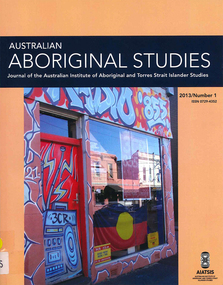
Periodical, Australian Institute of Aboriginal and Torres Strait Islander Studies, Australian Aboriginal studies : journal of the Australian Institute of Aboriginal and Torres Strait Islander Studies, 2013
... Analysis of firstperson pronoun use shows the ongoing negotiation of social category boundaries and construction of moral identities through ascriptions to category members, upon which the intelligibility of the interview for the listening audience depended. The findings from analysis support claims in a considerable body of whiteness studies...Analysis of firstperson pronoun use shows the ongoing negotiation of social category boundaries and construction of moral identities through ascriptions to category members, upon which the intelligibility of the interview for the listening audience depended. The findings from analysis support claims in a considerable body of whiteness studies ...We don?t leave our identities at the city limits: Aboriginal and Torres Strait Islander people living in urban localities Bronwyn Fredericks Aboriginal and Torres Strait Islander people who live in cities and towns are often thought of as ?less Indigenous? than those who live ?in the bush?, as though they are ?fake? Aboriginal people ? while ?real? Aboriginal people live ?on communities? and ?real? Torres Strait Islander people live ?on islands?. Yet more than 70 percent of Australia?s Indigenous peoples live in urban locations (ABS 2007), and urban living is just as much part of a reality for Aboriginal and Torres Strait Islander people as living in remote discrete communities. This paper examines the contradictions and struggles that Aboriginal and Torres Strait Islander people experience when living in urban environments. It looks at the symbols of place and space on display in the Australian cities of Melbourne and Brisbane to demonstrate how prevailing social, political and economic values are displayed. Symbols of place and space are never neutral, and this paper argues that they can either marginalise and oppress urban Aboriginal and Torres Strait Islander people, or demonstrate that they are included and engaged. Juggling with pronouns: Racist discourse in spoken interaction on the radio Di Roy While the discourse of deficit with regard to Australian Indigenous health and wellbeing has been well documented in print media and through images on film and on television, radio talk concerning this discourse remains underresearched. This paper interrogates the power of an interactive news interview, aired on the Radio National Breakfast program on ABC Radio in 2011, to maintain and reproduce the discourse of deficit, despite the best intentions of the interview participants. Using a conversation-analytical approach, and membership categorisation analysis in particular, this paper interrogates the spoken interaction between a well-known radio interviewer and a respected medical researcher into Indigenous eye health. It demonstrates the recreation of a discourse emanating from longstanding hegemonies between mainstream and Indigenous Australians. Analysis of firstperson pronoun use shows the ongoing negotiation of social category boundaries and construction of moral identities through ascriptions to category members, upon which the intelligibility of the interview for the listening audience depended. The findings from analysis support claims in a considerable body of whiteness studies literature, the main themes of which include the pervasiveness of a racist discourse in Australian media and society, the power of invisible assumptions, and the importance of naming and exposing them. Changes in Pitjantjatjara mourning and burial practices Bill Edwards, University of South Australia This paper is based on observations over a period of more than five decades of changes in Pitjantjatjara burial practices from traditional practices to the introduction of Christian services and cemeteries. Missions have been criticised for enforcing such changes. However, in this instance, the changes were implemented by the Aboriginal people themselves. Following brief outlines of Pitjantjatjara traditional life, including burial practices, and of the establishment of Ernabella Mission in 1937 and its policy of respect for Pitjantjatjara cultural practices and language, the history of these changes which commenced in 1973 are recorded. Previously, deceased bodies were interred according to traditional rites. However, as these practices were increasingly at odds with some of the features of contemporary social, economic and political life, two men who had lost close family members initiated church funeral services and established a cemetery. These practices soon spread to most Pitjantjatjara communities in a manner which illustrates the model of change outlined by Everett Rogers (1962) in Diffusion of Innovations. Reference is made to four more recent funerals to show how these events have been elaborated and have become major social occasions. The world from Malarrak: Depictions of South-east Asian and European subjects in rock art from the Wellington Range, Australia Sally K May, Paul SC Ta�on, Alistair Paterson, Meg Travers This paper investigates contact histories in northern Australia through an analysis of recent rock paintings. Around Australia Aboriginal artists have produced a unique record of their experiences of contact since the earliest encounters with South-east Asian and, later, European visitors and settlers. This rock art archive provides irreplaceable contemporary accounts of Aboriginal attitudes towards, and engagement with, foreigners on their shores. Since 2008 our team has been working to document contact period rock art in north-western and western Arnhem Land. This paper focuses on findings from a site complex known as Malarrak. It includes the most thorough analysis of contact rock art yet undertaken in this area and questions previous interpretations of subject matter and the relationship of particular paintings to historic events. Contact period rock art from Malarrak presents us with an illustrated history of international relationships in this isolated part of the world. It not only reflects the material changes brought about by outside cultural groups but also highlights the active role Aboriginal communities took in responding to these circumstances. Addressing the Arrernte: FJ Gillen?s 1896 Engwura speech Jason Gibson, Australian National University This paper analyses a speech delivered by Francis James Gillen during the opening stages of what is now regarded as one of the most significant ethnographic recording events in Australian history. Gillen?s ?speech? at the 1896 Engwura festival provides a unique insight into the complex personal relationships that early anthropologists had with Aboriginal people. This recently unearthed text, recorded by Walter Baldwin Spencer in his field notebook, demonstrates how Gillen and Spencer sought to establish the parameters of their anthropological enquiry in ways that involved both Arrernte agency and kinship while at the same time invoking the hierarchies of colonial anthropology in Australia. By examining the content of the speech, as it was written down by Spencer, we are also able to reassesses the importance of Gillen to the ethnographic ambitions of the Spencer/Gillen collaboration. The incorporation of fundamental Arrernte concepts and the use of Arrernte words to convey the purpose of their 1896 fieldwork suggest a degree of Arrernte involvement and consent not revealed before. The paper concludes with a discussion of the outcomes of the Engwura festival and the subsequent publication of The Native Tribes of Central Australia within the context of a broader set of relationships that helped to define the emergent field of Australian anthropology at the close of the nineteenth century. One size doesn?t fit all: Experiences of family members of Indigenous gamblers Louise Holdsworth, Helen Breen, Nerilee Hing and Ashley Gordon Centre for Gambling Education and Research, Southern Cross University This study explores help-seeking and help-provision by family members of Indigenous people experiencing gambling problems, a topic that previously has been ignored. Data are analysed from face-to-face interviews with 11 family members of Indigenous Australians who gamble regularly. The results confirm that substantial barriers are faced by Indigenous Australians in accessing formal help services and programs, whether for themselves or a loved one. Informal help from family and friends appears more common. In this study, this informal help includes emotional care, practical support and various forms of ?tough love?. However, these measures are mostly in vain. Participants emphasise that ?one size doesn?t fit all? when it comes to avenues of gambling help for Indigenous peoples. Efforts are needed to identify how Indigenous families and extended families can best provide social and practical support to assist their loved ones to acknowledge and address gambling problems. Western Australia?s Aboriginal heritage regime: Critiques of culture, ethnography, procedure and political economy Nicholas Herriman, La Trobe University Western Australia?s Aboriginal Heritage Act 1972 (WA) and the de facto arrangements that have arisen from it constitute a large part of the Aboriginal ?heritage regime? in that state. Although designed ostensibly to protect Aboriginal heritage, the heritage regime has been subjected to various scholarly critiques. Indeed, there is a widespread perception of a need to reform the Act. But on what basis could this proceed? Here I offer an analysis of these critiques, grouped according to their focus on political economy, procedure, ethnography and culture. I outline problems surrounding the first three criticisms and then discuss two versions of the cultural critique. I argue that an extreme version of this criticism is weak and inconsistent with the other three critiques. I conclude that there is room for optimism by pointing to ways in which the heritage regime could provide more beneficial outcomes for Aboriginal people. Read With Me Everyday: Community engagement and English literacy outcomes at Erambie Mission (research report) Lawrence Bamblett Since 2009 Lawrie Bamblett has been working with his community at Erambie Mission on a literacy project called Read With Me. The programs - three have been carried out over the past four years - encourage parents to actively engage with their children?s learning through reading workshops, social media, and the writing and publication of their own stories. Lawrie attributes much of the project?s extraordinary success to the intrinsic character of the Erambie community, not least of which is their communal approach to living and sense of shared responsibility. The forgotten Yuendumu Men?s Museum murals: Shedding new light on the progenitors of the Western Desert Art Movement (research report) Bethune Carmichael and Apolline Kohen In the history of the Western Desert Art Movement, the Papunya School murals are widely acclaimed as the movement?s progenitors. However, in another community, Yuendumu, some 150 kilometres from Papunya, a seminal museum project took place prior to the completion of the Papunya School murals and the production of the first Papunya boards. The Warlpiri men at Yuendumu undertook a ground-breaking project between 1969 and 1971 to build a men?s museum that would not only house ceremonial and traditional artefacts but would also be adorned with murals depicting the Dreamings of each of the Warlpiri groups that had recently settled at Yuendumu. While the murals at Papunya are lost, those at Yuendumu have, against all odds, survived. Having been all but forgotten, this unprecedented cultural and artistic endeavour is only now being fully appreciated. Through the story of the genesis and construction of the Yuendumu Men?s Museum and its extensive murals, this paper demonstrates that the Yuendumu murals significantly contributed to the early development of the Western Desert Art Movement. It is time to acknowledge the role of Warlpiri artists in the history of the movement.b&w photographs, colour photographsracism, media, radio, pitjantjatjara, malarrak, wellington range, rock art, arrernte, fj gillen, engwura, indigenous gambling, ethnography, literacy, erambie mission, yuendumu mens museum, western desert art movement -
Victorian Aboriginal Corporation for Languages
Book, Richard Broome, Fighting hard : the Victorian Aborigines Advancement League, 2015
... aborigines advancement league, history, government, social relations As both a welfare and activist body, the League is the "mother" of all Aboriginal Victorian community organisations, having spawned a diverse range of them...Over the years the League has proven that despite the pervasive mythology, Aboriginal people are able to successfully govern their own organisations. In particular, the League has proven its capacity for managing good governance while maintaining Aboriginal cultural values. Fighting hard : the Victorian Aborigines Advancement League Book Richard Broome Australian Institute of Aboriginal and Torres Strait Islander Studies ...As both a welfare and activist body, the League is the "mother" of all Aboriginal Victorian community organisations, having spawned a diverse range of them...Over the years the League has proven that despite the pervasive mythology, Aboriginal people are able to successfully govern their own organisations. In particular, the League has proven its capacity for managing good governance while maintaining Aboriginal cultural values. aborigines advancement league, history, government, social relations -
Victorian Aboriginal Corporation for Languages
Book, Helen Gardner et al, Southern Anthropology : a History of Fison and Howitt's Kamilaroi and Kurnai, 2015
... study, 'Kamilaroi and Kurnai' (1880). Their book revealed the complexity of Aboriginal and Pacific Island societies and changed the course of anthropology in the early years of the discipline. Using archival sources and an innovative approach, Southern Anthropology explores the research, writing and reception of 'Kamilaroi and Kurnai'. Historical chapters track Fison and Howitt's collection and analysis of anthropological material in the context of raging debates about the evolution of humans. This narrative is interspersed with an introduction to the kinship and social...study, 'Kamilaroi and Kurnai' (1880). Their book revealed the complexity of Aboriginal and Pacific Island societies and changed the course of anthropology in the early years of the discipline. Using archival sources and an innovative approach, Southern Anthropology explores the research, writing and reception of 'Kamilaroi and Kurnai'. Historical chapters track Fison and Howitt's collection and analysis of anthropological material in the context of raging debates about the evolution of humans. This narrative is interspersed with an introduction to the kinship and social ...From far-flung sites in Australia and the Pacific Islands, Lorimer Fison and A. W. Howitt produced the landmark study, 'Kamilaroi and Kurnai' (1880). Their book revealed the complexity of Aboriginal and Pacific Island societies and changed the course of anthropology in the early years of the discipline. Using archival sources and an innovative approach, Southern Anthropology explores the research, writing and reception of 'Kamilaroi and Kurnai'. Historical chapters track Fison and Howitt's collection and analysis of anthropological material in the context of raging debates about the evolution of humans. This narrative is interspersed with an introduction to the kinship and social organisation of Aboriginal and Pacific Island people that highlight the enduring value of Fison and Howitt's methods and the resurgence of their questions in contemporary anthropology. Southern Anthropology is designed to be read across disciplinary boundaries. b&w illustrations, b&w photographs, tables, document reproductionshistories, anthropology, howitt, fisson, kamilaroi, kurnai, evolution, archives, australia -
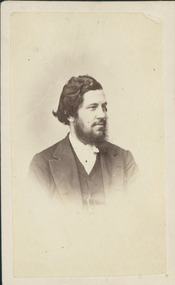 Uniting Church Archives - Synod of Victoria
Photograph, Rev. Jacob John Halley, 1850-1869
... social amelioration of the people and the extension of the Kingdom of God. Our late Secretary was a man of vigorous intellectual power. His early life had given him a bent in the direction of the study of natural history. ...social amelioration of the people and the extension of the Kingdom of God. Our late Secretary was a man of vigorous intellectual power. His early life had given him a bent in the direction of the study of natural history. ...Born Highbury College London 1834, died Melbourne June 19, 1910. Ordained in Pitt Street Sydney Congregational Church 21/3/1860. Ministry: Bush Mission, Lower Darling River 1860–61; Maryborough 1861–64; Dawson St Ballarat 1864–72; Williamstown/Secretary CUV 1872–84; Secretary CUV 1884–1908. Chairman CUV 1871–72 & 1908–09. Son of Rev. Dr Robert Halley, Principal of Highbury College. Arrived Sydney c. 1853. Had a holiday home at Queescliff/Point Lonsdale and tried to establish a Congregational Church there. Obituary read: "For 37 years in the office of Union Secretary he had proved himself a faithful preacher of the Gospel, a leader of the general interest of the churches of peculiar force, knowledge and devotion, and an earnest and high principled citizen of the State, devoting hmself to the social amelioration of the people and the extension of the Kingdom of God. Our late Secretary was a man of vigorous intellectual power. His early life had given him a bent in the direction of the study of natural history. He was a keen observer, a lover of counry life, and the science and art of gardening, in which he occupied the leisure moments of a busy life."Portrait of Halley c. 1850–1869."C. 1850–1869 Rev. J. J. Halley, Cong. Union"halley, j. j., congregational church -
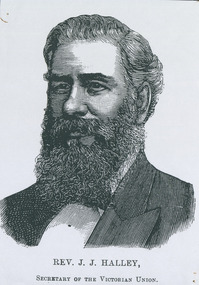 Uniting Church Archives - Synod of Victoria
Photocopy of engraving, Rev. Jacob John Halley
... social amelioration of the people and the extension of the Kingdom of God. Our late Secretary was a man of vigorous intellectual power. His early life had given him a bent in the direction of the study of natural history. ...social amelioration of the people and the extension of the Kingdom of God. Our late Secretary was a man of vigorous intellectual power. His early life had given him a bent in the direction of the study of natural history. ...Born Highbury College London 1834, died Melbourne June 19, 1910. Ordained in Pitt Street Sydney Congregational Church 21/3/1860. Ministry: Bush Mission, Lower Darling River 1860–61; Maryborough 1861–64; Dawson St Ballarat 1864–72; Williamstown/Secretary CUV 1872–84; Secretary CUV 1884–1908. Chairman CUV 1871–72 & 1908–09. Son of Rev. Dr Robert Halley, Principal of Highbury College. Arrived Sydney c. 1853. Had a holiday home at Queescliff/Point Lonsdale and tried to establish a Congregational Church there. Obituary read: "For 37 years in the office of Union Secretary he had proved himself a faithful preacher of the Gospel, a leader of the general interest of the churches of peculiar force, knowledge and devotion, and an earnest and high principled citizen of the State, devoting hmself to the social amelioration of the people and the extension of the Kingdom of God. Our late Secretary was a man of vigorous intellectual power. His early life had given him a bent in the direction of the study of natural history. He was a keen observer, a lover of counry life, and the science and art of gardening, in which he occupied the leisure moments of a busy life."Photocopy of engraving from the Congregational Year Book for 1893.halley, j. j., congregational church -
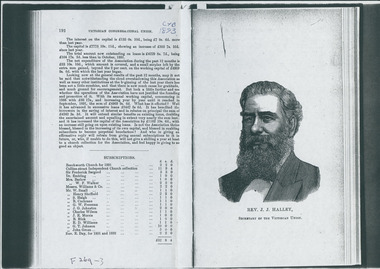 Uniting Church Archives - Synod of Victoria
Photograph, Rev. Jacob John Halley
... social amelioration of the people and the extension of the Kingdom of God. Our late Secretary was a man of vigorous intellectual power. His early life had given him a bent in the direction of the study of natural history. ...social amelioration of the people and the extension of the Kingdom of God. Our late Secretary was a man of vigorous intellectual power. His early life had given him a bent in the direction of the study of natural history. ...Born Highbury College London 1834, died Melbourne June 19, 1910. Ordained in Pitt Street Sydney Congregational Church 21/3/1860. Ministry: Bush Mission, Lower Darling River 1860–61; Maryborough 1861–64; Dawson St Ballarat 1864–72; Williamstown/Secretary CUV 1872–84; Secretary CUV 1884–1908. Chairman CUV 1871–72 & 1908–09. Son of Rev. Dr Robert Halley, Principal of Highbury College. Arrived Sydney c. 1853. Had a holiday home at Queescliff/Point Lonsdale and tried to establish a Congregational Church there. Obituary read: "For 37 years in the office of Union Secretary he had proved himself a faithful preacher of the Gospel, a leader of the general interest of the churches of peculiar force, knowledge and devotion, and an earnest and high principled citizen of the State, devoting hmself to the social amelioration of the people and the extension of the Kingdom of God. Our late Secretary was a man of vigorous intellectual power. His early life had given him a bent in the direction of the study of natural history. He was a keen observer, a lover of counry life, and the science and art of gardening, in which he occupied the leisure moments of a busy life."Photocopy of engraving from the Congregational Year Book for 1893.halley, j. j., congregational church
