
Showing 1311 items matching " the lighthouse"
-
 Flagstaff Hill Maritime Museum and Village
Clothing - Button, c. 1845
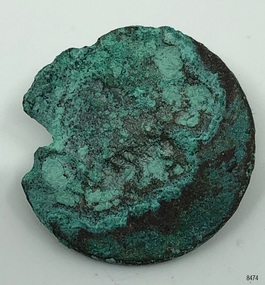
... The wreck also has a connection to the establishment of the Cape Otway lighthouse and to Warrnambool’s history as Superintendent Charles LaTrobe came to the Warrnambool district several times in an effort to find the best route to the Cape Otway area. ...THE CATARAQUI The Cataraqui was built in 1840 in Quebec, Canada, and wrecked on 4th August, 1845 off the west coast of King Island, Australia. The lives of 400 people on the emigrant ship were lost. Many of them were on government assisted passages from Britain and Ireland. Only nine people, one passenger and eight crew, survived the shipwreck. A man who lived on the island, sheltered them and five weeks later the group was rescued by the ship Midge, which took them to Melbourne. It was the largest civilian maritime disaster.The button is significant as an example of a 19th century clothing accessory. The button is also significant for its association with the 1840 Canadian built ship, Cataraqui. The Cataraqui is significant in maritime history as Australia's largest civilian maritime disaster. The wreck also has a connection to the establishment of the Cape Otway lighthouse and to Warrnambool’s history as Superintendent Charles LaTrobe came to the Warrnambool district several times in an effort to find the best route to the Cape Otway area. While doing so he became familiar with the Warrnambool area and the need to establish a new settlement as Warrnambool.Metal button, vertical shank on back. Button experiencing corrosion and one edge has been eaten away. Inscription and two circular markings on shank side of button. Salvaged from the wreck of the Cataraqui.Unable to decipher.flagstaff hill maritime museum & village, shipwreck coast, great ocean road, button, king island, shipwreck, maritime disaster, cape otway, cataraqui -
 Glenelg Shire Council Cultural Collection
Photograph - Photograph - View of Portland Harbour and port, c. 1980
... ... Lighthouse...Port of Portland Archives Portland Harbour Lighthouse caravan park South Portland Aluminium Smelter Front: (no inscriptions) Back: (no inscriptions) Black and white photograph. ...Port of Portland Authority archives.Front: (no inscriptions) Back: (no inscriptions)port of portland archives, portland harbour, lighthouse, caravan park, south portland, aluminium smelter -
 Flagstaff Hill Maritime Museum and Village
Functional object - Rod, Approx. 1871
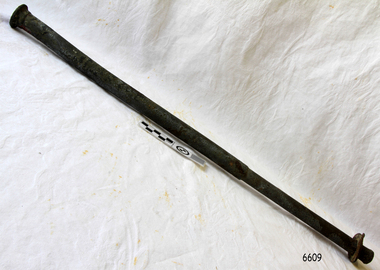
... (Heritage Victoria Eric the Red; HV ID 239) The wreck led to the provision of an additional warning light placed below the Cape Otway lighthouse to alert mariners to the location of Otway Reef. ...This rod was salvaged from the American three-masted wooden clipper ship, Eric the Red, named after the Viking discoverer, Eric the Red. The ship first traded in coal between America and Britain and later traded in guano nitrates from South America. In 1879 its hull was re-metalled and the vessel was in first class condition. On 10th June 1880 Eric the Red departed New York under the command of Captain Z Allen, with 24 crew plus two passengers. It was heading for Melbourne and then Sydney. The ship was commissioned by American trade representatives to carry a special cargo of 500 American exhibits for the U.S.A. pavilion at Melbourne’s first International Exhibition. The items included furniture, ironmongery, wines, chemicals, dental and surgical instruments, paper, cages, bronze lamp trimmings, axles, stamped ware, astronomical and time globes, and samples of corn and the choicest of leaf tobacco. Also on board was general merchandise such as cases of kerosene and turpentine, brooms, Bristol's Sarsaparilla, Wheeler and Wilson sewing machines, Wheeler’s thresher machine, axe handles and tools, cases of silver plate, toys, pianos and organs, carriages and Yankee notions. The ship had been at sea for 85 days when, on 4th September 1880, it hit the Otway Reef on the southwest coast of Victoria and was quickly wrecked. Captain and crew ended up on floating parts, or in the long boat or the sea. He was amongst the 23 battered and injured men who were rescued by the steamer Dawn and later taken to Warrnambool, where they received great hospitality and care. Four men lost their lives; three crew and one passenger. Captain Allen took the train back to Melbourne and then returned to America. The captain and crew of the Dawn were recognised by the United States Government in July 1881 for their humane efforts, being thanked and presented with substantial monetary rewards, medals and gifts. The salvaging ship Pharos collected Wheeler and Wilson sewing machines, nests of boxes, bottles of Bristol’s sarsaparilla, pieces of common American chairs, axe handles, a Wheelers’ Patent thresher and a sailor’s trunk with the words “A. James” on the front. A ship’s flag board bearing the words “Eric the Red” was found on the deckhouse; finally, those on board the Pharos had found the name of the wrecked vessel. The government steamer Victoria and a steamer S.S. Otway picked up flotsam and wreckage. A whole side of the hull and three large pieces of the other side of the hull, with some of the copper sheathing stripped off, had floated onto Point Franklin. Some of the vessel's yards and portions of its masts were on shore with pieces of canvas attached, confirming that the vessel had been under sail. On shore were many cases of Diamond Oil kerosene labelled R. W. Cameron and Company, New York. large planks of red pine, portions of a small white boat and a large, well-used oar. There were sewing machines, some consigned to ‘Long and Co.”, and notions, axe and scythe handles, hay forks, wooden pegs, rolls of wire, some branded “T.S” and Co, Melbourne”, and kegs of nails branded “A.T. and Co.” from the factory of A. Field and Son, Taunton, Massachusetts. Other cargo remains included croquet balls and mallets, buggy fittings, rat traps, perfumery, cutlery and Douay Bibles, clocks, bicycles, chairs, a flywheel, a cooking stove, timber, boxes, pianos, organs, wooden clothes pegs and a ladder. There were three cases of goods meant for the Exhibition Other items salvaged from amongst the debris floating in the sea were chairs, doors, musical instruments, washing boards, nests of trunks and flycatchers. Most of the goods were saturated and smelt of kerosene. A section of the hull lies buried in the sand at Parker River Beach. An anchor with a chain is embedded in the rocks east of Point Franklin and a second anchor, thought to be from Eric the Red, is on display at the Cape Otway light station. A life belt was once on the veranda of Rivernook Guest House in Princetown with the words “ERIC THE RED / BOSTON”. Parts of the ship are on display at Bimbi Park Caravan Park and Apollo Bay Museum. Flagstaff Hill Maritime Village also has several artefacts from the wreck. There seemed to be no personal luggage or clothing. “The Eric the Red is historically significant as one of Victoria's major 19th century shipwrecks. (Heritage Victoria Eric the Red; HV ID 239) The wreck led to the provision of an additional warning light placed below the Cape Otway lighthouse to alert mariners to the location of Otway Reef. The site is archaeologically significant for its remains of a large and varied cargo and ship's fittings being scattered over a wide area. The site is recreationally and aesthetically significant as it is one of the few sites along this coast where tourists can visit identifiable remains of a large wooden shipwreck, and for its location set against the background of Cape Otway, Bass Strait, and the Cape Otway lighthouse.“ (Victorian Heritage Database Registration Number S239, Official Number 8745 USA)Iron rod with flat lugged washer. The rod is made of a heavy metal with encrustations and signs of rusting on the surface. It is stepped down in diameter mid-shaft and is slightly bowed on the narrower end. The narrow end flares out slightly in the last few centimetres with a burred foot and has a circular head on the wider end. The washer on the narrower end cannot move past the centre or the narrow end of the rod. The washer is a different metal from the rod and has a small lug jutting out along the circumference in one position. The rod was recovered from the wreck of the ship the Eric the Red.flagstaff hill, warrnambool, shipwrecked-coast, flagstaff-hill, flagstaff-hill-maritime-museum, maritime-museum, shipwreck-coast, flagstaff-hill-maritime-village, rod, iron-rod, eric the red, steamer dawn, cape otway reef, 1880, captain allen, usa pavillion, melbourne exhibition, melbourne international exhibition, captain jones, medal, united states government, pharos, a. james, flag board, steamer victoria, steamer otway, diamond oil, r w cameron and company, long and co., t s and co melbourne, a. field and son, taunton, massachusetts, ketch apollo, ship nail -
 Phillip Island and District Historical Society Inc.
Photograph, 04/01/1932
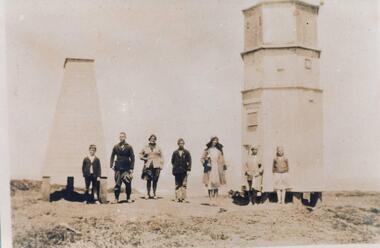
... the white family...lighthouses...lighthouse...One of a collection of 13 photographs donated by Ralph Correy. the nobbies phillip island the white family lighthouses lighthouse at the nobbies phillip island ralph correy Black & White photograph of seven members of the White family standing in line at The Nobbies. ...One of a collection of 13 photographs donated by Ralph Correy.Black & White photograph of seven members of the White family standing in line at The Nobbies. the nobbies phillip island, the white family, lighthouses, lighthouse at the nobbies, phillip island, ralph correy -
Phillip Island and District Historical Society Inc.
Book, WALKER, Donald, Beacons of hope : an early history of Cape Otway and King Island lighthouses, 1981, 1991
... Lighthouses victoria cape otway history tasmania king island Signed by the author. ...Signed by the author. Stamped 'Phillip Island & District Historical Society'.lighthouses, victoria, cape otway, history, tasmania, king island -
 Flagstaff Hill Maritime Museum and Village
Container - Try pot, c. 20th century
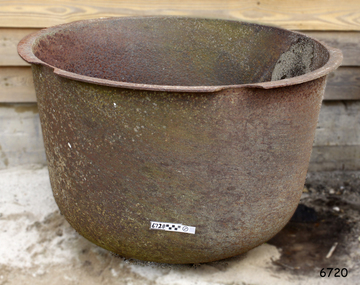
... The high grade oil was a much sought after product and used for essential services such as fuelling the lights of the lighthouses. Commercial whaling ceased in Australia in 1979. ...This try-pot is one of a set of three. Whalers used large iron pots, called try-pots to liquefy large chunks of whale blubber down into oil. Early on in the history of whaling, small whaling boats had no means to process blubber at sea and had to bring it into whaling stations for processing at shore-based try-works. Later, when bay whaling evolved and large scale vessel were utilised for hunting whales, try pots were mounted onto the top deck. This advance had its benefits as the processing facilities were mobile, whalers could move operations to follow whales and discover new whaling grounds. The deceased whale would be tied up alongside the ship, the crewmen cut away the blubber, or outer fat layer, in long strips. They hauled the strips aboard, cut them into smaller pieces, and tossed them into boiling cauldrons on deck to render the fat into oil. The whale oil was stored in barrels in the cargo hold, and brought to put for sale. The oil was much sought after as a good quality fuel tor heating, light and lubrication. Try pots were used in the whaling industry, one of the very early industries in Colonial Australia, including here on the southwest coast of Victoria. The high grade oil was a much sought after product and used for essential services such as fuelling the lights of the lighthouses. Commercial whaling ceased in Australia in 1979.Try pot, one of a set of three. A large cast-iron cauldron of about 200 gallons in capacity. Round metal container with rounded base and flat extended lip. flagstaff hill, warrnambool, maritime museum, shipwreck coast, try pot, trypot, cauldron, whale oil, whaling, fuel -
 Flagstaff Hill Maritime Museum and Village
Container - Try pot, c.20th century
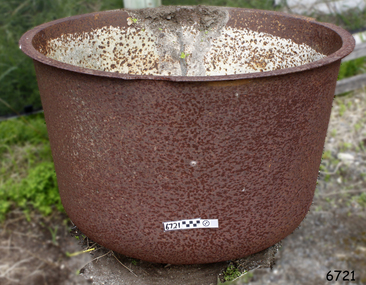
... The high grade oil was a much sought after product and used for essential services such as fuelling the lights of the lighthouses. Commercial whaling ceased in Australia in 1979. ...This try-pot is one of a set of three. Whalers used large iron pots, called try-pots to liquefy large chunks of whale blubber down into oil. Early on in the history of whaling, small whaling boats had no means to process blubber at sea and had to bring it into whaling stations for processing at shore-based try-works. Later, when bay whaling evolved and large scale vessel were utilised for hunting whales, try pots were mounted onto the top deck. This advance had its benefits as the processing facilities were mobile, whalers could move operations to follow whales and discover new whaling grounds. The deceased whale would be tied up alongside the ship, the crewmen cut away the blubber, or outer fat layer, in long strips. They hauled the strips aboard, cut them into smaller pieces, and tossed them into boiling cauldrons on deck to render the fat into oil. The whale oil was stored in barrels in the cargo hold, and brought to put for sale. The oil was much sought after as a good quality fuel tor heating, light and lubrication. Try pots were used in the whaling industry, one of the very early industries in Colonial Australia, including here on the southwest coast of Victoria. The high grade oil was a much sought after product and used for essential services such as fuelling the lights of the lighthouses. Commercial whaling ceased in Australia in 1979.Try pot, one of a set of three. A large cast-iron cauldron of about 200 gallons in capacity. Round metal container with rounded base and flat extended lip. It was used to heat whale blubber to remove the oil.flagstaff hill, warrnambool, maritime museum, shipwreck coast, try pot, trypot, cauldron, whale oil, whaling, fuel -
 Flagstaff Hill Maritime Museum and Village
Container - Try pot, c. 20th century
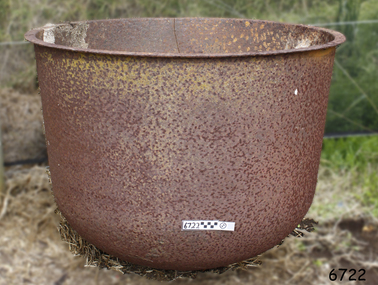
... The high grade oil was a much sought after product and used for essential services such as fuelling the lights of the lighthouses. Commercial whaling ceased in Australia in 1979. ...This try-pot is one of a set of three. Whalers used large iron pots, called try-pots to liquefy large chunks of whale blubber down into oil. Early on in the history of whaling, small whaling boats had no means to process blubber at sea and had to bring it into whaling stations for processing at shore-based try-works. Later, when bay whaling evolved and large scale vessel were utilised for hunting whales, try pots were mounted onto the top deck. This advance had its benefits as the processing facilities were mobile, whalers could move operations to follow whales and discover new whaling grounds. The deceased whale would be tied up alongside the ship, the crewmen cut away the blubber, or outer fat layer, in long strips. They hauled the strips aboard, cut them into smaller pieces, and tossed them into boiling cauldrons on deck to render the fat into oil. The whale oil was stored in barrels in the cargo hold, and brought to put for sale. The oil was much sought after as a good quality fuel tor heating, light and lubrication. Try pots were used in the whaling industry, one of the very early industries in Colonial Australia, including here on the southwest coast of Victoria. The high grade oil was a much sought after product and used for essential services such as fuelling the lights of the lighthouses. Commercial whaling ceased in Australia in 1979.Try pot, one of a set of three. A large cast-iron cauldron of about 180 gallons in capacity. Round metal container with rounded base and flat extended lip. It was used to heat whale blubber to remove the oil.flagstaff hill, warrnambool, maritime museum, shipwreck coast, try pot, trypot, cauldron, whale oil, whaling, fuel -
 Mission to Seafarers Victoria
Photograph - Photograph, Black and white, Melbourne Harbour Trust, c. 1963
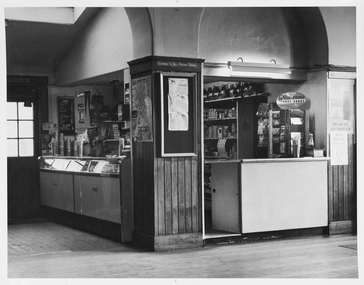
... ...lighthouse...This is an example of the contemporaneous use of the canteen as primarily a supply shop and in a comparative fashion reveals some of the overall changes at the Mission. photograph canteen tab koalas blackboard archway pennant licensed-to-sell-postage-stamps mission to seamen mission to seafarers melbourne flying angel club map bar milkshake machine display case fluorescent light notice board wains coting postcards milkshake beverage plastichrome matches razors gillette straw melbourne harbour trust melbourne harbor trust donation tin lighthouse Purple stamp on central back of photograph. ...The canteen is part of the Mission to Seafarers building that has catered to visiting seafarers since 1917. The canteen is operated by the Flying Angel Club, which offered services to seafarers including food, drink and souvenirs from the canteen and events held in the main hall which invloved the use of the canteen. The Ladies Harbor Lights Guild also used the canteen facilities for functions and fundraisers held at the Mission to Seafarers. One of the flyer in Chinese helps dating the photograph between 1963-66 when Padre Wong was chaplain at the Mission.Historical record of the Mission to Seafarers canteen post-1963. This is an example of the contemporaneous use of the canteen as primarily a supply shop and in a comparative fashion reveals some of the overall changes at the Mission.A white-bordered, black and white photograph of the Mission to Seafarers Canteen. From the left hand side of the photograph the image portrays an external doorway with six glass windows, emitting light from behind. This leads to the dipslay cabinet and bench of the canteen which is reflecting light from the windowed door. Central to the image is a pillar which is three-quarters wood paling starting from the floor, of which a map is displayed on one edge and a notice board on the remaining visible edge of the pillar. A bench is visible to the right side of the pillar and the far right side of the photograph, posters are hung on the wall. Purple stamp on central back of photograph. "Melbourne Harbor/Trust Photograph/Negative No......." photograph, canteen, tab, koalas, blackboard, archway, pennant, licensed-to-sell-postage-stamps, mission to seamen, mission to seafarers, melbourne, flying angel club, map, bar, milkshake machine, display case, fluorescent light, notice board, wains coting, postcards, milkshake, beverage, plastichrome, matches, razors, gillette, straw, melbourne harbour trust, melbourne harbor trust, donation tin, lighthouse -
 Lorne Historical Society
Photograph - Photograph View from lighthouse over swamp at Aireys Inlet, Swamp Aireys Inlet
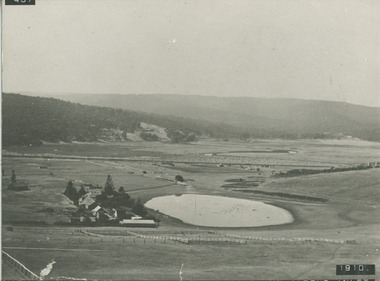
... Photograph View from lighthouse over swamp at Aireys Inlet...nobles swamp aireys inlet 1910 photograph of Nobles Swamp Aireys Inlet Swamp Aireys Inlet Photograph Photograph View from lighthouse over swamp at Aireys Inlet ...1910 photograph of Nobles Swamp Aireys Inletnobles swamp, aireys inlet -
 Eltham District Historical Society Inc
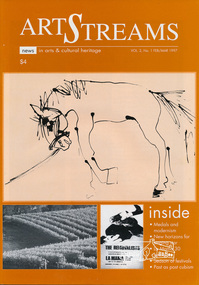
Journal, Peter Doughtery, ArtStreams: News in arts and cultural heritage; Vol. 2, No. 1, Feb-Mar 1997, 1997
... ...lighthouse...(archie) colquoun abu baku adams of north riding afandi siyo albert namatjira alice (1956) andy warhol annita furey anthony dymke art streams magazine ballarat school of mines bathing in the dark bob sedergren bob valentine bourbo's belly brian brown quntet bulleen art & garden centre cafe margot charles blackman christine edwards circushead clifton pugh cottlesbridge council amalgamation cuddlefish dave pithouse david lord david tolley dawn sime dione mcintyre dixon's creek edward grigoryan eltham college concert band eltham wiregrass gallery erika mcgilchrist fergusson winery food for all seasons frances duffy fred williams frenzi geoff achison geoff mainwaring graeme bell grape grazing festival half caste child heather shimmen hoodangers isobel lindsay james wakeling janette geri john brack john mcall john murphy jordie albiston judy jacques kath mckinnon katherine's silly women kelly 1956 ken harrison kevin borland kim harriss quartet la mama theatre lauurie dawes leonard french lighthouse liz jones lloyd jones lothlorien lovegroves lovey's estate luxum maelstrom max meldrum may grigg michelle nicolle mighty servant mirka mora miss suzannah espie moma montsalvat jazz festival moonee valley drifters moonlight shadow museum of modern art at heide mystery train the melbourne jazz band nicole eveleigh nigel shipley olympomania peter mcintyre phyllis murphy pip avent portrait of georges mora (1956) ray horsfield red shed theatre company reed's gallery richardson house (1955) river house (1955) robin boyd sandro donatti secret of the west wind seville shantell vineyard shedlevellers bush band shirley bourne sigmund jorgensen sir william dargie soul sister swing sydney nolan that handsome couple the band who knew too much the broken fence (1956) the gusset rustlers the rhonda movement the russian gypsey jazz quartet three amigos victorian artists supplies warburton wholefood delights yarra valley grape grazing festival yellow dog jazz band yering station art streams Colour front and back cover with feature articles and literary pieces with photographs and advertisements printed in black and white. 36 pages, 30 cm. ...Vol. 2, No. 1, Feb-Mar 1997 CONTENTS MEDALS AND MODERNISM A retrospective look at the cultural impact of the Melbourne Olympics 3 CD REVIEWS 6 NEW HORIZONS Judy Jacques takes a new direction 6 LA MAMA 30 YEARS ON Liz Jones at the helm 10 PAST AS POST CUBISM Annita Furey on Heather Shim men 14 GRAPE GRAZING FESTIVAL Food, wine and music in the Yarra Valley 16 SHORT STORY Fantasia on a cup of coffee 18 WHAT'S ON A round-up of events for February 22 WHO'S TEACHING WHAT Classes in the region 24 FRANCES DUFFY RETROSPECTIVE An artist who extended the boundaries of tonalism 26 ANDY WARHOL AND THE CAN OF SOUP More than 15 minutes of fame 27 A ‘DUTCH’ FESTIVAL COMES TO ST ANDREWS 28 LISTINGS Artists, performers and galleries 29 "Peter Dougherty has been involved in the local art scene for many years. As publisher and editor of the arts magazine Artstreams, his comments on the various branches of the arts are widely respected. His "The Arts" column in the Diamond Valley Leader presents a brief summary for a much wider cross section of the local community. Peter also operates his own gallery and the Artstreams Cafe at the St Andrews market. Peter has a wealth of knowledge about present day and historical aspects of local art and artists." - Eltham District Historical Society Newsletter No. 161, March 2005Colour front and back cover with feature articles and literary pieces with photographs and advertisements printed in black and white. 36 pages, 30 cm. Vol. 1, no. 1 (Nov. 1996) - Vol. 10, no. 5 (summer ed. 2005/06) 1956 melbourne olympics, 1956 olympics, 1995 eltham arts ball, a.d. (archie) colquoun, abu baku, adams of north riding, afandi siyo, albert namatjira, alice (1956), andy warhol, annita furey, anthony dymke, art streams magazine, ballarat school of mines, bathing in the dark, bob sedergren, bob valentine, bourbo's belly, brian brown quntet, bulleen art & garden centre, cafe margot, charles blackman, christine edwards, circushead, clifton pugh, cottlesbridge, council amalgamation, cuddlefish, dave pithouse, david lord, david tolley, dawn sime, dione mcintyre, dixon's creek, edward grigoryan, eltham college concert band, eltham wiregrass gallery, erika mcgilchrist, fergusson winery, food for all seasons, frances duffy, fred williams, frenzi, geoff achison, geoff mainwaring, graeme bell, grape grazing festival, half caste child, heather shimmen, hoodangers, isobel lindsay, james wakeling, janette geri, john brack, john mcall, john murphy, jordie albiston, judy jacques, kath mckinnon, katherine's silly women, kelly 1956, ken harrison, kevin borland, kim harriss quartet, la mama theatre, lauurie dawes, leonard french, lighthouse, liz jones, lloyd jones, lothlorien, lovegroves, lovey's estate, luxum, maelstrom, max meldrum, may grigg, michelle nicolle, mighty servant, mirka mora, miss suzannah espie, moma, montsalvat jazz festival, moonee valley drifters, moonlight shadow, museum of modern art at heide, mystery train, the melbourne jazz band, nicole eveleigh, nigel shipley, olympomania, peter mcintyre, phyllis murphy, pip avent, portrait of georges mora (1956), ray horsfield, red shed theatre company, reed's gallery, richardson house (1955), river house (1955), robin boyd, sandro donatti, secret of the west wind, seville, shantell vineyard, shedlevellers bush band, shirley bourne, sigmund jorgensen, sir william dargie, soul sister swing, sydney nolan, that handsome couple, the band who knew too much, the broken fence (1956), the gusset rustlers, the rhonda movement, the russian gypsey jazz quartet, three amigos, victorian artists supplies, warburton, wholefood delights, yarra valley grape grazing festival, yellow dog jazz band, yering station, art streams -
Eltham District Historical Society Inc
Document - Folder, Squire family
... Cape Otway ratio-operated lighthouse...Frederick Vincent Squire Hazel Squire Lorraine Squire Briar Hill Primary School Eltham Shire Councill Sir Dallas Brooks Eltham Country Womens Association Dean Lacey Eltham Community Festival Edward Hughes Hazel Rose Squire nee Hughes Deirdre Squire James Squire Genista House Greensborough Avery sisters Diamond Valley Community Hospital Briar Hill Hardware 25-31 Sherbourne Road Briar Hill Eltham Cottage Hospital Eltham Methodist Hall Dr Edward Cordner Dr Bradbury Dr Sinclair Albert Charles Henry Price Andrew Griffith Irvine Hewitt Honorary Justices Association Eltham Court William Brinkotter Were Street Montmorency Sherbourne Road Eltham Police Station Eltham District Play Centre Montmorency branch Montmorency park Lower Plenty park Fitzsimmons Lane bridge Kangaroo Ground Max McMahon Martin McMahon Clive Tingate Eltham Clay Bird Shooting Club Greensborough Masonic Lodge Mountain View Road Briar Hill Briar Hill Hall H R Squire Family Reserve Hazel Rose Court Montmorency Briar Hill Swimming Pool Centre Briar Hill Timber and Hardware Stan Nedwell Montmorency Football Club Sylvia Davey Briar Hill Girl Guide Group Montmorency Girl Guides Eltham Pony Club Rederick Nedwell Robert Manuell Sutherland Homes Committee Red Cross Eltham Rurl Group Lower Plenty Neighbourhood House Eltham/Diamond Valley Citizens AdviceBureau Cape Otway ratio-operated lighthouse Heidelberg Town Hall Ouyen High School J B Were St Helena Briar Hill Timber and Trading Pty Ltd St Margaret's Church Eltham D V Darwin A W Brinkkotter D C O'Beirne Newspaper clippings, A4 photocopies, etc Squire family Document Folder ...Frederick Vincent Squire established a building business in Briar Hill, later becoming an Eltham Shire Councillor and responsible for many local advances; he was later Shire President. He and wife Hazel with involved with numerous community activities. Their children continued local involvement. Contents Letter Shire Secretary to F V Squite, 2 October 1981. Items of Council business of interest to F V Squire. Letter F V Squire to Shire Seretary, 3 October 1963. Accepting and declining social invitation. Newspaper article: "Wife of former councillor dies", Diamond Valley News, 7 October 1986. Death of Hazel Squire. Another article: "Young Eltham man recovering after horse-riding accident". Diamond Valley News, 7 October 1986. Dean Lacey seriously injured in horse riding accident. Another article: "Everyone loves a community parade.". Diamond Valley News, 7 October 1986. Eltham Community festival will be held again. Typed notes, no author:"Squire Family History", 18 December 1989. Newspaper article: "Briar Hill building recalls early days", Diamond Valley News, 12 November 1991. Biography of Fred Squite. Handwritten note, 30 January 1998: Names and telephone numbers.Newspaper clippings, A4 photocopies, etcfrederick vincent squire, hazel squire, lorraine squire, briar hill primary school, eltham shire councill, sir dallas brooks, eltham country womens association, dean lacey, eltham community festival, edward hughes, hazel rose squire nee hughes, deirdre squire, james squire, genista house greensborough, avery sisters, diamond valley community hospital, briar hill hardware, 25-31 sherbourne road briar hill, eltham cottage hospital, eltham methodist hall, dr edward cordner, dr bradbury, dr sinclair, albert charles henry price, andrew griffith, irvine hewitt, honorary justices association, eltham court, william brinkotter, were street montmorency, sherbourne road, eltham police station, eltham district play centre montmorency branch, montmorency park, lower plenty park, fitzsimmons lane bridge, kangaroo ground, max mcmahon, martin mcmahon, clive tingate, eltham clay bird shooting club, greensborough masonic lodge, mountain view road briar hill, briar hill hall, h r squire family reserve, hazel rose court montmorency, briar hill swimming pool centre, briar hill timber and hardware, stan nedwell, montmorency football club, sylvia davey, briar hill girl guide group, montmorency girl guides, eltham pony club, rederick nedwell, robert manuell, sutherland homes committee, red cross, eltham rurl group, lower plenty neighbourhood house, eltham/diamond valley citizens advicebureau, cape otway ratio-operated lighthouse, heidelberg town hall, ouyen high school, j b were, st helena, briar hill timber and trading pty ltd, st margaret's church eltham, d v darwin, a w brinkkotter, d c o'beirne -
 Queenscliffe Maritime Museum
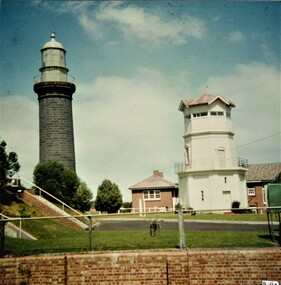
Photograph (item) - "Black" lighthouse at Queenscliffe
... "Black" lighthouse at Queenscliffe...lighthouse & look-out tower...lighthouse & look-out tower coloured photograph Photograph Photograph "Black" lighthouse at Queenscliffe ...lighthouse & look-out tower -
 Bendigo Historical Society Inc.
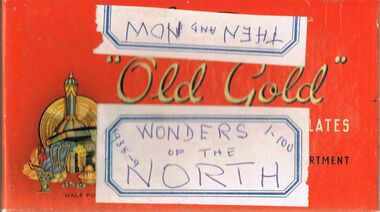
Newspaper - LYDIA CHANCELLOR COLLECTION: WONDERS OF THE NORTH. FAMOUS PEOPLE
... PLACE Land rural life Lydia Chancellor collection Australia place Aboriginal Australian Aborigines Aborigines Northern Australian Australian flora Australian fauna fauna flora plants Australian plants Australian animals animals Australian lighthouses lighthouses sciences botany tourism famous people male person Wonders of the north 1-100 1938-9 Then and Now 'A small orange Old Gold chocolate box containing 2 newspaper columns. ...'A small orange Old Gold chocolate box containing 2 newspaper columns. (i) Wonders of the North' series 1-100. 1938-1939. (ii). This series of clips contains references to Aboriginal/Indiginous people. 'Then and Now Public Men'. These clips have a young/older photo and the positions they held in their professional life. Both columns from the 'Sun-News Pictorial' newspaper.Wonders of the north 1-100 1938-9 Then and Nowplace, land, rural life, lydia chancellor, collection, australia, place, aboriginal, australian aborigines, aborigines, northern australian, australian flora, australian fauna, fauna, flora, plants, australian plants, australian animals, animals, australian lighthouses, lighthouses, sciences, botany, tourism, famous people, male, person -
 Bendigo Historical Society Inc.
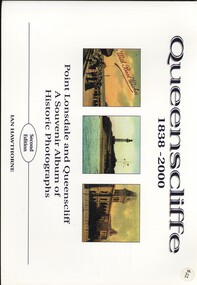
Book - QUEENSCLIFFE 1838 - 2000, 2000
... HISTORY queenscliff History - Point Lonsdale & Queenscliff Maritime- sailing ships - lighthouses grand hotels. Ian Hawthorne Queenscliffe 1838 - 2000 Point Lonsdale and Queenscliff a Souvenir Album of Historic Photographs, second edition. 72 pages published by Borough of Queenscliffe with photographs, some colour, illustrations and maps. ...Queenscliffe 1838 - 2000 Point Lonsdale and Queenscliff a Souvenir Album of Historic Photographs, second edition. 72 pages published by Borough of Queenscliffe with photographs, some colour, illustrations and maps.Ian Hawthornehistory, queenscliff, history - point lonsdale & queenscliff, maritime- sailing ships - lighthouses, grand hotels. -
 Bendigo Historical Society Inc.
Photograph - PHOTOGRAPH COLLECTION: LIGHT HOUSES
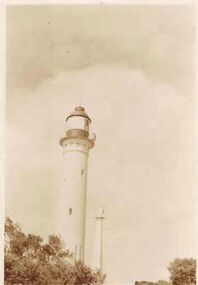
... ... lighthouse...PHOTOGRAPH landscape Photograph landscape lighthouse Burrowes St. Golden Square collection. ...Photograph 8 - Sepia photo of 2 light houses, one close up and the other in the distance.photograph, landscape, photograph, landscape, lighthouse, burrowes st., golden square collection. -
 Otway Districts Historical Society
Book, J.K. Loney, Notes on the Otways. G.F. Sydenham, 1987
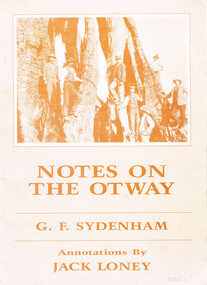
... otways; g.f. sydenham; j.k. loney; forests; roads; country roads board; timber; dairying; cape otway lighthouse;...otways; g.f. sydenham; j.k. loney; forests; roads; country roads board; timber; dairying; cape otway lighthouse; Notes on the Otways. G.F. Sydenham. ...Notes on the Otways. G.F. Sydenham. J.F. Loney (comp.) 1st ed. J.K. Loney;np; 1987. 36 p.; illus., map. Soft cover. ISBN 0 909191 3 6 0otways; g.f. sydenham; j.k. loney; forests; roads; country roads board; timber; dairying; cape otway lighthouse; -
 Otway Districts Historical Society
Book, Pioneering Days. J.K. Loney
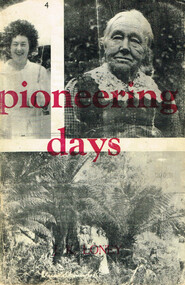
... Loney; History; Hotels; Guest Houses; Railways; Submarine Cable; Lighthouse;...Loney; History; Hotels; Guest Houses; Railways; Submarine Cable; Lighthouse; Pioneering Days. J.K. Loney. 1st ed; Portarlington (Vic); Marine History; nd. 44 p.; illus. ...Pioneering Days. J.K. Loney. 1st ed; Portarlington (Vic); Marine History; nd. 44 p.; illus. Soft cover.pioneering days; j.k. loney; history; hotels; guest houses; railways; submarine cable; lighthouse; -
 Otway Districts Historical Society
Book, J.K. Loney, Pioneering Days. J.K. Loney, 1974
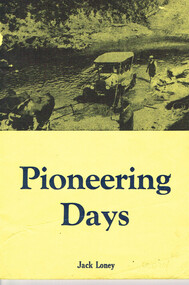
... Loney; History; Hotels; Guest Houses; Railways; Lighthouses; Submarine Cables; Pioneering Days. ...Pioneering Days. J.K. Loney. 2nd ed. Portarlington (Vic); Marine History; 1974. 56 p.; illus. Soft cover.pioneering days; j.k. loney; history; hotels; guest houses; railways; lighthouses; submarine cables; -
 Otway Districts Historical Society
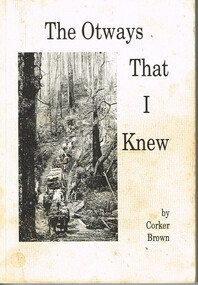
Book, Merimbula Easiprint, The Otways that I knew, 1993
... Otway Ranges; Corker Brown; Otway lighthouse; Aborigines; Beech Forest; Farming; Grazing; Crops; Railways; Roads; Timber;...Otway Ranges; Corker Brown; Otway lighthouse; Aborigines; Beech Forest; Farming; Grazing; Crops; Railways; Roads; Timber; The Otways that I knew. ...Condensing 100 years of Otway history the author tries to give an insight into the thoughts and ways of the settlers in opening the western Otway Ranges. It gives some indication of the mental pressure, hand-in-hand with the physical stress, as a settler cleared the land and made a living for his family. It covers how the rail link brought in the timber mills and their workers which made timber the main industry of that era, and covers the changes that took place in the 1930s as the mills closed down and the district raised crops, dairying and grazing.The Otways that I knew. Ronald Charles 'Corker' Brown. 1st ed. Corker Brown; np; 1993. 216 p.; illus; maps. Soft cover. ISBN 0 646 16798 7otway ranges; corker brown; otway lighthouse; aborigines; beech forest; farming; grazing; crops; railways; roads; timber; -
 Warrnambool and District Historical Society Inc.
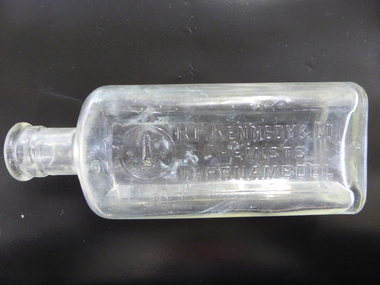
Bottle, R F Kennedy & Son Chermist, c. 1900
... This bottle, which has on it the well-known Kennedy logo of a lighthouse on a rocky cliff on a coastline with ships in the distance, is a good example of a Kennedy bottle. r.f. kennedy, chemists in warrnambool history of warrnambool. ...This bottle came from the pharmacy business of R. F. Kennedy and Co. of Warrnambool. Richard Frank Kennedy (1826-1903) was born in England and in the early 1880s came to Warrnambool where he quickly established a large pharmacy business in Timor Street. In 1891 he erected a new building which was described as one of the most elegant and best-stocked chemist shops in Victoria. He was a retail, wholesale and manufacturing chemist. Kennedy was active in community affairs and was a foundation member of the Warrnambool Bowls Club, being its first Vice-President and an early President. His pharmacy business continued on after his death, trading as ‘R.F. Kennedy and Co.’ Richard Frank Kennedy was one of the most significant businessmen in Warrnambool in the late 19th century. The products of his chemist shop and factory were distributed all over Victoria and beyond. This bottle, which has on it the well-known Kennedy logo of a lighthouse on a rocky cliff on a coastline with ships in the distance, is a good example of a Kennedy bottle. This is a clear glass bottle with a rectangular-shaped body with rounded edges, a circular-shaped neck and a moulded top and opening. There is no stopper. The chemist’s logo and name are on the side of the bottle and the maker’s name is on the base but this is not decipherable. The inside of the bottle is slightly discoloured. R.F. Kennedy & Co. Chemists Warrnambool’ r.f. kennedy,, chemists in warrnambool, history of warrnambool. -
 Warrnambool and District Historical Society Inc.
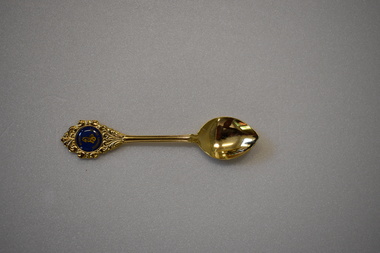
Souvenir, Warrnambool Lighthouse
... Warrnambool Lighthouse...Warrnambool Lighthouse Souvenir ... -
 Geelong Naval and Maritime Museum
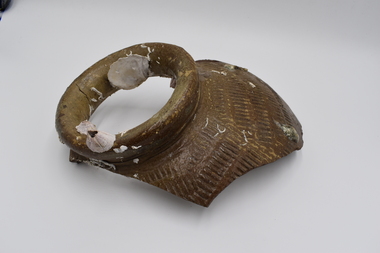
Ceramic - Pot Fragment
... The wreck of the "Hurricane" in Port Phillip Bay and the accompanying story of the nearby lighthouse, the South Channel Pile Light, tell the story of early shipping within Port Phillip Bay, pre federation. shipwreck port phillip bay ship hurricane south channel light 3 pieces of encrusted pot fragment all roughly A5 paper size Ceramic Pot Fragment ...The fragments of pot were found in 20 meters of water off of the South Channel Light, Port Phillip Bay. They are believed to be from the ship 'Hurricane' that sank in the vicinity on April 22,1864. The Hurricane was a three-masted iron ship, weighing 1198/979 tons. Built on the Clyde, Scotland in 1853. Lbd 214.9 x 30.7 x 20 ft. It was one of the first large iron sailing ships built for the Australian trade during the gold rush, and one of the fastest clippers on the Australian run. Her maiden voyage from Glasgow to Melbourne with 256 passengers took eighty-seven days, and the return to London eighty-three days. In 1856 she was converted to an auxiliary screw vessel and continued in the Australian trade until lost. Under Captain D.H. Johnston (former master of the Lightning), inward bound from Liverpool with 2000 tons of general cargo and 19 passengers, grazed a rock entering Port Phillip, sank off Arthurs seat, 21 April 1869. Passengers and crew transferred to the tug Titan. The wreck was relatively intact until the late 1960s, when it was blasted by Ports and Harbours engineers who considered it to be a navigational hazard, spreading wreckage over a wide area. Despite this, the stern of the ship still stands about three metres above the sand. The wreck of the "Hurricane" in Port Phillip Bay and the accompanying story of the nearby lighthouse, the South Channel Pile Light, tell the story of early shipping within Port Phillip Bay, pre federation. 3 pieces of encrusted pot fragment all roughly A5 paper sizeshipwreck, port phillip bay, ship hurricane, south channel light -
Lakes Entrance Historical Society
Book, Loney Jack, Wrecks on the Gippsland Coast, 1968
... Shipwrecks Ships and Shipping Lighthouses A J and H Murrell stamped on first page Shipwrecks and incidents along the coast and in Bass Strait from Point Nepean to Cape Howe. ...Shipwrecks and incidents along the coast and in Bass Strait from Point Nepean to Cape Howe. Indexes of Ships and Localities included. Some ship illustrated.A J and H Murrell stamped on first pageshipwrecks, ships and shipping, lighthouses -
 Ballarat Heritage Services
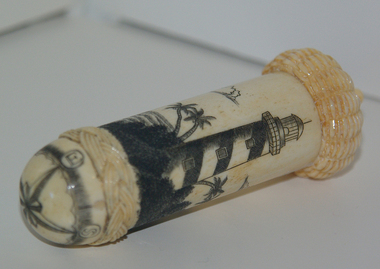
Photograph - Photograph - Colour, Scrimshaw
... ...lighthouse...scrimshaw nautical lighthouse ship sailing bone Colour photograph of a scrimshaw on a container. ...Colour photograph of a scrimshaw on a container.scrimshaw, nautical, lighthouse, ship, sailing, bone -
 Ballarat Heritage Services
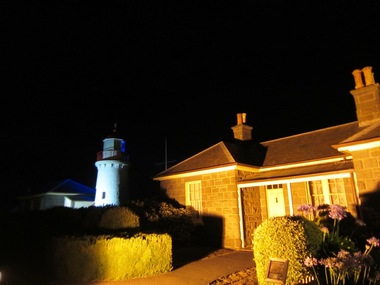
Digital photographs, L.J. Gervasoni, Flagstaff Hill at Night, 2011
... ...lighthouse...warrnambool flagstaff hill lighthouse night Colour photograph of Flagstaff Hill at night. ...Colour photograph of Flagstaff Hill at night. warrnambool, flagstaff hill, lighthouse, night -
 Ballarat Heritage Services
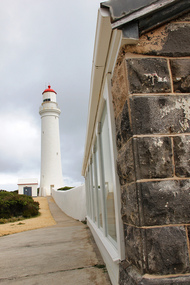
Digital photograph, Lisa Gervasoni, Portland, c2015
... ...lighthouse...portland heritage bay water cape nelson lighthouse Portland Digital photograph Lisa Gervasoni ...portland, heritage, bay, water, cape nelson, lighthouse -
 Parks Victoria - Cape Nelson Lightstation
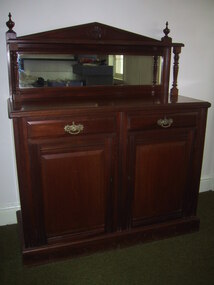
Furniture - Sideboard
... The Cape Nelson sideboard has first level contributory significance as a fine example of the good quality domestic furnishings made by the Victorian Government and provided to lighthouse keepers and their families in the late nineteenth century. ...The cedar sideboard has two cupboard doors below two corresponding drawers. The style is in keeping with the completion date of the lightstation in 1884, when furniture in the late nineteenth century had squarer, more defined lines and angles, and ornamental features. This sideboard is a modest version of this trend combining a pediment‐shaped back board with turned side columns and finials, rectangular mirror, decorative drawer pulls and door handle, as well as cupboards and drawers with bevelled, raised panels. The initials ‘PWD’along with a crown motif and letters are inscribed on the side indicating that the furnishing was the property of the government and made in its workshops. The Public Works Department, which operated in Victoria from 1855 to 1987, was responsible for the design of Victoria’s major public buildings and provision of furnishings to its offices as well as residences where the need was required.301 The keepers’ quarters at Cape Otway Lightstation were supplied with two of the same sideboards, which remain there today; on is intact (COLS 0001), the other missing the backboard (COLS 0015). Two similar but plainer examples, which are probably earlier in date, also remain at Cape Schanck (CSLS 0007.3; CSLS 0009.3). The Cape Nelson sideboard has first level contributory significance as a fine example of the good quality domestic furnishings made by the Victorian Government and provided to lighthouse keepers and their families in the late nineteenth century. It is also significant for its provenance to the lightstationThe cedar sideboard has two cupboard doors below two corresponding drawers with pediments‐shaped back board with turned side columns and finials, a rectangular mirror, decorative drawer pulls and door handle, as well as cupboards and drawers with bevelled, raised panels. -
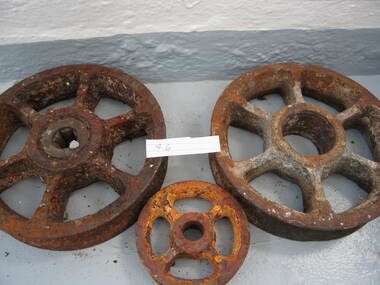 Parks Victoria - Wilsons Promontory Lightstation
Pulley wheels
... If this information is confirmed, the wheels have first level contributory significance for the insights they provide into the technology and operations of a late nineteenth/early twentieth century lighthouse. Three pulley wheels, two larger one smaller. ...The three metal pulley wheels, two larger one smaller, were possibly used in the mechanism associated with the operation of the clockwork weights that helped to turn the light in the lantern room between 1913 and 1975. If this information is confirmed, the wheels have first level contributory significance for the insights they provide into the technology and operations of a late nineteenth/early twentieth century lighthouse.Three pulley wheels, two larger one smaller. -
Port Fairy Historical Society Museum and Archives
Magazine - newsletter, Graeme Kershaw, Port Fairy Post, June 2018
... ...lighthouse keeper and one armed cricketer...Newsletter newsletter WVAHS Western Victorian Association of Historical Societies Courthouse rejuvenation Soldiers avenue Port Fairy East Launch lighthouse keeper and one armed cricketer grace bowker Fire 1918 fire razzle dazzle newsletter of the Port Fairy Historical Society to inform members of events that have taken place and historical events and personalities from the past PDF files Port Fairy Post Magazine newsletter Graeme Kershaw ...newsletter of the Port Fairy Historical Society to inform members of events that have taken place and historical events and personalities from the pastPDF files non-fictionnewsletter of the Port Fairy Historical Society to inform members of events that have taken place and historical events and personalities from the pastnewsletter, wvahs, western victorian association of historical societies, courthouse rejuvenation, soldiers avenue port fairy east, launch, lighthouse keeper and one armed cricketer, grace bowker, fire, 1918 fire, razzle dazzle
