
Showing 1426 items matching " richmond"
-
 Carlton Football Club
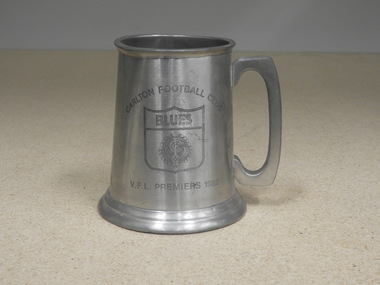
Pewter Mug, Carlton Football Club 1982, 1982
... 1982 Carlton Premiership Season Souvenir Mug 1982 Premiership Year Def Richmond. The mug also lists the players that participated in the game for Carlton Carlton 1980s emblem VFL Premiers 1982, list of players that participated in the game for Carlton Pint Pewter Mug Carlton Football Club 1982 Pewter Mug KIRRA PEWTERS ...1982 Carlton Premiership SeasonSouvenir Mug 1982 Premiership Year Def Richmond. The mug also lists the players that participated in the game for CarltonPint Pewter MugCarlton 1980s emblem VFL Premiers 1982, list of players that participated in the game for Carlton -
 Carlton Football Club
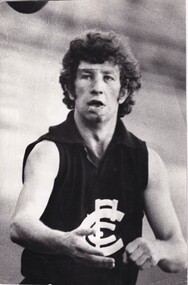
Black & White Photos x 2, John O'Connell
... Jack stuck to his task all match, but neither he nor his team could hold back a ferocious Richmond side that crashed and bashed its way to victory. ...Two Pictures of 1972 Premiership Player John O'ConnellCareer : 1970 - 1976 Debut : Round 3, 1970 vs Richmond, aged 18 years, 361 days Carlton Player No. 818 Games : 111 Goals : 0 Guernsey Nos. 50 (1970-71) and No. 19 (1972-76) Last Game : Preliminary Final, 1976 vs North Melbourne, aged 25 years, 149 days Height : 183 cm (6 ft. 0 in.) Weight : 82 kg (12 stone, 13 lbs.) DOB : April 22, 1951 Premiership Player 1972 After starting his career at Carlton as a centreman or ruck-rover at Under-19 and Reserves level, John Michael “Jack” O’Connell found his niche in defence for the Blues and was a creative back pocket in Carlton’s record-breaking 1972 Grand Final victory over Richmond. A dasher who loved to take off on bouncing runs, Jack spent much of his career alongside champion full-back Geoff Southby, with either Vin Waite or David McKay in the opposite pocket. Together, they created a full-back line regarded as among the best in club history. O’Connell’s journey to Premiership glory began during his school days at St Mark’s in Melbourne’s outer north, then at Glenroy YCW and Fawkner. In 1967, aged 17, he joined Carlton’s Under-19s, and by midway through 1969 he was playing Reserves football in guernsey number 50. Early in the following year, a couple of strong showings saw him banging on the door of senior selection, and he was duly rewarded by being named on the bench for his senior debut against Richmond at the MCG in round 3, 1970. For the Blues and their supporters, the game was a forgettable one, because Carlton surrendered a big half-time lead to be beaten by 13 points, and O’Connell wasn’t called on until the dying minutes. Sent back to the Reserves after that one brief taste if the big time, Jack honed his skills and bided his time - for more than a year – while Carlton went on to win the 1970 Premiership. Eventually, he earned a recall midway through 1971, but with a bevy of stars standing in his way, he was a regular reserve until late in the year, when coach John Nicholls – aware that incumbent Ian Collins intended to retire – offered O’Connell a chance in the back pocket. Jack grasped his opportunity with both hands. At 183 cm and 82 kg he was bigger than the average specialist back-pocket of that era, but he gave nothing away in agility. An excellent mark and an accurate kick off either foot, he had settled in beside Southby by the end of that season, playing the last ten games straight. As season 1972 dawned and Collins retired, O'Connell inherited the Blues’ number 19 guernsey and began marking his mark in the Carlton defence. Inspired by Southby’s creativity and Waite’s aggression, Jack was soon a headache for every opposition club. An ankle injury sustained in round 5, 1972 against Collingwood cost him five matches, but he was back to top form by finals time, when Carlton finished the regular season on top of the ladder. In their first final together – the Second Semi Final - O’Connell, Southby and Waite were resolute in a thrilling draw. Richmond won the replay, then Carlton conquered St Kilda in the Preliminary Final to earn another crack at the Tigers in the Grand Final. Opting for a strategy of all-out attack in the flag decider, the Blues blasted off the blocks to kick 8 goals in the first quarter, 10 in the second and 7 in the third to put the game right out of Richmond’s grasp with a full quarter remaining. After coasting to the final siren, the Blues collected their eleventh VFL Premiership by 27 points. Waite was missing from the match, having been injured in the Preliminary Final, but David McKay was a more than adequate replacement, and all three defenders on the last line completed an excellent final series. On the way to another consistent season in 1973, O’Connell strained a thigh in Carlton’s surprise loss to Fitzroy at the Junction Oval in round 16, and wasn’t recalled to the senior side until the Grand Final, when Carlton and Richmond met once more in the 48th match of Jack’s career. A few days beforehand, Barry Armstrong had been ruled out when he was hit by appendicitis, so O’Connell took over Armstrong’s assigned role of negating the Tigers’ star centreman Ian Stewart. Jack stuck to his task all match, but neither he nor his team could hold back a ferocious Richmond side that crashed and bashed its way to victory. O’Connell went on to play in two more finals campaigns in 1975 and ’76 but was denied the joy of another September victory. He brought up game number 100 at Princes Park in June 1976, when Carlton ended a five-game losing sequence to beat Essendon, before calling time on his VFL career after the Blues suffered a heart-breaking 1-point loss to North Melbourne in that season’s Preliminary Final. In 1977 O'Connell was cleared to WAFL club Subiaco. Later he came back to Victoria and coached Diamond Creek to a Premiership in the Diamond Valley League. Then in 1987, the football world was rocked by the news that Jack had been diagnosed with a virulent form of cancer. He fought hard for 18 months, but tragically passed away on the 5th November, 1989 aged just 38. Career Highlights 1971 - 3rd Reserves Best & Fairest 1971 - Reserves Most Improved Player 1972 - Premiership Player Milestones 50 Games : Round 2, 1974 vs Geelong 100 Games :Round 13, 1976 vs Essendon Footnotes Off the field, O’Connell was a quiet, reserved character who, by 1973 had struck a warm friendship with another man of few words in his champion team-mate Bruce Doull. The pair could often be seen together sharing a beer after Sunday morning recovery sessions, and club folklore has it that the only regular conversation to be heard between them was, “it’s your shout.” In 1997, John's son Luke O'Connell joined Carlton, playing eight Reserves games and kicking three goals.2 x Black & White PhotosThe Sun Articles pasted on back of each photo -
 Carlton Football Club
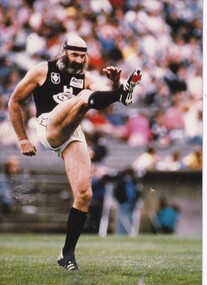
Black & White Photos, Bruce Doull
... id=34774 In his 53rd senior appearance for Carlton - the 1972 VFL Grand Final - Doull stamped himself as a rising League star by subduing Richmond’s champion centre half-forward Royce Hart on the biggest stage of all. ...Photographs of Bruce DoullGroup pf photos of Carlton Player Bruce Doull Career : 1969 - 1986 Debut : Round 5, 1969 vs South Melbourne, aged 18 years, 234 days Carlton Player No. 811 Games : 356 Goals : 22 Last Game : Grand Final, 1986 vs Hawthorn, aged 36 years, 16 days Guernsey Nos. 4 (1969-71) and 11 (1972-86) Height : 185 cm (6 ft. 1 in.) Weight : 87 kg (13 stone, 10 lbs.) DOB : 11 September, 1950 Premiership Player: 1972, 1979, 1981, 1982 Best and Fairest: 1974, 1977, 1980, 1984 Norm Smith Medal 1981 Carlton Hall of Fame (1987) Team of the Century Half Back Flank AFL Team of the Century Half Back Flank Carlton Legend By any measure, Bruce Doull was a champion. One the greatest defenders ever to have played the Australian code of football, he racked up a club record 352 matches for the Navy Blues (including six Grand Finals for four flags) in a 17-year career that stretched from 1969 to 1986. He was Carlton’s Best and Fairest four times, and a member of both the AFL and Carlton’s Team of the Century. It’s a curious fact, however, that we know comparatively little about him. An intensely private person, Bruce shunned publicity and rarely gave interviews. Instead, he let his football do the talking - by taking on and beating the best forwards in the game, week after week. Born Alexander Bruce Doull in Geelong in 1950, he was recruited by Carlton’s Under-19 squad in 1968 from the Jacana Football Club in Melbourne’s northern suburbs. In those early days he was a ruck-rover or half-forward, with a conservative haircut and a burning ambition to be a League footballer. The Blues were the reigning premiers, and the club’s roster was rich in talent across all three grades. Even so, Bruce played only a handful of games with the Under-19 squad (in guernsey number 53) before he was promoted to the Reserves and allocated the highly-prestigious number 4. Then, in only his second season at Princes Park, the shy youngster was selected to make his senior debut for Carlton in a home-ground match against South Melbourne in round 5, 1969. He sat on the reserves bench throughout the first half that afternoon, before being called on to replace the injured Alex Jesaulenko at half-time. Once on the field, Bruce made the occasion even more memorable by kicking his first career goal early in the third quarter, and Carlton held off the fast-finishing Swans to win by 25 points. Throughout 1969-70, Doull played another 14 matches as a winger, ruck-rover or half-forward. He was overlooked for a finals berth in both seasons, but mid-way through 1971, senior coach Ron Barassi told him that there was a regular spot available in defence if he wanted it bad enough, which Bruce certainly did. Given an opportunity to impress at half-back, his judgement, deceptive pace and strength in the air stood out, as did his remarkable poise and calmness under pressure. At 185 cm and 87 kg, Doull was no giant. Yet he soon demonstrated a remarkable ability to "play tall" in a key defensive role. And when the ball came to ground, he stayed in the contest because he never lost his concentration. His all-round agility was exceptional - making him equally as effective in a pocket or on a flank - and physical pressure rarely unsettled him.show_image.php?id=34774 In his 53rd senior appearance for Carlton - the 1972 VFL Grand Final - Doull stamped himself as a rising League star by subduing Richmond’s champion centre half-forward Royce Hart on the biggest stage of all. The Tigers kicked a huge 22.18 that afternoon, but Carlton booted 28.9 in the highest aggregate decider ever played, and collected an eleventh VFL Premiership. Hart was kept to just a handful of possessions and two goals for the match, so the media was soon clamouring for information about the Tiger star’s conqueror. Bruce complied, but he was uneasy in the spotlight and from then on was rarely available. At the same time, Doull had become the latest folk hero at Princes Park. Supporters loved his no-nonsense approach, his courage and his consistency. In keeping with his shy nature is the story of his playing numbers. More and more during his first three seasons in number 4, he was uncomfortable in the locker room because of the attention that was focused on him, in the presence of some of the club’s modern greats like Serge Silvagni (number 1), John Nicholls (2), Kevin Hall (3), Syd Jackson (5) and Garry Crane (6). Therefore, at the conclusion of the 1971 season he was granted a request to switch to guernsey number 11, which had become available due to the retirement of another idolised Carlton defender in John “Ragsy” Goold. With his new number, Bruce shifted only a few metres down the line of lockers, but for him, anywhere further from the limelight was appreciated. By his mid-twenties, Doull was sporting lavish sideboards and hair to his shoulders, which contrasted somewhat with his shy nature, and made him hard to mistake on the field. He won Carlton's Best and Fairest award in 1974, and followed up again in 1977, 1980 and 1984. In 1979 he collected his second Premiership medal when the Navy Blues knocked over Collingwood in a hard-fought, controversial Grand Final remembered for Wayne Harmes’ brilliant solo effort to seal the match. Two years later, Bruce’s finest hour arrived when the Blueboys broke myriads of Magpie hearts again to win the 1981 Grand Final by 20 points. Impassable all day at centre half-back, Doull beat four opponents, and was a worthy winner of the Norm Smith medal as Best on Ground. Twelve months on from that triumph, Bruce collected his fourth Premiership medal when the wounded Blues upset their other traditional rival, Richmond, for the '82 flag. By then nicknamed the “Flying Doormat” by TV commentator Lou Richards - in deference to his balding pate, shaggy beard and hair, kept under control by a navy blue or white headband - Doull led a Carlton defence that was rock-solid in the Blues' 18 point win. Although he would not have been overly concerned, plenty of good judges were gobsmacked afterwards when Bruce missed out on his second Norm Smith medal, which went instead to Richmond's Maurice Rioli. From 1976 to 1981, Bruce was a fixture in the Victorian State team, and earned a recall in 1984 at the age of 33. He was a remarkably durable and suffered a debilitating injury only once in his career, in 1985 – shortly after he had set a new games record at Carlton of 329 matches to succeed John Nicholls. He wrenched a knee at training a few days later, and ended up playing only three senior games for the season. Eventually, Doull made 356 appearances for Carlton, including 162 in succession to set another club record. He was never reported by the umpires for foul play, and widely respected for his fairness in playing the ball rather than the man. A former team-mate, Brent Crosswell once wrote: "Doull's game has a moral purity about it, and that is why opponents have always found it extremely difficult to be unfair to him. It would have shamed them." Carlton Coach of the Century David Parkin was equally as complimentary when he described Bruce as “the best team player I ever coached.” Doull’s final game for Carlton came in the sixth Grand Final of his career, when Hawthorn demolished the Blues in a one-sided 1986 decider. Star Hawks full-forward Jason Dunstall kicked six goals on the 36 year-old veteran in that match, but in the context of Bruce’s career as a whole, it was barely a blemish. He may have been a shy and reserved individual in public, but when Bruce Doull pulled on the famous Old Dark Navy Blue, he became one of the true legends of VFL/AFL football. Just one year after his retirement, Bruce was elected to the Carlton Hall of Fame. In September 1996 he was named on a half-back flank in the AFL Team of the 20th Century, and in 2000 filled the same spot in Carlton's Team of the Century. Then, in June 2014, during celebrations marking Carlton's 150th year of VFL/AFL competition, Bruce was named as one of the five greatest Blues of all time, alongside John Nicholls, Stephen Kernahan, Alex Jesaulenko and Stephen Silvagni. Footnotes On the way to victory in the 1982 Grand Final against Richmond, Doull was involved in a celebrated incident that stopped the game and both amused and infuriated the 107,536 fans at the ground. During a tense third quarter, Carlton was in front by one point when a naked female dashed out into the middle of the MCG. Wearing nothing but a Blues scarf, 18 year-old Helen D’Amico made a bee-line for Doull, and tried to embrace him before she was intercepted by his team-mate Wayne Johnston and disturbed match officials. With the crowd in uproar, she was bundled into an over-sized cardigan and marched off the ground, as Carlton went on to upset the Tigers by 18 points. It later emerged that Ms D’Amico had been working as a strip-tease artist at an Adelaide nightclub, and her streak was a publicity stunt. Milestones 50 Games: Semi Final, 1972 vs Richmond 100 Games: Round 22, 1974 vs St Kilda 150 Games: Round 3, 1977 vs St Kilda 200 Games: Round 14, 1979 vs Fitzroy 250 Games: Round 18, 1981 vs Geelong 300 Games: Round 19, 1983 vs St Kilda 350 Games: Round 19, 1986 vs Collingwood Career Highlights 1972 - 5th Best & Fairest 1972 - Premiership Player 1973 - 8th Best & Fairest 1974 - Robert Reynolds Memorial Trophy - Best & Fairest Award 1975 - Arthur Reyment Memorial Trophy - 2nd Best & Fairest 1976 - Arthur Reyment Memorial Trophy - 2nd Best & Fairest 1977 - Robert Reynolds Memorial Trophy - Best & Fairest Award 1979 - 7th Best & Fairest 1979 - Premiership Player 1980 - Robert Reynolds Memorial Trophy - Best & Fairest Award 1981 - 4th Best & Fairest 1981 - Norm Smith Medal 1981 - Premiership Player 1982 - 5th Best & Fairest 1982 - Premiership Player 1983 - 2nd Best & Fairest 1984 - Robert Reynolds Memorial Trophy - Best & Fairest Award 1984 - Best Clubman Award Links Articles: Bruce Doull Speaks | Yesowooloonko - You Beauty! | Moving Guernsey Numbers - UP! | Carlton's Magnificent Seven Footage Interview after the 1981 Grand Final: https://www.youtube.com/watch?v=uzAqqk2u6y0 Toyota Bruce Doull Advertisement: https://www.youtube.com/watch?v=Zk_yu4t8vYQ Driving with Sam Pang: https://www.youtube.com/watch?v=WNwUaqVYBDo Bruce Doull vs Glenn Archer: https://www.youtube.com/watch?v=yVmHGMLFVqg Blueseum: Playing Career of Bruce Doull | Carlton Legends | Career Breakdown | Doull's Blueseum Image Gallery Video 1972 1973 1976 1977-79 1980 1981 1982 1983 1984 1985 InterviewBlack & White photos -
 Carlton Football Club
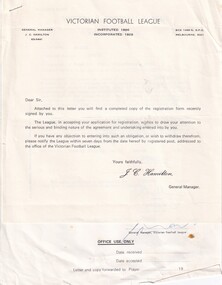
Letter from Victorian Football League 1981, VFL Registration Form 5A, 1981
... Swan was shifted forward early and kicked two majors, but neither he nor his team could match Richmond’s ferocity and the Tigers won the flag by 30 points. ...A now defunct Form 5A registration of playerA now defunct Form 5A registration of player of four time premiership player David McKay Career : 1969 - 1981 Debut : Round 3, 1969 vs Footscray, aged 19 years, 165 days Carlton Player No. 809 Games : 263 Goals : 277 Last Game : Grand Final, 1981 vs Collingwood, aged 31 years, 325 days Guernsey No. 43 Height : 191 cm (6 ft. 3 in.) Weight : 92 kg (15 stone, 0 lbs.) DOB : November 5, 1949 Premiership Player 1970, 1972, 1979, 1981 Carlton Hall of Fame (1996) One of the most spectacular high marks of his era, David Robert James “Swan” McKay was a Carlton star for twelve seasons, and a key member of four Premiership teams. Recruited from Newlyn, near Ballarat in central Victoria, McKay arrived at Princes Park in 1968 as a raw-boned 19 year-old. Coach Ron Barassi liked what he saw, and quickly realised that the laconic, easy-going country kid had the makings of something special after only a handful of games in the Blues’ number 43 guernsey. At 191cm and 95 kg he was robust enough to play in the ruck, while his exceptional aerial skills allowed him to hold down a key position. The problem was that he had joined the reigning premiers, so he wasn’t able to claim a regular place in the side until after the Blues were beaten by Richmond in the ’69 Grand Final. Early in the following season, McKay was given a chance at centre half-back, and took to it “like a swan to water.” Quick for his size and blessed with wonderful judgement, “Swan” soon became a crowd favourite. From that season on and throughout his career, it was only on rare occasions when the weekly televised football highlights package did not include footage of him drifting across the front of the pack to pluck the ball from the hands of an opponent, or leaping high over three or four sets of shoulders to take another soaring high mark. By 1970, McKay was embedded in the Carlton defence and hadn’t missed a game all season. After the Blues wound up second on the ladder, David experienced the thrill of a VFL final for the first time in his 29th senior match, when almost 113,000 fans packed into the MCG to see Collingwood beat Carlton by 10 points in a high-scoring Semi Final. Swan took 10 marks amid his 16 possessions that afternoon, and although his side was beaten, he revelled in the occasion. A fortnight later, after destroying St Kilda in a one-sided Preliminary Final, Carlton met Collingwood again in the Grand Final in front of an even bigger crowd. McKay was in trouble early against his taller, equally athletic opponent Len Thompson, but rallied after half time to get right on top as the Blues came from 44 points down to shatter Collingwood in the greatest of all Grand Final comebacks. Swan took nine telling marks and collected 18 possessions to be hailed as Best on Ground, before collecting the first of his four Premiership medals. One of the hallmarks of the Carlton teams coached by Barassi was their versatility, so as his career progressed, McKay started spending time up forward or in the ruck. From then on, when a game was in the balance and a goal or two was sorely needed, he was the man the Blues often looked for. He worked hard on his shooting for goal and became a reliable forward option. The 1972 final series must rank as one of Carlton’s finest hours, as the Blues fought their way through three hard, cut-throat games to meet the raging favourites Richmond in the Grand Final. In that remarkable encounter on a fine, cool day at the MCG, Swan lined up in a back pocket to cover the Tigers’ resting ruckmen and for once, lowered his colours to Richmond’s Neil Balme, who kicked 5 goals – but the Blues still won by 27 points and McKay picked up his second medal. In August 1973, Swan brought up game number 100 against Footscray at the Western Oval. Carlton won by nine points – thanks to McKay’s 13 marks in great game at centre half-back. A month later, the Blues and the Tigers met again on Grand Final day, and – still smarting from their surprise defeat the previous year – Richmond went head-hunting in a spiteful match. Swan was shifted forward early and kicked two majors, but neither he nor his team could match Richmond’s ferocity and the Tigers won the flag by 30 points. Midway through the following season, in round 14, 1975 - McKay was embroiled in another infamous encounter at Essendon’s Windy Hill – a game that saw eight players (himself included) reported. On a wet and miserable day dominated by a howling wind, Swan’s 22 disposals, 14 marks and eight goals won the game for Carlton, and making that victory even sweeter, he later escaped suspension for striking. By the time Carlton was knocked out of the finals in 1976 by straight-sets defeats at the hands of Hawthorn and North Melbourne, McKay was 27 and had racked up 172 games. But he felt he needed relief from the pressure-cooker life of a VFL footballer, so he agreed in principle to join WAFL club Subiaco. When he requested a clearance from Carlton however, the Blues steadfastly refused. Both sides dug in their heels, and some unfortunate headlines resulted before Swan relented and resumed training some weeks into 1977. In round 13 of that season, on a freezing cold and wet Saturday afternoon at the Junction Oval, bottom side Fitzroy caused a huge upset by beating Carlton by 7 points. In his 181st game, McKay took 9 marks, and his second goal of the game was the 200th of his career. McKay’s fourth Grand Final came in 1979 against Collingwood. By then one of only five survivors from the ’73 team, Swan was approaching his 30th birthday. yet still playing valuable, consistent football. In a close, absorbing match on a wet and slippery MCG that day, Carlton again won a nail-biter by just 5 points, thanks to Wayne Harmes’ famous swipe at the ball from a forward pocket in the last minutes of the game. The ball ended at the feet of Ken Sheldon, whose goal clinched Carlton’s twelfth Premiership, and McKay’s third. Throughout the majority of his career, Swan was a durable type who rarely suffered serious injury. That all changed in 1980 however, when he rolled an ankle, played on, and compounded the injury which hampered him for the rest of his career. Carlton made the finals again, but dropped out after successive losses. That was a bitter blow for the Blues, who promptly sacked coach Peter Jones and reinstated David Parkin. Because of his ankle, Swan missed a number of games early in 1981, but was back to near his best for the finals. Carlton destroyed Geelong by 40 points in the second Semi Final and marched into the Grand Final as hot favourites against Collingwood. In a typically fierce and physical decider, Collingwood led by 21 points late in the third quarter, before the confident Blues overwhelmed them in the last term - winning Premiership number four for Swan McKay, and flag number thirteen for Carlton. One of the goals in that vital last quarter came from the big number 43. It was his second major of the game, and his last kick in league football. Amid the jubilation of victory in the rooms after the game, Swan announced his retirement after 263 games and 277 career goals. He was a few weeks short of his thirty-second birthday and it was an appropriate way to end the playing career of one of the club’s favourite sons. Following his retirement, McKay stayed involved at Princes Park in a number of off-field roles. He was inducted into the Carlton Hall of Fame in 1996, and later became a high-profile critic of Carlton’s President John Elliott. When Elliott was voted out of office in 2002, McKay was appointed a director of the club under new President Ian Collins. During 1999 and 2000, David's son James McKay played eight Reserves games and kicked two goals for Carlton. Milestones 100 Games : Round 21, 1973 vs Footscray 150 Games : Round 2, 1976 vs Essendon 200 Games : Round 10, 1978 vs Footscray 250 Games : Round 9, 1981 vs South Melbourne 100 Goals : Round 13, 1974 vs Geelong 200 Goals : Round 13, 1977 vs FitzroyLetters & copy of form from VFL -
 The 5th/6th Battalion Royal Victoria Regiment Historical Collection
Medal - Medal Military, GVR 4679 Pte T.W Dynes, 1917
... Awarded to PTE t (Terrence) W.Dynes 23 Aust INF enlisted at Richmond Victoria 14 Feb 1916 Died of desease in United Kingdom 29 Oct 1918 Commonwealth gazette 15 dated 4 Feb 1919 Regimental Property Military Medal WW1 Bravery 23 Aust Inf 4679 PTE T.W Dynes 23 Aust inf engraved around rim Circular medal, single suspension bar GVR approx 65mm of ribbon;Blue/white/red/white/red/white/blue. ...Awarded to PTE t (Terrence) W.Dynes 23 Aust INF enlisted at Richmond Victoria 14 Feb 1916 Died of desease in United Kingdom 29 Oct 1918 Commonwealth gazette 15 dated 4 Feb 1919 Circular medal, single suspension bar GVR approx 65mm of ribbon;Blue/white/red/white/red/white/blue. Obverse - head of GVR -georgivs v britt oan rex et ind imp. Reverse - laurel wreath outer edge;kings crown GVR cypher "for bravery in the field" 4679 PTE T.W Dynes 23 Aust inf engraved around rim 4679 PTE T.W Dynes 23 Aust inf engraved around rim regimental property, military medal, ww1, bravery, 23 aust inf -
 Camberwell Historical Society
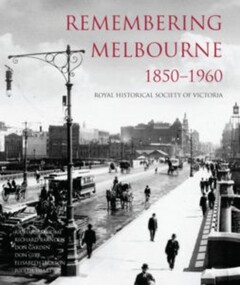
Book, Royal Historical Society of Victoria, Remembering Melbourne 1850-1960, 2016
... Camberwell Melbourne History of the city of Melbourne and selected suburbs (Brighton, Brunswick, Camberwell, Hawthorn, Balwyn, Canterbury, Carlton, Coburg, Collingwood, East Melbourne, Essendon, Fitzroy, Footscray, Heidelberg, Kew, Malvern, Middle Park, North Melbourne, West Melbourne, Port Melbourne, Richmond, Sunshine, Surrey Hills). Book featuring text and over 700 black and white illustrations of buildings that have been demolished or changed significantly across 20 suburbs, capturing the early city of Melbourne. ...History of the city of Melbourne and selected suburbs (Brighton, Brunswick, Camberwell, Hawthorn, Balwyn, Canterbury, Carlton, Coburg, Collingwood, East Melbourne, Essendon, Fitzroy, Footscray, Heidelberg, Kew, Malvern, Middle Park, North Melbourne, West Melbourne, Port Melbourne, Richmond, Sunshine, Surrey Hills).Book featuring text and over 700 black and white illustrations of buildings that have been demolished or changed significantly across 20 suburbs, capturing the early city of Melbourne. Published by the RHSV. History of the city of Melbourne and selected suburbs (Brighton, Brunswick, Camberwell, Hawthorn, Balwyn, Canterbury, Carlton, Coburg, Collingwood, East Melbourne, Essendon, Fitzroy, Footscray, Heidelberg, Kew, Malvern, Middle Park, North Melbourne, West Melbourne, Port Melbourne, Richmond, Sunshine, Surrey Hills).camberwell, melbourne -
 Royal District Nursing Service (now known as Bolton Clarke)
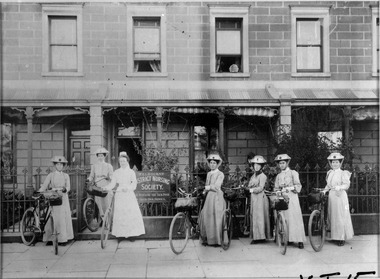
Photograph - Photograph, black and white, 1905
... The Nurses worked in the districts of North and West Melbourne, the City Proper, Carlton, Richmond, South Melbourne, Fitzroy and Collingwood making 17,954 visits during the year. ...This photograph is a record of Head Nurse, Sister Lee-Archer, and her staff of six Trained nurses, 'Nurses', of the Melbourne District Nursing Society (MDNS) outside their new Nurse’s Home and Headquarters rented at 5 Royal Terrace, Nicholson Street, Fitzroy. The bicycles seen were the first mode of transport purchased by MDNS and allowed these Nurses to extend the nursing visits they made into more Melbourne suburbs.The Melbourne District Nursing Society (MDNS) moved into larger premises at No. 5 Royal Terrace, Nicholson Street, Fitzroy in May 1904. Head trained Nurse, Lee-Archer and her staff of six Trained nurses pose outside the new ‘Nurse’s Home’ at 5 Royal Terrace, Nicholson Street, Fitzroy. The Nurses worked in the districts of North and West Melbourne, the City Proper, Carlton, Richmond, South Melbourne, Fitzroy and Collingwood making 17,954 visits during the year. The Society had a set of bye-laws which outlined the work conditions for the Nurses. Section 111.1 states ‘Each nurse shall be ready to go to her district at 9 am. She will be expected to visit urgent cases on Sundays, and will be required to work eight hours on each week day, to wear the special uniform, and live in the Home of the Society’. In February 1885, only 50 years after Melbourne was founded, it was recognized that nursing care was needed for the sick poor in inner Melbourne. The Melbourne District Nursing Society (MDNS), the first Society of its kind in Australia, was founded with one Trained nurse, known as 'Nurse' in those days, and a second employed six months later. They liaised with Doctors and worked in the now CBD, ie from Spencer Street to Spring Street and from Victoria Parade to Flinders Street. From its inception the Society was at the forefront of health care. They provided high quality nursing care; educated their patients in the curing and prevention of disease; teaching the importance of cleanliness, fresh air and good nutrition, both by verbal instruction and demonstration, even supplying soup and milk when needed. At that time they walked the streets and lane ways amid the slums of inner Melbourne carrying their nursing bag containing lotion, ointments, powders, liniment, bandages, dressings, a case of spirits, and the Nurse's own clean apron, soap and small towel for her use. They loaned equipment, such as earthenware hot water bottles, splints, urinals, bed pans, bed cradles, feeding mugs, and air-cushions as well as providing clean bed linen and nightdresses as necessary. Trained Midwives began home births in late 1893 taking midwifery bundles and providing clothes for the babe and mother as needed. This was arduous work, particularly in the heat of summer. As the work increased a third Nurse was employed but due to this arduous work many Nurses only remained with the Society for several months. Permission to use bicycles was given to the Nurses in 1898 and the Society decided to purchase their own in 1903. A business man offered ‘new free wheel’ bicycles at £13 each which included maintenance for one year. Bells and wooden frames were added, at a cost of £5 per frame, so the Nurses could carry extra equipment. Nurses’ bags were strapped to the handlebars. Soup was made for those in need 2-3 times a week and if patients could not arrange to have it collected the soup was delivered by the Nurses on their bicycles. The use of bicycles caused a change in uniform, with white pith helmets, and veils covering them and tied under their chin, now being used. They provided high quality nursing care to a range of people, often in destitute situations, some lying on rags on the floor as they had no bed, others with just a bed and maybe a thin blanket, a chair and nothing else. Their ages ranged from babes, children, adults to the elderly. The Nurses gave medications as ordered by a Doctor, dressed wounds e.g. to the injured, and surgical cases, and to those with leg ulcers; attended to patients with ‘surgical ailments’ such as ‘hip disease’; gave care to those with acute illnesses such as bronchitis, pleurisy, pneumonia, measles, and scarlet fever, as well as those with chronic illnesses such as consumption (tuberculosis), heart disease, arthritis, cancer, debility, neuritis and paralysis. In 1913 a Nurse had her Board and residence, uniforms, bicycle and laundry expenses provided and was paid £50 a year for her first six months. At the end of a year her salary was increased by £5, and later she earns £60 a year. Over the years the nurses complained that their veils became wet in the rain and asked for a change of uniform but this did not occur until 1921. Bicycles continued to be used in inner areas until 1945. Black and white photograph of six Trained nurses and their Matron, who has her hair swept up, and is wearing a long white uniform with belt, and white cap; part of her veil is seen hanging down her back, outside their Nurses Home The trained. nurses are holding their two wheeled bicycles, and are wearing long grey frocks, white collars and belts and straw hats with a Maltese cross in the centre of headband, this is held in place with scarves over the hat and tied under their chins. Their nursing bags are strapped to the handlebars of the bicycles. A black sign with the white capital letters 'Melbourne District Nursing Society. ....nursing the sick poor in their own homes' is on the metal spiked fence. The building is made of brick and five long sash windows are seen in the upper section. A metal roofed veranda, held up with four posts and two brick columns, divides the upper and lower section. A door and three long windows are seen which are partly obscured by several bushes behind the fence.melbourne district nursing society, 5 royal terrace, nicholson st carlton, nurses home, bicycles, mdns transport, royal district nursing service, rdns, mdns trained nurses, sister florence lee-archer -
Melbourne Tram Museum
Pamphlet, Public Transport Victoria (PTV), "Buses replace trams - route 48, 75, 78", Jan 2021
... Yields information about track work in Bridge Road Richmond early 2021 trackwork tramways Bridge Road route 48 route 75 route 78 Pamphlet - full colour DL 4 fold. ...Issued for track renewal and overhead work in Bridge Road between Chapel St and Burwood Road, between 3 January and 16 January 2021. Gives details of the replacement and alternative bus routes. Produced by Yarra Trams and the PTV.Yields information about track work in Bridge Road Richmond early 2021Pamphlet - full colour DL 4 fold.trackwork, tramways, bridge road, route 48, route 75, route 78 -
 Melbourne Tram Museum
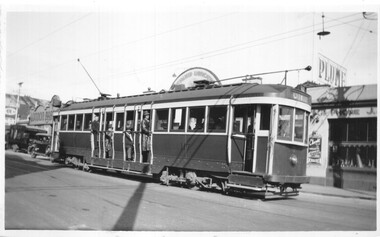
Photograph - N class 117 Swan St. Richmond, late 1930s
... Photograph N class 117 Swan St. Richmond ...The photograph shows N class No. 117(City) in Swan St at the Punt Road corner. The tram entered service as HTT No. 11 in 1916, becoming MMTB 117 during 1920. Sold to Ballarat becoming No. 22 in 1945. Scrapped during 1955 after it had been renumbered to No. 37 (1st). Tram has the destination of City. In the background are adverts for Plume petrol, Castrol oil and a motor repair shop.Yields information about the operation of the N class trams in Swan St.Black and White Photograph with notes on rear.In pencil on the rear "Ex Hawthorn No. 17, Swan St Punt Rd corner."tramways, trams, swan st, n class, tram 117 -
 Victorian Railway History Library
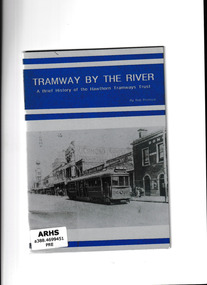
Booklet, Bob Prentice, Tramway by the river : a brief history of the Hawthorn Tramways Trust, 1993
... The Hawthorn line operated via Bridge Road, Richmond. Horse drawn trams were withdrawn in 1916 prior to the introduction of cable trams. ...The Hawthorn Tramways Trust was established in 1914, and merged with the Melbourne and Metropolitan Tramways Board in 1920. The Hawthorn line operated via Bridge Road, Richmond. Horse drawn trams were withdrawn in 1916 prior to the introduction of cable trams. The booklet provides technical details about this line, as well as photographs.Ill, maps, p.17.non-fictionThe Hawthorn Tramways Trust was established in 1914, and merged with the Melbourne and Metropolitan Tramways Board in 1920. The Hawthorn line operated via Bridge Road, Richmond. Horse drawn trams were withdrawn in 1916 prior to the introduction of cable trams. The booklet provides technical details about this line, as well as photographs.tramways - melbourne, trams - melbourne - history -
 Victorian Railway History Library
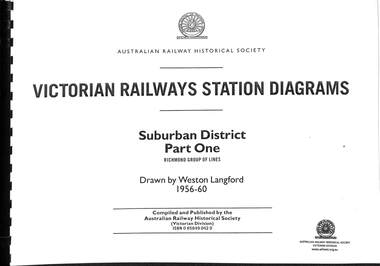
Book, Langford, Weston, Victorian Railway Station Diagrams 1956-1960 - Suburban District Part One, 1956-1960
... railroad infrastructure - Victoria railroads - Victoria Railway diagrams of all the stations on the Richmond group of lines in the Suburban district of Melbourne Victoria in 1956 to 1960. maps, p.64. ...Railway diagrams of all the stations on the Richmond group of lines in the Suburban district of Melbourne Victoria in 1956 to 1960.maps, p.64.non-fictionRailway diagrams of all the stations on the Richmond group of lines in the Suburban district of Melbourne Victoria in 1956 to 1960.railroad infrastructure - victoria, railroads - victoria -
 Victorian Railway History Library
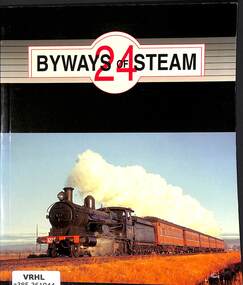
Book, Attenborough, Peter, Byways of Steam 24, 2005
... Railroads - NSW - history Steam locomotives - NSW – pictorial The Richmond Branch, by Peter Attenborough. Peter looks at the history of the Richmond branch and why it was so significant to the fledgling colony in the 1860’s. ...The Richmond Branch, by Peter Attenborough. Peter looks at the history of the Richmond branch and why it was so significant to the fledgling colony in the 1860’s. The expansion of the line and its many wayside stations are reviewed, as are the operational aspects of the branch. A brief insight is also provided into the short-lived extension to Kurrajong with its very different operating practices. Track diagrams and many photographs are included to illustrate the interesting facets of this branch line. Our Railway Heritage: Old Sydney Yard, by Robert Booth. The story of the old Sydney Yard reaches back 150 years into the very early days if the NSWR. In this brief trip back, Robert explores the detail around the engine shed. Murphys Law at Hawkmount, by Stephen Halgren. Hawkmount, on the Sydney to Newcastle main line attracted scores of steam enthusiasts during the final years of steam. However, notoriety visited the revered location on 15 May 1948 when a series of non-injurious derailments and collisions added another chapter to the locations history. This essay details the incidents and the consequences for the men involved. It gives an interesting insight into 1940s trains working over this busy section of track. Newcastle, by Ron Preston. With the closure of the line from Wickham Junction to Newcastle looming, we take a look at some of the history that surrounds the activities on this line that runs along the banks of the Hunter River. Keep Your Hands to Yourself, by Pat Turner. Retired Junee driver Pat Turner recalls an incident at Albury during his days of firing on the Southern Expresses, and how, sometimes it pays to mind your own business.ill, maps, p.136.non-fictionThe Richmond Branch, by Peter Attenborough. Peter looks at the history of the Richmond branch and why it was so significant to the fledgling colony in the 1860’s. The expansion of the line and its many wayside stations are reviewed, as are the operational aspects of the branch. A brief insight is also provided into the short-lived extension to Kurrajong with its very different operating practices. Track diagrams and many photographs are included to illustrate the interesting facets of this branch line. Our Railway Heritage: Old Sydney Yard, by Robert Booth. The story of the old Sydney Yard reaches back 150 years into the very early days if the NSWR. In this brief trip back, Robert explores the detail around the engine shed. Murphys Law at Hawkmount, by Stephen Halgren. Hawkmount, on the Sydney to Newcastle main line attracted scores of steam enthusiasts during the final years of steam. However, notoriety visited the revered location on 15 May 1948 when a series of non-injurious derailments and collisions added another chapter to the locations history. This essay details the incidents and the consequences for the men involved. It gives an interesting insight into 1940s trains working over this busy section of track. Newcastle, by Ron Preston. With the closure of the line from Wickham Junction to Newcastle looming, we take a look at some of the history that surrounds the activities on this line that runs along the banks of the Hunter River. Keep Your Hands to Yourself, by Pat Turner. Retired Junee driver Pat Turner recalls an incident at Albury during his days of firing on the Southern Expresses, and how, sometimes it pays to mind your own business.railroads - nsw - history, steam locomotives - nsw – pictorial -
 Victorian Railway History Library
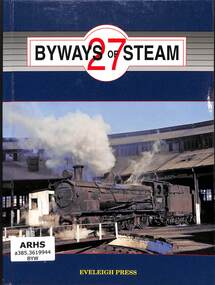
Book, Dunn, Ian, Byways of Steam 27, 2010
... Ray Love covers another locomotive depot of the steam era. The Richmond Line: An Engineman’s Reminiscences. ...Features: Steam Locomotive Depots in NSW: Port Waratah. Ray Love covers another locomotive depot of the steam era. The Richmond Line: An Engineman’s Reminiscences. Graeme Kirkby remembers life as an engineman on this outer Sydney suburban line. The Four Wheel Hopper in NSW. Ian Dunn researches the ubiquitous four wheel hopper.ill, maps, p.172.non-fictionFeatures: Steam Locomotive Depots in NSW: Port Waratah. Ray Love covers another locomotive depot of the steam era. The Richmond Line: An Engineman’s Reminiscences. Graeme Kirkby remembers life as an engineman on this outer Sydney suburban line. The Four Wheel Hopper in NSW. Ian Dunn researches the ubiquitous four wheel hopper.railroads - nsw - history, steam locomotives - nsw – pictorial -
 Victorian Railway History Library
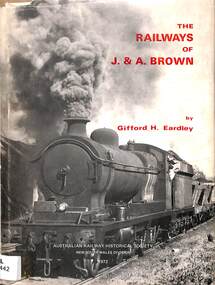
Book, Eardley, Gifford H, The Railways of J & A Brown, 1972
... railroad construction - New South Wales - history Colliery railroads - New South Wales - history A history of the private Richmond & Pelaw Main Colliery Railway owned by the J & A Brown company from Hexham out of Newcastle N.S.W. index, ill, maps, p.160. ...A history of the private Richmond & Pelaw Main Colliery Railway owned by the J & A Brown company from Hexham out of Newcastle N.S.W.index, ill, maps, p.160.non-fictionA history of the private Richmond & Pelaw Main Colliery Railway owned by the J & A Brown company from Hexham out of Newcastle N.S.W.railroad construction - new south wales - history, colliery railroads - new south wales - history -
 Linton Mechanics Institute and Free Library Collection
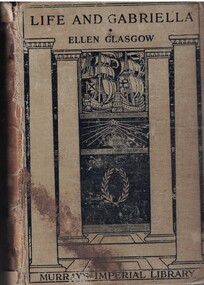
Book - Novel, Glasgow, Ellen, Life and Gabriella : the story of a woman's courage, 1916
... Forced to get a job that puts her between social groups, Gabriella embarks on a treacherous journey through the social strata of turn-of-the-century Richmond, Virginia Book plate 'The Book Club Winston H. ...Gabriella is a young woman from a good family who has fallen on hard times. Forced to get a job that puts her between social groups, Gabriella embarks on a treacherous journey through the social strata of turn-of-the-century Richmond, Virginia529p. : beige cover with black decorationfictionGabriella is a young woman from a good family who has fallen on hard times. Forced to get a job that puts her between social groups, Gabriella embarks on a treacherous journey through the social strata of turn-of-the-century Richmond, Virginiafiction, romance, ellen glasgow -
 University of Melbourne, Burnley Campus Archives
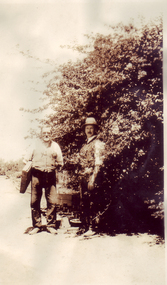
Album - Black and white and sepia prints, Mrs Dorothy Jessep, Mrs. Jessep's Photograph Album, 1923 - 1941
... Jessep, wife of Alexander William Jessep, Principal 1926 -1941. mrs. jessep alexander william jessep principal a.w. jessep students staff garden views russ stewie seniors juniors c. broadhurst yarra river bill richmond long border orchard border pavilion s cohn b jackson miss pater principal's residence banksia rose joan hornabrook mollie shannon luffmann ponds lily ponds jacaranda sequoia sempervirens entrance pinus g crivelli c baker v sanderson n white rose bed elm old nursery nancy dewey andy barney frank vic student group 1925-1928 g hudson cows friesan cows recreation h kirkhope orchard tuppence student group 1927 australian border students working outside crack willow espalier pears oak lawn potting shed m rawlins whitting miss courtney miss horton e murray h carnegie j mackie g campbell m suiter pruning bees outside classes delphiniums christmas party lawnmower Photographs labelled 124 Sepia and b/w photographs pasted onto pages in photograph album. ...Mrs. Jessep, wife of Alexander William Jessep, Principal 1926 -1941.124 Sepia and b/w photographs pasted onto pages in photograph album. Photographs labelled up to 91. String holding pages together has become detached.Photographs labelledmrs. jessep, alexander william jessep, principal, a.w. jessep, students, staff, garden views, russ, stewie, seniors, juniors, c. broadhurst, yarra river, bill richmond, long border, orchard border, pavilion, s cohn, b jackson, miss pater, principal's residence, banksia rose, joan hornabrook, mollie shannon, luffmann ponds, lily ponds, jacaranda, sequoia sempervirens, entrance, pinus, g crivelli, c baker, v sanderson, n white, rose bed, elm, old nursery, nancy dewey, andy, barney, frank, vic, student group 1925-1928, g hudson, cows, friesan cows, recreation, h kirkhope, orchard, tuppence, student group 1927, australian border, students working outside, crack willow, espalier pears, oak lawn, potting shed, m rawlins, whitting, miss courtney, miss horton, e murray, h carnegie, j mackie, g campbell, m suiter, pruning, bees, outside classes, delphiniums, christmas party, lawnmower
