
Showing 2641 items matching "https://11btn.wags.org.au/"
-
 Eltham District Historical Society Inc
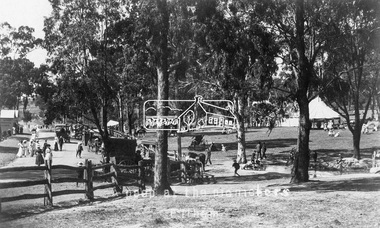
Photograph - Photograph postcard, A peep at the picnickers, Eltham, c.1904
... . : 1881 - 1954), 19 March, p. 3. http://nla.gov.au/nla.news-article165173087.... : 1881 - 1954), 19 March, p. 3. http://nla.gov.au/nla.news-article165173087 michael aitken collection postcards eltham main road bakery eltham village reserve General Store Haley's Paddock Luther Haley Luther Haley General Store Picnic Pioneers and Painters railway store Shire of Eltham Pioneers Photograph Collection Summer Drinks Digital file only Postcards scanned from the collection of Michael Aitken on loan to EDHS, 13 Feb 2018 A peep at the picnickers, Eltham Photograph Photograph postcard Tom Prior (prob.) ...Postcards scanned from the collection of Michael Aitken on loan to EDHS, 13 Feb 2018 Reproduced ‘Pioneers & Painters’ pp 52-53. Picnickers enjoying a Sunday outing in the fields opposite Eltham Railway Station. Looking north towards Research along Main Road near the intersection with Dudley Street. Luther Hayley’s Bakery and General Store on left promoting refreshments and summer drinks. With the opening of the railway to Eltham in 1902, Melbourne residents would regularly enjoy a Sunday excursion journey on the train to Eltham for a day’s outing to the countryside. Possibly the annual State schools picnic held by the Board of Advice at Haley's Paddock near Eltham railway station on 11 March, 1904. Haley’s Paddock (now occupied by Eltham shopping centre) was capable of accommodating 10,000 people, with ample shade and hilly surroundings, an ideal place for any gathering. The main foreground is the site of the present day Eltham Village and Coles Shopping Centre. 1904 'STATE SCHOOLS' PICNIC.', Record (Emerald Hill, Vic. : 1881 - 1954), 19 March, p. 3. http://nla.gov.au/nla.news-article165173087Digital file only Postcards scanned from the collection of Michael Aitken on loan to EDHS, 13 Feb 2018michael aitken collection, postcards, eltham, main road, bakery, eltham village reserve, general store, haley's paddock, luther haley, luther haley general store, picnic, pioneers and painters, railway store, shire of eltham pioneers photograph collection, summer drinks -
 Eltham District Historical Society Inc
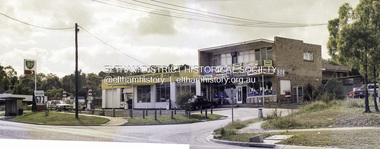
Photograph, Beard Street and Main Road Eltham, 20 Jan 1986, 20/01/1986
... The Sun headline is "Poison Dumped in Murray" which has been dated to 20 Jan 1986 1986 'Poison in Murray cuts town water', The Canberra Times (ACT : 1926 - 1995), 20 January, p. 1. , viewed 30 Aug 2017, http://nla.gov.au/nla.news-article122421767...The Sun headline is "Poison Dumped in Murray" which has been dated to 20 Jan 1986 1986 'Poison in Murray cuts town water', The Canberra Times (ACT : 1926 - 1995), 20 January, p. 1. , viewed 30 Aug 2017, http://nla.gov.au/nla.news-article122421767 A favourite milk bar of the time for local youth as evidenced from comments on the ThrowbackThursday Facebook Page post. ...During the recent refurbishment of our Local History Centre we came across a roll of 35mm colour negatives which at some stage had been exposed to water or similar resulting in the individual strips sticking to each other and the old paper film processing envelope. The situation looked hopeless but one of our members had an idea on how to salvage them; after all, we had nothing to lose. In the end we were able to separate the film strips and remove most of the paper residue except some of the adhesive. The film was scanned and even though suffering from various light issues; fading, possible exposure problems and a yellow shadow cast by the adhesive residue, the detail and historical information they contain has been rescued. These images are all centred around the intersection of Beard Street and Main Road Eltham. The Sun headline is "Poison Dumped in Murray" which has been dated to 20 Jan 1986 1986 'Poison in Murray cuts town water', The Canberra Times (ACT : 1926 - 1995), 20 January, p. 1. , viewed 30 Aug 2017, http://nla.gov.au/nla.news-article122421767A favourite milk bar of the time for local youth as evidenced from comments on the ThrowbackThursday Facebook Page post. Frame 01791-1 shows the auction sign for the land on the southeast corner of Main Road and Beard Street which was developed into a small group of shopsRoll of 35mm colour negative film, 4 stripsKodak CL 200 5093eltham, main road, beard street, eltham east service centre, bp service station -
 Bendigo Historical Society Inc.
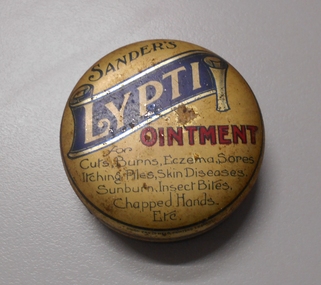
Accessory - Lypti Ointment - Cosmetic
... At its peak, Sandner and Sons had agents up and down the east coast of Australia as well as in New Zealand and the United States of America. https://www.bendigoadvertiser.com.au/story/3854951/sandner-and-sons-to-be-preserved-in-national-library/ ...At its peak, Sandner and Sons had agents up and down the east coast of Australia as well as in New Zealand and the United States of America. https://www.bendigoadvertiser.com.au/story/3854951/sandner-and-sons-to-be-preserved-in-national-library/ Sandner Cosmetics Eucalyptus Distillery A small tin of Sander's LYPTI OINTMENT. ...When Carl Sandner began Sandner and Sons Eucalyptus Distillery in 1875, he probably had no idea his archives would end up in the National Library. The distillery operated until 1967 and the Uley Street site was the subject of archaeological monitoring in 2011 prior to Bendigo’s new ambulance station being built there. But his great great grandson Alec Sandner handed over some mint-condition documents that he has held on to for many years. “I had this tin and the more I opened it, the more interested in it I became,” Mr Sandner said. “There was a letter from the Kaiser in 1888 because the business had written to them asking them to endorse. They had politely refused. “There was also a letter from the Italian consulate saying the King of Italy was satisfied with the product he received. From then the advertising said the products had been approved by the King of Italy.” At its peak, Sandner and Sons had agents up and down the east coast of Australia as well as in New Zealand and the United States of America. https://www.bendigoadvertiser.com.au/story/3854951/sandner-and-sons-to-be-preserved-in-national-library/ A small tin of Sander's LYPTI OINTMENT. The lidded tin contains a waxy brown substance with an aroma of eucalyptus. There are no ingredients listed. Gold coloured tin with red, blue and white printing. "For Cuts, Burns, Eczema, Sores, Itching, Piles, Skin Diseases, Sunburn, Insect Bites, Chapped Hands Etc.sandner, cosmetics, eucalyptus distillery -
 Bendigo Historical Society Inc.
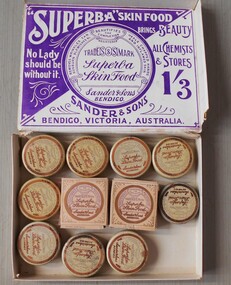
Accessory - Superba Skin Food - Cosmetic
... At its peak, Sandner and Sons had agents up and down the east coast of Australia as well as in New Zealand and the United States of America. https://www.bendigoadvertiser.com.au/story/3854951/sandner-and-sons-to-be-preserved-in-national-library/ ...At its peak, Sandner and Sons had agents up and down the east coast of Australia as well as in New Zealand and the United States of America. https://www.bendigoadvertiser.com.au/story/3854951/sandner-and-sons-to-be-preserved-in-national-library/ Sandner Cosmetics Eucalyptus Distillery Rectangular cream coloured box with attached fold back lid. ...When Carl Sandner began Sandner and Sons Eucalyptus Distillery in 1875, he probably had no idea his archives would end up in the National Library. The distillery operated until 1967 and the Uley Street site was the subject of archaeological monitoring in 2011 prior to Bendigo’s new ambulance station being built there. But his great great grandson Alec Sandner handed over some mint-condition documents that he has held on to for many years. “I had this tin and the more I opened it, the more interested in it I became,” Mr Sandner said. “There was a letter from the Kaiser in 1888 because the business had written to them asking them to endorse. They had politely refused. “There was also a letter from the Italian consulate saying the King of Italy was satisfied with the product he received. From then the advertising said the products had been approved by the King of Italy.” At its peak, Sandner and Sons had agents up and down the east coast of Australia as well as in New Zealand and the United States of America. https://www.bendigoadvertiser.com.au/story/3854951/sandner-and-sons-to-be-preserved-in-national-library/ Rectangular cream coloured box with attached fold back lid. Printed in purple on the lid and also inside the lid "SUPERBA" SKIN FOOD Brings Beauty. All Chemists & Stores.1/3. No Lady should be without it. SANDER & Sons. BENDIGO, Victoria, Australia. A centred circle frame includes the following Removes wrinkles, tan, sunburn blemishes &c. Beautifies the complexion. Heals chapped hands and inflemed skin. Inside the box is a loose advertising card for the product. The box contains eleven small tins of the skin cream. Each tin has a small red wax seal on one side. Seven appear to be intact and unopened and four have been opened. Some of the printing on the tins is gold coloured in places but all tins show various stages of wear Two of them are inside original smaller boxes. The tins contain a waxy substance covered with a piece of waxed paper. Folded information sheet inside one of the boxes. There are no ingredients listed. sandner, cosmetics, eucalyptus distillery -
 Bendigo Historical Society Inc.
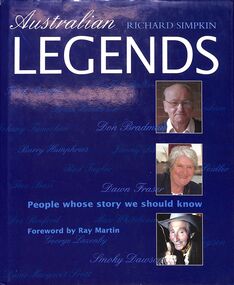
Book - "Australian Legends", 2005
... He served in France with the 38th Battalion, earning promotion to sergeant and was discharged on 20 September 1919. https://en.wikipedia.org/wiki/Jack_Lockett After the war, Jack returned to The Mallee and selected a 640 acres (260 ha) block of land in Linga, Victoria, deciding to make his living as a farmer. ...He served in France with the 38th Battalion, earning promotion to sergeant and was discharged on 20 September 1919. https://en.wikipedia.org/wiki/Jack_Lockett After the war, Jack returned to The Mallee and selected a 640 acres (260 ha) block of land in Linga, Victoria, deciding to make his living as a farmer. ...John Henry Lockett OAM (22 January 1891 – 25 May 2002) was the oldest man ever in Australia when he died aged 111 years, 123 days. As one of the last surviving veterans of World War I, he was acclaimed as a national hero during the last decade of his life. Lockett was born in the small Victorian town of Waanyarra, near Bendigo. He left school aged nine to work on a local farm. Later, he worked for his uncles in the Mallee. On 24 March 1916, he travelled to Mildura to enlist in the Australian Imperial Force. He served in France with the 38th Battalion, earning promotion to sergeant and was discharged on 20 September 1919. https://en.wikipedia.org/wiki/Jack_Lockett After the war, Jack returned to The Mallee and selected a 640 acres (260 ha) block of land in Linga, Victoria, deciding to make his living as a farmer. In 1923, he married Maybell Ingwerson and they had four children together. In 1963, the couple retired to Bendigo in 1953, leaving the farmland (which now covered more than 130,000 acres (53,000 ha), in the care of their children and grandchildren. "Australian Legends People whose story we should know" written by Richard Simpkin. Foreword by Ray Martin. A unique collection of interviews collected by the author from around Australia. Published in Australia by New Holland Publishers in 2005. Dark blue hard cover book with a dark blue dust jacket with three photographs on the front and four photographs on the back. Titles printed in white and bright blue. Book includes full page black and white or coloured photographs of featured people. Each featured person has a one-page story facing their photograph. Includes an article on Jack Lockett on Page 104. 176 pp.jack lockett -
 Bendigo Historical Society Inc.
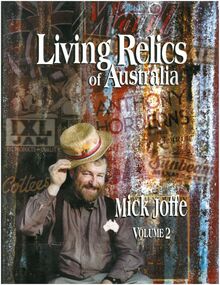
Book - 'Living Relics of Australia', 2001
... He served in France with the 38th Battalion, earning promotion to sergeant and was discharged on 20 September 1919. https://en.wikipedia.org/wiki/Jack_Lockett After the war, Jack returned to The Mallee and selected a 640 acres (260 ha) block of land in Linga, Victoria, deciding to make his living as a farmer. ...He served in France with the 38th Battalion, earning promotion to sergeant and was discharged on 20 September 1919. https://en.wikipedia.org/wiki/Jack_Lockett After the war, Jack returned to The Mallee and selected a 640 acres (260 ha) block of land in Linga, Victoria, deciding to make his living as a farmer. ...John Henry Lockett OAM (22 January 1891 – 25 May 2002) was the oldest man ever in Australia when he died aged 111 years, 123 days. As one of the last surviving veterans of World War I, he was acclaimed as a national hero during the last decade of his life. Lockett was born in the small Victorian town of Waanyarra, near Bendigo. He left school aged nine to work on a local farm. Later, he worked for his uncles in the Mallee. On 24 March 1916, he travelled to Mildura to enlist in the Australian Imperial Force. He served in France with the 38th Battalion, earning promotion to sergeant and was discharged on 20 September 1919. https://en.wikipedia.org/wiki/Jack_Lockett After the war, Jack returned to The Mallee and selected a 640 acres (260 ha) block of land in Linga, Victoria, deciding to make his living as a farmer. In 1923, he married Maybell Ingwerson and they had four children together. In 1963, the couple retired to Bendigo in 1953, leaving the farmland (which now covered more than 130,000 acres (53,000 ha), in the care of their children and grandchildren. 'Living Relics of Australia. Volume 2' by Mick Joffe. Foreword by Alan Jones. Edited by Phyl Joffe. Copyright 2001. Limited Edition of 5,000 - not available in book stores. Volume 2 in the series 'Endangered Characters of Australia'. Contains 25 short biographies of Australians - many of whom were in their 90's and several of them over 100 years of age. Printed by Dai Nippon Printing Co. (Hong Kong). Colored hard cover which is the same image as the dust jacket. Dust jacket and hard cover has image of author on front with Australian product images in background; and five caricatures with Australian product images in background. Titles printed in white. Each personality covered has description of their history and life accompanied by photographs relevant to them and a caricature. Includes pages dedicated to Jack Lockett on Pages 38 to 45. 128 pp. Two copies in library.Inscribed "Yours fairdinkumly. Mick Jofe. 2001."jack lockett -
 Bendigo Historical Society Inc.
Book - "A Vision Realised. 1988. District History of Underbool, Torrita, Linga, and Boinka.", 1988
... He served in France with the 38th Battalion, earning promotion to sergeant and was discharged on 20 September 1919. https://en.wikipedia.org/wiki/Jack_Lockett After the war, Jack returned to The Mallee and selected a 640 acres (260 ha) block of land in Linga, Victoria, deciding to make his living as a farmer. ...He served in France with the 38th Battalion, earning promotion to sergeant and was discharged on 20 September 1919. https://en.wikipedia.org/wiki/Jack_Lockett After the war, Jack returned to The Mallee and selected a 640 acres (260 ha) block of land in Linga, Victoria, deciding to make his living as a farmer. ...John Henry Lockett OAM (22 January 1891 – 25 May 2002) was the oldest man ever in Australia when he died aged 111 years, 123 days. As one of the last surviving veterans of World War I, he was acclaimed as a national hero during the last decade of his life. Lockett was born in the small Victorian town of Waanyarra, near Bendigo. He left school aged nine to work on a local farm. Later, he worked for his uncles in the Mallee. On 24 March 1916, he travelled to Mildura to enlist in the Australian Imperial Force. He served in France with the 38th Battalion, earning promotion to sergeant and was discharged on 20 September 1919. https://en.wikipedia.org/wiki/Jack_Lockett After the war, Jack returned to The Mallee and selected a 640 acres (260 ha) block of land in Linga, Victoria, deciding to make his living as a farmer. In 1923, he married Maybell Ingwerson and they had four children together. In 1963, the couple retired to Bendigo in 1953, leaving the farmland (which now covered more than 130,000 acres (53,000 ha), in the care of their children and grandchildren. "A Vision Realised. 1988. District History of Underbool, Torrita, Linga and Boinka" compiled and edited by Janet Lynch, Margaret Willsmore, and Christy Brown. Foreword by Janet Lynch, Margaret Willsmore, and Christy Brown. A history of the Mallee towns of Underbool, Torrita, Linga and Boinka containing a collection of 61 local family histories. Discusses aspects affecting locals, including the local Shire, Water supply, the Railway, Roads, Farming, Salt, Businesses, Sporting Clubs, and School. Published in Australia by Underbool Back To Committee. Printed by Sunnyland Press, Red Cliffs. Soft cover book, with tones of green and tan on cover - back, front and spine. Titles printed in brown. Book includes black and white photographs of locals, and local events. Includes an article on Jack Lockett on Pages 127 and 128. 151 pp.jack lockett, underbool, torrita, linga, boinka -
 Bendigo Historical Society Inc.
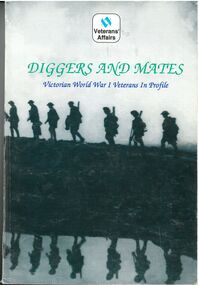
Book - "Diggers And Mates. Victorian World War 1 Veterans In Profile.", 1995
... He served in France with the 38th Battalion, earning promotion to sergeant and was discharged on 20 September 1919. https://en.wikipedia.org/wiki/Jack_Lockett After the war, Jack returned to The Mallee and selected a 640 acres (260 ha) block of land in Linga, Victoria, deciding to make his living as a farmer. ...He served in France with the 38th Battalion, earning promotion to sergeant and was discharged on 20 September 1919. https://en.wikipedia.org/wiki/Jack_Lockett After the war, Jack returned to The Mallee and selected a 640 acres (260 ha) block of land in Linga, Victoria, deciding to make his living as a farmer. ...John Henry Lockett OAM (22 January 1891 – 25 May 2002) was the oldest man ever in Australia when he died aged 111 years, 123 days. As one of the last surviving veterans of World War I, he was acclaimed as a national hero during the last decade of his life. Lockett was born in the small Victorian town of Waanyarra, near Bendigo. He left school aged nine to work on a local farm. Later, he worked for his uncles in the Mallee. On 24 March 1916, he travelled to Mildura to enlist in the Australian Imperial Force. He served in France with the 38th Battalion, earning promotion to sergeant and was discharged on 20 September 1919. https://en.wikipedia.org/wiki/Jack_Lockett After the war, Jack returned to The Mallee and selected a 640 acres (260 ha) block of land in Linga, Victoria, deciding to make his living as a farmer. In 1923, he married Maybell Ingwerson and they had four children together. In 1963, the couple retired to Bendigo in 1953, leaving the farmland (which now covered more than 130,000 acres (53,000 ha), in the care of their children and grandchildren. "Diggers And mates. Victorian World War 1 Veterans In Profile." Compiled by Kylie McKenzie. Preamble by Con Sciacca, Minister for Veterans' Affairs. Foreward by Brian Flynn, Deputy Commissioner for Veterans' Affairs. Produced by the Commonwealth Department of Veteran's Affairs, Melbourne. Printed by the Australian Government Publishing Service in 1995. Contains a collection of the experiences and insights of many of Victoria's then surviving World war 1 veterans. Soft cover book with image of 'Supporting Troops of the 1st Australian Division photographed on a duckboard track near Ypres, Belgium, 1917. Titles printed in Green and dark blue. Vererans' Affairs logo in centre at top of front cover. Book includes service particulars of each service person, personal particulars of person, and image(s) of service person at time of publication (1995) and whilst in service. Includes an article on Jack Lockett - serviceman 43 as presented in book . jack lockett, world war 1 -
 Bendigo Historical Society Inc.
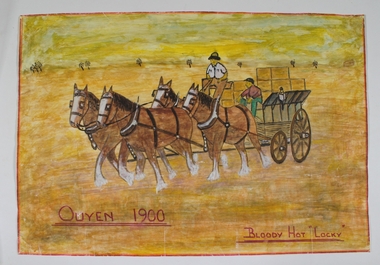
Painting - Jack Lockett Collection: Sketch of four horses and cart, 1991
... He served in France with the 38th Battalion, earning promotion to sergeant and was discharged on 20 September 1919. https://en.wikipedia.org/wiki/Jack_Lockett After the war, Jack returned to The Mallee and selected a 640 acres (260 ha) block of land in Linga, Victoria, deciding to make his living as a farmer. ...He served in France with the 38th Battalion, earning promotion to sergeant and was discharged on 20 September 1919. https://en.wikipedia.org/wiki/Jack_Lockett After the war, Jack returned to The Mallee and selected a 640 acres (260 ha) block of land in Linga, Victoria, deciding to make his living as a farmer. ...John Henry Lockett OAM (22 January 1891 – 25 May 2002) was the oldest man ever in Australia when he died aged 111 years, 123 days. As one of the last surviving veterans of World War I, he was acclaimed as a national hero during the last decade of his life. Lockett was born in the small Victorian town of Waanyarra, near Bendigo. He left school aged nine to work on a local farm. Later, he worked for his uncles in the Mallee. On 24 March 1916, he travelled to Mildura to enlist in the Australian Imperial Force. He served in France with the 38th Battalion, earning promotion to sergeant and was discharged on 20 September 1919. https://en.wikipedia.org/wiki/Jack_Lockett After the war, Jack returned to The Mallee and selected a 640 acres (260 ha) block of land in Linga, Victoria, deciding to make his living as a farmer. In 1923, he married Maybell Ingwerson and they had four children together. In 1963, the couple retired to Bendigo, leaving the farmland (which now covered more than 130,000 acres (53,000 ha), in the care of their children and grandchildren. Sketch in Acrylic and water colour of four brown horses with white noses and hoofs pulling a cart with a man on the driver's seat wearing a white shirt and brown trousers and another in the cart wearing a maroon shirt and green trousers. Light brown background with some trees on the horizon and a blue yellow sky. Written in red underneath - OUYEN 1900 BLOODY HOT "LOCKY" Written on the back of the sketch - SKETCH IN ACRYLIC AND WATER COLOUR PRESENTED TO MR JACK. H. 'LOCKY' LOCKETT 1891-1991 100 YEARS Arther Eaton 22nd Jan 1997 Bgo East Bowling Club jack lockett, mabel ingwersen, world war 1, france, ouyen, arther eaton, bendigo east bowling club -
 Victorian Interpretive Projects Inc.
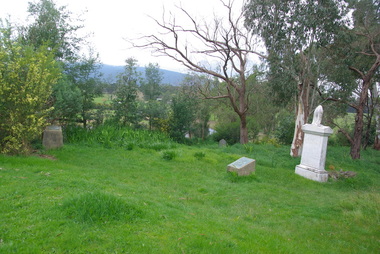
Photograph - Colour, Clare Gervasoni, Corenderrk Cemetery, 31/08/2011
... Barak died in 1903— a broken-hearted man. (from http://www.sosj.org.au/_uploads/_cknw/files/Corenderrk.pdf) Artist William Barak is buried in this cemetery....Barak died in 1903— a broken-hearted man. (from http://www.sosj.org.au/_uploads/_cknw/files/Corenderrk.pdf) Artist William Barak is buried in this cemetery. ...In 1860 the Wurundjeri Elder, Wonga, petitioned the Victorian Parliament for a piece of land in his people’s own country where he could establish a settlement. The land later named Coranderrk was granted. When Wonga died in 1875 his nephew William Barak, known by settlers as ‘King William, last chief of the Yarra Yarra tribe’, became the leader, the Ngurungaeta. William Barak believed strongly in justice for his people, and time and again made the arduous walk to Melbourne to petition to Parliament and to Queen Victoria for his people. ‘Freedom for our lifetime’, he said. The community at Coranderrk welcomed Aboriginal people displaced from other parts of Victoria; they established an economically self-sufficient settlement by growing and marketing hops. Barak negotiated with the Victorian Government officials as they made promises and broke promises. They finally promised to export the whole of a hop harvest of one year. The people worked around the clock to fill the contract; the Government pocketed the proceeds. The community never recovered. Barak died in 1903— a broken-hearted man. (from http://www.sosj.org.au/_uploads/_cknw/files/Corenderrk.pdf) Artist William Barak is buried in this cemetery.Photographs of graves in grass and bushland. It is the Corenderrk Cemetery, and is associated with the former Corenderrk Aboriginal Reserve.corenderrk, wurundjeri, barak, aborigines, aboriginal, cemetery, grave, barak, jemima dunolly -
 Bendigo Historical Society Inc.
Plan - Russell's Reef, Lauriston
... Russell’s Reef Amalgamated , No 2 shaft ( Company was formed c.1891 and appears to have mined more-or-less continuously until 1911) Source: chrome-extension://efaidnbmnnnibpcajpcglclefindmkaj/https://vhd.heritagecouncil.vic.gov.au/places/8099/download-report...Russell’s Reef Amalgamated , No 2 shaft ( Company was formed c.1891 and appears to have mined more-or-less continuously until 1911) Source: chrome-extension://efaidnbmnnnibpcajpcglclefindmkaj/https://vhd.heritagecouncil.vic.gov.au/places/8099/download-report gold mining gold transverse section Lauriston Russell's Reef Kyneton Russell's Reef Amalgamated Co.Lauriston Plan forms part of the Margaret Roberts Collection. ...A quartz mine that dates from the early years of the 20th-century. The remains are located on a Water Reserve managed by Coliban Water. Location: Reservoir Road, Lauriston, Macedon Ranges Shire. The Russell’s Reef Amalgamated Company spent the early part of 1907 in developing the saddle reef. Defects found to exist in the winding gear, consequently the directors decided to obtain a new gear of the first-class type. This has been obtained and placed in position. Advantage was taken by the management of the suspension of underground operations to give the whole of the machinery and boilers at the No 1 shaft a thorough overhaul. It was found that the two boilers that had been in use required some slight repairs. This resulted in a new high pressure boiler which had been purchased some time previously has been built in and put into commission. In 1907 the shaft was 1,260 feet deep, and an average of 30 men were employed. Russell’s Reef Amalgamated , No 2 shaft ( Company was formed c.1891 and appears to have mined more-or-less continuously until 1911) Source: chrome-extension://efaidnbmnnnibpcajpcglclefindmkaj/https://vhd.heritagecouncil.vic.gov.au/places/8099/download-reportRussell's Reef Amalgamated Co.Lauriston Plan forms part of the Margaret Roberts Collection.gold mining, gold, transverse section, lauriston, russell's reef, kyneton -
 Royal Australian and New Zealand College of Obstetricians & Gynaecologists (RANZCOG)
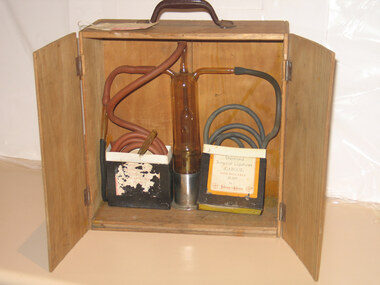
Rubin's tubal insufflator apparatus associated with St Vincent's Hospital, c1919
... Accessed 12 June 2024. https://collection.sciencemuseumgroup.org.uk/objects/co96774/rubins-apparatus-for-uterotubal-insufflation-new-york-united-states-1928-tubal-insufflator. ...Accessed 12 June 2024. https://collection.sciencemuseumgroup.org.uk/objects/co96774/rubins-apparatus-for-uterotubal-insufflation-new-york-united-states-1928-tubal-insufflator. ..."Potential blockage in the Fallopian tubes was assessed using this apparatus. It was developed by American gynaecologist Isidor Clinton Rubin (1883-1958). It blows carbon dioxide, via a cannula, into the uterus. The ease with which gas escaped through the Fallopian tubes was reflected by pressure changes on an instrument called a manometer. Blockage of the tubes is often due to previous infection or surgery. It is a common cause of infertility. Rubin’s test formed a standard part of infertility investigations for many years. It was gradually replaced by an X-ray technique involving radio-opaque ‘dye’ injected into the uterus." Source: Science Museum Group. Rubin’s apparatus for uterotubal insufflation, New York, United States, 1928. A639503Science Museum Group Collection Online. Accessed 12 June 2024. https://collection.sciencemuseumgroup.org.uk/objects/co96774/rubins-apparatus-for-uterotubal-insufflation-new-york-united-states-1928-tubal-insufflator. There is no manometer to monitor gas pressure on this model so it is either incomplete or a manometer was not available in this possibly early model. This device may be dated c1919, 1920s, or 1930s. 1919 was the year Isidor Clinton Rubin (1883-1958) introduced this apparatus. Rubin's tubal insufflator apparatus. Consists of a large cylindrical glass canister, with three glass nozzles at top with long rubber tubing attached to each. The device is inside a portable plywood box with two door. One surgical steel introducer, and one glass introducer, are also attached to the device. -
 Royal Australian and New Zealand College of Obstetricians & Gynaecologists (RANZCOG)
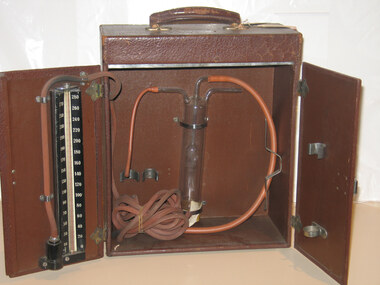
Tubal insufflator associated with Dr Lorna Lloyd-Green, c1919
... Accessed 12 June 2024. https://collection.sciencemuseumgroup.org.uk/objects/co96774/rubins-apparatus-for-uterotubal-insufflation-new-york-united-states-1928-tubal-insufflator. ...Accessed 12 June 2024. https://collection.sciencemuseumgroup.org.uk/objects/co96774/rubins-apparatus-for-uterotubal-insufflation-new-york-united-states-1928-tubal-insufflator. ..."Potential blockage in the Fallopian tubes was assessed using this apparatus. It was developed by American gynaecologist Isidor Clinton Rubin (1883-1958). It blows carbon dioxide, via a cannula, into the uterus. The ease with which gas escaped through the Fallopian tubes was reflected by pressure changes on an instrument called a manometer. Blockage of the tubes is often due to previous infection or surgery. It is a common cause of infertility. Rubin’s test formed a standard part of infertility investigations for many years. It was gradually replaced by an X-ray technique involving radio-opaque ‘dye’ injected into the uterus." Source: Science Museum Group. Rubin’s apparatus for uterotubal insufflation, New York, United States, 1928. A639503Science Museum Group Collection Online. Accessed 12 June 2024. https://collection.sciencemuseumgroup.org.uk/objects/co96774/rubins-apparatus-for-uterotubal-insufflation-new-york-united-states-1928-tubal-insufflator. Model may be dated c1919 or 1920s or 1930s. 1919 was the year Isidor Clinton Rubin (1883-1958) introduced the apparatus. Instrumant has a label with Cyrus Jones monogram " Donated by Dr Lorna Lloyd Green, 1986/ Rubin's Insufflator/ NB "sparklet holder separate" missing?Rubin's tubal insufflator apparatus, large cylidrical glass canister inside a portable carry box with two doors with three glass nozzels at top with long rubber tubing attached on each. One surigical steel introducer, one glass introducer attached. A blood pressure manometer is fixed on the inside door. infertility -
 Bendigo Historical Society Inc.
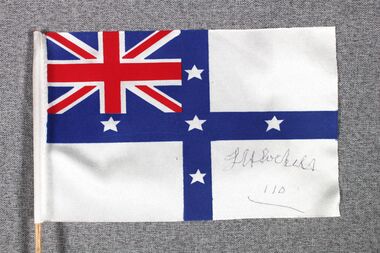
Flag - Jack Lockett Collection: Signed Miniature Flag
... He served in France with the 38th Battalion, earning promotion to sergeant and was discharged on 20 September 1919. https://en.wikipedia.org/wiki/Jack_Lockett After the war, Jack returned to The Mallee and selected a 640 acres (260 ha) block of land in Linga, Victoria, deciding to make his living as a farmer. ...He served in France with the 38th Battalion, earning promotion to sergeant and was discharged on 20 September 1919. https://en.wikipedia.org/wiki/Jack_Lockett After the war, Jack returned to The Mallee and selected a 640 acres (260 ha) block of land in Linga, Victoria, deciding to make his living as a farmer. ...John Henry Lockett OAM (22 January 1891 – 25 May 2002) was the oldest man ever in Australia when he died aged 111 years, 123 days. As one of the last surviving veterans of World War I, he was acclaimed as a national hero during the last decade of his life. Lockett was born in the small Victorian town of Waanyarra, near Bendigo. He left school aged nine to work on a local farm. Later, he worked for his uncles in the Mallee. On 24 March 1916, he travelled to Mildura to enlist in the Australian Imperial Force. He served in France with the 38th Battalion, earning promotion to sergeant and was discharged on 20 September 1919. https://en.wikipedia.org/wiki/Jack_Lockett After the war, Jack returned to The Mallee and selected a 640 acres (260 ha) block of land in Linga, Victoria, deciding to make his living as a farmer. In 1923, he married Maybell Ingwerson and they had four children together. In 1963, the couple retired to Bendigo, leaving the farmland (which now covered more than 130,000 acres (53,000 ha), in the care of their children and grandchildren. A small flag with a white background, a Union Jack in the upper left quadrant, a dark blueline in the centre horizontal and vertical with a five-pointed star on each axis and in centre. Signed in the lower right quarter J H Lockett 110 jack lockett, mabel ingwersen, flag -
 Bendigo Historical Society Inc.
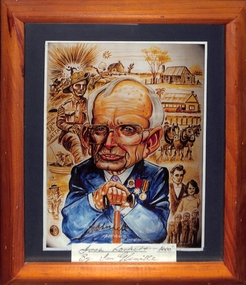
Artwork, other - Jack Lockett Collection: Drawing Jack Lockett 2000, Ian Glanville, 2000
... He served in France with the 38th Battalion, earning promotion to sergeant and was discharged on 20 September 1919. https://en.wikipedia.org/wiki/Jack_Lockett After the war, Jack returned to The Mallee and selected a 640 acres (260 ha) block of land in Linga, Victoria, deciding to make his living as a farmer. ...He served in France with the 38th Battalion, earning promotion to sergeant and was discharged on 20 September 1919. https://en.wikipedia.org/wiki/Jack_Lockett After the war, Jack returned to The Mallee and selected a 640 acres (260 ha) block of land in Linga, Victoria, deciding to make his living as a farmer. ...John Henry Lockett OAM (22 January 1891 – 25 May 2002) was the oldest man ever in Australia when he died aged 111 years, 123 days. As one of the last surviving veterans of World War I, he was acclaimed as a national hero during the last decade of his life. Lockett was born in the small Victorian town of Waanyarra, near Bendigo. He left school aged nine to work on a local farm. Later, he worked for his uncles in the Mallee. On 24 March 1916, he travelled to Mildura to enlist in the Australian Imperial Force. He served in France with the 38th Battalion, earning promotion to sergeant and was discharged on 20 September 1919. https://en.wikipedia.org/wiki/Jack_Lockett After the war, Jack returned to The Mallee and selected a 640 acres (260 ha) block of land in Linga, Victoria, deciding to make his living as a farmer. In 1923, he married Maybell Ingwerson and they had four children together. In 1963, the couple retired to Bendigo, leaving the farmland (which now covered more than 130,000 acres (53,000 ha), in the care of their children and grandchildren. A coloured caricature of Jack Lockett wearing a blue coat with an RSL badge and two medals which are probably A Legion of Honour and a WW1 Victory Medal. His hands are clasped in front of him holding a walking stick. Signed Jack Lockett "MEMORIES" By IAN GLANVILLE Written white paper at the bottom- Jack Lockett 2000 By Ian Glanville The background has numerous sepia tone sketches of various parts of Jack's life. It has dark grey mount with a light brown wooden frame and is behind glass. a jack lockett, mabel ingwersen, world war 1, france, 38th battalion, legion of honour, ian glanville -
 Bendigo Historical Society Inc.
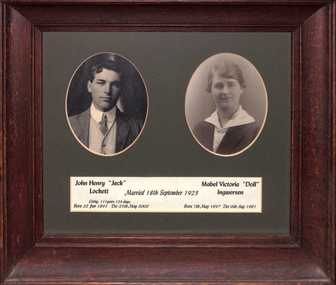
Photograph - Jack Lockett Collection: Photo of Jack and Doll Lockett, Strath Prints & Framing, 2000
... He served in France with the 38th Battalion, earning promotion to sergeant and was discharged on 20 September 1919. https://en.wikipedia.org/wiki/Jack_Lockett After the war, Jack returned to The Mallee and selected a 640 acres (260 ha) block of land in Linga, Victoria, deciding to make his living as a farmer. ...He served in France with the 38th Battalion, earning promotion to sergeant and was discharged on 20 September 1919. https://en.wikipedia.org/wiki/Jack_Lockett After the war, Jack returned to The Mallee and selected a 640 acres (260 ha) block of land in Linga, Victoria, deciding to make his living as a farmer. ...John Henry Lockett OAM (22 January 1891 – 25 May 2002) was the oldest man ever in Australia when he died aged 111 years, 123 days. As one of the last surviving veterans of World War I, he was acclaimed as a national hero during the last decade of his life. Lockett was born in the small Victorian town of Waanyarra, near Bendigo. He left school aged nine to work on a local farm. Later, he worked for his uncles in the Mallee. On 24 March 1916, he travelled to Mildura to enlist in the Australian Imperial Force. He served in France with the 38th Battalion, earning promotion to sergeant and was discharged on 20 September 1919. https://en.wikipedia.org/wiki/Jack_Lockett After the war, Jack returned to The Mallee and selected a 640 acres (260 ha) block of land in Linga, Victoria, deciding to make his living as a farmer. In 1923, he married Maybell Ingwerson and they had four children together. In 1963, the couple retired to Bendigo, leaving the farmland (which now covered more than 130,000 acres (53,000 ha), in the care of their children and grandchildren. Two black and white head and shoulders photographs of Jack and Doll Lockett in oval cut out shapes of a grey mount. A rectangle cut out below the photographs has printing in it - John Henry "Jack" Lockett living,111years 124 days. Born 22Jan 1891 Dec 25th May 2002 Married 18th September 1923 Mabel Victoria "Doll" Ingwersen Born 7th May 1897 Dec 6th Aug 1981 In a dark brown wooden frame behind glass. jack lockett, mabel ingwersen, world war 1, france, 38th battalion -
 Bendigo Historical Society Inc.
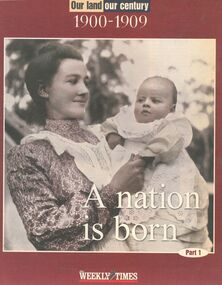
Magazine - Jack Lockett Collection: Our land our century 1900-1929, The Weekly Times, 1999
... He served in France with the 38th Battalion, earning promotion to sergeant and was discharged on 20 September 1919. https://en.wikipedia.org/wiki/Jack_Lockett After the war, Jack returned to The Mallee and selected a 640 acres (260 ha) block of land in Linga, Victoria, deciding to make his living as a farmer. ...He served in France with the 38th Battalion, earning promotion to sergeant and was discharged on 20 September 1919. https://en.wikipedia.org/wiki/Jack_Lockett After the war, Jack returned to The Mallee and selected a 640 acres (260 ha) block of land in Linga, Victoria, deciding to make his living as a farmer. ...John Henry Lockett OAM (22 January 1891 – 25 May 2002) was the oldest man ever in Australia when he died aged 111 years, 123 days. As one of the last surviving veterans of World War I, he was acclaimed as a national hero during the last decade of his life. Lockett was born in the small Victorian town of Waanyarra, near Bendigo. He left school aged nine to work on a local farm. Later, he worked for his uncles in the Mallee. On 24 March 1916, he travelled to Mildura to enlist in the Australian Imperial Force. He served in France with the 38th Battalion, earning promotion to sergeant and was discharged on 20 September 1919. https://en.wikipedia.org/wiki/Jack_Lockett After the war, Jack returned to The Mallee and selected a 640 acres (260 ha) block of land in Linga, Victoria, deciding to make his living as a farmer. In 1923, he married Maybell Ingwerson and they had four children together. In 1963, the couple retired to Bendigo, leaving the farmland (which now covered more than 130,000 acres (53,000 ha), in the care of their children and grandchildren. Three coloured magazines, each with 30 pages titled Our land our century 1900 - 1909, 1910 - 1919, 1920 - 1929. The magazines contain detailed articles and photographs of each decade The front page of the first one has a dark red border around a photo of a female holding a baby with - A nation is born - printed in its lower section and Part 1 is in the lower right corner. Printed at the top of the page - Our land our century 1900-1909 The front page of the second one has an off-white border around a photo of a young male with - War beckons - printed in its lower section and Part 2 is in the lower right corner. Printed at the top of the page - Our land our century 1910 - 1919 The front page of the third one has a blue border around a photo five males cutting a log of wood. At the cutting edge is printed in its lower section and Part 2 is in the lower right corner. Printed at the top of the page - Our land our century 1920 - 1929 The Weekly Times, with an image of a magpie in the middle. is printed in lower centre of each front page. Jack Lockett tells the story of his life in the three magazines with photographs him. Starting in part 1 pages 24 and 25, continuing in part 2 pages 56 and 57, and part 3 pages 88 and 89 It starts from when he was school at Wanyarra near Bendigo. Part three finishes with Jack on his farm in northwest Victoria. Next week: Jack jnr on the Depetession years. The double pages also include the stories of Charlie Coster and Joe Coster from Bairnsdale Victoria. jack lockett, mabel ingwersen, our land our centry, weekly times, charlie coster, joe coster -
 Bendigo Historical Society Inc.
Photograph - Jack Lockett Collection: Family Photograph
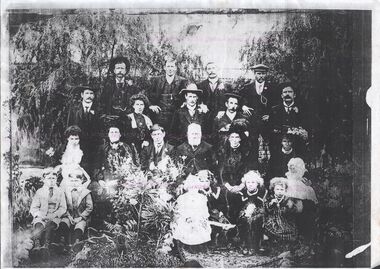
... He served in France with the 38th Battalion, earning promotion to sergeant and was discharged on 20 September 1919. https://en.wikipedia.org/wiki/Jack_Lockett After the war, Jack returned to The Mallee and selected a 640 acres (260 ha) block of land in Linga, Victoria, deciding to make his living as a farmer. ...He served in France with the 38th Battalion, earning promotion to sergeant and was discharged on 20 September 1919. https://en.wikipedia.org/wiki/Jack_Lockett After the war, Jack returned to The Mallee and selected a 640 acres (260 ha) block of land in Linga, Victoria, deciding to make his living as a farmer. ...John Henry Lockett OAM (22 January 1891 – 25 May 2002) was the oldest man ever in Australia when he died aged 111 years, 123 days. As one of the last surviving veterans of World War I, he was acclaimed as a national hero during the last decade of his life. Lockett was born in the small Victorian town of Waanyarra, near Bendigo. He left school aged nine to work on a local farm. Later, he worked for his uncles in the Mallee. On 24 March 1916, he travelled to Mildura to enlist in the Australian Imperial Force. He served in France with the 38th Battalion, earning promotion to sergeant and was discharged on 20 September 1919. https://en.wikipedia.org/wiki/Jack_Lockett After the war, Jack returned to The Mallee and selected a 640 acres (260 ha) block of land in Linga, Victoria, deciding to make his living as a farmer. In 1923, he married Maybell Ingwerson and they had four children together. In 1963, the couple retired to Bendigo, leaving the farmland (which now covered more than 130,000 acres (53,000 ha), in the care of their children and grandchildren. An A3 copy of a group photograph of three rows of adults and a front of children with foliage in the background and foreground. Four males in the back row, four males and one female in second row, two males and four females and two infants in the third row and six infants in the front row. On the back of the photo there is a list of names Baack Row Bob Birstall, Richard(Dick) Lockett, George Lockett, Herbert(Herb) Lockett 2nd Row William(Bill) Bertha(Birdie) Lockett, Tom Lockett, George Scholes, James(Jim) Lockett 3rd Row Elizabeth Lockett(Jim on Knee), Mary Birstall, Alf Lockett. Grandfather Lockett. Edith Lockett(Scholes), Jane Lockett(Ina on Knee) Front Bob Burstall, Clarance, Ivy Scholes, Les' Birstall, Florence Birstall Front Bob+Clarie Burstall, Annie Lockett, Ivy Scholes, Sis Burstall, Floe Burstall (Cooper) jack lockett, mabel ingwersen -
 Bendigo Historical Society Inc.
Newspaper - Jack Lockett Collection: Five Newspaper cuttings referring to Jack Lockett
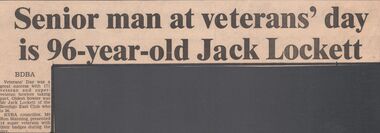
... He served in France with the 38th Battalion, earning promotion to sergeant and was discharged on 20 September 1919. https://en.wikipedia.org/wiki/Jack_Lockett After the war, Jack returned to The Mallee and selected a 640 acres (260 ha) block of land in Linga, Victoria, deciding to make his living as a farmer. ...He served in France with the 38th Battalion, earning promotion to sergeant and was discharged on 20 September 1919. https://en.wikipedia.org/wiki/Jack_Lockett After the war, Jack returned to The Mallee and selected a 640 acres (260 ha) block of land in Linga, Victoria, deciding to make his living as a farmer. ...John Henry Lockett OAM (22 January 1891 – 25 May 2002) was the oldest man ever in Australia when he died aged 111 years, 123 days. As one of the last surviving veterans of World War I, he was acclaimed as a national hero during the last decade of his life. Lockett was born in the small Victorian town of Waanyarra, near Bendigo. He left school aged nine to work on a local farm. Later, he worked for his uncles in the Mallee. On 24 March 1916, he travelled to Mildura to enlist in the Australian Imperial Force. He served in France with the 38th Battalion, earning promotion to sergeant and was discharged on 20 September 1919. https://en.wikipedia.org/wiki/Jack_Lockett After the war, Jack returned to The Mallee and selected a 640 acres (260 ha) block of land in Linga, Victoria, deciding to make his living as a farmer. In 1923, he married Maybell Ingwerson and they had four children together. In 1963, the couple retired to Bendigo, leaving the farmland (which now covered more than 130,000 acres (53,000 ha), in the care of their children and grandchildren . Five newspaper cuttings referring to Jack Lockett First cutting Bendigo Advertiser Tuesday, March 17, 1987- page 8 For the Bowler (Headline) Senior man at veterans' day is 96-year-old Jack Lockett BDBA Veterans Day was a great success with 171 veteran and super-veteran bowlers taking part. Oldest bowler taking part was Mr Jack Lockett of the Bendigo East Club who is 96. RVBA councillor, Mr Ron Manning, presented 14 super veterans their badges during the day. Second cutting Bendigo Advertiser, Môn, Jan. 25 1982-3 A black and white photograph of brothers Alf, 94 and Jack, 91 Lockett in Eaglehawk. There is brief description of their lives in Tarnagulla in a family of ten siblings, their move together to their uncles' pioneering property in Northwest Victoria in 1912, Jack's World War 1 service and their currant addresses in Bendigo and Eaglehawk. Third cutting Bendigo Advertiser, Tuesday, September 24, 1991- page 13. (heading) BOWLS ROUND-UP A black and white photograph of three men wearing white shirts and trousers, dark jackets and ties Below the photo in large print - Centenarian starts season. ABOVE: Bendigo East Bowling Club president Frank Slater with the club's longest serving member Jack Lockett and BDBA president Vic Canobie at the opening of the 1991-92 season. Mr. Lockett sent down the first bowl. Fourth cutting Bendigo Advertiser, Friday, April 22, 1988 - Page 3. (headline) Licensed to drive till he's 102! Below there is a close up photograph of Jack's face and his DRIVER LICENCE VICTORIA AUSTRALIA. A collum to the right of the photograph is headed - But don't worry he gave up at 97 The article talks about the silliness of issuing a driving licence for someone to use till they are 102. It also highlights that his date of birth on the licence is 22/ 01/91 and the licence expires on 27/06/93 A two-year old motorist?! Fifth cutting The Litchfield Times, July5 2000 page 4 Heading in the middle of the page - Proud as punch below there a photograph of three adults and two children with one child holding a photograph of Jack Lockett with names under neath Debbie Hermann, Babara Lockett, Jake Hermann, Kelly Hermann and Kevin Lockett. jack lockett, mabel ingwersen, alf lockett, bendigo east bowling club, taragulla, the bendigo advertiser, the litchfield times, mallee farming -
 Bendigo Historical Society Inc.
Document - AUSTIN COLLECTION: 'BRYANT'S RANGES' WORDS OF SONG
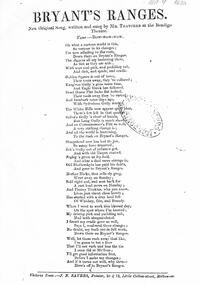
... Bryant's Ranges: Bryant's Ranges is a location near Tarrangower, Victoria. See: https://nla.gov.au/nla.obj-133763991/view - pen, pencil and watercolour, 'Allen and Jesper's store, Bryant's Ranges, Tarrengower, Bendigo, Victoria, 1853 / R.W. ...Bryant's Ranges: Bryant's Ranges is a location near Tarrangower, Victoria. See: https://nla.gov.au/nla.obj-133763991/view - pen, pencil and watercolour, 'Allen and Jesper's store, Bryant's Ranges, Tarrengower, Bendigo, Victoria, 1853 / R.W. ...Bryant's Ranges: Bryant's Ranges is a location near Tarrangower, Victoria. See: https://nla.gov.au/nla.obj-133763991/view - pen, pencil and watercolour, 'Allen and Jesper's store, Bryant's Ranges, Tarrengower, Bendigo, Victoria, 1853 / R.W. Jesper' It is also a location in the South Island, New Zealand. Charles Robert Thatcher (1831-1878) trained in England as a flautist before travelling to the Bendigo goldfields in 1853. He was unsuited and unsuccessful as a miner so decided to rely on his music to make his fortune. He was considered a 'comic vocalist' who wrote many songs about the observations he made on the goldfields. These songs were often satirical and were published in newspapers as poems. He travelled extensively around the Victorian goldfields and also toured New Zealand. In 1861 he married widowed singer Anna Vitellie who performed with him, singing sentimental ballads. In 1870 the family returned to England where Charles became an importer of curios, following in his father's footsteps. He travelled to China, Japan and India sourcing stock for his business and on one such trip he contracted cholera and died in Shanghai. Copy of song written by Charles Thatcher, 'Bryant's Ranges'. Written under title of song: 'New original song, written and sung by Mr Thatcher at the Bendigo Theatre, tune Bow-wow-wow. Song mentions Bendigo reefs and the gold seekers success or otherwise, then they were off to 'Bryant's Ranges'.bendigo, mining, song by charles thatcher -
 Glen Eira Historical Society
Album - Album page, Fairfield Hall, 225 North Road, Circa 1972
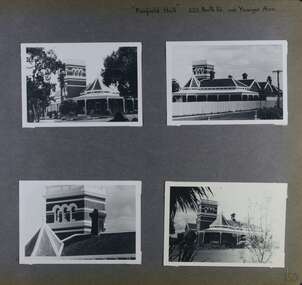
... Glen Eira Heritage Management Plan 1996 by Andrew Ward https://www.gleneira.vic.gov.au/media/4777/heritage_mment_plan_vol_3b.pdf (as of 27/01/2021) - p90 An imposing single storeyed Italianate bi-chromatic brick villa with three staged tower surmounting the entry and facetted corner bay with conical roof. ...Victorian Heritage Database (as of 27/10/2020) - HO49 225 North Road Caulfield South https://vhd.heritagecouncil.vic.gov.au/places/42426 "Maniar" (?) ...This photograph is part of the Caulfield Historical Album 1972. This album was created in approximately 1972 as part of a project by the Caulfield Historical Society to assist in identifying buildings worthy of preservation. The album is related to a Survey the Caulfield Historical Society developed in collaboration with the National Trust of Australia (Victoria) and Caulfield City Council to identify historic buildings within the City of Caulfield that warranted the protection of a National Trust Classification. Principal photographer thought to be Trevor Hart, member of Caulfield Historical Society. Most photographs were taken between 1966-1972 with a small number of photographs being older and from unknown sources. All photographs are black and white except where stated, with 386 photographs over 198 pages. Glen Eira Heritage Management Plan 1996 by Andrew Ward https://www.gleneira.vic.gov.au/media/4777/heritage_mment_plan_vol_3b.pdf (as of 27/01/2021) - p90 An imposing single storeyed Italianate bi-chromatic brick villa with three staged tower surmounting the entry and facetted corner bay with conical roof. White tuckpointed black body bricks are relieved with reds and stucco work. Gable ends are fretted and there is a concave cast iron verandah to the principal elevations.Victorian Heritage Database (as of 27/10/2020) - HO49 225 North Road Caulfield South https://vhd.heritagecouncil.vic.gov.au/places/42426 "Maniar" (?) is a substantial late Victorian Italianate villa with tower and extensive grounds built for Frederick Curwan, an inspector of the National Bank, in 1890. It is aesthetically and historically important. An imposing single storeyed ltalianate bi-chromatic brick villa with three staged tower surmounting the entry and facetted comer bay with conical roof. White tuckpointed black body bricks are relieved with reds and stucco work. Gable ends are fretted and there is a concave cast iron verandah to the principal elevations. It is aesthetically important as an imposing and substantially intact villa residence demonstrating the changing architectural fashions of the 1890's, evidenced by the use of face brickwork and fretted gables in the Queen Anne manner. It is historically important for the manner in which it demonstrates the lifestyle to which a businessman could aspire during the boom period.Page 150 of Photograph Album with four landscape photographs of Fairfield Hall on North Road.Handwritten: "Fairfield Hall" 225 North Rd cnr Younger Ave [top right] / 150 [bottom right]trevor hart, jenny o'donnell, verandah, porch, tower house, tower, mansion, three storey tower, bichromatic brickwork, fairfield hall, 1890's, george jobbins, conical roofed projecting corner bay, conical roofed bay, timber ceilings, north road, younger avenue, frederick wallis curwan, curwan, italianate, queen anne, australian homestead, arched windows, curved windows, columned parapet, return verandah, fairfield estate, fairfield street, slate roofed, red brick, polychrome bricks, victorian style, cast iron work, caulfield south, maniar, house names -
 Glen Eira Historical Society
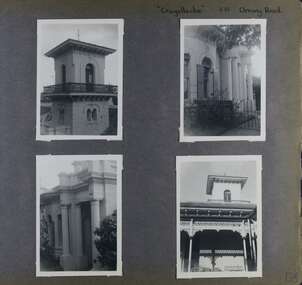
Album - Album page, Craigellachie, 273 Orrong Road, Circa 1972
... From Victorian Heritage Database citation HO40 Craigellachie 2b & 2c Lynedoch Avenue Caulfield North https://vhd.heritagecouncil.vic.gov.au/places/35209 as at (28/10/2020) Craigellachie" is situated at No. 2B Lynedoch Avenue, Caulfield North, and was built for the noted investor, pastoralist and politician, William Pearson, not earlier than 1864 and possible in 1876, undergoing several substantial and contributory extensions during the nineteenth century. ...From Victorian Heritage Database citation for HO40 Craigellachie https://vhd.heritagecouncil.vic.gov.au/places/35209 as at (28/10/2020) It is historically significant (Criterion A) as the Melbourne home of William Pearson, MLA, MLC and principal shareholder in Walhalla's Long Tunnel Extended Gold Mining Co. which sustained the township well past the turn of the twentieth century and occupied fifth place amongst Victoria's richest mines. ...This photograph is part of the Caulfield Historical Album 1972. This album was created in approximately 1972 as part of a project by the Caulfield Historical Society to assist in identifying buildings worthy of preservation. The album is related to a Survey the Caulfield Historical Society developed in collaboration with the National Trust of Australia (Victoria) and Caulfield City Council to identify historic buildings within the City of Caulfield that warranted the protection of a National Trust Classification. Principal photographer thought to be Trevor Hart, member of Caulfield Historical Society. Most photographs were taken between 1966-1972 with a small number of photographs being older and from unknown sources. All photographs are black and white except where stated, with 386 photographs over 198 pages. From Victorian Heritage Database citation HO40 Craigellachie 2b & 2c Lynedoch Avenue Caulfield North https://vhd.heritagecouncil.vic.gov.au/places/35209 as at (28/10/2020) Craigellachie" is situated at No. 2B Lynedoch Avenue, Caulfield North, and was built for the noted investor, pastoralist and politician, William Pearson, not earlier than 1864 and possible in 1876, undergoing several substantial and contributory extensions during the nineteenth century. It is historically and aesthetically significant. From Victorian Heritage Database citation for HO40 Craigellachie https://vhd.heritagecouncil.vic.gov.au/places/35209 as at (28/10/2020) It is historically significant (Criterion A) as the Melbourne home of William Pearson, MLA, MLC and principal shareholder in Walhalla's Long Tunnel Extended Gold Mining Co. which sustained the township well past the turn of the twentieth century and occupied fifth place amongst Victoria's richest mines. It is aesthetically significant (Criterion E) for its capacity to demonstrate Pearson's continuing financial success throughout the mid to late nineteenth century, the additions associated with the tower being most noteworthy as an example of the lasting appeal of the Italian Style, popularized in the pattern books of the day. The Ailanthus altissima (Tree of Heaven) is significant as an outstanding example of a species that is rare in cultivation, as well as for its very high aesthetic value. The Araucaria bidwilli is notable as a fine example of a species infrequently planted in Melbourne and rarely found in private suburban gardens.Page 156 of Photograph Album with four landscape photographs of Craigellachie - near views of architectural features. Handwritten: "Craigellachie" 273 Orrong Road [top right] / 156 [bottom right]trevor hart, verandah, orrong road, tower, curved windows, decorative brackets, italianate, mansion, 1870's, william pearson, inkerman street, apartments, spire, decorative plaster work, rendered walls, ornamentation, arched windows, moulded ornaments, 1860's, lynedoch avenue, classical style, caulfield north, craigellachie, cast iron work, victorian style, balaclava, st kilda east, gardens, ailanthus altissima, araucaria bidwilli, porches, trees -
 Glen Eira Historical Society
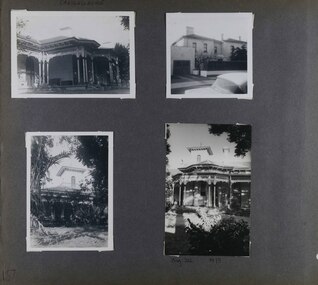
Album - Album page, Craigellachie, 273 Orrong Road, Circa 1972
... From Victorian Heritage Database citation for HO40 Craigellachie 2b & 2c Lynedoch Avenue Caulfield North https://vhd.heritagecouncil.vic.gov.au/places/35209 as at (28/10/2020) Craigellachie" is situated at No. 2B Lynedoch Avenue, Caulfield North, and was built for the noted investor, pastoralist and politician, William Pearson, not earlier than 1864 and possible in 1876, undergoing several substantial and contributory extensions during the nineteenth century. ...From Victorian Heritage Database citation for HO40 Craigellachie https://vhd.heritagecouncil.vic.gov.au/places/35209 as at (28/10/2020) It is historically significant (Criterion A) as the Melbourne home of William Pearson, MLA, MLC and principal shareholder in Walhalla's Long Tunnel Extended Gold Mining Co. which sustained the township well past the turn of the twentieth century and occupied fifth place amongst Victoria's richest mines. ...This photograph is part of the Caulfield Historical Album 1972. This album was created in approximately 1972 as part of a project by the Caulfield Historical Society to assist in identifying buildings worthy of preservation. The album is related to a Survey the Caulfield Historical Society developed in collaboration with the National Trust of Australia (Victoria) and Caulfield City Council to identify historic buildings within the City of Caulfield that warranted the protection of a National Trust Classification. Principal photographer thought to be Trevor Hart, member of Caulfield Historical Society. Most photographs were taken between 1966-1972 with a small number of photographs being older and from unknown sources. All photographs are black and white except where stated, with 386 photographs over 198 pages. From Victorian Heritage Database citation for HO40 Craigellachie 2b & 2c Lynedoch Avenue Caulfield North https://vhd.heritagecouncil.vic.gov.au/places/35209 as at (28/10/2020) Craigellachie" is situated at No. 2B Lynedoch Avenue, Caulfield North, and was built for the noted investor, pastoralist and politician, William Pearson, not earlier than 1864 and possible in 1876, undergoing several substantial and contributory extensions during the nineteenth century. It is historically and aesthetically significant. From Victorian Heritage Database citation for HO40 Craigellachie https://vhd.heritagecouncil.vic.gov.au/places/35209 as at (28/10/2020) It is historically significant (Criterion A) as the Melbourne home of William Pearson, MLA, MLC and principal shareholder in Walhalla's Long Tunnel Extended Gold Mining Co. which sustained the township well past the turn of the twentieth century and occupied fifth place amongst Victoria's richest mines. It is aesthetically significant (Criterion E) for its capacity to demonstrate Pearson's continuing financial success throughout the mid to late nineteenth century, the additions associated with the tower being most noteworthy as an example of the lasting appeal of the Italian Style, popularized in the pattern books of the day. The Ailanthus altissima (Tree of Heaven) is significant as an outstanding example of a species that is rare in cultivation, as well as for its very high aesthetic value. The Araucaria bidwilli is notable as a fine example of a species infrequently planted in Melbourne and rarely found in private suburban gardens.Page 157 - four photographs of Craigellachie - exterior views. Handwritten: CRAIGELLACHIE [top left] / Neg 212 1973 [under bottom right photo] / 157 [bottom left]trevor hart, verandah, orrong road, tower, cast iron lacework, curved windows, decorative brackets, italianate, mansion, 1870's, william pearson, inkerman street, apartments, spire, decorative plaster work, rendered walls, arched windows, moulded ornaments, 1860's, lynedoch avenue, classical style, caulfield north, craigellachie, st kilda east, late victorian style, garages (private), gardens, cast iron work, ailanthus altissima, araucaria bidwilli, trees -
 Glen Eira Historical Society
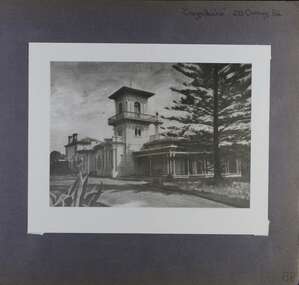
Album - Album page, Craigellachie, 273 Orrong Road, Circa 1972
... From Victorian Heritage Database citation for HO40 Craigellachie 2b & 2c Lynedoch Avenue Caulfield North https://vhd.heritagecouncil.vic.gov.au/places/35209 as at (28/10/2020) Craigellachie" is situated at No. 2B Lynedoch Avenue, Caulfield North, and was built for the noted investor, pastoralist and politician, William Pearson, not earlier than 1864 and possible in 1876, undergoing several substantial and contributory extensions during the nineteenth century. ...From Victorian Heritage Database citation for HO40 Craigellachie https://vhd.heritagecouncil.vic.gov.au/places/35209 as at (28/10/2020) It is historically significant (Criterion A) as the Melbourne home of William Pearson, MLA, MLC and principal shareholder in Walhalla's Long Tunnel Extended Gold Mining Co. which sustained the township well past the turn of the twentieth century and occupied fifth place amongst Victoria's richest mines. ...This photograph is part of the Caulfield Historical Album 1972. This album was created in approximately 1972 as part of a project by the Caulfield Historical Society to assist in identifying buildings worthy of preservation. The album is related to a Survey the Caulfield Historical Society developed in collaboration with the National Trust of Australia (Victoria) and Caulfield City Council to identify historic buildings within the City of Caulfield that warranted the protection of a National Trust Classification. Principal photographer thought to be Trevor Hart, member of Caulfield Historical Society. Most photographs were taken between 1966-1972 with a small number of photographs being older and from unknown sources. All photographs are black and white except where stated, with 386 photographs over 198 pages. From Victorian Heritage Database citation for HO40 Craigellachie 2b & 2c Lynedoch Avenue Caulfield North https://vhd.heritagecouncil.vic.gov.au/places/35209 as at (28/10/2020) Craigellachie" is situated at No. 2B Lynedoch Avenue, Caulfield North, and was built for the noted investor, pastoralist and politician, William Pearson, not earlier than 1864 and possible in 1876, undergoing several substantial and contributory extensions during the nineteenth century. It is historically and aesthetically significant. From Victorian Heritage Database citation for HO40 Craigellachie https://vhd.heritagecouncil.vic.gov.au/places/35209 as at (28/10/2020) It is historically significant (Criterion A) as the Melbourne home of William Pearson, MLA, MLC and principal shareholder in Walhalla's Long Tunnel Extended Gold Mining Co. which sustained the township well past the turn of the twentieth century and occupied fifth place amongst Victoria's richest mines. It is aesthetically significant (Criterion E) for its capacity to demonstrate Pearson's continuing financial success throughout the mid to late nineteenth century, the additions associated with the tower being most noteworthy as an example of the lasting appeal of the Italian Style, popularized in the pattern books of the day. The Ailanthus altissima (Tree of Heaven) is significant as an outstanding example of a species that is rare in cultivation, as well as for its very high aesthetic value. The Araucaria bidwilli is notable as a fine example of a species infrequently planted in Melbourne and rarely found in private suburban gardens.Page 158 of Photograph Album with one image of Craigellachie's exterior. Handwritten: "Craigellachie" 273 Orrong Road [top right] / 158 [bottom right]trevor hart, verandah, orrong road, tower, curved windows, decorative brackets, rendered, craigellache, italianate, mansion, 1870's, william pearson, inkerman street, apartments, spire, decorative plaster work, rendered walls, ornamentation, arched windows, moulded ornaments, 1860's, lynedoch avenue, classical style, caulfield north, craigellachie, land subdivision, gardens, late victorian style, cast iron work, st kilda east, ailanthus altissima, araucaria bidwilli, trees -
 Glen Eira Historical Society
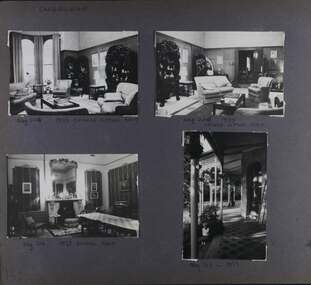
Album - Album page, Craigellachie, 273 Orrong Road, Circa 1972
... From Victorian Heritage Database citation for HO40 Craigellachie 2b & 2c Lynedoch Avenue Caulfield North https://vhd.heritagecouncil.vic.gov.au/places/35209 as at (28/10/2020) Craigellachie" is situated at No. 2B Lynedoch Avenue, Caulfield North, and was built for the noted investor, pastoralist and politician, William Pearson, not earlier than 1864 and possible in 1876, undergoing several substantial and contributory extensions during the nineteenth century. ...From Victorian Heritage Database citation for HO40 Craigellachie https://vhd.heritagecouncil.vic.gov.au/places/35209 as at (28/10/2020) It is historically significant (Criterion A) as the Melbourne home of William Pearson, MLA, MLC and principal shareholder in Walhalla's Long Tunnel Extended Gold Mining Co. which sustained the township well past the turn of the twentieth century and occupied fifth place amongst Victoria's richest mines. ...This photograph is part of the Caulfield Historical Album 1972. This album was created in approximately 1972 as part of a project by the Caulfield Historical Society to assist in identifying buildings worthy of preservation. The album is related to a Survey the Caulfield Historical Society developed in collaboration with the National Trust of Australia (Victoria) and Caulfield City Council to identify historic buildings within the City of Caulfield that warranted the protection of a National Trust Classification. Principal photographer thought to be Trevor Hart, member of Caulfield Historical Society. Most photographs were taken between 1966-1972 with a small number of photographs being older and from unknown sources. All photographs are black and white except where stated, with 386 photographs over 198 pages. From Victorian Heritage Database citation for HO40 Craigellachie 2b & 2c Lynedoch Avenue Caulfield North https://vhd.heritagecouncil.vic.gov.au/places/35209 as at (28/10/2020) Craigellachie" is situated at No. 2B Lynedoch Avenue, Caulfield North, and was built for the noted investor, pastoralist and politician, William Pearson, not earlier than 1864 and possible in 1876, undergoing several substantial and contributory extensions during the nineteenth century. It is historically and aesthetically significant. From Victorian Heritage Database citation for HO40 Craigellachie https://vhd.heritagecouncil.vic.gov.au/places/35209 as at (28/10/2020) It is historically significant (Criterion A) as the Melbourne home of William Pearson, MLA, MLC and principal shareholder in Walhalla's Long Tunnel Extended Gold Mining Co. which sustained the township well past the turn of the twentieth century and occupied fifth place amongst Victoria's richest mines. It is aesthetically significant (Criterion E) for its capacity to demonstrate Pearson's continuing financial success throughout the mid to late nineteenth century, the additions associated with the tower being most noteworthy as an example of the lasting appeal of the Italian Style, popularized in the pattern books of the day. The Ailanthus altissima (Tree of Heaven) is significant as an outstanding example of a species that is rare in cultivation, as well as for its very high aesthetic value. The Araucaria bidwilli is notable as a fine example of a species infrequently planted in Melbourne and rarely found in private suburban gardens.Page 159 - four photographs of Craigellachie - three room interiors and along the verandah. Handwritten: CRAIGELLACHIE [top left] / Neg 224 1973 CHINESE SITTING ROOM [under top right photo] / Neg 226 1973 / CHINESE SITTING ROOM [under top right photo] / Neg 214 1973 DINING ROOM [under bottom left photo] / Neg 213 - 1973 [under bottom right photo] / 159 [bottom left]trevor hart, verandah, orrong road, tower, curved windows, decorative brackets, craigellache, italianate, mansion, 1870's, william pearson, inkerman street, apartments, spire, decorative plaster work, rendered walls, arched windows, moulded ornaments, 1860's, lynedoch avenue, classical style, caulfield north, craigellachie, land subdivision, gardens, late victorian style, cast iron work, st kilda east, dining rooms, sitting rooms, furnishings, tiles -
 Glen Eira Historical Society
Album - Album page, Craigellachie, 273 Orrong Road, Circa 1972
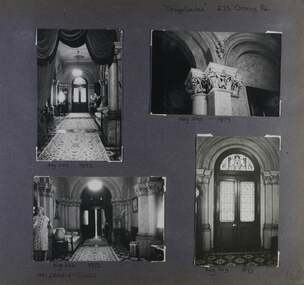
... From Victorian Heritage Database citation for HO40 Craigellachie 2b & 2c Lynedoch Avenue Caulfield North https://vhd.heritagecouncil.vic.gov.au/places/35209 as at (28/10/2020) Craigellachie" is situated at No. 2B Lynedoch Avenue, Caulfield North, and was built for the noted investor, pastoralist and politician, William Pearson, not earlier than 1864 and possible in 1876, undergoing several substantial and contributory extensions during the nineteenth century. ...From Victorian Heritage Database citation for HO40 Craigellachie https://vhd.heritagecouncil.vic.gov.au/places/35209 as at (28/10/2020) It is historically significant (Criterion A) as the Melbourne home of William Pearson, MLA, MLC and principal shareholder in Walhalla's Long Tunnel Extended Gold Mining Co. which sustained the township well past the turn of the twentieth century and occupied fifth place amongst Victoria's richest mines. ...This photograph is part of the Caulfield Historical Album 1972. This album was created in approximately 1972 as part of a project by the Caulfield Historical Society to assist in identifying buildings worthy of preservation. The album is related to a Survey the Caulfield Historical Society developed in collaboration with the National Trust of Australia (Victoria) and Caulfield City Council to identify historic buildings within the City of Caulfield that warranted the protection of a National Trust Classification. Principal photographer thought to be Trevor Hart, member of Caulfield Historical Society. Most photographs were taken between 1966-1972 with a small number of photographs being older and from unknown sources. All photographs are black and white except where stated, with 386 photographs over 198 pages. From Victorian Heritage Database citation for HO40 Craigellachie 2b & 2c Lynedoch Avenue Caulfield North https://vhd.heritagecouncil.vic.gov.au/places/35209 as at (28/10/2020) Craigellachie" is situated at No. 2B Lynedoch Avenue, Caulfield North, and was built for the noted investor, pastoralist and politician, William Pearson, not earlier than 1864 and possible in 1876, undergoing several substantial and contributory extensions during the nineteenth century. It is historically and aesthetically significant.From Victorian Heritage Database citation for HO40 Craigellachie https://vhd.heritagecouncil.vic.gov.au/places/35209 as at (28/10/2020) It is historically significant (Criterion A) as the Melbourne home of William Pearson, MLA, MLC and principal shareholder in Walhalla's Long Tunnel Extended Gold Mining Co. which sustained the township well past the turn of the twentieth century and occupied fifth place amongst Victoria's richest mines. It is aesthetically significant (Criterion E) for its capacity to demonstrate Pearson's continuing financial success throughout the mid to late nineteenth century, the additions associated with the tower being most noteworthy as an example of the lasting appeal of the Italian Style, popularized in the pattern books of the day. The Ailanthus altissima (Tree of Heaven) is significant as an outstanding example of a species that is rare in cultivation, as well as for its very high aesthetic value. The Araucaria bidwilli is notable as a fine example of a species infrequently planted in Melbourne and rarely found in private suburban gardens.Page 160 - four photographs of Craigellachie interiors. Handwritten: "Craigellachie" 273 Orrong Road [top right] / 156 [bottom right]trevor hart, orrong road, italianate, mansion, 1870's, william pearson, inkerman street, decorative plaster work, rendered walls, ornamentation, moulded ornaments, 1860's, lynedoch avenue, classical style, caulfield north, craigellachie, late victorian style, st kilda east, hallways, arched doors, stained glass, mrs francis, furnishings -
 Glen Eira Historical Society
Album - Album page, Craigellachie, 273 Orrong Road, Circa 1972
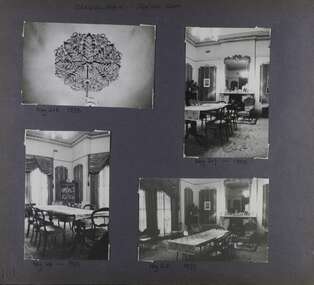
... From Victorian Heritage Database citation for HO40 Craigellachie 2b & 2c Lynedoch Avenue Caulfield North https://vhd.heritagecouncil.vic.gov.au/places/35209 as at (28/10/2020) Craigellachie" is situated at No. 2B Lynedoch Avenue, Caulfield North, and was built for the noted investor, pastoralist and politician, William Pearson, not earlier than 1864 and possible in 1876, undergoing several substantial and contributory extensions during the nineteenth century. ...From Victorian Heritage Database citation for HO40 Craigellachie https://vhd.heritagecouncil.vic.gov.au/places/35209 as at (28/10/2020) It is historically significant (Criterion A) as the Melbourne home of William Pearson, MLA, MLC and principal shareholder in Walhalla's Long Tunnel Extended Gold Mining Co. which sustained the township well past the turn of the twentieth century and occupied fifth place amongst Victoria's richest mines. ...This photograph is part of the Caulfield Historical Album 1972. This album was created in approximately 1972 as part of a project by the Caulfield Historical Society to assist in identifying buildings worthy of preservation. The album is related to a Survey the Caulfield Historical Society developed in collaboration with the National Trust of Australia (Victoria) and Caulfield City Council to identify historic buildings within the City of Caulfield that warranted the protection of a National Trust Classification. Principal photographer thought to be Trevor Hart, member of Caulfield Historical Society. Most photographs were taken between 1966-1972 with a small number of photographs being older and from unknown sources. All photographs are black and white except where stated, with 386 photographs over 198 pages. From Victorian Heritage Database citation for HO40 Craigellachie 2b & 2c Lynedoch Avenue Caulfield North https://vhd.heritagecouncil.vic.gov.au/places/35209 as at (28/10/2020) Craigellachie" is situated at No. 2B Lynedoch Avenue, Caulfield North, and was built for the noted investor, pastoralist and politician, William Pearson, not earlier than 1864 and possible in 1876, undergoing several substantial and contributory extensions during the nineteenth century. It is historically and aesthetically significant. From Victorian Heritage Database citation for HO40 Craigellachie https://vhd.heritagecouncil.vic.gov.au/places/35209 as at (28/10/2020) It is historically significant (Criterion A) as the Melbourne home of William Pearson, MLA, MLC and principal shareholder in Walhalla's Long Tunnel Extended Gold Mining Co. which sustained the township well past the turn of the twentieth century and occupied fifth place amongst Victoria's richest mines. It is aesthetically significant (Criterion E) for its capacity to demonstrate Pearson's continuing financial success throughout the mid to late nineteenth century, the additions associated with the tower being most noteworthy as an example of the lasting appeal of the Italian Style, popularized in the pattern books of the day. The Ailanthus altissima (Tree of Heaven) is significant as an outstanding example of a species that is rare in cultivation, as well as for its very high aesthetic value. The Araucaria bidwilli is notable as a fine example of a species infrequently planted in Melbourne and rarely found in private suburban gardens.Page 161 - four photographs of Craigellachie dining room Handwritten: CRAIGELLACHIE DINING ROOM [top left] / Neg 218 1973 [under top left photo] / Neg 217 - 1973 [under top right photo] / Neg 216- 1973 [under bottom left photo] / Neg 215 1973 [under bottom right photo] / 161 [bottom left]trevor hart, orrong road, curved windows, italianate, mansion, 1870's, william pearson, inkerman street, decorative plaster work, rendered walls, moulded ornaments, 1860's, lynedoch avenue, classical style, caulfield north, craigellachie, land subdivision, late victorian style, dining rooms, ceiling roses, furnishings, fireplaces, st kilda east -
 Coal Creek Community Park & Museum
Box, medicine, post 1930 after the new town of Leverkusen was named
... Freundliche Grüße / Best regards, Heike Dansard Collections Bayer Business Services GmbH Integrated Business Operations Corporate History & Archives Building C302 51368 Leverkusen, Germany Tel: +49 214 30-61047 E-mail: [email protected] Web: http://www.business-services.bayer.com /// Geschäftsführung: Daniel Hartert, Geschäftsführer | Wilhelm Oehlschläger /// Vorsitzender des Aufsichtsrats: Johannes Dietsch /// Sitz der Gesellschaft: Leverkusen | Amtsgericht Köln, HRB 49895 ...Freundliche Grüße / Best regards, Heike Dansard Collections Bayer Business Services GmbH Integrated Business Operations Corporate History & Archives Building C302 51368 Leverkusen, Germany Tel: +49 214 30-61047 E-mail: [email protected] Web: http://www.business-services.bayer.com /// Geschäftsführung: Daniel Hartert, Geschäftsführer | Wilhelm Oehlschläger /// Vorsitzender des Aufsichtsrats: Johannes Dietsch /// Sitz der Gesellschaft: Leverkusen | Amtsgericht Köln, HRB 49895 Only two specimens remain in the Bayer archival collection. ref: email in 'Historical Information'. anaesthetic On box top : BAYER BAYER' as a cross with 'Y" as the centre set in a circle in a square margin. side 1. ...Email from "Heike Dansard" Only two specimens remain in the Bayer archival collection. ref: email in 'Historical Information'.Oiled rectangular thick cardboard box with printed text on paper label on outside containing white crystalline powder. Top of box lifts off as lid.On box top : BAYER BAYER' as a cross with 'Y" as the centre set in a circle in a square margin. side 1. 'CYCLOFORM FabinFabriken orm (?) FRIEDR.BAYER & Co leverkusen a/ Coln a/ Rh pharmaceohscbe.......'. Side 2. ......'CYCLOFORM............BASYER BAYER Brevate et nom depose en Allamagne et dans la pluparet des autres pays industrials'. (translation : Patent name and deposited in Germany and most other industrial countries). Side 3. ' ......Weiderwerkaul..................in...........CYCLOFORM.........MARKE BAYER BAYER..................Name.....MARKE..................und.............ichgeschuzt.........ubrigon.anaesthetic -
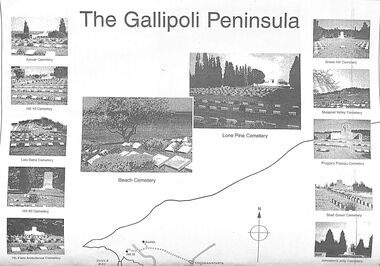 Bendigo Historical Society Inc.
Map - Jack Lockett Collection: The Gallipoli Peninsula
... He served in France with the 38th Battalion, earning promotion to sergeant and was discharged on 20 September 1919. https://en.wikipedia.org/wiki/Jack_Lockett After the war, Jack returned to The Mallee and selected a 640 acres (260 ha) block of land in Linga, Victoria, deciding to make his living as a farmer. ...He served in France with the 38th Battalion, earning promotion to sergeant and was discharged on 20 September 1919. https://en.wikipedia.org/wiki/Jack_Lockett After the war, Jack returned to The Mallee and selected a 640 acres (260 ha) block of land in Linga, Victoria, deciding to make his living as a farmer. ...John Henry Lockett OAM (22 January 1891 – 25 May 2002) was the oldest man ever in Australia when he died aged 111 years, 123 days. As one of the last surviving veterans of World War I, he was acclaimed as a national hero during the last decade of his life. Lockett was born in the small Victorian town of Waanyarra, near Bendigo. He left school aged nine to work on a local farm. Later, he worked for his uncles in the Mallee. On 24 March 1916, he travelled to Mildura to enlist in the Australian Imperial Force. He served in France with the 38th Battalion, earning promotion to sergeant and was discharged on 20 September 1919. https://en.wikipedia.org/wiki/Jack_Lockett After the war, Jack returned to The Mallee and selected a 640 acres (260 ha) block of land in Linga, Victoria, deciding to make his living as a farmer. In 1923, he married Maybell Ingwerson and they had four children together. In 1963, the couple retired to Bendigo, leaving the farmland (which now covered more than 130,000 acres (53,000 ha), in the care of their children and grandchildren A long map on A3 paper attached to a A4 paper. Black print map of The Gallipoli Peninsula showing sites of battlefields. Surrounding the map there 33 small black and white photographs of Cemeteries and memorials. On the rear of the map there is an Information Sheet titled Commonwealth War Graves, Under the heading THE GALLIPOLI PENINSULA, TURKEY there is a brief description of the objective and actions of The Gallipoli Campaign 1915. Beneath the heading COMMEMORATION OF THE DEAD Under the terms of the Armistice with Turkey the British Army Re- entered the Peninsula at the end of 1918 and cleared the battlefields of the bodies still unburied. The Construction of the Cemeteries and Memorials was completed in 1926. It also includes a list of 39 Cemeteries with their names, a description of the Battle and the number of burials. jack lockett, mabel ingwersen, gallipoli war graves, nanga gnulle -
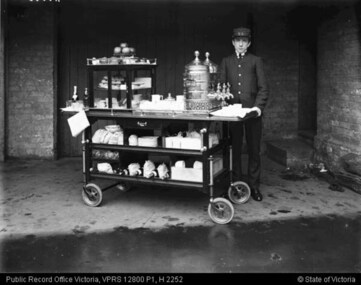 Puffing Billy Railway
Equipment - Refreshments services Trolley, 1990s
... Reference from : Fielding, K. (2012) Victorian Railways - Refreshment Services Branch in Museums Victoria Collections http://collections.museumvictoria.com.au/articles/11470...Reference from : Fielding, K. (2012) Victorian Railways - Refreshment Services Branch in Museums Victoria Collections http://collections.museumvictoria.com.au/articles/11470 Historic - Replica of a a Victorian Railways Refreshment Services Serving Trolley used on Puffing Billy Railway puffing billy serving trolley replica dining cart refreshment services victorian railways Replica large wooden serving cart with fitted wooden cabinet featuring sliding glass doors and one glass shelf. ...The Refreshment Services Branch was established in 1920, and initially focused on providing station-based refreshment rooms and the dining car service. Its scope expanded to include diverse activities such as stall rental; sales of advertising space on railways infrastructure; laundry services; operation of a hair-dressing salon, a bakery, a butchery and a poultry farm; and the management of the chalet guesthouse at Mt Buffalo. The majority of staff worked in refreshment rooms and dining cars, both of which were a popular feature of the railway service. Previous to 1920 refreshment services had been provided by contractors, but after many complaints the Department decided to provide a standardised service across the system. It grew quickly: five years after it was established the Branch employed approximately 500 staff. Station refreshment facilities ranged from elaborate dining rooms to decorated push-carts. They were staffed predominately by women, who provided everything from a cup of tea to a three course meal. Most refreshment room services were closed in the 1970s. Reference from : Fielding, K. (2012) Victorian Railways - Refreshment Services Branch in Museums Victoria Collections http://collections.museumvictoria.com.au/articles/11470Historic - Replica of a a Victorian Railways Refreshment Services Serving Trolley used on Puffing Billy Railway Replica large wooden serving cart with fitted wooden cabinet featuring sliding glass doors and one glass shelf. Cart has chrome handles, two wooden shelves, a wooden drawer with chrome handle and a small chalkboard adhered to end. Cart has four small black rubber and metal wheels and a metal foot brake.puffing billy, serving trolley, replica, dining cart, refreshment services, victorian railways
