
Showing 2009 items matching "social service"
-
 Wodonga & District Historical Society Inc
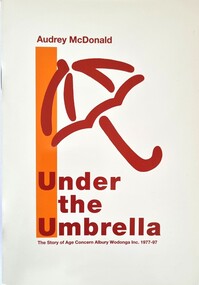
Booklet - Under the Umbrella - The Story of Age Concern Albury Wodonga Inc, Audrey McDonald, 1996
... It provides services and social activities for frail aged people or people with disabilities and their carers. ...This book outlines the history and development of "Age Concern Albury Wodonga Inc." a not for profit organisation that operates in the Albury Wodonga area with some services provided operating across The Riverina Murray region. It provides services and social activities for frail aged people or people with disabilities and their carers. The objective of Age Concern is to lessen the mental and physical stress of growing older by advocating preparation and education of people approaching retirement as well as encouraging the provision of services within the community designed to improve the physical, mental and social well being of the aged.A small booklet of 70 pages including photos, interviews and text outlining the history of "Age Concern Albury Wodonga.non-fictionThis book outlines the history and development of "Age Concern Albury Wodonga Inc." a not for profit organisation that operates in the Albury Wodonga area with some services provided operating across The Riverina Murray region. It provides services and social activities for frail aged people or people with disabilities and their carers. The objective of Age Concern is to lessen the mental and physical stress of growing older by advocating preparation and education of people approaching retirement as well as encouraging the provision of services within the community designed to improve the physical, mental and social well being of the aged.aged concern albury wodonga, aged care, aged care services albury wodonga -
 Wodonga & District Historical Society Inc
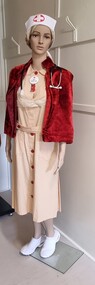
Uniform - Hamilton-Smith Collection - Red Cross Uniform
... service to the Red Cross. This item has well documented provenance and a known owner. It is part of a significant collection from the Hamilton-Smith family of Wodonga and reflects important aspects of social history including the roles of women and their contribution to the community. ...The Hamilton-Smith collection was donated by the children of Grace Mary Hamilton-Smith nee Ellwood (1911-2004) and John Hamilton-Smith (1909-1984) who settled in Wodonga in the 1940s. The Ellwood family had lived in north-east Victoria since the late 1800s. Grace’s mother, Rosina Ellwood nee Smale, was the first teacher at Baranduda in 1888, and a foundation member of the C.W.A. Rosina and her husband Mark retired to Wodonga in 1934. The collection contains significant items which reflect the local history of Wodonga, including handmade needlework, books, photographs, a wedding dress, maps, and material relating to the world wars. Grace and John married at St. David’s Church, Albury in 1941. John was a grazier, and actively involved in Agricultural Societies and the Belvoir Wodonga Rotary Club. Grace was an active member of several organisations including the CWA, Red Cross, the Wodonga Show Ladies' Auxiliary and the Victorian Agricultural Societies Association. This uniform was owned by Grace Hamilton-Smith. She achieved recognition for more 20 years of service to the Red Cross.This item has well documented provenance and a known owner. It is part of a significant collection from the Hamilton-Smith family of Wodonga and reflects important aspects of social history including the roles of women and their contribution to the community. A tan coloured Red Cross uniform and badges worn C1940sred cross australia, hamilton-smith collection, wodonga red cross -
 Wodonga & District Historical Society Inc
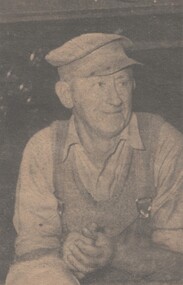
Article - Fred Rochow Railways Collection - Newspaper Cutting - George Padgett, C. 1937 - 1955
... services in Wodonga and throughout Northeast Victoria. The railways played a critical role in opening up Victoria and connecting Australia for trade, business, social communication and transport. ...The Fred Rochow Railways Collection incorporates photos related to the operation of the Wodonga Railway Station including different types of trains and railways staff C. 1930 – 1990. It was donated to the Wodonga Historical Society by Fred Rochow, a railwayman who spent many years based in Wodonga. He joined the Victorian Railways on 17th June l947 and retired in 1988. For some time, he was a member of the Australian Federated Union of Locomotive Enginemen and served a term as a member of the Trades Hall Council. He had an extensive knowledge of the struggles that took place to achieve better conditions for railway workers. Fred worked for many years as a fireman and then worked his way up the ranks to driver, experiencing many changes from the days of steam locomotives through to diesel trains, locomotives and even the modern XPT train. He worked throughout Victoria at different stages of his career, with his final working years focused on the northeast of Victoria and the Albury to Melbourne line. After his retirement, Fred continued to share his love of steam miniature trains with the community.This collection has local and statewide significance as it captures images of trains, locomotives and personnel who operated the railway services in Wodonga and throughout Northeast Victoria. The railways played a critical role in opening up Victoria and connecting Australia for trade, business, social communication and transport.Newspaper Cutting, Undated, Source Unknown- Photo of George Padgett George Padgett was born into a railway family in Numurkah, Victoria on 3 February 1890. He began working for the Victorian Railways as a junior clerk in Maryborough and gained his Driver’s ticket in 1914 at North Melbourne. He was based at Ararat for some time, then transferred to Dimboola in 1926. In November 1937 when the “Spirit of Progress” made its first run from Melbourne to Albury, he was moved to Wodonga. From the train's first return trip he took over the driving. During his career, he made an average of 92 round trips a year. George made his last trip on 4 February 1955 prior to his retirement. George died in Wodonga on 19 February 1967. Below the image "You see them reunited - while Spirit of Progress driver George Padgett looks on happily."railways wodonga, fred rochow, wodonga railwaymen, spirit of progress, george padgett -
 Wodonga & District Historical Society Inc
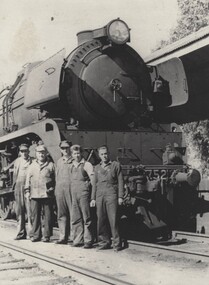
Photograph - Fred Rochow Railways Collection - Locomotive 752 Crew at Albury, C. 1955
... services in Wodonga and throughout Northeast Victoria. The railways played a critical role in opening up Victoria and connecting Australia for trade, business, social communication and transport. ...The Fred Rochow Railways Collection incorporates photos related to the operation of the Wodonga Railway Station including different types of trains and railways staff C. 1930 – 1990. It was donated to the Wodonga Historical Society by Fred Rochow, a railwayman who spent many years based in Wodonga. He joined the Victorian Railways on 17th June l947 and retired in 1988. For some time, he was a member of the Australian Federated Union of Locomotive Enginemen and served a term as a member of the Trades Hall Council. He had an extensive knowledge of the struggles that took place to achieve better conditions for railway workers. Fred worked for many years as a fireman and then worked his way up the ranks to driver, experiencing many changes from the days of steam locomotives through to diesel trains, locomotives and even the modern XPT train. He worked throughout Victoria at different stages of his career, with his final working years focused on the northeast of Victoria and the Albury to Melbourne line. After his retirement, Fred continued to share his love of steam miniature trains with the community.This collection has local and statewide significance as it captures images of trains, locomotives and personnel who operated the railway services in Wodonga and throughout Northeast Victoria. The railways played a critical role in opening up Victoria and connecting Australia for trade, business, social communication and transport.Locomotive 752 Crew at Albury C. 1955 Left to right: Roy Wagner, Fitter Harry Alderson, Driver Bill Odgers, Fireman Lou Merjeric, Fireman H. Aitherson (Train Examiner?) On front of Locomotive "752"railways wodonga, fred rochow, wodonga railwaymen, s class locomotive -
 Wodonga & District Historical Society Inc
Photograph - Fred Rochow Railways Collection - Shunting at Shelley Station, 1961
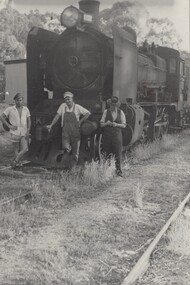
... services in Wodonga and throughout Northeast Victoria. The railways played a critical role in opening up Victoria and connecting Australia for trade, business, social communication and transport. ...The Fred Rochow Railways Collection incorporates photos related to the operation of the Wodonga Railway Station including different types of trains and railways staff C. 1930 – 1990. It was donated to the Wodonga Historical Society by Fred Rochow, a railwayman who spent many years based in Wodonga. He joined the Victorian Railways on 17th June l947 and retired in 1988. For some time, he was a member of the Australian Federated Union of Locomotive Enginemen and served a term as a member of the Trades Hall Council. He had an extensive knowledge of the struggles that took place to achieve better conditions for railway workers. Fred worked for many years as a fireman and then worked his way up the ranks to driver, experiencing many changes from the days of steam locomotives through to diesel trains, locomotives and even the modern XPT train. He worked throughout Victoria at different stages of his career, with his final working years focused on the northeast of Victoria and the Albury to Melbourne line. After his retirement, Fred continued to share his love of steam miniature trains with the community. Shelley Railway Station - Shelley was once Victoria's highest railway station, located 781 metres above sea level. The Shelley Railway Station was opened in 1916 and closed in 1979. The railway was used early in its life to transport farmer’s livestock from the Upper Murray to Wodonga. From the 1950s the railway was used heavily to transport equipment and machinery from Wodonga to the Upper Murray to help build the Snowy Mountains Hydro Electric Scheme. The Snowy Hydro Scheme was completed in 1974 and after several years of low level use, the railway was closed. Some remnants of the Shelley Station passenger platform can still be seen today, along with some information boards. The Shelley Railway Station now forms part of the High Country Rail Trail.This collection has local and statewide significance as it captures images of trains, locomotives and personnel who operated the railway services in Wodonga and throughout Northeast Victoria. The railways played a critical role in opening up Victoria and connecting Australia for trade, business, social communication and transport.Left to Right: Fireman Bert Cadman, Driver Wally Riley, Guard Hugh Fraser. Locomotive S300 - the ‘Matthew Flinders’ The S class diesel locomotives were built by Clyde Engineering in 1957 for the Victorian Railways. Designed as premier express passenger diesels, they assumed the ‘S class’ title from a fleet of steam locomotives. They were also given names of famous Australians. The S300 took the name ‘Matthew Flinders’. In 1962, S300 was converted from the Victorian broad gauge of 5’3” to the New South Wales gauge of 4’8.5”, in order to operate the new Southern Aurora between Sydney & Melbourne. As the locomotive grew older it was removed from these duties and was sold to Chicago Freight Car Leasing Australia (CFCLA) in 2004. It is now owned by a private owner and is on loan to the Canberra Railway Museum.railways wodonga, fred rochow, wodonga railwaymen, s class locomotive -
 Wodonga & District Historical Society Inc
Photograph - Fred Rochow Railways Collection - Railway Commissioner Harold Clapp and Mrs. Clapp, 1938
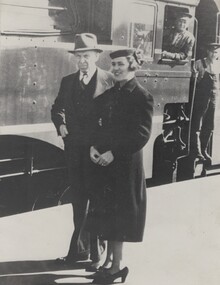
... services in Wodonga and throughout Northeast Victoria. The railways played a critical role in opening up Victoria and connecting Australia for trade, business, social communication and transport. ...The Fred Rochow Railways Collection incorporates photos related to the operation of the Wodonga Railway Station including different types of trains and railways staff C. 1930 – 1990. It was donated to the Wodonga Historical Society by Fred Rochow, a railwayman who spent many years based in Wodonga. He joined the Victorian Railways on 17th June l947 and retired in 1988. For some time, he was a member of the Australian Federated Union of Locomotive Enginemen and served a term as a member of the Trades Hall Council. He had an extensive knowledge of the struggles that took place to achieve better conditions for railway workers. Fred worked for many years as a fireman and then worked his way up the ranks to driver, experiencing many changes from the days of steam locomotives through to diesel trains, locomotives and even the modern XPT train. He worked throughout Victoria at different stages of his career, with his final working years focused on the northeast of Victoria and the Albury to Melbourne line. After his retirement, Fred continued to share his love of steam miniature trains with the community.This collection has local and statewide significance as it captures images of trains, locomotives and personnel who operated the railway services in Wodonga and throughout Northeast Victoria. The railways played a critical role in opening up Victoria and connecting Australia for trade, business, social communication and transport.Railway Commissioner Harold Clapp and Mrs. Clapp ready to leave Albury on the "Spirit of Progress" in 1938. The Driver is George Lynch Snr. and the Fireman is E. Finley. Sir Harold Winthrop Clapp (7 May 1875 – 21 October 1952) was a transport administrator with the Victorian Railways who over the course of 30 years revolutionised the railways in Victoria. Clapp introduced faster services and more powerful locomotives, supported the farming sector and presented a report on standardising rail gauges which then led to a uniform rail gauge across capital cities. His most well-known project was the upgrade of the Sydney Limited service into the all-steel, all-air-conditioned, non-stop, high-speed express streamliner, Spirit of Progress which was launched on 17 November 1937. Clapp became Chairman of Commissioners of Victorian Railways in 1920 and remained Chairman until his retirement in 1951. Harold W Clapp was appointed a Knight Commander of the Order of the British Empire (KBE) in 1941 in recognition of his contribution to public service.railways wodonga, fred rochow, wodonga railwaymen, s class locomotive -
 Wodonga & District Historical Society Inc
Photograph - Fred Rochow Railways Collection - Geoff Williams, C. 1980s
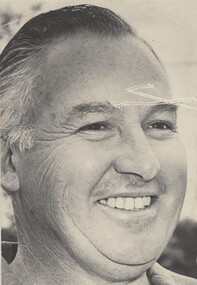
... services in Wodonga and throughout Northeast Victoria. The railways played a critical role in opening up Victoria and connecting Australia for trade, business, social communication and transport. ...The Fred Rochow Railways Collection incorporates photos related to the operation of the Wodonga Railway Station including different types of trains and railways staff C. 1930 – 1990. It was donated to the Wodonga Historical Society by Fred Rochow, a railwayman who spent many years based in Wodonga. He joined the Victorian Railways on 17th June l947 and retired in 1988. For some time, he was a member of the Australian Federated Union of Locomotive Enginemen and served a term as a member of the Trades Hall Council. He had an extensive knowledge of the struggles that took place to achieve better conditions for railway workers. Fred worked for many years as a fireman and then worked his way up the ranks to driver, experiencing many changes from the days of steam locomotives through to diesel trains, locomotives and even the modern XPT train. He worked throughout Victoria at different stages of his career, with his final working years focused on the northeast of Victoria and the Albury to Melbourne line. After his retirement, Fred continued to share his love of steam miniature trains with the community.This collection has local and statewide significance as it captures images of trains, locomotives and personnel who operated the railway services in Wodonga and throughout Northeast Victoria. The railways played a critical role in opening up Victoria and connecting Australia for trade, business, social communication and transport.Geoff Williams started his railway career as a clerk at Maryborough on 27 August 1947. He became a cleaner in June1952. He passed his Driver qualification in March 1956. Geoff achieved is Fireman's ticket in 1959. He was appointed as Engineman's Instructor in 1972. After a successful career with Victorian Railways, Geoff retired on 1 September 1986.railways wodonga, fred rochow, wodonga railwaymen, geoff williams -
 Wodonga & District Historical Society Inc
Photograph - Fred Rochow Railways Collection - Ray Murphy- First Driver on the "Spirit of Progress", C. 1940
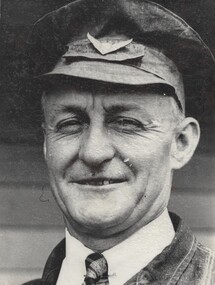
... services in Wodonga and throughout Northeast Victoria. The railways played a critical role in opening up Victoria and connecting Australia for trade, business, social communication and transport. ...The Fred Rochow Railways Collection incorporates photos related to the operation of the Wodonga Railway Station including different types of trains and railways staff C. 1930 – 1990. It was donated to the Wodonga Historical Society by Fred Rochow, a railwayman who spent many years based in Wodonga. He joined the Victorian Railways on 17th June l947 and retired in 1988. For some time, he was a member of the Australian Federated Union of Locomotive Enginemen and served a term as a member of the Trades Hall Council. He had an extensive knowledge of the struggles that took place to achieve better conditions for railway workers. Fred worked for many years as a fireman and then worked his way up the ranks to driver, experiencing many changes from the days of steam locomotives through to diesel trains, locomotives and even the modern XPT train. He worked throughout Victoria at different stages of his career, with his final working years focused on the northeast of Victoria and the Albury to Melbourne line. After his retirement, Fred continued to share his love of steam miniature trains with the community.This collection has local and statewide significance as it captures images of trains, locomotives and personnel who operated the railway services in Wodonga and throughout Northeast Victoria. The railways played a critical role in opening up Victoria and connecting Australia for trade, business, social communication and transport. Ray Murphy- First Driver on the "Spirit of Progress". "Spirit of Progress" Drivers were the only Drivers issued with wings to wear on their caps.railways wodonga, fred rochow, wodonga railwaymen, spirit of progress, ray murphy -
 Wodonga & District Historical Society Inc
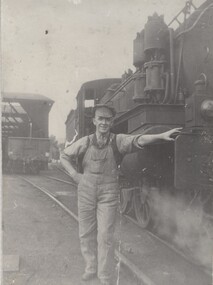
Photograph - Fred Rochow Railways Collection - George Lynch, C. 1960s
... services in Wodonga and throughout Northeast Victoria. The railways played a critical role in opening up Victoria and connecting Australia for trade, business, social communication and transport. ...The Fred Rochow Railways Collection incorporates photos related to the operation of the Wodonga Railway Station including different types of trains and railways staff C. 1930 – 1990. It was donated to the Wodonga Historical Society by Fred Rochow, a railwayman who spent many years based in Wodonga. He joined the Victorian Railways on 17th June l947 and retired in 1988. For some time, he was a member of the Australian Federated Union of Locomotive Enginemen and served a term as a member of the Trades Hall Council. He had an extensive knowledge of the struggles that took place to achieve better conditions for railway workers. Fred worked for many years as a fireman and then worked his way up the ranks to driver, experiencing many changes from the days of steam locomotives through to diesel trains, locomotives and even the modern XPT train. He worked throughout Victoria at different stages of his career, with his final working years focused on the northeast of Victoria and the Albury to Melbourne line. After his retirement, Fred continued to share his love of steam miniature trains with the community.This collection has local and statewide significance as it captures images of trains, locomotives and personnel who operated the railway services in Wodonga and throughout Northeast Victoria. The railways played a critical role in opening up Victoria and connecting Australia for trade, business, social communication and transport.George Lynch standing alongside a DD Locomotive. This locomotive is fitted with two C-Class compressors used for testing air brakes on the extended length of a train. The DD Class locomotives entered service in 1902 as a new express passenger and mixed traffic steam locomotive class. They were the most numerous locomotive class on the Victorian Railways, with a total of 261 DD locomotives built. Originally introduced on mainline express passenger services, they were quickly superseded by the much larger A class and were relegated to secondary and branch line passenger and goods service, where they gave excellent service for the next 50 years. With some modifications made to the original design, the DD class locomotives ran on railways throughout Victoria until 1974railways wodonga, fred rochow, wodonga railwaymen, george lynch, dd class locomotives -
 Wodonga & District Historical Society Inc
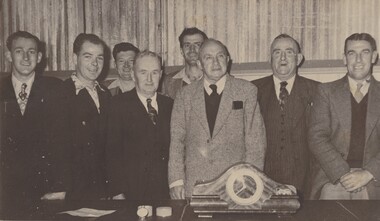
Photograph - Fred Rochow Railways Collection - Group photo at Wodonga, C. 1970s
... services in Wodonga and throughout Northeast Victoria. The railways played a critical role in opening up Victoria and connecting Australia for trade, business, social communication and transport. ...The Fred Rochow Railways Collection incorporates photos related to the operation of the Wodonga Railway Station including different types of trains and railways staff C. 1930 – 1990. It was donated to the Wodonga Historical Society by Fred Rochow, a railwayman who spent many years based in Wodonga. He joined the Victorian Railways on 17th June l947 and retired in 1988. For some time, he was a member of the Australian Federated Union of Locomotive Enginemen and served a term as a member of the Trades Hall Council. He had an extensive knowledge of the struggles that took place to achieve better conditions for railway workers. Fred worked for many years as a fireman and then worked his way up the ranks to driver, experiencing many changes from the days of steam locomotives through to diesel trains, locomotives and even the modern XPT train. He worked throughout Victoria at different stages of his career, with his final working years focused on the northeast of Victoria and the Albury to Melbourne line. After his retirement, Fred continued to share his love of steam miniature trains with the community.This collection has local and statewide significance as it captures images of trains, locomotives and personnel who operated the railway services in Wodonga and throughout Northeast Victoria. The railways played a critical role in opening up Victoria and connecting Australia for trade, business, social communication and transport.Left to right: Eddie Moss, Max Church, Bill Baldock, Claude Clancy, Norm Davey, Alex Reid, Jack O’Donnell, Vin Snow. Claude Clancy was born on 27 March 1895 and started cleaning with Victorian Railways on 16 January 1920. He passed his Driver qualification on 30 December 1936. Alex Reid was born on 4 August 1891. He joined the Victorian Railways at Port Melbourne on 10 December 1907. Alex started cleaning at North Melbourne on 4 October 1910. Alex gained his Driver qualification on 18 December 1919. Jack O’Donnell was born on 3 May 1889 and began working with Victorian Railways on 1 June 1911. He started cleaning on 13 January 1912. He gained his Driver qualification on 19 November 1920. Vin Snow started his Victorian Railways career at Wodonga in September 1939. He passed his Driver qualifications in 1949. Vin retired in 1978.railways wodonga, fred rochow, wodonga railwaymen, claude clancy, alex reid, vin snow, jack o’donnell -
 Wodonga & District Historical Society Inc
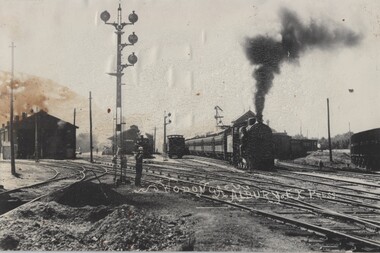
Photograph - Fred Rochow Railways Collection - Wodonga -Albury Express train, c. 1910
... services in Wodonga and throughout Northeast Victoria. The railways played a critical role in opening up Victoria and connecting Australia for trade, business, social communication and transport. ...The Fred Rochow Railways Collection incorporates photos related to the operation of the Wodonga Railway Station including different types of trains and railways staff C. 1930 – 1990. It was donated to the Wodonga Historical Society by Fred Rochow, a railwayman who spent many years based in Wodonga. He joined the Victorian Railways on 17th June l947 and retired in 1988. For some time, he was a member of the Australian Federated Union of Locomotive Enginemen and served a term as a member of the Trades Hall Council. He had an extensive knowledge of the struggles that took place to achieve better conditions for railway workers. Fred worked for many years as a fireman and then worked his way up the ranks to driver, experiencing many changes from the days of steam locomotives through to diesel trains, locomotives and even the modern XPT train. He worked throughout Victoria at different stages of his career, with his final working years focused on the northeast of Victoria and the Albury to Melbourne line. After his retirement, Fred continued to share his love of steam miniature trains with the community.This collection has local and statewide significance as it captures images of trains, locomotives and personnel who operated the railway services in Wodonga and throughout Northeast Victoria. The railways played a critical role in opening up Victoria and connecting Australia for trade, business, social communication and transport. Express Steam Locomotive passing through railway yards at Wodongarailways wodonga, fred rochow, wodonga railwaymen, steam locomotive -
 Wodonga & District Historical Society Inc
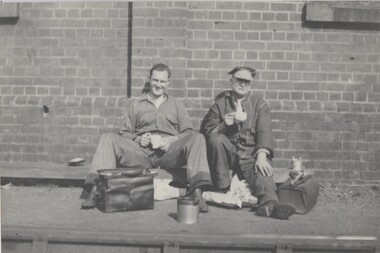
Photograph - Fred Rochow Railways Collection - Fireman Jack Dawe and Driver George Lynch, c. 1940 - 1950
... services in Wodonga and throughout Northeast Victoria. The railways played a critical role in opening up Victoria and connecting Australia for trade, business, social communication and transport. ...The Fred Rochow Railways Collection incorporates photos related to the operation of the Wodonga Railway Station including different types of trains and railways staff C. 1930 – 1990. It was donated to the Wodonga Historical Society by Fred Rochow, a railwayman who spent many years based in Wodonga. He joined the Victorian Railways on 17th June l947 and retired in 1988. For some time, he was a member of the Australian Federated Union of Locomotive Enginemen and served a term as a member of the Trades Hall Council. He had an extensive knowledge of the struggles that took place to achieve better conditions for railway workers. Fred worked for many years as a fireman and then worked his way up the ranks to driver, experiencing many changes from the days of steam locomotives through to diesel trains, locomotives and even the modern XPT train. He worked throughout Victoria at different stages of his career, with his final working years focused on the northeast of Victoria and the Albury to Melbourne line. After his retirement, Fred continued to share his love of steam miniature trains with the community.This collection has local and statewide significance as it captures images of trains, locomotives and personnel who operated the railway services in Wodonga and throughout Northeast Victoria. The railways played a critical role in opening up Victoria and connecting Australia for trade, business, social communication and transport.Fireman Jack Dawe and Driver George Lynch on a meal break at Wodonga.railways wodonga, fred rochow, wodonga railwaymen, steam locomotive, jack dawe, george lynch -
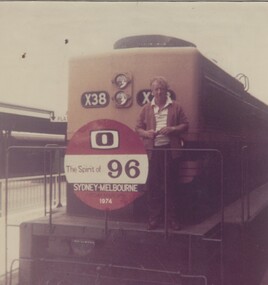 Wodonga & District Historical Society Inc
Photograph - Fred Rochow Railways Collection - Driver George Judge, 1974
... services in Wodonga and throughout Northeast Victoria. The railways played a critical role in opening up Victoria and connecting Australia for trade, business, social communication and transport. ...The Fred Rochow Railways Collection incorporates photos related to the operation of the Wodonga Railway Station including different types of trains and railways staff C. 1930 – 1990. It was donated to the Wodonga Historical Society by Fred Rochow, a railwayman who spent many years based in Wodonga. He joined the Victorian Railways on 17th June l947 and retired in 1988. For some time, he was a member of the Australian Federated Union of Locomotive Enginemen and served a term as a member of the Trades Hall Council. He had an extensive knowledge of the struggles that took place to achieve better conditions for railway workers. Fred worked for many years as a fireman and then worked his way up the ranks to driver, experiencing many changes from the days of steam locomotives through to diesel trains, locomotives and even the modern XPT train. He worked throughout Victoria at different stages of his career, with his final working years focused on the northeast of Victoria and the Albury to Melbourne line. After his retirement, Fred continued to share his love of steam miniature trains with the community.This collection has local and statewide significance as it captures images of trains, locomotives and personnel who operated the railway services in Wodonga and throughout Northeast Victoria. The railways played a critical role in opening up Victoria and connecting Australia for trade, business, social communication and transport.Driver George Judge standing on front of Locomotive X38 special train "Spirit of 96" The X class are a class of mainline diesel locomotives built by Clyde Engineering Victorian Railways between 1966 and 1976. X 38 was part of the second order. It entered service on Friday, 8th May 1970. X 37 and X 38 were built as replacements for the two S Class locomotives lost in the fatal Southern Aurora crash at Violet Town in 1969. It was later sold to Pacific National and rebuilt as XR550. "Spirit of 96" was a passenger train specially designed for cast and crew of the Australian 0-10 Network series “Number 96”. It was used to travel from Sydney to Melbourne for the annual TV Week Logie Awards. It was a silver, multi-carriage train with the Commissioner's carriage hooked up at the rear for VIPs. The 16 and a half-hour overnight journey, left from the centre of Sydney at 4.30 pm with a farewell party, complete with red carpet and jazz band in attendance. It featured whistle stop visits at country sidings and stations. Thousands of people turned out to see their favourite stars, before it arrived at Spencer Street station. The rail service of the time was keen to promote its overnight tourism packages, and for the journey the train was christened as the "Spirit of 96”. On front of locomotive "X38" On red black and white sign attached to the front rail of the locomotive "O/The Spirit of 96/Sydney-Melbourne/1974"railways wodonga, fred rochow, wodonga railwaymen, x class diesel locomotive, george judge, spirit of 96 -
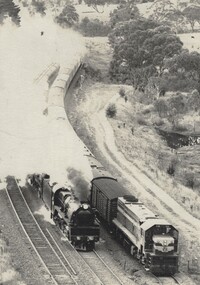 Wodonga & District Historical Society Inc
Photograph - Fred Rochow Railways Collection - Locomotives at Broadford, 15 April 1972
... services in Wodonga and throughout Northeast Victoria. The railways played a critical role in opening up Victoria and connecting Australia for trade, business, social communication and transport. ...The Fred Rochow Railways Collection incorporates photos related to the operation of the Wodonga Railway Station including different types of trains and railways staff C. 1930 – 1990. It was donated to the Wodonga Historical Society by Fred Rochow, a railwayman who spent many years based in Wodonga. He joined the Victorian Railways on 17th June l947 and retired in 1988. For some time, he was a member of the Australian Federated Union of Locomotive Enginemen and served a term as a member of the Trades Hall Council. He had an extensive knowledge of the struggles that took place to achieve better conditions for railway workers. Fred worked for many years as a fireman and then worked his way up the ranks to driver, experiencing many changes from the days of steam locomotives through to diesel trains, locomotives and even the modern XPT train. He worked throughout Victoria at different stages of his career, with his final working years focused on the northeast of Victoria and the Albury to Melbourne line. After his retirement, Fred continued to share his love of steam miniature trains with the community.This collection has local and statewide significance as it captures images of trains, locomotives and personnel who operated the railway services in Wodonga and throughout Northeast Victoria. The railways played a critical role in opening up Victoria and connecting Australia for trade, business, social communication and transport.Locomotives at Broadford. Driver Vic Zeinert, Fireman C.Symes The X class were a class of mainline diesel locomotives built by Clyde Engineering for Victorian Railways between 1966 and 1976. X32 entered service on 8 September 1966. The V/Line Freight business was purchased from the Victorian government in 1999. Freight Australia was then sold to Pacific National in August 2004. Locomotive X32 was rebuilt as Locomotive XR555 and resumed service in October 2004 repainted in Pacific National blue and yellow livery. R761 - The R761 arrived in Victoria on the 28th February 1952 upon the ship ‘Helenus’ and entered service on the 9th April 1952. R761 spent long periods in storage and occasionally saw service until it was withdrawn. In 1970 R761 was overhauled and was made available for use on special trains. It became the final R class to run in VR service on the 5th September 1974, ending 120 years of mainline steam operation in Victoria. After years of debate about its future, on the 30th March 1985 the loco was officially returned to service, hauling special trains to celebrate the years of steam locomotives.On front of locomotive on left "R761" On front of locomotive on right "X32"railways wodonga, fred rochow, wodonga railwaymen, x class diesel locomotive, locomotive r761 -
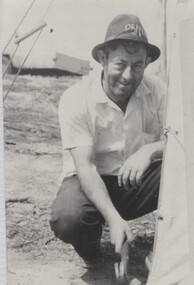 Wodonga & District Historical Society Inc
Photograph - Fred Rochow Railways Collection - Cliff Thomas, C. 1970s
... services in Wodonga and throughout Northeast Victoria. The railways played a critical role in opening up Victoria and connecting Australia for trade, business, social communication and transport. ...The Fred Rochow Railways Collection incorporates photos related to the operation of the Wodonga Railway Station including different types of trains and railways staff C. 1930 – 1990. It was donated to the Wodonga Historical Society by Fred Rochow, a railwayman who spent many years based in Wodonga. He joined the Victorian Railways on 17th June l947 and retired in 1988. For some time, he was a member of the Australian Federated Union of Locomotive Enginemen and served a term as a member of the Trades Hall Council. He had an extensive knowledge of the struggles that took place to achieve better conditions for railway workers. Fred worked for many years as a fireman and then worked his way up the ranks to driver, experiencing many changes from the days of steam locomotives through to diesel trains, locomotives and even the modern XPT train. He worked throughout Victoria at different stages of his career, with his final working years focused on the northeast of Victoria and the Albury to Melbourne line. After his retirement, Fred continued to share his love of steam miniature trains with the community.This collection has local and statewide significance as it captures images of trains, locomotives and personnel who operated the railway services in Wodonga and throughout Northeast Victoria. The railways played a critical role in opening up Victoria and connecting Australia for trade, business, social communication and transport.Cliff Thomas started his career with Victorian Railways at Geelong in 1946. He was driving electric locomotives and running the depot in 1952. Cliff moved to Wodonga in 1969 where he retired in 1984.railways wodonga, fred rochow, wodonga railwaymen, cliff thomas -
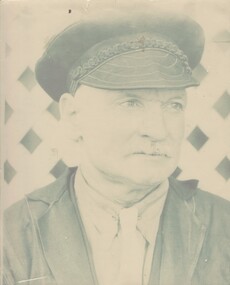 Wodonga & District Historical Society Inc
Article - Fred Rochow Railways Collection - George Lynch Senior, C. 1950s
... services in Wodonga and throughout Northeast Victoria. The railways played a critical role in opening up Victoria and connecting Australia for trade, business, social communication and transport. ...The Fred Rochow Railways Collection incorporates photos related to the operation of the Wodonga Railway Station including different types of trains and railways staff C. 1930 – 1990. It was donated to the Wodonga Historical Society by Fred Rochow, a railwayman who spent many years based in Wodonga. He joined the Victorian Railways on 17th June l947 and retired in 1988. For some time, he was a member of the Australian Federated Union of Locomotive Enginemen and served a term as a member of the Trades Hall Council. He had an extensive knowledge of the struggles that took place to achieve better conditions for railway workers. Fred worked for many years as a fireman and then worked his way up the ranks to driver, experiencing many changes from the days of steam locomotives through to diesel trains, locomotives and even the modern XPT train. He worked throughout Victoria at different stages of his career, with his final working years focused on the northeast of Victoria and the Albury to Melbourne line. After his retirement, Fred continued to share his love of steam miniature trains with the community.This collection has local and statewide significance as it captures images of trains, locomotives and personnel who operated the railway services in Wodonga and throughout Northeast Victoria. The railways played a critical role in opening up Victoria and connecting Australia for trade, business, social communication and transport.George Lynch had a long career with Victorian Railways. The son of a railway man, George grew up in St Arnaud near the railway line. He watched the engines go by and dreamed of being an engine driver. He started working as a cleaner in 1907. Through hard work and further study, George worked his way up to become a locomotive driver. He moved to Wodonga in 1917. At the Victorian Railways Institute examinations, George won four gold medals for Engine Working and Westinghouse Brake In 1925 he was appointed as an Instructor. George was one of four senior drivers who in rotation drove the Sydney Limited. The other drivers were Ray Murphy, F. Hobbs and George Padgett. They all lived with their families in Wodonga. George drove the first Spirit of Progress from Spencer Street to Albury. He made railway history in 1937 when the Sydney Ltd ran non-stop from Albury to Spencer Street in 3 hrs. 25 mins, clipping 25 minutes off the previous record. He retired at the age of 65 in 1953 and died at the age of 74.railways wodonga, fred rochow, wodonga railwaymen, george lynch snr -
 Wodonga & District Historical Society Inc
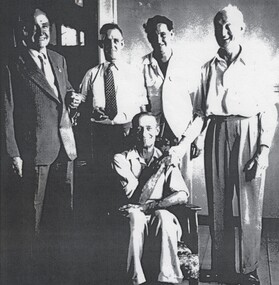
Photograph - Fred Rochow Railways Collection - Driver Jack Scmidt's Retirement, 1954
... services in Wodonga and throughout Northeast Victoria. The railways played a critical role in opening up Victoria and connecting Australia for trade, business, social communication and transport. ...The Fred Rochow Railways Collection incorporates photos related to the operation of the Wodonga Railway Station including different types of trains and railways staff C. 1930 – 1990. It was donated to the Wodonga Historical Society by Fred Rochow, a railwayman who spent many years based in Wodonga. He joined the Victorian Railways on 17th June l947 and retired in 1988. For some time, he was a member of the Australian Federated Union of Locomotive Enginemen and served a term as a member of the Trades Hall Council. He had an extensive knowledge of the struggles that took place to achieve better conditions for railway workers. Fred worked for many years as a fireman and then worked his way up the ranks to driver, experiencing many changes from the days of steam locomotives through to diesel trains, locomotives and even the modern XPT train. He worked throughout Victoria at different stages of his career, with his final working years focused on the northeast of Victoria and the Albury to Melbourne line. After his retirement, Fred continued to share his love of steam miniature trains with the community.This collection has local and statewide significance as it captures images of trains, locomotives and personnel who operated the railway services in Wodonga and throughout Northeast Victoria. The railways played a critical role in opening up Victoria and connecting Australia for trade, business, social communication and transport.Colleagues at the retirement function for Locomotive Driver Jack Schmidt who was one of the Drivers of the "Spirit of Progress" Standing left to right: Alex Reid, Eric Molloy, Cyril Tannock, Ray Murphy Seated: Jack Schmidt railways wodonga, fred rochow, wodonga railwaymen, jack schmidt, spirit of progress -
 Wodonga & District Historical Society Inc
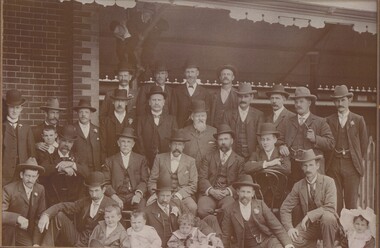
Photograph - Fred Rochow Railways Collection - Wodonga Railways staff, Early 1900s
... services in Wodonga and throughout Northeast Victoria. The railways played a critical role in opening up Victoria and connecting Australia for trade, business, social communication and transport. ...The Fred Rochow Railways Collection incorporates photos related to the operation of the Wodonga Railway Station including different types of trains and railways staff C. 1930 – 1990. It was donated to the Wodonga Historical Society by Fred Rochow, a railwayman who spent many years based in Wodonga. He joined the Victorian Railways on 17th June l947 and retired in 1988. For some time, he was a member of the Australian Federated Union of Locomotive Enginemen and served a term as a member of the Trades Hall Council. He had an extensive knowledge of the struggles that took place to achieve better conditions for railway workers. Fred worked for many years as a fireman and then worked his way up the ranks to driver, experiencing many changes from the days of steam locomotives through to diesel trains, locomotives and even the modern XPT train. He worked throughout Victoria at different stages of his career, with his final working years focused on the northeast of Victoria and the Albury to Melbourne line. After his retirement, Fred continued to share his love of steam miniature trains with the community.This collection has local and statewide significance as it captures images of trains, locomotives and personnel who operated the railway services in Wodonga and throughout Northeast Victoria. The railways played a critical role in opening up Victoria and connecting Australia for trade, business, social communication and transport. This photo was taken at Wodonga Railway Station shortly after the introduction of corridor carriages in the early 1900s. Colligan and Donovan were the first two conductors appointed. Back Row, left to right: J. O'Neill (Traffic), W. Benson (Traffic), D. Fraser (Per Way); J. Wilson (Per Way). Second Back row, left to right: ? Prosser, Mat Ryan (Loco), J. Trembath (Loco), E. Fitch (Traffic); J. Colligan (Traffic), ? Hanna (Express Guard); F. Schuman (Loco). W. Coy (Express Guard), W. Wark (Loco), (unknown). Seated left to right: ? McKenna (Driver In Charge), G. Fogarty (Per Way Inspector), J. Broadbent (Station Master), J. Rowe (Assistant Station Master), ? Beaumont (Clerk). Boy behind: Ray Broadbent. Front Left to right: (Unknown); J. Cotter (Traffic), Dinny Donovan (Traffic), (Unknown), R. Prentice (Traffic). Children in front: ? Colligan, ? Colligan, J. Donovan, ? Weiss. Boys in the roof: Eric Broadbent and W. Mahoney. (Per Way is an approved person with responsibility for regular permanent way inspection to ensure the safety of the line)railways wodonga, fred rochow, wodonga railwaymen, wodonga railway staff -
 Wodonga & District Historical Society Inc
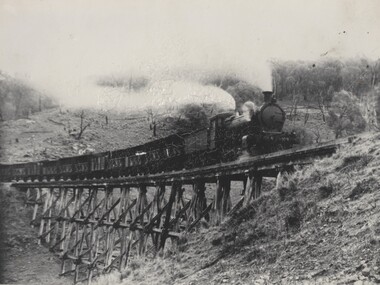
Photograph - Fred Rochow Railways Collection - Livestock Special, c1923 - 1940
... services in Wodonga and throughout Northeast Victoria. The railways played a critical role in opening up Victoria and connecting Australia for trade, business, social communication and transport. ...The Fred Rochow Railways Collection incorporates photos related to the operation of the Wodonga Railway Station including different types of trains and railways staff C. 1930 – 1990. It was donated to the Wodonga Historical Society by Fred Rochow, a railwayman who spent many years based in Wodonga. He joined the Victorian Railways on 17th June l947 and retired in 1988. For some time, he was a member of the Australian Federated Union of Locomotive Enginemen and served a term as a member of the Trades Hall Council. He had an extensive knowledge of the struggles that took place to achieve better conditions for railway workers. Fred worked for many years as a fireman and then worked his way up the ranks to driver, experiencing many changes from the days of steam locomotives through to diesel trains, locomotives and even the modern XPT train. He worked throughout Victoria at different stages of his career, with his final working years focused on the northeast of Victoria and the Albury to Melbourne line. After his retirement, Fred continued to share his love of steam miniature trains with the community.This collection has local and statewide significance as it captures images of trains, locomotives and personnel who operated the railway services in Wodonga and throughout Northeast Victoria. The railways played a critical role in opening up Victoria and connecting Australia for trade, business, social communication and transport.A livestock special being hauled by Locomotive K109 passing over a high trestle bridge between Bullion and Darbyshire on the Cudgewa Line. Cudgewa Line -The Cudgewa railway line opened in stages between 1889 and 1921. The first section from Wodonga to Huon opened on 10 September 1889. It was extended to Bolga on 18 July 1890, Tallangatta on 24 July 1891, Shelley on 13 June 1916 (the highest station in Victoria), Beetomba on 10 April 1919 and Cudgewa on 5 May 1921. The line had 1 in 30 grades and trestle bridges that have been heritage listed. In 1919, the line was used to carry materials for the construction of Hume Weir, and three years later a spur line connecting Ebden to the weir was opened. In the 1960s, Cudgewa became the railhead of materials for the Snowy Mountains Scheme. The last passenger service from Wodonga to Tallangatta ran on 30 September 1961 The turntable and passenger platform at Cudgewa were abolished in 1976. The K class was a branch line steam locomotive that ran on Victorian Railways in Australia from 1922 to 1979 Locomotive K190 entered service on Saturday, 30th June 1923. In 1940 it was renumbered as K149 The locomotive was eventually scrapped on Thursday, 12th October 1967.railways wodonga, fred rochow, wodonga railwaymen, cudgewa rail line, trestle bridges -
 Wodonga & District Historical Society Inc
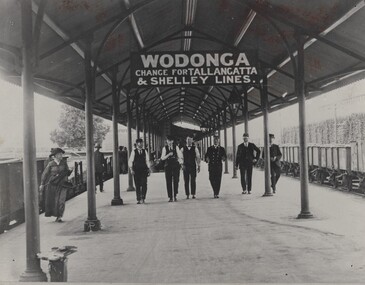
Photograph - Fred Rochow Railways Collection - Wodonga Railway Station, C. 1916 - 1930
... services in Wodonga and throughout Northeast Victoria. The railways played a critical role in opening up Victoria and connecting Australia for trade, business, social communication and transport. ...The Fred Rochow Railways Collection incorporates photos related to the operation of the Wodonga Railway Station including different types of trains and railways staff C. 1930 – 1990. It was donated to the Wodonga Historical Society by Fred Rochow, a railwayman who spent many years based in Wodonga. He joined the Victorian Railways on 17th June l947 and retired in 1988. For some time, he was a member of the Australian Federated Union of Locomotive Enginemen and served a term as a member of the Trades Hall Council. He had an extensive knowledge of the struggles that took place to achieve better conditions for railway workers. Fred worked for many years as a fireman and then worked his way up the ranks to driver, experiencing many changes from the days of steam locomotives through to diesel trains, locomotives and even the modern XPT train. He worked throughout Victoria at different stages of his career, with his final working years focused on the northeast of Victoria and the Albury to Melbourne line. After his retirement, Fred continued to share his love of steam miniature trains with the community.This collection has local and statewide significance as it captures images of trains, locomotives and personnel who operated the railway services in Wodonga and throughout Northeast Victoria. The railways played a critical role in opening up Victoria and connecting Australia for trade, business, social communication and transport.Railway men walking along the Wodonga Railway Platform. The sign overhead advises of changes to the Tallangatta and Shelley lines. Cudgewa Line -The Cudgewa railway line opened in stages between 1889 and 1921. The first section from Wodonga to Huon opened on 10 September 1889. It was extended to Bolga on 18 July 1890, Tallangatta on 24 July 1891 and then to Shelley on 13 June 1916. Shelley was the highest station in Victoria. It extended further on to Beetomba on 10 April 1919 and finally reached Cudgewa on 5 May 1921. The line had 1 in 30 grades and trestle bridges that have been heritage listed. In 1919, the line was used to carry materials for the construction of Hume Weir, and three years later a spur line connecting Ebden to the weir was opened. In the 1960s, Cudgewa became the railhead of materials for the Snowy Mountains Scheme. The last passenger service from Wodonga to Tallangatta ran on 30 September 1961. The turntable and passenger platform at Cudgewa were abolished in 1976. On sign hanging overhead "WODONGA/ CHANGE FOR TALLANGATTA AND SHELLEY LINES"railways wodonga, fred rochow, wodonga railwaymen, cudgewa rail line, wodonga railway station -
 Wodonga & District Historical Society Inc
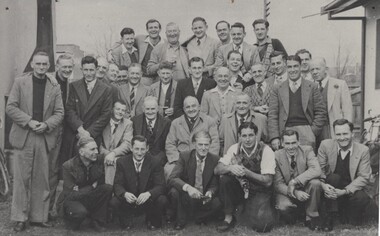
Photograph - Fred Rochow Railways Collection - Retirement send-off for Claude Clancy and Jack O'Donnell, 1955
... services in Wodonga and throughout Northeast Victoria. The railways played a critical role in opening up Victoria and connecting Australia for trade, business, social communication and transport. ...The Fred Rochow Railways Collection incorporates photos related to the operation of the Wodonga Railway Station including different types of trains and railways staff C. 1930 – 1990. It was donated to the Wodonga Historical Society by Fred Rochow, a railwayman who spent many years based in Wodonga. He joined the Victorian Railways on 17th June l947 and retired in 1988. For some time, he was a member of the Australian Federated Union of Locomotive Enginemen and served a term as a member of the Trades Hall Council. He had an extensive knowledge of the struggles that took place to achieve better conditions for railway workers. Fred worked for many years as a fireman and then worked his way up the ranks to driver, experiencing many changes from the days of steam locomotives through to diesel trains, locomotives and even the modern XPT train. He worked throughout Victoria at different stages of his career, with his final working years focused on the northeast of Victoria and the Albury to Melbourne line. After his retirement, Fred continued to share his love of steam miniature trains with the community.This collection has local and statewide significance as it captures images of trains, locomotives and personnel who operated the railway services in Wodonga and throughout Northeast Victoria. The railways played a critical role in opening up Victoria and connecting Australia for trade, business, social communication and transport.Group photo at gathering for the retirement of Claude Clancy and Jack O'Donnell in Wodonga, 1955. Back row left to right: Bill Baldock, Norm Davey, Tom (Milky) Cosgrove, Lionel McCormick, Bill Welch, Jimmy Lawler, Pat Murphy. 2nd row: Don Shepherd, Brian Putt, Norm O’Neill, Tom Guinane, Allan Smythe, Fred Leitch, Les Cross, Hugh Fraser, Eddy Moss, Colin Whitehand, Max Church, Eric Molloy, Frank Conway, Vin Snow, Stan Warnock, Dave Sutton 3rd row: Tommy Fitzgerald, Claude Clancy, Alex Reid, Jack, O’Donnell 4th row: Frank Rand, Kevin Goocher, Buddy Strachan, Cyril Tannick, Allan Elvish, Wally Rileyrailways wodonga, fred rochow, wodonga railwaymen, claude clancy, jack o'donnell -
 Wodonga & District Historical Society Inc
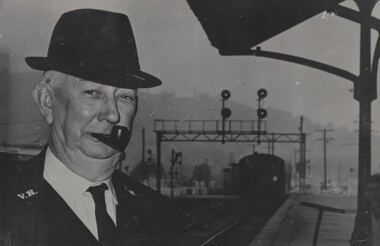
Photograph - Fred Rochow Railways Collection - Guard Hugh Fraser's last trip, 10 May 1971
... services in Wodonga and throughout Northeast Victoria. The railways played a critical role in opening up Victoria and connecting Australia for trade, business, social communication and transport. ...The Fred Rochow Railways Collection incorporates photos related to the operation of the Wodonga Railway Station including different types of trains and railways staff C. 1930 – 1990. It was donated to the Wodonga Historical Society by Fred Rochow, a railwayman who spent many years based in Wodonga. He joined the Victorian Railways on 17th June l947 and retired in 1988. For some time, he was a member of the Australian Federated Union of Locomotive Enginemen and served a term as a member of the Trades Hall Council. He had an extensive knowledge of the struggles that took place to achieve better conditions for railway workers. Fred worked for many years as a fireman and then worked his way up the ranks to driver, experiencing many changes from the days of steam locomotives through to diesel trains, locomotives and even the modern XPT train. He worked throughout Victoria at different stages of his career, with his final working years focused on the northeast of Victoria and the Albury to Melbourne line. After his retirement, Fred continued to share his love of steam miniature trains with the community.This collection has local and statewide significance as it captures images of trains, locomotives and personnel who operated the railway services in Wodonga and throughout Northeast Victoria. The railways played a critical role in opening up Victoria and connecting Australia for trade, business, social communication and transport.Guard Hugh Fraser about to take his last ride on 10 May 1971. He started his career with Victorian Railways as a Lad Porter on 1 July 1924 at Oakleigh Station. He worked as a Shunter at Korumburra, Williamstown Pier, Woodend and Ballarat. Hugh was Leading Shunter at Wodonga from 1935 until 1941. His final position was as Guard at Wodonga from 1941 until May 1971.railways wodonga, fred rochow, wodonga railwaymen, hugh fraser -
 Wodonga & District Historical Society Inc
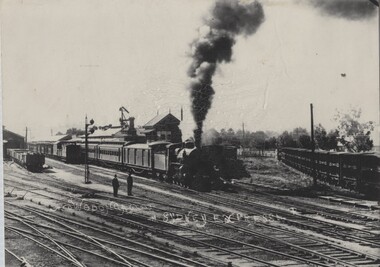
Photograph - Fred Rochow Railways Collection - Wodonga to Sydney express, C. 1925
... services in Wodonga and throughout Northeast Victoria. The railways played a critical role in opening up Victoria and connecting Australia for trade, business, social communication and transport. ...The Fred Rochow Railways Collection incorporates photos related to the operation of the Wodonga Railway Station including different types of trains and railways staff C. 1930 – 1990. It was donated to the Wodonga Historical Society by Fred Rochow, a railwayman who spent many years based in Wodonga. He joined the Victorian Railways on 17th June l947 and retired in 1988. For some time, he was a member of the Australian Federated Union of Locomotive Enginemen and served a term as a member of the Trades Hall Council. He had an extensive knowledge of the struggles that took place to achieve better conditions for railway workers. Fred worked for many years as a fireman and then worked his way up the ranks to driver, experiencing many changes from the days of steam locomotives through to diesel trains, locomotives and even the modern XPT train. He worked throughout Victoria at different stages of his career, with his final working years focused on the northeast of Victoria and the Albury to Melbourne line. After his retirement, Fred continued to share his love of steam miniature trains with the community.This collection has local and statewide significance as it captures images of trains, locomotives and personnel who operated the railway services in Wodonga and throughout Northeast Victoria. The railways played a critical role in opening up Victoria and connecting Australia for trade, business, social communication and transport.The up Sydney Express departing Wodonga on its journey to Melbourne. This photo was taken by famous Wodonga driver George Lynch. The elliptical roof CE van helps date this photo as the first one didn't appear until 1924. Electric headlights started appearing in 1926 and were first utilised on the Sydney and Adelaide expresses which means the photo was taken sometime between 1924 and 1926.railways wodonga, fred rochow, wodonga railwaymen, steam locomotives -
 Wodonga & District Historical Society Inc
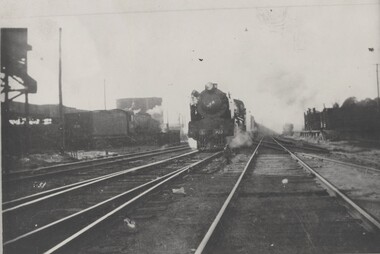
Photograph - Fred Rochow Railways Collection - "Spirit of Progress" test run, November 17, 1937
... services in Wodonga and throughout Northeast Victoria. The railways played a critical role in opening up Victoria and connecting Australia for trade, business, social communication and transport. ...The Fred Rochow Railways Collection incorporates photos related to the operation of the Wodonga Railway Station including different types of trains and railways staff C. 1930 – 1990. It was donated to the Wodonga Historical Society by Fred Rochow, a railwayman who spent many years based in Wodonga. He joined the Victorian Railways on 17th June l947 and retired in 1988. For some time, he was a member of the Australian Federated Union of Locomotive Enginemen and served a term as a member of the Trades Hall Council. He had an extensive knowledge of the struggles that took place to achieve better conditions for railway workers. Fred worked for many years as a fireman and then worked his way up the ranks to driver, experiencing many changes from the days of steam locomotives through to diesel trains, locomotives and even the modern XPT train. He worked throughout Victoria at different stages of his career, with his final working years focused on the northeast of Victoria and the Albury to Melbourne line. After his retirement, Fred continued to share his love of steam miniature trains with the community.This collection has local and statewide significance as it captures images of trains, locomotives and personnel who operated the railway services in Wodonga and throughout Northeast Victoria. The railways played a critical role in opening up Victoria and connecting Australia for trade, business, social communication and transport.The "Spirit of Progress" on a test run prior to its official launch being hauled by Locomotive S303. It was named the C.J. LaTrobe after the1st Lieutenant-Governor of Victoria, Charles Joseph Latrobe. Considered by many to be Victorian Railways' greatest passenger locomotives, the 4 S class steam locomotives were the first 3 cylinder steam locomotives. This small class was built to run the Melbourne to Albury passenger trains and spent their entire careers on the North East line. They were built unstreamlined and ran in this condition until 1937. The streamlining modifications complimented the all new "Spirit Of Progress" carriages. The S class ran the "Spirit" until 1952 at which time the newly delivered B class diesels took over. The 4 S class locomotive which were allocated to the "Spirit of Progress" were S300 - the "Mathew Flinders", withdrawn in September 1954, having covered 1,379,791 miles. S301 - the "Sir Thomas Mitchell", withdrawn in October 1953, having covered 1,414,367 miles. S302 - the "Edward Henty", withdrawn in July 1954, having covered 1,446,468 miles and S303 - the "C.J. Latrobe", withdrawn in May 1954, having covered 1,434,664 miles.On the lower front of the Locomotive "S303"railways wodonga, fred rochow, wodonga railwaymen, spirit of progress, s class steam locomotives -
 Wodonga & District Historical Society Inc
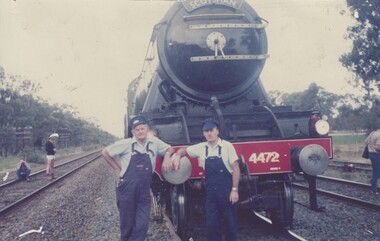
Photograph - Fred Rochow Railways Collection - Driver Len Gregson and Fireman Noel Strauss, 20 October 1988
... services in Wodonga and throughout Northeast Victoria. The railways played a critical role in opening up Victoria and connecting Australia for trade, business, social communication and transport. ...The Fred Rochow Railways Collection incorporates photos related to the operation of the Wodonga Railway Station including different types of trains and railways staff C. 1930 – 1990. It was donated to the Wodonga Historical Society by Fred Rochow, a railwayman who spent many years based in Wodonga. He joined the Victorian Railways on 17th June l947 and retired in 1988. For some time, he was a member of the Australian Federated Union of Locomotive Enginemen and served a term as a member of the Trades Hall Council. He had an extensive knowledge of the struggles that took place to achieve better conditions for railway workers. Fred worked for many years as a fireman and then worked his way up the ranks to driver, experiencing many changes from the days of steam locomotives through to diesel trains, locomotives and even the modern XPT train. He worked throughout Victoria at different stages of his career, with his final working years focused on the northeast of Victoria and the Albury to Melbourne line. After his retirement, Fred continued to share his love of steam miniature trains with the community.This collection has local and statewide significance as it captures images of trains, locomotives and personnel who operated the railway services in Wodonga and throughout Northeast Victoria. The railways played a critical role in opening up Victoria and connecting Australia for trade, business, social communication and transport.The "Flying Scotsman's" first run in Victoria. This photo was taken at the crew changeover in Longwood after the run from Albury. The Flying Scotsman Pacific 4-6-2, perhaps one of the most iconic steam locomotives in the world, visited Australia in 1988-89 for a series of events associated with the country’s Bicentennial Celebrations. This included the AusSteam 88 Steam Locomotive exhibition in Melbourne. At the top edge of the locomotive "SCOTSMAN" and on the lower edge of the locomotive "4472"railways wodonga, fred rochow, wodonga railwaymen, fireman noel strauss, driver len gregson, the flying scosman -
 Wodonga & District Historical Society Inc
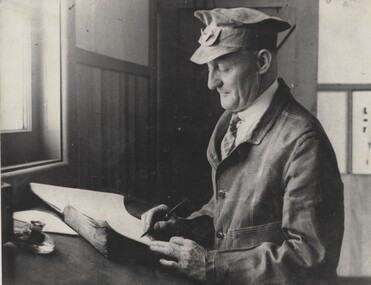
Photograph - Fred Rochow Railways Collection - Ray Murphy, C. 1950
... services in Wodonga and throughout Northeast Victoria. The railways played a critical role in opening up Victoria and connecting Australia for trade, business, social communication and transport. ...The Fred Rochow Railways Collection incorporates photos related to the operation of the Wodonga Railway Station including different types of trains and railways staff C. 1930 – 1990. It was donated to the Wodonga Historical Society by Fred Rochow, a railwayman who spent many years based in Wodonga. He joined the Victorian Railways on 17th June l947 and retired in 1988. For some time, he was a member of the Australian Federated Union of Locomotive Enginemen and served a term as a member of the Trades Hall Council. He had an extensive knowledge of the struggles that took place to achieve better conditions for railway workers. Fred worked for many years as a fireman and then worked his way up the ranks to driver, experiencing many changes from the days of steam locomotives through to diesel trains, locomotives and even the modern XPT train. He worked throughout Victoria at different stages of his career, with his final working years focused on the northeast of Victoria and the Albury to Melbourne line. After his retirement, Fred continued to share his love of steam miniature trains with the community.This collection has local and statewide significance as it captures images of trains, locomotives and personnel who operated the railway services in Wodonga and throughout Northeast Victoria. The railways played a critical role in opening up Victoria and connecting Australia for trade, business, social communication and transport.Ray Murphy was born on 4 December 1889. He started his railway career a t North Melbourne on 23 February 1910. Ray transferred to Wodonga in 1918 and passed his Driver qualification on 27 JUNE 1919. He was appointed as Special Class Driver at Wodonga on 13 January 1935. Ray was a Past Chairman of the Wodonga Branch of the Australian Federated Union of Locomotive Employees (AFULE). He retired at Wodonga in 1952.railways wodonga, fred rochow, wodonga railwaymen, driver len gregson, ray murphy -
 Wodonga & District Historical Society Inc
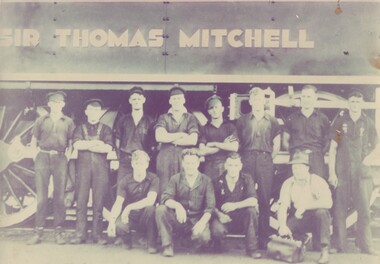
Photograph - Fred Rochow Railways Collection - Cleaning Crew for the 'Sir Thomas Mitchell" Locomotive S301, 1938
... services in Wodonga and throughout Northeast Victoria. The railways played a critical role in opening up Victoria and connecting Australia for trade, business, social communication and transport. ...The Fred Rochow Railways Collection incorporates photos related to the operation of the Wodonga Railway Station including different types of trains and railways staff C. 1930 – 1990. It was donated to the Wodonga Historical Society by Fred Rochow, a railwayman who spent many years based in Wodonga. He joined the Victorian Railways on 17th June l947 and retired in 1988. For some time, he was a member of the Australian Federated Union of Locomotive Enginemen and served a term as a member of the Trades Hall Council. He had an extensive knowledge of the struggles that took place to achieve better conditions for railway workers. Fred worked for many years as a fireman and then worked his way up the ranks to driver, experiencing many changes from the days of steam locomotives through to diesel trains, locomotives and even the modern XPT train. He worked throughout Victoria at different stages of his career, with his final working years focused on the northeast of Victoria and the Albury to Melbourne line. After his retirement, Fred continued to share his love of steam miniature trains with the community.This collection has local and statewide significance as it captures images of trains, locomotives and personnel who operated the railway services in Wodonga and throughout Northeast Victoria. The railways played a critical role in opening up Victoria and connecting Australia for trade, business, social communication and transport.Left to right: Jack Hinchcliffe, George Lynch, Bill Orchard, Hec Lloyd, ; BILL ROWE; Bill Rowe, Bill McLaren, Jack Dore, Jack Bowden, George Judge, Harry Alderson, Charlie Edmondson, Fireman Cyril Hughes. Cyril Hughes was born on 30 January 1903, started cleaning on 17 December 1924 and passed his Driving Qualifications on 27 June1941. "Sir Thomas Mitchell" Considered by many to be Victorian Railways' greatest passenger locomotives, the 4 S class steam locomotives were the first 3 cylinder steam locomotives. This small class was built to run the Melbourne to Albury passenger trains and spent their entire careers on the North East line. They were built unstreamlined and ran in this condition until 1937. The streamlining modifications complimented the all new "Spirit Of Progress" carriages. The S class ran the "Spirit" until 1952 at which time the newly delivered B class diesels took over. Locomotive S301 - the "Sir Thomas Mitchell" was withdrawn in October 1953, having covered 1,414,367 miles. On the locomotive in the background "SIR THOMAS MITCHELL"railways wodonga, fred rochow, wodonga railwaymen, steam locomotive s301, locomotive "sir thomas mitchell" -
 Wodonga & District Historical Society Inc
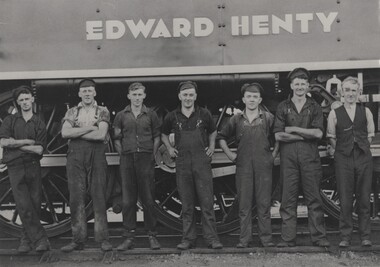
Photograph - Fred Rochow Railways Collection - Cleaning Crew for the 'Edward Henty" Locomotive S302, 1938
... services in Wodonga and throughout Northeast Victoria. The railways played a critical role in opening up Victoria and connecting Australia for trade, business, social communication and transport. ...The Fred Rochow Railways Collection incorporates photos related to the operation of the Wodonga Railway Station including different types of trains and railways staff C. 1930 – 1990. It was donated to the Wodonga Historical Society by Fred Rochow, a railwayman who spent many years based in Wodonga. He joined the Victorian Railways on 17th June l947 and retired in 1988. For some time, he was a member of the Australian Federated Union of Locomotive Enginemen and served a term as a member of the Trades Hall Council. He had an extensive knowledge of the struggles that took place to achieve better conditions for railway workers. Fred worked for many years as a fireman and then worked his way up the ranks to driver, experiencing many changes from the days of steam locomotives through to diesel trains, locomotives and even the modern XPT train. He worked throughout Victoria at different stages of his career, with his final working years focused on the northeast of Victoria and the Albury to Melbourne line. After his retirement, Fred continued to share his love of steam miniature trains with the community.This collection has local and statewide significance as it captures images of trains, locomotives and personnel who operated the railway services in Wodonga and throughout Northeast Victoria. The railways played a critical role in opening up Victoria and connecting Australia for trade, business, social communication and transport.Left to right: W. Orchard, Hec Lloyd, Jack Hinchcliffe, Charlie Edmondson, George Lynch, Jack Bowden, Driver Tommy Black. "Edward Henty" Considered by many to be Victorian Railways' greatest passenger locomotives, the 4 S class steam locomotives were the first 3 cylinder steam locomotives. This small class was built to run the Melbourne to Albury passenger trains and spent their entire careers on the North East line. They were built unstreamlined and ran in this condition until 1937. The streamlining modifications complimented the all new "Spirit Of Progress" carriages. The S class ran the "Spirit" until 1952 at which time the newly delivered B class diesels took over. Locomotive S302 - the "Edward Henty" was withdrawn in July 1954, having covered 1,446,468 miles. On the locomotive in the background "EDWARD HENTY"railways wodonga, fred rochow, wodonga railwaymen, steam locomotive 302, edward henty -
 Wodonga & District Historical Society Inc
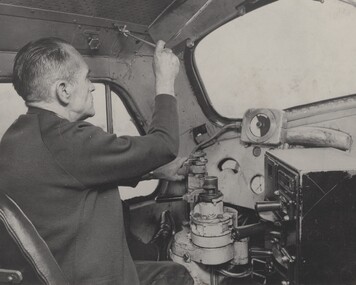
Photograph - Fred Rochow Railways Collection - George Lynch Junior, C. 1970s
... services in Wodonga and throughout Northeast Victoria. The railways played a critical role in opening up Victoria and connecting Australia for trade, business, social communication and transport. ...The Fred Rochow Railways Collection incorporates photos related to the operation of the Wodonga Railway Station including different types of trains and railways staff C. 1930 – 1990. It was donated to the Wodonga Historical Society by Fred Rochow, a railwayman who spent many years based in Wodonga. He joined the Victorian Railways on 17th June l947 and retired in 1988. For some time, he was a member of the Australian Federated Union of Locomotive Enginemen and served a term as a member of the Trades Hall Council. He had an extensive knowledge of the struggles that took place to achieve better conditions for railway workers. Fred worked for many years as a fireman and then worked his way up the ranks to driver, experiencing many changes from the days of steam locomotives through to diesel trains, locomotives and even the modern XPT train. He worked throughout Victoria at different stages of his career, with his final working years focused on the northeast of Victoria and the Albury to Melbourne line. After his retirement, Fred continued to share his love of steam miniature trains with the community.This collection has local and statewide significance as it captures images of trains, locomotives and personnel who operated the railway services in Wodonga and throughout Northeast Victoria. The railways played a critical role in opening up Victoria and connecting Australia for trade, business, social communication and transport.George Lynch Jr. followed his father into a railway career. He started at Wodonga on 27 November 1937. George passed his Driver test on 5 February 1947 and retired on 28 July 1978.railways wodonga, fred rochow, wodonga railwaymen, george lynch jr. -
 Wodonga & District Historical Society Inc
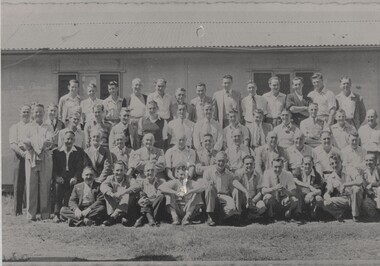
Photograph - Fred Rochow Railways Collection - Driver Robert (Bobby) Thompson's Retirement, 1955
... services in Wodonga and throughout Northeast Victoria. The railways played a critical role in opening up Victoria and connecting Australia for trade, business, social communication and transport. ...The Fred Rochow Railways Collection incorporates photos related to the operation of the Wodonga Railway Station including different types of trains and railways staff C. 1930 – 1990. It was donated to the Wodonga Historical Society by Fred Rochow, a railwayman who spent many years based in Wodonga. He joined the Victorian Railways on 17th June l947 and retired in 1988. For some time, he was a member of the Australian Federated Union of Locomotive Enginemen and served a term as a member of the Trades Hall Council. He had an extensive knowledge of the struggles that took place to achieve better conditions for railway workers. Fred worked for many years as a fireman and then worked his way up the ranks to driver, experiencing many changes from the days of steam locomotives through to diesel trains, locomotives and even the modern XPT train. He worked throughout Victoria at different stages of his career, with his final working years focused on the northeast of Victoria and the Albury to Melbourne line. After his retirement, Fred continued to share his love of steam miniature trains with the community.This collection has local and statewide significance as it captures images of trains, locomotives and personnel who operated the railway services in Wodonga and throughout Northeast Victoria. The railways played a critical role in opening up Victoria and connecting Australia for trade, business, social communication and transport.Gathering of Railway men at a retirement function for Driver Robert Thompson in 1955. Back row Left to right: Len Gregson, David Shannon, Les Cheesley, Tom Cosgrove, Roy Wagner, George Lloyd, Alan Elvish, Mick Seymour, John, Shannon, Unknown, Unknown, Gordon Scholes, Stan Warnock Centre row Left to right: Bill Welch, Unknown, George Taylor, Ted Jenkins, Buddy Straghan, Allan Smyth, Terry Farellly, Bob Burns, Morrie Larkins, Frank Boadle, Reg Matthews, Unknown, Vin Snow, George Kruss, Tom Fitzgerald, Bob Sangster Seated: Jack Anderson, Paddy McDonald, George Padgett, Alex Reid, Bobby Thompson, Vic Jones, Jack Dawe, Colin Whitehand, Harry Binder, Bill Odgers, Hughie Fraser Front row seated: Mick Kowalzuk, Wally Riley, Ton Guinane, Bill Baldock, Brian Putt, Norm Hughes, Garnett Reid, Johnny Hallawell, Frank Conway, Steve Cuperrailways wodonga, fred rochow, wodonga railwaymen, driver robert thompson
