
Showing 1986 items matching "1888"
-
 Kew Historical Society Inc
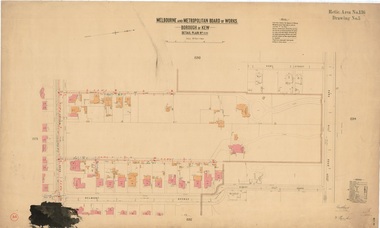
Plan, Melbourne & Metropolitan Board of Works : Borough of Kew : Detail Plan No.1591, 1905
... Mont Belmont was designed by the architectural firm of Reed, Henderson and Smart for William George Lilley in 1887 and was completed in 1888. Lilley was Mayor of Kew in 1887-88, a Justice of the Peace and a member of the first Board of Guardians of Kew’s St. ...Mont Belmont was designed by the architectural firm of Reed, Henderson and Smart for William George Lilley in 1887 and was completed in 1888. Lilley was Mayor of Kew in 1887-88, a Justice of the Peace and a member of the first Board of Guardians of Kew’s St. ...The Melbourne and Metropolitan Board of Works (MMBW) plans were produced from the 1890s to the 1950s. They were crucial to the design and development of Melbourne's sewerage and drainage system. The plans, at a scale of 40 feet to 1 inch (1:480), provide a detailed historical record of Melbourne streetscapes and environmental features. Each plan covers one or two street blocks (roughly six streets), showing details of buildings, including garden layouts and ownership boundaries, and features such as laneways, drains, bridges, parks, municipal boundaries and other prominent landmarks as they existed at the time each plan was produced. (Source: State Library of Victoria)This plan forms part of a large group of MMBW plans and maps that was donated to the Society by the Mr Poulter, City Engineer of the City of Kew in 1989. Within this collection, thirty-five hand-coloured plans, backed with linen, are of statewide significance as they include annotations that provide details of construction materials used in buildings in the first decade of the 20th century as well as additional information about land ownership and usage. The copies in the Public Record Office Victoria and the State Library of Victoria are monochrome versions which do not denote building materials so that the maps in this collection are invaluable and unique tools for researchers and heritage consultants. A number of the plans are not held in the collection of the State Library of Victoria so they have the additional attribute of rarity.Original survey plan, issued by the MMBW to a contractor with responsibility for constructing sewers in the area identified on the plan within the Borough of Kew. The plan was at some stage hand-coloured, possibly by the contractor, but more likely by officers working in the Engineering Department of the Borough and later Town, then City of Kew. The hand-coloured sections of buildings on the plan were used to denote masonry or brick constructions (pink), weatherboard constructions (yellow), and public buildings (grey). That area of Kew bordered by Cotham Road, Park Hill Road, Ermington Lane (now Ermington Place), and Belmont Avenue contained some of the significant homes owned by Kew pioneers. Chief among these was ‘Park Hill’ on an enormous lot facing Park Hill Road. The Jubilee History of 1910 noted, six years after this plan was drawn, that: ‘Park Hill Road, forming the southern boundary of the cemetery, takes its name from Park Hill, the residence of Mr. Thomas Judd, who has resided there since December, 1852.’ Other named houses on the plan include ‘Ferndale’ facing Cotham Road; ‘Ermington’ adjacent to Judd’s Park Hill, facing Park Hill Road; and ‘Gilden’ and ‘Mont Belmont’ facing Belmont Avenue. Mont Belmont was designed by the architectural firm of Reed, Henderson and Smart for William George Lilley in 1887 and was completed in 1888. Lilley was Mayor of Kew in 1887-88, a Justice of the Peace and a member of the first Board of Guardians of Kew’s St. Hilary’s Church of England.melbourne and metropolitan board of works, detail plans, survey plans - borough of kew, mmbw 1591, cartography -
 Eltham District Historical Society Inc
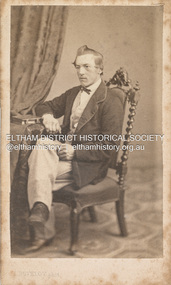
Photograph, Louis Buvelot, Possibly Phillip Shillinglaw, 1865
... In 1881 Phillip Shillinglaw became the ratepayer for the cottage though Stebbings retained ownership until 1888 at which time it was transferred to Shillinglaw. ...In 1881 Phillip Shillinglaw became the ratepayer for the cottage though Stebbings retained ownership until 1888 at which time it was transferred to Shillinglaw. ...Famous Swiss landcape painter Louis Buvelot came to Melbourne in 1864 and set up a portrait photography studio which he operated for one year only in 1865. This photograph is believed to be the oldest photo in the Shillinglaw Family Album collection. It is believed that the subject is a young Phillip Shillinglaw, without beard, at age 22 or 23. Phillip Shillinglaw was born Melbourne, August 7, 1842. He married Sarah Ann Kidd in Heidelberg, Victoria, February 28, 1872. In 1881 Phillip and Sarah and their small family moved to Eltham and made home in what was later to become known as Shillinglaw Cottage but which Phillip named 'Wattle Brae'. Shillinglaw Cottage is significant to Eltham’s local history. It is one of the earliest known buildings still in existence. Records suggest that the cottage was built circa 1859 by a man named Cochrane, believed to be Thomas Cochrane, in conjunction with George Stebbings though it is not known what Stebbings’s contribution was. It is believed Stebbings owned the cottage between 1874 and 1888. According to Margaret Ball’s (2017) book Shillinglaw Family of Eltham 1660-2007, Thomas Cochrane and family lived there from 1867 to 1874 however this is contrary to the records of assessable rates levied by the Eltham District Road Board, established in 1858, which shows Cochrane was the owner occupier (in Little Eltham) of approximately 25 acres of cultivated land and 25 acres of pastureland upon which a hut was sited in 1860. It is suspected that George Stebbings may have acquired the property from Cochrane in 1874 as it is noted that he had a tenant for a period, James Rossiter, who was the editor for the Evelyn Observer in Kangaroo Ground in 1874 (LATE SHIRE OFFICE AT KANGAROO GROUND (1934, February 16). Advertiser (Hurstbridge, Vic. : 1922 - 1939), p. 5. Retrieved February 25, 2022, from http://nla.gov.au/nla.news-article56743657). In 1881 Phillip Shillinglaw became the ratepayer for the cottage though Stebbings retained ownership until 1888 at which time it was transferred to Shillinglaw. Photographer: Louis Buvelot Swiss landscape painter and portrait photographer, settled in Melbourne in 1864, admired by the artists from the Heidelberg area such as Tom Roberts and Arthur Streeton who bestowed him with the accolade of 'Father of Australian painting’. In the 1870s, his work increasingly drew elements from Australian landscape such as the bush land in works like Lilydale (1878) and Bush Track. "Louis Buvelot :: biography at :: at Design and Art Australia Online." Daao https://www.daao.org.au/bio/louis-buvelot/biography/. Accessed 9 Mar. 2023. On arriving in Melbourne in February 1865 Buvelot bought a photographer's studio at 92 Bourke Street East and took portraits for a year. In 1866 he moved to 88 La Trobe Street East and resumed his painting while Caroline-Julie gave French lessons to help Buvelot to establish himself as an artist in Melbourne. "Biography - Abram-Louis Buvelot." Australian Dictionary of Biography https://adb.anu.edu.au/biography/buvelot-abramlouis-3132. Accessed 2 Dec. 2022. CARTE-DE-VISITE (cdv) 1857-1890 Cartes-de-visite (cdv's) are the most common form of photograph from the nineteenth century, generally measuring two and a half inches by four and an eighth inches (6.3 x 10.5 cm) when mounted, sepia toned, mounted on a card which was generally printed with the photographer's name and address on the back or beneath the portrait. - Frost, Lenore; Dating Family Photos 1850-1920; Valiant Press Pty. Ltd., Berwick, Victoria 1991marg ball collection, shillinglaw family photo album 1, 1865, l. buvelot photographer, louis buvelot, phillip shillinglaw (1842-1914), unknown -
 Emerald Museum & Nobelius Heritage Park
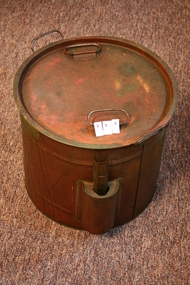
Kitchen boiler, Copper Kitchen boiler, Approx 1900
... Joseph Fowler (1888-1972), businessman and municipal councillor, was born on 28 February 1888 at Bagworth, Leicestershire, England, one of thirteen children of John Fowler, groom, and his wife Mary, née Ash. ...Joseph Fowler (1888-1972), businessman and municipal councillor, was born on 28 February 1888 at Bagworth, Leicestershire, England, one of thirteen children of John Fowler, groom, and his wife Mary, née Ash. ...Joseph Fowler (1888-1972), businessman and municipal councillor, was born on 28 February 1888 at Bagworth, Leicestershire, England, one of thirteen children of John Fowler, groom, and his wife Mary, née Ash. With his brother Sydney, in the early 1900s Joseph worked in a fruit-preserving business run by an uncle at Maidstone, Kent, and continued with the firm after 1908 when it was relocated at Reading. At St Andrew's parish church, Leicester, on 7 September 1910 he married a nurse, Elizabeth Harris (d.1965); they emigrated in 1913 and settled at Camberwell, Melbourne. Encouraged by his commercial experience, and by the variety and quality of fruit in Australia, Fowler set up a fruit-bottling business in the rear of his small house in Burke Road. Trading as J. Fowler & Co., by 1915 the company had begun producing home-bottling kits which contained a sterilizer, bottles, lids, rings and a thermometer. To acquire the capital to establish a factory, Fowler travelled the district, selling his kits door-to-door from the back of a cart. In 1920 he bought a shop at the corner of Power Street and Burwood Road, Hawthorn, and registered his business as a private company. During the Depression his kits became a household name. In 1934 Fowlers Vacola Manufacturing Co. Ltd was registered as a public company. Housewives, nationwide, were urged to bottle their own fruits and jams by 'Mrs B Thrifty', the dainty cartoon character who graced the firm's advertisements. Numerous recipes and instruction books, such as From Orchard to Bottle the Fowlers Way, advertised the necessary preserving equipment, extending to jelly bags and juice extractors. Australian-made glass and imported steel and rubber were used in the production of Fowlers Vacola Bottling Outfits. Determined to put something back into the community which had supported him so well, in 1933-60 Fowler represented Yarra Ward on the Hawthorn City Council (mayor 1938-39 and 1945-46). He served as vice-president of Swinburne Technical College (1942) and of the Hawthorn branch of the Australian Defence League (1943); he was also a Rotarian, and a warden and vestryman of St John's Anglican Church, Camberwell. Changed demands in World War II encouraged Fowlers Vacola to diversify their product. Canned goods were manufactured for allied troops in the South Pacific. In 1953 new buildings and plant, including a giant pressure-cooker, were installed to increase productivity: from that time Fowlers Vacola sold canned and bottled food throughout Australia and abroad. By 1960 the factory occupied more than 122,000 sq. ft (11,330 m²) and further expansion was to occur when the firm moved to Nunawading. Fowler retired in 1961, but remained chairman of directors; his son Ronald succeeded him as managing director. Variously described as a generous, jovial man with a sense of humour, and as a strict and astute manager whose company was his life, Fowler was renowned for his straight business dealings and his 'no-nonsense' attitude. Survived by his son and daughter, he died on 24 April 1972 at Camberwell and was cremated. His estate was sworn for probate at $204,424. On Ronald Fowler's death in 1978, the company was bought out by the Sydney firm, Hooper Baillie Industries Ltd; it in turn sold to Sabco Ltd of South Australia; in 1994, when Sabco went into receivership, Australian Resource Recovery Technologies re-established Fowlers Vacola Australia Pty Ltd's headquarters in Melbourne. Copper boiling pot for home preserves, handles, lid and removable thermometer, also acc ompany instruction booklet. "Fowlers Method of Bottling Fruits and Vegetables"Fowler's "Vacola" Reg. No. 68081 Sterilizer -
 Federation University Historical Collection
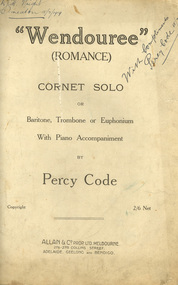
Booklet - Sheet Music, Allan & Company Pty Ltd, "Wendouree", Romance by Percy Code, 1919
... Percy Code was born in Melbourne on 03 July 1888. He started learning the violin and piano at the age of eight. ...Percy Code was born in Melbourne on 03 July 1888. He started learning the violin and piano at the age of eight. ...This music was used by Frank Wright who had been tutored by Percy Code. Frank Wright won the Australian Open Cornet Championship using this music, and won the gold medal for the highest mark in the British Colonies. Percy Code was born in Melbourne on 03 July 1888. He started learning the violin and piano at the age of eight. Three years later his father, Edward, started tutoring him on the cornet. His first competition was in October 1902 in Ballarat's South Street Competitions. Percy Code was Musical Director of Ballarat City Brass Band from 1913 until 1921. He was Frank Wright's teacher. Code apparently lived in a large house just west of where St Peter's church (Ballarat) now stands. Percy Code toured the world as principal cornet with the 'Besses o' th' Barn Band.' He returned to Australia in 1912. Frank Wright at one stage rode his pushbike from Smeaton to Ballarat for lessons. Leaving Australia for America in March 1921 Percy Code obtained an appointment as trumpet soloist for the 70 piece San Francisco Symphony Orchestra. He returned home two years later and became bandmaster to the Prahran City Band in 1925. From 1938, as part of Australia's Sesqui Centenary celebrations, Percy Code conducted the Sydney Symphony Orchestra for the ABC orchestral concerts in Sydney Town Hall. His career with the ABC came to an end in late 1951 due to poor health. Percy Code died on 17 October 1953. From 'Legend in Brass' with additions from Bob Pattie of the Ballarat Brass Band.11071.1 Four cream pages containing handwritten title page in front, two sheet music pages inside and blank back cover. 11071.2 Eight cream pages containing front page typed title with handwritten text at top, Six pages of sheet music cream pages, with parts for piano and cornet, with black printed notes. A photograph of the composer Mr Percy Code is glued into the first page at the top left hand corner. The back cover page has advertisements for four music albums from Allan & Co. Prop. Ltd..1) Front page handwritten in blue pen and pencil. Hand written notations in pencil for cornet throughout sheet music pages. Frank Wright Smeaton 15 July 1919 in top right hand corner; Champion Bb cornet solo South Street 1919 in top left hand corner. Under title on front page: Handwritten notes in pencil giving results of competition and judge's comments. 2) Frank H. Wright Smeaton 15/7/1919 handwritten in top left hand corner. "With Compliments Percy Code 15/7/1919 written diagonally in blue pen in at right hand top.cornet, frank wright, allan & co., allans music, ballarat, south street, percy code, code, wright, sheet music, "wendouree", (romance), wendouree, romance, wendouree -
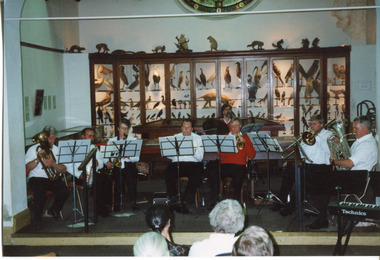 The Beechworth Burke Museum
Photograph, 1999
... Billson served on Beechworth Shire Council from 1884 to 1893, and from 1895 to 1910, with three terms as president (1888–89, 1899–1901, 1908–09). He founded the Beechworth Progress Association in 1891 and produced an ‘Illustrated Guide to Beechworth and Vicinity’ to develop tourism potential. ...Billson served on Beechworth Shire Council from 1884 to 1893, and from 1895 to 1910, with three terms as president (1888–89, 1899–1901, 1908–09). He founded the Beechworth Progress Association in 1891 and produced an ‘Illustrated Guide to Beechworth and Vicinity’ to develop tourism potential. ...This photograph depicts members of the Beechworth Band at a 'Liedertafel' concert in the main hall at the Burke Museum in 1999. The concert was associated with an exhibition titled, 'From the Liedertafel to the Skating Rink: Entertainment in Beechworth 1852 - early 1900s', which celebrated the rich and diverse entertainments that were a part of Beechworth life in the nineteenth and early twentieth centuries. Marching bands, choirs, circus acts, theatrical performances, races, and seasonal activities, such as Mr. Spiller's roller skating rink, founded in the late 1860s, were among the attractions on offer. 'Liedertafel' is a tradition that accompanied German settlers to Australia. It refers to a friendly society of men united by an enthusiasm for singing. The Beechworth Brass Band was formed by Mr. H. Vandenberg in 1887. The Beechworth Liedertafel was established 14 March 1894 at the London Tavern, Camp Street, Beechworth, by Mr. A.A. Billson, and a visiting conductor, Mr. H. Fielder. German clubs, complete with marching bands, athletics associations and Liedertafel choirs, were centres of social activity attracting wide audiences not limited to members of their own ethnicity. Alfred Arthur Billson was the youngest son of Mr. George Billson, who served as Beechworth’s mayor between 1869-1871. In 1872, George purchased the Oven’s Brewery in Last Street, which became Billson’s Brewery, one of the oldest continuing beverage manufacturers in Australia. An active member of Beechworth’s cultural, business and political life around the turn of the century, A.A. Billson served on Beechworth Shire Council from 1884 to 1893, and from 1895 to 1910, with three terms as president (1888–89, 1899–1901, 1908–09). He founded the Beechworth Progress Association in 1891 and produced an ‘Illustrated Guide to Beechworth and Vicinity’ to develop tourism potential. This photograph of the Beechworth Band playing at the Burke Museum is historically significant for the information it conveys about an exhibition at the Burke Museum between September and November 1999. The use of the contemporary Beechworth Band in a 'Liedertafel' performance provides insight into curatorial approaches at the turn of the twenty-first century and improves our understanding of how exhibitions use objects in the Burke Museum's Collection to tell stories about the past in the present. The image is historically and socially significant for attesting to the enduring appeal of local musical associations, which were a popular means of entertainment that fostered social connections among settlers from diverse ethnic backgrounds. Rectangular colour photograph printed on matte photographic paper. Reverse: 7029 / Label: 7029 / Source / Burke Museum / Beechworth / Band / 1999/2000 /liedertafel, beechworth band, burke museum, from the liedertafel to the skating rink, entertainment in beechworth 1852 - early 1900s, gold rush, immigration, beechworth's german heritage, london tavern beechworth, beechworth's first brick tavern, spiller's skating rink, vandenberg's beechworth brass band, protestantism, teetotallism, skating carnivals, beechworth german association, yma's, beechworth skating rink, progress societies, billson's brewery, german-australians, beechworth progess association, lodges, freemasonry, colonial australia -
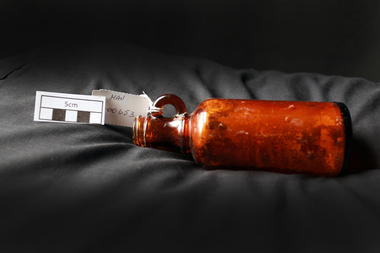 City of Moorabbin Historical Society (Operating the Box Cottage Museum)
Manufactured Glass, brown bottle, 20thC
... James Hardie immigrated to Australia in 1888 from Linlithgow, Scotland, and created a business importing oils and animal hides. ...James Hardie immigrated to Australia in 1888 from Linlithgow, Scotland, and created a business importing oils and animal hides. ...This bottle may have held medicine used by a local early settler family. A local resident discovered it when digging his garden in McKinnon 2013. James Hardie immigrated to Australia in 1888 from Linlithgow, Scotland, and created a business importing oils and animal hides. Andrew Reid, also from Linlithgow, came to join Hardie in Melbourne, and became a full partner in 1895. When Hardie retired in 1911, he sold his half of the business to Reid. James Hardie Industries Ltd first listed on the Australian Stock Exchange in 1951 and is an industrial building materials company headquartered in Ireland which specialises in fibre cement products. James Hardie manufactures and develops technologies, materials and processes for the production of building materials. For over 20 years, Hardie has also operated a research and development facility devoted solely to fibre-cement technology. The company was a key player in asbestos mining and manufacturing in Australia through most of the twentieth century. Working with products containing asbestos - including the building material known as "Fibro" - caused people to develop various pleural abnormalities such as asbestosis and malignant mesothelioma. In December 2001, the company shareholders unanimously voted to restructure and relocate the company in the Netherlands as a parent company. This was part of a strategy to separate the company from the stigma of its asbestos liabilities. February 2010, James Hardie moved its corporate domicile from The Netherlands to Ireland, In May 2012 the High Court of Australia found that seven former James Hardie non-executive directors misled the stock exchange over the asbestos victims compensation fundA brown glass bottle, with finger grip handlearound bottom " THIS BOTTLE ALWAYS REMAINS THE PROPERTY OF JAMES HARDIE PTY. LTD. SYDNEY' on base 'IS985 / 7early settlers, pioneers, market gardeners, moorabbin, bentleigh, ormond, mvkinnon, glass bottles, medine containers, medical supplies, james hadie pty ltd. hardie -
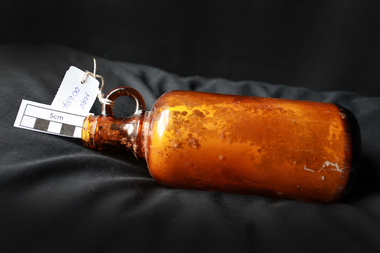 City of Moorabbin Historical Society (Operating the Box Cottage Museum)
Manufactured Glass, brown bottle, 20th C
... James Hardie immigrated to Australia in 1888 from Linlithgow, Scotland, and created a business importing oils and animal hides. ...James Hardie immigrated to Australia in 1888 from Linlithgow, Scotland, and created a business importing oils and animal hides. ...This bottle may have held medicine used by a local early settler family. A local resident discovered it when digging his garden in McKinnon 2013. James Hardie immigrated to Australia in 1888 from Linlithgow, Scotland, and created a business importing oils and animal hides. Andrew Reid, also from Linlithgow, came to join Hardie in Melbourne, and became a full partner in 1895. When Hardie retired in 1911, he sold his half of the business to Reid. James Hardie Industries Ltd first listed on the Australian Stock Exchange in 1951 and is an industrial building materials company headquartered in Ireland which specialises in fibre cement products. James Hardie manufactures and develops technologies, materials and processes for the production of building materials. For over 20 years, Hardie has also operated a research and development facility devoted solely to fibre-cement technology. The company was a key player in asbestos mining and manufacturing in Australia through most of the twentieth century. Working with products containing asbestos - including the building material known as "Fibro" - caused people to develop various pleural abnormalities such as asbestosis and malignant mesothelioma. In December 2001, the company shareholders unanimously voted to restructure and relocate the company in the Netherlands as a parent company. This was part of a strategy to separate the company from the stigma of its asbestos liabilities. February 2010, James Hardie moved its corporate domicile from The Netherlands to Ireland, In May 2012 the High Court of Australia found that seven former James Hardie non-executive directors misled the stock exchange over the asbestos victims compensation fund' A brown glass bottle with finger ring hold at neck that may have been used by a local home owner to hold medicine c1900around base ' THIS BOTTLE ALWAYS REMAINS THE PROPERTY OF JAMES HARDIE PTY LTD SYDNEY ' on base ' IS 994 ' pioneers, market gardeners, moorabbin, bentleigh, ormond, mvkinnon, glass bottles, medine containers, medical supplies, james hadie pty ltd. hardie, early settlers -
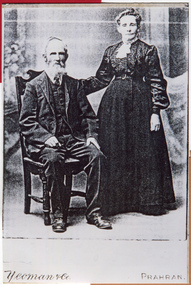 City of Moorabbin Historical Society (Operating the Box Cottage Museum)
Photograph, B&W Francis Box and Eliza Jane Thompson Box c1900, c1900
... Three girls Mable (May) Alma Box 1878 – 1969, Jessie Melinda Box 1888 – 1975, Edith ( Eadie ) Florence Box 1890 - 1976 .Francis and Eliza Jane, who died in 1922, are also buried in Brighton Cemetery ...Three girls Mable (May) Alma Box 1878 – 1969, Jessie Melinda Box 1888 – 1975, Edith ( Eadie ) Florence Box 1890 - 1976 .Francis and Eliza Jane, who died in 1922, are also buried in Brighton Cemetery Box Cottage Museum, a reconstruction of an early settler hut, is named after the Box family who resided there 1865 -1913 . ...Francis Box was born in Withyham, Sussex and came to Australia with his parents George and Mary Box and siblings in 1856. He was assigned to work in Beaufort and had various jobs including ‘gold miner’ at Heathcoat where he married Eliza Jane Thompson. Francis decided to return to market gardening after the death of his 1st child Francis George Box in 1875 aged 13months. The child was buried in Brighton Cemetery and Francis then rent/leased the land on the corner of Tucker Road and Elizabeth Street East Brighton ( now Bentleigh) owned by his brother Henry who with another brother John helped Francis clear the land, and establish a market garden. They had 4 children and began to prosper until in 1882 their 2year old child Lena Caroline Box was killed in a fire that destroyed their house. Francis was burned trying to rescue the child. The local community raised money to assist the family. The land boom brought prosperity again and Francis bought more land around Tucker Road which was bequeathed to his children. Francis and Eliza Jane had four more children but one died in infancy and another aged 2 years. Only 5 of their 9 children survived Two boys William Henry George Box 1876 -1957, Charles Francis Box 1882 – 1947. Three girls Mable (May) Alma Box 1878 – 1969, Jessie Melinda Box 1888 – 1975, Edith ( Eadie ) Florence Box 1890 - 1976 .Francis and Eliza Jane, who died in 1922, are also buried in Brighton Cemetery Box Cottage Museum, a reconstruction of an early settler hut, is named after the Box family who resided there 1865 -1913 . William Box who with his wife Elizabeth Avis Box and 13 children lived and farmed on the block of land in Jasper Road, East Brighton ( now McKinnon / Ormond) that was part of the Henry Dendy Special Survey 1841 . Francis Box, a brother of William Box, was born in Withyham, Sussex and came to Australia with his parents George and Mary Box and siblings in 1856. Francis and his wife Eliza jane Thompson box had 9 children but only 5 survived. They established market gardens in Tucker Road Bentleigh. Inscribed in Album “ The early photos in this album were found by Mr (Laurie) Lewis when he was demolishing the Old Box Cottage. He gave them to Mrs Avis Box Eldridge who in turn gave them to me. They were not identified. I believe they rightly belong in the Cottage. I have attempted to identify them and present them in a way they can be preserved as a historical record of the era.” A B Leigh A black and white photograph of a) Francis Box 1836-1912 and his wife Eliza Jane Thompson Box 1852 - 1922 Two black and white photos b) Francis Box ,Eliza and grandchildren Dorothy, Francis baby George - children of Francis and Emily Jane Thompson c1900 c) William Henry Box and Emily Jane McCurry with children Dorothy, Francis, George and Joan c1900 a) YEOMAN & Co 47 Chapel Street PRAHRAN b) Kodak Film Handwritten - Francis Box / Ellizabeth Jane Thompson / children of William Henry Box & Emily Jane McCurry / Girl standing Dorothy / Boy Francis / Baby George. c) William Henry Box m Emily Jane McCurry with children, Dorothy, Francis, George and baby Joanbox george, box mary, box william, box elizabeth, box alonzo, box mary louisa, dendy henry, were j b, dendy's special survey 1841, brighton, moorabbin, bentleigh, mckinnon, ormond, market gardeners, dairy farms, early settlers, pioneers, jasper road, gurr jabez, gurr eliza, pay henry, pay anna, ward willam, box henry, ward elizabeth emma, box john, sheldrake martha, rushall eleanor, box caroline, box william henry, mccurry emily jane, -
 City of Moorabbin Historical Society (Operating the Box Cottage Museum)
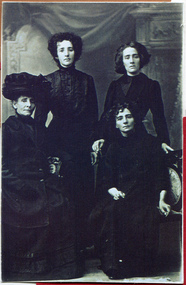
Photograph, B&W Eliza Jane Thompson Box and 3 daughters c 1912, c1912
... Three girls Mable (May) Alma Box 1878 – 1969, Jessie Melinda Box 1888 – 1975, Edith ( Eadie ) Florence Box 1890 - 1976 .Francis who died 1912 and Eliza Jane, who died in 1922, are also buried in Brighton Cemetery ...Three girls Mable (May) Alma Box 1878 – 1969, Jessie Melinda Box 1888 – 1975, Edith ( Eadie ) Florence Box 1890 - 1976 .Francis who died 1912 and Eliza Jane, who died in 1922, are also buried in Brighton Cemetery Box Cottage Museum, a reconstruction of an early settler hut, is named after the Box family who resided there 1865 -1913 . ...Francis Box was born in Withyham, Sussex and came to Australia with his parents George and Mary Box and siblings in 1856. He was assigned to work in Beaufort and had various jobs including ‘gold miner’ at Heathcoat where he married Eliza Jane Thompson. Francis decided to return to market gardening after the death of his 1st child Francis George Box in 1875 aged 13months. The child was buried in Brighton Cemetery and Francis then rent/leased the land on the corner of Tucker Road and Elizabeth Street East Brighton ( now Bentleigh) owned by his brother Henry who with another brother John helped Francis clear the land, and establish a market garden. They had 4 children and began to prosper until in 1882 their 2year old child Lena Caroline Box was killed in a fire that destroyed their house. Francis was burned trying to rescue the child. The local community raised money to assist the family. The land boom brought prosperity again and Francis bought more land around Tucker Road which was bequeathed to his children. Francis and Eliza Jane had four more children but one died in infancy and another aged 2 years. Only 5 of their 9 children survived. Two boys William Henry George Box 1876 -1957, Charles Francis Box 1882 – 1947. Three girls Mable (May) Alma Box 1878 – 1969, Jessie Melinda Box 1888 – 1975, Edith ( Eadie ) Florence Box 1890 - 1976 .Francis who died 1912 and Eliza Jane, who died in 1922, are also buried in Brighton Cemetery Box Cottage Museum, a reconstruction of an early settler hut, is named after the Box family who resided there 1865 -1913 . William Box who with his wife Elizabeth Avis Box and 13 children lived and farmed on the block of land in Jasper Road, East Brighton ( now McKinnon / Ormond) that was part of the Henry Dendy Special Survey 1841 . Francis Box, a brother of William Box, was born in Withyham, Sussex and came to Australia with his parents George and Mary Box and siblings in 1856. Francis and his wife Eliza Jane Thompson Box had 9 children but only 5 survived. They established market gardens in Tucker Road Bentleigh. Inscribed in Album “ The early photos in this album were found by Mr (Laurie) Lewis when he was demolishing the Old Box Cottage. He gave them to Mrs Avis Box Eldridge who in turn gave them to me. They were not identified. I believe they rightly belong in the Cottage. I have attempted to identify them and present them in a way they can be preserved as a historical record of the era.” A B Leigh A black and white photograph of Eliza Jane Box( sitting) and 3 three daughters, May ( sitting) and standing Eadie (L) and Jessie (R) probably taken after the death of Francis Box in 1912 because they are all dressed in black mourning dresses.nil but similar to the other photographs in the collection -
 Orbost & District Historical Society
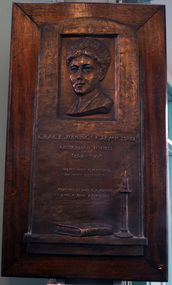
memorial plaque, early 20th Century
... She was educated at Melbourne and while still a child went to live on a station at Orbost, and grew up close to the bush she came to love so much. In 1888 she went to Melbourne to be trained as a nurse at the Royal Children's Hospital, Melbourne, and in 1891 published a small volume of prose sketches, Hospital Children. ...She was educated at Melbourne and while still a child went to live on a station at Orbost, and grew up close to the bush she came to love so much. In 1888 she went to Melbourne to be trained as a nurse at the Royal Children's Hospital, Melbourne, and in 1891 published a small volume of prose sketches, Hospital Children. ...Grace Elizabeth Jennings Carmichael (1867-1904), poet and nurse, was born on 24 February 1867 at Ballarat, Victoria, daughter of Archibald Carmichael, a miner from Perthshire, Scotland, and his wife Margaret Jennings, née Clark, from Cornwall, England. . She was educated at Melbourne and while still a child went to live on a station at Orbost, and grew up close to the bush she came to love so much. In 1888 she went to Melbourne to be trained as a nurse at the Royal Children's Hospital, Melbourne, and in 1891 published a small volume of prose sketches, Hospital Children. Having qualified she obtained a position on a station near Geelong, and subsequently married Francis Mullis. She contributed verse to the Australasian, and in 1895 Poems by Jennings Carmichael was published. She lived for a time in South Australia and then went to London, where she died in poor circumstances in 1904. Her husband, Henry Mullis, was last recorded in the workhouse in Woolrich, but then disappeared leaving the three children- Geoffrey 7 yrs, (Thomas) Clive 5 yrs & 4 year old (Archibald) Keith and one year old (Rupert) Wyatt, destitute & were sent to the Northampton workhouse, (Thomas ) Clive dying in 1906. In 1910, a group of Carmichael's admirers, discovered the whereabouts of her children, where a public fund was established to bring the children to Australia, the Victorian Government giving them free passage, arriving in Victoria in October of 1910. The children were placed in private homes and took on their mother's single name of Carmichael. In the late 1930s, plaques were unveiled in Orbost & Ballarat in honor of Grace Jennings Carmichael. The one in Orbost was part of the "Back To' celebrations. It hung in Mechanics' Institute in Orbost.This is significant to the Orbost region in that it is associated with a woman who is certainly our foremost female poet. A bronze cast memorial plaque set onto a wooden backing board. The plaque has an image of a woman, a candle and a book, and also some text (see below).Grace Jennings Carmichael, Australian poetess, 1868-1904, spent her childhood in this district, erected by Mrs G A Hunter & a few admirers.memorial-plaque grace-jennings-carmichael orbost-poet -
 Glen Eira Historical Society
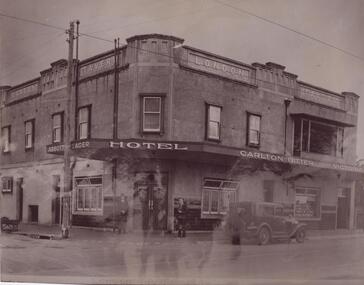
Document - London Tavern
... Foreground includes a large crowd with bicycles noted by an unattributed source to be members of Camden Town Sports Club after a bicycle race c.1888. 7/Handwritten note showing John Guess as the proprietor of the London Tavern in 1867 and 1874. ...Foreground includes a large crowd with bicycles noted by an unattributed source to be members of Camden Town Sports Club after a bicycle race c.1888. 7/Handwritten note showing John Guess as the proprietor of the London Tavern in 1867 and 1874. ...This file contains eight items: 1/A one page typed summary of the history of the London Tavern by (noted in pencil) author J O'Donnell. Includes information on the licensees of the hotel from 1873-1927 (in duplicate) 2/Photocopy of black and white photo of London Tavern c. 1878. Shows sign 'J. Riordan, London Tavern and Store'. Shows Boot and Shoe Repair shop at end and two women outside and horse and buggy on road. 3/Photocopy of black and white photograph entitled 'London Tavern 1935' with handwritten note on reverse by unknown author identifying Mrs. A.C. Scott as Nominee 1929-1969 and identifying a man in the photograph as John Chas (Jack) Scott on left. Car parked at curb. Original print held in album 'Historical Caulfield to 1972'. 4/Half page written note listing the names of Nominees of the London Tavern from 1873-1895. Author unknown; undated. 5/'now&then' article on London Tavern showing three photos (from our files) and brief history. Melbourne Weekly Bayside 22/02/2012. 6/Black and white photograph of London Tavern, established 1886, currently 414 Hawthorn Road. Foreground includes a large crowd with bicycles noted by an unattributed source to be members of Camden Town Sports Club after a bicycle race c.1888. 7/Handwritten note showing John Guess as the proprietor of the London Tavern in 1867 and 1874. Noet is undated and author unknown. 8/Black and white photograph of the London Tavern with a 1970s style car parked in Sycamore Street. Date and photographer unknownhawthorn road, caulfield, london tavern, woods a.j., camden town sports club, gribble c., hotels, sporting clubs, scott a.c., guess john, guess louisa, evans rowland, riordan john, scott mrs., boot and shoe repair shop, vine beer house, balaclava road, hawthorn road, sycamore street, caulfield south, elsternwick, harley susan, mott h, nichols william h, o'donnell j, rosstown hotel, caulfield club hotel, grocer -
 Glen Eira Historical Society
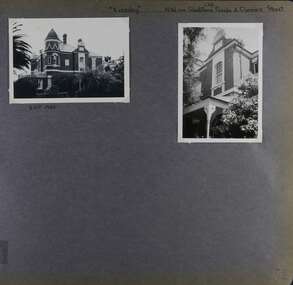
Album - Album page, Eversley, Gladstone Parade & Clarence Street, Circa 1972
... From Caulfield Heritage Management Plan 1996 by Andrew Ward In 1888, C. Hume owned lots 61, 62 and 63 in the Kooyong Park Estate, on the northwest corner of Gladstone Parade and Clarence Street. ...From Caulfield Heritage Management Plan 1996 by Andrew Ward In 1888, C. Hume owned lots 61, 62 and 63 in the Kooyong Park Estate, on the northwest corner of Gladstone Parade and Clarence Street. ...This photograph is part of the Caulfield Historical Album 1972. This album was created in approximately 1972 as part of a project by the Caulfield Historical Society to assist in identifying buildings worthy of preservation. The album is related to a Survey the Caulfield Historical Society developed in collaboration with the National Trust of Australia (Victoria) and Caulfield City Council to identify historic buildings within the City of Caulfield that warranted the protection of a National Trust Classification. Principal photographer thought to be Trevor Hart, member of Caulfield Historical Society. Most photographs were taken between 1966-1972 with a small number of photographs being older and from unknown sources. All photographs are black and white except where stated, with 386 photographs over 198 pages. Property now known as Eversley, formerly Nulmore then Brampton. From Caulfield Heritage Management Plan 1996 by Andrew Ward In 1888, C. Hume owned lots 61, 62 and 63 in the Kooyong Park Estate, on the northwest corner of Gladstone Parade and Clarence Street. In 1889 Thomas B. Jackson, architect, of Shoobra Road, purchased the land and in the same year built a ten roomed brick house on lot 63 and part lot 62. Jackson leased the property to William Dalrymple in 1890. By 1894, the property was owned by P. Langwill and leased to James Ainslie, an accountant. By 1899, Frederick Henriques had moved into the house, which was known as ''Nulmore". In 1910, the house was vacant. In 1920, it was leased to Augustine Barbeta who continued to live there in 1930. By 1934, the house was renamed ''Brampton". ''Nulmore" is locally important as an unusually imposing Elizabethan influenced villa in Caulfield, comparing with nos. 34 and 25 Gladstone Parade. Its link with local architect Thomas B Jackson is of interest. Page 52 of Photograph Album with two exterior photographs (one landscape and one portrait) of Eversley , a double storey mansion.Hand written: (36 )[top right] / "Eversley" N.W. cnr Gladstone Parade & Clarence Street [top right] / 8 Oct 1966 [under top left photo] / 52 [bottom right] trevor hart, 1880's, 1890's, gladstone parade, eversley, victorian, clarence street, architectural features, nulmore, brampton, kooyong park estate, architect, shoobra road, hume, elsternwick, double storey mansions, thomas b jackson, william dalrymple, p langwill, james ainslie, frederick henriques, augustine barbeta, elizabethan style, house names -
 Bendigo Historical Society Inc.
Document - Fortuna Article - Handout Notes for a Tour, 1990s
... Staircase: Made of cedar and blackwood, added in 1888 to access a new third floor, and remodeled in 1907. ...Staircase: Made of cedar and blackwood, added in 1888 to access a new third floor, and remodeled in 1907. ...Here are the key points from the document on Fortuna Villa and its grounds: Music Room: Originally the main drawing room, featuring an ornate decorative ceiling and stained glass windows with musical inscriptions. The room was expanded in 1904, with earlier renovations enclosing an open colonnade in the 1890s. Conservatory: Built in 1876 after Lansell's European trip, showcasing high-quality etched glass and Italian design.Features rare glasswork, including Ruby Flashed Seedless French Antique glass and acid-etched panels with mining, Australian, and heraldic motifs. Reception Room: Served as the initial gathering space for guests, with a bay window added in 1875.Decorative elements like pressed metal ceilings, a cut glass skylight, and parquetry were likely added around 1895. Staircase: Made of cedar and blackwood, added in 1888 to access a new third floor, and remodeled in 1907. Features an upper balcony intersecting a large stained leadlight window. Bedrooms: Main bedrooms are located off a central passage, each with its own bathroom equipped with marble baths and cedar cabinetry.Pompeii Fountain: Constructed in 1879 as a scale replica of the Great Fountain in Pompeii, inspired by Lansell's travels.Includes statues, water features, and a Roman column with a statue, considered unique in Australia and possibly worldwide. Crushing Battery: A 30-head stamper battery built in 1874 for mining, attached to the villa's northern end.The chimney and machinery were removed in the 1940s, but the structure remains largely intact, now used as a printing press. These points highlight the architectural, artistic, and historical significance of Fortuna Villa and its associated features.Fortuna Article - Handout Notes for a Tour, by the Australian Government Department of defence support group This item contains the following document: 11217.61a A glossy coloured page A3 document of Fortuna lower floor and Ground Floor, which lists tha main points of the Villa and includes plans of the two floors.non-fictionbendigo, fortuna, george lansell, george victor lansell -
 Wodonga & District Historical Society Inc
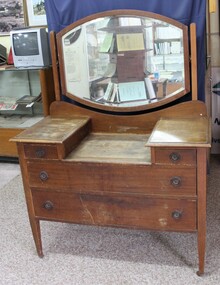
Furniture - Wooden dresser with a mirror from the Terminus Hotel, Wodonga
... Under the Allens, the Terminus became, ‘a principal rendezvous for visitors to the town.’ September 1888 saw additions to the building that included a billiard room, a dining room, and 18 other rooms. ...Under the Allens, the Terminus became, ‘a principal rendezvous for visitors to the town.’ September 1888 saw additions to the building that included a billiard room, a dining room, and 18 other rooms. ...The wooden dresser came from the Terminus Hotel in High St., Wodonga. In 1873, James Thompson Hatch built the two-storeyed Terminus Hotel at 79 Sydney Road (later known at High Street), then sold it to George Day and Kenneth McLennan for £1,230. It was first licensed to J. G. Morton in January 1874. In 1879, Annie Allen, from Ireland, took over as licensee of the hotel containing 14 rooms, after she and her husband, George James Allen, purchased it. He became licensee in 1883. Under the Allens, the Terminus became, ‘a principal rendezvous for visitors to the town.’ September 1888 saw additions to the building that included a billiard room, a dining room, and 18 other rooms. Following the death of her husband in 1889, Annie Allen continued to run the Terminus Hotel. She later married John Haldon and was licensee of the hotel until 1893 when the licence was transferred to William Carkeek. In the early 1900s the Hotel was thoroughly renovated. The Terminus Hotel was for sale by auction on 5th March 1909. It comprised about 50 rooms, a two-storey building built of brick and iron with hot and cold water service and acetylene gas throughout. The principal hotel in Wodonga, was let from 1st January 1909 on a seven years’ lease at a rental of £9 per week. 1935 saw extensive improvements by proprietor W. P. Kinney, while in 1941 further extensive improvements were carried out to make a good hotel better. A pall of shock and disbelief descended over Wodonga’s historic Terminus Hotel on 1st June 1998 when it was destroyed by fire then demolished in 1999. The site was sold for almost $1 million and redeveloped for a medical clinic. The wooden dresser has local significance as it came from the Terminus Hotel in High St., Wodonga.Wooden dresser with a mirror, two small side drawers and two large drawers with circular recessed metal handles and metal castors.dressers, dressers with mirrors, wooden dressers -
 City of Greater Bendigo - Civic Collection
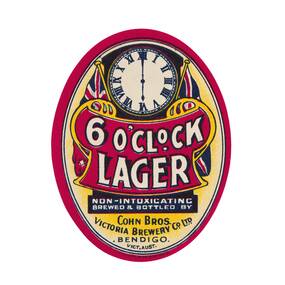
Artwork, other - Label, Cohns, Cohn Bros, c 1923
... Jacob Isaac Cohn was born in 1830 (died 1911) in Horsens Denmark and entered the Sandhurst Borough Council in 1863 where he served as a member for three years, returning again in 1887 to serve as Mayor of the City of Bendigo from 1888-1889. Jacob Cohn was a great supporter of the Mechanics Institute, the Hospital and the Benevolent Asylum. ...Jacob Isaac Cohn was born in 1830 (died 1911) in Horsens Denmark and entered the Sandhurst Borough Council in 1863 where he served as a member for three years, returning again in 1887 to serve as Mayor of the City of Bendigo from 1888-1889. Jacob Cohn was a great supporter of the Mechanics Institute, the Hospital and the Benevolent Asylum. ...Danish brothers, Moritz, Julius and Jacob Cohn arrived in Bendigo in 1853 and by 1856 started making cider and soft drinks, building a brewery 1880 to further extend their commercial enterprises and stock their hotels with their own brand of beer. Having sent Moritz's son, (also Julius) to Germany to learn to brew, the Cohn Brothers began to produce Excelsior Lager in 1882, which was traditionally served cold, the first time this had been done in Australia. Overtime the Cohn brothers expanded their operations adding cordials and in 1916 produced a non-alcoholic beer to satisfy the temperance activists. This label is associated with a non alcoholic larger originally named Tonic Ale but re-named 6 o’clock Lager after the temperance advocates succeeded in having pubs close at six o’clock. Cohn Brothers built an empire of breweries, cordial factories, hotels and liquor stores and ice works. In 1925 they sold the hotels and breweries to Carlton & United but continued to make their other products until the 1970s when the company became part of the Coca Cola Amatil Group. Jacob Isaac Cohn was born in 1830 (died 1911) in Horsens Denmark and entered the Sandhurst Borough Council in 1863 where he served as a member for three years, returning again in 1887 to serve as Mayor of the City of Bendigo from 1888-1889. Jacob Cohn was a great supporter of the Mechanics Institute, the Hospital and the Benevolent Asylum. It is believed that through his connection with the Mechanics Institute he exhibited some loaned engravings from the Dresden Art Gallery which were then donated to the City of Bendigo, forming the nuclei of the Art Gallery's collection. Jacob Cohn held the position of President of the Art Gallery for 18 years.Oval larger label. Multicoloured.6 o'clock / Lager / non- intoxicating / Brewed & Bottled by / Cohn Bros. / Victoria Brewery Co Ltd / Bendigo / Vict. Austmayor jacob cohn, bendigo art gallery, bendigo masonic lodge, making a nation, city of bendigo commerce, cohns, cohn brothers -
 Surrey Hills Historical Society Collection
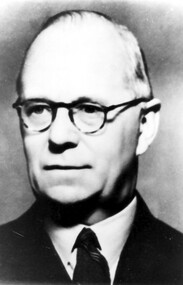
Photograph, Mr Joseph Sutton Crow
... Biographical details: Born 1888, Nagambie; married Jessie Winifred Temby in 1910; died 27 Feb 1969 in Mont Albert. ...Biographical details: Born 1888, Nagambie; married Jessie Winifred Temby in 1910; died 27 Feb 1969 in Mont Albert. ...Biographical details: Born 1888, Nagambie; married Jessie Winifred Temby in 1910; died 27 Feb 1969 in Mont Albert. Mr Joseph Sutton Crow lived at ‘Strathmore’, 75 Victoria Crescent, Mont Albert from 1924-1952. In 1907 Sutton gained a Diploma of Music at the Marshall Hall Conservatorium (later the Melbourne University Conservatorium). He taught piano and organ and was organist and choir-master in several churches. From 1912-1948 he served in that capacity at the Auburn Methodist Church. In 1910 Sutton Crow was appointed Assistant Secretary at the Melbourne Conservatorium of Music. In 1939 he became Assistant Director and Librarian and from 1941-1945 was its Acting Director. He retired in 1945. Administrator under Sir Bernard Heinze he devoted much time to the development of the ‘Music in the Schools” programme. This led to tours of country centres taking leading musicians to give concerts in schools and for the public, introduced by a talk on musical appreciation. After retirement he organized concerts for the Council of Adult Education and in 1950, when he concluded his professional work, he was giving concerts twice annually in 144 country towns. From 1926-1939 Sutton was Manager of the Melbourne University Symphony Orchestra (which later became the Melbourne Symphony Orchestra). During some years he had been Concert Manager for local and visiting musicians such as Edward Goll, a Bohemian pianist who lived locally, John Amadio, a flautist and Sutton’s wife Jessie Temby, a soprano who sang professionally until she gave this up for family life. Donor was his daughter.A black and white portrait of a man wearing round tortoise-shell glasses.(mr) sutton crow, victoria crescent, surrey hills, melbourne university symphony orchestra, melbourne symphony orchestra, house names, (ms) jessie temby, 'strathmore' -
 Old Colonists' Association of Ballarat Inc.
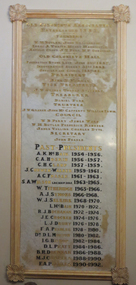
Photograph - Photograph - Colour, Old Colonists' Association Ballarat Foundation Presidents Board, 09/05/2015
... Old Colonists' Hall Foundation Stone Laid June 21st 1887 Inauguration August 31st 1888 Officer and Council 1887-88 President John P. ...Old Colonists' Hall Foundation Stone Laid June 21st 1887 Inauguration August 31st 1888 Officer and Council 1887-88 President John P. ...The marbles in the foyer of the Old Colonists' Hall list names of members of the Old Colonists' Association of Ballarat Inc. Colour photograph of a marble honour board relating to the founders of the Old Colonists' Association Ballarat.Old Colonists; Association Established 1883. Founders W.H. Butler, John Brooksbank Isaac A. Twaits, Henry Hannington Arthur Croft, J.T. Farr, W.F. Osbourne. Old Colonists' Hall Foundation Stone Laid June 21st 1887 Inauguration August 31st 1888 Officer and Council 1887-88 President John P. Murray Vice Presidents J.W. Graham Thomas Stoddart Treasurer Daniel Fern Trustee J.W. Graham John McCafferty Wiliam Irwin Council W.B. Perry. James Ward W.H. Butler. Frederick Ramsden. James Vallins. Charles Dyte. Secretary John Fraser Past Presidents A.K. McBain 1954-1956 C.A. Hoskin 1956-1957 C.H. Clamp 1957-1959 J. Curwen-Walker 1959-1961 A.C. Fraser 1961 - 1963 S.A. Wilson LBS, BBSc, DDS 1963-1965 W. Titheridge 1965 - 1966 A.J. Symons 1966 -1968 W.J. Selkirk 1968-1970 L. McBain 1970-1972 R.J. Buchanan 1972-1974 J.E. Crocker 1974-1976 L.J. Drury 1976-1978 F.A. Peebles 1978-1980 Dr D.L. Morton 1980-1982 I.G. Bishop 1982-1984 D.L. Pratt 1984-1986 B.R. Drennan 1986-1988 M.J. Charles 1988-1990 F.A. Peebles 1990-1992old colonists' association ballarat, ballarat old colonists club, marble, presidents, w.h. butler, henry hannington, isaac twaits, arthur croft, j.t. farr, w.f. osborne, john murray, j.w. graham, daniel fern, john mccafferty, william irwin, w.b. perry, james ware, frederick ramsden, james vallins, charles dyte, john fraser, a.k. mcbain, c.a. hoskin, c.h. clamp, j. curwen-walker, s.a.wllson, w. titheridge, a.j. symons, w.j. selkirk, l. mcbain, r.j. buchanan, j.e. crocker, l.j. drury, f.a. peebles, d.l.morton, i.g. bishop, d.l. pratt, b.r. drennan, m.j. charles, melville charles, david pratt -
 Flagstaff Hill Maritime Museum and Village
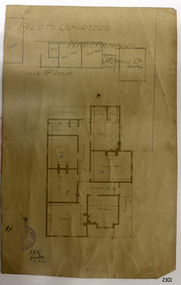
Document - Plan, Pilots Quarters Warrnambool
... Warrnambool’s Tourist Guide of 1888 advises that “At the Port of Warrnambool there are two Leading Lighthouses. ...Warrnambool’s Tourist Guide of 1888 advises that “At the Port of Warrnambool there are two Leading Lighthouses. ...Warrnambool was officially made a Port of Entry in 1855 and by the 1870s had became the dominant port in the Western District. Sadly, due to an increasing problem with silting in the harbour, by the 1890s only small vessels could navigate the harbour. Men with the position of Pilot and Harbourmaster in Warrnambool were employed by the government to enforce government regulations and to help guide vessels safely into the port of Lady Bay, which was difficult to navigate. Some of the Pilots and Harbour Masters of Warrnambool were – - Captain Christopher Gwatkin, the first Harbourmaster for Warrnambool (1857 - his death in 1859). - Captain Helpman was Warrnambool’s second Harbourmaster 1859-1869 - James Nicol was Harbourmaster in Warrnambool for a time, including 1906 (b. 1840 – d. 1926) - Thomas Smith Drewett (1853 - 15-3-1905) past Captain of the Helen Nicoll, Pilot and Harbourmaster of Warrnambool. Warrnambool’s Tourist Guide of 1888 advises that “At the Port of Warrnambool there are two Leading Lighthouses. A licensed sea pilot, Captain Drewett, is stationed at the Port.” In 1915 plans for the Pilot’s Quarters were drawn up for the Department of Public Work. It was at that time, when personnel was short due to the First World War, that apparently the Pilot and Harbourmaster was also responsible for maintaining the light (lighthouse). The new Pilot and Harbourmaster’s house would be built on the site at 88 Merri Street, overlooking Lady Bay and right beside the Flagstaff and the Lady Bay Upper Lighthouse. Other Pilot and Harbourmasters were - - James Menzies was the Pilot and Harbourmaster at Warrnambool in 1929 . In 1932, he was appointed to the position of Acting Secretary to the Warrnambool Harbour Board. A hundred or so years later Flagstaff Hill Maritime Village has fully renovated the former Harbourmaster’s quarters, changed the name to Lighthouse Lodge, and is now allowing guests to stay in the home, which is still neighbour to the operational Lady Bay Lighthouses, now over 150 years old. The association of the old Pilot and Harbourmaster’s Quarters (currently renamed as Lighthouse Lodge) with the Port of Warrnambool, and its maritime activities, is historically significant. The Pilot’s quarters are connected to a time when access to Warrnambool’s Port was important to the colonial settlers for income and supplies. Plan of Pilots Quarters, Warrnambool. Printed and handwritten plan shows house, garage, out buildings and maid's room. The plan's lower left corner has an official stamp and text beside the stamp. Department of Public Works, Melbourne, Victoria, March 11th, 1915. "PILOTS QUARTERS WARRNAMBOOL" "Department of Public works, Melbourne, Victoria I.P.K. , 11.3.15"flagstaff hill, warrnambool, shipwrecked-coast, flagstaff-hill, flagstaff-hill-maritime-museum, maritime-museum, shipwreck-coast, flagstaff-hill-maritime-village, plan, pilot's quarters warrnambool, pilot and harbourmaster's quarters warrnambool, pilot and harbour master's quarters warrnambool, port of warrnambool, department of public works victoria, lady bay lighthouses, warrnambool ports and harbours, light keeper -
 Flagstaff Hill Maritime Museum and Village
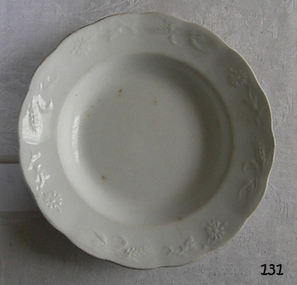
Ceramic - Dish, Johnson Bros, Circa 1883 (very early Mark)
... The success of this venture led to rapid expansion. In 1888, the Rev. Henry Johnson joined them, followed ten years later by a fourth brother, Robert Johnson. ...The success of this venture led to rapid expansion. In 1888, the Rev. Henry Johnson joined them, followed ten years later by a fourth brother, Robert Johnson. ...Johnson Brothers were a British tableware manufacturer and exporter that was noted for its early introduction of "semi-porcelain" tableware. It was among the most successful of the Staffordshire potteries which produced tableware, much of it exported from the 1890s through the 1960s. They were also important manufacturers of large bathroom ceramics. The company was founded in 1883, but from 1968 to 2015 it operated as a part of the Wedgwood Group. However, after the Wedgwood Group was acquired by Fiskars in 2015, the production of Johnson Brothers was discontinued. The company's name derives from the names of the company's founders. The four original "Johnson Brothers" were Alfred, Frederick, Henry, and Robert. Their father married the daughter of a master potter, Alfred Meakin. In 1883, Alfred and Frederick Johnson began production at defunct pottery, known as the Charles Street Works, that they had purchased at a bankruptcy sale in Hanley, Stoke-on-Trent. At first, they specialised in the manufacture of durable earthenware, which they called "White Granite". The success of this venture led to rapid expansion. In 1888, the Rev. Henry Johnson joined them, followed ten years later by a fourth brother, Robert Johnson. Having established a solid reputation producing basic "whiteware", the company developed a product known as "semi-porcelain", a range of pottery that had the characteristics of fine china, but the durability of ironstone ware. This kind of tableware soon became very popular in the United States due to its durability and low cost. In 1889, the Hanley pottery was opened, later the Alexander pottery, and in 1891 the Imperial Works Pottery. In 1896, the Trent Sanitary Works was opened for the production of non-tableware products, and Alfred Johnson left the business to establish his pottery. By 1898, Robert Johnson had relocated to New York City to manage Johnson Brothers' rapid expansion into the North American market. An item that gives a snapshot into the emerging market for tableware that was reasonably priced and serviceable. The company produced "whiteware" but the innervation of the pottery line called semi-porcelain changed the industry. This allowed potteries to produce fashionable pottery items that were affordable to all social classes of the time. Bowl white ceramic decorative with floral decoration around lip. On base, "Royal Ironside China, Johnson Bros England" & crest of lion and unicorn flagstaff hill, warrnambool, shipwrecked coast, flagstaff hill maritime museum, flagstaff hill maritime village, great ocean road, bowl, china bowl, lion and unicorn crest, table ware, kitchen ware, white ware, johnson brothers -
 Flagstaff Hill Maritime Museum and Village
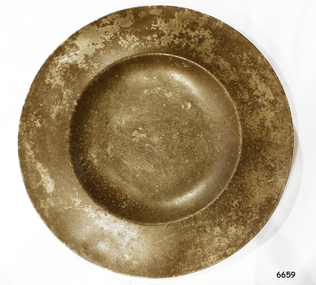
Domestic object - Plate, c. 1850's
... The story of West Country connections 1688- 1888 Bradford on Avon Wiltshire Ex Libris Press 1988 p 112.) ...The story of West Country connections 1688- 1888 Bradford on Avon Wiltshire Ex Libris Press 1988 p 112.) ...In the words of the donor, Betty Stone, "This pewter plate belonged to Joshua and Susan Chamberlain. They, with their family, arrived in Australia as assisted migrants in January 1855. Our Chamberlain family was among those chosen to participate in a Bounty Scheme and on 24 October 1854 embarked on SS Shand to begin their journey. A few years later they set up a home on a small farming property in Wangoom, Warrnambool with the possessions they had brought with them from the village of Thriplow, Cambridgeshire, England. Amongst those household possessions was this plate. During the first half of the nineteenth century, a Bounty scheme was introduced to encourage migrants to Australia to work on properties granted or sold to settlers. Agents in England were engaged to select suitable emigrants; applicants had to be "sober, industrious and of good moral character....and married men over the age of forty-eight were only eligible to receive the bounty if they had five or more children over the age of ten years'. The successful applicant also had to pay one pound sterling for each adult, and ten shillings for each child between the ages of one and fourteen years. This payment covered the cost of a mattress, bolster, blanket, small box, knife and fork, two spoons, metal plate, and drinking mug, all of which became the emigrant's property on arrival in the colony. The pewter plate, handed down from one generation to the next, was always valued by members of the family as an important artefact. The plate has a mark stamped on the back which is almost indecipherable." (Reference- Brown Martyn- Australia Bound! The story of West Country connections 1688- 1888 Bradford on Avon Wiltshire Ex Libris Press 1988 p 112.) (Note: For additional information please refer to Betty Stone’s book “Pioneers and Places - A History of three Warrnambool Pioneering Families” ie. Chamberlain, Dale and Lees Families)This item is associated with the families of Chamberlain, Dale and Lees. These families are listed in the "Pioneers' Register" for Warrnambool Township and Shire, 1835-1900, published by A.I.G.S. Warrnambool Branch. The plate is an example of the goods emigrants brought to Australia under the Bounty Scheme in the 1850s.Pewter plate: metal plate with a wide rim and shallow bowl. The top has a gold-brown colour, underside is grey with a red-brown mark. Made c. 1850. The plate has an Inscription stamped on the back and front.It is part of the 'Chamberlain, Dale and Lees Collection' Maker's Mark on back: 'rectangle with rounded corners / T H all within a circle' almost indecipherable. Mark heavily stamped on front: 'L / T M'flagstaff hill, warrnambool, shipwrecked coast, flagstaff hill maritime museum, maritime museum, shipwreck coast, flagstaff hill maritime village, great ocean road, chamberlain, dale, lees, stone, betty stone, warrnambool pioneers, pewter plate, emigration, bountey system, dinner ware, joshua chamberlain, susan chamberlain, 1855, emigrant, assisted migrant, ss shand, wangoom, triplow, cambridgeshire -
 Glen Eira Historical Society
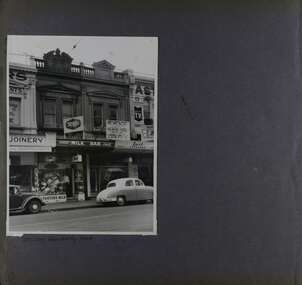
Album - Album page, Glen Huntly Road, Circa 1972
... From: Glen Eira Heritage Management Plan (1996) by Andrew Ward and Associates Moore's Buildings", were built in 1891 and comprising 5 shops. In 1888, Hugh Moore, a gentleman, subdivided his land in Glen Huntly Road, north side between Selwyn Street and St Georges Road into 27 lots, with a right of way separating them from his property "Glenmoore". ...From: Glen Eira Heritage Management Plan (1996) by Andrew Ward and Associates Moore's Buildings", were built in 1891 and comprising 5 shops. In 1888, Hugh Moore, a gentleman, subdivided his land in Glen Huntly Road, north side between Selwyn Street and St Georges Road into 27 lots, with a right of way separating them from his property "Glenmoore". ...This photograph is part of the Caulfield Historical Album 1972. This album was created in approximately 1972 as part of a project by the Caulfield Historical Society to assist in identifying buildings worthy of preservation. The album is related to a Survey the Caulfield Historical Society developed in collaboration with the National Trust of Australia (Victoria) and Caulfield City Council to identify historic buildings within the City of Caulfield that warranted the protection of a National Trust Classification. Principal photographer thought to be Trevor Hart, member of Caulfield Historical Society. Most photographs were taken between 1966-1972 with a small number of photographs being older and from unknown sources. All photographs are black and white except where stated, with 386 photographs over 198 pages. From: Glen Eira Heritage Management Plan (1996) by Andrew Ward and Associates Moore's Buildings", were built in 1891 and comprising 5 shops. In 1888, Hugh Moore, a gentleman, subdivided his land in Glen Huntly Road, north side between Selwyn Street and St Georges Road into 27 lots, with a right of way separating them from his property "Glenmoore". The subdivision was known as the "Glenmoore Estate". Purchases of land included local builders Corkill, French and Pugh. Moore retained five lots and W.W. Jamieson bought lots 11 to 14. "Moore' s Buildings are locally important for their association with the early Elsternwick land owner, Hugh Moore, whose home, "Glenmoore", at 1 St.Georges Road (qv) survives. They recall Elsternwick's role in the Land Boom and survive as a most prominent row in the Glen Huntly Road shops, enhanced by the survival of the unpainted stuccoed surfaces to nos. 307-311. 287-289 Glen Huntly Road: contributory to HO72, Elsternwick Estate and Environs, City of Glen Eira.Page 63 of Photograph Album with one landscape photograph of retail shops (Moore's Buildings).Hand written: 287-289 Glen Huntly Road [under photo] / 63 [bottom left] trevor hart, shop, grocer, stuccoed, terrace, victorian terrace, protruding parapet, ornate render, hugh moore, 1890's, moore's buildings, glenmoore, glenmoore estate, shopping centres, milk bars, cars, victorian style, glen huntly road, glenhuntly road, elsternwick -
Clunes Museum
Administrative record - BOOK, LICENCE
... .//.1886 PEARCE GEORGE BIDDLE; WASHINGTON HOTEL, CLUNES FOR AGRICULTURAL SHOW 27.10.1887 RECEIPT BOOK 2; BURNS, BURT CLUB HOTEL CLUNES FOR CLUNES HOSPITAL FETE 2.11.1887 LALOR, MICHAEL; FRASER STREET FOR CHRISTMAS SPORTS 26.12.1887 PEARCE GEORGE BIDDLE; WASHINGTON HOTEL, CLUNES FOR CLUNES & TALBOT AGRICULTURAL SHOW 8 & 9 nOVEMBER 1888 PEARCE GEORGE BIDDLE; WASHINGTON HOTEL, CLUNES FOR CLUNES RACES 29.2.1888 WEICKHARDT, JOHN CONRAD; BRITISH HOTEL FOR CLUNES ANNUAL HOSPITAL FETE 24.11.1888. ....//.1886 PEARCE GEORGE BIDDLE; WASHINGTON HOTEL, CLUNES FOR AGRICULTURAL SHOW 27.10.1887 RECEIPT BOOK 2; BURNS, BURT CLUB HOTEL CLUNES FOR CLUNES HOSPITAL FETE 2.11.1887 LALOR, MICHAEL; FRASER STREET FOR CHRISTMAS SPORTS 26.12.1887 PEARCE GEORGE BIDDLE; WASHINGTON HOTEL, CLUNES FOR CLUNES & TALBOT AGRICULTURAL SHOW 8 & 9 nOVEMBER 1888 PEARCE GEORGE BIDDLE; WASHINGTON HOTEL, CLUNES FOR CLUNES RACES 29.2.1888 WEICKHARDT, JOHN CONRAD; BRITISH HOTEL FOR CLUNES ANNUAL HOSPITAL FETE 24.11.1888. ...TEMPORARY LICENCE ISSUED FOR THE SUPPLY OF LIQUOR ON SPECIAL SOCIAL EVENTS IN CLUNES . RECEIPT BOOK 1 PEARCE GEORGE BIDDLE; WASHINGTON HOTEL, CLUNES FOR TALBOT RACES 22.2.1886 PEARCE GEORGE BIDDLE; WASHINGTON HOTEL, CLUNES FOR CLUNES RACES 25.2.1886 PEARCE GEORGE BIDDLE; WASHINGTON HOTEL, CLUNES FOR CLUNES HOSPITAL FETE 22.10.1886 PEARCE GEORGE BIDDLE; WASHINGTON HOTEL, CLUNES FOR CLUNES AGRICULTURAL SHOW 8.//.1886 PEARCE GEORGE BIDDLE; WASHINGTON HOTEL, CLUNES FOR AGRICULTURAL SHOW 27.10.1887 RECEIPT BOOK 2; BURNS, BURT CLUB HOTEL CLUNES FOR CLUNES HOSPITAL FETE 2.11.1887 LALOR, MICHAEL; FRASER STREET FOR CHRISTMAS SPORTS 26.12.1887 PEARCE GEORGE BIDDLE; WASHINGTON HOTEL, CLUNES FOR CLUNES & TALBOT AGRICULTURAL SHOW 8 & 9 nOVEMBER 1888 PEARCE GEORGE BIDDLE; WASHINGTON HOTEL, CLUNES FOR CLUNES RACES 29.2.1888 WEICKHARDT, JOHN CONRAD; BRITISH HOTEL FOR CLUNES ANNUAL HOSPITAL FETE 24.11.1888. RECEIPT BOOK 3 LALOR, MICHALE; ALL NATIONS HOTEL, FOR BOXING DAY SPORTS, CLUNES OVAL 26.12.1888 PEARCE GEORGE BIDDLE; WASHINGTON HOTEL, CLUNES FOR CLUNES RACES 21.2.1889 BURN, WILLIAM BURT; NATIONAL HOTEL CLUNES FOR ANNUAL HOSPITAL FETE 1.11.1889 MURRAY, DAVID; SPECULATION HOTEL, ALLENDALE FOR CRESWICK MINERS ASSOCIATION SHORTS 13.10.1890 MURRAY, DAVID; SPECULATION HOTEL ALLENDALE FOR SMEATON AGRICULTURAL SHOW 14 & 15.11.1889 MURRAY, DAVID; SPECULATION HOTEL ALLENDALE FOR SMEATON AGRICULTURAL SHOW 14 & 15.11.1889 LAWLER, MICHAEL; ALL NATIONS HOTEL CLUNESFOR BOXING DAY SPORTS 26.12.1889 POOL, JAMES FREDERICK; MOOROOKYLE HOTEL, MOOROOKYLE, FOR SMEATON RACES 20.2.1890 PEARCE GEORGE BIDDLE; WASHINGTON HOTEL, CLUNES FOR SMEATON RACES 20.2.1890 PEARCE GEORGE BIDDLE; WASHINGTON HOTEL, CLUNES FOR CLUNES RACES 6.3.1890 BLUE COVERED CARDBOARD BOOK CONTAINING TEMPORARY LICENCES FOR SALE OF LIQUOR AT EVENTS IN CLUNES & DISTRICT. COST 2 POUNDS .1 ISSUED 22.2.1886 TO 25.10.1887 RECEIPT NOs 11861 TO 11865 .2 ISSUED 2.11.1887 TO 24.11.1888. RECEIPT NOS 12221 TO 12225. ALSO INCLUDES CERTIFICATE OF AUTHORISATION TO ISSUE TEMPORARY LICENCE. .3 ISSUED 14.12.1888 TO 3.3.1890 RECEIPT NOs 12226 TO 12235 ALSO INCLUDES CERTIFICATE OF AUTHORISATION TO ISSUE TEMPORARY LICENCE. local history, receipt books, events, temporary licences - sports, hospital fetes, race days, agricultural shows. -
Surrey Hills Historical Society Collection
Photograph, Parer family portrait
... He left for Australia when he was 17 years old and landed in Melbourne in 1888 and went straight to work at Parers’ Crystal Palace for his brother Francis. ...He left for Australia when he was 17 years old and landed in Melbourne in 1888 and went straight to work at Parers’ Crystal Palace for his brother Francis. ...Members of the Parer family began arriving in Australia from 1852. By the 1890s several had settled in Surrey Hills and Box Hill. Identification is as follows: Back L to R: Phillip ( ), Stephen, Joseph, Francis. Front L to R: John, Tici, Eulalia, Tia. Phillip lived at 'Monserrat' in Mont Albert Road (land later subdivided so that house was renumbered as a Weybridge Street address. Stephen was was the youngest child of Antonio and Josefa Parer. He left for Australia when he was 17 years old and landed in Melbourne in 1888 and went straight to work at Parers’ Crystal Palace for his brother Francis. Stephen preferred the outdoors and went to work on the family market garden in Box Hill. Joseph was the first Parer to arrive in Australia, in 1855. He and his brother Francis created the Parer dynasty in Australia, bringing all the family members from Spain and offering them work in their hotels. Francis Parer was born in Alella in 1836 and left for Australia when he was 17. In partnership, he commenced a business of general produce dealers in Little Bourke Street. He later entered the hospitality business buying in partnership the ‘Spanish Restaurant’ on Elisabeth Street and later, the Victoria Restaurant on Bourke Street with his brothers. In 1870 he purchased 40 acres of land at Box Hill at £15 per acre. The property became a famous market garden where he grew all kinds of vegetables and orchards. It is believed the first tomatoes in Australia were grown there. Juan or John lived in 'Gerona' in Weybridge Street. Eulalia Parer married Marcus Clota at Alella on 9 September 1867 and came to Australia in 1876. They lived in Guildford and Union Roads. Tia Marieta married and lived in Guildford Road. There are many members of the family buried in Box Hill Cemetery. Black and white formal studio portrait of 8 members of the Parer family mounted on brown board. There are 4 men standing and one man and 3 women seated.White paper label stuck to rear: "THE ORIGINAL PARER FAMILY WHO SETTLED IN AUSTRALIA - 1852. / Photograph with compliments of SANS family."phillip parer, stephen parer, box hill cemetery, joseph parer, francis parer, john parer, tici parer, eulalia parer, tia parer, "monserrat" -
 Parks Victoria - Point Hicks Lightstation
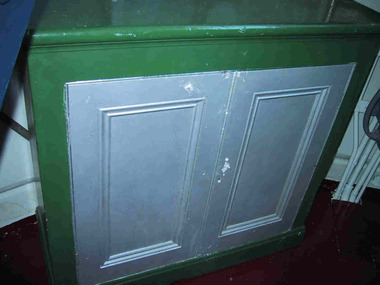
Cabinet
... The two-door nineteenth century cabinet was purpose built with a curved back to fit the proportions of the lantern room interior and is likely to date from 1888-89 when the new lighthouse was fitted out and provided with furnishings and fixtures. ...The two-door nineteenth century cabinet was purpose built with a curved back to fit the proportions of the lantern room interior and is likely to date from 1888-89 when the new lighthouse was fitted out and provided with furnishings and fixtures. ...The two-door nineteenth century cabinet was purpose built with a curved back to fit the proportions of the lantern room interior and is likely to date from 1888-89 when the new lighthouse was fitted out and provided with furnishings and fixtures. The Public Works Department provided a range of lightstation furnishings including office desks and cabinets, and domestic settings for keepers’ quarters, with nineteenth century items often stamped with a crown motif and the PWD monogram. The curved cabinets installed in lantern rooms however do not appear to display this small feature. The cabinet needed to be custom made to fit the proportions of the room, and for this reason it was possibly made on site or perhaps even supplied by Chance Bros as part of the entire lantern room installation. The company usually provided timber panelling for their lantern room interiors (since removed from Point Hicks), and a cabinet may have been included in the assemblage. It may not have originally been painted; today doors area grey/silver colour and the rest of the cabinet is emerald green. It is not known whether it is freestanding or fixed to the wall. A similar cabinet with panelled doors remains in the Gabo Island lighthouse and evidence of green paint on the wood indicates that the cabinet frame was also formerly painted green but later stripped to reveal the wood finish. The Cape Nelson lantern room has a curved cabinet with the same door type but has a drawer above each door. It too was formerly painted emerald green before it was stripped back to its present wood finish. Cape Schanck’s lantern room cabinet is unique for its curved front as well as curved back, and it stands on a skirting. The two doors are in the same style, although they open with a brass knob. Further research into these distinctive cabinets may resolve the interesting question of their construction. The Point Hicks cabinet is a unique, original feature of the lighthouse lantern room and has first level contributory significance for its historic values and provenance. The Point Hicks cabinet has two doors, each framed and beaded around a central panel, and there is a simple door knob. The back is curved and the front is straight and the doors are painted a grey/silver colour and the rest of the cabinet is emerald green. -
 City of Greater Bendigo - Civic Collection
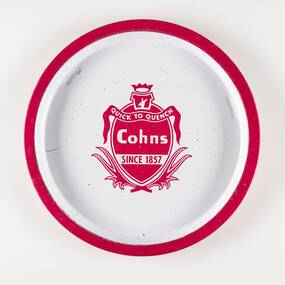
Functional object - Drinks Tray, Cohns
... Jacob Isaac Cohn was born in 1830 (died 1911) in Horsens Denmark and entered the Sandhurst Borough Council in 1863 where he served as a member for three years, returning again in 1887 to serve as Mayor of the City of Bendigo from 1888-1889. Jacob Cohn was a great supporter of the Mechanics Institute, the Hospital and the Benevolent Asylum. ...Jacob Isaac Cohn was born in 1830 (died 1911) in Horsens Denmark and entered the Sandhurst Borough Council in 1863 where he served as a member for three years, returning again in 1887 to serve as Mayor of the City of Bendigo from 1888-1889. Jacob Cohn was a great supporter of the Mechanics Institute, the Hospital and the Benevolent Asylum. ...Danish brothers, Moritz, Julius and Jacob Cohn arrived in Bendigo in 1853 and by 1856 started making cider and soft drinks, building a brewery 1880 to further extend their commercial enterprises and stock their hotels with their own brand of beer. Having sent Moritz's son, (also Julius) to Germany to learn to brew, the Cohn Brothers began to produce Excelsior Lager in 1882, which was traditionally served cold, the first time this had been done in Australia. Overtime the Cohn brothers expanded their operations adding cordials and in 1916 produced a non-alcoholic beer to satisfy the temperance activists. Originally named Tonic Ale but re-named 6 o’clock Lager after the temperance advocates succeeded in having pubs close at six o’clock. This drinks tray is just one example of branded bar items which would have been supplied to hotels who served Cohns beverage to further promote the company. Cohn Brothers built an empire of breweries, cordial factories, hotels and liquor stores and ice works. In 1925 they sold the hotels and breweries to Carlton & United but continued to make their other products until the 1970s when the company became part of the Coca Cola Amatil Group. Jacob Isaac Cohn was born in 1830 (died 1911) in Horsens Denmark and entered the Sandhurst Borough Council in 1863 where he served as a member for three years, returning again in 1887 to serve as Mayor of the City of Bendigo from 1888-1889. Jacob Cohn was a great supporter of the Mechanics Institute, the Hospital and the Benevolent Asylum. It is believed that through his connection with the Mechanics Institute he exhibited some loaned engravings from the Dresden Art Gallery which were then donated to the City of Bendigo, forming the nuclei of the Art Gallery's collection. Jacob Cohn held the position of President of the Art Gallery for 18 years.Circular metal drinks tray. White tray with red rim and red 'Cohns Since 1857' logo and 'Quick to Quench' slogan printed in centre.'Quick to Quench' / Cohns / Since 1857mayor jacob cohn, bendigo art gallery, bendigo masonic lodge, making a nation, city of bendigo commerce, cohns, cohn brothers -
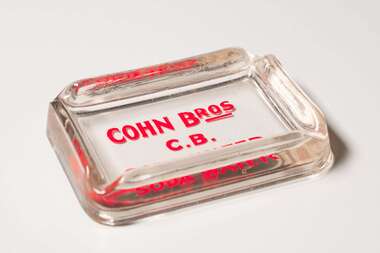 City of Greater Bendigo - Civic Collection
Functional object - Ashtray, Cohn Brothers, Cohns
... Jacob Isaac Cohn was born in 1830 (died 1911) in Horsens Denmark and entered the Sandhurst Borough Council in 1863 where he served as a member for three years, returning again in 1887 to serve as Mayor of the City of Bendigo from 1888-1889. Jacob Cohn was a great supporter of the Mechanics Institute, the Hospital and the Benevolent Asylum. ...Jacob Isaac Cohn was born in 1830 (died 1911) in Horsens Denmark and entered the Sandhurst Borough Council in 1863 where he served as a member for three years, returning again in 1887 to serve as Mayor of the City of Bendigo from 1888-1889. Jacob Cohn was a great supporter of the Mechanics Institute, the Hospital and the Benevolent Asylum. ...Danish brothers, Moritz, Julius and Jacob Cohn arrived in Bendigo in 1853 and by 1856 started making cider and soft drinks, building a brewery 1880 to further extend their commercial enterprises and stock their hotels with their own brand of beer. Having sent Moritz's son, (also Julius) to Germany to learn to brew, the Cohn Brothers began to produce Excelsior Lager in 1882, which was traditionally served cold, the first time this had been done in Australia. Overtime the Cohn brothers expanded their operations adding cordials and in 1916 produced a non-alcoholic beer to satisfy the temperance activists. Originally named Tonic Ale but re-named 6 o’clock Lager after the temperance advocates succeeded in having pubs close at six o’clock. This ashtray is just one example of branded bar items which would have been supplied to hotels who served Cohns beverage to further promote the company. Cohn Brothers built an empire of breweries, cordial factories, hotels and liquor stores and ice works. In 1925 they sold the hotels and breweries to Carlton & United but continued to make their other products until the 1970s when the company became part of the Coca Cola Amatil Group. Jacob Isaac Cohn was born in 1830 (died 1911) in Horsens Denmark and entered the Sandhurst Borough Council in 1863 where he served as a member for three years, returning again in 1887 to serve as Mayor of the City of Bendigo from 1888-1889. Jacob Cohn was a great supporter of the Mechanics Institute, the Hospital and the Benevolent Asylum. It is believed that through his connection with the Mechanics Institute he exhibited some loaned engravings from the Dresden Art Gallery which were then donated to the City of Bendigo, forming the nuclei of the Art Gallery's collection. Jacob Cohn held the position of President of the Art Gallery for 18 years.Glass rectangle ashtray with shaped corners for resting cigarettes. Text printed in reverse in red ink on bottom of ashtray.Cohn Bros / C.B. / Soda Watermayor jacob cohn, bendigo art gallery, bendigo masonic lodge, making a nation, city of bendigo commerce, cohn brothers, cohns -
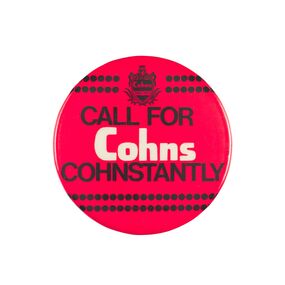 City of Greater Bendigo - Civic Collection
Badge, Cohn Brothers, Cohns
... Jacob Isaac Cohn was born in 1830 (died 1911) in Horsens Denmark and entered the Sandhurst Borough Council in 1863 where he served as a member for three years, returning again in 1887 to serve as Mayor of the City of Bendigo from 1888-1889. Jacob Cohn was a great supporter of the Mechanics Institute, the Hospital and the Benevolent Asylum. ...Jacob Isaac Cohn was born in 1830 (died 1911) in Horsens Denmark and entered the Sandhurst Borough Council in 1863 where he served as a member for three years, returning again in 1887 to serve as Mayor of the City of Bendigo from 1888-1889. Jacob Cohn was a great supporter of the Mechanics Institute, the Hospital and the Benevolent Asylum. ...Danish brothers, Moritz, Julius and Jacob Cohn arrived in Bendigo in 1853 and by 1856 started making cider and soft drinks, building a brewery 1880 to further extend their commercial enterprises and stock their hotels with their own brand of beer. Having sent Moritz's son, (also Julius) to Germany to learn to brew, the Cohn Brothers began to produce Excelsior Lager in 1882, which was traditionally served cold, the first time this had been done in Australia. Overtime the Cohn brothers expanded their operations adding cordials and in 1916 produced a non-alcoholic beer to satisfy the temperance activists. Originally named Tonic Ale but re-named 6 o’clock Lager after the temperance advocates succeeded in having pubs close at six o’clock. This badge is just one example of branded items which would have been used to further promote the company. Cohn Brothers built an empire of breweries, cordial factories, hotels and liquor stores and ice works. In 1925 they sold the hotels and breweries to Carlton & United but continued to make their other products until the 1970s when the company became part of the Coca Cola Amatil Group. Jacob Isaac Cohn was born in 1830 (died 1911) in Horsens Denmark and entered the Sandhurst Borough Council in 1863 where he served as a member for three years, returning again in 1887 to serve as Mayor of the City of Bendigo from 1888-1889. Jacob Cohn was a great supporter of the Mechanics Institute, the Hospital and the Benevolent Asylum. It is believed that through his connection with the Mechanics Institute he exhibited some loaned engravings from the Dresden Art Gallery which were then donated to the City of Bendigo, forming the nuclei of the Art Gallery's collection. Jacob Cohn held the position of President of the Art Gallery for 18 years.Large metal badge Call for / Cohn / Cohnstantlymayor jacob cohn, making a nation, city of bendigo commerce, cohn brothers, cohns -
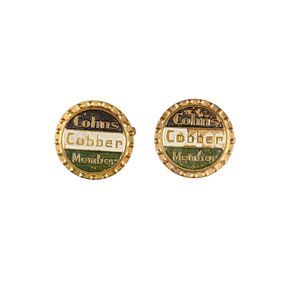 City of Greater Bendigo - Civic Collection
Badge - Member Pins, Cohn Brothers, Cohns
... Jacob Isaac Cohn was born in 1830 (died 1911) in Horsens Denmark and entered the Sandhurst Borough Council in 1863 where he served as a member for three years, returning again in 1887 to serve as Mayor of the City of Bendigo from 1888-1889. Jacob Cohn was a great supporter of the Mechanics Institute, the Hospital and the Benevolent Asylum. ...Jacob Isaac Cohn was born in 1830 (died 1911) in Horsens Denmark and entered the Sandhurst Borough Council in 1863 where he served as a member for three years, returning again in 1887 to serve as Mayor of the City of Bendigo from 1888-1889. Jacob Cohn was a great supporter of the Mechanics Institute, the Hospital and the Benevolent Asylum. ...Danish brothers, Moritz, Julius and Jacob Cohn arrived in Bendigo in 1853 and by 1856 started making cider and soft drinks, building a brewery 1880 to further extend their commercial enterprises and stock their hotels with their own brand of beer. Having sent Moritz's son, (also Julius) to Germany to learn to brew, the Cohn Brothers began to produce Excelsior Lager in 1882, which was traditionally served cold, the first time this had been done in Australia. Overtime the Cohn brothers expanded their operations adding cordials and in 1916 produced a non-alcoholic beer to satisfy the temperance activists. Cohn Brothers built an empire of breweries, cordial factories, hotels and liquor stores and ice works. In 1925 they sold the hotels and breweries to Carlton & United but continued to make their other products until the 1970s when the company became part of the Coca Cola Amatil Group. These Cohn's Cobber Member pins relate to the Cohn's Cobbers TV Club which was sponsored by Cohn's Soft drinks. The Cobbers TV Club was an afternoon children's variety program modelled on the Tarax Show. When local TV station BCV8 opened in Bendigo they broadcast Cobber’s teleclub in their afternoon timeslot for young viewers. Jacob Isaac Cohn was born in 1830 (died 1911) in Horsens Denmark and entered the Sandhurst Borough Council in 1863 where he served as a member for three years, returning again in 1887 to serve as Mayor of the City of Bendigo from 1888-1889. Jacob Cohn was a great supporter of the Mechanics Institute, the Hospital and the Benevolent Asylum. It is believed that through his connection with the Mechanics Institute he exhibited some loaned engravings from the Dresden Art Gallery which were then donated to the City of Bendigo, forming the nuclei of the Art Gallery's collection. Jacob Cohn held the position of President of the Art Gallery for 18 years.Two small multi coloured member pins. Gold coloured metal and fastening pin on back. Brown, white and green inner sections with gold text on front.Cohns / Cobber / Membermayor jacob cohn, city of bendigo commerce, cohn brothers, cohns -
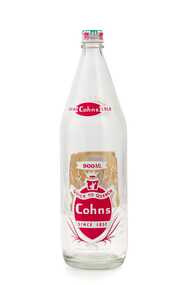 City of Greater Bendigo - Civic Collection
Domestic object - Soft drink bottle, Cohns
... Jacob Isaac Cohn was born in 1830 (died 1911) in Horsens Denmark and entered the Sandhurst Borough Council in 1863 where he served as a member for three years, returning again in 1887 to serve as Mayor of the City of Bendigo from 1888-1889. Jacob Cohn was a great supporter of the Mechanics Institute, the Hospital and the Benevolent Asylum. ...Jacob Isaac Cohn was born in 1830 (died 1911) in Horsens Denmark and entered the Sandhurst Borough Council in 1863 where he served as a member for three years, returning again in 1887 to serve as Mayor of the City of Bendigo from 1888-1889. Jacob Cohn was a great supporter of the Mechanics Institute, the Hospital and the Benevolent Asylum. ...Danish brothers, Moritz, Julius and Jacob Cohn arrived in Bendigo in 1853 and by 1856 started making cider and soft drinks, building a brewery 1880 to further extend their commercial enterprises and stock their hotels with their own brand of beer. Having sent Moritz's son, (also Julius) to Germany to learn to brew, the Cohn Brothers began to produce Excelsior Lager in 1882, which was traditionally served cold, the first time this had been done in Australia. Overtime the Cohn brothers expanded their operations adding cordials and in 1916 produced a non-alcoholic beer to satisfy the temperance activists. Originally named Tonic Ale but re-named 6 o’clock Lager after the temperance advocates succeeded in having pubs close at six o’clock. This drinks tray is just one example of branded bar items which would have been supplied to hotels who served Cohns beverage to further promote the company. Cohn Brothers built an empire of breweries, cordial factories, hotels and liquor stores and ice works. In 1925 they sold the hotels and breweries to Carlton & United but continued to make their other products until the 1970s when the company became part of the Coca Cola Amatil Group. Jacob Isaac Cohn was born in 1830 (died 1911) in Horsens Denmark and entered the Sandhurst Borough Council in 1863 where he served as a member for three years, returning again in 1887 to serve as Mayor of the City of Bendigo from 1888-1889. Jacob Cohn was a great supporter of the Mechanics Institute, the Hospital and the Benevolent Asylum. It is believed that through his connection with the Mechanics Institute he exhibited some loaned engravings from the Dresden Art Gallery which were then donated to the City of Bendigo, forming the nuclei of the Art Gallery's collection. Jacob Cohn held the position of President of the Art Gallery for 18 years.Clear glass bottle with iconic red and white Cohns label printed on front and back. Bottle has been rebranded and had an extra label stuck to one side for Z Cal Low Calorie Orange beverage. Screw cap is also related to Z Cal Orange drink.'Quick to Quench' / Cohns / Since 1857 Cohns / Z-Cal / Low Calorie / Orange mayor jacob cohn, bendigo art gallery, bendigo masonic lodge, making a nation, city of bendigo commerce, cohns, cohn brothers -
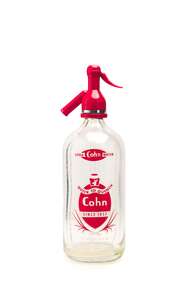 City of Greater Bendigo - Civic Collection
Domestic object - Soda Syphon, Cohns
... Jacob Isaac Cohn was born in 1830 (died 1911) in Horsens Denmark and entered the Sandhurst Borough Council in 1863 where he served as a member for three years, returning again in 1887 to serve as Mayor of the City of Bendigo from 1888-1889. Jacob Cohn was a great supporter of the Mechanics Institute, the Hospital and the Benevolent Asylum. ...Jacob Isaac Cohn was born in 1830 (died 1911) in Horsens Denmark and entered the Sandhurst Borough Council in 1863 where he served as a member for three years, returning again in 1887 to serve as Mayor of the City of Bendigo from 1888-1889. Jacob Cohn was a great supporter of the Mechanics Institute, the Hospital and the Benevolent Asylum. ...Danish brothers, Moritz, Julius and Jacob Cohn arrived in Bendigo in 1853 and by 1856 started making cider and soft drinks, building a brewery 1880 to further extend their commercial enterprises and stock their hotels with their own brand of beer. Having sent Moritz's son, (also Julius) to Germany to learn to brew, the Cohn Brothers began to produce Excelsior Lager in 1882, which was traditionally served cold, the first time this had been done in Australia. Overtime the Cohn brothers expanded their operations adding cordials and in 1916 produced a non-alcoholic beer to satisfy the temperance activists. Originally named Tonic Ale but re-named 6 o’clock Lager after the temperance advocates succeeded in having pubs close at six o’clock. This drinks tray is just one example of branded bar items which would have been supplied to hotels who served Cohns beverage to further promote the company. Cohn Brothers built an empire of breweries, cordial factories, hotels and liquor stores and ice works. In 1925 they sold the hotels and breweries to Carlton & United but continued to make their other products until the 1970s when the company became part of the Coca Cola Amatil Group. Jacob Isaac Cohn was born in 1830 (died 1911) in Horsens Denmark and entered the Sandhurst Borough Council in 1863 where he served as a member for three years, returning again in 1887 to serve as Mayor of the City of Bendigo from 1888-1889. Jacob Cohn was a great supporter of the Mechanics Institute, the Hospital and the Benevolent Asylum. It is believed that through his connection with the Mechanics Institute he exhibited some loaned engravings from the Dresden Art Gallery which were then donated to the City of Bendigo, forming the nuclei of the Art Gallery's collection. Jacob Cohn held the position of President of the Art Gallery for 18 years.Clear glass bottle with iconic red and white Cohns label printed on front and back. Bottle has been rebranded and had an extra label stuck to one side for Z Cal Low Calorie Orange beverage. Screw cap is also related to Z Cal Orange drink.'Quick to Quench' / Cohns / Since 1857 Cohns / Z-Cal / Low Calorie / Orange mayor jacob cohn, bendigo art gallery, bendigo masonic lodge, making a nation, city of bendigo commerce, cohns, cohn brothers
