
Showing 401 items matching "brought - history"
-
 Bendigo Military Museum
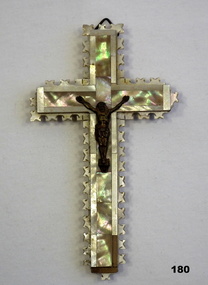
Souvenir - CRUCIFIX, 1939-45
... Souvenir from The Holy Land brought home by Eric L. BUGGE VX6316. Refer 181 for his service history....Souvenir from The Holy Land brought home by Eric L. BUGGE VX6316. Refer 181 for his service history. religion-christian souvenirs handcrafts Rear: "Jerusalem" 14 circles with strange hieroglyphics. ...Souvenir from The Holy Land brought home by Eric L. BUGGE VX6316. Refer 181 for his service history.Wooden crucifix, brass figure of Christ glued on front. 4 pieces of laminated wood with decorative edging, decorative top layer of mother-of-pearl. Lower right-hand corner & edge missing. Hanger at top.Souvenir from the Holy Land. Brought home by Eric L. Bugge.Rear: "Jerusalem" 14 circles with strange hieroglyphics.religion-christian, souvenirs, handcrafts -
 Bendigo Military Museum
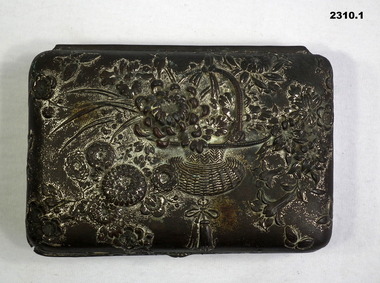
Memorabilia - PHOTOGRAPHS & CONTAINER, 1914 - 1918
... Items brought home by Horace Eli Hambly No 794 AIF. Refer 2325.2 for his service history....Items brought home by Horace Eli Hambly No 794 AIF. Refer 2325.2 for his service history. photography-photographs containers military history .1) Black tin, hinged lid, heavily embossed with design of flowers. ...Items brought home by Horace Eli Hambly No 794 AIF. Refer 2325.2 for his service history..1) Black tin, hinged lid, heavily embossed with design of flowers. Possibly silver plated originally holds 36 photos. .2) - .26) Snapshots of battlefield damage.photography-photographs, containers, military history -
 Warrnambool and District Historical Society Inc.
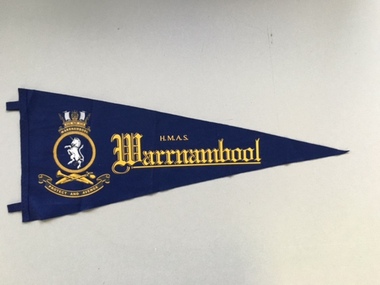
Flag, HAMS Warrnambool, 2005
... In 2005 the Mayor of Warrnambool, Glenys Phillpot, attended the decommissioning of this ship at Darwin and brought back several souvenirs of the ship. H.M.A.S. Warrnambool History of Warrnambool ‘H.M.A.S. ...This is a souvenir pennant of the H.M.A.S. Warrnambool, named after the City of Warrnambool in Victoria. This ship was the second of that name. The first H. M.A.S. Warrnambool, launched in 1941, was one of 60 Bathurst-class corvettes commissioned by the Australian Government. It was involved in mine clearance work in the Great Barrier Reef after World War Two. The mines had been laid by the Australian Government during the war to protect Australian waters. In 1947 the first H.M.A.S. Warrnambool was sunk by one of these mines and lies on the ocean floor off Cockburn Reef in northern Queensland. The second H.M.A.S. Warrnambool was commissioned in 1981 and was a Fremantle-class patrol boat assisting in capturing illegal fishing boats and participating in military exercises in Australian waters. In 2005 the second H.M.A.S. Warrnambool was decommissioned after 24 years’ service. This pennant is important as a souvenir of the H.M.A.S Warrnambool, a ship that had obvious links with the City of Warrnambool. In 2005 the Mayor of Warrnambool, Glenys Phillpot, attended the decommissioning of this ship at Darwin and brought back several souvenirs of the ship. This is a triangular-shaped pennant made of dark blue felt material. It has stitching at the straight edge with two tabs for attaching the pennant to a pole or post. The pennant has a badge of yellow, black and white tonings printed or stamped on to the felt. The badge includes a white unicorn, a stylized ship and crown, a boomerang and two other implements and the motto, ‘Protect and Avenge’. The words, ‘H.M.A.S. Warrnambool’ are printed on the pennant in yellow. ‘H.M.A.S. Warrnambool’h.m.a.s. warrnambool, history of warrnambool -
 Warrnambool and District Historical Society Inc.
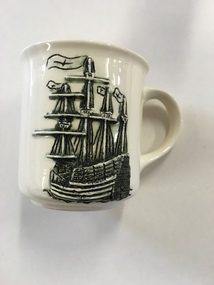
Mug, Mary Rose Ehibition, Late 20th century
... brought to Warrnambool and displayed in 1994-5 at the Warrnambool Art Gallery. This mug is of interest as it is a memento of the ‘Mary Rose’ Exhibition held in Warrnambool in 1994-5. This exhibition was an important event in the 1990s in Warrnambool and attracted many visitors. Mary Rose Ship Mary Rose Exhibition in Warrnambool History ...This is a souvenir mug produced for visitors to the ‘Mary Rose’ Exhibition in Warrnambool (December 1994 to February 1995). The ship ‘Mary Rose’, built in Portsmouth, England in 1509-10, was historically of major significance. She was the spearhead of a master plan to give England superiority on the high seas. Using new technology of the time, heavy artillery was mounted on the lower decks of this ship and this overloaded the ship. In 1545 she sank in Portsmouth Harbour with the loss of 700 lives as she was about to set sail to defend the English against the French invaders. In 1982 the hull of this ship was raised to the surface and the contents recovered. Over 200 items from the wreck were brought to Warrnambool and displayed in 1994-5 at the Warrnambool Art Gallery. This mug is of interest as it is a memento of the ‘Mary Rose’ Exhibition held in Warrnambool in 1994-5. This exhibition was an important event in the 1990s in Warrnambool and attracted many visitors. This is a cream-coloured china mug with a handle and a raised black and cream image of the ‘Mary Rose’ ship on one side and printed material in brown on the other side. It has the distributor’s name on the bottom with a map of Victoria and a brown dot showing the location of Warrnambool. It is a souvenir of the ‘Mary Rose’ Exhibition held in Warrnambool in 1994-5. “Mary Rose” Exhibition Warrnambool 1994-1995 Lady Bay Creations Warrnambool Australia mary rose ship, mary rose exhibition in warrnambool, history of warrnambool -
 Warrnambool and District Historical Society Inc.
Instruments, Slide Rule, C1955
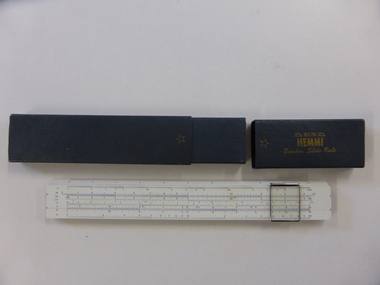
... brought forward. with the following 100 years sees over 250 designs created.There have been different versions and modifications to suit scientific, mathematical and engineering requirements. It is interesting to note that many of the buildings of the 19th and 20th centuries have been designed with the use of slide rules. Their use has declined in the last 25-30 years with the advent of computers and specialist calculators. While not directly linked in any way to the history ...A slide rule is an instrument which is used to carry out mathematical calculations. William Oughtred is credited with its invention in 1621, however many others including Isaac Newton have made improvements or modifications over the years. From 1625 to 1800 there were approximately 40 different styles brought forward. with the following 100 years sees over 250 designs created.There have been different versions and modifications to suit scientific, mathematical and engineering requirements. It is interesting to note that many of the buildings of the 19th and 20th centuries have been designed with the use of slide rules. Their use has declined in the last 25-30 years with the advent of computers and specialist calculators.While not directly linked in any way to the history of Warrnambool, this slide rule would have been a item in use by students doing maths at upper secondary level as well as other applications which would make it a familiar object to many people.Coated bamboo with sliding metal framed glass panel or cursor . The bamboo is in three sections with the middle section movable. It is marked in various graduated measurements mainly in dark blue but with some in green and red.It is inside a dark grey rectangular box with a slide off lid on one end.There is a celluloid panel on the back with a conversion table printed on it. There is an accompanying 67 page manual with a pale green cover with black text. On slide rule:Sun Hemmi Japan No 2664S On box: Sun Hemmi Japan No 2664S warrnambool, hemmi slide rule, bamboo slide rule -
 Eltham District Historical Society Inc
Newsletter, Newsletter, No. 247 August 2019
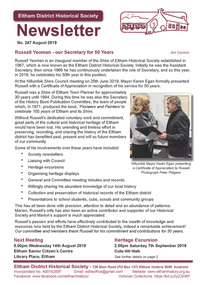
... Contents: • Russell Yeoman – our Secretary for 50 Years by Jim Connor • Our Next Meeting – Wednesday 14th August 2019 • September Excursion – Culla Hill Walk • The Value of History Statement • Eltham Reminiscences by R.D. Taylor • Australia post: Gold brought life to the township • Postmaster-General’s Department of Australia • Eltham Cemetery Stories by Richard Pinn o Patrick Carrucan o Nina Mikhailovna Christesen • Our Recent Heritage Excursions by Jim Connor • Contacts for the Eltham District Historical Society ...Contents: • Russell Yeoman – our Secretary for 50 Years by Jim Connor • Our Next Meeting – Wednesday 14th August 2019 • September Excursion – Culla Hill Walk • The Value of History Statement • Eltham Reminiscences by R.D. Taylor • Australia post: Gold brought life to the township • Postmaster-General’s Department of Australia • Eltham Cemetery Stories by Richard Pinn o Patrick Carrucan o Nina Mikhailovna Christesen • Our Recent Heritage Excursions by Jim Connor • Contacts for the Eltham District Historical Society The Shire of Eltham Historical Society was formed in October 1967. ...Contents: • Russell Yeoman – our Secretary for 50 Years by Jim Connor • Our Next Meeting – Wednesday 14th August 2019 • September Excursion – Culla Hill Walk • The Value of History Statement • Eltham Reminiscences by R.D. Taylor • Australia post: Gold brought life to the township • Postmaster-General’s Department of Australia • Eltham Cemetery Stories by Richard Pinn o Patrick Carrucan o Nina Mikhailovna Christesen • Our Recent Heritage Excursions by Jim Connor • Contacts for the Eltham District Historical Society The Shire of Eltham Historical Society was formed in October 1967. The first newsletter of the Society was issued May 1978 and has been published continuously ever since on a bi-monthly basis. With the cessation of the Shire of Eltham in late 1994, the Society's name was revised to Eltham District Historical Society and this name first appeared with issue No. 103, July 1995. The collection of the Society's newsletters provides a valuable resource on the history of the Society's activities, office bearers and committee members, guest speakers and subjects of historical interest pertinent to the former Shire of Eltham and the Eltham District.A4 newsletter distributed to membersnewsletter, eltham district historical society -
 Eltham District Historical Society Inc
Newsclipping, Diamond Valley News, Gold brought life to the township, Diamond Valley News, 2 July 1985, p17, 2 Jul 1985
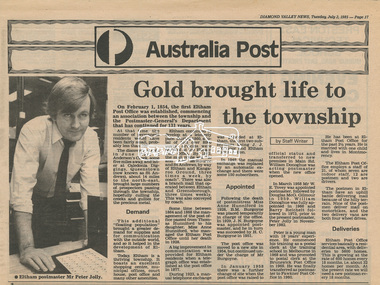
... A history of Eltham Post Office. Australia Post: Gold brought life to the township - Diamond Valley News, Tuesday July 2, 1985, p17 On February 1, 1854, the first Eltham Post Office was established, commencing an association between the township and the Postmaster-General's Department that has continued for 131 years. ...A history of Eltham Post Office. Australia Post: Gold brought life to the township - Diamond Valley News, Tuesday July 2, 1985, p17 On February 1, 1854, the first Eltham Post Office was established, commencing an association between the township and the Postmaster-General's Department that has continued for 131 years. ...A history of Eltham Post Office. Australia Post: Gold brought life to the township - Diamond Valley News, Tuesday July 2, 1985, p17 On February 1, 1854, the first Eltham Post Office was established, commencing an association between the township and the Postmaster-General's Department that has continued for 131 years. At that time, the number of permanent residents would have been fairly small, probably less than 200. The discovery of gold in June 1851, at Anderson’s Creek, some five miles away, and later at Caledonia Diggings, Queenstown (now known as St Andrews), about 14 miles to the north-east, brought large numbers of prospectors passing through the township, hopefully culling the creeks and gullies for the precious metal. This additional "floating population" brought a greater demand for supplies and for communication with the outside world, and so it helped in the development of Eltham. Today, Eltham is a thriving township. It boasts an excellent shopping centre, municipal offices, court house. post office and many other amenities. Eltham continued to develop at a leisurely pace. During 1860, a total of just over 8000 postal articles were handled at the Eltham Post Office. By 1862, the mail route was "to and from Melbourne by way of Eltham and Kangaroo Ground, three times a week, by coach". There was also a branch mail that operated between Eltham and Greensborough, three times weekly. This was also conveyed by coach. Some time between 1864 and 1868 the management of the post office passed from Thomas Hunniford to his daughter, Miss Anne Hunniford, who managed the Eltham Post Office until her death in 1928. A big improvement in communication was provided for Eltham residents when a telegraph office was established at the post office in 1877. During 1923 a manual telephone exchange was provided at Eltham, the first two subscribers being J.J. O’Connor and Eltham Police Station. In 1949 the manual exchange was replaced by an automatic exchange and there were some 150 subscribers. Following the death of postmistress Miss Anne Hunniford in 1928, B.M. Burgoyne was placed temporarily in charge of the office. In 1929, J. N. Burgoyne was appointed postmaster, and he in turn was succeeded by H. C. Burgoyne in 1951. The post office was moved to a new site in 1954, but continued under the charge of Mr Burgoyne. In January 1958 there was a further change of site when the post office was raised to official status and transferred to new premises in Main Rd. William Donoghue was acting postmaster when the new office was opened. In March 1958 Mr W.E. Tovey was appointed postmaster, followed by Douglas McG. Gilmour in 1959. William Donoghue was fully appointed in 1966 and Barry Reichelt followed in 1973, prior to the present postmaster, Peter Jolly in November 1982. Peter is a young man with 18 years' experience. He commenced his training as a postal clerk at the training school in Melbourne in 1968 and was promoted to postal clerk at the Brunswick Post Office in 1969. He was finally transferred as postmaster to Fawkner Post Office in 1980. He has been at Eltham Post Office for the past 2½ years. He is married with one child and lives in Montmorency. The Eltham Post Office employs a staff of 21, of whom seven are indoor staff, 12 are postmen and two are drivers. The postmen in Eltham have an uphill battle delivering mail because of the hilly terrain. Nine of the postmen deliver mail on motorbikes, and the two delivery vans are both four wheel drives. Eltham Post Office services basically a residential area, with deliveries to 5600 homes. This is growing at the rate of 600 homes every 18 months, i.e. about 32 homes per month. At the present rate we will need a new postman every 18 months.Digital file only - Digitised by EDHS from a scrapbook on loan from Beryl Bradbury (nee Stokes), daughter of Frank Stokes.anderson's creek, anne hunniford, b.m. burgoyne, barry reichelt, beryl bradbury (nee stokes) collection, eltham police station, eltham post office, eltham post office history, gold, h.c. burgoyne, j.j. o'connor, j.n. burgoyne, peter jolly, postmaster, telephone exchange, thomas hunniford, w.e. tovey, william donoghue -
 Eltham District Historical Society Inc
Document - Property Binder, 963 Main Road, Eltham
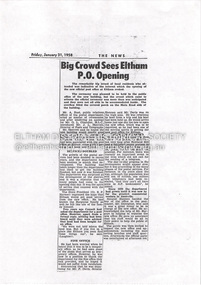
... History of P.M.G. Services at Eltham, prepared by Derek M Baker, Post Office Historian-Victoria, 1975, including Chronology, text, list of Sources. Sheet of proceedings: Official Opening of the new Eltham Post Office including Historical Notes. Newspaper article: Diamond Valley News, 2 July 1985, Gold brought...History of P.M.G. Services at Eltham, prepared by Derek M Baker, Post Office Historian-Victoria, 1975, including Chronology, text, list of Sources. Sheet of proceedings: Official Opening of the new Eltham Post Office including Historical Notes. Newspaper article: Diamond Valley News, 2 July 1985, Gold brought ...Newspaper article: Big crowd sees Eltham P.O. openingThe News, 31 January 1958, Opening of new post office in Eltham. Program of proceedings: Official Opening of the new Eltham Post Office by Mr D C McKenzie M.P. Friday 14th February 1975. Typescript: A History of P.M.G. Services at Eltham, prepared by Derek M Baker, Post Office Historian-Victoria, 1975, including Chronology, text, list of Sources. Sheet of proceedings: Official Opening of the new Eltham Post Office including Historical Notes. Newspaper article: Diamond Valley News, 2 July 1985, Gold brought life to the township. main road, eltham, businesses, eltham post office, e p harmer, d c mckenzie m.p., w j b pollock, a s knox, senator a j missen, derek m baker, australia post, peter jolly -
 Eltham District Historical Society Inc
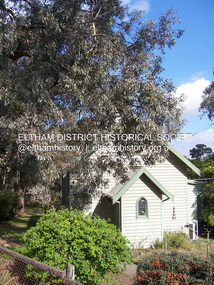
Photograph - Digital Photograph, Marguerite Marshall, Former Methodist Church, Plenty, 5 August 2008
... brought to church by their Matron – a ‘grim martinet’! Members included the Ashton, Reid, Harris, McLachlan, Hopkin, Rose and Stuchbery families. The first wedding was for Vida McLachlan and Ray Stuchbery.4 This collection of almost 130 photos about places and people within the Shire of Nillumbik, an urban and rural municipality in Melbourne's north, contributes to an understanding of the history of the Shire. ...In 1924, the Methodist Church opened at the corner of River Ave and Yan Yean Road, Plenty. It was a simple weatherboard gabled building. The church developed a strong community life with celebrations as well as worships, Sundays Schools and social events. It closed in 1979. Covered under Heritage Overlay, Nillumbik Planning Scheme. Published: Nillumbik Now and Then / Marguerite Marshall 2008; photographs Alan King with Marguerite Marshall.; p113 In 1924, the Methodist Church, (which closed in 1976), opened at the corner of River Avenue and Yan Yean Road. Church members including George Starling and Ernest Osmond, built the simple weatherboard gabled building.3 The church developed a strong community life, with celebrations as well as worship through Sunday School anniversaries, picnics, harvest festivals and youth groups. Many volunteers worked hard for the church - teaching Sunday School and ferrying young people to events, sometimes in the backs of trucks and furniture vans. Children from the Sutherland Homes were brought to church by their Matron – a ‘grim martinet’! Members included the Ashton, Reid, Harris, McLachlan, Hopkin, Rose and Stuchbery families. The first wedding was for Vida McLachlan and Ray Stuchbery.4This collection of almost 130 photos about places and people within the Shire of Nillumbik, an urban and rural municipality in Melbourne's north, contributes to an understanding of the history of the Shire. Published in 2008 immediately prior to the Black Saturday bushfires of February 7, 2009, it documents sites that were impacted, and in some cases destroyed by the fires. It includes photographs taken especially for the publication, creating a unique time capsule representing the Shire in the early 21st century. It remains the most recent comprehenesive publication devoted to the Shire's history connecting local residents to the past. nillumbik now and then (marshall-king) collection, methodist church, plenty -
 Eltham District Historical Society Inc
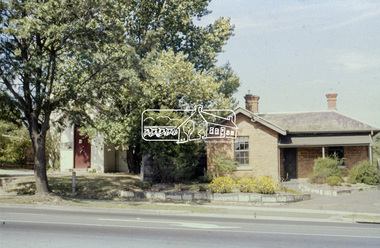
Slide - Photograph, Former Elltham Courthouse and Police Residence, c. Feb. 1989
... brought back to the former residence, occupied by the Shire Department of Parks and Environement where again they were used as edging for a newly constructed driveway put through from Main Road through where the original Police Station was sited. The stones now form part of the garden bed edging at the rear of the building. At some stage in 1989 a reproduction Police Station was built beside the residence as originally located, for the purpose of providing a lunch room for shire staff. The residence has been the home of the Eltham District Historical Society and Local History...brought back to the former residence, occupied by the Shire Department of Parks and Environement where again they were used as edging for a newly constructed driveway put through from Main Road through where the original Police Station was sited. The stones now form part of the garden bed edging at the rear of the building. At some stage in 1989 a reproduction Police Station was built beside the residence as originally located, for the purpose of providing a lunch room for shire staff. The residence has been the home of the Eltham District Historical Society and Local History ...The bluestone blocks were originally part of the bluestone lockup located behind the Police Residence and Courthouse. The stones at one stage formed an edging to a grass island at the intersection of Wattletree Road and Main Road and were painted white. When that intersection was reconstructed the stones were brought back to the former residence, occupied by the Shire Department of Parks and Environement where again they were used as edging for a newly constructed driveway put through from Main Road through where the original Police Station was sited. The stones now form part of the garden bed edging at the rear of the building. At some stage in 1989 a reproduction Police Station was built beside the residence as originally located, for the purpose of providing a lunch room for shire staff. The residence has been the home of the Eltham District Historical Society and Local History Centre since 2008. 35mm colour positive transparency (1 of 8) Mount - Agfa CS System grey 8 dots728 main road, eltham, eltham courthouse, local history centre, police residence, parks and environment, shire of eltham -
 Kiewa Valley Historical Society
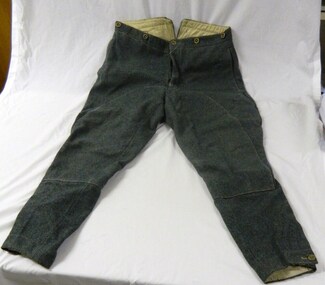
German Army Trousers, 1914 (estimated); Early 20th Century
... history. Unfortunately we do not know who they belonged to, but since they were donated to the UC op shop it may be a local person in the Kiewa Valley. Jan 2013 - We have just found out these trousers are infact from the German Army from WW1 and would have been brought back home by one of local soldiers who were in the light horse, which a few men from Tawonga served in....history. Unfortunately we do not know who they belonged to, but since they were donated to the UC op shop it may be a local person in the Kiewa Valley. Jan 2013 - We have just found out these trousers are infact from the German Army from WW1 and would have been brought back home by one of local soldiers who were in the light horse, which a few men from Tawonga served in. ...These trousers are from the Light brigade, and therefore would have an interesting history and research value. If this item was attached to other items connected to the wars,WW1, WW2, it could good interpretive history. Unfortunately we do not know who they belonged to, but since they were donated to the UC op shop it may be a local person in the Kiewa Valley. Jan 2013 - We have just found out these trousers are infact from the German Army from WW1 and would have been brought back home by one of local soldiers who were in the light horse, which a few men from Tawonga served in.If this item was donated by a local person, this would make it very signfigant due to attached social history about that person. Therefore significance would be, historic, re light brigade history, and the German Army, since we now know these are German Army pants. Research value as above. The period of this item, WW1 would make it rare, and since the item is in good condition, gives it good interpretive capacity.Grey wool riding breeches army issue KMV - 1 Private, Ex (in red) 72 in purpletrousers, pants, light- horse-brigade, germ.an army. ww1 -
 Warrnambool and District Historical Society Inc.
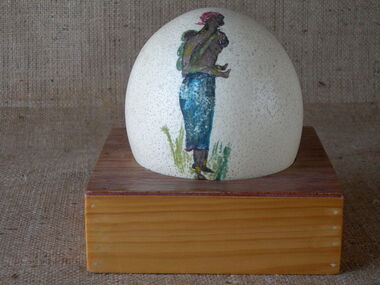
Egg, Painted Ostrich Egg, Early 20th century
... brought to Australia from South Africa after the Boer War or purchased by travellers to foreign lands at other times. This ostrich egg has no known provenance. This ostrich egg has been in the collection of the Warrnambool and District Historical Society for 45 years and the only known connection it has to Warrnambool is seen in the fact that the donor was Mrs Uebergang and the Uebergang name is well-known in our district as the Uebergangs were pioneering settlers in the Allansford/ Warrnambool area. history of warrnambool ostrich eggs painted ostrich egg This is a cream-coloured ostrich egg resting in a circular cavity in the centre of a rectangular wooden frame. ...Ostrich eggs were a novelty item found in many homes in the 19th and early 20th centuries, though in Australian homes they were more likely to be emu eggs. Some ostrich eggs may have been brought to Australia from South Africa after the Boer War or purchased by travellers to foreign lands at other times. This ostrich egg has no known provenance.This ostrich egg has been in the collection of the Warrnambool and District Historical Society for 45 years and the only known connection it has to Warrnambool is seen in the fact that the donor was Mrs Uebergang and the Uebergang name is well-known in our district as the Uebergangs were pioneering settlers in the Allansford/ Warrnambool area. This is a cream-coloured ostrich egg resting in a circular cavity in the centre of a rectangular wooden frame. The egg has a small hole on the top and has paintings of an African woman and child on one side of the egg and huts with palm trees on the other side. history of warrnambool, ostrich eggs, painted ostrich egg -
 Kiewa Valley Historical Society
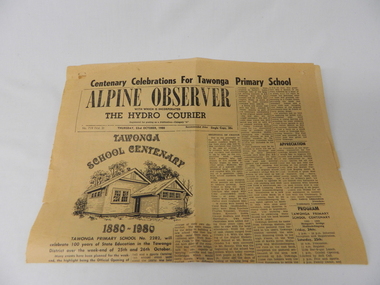
Newspaper Article - Tawonga School Centenary 1980 x2, Alpine Courier incorporating The Hydro Courier, 1980
... history of the school and important events such as various relocations of classrooms and how the region was settled and developed from the 1870's onward. The yawonga school opened in 1880 on 8 acres of land. It consisted of one large wooden building (22 ft x 11 ft). It had two windows, one brick chimney, bare wooden floor and a shingle roof. This article also presents the time when Mount Beauty area was likened to an island and occasionally school children could not attend school because of a flooded Kiewa river. The article also covers the changes brought ...This newspaper article was produced at a time when newspapers were the main source of local information. The period before the explosion of mobile communication technology and the cost effectiveness of communication by "texting" and internet "social connections, eg. facebook and other social media networkings" The newspapers were the main links between and within large regions. The Hydro Courier was first printed in 1950 as a YMCA community service publication by Mr. Albert Clarke YMCA Officer and Mr. Alex McCullough a State Electricity Commission employee. This paper was one very important publication that provided relevant community information to all and was the major contributer to the "Valley" cohesive fibre and unity. This article not only records the celebration (centenary) of the Tawonga School but also presents the history of the school and important events such as various relocations of classrooms and how the region was settled and developed from the 1870's onward. The yawonga school opened in 1880 on 8 acres of land. It consisted of one large wooden building (22 ft x 11 ft). It had two windows, one brick chimney, bare wooden floor and a shingle roof. This article also presents the time when Mount Beauty area was likened to an island and occasionally school children could not attend school because of a flooded Kiewa river. The article also covers the changes brought about by the increased employment opportunities from SEC Kiewa Works(1935), the Sawmill(1946), the Gold mine(1949) and the Tobacco Industry (largest growing area in Australia).This item is a one page (original) article of the centenary celebrations for Tawonga Primary School came from the Alpine Observer and incorporated the Hydro Courier. It covers the arrangements for the celebration of the 100 years of the school's existence. The printed layout is typical of the typeset in use in 1980's. There are seven distinctive type collumns separated by a printed line. Three photographs are published with one photograph of a demountable classromm ,circa 1980, and the other two of student class photos of 1899 and 1914. Teacher and student names are listed below each photograph. On the back of this page are "specials" for "Sam's Cut Price Stores", specifically the Myrtleford store. Of interest is the advertisement of "Cartons of Cigarettes at cut prices". The page was produced as part of a "run" with "telltale" holes at each corner for stabilising the page in the printing process."Centenary Celebrations For Tawonga Primary School" below this in an enclosed heading "ALPINE OBSERVER" underneath in smaller print "WITH WHICH IS INCORPORATED" below this in larger print "THE HYDRO COURIER" and below this from left to right, "No. 719 (Vol. 3) THURSDAY, 23rd OCTOBER, 1980" next "in smaller print Recommended Price Single Copy, 20c "(cents)rural school development, tawonga school centenary, kiewa valley development 1880 to 1980 -
 Eltham District Historical Society Inc
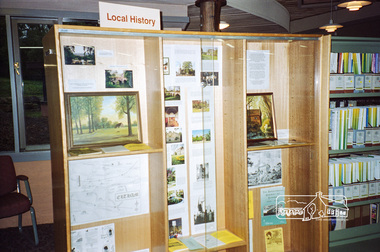
Photograph, Local History display of material from the Eltham Society, England at Eltham Library, September 1998, 1998
... history cabinet in the Eltham Library. This time we have used our growing collection of material on Eltham, England. It includes the painting by Lionel Backhurst presented to us on behalf of Eltham Society by Clifford Crate. The booklet on the Eltham town sign that Clifford also brought...history cabinet in the Eltham Library. This time we have used our growing collection of material on Eltham, England. It includes the painting by Lionel Backhurst presented to us on behalf of Eltham Society by Clifford Crate. The booklet on the Eltham town sign that Clifford also brought ...from EDHS Newsletter No. 122, September 1998 - There is a new display in our local history cabinet in the Eltham Library. This time we have used our growing collection of material on Eltham, England. It includes the painting by Lionel Backhurst presented to us on behalf of Eltham Society by Clifford Crate. The booklet on the Eltham town sign that Clifford also brought is in loose leaf format so we have been able to include the whole of that which really presents an excellent summary of the important historic buildings of Eltham. Also on display is another painting by Lionel which was presented to Russell and Marion Yeoman. (Much of this material was presented to the Society during a visit by Margaret Taylor and Clifford Crate of the Eltham Society during Christmas/New Year 1997/98.)Roll of 35mm colour negative film, 7 stripsKodak Gold 200-6activities, art, clifford crate, displays, eltham library, eltham society (london), lionel backhurst, local history, margaret taylor -
 Bendigo Military Museum
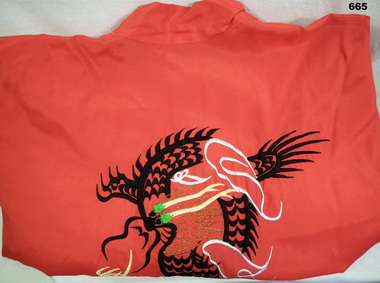
Souvenir - KIMONO, C.1960’s
... Item brought by Wesley Bertuch while on leave from Vietnam. Refer 1664.2 for his service history....Item brought by Wesley Bertuch while on leave from Vietnam. Refer 1664.2 for his service history. costume - female japan souvenirs Kimono, fine red cotton with oriental design on the rear depicting a winged dragon in five colours. ...Item brought by Wesley Bertuch while on leave from Vietnam. Refer 1664.2 for his service history.Kimono, fine red cotton with oriental design on the rear depicting a winged dragon in five colours. Sleeves are elbow length. Includes a red cotton sash.costume - female, japan, souvenirs -
 Bendigo Military Museum
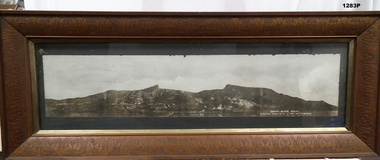
Photograph - PHOTOGRAPH GALLIPOLI, FRAMED, H J Lowe and G Downes, c.1915 - 1920
... The story was that he brought the original negative home with him. Refer 1281 for his service history also 1986P....The story was that he brought the original negative home with him. Refer 1281 for his service history also 1986P. photography-photographs frame accessories military history - army Kirkham North Beach, Anzac Cove by H J Lowe and G Downes. ...The photo relates to James Joseph Kirkham No 685. The story was that he brought the original negative home with him. Refer 1281 for his service history also 1986P.Heavy wooden frame, glass front, with dark grey border framing panoramic photo of a beach. North Beach, Anzac Cove by H J Lowe and G Downes.photography-photographs, frame accessories, military history - army, kirkham -
 Bendigo Military Museum
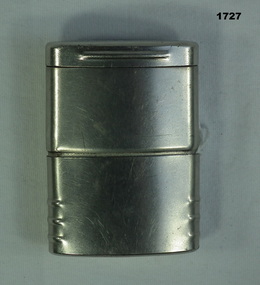
Souvenir - CIGARETTE LIGHTER, 1960’s
... Item brought home from Vietnam by Anthony Robert Cornelius. Refer Cat No 1874.2 for his service history....Item brought home from Vietnam by Anthony Robert Cornelius. Refer Cat No 1874.2 for his service history. personal effects-smoking accessories Cigarette lighter Silver metal flip open cigarette lighter. ...Item brought home from Vietnam by Anthony Robert Cornelius. Refer Cat No 1874.2 for his service history.Silver metal flip open cigarette lighter.personal effects-smoking accessories, cigarette lighter -
 Bendigo Military Museum
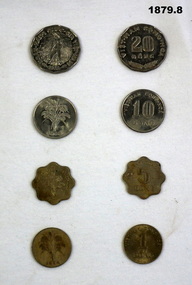
Currency - COINS VIETNAMESE, 1964-1968
... Coins brought home by Anthony Robert Cornelius from Vietnam. Refer Cat No 1874.2 for his service history....Coins brought home by Anthony Robert Cornelius from Vietnam. Refer Cat No 1874.2 for his service history. numismatics-coins metalcraft Currency Vietnam Vietnamese coins. .1) .2) 20 Dong. 12 sided, silver coloured .3) .4) 10 Dong. ...Coins brought home by Anthony Robert Cornelius from Vietnam. Refer Cat No 1874.2 for his service history.Vietnamese coins. .1) .2) 20 Dong. 12 sided, silver coloured .3) .4) 10 Dong. Round, silver coloured. .5) .6) 5 Dong. 8 rounded points, brass coloured. .7) .8) 1 Dong. Round, brass coloured.numismatics-coins, metalcraft, currency vietnam -
 Bendigo Military Museum
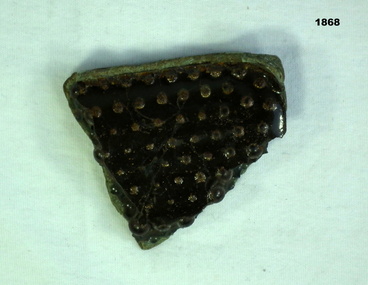
Weapon - CLAYMORE MINE FRAGMENT, C.1971
... This small section was brought home from Vietnam by George Cameron Wood No 3798253. Refer Cat no 1872 for his service history....This small section was brought home from Vietnam by George Cameron Wood No 3798253. Refer Cat no 1872 for his service history. arms-ammunition Claymore Corner section fragment from an M18A1 Claymore anti-personnel mine. ...The Claymore mine is a directional mine with 700 small ball bearings. This small section was brought home from Vietnam by George Cameron Wood No 3798253. Refer Cat no 1872 for his service history.Corner section fragment from an M18A1 Claymore anti-personnel mine. Hard green plastic front, rear has a large number of approx. 3mm diameter ball bearings set in black epoxy resin.arms-ammunition, claymore -
 Bendigo Military Museum
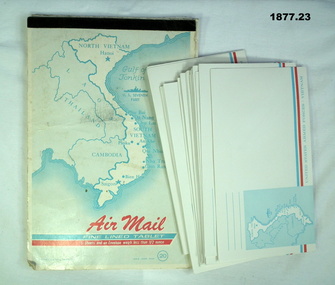
Accessory - STATIONERY VIETNAM, Crest Craft, 1962-72
... Brought home from Vietnam by George Cameron Wood No 3798253. Refer Cat No 1872 for his service history....Brought home from Vietnam by George Cameron Wood No 3798253. Refer Cat No 1872 for his service history. domestic items-writing equipment documents-envelopes Vietnam .1) - 20) Unused envelopes. ...Brought home from Vietnam by George Cameron Wood No 3798253. Refer Cat No 1872 for his service history..1) - 20) Unused envelopes. White paper with map of Vietnam and neighbouring countries, blue and red stripes with blue text "United States Armed Forces Vietnam". .23) Writing pad. Cover has same map as envelopes and text "Air Mail / Fine Lined Tablet"domestic items-writing equipment, documents-envelopes, vietnam -
 Bendigo Military Museum
Memorabilia - WRISTWATCH, 1960’s
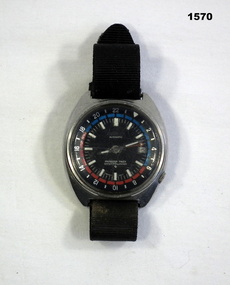
... Item brought home from Vietnam by Wesley Bertuch. Refer 1664.2 for his service history....Item brought home from Vietnam by Wesley Bertuch. Refer 1664.2 for his service history. personal effects Seiko watch bertuch “Model 6117-6410 s/n 070093” Seiko wristwatch waterproof. ...Item brought home from Vietnam by Wesley Bertuch. Refer 1664.2 for his service history.Seiko wristwatch waterproof. The watch has a 24hr setting 12hr marked Blue 12hrs marked in red.“Model 6117-6410 s/n 070093”personal effects, seiko, watch, bertuch -
 4th/19th Prince of Wales's Light Horse Regiment Unit History Room
Flag - Red Ensign, Surgeons' Banner, 1850 (estimated)
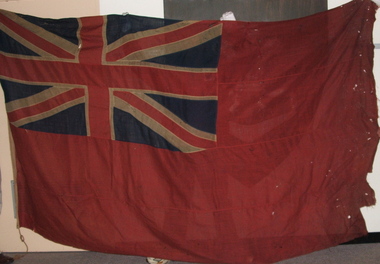
... history. Provenance It is believed that the Banner was manufactured in Britain and brought to Australia by Samuel Smith. ...Red Ensign 1801 design. - The British red ensign was altered in 1801 to include the change to the design of the Union Jack. British legislation required, with a few exceptions, that all merchant shipping throughout the British Empire fly the British Red Ensign, without any defacement or modification. The ensign is sometimes referred to as the red duster. The Royal Navy stopped using the Red Ensign in 1864. This red ensign was used by the Surgeons of the Kyneton District Mounted Rifles to indicate their location. The Banner is a large red ensign mounted on a 10 foot long polished wooden pike. The Banner was used by the Kyneton District Mounted Rifles, later The Royal Volunteer Cavalry Regiment (Prince of Wales Hussars), then Prince of Wales Victorian Light Horse, ancestor units of the modern day 4th /19th Prince of Wales’s Light Horse Regiment. In the binding is the inscription ‘Kyneton Prince of Wales Light Horse’ and three names: Surg-Major S Smith MRSLE, Dr McMillan, and Maj Thirkettle. These surgeons played a significant role in the military and civil affairs of Kyneton. Dr McMillan Dr McMillan was the first surgeon but left KPWLH 2-3 months after its formation and little else is known of him. Surgeon-Major Samuel Smith 1836 Born, Scotland 1857 Surgeon to the Hon. Hudson Bay Company. Ship “Prince Arthur” from London to Moose Fort, Hudson Bay. June 13 – Aug. 24 1857. 1858 Appointed Medical Officer of large immigrant ship to Port Phillip 1859 Appointed Assistant District Coroner, Castlemaine 1859 Appointed to Castlemaine Hospital 1862 Appointed first resident surgeon and manager of Kyneton Hospital Foundation member of Kyneton District Mounted Rifles 1874 Appointed Surgeon-Major Kyneton Volunteer Prince of Wales Light Horse Conducted a private practice in Kyneton. 1909 Died 8 November 1909, aged 73 years Samuel Smith was a Life Governor of Castlemaine Benevolent Asylum, a member of St Andrews Presbyterian Church, a Mark Master Mason of the Edward Coulson Lodge No 17, Kyneton. He also had a notable collection of stuffed native birds and animals of which he had great knowledge. Major Thirkettle 1855 Major Thirkettle arrived in Kyneton Established a timber merchant and ironmongery business in Kyneton with Robert Burton. 1857 By 1857 he was practising as an architect. His house is still standing in Yaldwin St, West Kyneton. 1860 Joined the Prince of Wales Light Horse 1863 Joined Rifle Volunteers and appointed Captain. On their disbandment he was made Honorary Major. 1864 Won Queen’s prize for rifle shooting. Major Thirkettle was noted for his skill with woodwork. He won many prizes and orders of merit for his models of yachts It is believed likely that he made the wooden pike with its metal head (now missing). He was Tyler of the Zetland Lodge, also Secretary of the MUIOOF and Bowling Club. 1904 Died in Kyneton, aged 75 years Protection for medical services The Surgeons’ Banner indicated the location of the Regimental Aid Post. The use of this device in the 1860’s overlapped the adoption of the Red Cross which became the symbol for the protection of sick and wounded soldiers. In 1864 twelve European nations signed a treaty stating that in future wars they would care for all sick and wounded military personnel, regardless of nationality. They would also recognise the neutrality of medical personnel, hospitals and ambulances identified by the emblem of a red cross on a white background. The treaty was called the Geneva Convention. This Convention was concerned only with soldiers wounded on the battlefield. Over the years, however, it has been expanded to cover everyone caught up in conflicts but not actually taking an active part in the fighting. The Surgeons’ Banner complements the Colours of the Kyneton District Mounted Rifles, also held by the Unit History Room, in presenting the colonial period of the Regiment’s history. Provenance It is believed that the Banner was manufactured in Britain and brought to Australia by Samuel Smith. After the disbanding of Colonial units, the Banner was in the care of the Shire of Kyneton until presented to the 4/19 Prince of Wales’s Light Horse Regiment on 14 September 1986 on the occasion of the Regiment exercising its right of freedom of entry to the city. There are many examples of Regimental and King’s/Queen’s Colours held by various organisations. However A Surgeons’ Banner such as this is rare, if not unique, in Australia. A large red ensign, post 1801 design. - The British red ensign was altered in 1801 to include the change to the design of the Union Jack. British legislation required, with a few exceptions, that all merchant shipping throughout the British Empire fly the British Red Ensign, without any defacement or modification. The ensign is sometimes referred to as the red duster. The Royal Navy stopped using the Red Ensign in 1864. On the binding is the inscription: "Kyneton Prince of Wales Light Horse", and three names - Surgeon Major S Smith MRSLE Dr McMillan Major Thirkettleheraldry, red ensign, surgeons banner, kyneton district mounted rifles -
 Warrnambool and District Historical Society Inc.
Textile - Woollen Blanket, Warrnambool Woollen Mill, Circa 1949
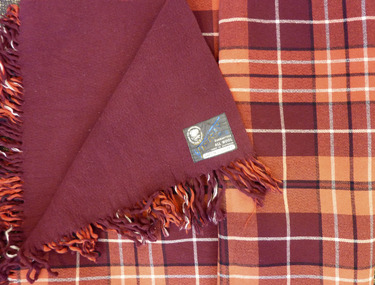
... brought the mill in 1968 and there was a slow downturn with numerous owners until it closed in 2000. The site passed into private hands in 2003. Both the Warrnambool Woollen Mill and the Melbourne to Warrnambool Road Race are a significant part of local history. ...The first Warrnambool to Melbourne cycling race was held in October 1895. 24 riders started with only 7 finishing the race. W. Nicol was the winner of the inaugural race. Two months later on 14/12/1895 the race was run in reverse. For the ensuing 43 years it was mainly Melbourne to Warrnambool. Since 1939 it has been run mainly Melbourne to Warrnambool. The prize of this blanket was 2nd prize to E. Ion of Tasmania in October 1949. The prize itself, A Warrnambool Blankets Tartan rug was made at the Warrnambool Woollen Mill in Harris St Warrnambool Early efforts to establish a woollen Mill in Warrnambool commenced with an early mill on the Merri at Woodford in 1874 but the site proved unsuitable and was financially struggling. The decision was made to move plant and and machinery to the old meat preserving factory in South Warrnambool The plant and equipment was sold to Mr Robert Hood of Sherwood on the Hopkins River East Warrnambool who carried on the venture until fire destroyed the building in 1882, The site lay idle until a group of local businessmen raised 40000 pounds to establish the mill in 1910. It continued to trade well through the early and mid 20th century. Dunlop brought the mill in 1968 and there was a slow downturn with numerous owners until it closed in 2000. The site passed into private hands in 2003.Both the Warrnambool Woollen Mill and the Melbourne to Warrnambool Road Race are a significant part of local history. The Melbourne to Warrnambool Cycling road race remains one of the premier sporting events in Australia. It commenced in 1895 Maroon and red block check with black and white check lines on front with plain maroon back. Fringed on two sides. Grey cotton label with The Warrnambool Woollen Mill Co Limited in top Left hand side of label, Victory Rug diagonally in blue Guaranteed All WOOL Made in Australia in bottom RH corner of label. Owner M bottom of label. 1949 Mr. Ernie Ion” handwritten in black pen.warrnambool, warrnambool woollen mill, marcus saltau, w. nicol -
 Warrnambool and District Historical Society Inc.
Leisure object - Sheet music, First love, 1850s
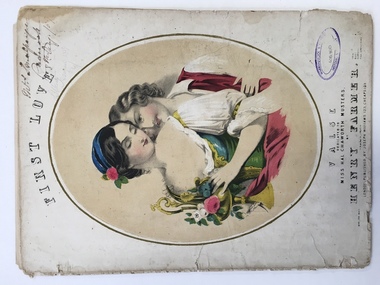
... history of Warrnambool because of his connection with coastal shipping and his relationship with Captain Helpman. As far as we know the Hentys never lived in Warrnambool but it is possible that this music was played on the ‘Henty’ piano that was donated to the old Warrnambool Museum in 1889 and is now in the Warrnambool Art Gallery. The Hentys brought ...This piece of music, ‘First Love’, dates from the 1850s and was composed by Henry Farmer (1819-1891). Born in Nottingham, Farmer was an organist and composer and conductor of the Nottingham Harmonic Society from 1866 to 1880. He dedicated this music to Miss Hal Chaworth Musters. It is not known who ‘Miss Hal’ was but the Chaworth name was an ancient one in Nottingham and marriage with a member of the Musters family brought into being the name ‘Chaworth Musters’ and the estates included Annesley, Edwalton and Wiverton. The signatures on the front cover indicate that this music is connected to two early families in the district. Stephen Henty owned Cadnook (Kadnook), near Harrow, in the 1850s and sold it to Mordaunt Smalpage (or Smalpaige) in July 1859. Stephen Henty, who came to Victoria in 1836, was the brother-in-law of Captain Helpman, the Warrnambool Harbour Master from 1861 to 1869. They were co-owners of the ‘Champion’ which plied between Portland and Melbourne until it was wrecked off Cape Otway in 1857 when it collided with the ‘Lady Bird’.This is a most significant item because of the signatures on the front cover. Stephen Henty was important, not only in the history of Victoria, but also in the history of Warrnambool because of his connection with coastal shipping and his relationship with Captain Helpman. As far as we know the Hentys never lived in Warrnambool but it is possible that this music was played on the ‘Henty’ piano that was donated to the old Warrnambool Museum in 1889 and is now in the Warrnambool Art Gallery. The Hentys brought six pianos to Victoria in 1837. The music is also important in social history as an example of the music that was played in mid-Victorian drawing rooms. This is a piece of music of seven pages printed back to back (cover and 11 pages of musical notation) The pages have black printing on white with a multi-coloured front cover. The cover has a stylized portrait of a man and woman in period costume. The woman is holding an urn of flowers. Some of the pages are loose and the page folds and corners are tattered and torn. The name ‘Smalpaige ‘is written in ink and the name ‘Henty’ is written in pencil. Front Cover: ‘Mrs Smalpaige, Cadnook, 8th Aug/59’ ‘S.Henty, 8 August 1859’ ‘First Love’, ‘Valse dedicated to Miss Hal Chaworth Musters by Henry Farmer, London, Published by Joseph Williams, 123, Cheapside, Solo, 4, Duet, 4, Septett, 3/6, Full Orchestra, 5/-, Ent. Sta. Hall.’ stephen henty, mrs smalpaige, warrnambool, first love sheet music, history of warrnambool, henry farmer -
 Kiewa Valley Historical Society
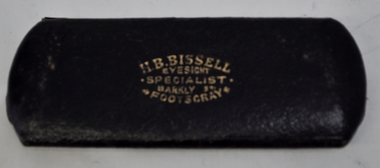
Case Leather for Reading Spectacles
... history when rural Australian families required to travel long distances to obtain professional "eyesight" treatment which, on the whole, were only available in the capital cities (in this case Melbourne). In the pre 1960's, the greater the distance from capital cities for Australian rural folk to seek professional medical, dental, nose ,eye and throat specialists the greater the time involved resulting in the greater expense. This "isolation" brought ...This small, slim case was manufactured to contain reading spectacles in a secure but yet "manageable pocket or purse" environment. It was manufactured to contain reading glasses that would not exceed 12mm in thickness. The product was targeting the "professional" reader ie. accountant, lawyer, business and property managers. Because it was made for a "eyesight" specialist to contain "prescription" reading spectacles the quality had to be of a higher level than cheaper "off the shelf" ones. This case was made and used in the late 1800's and early 1900's.This case, for spectacles, holds a significant position in that it points to a time in history when rural Australian families required to travel long distances to obtain professional "eyesight" treatment which, on the whole, were only available in the capital cities (in this case Melbourne). In the pre 1960's, the greater the distance from capital cities for Australian rural folk to seek professional medical, dental, nose ,eye and throat specialists the greater the time involved resulting in the greater expense. This "isolation" brought about increased costs not experienced by city residences. The quality and durability of this case was a pre-requisite for the Kiewa Valley based resident.This slim spring lid spectacle case has a body of light steel over layered by a fine skin dyed(dark brown) leather coating. The inside, of the case, has a 1mm lip opposite the hinged end (to secure the reading spectacles within the case). The inside is fully covered by a "royal" purple felt (to provide the spectacles with a scratch free enclosure).At the outside base in gold lettering "H.B. BISSELL" underneath "EYESIGHT" underneath "SPECIALIST" underneath "BARKLY st", underneath "FOOTSCRAY"personal effects, spectacles, eye fashion, reading glasses -
 Kiewa Valley Historical Society
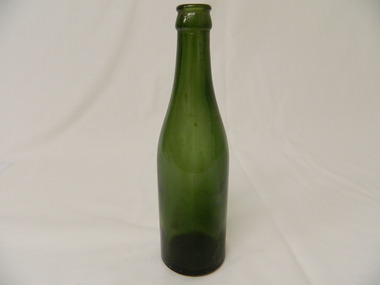
Bottle, From 1915 to mid 1920's
... History of bottles made in Scotland and sold in Australia c1920's. Possibly brought to Australia as a gift. ...History of bottles made in Scotland and sold in Australia c1920's. Possibly brought to Australia as a gift. ...Drink came in bottles sold locally or in larger cities visited during shopping expeditions. The shape of bottles varied. History of bottles made in Scotland and sold in Australia c1920's. Possibly brought to Australia as a gift. Contents not known.Historical: Change of bottles - shape, glass, embossing, use Aesthetic; Display showing embossing and shape.Clear green glass medium sized bottle joined on each side longitudinally. Heavy embossing on the base. Straight sides half way up from the base gradual tapering to a lip near the opening.Around the circumference of the base: 'Bottle Made In Scotland' In the centre of the base: 'P' followed by '25'drink, bottle, green glass, scotland bottle -
 Bendigo Historical Society Inc.
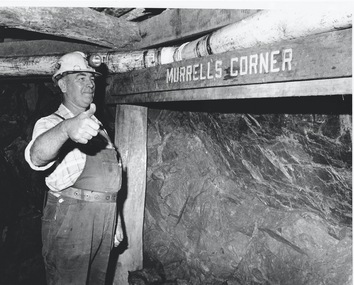
Photograph - AUSTIN COLLECTION: Ray Beer, Central Deborah Gold Mine
... history increased, so did the opening hours. In 1974 the mine was gazetted as a Public Historical Purposes Reserve and attracted such visitors as H.R.H Prince Charles. By far the greatest shortcoming at this stage was that no one could view the underground workings, as these had become flooded. After what could only be described as a monumental effort by everyone involved, Level 2 of the mine was officially opened to the public by the Premier of Victoria, the Honourable John Cain, on 20 June 1986, which brought to fruition a long standing dream....history increased, so did the opening hours. In 1974 the mine was gazetted as a Public Historical Purposes Reserve and attracted such visitors as H.R.H Prince Charles. By far the greatest shortcoming at this stage was that no one could view the underground workings, as these had become flooded. After what could only be described as a monumental effort by everyone involved, Level 2 of the mine was officially opened to the public by the Premier of Victoria, the Honourable John Cain, on 20 June 1986, which brought to fruition a long standing dream. ...Ray Beer was an employee of the Central Deborah Gold Mine. February 15th 2009: Bendigo Advertiser: 'MINING stalwart Raymond Beer has died at the age of 74 after a battle with cancer. He leaves behind an extended family and a legacy in Bendigo’s mining history. Ray was mine manager at the Central Deborah Gold Mine - appointed in 1978 - and led the team that made possible the underground project at the second level. He had a vision to allow visitors to go underground and experience Bendigo’s mining heritage first hand. Ray was responsible for developing the new battery, shaft and poppet head to make this a reality. It took persistence and lots of hard work. Friend and work colleague Bill McNamara said Ray was as good as 10 men. His enthusiasm and work ethic were unprecedented. Ray will be sadly missed by his wife, Thelma, six children, 15 grandchildren, seven brothers, three sisters, his extended family, and friends. He will be remembered for his kindness, tenacity and strength of character. In recognition of his contribution to Bendigo’s mining history, after more than 20 years of service at his retirement, a bronze life-sized statue was unveiled in his honour'. Central Deborah Gold Mine history: At its peak, Central Deborah Gold Mine reached a depth of 412 metres. It has 17 separate levels and 15 kilometres of drives and cross cuts (tunnels). The Central Deborah was very much a hands-on mine and the conditions that the miners worked in would be considered shocking by today's standards – being lowered underground in a cage with only two sides, often working ankle to knee deep in water, filling up to 32 ore trucks a shift by hand which were then pushed a mile or more along rails in the drives, working by carbide lamp, breathing in the fumes and rock dust and communication by bells. Geez, they were ironmen. However, at the time working conditions were considered to be among the best on the goldfields at Central Deborah, after all it was one of the only mines that had hot showers. Following Central Deborah Gold Mine's closure, the Bendigo skyline began to noticeably change. Obvious remnants of mining such as poppet heads, engine rooms, service quarters, battery houses and chimneys were steadily disappearing. After intense lobbying by the local community, the Bendigo City Council purchased the still very much intact Central Deborah Gold Mine in 1970 for a mere $6,000 to ensure that a vital link to Bendigo's historic golden past was maintained. The Bendigo Trust was then formed to oversee the operations of the Central Deborah Gold Mine, which led to the surface of the mine being opened to the public in 1971. Initially the surface was open for just 12 hours a week and as the demand for viewing a part of Bendigo's history increased, so did the opening hours. In 1974 the mine was gazetted as a Public Historical Purposes Reserve and attracted such visitors as H.R.H Prince Charles. By far the greatest shortcoming at this stage was that no one could view the underground workings, as these had become flooded. After what could only be described as a monumental effort by everyone involved, Level 2 of the mine was officially opened to the public by the Premier of Victoria, the Honourable John Cain, on 20 June 1986, which brought to fruition a long standing dream.Black and white photograph. Ray Beer, underground at Central Deborah Gold Mine, standing alongside wooden sign 'Murrell's Corner'. Sign is placed horizontally on timber supports, side of drive visible in background. Ray is wearing bib and brace overalls and hard hat with a belt around his waist. He is giving a 'thumbs up' sign. gold mining, central deborah gold mine, ray beer, mine manager -
 Bendigo Historical Society Inc.
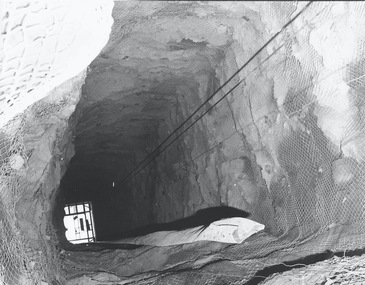
Photograph - AUSTIN COLLECTION: Central Deborah Gold Mine Lift Shaft
... history increased, so did the opening hours. In 1974 the mine was gazetted as a Public Historical Purposes Reserve and attracted such visitors as H.R.H Prince Charles. By far the greatest shortcoming at this stage was that no one could view the underground workings, as these had become flooded. After what could only be described as a monumental effort by everyone involved, Level 2 of the mine was officially opened to the public by the Premier of Victoria, the Honourable John Cain, on 20 June 1986, which brought to fruition a long standing dream....history increased, so did the opening hours. In 1974 the mine was gazetted as a Public Historical Purposes Reserve and attracted such visitors as H.R.H Prince Charles. By far the greatest shortcoming at this stage was that no one could view the underground workings, as these had become flooded. After what could only be described as a monumental effort by everyone involved, Level 2 of the mine was officially opened to the public by the Premier of Victoria, the Honourable John Cain, on 20 June 1986, which brought to fruition a long standing dream. ...Central Deborah Gold Mine history: At its peak, Central Deborah Gold Mine reached a depth of 412 metres. It has 17 separate levels and 15 kilometres of drives and cross cuts (tunnels). The Central Deborah was very much a hands-on mine and the conditions that the miners worked in would be considered shocking by today's standards – being lowered underground in a cage with only two sides, often working ankle to knee deep in water, filling up to 32 ore trucks a shift by hand which were then pushed a mile or more along rails in the drives, working by carbide lamp, breathing in the fumes and rock dust and communication by bells. Geez, they were ironmen. However, at the time working conditions were considered to be among the best on the goldfields at Central Deborah, after all it was one of the only mines that had hot showers. Following Central Deborah Gold Mine's closure, the Bendigo skyline began to noticeably change. Obvious remnants of mining such as poppet heads, engine rooms, service quarters, battery houses and chimneys were steadily disappearing. After intense lobbying by the local community, the Bendigo City Council purchased the still very much intact Central Deborah Gold Mine in 1970 for a mere $6,000 to ensure that a vital link to Bendigo's historic golden past was maintained. The Bendigo Trust was then formed to oversee the operations of the Central Deborah Gold Mine, which led to the surface of the mine being opened to the public in 1971. Initially the surface was open for just 12 hours a week and as the demand for viewing a part of Bendigo's history increased, so did the opening hours. In 1974 the mine was gazetted as a Public Historical Purposes Reserve and attracted such visitors as H.R.H Prince Charles. By far the greatest shortcoming at this stage was that no one could view the underground workings, as these had become flooded. After what could only be described as a monumental effort by everyone involved, Level 2 of the mine was officially opened to the public by the Premier of Victoria, the Honourable John Cain, on 20 June 1986, which brought to fruition a long standing dream.Black and white photograph, looking from bottom of lift shaft towards the surface; light visible at top of shaft. Lift cables and safety mesh on sides of shaft. gold mining, central deborah gold mine, ray beer, mine manager -
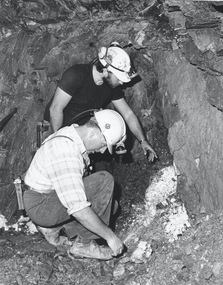 Bendigo Historical Society Inc.
Photograph - AUSTIN COLLECTION: Central Deborah Gold Mine, Possibly 1990's
... history increased, so did the opening hours. In 1974 the mine was gazetted as a Public Historical Purposes Reserve and attracted such visitors as H.R.H Prince Charles. By far the greatest shortcoming at this stage was that no one could view the underground workings, as these had become flooded. After what could only be described as a monumental effort by everyone involved, Level 2 of the mine was officially opened to the public by the Premier of Victoria, the Honourable John Cain, on 20 June 1986, which brought to fruition a long standing dream....history increased, so did the opening hours. In 1974 the mine was gazetted as a Public Historical Purposes Reserve and attracted such visitors as H.R.H Prince Charles. By far the greatest shortcoming at this stage was that no one could view the underground workings, as these had become flooded. After what could only be described as a monumental effort by everyone involved, Level 2 of the mine was officially opened to the public by the Premier of Victoria, the Honourable John Cain, on 20 June 1986, which brought to fruition a long standing dream. ...Central Deborah Gold Mine history: At its peak, Central Deborah Gold Mine reached a depth of 412 metres. It has 17 separate levels and 15 kilometres of drives and cross cuts (tunnels). The Central Deborah was very much a hands-on mine and the conditions that the miners worked in would be considered shocking by today's standards – being lowered underground in a cage with only two sides, often working ankle to knee deep in water, filling up to 32 ore trucks a shift by hand which were then pushed a mile or more along rails in the drives, working by carbide lamp, breathing in the fumes and rock dust and communication by bells. Geez, they were ironmen. However, at the time working conditions were considered to be among the best on the goldfields at Central Deborah, after all it was one of the only mines that had hot showers. Following Central Deborah Gold Mine's closure, the Bendigo skyline began to noticeably change. Obvious remnants of mining such as poppet heads, engine rooms, service quarters, battery houses and chimneys were steadily disappearing. After intense lobbying by the local community, the Bendigo City Council purchased the still very much intact Central Deborah Gold Mine in 1970 for a mere $6,000 to ensure that a vital link to Bendigo's historic golden past was maintained. The Bendigo Trust was then formed to oversee the operations of the Central Deborah Gold Mine, which led to the surface of the mine being opened to the public in 1971. Initially the surface was open for just 12 hours a week and as the demand for viewing a part of Bendigo's history increased, so did the opening hours. In 1974 the mine was gazetted as a Public Historical Purposes Reserve and attracted such visitors as H.R.H Prince Charles. By far the greatest shortcoming at this stage was that no one could view the underground workings, as these had become flooded. After what could only be described as a monumental effort by everyone involved, Level 2 of the mine was officially opened to the public by the Premier of Victoria, the Honourable John Cain, on 20 June 1986, which brought to fruition a long standing dream.Black and white photograph. Two men with hard hats and lights, inspecting quartz outcrop on wall of drive at Central Deborah Gold Mine.gold mining, central deborah gold mine, ray beer, mine manager -
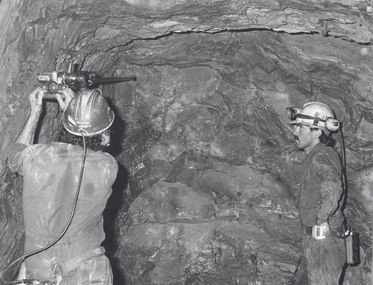 Bendigo Historical Society Inc.
Photograph - AUSTIN COLLECTION: Operating rock drill, Central Deborah Gold Mine, Possibly 1990's
... history increased, so did the opening hours. In 1974 the mine was gazetted as a Public Historical Purposes Reserve and attracted such visitors as H.R.H Prince Charles. By far the greatest shortcoming at this stage was that no one could view the underground workings, as these had become flooded. After what could only be described as a monumental effort by everyone involved, Level 2 of the mine was officially opened to the public by the Premier of Victoria, the Honourable John Cain, on 20 June 1986, which brought to fruition a long standing dream....history increased, so did the opening hours. In 1974 the mine was gazetted as a Public Historical Purposes Reserve and attracted such visitors as H.R.H Prince Charles. By far the greatest shortcoming at this stage was that no one could view the underground workings, as these had become flooded. After what could only be described as a monumental effort by everyone involved, Level 2 of the mine was officially opened to the public by the Premier of Victoria, the Honourable John Cain, on 20 June 1986, which brought to fruition a long standing dream. ...Central Deborah Gold Mine history: At its peak, Central Deborah Gold Mine reached a depth of 412 metres. It has 17 separate levels and 15 kilometres of drives and cross cuts (tunnels). The Central Deborah was very much a hands-on mine and the conditions that the miners worked in would be considered shocking by today's standards – being lowered underground in a cage with only two sides, often working ankle to knee deep in water, filling up to 32 ore trucks a shift by hand which were then pushed a mile or more along rails in the drives, working by carbide lamp, breathing in the fumes and rock dust and communication by bells. Geez, they were ironmen. However, at the time working conditions were considered to be among the best on the goldfields at Central Deborah, after all it was one of the only mines that had hot showers. Following Central Deborah Gold Mine's closure, the Bendigo skyline began to noticeably change. Obvious remnants of mining such as poppet heads, engine rooms, service quarters, battery houses and chimneys were steadily disappearing. After intense lobbying by the local community, the Bendigo City Council purchased the still very much intact Central Deborah Gold Mine in 1970 for a mere $6,000 to ensure that a vital link to Bendigo's historic golden past was maintained. The Bendigo Trust was then formed to oversee the operations of the Central Deborah Gold Mine, which led to the surface of the mine being opened to the public in 1971. Initially the surface was open for just 12 hours a week and as the demand for viewing a part of Bendigo's history increased, so did the opening hours. In 1974 the mine was gazetted as a Public Historical Purposes Reserve and attracted such visitors as H.R.H Prince Charles. By far the greatest shortcoming at this stage was that no one could view the underground workings, as these had become flooded. After what could only be described as a monumental effort by everyone involved, Level 2 of the mine was officially opened to the public by the Premier of Victoria, the Honourable John Cain, on 20 June 1986, which brought to fruition a long standing dream.Black and white photograph. Two men with hard hats and lights standing in front of underground rock surface at Central Deborah Gold Mine. Paul Maker on left hand side of image is operating a small rock drill. John Jeffrey on right hand side is observing the procedure. gold mining, central deborah gold mine, rock drill, underground
