
Showing 4452 items matching " american."
-
 Wodonga & District Historical Society Inc
Photograph - Framed photograph of the garden at the Sarah Coventry warehouse in Wodonga
... Ltd. was a North American jewellery company that was established in 1949 by the Stuart family as part of Emmons Jewelry, Inc. ...Ltd. was a North American jewellery company that was established in 1949 by the Stuart family as part of Emmons Jewelry, Inc. ...Sarah Coventry Pty. Ltd. was a North American jewellery company that was established in 1949 by the Stuart family as part of Emmons Jewelry, Inc. It began operations in England and Australia in 1968, and in Australia it moved from Carlton in Melbourne to Wodonga in 1969. The premises were originally on High Street in Wodonga, but a new warehouse was built in Melbourne Road later in 1969. It was a direct selling jewellery business using a party-plan model similar to Tupperware and Avon. The sales reps or 'Hostesses' were provided with jewellery samples in demonstration kits, which they displayed at jewellery parties in their homes. The designs for jewellery such as brooches, necklaces, earrings, chokers and bracelets were purchased from freelance designers and jewellery manufacturers rather than in-house designers. In 1979 Sarah Coventry Pty. Ltd. in Wodonga was bought by three Australian businessmen, including Wodonga local Jim Sawyer, and continued to sell jewellery under the name "Sargem Pty. Ltd”, for several more years in the 1980s. Eric Sumsion was a gardener and curator for the Wodonga Shire. As part of the Sarah Coventry collection, the framed photograph has local significance with the decentralised commercial development of regional centres such as Wodonga in NE Victoria, as well as with its association with Eric Sumsion who was a prominent figure in Wodonga's history and development. Faded colour photograph shows part of the garden at the Sarah Coventry warehouse in Wodonga, built in 1969, in a brown wooden frame."Presented to Eric Sumsion by Sarah Coventry : In appreciation of a job well done." written on the back of the framing.sarah coventry, jewellery, wodonga, costume jewellery, vintage fashion jewellery, eric sumsion -
 Wodonga & District Historical Society Inc
Functional object - Sarah Coventry set of glasses, C. 1979
... Ltd. was a North American jewellery company that was established in 1949 by the Stuart family as part of Emmons Jewelry, Inc. ...Ltd. was a North American jewellery company that was established in 1949 by the Stuart family as part of Emmons Jewelry, Inc. ...Sarah Coventry Pty. Ltd. was a North American jewellery company that was established in 1949 by the Stuart family as part of Emmons Jewelry, Inc. It began operations in England and Australia in 1968, and in Australia it moved from Carlton in Melbourne to Wodonga in 1969. The premises were originally on High Street in Wodonga, but a new warehouse was built in Melbourne Road later in 1969. It was a direct selling jewellery business using a party-plan model similar to Tupperware and Avon. The sales reps or 'Hostesses' were provided with jewellery samples in demonstration kits, which they displayed at jewellery parties in their homes. The designs for jewellery such as brooches, necklaces, earrings, chokers and bracelets were purchased from freelance designers and jewellery manufacturers rather than in-house designers. In 1979 Sarah Coventry Pty. Ltd. in Wodonga was bought by three Australian businessmen, including Wodonga local Jim Sawyer, and continued to sell jewellery under the name "Sargem Pty. Ltd”, for several more years in the 1980s, along with a new range of fashion jewellery, Affinity.As part of the Sarah Coventry collection, the glasses have local significance with the decentralised commercial development of regional centres such as Wodonga in NE Victoria, as well as national and international significance from the perspective of social and economic developments for women after World War II. The direct selling party-plan business model Sarah Coventry was based on is also considered the first of its kind for jewellery. They represent the launch of a new line of jewellery after Sarah Coventry was bought out by Australian businessmen.A set of 6 glasses to commemorate the launch of a new range of fashion jewellery, Affinity.Affinity with Sarahsarah coventry, jewellery, wodonga, costume jewellery, vintage fashion jewellery, sawyer -
 City of Greater Bendigo - Civic Collection
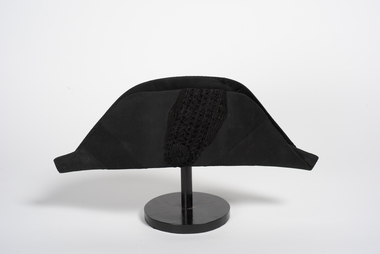
Ceremonial object - Bicorne Hat, Ede and Ravescroft
... The bicorne or bicorn (two-cornered) was a hat widely adopted in the 1790s as an item of uniform by European and American army and naval officers. Military style uniforms were largely adopted for any man serving in an official capacity, such as a post master, mayor or police before specifically designed uniforms or robes were created. ...The bicorne or bicorn (two-cornered) was a hat widely adopted in the 1790s as an item of uniform by European and American army and naval officers. Military style uniforms were largely adopted for any man serving in an official capacity, such as a post master, mayor or police before specifically designed uniforms or robes were created. ...The bicorne or bicorn (two-cornered) was a hat widely adopted in the 1790s as an item of uniform by European and American army and naval officers. Military style uniforms were largely adopted for any man serving in an official capacity, such as a post master, mayor or police before specifically designed uniforms or robes were created. Ede & Ravenscroft is London’s oldest tailor formally established in 1689 in Aldwych from where it had been operating for many years before. It was from here, amongst the many tailors, cloth merchants, robemakers, furriers, embroiderers and haberdashers that the company began its illustrious path of dressing the modern British gent. It began with the respected tailoring family the Shudalls whose work won them the honour of creating the robes for the coronation of their Majesties King William III and Queen Mary II. They soon became a recognised supplier for the royal family, going on to produce a large number or ceremonial robes for the coronation of His Majesty King George III.Black hand made fabric hat with two distinctive halves pinned up to create a semi circular fan shape. Black braided cockade with decorative knot. Makers label underside of crown; Ede and Ravenscroft / Londoncity of greater bendigo ceremonial item -
 City of Greater Bendigo - Civic Collection
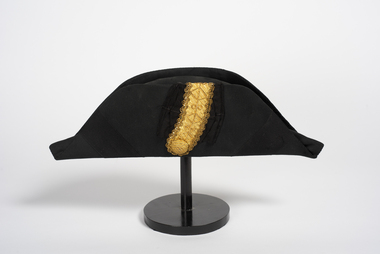
Ceremonial object - Bicorne Hat, Ede and Ravenscroft
... The bicorne or bicorn (two-cornered) was a hat widely adopted in the 1790s as an item of uniform by European and American army and naval officers. Military style uniforms were largely adopted for any man serving in an official capacity, such as a post master, mayor or police before specifically designed uniforms or robes were created. ...The bicorne or bicorn (two-cornered) was a hat widely adopted in the 1790s as an item of uniform by European and American army and naval officers. Military style uniforms were largely adopted for any man serving in an official capacity, such as a post master, mayor or police before specifically designed uniforms or robes were created. ...The bicorne or bicorn (two-cornered) was a hat widely adopted in the 1790s as an item of uniform by European and American army and naval officers. Military style uniforms were largely adopted for any man serving in an official capacity, such as a post master, mayor or police before specifically designed uniforms or robes were created. Ede & Ravenscroft is London’s oldest tailor formally established in 1689 in Aldwych from where it had been operating for many years before. It was from here, amongst the many tailors, cloth merchants, robemakers, furriers, embroiderers and haberdashers that the company began its illustrious path of dressing the modern British gent. It began with the respected tailoring family the Shudalls whose work won them the honour of creating the robes for the coronation of their Majesties King William III and Queen Mary II. They soon became a recognised supplier for the royal family, going on to produce a large number or ceremonial robes for the coronation of His Majesty King George III.Black hand made fabric hat with two distinctive halves pinned up to create a semi circular fan shape. Gold braided and beaded cockade with decorative knot.Makers label underside of crown; Ede and Ravenscroft / Londoncity of greater bendigo ceremonial item -
 City of Greater Geelong
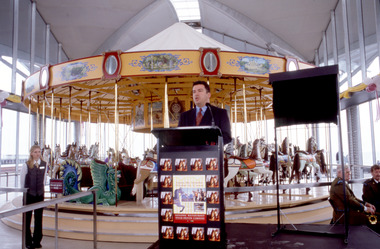
Photograph - Carousel Opening, Geelong Waterfront, Katrina J Lawrence, 14 October 2000
... Twenty-four of the 36 horses are original, and believed to be rare examples hand-carved by the American master, Charles Dare. Each horse took 300 hours to restore, with intricate carving, coating, filling, sanding, smoothing, painting and varnishing....Twenty-four of the 36 horses are original, and believed to be rare examples hand-carved by the American master, Charles Dare. Each horse took 300 hours to restore, with intricate carving, coating, filling, sanding, smoothing, painting and varnishing. merry go-round horses carousel geelong restoration rides j. j. miller Geelong Waterfront Michael Crutchfield Steam Engine Katrina Lawrence Opening 35mm colour transparency steampacket place development board City of Greater Geelong revitalisation celebration event armitage-herschell Geelong Memorial Brass Band Colour image showing a man speaking at a podium. ...This image is part of a collection of 35mm colour transparencies taken by photographer Katrina Lawrence at the opening of the carousel on the waterfront in Geelong on 14th October 2000. This image shows a man giving a speech at the opening celebrations. The Steampacket Place Development Board, a joint team formed by the Victorian State Government and the City of Greater Geelong undertook the $30 million revitalisation of the entire Geelong Waterfront from 1995 to 2000. As part of the revitalisation, in August 1996, the Steampacket Place Development Board purchased an unrestored Armitage-Herschell portable steam-driven carousel to restore and locate as a major feature on the revitalised waterfront. The Carousel was manufactured around 1892 by the Armitage-Herschell company of New York. The Carousel operated on the Mordialloc Pier from the 1920s to the 1950s. Twenty-four of the 36 horses are original, and believed to be rare examples hand-carved by the American master, Charles Dare. Each horse took 300 hours to restore, with intricate carving, coating, filling, sanding, smoothing, painting and varnishing.Colour image showing a man speaking at a podium. A carousel is shown in the background.merry go-round, horses, carousel, geelong, restoration, rides, j. j. miller, geelong waterfront, michael crutchfield, steam engine, katrina lawrence, opening, 35mm colour transparency, steampacket place development board, city of greater geelong, revitalisation, celebration, event, armitage-herschell, geelong memorial brass band -
 City of Greater Geelong
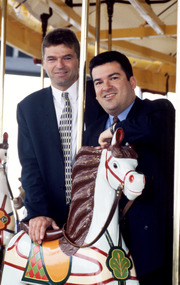
Photograph - Carousel Opening, Geelong Waterfront, Katrina J Lawrence, 14 October 2000
... Twenty-four of the 36 horses are original, and believed to be rare examples hand-carved by the American master, Charles Dare. Each horse took 300 hours to restore, with intricate carving, coating, filling, sanding, smoothing, painting and varnishing....Twenty-four of the 36 horses are original, and believed to be rare examples hand-carved by the American master, Charles Dare. Each horse took 300 hours to restore, with intricate carving, coating, filling, sanding, smoothing, painting and varnishing. merry go-round horses carousel geelong restoration rides j. j. miller Geelong Waterfront Michael Crutchfield Steam Engine Katrina Lawrence Opening 35mm colour transparency steampacket place development board City of Greater Geelong revitalisation celebration event armitage-herschell Geelong Memorial Brass Band Colour image showing two men in suits standing near a carousel horse. ...This image is part of a collection of 35mm colour transparencies taken by photographer Katrina Lawrence at the opening of the carousel on the waterfront in Geelong on 14th October 2000. This image shows Mayor Michael Crutchfield and another man at the opening celebrations. The Steampacket Place Development Board, a joint team formed by the Victorian State Government and the City of Greater Geelong undertook the $30 million revitalisation of the entire Geelong Waterfront from 1995 to 2000. As part of the revitalisation, in August 1996, the Steampacket Place Development Board purchased an unrestored Armitage-Herschell portable steam-driven carousel to restore and locate as a major feature on the revitalised waterfront. The Carousel was manufactured around 1892 by the Armitage-Herschell company of New York. The Carousel operated on the Mordialloc Pier from the 1920s to the 1950s. Twenty-four of the 36 horses are original, and believed to be rare examples hand-carved by the American master, Charles Dare. Each horse took 300 hours to restore, with intricate carving, coating, filling, sanding, smoothing, painting and varnishing.Colour image showing two men in suits standing near a carousel horse.merry go-round, horses, carousel, geelong, restoration, rides, j. j. miller, geelong waterfront, michael crutchfield, steam engine, katrina lawrence, opening, 35mm colour transparency, steampacket place development board, city of greater geelong, revitalisation, celebration, event, armitage-herschell, geelong memorial brass band -
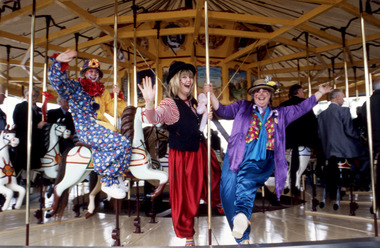 City of Greater Geelong
Photograph - Carousel Opening, Geelong Waterfront, Katrina J Lawrence, 14 October 2000
... Twenty-four of the 36 horses are original, and believed to be rare examples hand-carved by the American master, Charles Dare. Each horse took 300 hours to restore, with intricate carving, coating, filling, sanding, smoothing, painting and varnishing....Twenty-four of the 36 horses are original, and believed to be rare examples hand-carved by the American master, Charles Dare. Each horse took 300 hours to restore, with intricate carving, coating, filling, sanding, smoothing, painting and varnishing. merry go-round horses carousel geelong restoration rides j. j. miller Geelong Waterfront Michael Crutchfield Steam Engine Katrina Lawrence Opening 35mm colour transparency steampacket place development board City of Greater Geelong revitalisation celebration event armitage-herschell Geelong Memorial Brass Band Colour image showing three entertainers on a carousel. ...This image is part of a collection of 35mm colour transparencies taken by photographer Katrina Lawrence at the opening of the carousel on the waterfront in Geelong on 14th October 2000. This image shows entertainers on the carousel at the opening celebrations. The Steampacket Place Development Board, a joint team formed by the Victorian State Government and the City of Greater Geelong undertook the $30 million revitalisation of the entire Geelong Waterfront from 1995 to 2000. As part of the revitalisation, in August 1996, the Steampacket Place Development Board purchased an unrestored Armitage-Herschell portable steam-driven carousel to restore and locate as a major feature on the revitalised waterfront. The Carousel was manufactured around 1892 by the Armitage-Herschell company of New York. The Carousel operated on the Mordialloc Pier from the 1920s to the 1950s. Twenty-four of the 36 horses are original, and believed to be rare examples hand-carved by the American master, Charles Dare. Each horse took 300 hours to restore, with intricate carving, coating, filling, sanding, smoothing, painting and varnishing.Colour image showing three entertainers on a carousel.merry go-round, horses, carousel, geelong, restoration, rides, j. j. miller, geelong waterfront, michael crutchfield, steam engine, katrina lawrence, opening, 35mm colour transparency, steampacket place development board, city of greater geelong, revitalisation, celebration, event, armitage-herschell, geelong memorial brass band -
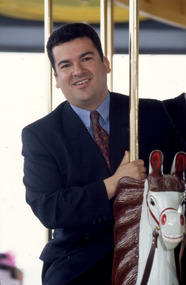 City of Greater Geelong
Photograph - Carousel Opening, Geelong Waterfront, Katrina J Lawrence, 14 October 2000
... Twenty-four of the 36 horses are original, and believed to be rare examples hand-carved by the American master, Charles Dare. Each horse took 300 hours to restore, with intricate carving, coating, filling, sanding, smoothing, painting and varnishing....Twenty-four of the 36 horses are original, and believed to be rare examples hand-carved by the American master, Charles Dare. Each horse took 300 hours to restore, with intricate carving, coating, filling, sanding, smoothing, painting and varnishing. merry go-round horses carousel geelong restoration rides j. j. miller Geelong Waterfront Michael Crutchfield Steam Engine Katrina Lawrence Opening 35mm colour transparency steampacket place development board City of Greater Geelong revitalisation celebration event armitage-herschell Geelong Memorial Brass Band Colour image showing a man in a suit on a carousel horse. ...This image is part of a collection of 35mm colour transparencies taken by photographer Katrina Lawrence at the opening of the carousel on the waterfront in Geelong on 14th October 2000. This image shows a man on the carousel at the opening celebrations. The Steampacket Place Development Board, a joint team formed by the Victorian State Government and the City of Greater Geelong undertook the $30 million revitalisation of the entire Geelong Waterfront from 1995 to 2000. As part of the revitalisation, in August 1996, the Steampacket Place Development Board purchased an unrestored Armitage-Herschell portable steam-driven carousel to restore and locate as a major feature on the revitalised waterfront. The Carousel was manufactured around 1892 by the Armitage-Herschell company of New York. The Carousel operated on the Mordialloc Pier from the 1920s to the 1950s. Twenty-four of the 36 horses are original, and believed to be rare examples hand-carved by the American master, Charles Dare. Each horse took 300 hours to restore, with intricate carving, coating, filling, sanding, smoothing, painting and varnishing.Colour image showing a man in a suit on a carousel horse.merry go-round, horses, carousel, geelong, restoration, rides, j. j. miller, geelong waterfront, michael crutchfield, steam engine, katrina lawrence, opening, 35mm colour transparency, steampacket place development board, city of greater geelong, revitalisation, celebration, event, armitage-herschell, geelong memorial brass band -
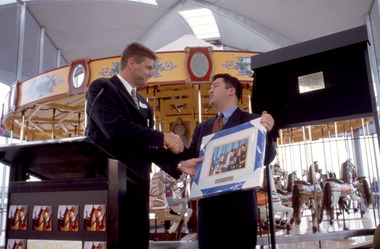 City of Greater Geelong
Photograph - Carousel Opening, Geelong Waterfront, Katrina J Lawrence, 14 October 2000
... Twenty-four of the 36 horses are original, and believed to be rare examples hand-carved by the American master, Charles Dare. Each horse took 300 hours to restore, with intricate carving, coating, filling, sanding, smoothing, painting and varnishing....Twenty-four of the 36 horses are original, and believed to be rare examples hand-carved by the American master, Charles Dare. Each horse took 300 hours to restore, with intricate carving, coating, filling, sanding, smoothing, painting and varnishing. merry go-round horses carousel geelong restoration rides j. j. miller Geelong Waterfront Michael Crutchfield Steam Engine Katrina Lawrence Opening 35mm colour transparency steampacket place development board City of Greater Geelong revitalisation celebration event armitage-herschell Geelong Memorial Brass Band Colour image showing two men shaking hands at a podium, holding artwork. ...This image is part of a collection of 35mm colour transparencies taken by photographer Katrina Lawrence at the opening of the carousel on the waterfront in Geelong on 14th October 2000. This image shows the mayor, Michael Crutchfield, being presented with artwork at the opening celebrations. The Steampacket Place Development Board, a joint team formed by the Victorian State Government and the City of Greater Geelong undertook the $30 million revitalisation of the entire Geelong Waterfront from 1995 to 2000. As part of the revitalisation, in August 1996, the Steampacket Place Development Board purchased an unrestored Armitage-Herschell portable steam-driven carousel to restore and locate as a major feature on the revitalised waterfront. The Carousel was manufactured around 1892 by the Armitage-Herschell company of New York. The Carousel operated on the Mordialloc Pier from the 1920s to the 1950s. Twenty-four of the 36 horses are original, and believed to be rare examples hand-carved by the American master, Charles Dare. Each horse took 300 hours to restore, with intricate carving, coating, filling, sanding, smoothing, painting and varnishing.Colour image showing two men shaking hands at a podium, holding artwork. A carousel is shown in the background.merry go-round, horses, carousel, geelong, restoration, rides, j. j. miller, geelong waterfront, michael crutchfield, steam engine, katrina lawrence, opening, 35mm colour transparency, steampacket place development board, city of greater geelong, revitalisation, celebration, event, armitage-herschell, geelong memorial brass band -
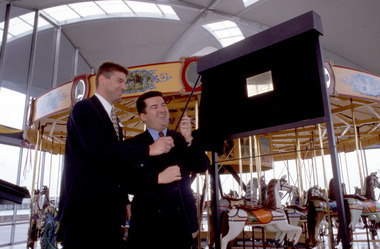 City of Greater Geelong
Photograph - Carousel Opening, Geelong Waterfront, Katrina J Lawrence, 14 October 2000
... Twenty-four of the 36 horses are original, and believed to be rare examples hand-carved by the American master, Charles Dare. Each horse took 300 hours to restore, with intricate carving, coating, filling, sanding, smoothing, painting and varnishing....Twenty-four of the 36 horses are original, and believed to be rare examples hand-carved by the American master, Charles Dare. Each horse took 300 hours to restore, with intricate carving, coating, filling, sanding, smoothing, painting and varnishing. merry go-round horses carousel geelong restoration rides j. j. miller Geelong Waterfront Michael Crutchfield Steam Engine Katrina Lawrence Opening 35mm colour transparency steampacket place development board City of Greater Geelong revitalisation celebration event armitage-herschell Geelong Memorial Brass Band Colour image showing two men unveiling a plaque. ...This image is part of a collection of 35mm colour transparencies taken by photographer Katrina Lawrence at the opening of the carousel on the waterfront in Geelong on 14th October 2000. This image shows a Mayor Michael Crutchfield, along with another man, unvieling a plaque at the opening celebrations. The Steampacket Place Development Board, a joint team formed by the Victorian State Government and the City of Greater Geelong undertook the $30 million revitalisation of the entire Geelong Waterfront from 1995 to 2000. As part of the revitalisation, in August 1996, the Steampacket Place Development Board purchased an unrestored Armitage-Herschell portable steam-driven carousel to restore and locate as a major feature on the revitalised waterfront. The Carousel was manufactured around 1892 by the Armitage-Herschell company of New York. The Carousel operated on the Mordialloc Pier from the 1920s to the 1950s. Twenty-four of the 36 horses are original, and believed to be rare examples hand-carved by the American master, Charles Dare. Each horse took 300 hours to restore, with intricate carving, coating, filling, sanding, smoothing, painting and varnishing.Colour image showing two men unveiling a plaque. A carousel is shown in the background.merry go-round, horses, carousel, geelong, restoration, rides, j. j. miller, geelong waterfront, michael crutchfield, steam engine, katrina lawrence, opening, 35mm colour transparency, steampacket place development board, city of greater geelong, revitalisation, celebration, event, armitage-herschell, geelong memorial brass band -
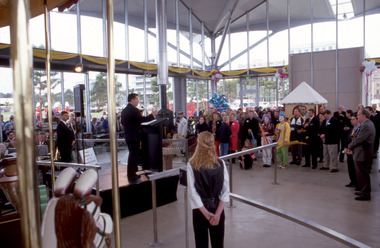 City of Greater Geelong
Photograph - Carousel Opening, Geelong Waterfront, Katrina J Lawrence, 14 October 2000
... Twenty-four of the 36 horses are original, and believed to be rare examples hand-carved by the American master, Charles Dare. Each horse took 300 hours to restore, with intricate carving, coating, filling, sanding, smoothing, painting and varnishing....Twenty-four of the 36 horses are original, and believed to be rare examples hand-carved by the American master, Charles Dare. Each horse took 300 hours to restore, with intricate carving, coating, filling, sanding, smoothing, painting and varnishing. merry go-round horses carousel geelong restoration rides j. j. miller Geelong Waterfront Michael Crutchfield Steam Engine Katrina Lawrence Opening 35mm colour transparency steampacket place development board City of Greater Geelong revitalisation celebration event armitage-herschell Geelong Memorial Brass Band Colour image showing a man giving a speech at a podium to a crowd in the background. ...This image is part of a collection of 35mm colour transparencies taken by photographer Katrina Lawrence at the opening of the carousel on the waterfront in Geelong on 14th October 2000. This image shows a man giving a speech to the crowd at the opening celebrations. The Steampacket Place Development Board, a joint team formed by the Victorian State Government and the City of Greater Geelong undertook the $30 million revitalisation of the entire Geelong Waterfront from 1995 to 2000. As part of the revitalisation, in August 1996, the Steampacket Place Development Board purchased an unrestored Armitage-Herschell portable steam-driven carousel to restore and locate as a major feature on the revitalised waterfront. The Carousel was manufactured around 1892 by the Armitage-Herschell company of New York. The Carousel operated on the Mordialloc Pier from the 1920s to the 1950s. Twenty-four of the 36 horses are original, and believed to be rare examples hand-carved by the American master, Charles Dare. Each horse took 300 hours to restore, with intricate carving, coating, filling, sanding, smoothing, painting and varnishing.Colour image showing a man giving a speech at a podium to a crowd in the background.merry go-round, horses, carousel, geelong, restoration, rides, j. j. miller, geelong waterfront, michael crutchfield, steam engine, katrina lawrence, opening, 35mm colour transparency, steampacket place development board, city of greater geelong, revitalisation, celebration, event, armitage-herschell, geelong memorial brass band -
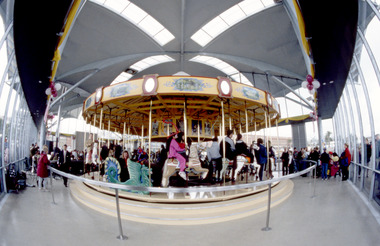 City of Greater Geelong
Photograph - Carousel Opening, Geelong Waterfront, Katrina J Lawrence, 14 October 2000
... Twenty-four of the 36 horses are original, and believed to be rare examples hand-carved by the American master, Charles Dare. Each horse took 300 hours to restore, with intricate carving, coating, filling, sanding, smoothing, painting and varnishing....Twenty-four of the 36 horses are original, and believed to be rare examples hand-carved by the American master, Charles Dare. Each horse took 300 hours to restore, with intricate carving, coating, filling, sanding, smoothing, painting and varnishing. merry go-round horses carousel geelong restoration rides j. j. miller Geelong Waterfront Michael Crutchfield Steam Engine Katrina Lawrence Opening 35mm colour transparency steampacket place development board City of Greater Geelong revitalisation celebration event armitage-herschell Geelong Memorial Brass Band Colour image showing people riding a carousel. ...This image is part of a collection of 35mm colour transparencies taken by photographer Katrina Lawrence at the opening of the carousel on the waterfront in Geelong on 14th October 2000. This image shows people riding the carousel at the opening celebrations. The Steampacket Place Development Board, a joint team formed by the Victorian State Government and the City of Greater Geelong undertook the $30 million revitalisation of the entire Geelong Waterfront from 1995 to 2000. As part of the revitalisation, in August 1996, the Steampacket Place Development Board purchased an unrestored Armitage-Herschell portable steam-driven carousel to restore and locate as a major feature on the revitalised waterfront. The Carousel was manufactured around 1892 by the Armitage-Herschell company of New York. The Carousel operated on the Mordialloc Pier from the 1920s to the 1950s. Twenty-four of the 36 horses are original, and believed to be rare examples hand-carved by the American master, Charles Dare. Each horse took 300 hours to restore, with intricate carving, coating, filling, sanding, smoothing, painting and varnishing.Colour image showing people riding a carousel.merry go-round, horses, carousel, geelong, restoration, rides, j. j. miller, geelong waterfront, michael crutchfield, steam engine, katrina lawrence, opening, 35mm colour transparency, steampacket place development board, city of greater geelong, revitalisation, celebration, event, armitage-herschell, geelong memorial brass band -
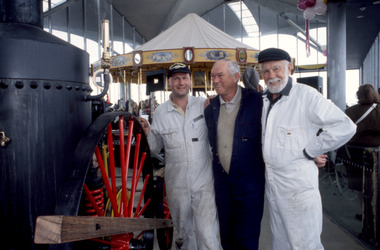 City of Greater Geelong
Photograph - Carousel Opening, Geelong Waterfront, Katrina J Lawrence, 14 October 2000
... Twenty-four of the 36 horses are original, and believed to be rare examples hand-carved by the American master, Charles Dare. Each horse took 300 hours to restore, with intricate carving, coating, filling, sanding, smoothing, painting and varnishing....Twenty-four of the 36 horses are original, and believed to be rare examples hand-carved by the American master, Charles Dare. Each horse took 300 hours to restore, with intricate carving, coating, filling, sanding, smoothing, painting and varnishing. merry go-round horses carousel geelong restoration rides j. j. miller Geelong Waterfront Michael Crutchfield Steam Engine Katrina Lawrence Opening 35mm colour transparency steampacket place development board City of Greater Geelong revitalisation celebration event armitage-herschell Geelong Memorial Brass Band Colour image showing three men standing near a steam engine with a carousel in the background. ...This image is part of a collection of 35mm colour transparencies taken by photographer Katrina Lawrence at the opening of the carousel on the waterfront in Geelong on 14th October 2000. This image shows a team of three steam engine operators, including John Honeysett and Iggy. The Steampacket Place Development Board, a joint team formed by the Victorian State Government and the City of Greater Geelong undertook the $30 million revitalisation of the entire Geelong Waterfront from 1995 to 2000. As part of the revitalisation, in August 1996, the Steampacket Place Development Board purchased an unrestored Armitage-Herschell portable steam-driven carousel to restore and locate as a major feature on the revitalised waterfront. The Carousel was manufactured around 1892 by the Armitage-Herschell company of New York. The Carousel operated on the Mordialloc Pier from the 1920s to the 1950s. Twenty-four of the 36 horses are original, and believed to be rare examples hand-carved by the American master, Charles Dare. Each horse took 300 hours to restore, with intricate carving, coating, filling, sanding, smoothing, painting and varnishing.Colour image showing three men standing near a steam engine with a carousel in the background.merry go-round, horses, carousel, geelong, restoration, rides, j. j. miller, geelong waterfront, michael crutchfield, steam engine, katrina lawrence, opening, 35mm colour transparency, steampacket place development board, city of greater geelong, revitalisation, celebration, event, armitage-herschell, geelong memorial brass band -
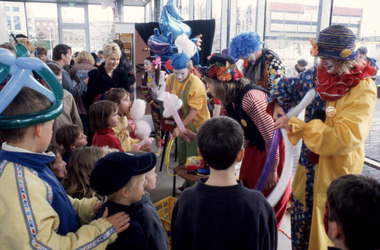 City of Greater Geelong
Photograph - Carousel Opening, Geelong Waterfront, Katrina J Lawrence, 14 October 2000
... Twenty-four of the 36 horses are original, and believed to be rare examples hand-carved by the American master, Charles Dare. Each horse took 300 hours to restore, with intricate carving, coating, filling, sanding, smoothing, painting and varnishing....Twenty-four of the 36 horses are original, and believed to be rare examples hand-carved by the American master, Charles Dare. Each horse took 300 hours to restore, with intricate carving, coating, filling, sanding, smoothing, painting and varnishing. merry go-round horses carousel geelong restoration rides j. j. miller Geelong Waterfront Michael Crutchfield Steam Engine Katrina Lawrence Opening 35mm colour transparency steampacket place development board City of Greater Geelong revitalisation celebration event armitage-herschell Geelong Memorial Brass Band Colour image showing entertainers making shapes with balloons surrounded by a crowd of people. ...This image is part of a collection of 35mm colour transparencies taken by photographer Katrina Lawrence at the opening of the carousel on the waterfront in Geelong on 14th October 2000. This image shows entertainment and crowds at the opening celebrations. The Steampacket Place Development Board, a joint team formed by the Victorian State Government and the City of Greater Geelong undertook the $30 million revitalisation of the entire Geelong Waterfront from 1995 to 2000. As part of the revitalisation, in August 1996, the Steampacket Place Development Board purchased an unrestored Armitage-Herschell portable steam-driven carousel to restore and locate as a major feature on the revitalised waterfront. The Carousel was manufactured around 1892 by the Armitage-Herschell company of New York. The Carousel operated on the Mordialloc Pier from the 1920s to the 1950s. Twenty-four of the 36 horses are original, and believed to be rare examples hand-carved by the American master, Charles Dare. Each horse took 300 hours to restore, with intricate carving, coating, filling, sanding, smoothing, painting and varnishing.Colour image showing entertainers making shapes with balloons surrounded by a crowd of people.merry go-round, horses, carousel, geelong, restoration, rides, j. j. miller, geelong waterfront, michael crutchfield, steam engine, katrina lawrence, opening, 35mm colour transparency, steampacket place development board, city of greater geelong, revitalisation, celebration, event, armitage-herschell, geelong memorial brass band -
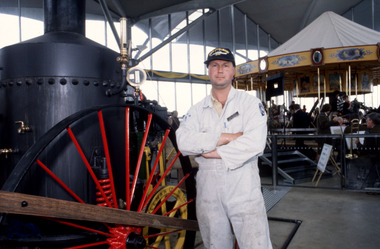 City of Greater Geelong
Photograph - Carousel Opening, Geelong Waterfront, Katrina J Lawrence, 14 October 2000
... Twenty-four of the 36 horses are original, and believed to be rare examples hand-carved by the American master, Charles Dare. Each horse took 300 hours to restore, with intricate carving, coating, filling, sanding, smoothing, painting and varnishing....Twenty-four of the 36 horses are original, and believed to be rare examples hand-carved by the American master, Charles Dare. Each horse took 300 hours to restore, with intricate carving, coating, filling, sanding, smoothing, painting and varnishing. merry go-round horses carousel geelong restoration rides j. j. miller Geelong Waterfront Michael Crutchfield Steam Engine Katrina Lawrence Opening 35mm colour transparency steampacket place development board City of Greater Geelong revitalisation celebration event armitage-herschell Geelong Memorial Brass Band Colour image showing a man in a white coat standing near a steam engine with a carousel in the background. ...This image is part of a collection of 35mm colour transparencies taken by photographer Katrina Lawrence at the opening of the carousel on the waterfront in Geelong on 14th October 2000. This image shows steam engine operator John Honeysett. The Steampacket Place Development Board, a joint team formed by the Victorian State Government and the City of Greater Geelong undertook the $30 million revitalisation of the entire Geelong Waterfront from 1995 to 2000. As part of the revitalisation, in August 1996, the Steampacket Place Development Board purchased an unrestored Armitage-Herschell portable steam-driven carousel to restore and locate as a major feature on the revitalised waterfront. The Carousel was manufactured around 1892 by the Armitage-Herschell company of New York. The Carousel operated on the Mordialloc Pier from the 1920s to the 1950s. Twenty-four of the 36 horses are original, and believed to be rare examples hand-carved by the American master, Charles Dare. Each horse took 300 hours to restore, with intricate carving, coating, filling, sanding, smoothing, painting and varnishing.Colour image showing a man in a white coat standing near a steam engine with a carousel in the background.merry go-round, horses, carousel, geelong, restoration, rides, j. j. miller, geelong waterfront, michael crutchfield, steam engine, katrina lawrence, opening, 35mm colour transparency, steampacket place development board, city of greater geelong, revitalisation, celebration, event, armitage-herschell, geelong memorial brass band -
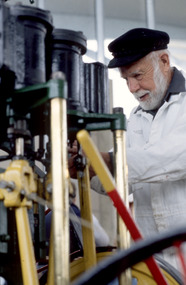 City of Greater Geelong
Photograph - Carousel Opening, Geelong Waterfront, Katrina J Lawrence, 14 October 2000
... Twenty-four of the 36 horses are original, and believed to be rare examples hand-carved by the American master, Charles Dare. Each horse took 300 hours to restore, with intricate carving, coating, filling, sanding, smoothing, painting and varnishing....Twenty-four of the 36 horses are original, and believed to be rare examples hand-carved by the American master, Charles Dare. Each horse took 300 hours to restore, with intricate carving, coating, filling, sanding, smoothing, painting and varnishing. merry go-round horses carousel geelong restoration rides j. j. miller Geelong Waterfront Michael Crutchfield Steam Engine Katrina Lawrence Opening 35mm colour transparency steampacket place development board City of Greater Geelong revitalisation celebration event armitage-herschell Geelong Memorial Brass Band Colour image showing a man in a white coat and black cap oiling a steam engine. ...This image is part of a collection of 35mm colour transparencies taken by photographer Katrina Lawrence at the opening of the carousel on the waterfront in Geelong on 14th October 2000. This image shows Iggy, who worked as a steam engine boilermaker at the carousel. The Steampacket Place Development Board, a joint team formed by the Victorian State Government and the City of Greater Geelong undertook the $30 million revitalisation of the entire Geelong Waterfront from 1995 to 2000. As part of the revitalisation, in August 1996, the Steampacket Place Development Board purchased an unrestored Armitage-Herschell portable steam-driven carousel to restore and locate as a major feature on the revitalised waterfront. The Carousel was manufactured around 1892 by the Armitage-Herschell company of New York. The Carousel operated on the Mordialloc Pier from the 1920s to the 1950s. Twenty-four of the 36 horses are original, and believed to be rare examples hand-carved by the American master, Charles Dare. Each horse took 300 hours to restore, with intricate carving, coating, filling, sanding, smoothing, painting and varnishing.Colour image showing a man in a white coat and black cap oiling a steam engine.merry go-round, horses, carousel, geelong, restoration, rides, j. j. miller, geelong waterfront, michael crutchfield, steam engine, katrina lawrence, opening, 35mm colour transparency, steampacket place development board, city of greater geelong, revitalisation, celebration, event, armitage-herschell, geelong memorial brass band -
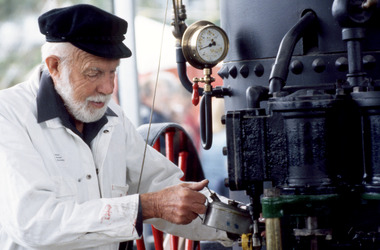 City of Greater Geelong
Photograph - Carousel Opening, Geelong Waterfront, Katrina J Lawrence, 14 October 2000
... Twenty-four of the 36 horses are original, and believed to be rare examples hand-carved by the American master, Charles Dare. Each horse took 300 hours to restore, with intricate carving, coating, filling, sanding, smoothing, painting and varnishing....Twenty-four of the 36 horses are original, and believed to be rare examples hand-carved by the American master, Charles Dare. Each horse took 300 hours to restore, with intricate carving, coating, filling, sanding, smoothing, painting and varnishing. merry go-round horses carousel geelong restoration rides j. j. miller Geelong Waterfront Michael Crutchfield Steam Engine Katrina Lawrence Opening 35mm colour transparency steampacket place development board City of Greater Geelong revitalisation celebration event armitage-herschell Geelong Memorial Brass Band Colour image showing a man in a white coat and black cap oiling a steam engine. ...This image is part of a collection of 35mm colour transparencies taken by photographer Katrina Lawrence at the opening of the carousel on the waterfront in Geelong on 14th October 2000. This image shows Iggy, who worked as a steam engine boilermaker at the carousel. The Steampacket Place Development Board, a joint team formed by the Victorian State Government and the City of Greater Geelong undertook the $30 million revitalisation of the entire Geelong Waterfront from 1995 to 2000. As part of the revitalisation, in August 1996, the Steampacket Place Development Board purchased an unrestored Armitage-Herschell portable steam-driven carousel to restore and locate as a major feature on the revitalised waterfront. The Carousel was manufactured around 1892 by the Armitage-Herschell company of New York. The Carousel operated on the Mordialloc Pier from the 1920s to the 1950s. Twenty-four of the 36 horses are original, and believed to be rare examples hand-carved by the American master, Charles Dare. Each horse took 300 hours to restore, with intricate carving, coating, filling, sanding, smoothing, painting and varnishing.Colour image showing a man in a white coat and black cap oiling a steam engine.merry go-round, horses, carousel, geelong, restoration, rides, j. j. miller, geelong waterfront, michael crutchfield, steam engine, katrina lawrence, opening, 35mm colour transparency, steampacket place development board, city of greater geelong, revitalisation, celebration, event, armitage-herschell, geelong memorial brass band -
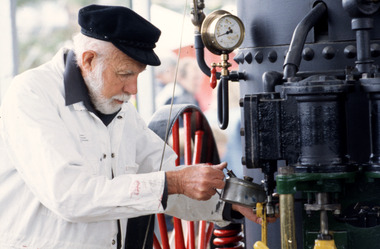 City of Greater Geelong
Photograph - Carousel Opening, Geelong Waterfront, Katrina J Lawrence, 14 October 2000
... Twenty-four of the 36 horses are original, and believed to be rare examples hand-carved by the American master, Charles Dare. Each horse took 300 hours to restore, with intricate carving, coating, filling, sanding, smoothing, painting and varnishing....Twenty-four of the 36 horses are original, and believed to be rare examples hand-carved by the American master, Charles Dare. Each horse took 300 hours to restore, with intricate carving, coating, filling, sanding, smoothing, painting and varnishing. merry go-round horses carousel geelong restoration rides j. j. miller Geelong Waterfront Michael Crutchfield Steam Engine Katrina Lawrence Opening 35mm colour transparency steampacket place development board City of Greater Geelong revitalisation celebration event armitage-herschell Geelong Memorial Brass Band Colour image showing a man in a white coat and black cap oiling a steam engine. ...This image is part of a collection of 35mm colour transparencies taken by photographer Katrina Lawrence at the opening of the carousel on the waterfront in Geelong on 14th October 2000. This image shows Iggy, who worked as a steam engine boilermaker at the carousel. The Steampacket Place Development Board, a joint team formed by the Victorian State Government and the City of Greater Geelong undertook the $30 million revitalisation of the entire Geelong Waterfront from 1995 to 2000. As part of the revitalisation, in August 1996, the Steampacket Place Development Board purchased an unrestored Armitage-Herschell portable steam-driven carousel to restore and locate as a major feature on the revitalised waterfront. The Carousel was manufactured around 1892 by the Armitage-Herschell company of New York. The Carousel operated on the Mordialloc Pier from the 1920s to the 1950s. Twenty-four of the 36 horses are original, and believed to be rare examples hand-carved by the American master, Charles Dare. Each horse took 300 hours to restore, with intricate carving, coating, filling, sanding, smoothing, painting and varnishing.Colour image showing a man in a white coat and black cap oiling a steam engine.merry go-round, horses, carousel, geelong, restoration, rides, j. j. miller, geelong waterfront, michael crutchfield, steam engine, katrina lawrence, opening, 35mm colour transparency, steampacket place development board, city of greater geelong, revitalisation, celebration, event, armitage-herschell, geelong memorial brass band -
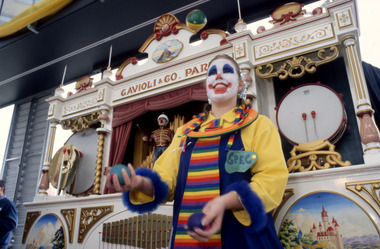 City of Greater Geelong
Photograph - Carousel Opening, Geelong Waterfront, Katrina J Lawrence, 14 October 2000
... Twenty-four of the 36 horses are original, and believed to be rare examples hand-carved by the American master, Charles Dare. Each horse took 300 hours to restore, with intricate carving, coating, filling, sanding, smoothing, painting and varnishing....Twenty-four of the 36 horses are original, and believed to be rare examples hand-carved by the American master, Charles Dare. Each horse took 300 hours to restore, with intricate carving, coating, filling, sanding, smoothing, painting and varnishing. merry go-round horses carousel geelong restoration rides j. j. miller Geelong Waterfront Michael Crutchfield Steam Engine Katrina Lawrence Opening 35mm colour transparency steampacket place development board City of Greater Geelong revitalisation celebration event armitage-herschell Geelong Memorial Brass Band Colour image showing a juggler with an organ in the background. ...This image is part of a collection of 35mm colour transparencies taken by photographer Katrina Lawrence at the opening of the carousel on the waterfront in Geelong on 14th October 2000. This image shows a juggler with the organ in the background at the opening celebrations. The Steampacket Place Development Board, a joint team formed by the Victorian State Government and the City of Greater Geelong undertook the $30 million revitalisation of the entire Geelong Waterfront from 1995 to 2000. As part of the revitalisation, in August 1996, the Steampacket Place Development Board purchased an unrestored Armitage-Herschell portable steam-driven carousel to restore and locate as a major feature on the revitalised waterfront. The Carousel was manufactured around 1892 by the Armitage-Herschell company of New York. The Carousel operated on the Mordialloc Pier from the 1920s to the 1950s. Twenty-four of the 36 horses are original, and believed to be rare examples hand-carved by the American master, Charles Dare. Each horse took 300 hours to restore, with intricate carving, coating, filling, sanding, smoothing, painting and varnishing.Colour image showing a juggler with an organ in the background.merry go-round, horses, carousel, geelong, restoration, rides, j. j. miller, geelong waterfront, michael crutchfield, steam engine, katrina lawrence, opening, 35mm colour transparency, steampacket place development board, city of greater geelong, revitalisation, celebration, event, armitage-herschell, geelong memorial brass band -
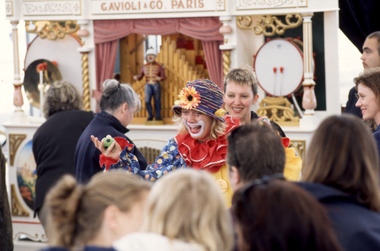 City of Greater Geelong
Photograph - Carousel Opening, Geelong Waterfront, Katrina J Lawrence, 14 October 2000
... Twenty-four of the 36 horses are original, and believed to be rare examples hand-carved by the American master, Charles Dare. Each horse took 300 hours to restore, with intricate carving, coating, filling, sanding, smoothing, painting and varnishing....Twenty-four of the 36 horses are original, and believed to be rare examples hand-carved by the American master, Charles Dare. Each horse took 300 hours to restore, with intricate carving, coating, filling, sanding, smoothing, painting and varnishing. merry go-round horses carousel geelong restoration rides j. j. miller Geelong Waterfront Michael Crutchfield Steam Engine Katrina Lawrence Opening 35mm colour transparency steampacket place development board City of Greater Geelong revitalisation celebration event armitage-herschell Geelong Memorial Brass Band Colour image showing a juggler surrounded by a crowd, with an organ in the background. ...This image is part of a collection of 35mm colour transparencies taken by photographer Katrina Lawrence at the opening of the carousel on the waterfront in Geelong on 14th October 2000. This image shows entertainment at the opening, with the organ shown in the background. The Steampacket Place Development Board, a joint team formed by the Victorian State Government and the City of Greater Geelong undertook the $30 million revitalisation of the entire Geelong Waterfront from 1995 to 2000. As part of the revitalisation, in August 1996, the Steampacket Place Development Board purchased an unrestored Armitage-Herschell portable steam-driven carousel to restore and locate as a major feature on the revitalised waterfront. The Carousel was manufactured around 1892 by the Armitage-Herschell company of New York. The Carousel operated on the Mordialloc Pier from the 1920s to the 1950s. Twenty-four of the 36 horses are original, and believed to be rare examples hand-carved by the American master, Charles Dare. Each horse took 300 hours to restore, with intricate carving, coating, filling, sanding, smoothing, painting and varnishing.Colour image showing a juggler surrounded by a crowd, with an organ in the background.merry go-round, horses, carousel, geelong, restoration, rides, j. j. miller, geelong waterfront, michael crutchfield, steam engine, katrina lawrence, opening, 35mm colour transparency, steampacket place development board, city of greater geelong, revitalisation, celebration, event, armitage-herschell, geelong memorial brass band -
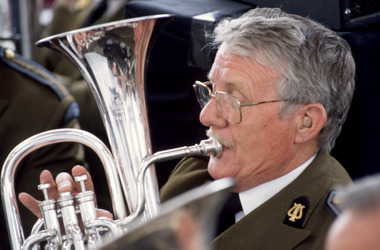 City of Greater Geelong
Photograph - Carousel Opening, Geelong Waterfront, Katrina J Lawrence, 14 October 2000
... Twenty-four of the 36 horses are original, and believed to be rare examples hand-carved by the American master, Charles Dare. Each horse took 300 hours to restore, with intricate carving, coating, filling, sanding, smoothing, painting and varnishing....Twenty-four of the 36 horses are original, and believed to be rare examples hand-carved by the American master, Charles Dare. Each horse took 300 hours to restore, with intricate carving, coating, filling, sanding, smoothing, painting and varnishing. merry go-round horses carousel geelong restoration rides j. j. miller Geelong Waterfront Michael Crutchfield Steam Engine Katrina Lawrence Opening 35mm colour transparency steampacket place development board City of Greater Geelong revitalisation celebration event armitage-herschell Geelong Memorial Brass Band Colour image showing a man playing a trumpet. ...This image is part of a collection of 35mm colour transparencies taken by photographer Katrina Lawrence at the opening of the carousel on the waterfront in Geelong on 14th October 2000. This image shows a member of the Geelong Memorial Brass Band who played at the opening. The Steampacket Place Development Board, a joint team formed by the Victorian State Government and the City of Greater Geelong undertook the $30 million revitalisation of the entire Geelong Waterfront from 1995 to 2000. As part of the revitalisation, in August 1996, the Steampacket Place Development Board purchased an unrestored Armitage-Herschell portable steam-driven carousel to restore and locate as a major feature on the revitalised waterfront. The Carousel was manufactured around 1892 by the Armitage-Herschell company of New York. The Carousel operated on the Mordialloc Pier from the 1920s to the 1950s. Twenty-four of the 36 horses are original, and believed to be rare examples hand-carved by the American master, Charles Dare. Each horse took 300 hours to restore, with intricate carving, coating, filling, sanding, smoothing, painting and varnishing.Colour image showing a man playing a trumpet.merry go-round, horses, carousel, geelong, restoration, rides, j. j. miller, geelong waterfront, michael crutchfield, steam engine, katrina lawrence, opening, 35mm colour transparency, steampacket place development board, city of greater geelong, revitalisation, celebration, event, armitage-herschell, geelong memorial brass band -
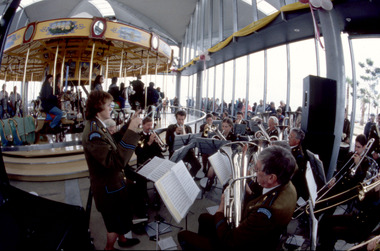 City of Greater Geelong
Photograph - Carousel Opening, Geelong Waterfront, Katrina J Lawrence, 14 October 2000
... Twenty-four of the 36 horses are original, and believed to be rare examples hand-carved by the American master, Charles Dare. Each horse took 300 hours to restore, with intricate carving, coating, filling, sanding, smoothing, painting and varnishing....Twenty-four of the 36 horses are original, and believed to be rare examples hand-carved by the American master, Charles Dare. Each horse took 300 hours to restore, with intricate carving, coating, filling, sanding, smoothing, painting and varnishing. merry go-round horses carousel geelong restoration rides j. j. miller Geelong Waterfront Michael Crutchfield Steam Engine Katrina Lawrence Opening 35mm colour transparency steampacket place development board City of Greater Geelong revitalisation celebration event armitage-herschell Geelong Memorial Brass Band Colour image showing a brass band with a carousel in the background. ...This image is part of a collection of 35mm colour transparencies taken by photographer Katrina Lawrence at the opening of the carousel on the waterfront in Geelong on 14th October 2000. This image shows the Geelong Memorial Brass Band playing at the opening. The Steampacket Place Development Board, a joint team formed by the Victorian State Government and the City of Greater Geelong undertook the $30 million revitalisation of the entire Geelong Waterfront from 1995 to 2000. As part of the revitalisation, in August 1996, the Steampacket Place Development Board purchased an unrestored Armitage-Herschell portable steam-driven carousel to restore and locate as a major feature on the revitalised waterfront. The Carousel was manufactured around 1892 by the Armitage-Herschell company of New York. The Carousel operated on the Mordialloc Pier from the 1920s to the 1950s. Twenty-four of the 36 horses are original, and believed to be rare examples hand-carved by the American master, Charles Dare. Each horse took 300 hours to restore, with intricate carving, coating, filling, sanding, smoothing, painting and varnishing.Colour image showing a brass band with a carousel in the background.merry go-round, horses, carousel, geelong, restoration, rides, j. j. miller, geelong waterfront, michael crutchfield, steam engine, katrina lawrence, opening, 35mm colour transparency, steampacket place development board, city of greater geelong, revitalisation, celebration, event, armitage-herschell, geelong memorial brass band -
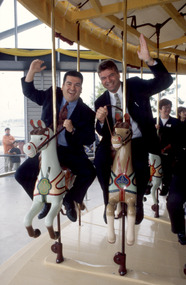 City of Greater Geelong
Photograph - Carousel Opening, Geelong Waterfront, Katrina J Lawrence, 14 October 2000
... Twenty-four of the 36 horses are original, and believed to be rare examples hand-carved by the American master, Charles Dare. Each horse took 300 hours to restore, with intricate carving, coating, filling, sanding, smoothing, painting and varnishing....Twenty-four of the 36 horses are original, and believed to be rare examples hand-carved by the American master, Charles Dare. Each horse took 300 hours to restore, with intricate carving, coating, filling, sanding, smoothing, painting and varnishing. merry go-round horses carousel geelong restoration rides j. j. miller Geelong Waterfront Michael Crutchfield Steam Engine Katrina Lawrence Opening 35mm colour transparency steampacket place development board City of Greater Geelong revitalisation celebration event armitage-herschell Colour image showing two men riding horses on a carousel. ...This image is part of a collection of 35mm colour transparencies taken by photographer Katrina Lawrence at the opening of the carousel on the waterfront in Geelong on 14th October 2000. This image shows Mayor Michael Crutchfield (right) and another man riding the carousel. The Steampacket Place Development Board, a joint team formed by the Victorian State Government and the City of Greater Geelong undertook the $30 million revitalisation of the entire Geelong Waterfront from 1995 to 2000. As part of the revitalisation, in August 1996, the Steampacket Place Development Board purchased an unrestored Armitage-Herschell portable steam-driven carousel to restore and locate as a major feature on the revitalised waterfront. The Carousel was manufactured around 1892 by the Armitage-Herschell company of New York. The Carousel operated on the Mordialloc Pier from the 1920s to the 1950s. Twenty-four of the 36 horses are original, and believed to be rare examples hand-carved by the American master, Charles Dare. Each horse took 300 hours to restore, with intricate carving, coating, filling, sanding, smoothing, painting and varnishing.Colour image showing two men riding horses on a carousel.merry go-round, horses, carousel, geelong, restoration, rides, j. j. miller, geelong waterfront, michael crutchfield, steam engine, katrina lawrence, opening, 35mm colour transparency, steampacket place development board, city of greater geelong, revitalisation, celebration, event, armitage-herschell -
 Moorabbin Air Museum
Document (item) - Roland Jahne Collection - See Description for details
... Manilla folder Various American -Grumman American AA-5 Cheetah and Tiger - Australian Aviation August 1998, Gulfstream AA-1 Yankee/Trainer, The Aviation Consumer 15/11/88. ...Manilla folder Various American -Grumman American AA-5 Cheetah and Tiger - Australian Aviation August 1998, Gulfstream AA-1 Yankee/Trainer, The Aviation Consumer 15/11/88. ... -
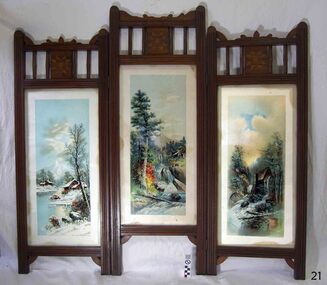 Flagstaff Hill Maritime Museum and Village
Furniture - Screen, Thomas Hope, 1905-1913
... Hoover’s prints included scenes, still life and landscapes of America and other locations. They were sold in America and overseas to countries including Canada, Germany, Mexico and England. ...Hoover’s prints included scenes, still life and landscapes of America and other locations. They were sold in America and overseas to countries including Canada, Germany, Mexico and England. ...The fire screen was part of the original furnishings of the Lighthouse Keeper's Quarters in Merri Street, Warrnambool. It was made by Lighthouse Keeper, Thomas Hope. Thomas served two terms as an assistant lighthouse keeper in Warrnambool. His first term was from 1905 to 1907. He later returned from 1910 to 1913, when he was appointed as Keeper five months after the untimely death of his predecessor Peter Quinn. Woodworking was one of Thomas Hope’s hobbies, and the three-panel fire screen he made as a lighthouse keeper is now in the Flagstaff collection and is displayed in the Lighthouse Keeper’s Cottage. Thomas Hope 1857 - 1928 Thomas James Hope was born in Camden, Surrey, England in 1857. His father, also called Thomas, was reputed to be a member of the Royal Family, and Thomas Hope Junior his illegitimate son. Thomas was subsequently brought up on the estate of the Earl of Hopetoun in Somerset and it was thought that Thomas was the Earl’s grandson. Against the wishes of those in charge of Thomas, he joined the navy at an early age, seeing much of the world until he settled in New Zealand at the age of twenty-four. After some years in New Zealand, he came to Australia to live. One of the jobs Thomas Hope had prior to becoming an assistant lighthouse keeper in 1896 was as a cook in the Lunatic Asylum at Sunbury, Victoria. He served as an assistant keeper at Shortlands Bluff, Gabo Island, Split Point and Warrnambool, retiring in 1918. He bought a house in Nicholson St, Warrnambool and died in March 1928. He is buried in the Warrnambool cemetery. Thomas Hope is recorded in family history as being of short stature and, not surprisingly given his alleged aristocratic connections, possessed a beautiful speaking voice. He and his wife Elizabeth nee Waters, whom he married in New Zealand, had six children (Thomas, killed in World War One), Ellen (Nell), Nora (who was married at the Warrnambool lighthouse keepers cottage), William (who died in Warrnambool), Marion and Alan. Joseph Hoover (Dec 29, 1830, to Aug 7, 1913) Joseph Hoover, the printer of the pictures on the screen, was born in Baltimore, of Swiss-German heritage. He was trained as an architectural woodturner. In 1856 Hoover moved to Philadelphia and began producing elaborate wooden frames in his wood-turning and framing business. By 1865 Hoover had started to produce popular prints for publishers and artists, which included noted Philadelphia artist James F. Queen. In the 1880s Hoover set up a complete plant specialising in chromatography, the process of producing colour prints from lithographic plates. The coloured prints he produced were affordable to business and private customers. In 1893 his son Henry L., a trained lithographer, joined the company as overseer and it was called J. Hoover & Son. It became one of the largest in America by the turn of the century. Hoover won a medal for Excellence for his Chromolithographs of James Queen’s works. In 1904 Joseph’s other son, Joseph W, joined the business as a partner and the company was called Jos. Hoover & Sons. Hoover died of a heart attack in 1913. He was survived by his wife and six children: two sons who were also his business partners, and four daughters. The firm continued in production until around 1985. Hoover’s prints included scenes, still life and landscapes of America and other locations. They were sold in America and overseas to countries including Canada, Germany, Mexico and England. The three-panelled screen in the Lighthouse Keeper’s Cottage was made by the Assistant Lighthouse Keeper, Thomas Hope during one of his two terms at the Lighthouse Keepers' Quarters. It is the only object in the collection known to be connected to Hope. The Lighthouse Keeper's Cottage is part of the Lady Bay Lighthouse Complex, which is listed on the Victorian Heritage Register for being of historical, scientific (technological) and architectural significance to the State of Victoria.Fire screen comprising three black wood framed panels hinged together. Each panel contains a glass-encased print depicting a rural landscape. Ornate stencil cut wood edging and quilt-inspired parquetry sits above each panel. The central panel is taller than those either side. Screen is lined in black-painted cardboard.Printed at the base of each of the three prints “COPYRIGHT 1896 BY J. HOOVER & SON, PHILAD’’A.”flagstaff hill, warrnambool, shipwrecked coast, flagstaff hill maritime museum, firescreen, thomas hope junior, ellen (nell) hope, nora hope, william hope, marion hope, alan hope, jos. hoover & sons of philadelphia, lighthouse keeper, assistant lighthouse keeper, carved screen, merri street, lighthouse keeper's cottage, lighthouse residence, lighthouse, wood carving, lighthouse complex, lady bay lighthouse, fire screen -
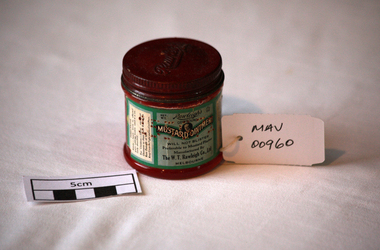 City of Moorabbin Historical Society (Operating the Box Cottage Museum)
Manufactured Glass, jar of Mustard Ointment 'Rawleigh's;, mid 20thC
... Most of the herbs, roots, barks and buds used in making cough medicines and tonics came from Europe, India, Ceylon, China, North America, the West Indies, Jamaica, Honduras and Asia. ...Most of the herbs, roots, barks and buds used in making cough medicines and tonics came from Europe, India, Ceylon, China, North America, the West Indies, Jamaica, Honduras and Asia. ...WT Rawleigh (1870-1952) Freeport USA began in 1889 the direct selling method to sell his products, travelling around on horse and cart in the early days from house to house selling his medicines and other lines. Rawleigh's wide range of products includes: Medicinal, Nutritional, Gourmet, Homecare, Personal Care, Animal & Plant Care Since 1889, millions of families around the world have learned to rely upon and keep Rawleigh's reliable medicines and other products on hand ready for emergencies to relieve sickness, pains, injuries and for their daily needs. By 1920, young Rawleigh had built the biggest manufacturing organisation in the world. Mr Floyd George Rawleigh who was the son of David Rawleigh, W.T.Rawleigh's brother, came to Australia, with Mr Jackson, in 1931 and set up the Rawleighs Company Business . Generations of Australians, Canadians and Americans grew up waiting for The Rawleigh Man to arrive at their front door with his sample case of goodies to add spice to their life and to heal their ailments. In World War II, most Australian soldiers posted overseas carried a tin of Rawleigh Antiseptic Salve in their kits to treat wounds and ward off infection The Rawleigh Man brought to family front doors the best materials money could buy from around the world: spices from Sumatra, Java, China, India, Africa, the West Indies; black pepper from the island of Ponapai; lemon and orange oils from California and Sicily and Vanilla from Madagascar and Java; high grade coffee beans from the Andes. Most of the herbs, roots, barks and buds used in making cough medicines and tonics came from Europe, India, Ceylon, China, North America, the West Indies, Jamaica, Honduras and Asia. From Japan came camphor and menthol for making medicines. From Tavenui, the Garden Island of Fiji, came the food grade coconut oil for Rawleigh's gold medal winning Coconut Oil Soap. Rawleigh products are still only available from Rawleigh men and women who carry on the time-honoured tradition of the Rawleigh company to give individuals a go at developing their own business supplying products to people in their homes. Only now they are also doing it in cyberspace. A clear glass jar with a metal screw lid containing Mustard Ointment made by W.T. Rawleigh Co. Ltd. .Melbourne Lid ; Rawleigh’s Front ; Rawleigh’s / Net WT. / 1 ½ oz / COMPOUND / MUSTARD OINTMENT / WILL NOT BLISTER /preferable to Mustard Plaster / MNUFACTURED BY / The W, T. Rawleigh Co Ltd / MELBOURNE. / Left side ; DIRECTIONS …….. , / Right side ; Useful pharmacy, medicines, mustard ointment, w.t. rawleigh company ltd., hospitals, nursing, containers, moorabbin, bentleigh, cheltenham, melbourne, respiratory diseases -
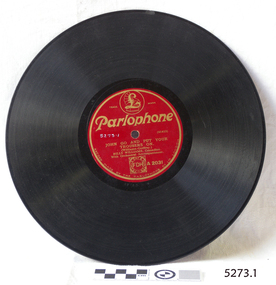 Flagstaff Hill Maritime Museum and Village
Audio - Gramophone Record, Parlophone Co. Ltd, John Go And Put Your Trousers On, Early-to-mid 20th century
... Thomas Edison (1847–1931), an American, invented the phonograph in 1877, making it possible to record sound waves vertically and reproduce them on a wax cylinder so they could be heard again. ...Thomas Edison (1847–1931), an American, invented the phonograph in 1877, making it possible to record sound waves vertically and reproduce them on a wax cylinder so they could be heard again. ...Thomas Edison (1847–1931), an American, invented the phonograph in 1877, making it possible to record sound waves vertically and reproduce them on a wax cylinder so they could be heard again. Later, the German American, Emile Berliner (1851-1929), improved on Edison’s principles, greatly increasing the quality of the reproduced sounds with his invention of the gramophone in 1887, which recorded the sound waves laterally onto a flat shellac disc, or ‘record’. Records could be mass-produced in a factory where audio recordings were converted to a physical copy of that recording on a plate-sized disc. A gramophone machine reproduced the sound by spinning the record on a turntable at a specified number of rotations per minute (RPM) and using a stylus or needle to transfer the vibration via a membrane to a speaker, which amplified the sound. Berliner helped set up affiliated businesses overseas. One of his representatives was William Barry Owen (1860–1914), who, on 23 February 1889, partnered with Edmund Trevor Lloyd Williams (1859–1946) in England to register The Gramophone Company. His Master’s Voice (HMV) soon became the company’s major recording label, popular worldwide. The label's logo, a dog looking into a gramophone horn, looking for his master’s voice, was based on a painting by English artist Francis Barraud, which featured a terrier called Nipper beside a gramophone. Early gramophone records were mostly made from a material referred to as shellac, a natural ingredient combined with slate powder, and a filler of manilla copal, wood resin, carnauba wax, and carbon black. Although Bakelite seemed a useful, synthetic product, it was unsuccessful as a product for records. Around the time of World War II, lightweight, flexible synthetic vinyl records began replacing shellac records. Common diameters of records: 7 inch, 10 inch, 12 inch and 16 inch Revolutions Per Minute include: 33 1/3, 45, 78 Minutes per side of record: 3, 5.5, 7, 8, 9, 12, 15 and 22 Labels, in minutes per side: Single Play 3-5 min, Extended Play (EP) 7-12 min, Long Play (LP) 12-22 min This gramophone represents a step in the evolution of recording sound. In the 19th century, the human voice was first recorded on wax cylinders and replayed. It was the beginning of a new era in sound. Then, in the 1880s, voice could be recorded onto flat discs like this record, reliably reproduced and replayed many times, even on portable devices. Later, in the mid-20th century the following generation of electronic audio recording began, and later that century, digital recording gave even better reproduction. The record represents a popular means of entertainment for personal and social activities, as well as in some businesses. Shellac gramophone record, red label. Title: John Go And Put Your Trousers On Artist: Billy Williams Publisher: Parlophone Co Ltd, London Number: 41413 Size: 10 inch"A2031"flagstaff hill, warrnambool, maritime village, maritime museum, flagstaff hill maritime museum and village, shipwreck coast, great ocean road, gramophone, phonograph, sound waves, record, reproduction, audio record, music, sound, thomas edison, emile berliner, 1887, shellac, rpm, william barry owen, edmund trevor lloyd williams, the gramophone company, his master’s voice, hmv, francis barraud, nipper, 10 inch, parlophone co ltd, london, john go and put your trousers on, billy williams -
 Flagstaff Hill Maritime Museum and Village
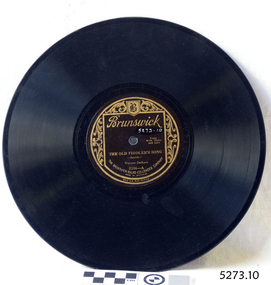
Audio - Gramophone Record, Brunswick Records, The Old Fiddlers Song, Early-to-mid 20th century
... Thomas Edison (1847–1931), an American, invented the phonograph in 1877, making it possible to record sound waves vertically and reproduce them on a wax cylinder so they could be heard again. ...Thomas Edison (1847–1931), an American, invented the phonograph in 1877, making it possible to record sound waves vertically and reproduce them on a wax cylinder so they could be heard again. ...Thomas Edison (1847–1931), an American, invented the phonograph in 1877, making it possible to record sound waves vertically and reproduce them on a wax cylinder so they could be heard again. Later, the German American, Emile Berliner (1851-1929), improved on Edison’s principles, greatly increasing the quality of the reproduced sounds with his invention of the gramophone in 1887, which recorded the sound waves laterally onto a flat shellac disc, or ‘record’. Records could be mass-produced in a factory where audio recordings were converted to a physical copy of that recording on a plate-sized disc. A gramophone machine reproduced the sound by spinning the record on a turntable at a specified number of rotations per minute (RPM) and using a stylus or needle to transfer the vibration via a membrane to a speaker, which amplified the sound. Berliner helped set up affiliated businesses overseas. One of his representatives was William Barry Owen (1860–1914), who, on 23 February 1889, partnered with Edmund Trevor Lloyd Williams (1859–1946) in England to register The Gramophone Company. His Master’s Voice (HMV) soon became the company’s major recording label, popular worldwide. The business based the label's logo of a dog looking into a gramophone horn for ‘his master’s voice’ was based on a painting by English artist Francis Barraud, which featured a terrier called Nipper beside a gramophone. Early gramophone records were mostly made from a material referred to as shellac, a natural ingredient combined with slate powder, and a filler of manilla copal, wood resin, carnauba wax, and carbon black. Although Bakelite seemed a useful, synthetic product, it was unsuccessful as a product for records. Around the time of World War II, lightweight, flexible synthetic vinyl records began replacing shellac records. Common diameters of records: 7 inch, 10 inch, 12 inch and 16 inch Revolutions Per Minute include: 33 1/3, 45, 78 Minutes per side of record: 3, 5.5, 7, 8, 9, 12, 15 and 22 Labels, in minutes per side: Single Play 3-5 min, Extended Play (EP) 7-12 min, Long Play (LP) 12-22 min This gramophone represents a step in the evolution of recording sound. In the 19th century, the human voice was first recorded on wax cylinders and replayed. It was the beginning of a new era in sound. Then, in the 1880s, voice could be recorded onto flat discs like this record, reliably reproduced and replayed many times, even on portable devices. Later, in the mid-20th century the following generation of electronic audio recording began, and later that century, digital recording gave even better reproduction. The record represents a popular means of entertainment for personal and social activities, as well as in some businesses. Shellac gramophone record with a black and gold label. Title: The Old Fiddlers Song Artist: Vernon Delhart, tenor Publisher: Brunswick Number:3234-A Size: 10 inchflagstaff hill, warrnambool, maritime village, maritime museum, flagstaff hill maritime museum and village, shipwreck coast, great ocean road, gramophone, phonograph, sound waves, record, reproduction, audio record, music, sound, thomas edison, emile berliner, 1887, shellac, rpm, william barry owen, edmund trevor lloyd williams, the gramophone company, his master’s voice, hmv, francis barraud, nipper, 10 inch, brunswick records, 3234-a, the old fiddlers song, vernon delhart (tenor) -
 Flagstaff Hill Maritime Museum and Village
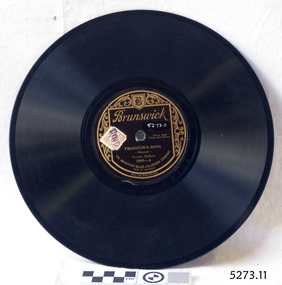
Audio - Gramophone Record, Brunswick Records, Prisoner's Song, Early-to-mid 20th century
... Thomas Edison (1847–1931), an American, invented the phonograph in 1877, making it possible to record sound waves vertically and reproduce them on a wax cylinder so they could be heard again. ...Thomas Edison (1847–1931), an American, invented the phonograph in 1877, making it possible to record sound waves vertically and reproduce them on a wax cylinder so they could be heard again. ...Thomas Edison (1847–1931), an American, invented the phonograph in 1877, making it possible to record sound waves vertically and reproduce them on a wax cylinder so they could be heard again. Later, the German American, Emile Berliner (1851-1929), improved on Edison’s principles, greatly increasing the quality of the reproduced sounds with his invention of the gramophone in 1887, which recorded the sound waves laterally onto a flat shellac disc, or ‘record’. Records could be mass-produced in a factory where audio recordings were converted to a physical copy of that recording on a plate-sized disc. A gramophone machine reproduced the sound by spinning the record on a turntable at a specified number of rotations per minute (RPM) and using a stylus or needle to transfer the vibration via a membrane to a speaker, which amplified the sound. Berliner helped set up affiliated businesses overseas. One of his representatives was William Barry Owen (1860–1914), who, on 23 February 1889, partnered with Edmund Trevor Lloyd Williams (1859–1946) in England to register The Gramophone Company. His Master’s Voice (HMV) soon became the company’s major recording label, popular worldwide. The business based the label's logo of a dog looking into a gramophone horn for ‘his master’s voice’ was based on a painting by English artist Francis Barraud, which featured a terrier called Nipper beside a gramophone. Early gramophone records were mostly made from a material referred to as shellac, a natural ingredient combined with slate powder, and a filler of manilla copal, wood resin, carnauba wax, and carbon black. Although Bakelite seemed a useful, synthetic product, it was unsuccessful as a product for records. Around the time of World War II, lightweight, flexible synthetic vinyl records began replacing shellac records. Common diameters of records: 7 inch, 10 inch, 12 inch and 16 inch Revolutions Per Minute include: 33 1/3, 45, 78 Minutes per side of record: 3, 5.5, 7, 8, 9, 12, 15 and 22 Labels, in minutes per side: Single Play 3-5 min, Extended Play (EP) 7-12 min, Long Play (LP) 12-22 min This gramophone represents a step in the evolution of recording sound. In the 19th century, the human voice was first recorded on wax cylinders and replayed. It was the beginning of a new era in sound. Then, in the 1880s, voice could be recorded onto flat discs like this record, reliably reproduced and replayed many times, even on portable devices. Later, in the mid-20th century the following generation of electronic audio recording began, and later that century, digital recording gave even better reproduction. The record represents a popular means of entertainment for personal and social activities, as well as in some businesses. Shellac gramophone record with a black and gold label. Title: Prisoner's Song Artist: Vernon Dalhart, tenor Publisher: Brunswick Records Number: A-2900 Size: 10 inchOn label, white sticker with red printflagstaff hill, warrnambool, maritime village, maritime museum, flagstaff hill maritime museum and village, shipwreck coast, great ocean road, gramophone, phonograph, sound waves, record, reproduction, audio record, music, sound, thomas edison, emile berliner, 1887, shellac, rpm, william barry owen, edmund trevor lloyd williams, the gramophone company, his master’s voice, hmv, francis barraud, nipper, 10 inch, brunswick records, a-2900, prisoner's song, vernon dalhart (tenor) -
 Flagstaff Hill Maritime Museum and Village
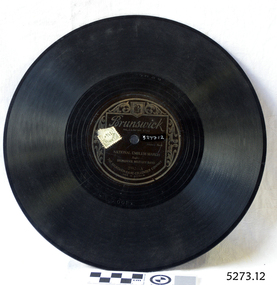
Audio - Gramophone Record, Brunswick Records, National Emblem March, Early-to-mid 20th century
... Thomas Edison (1847–1931), an American, invented the phonograph in 1877, making it possible to record sound waves vertically and reproduce them on a wax cylinder so they could be heard again. ...Thomas Edison (1847–1931), an American, invented the phonograph in 1877, making it possible to record sound waves vertically and reproduce them on a wax cylinder so they could be heard again. ...Thomas Edison (1847–1931), an American, invented the phonograph in 1877, making it possible to record sound waves vertically and reproduce them on a wax cylinder so they could be heard again. Later, the German American, Emile Berliner (1851-1929), improved on Edison’s principles, greatly increasing the quality of the reproduced sounds with his invention of the gramophone in 1887, which recorded the sound waves laterally onto a flat shellac disc, or ‘record’. Records could be mass-produced in a factory where audio recordings were converted to a physical copy of that recording on a plate-sized disc. A gramophone machine reproduced the sound by spinning the record on a turntable at a specified number of rotations per minute (RPM) and using a stylus or needle to transfer the vibration via a membrane to a speaker, which amplified the sound. Berliner helped set up affiliated businesses overseas. One of his representatives was William Barry Owen (1860–1914), who, on 23 February 1889, partnered with Edmund Trevor Lloyd Williams (1859–1946) in England to register The Gramophone Company. His Master’s Voice (HMV) soon became the company’s major recording label, popular worldwide. The business based the label's logo of a dog looking into a gramophone horn for ‘his master’s voice’ was based on a painting by English artist Francis Barraud, which featured a terrier called Nipper beside a gramophone. Early gramophone records were mostly made from a material referred to as shellac, a natural ingredient combined with slate powder, and a filler of manilla copal, wood resin, carnauba wax, and carbon black. Although Bakelite seemed a useful, synthetic product, it was unsuccessful as a product for records. Around the time of World War II, lightweight, flexible synthetic vinyl records began replacing shellac records. Common diameters of records: 7 inch, 10 inch, 12 inch and 16 inch Revolutions Per Minute include: 33 1/3, 45, 78 Minutes per side of record: 3, 5.5, 7, 8, 9, 12, 15 and 22 Labels, in minutes per side: Single Play 3-5 min, Extended Play (EP) 7-12 min, Long Play (LP) 12-22 min This gramophone represents a step in the evolution of recording sound. In the 19th century, the human voice was first recorded on wax cylinders and replayed. It was the beginning of a new era in sound. Then, in the 1880s, voice could be recorded onto flat discs like this record, reliably reproduced and replayed many times, even on portable devices. Later, in the mid-20th century the following generation of electronic audio recording began, and later that century, digital recording gave even better reproduction. The record represents a popular means of entertainment for personal and social activities, as well as in some businesses. Shellac gramophone record with a black and gold label. Title: National Emblem March Artist: Brunswick Military Band Publisher: Brunswick Number: A2002 Size: 10 inchOn the label is a cream coloured stamp with printed detailsflagstaff hill, warrnambool, maritime village, maritime museum, flagstaff hill maritime museum and village, shipwreck coast, great ocean road, gramophone, phonograph, sound waves, record, reproduction, audio record, music, sound, thomas edison, emile berliner, 1887, shellac, rpm, william barry owen, edmund trevor lloyd williams, the gramophone company, his master’s voice, hmv, francis barraud, nipper, 10 inch, brunswick records, a2002, national emblem march, brunswick military band
