
Showing 170 items matching "(mr) m hill"
-
 Bendigo Historical Society Inc.
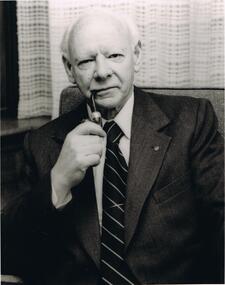
Photograph - LA TROBE UNIVERSITY BENDIGO COLLECTION: MR. J.M. HILL
... ... Mr. J. M. Hill...A black and white photograph of Mr. J. M. Hill Principal of Bendigo Teachers' College from June 1964 to 1969....BENDIGO Education bendigo teachers' college staff La Trobe University Bendigo Collection collection Bendigo education male person Mr. J. M. Hill Bendigo Teachers' College Staff tertiary education teacher training photo photograph photographs photography A black and white photograph of Mr. ...A black and white photograph of Mr. J. M. Hill Principal of Bendigo Teachers' College from June 1964 to 1969.bendigo, education, bendigo teachers' college staff, la trobe university bendigo collection, collection, bendigo, education, male, person, mr. j. m. hill, bendigo teachers' college staff, tertiary education, teacher training, photo, photograph, photographs, photography -
 Surrey Hills Historical Society Collection
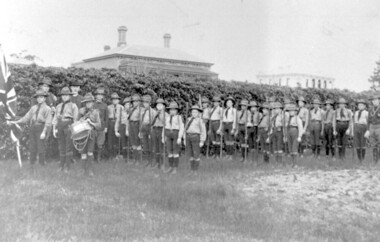
Photograph, 1st Surrey Hills Boy Scout Troop c. 1909-1912
... ...(mr) m hill...The photograph was taken by M. Hill, uncle of Mr W. Dempsey. 'Kookaburra' was the home of Theodore Hendy's uncle Archibald Noete Hendy, an estate agent. ...Archibald Hendy and his wife Bertha Bowen (nee Rohs) later resided at 'Barehin' in Pembroke Street. surrey hills scout troop 1900-1909 1910-1919 royal hotel albany crescent surrey hills uniforms hats flags clothing and dress canterbury road broughton road house names hotels scout groups youth clubs (mr) w dempsey (mr) m hill (mr) theodore hendy 'kookaburra' Black & white photo of 1st Surrey Hills Boy Scout Troop in the grounds of 'Kookaburra' (now demolished) in Albany Crescent Surrey Hills. ...1st Surrey Hills Boy Scout Troop was formed in 1909 by Theodore Hendy, two years after Lord Robert Baden-Powell had started the Movement. Hendy (left back) sent Baden-Powell greetings advising he was sending a photo of his troop. This could be the photograph. Taken in the grounds of his home "Kookaburra" (demolished) in Albany Crescent, Surrey Hills (later given the number 44). The Royal Hotel on the corner of Canterbury Road and Broughton Road can be seen on the right. The photograph was taken by M. Hill, uncle of Mr W. Dempsey. 'Kookaburra' was the home of Theodore Hendy's uncle Archibald Noete Hendy, an estate agent. Earlier it was known as 'Glastonbury'. In c1938 the house was demolished and the land divided into 4 lots. Archibald Hendy and his wife Bertha Bowen (nee Rohs) later resided at 'Barehin' in Pembroke Street. Black & white photo of 1st Surrey Hills Boy Scout Troop in the grounds of 'Kookaburra' (now demolished) in Albany Crescent Surrey Hills. In the background are 2 buildings. surrey hills scout troop, 1900-1909, 1910-1919, royal hotel, albany crescent, surrey hills, uniforms, hats, flags, clothing and dress, canterbury road, broughton road, house names, hotels, scout groups, youth clubs, (mr) w dempsey, (mr) m hill, (mr) theodore hendy, 'kookaburra' -
 Sunshine and District Historical Society Incorporated
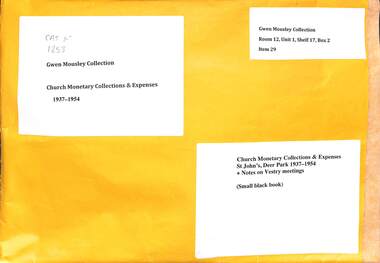
Archive - St John's, Deer Park, & St Albans records of collections, plus notes on clergy and readers, and personal notes on some vestry meetings
... Sambell, Mr Dann, Mr Gritton, M Clifton, Mr Hill, Mr Carter, Rev. Vizard, Mr Gugger, Mr Fletcher, Rev. ...Sambell, Mr Dann, Mr Gritton, M Clifton, Mr Hill, Mr Carter, Rev. Vizard, Mr Gugger, Mr Fletcher, Rev. ...Has come to the Sunshine & District Historical Society from Gwen Mousley. It may have come to her from her father, Mr J.E. Mousley, who was an active member of St John's, Deer Park.st johns church, deer park, st albans, church -
 Bendigo Historical Society Inc.
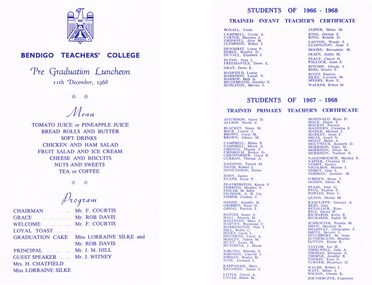
Document - LA TROBE UNIVERSITY BENDIGO COLLECTION: BENDIGO TEACHERS' COLLEGE PRE GRADUATION LUNCHEON 1968
... Rob Davis. Principal - Mr. J. M. Hill. Guest Speaker Mr. J. Witney. Also included Mrs. ...Rob Davis. Principal - Mr. J. M. Hill. Guest Speaker Mr. J. Witney. Also included Mrs. ...A white document titled Bendigo Teachers' College. Pre Graduation Luncheon. 11th December, 1968. Below the title is a copy of the Menu being offered and an outline of the Program: Chairman - Mr. F. Courtis. Grace - Mr. Rob Davis. Welcome - Mr. F. Courtis. Loyal Toast and Graduation cake - Miss Lorraine Silke and Mr. Rob Davis. Principal - Mr. J. M. Hill. Guest Speaker Mr. J. Witney. Also included Mrs. H. Chatfield and Miss Lorraine Silke. On the back of the card is a list of the Students of 1966 - 1968. Trained Infant Teacher's Certificate: Linda Boxall, Carole A. Campbell, Maureen J. Carter, Alice M. Chiswell, Robyn J. Clemson, Lynn F. Dewhurst, Rosslyn D. Doble, Elizabeth J. Duvall, Nola L. Flynn, Dawn E. Freemantle, Dawn E. Gray, Louise Hadfield, Laurel Y. Harrison, Beth A. Harrop, Jennifer N. Hildebrand, Merren J. Hurlston, Helen M. Jasper, Glenise F. King, Rosalie D. King, Wendy J. Lanyon, Anne T. Luddington, Bernadette M. Moore, Judith M. Olsen, Cheryl D. Peace, Janet E. Pollock, Glenda J. Ritchie, Sandra F. Ross, Patricia Scott, Lorraine M. Silke, Kaye E. Speers and Robyn M. Walker. Students of 1967 - 1968. Trained Primary Teacher's Certificate: Garry D. Aitchison, David C. Allsop, Susan M. Blacket, Leonie J. Bock, Coral M. Brown, Glenys M. Brown, Helen E. Campbell, Merril A. Campbell, Dianne J. Cheong, Roslyn O. Chisholm, Lloyd R. Christopher, Therese A. Curran, Tanyth M. Dainton, Robert J. Davis, Elaine Duncanson, Janice Eddy, Joyce P. Evans, Kerrie F. Featherston, Heather F. Fehring, M. Selby Fidler, E. R. Lia Filisone, Lindsay J. Fisher, Jennifer K. Goode, Kaye D. Gribben, Patricia J. Grigg, Susan A. Haines, Rhonda M. Hall, Mary J. Hallinan, Raymond C. Harvey, Neil J. Harrington, Robin C. Hill, Gayle L. Hinks, Carol A. Hitchens, Aileen M. Hooley, Susan M. Hunt, J. Maree Hutchins, Rhonda E. Jobling, Cherrill J. Johnson, Roslyn M. Jordan, Leonard J. Jude, Mary Kappadais, James C. Kennedy, Cheryl A. Little, Helen M. Lynas, Brian D. McDonald, Elaine T. Mace, Patricia Mackin, Christine E. Maddern, Michael J. Maher, Janet F. Markey, Averil N. Miles, Helen A. Moait, Kenneth D. Molyneux, Edna M. Morrison, Jillian M. Morrison, Noelene E. Morrison, Marilyn F. Nadenbousch, Christine D. Napier, Sandra Nesbit, Maxine J. Nicolson, Jane L. Nisbet, Jeanette M. Norman, Shane J. O'Brien, Jillian R. Ogden, John G. Pease, Pauline E. Peck, Peter C. Powles, Denise M. Quinn, Georgia A. Radcliffe, John Reid, Kaye Retallick, Glenice W. Rice, Kirtis R. Richards, Judith H. Richards, Pamela M. Schroeter, Marjorie R. Shaw, Christopher F. Sharpley,Beverly L. Smith, M. Anne Stuchbery, Heather Sutherland, Elaine R. Sutton, Ian H. Taylor, Julie A. Thirwell, Margaret A. Thomas, Jennifer R. Thorne, Faye E. Tonkin, Rosemary D. Turner, Robert R. Walsh, Helen J. Watt, Glenda K. Wilson and Eugeniusz Zolnieczyk.bendigo, education, bendigo teachers' college, la trobe university bendigo collection, collection, bendigo teachers' college, bendigo, education, teaching, teachers, students, menu, graduation luncheon, lunceon, tertiary education, graduates, graduands, graduation, bendigo teachers' college staff, bendigo teachers' college students -
 Bendigo Historical Society Inc.
Document - LA TROBE UNIVERSITY BENDIGO COLLECTION: BENDIGO TEACHERS' COLLEGE GRADUATION CEREMONY 1967
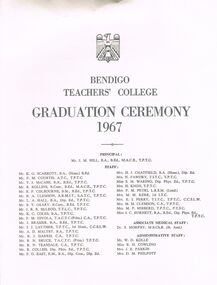
... A white document titled "Bendigo Teachers' College Graduation Ceremony 1967" and below this is a list of the college staff. They are Mr. J. M. Hill (Principal), Mr. K. G. Scarrott, Mr. ...BENDIGO Education bendigo teachers' college graduatio La Trobe University Bendigo Collection collection Bendigo Teachers' College Bendigo education teaching teachers students tertiary education graduation graduation ceremony graduands Bendigo Teachers' College staff Bendigo Teachers' College students graduands graduates book A white document titled "Bendigo Teachers' College Graduation Ceremony 1967" and below this is a list of the college staff. They are Mr. J. M. Hill (Principal), Mr. K. G. Scarrott, Mr. ...A white document titled "Bendigo Teachers' College Graduation Ceremony 1967" and below this is a list of the college staff. They are Mr. J. M. Hill (Principal), Mr. K. G. Scarrott, Mr. F. M. Courtis, Mr. T. J. McCabe, Mr. B. Rollins, Mr. R. F. Colbourne, Mr. B. A. Clemson, Mr. L. A. Hall, Mr. B. T. Geary, Mr. J. J. R. McLeod, Mr. K. C. Coles, Mr. P. M. Divola, Mr. J. Brasier, Mr. J. J. Layther, Mr. A. D. Maltby, Mr. R. J. Harris, Mr. R. N. Bruce, Mr. R. N. Teasdale, Mr. R. Collis, Mr. F. G. East, Mrs. H. J. Chatfield, Mrs. N. Fawdry, Miss S. M. Waring, Mrs. H. Knox, Mrs. F. M. Petri, Mrs. M. M. Kerr, Mrs. E. I. Perry, Mrs. M. M. Clemson, Mrs. M. P. Hibberd, Miss J. C. Burnett, and Dr. S. Morphy (Medical Staff). Administrative Staff - Mr. W. D. Kolle, Miss B. H. Cowling, Mrs. J. E. Parkin and Mrs. D. M. Philpott. On the inside cover is the "Significance of the Ceremony" and "Order of the Ceremony". A Welcome to Visitors was given by Mr. B. A. Clemson and the College Charge was read by the Principal. The Graduation Book was presented to Mr. W. F. R. Budge by Mrs. H. Chatfield the Dean of Women Students. Mr. K. G. Scarrott presented the T. P. T. C. students to Dr. W. C. Radford and Mrs. N. F. Fawdry presented the T. I. T. C. students to Dr. W. C. Radford. Congratulations were offered by The Mayor of Bendigo Cr. W. Cambridge, the President of Strathfieldsaye Shire Cr. M. O'Halloran and Mr. E. J. Allison, Head Master of Golden Square State School. Dr. W. C. Radford gave the Occasional Address.The following page contains the names of the students of 1965 - 1967 who received their Trained Infant Teacher's Certificate. - Margaret Mary Therese Atchison, Sandra Margaret Therese Atkinson, Jennifer Margaret Barker, Marilyn Joan Durbridge, Sandra Faye Ermel, Jeanette Craig Ferguson, Janice Mary Fee, Annette Gargiulo, Jennifer Mary Hawkins, Jocelyn Ann Heslop, Julie Marion Hopper, Susan Mary Howard, Donnette Ann Hufer, Dorothy Joan King, Leonie Anne Mackay, Mary Bernadette McCurry, Diane Margaret Louise McPherson, Jennifer Evelyn Mansfield, Maureen Moait, Jennier Joy Mouser, Marie Jeannette O'Brien, Ann Lorraine Pawley, Pamela Jeanette Phillips, Wendy Roma Rainey, Lynette Jean Robinson, Nola Mary Sawers, Margaret Ellen Sheridan, Rosalie Heather Smith, Marianne Catherine Stockx, Margery Lois Storey, Joyce Eidirien Waidabu, Barbara Joan Webb, Marion Joyce Wright and Margaret Joan Young. This page also contains the names of the students who graduated with their Trained Primary Teacher's Certificate 1966 - 1967. - Merylyn Dale Abbot, Janet Ann Angus, Robert Maxwell Anset, Jocelyn Gray Astbury, Catherine Mary Backstrop, Anne Margaret Becker, Graeme Kenneth Blake, Mary Margaret Bourke, Ruth Yvonne Bradbury, Mary Elizabeth Carstensen, William Stephen Carthew, Glenda Marjory Childs, Rae Mary Chittock, Elizabeth Lorraine Colville, Robyn Elizabeth Connelly, Michael Thomas Corboy, Richard George Cowan, Carmel Margaret Delaney, Margaret Ruth Dettman, Bryan John Dillon, Suzann Margaret Fahey, John Stuart Fleming, Maxwell George Fletcher, Valma Mary Foreman, Joan Elsie Gillespie, Beverley Joan Ham, Leonard Jack Heathcote, John Edward Higgs, Pauline Susan Hobby, Rhonda Carolyn Hunter, Heather May Kennedy, Gillian Anne Knight, Anne Elizabeth Layton, Judith Irene Learmonth, Jean Annette Leversha, Judith Katherine Longhurst, Jeannie Elizabeth Anne McKerrow, Charles Bryan Mathieson, Judith Lorraine Mills, Patsie Murphy, John William Norman, Jocelyn Anne Nunn, Helen Margaret O'Donoghue, Andrea Palmer, Carolyn Joy Palmer, Arthur Henry Parker, Sandra Jean Peace, Anne Marie Pianta, Margaret Joan Plant, Lawrence John Plowman, Graeme Kenneth Proud, Nancy Elizabeth Raven, Colleen Margaret Reid, Glenda Ann Rogerson, Vivienne Lorraine Roscoe, Peter Thomas Ryan, Bruce Robert Scriven, Margaret Lorraine Seddon, Ann Shemshedin, Heather Joy Shields, Margaret Susan Snow, Lee-ann Robyn Spittal, Graeme George Stanyer, Marie Stevenson, Jennifer May Teague, Kenneth William Thomas, Kerry Joy Tobias, Patrick James Tobin, Jennifer Anne Todd, Helen June Trevaskis, Faye Lynette Turner, Rosemary Gaye Ward, Peter Edward White, Barbara Lindsay Wotherspoon, Fairlie Grace Young, and Katherine Rosalee Zerbst The back cover has the "Principal's Charge to the Graduands" and "The College Anthem". The Conductress being Mrs. F.M. Petrie and the Pianist Miss M. Shaw.bendigo, education, bendigo teachers' college graduatio, la trobe university bendigo collection, collection, bendigo teachers' college, bendigo, education, teaching, teachers, students, tertiary education, graduation, graduation ceremony, graduands, bendigo teachers' college staff, bendigo teachers' college students, graduands, graduates, book -
 Flagstaff Hill Maritime Museum and Village
Equipment - Ship's Wheel, 1922
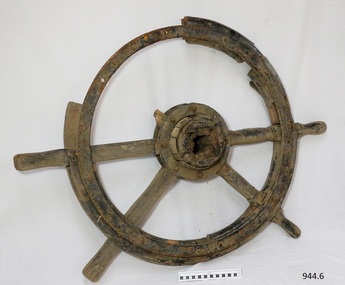
... Hill’s collection shows “H.M.C. No. 3, Pt Adelaide” on the bow. In 1969, the last freight left Marion Bay on the ketch Reginald M carrying grain, wool, and explosives. In late 1970, the Mt. Lyell Mining and Railway Company bought the vessel to use as a barge to carry explosives. In 1972, the Navy League of Strahan, Tasmania, purchased it for use by the Strahan Sea Cadet Unit to use at Macquarie Harbour and renamed it T.S. Macquarie. However, this plan for the use of Reginald M did not happen. In 1974, Mr...Hill’s collection shows “H.M.C. No. 3, Pt Adelaide” on the bow. In 1969, the last freight left Marion Bay on the ketch Reginald M carrying grain, wool, and explosives. In late 1970, the Mt. Lyell Mining and Railway Company bought the vessel to use as a barge to carry explosives. In 1972, the Navy League of Strahan, Tasmania, purchased it for use by the Strahan Sea Cadet Unit to use at Macquarie Harbour and renamed it T.S. Macquarie. However, this plan for the use of Reginald M did not happen. In 1974, Mr ...This ship's wheel was hand-made from wood and metal using a recycled cart wheel. It originally belonged to the "Reginald M", a coastal trading ketch. ‘REGINALD M’ 1922 to 1975- The vessel “Reginald M” was a two-masted coastal ketch, owned and built by Mr Jack (John) Murch of Birkenhead, Port of Adelaide, South Australia. Its construction took approximately 6 months, and it launched at Largs Bay in 1922. The Reginald M’s purpose was to serve the coastal trade of South Australia, to carry cargo cheaply and efficiently. Some have said that the keel was, in fact, hewn from two telegraph poles! Its builder frequented all the salvage yards for materials and fittings. Reginald M had a very shallow draft and a flat bottom that enabled it to come close to shore and to sit high and dry at low tide or to be beached on sand. The flat bottom was also to make the ship able to skim over reefs. Wagons could load and unload direct from their sides. Its cargo included Guano, Barley, Wool, Horses, Cattle, Timber, Explosives, Potatoes, Shell Gritt and Gypsum. On April 9th 1931Reginald M weathered a large storm in St Vincent Gulf, SA. The vessel suffered great damage; the mast snapped, and the crew laboured for four hours to free it by chopping off the mast and rigging. The crew patched it up and slowly returned to Port Adelaide with only a portion of the insured cargo being damaged. The crew members at the time were owner Mr John H Murch of Wells Street, Largs Bay; Skipper Mr R Murch, John’s brother; Murray, son of Captain Murch; and Seaman John Smith. Reg Webb purchased Carribie Station, at Marion in the Warooka District, south of Adelaide, in 1921. He cleared the land and farmed sheep and grain. In 1923, he shipped his own wool and grain from Marion Bay, having first carted 300 bags of the barley grain, 12 bags at a time, along the unmade track to the jetty. A photograph donated to Flagstaff Hill, dating about 1929 - 1942, shows two men on the Reginald M, holding between them their fishing catch of a large hammer shark. The photograph is stamped “GRENFELL STUDIO PORT LINCOLN PRINT” and titled “hammer shark caught on Reginald Emm”. The donor’s family lived on the Your Peninsula and dispatched their grain from a chute at Gleeson’s Landing to the awaiting transport vessel. Reg knew the Murch Brothers from Port Adelaide. The brothers had been using their ketch, Reginald M, to ship Guano from the Islands, led by Captain Richard Murch. Reg approached them in 1934 about shipping grain from Marion Bay. The brothers visited the bay and thought it was an ideal place. They showed Reg where to stack his grain, and they measured up the cliffs. When Reg was ready, they brought down and installed a ninety-foot wooden chute. The bags of grain were individually pushed down the chute, landing in a waiting small boat, then rowed to Reginald M with 14 bags at a time. After 10 hours, Reginald M would have a load of 1300 bags of grain to ship to waiting ports. At one time, a wild storm destroyed the chute, so they built a stronger replacement chute. Reginald M engaged in the shipping of grain from there until 1938. In 1940, Able Seaman Allan H Lucas served on the Reginald M between September and December, being engaged and discharged from Port Adelaide. The ship’s Master, W S Murch, signed his Certificate of Discharge. It seems that at the Reginald M was used, at one time, as a Customs vessel, as one photograph in Flagstaff Hill’s collection shows “H.M.C. No. 3, Pt Adelaide” on the bow. In 1969, the last freight left Marion Bay on the ketch Reginald M carrying grain, wool, and explosives. In late 1970, the Mt. Lyell Mining and Railway Company bought the vessel to use as a barge to carry explosives. In 1972, the Navy League of Strahan, Tasmania, purchased it for use by the Strahan Sea Cadet Unit to use at Macquarie Harbour and renamed it T.S. Macquarie. However, this plan for the use of Reginald M did not happen. In 1974, Mr Andrew Rennie, of East Brighton, Melbourne, bought it for a similar purpose, paying $5,000 and donating a ‘Cadet of the Year’ trophy to the Sea Cadets. He sailed it from Strahan to Melbourne, planning to use it for pleasure sailing. Also, in 1975, Reginald M was bought by the Melbourne Ferry Company at auction. Later in 1975, Flagstaff Hill Maritime Museum bought the Reginald M for $20,000. It became a popular exhibit in the Village’s lake. In 2006, using funds from a $4,000 government grant, the restoration of the vessel continued. Flagstaff Hill Maritime Village’s Collection holds other artefacts associated with Reginald M. They include - Photographs of the Reginald M, including one photograph of it in Outer Harbour, S.A., dated 1947, with Skipper- R.F. Dale and Owner- John Murch. Another shows it docked at Port Adelaide, with the lettering H.M.C. No. 3 Pt ADEL (standing for His /Her Majesty’s Customs). There is a black and white photo of it at a wharf and another showing a person on board. - a lifebuoy, made of cork, with the inscription of “Pt Adelaide” on it. - Helm section, removed and replaced during restoration. - a bullet found in pieces of timber when Reginald M was restored in 1979 Reginald M was a much-loved exhibit at the Maritime Village, where many visitors enjoyed boarding and exploring a real ship with a long history. Sadly, the Reginald M was decommissioned in late 2016, due to the continuing prohibitive cost of maintenance and the risk to public safety. Components from the Reginald M are held in Flagstaff Hill's collection as a reminder of the Reginald M’s history. This ship's wheel is significant because of its association with the REGINALD M. REGNIALD M was a coastal trading ketch from South Australia built in 1922. It is one of very few sailing coastal trading vessels still extant, and its flat bottom, single chine shape illustrates a very simple but robust method of construction, compared to other round bilged examples of trading vessels. She is now listed on the Australian Register of Historic Vessels (ARHV Number: HV000562.)Ship’s wheel, also called a Helm, eight spoke design. Centre of wheel is handmade of wood and has iron rings around each side. The spokes are fitted into this wooden hub. The outer wheel has an iron ring on one side and sections of a wooden ring on the other. There are both original and modern bolt and screw fastenings. The wheel has remnants of black paint. This ship’s wheel was originally fitted to the ketch REGINALD M and removed during its restoration. flagstaff hill, warrnambool, shipwrecked-coast, flagstaff-hill, flagstaff-hill-maritime-museum, maritime-museum, shipwreck-coast, flagstaff-hill-maritime-village, ship's wheel, hand made ship's wheel, coastal trader, reginald m, ketch, john murch, ch murch, reg webb, carribie station, mt lyell copper company, queenstown navy league, andrew rennie, melbourne ferry company, r.f. dale -
 Flagstaff Hill Maritime Museum and Village
Document - Commemorative, The Victorian Missions to Seamen, St Nicholas Seamen's Church Williamstown, circa 1944
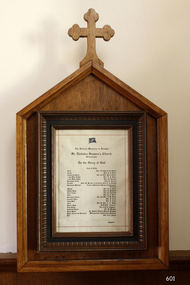
... hill...flying angel club...mrs. and miss j.r. schutt...mrs. r.j. ewart...mr. and mrs. percy taylor...mrs. m...Hill Maritime Village in Warrnambool by the Missions to Seamen Victoria. The transcription of the document is as follows: The Victoria Missions to Seamen, St Nicholas Seamen's Church, Williamstown To the Glory of God List of Gifts Altar - Mrs. and Miss J.R. Schutt Cross - Mrs. R.J. Ewart Chalice and Paten - Mr. and Mrs. Percy Taylor 1 Pair Altar Lights - Mrs. R.J. Ewart 1 Pair Altar Lights - Mrs. M...Hill Maritime Village in Warrnambool by the Missions to Seamen Victoria. The transcription of the document is as follows: The Victoria Missions to Seamen, St Nicholas Seamen's Church, Williamstown To the Glory of God List of Gifts Altar - Mrs. and Miss J.R. Schutt Cross - Mrs. R.J. Ewart Chalice and Paten - Mr. and Mrs. Percy Taylor 1 Pair Altar Lights - Mrs. R.J. Ewart 1 Pair Altar Lights - Mrs. M ...This framed document titled "The Victorian Missions to Seamen, St Nicholas Seamen's Church Williamstown" shows a list of donors of significant items to the St Nicholas Missions to Seamen's Church in Williamstown when the new building opened in 1944. The organisation ceased in 1966, and the furnishings were later donated to Flagstaff Hill Maritime Village in Warrnambool by the Missions to Seamen Victoria. The transcription of the document is as follows: The Victoria Missions to Seamen, St Nicholas Seamen's Church, Williamstown To the Glory of God List of Gifts Altar - Mrs. and Miss J.R. Schutt Cross - Mrs. R.J. Ewart Chalice and Paten - Mr. and Mrs. Percy Taylor 1 Pair Altar Lights - Mrs. R.J. Ewart 1 Pair Altar Lights - Mrs. M. Jackson Sanctuary Lamp - Miss C. Roberts Rerebos - Miss. M. Breaks, in memoriam Miss. L.A. Breaks Sanctuary Window - Victoria Missions to Seamen Lightkeepers' Auxiliary Missal - Mrs. R.J. Ewart Missal Desk - Mrs. R. Hodgkiss Altar Vases - Mrs. R. Kaybould Bible - Mrs. R.J. Ewart Sanctuary Chairs - Mr. and Mrs. F.H. Twist Credence Table - Mrs. F. Clark Altar Dish – Mrs L. Clark Font - Mr. and Mrs. C.V. Dyble Prayer Desk - H.M.H.S. "Centaur" Reed Organ - "Joy Club for Fighters" Collection Plates - Mr. D. MacKae Hymn Board - St. David's Musical Society, Brighton Pews, Carpet and Hangings - Williamstown Lightkeepers' Auxiliary Bell - Mrs. A.L. Feenes THE MISSIONS TO SEAMEN (Brief History: for more, see our Reg. No. 611, Set of Pews) The Missions to Seamen, an Anglican charity, has served seafarers of the world since 1856 in Great Britain. It symbol is a Flying Angel, inspired by a Bible verse. Today there are centr4es in over 200 ports world-wide where seamen of all backgrounds are offered a warm welcome and provided with a wide range of facilities. In Victoria the orgainsation began in Williamstown in 1857. It was as a Sailors’ Church, also known as ‘Bethel’ or the ‘Floating Church’. Its location was an old hulk floating in Hobson’s Bay, Port of Melbourne. It soon became part of the Missions to Seamen, Victoria. In the year 2000 the organisation, now named Mission to Seafarers, still operated locally in Melbourne, Portland, Geelong and Hastings. The Ladies’ Harbour Lights Guild was formed in 1906 to support the Missions to Seamen in Melbourne and other centres such as Williamstown. Two of the most significant ladies of the Guild were founder Ethel Augusta Godfrey and foundation member Alice Sibthorpe Tracy (who established a branch of the Guild in Warrnambool in 1920). The Guild continued its work until the 1960s. In 1943 a former Williamstown bank was purchased for the Missions to Seaman Club. The chapel was named St Nicholas’ Seamen’s Church and was supported by the Ladies’ Harbour Lights Guild, the Williamstown Lightkeepers’ Auxiliary and the League of Soldiers’ and Sailors’ Friends. It ceased operation in 1966. A Missions to Seamen Chapel and Recreation Room was a significant feature of ports during the late 1800s and into the 1900s. It seemed appropriate for Flagstaff Hill to include such a representation within the new Maritime Village, so the Melbourne Board of Management of Missions to Seamen Victoria gave its permission on 21st May 1979 for the entire furnishings of the Williamstown chapel to be transferred to Flagstaff Hill. The St Nicholas Seamen’s Church was officially opened on October 11, 1981 and closely resembles the Williamstown chapel. This document is significant through its association with the St Nicholas' Mission to Seamen Church in Williamstown, Melbourne, established in 1857. The document is socially significant as it connects the community of Williamstown with the St Nicholas' Missions to Seamen and represents the importance of the church to the community. The items in our collection from the Missions to Seamen in Williamstown, Victoria, have historical and social significance. They show that people of the 1800s and 1900s cared about the seafarers’ religious, moral, and social welfare, no matter what the religion, social status or nationality. It had its origins in Bristol, England when a Seamen's Mission was formed in 1837. The first Australian branch was started in 1856 by the Rev. Kerr Johnston, a Church of England clergyman, and operated from a hulk moored in Hobson's Bay; later the Mission occupied buildings in Williamstown and Port Melbourne. Document titled "The Victorian Missions to Seamen, St Nicholas Seamen's Church Williamstown". The document is a list of gifts originally given to the St Nicholas Seaman's Church in Williamstown, Victoria. The document is mounted in a decorative wooden frame with glass cover. This is one of the original items in our ‘St Nicholas Seamen's Church Williamstown Collection’.flagstaff hill, warrnambool, shipwrecked-coast, flagstaff-hill, flagstaff-hill-maritime-museum, maritime-museum, shipwreck-coast, flagstaff-hill-maritime-village, framed document, donations to st nicholas seamen's church williamstown, 139 nelson place williamstown, religion, religious service, sailors rest, bethel sailors’ church, bethel floating church, ladies harbour light guild, mission to seafarers, st nicholas seaman’s church williamstown, mission to seamen williamstown, st nicholas seamen’s church flagstaff hill, flying angel club, mrs. and miss j.r. schutt, mrs. r.j. ewart, mr. and mrs. percy taylor, mrs. m. jackson, miss c. roberts, miss. l.a. breaks, miss. m. breaks, victoria missions to seamen lightkeepers' auxiliary, mrs. r. hodgkiss, mrs. r. kaybould, mr. and mrs. f.h. twist, mrs. f. clark, mrs l. clark, mr. and mrs. c.v. dyble, h.m.h.s. "centaur", "joy club for fighters", mr. d. mackae, williamstown lightkeepers' auxiliary, mrs. a.l. feenes, st. david's musical society brighton -
 Flagstaff Hill Maritime Museum and Village
Equipment - Bosun's Chair, ca. 1922
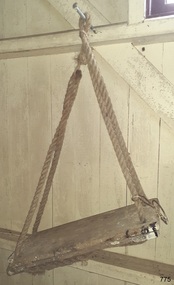
... M” was a two-masted coastal ketch, owned and built by Mr. Jack (John) Murch of Birkenhead, Port of Adelaide, South Australia. Its construction took approximately 6 months and it was launched at Largs Bay in 1922. The vessel had many owners and adventures over the years until it was purchased by Flagstaff Hill...M” was a two-masted coastal ketch, owned and built by Mr. Jack (John) Murch of Birkenhead, Port of Adelaide, South Australia. Its construction took approximately 6 months and it was launched at Largs Bay in 1922. The vessel had many owners and adventures over the years until it was purchased by Flagstaff Hill ...This Bosun's char was part of the equipment on the vessel 'Reginald M. It is typical of items included on board a vessel in the late 19th and early 20th century. The nautical word 'bosun' is an abbreviation of the word 'boatswain' who is the person responsible for the repair and maintenance of the vessel. It could be used when rigging the sails and for rescue at sea, along with a thick rope anchored on shore or a rope between ships. It could also be used to move passengers to and from a ship as well as cargo on, to and from the vessel. A bosun's chair is a simple piece of equipment made from a short plank of wood and a sturdy piece of rope. It looks a little like a child's swing but usually has a pulley system that allows the user to adjust the length of the hanging piece of rope, and in so-doing adjusts the height above the floor or ground or sea. In modern times a harness would also be worn by the bosun’s chair user for safety reasons. Bosun's chairs are also used by window cleaners, construction workers and painters. The bosun’s chair is sometimes just a short plank, or even a canvas sling. The REGINALD M - The vessel “Reginald M” was a two-masted coastal ketch, owned and built by Mr. Jack (John) Murch of Birkenhead, Port of Adelaide, South Australia. Its construction took approximately 6 months and it was launched at Largs Bay in 1922. The vessel had many owners and adventures over the years until it was purchased by Flagstaff Hill Maritime Museum & Village in 1975 from the Melbourne Ferry Company at auction. It was then used as an active display until 2016. Visitors could go aboard, turn the ship's wheel, go below deck and get the feel of the captain's quarters, sailors' quarters and the storage space available. The Reginald M was a popular exhibit for young and old, until 2016.This bosun's chair is significant for its connection to the maritime history. It has been used for rigging, painting, maintenance and importantly for life saving and safety. The bonus's chair is also significant because of its connection to the history of the vessel REGINALD M, the coastal trading ketch from South Australia built in 1922 and in existence until 2016. Its flat bottom, single chine shape illustrates a very simple but robust method of construction, compared to other round bilged examples of trading vessels. The Reginald M is listed on the Australian Register of Historic Vessels (ARHV Number: HV000562.)Bosun's chair; seat is a rectangular plank of wood with a hole drilled in each corner and three reinforcing wood lengths attached below the plank. The ends of two looped thick ropes have been threaded through the holes in the plank, crossed over then spliced together. The loops of rope above the plank have been tied with light rope. A roughly made wire hook is attached at the base of one length of rope. Top surface reveals indents where the bottom wooden pieces are joined to the top and some of the metal fixtures can be seen along the edge. There are remnants of white paint on the top.flagstaff hill, warrnambool, maritime village, maritime museum, flagstaff hill maritime museum & village, shipwreck coast, great ocean road, bosun's chair, bosuns chair, boatswains chair, rigging, maritime equipment, bosun's seat, life saving, marine technology, ship rigging -
 Federation University Historical Collection
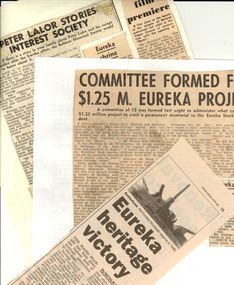
Book - Newspaper clippings, Eureka Stockade Newspaper Clippings, 1923-2015
... M J Brown, speaker Mr Dudley Erwin MLA, significance to Australia, Connolly Association morning ceremony, Bernie Nolan, W Hartley). * Courier 1969 - Letters to the editor - Peter Lalor's Grave, Losing Places of Beauty loss of verandahs, Eureka Stockade Caravan Park, Eureka Swimming Pool), Ireland's Dilemma (Catholic Church), Small Group in "Affair" (F.R. Muller) * Courier 22/04/1969 - $7000 grant for Eureka Diorama (Sir Henry Bolte approves grant, $2 for $1, Rotary walkathon basis, City Council interest, Diorama details, information about Eureka for public, Eureka Park Sovereign Hill...M J Brown, speaker Mr Dudley Erwin MLA, significance to Australia, Connolly Association morning ceremony, Bernie Nolan, W Hartley). * Courier 1969 - Letters to the editor - Peter Lalor's Grave, Losing Places of Beauty loss of verandahs, Eureka Stockade Caravan Park, Eureka Swimming Pool), Ireland's Dilemma (Catholic Church), Small Group in "Affair" (F.R. Muller) * Courier 22/04/1969 - $7000 grant for Eureka Diorama (Sir Henry Bolte approves grant, $2 for $1, Rotary walkathon basis, City Council interest, Diorama details, information about Eureka for public, Eureka Park Sovereign Hill ...The Eureka Stockade was fought on the Eureka Lead, Ballarat East on 03 December 1854. Keith Rash was a signwriter who learnt his trade at the Ballarat School of Mines. He was very interested in local history and wrote articles for the local newspapers. The clippings on Eureka would have been used to inform his articles, and research on the site of the Eureka Stockade. Ken Clements was former Academic Registrar at Ballarat College of Advanced Education (now University of Ballarat). He was a committee member of the Eureka Stockade Memorial Park Committee for a number of years. Dr Dorothy Wickham has researched Eureka over a number of decades, and has published a number of titles on the topic. Clare Gervasoni has researched Eureka over a number of decades, and has published a number of titles on the topic, including coordination of www.Eurekapedia.org for Ballarat Reform League Inc. Three white A4 folders of newspaper clippings dating from 1923 to 2012. The clippings are in chronological order. The clippings were collected by Keith Rash, and were later supplemented by clippings collected by Ken Clements. Further clippings collected by Dorothy Wickham, mainly around the 1990s were inserted throughout the folders in chronological order, as well as later clippings by Clare Gervasoni .1) Folder One - Eureka Cuttings 1923 - 1984 * Courier 05/05/1923 - Eureka Progress Association (W. Groves, Stockader Phillips of Rocky Lead, Stockader Wilson, G. Lakeland, Eureka Hall.) * Courier 10.08.1931 - Banquet at Eureka - Progress Association's Annual Meeting (McGregor, Parsons, W.J. McAdam, 75th anniversary. Elsworth, Kent, Robert McGregor) *Courier 11/08/1932 - Eureka Reserve - Committee Annual Social. (E. Parsons, C.C. Phillips, D.C. McGrath, T.T. Hollway, Bolster, Mackenzie, Mares, Hendy) * Courier 07/07/1939 - Eureka Improvement Committee, Eureka Reserve * Courier 04/12/1950 - Australian Democracy Was Born at Eureka * Courier 04/09/1951 - Council Seeks Development of Eureka Land - potential housing Commission development on site of Last Chance Mine. (J. Welsh). * Ballarat Courier 12/1952 - Few Remembered Eureka Affair (98th anniversary, A.W. Nicholson, C.E. Brown, L. O'Brien, R. Joshua, Soldiers' Memorial Band) * Courier 07/12/1953 - Few Commemorated the Affair at Eureka - 99th anniversary at the Stockade reserve (F.J. Cutts, L. O'Brien, R. Joshua, Peter Lalor, C.E. Brown. * Courier 14/04/1954 - Eureka Centenary - meeting to determine form of commemoration. * Courier 15/04/1954 - Getting ready - Centenary celebrations (Picture of Diggers Memorial, F.J. Cutts, C. Mott). * Courier 15/04/1954 - Eureka Centenary Planned (F.J. Cutts, Geoffrey Searle, Edgar Bartrop, G. Swenson, B. Parsons, T.E. Carter, M. Collins, Mrs L.M. Quinlan, Grenville, Eureka Progress Association, Arthur Jones, E.J. Crimmins, Bernard D'Arcy, A.W. [Bert] Strange). * Guardian 25/11/1954 - Diary of a Eureka Stockader [signed RDW] (Bentley, Fletcher, McIntyre, Westerby, Ballarat Reform League, monster meeting, Bakery Hill, Charles Hotham) * Argus 04/12/1954 - Eureka Day Marred by Storm (image of Bert O'Toole in Red Coat uniform, Peter Lalor Statue, A.C. Pittard, F.J. Cutts, Bernard D'Arcy, L. Moyle, Catherine Smith, wounded, death, Eureka Celebrations, anniversary, John Cain *Age Literary Supplement, 04/12/1954 - The motives that prompted the tragic Eureka rising . (image of Charles Hotham, government troops attack, Eureka Stockade Monument) 1851 discovery of gold in Victoria, centenary of Eureka Stockade, author MM, Governor Latrobe, law abiding nature of most miners, most miners were British but other nationalities represented, miners former occupations were varied, many did not "strike it rich", by 1853 the earnings of most diggers had fallen very low, 30/- licence fee, digger hunts, cries of "Joe" or "The Traps", 5 pound fine or 6 month imprisonment for not carrying Licence, La Trobe had hired ex-convicts as police, Governor Charles Hotham 1854, Bentlys Hotel, Commissioner Rede, miners leader Peter Lalor, Carboni Raffaello, Press warning by "Age", Ballarat Reform League, November 29 diggers meeting, licences burned, November 30 licence hunt, new flag and Southern Cross oath, the Stockade, revolution ?, Stockade Garrison, December 3 1854, the battle, 125 prisoners, 13 charged with high treason, all prisoners acquitted, Lalor and Vern into hiding, 'democratic revolution' or 'undisguised rebellion' ? , Miner's Right, Chartist ideas involved, Lalor became a member of Victorian parliament, Eureka monument inscription, little revolutionary significance. * The Argus 06/12/1954 - 100th Eureka Day ( [ Images - bearded miners, Bert O'Toole, simulated battle, red coats] battle tableau, Centenary celebrations. Mr Cain Premier, Spirit of Eureka). * Ballarat Courier 22/04/1961 Attack on the Paint ( [Image - Eureka Monument Guns] vandals). * Ballarat Courier 13/09/1962 - Little-Known Aspects of Eureka Affair (E.J. Crimmins and the 109th Eureka Anniversary); Eureka Drilling (Photo of M. Milligan drilling for water for the Eureka Pool) * Ballarat Courier 10/12/1963 - Eureka Relics in Public Display (Trev Negri), Little-known aspects of the Eureka affair (E J Crimmins, 13 State prisoners, Creswick men, M Greville), Eureka Request (Apex explanatory notice). * Ballarat Courier 12/05/1964 - Plaque to tell Eureka Story (Apex donation on monument). * Ballarat Courier 09/06/1964 - Permission is sought (re Eureka Reserve small Hall). * Ballarat Courier 28/08/ 1964 - Eureka should be much better attraction (Mayor Cr Webb, Rotary). * No Chlorination at Stockade Pool 24/08/1964 (A Jones secretary) * Ballarat Courier 10/10/1964 - Assurance given on Eureka Swimming Pool (Murray Byrne MLC, Bill Stephen MLA, pool plans [Images - Photo of Jones, Stephen Byrne - diagram of Eureka reserve swimming pools, caravan park, monument area] ) * Ballarat Courier 23/06/1964 - Pool plans ready for tenders MLA (Black Hill) * Ballarat Courier 26/11/1966 - Eureka: Was that clash in 1854 inevitable ? ([Image - Monument, Peter Lalor statue], by J J Sheehan, foreigners, Chartists, poorly armed. * 03/12/1966 Part 2 - Eureka: No plan by the Diggers to Attack, by j j Sheehan ([Images - Eureka collection, W C Colbourne and G Brookes with old rifle] Corrupt, Instructed, Withers' view, The last hunt, Police spies). * Ballarat Courier 19/12/1968 - Eureka commemoration definite next year,1854 - (Connolly Association, 3 December, 'Finest thing in Australasian history', few attending, L O'Brien, public apathy, A Williams, successful 1954 centenary, W. Roff, Eureka Progress Association) * 23/11/67 - Eureka and Miners' rights (G P Ryan letter, no representation, excessive licence system, offensive administration.brutality, Gov Hotham, barricade on Eureka lead, Miners' Rights replaced Licences but now worthless, mining monopolies, democracy). * Eureka Flag Ceremony (L O'Brien, false report, revive annual Eureka service). * Ballarat Courier 12/05/1867 Questions of Eureka (W Thompson letter, why military names on monument ? Why mount irrelevant cannons on monument ? Where is the flag ?). Lalor's refuge (between Bungaree and Bullarook ?, Fr t Linane ). Building linked with Ballarat (at French end of Collins Street Melbourne, Sir Robert Nickle, relief march to Ballarat, historian E Moorhead, 40th regiment link ). * Ballarat Courier 08/01/1968 - Too little history at Eureka says Visitor (Image - Eureka monument, Mrs L Riley, frequent complaint, B McOrist, proposed Stockade model). * Ballarat Courier c 1968 - Gallery Eureka flag may be the original (Cr W Roff, at Ballarat Art Gallery, fraud ?, matching pieces). * Ballarat Courier 11/04/1968 Pool of reflection ([Image - Eureka pool and willows], near full again). * Ballarat Courier 20/08/1968 - Eureka Reserve (Rotary Clubs' proposed project). *Ballarat Courier 05/10/1968 - Picturesque Willows ([Image- willows in good condition at Eureka Stockade]). * Ballarat Courier, November 1968 - Eureka Ceremony will be Revived (Eureka Progress Association to revive Eureka Commemoration at the site, Connolly Association Australia, J. Garvey, A. Jones) [Photo of L. O'Brien, A, Jones, R.A. Mitchell, Jim Styker and Alan Mills *Ballarat Courier 15/11/1968 - Walkathon for Stockade Diorama (planned life-size Diorama at Stockade depicting the Eureka riot, Rotary Cup walkathon fundraiser. *Ballarat Courier 26/11/1968 - Discussing plans ([Image - Les O'Brien, Arthur Jones, Alan Mills et al], memorial service Sunday). * Ballarat Courier 26/11/1968 - Eureka ceremony will be revived (four year lapse, Connolly Association, Eureka Progress Association) * Ballarat Courier 02/12/1968 - 500 attend Eureka ceremony (114th commemoration, on island in Lake, Mayor Cr M J Brown, speaker Mr Dudley Erwin MLA, significance to Australia, Connolly Association morning ceremony, Bernie Nolan, W Hartley). * Courier 1969 - Letters to the editor - Peter Lalor's Grave, Losing Places of Beauty loss of verandahs, Eureka Stockade Caravan Park, Eureka Swimming Pool), Ireland's Dilemma (Catholic Church), Small Group in "Affair" (F.R. Muller) * Courier 22/04/1969 - $7000 grant for Eureka Diorama (Sir Henry Bolte approves grant, $2 for $1, Rotary walkathon basis, City Council interest, Diorama details, information about Eureka for public, Eureka Park Sovereign Hill and Montrose cottage combination). * Courier 21/08/1969 - Mayor turns sod at Diorama site ([Image- Mayor Cr M J Brown et al], life size representation of stockade scene, Mr W F Stephen MLA). * Courier 06/12/1969 - The 'affair at Eureka' ([Image- Diorama] Few remembered anniversary of bid for democratic Government in 1850s, Mayor Cr Alec Mills, Murray Byrne, Colonial secretary J Foster resignation, reforms, hostility, unpopular, end of era). * Courier mixed 1969 - City link with Eureka Stockade threatened, - Eureka signposts [Diggers Memorial, Soldiers Memorial], - Eureka Anniversary - Souvenir of Eureka (William Cowland's pistol). * Courier :/05/1970 - Fascinated ([Image- children at near completed Diorama]). * Courier 10/08/1970 - Mayor opens Eureka Diorama ([Image- Diorama scene of 3 December 1854 battle], Mayor Cr A E Mills, Rotarians, Eric Pearce voice tape recording). * Courier 08/08/1970 - Eureka Diorama should be Popular-Rotarian ([Image- Diorama shed], City's new drawcard, Diorama Opening para and advert). * Courier 12/09/1970 - The Quick change Eureka Stockade ([Image- Eureka Stockade Hotel], was Australia Felix Hotel, Mr Kevin Worthington). * Courier 22/09/1970 - Missing golden opportunities (message unheeded, American tourists misled, bewildered tourists). * Courier 20/10/1970 - Ballarat's monument to vandalism ? (Ballarat, Wendouree and South Rotary clubs' pride: Eureka Diorama, joy and heartaches, vandalism damage, thoughtless and vicious). * Courier 20/10/1970 - Marked for demolition ([Image- Ballarat east railyard] troops path to Eureka stockade). * Courier 20/10/1970 - Diorama sound system target for vandals ([Image- Jack Redman removing foreign material from diorama starting mechanism). * Courier 03/11/1970 - Record Good but Facts are Wrong ([Image- depiction of Eureka scene], article by Paul Hughes, RCA LP record based on musical play re Eureka Stockade, errors) * Courier 11/03/1970 - Diorama for Eureka Stockade ([Images- view of park, view of diorama]). * Courier 4/12/1970 - Anniversary of Eureka uprising ([Images- Southern Cross flag over Montrose cottage, R Fenton and V Demedeze], 107th anniversary, Scouts Eureka re-enactment, Diggers didn't mind delay). * Courier 16/04/1971 - Lake disappearing ([Image- Lake Elsworth being filled], Olympic standard pool planned for same site). * Courier 31/07/1971 - Birthplace of Peter Lalor ([Image- 211 year old Lalor home in Ireland], Eureka Stockade (park) name change to Eureka Stockade Memorial Park (in Sept. 1972). * Courier 01/02/1971 Eureka Stockade Gardens - ([Images- Gardens near Caretakers Cottage, Miss J Hetherington and begonias in Eureka Stockade hothouse). * Courier 11/1971 - Eureka Grant (for toilet block in Eureka Caravan Park), Ancestor Died in Stockade Battle (William Clifton), $93,887 Tender for Eureka Pool) * Courier 10/12/1971 - Eureka FILM 'iMMORAL' ( Erwin's attack, DUDLEY ERWIN MP, suggested cuts). * Courier 21/02/1972 - It is not a subsidy (says Stockade Director, re film, Added bonus, also Descendant upset- letter from Peter A Lalor re film content). * Ballarat Courier 31/10/1973 - Eureka Stockade a National Shrine, (Editorial , Minister Grassby's support) - Eureka 'Shrine of our History', (Grassby's pledge). * Ballarat Courier 14/02/1973, - $1000 Grant for Eureka Flag (from State government to Ballarat Art Gallery, Bill Stephen MLA, Murray Byrne Minister for Tourism). * Ballarat Courier 26/05/1973, - Eureka Flag Restored (by Val D'Angri, Peter Lalor details, [Images- Val at work on flag, painting of 1854 Ballarat]). * Ballarat Courier 26/10/1973 - Taking another look at Eureka (Editorial, historical and social significance of Eureka Stockade, Neighbour attractions, Thinking BIG), and Editorial report, Put up the Stockade again - and a Monorail ? * Ballarat Courier 31/10/1973 - Eureka Stockade a National Shrine (Minister's support) * Ballarat Courier October 1973 - Eureka a 'Shrine of our History' (Grassby's pledge, Alex Barnett's plans for Eureka Stockade ). * Ballarat Courier 03/11/1973, - Build Eureka into a tourist drawcard ,(Challenge to Clubs. W H McGregor; Ceremony, Tram Link, the "Iceberg"). * Ballarat Courier 08/11/1973, - Grassby to get Eureka Plans - (from Alex Barnett). * Ballarat Courier 29/11/1973, - Memorial Plans with Town Hall (Architect plans also sent to Mr Grassby). * Ballarat Courier 13/11/1973, - Prime Minister will unveil Eureka Flag [Image - Erecting Flag frame at Ballarat Art gallery, Val D'Angri]. * Ballarat Courier 14/11/1973, - What plan for the Eureka memorial ? (Public entitled to know, National concept) and (Eureka Upgrading). * Ballarat Courier 24/11/1973, - Connolly Opposition to Eureka Proposals (Association protests about limited support for commemoration of Eureka) and (Gallery search for Lalor descendant). *Ballarat Courier 24/11/1973, - The Affair at Eureka (Part one by J J Sheehan) [Images -Jones' Circus tent, and Stockade location, also Peter Lalor photo, also artist's impression of the 13 men on trial]. Part 2 )3/11/1973 (Eureka Diorama) * Ballarat Courier 01/12/1973, - Grassby to see Eureka Plan on Site [Image- Architect's sketch of proposed $450,000 Museum building]. *Ballarat Courier 01/12/1973, - The Affair at Eureka (The fight for justice, concluding J J Sheehan series), [Images - painting of fight, and the supposed site of the Stockade]. * Ballarat Courier 02/12/1973, Victorian Treasures at Art Gallery (Eureka Flag and "Moonrise exhibition), [Image - J Nicholson cleaning 'Peter Lalor' portrait]. * Ballarat Courier 03/12/1973, - The Events Which led up to Eureka (Licence contentions,the perceived need for fortification around the workings at the Eureka lead, the death of James Scobie, the burning of Bentley's Hotel, the conviction of three miners on 20 November, arrival of armed soldiers at the Camp. Also Raffaello observations, and advert for public viewing of Eureka Flag. [Image - Diggers and Soldiers names on Eureka Monument]. * Ballarat Courier 03/12/1973, - The past celebrated but what of the future ? (119th anniversary of the Eureka Stockade uprising, but current politicians are under close scrutiny) * Ballarat Courier 03/12/1973, - Teacher-Politician is behind Eureka story (J J Sheehan profile). *Ballarat Courier 04/12/1973 - A Noteworthy Day in Ballarat - (Prime Minister Whitlam unveiled the famous Eureka Flag at the Art gallery). * Ballarat Courier 04/12/1973, - Newcomers told about migrants at Eureka (migrants from >20 countries, comradeship after battle and defeat, new nation in peace and tranquility. Minister for Immigration Mr Al Grassby at Sovereign Hill. Liberties. A Shrine. [Image- Al Grassby and newly arrived migrants at Sovereign Hill]. *Ballarat Courier 04/12/1973, - Grassby leads colorful Eureka commemoration (cheering school children, flag, wreath, World Fame for Eureka affair, boy's coach trip, two sides to Eureka battle.) [Image- Mr Grassby and group of children]. (National day proposed by Mr Grassby). * Ballarat Courier 04/12/1973, Eureka as National Monument (PM commends stockade plan, Mr Whitlam on Eureka commemoration day supports plans to make Eureka Stockade a national monument. Flag saved and restored, TV hitch. New Australian anthem needed to match the 'new nationalism'. [Image - Gough Whitlam and group at flag presentation and unfurling ceremony.] * Ballarat Courier 04/12/1973, - Eureka ! It's Digger Al (Al Grassby at 119th anniversary of the Eureka Stockade rebellion). [Images - scenes of Al Grassby at Sovereign Hill]. * Ballarat Courier 05/12/1973, - Talk, But No Cash: Stephen (Mr Bill Stephen MLA comments on visit by Whitlam and Grassby). - Eureka Flag Australia's most valuable relic: PM (Gough Whitlam report to Federal Parliament yesterday, Hospitality from Mr Dudley Erwin) * Ballarat Courier 10/12/1973, - Flag restorer stitched her way into history (Val D"Angri has stitched her way into Australian History as the person who restored the Eureka Flag. [Image - Mrs Val D'Angri, Eureka Flag needlewoman ]. * Ballarat Courier, 1974 - Location of the Eureka Stockade (Bert Strange), Misplaced Stockade (Maurice Calnin, T.C. Cleary, diary), Stockade Site (Bob O'Brien), Eureka Flag Stolen (John Shannon) *Ballarat Courier 6 May 1974, - Committee formed for $1.25 M. Eureka Project - ( a permanent memorial). *Ballarat Courier 6 May 1974, - Federal Govt Aid likely for Eureka (Federal Labor Government wants Eureka Stockade site to be a major tourist attraction, Eureka booklet proposed). *Ballarat Courier 10 May 1974, - Peter Lalor Stories Interest Society (Ballarat Historical Society seeks reports of Peter Lalor during escape after the Eureka affair). Also Eureka Shrine, The Eureka 'affair', Eureka film premier. * 29/07/1974 - Eureka Memorial Plans Need Full Support (Eureka Stockade Association) * Ballarat Courier 11/5/1974 and 6/6/1974 - Stockade Site (Rob O'Brien, Eureka Interesting Story * Ballarat Courier 30/01/1974 - Eureka Remembered in Italy (Al Grasby, Raffaello Carboni, Urbino); Eureka Memorial on Way (Eureka Stockade Association) {photo of Gordon Cornell, Alec Barnett, Bruce Bartrop] * Ballarat Courier, May 1974 and 11 May 1974 - Location of the Eureka Stockade (Bert Strange); Stockade Site (Bob O'Brien) * [Ballarat Courier?] 10/07/1979 - City's Oldest Memorial is Over Diggers' Graves. (An article on the grave over the diggers who were killed as a result of the Eureka Stockade battle which was erected on 22 March 1856. .2) Folder Two- Eureka Cuttings c1980-2004 Ballarat Courier ~9/1980, - First-hand account of hardship omitted (Frank Titan letter re Tom Evans' use of selected evidence in his proclamation that democracy was not born at Eureka Stockade. "Democracy was won at the Stockade on 3/12/1854. [Cartoon 'A beach view of the Eureka Flag debate']. Ballarat News ~1980, Names (Diggers & Troopers) of deceased on Eureka Stockade Monument. [Photo of white marble tablet] Ballarat Courier 4 July 1981, Eureka Papers Gift to City, Peter Lalor letters, Stephen Cumming diary. [Photo - Town Clerk Ian Smith, Cr Jessie Scott and donor Bruce Evans]. * The Sun Travel Supplement, 06 April 1984 - A Bloody Moment Re-visited by Alec Hepburn - (Diorama, Eureka Stockade Replica, Montrose Cottage) [Image of Gerard Rushforth to the reconstruction of the Eureka Stockade * Ballarat Courier, 10/04/1984 - Eureka Incident 'an uprising of the scum of goldfields. [photo of John Callinan with the Diggers Grave monument] * The Age, 06/05/1987 - Eureka! Man found whose father was there by John Lahey (Article on Terence Brady, who was a 4 month old baby at the Eureka Stockade battle. * Ballarat Courier 13 June 1984, 'Eureka Stockade'.....a Panning, (American critic J J O'Connor pans the Australian TV Mini-series. Book 2 - C1990-2004 * Ballarat Courier ~1990,- High-calibre Restoration, (World War I German Howitzer being restored after about 70 years exposure in the Eureka Stockade Memorial Park). [Photo of wheeled Gun, and article by author Peter Butters]. * Ballarat Courier, ~1990, A Changing Track to Eureka, a 'Room for a View' article by Alex Barnett OAM. (comment about the Stockade site and the tracks leading to it). [Photo of painting by Charles Doudiet depicting the diggers swearing allegiance to the southern Cross on 1 December 1854]. * Ballarat News 22 March 1990 - Eureka Troopers Slept Here (article on the Werribee Hunt Hotel, near the Ballarat Gold Course, where troopers slept and watered their horses on the way to Ballarat in 1854. [photograph of the hotel] * Ballarat Courier, 23 August 1991 - Eureka relics Return to Ballarat by Gemma Daley. Items acquired by Sovereign Hill - including a Ground plan of James Bentley's Eureka Hotel, autographed statement by Michael Carroll. (photograph of Peter Hiscock holding a set of percussion pistols, the Plan of the Eureka Hotel] * 30 November 1992 - Ballarat Courier 'Hayden Pays a Visit' by Julia Balderstone (Article on the visit of Governor-General Bill Hayden to Ballarat, the launch of Bob O'Brien's book 'Massacre at Eureka: The untold Story' ) [Photographs of Bill Hayden, Mayor James Coglan, Sovereign Hill, Bob O'Brien) * Ballarat Courier 03 December 1994 - Awareness grows of flag's meaning by Lorrie Brown (article on the Ballarat Trades Hall replica of the Eureka Flag. The replica flag was made by the then Trades Hall caretaker Tom Ellis. The replica flag was used in a Trades Hall march in 1945 and then disappeared until the mid 1980s (Image of David Miller nad Graeme Shearer in front of the flag.) Verso - Robert and Pamela Sublet and their link to the Eureka Stockade via their ancestor Charles Sublet de Bourgy and the site of the Eureka Stockade. * 04 May 1996 Ballarat Courier Saturday Magazine Extra 'Our Next Flag?' by Gabrielle Hodson (An article on the Australian Flag and the Eureka Flag with interview with Gayle Hart (Ballarat Fine Art Gallery) * Ballarat Courier, 15 February 1995 - 'Knockers' Harming the Story of Eureka - an opinion piece by Lewis L. Gay (descendant of William Gay) * Ballarat Courier, 10 July 1996 - Facts, not our bias, are Eureka's basis, an opinion piece by Tom Evans * Ballarat Courier 03 September 1996 - Tell Warts and All of Eureka by Weston Bate (image of Weston Bate) * The Age, 21 December 1996 - Mining a rich vein of passion by Mary Ryllis Clark (Eureka overview with information on Charles Doudiet). * Ballarat Courier, 07 July 1997 - Eureka Flag Row (Sale by auction of Eureka Flag piece held by Lex McClintock - associated with Communist Party and Evelyn Shaw) [Photo of Anne Beggs Sunter beside the Eureka Flag] * Ballarat Courier, 02 August 1997; images of the Eureka sail on the Eureka centre from different locations. * Ballarat Courier 23 October 1997, Eureka Stockade Centre Agreement is signed, (Sovereign Hill to manage new Eureka Centre). [p 1 Photo Doug Sarah, Janet Dore, James Coghlan, Peter Tobin, and Peter Hiscock at table; p 2 photo of new Eureka Centre and reference to 21 year management agreement between City of Ballarat and Sovereign Hill Museums Association. * Ballarat Courier 23 October 1997, 'A Handsome Addition to our Heritage Assets' [Plan of Bentley's Eureka Hotel ason 17 October 1854 it was when it burned ] * Ballarat Courier 03 November 1997 - Different Eureka Flag. Letter to the editor from A.D. Glasson. * * Ballarat Courier 23 October 1997, 'Did Eureka Claim the Drummer Boy' Dorothy Wickham prooves the Drummer Boy of the 12 Regiment. John Egan. did not die in the events leading to the Eureka Stockade. * Ballarat Courier ~1998, - Alex and Audrey thanked, (Total of 90 years work for Eureka Stockade Memorial Park Committee recognised), [Photo of Gordon Taite, Alex Barnett and John Barnes. * Ballarat Couruer, 04 February 1998 - Exciting Eureka Flag Find in UK by Stuart Howie. (Eureka Flag held in the Suffold Military Museum) [Jan Penney holds with a Eureka centre logo.] * Ballarat Courier 23 February 1998, Eureka Centre almost ready, (Workers adding finishing touches, description of $4m Centre by Manager Jan Penney). [Photo of new Eureka Centre, Mothers Art figures, Jan Penney, stage coach, Trooper John King]. [Photo Dorothy Wickham an d Governement Camp] * Ballarat Courier 23 February 1998, Forging links with Irish (Article by Leanne Keem on visitors from County Wicklow, 1798 Rebellion, convicts, Wicklow Historic Gaol.) [Photograph at Sovereign Hill of Joan Kavanagh, Pat Vance, Balise Treacy) * Ballarat Courier 28 March 1998, On to Camp Street, Premier urges at Eureka opening, (Comments by Mr Kennett about Eureka and the Ballarat community). [Various photos and paras about participants and about the Centre]. * Ballarat Courier 28 March 1998, EUREKA CENTRE SETS FULL SAIL, (celebration of launch of new centre by Premier Jeff Kennett). [Cartoon re Red Carpet and flag pieces]. * Ballarat Courier 17 November 1998, National Eureka Day idea 'could boost city' (Mayor Judy Verlin) * Ballarat Courier 28 November 1998, - MP backs Eureka Sunday, (Michael Ronaldson supports idea of a national Eureka Sunday to recognise Eureka's significance). [Photo of Michael Ronaldson MHR]. * Ballarat Courier 1/12/1998, - Red Eureka flag symbolic for anniversary, (red spotlight on giant Eureka flag model above the new Eureka Centre for 144th anniversary week, and outline of displays in Centre by manager Dr Jan Penny). [Photos - red 'Eureka Flag' on new Stockade Centre, and cartoon re 'tomato sauce']. * Ballarat Courier 2/12/1998, - Eureka enthusiast hopes for national day of celebration, (Jack Harvey expresses his hope that 'Eureka Day' might replace 'Australia Day' as our national day for celebration of anniversary of the formation of Australia, especially if Australia becomes a republic. History of the Dawn Walk in a list). [Cartoon re Eureka Walk Backpacker]. * The News 2/12/1998 - Lanterns to Light Path on Eureka Walk by Toni Lea-Howie - Dawn walk, lanterns, Jack Harvey, * Ballarat Courier 3/12/1998,- Marching the light fantastic, (Lighting the way, lanterns being prepared at Mining Exchange under direction of maker Graeme Dunstan in readiness for Sunday dawn walk, and other details of the Sunday program). [Photo of Belinda Dyer and Michael McTigue with several lanterns and a Eureka flag in the background]. * Ballarat Courier 4/12/1898, - Old trash reveals gold rush lifestyle , (display of artefacts dug from ground before new Eureka Centre built, Dr Jan Penny spoke, Minister Rob Maclellan launched the display, Cr James Coghlan announced the formation of the Eureka Stockaders support group with Peter Tobin and Alex Barnett as Life Members, article by Diane Squires. [Photo of Robert Maclellan and Gael Shannon with archaeological artefacts]. * Ballarat Courier 04/12/1998 'Many Behind New Eureka Centre' by Paul Murphy. (An article about the origins of the Eureka Stockade centre through the eyes of Paul Murphy, Executive Office of Eureka's Children. It includes the 1988 Bicentennial Eureka celebrations, Eureka Commemorative Society, Peter Tobin, Eureka Stockade Memorial Trust) Also inclides a letter from Bob O'Biren on the Origins of the Eureka Flag. * Ballarat Courier 5/12/1998, - Eureka walk revisits past , (Lantern bearers in a dawn walk will follow path taken in 1854 by troops as they marched to the Eureka Stockade, article by Rohan Wade). [Photo of Wayne Parker and Peter Freund discussing the internet recording of the dawn walk]. * Ballarat News 06/12/1995 - Lest we forget the fallen at Eureka by Peter Butters (William Westgarth, Captain Wise, Charles Rich, coffins, Bakery Hill meeting, Eureka monument, James Scobie, George Scobie. * Ballarat Courier 7/12/1998, - DAWN HOMAGE TO EUREKA HEROES, (300 take part in Dawn Walk, organiser Margaret Rich describes the community response and participation as fabulous and thanked Ballarat Fine Art Gallery for underwriting this years event). [Photo of dawn walkers on way to Eureka Stockade on Sunday, and photo of walk Leader Jack Harvey]. * Ballarat Courier 7/12/1998, - Walk sees the dawn of a national day, (3.30am marshalling of dawn walkers at Mining Exchange building by leader Jack Harvey and lantern maker Graeme Dunstan was spectacular; at the Eureka monument Don Chip addressed the large gathering on the significance of Eureka, Big turnout draws praise from Dore, Gallery echoes stirring oath).[Photo of Jack Harvey, Janet Dore, and Margaret Rich, Photo of Evelyn Healy, Cartoon re Ho Ho Ho ]. * Ballarat Courier 7/12/1998, - Miners were fighting for a fair go : Chipp, (Stirring Eureka address by Democrats founder Don Chipp,University lecturer Jack Harvey shares his passion, Walk invite for Jeff Kennett). [Photos of Don Chipp, Phil Cleary,Tobi and Chris Kelly, and other dawn walkers]. * Ballarat Courier 8/12/1998, - Eureka day just not for historians , (Editorial re inaugural National Eureka Sunday with comments about the program and the participation of many who are not historians). * Ballarat Courier 8/12/1998, - 'Children' threaten Eureka walk, (Paul Murphy declares that 'Eureka's Children' group would disrupt next years National Eureka Day Dawn Walk unless group criticisms of the 1998 program are heeded and changes made. Janet Dore states that Council noted advice from several community groups in setting the program). [Photo of 1998 dawn walkers]. * Ballarat Courier 9/12/1998, - Donors vital part of Eureka centre, (Dr Jan Penney, Manager of the Eureka Centre, praised donors towards cost of the Centre and the exhibits in contradiction of an article by Paul Murphy of 'Eureka's Children' group). [Photo of Dr Jan Penney]. * Ballarat Courier 9/12/1998, - Dawn Walk will continue to grow , (Editorial comment on Paul Murphy's criticism of the recent commemoration of Eureka Day including the date, the march, and use of the southern cross). * Ballarat Courier 9/12/1998, - People and Places: Eureka Dawn Walk [photographs of Dawn Walk participants, including Don Chipp and Jack Harvery * Ballarat Courier 17/12/1998, - Spirit of cooperation set up Eureka centre , (City of Ballarat chief executive officer Janet Dore gives the council's point of view on the story behind the Eureka Stockade centre, perhaps prompted by Paul Murphy's recent statements, : many individuals have participated cooperatively, the state and federal governments have cooperated as have the Eureka Stockade Memorial Trust Committee, the Eureka Project Special Committee, the Centre Historic Contents sub-committee, the Eureka's Children group, community donors, the Eureka Stockade Advisory Committee, and the Sovereign Hill Museums Association). [Photos of the Eureka Stockade centre, and Janet Dore]. * Ballarat Courier 13/2/1999, - Leaky Eureka Centre leaves visitors out in cold, (Leaky ceiling leads to closure of Eureka Stockade Centre at about 2.30pm yesterday after extremely high rainfall despite much work done on earthen wall after earlier trouble). [Photo of Dr Jan Penny in the Centre Cafe and a bucket catching water]. * Melbourne Weekly, 1-7 March 1999 - Ballarat's Eureka Stockade (overview of the Eureka Stockade centre, archaeology) [Photo of Eureka sail on the Eureka Stockade centre] * Sunday Age 7/11/1999, - Maintaining the Eureka rage, (Paul Heinrichs meets the heirs of Australia's first republicans; discussion of republican pressures and other community views in relation to the Eureka rebellion, assuming Paul H is the author of the article). [Photo of Veterans of the Eureka rebellion at a reunion in 1904 and photo of 'Eureka's Children' Robert Dublet. John Ireland, Christine Gillespie and Paul Murphy unfurling a Eureka flag at the Old Melbourne Gaol - cross purposes ?] * Family Salutes a Link with History by Tony Wright (John King descendants) [Owen and John King hold a Eureka Flag] * Eureka Children Claim Historic Flag Was Stolen by Rohan Wade (contends Eureka Flag was unlawfully removed from the Eureka Stockade. * The Making of a Eureka Myth by Tom Evans (too much emphasis on the role of Eureka in the move to Australian Independence) * Ballarat Courier, 06/12/1999 - Brave Terrier's Statue Unveiled by Peter Litras (Article about the statue to the Pikeman's Dog which was unveiled at the Eureka Stockade Centre by Victorian Premier, Steve Bracks. * Ballarat Courier 03/12/1999 - Streets to Light Up on Eureka Sunday (Article on the Eureka Dawn Walk and lanterns. The walk was attended by Irish Ambassador Richard O'Brien , and Federal Senator for Victoria Tsebin Tchen). * Ballarat Courier 1/2/2000, - Eureka myths, (Tom Evans, historian and former member of parliament, writes we should be wary of large claims about the significance of Eureka in the development of the Australian spirit). [Photo of Eureka/an artists impression, and photo of Historian Tom Evans]. * Ballarat Courier ~March 2000, - Monument to Eureka, (Peter Butters discusses the Eureka monument in relation to ecology of the Stockade reserve with particular reference to tree removal). [Photo of early view of Eureka monument]. * Ballarat courier 30 April 2000, - Eureka Stockade work a family tradition (Alex Barnett comments on his recent award of an OAM), [photo of Alex Barnett and new Eureka Centre]. * Ballarat Courier 13 May 2000, - In Retrospect (para 3 re 'Mrs Anne Franks'). * Balalrat Courier 18/07/2000 - Eureka Group Wants Headstone Removed by Lyndal Reading (Article about the headstone to the drummer boy, John Egan, erected in the Ballaarat Old Cemetery in 1988. Dorothy Wickham's research discovered that the drummer boy did not die as the result of a pre-Eureka inceident, therefore Eureka's Children called for the gravestone to be removed.) [Photo of Paul Murphy and the headstone] * Ballarat Courier 29 November 2000, - Eureka Guide to December 3, 1854 (four pages of articles, adverts and photos including authors Angela Carey, Joy King, Tom Evans, Anne Beggs Sunter, Bob O'Brien, Steve Bracks, Peter Kennedy and Weston Bate). * Ballarat Courier 12 December 2000, - Union should bow out of Eureka Debate (Tom Evans letter). * Ballarat Courier ~2002, - Eureka Stockade a Family Tradition (Alex Barnett receives OAM), [Photo of Alex and new Eureka Centre]. * Ballarat Courier, 30 October 2002 - Democracy's debt to goldfields pioneer by Paul Williams [photo of J.B. Humffray and a number of people around Humffray's grave] * Ballarat Courier, 03 December 2002 - Unfit to Fly by Mariza Fiamengo - Failed attempts to fly the Eureka Flag at Parliament House, Canberra) *Ballarat Courier 10 December 2002 – Charter Campaign rewrites history, by Tom Evans, including an image from Doudiet. * Ballarat Courier 31 July 2002, - No Right From Eureka (Mjner's Right and Australian Democracy not 'born at Eureka'), letter by Tom Evans. * Ballarat Courier, 07 September 2002 - Statue to honour Italian Eureka democracy fighter by Julia Hodges. (Preliminary sketches for a statue of Raffaello Carboni by Gary Anderson) [Preliminary sketch for statue] * Ballarat Courier 10 December 2002, - Charter Campaign Rewrites History (Eureka did not gain democracy for Victoria), article by Tom Evans, [Photo of C.Doudiet's sketch of soldiers at Eureka Stockade.] * Herald Sun, 04 April 2003 - Rebels with a cause * Ballarat Courier 5 August 2003, - Bloodline claim to Eureka irrelevant (Denial of claim by 'Eureka Children' that they know best about interpretation of Eureka), article by Dr Paul Laffey. * Ballarat Courier 21 August 2003, - Information session on Eureka Gardens (Notice of public meeting at Eureka Centre), * Ballarat Courier 24 October 2003, - Which is the true Eureka version ? (argument that there is only one true Eureka story), [letter by Tom Evans]. * Ballarat Courier 28 October 2003, - Many threads in a complex fabric (criticism of Tom Evans' case for the one true version of Eureka), letter by Ken Clements. * Ballarat Courier, 2004 - Australia Port Stamp Issue: Eureka 'spirit' honoured - stamps issued for 150th anniversary * Ballarat Courier, 2004 - Think About the Ideals by Dot Wickham (Ballarat reform League, Chartism (photo of military reenactors in the Ballaarat Old Cemetery) * Ballarat Courier, 2004 - The Flames that Lit Eureka by Peter Butters (burning of the Eureka Hotel) * Ballarat Courier 27 January 2004, - Democracy not born at Eureka (Claim that England granted 'Australian' colonies democracy two years before the Eureka battle), letter by Tom Evans. * Ballarat Courier 4 February 2004, - Forget Eureka, what about Westminster ? (Denial that Eureka was the birthplace of Australian democracy), letter by Tom Jobling, [plus Eureka flag cartoon and sundry other letters]. * Ballarat Courier 23 February 2004, - Eureka coin makes its mark (Minting of $1 coins to mark 150th anniversary of Eureka Stockade), report by Katie Maheras, [Photo of coin]. * Ballarat Courier 2004, -Eureka is for one and all (Eureka provides inspiration for many different ideologies but is not owned by any of them), Senator John Faulkner expresses his view about Eureka, [photo of new Eureka centre during recent dawn walk]. * Ballarat Courier ~2004, - Eureka : from the horse's mouth (An account by W Bourke of the Eureka fight as recorded in the Courier of 2 December 1904), one article in a series by Dot Wickham, [photo of Eureka veterans at 1904 jubilee celebrations, and photo of sketch of Eureka site]. * Eureka! The Past Gets a New Image with a Telling Makeover (an article by David Rood on historian Clare Wright's postdoctoral thesis 'Eureka's Women: An intimate History of Sex, Class and Culture on the Victorian Goldfields'. * The Sunday Age 31 October 2004 'Eureka: A job worth doing weld' (An article by Claire Miller on the 150th anniversary sculpture by Anton Hasell in the Eureka Stockade Gardens) * The Age 23 October 2004, - The Eureka Myth (An article by James Button discussing the meaning of the gold-rush uprising), [photos of tattered Eureka flag, impression of crowd hailing defendant after treason acquittal, and Peter Lalor actor; and copy of Mark Twain's famous 1890s quote re Eureka]. *`Ballarat Courier 27 October 2004, - Eureka flag to fly during historic journey to ice continent ('Ice Maidens' plan trek to South Pole), [Photo of 'Ice Maidens' and Minister Mary Delahunty, and modern version of Eureka flag]. * Ballarat Courier 1 November 2004, - Eureka 150th Anniversary Conference Dinner (Guest Speaker Gough Whitlam at University of Ballarat on 26 November), [Images of version of Eureka flag, and logos of Victoria, Eureka Spirit 150, City of Ballarat, and University of Ballarat]. * Ballarat Courier 5 November 2004, - Sculpture evokes life at Eureka (Interpretive sculpture titled 'Eureka Circle' by Dr Anton Hasell is being erected in Eureka Gardens), [Photo of Dr Hasell and image of the sculpture). * Ballarat Courier 5 November 2004, Plenty of stitches in time help re-create the history of Eureka (Eureka Women's Sewing Circle making banners based on the Eureka flag, report by Karen McCann), [Photo of Maisie Spry, Nancy Taite, Shirlie Jones, Thelma Lyle, Heather Caddy and a banner; and a photo of Marion Macleod at work]. * Ballarat Courier 6 November 2004, - A rich vein of golden history (An account by Dot Wickham about the history of the Eureka Lead; another in 'The Rest is History' series ), [Photo of Peter Butters, Eric Andrews, Dot Wickham and Tom Evans at old Eureka Lead; and photo of author Dot Wickham]. * Ballarat Courier 11 November 2004, - Historic miners' charter honoured in parliament (Copy of Reform League Charter to be presented to State Parliament and Professor Weston Bate will unveil a plaque at Bakery Hill commemorating the Ballarat Reform League; report by Jason Shields). * Ballarat Courier 11 November 2004, - Our 'priceless' Eureka flag (Article by Professor Garry Carnegien re estimates of monetary value of the flag), [image of tattered Eureka flag]. * Ballarat Courier 11 November 2004, - Eureka 150 (Feature coming in The Courier on 24 November), [Images of City of Ballarat and The Courier logos]. * Ballarat Courier 12 November 2004, - Eureka rebellion all about justice (Letter by Des Williams criticising Tom Evans' altered quotations, and stressing the injustices that existed before Eureka and that the miners charged over the affair were found to be not guilty). * Ballarat Courier 12 November 2014, - Eureka retains a special place in modern Victoria (Editorial comments on the high interest in the coming 150th anniversary of Eureka and lists some of the commemorative events planned). * Ballarat Courier 12 November 2004, - Charter vital to history : Bracks (Article by Jason Shields asserting that the Ballarat Reform League Charter is a landmark document in the history of our nation, quoting Steve Bracks, David Vendy and others) [Photo of Mayor David Vendy and L.A. Speaker Judy Maddigan; photo of replica Eureka flag flying over Parliament House; photo of Weston Bate and John Semmens unveiling Reform League plaque; copy of 'Call for freedom' from 1854 Ballarat Times; and advert for 'the scenes of Eureka' to be in the courier on 24 November]. * Ballarat Courier 13 November 2004, - Wanted: people to fly flags (Flag-bearers Needed for Parade of Nations as part of Eureka 150 celebrations). * Ballarat Courier 16 November 2004, - Latham to visit Eureka 150, while PM says no (Federal government appears to be snubbing Eureka’s significance, and Anarchists Demand an an apology for the Eureka ‘massacre’; article by Michael Ruffles) [Image of replica Eureka flag to be raised at Bakery Hill for the Monster Meeting simulation]. * Ballarat Courier 16 November 2004, - Democracy on display (Article by Eugene Kneebone re University of Ballarat Conference on democracy as part of Eureka 150 celebrations) [Image of Conference guests Weston Bate and Gough Whitlam]. * Ballarat Courier 20 November 2004, - But wait there’s more (Article by Peter Dwyer in ‘The State We’re In’ series, great Ballarat Events with another coming soon in the Eureka 150 celebrations) [Image of tattered Eureka flag]. * Ballarat Courier 20 November 2004, - Broadcast for Eureka (Ballarat Amateur Radio Group to broadcast worldwide carefully researched stories of Eureka from 27 November to 5 December) [Image of advert ‘The Stories of Eureka’]. * Ballarat Courier 20 November 2004, - PM sends Eureka message (A report by Karen McCann outlining John Howard’s view that Eureka was central to the development of the nation as an independent democratic country) [Image of PM John Howard]. * Ballarat Courier 22 November 2004, - Conference boost. under page heading ‘The Stories of Eureka 150, November 24 (Report by Michael Ruffles that Richard Franklin, Martin Kingham and Susan Mitchell would also speak at the University Democracy Conference, that Geoff Howard had presented a Eureka flag to Canadian Lead Primary School and spoken to the students about the significance of Eureka, that about 600 aborigines were living in the Ballarat area 50 years before 1854, and that a group of about 40 people would walk from Bendigo to Ballarat along the Great Dividing Trail arriving at the Eureka Reserve on 5 December) [Images of Martin Kingham, Susan Mitchell, Jose Ramos-Horta and Marjorie Mowlam]. * Ballarat Courier 23 November 2004, - CELEBRATION TOURISM BOOM (Front page article by Catherine Best, Massive influx expected for Eureka 150 commemoration, comments on various aspects of the program) [Image of Kim Rowe at Ballarat Visitor Information Centre]. * Ballarat Courier 23 November 2004, - Eureka 159 (Article by Catherine Best, Alcohol ban at major events, Sovereign Hill special show of ‘Blood on the Southern Cross’ sold-out; and report by Simon Gladman about addition of colour to activities by 10 volunteers sewing 50 decorative banners) [Cartoon re troops demanding their rum ration, Images of Marion MacLeod and Shirley Jones working on banners]. * Ballarat Courier 23 November 2004, - Show to go north following success, under page heading ‘Eureka 150’ (Article by Karen McCann re musical production titled ‘Eureka’, section re Sebastopol College flying Eureka flag proudly, and editorial comment about Courier publication ‘Eureka 150’ including contributions by Dot Wickham, Anne Beggs Sunter and Weston Bate) [Cartoon re Sydney understanding of Eureka, Images of Peter Dwyer, David Ellery and Ron Egeberg with a copy of the Eureka 150 publication, and images of Catherine King raising a flag at Sebastopol College with student Dellaram Jamli watching]. * Ballarat Courier 24 November 2004 - Eureka 150 Inside Today (page 1 heading advertising enclosed publication). * Ballarat Courier 24 November 2004 – Eureka 150 (Public invited to open forum, an article by Catherine best; Memorabilia goes on display, items from 125th anniversary display; Meeting to mark spirit of ‘fair go’, at Maritime Union meeting in Melbourne on 1 December; and Author shares insight, John Molony spoke at ACUB on 22 November), [Image of Pearl May, Bruce Bartrop, Doug Sarah, and Peter Davies with Eureka memorabilia; Listing of the 150th celebrations Program]. * Ballarat Courier 24 November 2004 – Let us simply enjoy Eureka (Letter by Allistair McCoy re cost of Eureka celebrations and government attitude to the Eureka affair). * Ballarat Courier 25 November 2004 – Eureka 150 (Delegates gather to discuss democracy, article by Catherine Best; Eureka history drama display in exhibition at Ballarat fine art gallery, article by Michael Ruffles; Sovereign Hill prepares for a rush of visitors, article by Michael Ruffles including comments by Jeremy Johnson), [Image of Gordon Morrison preparing the Eureka exhibition; listing of Eureka 150 Program]. * Ballarat Courier 25 November 2004 – Eureka 150 IT’S HERE (Page 1 article by Michael Ruffles re the first of eleven days of celebration) [Image of Jeroen Boersma, Peter Bray, and Chris Zakynthinos celebrating Sovereign Hill’s recent Tourism awards success]. * Ballarat Courier 25 November 2004 – Eureka 150, Spirit lives on:unions (Article by Michael Ruffles outlining union involvement in the celebrations) [Image of Brian Boyd and Graeme Shearer at Ballarat Trades Hall]. * Ballarat Courier 25 November 2004 – Personal feelings over proven facts (Letter by Tom Evans re Eureka rebels’ plans to plunder and destroy Ballarat after annihilating the Government camp). * Ballarat Courier 26 November 2004 – Latham Fires Up Launch (Eureka 150 conference underway in report by Catherine Best; On track for name change in report by Karen McCann, Steve Bracks supported a name change for the Ballarat train line to Eureka train line) [Image of Mark Latham and simulated flag on Eureka Centre]. * Ballarat Courier 26 November 2004 – Eureka 150 page 7 reports by Michael Ruffles (Italians honoured, concert to celebrate contribution of Italians to life on the goldfields 150 years ago; Campaigning to ditch our colony status by Peter Consandine through speaking about Eureka from a Republican perspective; Putting the Redcoat perspective by Lt Col Neil Smith) [Image of Peter Consandine]. * Ballarat Courier 26 November 2004 – Eureka 150 (Reports by Catherine Best, Alcohol ban dumped after Council plan defeated; Sailors to march in Ballarat from frigate HMAS Ballarat; Pupils in own dawn walk at Grainery Lane Theatre; Festivities move into top gear with official opening and start of formal program; MP fires up launch from page 1) [Image of six Wendouree Primary School pupils rehearsing Dawn Walk re-enactment; listing of remaining Program]. *Ballarat Courier 27 November 2004 – Eureka 150 (Symbolic hand-over, report of symbolic replicas of ‘Miner’s rights’; Call for Redcoats to return to UK, Paul Murphy claims that bodies of Redcoats killed at Eureka should be exhumed and sent to Britain but Ron Egeberg and Peter Lalor II disagree) and [Image of Theo Theophanous and Geoff Strang with commemorative Miners’ Right and image of Cr Stephen Jones with Redcoat models and Eureka Centre in background]. *Ballarat Courier 27 November 2004 – From many lands to Ballarat’s goldfields (Article by Dot Wickham in ‘The rest is History series’, various nationalities and major ideas featured in the Eureka story) and [Image of author Dot, and Image of Chinese at goldfields from Doudiet painting]. *Ballarat Courier 27 November 2004 – Eureka 150 (Diversity honoured, report by Emma-Kate Rickard of concert at Mining Exchange which celebrated the harmony between people of different nationalities at Eureka) and [Image of crowd watching ‘Wave the Flag’ concert at Mining exchange, and listing of Eureka 150 Program] *Ballarat Courier 27 November 2004 – Eureka 150 (Charter our ‘Declaration’, report by Catherine Best quoting remarks by Steve Bracks, Kerry Cox, Jose Ramos Horta, Gustav Nossal, and Alexandra Curtain at first day of Democracy conference) and [Images of these people]. *Ballarat Courier 29 November 2004 – Eureka 150 (‘Bakery Hill lights up once again’, commemorations of the 29 November 1854 Monster Meeting at Bakery Hill Ballarat and also at Federation Square Melbourne in article by Michael Ruffles, and report on ‘Musical tribute to Italians’, David Volk explained the tribute to the contribution made by Italians at Eureka and in the multicultural Ballarat), [Image of Hugh McKelvey, Alison Thompson, Peggy Ludt-Nash and Sarah Walters, and Italian flag]. *Ballarat Courier 29 November 2004,page 6 - Eureka 150 (‘Diverse views get a hearing’, report by Catherine Best of forum discussing claims of some groups that they are underrepresented in Australian democracy; ‘Call for more politics at school’ in report of talk by Adam Spencer; ‘For democracy, just listen; Dr Mowlam’, government must listen to the people, in report by Catherine Best), [Images of Tan Le, Adam Spencer, Marjorie Mowlam and remainder of Eureka 150 Program]. *Ballarat Courier 30 November 2004 – Eureka 150 (‘Monster of a day for city’, report by Catherine Best re yesterday’s re-enactment of the Monster Meeting, the first raising of the Eureka flag, the burning of licences, the march by 16 national flag-bearers, the swearing of the digger’s oath, the release of homing pigeons as a symbol of hope and peace; ‘Descendant travels from England for big occasion’, and report of participation in Eureka 150 by great-great-grandson of Alfred Madocks, Tony Fyson, from England), [Images of raising of Eureka flag, Youth team carrying Eureka flag along Victoria Street to Bakery Hill, and Tony Fyson]. *Ballarat Courier 30 November, page 7 – Eureka 150 (‘Goldfields history retold in exhibition’ report by Michael Ruffles of “Eureka Revisited-The Contest of Memories” exhibition at The Ballarat Fine Art Gallery, curated by Ann Beggs-Sunter, unveiled by Minister Mary Delahunty; ‘Critical documents go on show’, report by Joan Hunt that replicas of Ballarat Reform League Charter, miners’ resolutions and advertisement for the Monster meeting are on show at the PROV Ballarat Archives Centre; and ‘Senator seeks support to fly Eureka flag in Canberra’ Gavin Marshall tells of plan to get Eureka flag raised in Senate Foyer on Friday), [Images of Mary Delahuntly with art exhibit, Dot Wickham with small replica of Eureka flag, and list of remaining Program events]. *Ballarat Courier 1 December 2004 – A typical Australian turning point that all of us can honour (article by Michael Easson urging that the Eureka Stockade should appeal to conservatives as well as Laborites). *Ballarat Courier 1 December 2004, page 8 – Eureka 150 (‘Golden chance to recall the 1850s’ article by Michael Ruffles re Australian Gold Panning Championships, including flat-pan section, in Ballarat this coming weekend; ‘Experience the tension leading to the battle’ through Eureka type activities at Sovereign Hill this weekend; ‘Redcoats unsung heroes’ Neil Smith advocates that Redcoats be recognised for doing their duty as they understood it), [Images of actors as Peter Lalor and some Miners after Monster Meeting, Neil Smith with Alister Smith and Matthew Dowler, and List of remaining Program events]. *Ballarat Courier 1 December 2004 – Eureka 150 (‘Flag flies Friday’ report by Michael Ruffles that Eureka flag will fly in foyer of Australian Senate on Friday; ‘All’s fair in war and collecting’ article re 17th Eureka Collectables and Militaria Fair planned for this weekend; ‘Encyclopaedia of a rebellion’ publication to be released at weekend, it carries stories of the ordinary people of Eureka), [Images of Nick Smith and David Wright with military memorabilia, and Catherine King, Justin Corfield, Clare Gervasoni and Dorothy Wickham with copies of ‘Eureka Encyclopaedia’ *Ballarat Courier 2 December 2004 page 1 – REUNITE THE FLAG (Premier’s Eureka 150 Plea, Michael Ruffles reports on Steve Bracks’ call that all fragments of the Eureka flag be returned to Ballarat) [Images of part of Eureka flag, Catherine King and Steve Bracks]. *Ballarat Courier 2 December 2004 page 3 – Eureka 150 (Concern at choice of Hicks, report by Andrew Jefferson about the father of David Hicks being named to lead the Dawn Walk on Sunday; Pride of Southern Cross flies on top of the world, report by John Murphy and John McMahon of a recent trip to the Himalayas with a replica Eureka flag; Democracy symbol has parliamentary approval, Michael Ruffles reports that Catherine King has negotiated for a Eureka flag to be flown in foyer of House of Representatives on Friday; Push to reunite pieces of the scattered flag, continued from Page 1) [Images of Terry Hicks, John Murphy and John McMahon with Eureka flag in front of mountains, and Catherine King]. *Ballarat Courier 2 December 2004 page 5 – Eureka 150 (Navy rekindles local bond, report by Michael Ruffles of ‘HMAS Ballarat’ taking part in Eureka celebrations including a return to Sebastopol College by ex-student Daniel Hooper; A very charitable crew, HMAS Ballarat crew members assisted several local charities and schools on Wednesday; Eureka celebrations go live on radio, ABC and SBS will broadcast features from the Olympic program) [Images of Kayleigh Lord and Seahawk helicopter, Daniel Lord and Sharon Mudge with some St Aloysius students, and Daniel Hooper at Sebastopol College]. *Vanguard 1 December 2004 – page 1, Eureka diggers showed the way (Oppose aggression, Action precipitated political development, Essential services under attack, Better quality of life and Cultural Identity is important) [diagram of Australia with image of Eureka flag superimposed]. Showed *Ballarat Courier 2 December 2004 – LETTERS TO EDITOR (Eureka conference cost not egalitarian, letter by Frank Williams protesting about $660 registration fee for international conference being held at the University of Ballarat). *Ballarat Courier 3 December 2004 – Eureka (Cover page 1, 1923 memorial listing names of Diggers and Soldiers who died at Eureka, Cover “pages 2 &3” opinions of 20 notables re meaning of Eureka in 2004, and “page 4” the diggers’ oath.) [Images of the deceased’s names, images of the 20 surveyed, and words of the diggers’ oath]. *Ballarat Courier 3 December 2004 – EDITORIAL (Debate keeps Eureka alive and healthy in discussion re Australian democracy). *Ballarat Courier 3 December 2004 – LETTERS TO THE EDITOR (Eureka should never have happened in letter by Cordell Kent re adequacy of the courts, Different attacks on the same problem in letter by Don Woodward re J B Humffray and Peter Lalor, and Eureka expense a waste of money in letter by Raymond Morris re lack of interest in Eureka by most Australians.) *Ballarat Courier 3 December 2004 – Eureka 150 (Page 3 Hicks walk anger, report by Karen McCann re continuing public debate about Terry Hicks’ participation in the dawn walk; page 3 Bracks questions dawn route, perhaps it should not start from the soldiers camp site ?, and also on page 3 A great occasion for Ballarat in which Steve Bracks notes why it is also a great occasion for Australia; page 4 Crew free to sail in any time, in Catherine Best’s report of Freedom of City to crew of HMAS Ballarat; United report of Indigenous smoking ceremony; page 4 Message reaches across the country in report by Andrew Jefferson of reception held on Thursday evening attended by Mary Delahuntley and Steve Bracks; page 5 Hundreds expected to gather in article by Catherine Best about the dawn ceremony and other events planned for Eureka day) [Images of Terry Hicks, Margaret Mavety, Kylie Newland, Brian Molloy, Brad O’Neill, Steve Bracks, cartoon of David Hicks’ dawn walk in a prison cell, Andy Barnes, David Hunter, Geoff Clark, Shirahan Brown, Ted Lovett, Steve Bracks]. *Ballarat Courier 4 December 2004 – Eureka 150 (Descendants back Hicks in report by Karen McCann quoting comments by members of the Lalor family; Flag displayed in Britain, Activists forum in city tonight, King urges all to reflect; Family reflects on its historic link in quotes by Des and Sadie Morrish) [Images of cartoon re site of Eureka Stockade. Des Morrish at Anastasia Hayes’ gravesite]. *Ballarat Courier 4 December 2004 page 1 – DAWN AT THE EUREKA (Report by Catherine Best of the gathering at ‘Eureka Stockade’ yesterday morning, cont. on page 2) [Image of dawn ceremony, firelight people and Eureka Centre]; (page 2 – Eureka 150, Hundreds turn out at dawn, cont. from page 1 report and comments re the ceremony on the edge of Lake Penhalluriak within the Stockade Reserve; Baker’s spirit returns to hill as Bruce Gow tells of his ancestor John Balderston being the original baker at Bakery Hill) and [Images of Lake Penhalluriak including the huge Eureka flag model, wreath laying, warmth from fire, choir of 170 singers, and Bruce Gow with portrait of John Balderston]. *Ballarat Courier 4 December page 5 - Eureka 150 (Workers walk off the job, report by Michael Ruffles of protest by ‘Eureka Tiles’ workers yesterday while the shindig was proceeding; Echoes of Freedom beat rises, report by Andrew Jefferson of Friday night concert and plans for a musical Saturday; and Sharing historic stories, Annie Stewart told stories of the goldfields to primary students at Central Highlands Regional Library yesterday) and [Images of Kelly McMeeken and Keziah Burns dancing, and Hugh Masekela performing]. *Australian 4 December 2004 – Tension over Hicks’ father at Eureka (Letters from Leigh Matters, George Finlay. John Dobinson, and Raymond Morris). *Ballarat Courier 4 December 2004 – The State We’re In (Gone, but never forgotten, article by Peter Dwyer featuring the death and destruction but also the inspiration of Eureka) and [Image of children of Youth Co-ordination Team carrying replica Eureka Flag to Bakery Hill for Monster meeting simulation]. *Ballarat Courier 4 December 2004 – Weekend Features (From Eureka to Gallipoli, article by Anne Beggs Sunter re the grave of Joseph Peter Lalor at Gallipoli, he was a grandson of ‘Eureka’ Peter Lalor, Mount Clear Secondary College had developed a relationship with Gallipoli Anatolian High School and a group of MCSC personnel had taken a photo of the J P Lalor grave) and [Image of Captain Peter Lalor’s grave at Gallipoli with flowers from MCSC and GAHS]. *Ballarat Courier 6 December 2004 page 1 – Eureka 150 (Celebration huge success, report by Michael Ruffles outlining the extensive program and the world wide coverage it had received) and [Images of Deborah Conway singing at Echoes of Freedom Festival of Music, Leo Howard rode in car instead of walking, and local Prospectors placed modern day information about prospecting and mining in a time capsule to be opened at 200th Eureka Anniversary]. *Ballarat Courier 6 December 2004 page2 – Eureka 150 (Event a huge success, continued from page 1; History’s echo felt, article by Karen McCann mentioning local individuals with links to Eureka people : Leo Howard grandson of Patrick Howard, Val D’Angri great grand daughter of Anastasia Withers, Colin Holmes whose wife was a descendant of a nine year old boy at Eureka, Gary Winstanley a leading unionist, and Peter Lalor great great grandson of ‘Eureka Peter Lalor’; and Bells take their toll on the weary ringers, report of the Town Hall bell-ringers who kept the bells ringing all through the Eureka weekend) and [Images of Eureka March from Bakery Hill to the Eureka Centre on Saturday, Leo Howard, Norm Hand, Ron Furlonger, and Fergus McLaren]. *Ballarat Courier 6 December 2004 page 3 – Eureka 150 (Songs of justice draw thousands, report of music festival by Karen McCann; Walkers complete trek, report by Simon Goodwin of the ‘Follow the Southern Cross walk’ along the Great Dividing Trail from Bendigo arriving at the Eureka Centre yesterday) and [Images of George Telek on stage, Steve Moneghetti, Rosie Annear, and Patricia Grant, Adam Simmons musician, and Grand Union Band at Music festival]. *Ballarat Courier 6 December 2004 page 4 – Eureka 150 (Flag plea rebuffed, report by Andrew Jefferson that State Library of Victoria will not hand over a piece of the original Eureka flag and news of other fragments; Special day reaps gold find, report of John Campbell’s nugget found on Friday; and Miners leave time capsule for 200th, report by Karen McCann of prospecting and mining equipment being sealed in a time capsule) and [Images of John Campbell with his nugget, and prospectors with the time capsule]. *Ballarat Courier 6 December 2004 page 5 – Eureka 150 (Hicks firm despite jeers, report by Michael Ruffles of Friday’s Dawn Walk by almost 800 people led by Terry Hicks; Redcoats recall soldiers, wreath laid to honour the soldiers killed at Eureka; tour of graves a chance to remember ancestors, Callinan family had four ancestors at Eureka and 30 members of this family joined over 100 others in a tour of the Old Ballarat Cemetery) and [Images of Terry Hicks at Dawn Walk, Peter Cox dressed as a Redcoat, and Leigh Callinan at Old Ballarat Cemetery]. *Ballarat Courier 7 December 2004 page 8 – Eureka Celebration a magnificent event (para congratulating all who assisted in the 150th anniversary activities to ensure that the events of December 1854 will be elevated in the minds of Australians; and Eureka precinct is splendid, letter from Ron Marshall congratulating the City Council and staff for the good condition of the Eureka precinct). *Ballarat Courier 10 December 2004 – Eureka Flag should not fly in Canberra (Letter by Bev Hoath arguing that the Eureka flag is an expensive stunt by ALP for political purposes). *Ballarat Courier 11 December 2004 – letters re Eureka ( Hicks and Eureka: where’s the link ?, by Denis Bateman; Reckless Eureka claim repudiated, by Tom Evans). *Ballarat Courier 13 December 2004 page 8 – letters re Eureka ( What does PM find offensive in Eureka ? by Ian Braybrook; Hicks should not have been asked, by Brenda Rawlins; Hicks hijacked true meaning of Eureka, by Michael G Kershaw; and Peter Tobin would be grinning wryly, by Maree Harrison). *Ballarat Courier 13 December 2004 – [Image of Arthur Beech and Petera Clamp with flag of Eureka Probus Club]. *Ballarat Courier 16 December 2004 – Hicks choice for Eureka absurd (Letter by Jason Hamilton putting the case that Hicks should not have had a role in Eureka celebrations). *Ballarat Courier 17 December 2004 – letters re Eureka (Celebrations have silenced the critics, by Colin a Holmes; Time to rescue our Eureka flag, by Kevin Jackson). *Ballarat Courier 20 December 2004 – Figures don’t back the Eureka myth, letter by Robert Carter. *Ballarat Courier 21 December 2004 – View of Eureka is misguided, letter by Mark Mitchell. Book 3 - 2018 onwards *Ballarat News 30 November 2005 - Eureka Week 2005, Reflections of Eureka, (Centre) open free on Eureka Day. [Image of Eureka Centre and open day advert.] *Ballarat Courier ~2006 – Stalwart of Eureka Street. Notes of interview with Alex Barnett. * The Age, 02 September 2006 - Gripping Diary Captures Pivotal Moments in Australian History by Karen Kissane. Article on the Samuel Lazarus Diary. Includes image by J.B. Henderson. * Ballarat Courier, 02 December 2006 - Multicultural Eureka by Dorothy Wickham - Eureka Stockade participants came from 18 cultures. *Ballarat Courier ~April 2008 – Eureka: make it a centre of attention. Article by Eugene Kneebone in ‘Kneejerk’ series as Chairman of CHACC; “… the Eureka Centre in 1997 could never achieve its vision. The funding package was simply insufficient to design, build and equip a national icon.” *Ballarat Courier 28 November 2009 – Goldfields tension leads to battle, article by Dot Wickham in ‘The rest is history’ series’. [Image of 2004 Eureka Day celebration]. *Ballarat Courier 14 April 2010 – Eureka Centre is flagging, article by Meg Rayner, new Museum for Australian Democracy work stalls. [Image through cut wire of flagless new centre]. *Ballarat Courier 13 May 2010 – Ballarat Visitor Information Centre …on the Move Again, [Image of Eureka Centre and two previous locations of Information Centre]. Later page editorial inviting expression of public opinion re suitable location for the Visitor Information Centre. *Ballarat Courier 21 May 2010 - $11m plans unveiled, Redevelopment to double size of Eureka Centre…..to become a national heritage showpiece, article by Kim Quinlan. [Image of design of new look centre]. *Ballarat Courier 26 May 2010 – ‘Sacred Cow’ is a burden to the city, $12m on a new Eureka Centre is crazy: letter to Editor by Bob House, Wendouree. *City of Ballarat Community Magazine June 2010 – Australian Centre for Democracy at Eureka designs now available, [Image of artists impression of the Australian Centre for Democracy at Eureka]. *Ballarat Courier 12 July 2010 – Lighting the Sky, Eureka Centre plans for a night sky flag show; article by Meg Rayner. [Image of Eureka Centre and flagpole]. *Ballarat Courier 13 July 2010 – ‘Web words’ on ‘Opinion’ page re Plan for Eureka Centre flag. *Ballarat Courier 18 August 2010 – Eureka flag to undergo works in SA, page 3 continuation of article from page 1. *Ballarat Courier 18 August 2010 – Original Eureka flag heads to Adelaide for works, ‘On the Move’ page 1 article by Marcus Power, restoration of the flag and construction of a new climate-controlled display case. [Image of the original Eureka flag]. *Ballarat Courier 19 August 2010 - $100,000 set for Eureka Flag work, comments by Marcus Power. Also Flag’s home under scrutiny: invitation for expression of opinion re where the flag should be housed. *Ballarat Courier 19 August 2010 – Our flag will be missed, but conservation is important, Editorial re conservation of the Eureka flag. *Ballarat Courier 20 August 2010 – Lone objector puts $11m Eureka works on hold, report by Marcus Power; and page 2 [Image of artists impression of new Eureka Centre]. *Ballarat Courier 21 August 2010 – Keep flag at gallery for now, article by Angela Carey in series ‘The State We’re In’. [Image of Doudiet’s sketch of Ballarat miners swearing allegiance to the Southern Cross]. *Ballarat Courier 21 August 2010 – Women conserving the flag, outline of the history of the Eureka flag by Anne Beggs Sunter ( in ‘HERSTORY’ series), expressing passionately that the flag after conservation must be returned to the Art Gallery. [Images of Anne, the Eureka Flag and Val D’Angri]. *Ballarat Courier 28 August 2010 - The flag must stay permanently at the gallery, letter from Yvonne Horsfield citing the Eureka Centre as a lemon *Ballarat Courier 30 August 2019 – Sun sets on Icon, visitors farewell Eureka Centre after 12 years of operation and new development to be a Centre for democracy at Eureka; article by Erin Williams. [Images of Anne Hardy, Tracey Coates, Shane Holsgrove, and their views about the Eureka Centre]. *Ballarat Courier 22 September 2010 – Come Oprah, but let’s check our history, letter from Tom Jobling asserting that Eureka had nothing to do with the birth of democracy in Australia. *Ballarat Community Magazine September 2010 – Major conservation works for Eureka Flag, extensive repair and renovation work to be done in Adelaide with cost to be met by City of Ballarat and the National Museum of Australia in Canberra. *Ballarat Courier 27 January 2011 – Democracy Centre works under way, brief outline of soil and other works in preparation for the extending building work to begin in May 2011. *Ballarat Courier 19 February 2011 – Eureka centre works on track, report by Pat Nolan describing recent site works and proclaiming that tens of thousands of students will be able to visit each year. [Image of earthworks near Eureka Centre]. *Ballarat Courier 10 May 2011 – Help decide flag’s home, where will our Eureka icon go when it returns ? Article by Fiona Henderson inviting online expressions of opinions. [Image of Craig Fletcher, Joy King, Maryanne Gooden and Kristin Phillips inspecting work done on the Eureka flag at Artlab in Adelaide. Also, New (governance) structure proposed for (Eureka) centre, article by Fiona Henderson suggesting that the Centre be managed by a limited company rather than by Council; [Image of Eureka Centre and site works]. Page 3 [Image of Eureka flag and ‘Debate fires up’ caption, also images of Art Gallery (option 1) and Eureka Centre (option 2)]. *Ballarat Courier 17 May 2011 – Flag needs home of quiet dignity, letter by John Williams arguing for the Art Gallery to be that home. *Ballarat Courier 21 May 2011 – Flag must stay at art gallery, article by Anne Beggs Sunter (within HERSTORY series) arguing that the Art Gallery is the proper place for the Eureka flag. [Image of the Eureka flag], *Ballarat Courier 21 May 2011 – Two letters (i) Flag’s rightful place is in city’s art gallery, by Ron Batten, and (ii) Dispersed Eureka heritage good for city, by Elizabeth Trudgeon. *Ballarat Courier 12 July 2011 – Flag’s new home, Art Gallery agrees to lend Eureka icon; front page headline. [Image of soldiers with guns aloft in front of the Eureka flag]. And on page 4, Icon to return (on loan) to stockade, article by Tom McIlroy. [Images of the Eureka battle, the flag, the Eureka Centre]. And on page 5, 1895 to 2011 history of Eureka flag with two images of the flag; Seamstress’ connection to the flag dates back to 1854, [Image of Val D’Angri and the flag]; Local firm may win contract to construct the Australian Centre of democracy at Eureka, article by Evan Shuurman * Good Weekend 11 September 2004. [Gough Whitlam holding Eureka FLag, and Val D'Angri stiching a Eureka Flag with a sewing machine. *Ballarat Courier 30 September 2011 – ‘All running smoothly at Eureka site’, news article, [Image of Mayor Craig Fletcher looking at plans for Australian Centre of Democracy at Eureka]. *Ballarat Courier 26 November 2011 – ‘157 years on’. Editorial re coming anniversary. *Ballarat Courier 29 November 2011 p5 – ‘Eureka events this week’. Editorial para re 157th anniversary plans. *Ballarat Courier 2 December 2011 p5 – ‘Eureka in focus (Schools commemorate anniversary)’, report by Colin MacGillivray including some details of this years Eureka anniversary celebrations. *Ballarat Courier 2 December 2011 p1 – ‘It’s Back (Eureka flag’s top-secret return to Gallery)’, report by Brendan Gullifer advising that there was an unveiling of the restored flag today. [Image of Eureka flag prior to restoration]. *Ballarat Courier 2 December 2011 p4 – ‘Flag to return to art gallery’, from p1. The Eureka flag is described as one of the most recognisable symbols of Australian history. *Ballarat Courier 3 December 2011 – ‘Five-star repair (Eureka flag fixed and back in town) and (Stitch in time saves icon)’, reports by Jordan Oliver. [Image of conservator Kristin Phillips inspecting restored flag at Art Gallery of Ballarat]. *Ballarat Courier 3 December 2011 p3 – ‘City reflects on uprising and birth of democracy’, report by Jordan Oliver re 157th Eureka anniversary celebrations. [Image of activities in a history lesson for school pupils at Old Ballarat cemetery]. *Ballarat Courier 3 December 2011 p18 – ‘Eureka Flag returns home’, Web word from Over it praising Val D’Angri’s original restoration of the flag and asserting that it should not be lent to the Australian Centre for Democracy. *Ballarat Courier 4 December 2011 – ‘Spirit of Eureka, Ceremony marks 157 years’. Report by Tom McIlroy. [Image of troops firing a volley in salute of the men and women of Eureka. And Image of troops at the Ballarat Old Cemetery]. *Ballarat Courier 5 December 2011 – ‘Who is making the decisions ?’, letter to Editor from Gerald Jenzen in which he queries the role of the new Museum of Australian Democracy. *Ballarat Courier 1 March 2012 – ‘Query on Management of Eureka Centre plan’, letter to Editor from Gerald Jenzen re Council’s legal obligations in managing this $11m project. *Ballarat Courier 25 April 2012 – ‘Eureka project by year’s end (Centre director not finalised)’, report by Fiona Henderson including comments by Katherine Armstrong (project manager). [Image of construction works at new Eureka Centre]. *Ballarat Courier 17 May 2012 – ‘Project to finish in months ( Early opening expected)’, report by Jordan Oliver of the current stages in various aspects of the works. [Images of New spaces in the Centre, Richard Nicholson looking at the near completed Centre, Councillors inside the Centre, Councillors looking at construction methods, and a staffer levelling concrete]. *Australian 18 August 2012 p22 – ‘Eureka Moment’, Ken Henry compares the circumstances of the Eureka Stockade with present government concern about returns from natural resources. *Ballarat Courier 5 September 2012 – ‘Eureka Flag to feature’, Fiona Henderson reports on comments by deputy Premier Peter Ryan during launch of new M.A.D.E logo. *Ballarat Courier 28 November 2012 p23 - ‘Eureka, Rebellion under the southern cross’, diggers oath from 29 November 1854 and story of Eureka by Program Manager Liz Zelencich. *Ballarat Courier 28 November 2012 p25 – ‘The People of Eureka’, biographical paragraphs of Peter Lalor, Sir Charles Hotham, Rafaello Carboni, J.B. Humfray and James Scobie. [Images of each except cartoon of Scobie.] *Ballarat Courier 4 December 2012 p4 – ‘History, hope and a …. (see p5)’, Democracy museum won’t open until May, Generations keep the Eureka story alive; reports by Pat Nolan. [Images of David Battersby, Paul Murphy and Shane Howard, also Eureka cupcakes]. *Ballarat Courier 4 December 2012 p5 – ‘(see p4)….feeling of solidarity’, Eureka resonates with a modern struggle, Rebel spirit is alive and well; reports and comments by Pat Nolan. [Images of Eureka marchers, supporters at march, flags at march, and advert for Eureka Carols on 16 December]. *Ballarat Courier 5 December 2012 – ‘Time to rally around the flag’, 158 years since their battle, it is time for us reclaim the Eureka flag back from the hard left of the union movement and the rednecks of the right; article by Peter Fitzsimons. [Image of Charles Doudiet’s painting of miners swearing allegiance to the Eureka flag; is there a case to make it the national flag ? ]. *Ballarat Courier 21 January 2013 – ‘Eureka : behind the scenes’, Museum of Australian Democracy opens its doors interim report by Pat Nolan. [Images from inside and surrounds of the new Eureka Centre]. *Ballarat Courier 23 January 2013 – ‘ ‘Disturbing experience at MADE open day’, letter from Kay Wheeler claiming that the Eureka experience has been lost, * 'Flag Piece Home' - Adrian Milane, Jane Smith, Flag remnant [images of Adrian Milane, Jane Scott and the Flag piece]F1997 *Ballarat Courier 5 April 2014 p7 – ‘M.A.D.E. strife as budget blown’, …from p1…report by Rachel Afflick claiming that the centre had expended its annual budget in six months. Also ‘M.A.D.E. Timeline’. *Ballarat Courier 11 April 2014 – ‘M.A.D.E. on a tight deadline’, issues that need to be resolved before 160th anniversary of Eureka in December in article by Ron Egeberg.[Images of interior of new centre]. *Ballarat Courier 5 May 2014 – ‘Rights, freedom made possible’, article by Jane Smith MADE Director explaining how it has evolved in its first 12 months. [Images of the Eureka Flag, MADE plaque and Jane Smith]. *Ballarat Courier 1 December 2014 p1 – ‘Eureka still vital 160 years later’, Celebrations to mark rebellion’s anniversary in article by Nicole Cairns and table of Celebration Events.[Image of part of Ballarat old cemetery]. *Ballarat Courier 1 December 2014 p9 – ‘EUREKA 160 1854 – 2014’ advert for Eureka Day Wednesday Dec 3 commemorative events at M.A.D.E. *Ballarat Courier 2 December 2014 p12 – ‘Eureka rebellion through pupil’s words’, verses by Sonia Vlatkovic of Canberra. *Ballarat Courier 3 December 2014 – ‘Revolutions have a long legacy’, the stockaders have left an enduring legacy in today’s society, in article by Jane Smith. *Ballarat Courier 4 December 2014 p6 – ‘Crowd pays tribute…’, Eureka Anniversary reports by Gav McGrath; Government conspired with police: historian (John Molony), Flag raises rebellion victory query, and Pupils become part of the story. [Image of Eureka flag copy flying above Toorak House (Governor Hotham’s official residence at time of battle. Also image of Gold Commissioner Rede (actor Ian Burton) being heckled by miners (acted by school children)]. *Ballarat Courier 4 December 2014 p7 – Continuation of p6 above. ‘…160 years after battle’ Reports by David Jeans : Recreated flag flies for duration of original fight, and Pikeman’s Dog unveiled at site. [Image of Noel White, Australia’s ambassador to Ireland, at statue memorialising the Pikeman’s Dog. Also image of people watching as Wathaurong elder Uncle Bryon Powell conducts a welcome to Country and Smoking Ceremony ]. *Ballarat Courier 4 December 2014 p13 – ‘Eureka spirit lives on today’, an edited version of speech made by Hon. Steve Bracks at 160th anniversary of Eureka on Wednesday; Steve Bracks was patron of M.A.D.E. and a former Premier of Victoria, [Image of Steve Bracks in front of MADE logo]. *Ballarat Courier 4 December 2014 p15 – ‘Eureka 160 1854 – 2014’, a list of events for 6th and 7th of December, submitted by MADE. *Ballarat Courier 8 December 2014 – ‘Paying respect for democracy’, report by William Vallely re dozens attending graves ceremony in rain at Ballarat Old Cemetery. *Ballarat Courier 23 December 2014 – ‘Eureka Rebellion rekindled’, Miners’ descendants demand ownership of the stockade flag, in article by Gav McGrath in which he refers to statements by Julian Burnside QC. [Image of Eureka flag and image of Julian Burnside beside quote : “The flag never became (Trooper) King’s property, if anything, he took it on behalf of the Crown”]. Also ‘Reward offered for evidence of the battle’s Union Jack flag’, in report by Fiona Henderson. * Flyer, c2014 - Have you seen the Eureka Jack? $10,000 reward offered for further information on this flag. The Eureka Jack is believed to be a Union Jack flag hoisted beneath the Eureka Flag on the morning of 03 December 1854. * Ballarat Courier 23 December 2014. Miners descendants demand ownership of the Stockade flag. Julian Burnside supports their case. *Ballarat Courier 5 May 2015 – ‘Strengthening the Eureka story’, article by Jane Smith in which she outlines recent statements by leading Australians which indicate that they are aware of Eureka’s role in the development of Australian democracy, [Image of M.A.D.E. logo ]. *Ballarat Courier 30 June 2015 – ‘M.A.D.E. in Ballarat, showcasing Google’, article re MADE joining with 13 other Australian organisations in the Google Cultural Institute. [Image of * Ballarat Courier, 16 April 2016 - Eureka Symbol is still strong by Matthew Dixon [Photograph of Jane Smith in front of the flag] * Ballarat Courier, 16 April 2016 - Flag Meaning Has Been Losnt Among Some/Should Flag Be Protected by Matthew Dixon. [Photograph of Val D'Angri with a fragment of the Eureka Flag. * Ballarat COurier, 23 April 2016 - Tunnell of Tall Tales by Amber Wilson (Storyteller Anne E. Stewart's Eureka ghost story.) [Photograph of Anne E. Stewart] * Ballarat Courier, 06 September 2017 - The drama of the disappearing diorama by Caleb Cluff (Also Lake Elsworth Swimming Pool) This article used this item for research and features images from the news clippings. * The Miner, 01 March 2018 - Council continues its commitment to MADE and the Eureka Story * Ballarat Courier, 22 February 2018 - City of Ballarat votes to wind up MADE and rename it Eureka Centre by Ashleigh McMillan - https://www.thecourier.com.au/story/5243544/city-of-ballarat-votes-to-wind-up-made-and-rename-it-eureka-centre/ * Ballarat Courier, 12 February 2018 - - Decision on future of MADE looms, nine options presented by Rochelle Kirkham. https://www.thecourier.com.au/story/5220740/could-made-become-an-office-space/ * Ballarat Courier, 01 February 2018 - A change of name and a focus on Eureka are the keys to survival by Caleb Cluff - MADE interim CEO Rebecca MacFarling speaks on the survival of MADE - https://www.thecourier.com.au/story/5202742/call-it-the-eureka-museum-says-interim-made-ceo-macfarling/ * Ballarat Courier, 22 March 2018 - MADE to shut doors next week before reopening under City of Ballarat by • Siobhan Calafiore ( Closing of MADE to open as a City of Ballarat facility) - https://www.thecourier.com.au/story/5300446/made-to-shut-doors-next-week-before-reopening-under-city-of-ballarat/ * Ballarat Courier, 12 May 2018 - Full Page advertisement - We the Undersigned believe it is time the Eureka Flag was Returned to the Gallery. Paragraphs written by Ron Radford, Margaret Rich, Kate Redwood, Neville Oddie, Owen and Jim King, Anne Beggs Sunter, Peter Hiscock, Robert Selkirk, Iain Selkirk, and supported by around 50 people including Eric Archer, Konstantin Probst, Luigi and Athalie Bazzani, Liz Blizzard, Gary Bunn, Val D'Angri, Giancarlo Faustini, Andrew Ferry, Clare Gervasoni, Yvonne Horsfield, Bill and Heather Horrocks, Robert and Emma House, Ewan Jones, Dean Kittelty, John Mildren, Phil and Geraldine Roberts, Warwick and Julie Sellens, Christine Sutton, Val Tudball. Kevin and Linda Zibell. eureka, democracy, eureka stockade, ballarat reform league, eureka progress association, eureka stockade memorial park, ballarat, ballarat east, peter lalor, eureka film, eureka reserve, commemoration, centenary, ballaarat old cemetery, ballarat cemetery, diggers' graves, diggers graves, bert o'toole, eureka pool, black hill memorial swimming pool, swiming pool, stockade pool, eureka flag, ballarat fine art gallery, art gallery of ballarat, eureka diorama, tom mccarthy, kevin worthington, eureka stockade hotel, eureka lake, eureka stockade gardens, val d'angri, flag conservation, gough whitlam, eureka progress hall, dorothy wickham, clare gervasoni, anne beggs sunter, keith rash, anastasia withers, gary winstanley, colin holmes, steve bracks, jose ramos horta, gus nossal, alexandra curtain, swimming pool, newsclips, eureka sail, red eureka sail, news clippings, scrap book, ballarat reform league charter, paul murphy, ken clements, john egan, eureka clippings, raffaello carboni, urbino, italu, eureka swimming pool, al grasby, eureka stockade association, gordon cornell, bruce bartrop, alec barnett, alex barnett -
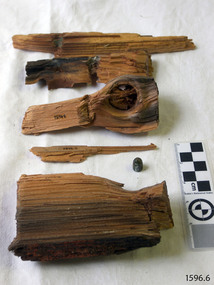 Flagstaff Hill Maritime Museum and Village
Memorabilia - Bullet & Timber, Early 20th century
... Hill’s collection shows “H.M.C. No. 3, Pt Adelaide” on the bow. In 1969, the last freight left Marion Bay on the ketch Reginald M carrying grain, wool, and explosives. In late 1970, the Mt. Lyell Mining and Railway Company bought the vessel to use as a barge to carry explosives. In 1972, the Navy League of Strahan, Tasmania, purchased it for use by the Strahan Sea Cadet Unit to use at Macquarie Harbour and renamed it T.S. Macquarie. However, this plan for the use of Reginald M did not happen. In 1974, Mr...Hill’s collection shows “H.M.C. No. 3, Pt Adelaide” on the bow. In 1969, the last freight left Marion Bay on the ketch Reginald M carrying grain, wool, and explosives. In late 1970, the Mt. Lyell Mining and Railway Company bought the vessel to use as a barge to carry explosives. In 1972, the Navy League of Strahan, Tasmania, purchased it for use by the Strahan Sea Cadet Unit to use at Macquarie Harbour and renamed it T.S. Macquarie. However, this plan for the use of Reginald M did not happen. In 1974, Mr ...The Reginald M was an early purchase of Flagstaff Hill Maritime Museum and Village, soon after it opened in 1975. It was restored and then used as an exhibit in the maritime Village. The reason for the bullet being within the pieces of timber is unknown. The Reginald M's history does not suggest a time when weapons were used. However, the vessel's construction included used materials from different sources; perhaps the bullet was within these materials, which later became part of the Reginald M. ‘REGINALD M’ 1922 to 1975- The vessel “Reginald M” was a two-masted coastal ketch, owned and built by Mr Jack (John) Murch of Birkenhead, Port of Adelaide, South Australia. Its construction took approximately 6 months, and it launched at Largs Bay in 1922. The Reginald M’s purpose was to serve the coastal trade of South Australia, to carry cargo cheaply and efficiently. Some have said that the keel was, in fact, hewn from two telegraph poles! Its builder frequented all the salvage yards for materials and fittings. Reginald M had a very shallow draft and a flat bottom that enabled it to come close to shore and to sit high and dry at low tide or to be beached on sand. The flat bottom was also to make the ship able to skim over reefs. Wagons could load and unload directly from their sides. Its cargo included Guano, Barley, Wool, Horses, Cattle, Timber, Explosives, Potatoes, Shell Grit, and Gypsum. On April 9th 1931, Reginald M weathered a large storm in St Vincent Gulf, SA. The vessel suffered great damage; the mast snapped, and the crew laboured for four hours to free it by chopping off the mast and rigging. The crew patched it up and slowly returned to Port Adelaide with only a portion of the insured cargo being damaged. The crew members at the time were the owner, Mr John H Murch of Wells Street, Largs Bay; Skipper Mr R Murch, John’s brother; Murray, son of Captain Murch; and Seaman John Smith. Reg Webb purchased Carribie Station, at Marion in the Warooka District, south of Adelaide, in 1921. He cleared the land and farmed sheep and grain. In 1923, he shipped his own wool and grain from Marion Bay, having first carted 300 bags of the barley grain, 12 bags at a time, along the unmade track to the jetty. A photograph donated to Flagstaff Hill, dating about 1929 - 1942, shows two men on the Reginald M, holding between them their fishing catch of a large hammer shark. The photograph is stamped “GRENFELL STUDIO PORT LINCOLN PRINT” and titled “hammer shark caught on Reginald Emm”. The donor’s family lived on the Your Peninsula and dispatched their grain from a chute at Gleeson’s Landing to the awaiting transport vessel. Reg knew the Murch Brothers from Port Adelaide. The brothers had been using their ketch, Reginald M, to ship Guano from the Islands, led by Captain Richard Murch. Reg approached them in 1934 about shipping grain from Marion Bay. The brothers visited the bay and thought it was an ideal place. They showed Reg where to stack his grain, and they measured up the cliffs. When Reg was ready, they brought down and installed a ninety-foot wooden chute. The bags of grain were individually pushed down the chute, landing in a waiting small boat, then rowed to Reginald M with 14 bags at a time. After 10 hours, Reginald M would have a load of 1300 bags of grain to ship to waiting ports. At one time, a wild storm destroyed the chute, so they built a stronger replacement chute. Reginald M engaged in the shipping of grain from there until 1938. In 1940, Able Seaman Allan H Lucas served on the Reginald M between September and December, being engaged and discharged from Port Adelaide. The ship’s Master, W S Murch, signed his Certificate of Discharge. It seems that at the Reginald M was used, at one time, as a Customs vessel, as one photograph in Flagstaff Hill’s collection shows “H.M.C. No. 3, Pt Adelaide” on the bow. In 1969, the last freight left Marion Bay on the ketch Reginald M carrying grain, wool, and explosives. In late 1970, the Mt. Lyell Mining and Railway Company bought the vessel to use as a barge to carry explosives. In 1972, the Navy League of Strahan, Tasmania, purchased it for use by the Strahan Sea Cadet Unit to use at Macquarie Harbour and renamed it T.S. Macquarie. However, this plan for the use of Reginald M did not happen. In 1974, Mr Andrew Rennie, of East Brighton, Melbourne, bought it for a similar purpose, paying $5,000 and donating a ‘Cadet of the Year’ trophy to the Sea Cadets. He sailed it from Strahan to Melbourne, planning to use it for pleasure sailing. Also, in 1975, Reginald M was bought by the Melbourne Ferry Company at auction. Later in 1975, Flagstaff Hill Maritime Museum bought the Reginald M for $20,000. It became a popular exhibit in the Village’s lake. In 2006, using funds from a $4,000 government grant, the restoration of the vessel continued. Flagstaff Hill Maritime Village’s Collection holds other artefacts associated with Reginald M. They include - Photographs of the Reginald M, including one photograph of it in Outer Harbour, S.A., dated 1947, with Skipper- R.F. Dale and Owner- John Murch. Another shows it docked at Port Adelaide, with the lettering H.M.C. No. 3 Pt ADEL (standing for His /Her Majesty’s Customs). There is a black and white photo of it at a wharf and another showing a person on board. - a lifebuoy, made of cork, with the inscription of “Pt Adelaide” on it. - Helm section, removed and replaced during restoration. - a bullet found in pieces of timber when Reginald M was restored in 1979 Reginald M was a much-loved exhibit at the Maritime Village, where many visitors enjoyed boarding and exploring a real ship with a long history. Sadly, the Reginald M was decommissioned in late 2016, due to the continuing prohibitive cost of maintenance and the risk to public safety. Components from the Reginald M are held in Flagstaff Hill's collection as a reminder of the Reginald M’s history. The timber is an example of the materials used to build the Reginald M in 1922. The ship was built from recycled items where possible. The bullet represents a time in the history of the vessel that is currently unknown.Wood from the vessel, Reginald M, and a bullet found within its timbers on June 22nd, 1979, during its restoration. flagstaff hill, flagstaff hill maritime museum and village, warrnambool, maritime museum, maritime village, great ocean road, shipwreck coast, reginald m, ketch, coastal trader, timber, wood, bullet, murch, john murch, 1922 -
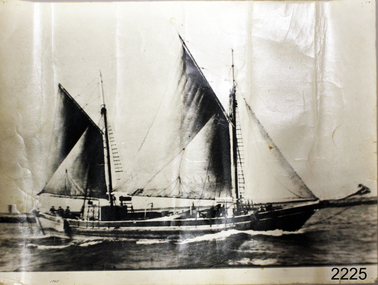 Flagstaff Hill Maritime Museum and Village
Photograph, 1945
... Hill’s collection shows “H.M.C. No. 3, Pt Adelaide” on the bow. In 1969, the last freight left Marion Bay on the ketch Reginald M carrying grain, wool, and explosives. In late 1970, the Mt. Lyell Mining and Railway Company bought the vessel to use as a barge to carry explosives. In 1972, the Navy League of Strahan, Tasmania, purchased it for use by the Strahan Sea Cadet Unit to use at Macquarie Harbour and renamed it T.S. Macquarie. However, this plan for the use of Reginald M did not happen. In 1974, Mr...Hill’s collection shows “H.M.C. No. 3, Pt Adelaide” on the bow. In 1969, the last freight left Marion Bay on the ketch Reginald M carrying grain, wool, and explosives. In late 1970, the Mt. Lyell Mining and Railway Company bought the vessel to use as a barge to carry explosives. In 1972, the Navy League of Strahan, Tasmania, purchased it for use by the Strahan Sea Cadet Unit to use at Macquarie Harbour and renamed it T.S. Macquarie. However, this plan for the use of Reginald M did not happen. In 1974, Mr ...The donor was a seamen at Port Adelaide, where this photogrpah of the ketch, Reginald M, was taken in 1945. ‘REGINALD M’ 1922 to 1975- The vessel “Reginald M” was a two-masted coastal ketch, owned and built by Mr Jack (John) Murch of Birkenhead, Port of Adelaide, South Australia. Its construction took approximately 6 months, and it launched at Largs Bay in 1922. The Reginald M’s purpose was to serve the coastal trade of South Australia, to carry cargo cheaply and efficiently. Some have said that the keel was, in fact, hewn from two telegraph poles! Its builder frequented all the salvage yards for materials and fittings. Reginald M had a very shallow draft and a flat bottom that enabled it to come close to shore and to sit high and dry at low tide or to be beached on sand. The flat bottom was also to make the ship able to skim over reefs. Wagons could load and unload directly from their sides. Its cargo included Guano, Barley, Wool, Horses, Cattle, Timber, Explosives, Potatoes, Shell Gritt, and Gypsum. On April 9th 1931, Reginald M weathered a large storm in St Vincent Gulf, SA. The vessel suffered great damage; the mast snapped, and the crew laboured for four hours to free it by chopping off the mast and rigging. The crew patched it up and slowly returned to Port Adelaide with only a portion of the insured cargo being damaged. The crew members at the time were the owner, Mr John H Murch of Wells Street, Largs Bay; Skipper Mr R Murch, John’s brother; Murray, son of Captain Murch; and Seaman John Smith. Reg Webb purchased Carribie Station, at Marion in the Warooka District, south of Adelaide, in 1921. He cleared the land and farmed sheep and grain. In 1923, he shipped his own wool and grain from Marion Bay, having first carted 300 bags of the barley grain, 12 bags at a time, along the unmade track to the jetty. A photograph donated to Flagstaff Hill, dating about 1929 - 1942, shows two men on the Reginald M, holding between them their fishing catch of a large hammer shark. The photograph is stamped “GRENFELL STUDIO PORT LINCOLN PRINT” and titled “hammer shark caught on Reginald Emm”. The donor’s family lived on the Your Peninsula and dispatched their grain from a chute at Gleeson’s Landing to the awaiting transport vessel. Reg knew the Murch Brothers from Port Adelaide. The brothers had been using their ketch, Reginald M, to ship Guano from the Islands, led by Captain Richard Murch. Reg approached them in 1934 about shipping grain from Marion Bay. The brothers visited the bay and thought it was an ideal place. They showed Reg where to stack his grain, and they measured up the cliffs. When Reg was ready, they brought down and installed a ninety-foot wooden chute. The bags of grain were individually pushed down the chute, landing in a waiting small boat, then rowed to Reginald M with 14 bags at a time. After 10 hours, Reginald M would have a load of 1300 bags of grain to ship to waiting ports. At one time, a wild storm destroyed the chute, so they built a stronger replacement chute. Reginald M engaged in the shipping of grain from there until 1938. In 1940, Able Seaman Allan H Lucas served on the Reginald M between September and December, being engaged and discharged from Port Adelaide. The ship’s Master, W S Murch, signed his Certificate of Discharge. It seems that at the Reginald M was used, at one time, as a Customs vessel, as one photograph in Flagstaff Hill’s collection shows “H.M.C. No. 3, Pt Adelaide” on the bow. In 1969, the last freight left Marion Bay on the ketch Reginald M carrying grain, wool, and explosives. In late 1970, the Mt. Lyell Mining and Railway Company bought the vessel to use as a barge to carry explosives. In 1972, the Navy League of Strahan, Tasmania, purchased it for use by the Strahan Sea Cadet Unit to use at Macquarie Harbour and renamed it T.S. Macquarie. However, this plan for the use of Reginald M did not happen. In 1974, Mr Andrew Rennie, of East Brighton, Melbourne, bought it for a similar purpose, paying $5,000 and donating a ‘Cadet of the Year’ trophy to the Sea Cadets. He sailed it from Strahan to Melbourne, planning to use it for pleasure sailing. Also, in 1975, Reginald M was bought by the Melbourne Ferry Company at auction. Later in 1975, Flagstaff Hill Maritime Museum bought the Reginald M for $20,000. It became a popular exhibit in the Village’s lake. In 2006, using funds from a $4,000 government grant, the restoration of the vessel continued. Flagstaff Hill Maritime Village’s Collection holds other artefacts associated with Reginald M. They include - Photographs of the Reginald M, including one photograph of it in Outer Harbour, S.A., dated 1947, with Skipper- R.F. Dale and Owner- John Murch. Another shows it docked at Port Adelaide, with the lettering H.M.C. No. 3 Pt ADEL (standing for His /Her Majesty’s Customs). There is a black and white photo of it at a wharf and another showing a person on board. - a lifebuoy, made of cork, with the inscription of “Pt Adelaide” on it. - Helm section, removed and replaced during restoration. - a bullet found in pieces of timber when Reginald M was restored in 1979 Reginald M was a much-loved exhibit at the Maritime Village, where many visitors enjoyed boarding and exploring a real ship with a long history. Sadly, the Reginald M was decommissioned in late 2016, due to the continuing prohibitive cost of maintenance and the risk to public safety. Components from the Reginald M are held in Flagstaff Hill's collection as a reminder of the Reginald M’s history. The photograph represents a time when the Reginald M was in use at the Port of Adelaide. It shows the configuration of the sails at that time. The vessel was active as a coastal trader from Adelaide and along the south east coast of Australia.Photograph: sepia, rectangular image of the two-masted ketch, Reginald M, in Port River, Adelaide, South Australia. A figure is on the bowsprit, and other figures are on the masts and on deck. Photographed at Port River, Adelaide.flagstaff hill, flagstaff hill maritime museum and village, warrnambool, maritime museum, maritime village, great ocean road, shipwreck coast, ships, port river sa, adelaide, reginald m, 2-masted, sailing ship, ketch, port adelaide, 1945 -
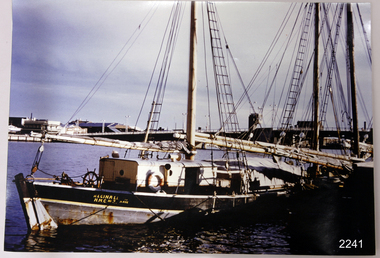 Flagstaff Hill Maritime Museum and Village
Photograph
... M was used as a Customs vessel because a photograph in Flagstaff Hill’s collection shows the text “H.M.C. No. 3, Pt Adelaide” on the bow, the abbreviations standing for “His/Her Majesty’s Customs”. In 1969 the last freight left Marion Bay on the ketch REGINALD M carrying grain, wool and explosives. In late 1970 she was sold to the Mt. Lyell Copper Company, based in Queenstown, Tasmania, to carry explosives. In 1972 the Navy League of Strahan, Tasmania, purchased her for use by the Strahan Sea Cadet Unit and renamed her T.S. Macquarie. In 1974 Mr...M was used as a Customs vessel because a photograph in Flagstaff Hill’s collection shows the text “H.M.C. No. 3, Pt Adelaide” on the bow, the abbreviations standing for “His/Her Majesty’s Customs”. In 1969 the last freight left Marion Bay on the ketch REGINALD M carrying grain, wool and explosives. In late 1970 she was sold to the Mt. Lyell Copper Company, based in Queenstown, Tasmania, to carry explosives. In 1972 the Navy League of Strahan, Tasmania, purchased her for use by the Strahan Sea Cadet Unit and renamed her T.S. Macquarie. In 1974 Mr ...This coloured photograph of the ketch Reginald M was taken when she was docked at Port Adelaide. The side of the vessel shows the letters "REGINALD M / H.M.C. No. 2 Pt ADEL" - (abbreviation H.M.C. meaning His/Her Majesty's Customs. HISTORY The Reginald M, a two-masted coastal ketch, was owned and built by Mr. Jack (John) Murch of Birkenhead, Port of Adelaide, South Australia to serve the coastal ports of South Australia. Its construction took approximately 6 months and it was launched at Largs Bay in 1922. Its purpose was to carry cargo cheaply and efficiently, and tradition has it that the keel was in fact hewn from two telegraph poles! Its builder frequented all the salvage yards for materials and fittings. The Reginald M had a very shallow draft and a flat bottom that enabled it to sit high and dry at low tide. The flat bottom was also to make the ship able to skim over reefs. Wagons were able to load and unload direct from her side. Her cargo included Guano, Barley, Wool, Horses, Cattle, Timber, Explosives, Potatoes, Shell Grit and Gypsum. In 1931 she weathered a large storm in St Vincents Gulf, SA. Her crew at the time were Owner Mr John H Murch, Wells St, Largs Bay, Skipper, John’s brother Mr R Murch, Murray, son of Mr R Murch and Seaman John Smith Reg Webb purchased Carribie Station, at Marion in the Warooka District, south of Adelaide, in 1921. He cleared the land and farmed sheep and grain. In 1923 he shipped his own wool and grain from Marion Bay, having first carted 300 bags of the barley grain, 12 bags at a time, along the unmade track to the jetty. A photograph dating about 1929 -1942 shows 2 men on the Reginald M, having just landed their fishing catch of a hammer shark. The photograph is stamped “GRENFELL STUDIO PORT LINCLON PRINT” and titled “hammer shark caught on Reginall Emm”. Reg Webb knew the Murch Brothers from Port Adelaide. The brothers had been using their ketch REGINALD M to ship Guano from the Islands, led by Captain Richard Murch. Reg approached them in 1934 about shipping grain from Marion Bay. The brothers visited the bay and thought it was an ideal place. They showed Reg where to stack his grain and they measured up the cliffs. When Reg was ready, they brought down and installed a ninety foot wooden chute. The bags of grain were then individually sent down the chute, landing in a waiting small boat then rowed to REGINALD M, 14 bags at a time. After 10 hours REGINALD M would be fully loaded with 1300 bags of grain and shipped to waiting ports. At one time a wild storm destroyed the chute but it was rebuilt and strengthened. REGINALD M was involved in shipping the grain from there until 1938. In 1940 Able Seaman Allan H Lucas served on Reginald M between September and December, being engaged and discharged from Port of Adelaide. His Certificate of Discharge was signed by ship’s Master W S Murch. It seems that at some stage Reginald M was used as a Customs vessel because a photograph in Flagstaff Hill’s collection shows the text “H.M.C. No. 3, Pt Adelaide” on the bow, the abbreviations standing for “His/Her Majesty’s Customs”. In 1969 the last freight left Marion Bay on the ketch REGINALD M carrying grain, wool and explosives. In late 1970 she was sold to the Mt. Lyell Copper Company, based in Queenstown, Tasmania, to carry explosives. In 1972 the Navy League of Strahan, Tasmania, purchased her for use by the Strahan Sea Cadet Unit and renamed her T.S. Macquarie. In 1974 Mr. Andrew Rennie, of East Brighton, Melbourne, bought her, paying $5,000 and donating a ‘Cadet of the Year” trophy to the Sea Cadets. He sailed her from Strahan to Melbourne, planning to use her for pleasure sailing. In 1975 Reginald M was sold to Melbourne Ferry Company at auction. In 1975 the Reginald M was bought by Flagstaff Maritime Museum for $20,000. She has been restored and is now one of the exhibits, tied up at the dock. Flagstaff Hill Maritime Village’s Collection holds several other artefacts associated with Reginald M. They include - Photographs of the Reginald M, including one photograph of her in Outer Harbour, S.A. dated 1947, with Skipper- R.F. Dale and Owner- John Murch. Another shows her docked at Port Adelaide, with the lettering H.M.C. No. 3 Pt ADEL (standing for His/Her Majesty’s Customs). There is a black and white photo of her at a wharf and another showing a person on board. - a lifebuoy, with Pt Adelaide on it. - a bullet found in pieces of timber when Reginald M was restored in 1979 (References: Flagstaff Hill Fact Sheet “Reginald M”, the book “The Reg Webb Story” compiled by the Warooka & District Museum. Reg Webb’s daughter Lily Ramsay (nee Webb) and her husband Howard, Lizzie Rennie (daughter of owner Andrew Rennie), brochure “Discover the Yorke Peninsula South Australia”, Ketch in Peril; Adelaide Chronicle 9 April 1931, K Gordon & Mary Filmer of Warooka; South Australian Maritime Museum) Thiis photograph is significant because of its connection to the history of the vessel REGINALD M is a coastal trading ketch from South Australia built in 1922. It is one of very few sailing coastal trading vessels still extant, and its flat bottom, single chine shape illustrates a very simple but robust method of construction, compared to other round bilged examples of trading vessels. She is now listed on the Australian Register of Historic Vessels (ARHV Number: HV000562.)Photograph of Reginald M at Port Adelaide. The side of the vessel shows the letters "REGINALD M / H.M.C. No. 2 Pt ADEL" - (abbreviation H.M.C. meaning His/Her Majesty's Customs. Painted on the side of the vessel "REGINALD M / H.M.C. No. 2 Pt ADEL" - flagstaff hill, warrnambool, shipwrecked-coast, flagstaff-hill, flagstaff-hill-maritime-museum, maritime-museum, shipwreck-coast, flagstaff-hill-maritime-village, reginald m, coastal trading ketch, trading vessel, john murch ship builder, port adelaide vessel reginald m, andrew rennie, macquarie training vessel, mt lyell copper company, queenstown navy league, ch murch, reg webb, carribie station, melbourne ferry company, grenfell studio port lincoln, vessel reginald m -
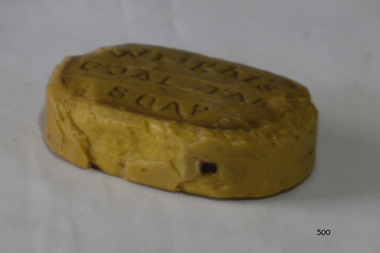 Flagstaff Hill Maritime Museum and Village
Domestic object - Soap, Wright, Layman & Umney Ltd, ca 20th century
... Hill, City of London, where he first sold the soap. In 1863 Wright moved his firm to small premises at 50 Southwark Street, Southwark, London, and not long afterwards M. Sellers and Mr...Hill, City of London, where he first sold the soap. In 1863 Wright moved his firm to small premises at 50 Southwark Street, Southwark, London, and not long afterwards M. Sellers and Mr ...Wright’s Coal Tar Soap was a popular brand of household soap, manufactured by William Valentine Wright from 1867. The oval yellow soap tablet was antiseptic, designed to cleanse the skin thoroughly. It was originally named Sapo Carbonis Detergens, which remains a registered trademark. The product was developed from ‘liquor carbonis detergens’, the liquid by-product of the distillation of coal to make coke. The liquid was made into an antiseptic soap for treating skin diseases. William Valentine Wright was born in 1826 at Aldeburgh, Suffolk. He was a wholesale druggist and chemist who had a small business, W.V. Wright & Co., at 11 Old Fish Street Hill, City of London, where he first sold the soap. In 1863 Wright moved his firm to small premises at 50 Southwark Street, Southwark, London, and not long afterwards M. Sellers and Mr Charles Noel Layman joined the partnership. The company's name changed to Wright, Layman & Umney, when Charles Umney (1843–1909) was taken into the partnership on June 17, 1876, after the death of M. Sellers. William Valentine Wight 1877. Rob Umney, great-great-grandson of Charles Umney, provided further details about the firm, adding that in the late 1960s, the Wright’s Coal Tar Soap business was taken over by LRC Products Ltd who sold it to Smith & Nephew in 1994. The current owners of the brand, Simple Health and Beauty Ltd are based in Solihull and the soap is called Wright's Traditional Soap ‘With coal tar fragrance’. The coal tar has been replaced with tea tree oil. There were concerns that ingredients in coal tar could cause cancer when a person is exposed to very high concentrations, such as in roofing and road paving. In January 2025 the current manufacturers still produce the Wright's Coal Tar Soap.Wright's Coal Tar Soap was sold throughout the United Kingdom and Colonies, which includes Australia. The soap represents many consumer goods sold at pharmacies and chemist shops across the world, such as Sambell and Son, who operated a pharmacy in Fairy Street, Warrnambool in the 19th century. The product has endured for over 150 years.Soap; yellow oval tablet of soap engraved with the brand Wright's Coal Tar oval."WRIGHT'S / COAL TAR / SOAP"flagstaff hill, maritime museum, wright's, coal tar soap, soap, bathing, antiseptic, washing, personal hygiene, london, southwark, chemist, pharmacist, colonies, wright's coal tar soap, sapo carboni detergens, england, soap tablet, babies soap, nursery soap, wright, layman & umney ltd., w.t. wrifght & co., soap cake, soap bar, medical, cleansing, baby care -
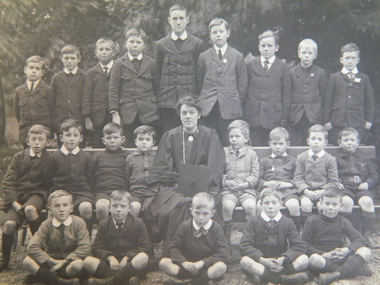 Ballarat Clarendon College
Photograph album, 1918
... Junior school Forms I, II, III: Top row: T Dowling, Whitfield, W Paterson, R Paterson, R Morris, B Pain, W Coyle, R Thomas, Campbell; Middle row: Creer, pringle, Greenfield, K Baird, Mrs Gilbert, R Thomas, G Jeffrey, G Shaw, E Morton; Front row: H Strong, C Morton, R Carthew, R Pearce, A Greenfield; Middle School Forms IV, VB: Top row: Leslie, Michael, M Gunn, H Jones, W Hicks, L McLennan, K Bradby, Forster, K Joy, C C McMillan; 2nd row from top: Mr Deans, R Paterson, A Carthew, A Mckenzie, N Shaw, G Ross, H Lester, Leishman, Tanner, G E Clark, W Revelman, Mr Morton; Thurd row from top: A Levy, McLeod, J O'Grady, E Davies, W Walker, J Smith, N Boustead, E Abraham, Alkemade, Ronaldson, Crawford, McDougall, Hill; Front row: Klug, J Tonner, H Deeble, Soloman, Beacham, J Bradby, A Coldham, G Clarke, L Murphy, A King. ...Junior school Forms I, II, III: Top row: T Dowling, Whitfield, W Paterson, R Paterson, R Morris, B Pain, W Coyle, R Thomas, Campbell; Middle row: Creer, pringle, Greenfield, K Baird, Mrs Gilbert, R Thomas, G Jeffrey, G Shaw, E Morton; Front row: H Strong, C Morton, R Carthew, R Pearce, A Greenfield; Middle School Forms IV, VB: Top row: Leslie, Michael, M Gunn, H Jones, W Hicks, L McLennan, K Bradby, Forster, K Joy, C C McMillan; 2nd row from top: Mr Deans, R Paterson, A Carthew, A Mckenzie, N Shaw, G Ross, H Lester, Leishman, Tanner, G E Clark, W Revelman, Mr Morton; Thurd row from top: A Levy, McLeod, J O'Grady, E Davies, W Walker, J Smith, N Boustead, E Abraham, Alkemade, Ronaldson, Crawford, McDougall, Hill; Front row: Klug, J Tonner, H Deeble, Soloman, Beacham, J Bradby, A Coldham, G Clarke, L Murphy, A King. ...Significant pictorial record of College life at the end of the WW1. Property appearance, uniform/clothing details, furnishings, and named photographs of students. Junior school Forms I, II, III: Top row: T Dowling, Whitfield, W Paterson, R Paterson, R Morris, B Pain, W Coyle, R Thomas, Campbell; Middle row: Creer, pringle, Greenfield, K Baird, Mrs Gilbert, R Thomas, G Jeffrey, G Shaw, E Morton; Front row: H Strong, C Morton, R Carthew, R Pearce, A Greenfield; Middle School Forms IV, VB: Top row: Leslie, Michael, M Gunn, H Jones, W Hicks, L McLennan, K Bradby, Forster, K Joy, C C McMillan; 2nd row from top: Mr Deans, R Paterson, A Carthew, A Mckenzie, N Shaw, G Ross, H Lester, Leishman, Tanner, G E Clark, W Revelman, Mr Morton; Thurd row from top: A Levy, McLeod, J O'Grady, E Davies, W Walker, J Smith, N Boustead, E Abraham, Alkemade, Ronaldson, Crawford, McDougall, Hill; Front row: Klug, J Tonner, H Deeble, Soloman, Beacham, J Bradby, A Coldham, G Clarke, L Murphy, A King. Senior school Forms VIA, VIB & VA Top row: E Pearce, W Williams, A Ramage, D Langsford A Clarke, J Mitchell. Middle row: R Langsford, A Rogers, G Lester, V Cooper, A Thiessen, R Shannon, G Swan, D Robinson, J Coltman, R Jack; Front row: B Jones, L Shannon, R Morrow, Mr A S M Polson BA, R Steveson, R Sloan, M Morris. Social significanceLoose-leaf photograph album featuring photographs of Ballarat College property and classes taken 4th July 1918. Light card cover. 8 inidividual sheets of paper. Front cover: BALLARAT COLLEGE / PHOTOGRAPHS 4th July 1918 C A Ramage / DIFFERENT VIEWS 7 GROUPS / Taken 1918ballarat-college, 1918, uniform, c-a-ramage, boatshed, college-oval, assembly-hall, honour-boards, chemistry-laboratory, a-s-m-polson, mr-deans, mr-morton, miss-gilbert, junior-school, middle-school, senior-school -
 Federation University Historical Collection
Booklet, Ballarat School of Mines Students' Magazine, 1934, 1934
... dr. j. r. pound, f. g. proctor, j. hopwood, h. mortimer, j. mole, j. skelton, d. shore, a. collins, a. loughton, r. warnock, l. bailey, j. graham, m. wilson, g. netherway, n. gude, mr sutherland, w. h. steane, professor a. mica smith, k. mathes, d. shore, s. hillman, a. collins, v. leigh, b. walters, e. anderson, n. jelbart, a. gray, j. mouton, d. flynn, g. berryman, j. hulse, b. mcgregor, f. longhurst, n. nimon, h. maddern, j. caddy, w. williams, j. rickard, l. bailey, m. coward, p. salter, j. collins, e. crosthwaite, a. freeman, s. wyres, b, saunders, k. windsor, j. coates, t. morton, l. fitzgerald, b. chaplin, g. george, v. shiers, c. johnson, j. skelton, n. donaldson, k. mathes, g. leviston, d. flynn, v. hunt, colin s. hunt, g. hill, a. goldby, j. o'sullivan, a. laing, s. halladay, l. angwin, g. page, m. hunt, j. sheehan, d. nolan, h. mclachlan, h. mortimer, j. ellis, n. vogel, mr king, h. anderson, j. gilbert, l. moy, m, hunt, f. capuano, m. rickey...Mica Smith, Fumes from the Lab, Arts & Crafts Gossip, Sport, Echoes of the Past, A Trip to England, The Junior Tecs ballarat school of mines magazine dr. j. r. pound, f. g. proctor, j. hopwood, h. mortimer, j. mole, j. skelton, d. shore, a. collins, a. loughton, r. warnock, l. bailey, j. graham, m. wilson, g. netherway, n. gude, mr sutherland, w. h. steane, professor a. mica smith, k. mathes, d. shore, s. hillman, a. collins, v. leigh, b. walters, e. anderson, n. jelbart, a. gray, j. mouton, d. flynn, g. berryman, j. hulse, b. mcgregor, f. longhurst, n. nimon, h. maddern, j. caddy, w. williams, j. rickard, l. bailey, m. coward, p. salter, j. collins, e. crosthwaite, a. freeman, s. wyres, b, saunders, k. windsor, j. coates, t. morton, l. fitzgerald, b. chaplin, g. george, v. shiers, c. johnson, j. skelton, n. donaldson, k. mathes, g. leviston, d. flynn, v. hunt, colin s. hunt, g. hill, a. goldby, j. o'sullivan, a. laing, s. halladay, l. angwin, g. page, m. hunt, j. sheehan, d. nolan, h. mclachlan, h. mortimer, j. ellis, n. vogel, mr king, h. anderson, j. gilbert, l. moy, m, hunt, f. capuano, m. rickey Signed on front cover by "H. ...List of Full Course Students' 1934, Editorial, Obituary, Personal Column, Professor A. Mica Smith, Fumes from the Lab, Arts & Crafts Gossip, Sport, Echoes of the Past, A Trip to England, The Junior TecsYellow, blue and green soft covered magazine of 52 pages.Signed on front cover by "H. Darby".ballarat school of mines, magazine, dr. j. r. pound, f. g. proctor, j. hopwood, h. mortimer, j. mole, j. skelton, d. shore, a. collins, a. loughton, r. warnock, l. bailey, j. graham, m. wilson, g. netherway, n. gude, mr sutherland, w. h. steane, professor a. mica smith, k. mathes, d. shore, s. hillman, a. collins, v. leigh, b. walters, e. anderson, n. jelbart, a. gray, j. mouton, d. flynn, g. berryman, j. hulse, b. mcgregor, f. longhurst, n. nimon, h. maddern, j. caddy, w. williams, j. rickard, l. bailey, m. coward, p. salter, j. collins, e. crosthwaite, a. freeman, s. wyres, b, saunders, k. windsor, j. coates, t. morton, l. fitzgerald, b. chaplin, g. george, v. shiers, c. johnson, j. skelton, n. donaldson, k. mathes, g. leviston, d. flynn, v. hunt, colin s. hunt, g. hill, a. goldby, j. o'sullivan, a. laing, s. halladay, l. angwin, g. page, m. hunt, j. sheehan, d. nolan, h. mclachlan, h. mortimer, j. ellis, n. vogel, mr king, h. anderson, j. gilbert, l. moy, m, hunt, f. capuano, m. rickey -
Federation University Historical Collection
Magazine - Booklet, Ballarat School of Mines Students' Magazine, 1936, 1936
... m. mcrae...albino paganetti...victor hunt...lila welsh...f. g. procter...mr. cochrane...w. coates...d. shore...jessie skelton...l. hill...Hill, Personal Column, Old Boys' Personal, Fumes from the Lab, The Newcastle Trip, War and Women, Arts & Crafts Gossip, Sport, Commercial Notes, The Junior Techs ballarat school of mines magazine allan nye r. rickey a. gordon reg warnock maxwell bayley sylvia wyres m. mcrae albino paganetti victor hunt lila welsh f. g. procter mr. cochrane w. coates d. shore jessie skelton l. hill k. h. wilkie j. pound h. maddern n. pickering john elliott paul f. chaplin w. usebach fergy and p. macgregor j. hammer k. ellwood j. w. muir john menhennett philip harris j. anderson william mcdonald lawrence egan archibald sneddon p. holioake lyle dimsey a. horsfall eoin macdonald james martin jack mole bill walters david flynn william williams dororthy billings clarice mcintosh gladys bilney ida shearer j. brady g. lamb grace gordon elva brimacombe r. hutchinson g. leviston i. mcdonald w. callighan t. jones s. j. chambers russell ewins g. berriman j. walker r. t. hocking f. e. capuano f. w. hassell c. m. reynolds r. davies r. c. white h. f. forrest h. h. evans a. j. ritchie j. g. kittelty w. cornish l. liebhardt r. allender a. pobjoy a. laing w. j. paterson v. e. jukes h. v. bolt l. c. henderson c. f. white nornie gude gilda gude max coward alan nye betty brown leila mclachlan dorothy woolcock verma lynch jessie hopwood jean coates e. prout Signed on front cover by "H. ...List of Full Course Students' 1936, Editorial, Obituary - L. Hill, Personal Column, Old Boys' Personal, Fumes from the Lab, The Newcastle Trip, War and Women, Arts & Crafts Gossip, Sport, Commercial Notes, The Junior TechsYellow soft covered magazine of 60 pages, including advertisements. Artwork * Mr. C - By Albino Paganetti * Bo'sun - By Albino Paganetti * " So then says I ' you can't ask me to do that, boys - its dishonest," - By Jessie Hopwood * come on "(hic)" be serious - By Albino Paganetti * Bill - By Albino Paganetti * Mac - By Albino Paganetti * "I used the fruit bowl this time fro a change" - By Dorothy Woolcock * Mother & Bobby - By Dorothy Woolcock * Ernie - By Nornie Gude * Gateway to the Garden city - By Albino Paganetti * Tip - By Albino Paganetti * Pat - By Jean Coates * Our Dark Horse - By Jean Coates * Moorish Tower, Perth University - By Jessie Hopwood * Sailing Ship Print - By Verma Lynch * Lemon - By Albino Paganetti * Site for the King George memorial - By Gilda Gude * Gladys - By Dorothy Woolcock? * Our Tall Story - By Dorothy Woolcock * Another one today Sylvia - By Nornie Gude * Haze - By Dorothy Woolcock * Commercial Notes - By Leila McLachlan * Fred - By Albino Paganetti * Gordon - By Betty Brown * Gandhi - By Dorothy Woolcock * Ellie - By Gilda Gude * Betty - By Alan Nye * Lost Ball - By E. Prout * Cleaning Ladies - Betty Brown * Rusty - By Gilda Gude * Blondie - By Gilda Gude * Peggy - By Betty Brown * Hocky - By Gilda Gude * Betty - By Gilda Gude * Joan - By Gilda Gude * General - By Max Coward * Twitter - By Gilda Gude * Banjo - By Max Coward * Georgie - By Max Coward * Skinny - By Max Coward * Sydney Jim - By Max Coward * Tommy - By Max Coward * Max - By Max Coward * SOS - By Max Coward * Nipper - By Max Coward * Dasha - By Max Coward * Wee Macgregor - By Albino Paganetti Signed on front cover by "H. Darby".ballarat school of mines, magazine, allan nye, r. rickey, a. gordon, reg warnock, maxwell bayley, sylvia wyres, m. mcrae, albino paganetti, victor hunt, lila welsh, f. g. procter, mr. cochrane, w. coates, d. shore, jessie skelton, l. hill, k. h. wilkie, j. pound, h. maddern, n. pickering, john elliott, paul f. chaplin, w. usebach, fergy and p. macgregor, j. hammer, k. ellwood, j. w. muir, john menhennett, philip harris, j. anderson, william mcdonald, lawrence egan, archibald sneddon, p. holioake, lyle dimsey, a. horsfall, eoin macdonald, james martin, jack mole, bill walters, david flynn, william williams, dororthy billings, clarice mcintosh, gladys bilney, ida shearer, j. brady, g. lamb, grace gordon, elva brimacombe, r. hutchinson, g. leviston, i. mcdonald, w. callighan, t. jones, s. j. chambers, russell ewins, g. berriman, j. walker, r. t. hocking, f. e. capuano, f. w. hassell, c. m. reynolds, r. davies, r. c. white, h. f. forrest, h. h. evans, a. j. ritchie, j. g. kittelty, w. cornish, l. liebhardt, r. allender, a. pobjoy, a. laing, w. j. paterson, v. e. jukes, h. v. bolt, l. c. henderson, c. f. white, nornie gude, gilda gude, max coward, alan nye, betty brown, leila mclachlan, dorothy woolcock, verma lynch, jessie hopwood, jean coates, e. prout -
Federation University Historical Collection
Magazine - Booklet, Ballarat School of Mines Students' Magazine, 1944, 1944
... m. grinham c. hoffman r. swales joan walter william bates White, blue, green and gold soft covered magazine of 66 pages including advertisements. Artworks Mr Heseltine - By Ruth Mole Mack - By Beryl Grinter Frederick - By Beryl Grinter Stan - By Ruth Mole Scotty - By Joan Walter Jenko - By Ruth Mole Dagwood - By Ruth Mole Along the track - By Neville Reeve Kanga - By Ruth Mole Nev - By Ruth Mole Charlie - By Joan Walter Shergold - By Joan Walter Very friendly people at this beach, everyone's waving at me - By John Procter At the crest of the hill - By Joan Walter Joyce - By Beryl Grinter Mr Procter - By Ruth Mole Phyllis - By Neville Reeve Gwen - By Beryl Grinter Doreen - By William Bates Laurel - By Joan Walter Lorna - By Ruth Mole Ah! ...List of Full Course Students' 1944, Editorial, News and Notes, Obituary, The Literary Society, Fumes from the Lab, Our Sojourn in Port Pirie, Arts & Crafts Gossip, Sport, Commercial Notes, The Junior Techs, List of Junior Technical School Students' 1944White, blue, green and gold soft covered magazine of 66 pages including advertisements. Artworks Mr Heseltine - By Ruth Mole Mack - By Beryl Grinter Frederick - By Beryl Grinter Stan - By Ruth Mole Scotty - By Joan Walter Jenko - By Ruth Mole Dagwood - By Ruth Mole Along the track - By Neville Reeve Kanga - By Ruth Mole Nev - By Ruth Mole Charlie - By Joan Walter Shergold - By Joan Walter Very friendly people at this beach, everyone's waving at me - By John Procter At the crest of the hill - By Joan Walter Joyce - By Beryl Grinter Mr Procter - By Ruth Mole Phyllis - By Neville Reeve Gwen - By Beryl Grinter Doreen - By William Bates Laurel - By Joan Walter Lorna - By Ruth Mole Ah! an important discovery! wireless poles on Mars - By Frank Daykin Barbara - By Joan Walter Winsome - By Beryl Grinter Kath - By Joan Walter Lola - By Ruth Mole Amy - By Beryl Grinter Laurel - By Beryl Grinter Gwen - By Beryl Grinter June - By Beryl Grinter Peggy - By Beatrice Burgess Winifred - By Ruth Mole Elaine - By M.D Iris - By Ruth Mole Iris - By Ruth Mole Isobel - By Joan Walter Betty - By Joan Walter Nancy - By Neville Reeve Charlie - By Ruth Mole Harold - By Joan Walter Sammy - By Joan Walter Brokie - By Ruth Mole Dick - By Joan Walter Mac - By Ruth Mole Mac - By Beryl Grinter Willie - By Beryl Grinter Deany - By Beryl Grinter Ducky - By Ruth Mole Fitzy - By Joan Walter ballarat school of mines, magazine, percival d. fisher, neville reeve, gwen spiers, p. marxsen, stanley c. sharp, john c. shergold, beatrice e. burgess, john g. procter, alan m. scott, w. reid, elsie coombs, laurence j. george, d. wise, robert j. mckenzie, marian a. beckwith, geoffrey biddington, thelma ellsworth, maxwell a. richards, norma eltringham, k. saunders, john a. mckenzie, beryl grinter, frank d. daykin, dawn wilson, ernest j. poppins, dr pound, mr mein, mr f. g. procter, joan t. walter, peter j. wilson, ruth mole, ian cooper, jack lannen, jack henderson, james duncan, alan wilson, j. baird, ian mclachlan, maxwell lawrence, ken palmer, joy martin, patricia allan, graham lawrie, kevin mclachlan, marion pearce, dimsey, vaughan, wilson, callister, max webster, stan lawrie, eric goon, m. collins, alan paganetti, robert tasman pound, william symons, f. neville. reeve, lester w. roffey, kevin j. whiter, john m. blainey, john middlin, roy e. mawby, phillip p. coulson, john w. jolly, kingsley r. bremmer, basil j. marshall, james s. owen, raymond g. mccahon, lindsay g. pattenden, david t. coburn, bruce j. linklater, muriel coultham, g. harrison, mr cornell, b. brookman, john l. lewis, valerie vickers, robert j. mcmenzie, betty law, miss king, mrs mcilvena, valerie ballinger, grace lawry, mina gallie, eloise prowse, lois strick, kenneth j. lindsay, r. eggleton, w. redfern, w. blundell, l. clifton, w. parker, r. fitzclarence, r. sargent, d. mclachlan, c. mouser, w. trevethan, d. hart, r. bennett, j. beecroft, r. ingleton, k. dean, w. young, b. holloway, w. coad, a. clark, k. innes, k. george, r. willian, j. heys, a. coad, l. dennis, p. banfield, g. pyke, j. humphrey, h. george, f. jacobson, f. savage, c. eltringham, i. scott, a. hughes, h. fumberger, a. smith, m. grinham, c. hoffman, r. swales, joan walter, william bates -
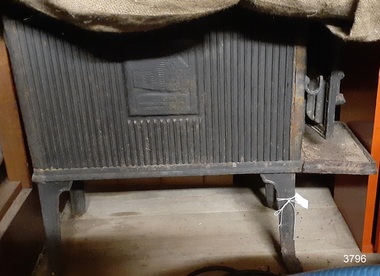 Flagstaff Hill Maritime Museum and Village
Domestic object - Wood Stove, circa 1880-1920
... Hill’s collection shows “H.M.C. No. 3, Pt Adelaide” on the bow. In 1969 the last freight left Marion Bay on the ketch Reginald M carrying grain, wool, and explosives. In late 1970 the Mt. Lyell Mining and Railway Company bought the vessel to use as a barge to carry explosives. In 1972 the Navy League of Strahan, Tasmania, purchased it for use by the Strahan Sea Cadet Unit to use at Macquarie Harbour and renamed iit T.S. Macquarie. However, this plan for use of Reginald M did not happen. In 1974 Mr...Hill’s collection shows “H.M.C. No. 3, Pt Adelaide” on the bow. In 1969 the last freight left Marion Bay on the ketch Reginald M carrying grain, wool, and explosives. In late 1970 the Mt. Lyell Mining and Railway Company bought the vessel to use as a barge to carry explosives. In 1972 the Navy League of Strahan, Tasmania, purchased it for use by the Strahan Sea Cadet Unit to use at Macquarie Harbour and renamed iit T.S. Macquarie. However, this plan for use of Reginald M did not happen. In 1974 Mr ...Stoves of this design are used for heating domestic places and were available in many designs and shapes. They commonly used wood as fuel. They were used for both heating and cooking. This stove was part of the original furnishings of the 1922 vessel 'Reginald M', a South Australian coastal trader. The two-masted coastal ketch was built from material and fittings obtained from salvage yards by Mr Jack (John) Murch of Birkenhead, Port of Adelaide, South Australia. Its construction took approximately six months. It was launched at Largs Bay in 1922. ‘REGINALD M’ 1922 to 1975- The vessel “Reginald M” was a two-masted coastal ketch, owned and built by Mr. Jack (John) Murch of Birkenhead, Port of Adelaide, South Australia. Its construction took approximately 6 months, and it launched at Largs Bay in 1922. The Reginald M’s purpose was to serve the coastal trade of South Australia, to carry cargo cheaply and efficiently. Some have said that the keel was in fact hewn from two telegraph poles! Its builder frequented all the salvage yards for materials and fittings. Reginald M had a very shallow draft and a flat bottom that enabled it to come close to shore and to sit high and dry at low tide or to be beached on sand. The flat bottom was also to make the ship able to skim over reefs. Wagons could load and unload direct from its side. Her cargo included Guano, Barley, Wool, Horses, Cattle, Timber, Explosives, Potatoes, Shell Gritt and Gypsum. On April 9th 1931Reginald M weathered a large storm in St Vincent Gulf, SA. The vessel suffered great damage; mast snapped and the crew laboured for four hours to free it by chopping off the past and rigging. The crew patched iit up and slowly returned to Port Adelaide with only a portion of the insured cargo being damaged. Her crew members at the time were owner Mr John H Murch of Wells Street Largs Bay, Skipper Mr R Murch – John’s brother, Murray – son of Captain Murch and Seaman John Smith. Reg Webb purchased Carribie Station, at Marion in the Warooka District, south of Adelaide, in 1921. He cleared the land and farmed sheep and grain. In 1923 he shipped his own wool and grain from Marion Bay, having first carted 300 bags of the barley grain, 12 bags at a time, along the unmade track to the jetty. A photograph donated to Flagstaff Hill, dating about 1929 - 1942, shows two men on the Reginald M, holding between them their fishing catch of a large hammer shark. The photograph is stamped “GRENFELL STUDIO PORT LINCOLN PRINT” and titled “hammer shark caught on Reginald Emm”. The donor’s family lived on the Your Peninsular and despatched their grain from a chute at Gleeson’s Landing to the awaiting transport vessel. Reg knew the Murch Brothers from Port Adelaide. The brothers had been using their ketch Reginald M to ship Guano from the Islands, led by Captain Richard Murch. Reg approached them in 1934 about shipping grain from Marion Bay. The brothers visited the bay and thought it was an ideal place. They showed Reg where to stack his grain, and they measured up the cliffs. When Reg was ready, they brought down and installed a ninety-foot wooden chute. The bags of grain individually pushed down the chute, landing in a waiting small boat then rowed to Reginald M, 14 bags at a time. After 10 hours Reginald M would have a load of 1300 bags of grain to ship to waiting ports. At one time a wild storm destroyed the chute, so they built a stronger replacement chute. Reginald M engaged in the shipping of grain from there until 1938. In 1940 Able Seaman Allan H Lucas served on Reginald M between September and December, being engaged and discharged from Port of Adelaide. The ship’s Master, W S Murch, signed his Certificate of Discharge. It seems that at the Reginald M was used at one time as a Customs vessel, as one photograph in Flagstaff Hill’s collection shows “H.M.C. No. 3, Pt Adelaide” on the bow. In 1969 the last freight left Marion Bay on the ketch Reginald M carrying grain, wool, and explosives. In late 1970 the Mt. Lyell Mining and Railway Company bought the vessel to use as a barge to carry explosives. In 1972 the Navy League of Strahan, Tasmania, purchased it for use by the Strahan Sea Cadet Unit to use at Macquarie Harbour and renamed iit T.S. Macquarie. However, this plan for use of Reginald M did not happen. In 1974 Mr. Andrew Rennie, of East Brighton, Melbourne, bought it for a similar purpose, paying $5,000 and donating a ‘Cadet of the Year” trophy to the Sea Cadets. He sailed it from Strahan to Melbourne, planning to use it for pleasure sailing. Also, in 1975 Reginald M was bought by the Melbourne Ferry Company auction. Later in 1975 Flagstaff Hill Maritime Museum bought the Reginald M for $20,000. It became a popular exhibit in the Village’s lake. In 2006, using funds from a $4,000 government grant, restoration continued the vessel. Flagstaff Hill Maritime Village’s Collection holds other artefacts associated with Reginald M. They include - Photographs of the Reginald M, including one photograph of iit in Outer Harbour, S.A. dated 1947, with Skipper- R.F. Dale and Owner- John Murch. Another shows it docked at Port Adelaide, with the lettering H.M.C. No. 3 Pt ADEL (standing for His/Her Majesty’s Customs). There is a black and white photo of it at a wharf and another showing a person on board. - a lifebuoy, made of cork, with the inscription of “Pt Adelaide” on it. - Helm section, removed and replaced during restoration. - a bullet found in pieces of timber when Reginald M was restored in 1979 Reginald M was a much-loved exhibit at the Maritime Village, where many visitors enjoyed boarding and exploring a real ship with a long history. Sadly, in late 2016, the Reginald M was decommissioned due to the continuing prohibitive cost of maintenance and the risk to public safety. Components from the Reginald M are preserved as part of Flagstaff Hill's collection. The stove is significant as it represents the heating and cooking appliances used in the late 19th and early 20th centuries, both on board vessels as well as for domestic purposes. The stove has additional significance for its association with the vessel "Reginald M", a coastal trading ketch from South Australia built in 1922 at Largs Bay. It is one of the very few sailing coastal trading vessels built in Australia, with its flat bottom, single chine shape designed for navigating shallow water. Stove: a cast-iron, rectangular, four-legged stove with a hinged front door. This stove was part of the original furnishings of the vessel 'Reginald M', built in Adelaide in 1922. Inscription on the side. Image of a log cabin with an illegible inscription below it.flagstaff hil, warrnambool, flagstaff hill maritime museum, maritime museum, shipwreck coast, flagstaff hill maritime village, coastal trader, trading vessel, vessel reginald m, ketch, john murch ship builder, reg webb, carribie station, mt lyell copper company, queenstown navy league, andrew rennie, melbourne ferry company, r.f. dale, port adelaide vessel reginald m, macquarie training vessel, grenfell studio port lincoln, stove, domestic heating, domestic cooking, heater, cooking unit, wood fired stove, wood stove, wood-burning stove -
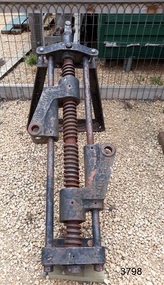 Flagstaff Hill Maritime Museum and Village
Machine - Steering Gear, Carron Ironworks foundry, before 1922
... Hill’s collection shows “H.M.C. No. 3, Pt Adelaide” on the bow. In 1969 the last freight left Marion Bay on the ketch REGINALD M carrying grain, wool and explosives. In late 1970 she was sold to the Mt. Lyell Mining and Railway Company and was used by them as a barge to carry explosives. In 1972 the Navy League of Strahan, Tasmania, purchased her for use by the Strahan Sea Cadet Unit to use at Macquarie Harbour and renamed her T.S. Macquarie. However this plan for use of Reginald M did not come to pass. In 1974 Mr...Hill’s collection shows “H.M.C. No. 3, Pt Adelaide” on the bow. In 1969 the last freight left Marion Bay on the ketch REGINALD M carrying grain, wool and explosives. In late 1970 she was sold to the Mt. Lyell Mining and Railway Company and was used by them as a barge to carry explosives. In 1972 the Navy League of Strahan, Tasmania, purchased her for use by the Strahan Sea Cadet Unit to use at Macquarie Harbour and renamed her T.S. Macquarie. However this plan for use of Reginald M did not come to pass. In 1974 Mr ...The ship's steering gear was used for steering and navigation of a vessel - it was a very important part of the ship's equipment. This steering gear was part of the original vessel 'Reginald M', which became part of the exhibitions at Flagstaff Hill Maritime Village. The steering gear was manufactured by the Carron Company. ABOUT THE CARRON COMPANY The Carron Company established its ironworks on the banks of the River Carron in Stirlingshire, Scotland, in 1759, and became an incorporated company in 1773. One of the notable items produced by the company was the Carronade, a short-barrelled naval cannon, being produced until the 1850s. The company was the largest ironworks in Europe during the 19th century. It supplied ammunition and armaments, steamboat engines, pig iron, cast iron goods such as balustrades fire grates and bath tugs, pillar boxes and telephone boxes, and even cast iron rings for underground tunnels. In 1982 it became insolvent and was taken over by the Franke Corporation, using the brand Carron Phoenix. ABOUT THE 'REGINALD M' The Reginald M’s purpose was to serve the coastal trade of South Australia, to carry cargo cheaply and efficiently. It is believed that the keel was in fact hewn from two telegraph poles! Its builder frequented all the salvage yards for materials and fittings. The vessel “Reginald M” was a two-masted coastal ketch, owned and built by Mr. Jack (John) Murch of Birkenhead, Port of Adelaide, South Australia. Its construction took approximately 6 months and it was launched at Largs Bay in 1922. Reginald M had a very shallow draft and a flat bottom that enabled it to come close to shore and to sit high and dry at low tide or to be beached on sand. The flat bottom was also to make the ship able to skim over reefs. Wagons could load and unload direct from her side. Her cargo included Guano, Barley, Wool, Horses, Cattle, Timber, Explosives, Potatoes, Shell Grit and Gypsum. On April 9th 1931Reginald M weathered a large storm in St Vincent Gulf, SA. The vessel suffered much damage; mast snapped and the crew laboured for four hours to free her by chopping off the past and rigging. The crew patched her up and slowly returned to Port Adelaide with only a portion of the insured cargo being damaged. Her crew members at the time were owner Mr John H Murch of Wells Street Largs Bay, Skipper Mr R Murch – John’s brother, Murray – son of Captain Murch and Seaman John Smith. Reg Webb purchased Carribie Station, at Marion in the Warooka District, south of Adelaide, in 1921. He cleared the land and farmed sheep and grain. In 1923 he shipped his own wool and grain from Marion Bay, having first carted 300 bags of the barley grain, 12 bags at a time, along the unmade track to the jetty. A photograph donated to Flagstaff Hill, dating about 1929 - 1942, shows two men on the Reginald M, holding between them their fishing catch of a large hammer shark. The photograph is stamped “GRENFELL STUDIO PORT LINCOLN PRINT” and titled “hammer shark caught on Reginald Emm”. The donor’s family lived on the Your Peninsular and despatched their grain from a chute at Gleeson’s Landing to the awaiting transport vessel. Reg knew the Murch Brothers from Port Adelaide. The brothers had been using their ketch REGINALD M to ship Guano from the Islands, led by Captain Richard Murch. Reg approached them in 1934 about shipping grain from Marion Bay. The brothers visited the bay and thought it was an ideal place. They showed Reg where to stack his grain and they measured up the cliffs. When Reg was ready, they brought down and installed a ninety foot wooden chute. The bags of grain were then individually sent down the chute, landing in a waiting small boat then rowed to REGINALD M, 14 bags at a time. After 10 hours REGINALD M would be fully loaded with 1300 bags of grain and shipped to waiting ports. At one time a wild storm destroyed the chute but it was rebuilt and strengthened. REGINALD M was involved in shipping the grain from there until 1938. In 1940 Able Seaman Allan H Lucas served on Reginald M between September and December, being engaged and discharged from Port of Adelaide. His Certificate of Discharge was signed by ship’s Master W S Murch. It seems that at some stage Reginald M was used as a Customs vessel, as one photograph in Flagstaff Hill’s collection shows “H.M.C. No. 3, Pt Adelaide” on the bow. In 1969 the last freight left Marion Bay on the ketch REGINALD M carrying grain, wool and explosives. In late 1970 she was sold to the Mt. Lyell Mining and Railway Company and was used by them as a barge to carry explosives. In 1972 the Navy League of Strahan, Tasmania, purchased her for use by the Strahan Sea Cadet Unit to use at Macquarie Harbour and renamed her T.S. Macquarie. However this plan for use of Reginald M did not come to pass. In 1974 Mr. Andrew Rennie, of East Brighton, Melbourne, bought her for a similar purpose. , paying $5,000 and donating a ‘Cadet of the Year” trophy to the Sea Cadets. He sailed her from Strahan to Melbourne, planning to use her for pleasure sailing. Also in 1975 Reginald M was sold to Melbourne Ferry Company at auction. Later in 1975 the Reginald M was bought by Flagstaff Maritime Museum for $20,000 . She has been restored and is now one of the exhibits in the Village lagoon or lake. It was restored in 2006 using funds from a $4,000 government grant. Flagstaff Hill Maritime Village’s Collection holds several other artefacts associated with Reginald M. They include photographs of the Reginald M, including one photograph of her in Outer Harbour, S.A. dated 1947, with Skipper- R.F. Dale and Owner- John Murch. Another shows her docked at Port Adelaide, with the lettering H.M.C. No. 3 Pt ADEL (standing for His/Her Majesty’s Customs). There is a black and white photo of her at a wharf and another showing a person on board.The steering gear is significant through its association with the Carron Company, the largest ironworks in Europe in the 19th century, and the manufacture of the short barrel, lightweight naval gun - the Carronade. The steering gear is significant for its association with the vessel REGINALD M is a coastal trading ketch from South Australia built in 1922. It is one of very few sailing coastal trading vessels still extant, and its flat bottom, single chine shape illustrates a very simple but robust method of construction, compared to other round bilged examples of trading vessels. She is now listed on the Australian Register of Historic Vessels (ARHV Number: HV000562.) Ship's steering gear that was part of the original vessel 'Reginald M', which was constructed in 1922. Inscription on both sides. Made by the Carron Company, UK."CARRON COMPANY"flagstaff hil, warrnambool, shipwrecked coast, flagstaff hill maritime museum, maritime museum, shipwreck coast, flagstaff hill maritime village, coastal trader, trading vessel, vessel reginald m, ketch, john murch ship builder, reg webb, carribie station, mt lyell copper company, queenstown navy league, andrew rennie, melbourne ferry company, r.f. dale, port adelaide vessel reginald m, macquarie training vessel, grenfell studio port lincoln, ship steering gear, metal steering gear, ship's gear, ship's navigation, carron company -
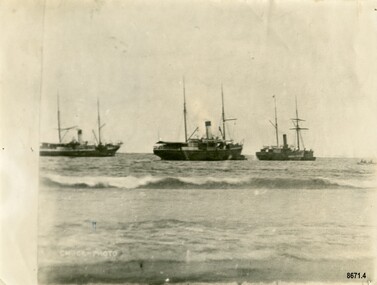 Flagstaff Hill Maritime Museum and Village
Photograph - Steamers - Julia Percy, Dawn and Coorong, Chuck Photo Ballarat, Circa 1885
... Mr Oliver M. Spencer), in July 1881 “ … in recognition of their humane efforts in rescuing the 23 survivors of the American built wooden sailing ship, the Eric the Red, on 4th September 1880.” The men were also presented with substantial monetary rewards and gifts. The city of Warrnambool’s care of the survivors was also mentioned by the President at the presentation, saying that “the city hosted and supported the crew ‘most graciously’. The Medal of Bravery awarded to Nelson Johnson is in the collection at Flagstaff Hill...Mr Oliver M. Spencer), in July 1881 “ … in recognition of their humane efforts in rescuing the 23 survivors of the American built wooden sailing ship, the Eric the Red, on 4th September 1880.” The men were also presented with substantial monetary rewards and gifts. The city of Warrnambool’s care of the survivors was also mentioned by the President at the presentation, saying that “the city hosted and supported the crew ‘most graciously’. The Medal of Bravery awarded to Nelson Johnson is in the collection at Flagstaff Hill ...This photograph was one of ten photographs donated to Flagstaff Hill Maritime Museum and Village by Fred Trewartha. Frederick John Fox Trewartha (Fred) was a well-known Warrnambool businessman. He was born in Beeac near Geelong in 1920 and came to Warrnambool with his family as a very young child. He was apprenticed to his father John, as a saddler and later opened his own shop on Raglan Parade. He then moved into working with tarpaulins and canvases for the trucking industry. Fred was keenly interested in photography (and was a member of the Warrnambool Cine Club), yachting and boat building. He kept his yacht moored at Port Fairy for many years and participated in sailing events locally and interstate. He also built boats with his sons. He had the opportunity to meet many older sailors and it's thought this photo (and others in the set) may have been given to him by one of these men. Fred Trewartha died in 2016 in Warrnambool. Shipping was the cheapest and most practical means of carrying produce and goods during the period 1840-1890. Regular domestic steamer services commenced in the Warrnambool district in the late 1850’s and by 1870 the passenger trade was booming. Four coastal traders made regular stops at Warrnambool in the 1880's - S. S. Julia Percy, S. S. Dawn, S. S. Nelson and S. S. Casino. The S.S. Julia Percy (later named Leeuwin) was an iron passenger-cargo steam ship built in 1876. At one point in time the Julia Percy would sail from Warrnambool to Melbourne every Friday and return from Melbourne to Warrnambool every Tuesday. The cost of a return ticket for a Saloon Fare was £1.0.0. The Julia Percy was built in Glasgow by Thomas Wingate & Company, Whiteinch, in 1876 for the Warrnambool Steam Packet Company, which commissioned it for trade in Victoria’s western district. It was first registered in Warrnambool, Victoria in 1876. Two steamships, the Julia Percy and the Nelson, collided on 25th December 1881. The Julia Percy was at that time owned by its first owners, the Warrnambool Steam Packet Company, and she sailed under the command of Captain Chapman. It had left Melbourne the evening of 24th December, with about 150 passengers, sailing in fine weather through Port Phillip Heads around 9pm. It was headed for Warrnambool, Belfast (now named Port Fairy) and Portland. The Julia Percy was off Apollo Bay when Captain Chapman was woken by the ship’s whistle after midnight, the steamer Nelson being on a collision course with the Julia Percy. The Nelson struck Julia Percy midship. Boats were lowered from the ship (apart from a damaged lifeboat) and about 30-40 of the passengers boarded the Nelson. The engine room and the forehold were checked and found clear of water. The company manager, Mr. Evans, had been on the Nelson, so he boarded and inspected the Julia Percy and the decision was made to continue on to Warrnambool with the passengers as there appeared to be no immediate danger. However, Captain Thomas Smith said the Nelson was taking on water, so Julia Percy followed it for about an hour towards Melbourne on standby in case of need. Then Julia Percy turned around towards Warrnambool again. Shortly afterwards the Nelson turned to follow her, the ships stopped and passengers were returned to Julia Percy, and three from Julia Percy boarded the Nelson. Both ships proceeded on their way. Julia Percy passed Cape Otway light afterwards, signaling that there had been a collision. It was discovered later that one of the passengers was missing, then thought to have boarded the Nelson but later thought to have fallen into the sea and drowned while trying to jump from Julia Percy to Nelson. There had been 3 tickets purchased under the same name of that passenger “Cutler”; a father, son and friend named Wordsworth, which had caused quite some confusion. No further mishap occurred to either ship and both the Julia Percy and the Nelson reached their destinations safely. An enquiry was instigated by the Victoria Steam Navigation Board regarding the cause of the accident between the two steamships, in connection with the death of Cutler who was supposed to have lost his life by the collision. The enquiry resulted in Captain Thomas Smith having his master's certificate suspended for six months. The Julia Percy changed hands several times. Its next owner was the Western Steam Navigation Co (1887), managed by Mr. T.H. Osborne (the company’s office was on the corner of Timor and Liebig Streets - its north-western wall is now part of the current Warrnambool Regional Art Gallery.) The Melbourne Steamship Co became the next owners (1890), followed by William Howard Smith and Sons (1901) for use in Queensland coastal trades and then it was bought by George Turnbull in 1903 and used for local mail contract in Western Australia. The Julia Percy was sold to the Melbourne Steamship Company Ltd. (1906) and re-named the “Leeuwin” but continued in her Western Australian coastal run. It was converted into a coal hulk in Melbourne in 1910 as a result of damaged caused when it was driven against the jetty at Dongara during a gale. The ship was eventually dismantled and scuttled off Port Phillip Heads on 28 December 1934. The steamship "Dawn" was a 522-ton coastal trader built in 1876 and the vessel operated around the Victorian west coast from 1877 until 1898 for the Portland & Belfast Steam Navigation Co. sailing between Melbourne and Portland, via Warrnambool. The vessel was then owned in October 1885 by the renamed company, Belfast & Koroit Steam Navigation Co., until March 1896 when its ownership moved to W Howard Smith & Sons Ltd. This Melbourne company used the ship to service most ports around Australia. Captain F. Chapman took over from Captain Jones and served on the SS Dawn from 1898 until 1900 when he took command of the SS Casino. On September 4th 1880, the three masted clipper ship, "Eric the Red" struck Otway Reef, near Cape Otway. The S. S. Dawn, under the command of Captain Jones, was returning to Warrnambool from Melbourne, its sailing time different to its usual schedule. The provedore of the Dawn, Benjamin Lear, heard cries of distress coming through the portholes of the saloon. He gave the alarm and the engines were stopped. Cries could be heard clearly, coming from the land. Captain Jones sent out crew in two boats, and fired off rockets and blue lights to illuminate the area. They picked up the three survivors who were in the long boat from "Eric the Red". Two men were picked up out of the water, one being the owner’s son who was clinging to floating kerosene boxes. At daylight the Dawn then rescued the 18 men from the floating portion of the deckhouse, which had drifted about 4 miles from where they’d struck the reef. Shortly after the rescue the deckhouse drifted onto breakers and was thrown onto rocks at Point Franklin, about 2 miles east of Cape Otway. Captain Jones had signalled to Cape Otway lighthouse the number of the Eric the Red and later signalled that there was a wreck at Otway Reef but there was no response from the lighthouse. The captain and crew of the Dawn spent several more hours searching unsuccessfully for more survivors, even going back as far as Apollo Bay. On board the Dawn the exhausted men received care and attention to their needs and wants, including much needed clothing. Four men (three crew and one passenger) died. A week after the shipwreck, the Australian Government had also conveyed its thanks to the Captain and crew of the S.S. Dawn - “Captain Griffith Jones, S.S. Dawn, The Hon. Mr Clark desires that the thanks of the Government should be conveyed to you for the prompt, persevering and seamanlike qualities displayed by you, your officers and crew in saving the number of lives you did on the occasion referred to. The Hon. The Commissioner has also been pleased to award you a souvenir in commemoration of the occasion, and a sum of 65 pounds to be awarded to your officers and crew according to annexed scale. I am, &c, W Collins Rees, for and in the absence of the Chief Harbour Master.” The Awards are as follows: - Crew of DAWN'S lifeboat-Chief Officer, Mr G. Peat, 15 pounds; boat's crew-G. Sterge, A.B., 5 pounds; T. Hammond, A.B., 5 pounds; J. Black, A.B., 5 pounds; H. Edwards, A.B., 5 pounds. Dinghy's Crew-Second Officer, Mr Christie, 10 pounds; boat's crew -F. Lafer, A.B., 5 pounds; W. Johnstone, A.B., 5 pounds; Mr Lear, provedore, 5 pounds; Mr Dove, purser, 5 pounds. Captain Jones receives a piece of plate. (from “Wreck of the ship Eric the Red” by Jack Loney). Medals of Bravery were awarded to the Captain and crew of the S.S. Dawn by the President of the United States, through the Consul-general (Mr Oliver M. Spencer), in July 1881 “ … in recognition of their humane efforts in rescuing the 23 survivors of the American built wooden sailing ship, the Eric the Red, on 4th September 1880.” The men were also presented with substantial monetary rewards and gifts. The city of Warrnambool’s care of the survivors was also mentioned by the President at the presentation, saying that “the city hosted and supported the crew ‘most graciously’. The Medal of Bravery awarded to Nelson Johnson is in the collection at Flagstaff Hill Maritime Museum and Village in Warrnambool. Prior to 1882, and the arrival of the S. S. Casino, the "Dawn" was the only steamer to be able to navigate up the Moyne River at Port Fairy and unload at the wharf. The other regular steamers had to anchor in the bay instead. In February 1891 (as reported in The Age newspaper) the "Dawn" became the first vessel to berth alongside the newly completed Warrnambool Breakwater. The occasion was celebrated with a number of prominent townspeople assembling on board to "participate of a glass of wine". In 1895 the owners of the S.S. Dawn, the Portland and Belfast Steam Navigation Co., wound up and sold out to the Belfast Company who took over the Dawn for one year before selling it to Howard Smith. It took over the Melbourne to Warrnambool run in 1906 when the S. S. Flinders was sold. The S. S. Dawn was condemned and sunk in Suva in 1928. The State Library of Victoria has a lithograph in its collection depicting the steamer Dawn and the shipwrecked men, titled. "Wreck of the ship Eric the Red, Cape Otway: rescue of the crew by the Dawn". The third ship depicted in the photograph was thought to be the S. S. Coorong but there was a question mark next to its name. The photograph was thought to have been taken in 1885 and it's possible the S.S. Coorong was working in Clarence River, N. S. W. by this time. The steamer "Coorong" was built in 1862 by J. G. Lawrie of Glasgow. It was an "iron screw" steamer of 304 tons. It had many owners including Joseph Darwent of Adelaide (1863 - 1871), McMeckan Blackwood and Company, Melbourne (1871 - 1877), Mount Gambier Steamship Company Ltd. (1877 - 1881). William Whineham, Port Adelaide (1882), John See and Company, Sydney (1884 - 1892) and the North Coast Steam Navigation Company Ltd, Sydney (1892 - 1910). In 1911 it was hulked in Sydney Harbour and in 1921 it was being used as a coal hulk at Sydney. It had been originally imported into South Australia for the Port Augusta trade (primarily transporting goods needed by the early settlers) however the owners recognized that it had too much space for that purpose, so it was moved to work on the Adelaide to Melbourne line. Its passenger accommodation was enlarged and it enjoyed a "first class reputation" and by 1874 had made 313 voyages between Melbourne and Adelaide. Its captains included Captain McLean, Captain Ashton and Captain Dowell. In 1867, when 25 miles west of Cape Otway, while travelling from Adelaide to Melbourne, it came across the crew of the schooner "Black Watch" who had abandoned ship after it began quickly taking on water. The crew (six men) were able to get away in a small boat with a compass, chart and few candles. They were "excessively cold from exposure to the weather" when the S. S. Coorong picked them up. In 1877 the Coorong ran aground when entering the Outer Harbour at Adelaide (but was not damaged) and in 1882 it was stranded (for a short time) near Curdies Inlet (Victoria) with some slight damage to its bottom plates. Note - A ship with the same name "Coorong" (a coal carrying barque) was often on the Newcastle / Wollongong to Adelaide route also stopped several times in Warrnambool in the mid 1880's. The photograph has the label "Chuck Photos" printed on the front. Thomas Foster Chuck (born 1826 in London) was a photographer and entrepreneur who arrived in Victoria in 1861. The following year he produced and toured a "Grand Moving Diarama" of dramatic painted scenes from the Burke and Wills expedition. By 1866 he had established a photography studio in Daylesford and later he returned to Melbourne where he opened a studio in the Royal Arcade. In 1874 a collection of Chuck's photographs won a gold medal at the Annual International Exhibition in London. Throughout the 1870's he took over 700 individual photographs of prominent citizens for his historical photographic montage titled "Historical Pictures of the Explorers and Early Colonists of Victoria" which is now in the collection of the National Library of Australia. By 1888 he had sold his Melbourne studio and had established a studio in Ballarat (with his son Thomas Henry Chuck). In 1886 they produced an album titled "Warrnambool and District 1886, Western Hotel - J. Fox proprietor" containing over sixty large photographs of local coastal scenes and seascapes, for the use of patrons of the Western Hotel. This photo (of the three steamers in Lady Bay) was taken at this time and is in the album. Thomas Chuck died on December 7th, 1898, in Albert Park, Melbourne and his son Thomas Henry continued to operate the photography studio in Ballarat into the 1920's.This photograph is a significant record of several of the well-known coastal traders (S. S. Julia Percy, S. S. Dawn and possibly S. S. Coorong) that sailed along the southwest coast of Victoria for many years - transporting goods and passengers between Melbourne and Warrnambool in the 1880's. They are also significant in the role they played in the history of Warrnambool and the other coastal ports they visited as well as being examples of the dangers and hazards associated with navigating the waters along the southern coast of Australia. It is also a good example of a photograph taken by a well-known and significant photographer of that era.Black and white photograph of three steam ships anchored in Lady Bay, Warrnambool. They each have a funnel and two masts and are side on to the beach. A small rowboat with a crew can be seen on the far right. The words "CHUCK-PHOTO" are on the bottom left of the photograph. On the back of the photograph is the name and telephone number of the donor (handwritten in black ball point pen) and the names of the three steamships and date written in uppercase letters in dark blue ink. There is a four-figure number stamped in the centre of the back.Front - "CHUCK-PHOTO" Back - Name of donor and telephone number "6944" "JULIA PERCY, DAWN & KOORONG(?) IN LADY BAY 1885"flagstaff hill maritime museum and village, warrnambool, great ocean road, fred trewartha, s. s. julia percy, s. s. dawn, s. s. nelson, s. s. casino, leeuwin, steamer, steamship, coastal trader, warrnambool steam packet company, captain chapman, victorian steam navigation board, western steam navigation company, melbourne steamship company, william howard smith and sons, portland and belfast steam navigation company, w howard smith and sons ltd, eric the red, captain jones, medal of bravery, rescue, moyne river, warrnambool breakwater, lady bay, s. s. coorong, mount gambier steamship company, black watch, thomas foster chuck, chuck photos, chuck photography -
 Flagstaff Hill Maritime Museum and Village
Book, Pitcairns Island and The Islanders in 1850
... warrnambool shipwrecked-coast flagstaff-hill flagstaff-hill-maritime-museum maritime-museum shipwreck-coast flagstaff-hill-maritime-village shipwrecked-artefact great ocean road book warrnambool library warrnambool mechanics’ institute mechanics’ institute library victorian library board warrnambool books and records warrnambool children’s library warrnambool public library Label on spine cover with typed text R.A. 966.18 BRO Front pastedown endpaper has typed the following "Donated to the Library by Mr. A. M ...Pitcairns Island and The Islanders in 1850 Author: Walter Brodie Publisher: Whittaker & Co Date: 1851Label on spine cover with typed text R.A. 966.18 BRO Front pastedown endpaper has typed the following "Donated to the Library by Mr. A. M. Hawkins 312 Koroit Street. WARRNAMBOOL. 4TH May, 1963" warrnambool, shipwrecked-coast, flagstaff-hill, flagstaff-hill-maritime-museum, maritime-museum, shipwreck-coast, flagstaff-hill-maritime-village, shipwrecked-artefact, great ocean road, book, warrnambool library, warrnambool mechanics’ institute, mechanics’ institute library, victorian library board, warrnambool books and records, warrnambool children’s library, warrnambool public library -
 Flagstaff Hill Maritime Museum and Village
Book - Fiction, Jonathan Cape, Our Mr. Wrenn, 1930
... The Warrnambool Mechanics' Institute’s publication collection is of both local and state significance. flagstaff hill warrnambool shipwrecked coast flagstaff hill maritime museum maritime museum shipwreck coast flagstaff hill maritime village great ocean road book pattison collection warrnambool library warrnambool public library warrnambool mechanics’ institute ralph eric pattison warrnambool books and records corangamite regional library service warrnambool city librarian mechanics’ institute library victorian library board warrnambool children’s library american novel jonathan cape harry sinclair lewis sinclair lewis tom graham 1930 nobel prize for literature sinclair lewis’ debut novel fiction romance Our Mr Wrenn Label on spine cover with typed text “PAT / FIC / LEW” Black handwriting on the spine “Our M- Wren” and “s. ...The fictional novel “Our Mr. Wrenn: The Romantic Adventures of a Gentle man” was written by Sinclair Lewis. It was originally published in America in 1914 by Harper & Brothers. It was the first of Sinclair Lewis’ novels published in his real name. His first published book, “Hike and the Aeroplane was” published in 1912 using the pseudonym of Tom Graham. Flagstaff Hill’s copy of “Our Mr. Wrenn” was published in 1930 by Jonathan Cape of London. About SINCLAIR LEWIS (1885-1951) The author was born Harry Sinclair Lewis in 1885 in Sauk Centre, Minnesota. He was renowned as an American novelist, playwright and short story writer. His first writings were romantic poems and short stories. Six of his novels were published by the time Lewis was 36. Lewis won the 1926 Pulitzer Prize for his book “Arrowsmith” but declined because he had been helped in the writing of it by science writer Paul de Kruif, who received 25% of royalties on the sales. However, Lewis is listed as the sole author. Lewis received the Nobel Prize for Literature in 1930 for his “vigorous and graphic art of description and his ability to create, with wit and humour, new types of characters." He was the first author from the United States to receive this award. Lewis graduated from university in 1907. He worked as a reporter and editor for several publications. He was a prolific writer, publishing dozens of works and numerous articles, and became popular for his satire. Lewis married and divorced twice and died alone from a heart attack due to advanced alcoholism) near Rome on 10th January 1951, aged 66. This book is part of a large group of books referred to as the Pattison Collection, which belonged to the Warrnambool Public Library, part of the Warrnambool Mechanics’ Institute. About RALPH ERIC PATTISON and the ‘PATTISON COLLECTION’ The ‘Pattison Collection’ is a collection of books and records that was originally owned by the Warrnambool Mechanics’ Institute, founded in Warrnambool in 1853. By 1886 the Warrnambool Mechanics’ Institute (WMI) had grown to have a Library, Museum and Fine Arts Gallery, with a collection of “… choice productions of art and valuable specimens in almost every branch and many wonderful national curiosities are now to be seen there, including historic relics of the town and district.” It later included a School of Design. Although it was very well patronised, the WMI was led to ask the City Council to take it over in 1911 due to a lack of financial support. In 1935 Ralph Pattison was appointed as City Librarian to establish and organise the Warrnambool Public Library as it was then called. Ralph Eric Pattison was born in Rockhampton, Queensland, in 1891. He married Maude Swan from Warrnambool in 1920 and they set up a home in Warrnambool. In 1935 when Pattison accepted the position as City Librarian for the Warrnambool City Council his huge challenge was to make a functional library within two rooms of the Mechanics’ Institute. He tirelessly cleaned, cleared and sorted a disarrayed collection of old books, jars of preserved specimens and other items reserved for exhibition in the city’s museum. He developed and updated the library with a wide variety of books for all tastes, including reference books for students; a difficult task to fulfil during the years following the Depression. He converted all of the lower areas of the building into a library, reference room and reading room for members and the public. The books were sorted and stored using a cataloguing and card index system that he had developed himself. He also prepared the upper floor of the building and established the Art Gallery and later the Museum, a place to exhibit the many old relics that had been stored for years for this purpose. One of the treasures he found was a beautiful ancient clock, which he repaired, restored and enjoyed using in his office during the years of his service there. Ralph Pattison was described as “a meticulous gentle man whose punctuality, floorless courtesy and distinctive neat dress were hallmarks of his character, and ‘his’ clock controlled his daily routine and his opening and closing of the library’s large heavy doors to the minute.” Pattison took leave from 1942 to 1945 to serve in the Royal Australian Navy, Volunteer Reserve as Lieutenant. A few years later he converted one of the Museum’s rooms into a Children’s Library, stocking it with suitable books for the younger generation. This was an instant success. In the 1950’s he had the honour of being appointed to the Victorian Library Board and received more inspiration from the monthly conferences in Melbourne. He was sadly retired in 1959 after over 23 years of service because he had gone over the working age of council officers. However, he continued to take a very keen interest in the continual development of the Library until his death in 1969. THE NEW WARRNAMBOOL LIBRARY When the WMI building was pulled down in 1963 a new civic building was erected on the site and the new Warrnambool Library, on behalf of the City Council, took over all the holdings of the WMI. At this time some of the items were separated and identified as the ‘Pattison Collection’, named after Pattison. Eventually, the components of the WMI were distributed from the Warrnambool Library to various places, including the Art Gallery, Historical Society and Flagstaff Hill. Later some were even distributed to other regional branches of Corangamite Regional Library and passed to and fro. It is difficult now to trace just where all of the items have ended up. The books at Flagstaff Hill Maritime Village generally display stamps and markings from Pattison as well as a variety of other institutions including the Mechanics’ Institute itself.Lewis’s book is significant for its association with the writer, who was the first American to be awarded the Nobel Prize for Literature (1930). This book is also significant for its connection with the Pattison Collection which, along with other items at Flagstaff Hill Maritime Village, was originally part of the Warrnambool Mechanics' Institute’s collection. The Warrnambool Mechanics’ Institute collection is primarily significant in its totality, rather than for the individual objects it contains. Its contents are highly representative of the development of Mechanics' Institute libraries across Australia, particularly Victoria. A diversity of publications and themes has been amassed, and these provide clues to our understanding of the nature of and changes in the reading habits of Victorians from the 1850s to the middle of the 20th century. The collection also highlights the Warrnambool community’s commitment to the Mechanics’ Institute, reading, literacy and learning in the regions, and proves that access to knowledge was not impeded by distance. These items help to provide a more complete picture of our community’s ideals and aspirations. The Warrnambool Mechanics Institute book collection has historical and social significance for its strong association with the Mechanics Institute movement and the important role it played in the intellectual, cultural and social development of people throughout the latter part of the nineteenth century and the early twentieth century. The collection of books is a rare example of an early lending library and its significance is enhanced by the survival of an original collection of many volumes. The Warrnambool Mechanics' Institute’s publication collection is of both local and state significance. Title: Our Mr. Wrenn: the romantic adventures of a gentle man Author: Sinclair Lewis Publisher: Jonathan Cape, London Date: 1930 Hardback board book covered with red linen, spine reinforced with blue. The author’s name is embossed in gold on the front cover. On the spine is a handwritten title and author, and a white adhesive label with a typed library call number. Inside the front cover are pasted labels and stamps. The book is part of the Pattison Collection originally belonging to the Warrnambool Public Library. It was once held by the Warrnambool Mechanics Institute and Free Library and the Corangamite Regional Library Service.Label on spine cover with typed text “PAT / FIC / LEW” Black handwriting on the spine “Our M- Wren” and “s. Lewis” Pastedown front endpaper has a label from Warrnambool Mechanics Institute and Free Library, covered by another from the Corangamite Regional Library Service Front loose endpaper has a stamp from Corangamite Regional Library Serviceflagstaff hill, warrnambool, shipwrecked coast, flagstaff hill maritime museum, maritime museum, shipwreck coast, flagstaff hill maritime village, great ocean road, book, pattison collection, warrnambool library, warrnambool public library, warrnambool mechanics’ institute, ralph eric pattison, warrnambool books and records, corangamite regional library service, warrnambool city librarian, mechanics’ institute library, victorian library board, warrnambool children’s library, american novel, jonathan cape, harry sinclair lewis, sinclair lewis, tom graham, 1930 nobel prize for literature, sinclair lewis’ debut novel, fiction, romance, our mr wrenn -
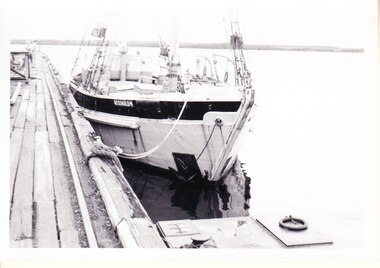 Flagstaff Hill Maritime Museum and Village
Photograph - Vessels, Sail and Steam Ships, c. 1972-1975
... Mr R Murch – John’s brother, Murray – son of Captain Murch and Seaman John Smith. At some stage it seems that the Reginald M was used as a Customs vessel “H.M.C. No. 3, Pt Adelaide” as shown in a photograph in Flagstaff Hill’s...M', and one (1) colour photograph of the Polly Woodside, plus six (6) negative strips. Included int he packet is a letter in stamped and postmarked envelope addressed to Mr A Clapham of Footscray. The envelope postmarked 9 Dec 1972, with the Warrnambool postcode 3280, A 7c Australian postage stamp in attached to the envelope. They are associated with Flagstaff Hill’s...Mr R Murch – John’s brother, Murray – son of Captain Murch and Seaman John Smith. At some stage it seems that the Reginald M was used as a Customs vessel “H.M.C. No. 3, Pt Adelaide” as shown in a photograph in Flagstaff Hill’s ...Andy Clapham owned and operated a boat yard on the Maribyrnong River in Footscray, Victoria. The river runs into Port Phillip Bay (sometimes known as Hobson’s bay) at Williamstown, an area with a history of trades associated with the shipping and construction industry. Andy Clapham’s photographs include those of the Reginald M and one of Polly Woodside, another vessel restored and used as a maritime exhibition. Andy Clapham’s letter of 1972 was posted in a and envelope with an early Australian decimal currency stamp showing the profile portrait of Queen Elizabeth II, and valued at 7 cent. Andy offered invaluable advice to the Flagstaff Hill Historic Park Planning Board regarding the purchase a vessel suitable for use as an exhibit once Flagstaff Hill was opened. The Planning Board was set up by the Warrnambool Chamber of Commerce and approved by the City Council and State Government. Flagstaff Hill was investigating vessels in Adelaide and Tasmania as well as Melbourne. Andy looked at several vessels in 1972-1973. He also serviced the Reginald M among other vessels belonging to Captain Julian Dyson of Yarra Ferries, who had casually offered the vessel to Flagstaff Hill as a price that was unattainable at the time. Flagstaff Hill later requested photographs of the hull to discern the dimensions and also the condition of the timbers as well as wanting advice on its seafaring capability. In 1972 the Flagstaff Hill Historic Park Planning Board – Chairman J. (John) S. Lindsay (1972-1980), Secretary J. (James) Mark – wrote a letter of appreciation to Mr A. (Andy) Clapham of 3 Charles Street Footscray ... “Dear Mr. Clapham, The Board has asked me to write to you to express our appreciation for the assistance you have offered us through our Chairman John Lindsay. The information you have already given us has been invaluable, in that is shows us that we have not been setting out to do something that is impossible. We look forward to receiving further information from you as it becomes available and we appreciate that you must be busy enough without our problems. Members of our Board hope to call and see you on a trip to Melbourne in the near future. The Board is optimistic about the future of Flagstaff Hill as a Maritime Museum and look forward to you visiting Warrnambool to examine what we believe will be an ideal site. Yours faithfully, James Mark.” ABOUT the vessel “Reginald M” The vessel “Reginald M” was a two-masted, timber coastal vessel built by John Henry Murch in Birkenhead, Port of Adelaide, South Australia. It was named after Reginald Murch. (It was occasionally referred to as the Reginald “Emm”). Its construction took approximately 6 months using many materials and fittings from salvage yards. It is believed that the keep was hewn from two telegraph poles! Reginald M was launched at Largs Bay in 1922. Reginald M was approximately 30 metres long and was fore-to-aft ketch rigged with an ‘auxiliary’ motor to support any loss of sail power. The Reginald M was built to service the coastal ports of South Australia to Port Victoria on the York Peninsular, Spencer Gulf. It freighted cargo from port to port cheaply and efficiently. It had a very shallow draft and a flat bottom, enabling it to come close to shore and sit high and dry at low tide, or to be beached on the sand. It could easily skim over reefs due to its flat bottom. Wagons could be loaded and unloaded directly from the side of the vessel. Over the years her cargo included guano, barley, wool, horses, cattle, timber, explosives, potatoes, shell grit and gypsum. The Murch brothers from Port Adelaide were owners of the Reginald M and Richard Murch as the Captain. On April 9, 1931, Reginald M weathered a large storm in St. Vincents Gulf, SA, suffering much damage; the mast snapped and the crew laboured for four hours to free it up by severing the mast and rigging. The crew patched it up and slowly returned to Port Adelaide with only a portion of the insured cargo being damaged. The crew members at that time were owner Mr John Henry Murch of Wells Street Largs Bay, Skipper Mr R Murch – John’s brother, Murray – son of Captain Murch and Seaman John Smith. At some stage it seems that the Reginald M was used as a Customs vessel “H.M.C. No. 3, Pt Adelaide” as shown in a photograph in Flagstaff Hill’s collection. In 1969 Reginald M’s last freight trip left Marion Bay, carrying grain, wool and explosives. In late 1970 it was sold to the Mount Lyall Mining and Railway Clompany and used as a barge to carry explosives. In 1972 The Navy League of Strahan, Tasmania, purchased the vessel for use by the Strahan Sea Cadet Unit at Macquarie Harbour; it was renamed “T.S. Macquarie”. (This plan did not come to pass.) In 1974 Mr Andrew Rennie of East Brighton, Melbourne, brought Reginald M for shipping purposes, He sailed it from Strahan to Melbourne, planning to use it for pleasure sailing. The Reginald M was later sold at auction to Captain Julian Dyson, owner of Yarra Passenger Ferries in Melbourne. Later in 1975 funds became available to Flagstaff Hill Maritime Village to purchase the Reginald M. It was then restored and used as an exhibit here for many hears. Flagstaff Hill’s collection also includes various objects related to the Reginald M: - Photographs of Reginald M over the years in various aspects of its use - a life buoy with the inscription of “Pt. Adelaide” - helm section that was removed and replaced during restoration - a bullet found in pieces of timber during the 1979 restoration ABOUT THE POLLY WOODSIDE On the bow in the Polly Woodside's photograph is the word "RONA". the Polly Woodside was built at Belfast in 1885. In 1904 the vessel was sold to A.H. Turnbull of New Zealand and renamed "RONA". The letter and photographs are significant for their association with the Reginald M, an Australian built coastal trader now on the Australian Register of Historic Vessels (number HV000562). The letter and photographs are also significant as part of both the history of Flagstaff Hill and the history of the vessel “Reginald M” that has been on display in the lake for many years. Objects retained from this boat are included in Flagstaff Hill’s collection of maritime history.Packet with photographs and negatives in a KODAK envelope. The photographs are of two sail and steam vessels; twelve (12) black and white photographs of the 'Reginald M', and one (1) colour photograph of the Polly Woodside, plus six (6) negative strips. Included int he packet is a letter in stamped and postmarked envelope addressed to Mr A Clapham of Footscray. The envelope postmarked 9 Dec 1972, with the Warrnambool postcode 3280, A 7c Australian postage stamp in attached to the envelope. They are associated with Flagstaff Hill’s acquisition of the vessel “Reginald M”. Envelope "9 DEC 1972 / 3280" Postage stamp "7c" "Australia" Inscriptions on one Reginald M;; "REGINALD M" and "Pt ADELAIDE H.M.C. No. 3" Inscriptions of the Polly Woodside; "RONA / MSC" "MHI / NO. 1" Ball point ink, reverse of photograph "POLLY WOODSIDE"flagstaff hill, warrnambool, shipwrecked coast, flagstaff hill maritime museum, maritime museum, shipwreck coast, flagstaff hill maritime village, great ocean road, vessel reginald m, reginald emm, t. s. macquarie, h.m.c. no. 3, pt adelaide, australian register of historic vessels (number hv000562), boat building trade, jack murch, john henry murch, birkenhead, port adelaide sa, largs bay sa, coastal trader south australia, 1920 ketch reginald m, marion bay produce, mount lyall mining and railway company, navy league of strahan, tasmania, melbourne ferry company, flagstaff hill historic park planning board, john lindsay, james mark, andy clapham of footscray, andy clapham boat builder, kodak photograph packet envelope, kodak super-size prints, kodak australia pty ltd, australian postage stamp 1972 - 7c -
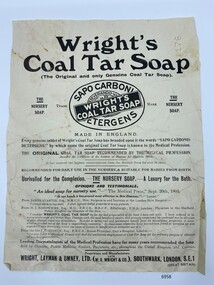 Flagstaff Hill Maritime Museum and Village
Flyer - Advertisement, Soap, Wright, Layman & Umney Ltd, Late 1940s
... Hill, City of London, where he first sold the soap. In 1863 Wright moved his firm to small premises at 50 Southwark Street, Southwark, London, and not long afterwards M. Sellers and Mr...Hill, City of London, where he first sold the soap. In 1863 Wright moved his firm to small premises at 50 Southwark Street, Southwark, London, and not long afterwards M. Sellers and Mr ...Wright’s Coal Tar Soap was a popular brand of household soap, manufactured by William Valentine Wright from 1867. The yellow soap was antiseptic, designed to cleanse the skin thoroughly. It was originally named Sapo Carbonis Detergens, which remains a registered trademark. The product was developed from ‘liquor carbonis detergens’, the liquid by-product of the distillation of coal to make coke. The liquid was made into an antiseptic soap for treating skin diseases. William Valentine Wright was born in 1826 at Aldeburgh, Suffolk. He was a wholesale druggist and chemist who had a small business, W.V. Wright & Co., at 11 Old Fish Street Hill, City of London, where he first sold the soap. In 1863 Wright moved his firm to small premises at 50 Southwark Street, Southwark, London, and not long afterwards M. Sellers and Mr Charles Noel Layman joined the partnership. The company's name changed to Wright, Layman & Umney, when Charles Umney (1843–1909) was taken into the partnership on June 17, 1876, after the death of M. Sellers. William Valentine Wight 1877. Rob Umney, great-great-grandson of Charles Umney, provided further details about the firm, adding that in the late 1960s, the Wright’s Coal Tar Soap business was taken over by LRC Products Ltd who sold it to Smith & Nephew in 1994. The current owners of the brand, Simple Health and Beauty Ltd are based in Solihull and the soap is called Wright's Traditional Soap ‘With coal tar fragrance’. The coal tar has been replaced with tea tree oil. There were concerns that ingredients in coal tar could cause cancer when a person is exposed to very high concentrations, such as in roofing and road paving. In January 2025 the current manufacturers still produce the Wright's Coal Tar Soap.The flier states that Wright's Coal Tar Soap was sold throughout the United Kingdom and Colonies, which includes Australia. The soap is representative of the many consumer goods sold at pharmacies and chemist shops across the world, such as Sambell and Son, who operated a pharmacy in Fairy Street, Warrnambool in the 19th century. The paper flier is rectangular and has printed text and a logo. The top right corner has stamped punch marks. It promotes Wright's Coal Tar Soap, made by Wright, Layman & Umney Ltd. England.Punch mark; "1176"flagstaff hill, maritime museum, wright's, coal tar soap, soap, bathing, antiseptic, washing, personal hygiene, london, southwark, chemist, pharmacist, colonies, wright's coal tar soap, sapo carboni detergens, punch marks, england, soap tablet, babies soap, nursery soap, advertising, poster, flyer, wright, layman & umney ltd., w.t. wrifght & co., soap bar, soap cake -
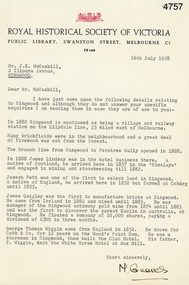 Ringwood and District Historical Society
Document - Letter, Letter from M. Greaves of the Royal Historical Society of Victoria to Mr J.K. McCaskill outlining a small number of aspects of early settlement of Ringwood, 16-Jul-58
... M. Greaves of the Royal Historical Society of Victoria to Mr J.K. McCaskill outlining a small number of aspects of early settlement of Ringwood. +Additional Keywords: Lindsay, James / Pett, Joseph / Quigley, James / Wiggin, George Thomas / Cobb & Co / Railway / Lilydale / Kaolin discovery in Victoria / Antimony / Wood's Point Run / White Horse Hotel at Box Hill...M. Greaves of the Royal Historical Society of Victoria to Mr J.K. McCaskill outlining a small number of aspects of early settlement of Ringwood. +Additional Keywords: Lindsay, James / Pett, Joseph / Quigley, James / Wiggin, George Thomas / Cobb & Co / Railway / Lilydale / Kaolin discovery in Victoria / Antimony / Wood's Point Run / White Horse Hotel at Box Hill Letter from M. ...Letter from M. Greaves of the Royal Historical Society of Victoria to Mr J.K. McCaskill outlining a small number of aspects of early settlement of Ringwood. +Additional Keywords: Lindsay, James / Pett, Joseph / Quigley, James / Wiggin, George Thomas / Cobb & Co / Railway / Lilydale / Kaolin discovery in Victoria / Antimony / Wood's Point Run / White Horse Hotel at Box Hill -
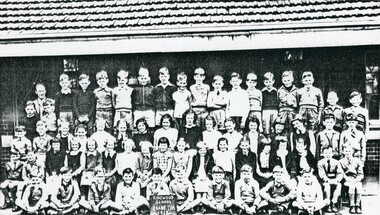 Ringwood and District Historical Society
Photograph, Ringwood State School -Class photograph - Grade 4A, 1955
... Hill, ?, G Frazer, B Short, T Coutes, B Stevenson, P White, ?. 2nd Row - L to R: M Johnson, R Harris, S Dorman, H Trout, ?, W Marriner, ?, F Hackett, ?, ?, ?, L Corbett, R Thompson, V Pincock, I Wilton, L Sumpter. 3rd Row - L to R: I Marshall, N Maclarty, C Pavey, F Lillywhite, E Dexter, S King, ?, M Milne, ?, H Boyle, ?, B Stewart, J Smalley, K Sterling, Olwyn Hayes, ?, ?, I Clarksen. Front Row - L to R: D Richards, B Bangay, A Byrne, B Cooper, D Bolton, J Forbes, R Jenkins, R Albert, R Galfred, ?. Teacher: Mr...Hill, ?, G Frazer, B Short, T Coutes, B Stevenson, P White, ?. 2nd Row - L to R: M Johnson, R Harris, S Dorman, H Trout, ?, W Marriner, ?, F Hackett, ?, ?, ?, L Corbett, R Thompson, V Pincock, I Wilton, L Sumpter. 3rd Row - L to R: I Marshall, N Maclarty, C Pavey, F Lillywhite, E Dexter, S King, ?, M Milne, ?, H Boyle, ?, B Stewart, J Smalley, K Sterling, Olwyn Hayes, ?, ?, I Clarksen. Front Row - L to R: D Richards, B Bangay, A Byrne, B Cooper, D Bolton, J Forbes, R Jenkins, R Albert, R Galfred, ?. Teacher: Mr ...Black and white photograph - Grade 4A, 1955"Attached to photograph" Back Row- L to R: M Corin, T Seagren, I Weist, D Sjogren, I Simpson, B Steegstra, B Cain, N Miller, ? Fitzpatrick, P Hill, ?, G Frazer, B Short, T Coutes, B Stevenson, P White, ?. 2nd Row - L to R: M Johnson, R Harris, S Dorman, H Trout, ?, W Marriner, ?, F Hackett, ?, ?, ?, L Corbett, R Thompson, V Pincock, I Wilton, L Sumpter. 3rd Row - L to R: I Marshall, N Maclarty, C Pavey, F Lillywhite, E Dexter, S King, ?, M Milne, ?, H Boyle, ?, B Stewart, J Smalley, K Sterling, Olwyn Hayes, ?, ?, I Clarksen. Front Row - L to R: D Richards, B Bangay, A Byrne, B Cooper, D Bolton, J Forbes, R Jenkins, R Albert, R Galfred, ?. Teacher: Mr Smith -
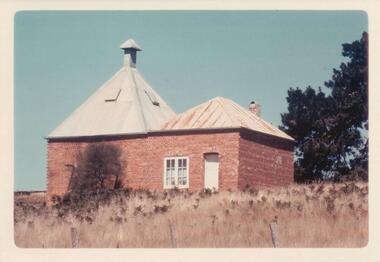 Phillip Island and District Historical Society Inc.
Photograph, 1960's
... M. & J. D. Archibald, April 1973. local history photography photographs agriculture buildings historic chicory kiln hurrican hill home richardson Ventnor N & J Archibald Richardson's Hill Ventnor Phillip Island Colour Photograph. Ventnor. Hurricane Hill (Richardson's Hill). Built about 1883. 18' x 18'. Brick double one story. Originally built for Mr ...Donated by N. M. & J. D. Archibald, April 1973.Colour Photograph. Ventnor. Hurricane Hill (Richardson's Hill). Built about 1883. 18' x 18'. Brick double one story. Originally built for Mr. T. Richardson. Now being used as a holiday house (1973). Chicory Kiln Album.local history, photography, photographs, agriculture buildings, historic, chicory kiln, hurrican hill, home, richardson, ventnor, n & j archibald, richardson's hill ventnor phillip island -
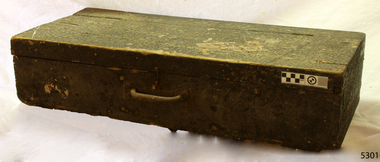 Flagstaff Hill Maritime Museum and Village
Equipment - Toolbox, ca. 1922
... M” was a two-masted coastal ketch, owned and built by Mr Jack (John) Murch of Birkenhead, Port of Adelaide, South Australia. Its construction took approximately 6 months and it was launched at Largs Bay in 1922. The vessel had many owners and adventures over the years until it was purchased by Flagstaff Hill...M” was a two-masted coastal ketch, owned and built by Mr Jack (John) Murch of Birkenhead, Port of Adelaide, South Australia. Its construction took approximately 6 months and it was launched at Largs Bay in 1922. The vessel had many owners and adventures over the years until it was purchased by Flagstaff Hill ...This toolbox was part of the equipment of the coastal trader Reginald M. It is typical of general-purpose toolboxes of the early 20th century. The covering of pitch on the outside was likely to be a form of waterproofing and protection. The vessel “Reginald M” was a two-masted coastal ketch, owned and built by Mr Jack (John) Murch of Birkenhead, Port of Adelaide, South Australia. Its construction took approximately 6 months and it was launched at Largs Bay in 1922. The vessel had many owners and adventures over the years until it was purchased by Flagstaff Hill Maritime Museum & Village in 1975. It was then used as an active display until 2016. Visitors could go aboard, turn the ship's wheel, go below deck and get the feel of the captain's quarters, sailors' quarters and the storage space available. The Reginald M was a popular exhibit for young and old, until 2016.This toolbox is significant because of its connection to the history of the vessel REGINALD M, the coastal trading ketch from South Australia built in 1922 and in existence until 2016. Its flat bottom, single-chine shape illustrates a very simple but robust method of construction, compared to other round-bilged examples of trading vessels. The Reginald M is listed on the Australian Register of Historic Vessels (ARHV Number: HV000562.) Wooden toolbox with hinged lid covering tree-quarters of the box. A case handle is attached for carrying. Hook on one side but nothing to catch it on. Toolbox has been covered with pitch on the outside. flagstaff hill, warrnambool, reginald m, flagstaff hill maritime museum & village, shipwreck coast, maritime museum, coastal trader, ketch, john murch, sailor's equipment, ship maintenance, wooden toolbox, toolbox -
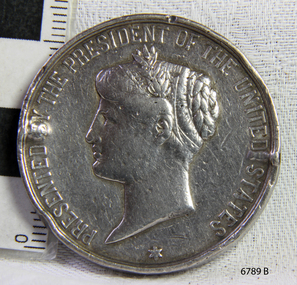 Flagstaff Hill Maritime Museum and Village
Award - Medal, Nelson Johnson, November 1880
... Hill Maritime Village in 2013 by Nelson’s granddaughter. Nelson had migrated from Sweden to Sydney in 1879. The next year in 1880, aged 24, he was a seaman on the steamship Dawn and involved in the rescue of the survivors of the Eric the Red. Nelson Johnson was a crew member of the S.S. Dawn and was one of the rescue team in the dinghy in the early morning of September 4th 1880. Medals were awarded to the Captain and crew of the S.S. Dawn by the President of the United States, through the Consul-general (Mr Oliver M...Hill Maritime Village in 2013 by Nelson’s granddaughter. Nelson had migrated from Sweden to Sydney in 1879. The next year in 1880, aged 24, he was a seaman on the steamship Dawn and involved in the rescue of the survivors of the Eric the Red. Nelson Johnson was a crew member of the S.S. Dawn and was one of the rescue team in the dinghy in the early morning of September 4th 1880. Medals were awarded to the Captain and crew of the S.S. Dawn by the President of the United States, through the Consul-general (Mr Oliver M ...This medal for bravery, for rescue of the crew from the shipwreck “Eric the Red” on 4th September 1880, was awarded to one of the crew of the steamer S.S. Dawn by the President of the United States in July 1881. The medal is engraved with the name “Nelson Johnson” (the anglicised version of his Swedish name Neils Frederick Yohnson). It was donated to Flagstaff Hill Maritime Village in 2013 by Nelson’s granddaughter. Nelson had migrated from Sweden to Sydney in 1879. The next year in 1880, aged 24, he was a seaman on the steamship Dawn and involved in the rescue of the survivors of the Eric the Red. Nelson Johnson was a crew member of the S.S. Dawn and was one of the rescue team in the dinghy in the early morning of September 4th 1880. Medals were awarded to the Captain and crew of the S.S. Dawn by the President of the United States, through the Consul-general (Mr Oliver M. Spencer), in July 1881 “ … in recognition of their humane efforts in rescuing the 23 survivors of the American built wooden sailing ship, the Eric the Red, on 4th September 1880.” The men were also presented with substantial monetary rewards and gifts. The city of Warrnambool’s care of the survivors was also mentioned by the President at the presentation, saying that “the city hosted and supported the crew ‘most graciously’. Previously, a week after the shipwreck, the Australian Government had also conveyed its thanks to the Captain and crew of the S.S. Dawn “Captain Griffith Jones, S.S. Dawn, The Hon. Mr Clark desires that the thanks of the Government should be conveyed to you for the prompt, persevering and seamanlike qualities displayed by you, your officers and crew in saving the number of lives you did on the occasion referred to. The hon. The Commissioner has also been pleased to award you a souvenir in commemoration of the occasion, and a sum of 65 pounds to be awarded to your officers and crew according to annexed scale. I am, &c, W Collins Rees, for and in the absence of the Chief Harbour Master.” The Awards are as follows: - Crew of DAWN'S lifeboat-Chief Officer, Mr G. Peat, 15 pounds; boat's crew-G. Sterge, A.B., 5 pounds; T. Hammond, A.B., 5 pounds; J. Black, A.B., 5 pounds; H. Edwards, A.B., 5 pounds. Dinghy's Crew-Second Officer, Mr Christie, 10 pounds; boat's crew -F. Lafer, A.B., 5 pounds; W. Johnstone, A.B., 5 pounds; Mr Lear, provedore, 5 pounds; Mr Dove, purser, 5 pounds. Captain Jones receives a piece of plate. (from “Wreck of the ship Eric the Red” by Jack Loney) The medal’s history, according to the Editor of ‘E-Sylum’ (the newsletter of The Numismatic Bibliomania Society “… appears to be an example of an 1880 State Department medal, catalogued as LS-3 (page 322 of R. W. Julian's book, Medals of the United States Mint: The First Century 1792-1892). The reverse is mostly blank for engraving, surrounded by a thin wreath. It was designed by George Morgan, chief engraver for the Philadelphia Mint, and struck in gold, silver and bronze. The one pictured here (in The Standard newspaper, 2nd July 2013) appears to be silver.” The following is an account of the events which led to the awarding of this medal. The American ship Eric the Red was a wooden, three-masted clipper ship. She had 1,580 tons register and was the largest full-rigged ship built at Bath, Maine, USA in 1871. She was built and registered by Arthur Sewall, later to become the partnership E. & A. Sewall, the 51st ship built by this company. The annually-published List of Merchant Vessels of the U.S. shows Bath was still the home port of Eric the Red in 1880. The vessel was named after the Viking discoverer, Eric ‘the Red-haired’ Thorvaldsson, who was the first European to reach the shores of North America (in 980AD). The ship Eric the Red at first traded in coal between America and Britain, and later traded in guano nitrates from South America. In 1879 she was re-metalled and was in first-class condition. On 10th June 1880 (some records say 12th June) Eric the Red departed New York for Melbourne and then Sydney. She had been commissioned by American trade representatives to carry a special cargo of 500 exhibits (1400 tons) – about a quarter to a third of America’s total exhibits - for the U.S.A. pavilion at Melbourne’s first International Exhibition. The exhibits included furniture, ironmongery, wines, chemicals, dental and surgical instruments, paper, cages, bronze lamp trimmings, axles, stamped ware, astronomical and time globes, samples of corn and the choicest of leaf tobacco. Other general cargo included merchandise such as cases of kerosene and turpentine, brooms, Bristol's Sarsaparilla, Wheeler and Wilson sewing machines, Wheeler’s thresher machine, axe handles and tools, cases of silver plate, toys, pianos and organs, carriages and Yankee notions. The Eric the Red left New York under the command of Captain Zaccheus Allen (or some records say Captain Jacques Allen) and 24 other crew including the owner’s son third mate Ned Sewall. There were also 2 saloon passengers on board. The ship had been sailing for an uneventful 85 days and the voyage was almost at its end. As Eric the Red approached Cape Otway there was a moderate north-west wind and a hazy and overcast atmosphere. On 4th September 1880 at about 1:30 am Captain Allen sighted the Cape Otway light and was keeping the ship 5-6 miles offshore to stay clear of the hazardous Otway Reef. However, he had badly misjudged his position. The ship hit the Otway Reef about 2 miles out to sea, southwest of the Cape Otway light station. Captain Allen ordered the wheel to be put ‘hard up’ thinking that she might float off the reef. The sea knocked the helmsman away from the wheel, broke the wheel ropes and carried away the rudder. The lifeboats were swamped, the mizzenmast fell, with all of its riggings, then the mainmast also fell and the ship broke in two. Some said that the passenger Vaughan, who was travelling for his health and not very strong, was washed overboard and never seen again. The ship started breaking up. The forward house came adrift with three of the crew on it as well as a longboat, which the men succeeded in launching and keeping afloat by continually bailing with their sea boots. The captain, the third mate (the owner’s son) and others clung to the mizzenmast in the sea. Then the owner’s son was washed away off the mast. Within 10 minutes the rest of the ship was in pieces, completely wrecked, with cargo and wreckage floating in the sea. The captain encouraged the second mate to swim with him to the deckhouse where there were other crew but the second mate wouldn’t go with him. Eventually, the Captain made it to the deckhouse and the men pulled him up. At about 4:30 am the group of men on the deckhouse saw the lights of a steamer and called for help. At the same time, they noticed the second mate and the other man had drifted nearby, still on the spur, and pulled them both onto the wreck. The coastal steamer SS Dawn was returning to Warrnambool from Melbourne, and its sailing time was different to its usual schedule. She was built in 1876 and bought by the Portland and Belfast Steam Navigation Co. in 1877. At the time of this journey, she was commanded by Captain Jones and was sailing between Melbourne and Portland via Warrnambool. The provedore the Dawn, Benjamin Lear, heard cries of distress coming through the portholes of the saloon. He gave the alarm and the engines were stopped. Cries could be heard clearly, coming from the land. Captain Jones sent out crew in two boats and fired off rockets and blue lights to illuminate the area. They picked up the three survivors who were in the long boat from Eric the Red. Two men were picked up out of the water, one being the owner’s son who was clinging to floating kerosene boxes. At daylight, the Dawn then rescued the 18 men from the floating portion of the deckhouse, which had drifted about 4 miles from where they’d struck the reef. Shortly after the rescue the deckhouse drifted onto breakers and was thrown onto rocks at Point Franklin, about 2 miles east of Cape Otway. Captain Jones had signalled to Cape Otway lighthouse the number of the Eric the Red and later signalled that there was a wreck at Otway Reef but there was no response from the lighthouse. The captain and crew of the Dawn spent several more hours searching unsuccessfully for more survivors, even going back as far as Apollo Bay. On board the Dawn the exhausted men received care and attention to their needs and wants, including much-needed clothing. Captain Allen was amongst the 23 battered and injured men who were rescued and later taken to Warrnambool for care. Warrnambool’s mayor and town clerk offered them all hospitality, the three badly injured men going to the hospital for care and others to the Olive Branch Hotel, then on to Melbourne. Captain Allen’s leg injury prevented him from going ashore so he and three other men travelled on the Dawn to Portland. They were met by the mayor who also treated them all with great kindness. Captain Allen took the train back to Melbourne then returned to America. Those saved were Captain Zaccheus Allen (or Jacques Allen), J. Darcy chief mate, James F. Lawrence second mate, Ned Sewall third mate and owner’s son, John French the cook, C. Nelson sail maker, Clarence W. New passenger, and able seamen Dickenson, J. Black, Denis White, C. Herbert, C. Thompson, A. Brooks, D. Wilson, J. Ellis, Q. Thompson, C. Newman, W. Paul, J. Davis, M. Horenleng, J. Ogduff, T. W. Drew, R. Richardson. Four men had lost their lives; three of them were crew (Gus Dahlgreen ship’s carpenter, H. Ackman steward, who drowned in his cabin, and George Silver seaman) and one a passenger (J. B. Vaughan). The body of one of them had been found washed up at Cape Otway and was later buried in the lighthouse cemetery; another body was seen on an inaccessible ledge. Twelve months later the second mate James F. Lawrence, from Nova Scotia passed away in the Warrnambool district; an obituary was displayed in the local paper. Neither the ship nor its cargo was insured. The ship was worth about £15,000 and the cargo was reportedly worth £40,000; only about £2,000 worth had been recovered. Cargo and wreckage washed up at Apollo Bay, Peterborough, Port Campbell, Western Port and according to some reports, even as far away as the beaches of New Zealand. The day after the wreck the government steamship Pharos was sent from Queenscliff to clear the shipping lanes of debris that could be a danger to ships. The large midship deckhouse of the ship was found floating in a calm sea near Henty Reef. Items such as an American chair, a ladder and a nest of boxes were all on top of the deckhouse. As it was so large and could cause danger to passing ships, Captain Payne had the deckhouse towed towards the shore just beyond Apollo Bay. Between Apollo Bay and Blanket Bay, the captain and crew of Pharos collected Wheeler and Wilson sewing machines, nests of boxes, bottles of Bristol’s sarsaparilla, pieces of common American chairs, axe handles, a Wheelers’ Patent thresher and a sailor’s trunk with the words “A. James” on the front. A ship’s flag-board bearing the words “Eric the Red” was found on the deckhouse; finally, those on board the Pharos had the name of the wrecked vessel. During this operation, Pharos came across the government steamer Victoria and also a steamer S.S. Otway, both of which were picking up flotsam and wreckage. A whole side of the hull and three large pieces of the other side of the hull, with some of the copper sheathing stripped off, had floated onto Point Franklin. Some of the vessels' yards and portions of her masts were on shore. The pieces of canvas attached to the yards and masts confirmed that the vessel had been under sail. The beach there was piled with debris several feet high. There were many cases of Diamond Oil kerosene, labelled R. W. Cameron and Company, New York. There were also many large planks of red pine, portions of a small white boat and a large, well-used oar. Other items found ashore included sewing machines (some consigned to ‘Long and Co.”) and notions, axe and scythe handles, hay forks, wooden pegs, rolls of wire (some branded “T.S” and Co, Melbourne”), kegs of nails branded “A.T. and Co.” from the factory of A. Field and Son, Taunton, Massachusetts, croquet balls and mallets, buggy fittings, rat traps, perfumery, cutlery and Douay Bibles, clocks, bicycles, chairs, a fly wheel, a cooking stove, timber, boxes, pianos, organs and a ladder. (Wooden clothes pegs drifted in for many years). There seemed to be no personal luggage or clothing. The Pharos encountered a long line, about one and a half miles, of f locating wreckage about 10 miles off land, southeast of Cape Otway, and in some places about 40 feet wide. It seemed that more than half of it was from Eric the Red. The ship’s crew rescued 3 cases that were for the Melbourne Exhibition and other items from amongst the debris. There were also chairs, doors, musical instruments, washing boards, nests of trunks and flycatchers floating in the sea. Most of the goods were saturated and smelt of kerosene. A section of the hull lies buried in the sand at Parker River Beach. An anchor with a chain is embedded in the rocks east of Point Franklin and a second anchor, thought to be from Eric the Red, is on display at the Cape Otway light station. (There is a photograph of a life belt on the verandah of Rivernook Guest House in Princetown with the words “ERIC THE RED / BOSTON”. This is rather a mystery as the ship was registered in Bath, Maine, USA.) Parts of the ship are on display at Bimbi Park Caravan Park and at Apollo Bay Museum. Flagstaff Hill Maritime Village also has part of the helm (steering wheel), a carved wooden sword (said to be the only remaining portion of the ship’s figurehead; further research is currently being carried out), a door, a metal rod, samples of wood and this medal awarded for the rescue of the crew. Much of the wreckage was recovered by the local residents before police and other authorities arrived at the scene. Looters went to great effort to salvage goods, being lowered down the high cliff faces to areas with little or no beach to collect items from the wreckage, their mates above watching out for dangerous waves. A Tasmanian newspaper reports on a court case in Stawell, Victoria, noting a man who was caught 2 months later selling tobacco from the wreckage of Eric the Red. Some of the silverware is still treasured by descendants of Mr Mackenzie who was given these items by officials for his help in securing the cargo. The gifts included silver coffee and teapots, half a dozen silver serviette rings and two sewing machines. A Mr G.W. Black has in his possession a medal and a purse that was awarded to his father, another Dawn crew member who was part of the rescue team. The medal is similarly inscribed and named “To John Black ….” (from “Shipwrecks” by Margaret E. Mackenzie, 3rd edition, published 1964). The wreck and cargo were sold to a Melbourne man who salvaged a quantity of high-quality tobacco and dental and surgical instruments. Timbers from the ship were salvaged and used in the construction of houses and shed around Apollo Bay, including a guest house, Milford House (since burnt down in bushfires), which had furniture, fittings and timber on the dining room floor from the ship. A 39.7-foot-long trading ketch, the Apollo, was also built from its timbers by Mr Burgess in 1883 and subsequently used in Tasmanian waters. It was the first attempt at shipbuilding in Apollo Bay. In 1881 a red light was installed about 300 feet above sea level at the base of the Cape Otway lighthouse to warn ships when they were too close to shore; It would not be visible unless a ship came within 3 miles from it. This has proved to be an effective warning. Nelson Johnson married Elizabeth Howard in 1881 and they had 10 children, the father of the medal’s donor being the youngest. They lived in 13 Tichbourne Place, South Melbourne, Victoria. Nelson died in 1922 in Fitzroy Victoria, age 66. In 1895 the owners of the S.S. Dawn, the Portland and Belfast Steam Navigation Co., wound up and sold out to the Belfast Company who took over the Dawn for one year before selling her to Howard Smith. She was condemned and sunk in Suva in 1928. The State Library of Victoria has a lithograph in its collection depicting the steamer Dawn and the shipwrecked men, titled. "Wreck of the ship Eric the Red, Cape Otway: rescue of the crew by the Dawn". The medal for bravery is associated with the ship the “The Eric the Red which is historically significant as one of Victoria's major 19th century shipwrecks. (Heritage Victoria Eric the Red; HV ID 239) The wreck led to the provision of an additional warning light placed below the Cape Otway lighthouse to alert mariners to the location of Otway Reef. The site is archaeologically significant for its remains of a large and varied cargo and ship's fittings being scattered over a wide area. The site is recreationally and aesthetically significant as it is one of the few sites along this coast where tourists can visit identifiable remains of a large wooden shipwreck, and for its location set against the background of Cape Otway, Bass Strait, and the Cape Otway lighthouse.“ (Victorian Heritage Database Registration Number S239, Official Number 8745 USA) This medal was awarded to Nelson Johnson by the U.S. President for bravery in the rescue of the Eric the Red crew. The obverse of the round, solid silver medal has an inscription around the rim. In the centre of the medal is the head of Liberty to the left, hair in a bun, with a sprig of leaves in the top left of a band around her head. There is a 6-pointed star below the portrait, between the start and end of the inscription. There are two raised areas on the rim, horizontally opposite each other, from the edge to just below the lettering and coinciding with the holes drilled in the edge. Slightly right of the top is a round indentation in the rim. The reverse has a wreath of leaves as a border, joined at the bottom by a ribbon bow. In the centre of the medal is an inscription, decorated with 3-pronged design and dots. The edge is plain with 2 small, rough and uneven holes horizontally opposite to each other, as though they had been used for mounting the medal at some stage. The medal has a matte finish on both sides and is slightly pitted and scratched.“PRESENTED BY THE PRESIDENT OF THE UNITED STATES” around the perimeter of the obverse of the medal. “TO / Nelson Johnson, / seaman of the British, / str “Dawn”, for bravery, / at risk of life, / in / rescuing the crew of / the American Ship / “Eric the Red.” “M” on obverse, truncation of the portraitwarrnambool, flagstaff hill, flagstaff hill maritime village, maritime museum, shipwreck coast, great ocean road, shipwreck artefact, eric the red, zaccheus allen, sewall, 1880, melbourne exhibition, cape otway, otway reef, victorian shipwreck, medal, nelson johnson, neils frederick yohnson, s.s. dawn, george morgan, hero -
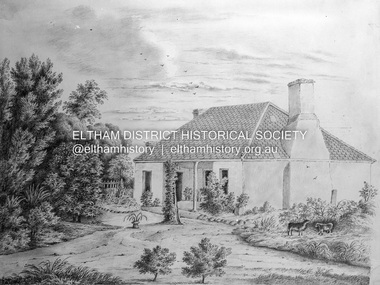 Eltham District Historical Society Inc
Negative - Photograph, Charles Bertie, Sketch; Sweeney's Cottage, Culla Hill, Eltham (n.d.), c.1905
... Hill' until his death in 1909. He had ten children; one of them, Mary, became Mrs M. Carrucan whose son, Mr John Carrucan, still lives at Eltham. ...Hill' until his death in 1909. He had ten children; one of them, Mary, became Mrs M. Carrucan whose son, Mr John Carrucan, still lives at Eltham. ...In the early 1900s, Mary Sweeney commissioned artist Charles Bertie to paint the main house at Culla Hill. He charged her 5 shillings for the picture and 18 pence for the frame She took this painting with her when she married Michael Carrucan in 1910 and it hung in the Dalton Street farmhouse for many years. At a later time (1960s), the Burstons (the then owners of Culla Hill) had a card printed from the painting. The original sketch was photographed in 1970 for reproduction in the Shire history publication Pioneers & Painters (1971). The very fragile original was kept in the Council strongroom and suffered significant damage to its edges over the years, no doubt it has also yellowed. A comparison of the original as digitised (2022) with the negative taken 50 years earlier also reveals that the left 20% of the sketch has been cut off, probably due to damage. In June 1842 Thomas Sweeney applied to the Superintendent, C.J. La Trobe, asking permission to purchase a portion of the recently surveyed ‘Parish of Nillumbik'. His request was allowed and handed to the sub-treasurer and Land Board. He paid £110 for 110 acres and called the land 'Culla Hill'. He first built a temporary house, a slab hut 12 feet by 10 feet, in which he lived with his wife, an Irish girl whom he had married in 1838. (His first wife had been drowned at Port Jackson.) Some time later he built a permanent residence on the model of a Tipperary farmhouse. It was a rectangular building of hand-made bricks and stone quarried from the Western Hill with a recessed verandah in front, and bore a slate roof. The out-buildings consisted of a detached kitchen, stable and a barn. It was in this house that succeeding generations of Sweeneys were reared. The original slab hut became a washhouse and survived till recent years. 'Culla Hill' became a social centre for the district, church services being held there on various occasions. The first wheat crop in the district was planted by Sweeney who also supplied the first grain for a mill that later was built at Eltham. He took an active interest in the development of the district. At this time travelling people--many of them runaway sailors or convicts--often passed the settlement, and some of them stayed and worked with Sweeney. A tribe of aborigines living on the river below 'Culla Hill' were apparently on good terms with Sweeney, for it is said that they helped him with the building of his house. Very little is known about the aborigines who originally lived in the Eltham district. There must have been many of them; their stone axes, grinding stones, and anvil stones have been found in the gullies around Research and canoe trees and artifacts were found on the Kangaroo Ground hills. Early settlers remembered a tribe that camped on the site of the present railway bridge at Eltham. They held corroborees there and visited settlers for hand-outs of 'flour and bacca’. There was an aboriginal reserve on the Yarra, upstream from Eltham, but most of those who had collected there later went to live on the Pound Reserve at Warrandyte, where the last aborigines in the area finally ended their days. The Pound Reserve, of 1,103 acres, was established at Pound Bend in 1841. The chief protector, George Robinson, and his four assistants, were given instructions to care for the aged and sick, to provide blankets and rations for all who lived there, to train the able-bodied men in agriculture and other trades and to find them jobs. The Yarra blacks, who later came under the protection of William Thomas, have been described as a 'fine race, well made and above the average height'. Thomas Sweeney died on 6 September 1867 and was buried in the Eltham Cemetery. To his wife Margaret and his son John, he left the entire property of 'Culla Hill'. To his other son Patrick, he left 150 acres, including a small two-roomed wooden cottage. He had five daughters: Kate and Margaret (twins) who were born in 1842, Ellen 1846, Annie 1848 and Johanna 1851. John Sweeney farmed 'Culla Hill' until his death in 1909. He had ten children; one of them, Mary, became Mrs M. Carrucan whose son, Mr John Carrucan, still lives at Eltham. 'Culla Hill' passed out of the Sweeneys possession in 1939 and was renamed by its new owners, 'Sweeneys', in memory of its pioneers. - Pioneers & Painters: One Hundred Years of Eltham and its Shire, Alan Marshall 1971, pp10-12 Original colour sketch artwork 4 x 5 inch black and white negative of original colour sketchculla hill, art, charles bertie, drawing, mary carrucan (nee sweeney), sketches, sweeney's cottage
