
Showing 356 items matching " artists' books"
-
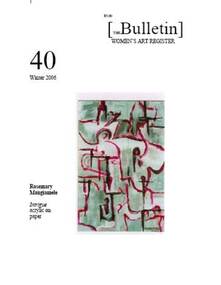 Women's Art Register
 Bulletin, Women's Art Register, Women's Art Register Bulletin number 40
... Sufferance: women’s artists’ books State Library of Queensland...Veronica Caven Aldous 5 Art among the guntrees – an unusual gallery at Tanja Kerry-Anne Cousins 6 Karen Ferguson’s Pear Tree (memento mori) Penny Peckham 7 Plus, Loris Button, Sally Miller & Maryanne Coutts Dr Nola Stratford 9 Women’s Suffrage in Victoria – Exhibition Margaret Gurney, A bare and beautiful exhibition 10 Art and Healing, paintings by Rosemary Mangiamele- Julianne Lewis 11 Sufferance: women’s artists’ books State Library of Queensland 12 Wise Reflections Dr Alison Richardson 14 Give up today… Naomie Sunner 15 Opportunities 17 Back issues 19 Membership details ...Veronica Caven Aldous Kerry-Anne Cousins Karen Ferguson Penny Peckham Loris Button Sally Miller Maryanne Coutts Dr Nola Stratford Margaret Gurney Rosemary Mangiamele Sufferance: women’s artists’ books State Library of Queensland Dr Alison Richardson Naomie Sunner 20 page Magazine photocopy in black and white with following contents where the first figure is the page number and this is followed by the article title then the author.#40 3 News from the Register 4 Unique artworks by Melbourne “re-emerging “ artist. ...20 page Magazine photocopy in black and white with following contents where the first figure is the page number and this is followed by the article title then the author.#40 3 News from the Register 4 Unique artworks by Melbourne “re-emerging “ artist. Veronica Caven Aldous 5 Art among the guntrees – an unusual gallery at Tanja Kerry-Anne Cousins 6 Karen Ferguson’s Pear Tree (memento mori) Penny Peckham 7 Plus, Loris Button, Sally Miller & Maryanne Coutts Dr Nola Stratford 9 Women’s Suffrage in Victoria – Exhibition Margaret Gurney, A bare and beautiful exhibition 10 Art and Healing, paintings by Rosemary Mangiamele- Julianne Lewis 11 Sufferance: women’s artists’ books State Library of Queensland 12 Wise Reflections Dr Alison Richardson 14 Give up today… Naomie Sunner 15 Opportunities 17 Back issues 19 Membership details veronica caven aldous, kerry-anne cousins, karen ferguson, penny peckham, loris button, sally miller, maryanne coutts, dr nola stratford, margaret gurney, rosemary mangiamele, sufferance: women’s artists’ books state library of queensland, dr alison richardson, naomie sunner -
 Bendigo Historical Society Inc.
Book - ARTISTS OF THE BENDIGO GOLDFIELDS
... ...artists...books...BENDIGO Gold mining artists books artists Bendigo artists person male female person Bendigo goldfields Bendigo goldfields Bendigo history history gold artworks place Victorian goldfields Victoria paintings book David Thomas A book titled ' Artists of the Bendigo Goldfields 1852 - 1864 ' by David Thomas. ...A book titled ' Artists of the Bendigo Goldfields 1852 - 1864 ' by David Thomas. Bendigo Art Gallery, 9 March - 9 April, 1989. Published by the Bendigo Art Gallery, 1989. 32 pgs. (ill.)David Thomasbendigo, gold mining, artists, books, artists, bendigo artists, person, male, female, person, bendigo goldfields, bendigo, goldfields, bendigo history, history, gold, artworks, place, victorian goldfields, victoria, paintings, book -
 Women's Art Register
Archive (Series) - Anne Bennett. Duplicate File 1
... ... Artists' Books...Painting Drawing Mixed Media Artists' Books Nature Animals VIC Foolscap manilla file Archive Anne Bennett. ...Catalogues, Promotional Materialpainting, drawing, mixed media, artists' books, nature, animals, vicpainting, drawing, mixed media, artists' books, nature, animals, vic -
 Mont De Lancey
Book, Vere Foster's Watercolour Series, Landseer and Animal Painting in England, c1890's
... books...Artists...Inside are guidelines for drawing and painting animals as suggested by Landseer and other well known English artists of the time with several reproductions of coloured plates as well as black and white engravings. Stephen T. Dadd gives practical hints. At the back are lists of Vere Foster's water-colour books...Painting Art Art books Artists Artworks Etchings A useful book for artists wishing to learn the techniques of drawing and painting animals by Edwin Landseer and other notable English artists in the early 1890's. ...A useful book for artists wishing to learn the techniques of drawing and painting animals by Edwin Landseer and other notable English artists in the early 1890's. The reproduced coloured plates and engravings support the text and advice.An antique green hardcover Edwin Landseer and Animal Painting in England book - Vere Foster Series with the title printed in gold lettering at the top right hand corner with a large head of a stag with black and brown lines in the bottom left hand corner.There is a thin black line surrounding the edge of front cover. The spine and back cover are plain green. There is gilt on the edges of the pages. Inside are guidelines for drawing and painting animals as suggested by Landseer and other well known English artists of the time with several reproductions of coloured plates as well as black and white engravings. Stephen T. Dadd gives practical hints. At the back are lists of Vere Foster's water-colour books and Blackie Publications.Pp 84.non-fictionA useful book for artists wishing to learn the techniques of drawing and painting animals by Edwin Landseer and other notable English artists in the early 1890's. The reproduced coloured plates and engravings support the text and advice.painting, art, art books, artists, artworks, etchings -
 Federation University Historical Collection
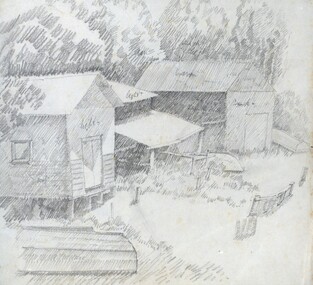
Artwork: Sketch Books, David Alexander, Dr: Ballarat, 1971 to 2012
... 52 artist's sketch books of varying sizes, spiral bound. ...Place name and those of characters from novels. 52 artist's sketch books of varying sizes, spiral bound. ...David Acrum Alexander was born c1925 and died in 2015. He practiced medicine in Ballarat but also had a keen interest in sketching and painting. The 52 books range from 1971 to 2012. They include rough outlines for characters, often with a comment re changes to be made. If a pencil sketch or water colour 52 artist's sketch books of varying sizes, spiral bound. Some are thematic in content; characters from novels, places, people Some comments are written and names of peopleDate of work written on covers and on some individual pages. Place name and those of characters from novels.david alexander, sketchbook, artists sketchbook -
 Federation University Art Collection
Work on paper - Artwork, Bruno Leti, 'These Trees' by Bruno Leti, 2015
... Known as a painter, printmaker, photographer and publisher of artists’ books, he studied at RMIT, studying Printnaking under Tate Adams, and Melbourne Teachers' College. ...Known as a painter, printmaker, photographer and publisher of artists’ books, he studied at RMIT, studying Printnaking under Tate Adams, and Melbourne Teachers' College. ...Bruno LETI (1941- ) Born Rome, Italy Arrived Australia 1950 Bruno Leti was nine years old when he came from post World War Two Italy. Known as a painter, printmaker, photographer and publisher of artists’ books, he studied at RMIT, studying Printnaking under Tate Adams, and Melbourne Teachers' College. He has taught art in Italy, Canada, USA, and Melbourne, Australia. Bruno Leti lives and works in Melbourne. This item is part of the Federation University Art Collection. The Art Collection features over 2000 works and was listed as a 'Ballarat Treasure' in 2007.This etching by Bruno Leti was exhibited as part of "Parallel Prints", a limited edition print project which presents the same exhibition simultaneously in New Zealand, at Art at Wharepuke and at a gallery in another part of the world. Eleven Australian artists were invited to join New Zealand-based printmaker Mark Graver to contribute to a portfolio that will be shown simultaneously at Art at Wharepuke, New Zealand and the Art Gallery of Ballarat, Victoria. Using the uniqueness of the reproducible print allows for the same works to be viewed at the same time on opposite sides of the world. This highlights the democratic nature of printmaking and questions the aura of the unique. Which venue is showing the 'real' work? Which the reproduction? The Australian artists showing alongside Mark Graver are James Pasakos, Bruno Leti, Martin King, David Frazer, John Neeson, Antonietta Covino-Beehre, Deborah Klein, Deborah Williams, Melissa Smith, Jodi Heffernan and Susanna Castleden. The original concept, Parallel Prints NZ-UK in 2013, included invited artists from the UK and New Zealand. It featured the work of twelve diverse artists presented in a portfolio set. Each artist contributed one work on 300 x 300 mm paper in an edition of thirty-six. Part of the concept behind the project was to donate twelve of the portfolio sets to international collections. Institutions that have accepted a portfolio include the Victoria & Albert Museum and The Ashmolean Museum in the UK, the Jinling Museum of Art in Nanjing, China, and the Whangarei Art Museum, in New Zealand. In 2015 a portfolio set was donated to the Federation University Art Collection.trees, printmaking, etching, bruno leti, artist, artwork, parallel prints, landscape -
 Merri-bek City Council
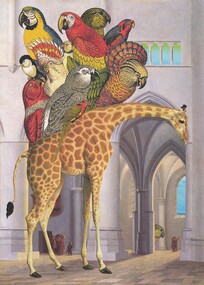
Four-colour lithographic offset print on Fabriano Artistico 300gsm traditional white hot-press paper, Gracia Haby et al, And Zarafa Kept Walking, 2013
... Gracia Haby and Louise Jennison have collaborated as ‘Gracia and Louise’ since 2002, exploring their mutual fascination with the adaptable possibilities of paper and creating works from found images to produce artists' books, prints, zines, drawings, and collages. ...Gracia Haby and Louise Jennison have collaborated as ‘Gracia and Louise’ since 2002, exploring their mutual fascination with the adaptable possibilities of paper and creating works from found images to produce artists' books, prints, zines, drawings, and collages. ...And Zarafa Kept Walking features an image of Zarafa, the first giraffe to be seen in France in the year 1826. She arrived as an exotic gift and political ploy from Muhammad Ali of Egypt to King Charles X. To the delight of many onlookers, she walked from Marseilles to Paris carrying with her perhaps a few feathered friends. She inspired tall hairstyles à la girafe, and prompted Honoré de Balzac to write a story about her. Gracia Haby and Louise Jennison have collaborated as ‘Gracia and Louise’ since 2002, exploring their mutual fascination with the adaptable possibilities of paper and creating works from found images to produce artists' books, prints, zines, drawings, and collages. -
 Merri-bek City Council
Four-colour lithographic offset print on Fabriano Artistico 300gsm traditional white hot-press paper, Gracia Haby and Louise Jennison, Turning the Tables on Alfred Court, 2013
... Gracia Haby and Louise Jennison have been creative collaborators since 1999, working together to make artist books, zines, collages, drawings, prints and stories. ...Gracia Haby and Louise Jennison have been creative collaborators since 1999, working together to make artist books, zines, collages, drawings, prints and stories. ...Gracia Haby and Louise Jennison have been creative collaborators since 1999, working together to make artist books, zines, collages, drawings, prints and stories. In this artwork, the animals have the upper hand. They are turning the tables on French acrobat, circus owner, and animal trainer, Alfred Court (1883-1977). In 1925, Court's menagerie boasted a collection of 25 lions, 8 tigers, 9 hyenas, 7 wolves, 3 cougars, 12 polar bears, 16 panthers and leopards, 5 jaguars, 2 cheetahs, and an extensive assemblage of exotic animals, including antelopes, llamas, and camels, alongside several monkeys, porcupines, and mongooses. Haby and Jennison’s collaboration explores their mutual fascination with the adaptable possibilities of paper and found images. -
 Federation University Art Collection
Sculpture (exterior), [Untitled Sculpture] by Mary Modeen, 2000, 2000
... Mary MODEEN (1953- ) Born United States of America Lives Scotland Mary Modeen is an artist/printmaker and interdisciplinary academic who also works in artist books, installations, and recently, in video and sound. ...Mary MODEEN (1953- ) Born United States of America Lives Scotland Mary Modeen is an artist/printmaker and interdisciplinary academic who also works in artist books, installations, and recently, in video and sound. ...Mary MODEEN (1953- ) Born United States of America Lives Scotland Mary Modeen is an artist/printmaker and interdisciplinary academic who also works in artist books, installations, and recently, in video and sound. She is also an academic of nearly 30 years full-time experience in higher education, residing in Scotland where she convenes the Art, Philosophy and Contemporary Practices at the Duncan of Jordanstone College of Art and Design, University of Dundee. Modeen’s research has several threads: perception as a cognitive and interpretive process, and place-based research, which tends to connect cultural values, history and embodied experience. In 2000, while a Visiting Research Fellow at the University of Ballarat (later Federation University Australia), Mary Modeen was commissioned to create a sculpture in a Public Art context for the campus. This item is part of the Federation University Art Collection. The Art Collection features over 1000 works and was listed as a 'Ballarat Treasure' in 2007.An external sculpture commissioned in a Public Art context for the Mt Helen campus Business Building (B Building) by Scottish Artist and Visiting Research Fellow, Mary Modeen. Mary Modeen's three dimensional sculptures and installations draw on her interest in "light" relating to artworks and conceptual art. The 'plugs' in the sculpture represent students, while the blue acrylic disk represents alumni, and the spread and impact of our students throughout the community. art, artwork, sculpture, mary modeen, business school art collection -
 Federation University Art Collection
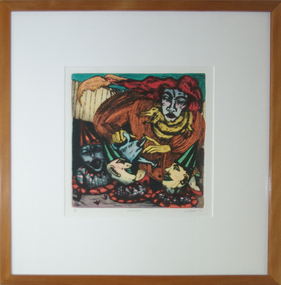
Work on paper - Artwork - Printmaking, Juli Haas, "Nutone Ball" by Juli Haas, 1992
... Juli HAAS (26 April 1952- 02 March 2014) Born Melbourne Juli HAAS (1952-2013) Born Melbourne Juli Haas mainly produced watercolours, artist’s books and limited edition prints using the printmaking technique of Drypoint. ...Juli HAAS (26 April 1952- 02 March 2014) Born Melbourne Juli HAAS (1952-2013) Born Melbourne Juli Haas mainly produced watercolours, artist’s books and limited edition prints using the printmaking technique of Drypoint. ...Juli HAAS (26 April 1952- 02 March 2014) Born Melbourne Juli HAAS (1952-2013) Born Melbourne Juli Haas mainly produced watercolours, artist’s books and limited edition prints using the printmaking technique of Drypoint. She often explores the lives of everyday people with her work often portraying the darker side of human nature in an interior world filled with fantasy and absurdity. Themes throughout her work incorporate the use of childhood memory, place and a sense of personal history. Inspiration is derived from observing her own environment, which is then developed into a portrayal of the absurdity and drama of everyday human situations. Haas applies layers of intense and vibrant colour, which also serves to reinforce the narrative element that runs through the work. The psychological drama that informs this narrative exposes the darker side of life, expressing elements of anger, violence and isolation. Juli Haas obtained the following qualifications: * 1994-95 Master of Arts (Research). Monash University, Victoria * 1989-90 Graduate Diploma of Arts (Visual Arts), Monash University, Victoria * 1987-89 Bachelor Of Arts (Visual Arts), Gippsland Institute of Advanced Education, Victoria (now Federation University Australia) * 1971-74 Fine Arts, Caulfield Institute Of Technology, Victoria. Haas exhibited in most states of Australia and participated in numerous group shows. She is represented in most major Australian collections including the National Gallery of Australia. Career highlights include winning the Sir John Sulman prize in 1995 at the Art Gallery of NSW and in 1994 and 1997 the Martin Hanson Memorial Works on Paper Prize. In 2008 her artist’s book A Wife Of Silver was acquired for the Public Art Collection of the Arts Centre Melbourne as part of the Maxwell and Merle Silver Bequest. Career highlights include winning the Sir John Sulman prize in 1995; and in 1994 and 1997 the Martin Hanson Memorial Works on Paper Prize. Framed limited etching by Julie Haas. juli haas, gippsland campus, churchill, gippsland institute of advanced education, alumni -
 Bendigo Historical Society Inc.
Document - PETER ELLIS COLLECTION: VARIOUS NOTES, 21st December, 1885
... Two sheets of paper (1 ruled with two message pad pages attached) & 1 plain) of various notes, reports and references to articles in books. Books include Artists of the Australian Goldrush, Snakes of the Whipstick - MacGillivray, The Whipstick Scrub 65 years Ago by Walter W Froggatt, Through the Whipstick Scrub, Excursion to Bendigo (Paton), Observations in the Platypus by Dr MacGillivray, A Plea for the Birds by R N Nancarrow, Snakes & Lizards Macgillivray, and The Naturals History of Leaves J B Mackay. ...BENDIGO History early bendigo Peter Ellis Collection Bgo Science Society Dr MacGillivray Huxley Nancarrow Files of the Bgo Adv Allen McCullocks Artists of the Aust Goldrush Snakes of the Whipstick von Mueller Frogatt Bgo Adv 21/12/1885 Snakes of the Bgo District Bgo School of Mines Ellez Braugh Smyth Vic Naturalist G W Knight C Daly Excursion to Bendigo The Whipstick Scrub 65 Years Ago Walter W Froggatt through the Whipstick Scrub Paton Bgo School of Mines Report 1884 Mr Nancarrow 1885 Observations in the Platypus by Dr MacGillivray A Plea for the Birds by R N Nancarrow 1889 Snakes & Lizards MacGillivray The Natural History of Leaves J B Mackay Two sheets of paper (1 ruled with two message pad pages attached) & 1 plain) of various notes, reports and references to articles in books. Books include Artists of the Australian Goldrush, Snakes of the Whipstick - MacGillivray, The Whipstick Scrub 65 years Ago by Walter W Froggatt, Through the Whipstick Scrub, Excursion to Bendigo (Paton), Observations in the Platypus by Dr MacGillivray, A Plea for the Birds by R N Nancarrow, Snakes & Lizards Macgillivray, and The Naturals History of Leaves J B Mackay. ...Two sheets of paper (1 ruled with two message pad pages attached) & 1 plain) of various notes, reports and references to articles in books. Books include Artists of the Australian Goldrush, Snakes of the Whipstick - MacGillivray, The Whipstick Scrub 65 years Ago by Walter W Froggatt, Through the Whipstick Scrub, Excursion to Bendigo (Paton), Observations in the Platypus by Dr MacGillivray, A Plea for the Birds by R N Nancarrow, Snakes & Lizards Macgillivray, and The Naturals History of Leaves J B Mackay. Report on lecture of snakes of the Bgo District Bgo Adv 21/12/1885 and Bgo School of Mines Report 1884bendigo, history, early bendigo, peter ellis collection, bgo science society, dr macgillivray, huxley, nancarrow, files of the bgo adv, allen mccullocks, artists of the aust goldrush, snakes of the whipstick, von mueller, frogatt, bgo adv 21/12/1885, snakes of the bgo district, bgo school of mines, ellez, braugh smyth, vic naturalist, g w knight, c daly, excursion to bendigo, the whipstick scrub 65 years ago , walter w froggatt, through the whipstick scrub, paton, bgo school of mines report 1884, mr nancarrow, 1885 observations in the platypus by dr macgillivray, a plea for the birds by r n nancarrow, 1889 snakes & lizards macgillivray, the natural history of leaves, j b mackay -
 Federation University Historical Collection
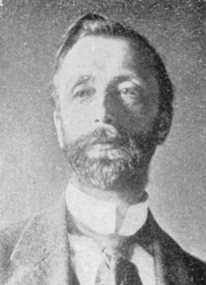
Photograph - Black and White, Ponsonby May Carew Smyth, 1906
... His meticulous mind formulated the Austral Drawing Books which provided the basis of instruction in the subject in Victoria until 1927. Although he gave his occupation as 'artist', Carew-Smyth was primarily an educationist. ...His meticulous mind formulated the Austral Drawing Books which provided the basis of instruction in the subject in Victoria until 1927. Although he gave his occupation as 'artist', Carew-Smyth was primarily an educationist. ...Ponsonby Carew Smyth, A.R.C.A. London, was Victorian Art Inspector of Technical Schools. "Ponsonby May Carew-Smyth (1860-1939), educationist, was born on 7 August 1860 at Cork, Ireland, son of Emmanuel Uniacke Smyth, gentleman, and his wife Catherine Giles, née Carew. Carew-Smyth's initial art training and teaching was at the Belfast Government School of Art and Design. In 1885 he entered the National Art Training School at South Kensington, London, where he remained as student and teacher for five years. He also taught at Rugby School, studied at the Royal School of Wood Carving and the Guild School of Handicrafts, London, and was sent by the Department of Science and Art to study art, art education and museum procedures in Paris. Testimonials to his career in England affirm his ability and dedication as an educationist and his integrity as a man. On 23 December 1890 Carew-Smyth married Marie Reynolds of Brixton; they migrated to Australia next January. In September Carew-Smyth applied from Melbourne for the position of master of the school of art and design, established under the auspices of the Ballarat Fine Art Gallery. Opening in November, the school offered day classes and a broad curriculum, and under Carew-Smyth's guidance, established a sound reputation. In November 1899 he was appointed inspector of drawing in the Department of Education. Carew-Smyth saw drawing as a crucial link between primary and technical education, insisting on it as a 'mental process quite as much as a manual'; he believed strongly in the utilitarian value of drawing to the artisan class and of art as 'craftmanship'. By his emphasis on teacher-training, by his role in the Teachers' Training College, and by his constant travels, writing and lecturing, he upgraded both the standard and importance of drawing early in the century. His meticulous mind formulated the Austral Drawing Books which provided the basis of instruction in the subject in Victoria until 1927. Although he gave his occupation as 'artist', Carew-Smyth was primarily an educationist. He was actively involved in the early years of Prahran and Swinburne Technical colleges, and especially the Working Men's College which held his interest even after his retirement. In 1906 he was appointed chairman of the Victorian State Schools' Equipment and Decoration Society, and he was important in the organization of the state schools' exhibition that year. He designed the commemorative wall plaques installed in state schools after World War I, and the art teachers' certificate. He was prominent in bringing about the 1922 Jubilee Exhibition, and the 1926 showing of work of overseas schools, and especially the 1934 Melbourne centenary 'Early Victorian Art' exhibition. In the 1930s he wrote wide-ranging, informative and sometimes humorous articles for the Argus on various aspects of the decorative arts. In mid-1936 he was acting director of the National Gallery of Victoria. To students his single-mindedness sometimes suggested sternness, but Carew-Smyth was always held in the highest regard both professionally and personally. His colleagues recalled a man of kindness, unstinting devotion to work, and humour; he was considered quite a raconteur. Survived by his wife, a son and a daughter, he died in his home at South Yarra on 9 October 1939, and was cremated." (Margot Lethlean, 'Carew-Smyth, Ponsonby May (1860–1939)', Australian Dictionary of Biography, National Centre of Biography, Australian National University, http://adb.anu.edu.au/biography/carew-smyth-ponsonby-may-5501/text9359, accessed 4 June 2013.)Image of the face and shoulders of a bearded man - Ponsonby Carew Smyth. The image was originally published from the State Schools Exhibition Catalogue, 1906. (Cat. No. 401)carew smyth, inspector, technical schools, art. -
 Federation University Historical Collection
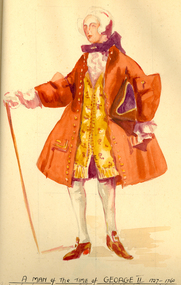
Book, Historic Ornament Parts I and II. Ballarat Technical Art School Art History Books, 1931, 1931
... Students studied the influences of history, geography, culture and climate on ornamental aesthetics, including the tools, materials and methods applied to decorative objects, interior design and architecture. ballarat school of mines ballarat technical art school art history edith lawn edith curnow val lawn val d'angri curnow lawn ornament costume. ballarat technical art school library artists workbook journal Historic Ornament University Women Ballarat School of Mines Old Girls Association Two books containing student notes and drawing relating to courses at the Ballarat techncial Art School in 1931. ...Edith CURNOW (1913–2003) Ballarat | Australia Edith Gertrude Curnow undertook Industrial Art teacher training at the Ballarat Technical Art School, with a five-year Senior Technical Scholarship, between 1926 and 1931. She taught for a time before marrying compositor James Lawn in 1937. She reportedly continued to teach at the Ballarat Technical Art School as Edith Lawn. She retired in 1972 at which time she was the Lecturer in Charge of Craft Edith Lawn was a member of inaugural Ballarat School of Mines Old Girls Association, and served as first Press Correspondent. Her daughter, Valda Lawn (later D'Angri) also attended and taught at the School. One of the subjects Curnow studied was Historic Ornament. This subject spanned time and space to inform and inspire designers. Students studied the influences of history, geography, culture and climate on ornamental aesthetics, including the tools, materials and methods applied to decorative objects, interior design and architecture.Two books containing student notes and drawing relating to courses at the Ballarat techncial Art School in 1931. The work was undertaken by Edith Curnow. .1) - Foolscap red covered book on Historic Ornament. Includes History of Ornament, Egyptian Ornament, Assyrian Ornament; Greek Ornament, Roman Ornament, Pompeian Ornament, Byzantine, Romanesque Ornament, Norman, Decorated Gothic, Perpendicular Gothic, Renaissance. .2) Green quarto book on Historic Ornament Part 2: Costume. The work includes Egyptian Costume, Greek Costume, Roman Costume, Richard I, Crusades, Edward III, Charles I, Charles II, George II.ballarat school of mines, ballarat technical art school, art history, edith lawn, edith curnow, val lawn, val d'angri, curnow, lawn, ornament, costume., ballarat technical art school library, artists workbook, journal, historic ornament, university women, ballarat school of mines old girls association -
 Flagstaff Hill Maritime Museum and Village
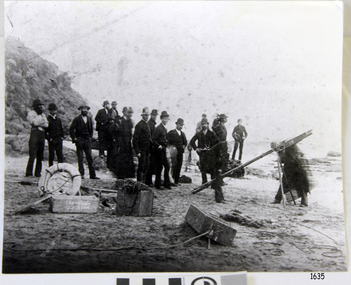
Photograph - Shipwreck rescue, c. 1890's
... artist, William Morris. Herbert had sailed from England to Australia; he was about 25 years old when he joined the Rocket Rescue Crew at Port Campbell, where he lived. His successful rocket line firing at the Fiji wreck site was noted by author Jack Loney in one of his historic shipwreck books. ...artist, William Morris. Herbert had sailed from England to Australia; he was about 25 years old when he joined the Rocket Rescue Crew at Port Campbell, where he lived. His successful rocket line firing at the Fiji wreck site was noted by author Jack Loney in one of his historic shipwreck books. ...CONTEXT – UPDATED The photograph taken on Sunday, September 6, 1891, shows the Port Campbell Rocket Rescue Crew and Equipment at Wreck Beach, Moonlight Head, preparing to save the stranded men on the wreck of the barque Fiji. The man standing in the middle, front of the photograph, facing the ocean, is Herbert Maxwell Morris, a farmer at Barruppa near Princetown, who is also a member of the Rocket Rescue Crew. The Rocket Rescue lifesaving method used an explosive rocket to shoot a light line from the shore across to the distressed vessel. The line was then secured to the ship’s mast, and a heavy, continuous line was sent out with a ‘breaches buoy’ attached (a buoy similar to the seat of a pair of trousers). The stranded seafarers would sit in the seats and be pulled along the line to safety. A lot of skill was needed to set up the line to reach its target, and the crew trained regularly to keep up their skills. The FIJI and the RESCUE: - The three-masted iron barque Fiji was built at Belfast, Ireland, in 1875 by Harland and Wolfe for a Liverpool-based shipping company. The ship departed Hamburg on May 22, 1891, bound for Melbourne under the command of Captain William Vickers with a crew of 25. The Cape Otway light was sighted on September 5, 1891. However, the bearing was different from Captain Vickers’ calculations. At about 2:30 am the next morning, the land was reported only 4-5 miles away. The captain tried to redirect the ship in the rough weather without success, and the Fiji struck rock only 300 yards (274 metres) from shore. The crew burned blue lights and fired rockets to signal distress. The lifeboats either capsized or were swamped and smashed to pieces. Two younger crewmen volunteered to swim to the shore with a line. One, a Russian named Daniel Carkland, drowned after he was swept away when the line broke. The other, Julius Gebauhr, a 17-year-old German able seaman, reached shore safely on his second attempt but had cut the line loose with his sheath-knife when it tangled in kelp. He climbed the cliffs in search of help. Later that morning, a young man named William (Willie) Ward reported that he saw the wreck of the ship close to shore near Moonlight Head from the cliffs, and the alarm for help was sent to Princetown, six miles away. At around the same time, a Mott’s party of land selectors, including F. J. Stansmore and Leslie Dickson, was travelling on horseback from Princetown towards Moonlight Head. They were near Ryans Den when they found Gebauhr in the scrub, bleeding and dressed only in a singlet, socks and a belt with his sheath-knife. They thought the man might be an escaped lunatic, due to his wild and shaggy-looking state and what seemed to be gibberish speech. After Gebauhr threw his knife away, they realised that he was speaking half-English, half-German as he talked about the wreck. They gave him food, brandy and clothing, and he was taken to a nearby guest house, Rivernook, owned by John Evans, where he was cared for. Most of the party went off to the wreck site. Stanmore and Dickson rode for help from both Port Campbell, for the two Rocket Rescue Crew buggies, and from Warrnambool, for the lifeboat. The vessel S.S. Casino sailed from Portland towards the scene. Half of the Port Campbell Rocket Crew and equipment arrived after a 25-mile journey and set up the rocket tripod on the beach below the cliffs. By this time, the weary crew of the Fiji had been clinging to the jib-boom for almost 15 hours, calling frantically for help. The Office in Charge of the Rocket Crew, W. Tregear, ordered the rocket to be fired, but the light line broke and the rocket was carried away. A second line was successfully set up by Herbert Morris. It crossed the ship and was secured. The anxious sailors tried to come ashore along the line, but some were washed off as the line sagged with too many on it at one time. Other nearly exhausted crewmen made their way through masses of seaweed and were often smothered by waves. Only 14 of the 24 who had remained on the ship made it to shore. Rocket Crew members and onlookers on the beach took turns to go into the surf and drag the half-drowned seamen to safety. These rescuers included Bill (William James) Robe, Herbert Maxwell Morris, Edwin Vinge, Hugh Cameron, Fenelon Mott, Arthur Wilkinson and Peter Carmody, who was also involved in the rescue of men from the Newfield. Arthur Wilkinson, a 29-year-old land selector from Geelong, swam out to help one of the ship’s crewmen, a carpenter named John Plunken, who was trying to swim from the ship to the shore. Two or three times, both men almost reached the shore but were washed back to the wreck, where they were both hauled back on board. Wilkinson was unconscious, possibly from hitting his head on the anchor before they were brought up. Plunken survived, but Wilkinson later died, and his body washed up the next day. The 26-year-old Bill Robe hauled out the last man; it was the captain, and he’d been tangled in the kelp. Only 20 minutes later, the wreck of the Fiji was smashed apart, and it settled in about 6 metres of water. Of the 26 men on the Fiji, 11 in total lost their lives. The remains of 7 bodies were washed onto the beach. Their coffins were made from timbers from the wrecked Fiji, and they were buried on the cliff top above the wreck. The survivors were taken to Rivernook and cared for over the next few days. Funds were raised by locals soon after the wreck in aid of the sufferers of the Fiji disaster. Captain Vickers was severely reprimanded for his mishandling of the ship. His Master's Certificate was suspended for 12 months. There was public criticism of the rescue. The important canvas ‘breeches buoy’ and heavy line for the Rocket Rescue were in the half of the rocket outfit that didn’t make it in time for the rescue, as they had been delayed at the Gellibrand River ferry. The communications to Warrnambool were down, so the call for help didn’t get through on time. The boat that was notified of the wreck failed to reach it in time. Much cargo looting occurred. One looter was caught with a small load of red and white rubber balls. Essence of peppermint mysteriously turned up in many settlers' homes. Sailcloth was salvaged and used for horse rugs and tent flies. Soon after the wreck, “Fiji tobacco” was advertised around Victoria. A Customs officer, trying to prevent some of the looting, was assaulted by looters and thrown over a cliff. He managed to cling to a bush lower down until rescued. In 1894, some coiled fencing wire was salvaged from the wreck. Hundreds of coils are still strewn over the site of the wreck, encrusted and solidified. The hull is broken, but the vessel’s iron ribs can be seen along with some of the cargo of concrete and pig iron. Captain Vickers presented Bill Robe with his silver-cased pocket watch, the only possession that he still had, as a token for having saved his life and the lives of some of the crew. Years later, Bill used the pocket watch to pay a debt, and it was handed down through that family. Seaman Julius Gebauhr later gave his knife, in its handcrafted leather sheath, to F. J. Stansmore for caring for him when he came ashore. The knife handle had a personal inscription on it. A marble headstone on the cliffs overlooking Wreck Beach pays tribute to the men who lost their lives when Fiji ran aground. The scene of the wreck is marked by the anchor from the Fiji, erected by Warrnambool skin divers in 1967. Captain Vickers’ pocket watch and Julius Gebauhr’s sheath knife are among the artefacts salvaged from the Fiji that are now part of the Fiji collection at Flagstaff Hill Maritime Village. The man identified in the photograph, Herbert Maxwell Morris, was the nephew of the Victorian era artist, William Morris. Herbert had sailed from England to Australia; he was about 25 years old when he joined the Rocket Rescue Crew at Port Campbell, where he lived. His successful rocket line firing at the Fiji wreck site was noted by author Jack Loney in one of his historic shipwreck books. Later, Morris moved from his property at Baruppa to Laver’s Hill to run a more profitable enterprise. This photograph is significant as an image of a historical event, being the willingness of local volunteers to aid in the saving of lives of stranded seafarers. It gives a clear picture of the use of Rocket Rescue Equipment in shore-to-ship rescues. Flagstaff Hill’s Fiji collection is of historical significance at a State level because of its association with the wreck Fiji, which is on the Victorian Heritage Register VHR S259. The Fiji is archaeologically significant as the wreck of a typical 19th century international sailing ship with cargo. It is educationally and recreationally significant as one of Victoria's most spectacular historic shipwreck dive sites with structural features and remains of the cargo evident. It also represents aspects of Victoria’s shipping history and its potential to interpret sub-theme 1.5 of Victoria’s Framework of Historical Themes. The Fiji collection meets the following criteria for assessment; Importance to the course, or pattern, of Victoria’s cultural history, possession of uncommon, rare or endangered aspects of Victoria’s cultural history, and potential to yield information that will contribute to an understanding of Victoria’s cultural history. Black and white photograph of the Rocket Rescue Crew from Pt Campbell on Wreck Beach, Moonlight Head, at the barque 'Fiji' wreck site. September 6, 1891.warrnambool, shipwrecked coast, flagstaff hill, flagstaff hill maritime museum, maritime museum, shipwreck coast, flagstaff hill maritime village, shipwrecked artefact, pocket watch, fob watch fiji, william vickers, william robe, bill robe, gebauhr, stansmore, carmody, wreck bay, moonlight head, fiji shipwreck 1891, rocket crew, port campbell rocket crew, lifesaving crew, photograph of rocket crew, herbert morris, warrnambool, shipwreck artefact, mott, william ward, rocket rescue, breeches buoy, rivernook guest house -
 Mission to Seafarers Victoria
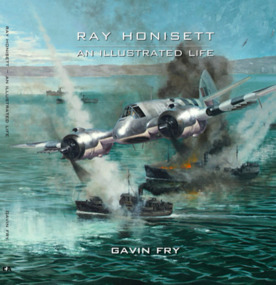
Book, Gavin Fry, Ray Honisett, An Illustrated Life, 2021
... The books contains a picture (p.60) of the painting by Ray Honisett held by the Mission to Seafarers. Gavin Fry is a writer, artist and museum professional with fifty years experience working in curatorial and management positions in Australian museums, galleries and educational institutions. ...The first comprehensive study of the life and work of Ray Honisett [1931-2019], one of the most significant illustrators of his generation and the doyen of Australian aviation art.164 pages, softcover with colour illustrations.non-fictionThe first comprehensive study of the life and work of Ray Honisett [1931-2019], one of the most significant illustrators of his generation and the doyen of Australian aviation art.ray honisett, gavin fry -
 Marysville & District Historical Society
Book - Hardcover book, Dacre Smyth et al, Waterfalls of Victoria, 1988
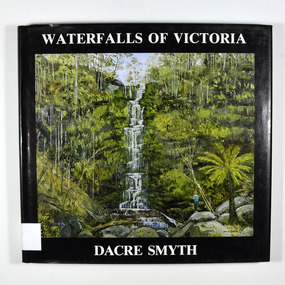
... artist and a poet. He joined the RAN in 1940, and participated in the D-Day landings and the Battle of the Coral Sea before retiring as a commodore in 1978. He served as Deputy Chairman of the Trustees of Melbourne's Shrine of Remembrance and was a Life Governor of the Shrine. He became well known after his retirement for landscape and seascape painting, publishing fourteen books ...A book of photographs of paintings of the waterfalls of Victoria painted by Dacre Smyth.A book of photographs of paintings of the waterfalls of Victoria painted by Dacre Smyth. Each painting has the name of the waterfall, the date the painting was painted and a short poem accompanying the photograph. Commodore Dacre Henry Deudraeth Smyth, AO was a senior officer in the Royal Australian Navy, an artist and a poet. He joined the RAN in 1940, and participated in the D-Day landings and the Battle of the Coral Sea before retiring as a commodore in 1978. He served as Deputy Chairman of the Trustees of Melbourne's Shrine of Remembrance and was a Life Governor of the Shrine. He became well known after his retirement for landscape and seascape painting, publishing fourteen books containing his paintings and poems. He married Jennifer Haggard in 1952, and had four daughters and a son. He died in 2008.Hardcover. Front dust cover has a photograph of a painting of Erskine Falls painted by the author. Back cover has 4 photographs of paintings of Wannon and Nigretta Falls in summer and winter. Inside cover of book, both back and front have a map of Victoria with various towns shown and the location of all the waterfalls in Victoria.Signature of the author and painter, Dacre Smyth. Artist's Acknowledgements / I am most grateful to all who helped in the production of this book:- / Alan Copeland / Allan Tuite and staff at Crystal Offset Printers for the production and printing of this book / Photography Ralph Petty / Colour Separations front & back cover Scanagraphix & Image Scan / Binding J.P. Bookbinderswaterfalls, victoria, melbourne, paintings, poem, poetry, photograph, dacre henry deudraeth smyth, royal australian navy, d-day landings, battle of the coral sea, shrine of remembrance, jennifer haggard -
Federation University Historical Collection
Book - Book - Scrapbook, Ballarat Institute of Advanced Education: Scrapbook of newspaper cutting, Book 10; September 1974 to December 1974
... The cuttings cover the period from 18 September 1974 to 18 December 1974. ballarat institute of advanced education biae employment advertisements application for enrolment outline of courses a question of management biae joins admission scheme social development council multi-storey car parks src increases fees librarianship may be added to biae studies student numbers drop -metallurgy and geology prince charles to visit ballarat ann leverett charity queen student allowance increase ballarat metallurgist gains london degree kevin foo `books from usacity child care needs govt control of media dangerous nucleus of community college in ballarat biae conference graduation at state collegebiae seminar centre for brewing men school places stress on development of individuals brother artists studied at smb zivco and domenico micich edward pope receives award Book with yellow cover, front. ...Newspaper cuttings relating to Ballarat Institute of Advanced Education. These are from various newspapers and include The Age, Ballarat Courier, The Australian, The Herald. The cuttings cover the period from 18 September 1974 to 18 December 1974. Book with yellow cover, front. Spiral bound.ballarat institute of advanced education, biae, employment advertisements, application for enrolment, outline of courses, a question of management, biae joins admission scheme, social development council, multi-storey car parks, src increases fees, librarianship may be added to biae studies, student numbers drop -metallurgy and geology, prince charles to visit ballarat, ann leverett charity queen, student allowance increase, ballarat metallurgist gains london degree, kevin foo, `books from usacity child care needs, govt control of media dangerous, nucleus of community college in ballarat, biae conference, graduation at state collegebiae seminar centre for brewing men, school places stress on development of individuals, brother artists studied at smb, zivco and domenico micich, edward pope receives award -
Federation University Historical Collection
Magazine - Booklet, Baxter & Stubbs, Print, Ballarat School of Mines Students' Magazine, 1923, 1923
... books on fine art'. "... In making this decision as to whether his tone values are correct or not the artist always studies his canvas from a distance of several yards. ...books on fine art'. "... In making this decision as to whether his tone values are correct or not the artist always studies his canvas from a distance of several yards. ...Editorial, In Memoriam: Robert James Dowling, Fumes from the Lab, A trip to America, Arts & Crafts Gossip, Echoes of the Past, Sport, The Junior Techs. Under Arts & Crafts Gossip the writer gives on overview on 'modern books on fine art'. "... In making this decision as to whether his tone values are correct or not the artist always studies his canvas from a distance of several yards. An excellent system of painting is being practised and taught by Max Meldrum. This consists of painting in the orders of the impressions. This method is fully explained in his book, and will be found invaluable by the student desiring to work on sound lines. ...Brown soft covered magazine..1) Stamped "Ballarat Technical Art School" .2) Written on front cover "Hessie Darby"ballarat school of mines, magazine, hessie darby, ballarat technical art school, e. kift, ethel kift, r. t. crosthwaite, c. mcilvena, h. finlayson, e. mckissock, f. russell, c. s. hunt, j. r. pound, a. leask, m. timmings, professor alfred mica smith, robert james dowling, e. j. mcconnon, r. g. cox, edwin a. brophy, raymond fricke, nancy humphries, r. sage, max meldrum -
 Federation University Historical Collection
Artwork - Sketch Books, Neville Bunning, 1902-1990, 1900s
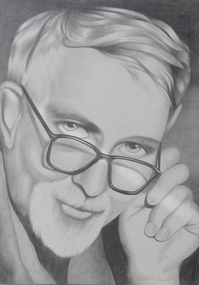
... Artist's Society, a group which sponsored art and invite guests to speak to students and the public of Ballarat. He wrote a weekly column in "The Courier", the local newspaper where he encouraged people to be more aware of the trends in art. His works were included in the 1988 Australian Bicentennial Exhibition. His sympathetic understanding of Aboriginal culture is recorded in a letter written in 1937 to the Victoria and Albert Museum. Neville Bunning continued painting during his retirement. His last major exhibition was held at the Golden Age Gallery in Ballarat in 1983. The sketch books...Artist's Society, a group which sponsored art and invite guests to speak to students and the public of Ballarat. He wrote a weekly column in "The Courier", the local newspaper where he encouraged people to be more aware of the trends in art. His works were included in the 1988 Australian Bicentennial Exhibition. His sympathetic understanding of Aboriginal culture is recorded in a letter written in 1937 to the Victoria and Albert Museum. Neville Bunning continued painting during his retirement. His last major exhibition was held at the Golden Age Gallery in Ballarat in 1983. The sketch books ...Neville Mirvane Bunning was born in Rockhampton, Queensland in 1902. He was home taught until 1916 and then was a boarder at Geelong Grammar School, Victoria until 1921. He then returned to Queensland and worked on the family property. During this time he built ceramic kilns and taught himself the required skills for ceramiic production. During the Depression he went to Sydney and set up an artist's studio. In 1934 he went to England and studied, wrote and did commission work. Achieving local success and had work acquired by the Victoria and Albert Museum. Neville returned to Australia and became a lecturer at East Sydney Technical School until the outbreak of the Second World War. He joined the RAAF. After the War he joined the staff of the Art School of the Ballarat School of Mines and Industries until his retirement in 1964. Neville Bunning formed the Ballarat Artist's Society, a group which sponsored art and invite guests to speak to students and the public of Ballarat. He wrote a weekly column in "The Courier", the local newspaper where he encouraged people to be more aware of the trends in art. His works were included in the 1988 Australian Bicentennial Exhibition. His sympathetic understanding of Aboriginal culture is recorded in a letter written in 1937 to the Victoria and Albert Museum. Neville Bunning continued painting during his retirement. His last major exhibition was held at the Golden Age Gallery in Ballarat in 1983. The sketch books cover a range of topics using pen, ink and watercolour.28 A3 sketch books, spiral boundneville bunning, queensland, geelong grammar school, ceramics, kilns, depression, sydney, england, commission work, victoria and albert museum, east sydney technical school, art school, ballarat school of mines and industries, ballarat artist's society, second world war, raaf, australian bicentennial exhibition, golden age gallery ballarat, painting -
 Federation University Historical Collection
Book - Art Book, World Wide Art Books, Important World Artists: A World of Art, Vols 2, 3, 4, 2016
... One of them is former Ballarat Technical Art School student and teacher Betty Collier (Thege). 1.) betty Collier page 27 .2) Betty Collier pages 34-35 .3 Betty Colier pages 50-51 Important World Artists: A World of Art, Vols 2, 3, 4, Book Art Book World Wide Art Books ...Three artbooks featuring numerous artists. One of them is former Ballarat Technical Art School student and teacher Betty Collier (Thege). 1.) betty Collier page 27 .2) Betty Collier pages 34-35 .3 Betty Colier pages 50-51non-fictionbetty collier, art, sarah lynch, karl weimung lu, daniel plasket, debra thompson, jeanette adams, yvette swan -
Federation University Historical Collection
Book - Art Book, World Wide Art Books, Current Masters 2: World Wide Art Books, 2010 and 2016
... artists. One of them is former Ballarat Technical Art School student and teacher Betty Collier (Thege). Collier's work is featured on pages 54-55. Current Masters 2: World Wide Art Books ...An artbook featuring numerous artists. One of them is former Ballarat Technical Art School student and teacher Betty Collier (Thege). Collier's work is featured on pages 54-55.non-fictionbetty collier, art, sculpture, frog -
 Federation University Historical Collection
Book - Art Book, International Contemporary Masters X111, 2019
... artists. One of them is former Ballarat Technical Art School student and teacher Betty Collier (Thege). Collier's work is featured on pages 65 . .1) Collier's work is featured on pages 65 . .2 ) Collier's work is featured on pages 66 . International Contemporary Masters X111 Book Art Book World Wide Art Books ...A artbooks featuring numerous artists. One of them is former Ballarat Technical Art School student and teacher Betty Collier (Thege). Collier's work is featured on pages 65 . .1) Collier's work is featured on pages 65 . .2 ) Collier's work is featured on pages 66 . non-fictionbetty collier, art, michelle purves, jillian grombeek, jean marc la roque, christine vella -
 Flagstaff Hill Maritime Museum and Village
Book - Reference Dictionary/Scientific/Technological, John Ogilvie, The Imperial Dictionary English Technological and Scientific Vol 1, 1861
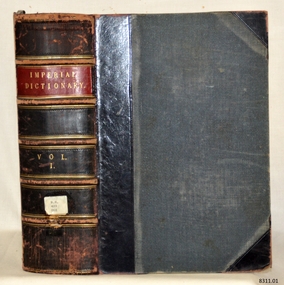
... books, delivering large works in affordable instalments to working-class and middle-class households. The dictionary proudly boasted over 2,000 finely detailed wood engravings. While many commercial encyclopedias used anonymous workshop artists...books, delivering large works in affordable instalments to working-class and middle-class households. The dictionary proudly boasted over 2,000 finely detailed wood engravings. While many commercial encyclopedias used anonymous workshop artists ...The Imperial Dictionary was a massive, progressive undertaking designed to be a bridge between a traditional language dictionary and a comprehensive technical encyclopedia. John Ogilvie built the text upon the foundation of Noah Webster’s famous American Dictionary. However, Ogilvie dramatically expanded it to include thousands of new terms born from the Industrial Revolution. It heavily prioritized the vocabulary of engineering, medicine, manufacturing, chemistry, and the arts, alongside a vast array of distinct Scottish and provincial British terms that Webster had omitted.The Imperial Dictionary English Technological and Scientific Vol 1 Author: John Ogilvie Publisher: Blackie & Son Ltd Date: 1861 Further Information: Black cloth hardcover with a brown leather spine, title lettering in gold. The spine has a Library label with an inscription.non-fictionThe Imperial Dictionary was a massive, progressive undertaking designed to be a bridge between a traditional language dictionary and a comprehensive technical encyclopedia. John Ogilvie built the text upon the foundation of Noah Webster’s famous American Dictionary. However, Ogilvie dramatically expanded it to include thousands of new terms born from the Industrial Revolution. It heavily prioritized the vocabulary of engineering, medicine, manufacturing, chemistry, and the arts, alongside a vast array of distinct Scottish and provincial British terms that Webster had omitted.flagstaff hill, warrnambool, shipwrecked coast, flagstaff hill maritime museum, maritime museum, shipwreck coast, flagstaff hill maritime village, great ocean road, book, pattison collection, warrnambool library, warrnambool mechanics’ institute, ralph eric pattison, corangamite regional library service, warrnambool city librarian, mechanics’ institute library, victorian library board, warrnambool books and records, warrnambool children’s library -
 Flagstaff Hill Maritime Museum and Village
Postcard - Picture Postcard, Louis Wain (illustrator / artist), 1880s to 1930s
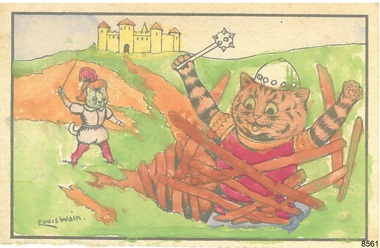
... artist...animal portraits...National Cat Club...fencing...illustrator...children's books...books. However he didn't benefit much from copyrighting his work as he sold his work to publishers together with the copyright, so reproductions of his works didn't earn him money. Wain said that he owned his career as a cat artist...Flagstaff Hill Maritime Museum and Village Warrnambool Great Ocean Road Shipwreck Coast postcard picture postcard Louis Wain fighting cats child's postcard cat artist animal portraits National Cat Club fencing illustrator children's books children's author children's illustrator watercolour cats dressed as humans cats dressed as knights popular art Victorian art Signature: "Louis Wain." ...The picture postcard is illustrated in a simple, child-like manner. It has a personal message on the back, perhaps sent by an adult called Lily to a young relative or friend. Its rough edges indicate that it may have been torn out of a book or from a sheet of cards. It is one of the hundreds of illustrations by artist Louis Wain, quoted as being "one of the most popular commercial illustrators in the history of England" (IllustrationChronicles.com). English artist Louis Wain (1860-1939) was famous for his illustrations of cats, many of which he gave human characteristics and personalities. Wain married Emily. They owned a cat called Peter who was a great comfort to Emily through her cancer illness and consequent death after only a few years of marriage. At 22 years old Wain gave up his job as a teacher to work full time as an illustrator. He was able to produce hundreds of drawing a year for journals, books, postcards and advertisements. Later he wrote and illustrated children's books. However he didn't benefit much from copyrighting his work as he sold his work to publishers together with the copyright, so reproductions of his works didn't earn him money. Wain said that he owned his career as a cat artist to Peter. Wain spent over a decade in mental asylums before his death in 1939.This picture postcard is an example of the work of Louis Wain, English artist of the 19th and early 20th century. He is famous for his drawings of cats, which he continued producing throughout his life. He is also known for producing the world's first screen cartoon cat, called "Pussyfoot". In 1972 Wain's work was presented at an exhibition in the Victorian and Albert Museum.Rectangular picture postcard printed on think cream card. Picture on postcard is outlined in black and coloured in roughly painted watercolours. The drawing has two cats dressed in armour standing and fighting in front of a turreted castle. The picture is a black framed outline. The artist's printed signature is in the bottom left corner. The artist is Louis Wain. The reverse has a vertical dividing line and a square outline for a postage stamp's location. It also has printed headings. There is a handwritten Pencil inscription. The postcard's left side and lower edge have rough uneven edges.Signature: "Louis Wain." Printed headings: "POST CARD" "THIS SPACE MAY BE USED FOR COMMUNICATION" "THE ADDRESS TO BE WRITTEN HERE" Handwritten on back: "To Dr R - - - - - - / with love / from Lilly"flagstaff hill maritime museum and village, warrnambool, great ocean road, shipwreck coast, postcard, picture postcard, louis wain, fighting cats, child's postcard, cat artist, animal portraits, national cat club, fencing, illustrator, children's books, children's author, children's illustrator, watercolour, cats dressed as humans, cats dressed as knights, popular art, victorian art -
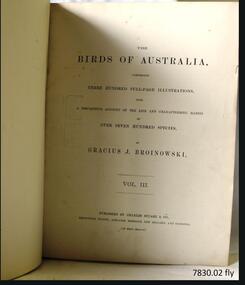 Flagstaff Hill Maritime Museum and Village
Book - Reference Book, Gracius J Broinowski, The Birds of Australia Vol 3-4, 1890-1891
... (For more information on the Pattison Collection see item 3678 Flagstaff Hill collections) https://victoriancollections.net.au/items/5580c7e72162f114d8b758db the birds of australia vol 1-2 flagstaff hill warrnambool shipwrecked coast flagstaff hill maritime museum maritime museum shipwreck coast flagstaff hill maritime village great ocean road the birds of australia gracius joseph broinowski charles stuart & co joseph archibald warrnambool public museum warrnambool museum warrnambool library warrnambool art gallery warrnambool city librarian pattison collection ralph eric pattison samuel hannaford warrnambool mechanics’ institute and free library mechanics’ institute library victorian library board warrnambool books and records rare books australian bird illustrations australian bird text australian natural history Gracius Joseph Broinowski was a Polish-born artist and ornithologist who became a key figure in documenting Australian wildlife. ...Gracius Joseph Broinowski was a Polish-born artist and ornithologist who became a key figure in documenting Australian wildlife. Born on 7 March 1837 near Wielun, Poland, he studied languages, classics, and art at Munich University before emigrating to Australia around 1857 to avoid conscription. Broinowski faced hardships in Europe and London before sailing to Australia. He initially worked rural jobs in Victoria, then joined a Melbourne publishing firm, traveling across Victoria, New South Wales, and Queensland to paint landscapes and sell art via "art unions."The Birds of Australia Vol 3-4 Author and Illustrator: Gracius J Broinowski Publisher: Charles Stuart & Co Date: 1890 - 1891non-fictionGracius Joseph Broinowski was a Polish-born artist and ornithologist who became a key figure in documenting Australian wildlife. Born on 7 March 1837 near Wielun, Poland, he studied languages, classics, and art at Munich University before emigrating to Australia around 1857 to avoid conscription. Broinowski faced hardships in Europe and London before sailing to Australia. He initially worked rural jobs in Victoria, then joined a Melbourne publishing firm, traveling across Victoria, New South Wales, and Queensland to paint landscapes and sell art via "art unions." the birds of australia vol 1-2, flagstaff hill, warrnambool, shipwrecked coast, flagstaff hill maritime museum, maritime museum, shipwreck coast, flagstaff hill maritime village, great ocean road, the birds of australia, gracius joseph broinowski, charles stuart & co, joseph archibald, warrnambool public museum, warrnambool museum, warrnambool library, warrnambool art gallery, warrnambool city librarian, pattison collection, ralph eric pattison, samuel hannaford, warrnambool mechanics’ institute and free library, mechanics’ institute library, victorian library board, warrnambool books and records, rare books, australian bird illustrations, australian bird text, australian natural history -
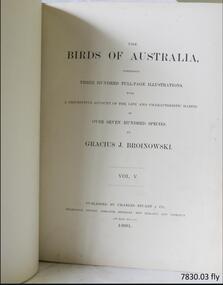 Flagstaff Hill Maritime Museum and Village
Book - Reference Book, Gracius J Broinowski, The Birds of Australia Vol 5-6, 1890-1891
... (For more information on the Pattison Collection see item 3678 Flagstaff Hill collections) https://victoriancollections.net.au/items/5580c7e72162f114d8b758db the birds of australia vol 1-2 flagstaff hill warrnambool shipwrecked coast flagstaff hill maritime museum maritime museum shipwreck coast flagstaff hill maritime village great ocean road the birds of australia gracius joseph broinowski charles stuart & co joseph archibald warrnambool public museum warrnambool museum warrnambool library warrnambool art gallery warrnambool city librarian pattison collection ralph eric pattison samuel hannaford warrnambool mechanics’ institute and free library mechanics’ institute library victorian library board warrnambool books and records rare books australian bird illustrations australian bird text australian natural history Gracius Joseph Broinowski was a Polish-born artist and ornithologist who became a key figure in documenting Australian wildlife. ...Gracius Joseph Broinowski was a Polish-born artist and ornithologist who became a key figure in documenting Australian wildlife. Born on 7 March 1837 near Wielun, Poland, he studied languages, classics, and art at Munich University before emigrating to Australia around 1857 to avoid conscription. Broinowski faced hardships in Europe and London before sailing to Australia. He initially worked rural jobs in Victoria, then joined a Melbourne publishing firm, traveling across Victoria, New South Wales, and Queensland to paint landscapes and sell art via "art unions."The Birds of Australia Vol 5-6 Author and Illustrator: Gracius J Broinowski Publisher: Charles Stuart & Co Date: 1890 - 1891non-fictionGracius Joseph Broinowski was a Polish-born artist and ornithologist who became a key figure in documenting Australian wildlife. Born on 7 March 1837 near Wielun, Poland, he studied languages, classics, and art at Munich University before emigrating to Australia around 1857 to avoid conscription. Broinowski faced hardships in Europe and London before sailing to Australia. He initially worked rural jobs in Victoria, then joined a Melbourne publishing firm, traveling across Victoria, New South Wales, and Queensland to paint landscapes and sell art via "art unions." the birds of australia vol 1-2, flagstaff hill, warrnambool, shipwrecked coast, flagstaff hill maritime museum, maritime museum, shipwreck coast, flagstaff hill maritime village, great ocean road, the birds of australia, gracius joseph broinowski, charles stuart & co, joseph archibald, warrnambool public museum, warrnambool museum, warrnambool library, warrnambool art gallery, warrnambool city librarian, pattison collection, ralph eric pattison, samuel hannaford, warrnambool mechanics’ institute and free library, mechanics’ institute library, victorian library board, warrnambool books and records, rare books, australian bird illustrations, australian bird text, australian natural history -
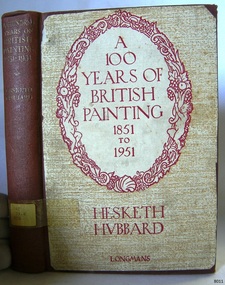 Flagstaff Hill Maritime Museum and Village
Book - Literary Work, A Hundred Years of British Painting 1851 to 1951, 1951
... He also held the position of President of the Royal Society of British Artists and was a Fellow of the Society of Antiquaries, London. The book is part of Flagstaff Hill's Pattison Collection, a large group of books and records, some of which are rare and valuable. ...He also held the position of President of the Royal Society of British Artists and was a Fellow of the Society of Antiquaries, London. The book is part of Flagstaff Hill's Pattison Collection, a large group of books and records, some of which are rare and valuable. ...The author Eric Hesketh Hubbard (1892-1957) was born in England and lived in London. He was a painter, printer, designer, writer and lecturer. He also held the position of President of the Royal Society of British Artists and was a Fellow of the Society of Antiquaries, London. The book is part of Flagstaff Hill's Pattison Collection, a large group of books and records, some of which are rare and valuable. The collection was originally owned by the Warrnambool Mechanics' Institute, which was founded in 1853 and is named after Warrnambool's Public Librarian, Ralph Pattison. The publisher firm Longmans, Green & Co. was founded in 1724 in London by Thomas Longman under the name Longman. In August of that year, he bought the two shops and goods of William Taylor and set up his publishing house there at 39 Paternoster Row. The shops were called Black Swan and Ship, and it is said that the 'ship' sign was the inspiration for Longman's Logo. After many changes of name and management, the firm was incorporated in 1926 as Longmans, Green & Co. Pty Ltd. The firm was acquired by Pearson in 1968 and was known as Pearson Longman or Pearson PLC. This item is from the ‘Pattison Collection’, a collection of books and records that was originally owned by the Warrnambool Mechanics’ Institute, which was founded in Warrnambool in 1853. By 1886 the Warrnambool Mechanics’ Institute (WMI) had grown to have a Library, Museum and Fine Arts Gallery, with a collection of “… choice productions of art, and valuable specimens in almost every branch and many wonderful national curiosities are now to be seen there, including historic relics of the town and district.” It later included a School of Design. Although it was very well patronised, the lack of financial support led the WMI in 1911 to ask the City Council to take it over. In 1935 Ralph Pattison was appointed as City Librarian to establish and organise the Warrnambool Library as it was then called. When the WMI building was pulled down in 1963 a new civic building was erected on the site and the new Warrnambool Library, on behalf of the City Council, took over all the holdings of the WMI. At this time some of the items were separated and identified as the ‘Pattison Collection’, named after Ralph Pattison. Eventually the components of the WMI were distributed from the Warrnambool Library to various places, including the Art Gallery, Historical Society and Flagstaff Hill. Later some were even distributed to other regional branches of Corangamite Regional Library and passed to and fro. It is difficult now to trace just where all of the items have ended up. The books at Flagstaff Hill Maritime Village generally display stamps and markings from Pattison as well as a variety of other institutions including the Mechanics’ Institute itself. RALPH ERIC PATTISON Ralph Eric Pattison was born in Rockhampton, Queensland, in 1891. He married Maude Swan from Warrnambool in 1920 and they set up home in Warrnambool. In 1935 Pattison accepted a position as City Librarian for the Warrnambool City Council. His huge challenge was to make a functional library within two rooms of the Mechanics’ Institute. He tirelessly cleaned, cleared and sorted a disarrayed collection of old books, jars of preserved specimens and other items reserved for exhibition in the city’s museum. He developed and updated the library with a wide variety of books for all tastes, including reference books for students; a difficult task to fulfil during the years following the Depression. He converted all of the lower area of the building into a library, reference room and reading room for members and the public. The books were sorted and stored using a cataloguing and card index system that he had developed himself. He also prepared the upper floor of the building and established the Art Gallery and later the Museum, a place to exhibit the many old relics that had been stored for years for this purpose. One of the treasures he found was a beautiful ancient clock, which he repaired, restored and enjoyed using in his office during the years of his service there. Ralph Pattison was described as “a meticulous gentleman whose punctuality, floorless courtesy and distinctive neat dress were hallmarks of his character, and ‘his’ clock controlled his daily routine, and his opening and closing of the library’s large heavy doors to the minute.” Pattison took leave during 1942 to 1945 to serve in the Royal Australian Navy, Volunteer Reserve as Lieutenant. A few years later he converted one of the Museum’s rooms into a Children’s Library, stocking it with suitable books for the younger generation. This was an instant success. In the 1950’s he had the honour of being appointed to the Victorian Library Board and received more inspiration from the monthly conferences in Melbourne. He was sadly retired in 1959 after over 23 years of service, due to the fact that he had gone over the working age of council officers. However he continued to take a very keen interest in the continual development of the Library until his death in 1969. The book is important for its connection with the London publisher Longmans, Green & Co. The firm has been established for over two centuries and is renowned for publishing encyclopedias, dictionaries, books on English grammar, textbooks, poetry, reference books, novels, magazines and more. The book has additional importance for its connection to the Pattison Collection, which, along with other items at Flagstaff Hill Maritime Village, was originally part of the Warrnambool Mechanics' Institutes’ Collection. The Warrnambool Mechanics’ Institute book collection has historical and social significance for its strong association with the Mechanics Institute movement and its important role in people's intellectual, cultural and social development throughout the latter part of the nineteenth century and the early twentieth century. The collection of books is a rare example of an early lending library and its significance is enhanced by the survival of an original collection of many volumes. The Warrnambool Mechanics' Institute’s publication collection is of both local and state significance.A Hundred Years of British Painting 1851 to 1951 Hesketh Hubbard; President of the Royal Society of British Artists: Fellow of the Society of Antiquaries, London Author: Hesketh Hubbard Publisher: Longmans Green & Co Date: 1951 Purple cloth hardcover book with pasted jacket showing an oval design on the front cover. The book title has used either the word 'one hundred' or the numeral '100'. The fly page has a logo; a cartouche shape surrounding a sailing ship above the number 1724. This book is part of the Pattison Collection.Label on spine: "PAT 759.2 HUB" Sticker on pastedown front endpaper: "Warrnambool Public Library" covered by a sticker "Corangamite Regional Library Service" Stamp on front loose endpaper: "Corangamite Regional Library Service" Fly has a logo: "[cartouche shape] enclosing a sailing ship above "1724" "warrnambool, shipwrecked-coast, flagstaff-hill, flagstaff-hill-maritime-museum, maritime-museum, shipwreck-coast, flagstaff-hill-maritime-village, shipwrecked-artefact, book, pattison collection, warrnambool library, warrnambool mechanics’ institute, ralph eric pattison, corangamite regional library service, warrnambool city librarian, mechanics’ institute library, great ocean road, hesketh hubbard, a hundred years of british painting, a 100 years of british painting, longmans green & co, british painting, british art, hesketh hvbbard, 1951, mid-20th century -
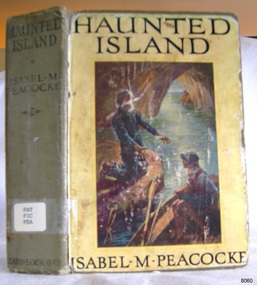 Flagstaff Hill Maritime Museum and Village
Book, Haunted Island
... His aim was to foster portraiture, as well as support artists, and perpetuate the memory of great Australians. warrnambool shipwrecked-coast flagstaff-hill flagstaff-hill-maritime-museum maritime-museum shipwreck-coast flagstaff-hill-maritime-village shipwrecked-artefact book pattison collection warrnambool library warrnambool mechanics’ institute ralph eric pattison corangamite regional library service warrnambool city librarian mechanics’ institute library victorian library board warrnambool books and records warrnambool children’s library great ocean road Haunted Island Isabel Maude Peacocke Label on spine cover with typed text PAT FIC PEA Pastedown front endpaper has sticker from Warrnambool Children’s Library covered by a sticker from Corangamite Regional Library Service Front loose endpaper has a stamp from Corangamite Regional Library Service Haunted Island Author: Isabel Maude Peacocke Publisher: Ward Lock & Co Date: 1930 Haunted Island Book ...This item is from the ‘Pattison Collection’, a collection of books and records that was originally owned by the Warrnambool Mechanics’ Institute, which was founded in Warrnambool in 1853. By 1886 the Warrnambool Mechanics’ Institute (WMI) had grown to have a Library, Museum and Fine Arts Gallery, with a collection of “… choice productions of art, and valuable specimens in almost every branch and many wonderful national curiosities are now to be seen there, including historic relics of the town and district.” It later included a School of Design. Although it was very well patronised, the lack of financial support led the WMI in 1911 to ask the City Council to take it over. In 1935 Ralph Pattison was appointed as City Librarian to establish and organise the Warrnambool Library as it was then called. When the WMI building was pulled down in 1963 a new civic building was erected on the site and the new Warrnambool Library, on behalf of the City Council, took over all the holdings of the WMI. At this time some of the items were separated and identified as the ‘Pattison Collection’, named after Ralph Pattison. Eventually the components of the WMI were distributed from the Warrnambool Library to various places, including the Art Gallery, Historical Society and Flagstaff Hill. Later some were even distributed to other regional branches of Corangamite Regional Library and passed to and fro. It is difficult now to trace just where all of the items have ended up. The books at Flagstaff Hill Maritime Village generally display stamps and markings from Pattison as well as a variety of other institutions including the Mechanics’ Institute itself. RALPH ERIC PATTISON Ralph Eric Pattison was born in Rockhampton, Queensland, in 1891. He married Maude Swan from Warrnambool in 1920 and they set up home in Warrnambool. In 1935 Pattison accepted a position as City Librarian for the Warrnambool City Council. His huge challenge was to make a functional library within two rooms of the Mechanics’ Institute. He tirelessly cleaned, cleared and sorted a disarrayed collection of old books, jars of preserved specimens and other items reserved for exhibition in the city’s museum. He developed and updated the library with a wide variety of books for all tastes, including reference books for students; a difficult task to fulfil during the years following the Depression. He converted all of the lower area of the building into a library, reference room and reading room for members and the public. The books were sorted and stored using a cataloguing and card index system that he had developed himself. He also prepared the upper floor of the building and established the Art Gallery and later the Museum, a place to exhibit the many old relics that had been stored for years for this purpose. One of the treasures he found was a beautiful ancient clock, which he repaired, restored and enjoyed using in his office during the years of his service there. Ralph Pattison was described as “a meticulous gentleman whose punctuality, floorless courtesy and distinctive neat dress were hallmarks of his character, and ‘his’ clock controlled his daily routine, and his opening and closing of the library’s large heavy doors to the minute.” Pattison took leave during 1942 to 1945 to serve in the Royal Australian Navy, Volunteer Reserve as Lieutenant. A few years later he converted one of the Museum’s rooms into a Children’s Library, stocking it with suitable books for the younger generation. This was an instant success. In the 1950’s he had the honour of being appointed to the Victorian Library Board and received more inspiration from the monthly conferences in Melbourne. He was sadly retired in 1959 after over 23 years of service, due to the fact that he had gone over the working age of council officers. However he continued to take a very keen interest in the continual development of the Library until his death in 1969. WARRNAMBOOL PUBLIC LIBRARY The Warrnambool Mechanics’ Institute (WMI) was formed by a voluntary community group in 1863, within six years of Warrnambool’s beginnings, and its Reading Room opened in 1854. The WMI operated until 1963, at which time it was one of the oldest Mechanics’ Institutes in Victoria. Mechanics’ Institutes offered important services to the public including libraries, reading rooms and places to display and store collections of all sorts such as curiosities and local historical relics. In 1886 a Museum and Fine Arts Gallery were added to the WMI and by the beginning of the 20th century there was also a billiards room and a School of Art. By this time all Mechanics’ Institutes in country Victoria had museums attached. Over the years the Warrnambool Mechanics’ Institute Library was also known as the Warrnambool Public Library the Warrnambool Library and the Free Library. Early funding from the government was for the “Free Library”. The inscription in a book “Science of Man” was for the “Warrnambool Public Library”, donated by Joseph Archibald in 1899. Another inscription in the book “Catalogue of Plants Under Cultivation in the Melbourne Botanic Gardens 1 & 2, 1883” was presented to the “Warrnambool Library” and signed by the author W.R. Guilfoyle. In 1903 the Warrnambool Public Library decided to add a Juvenile Department to library and stock it with hundreds of books suitable for youth. In 1905 the Public Library committee decided to update the collection of books and added 100 new novels plus arrangements for the latest novels to be included as soon as they were available in Victoria. In July 1911 the Warrnambool Council took over the management of the Public Library, Art Gallery, Museum and Mechanics’ Institute and planned to double the size of the then-current building. In 1953, when Mr. R. Pattison was Public Librarian, the Warrnambool Public Library’s senior section 10,000 of the 13,000 books were fiction. The children’s section offered an additional 3,400 books. The library had the equivalent of one book per head of population and served around 33 percent of the reading population. The collection of books was made up of around 60 percent reference and 40 percent fiction. The library was lending 400 books per day. In 1963 the Warrnambool City Council allocated the site of the Mechanics’ Institute building, which included the Public Library, Museum and Art Gallery, for the new Municipal Offices and the Collections were dispersed until 1971. The Warrnambool Library took over the Mechanics’ Institute Library’s holdings on behalf of the Warrnambool City Council. Since the closure of the Warrnambool Mechanics’ Institute the exact location and composition of the original WMI books and items has become unclear. Other materials have been added to the collection, including items from Terang MI, Warrnambool Court House and Customs House. Many of the books have been identified as the Pattison Collection, named after the Librarian who catalogued and numbered the books during his time as Warrnambool Public Librarian in the time before the Mechanics’ Institute closed. It seems that when Warrnambool became part of the Corangamite Regional Library some of the books and materials went to its head office in Colac and then back to Warrnambool where they were stored at the Art Gallery for quite some time. Some then went to the Warrnambool Historical Society, some stayed at the Art Gallery and some were moved to Flagstaff Hill Maritime Village. The various stamps and labels on the books held at Flagstaff Hill show the variety of the collection’s distribution and origin. The books in the collection at Flagstaff Hill Maritime Village date from the 1850’s to the late 1950’s and include rare and valuable volumes. Many of the books are part of the “Pattison Collection” after the Warrnambool’s Public Librarian, Mr. R. Pattison. The Pattison Collection, along with other items at Flagstaff Hill Maritime Village, was originally part of the Warrnambool Mechanics' Institute’s collection. The Warrnambool Mechanics’ Institute Collection is primarily significant in its totality, rather than for the individual objects it contains. Its contents are highly representative of the development of Mechanics' Institute libraries across Australia, particularly Victoria. A diversity of publications and themes has been amassed, and these provide clues to our understanding of the nature of and changes in the reading habits of Victorians from the 1850s to the middle of the 20th century. The collection also highlights the Warrnambool community’s commitment to the Mechanics’ Institute, reading, literacy and learning in the regions, and proves that access to knowledge was not impeded by distance. These items help to provide a more complete picture of our community’s ideals and aspirations. The Warrnambool Mechanics Institute book collection has historical and social significance for its strong association with the Mechanics Institute movement and the important role it played in the intellectual, cultural and social development of people throughout the latter part of the nineteenth century and the early twentieth century. The collection of books is a rare example of an early lending library and its significance is enhanced by the survival of an original collection of many volumes. The Warrnambool Mechanics' Institute’s publication collection is of both local and state significance. The Warrnambool Mechanics' Institute Collection is primarily significant in its totality, rather than for the individual objects it contains. Its contents are highly representative of the development of Mechanics' Institute libraries across Australia, particularly Victoria. A diversity of publications and themes has been amassed, and these provide clues to our understanding of the nature of and changes in the reading habits of Victorians from the 1850s to the middle of the 20th century. The collection also highlights the Warrnambool community’s commitment to the Mechanics’ Institute, and to reading, literacy and learning in the regions, and proves that access to knowledge was not impeded by distance. These items help to provide a more complete picture of our community’s ideals and aspirations. As with many Mechanics' Institutes in Australia, the one which operated in Warrnambool was established and overseen for many years by key individuals associated with the development of the city itself. The WMI publication collection is historically significant because of its association with local people, places and the key historical themes in the development of Warrnambool of rural development, industry, farming, education, and community. The collection documents and illustrates the changing interests, focus and tastes of Victorians, especially those in regional cities. Generally the individual items in the collection are not particularly rare, as examples of all probably exist in other public collections in Victoria. It is primarily because there are so very few surviving Mechanics' Institute collections in Victoria, which lends this overall collection its significance. Many items in the WMI Collection have the potential to support further research, both as individual objects and through the collection in its entirety. This material is significant for its ability to assist in the interpretation of the history of the area and adds to the general understanding of the development of the township. Many components of the WMI publication collection complement and reinforce the Flagstaff Hill Maritime Museum Collection, the Warrnambool Art Gallery Collection, and that in the Warrnambool Historical Society, and also contribute to a clearer understanding of the original Warrnambool Mechanics' Institute collections. This will greatly enhance the appreciation of the few surviving Mechanics' Institute collections across Victoria, and also in New South Wales. The similarities and differences between the small number of collections that have survived can provide further insights into how the people of Victoria in general, and Warrnambool in particular, constructed a civic culture of adult learning to foster an informed citizenry. The Warrnambool Mechanics' Institute publication collection is of both local and state significance. (This Statement of Significance is quoted from the Significance Assessment : Warrnambool Mechanics’ Institute Book Collection at Flagstaff Hill Maritime Museum, February 2009, by Annette Welkamp, Cultural Connections, for Delise Oldfied, FHMV) References Juvenile Department in Warrnambool Public Library In August 1903 The Age newspaper reported in its Warrnambool news section that “With the object of discouraging boys from reading literature of the “penny dreadful” class, the committee of the local public library has decided to open a juvenile department and to stock it with hundreds of suitable books attractive to the youthful mind.” 100 new novels added to Warrnambool Public Library Shelves In November 1905 The Argue newspaper’s Warrnambool news section announced “The committee of the Public Library is bringing the collection of books more up to date. It has recently added 100 new novels to the shelves, and arrangements have been made for a supply of the latest novels immediately they arrive in the state.” Warrnambool Town Council takes over Mechanics’ Institute, Art Gallery, Public Library, Museum – and will double the building’s size In 1912 The Age reported in its Warrnambool news section “Considerable improvements are being effected by the town council in the most picturesque part of Liebig Street. Between the fire brigade station and the mechanics’ institute and art gallery a vacant block of land is being transformed a garden for carpet bedding and flowering plants. The council, which recently took over the control of the art gallery, public library, museum and mechanics’ institute, is doubling the size of the substantial stone building containing these institutions. The new building will contain a supper room for use in conjunction with functions in the town hall, adjoining, and a new reading room.” Mr Pattison, Public Librarian, says Library has a book per head of population In 1953 The Age reported an interview with the Public Librarian, Mr. R. Pattison, who said “Warrnambool has an insatiable thirst for reading. And its reading recipe contains a strong dash of fiction – 73 percent of it. Fiction makes up 10,000 of the 13,000 books in the senior section of the public library. That works out at a book per head of population. Warrnambool today is really book minded. This city has an almost insatiable thirst for knowledge as well as fiction. We’re lending 400 books a day. We supply 33 percent of the reading population of Warrnambool.” The reporter goes on to say “Warrnambool Public Library also has an ultra-modern children’s section of 3,400 books, open to every boy and girl attending school in Warrnambool. Mr Pattison hopes to show travel-talk films and install a radiogram in the children’s section “later on”. But it won’t disturb adult reading next door because the junior section is sound proof. “ Mechanics’ Institutes and Museums Mechanics’ Institutes were important sites for collecting in country Victoria … Warrnambool … all had museums attached to Mechanics’ Institutes before the end of the twentieth century” Warrnambool Mechanics’ Institute Ms Tierney said FHMV holds the collection of the Warrnambool Mechanics’ Institute in three different locations on its site. “The Mechanics’ Institute opened in 1871, was demolished in the 1960s and was one of the oldest in Victoria. “FHMV intends to create a new storage area and bring the collection together in one place which will greatly facilitate access and research. “The collection consists of books and archives dating from the 1850s to 1959s. “Some of the books are rare and valuable but it is unclear as to their relevance to the history of Warrnambool or Victoria,” Ms Tierney said. Warrnambool TAFE History South West TAFE has a long and proud history of providing technical and specialist education, with links back to the formation of the Mechanic’s Institute in 1853. Warrnambool Art Gallery’s History The Warrnambool Art Gallery began in 1886 when retired police officer Joseph Archibald opened its doors in a building behind the mechanics institute in Liebig Street. The Gallery began with an eclectic mix of artworks and museum curios. Before long Archibald mobilised public support and paid for a new gallery annex. Loans and grants allowed the Gallery collection to grow with significant early acquisitions by French, German, and Belgian artists, which were less expensive than British works. Despite its enthusiastic start the economic downturn of the 1890s brought the Collection to a halt. In 1910 the Council took control of the Mechanics Institute and ran the Gallery there until 1963 when the building was allocated for municipal offices. The Collection was dispersed on loan to galleries in Shepparton and Hamilton and not reunited until 1971. In 1986 the Gallery’s Centenary year, a permanent home was built next to the ‘Civic Green’ and named in memory of one its champions Sir Fletcher Jones O.B.E. 2016 Warrnibald Entries Joseph Archibald established the Warrnambool Museum and Art Gallery in 1886 while his son Jules Francois Archibald founded the Archibald Prize through his bequest of 1919. His aim was to foster portraiture, as well as support artists, and perpetuate the memory of great Australians. Haunted Island Author: Isabel Maude Peacocke Publisher: Ward Lock & Co Date: 1930Label on spine cover with typed text PAT FIC PEA Pastedown front endpaper has sticker from Warrnambool Children’s Library covered by a sticker from Corangamite Regional Library Service Front loose endpaper has a stamp from Corangamite Regional Library Service warrnambool, shipwrecked-coast, flagstaff-hill, flagstaff-hill-maritime-museum, maritime-museum, shipwreck-coast, flagstaff-hill-maritime-village, shipwrecked-artefact, book, pattison collection, warrnambool library, warrnambool mechanics’ institute, ralph eric pattison, corangamite regional library service, warrnambool city librarian, mechanics’ institute library, victorian library board, warrnambool books and records, warrnambool children’s library, great ocean road, haunted island, isabel maude peacocke -
 Flagstaff Hill Maritime Museum and Village
Book, Essays by Oscar Wilde
... His aim was to foster portraiture, as well as support artists, and perpetuate the memory of great Australians. warrnambool shipwrecked-coast flagstaff-hill flagstaff-hill-maritime-museum maritime-museum shipwreck-coast flagstaff-hill-maritime-village shipwrecked-artefact book pattison collection warrnambool library warrnambool mechanics’ institute ralph eric pattison corangamite regional library service warrnambool city librarian mechanics’ institute library victorian library board warrnambool books and records warrnambool children’s library great ocean road Essays by Oscar Wilde Intentions The Portait of Mr. ...This item is from the ‘Pattison Collection’, a collection of books and records that was originally owned by the Warrnambool Mechanics’ Institute, which was founded in Warrnambool in 1853. By 1886 the Warrnambool Mechanics’ Institute (WMI) had grown to have a Library, Museum and Fine Arts Gallery, with a collection of “… choice productions of art, and valuable specimens in almost every branch and many wonderful national curiosities are now to be seen there, including historic relics of the town and district.” It later included a School of Design. Although it was very well patronised, the lack of financial support led the WMI in 1911 to ask the City Council to take it over. In 1935 Ralph Pattison was appointed as City Librarian to establish and organise the Warrnambool Library as it was then called. When the WMI building was pulled down in 1963 a new civic building was erected on the site and the new Warrnambool Library, on behalf of the City Council, took over all the holdings of the WMI. At this time some of the items were separated and identified as the ‘Pattison Collection’, named after Ralph Pattison. Eventually the components of the WMI were distributed from the Warrnambool Library to various places, including the Art Gallery, Historical Society and Flagstaff Hill. Later some were even distributed to other regional branches of Corangamite Regional Library and passed to and fro. It is difficult now to trace just where all of the items have ended up. The books at Flagstaff Hill Maritime Village generally display stamps and markings from Pattison as well as a variety of other institutions including the Mechanics’ Institute itself. RALPH ERIC PATTISON Ralph Eric Pattison was born in Rockhampton, Queensland, in 1891. He married Maude Swan from Warrnambool in 1920 and they set up home in Warrnambool. In 1935 Pattison accepted a position as City Librarian for the Warrnambool City Council. His huge challenge was to make a functional library within two rooms of the Mechanics’ Institute. He tirelessly cleaned, cleared and sorted a disarrayed collection of old books, jars of preserved specimens and other items reserved for exhibition in the city’s museum. He developed and updated the library with a wide variety of books for all tastes, including reference books for students; a difficult task to fulfil during the years following the Depression. He converted all of the lower area of the building into a library, reference room and reading room for members and the public. The books were sorted and stored using a cataloguing and card index system that he had developed himself. He also prepared the upper floor of the building and established the Art Gallery and later the Museum, a place to exhibit the many old relics that had been stored for years for this purpose. One of the treasures he found was a beautiful ancient clock, which he repaired, restored and enjoyed using in his office during the years of his service there. Ralph Pattison was described as “a meticulous gentleman whose punctuality, floorless courtesy and distinctive neat dress were hallmarks of his character, and ‘his’ clock controlled his daily routine, and his opening and closing of the library’s large heavy doors to the minute.” Pattison took leave during 1942 to 1945 to serve in the Royal Australian Navy, Volunteer Reserve as Lieutenant. A few years later he converted one of the Museum’s rooms into a Children’s Library, stocking it with suitable books for the younger generation. This was an instant success. In the 1950’s he had the honour of being appointed to the Victorian Library Board and received more inspiration from the monthly conferences in Melbourne. He was sadly retired in 1959 after over 23 years of service, due to the fact that he had gone over the working age of council officers. However he continued to take a very keen interest in the continual development of the Library until his death in 1969. WARRNAMBOOL PUBLIC LIBRARY The Warrnambool Mechanics’ Institute (WMI) was formed by a voluntary community group in 1863, within six years of Warrnambool’s beginnings, and its Reading Room opened in 1854. The WMI operated until 1963, at which time it was one of the oldest Mechanics’ Institutes in Victoria. Mechanics’ Institutes offered important services to the public including libraries, reading rooms and places to display and store collections of all sorts such as curiosities and local historical relics. In 1886 a Museum and Fine Arts Gallery were added to the WMI and by the beginning of the 20th century there was also a billiards room and a School of Art. By this time all Mechanics’ Institutes in country Victoria had museums attached. Over the years the Warrnambool Mechanics’ Institute Library was also known as the Warrnambool Public Library the Warrnambool Library and the Free Library. Early funding from the government was for the “Free Library”. The inscription in a book “Science of Man” was for the “Warrnambool Public Library”, donated by Joseph Archibald in 1899. Another inscription in the book “Catalogue of Plants Under Cultivation in the Melbourne Botanic Gardens 1 & 2, 1883” was presented to the “Warrnambool Library” and signed by the author W.R. Guilfoyle. In 1903 the Warrnambool Public Library decided to add a Juvenile Department to library and stock it with hundreds of books suitable for youth. In 1905 the Public Library committee decided to update the collection of books and added 100 new novels plus arrangements for the latest novels to be included as soon as they were available in Victoria. In July 1911 the Warrnambool Council took over the management of the Public Library, Art Gallery, Museum and Mechanics’ Institute and planned to double the size of the then-current building. In 1953, when Mr. R. Pattison was Public Librarian, the Warrnambool Public Library’s senior section 10,000 of the 13,000 books were fiction. The children’s section offered an additional 3,400 books. The library had the equivalent of one book per head of population and served around 33 percent of the reading population. The collection of books was made up of around 60 percent reference and 40 percent fiction. The library was lending 400 books per day. In 1963 the Warrnambool City Council allocated the site of the Mechanics’ Institute building, which included the Public Library, Museum and Art Gallery, for the new Municipal Offices and the Collections were dispersed until 1971. The Warrnambool Library took over the Mechanics’ Institute Library’s holdings on behalf of the Warrnambool City Council. Since the closure of the Warrnambool Mechanics’ Institute the exact location and composition of the original WMI books and items has become unclear. Other materials have been added to the collection, including items from Terang MI, Warrnambool Court House and Customs House. Many of the books have been identified as the Pattison Collection, named after the Librarian who catalogued and numbered the books during his time as Warrnambool Public Librarian in the time before the Mechanics’ Institute closed. It seems that when Warrnambool became part of the Corangamite Regional Library some of the books and materials went to its head office in Colac and then back to Warrnambool where they were stored at the Art Gallery for quite some time. Some then went to the Warrnambool Historical Society, some stayed at the Art Gallery and some were moved to Flagstaff Hill Maritime Village. The various stamps and labels on the books held at Flagstaff Hill show the variety of the collection’s distribution and origin. The books in the collection at Flagstaff Hill Maritime Village date from the 1850’s to the late 1950’s and include rare and valuable volumes. Many of the books are part of the “Pattison Collection” after the Warrnambool’s Public Librarian, Mr. R. Pattison The Pattison Collection, along with other items at Flagstaff Hill Maritime Village, was originally part of the Warrnambool Mechanics' Institute’s collection. The Warrnambool Mechanics’ Institute Collection is primarily significant in its totality, rather than for the individual objects it contains. Its contents are highly representative of the development of Mechanics' Institute libraries across Australia, particularly Victoria. A diversity of publications and themes has been amassed, and these provide clues to our understanding of the nature of and changes in the reading habits of Victorians from the 1850s to the middle of the 20th century. The collection also highlights the Warrnambool community’s commitment to the Mechanics’ Institute, reading, literacy and learning in the regions, and proves that access to knowledge was not impeded by distance. These items help to provide a more complete picture of our community’s ideals and aspirations. The Warrnambool Mechanics Institute book collection has historical and social significance for its strong association with the Mechanics Institute movement and the important role it played in the intellectual, cultural and social development of people throughout the latter part of the nineteenth century and the early twentieth century. The collection of books is a rare example of an early lending library and its significance is enhanced by the survival of an original collection of many volumes. The Warrnambool Mechanics' Institute’s publication collection is of both local and state significance. The Warrnambool Mechanics' Institute Collection is primarily significant in its totality, rather than for the individual objects it contains. Its contents are highly representative of the development of Mechanics' Institute libraries across Australia, particularly Victoria. A diversity of publications and themes has been amassed, and these provide clues to our understanding of the nature of and changes in the reading habits of Victorians from the 1850s to the middle of the 20th century. The collection also highlights the Warrnambool community’s commitment to the Mechanics’ Institute, and to reading, literacy and learning in the regions, and proves that access to knowledge was not impeded by distance. These items help to provide a more complete picture of our community’s ideals and aspirations. As with many Mechanics' Institutes in Australia, the one which operated in Warrnambool was established and overseen for many years by key individuals associated with the development of the city itself. The WMI publication collection is historically significant because of its association with local people, places and the key historical themes in the development of Warrnambool of rural development, industry, farming, education, and community. The collection documents and illustrates the changing interests, focus and tastes of Victorians, especially those in regional cities. Generally the individual items in the collection are not particularly rare, as examples of all probably exist in other public collections in Victoria. It is primarily because there are so very few surviving Mechanics' Institute collections in Victoria, which lends this overall collection its significance. Many items in the WMI Collection have the potential to support further research, both as individual objects and through the collection in its entirety. This material is significant for its ability to assist in the interpretation of the history of the area and adds to the general understanding of the development of the township. Many components of the WMI publication collection complement and reinforce the Flagstaff Hill Maritime Museum Collection, the Warrnambool Art Gallery Collection, and that in the Warrnambool Historical Society, and also contribute to a clearer understanding of the original Warrnambool Mechanics' Institute collections. This will greatly enhance the appreciation of the few surviving Mechanics' Institute collections across Victoria, and also in New South Wales. The similarities and differences between the small number of collections that have survived can provide further insights into how the people of Victoria in general, and Warrnambool in particular, constructed a civic culture of adult learning to foster an informed citizenry. The Warrnambool Mechanics' Institute publication collection is of both local and state significance. (This Statement of Significance is quoted from the Significance Assessment : Warrnambool Mechanics’ Institute Book Collection at Flagstaff Hill Maritime Museum, February 2009, by Annette Welkamp, Cultural Connections, for Delise Oldfied, FHMV) References Juvenile Department in Warrnambool Public Library In August 1903 The Age newspaper reported in its Warrnambool news section that “With the object of discouraging boys from reading literature of the “penny dreadful” class, the committee of the local public library has decided to open a juvenile department and to stock it with hundreds of suitable books attractive to the youthful mind.” 100 new novels added to Warrnambool Public Library Shelves In November 1905 The Argue newspaper’s Warrnambool news section announced “The committee of the Public Library is bringing the collection of books more up to date. It has recently added 100 new novels to the shelves, and arrangements have been made for a supply of the latest novels immediately they arrive in the state.” Warrnambool Town Council takes over Mechanics’ Institute, Art Gallery, Public Library, Museum – and will double the building’s size In 1912 The Age reported in its Warrnambool news section “Considerable improvements are being effected by the town council in the most picturesque part of Liebig Street. Between the fire brigade station and the mechanics’ institute and art gallery a vacant block of land is being transformed a garden for carpet bedding and flowering plants. The council, which recently took over the control of the art gallery, public library, museum and mechanics’ institute, is doubling the size of the substantial stone building containing these institutions. The new building will contain a supper room for use in conjunction with functions in the town hall, adjoining, and a new reading room.” Mr Pattison, Public Librarian, says Library has a book per head of population In 1953 The Age reported an interview with the Public Librarian, Mr. R. Pattison, who said “Warrnambool has an insatiable thirst for reading. And its reading recipe contains a strong dash of fiction – 73 percent of it. Fiction makes up 10,000 of the 13,000 books in the senior section of the public library. That works out at a book per head of population. Warrnambool today is really book minded. This city has an almost insatiable thirst for knowledge as well as fiction. We’re lending 400 books a day. We supply 33 percent of the reading population of Warrnambool.” The reporter goes on to say “Warrnambool Public Library also has an ultra-modern children’s section of 3,400 books, open to every boy and girl attending school in Warrnambool. Mr Pattison hopes to show travel-talk films and install a radiogram in the children’s section “later on”. But it won’t disturb adult reading next door because the junior section is sound proof. “ Mechanics’ Institutes and Museums Mechanics’ Institutes were important sites for collecting in country Victoria … Warrnambool … all had museums attached to Mechanics’ Institutes before the end of the twentieth century” Warrnambool Mechanics’ Institute Ms Tierney said FHMV holds the collection of the Warrnambool Mechanics’ Institute in three different locations on its site. “The Mechanics’ Institute opened in 1871, was demolished in the 1960s and was one of the oldest in Victoria. “FHMV intends to create a new storage area and bring the collection together in one place which will greatly facilitate access and research. “The collection consists of books and archives dating from the 1850s to 1959s. “Some of the books are rare and valuable but it is unclear as to their relevance to the history of Warrnambool or Victoria,” Ms Tierney said. Warrnambool TAFE History South West TAFE has a long and proud history of providing technical and specialist education, with links back to the formation of the Mechanic’s Institute in 1853. Warrnambool Art Gallery’s History The Warrnambool Art Gallery began in 1886 when retired police officer Joseph Archibald opened its doors in a building behind the mechanics institute in Liebig Street. The Gallery began with an eclectic mix of artworks and museum curios. Before long Archibald mobilised public support and paid for a new gallery annex. Loans and grants allowed the Gallery collection to grow with significant early acquisitions by French, German, and Belgian artists, which were less expensive than British works. Despite its enthusiastic start the economic downturn of the 1890s brought the Collection to a halt. In 1910 the Council took control of the Mechanics Institute and ran the Gallery there until 1963 when the building was allocated for municipal offices. The Collection was dispersed on loan to galleries in Shepparton and Hamilton and not reunited until 1971. In 1986 the Gallery’s Centenary year, a permanent home was built next to the ‘Civic Green’ and named in memory of one its champions Sir Fletcher Jones O.B.E. 2016 Warrnibald Entries Joseph Archibald established the Warrnambool Museum and Art Gallery in 1886 while his son Jules Francois Archibald founded the Archibald Prize through his bequest of 1919. His aim was to foster portraiture, as well as support artists, and perpetuate the memory of great Australians. Essays by Oscar Wilde This book contains the Essays entitled 1.Intentions. 2. The Portait of Mr. W.H., 3.The Soul of Man under Socialism 4. Phrases and Philosophies for the Use of the Young and also 3 journalism pieces from his pen. Author: Oscar Wilde Edited by Hesketh Pearson Publisher: Methuen & Co Date: 1950Label on spine cover with typed text PAT 822 PEA Pastedown front endpaper has sticker from Warrnambool Children’s Library covered by a sticker from Corangamite Regional Library Service Front loose endpaper has a stamp from Corangamite Regional Library Servicewarrnambool, shipwrecked-coast, flagstaff-hill, flagstaff-hill-maritime-museum, maritime-museum, shipwreck-coast, flagstaff-hill-maritime-village, shipwrecked-artefact, book, pattison collection, warrnambool library, warrnambool mechanics’ institute, ralph eric pattison, corangamite regional library service, warrnambool city librarian, mechanics’ institute library, victorian library board, warrnambool books and records, warrnambool children’s library, great ocean road, essays by oscar wilde, intentions, the portait of mr. w.h, the soul of man under socialism, phrases and philosophies for the use of the young, oscar wilde, hesketh pearson -
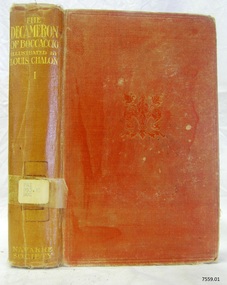 Flagstaff Hill Maritime Museum and Village
Book, The Decameron of Giovanni Boccaccio Vol 1
... His aim was to foster portraiture, as well as support artists, and perpetuate the memory of great Australians. warrnambool shipwrecked-coast flagstaff-hill flagstaff-hill-maritime-museum maritime-museum shipwreck-coast flagstaff-hill-maritime-village shipwrecked-artefact book warrnambool mechanics’ institute pattison collection warrnambool library ralph eric pattison warrnambool city librarian mechanics’ institute library victorian library board warrnambool books and records warrnambool children’s library the decameron of giovanni boccaccio vol 1 j m rigg Label on spine has typed text PAT 853.15 BOC Front pastedown endpaper has sticker from Warrnambool Public Library Front loose endpaper has a stamp from Corangamite Regional Library Service The Decameron of Giovanni Boccaccio Vol 1 Translated by J M Rigg Publisher: Navarre Society Date: Pre 1920 The Decameron of Giovanni Boccaccio Vol 1 Book ...This item is from the ‘Pattison Collection’, a collection of books and records that was originally owned by the Warrnambool Mechanics’ Institute, which was founded in Warrnambool in 1853. By 1886 the Warrnambool Mechanics’ Institute (WMI) had grown to have a Library, Museum and Fine Arts Gallery, with a collection of “… choice productions of art, and valuable specimens in almost every branch and many wonderful national curiosities are now to be seen there, including historic relics of the town and district.” It later included a School of Design. Although it was very well patronised, the lack of financial support led the WMI in 1911 to ask the City Council to take it over. In 1935 Ralph Pattison was appointed as City Librarian to establish and organise the Warrnambool Library as it was then called. When the WMI building was pulled down in 1963 a new civic building was erected on the site and the new Warrnambool Library, on behalf of the City Council, took over all the holdings of the WMI. At this time some of the items were separated and identified as the ‘Pattison Collection’, named after Ralph Pattison. Eventually the components of the WMI were distributed from the Warrnambool Library to various places, including the Art Gallery, Historical Society and Flagstaff Hill. Later some were even distributed to other regional branches of Corangamite Regional Library and passed to and fro. It is difficult now to trace just where all of the items have ended up. The books at Flagstaff Hill Maritime Village generally display stamps and markings from Pattison as well as a variety of other institutions including the Mechanics’ Institute itself. RALPH ERIC PATTISON Ralph Eric Pattison was born in Rockhampton, Queensland, in 1891. He married Maude Swan from Warrnambool in 1920 and they set up home in Warrnambool. In 1935 Pattison accepted a position as City Librarian for the Warrnambool City Council. His huge challenge was to make a functional library within two rooms of the Mechanics’ Institute. He tirelessly cleaned, cleared and sorted a disarrayed collection of old books, jars of preserved specimens and other items reserved for exhibition in the city’s museum. He developed and updated the library with a wide variety of books for all tastes, including reference books for students; a difficult task to fulfil during the years following the Depression. He converted all of the lower area of the building into a library, reference room and reading room for members and the public. The books were sorted and stored using a cataloguing and card index system that he had developed himself. He also prepared the upper floor of the building and established the Art Gallery and later the Museum, a place to exhibit the many old relics that had been stored for years for this purpose. One of the treasures he found was a beautiful ancient clock, which he repaired, restored and enjoyed using in his office during the years of his service there. Ralph Pattison was described as “a meticulous gentleman whose punctuality, floorless courtesy and distinctive neat dress were hallmarks of his character, and ‘his’ clock controlled his daily routine, and his opening and closing of the library’s large heavy doors to the minute.” Pattison took leave during 1942 to 1942 to serve in the Royal Australian Navy, Volunteer Reserve as Lieutenant. A few years later he converted one of the Museum’s rooms into a Children’s Library, stocking it with suitable books for the younger generation. This was an instant success. In the 1950’s he had the honour of being appointed to the Victorian Library Board and received more inspiration from the monthly conferences in Melbourne. He was sadly retired in 1959 after over 23 years of service, due to the fact that he had gone over the working age of council officers. However he continued to take a very keen interest in the continual development of the Library until his death in 1969. WARRNAMBOOL PUBLIC LIBRARY The Warrnambool Mechanics’ Institute (WMI) was formed by a voluntary community group in 1863, within six years of Warrnambool’s beginnings, and its Reading Room opened in 1854. The WMI operated until 1963, at which time it was one of the oldest Mechanics’ Institutes in Victoria. Mechanics’ Institutes offered important services to the public including libraries, reading rooms and places to display and store collections of all sorts such as curiosities and local historical relics. In 1886 a Museum and Fine Arts Gallery were added to the WMI and by the beginning of the 20th century there was also a billiards room and a School of Art. By this time all Mechanics’ Institutes in country Victoria had museums attached. Over the years the Warrnambool Mechanics’ Institute Library was also known as the Warrnambool Public Library the Warrnambool Library and the Free Library. Early funding from the government was for the “Free Library”. The inscription in a book “Science of Man” was for the “Warrnambool Public Library”, donated by Joseph Archibald in 1899. Another inscription in the book “Catalogue of Plants Under Cultivation in the Melbourne Botanic Gardens 1 & 2, 1883” was presented to the “Warrnambool Library” and signed by the author W.R. Guilfoyle. In 1903 the Warrnambool Public Library decided to add a Juvenile Department to library and stock it with hundreds of books suitable for youth. In 1905 the Public Library committee decided to update the collection of books and added 100 new novels plus arrangements for the latest novels to be included as soon as they were available in Victoria. In July 1911 the Warrnambool Council took over the management of the Public Library, Art Gallery, Museum and Mechanics’ Institute and planned to double the size of the then-current building. In 1953, when Mr. R. Pattison was Public Librarian, the Warrnambool Public Library’s senior section 10,000 of the 13,000 books were fiction. The children’s section offered an additional 3,400 books. The library had the equivalent of one book per head of population and served around 33 percent of the reading population. The collection of books was made up of around 60 percent reference and 40 percent fiction. The library was lending 400 books per day. In 1963 the Warrnambool City Council allocated the site of the Mechanics’ Institute building, which included the Public Library, Museum and Art Gallery, for the new Municipal Offices and the Collections were dispersed until 1971. The Warrnambool Library took over the Mechanics’ Institute Library’s holdings on behalf of the Warrnambool City Council. Since the closure of the Warrnambool Mechanics’ Institute the exact location and composition of the original WMI books and items has become unclear. Other materials have been added to the collection, including items from Terang MI, Warrnambool Court House and Customs House. Many of the books have been identified as the Pattison Collection, named after the Librarian who catalogued and numbered the books during his time as Warrnambool Public Librarian in the time before the Mechanics’ Institute closed. It seems that when Warrnambool became part of the Corangamite Regional Library some of the books and materials went to its head office in Colac and then back to Warrnambool where they were stored at the Art Gallery for quite some time. Some then went to the Warrnambool Historical Society, some stayed at the Art Gallery and some were moved to Flagstaff Hill Maritime Village. The various stamps and labels on the books held at Flagstaff Hill show the variety of the collection’s distribution and origin. The books in the collection at Flagstaff Hill Maritime Village date from the 1850’s to the late 1950’s and include rare and valuable volumes. Many of the books are part of the “Pattison Collection” after the Warrnambool’s Public Librarian, Mr. R. Pattison The Pattison Collection, along with other items at Flagstaff Hill Maritime Village, was originally part of the Warrnambool Mechanics' Institute’s collection. The Warrnambool Mechanics’ Institute Collection is primarily significant in its totality, rather than for the individual objects it contains. Its contents are highly representative of the development of Mechanics' Institute libraries across Australia, particularly Victoria. A diversity of publications and themes has been amassed, and these provide clues to our understanding of the nature of and changes in the reading habits of Victorians from the 1850s to the middle of the 20th century. The collection also highlights the Warrnambool community’s commitment to the Mechanics’ Institute, reading, literacy and learning in the regions, and proves that access to knowledge was not impeded by distance. These items help to provide a more complete picture of our community’s ideals and aspirations. The Warrnambool Mechanics Institute book collection has historical and social significance for its strong association with the Mechanics Institute movement and the important role it played in the intellectual, cultural and social development of people throughout the latter part of the nineteenth century and the early twentieth century. The collection of books is a rare example of an early lending library and its significance is enhanced by the survival of an original collection of many volumes. The Warrnambool Mechanics' Institute’s publication collection is of both local and state significance. The Warrnambool Mechanics' Institute Collection is primarily significant in its totality, rather than for the individual objects it contains. Its contents are highly representative of the development of Mechanics' Institute libraries across Australia, particularly Victoria. A diversity of publications and themes has been amassed, and these provide clues to our understanding of the nature of and changes in the reading habits of Victorians from the 1850s to the middle of the 20th century. The collection also highlights the Warrnambool community’s commitment to the Mechanics’ Institute, and to reading, literacy and learning in the regions, and proves that access to knowledge was not impeded by distance. These items help to provide a more complete picture of our community’s ideals and aspirations. As with many Mechanics' Institutes in Australia, the one which operated in Warrnambool was established and overseen for many years by key individuals associated with the development of the city itself. The WMI publication collection is historically significant because of its association with local people, places and the key historical themes in the development of Warrnambool of rural development, industry, farming, education, and community. The collection documents and illustrates the changing interests, focus and tastes of Victorians, especially those in regional cities. Generally the individual items in the collection are not particularly rare, as examples of all probably exist in other public collections in Victoria. It is primarily because there are so very few surviving Mechanics' Institute collections in Victoria, which lends this overall collection its significance. Many items in the WMI Collection have the potential to support further research, both as individual objects and through the collection in its entirety. This material is significant for its ability to assist in the interpretation of the history of the area and adds to the general understanding of the development of the township. Many components of the WMI publication collection complement and reinforce the Flagstaff Hill Maritime Museum Collection, the Warrnambool Art Gallery Collection, and that in the Warrnambool Historical Society, and also contribute to a clearer understanding of the original Warrnambool Mechanics' Institute collections. This will greatly enhance the appreciation of the few surviving Mechanics' Institute collections across Victoria, and also in New South Wales. The similarities and differences between the small number of collections that have survived can provide further insights into how the people of Victoria in general, and Warrnambool in particular, constructed a civic culture of adult learning to foster an informed citizenry. The Warrnambool Mechanics' Institute publication collection is of both local and state significance. (This Statement of Significance is quoted from the Significance Assessment : Warrnambool Mechanics’ Institute Book Collection at Flagstaff Hill Maritime Museum, February 2009, by Annette Welkamp, Cultural Connections, for Delise Oldfied, FHMV) References Juvenile Department in Warrnambool Public Library In August 1903 The Age newspaper reported in its Warrnambool news section that “With the object of discouraging boys from reading literature of the “penny dreadful” class, the committee of the local public library has decided to open a juvenile department and to stock it with hundreds of suitable books attractive to the youthful mind.” 100 new novels added to Warrnambool Public Library Shelves In November 1905 The Argue newspaper’s Warrnambool news section announced “The committee of the Public Library is bringing the collection of books more up to date. It has recently added 100 new novels to the shelves, and arrangements have been made for a supply of the latest novels immediately they arrive in the state.” Warrnambool Town Council takes over Mechanics’ Institute, Art Gallery, Public Library, Museum – and will double the building’s size In 1912 The Age reported in its Warrnambool news section “Considerable improvements are being effected by the town council in the most picturesque part of Liebig Street. Between the fire brigade station and the mechanics’ institute and art gallery a vacant block of land is being transformed a garden for carpet bedding and flowering plants. The council, which recently took over the control of the art gallery, public library, museum and mechanics’ institute, is doubling the size of the substantial stone building containing these institutions. The new building will contain a supper room for use in conjunction with functions in the town hall, adjoining, and a new reading room.” Mr Pattison, Public Librarian, says Library has a book per head of population In 1953 The Age reported an interview with the Public Librarian, Mr. R. Pattison, who said “Warrnambool has an insatiable thirst for reading. And its reading recipe contains a strong dash of fiction – 73 percent of it. Fiction makes up 10,000 of the 13,000 books in the senior section of the public library. That works out at a book per head of population. Warrnambool today is really book minded. This city has an almost insatiable thirst for knowledge as well as fiction. We’re lending 400 books a day. We supply 33 percent of the reading population of Warrnambool.” The reporter goes on to say “Warrnambool Public Library also has an ultra-modern children’s section of 3,400 books, open to every boy and girl attending school in Warrnambool. Mr Pattison hopes to show travel-talk films and install a radiogram in the children’s section “later on”. But it won’t disturb adult reading next door because the junior section is sound proof. “ Mechanics’ Institutes and Museums Mechanics’ Institutes were important sites for collecting in country Victoria … Warrnambool … all had museums attached to Mechanics’ Institutes before the end of the twentieth century” Warrnambool Mechanics’ Institute Ms Tierney said FHMV holds the collection of the Warrnambool Mechanics’ Institute in three different locations on its site. “The Mechanics’ Institute opened in 1871, was demolished in the 1960s and was one of the oldest in Victoria. “FHMV intends to create a new storage area and bring the collection together in one place which will greatly facilitate access and research. “The collection consists of books and archives dating from the 1850s to 1959s. “Some of the books are rare and valuable but it is unclear as to their relevance to the history of Warrnambool or Victoria,” Ms Tierney said. Warrnambool TAFE History South West TAFE has a long and proud history of providing technical and specialist education, with links back to the formation of the Mechanic’s Institute in 1853. Warrnambool Art Gallery’s History The Warrnambool Art Gallery began in 1886 when retired police officer Joseph Archibald opened its doors in a building behind the mechanics institute in Liebig Street. The Gallery began with an eclectic mix of artworks and museum curios. Before long Archibald mobilised public support and paid for a new gallery annex. Loans and grants allowed the Gallery collection to grow with significant early acquisitions by French, German, and Belgian artists, which were less expensive than British works. Despite its enthusiastic start the economic downturn of the 1890s brought the Collection to a halt. In 1910 the Council took control of the Mechanics Institute and ran the Gallery there until 1963 when the building was allocated for municipal offices. The Collection was dispersed on loan to galleries in Shepparton and Hamilton and not reunited until 1971. In 1986 the Gallery’s Centenary year, a permanent home was built next to the ‘Civic Green’ and named in memory of one its champions Sir Fletcher Jones O.B.E. 2016 Warrnibald Entries Joseph Archibald established the Warrnambool Museum and Art Gallery in 1886 while his son Jules Francois Archibald founded the Archibald Prize through his bequest of 1919. His aim was to foster portraiture, as well as support artists, and perpetuate the memory of great Australians. The Decameron of Giovanni Boccaccio Vol 1 Translated by J M Rigg Publisher: Navarre Society Date: Pre 1920Label on spine has typed text PAT 853.15 BOC Front pastedown endpaper has sticker from Warrnambool Public Library Front loose endpaper has a stamp from Corangamite Regional Library Service warrnambool, shipwrecked-coast, flagstaff-hill, flagstaff-hill-maritime-museum, maritime-museum, shipwreck-coast, flagstaff-hill-maritime-village, shipwrecked-artefact, book, warrnambool mechanics’ institute, pattison collection, warrnambool library, ralph eric pattison, warrnambool city librarian, mechanics’ institute library, victorian library board, warrnambool books and records, warrnambool children’s library, the decameron of giovanni boccaccio vol 1, j m rigg
