
Showing 42 items matching " born max"
-
 Glen Eira Historical Society
Ephemera - OAKDALE ANGLING CLUB
... ... Born Max...Kreutzer Leigh Harris Evan Rowe Phillip Eismontas Vic Schmidt John Brooking Dean Tuck Don Stepham Brian Stepham Margaret Farmer Stvart Cook Kate Minear Tom Matthews Alf Jellett Ethel Evans Max Dave Keith Constantine Mark Morris Ian Oldham Richard Bjorksten Robin Rnooken Dean Burtt Ray Elliott Ace Cepuritis Tali Hansen Don Tuck Don Hansen Evelyn Cepuritis Alwyn Stone Ruby Elliott Eric Born Max Fitzpatrick Jack Tobe W. Matthews I Renfrew W. ...Eight items on Oakdale Angling Club: 1/Seven newsletters, vol 28, no. 3 1983; vol 28, no. 4 and no. 5, 1984; vol. 29, no. 5, 1985; vol. 30 no. 1 and no. 2. 1985 and 1987 Christmas edition. The newsletters contain fishing information, tides and weather, fishing holidays and the clubs social events from 1983 to 1987. 2/A copy of the 1988 syllabus, a ticket to the Annual Dinner Dance in 1987 and a compliment card from the public relations officer of the club.oakdale angling club, anglers, sporting clubs, minear terry v., murrumbeena, halls, tabone henry, ovinn russell, williams gerry, hansen don, vos colin, mitchell cyril, evans bob, scott jeff, vliet john jan, stapleton mike, rees ron, stone graeme, horsey ian, dillan ernie, seward w.g., kreutzer leigh, harris evan, rowe phillip, eismontas vic, schmidt john, brooking dean, tuck don, stepham brian, stepham margaret, farmer stvart, cook kate, minear tom, matthews alf, jellett ethel, evans max, dave keith, constantine mark, morris ian, oldham richard, bjorksten robin, rnooken dean, burtt ray, elliott ace, cepuritis tali, hansen don, tuck don, hansen evelyn, cepuritis alwyn, stone ruby, elliott eric, born max, fitzpatrick jack, tobe w., matthews i, renfrew w., carter m., degering ron, henwood arthur, law arthur, beckwith keith, hills allan, chancellor bert, alberton hall, hansen russell, leary john, davis patsy, hooper alec, deverson marlene, lewer ron, yiap jimmy, mccreadie iain, stapleton mike, evans elug, evans ron, quinn russell, kreutzer ed., sikkens roulof, caldecott ken, constantine jenny, foster jett, setford geoff, morris joe, hanna nell, rees gwen, bearlin david, hansen evelyn, thornton bob, hansen don, kreutzer eileen, desmond john, crompton kim, champion ken, waters len, brasher john, jenkins neville, nicholson ken, deters glen, darcy frank, scott geoff, cook barry, cook martin, anderson ken, anderson sue, rodriguez john, carosso joan -
 Whitehorse Historical Society Inc.
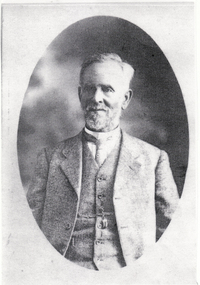
Photograph, William Fraser Grant, C.1915
... Black and white photo of William Fraser Grant, grandfather of Society Member, Max Grant. Born Forbes, Aberdeen, Scotland 17/10/1845, died Bulla, Victoria, 30/4/1916. ...grant william fraser catherine jane max Black and white photo of William Fraser Grant, grandfather of Society Member, Max Grant. Born Forbes, Aberdeen, Scotland 17/10/1845, died Bulla, Victoria, 30/4/1916. ...Black and white photo of William Fraser Grant, grandfather of Society Member, Max Grant. Born Forbes, Aberdeen, Scotland 17/10/1845, died Bulla, Victoria, 30/4/1916. Married Catherine Jane Marden at St.Kilda on 23/6/1873.grant, william fraser, catherine jane, max -
 Federation University Art Collection
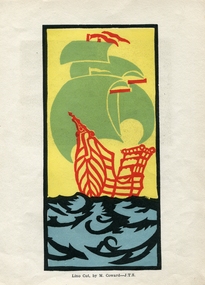
Work on paper - Printmaking - Linocut, [Sailing Ship] by Max Coward, c1937
... Max COWARD Born Ballarat Maxwell (Max) Maurice Coward was training to be an art teacher at the Ballarat Technical Art School from 1937 to 1941. ...Max COWARD Born Ballarat Maxwell (Max) Maurice Coward was training to be an art teacher at the Ballarat Technical Art School from 1937 to 1941. ...Max COWARD Born Ballarat Maxwell (Max) Maurice Coward was training to be an art teacher at the Ballarat Technical Art School from 1937 to 1941. He enlisted in the A.I.F. and was a Naval Trainee at Flinders Naval Depot in 1941. During these years Max Coward was described as a cartoonist and illustrator, and was attached to the Naval Intelligence Division in 1945, producing stories and drawings for the Navy newspaper Dit. His work was reproduced in the Christmas annual, HMAS Mk IV and the Army educational journal, Salt. Coward was active as a printmaker in the 1960s and 1970s. This item is part of the Federation University Art Collection. The Art Collection features over 2000 works and was listed as a 'Ballarat Treasure' in 2007.Llinocut showing a stylized sailing ship on the sea. This work was undertaken while Max Coward was a student of the Ballarat Junior Technical School.art, artwork, max coward, coward, alumni, sailing ship, boat, ballarat junior technical school -
 Whitehorse Historical Society Inc.
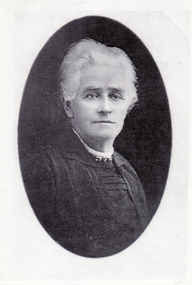
Photograph, Catherine Jane Grant, C.1915
... Grandmother of Society Member, Max Grant. Born Pentland Hills, Bacchus Marsh 19/5/1849, died Murrumbeena 20/6/1925. ...Grandmother of Society Member, Max Grant. Born Pentland Hills, Bacchus Marsh 19/5/1849, died Murrumbeena 20/6/1925. ...Black and white photo of Catherine Jane Grant, nee Marden. Catherine's going away dress in Museum. Grandmother of Society Member, Max Grant. Born Pentland Hills, Bacchus Marsh 19/5/1849, died Murrumbeena 20/6/1925. Married William Fraser Grant at St.Kilda 23/6/1873.grant, catherine jane, marden, william fraser, max -
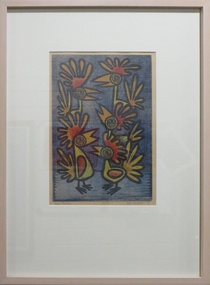
 Federation University Art Collection
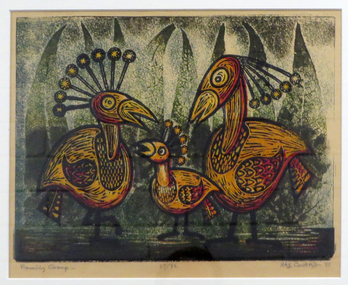
Work on paper - Printmaking - Linocut, 'Family Group' by Max Coward, 1965
... Max COWARD ( -1991) Born Ballarat Max Coward was training to be an art teacher at the Ballarat Technical Art School from 1937 to 1941. ...Max COWARD ( -1991) Born Ballarat Max Coward was training to be an art teacher at the Ballarat Technical Art School from 1937 to 1941. ...Max COWARD ( -1991) Born Ballarat Max Coward was training to be an art teacher at the Ballarat Technical Art School from 1937 to 1941. He enlisted in the A.I.F. and was a Naval Trainee at Flinders Naval Depot in 1941. During these years Max Coward was described as a cartoonist and illustrator, and was attached to the Naval Intelligence Division in 1945, producing stories and drawings for the Navy newspaper Dit. His work was reproduced in the Christmas annual, HMAS Mk IV and the Army educational journal, Salt. Coward was active as a printmaker in the 1970s. This item is part of the Federation University Art Collection. The Art Collection features over 2000 works and was listed as a 'Ballarat Treasure' in 2007.Framed limited edition linocut print showing a family of birdslls 'Family Group; lc edition '27/32' lrs 'Max Coward 65'art, artwork, max coward, coward, alumni, birds, chicken -
![Photograph, Marjorie [Myers] Butler, Unknown, 1992](/media/collectors/5b29fbbc21ea6714f814b353/items/6260fb5c0401af8eae454fbd/item-media/629fedf01c46b95c471fa86c/item-fit-380x285.jpg?cb=6) Melton City Libraries
Melton City LibrariesPhotograph, Marjorie [Myers] Butler, Unknown, 1992
... While living in Hawthorn their children Adrian and Lynette were born. Their son Max was born in Bacchus Marsh while Bert was teaching at the High School and in 1950 was appointed to Numurkah HS. ...While living in Hawthorn their children Adrian and Lynette were born. Their son Max was born in Bacchus Marsh while Bert was teaching at the High School and in 1950 was appointed to Numurkah HS. ...Marjorie was a talented pianist in her teenage years achieving her L.Mus.A. her fourth qualification by the age of 18 years. She attended the Conservatorium of Music Melbourne studying pianoforte and later with a singing scholarship and won numerous competition from Ballarat to Bendigo. She started her teaching career after leaving Melton State School. She taught many students throughout district including Edna Butler, the young sister of her husband Bert Butler. While living in Hawthorn their children Adrian and Lynette were born. Their son Max was born in Bacchus Marsh while Bert was teaching at the High School and in 1950 was appointed to Numurkah HS. In 1953 the family moved to Frankston HS. In 1958 he was appointed foundation Principal of Ashwood HS at the age of 43, the youngest to achieve this level of seniority. He was also Principal at Huntingdale, Mordialloc/Chelsea, and Mornington until his retirement in 1975. Photographs pf Marjorie Butlers at Melton Cemetery local identities, pioneer families -
 Federation University Art Collection
Work on paper - Printmaking - Linocut, 'Hen Party' by Max Coward, 1964
... Max COWARD ( -1991) Born Ballarat Max Coward was training to be an art teacher at the Ballarat Technical Art School from 1937 to 1941. ...Max COWARD ( -1991) Born Ballarat Max Coward was training to be an art teacher at the Ballarat Technical Art School from 1937 to 1941. ...Max COWARD ( -1991) Born Ballarat Max Coward was training to be an art teacher at the Ballarat Technical Art School from 1937 to 1941. He enlisted in the A.I.F. and was a Naval Trainee at Flinders Naval Depot in 1941. During these years Max Coward was described as a cartoonist and illustrator, and was was attached to the Naval Intelligence Division in 1945, producing stories and drawings for the Navy newspaper Dit. His work was reproduced in the Christmas annual, HMAS Mk IV and the Army educational journal, Salt. He was a foundation staff member at the Burwood Teachers' College art department when it opened at Box Hill in 1954, transferring to the Burwood Campus in 1955. Upon his retirement he moved to Queensland to start a graphic arts consultancy. Coward was active as a printmaker during the 1970s. This item is part of the Federation University Art Collection. The Art Collection features over 1000 works and was listed as a 'Ballarat Treasure' in 2007.Framed limited edition linocut by Max Coward. 'Hen Party' uses simplified forms reminiscent of the shapes gracing 'moderne' interiors of the 1950s and 1960s. The simplification of form and decorative pattern achieved through repetition shows the influence of Paul Klee's work and imagery. lls 'Hen Party' lower centre edition '8/28' lrs 'Max Coward 64' art, artwork, max coward, printmaking, alumni, hens, linoprint, linocut -
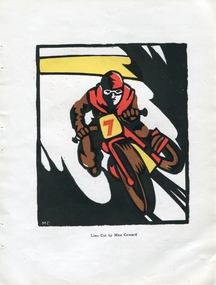 Federation University Art Collection
Work on paper - Printmaking - Linocut, [Motorcyclist] by Max Coward, c1937
... Max COWARD ( -1991) Born Ballarat Maxwell (Max) Maurice Coward was training to be an art teacher at the Ballarat Technical Art School from 1937 to 1941. ...Max COWARD ( -1991) Born Ballarat Maxwell (Max) Maurice Coward was training to be an art teacher at the Ballarat Technical Art School from 1937 to 1941. ...Max COWARD ( -1991) Born Ballarat Maxwell (Max) Maurice Coward was training to be an art teacher at the Ballarat Technical Art School from 1937 to 1941. He enlisted in the A.I.F. and was a Naval Trainee at Flinders Naval Depot in 1941. During these years Max Coward was described as a cartoonist and illustrator, and was attached to the Naval Intelligence Division in 1945, producing stories and drawings for the Navy newspaper Dit. His work was reproduced in the Christmas annual, HMAS Mk IV and the Army educational journal, Salt. Coward was active as a printmaker in the 1970s. This item is part of the Federation University Art Collection. The Art Collection features over 2000 works and was listed as a 'Ballarat Treasure' in 2007.Llinocut showing a cyclist on a motorbike.art, artwork, max coward, coward, alumni, motorbike, motorcyclist, cyclist, ballarat technical art school, motorcycle -
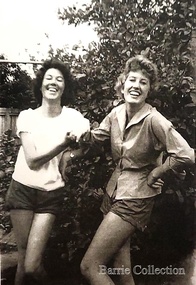 Melton City Libraries
Photograph, 'Wendy Barrie with cousin Lynette, 1960
... While living in Hawthorn their children Adrian and Lynette were born. Their son Max was born in Bacchus Marsh while Bert was teaching at the High School and in 1950 was appointed to Numurkah HS. ...While living in Hawthorn their children Adrian and Lynette were born. Their son Max was born in Bacchus Marsh while Bert was teaching at the High School and in 1950 was appointed to Numurkah HS. ...Lynette Nee Butler Kutschewski 1942 –1987 As a young musician Lynette had beaten Roger Woodward in piano competitions, before deciding to specialise in singing she trained as an artist in Melbourne. Given the choice of distinction in three different careers Lynette chose the most difficult, that of a singer. The repertoire in which Lynette chose to specialise – the period of the Baroque and above all the works of Johann Sebastian Bach – demanded a high degree of technical virtuosity, fine musicianship and elegance of style, in all of which she excelled. Yet she equally at home in Grand Opera, Lieder, and Operetta and gave some of her most memorable performances in the most diverse aspects of the vocal repertoire. Her own special quality was one of inner radiance when she sang, which added to the beauty of her voice, made her performances especially moving, and which led to her being sought out as a performer of the great German works within Germany itself. It seems so fitting that Lynette’s last public performance should have been in Beethoven’s Ninth Symphony, with its magnificent “Ode to Joy”. This took place in Paris in the Salle Pleyel on October 25th 1985. In the series of Concerts that season, Lynette’s name stood beside those of Danial Barenboim and Jessie Norman, Rostropovich, Nicholas Harnoncourt and Zubin Mehta. At this last performance Lynette truly stood at the peak of her profession This was part of Lynette Nee Butler Kutschewski Eulogy by Mary Ryan 30 – 10 –1987 Family history of Lynette Nee Butler Kutschewski: Herbert Vivian Butler 1915 - 1999 Bert grew up living on the family farm at Rockbank. He walked three miles to school and was one of 12 students. He attended Essendon High School and after the culture shock of being a country bumpkin, he soon earned respect of his peers through his sporting ability and academic excellence. Bert became Head Prefect in his final year at Essendon High School. He became a Primary School teacher working in inner suburban schools while living in Hawthorn. During the war years he went to Melbourne University at night obtaining a Bachelor of Arts degree. His main teaching methods were geology and geography. In 1939 Bert married Marjorie G Myers of ‘Burnbank Melton. Marjorie was already a talented pianist in her teenage years achieving her L.Mus.A. her fourth qualification by the age of 18 years. She attended the Conservatorium of Music Melbourne studying pianoforte and later with a singing scholarship and won numerous competitions from Ballarat to Bendigo She started her teaching career after leaving Melton State School. She taught many students throughout district including Edna Butler, the young sister of Bert. While living in Hawthorn their children Adrian and Lynette were born. Their son Max was born in Bacchus Marsh while Bert was teaching at the High School and in 1950 was appointed to Numurkah HS. In 1953 the family moved to Frankston HS. In 1958 he was appointed foundation Principal of Ashwood HS at the age of 43, the youngest to achieve this level of seniority. He was also Principal at Huntingdale, Mordialloc/Chelsea, and Mornington until his retirement in 1975. Football - Melton aged 17 - 3 seasons. Carlton signed in1935. Played forward pocket 2nd rover in1938. During the war years Carlton 2nd s Captain, played his last senior game in 1944. In 1944 he was Captain coach of Bacchus Marsh Team, a President and Life Member. Club Champion for three years for Numurkah. Marjorie Gretchen Myers Born at Melton on the 21st of February 1912 Attended Melton State School No 430 1917 and left school to become a music teacher. A pupil of Miss Ross the Music teacher at Melton she advanced rapidly and achieved her A.L.C.M. (Associate of the London College of Music) at the age of 12 years. At 14 years she gained her L.L.C.M. (Licentiate of the London College of Music). At the age of 16 she was awarded a part scholarship in 1928 to the to the Melbourne Conservatorium of Music studying pianoforte under Miss Elsie Fraser. She gained her A.Mus.A. at the age of 17 and her L. Mus. A. at the age of 18 years. In 1935 she won a full scholarship given by Madame Elsie Ashton for singing. The “Australian Musical New” Mr Thorald Waters the adjudicator found her outstanding qualities as a musician an added reason for singling out Miss Myers with her voice being the most promising of those heard. Cousins Wendy Barrie and Lynette Butler in the backyard of Butler's houselocal identities -
The Beechworth Burke Museum
Audio - Oral History, Jennifer Williams, Max Suter, 29 June 2000
... Mr Max Sutor was born in South Australia. He first began his work as a marine engineer at the Mildura Irrigation Trusts, moving later to the Melbourne Harbour Trusts. ...Mr Max Sutor was born in South Australia. He first began his work as a marine engineer at the Mildura Irrigation Trusts, moving later to the Melbourne Harbour Trusts. ...Mr Max Sutor was born in South Australia. He first began his work as a marine engineer at the Mildura Irrigation Trusts, moving later to the Melbourne Harbour Trusts. After a number of years as an engineer, he moved into farming at Gippsland and joined the prison service several years after during the late 1960s. He was first stationed at Morwell River Prison in South Gippsland, transferring to McLeod Prison in 1972 and finally to Beechworth in 1974 as senior prison and stores officer. He would assist in the organisation, obtaining and distribution of food and medication to prisoners. The prison, at the time, was of medium security and held high security prisoners, with an estimated amount of 108 prisoners to 23 staff. Mr Suter showed a great push in showing humility towards prisoners, wanting to avoid animosity against them by never looking at their records to treat them equally. His choice of kind behaviour towards prisoners had clearly influenced their own, especially during manual labor. The prison had worked cooperatively with a local farm, having their prisoners assist in the farm work. Attitudes inevitably changed positively for several prisoners. Whilst he held no control over their actions at the farm, he still became well trusted and liked amongst the prisoners, as they would continue to go to him for assistance and questions. Mr Suter had also worked as an instigator of finding drugs within each prison he has worked within. This led him to study the variations, and being a member of the Parents and Citizens Association at the high school his children attended, as well as Community Service Director of a Rotary club, he wanted to educate parents in guidance for those unsure on how to conduct actions against such behaviours. From his first seminar, a police surgeon told him that three drug users were found by their parents. This oral history recording was part of a project conducted by Jennifer Williams in the year 2000 to capture the everyday life and struggles in Beechworth during the twentieth century. This project involved recording seventy oral histories on cassette tapes of local Beechworth residents which were then published in a book titled: Listen to what they say: voices of twentieth century Beechworth. These cassette tapes were digitised in July 2021 with funds made available by the Friends of the Burke.Mr Max Suter's account on his time and experience as a senior prison officer at Beechworth Prison is historically and socially significant for the cultural heritage of the region. His recounts of his time working within the prison and out in local parent and community associations held a positive effect on the awareness and behaviours of the Beechworth area, and provides detailed information on the duties and complications working in a 20th century rural prison, as well as the lack of local awareness from adults with young influential children. This oral history account is socially and historically significant as it is a part of a broader collection of interviews conducted by Jennifer Williams which were published in the book 'Listen to what they say: voices of twentieth-century Beechworth.' While the township of Beechworth is known for its history as a gold rush town, these accounts provide a unique insight into the day-to-day life of the town's residents during the 20th century, many of which will have now been lost if they had not been preserved.This is a digital copy of a recording that was originally captured on a cassette tape. The cassette tape is black with a horizontal white strip and is currently stored in a clear flat plastic rectangular container. It holds up 40 minutes of recordings on each side.Max Suterlisten to what they say, beechworth, oral history, burke museum, max suter, beechworth prison, farming, drug awareness -
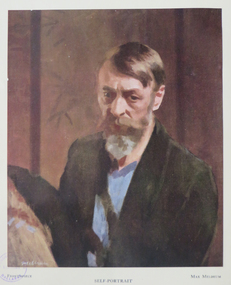 Federation University Historical Collection
Book, The Shepherd Press, The Science of Appearances as Formulated and Taught by Max Meldrum, 1950
... A review calls the book "the most outstanding book on the craft of painting yet published in any language. Max Meldrum was born in Edinburgh, Scotland on 03 December 1875. ...A review calls the book "the most outstanding book on the craft of painting yet published in any language. Max Meldrum was born in Edinburgh, Scotland on 03 December 1875. ...This book could be described as the summing up of a theory of physical appearances, devised by a painter and demonstrated by paint. The foundation of this theory was laid down first in Paris by Max Meldrum early 1900s. A review calls the book "the most outstanding book on the craft of painting yet published in any language. Max Meldrum was born in Edinburgh, Scotland on 03 December 1875. His family arrived in Australia and Max Meldrum attended the National Gallery School, winning the Victorian Travelling Scholarship in 1899. It was deaccessioned and transferred from the Ballarat School of Mines library so would have been used by students and staff of the Ballarat Technical Art School, a division of the Ballarat School of Mines. Red fabric hard covered book of 298pp, includes colour plates that have been pasted into the book. The book inlcudes 11 colour prints and 11 line and tone diagrams. These diagrams in clude Major and Minor Dark and liLight Disturbances; Speed Values and Form; Complex Light Disturbance; Experiments in Definition and Inclination; Apparatus for the Analysus of Visual Phenomena by Distance; Set of Patches; Modern and Obsolete Methods of Approach, Tonal Analysis on "St John's Parad"'; Chromatic Analysis of "St John's Parade". This book was part of the Ballarat Technical Art School LibraryA review has been pasted in the front..max meldrum school, max meldrum, art, science of appearances, appearances, color plates, tonalism, ballarat school of mines library, ballarat technical art school -
 Orbost & District Historical Society
C.D, Max & Jack Nixon Jarrahmond FARMING, first half 20th century
... John Harding Nixon (Jack) was born in Orbost on July 16, 1905. He married Lydia May Trewin and had two boys, Max and Brian.He was a successful farmer, making the most of the land he owned, growing maize, seed and green beans and also dairying....John Harding Nixon (Jack) was born in Orbost on July 16, 1905. He married Lydia May Trewin and had two boys, Max and Brian.He was a successful farmer, making the most of the land he owned, growing maize, seed and green beans and also dairying. ...John Harding Nixon (Jack) was born in Orbost on July 16, 1905. He married Lydia May Trewin and had two boys, Max and Brian.He was a successful farmer, making the most of the land he owned, growing maize, seed and green beans and also dairying.This item is a pictorial record of early agriculture in the Orbost district.A disc of farming scenes of Max and Jack Nixon Snr on the Jarrahmond flats at Orbost.nixon-john-harding-jack agriculture jarrahmond -
 Eltham District Historical Society Inc
Audio - Audio Recording, Denis McKay; Early history of Eltham Council occupation of the former Police Station at 728 Main Road, 3 Oct 2017
... 0:34:38 duration Digital MP3 File 17.8 MB Digital M4A File 23.1 MB (Born digital - Apple iPhone 6s Max) ...Partial recording of meeting with Denis McKay, retired Eltham Council officer and Peter Pidgeon, Doug Orford and Russell Yeoman discussing photos of the former Eltham Police Station at 728 Main Road at the time Eltham Council took over occupation of the site in 1985. 728 Main Road Eltham Local History Centre Eltham Justice Precinct Police Station Eltham Shire Council Parks and Gardens Denis McKay Oral History Audio Recording 0:34:38 duration Digital MP3 File 17.8 MB Digital M4A File 23.1 MB (Born digital - Apple iPhone 6s Max) Denis McKay; Early history of Eltham Council occupation of the former Police Station at 728 Main Road Audio Audio Recording Eltham District Historical Society ...Partial recording of meeting with Denis McKay, retired Eltham Council officer and Peter Pidgeon, Doug Orford and Russell Yeoman discussing photos of the former Eltham Police Station at 728 Main Road at the time Eltham Council took over occupation of the site in 1985.0:34:38 duration Digital MP3 File 17.8 MB Digital M4A File 23.1 MB (Born digital - Apple iPhone 6s Max) 728 main road, eltham, local history centre, eltham justice precinct, police station, eltham shire council, parks and gardens, denis mckay, oral history, audio recording -
 Eltham District Historical Society Inc
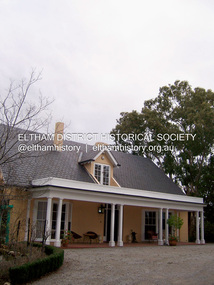
Photograph - Digital Photograph, Marguerite Marshall, 'Landscape', 60 Lavender Park Road, Eltham South, 24 June 2008
... Max Meldrum, also visited and rented accommodation in Eltham, opposite Wingrove Park. Punch folded in 1925, but Leason continued as cartoonist for Table Talk. In 1926 Leason began the cartoons of a mythical Australian town Wiregrass, which were inspired by Kaniva, his home town. The art gallery in Main Road Eltham was named Wiregrass in Leason’s honour. Leason completed 1000 drawings from 1919 to 1937, which author Garrie Hutchinson claimed, were technically unsurpassed and had regional and universal interest. Leason’s acute observations of country life stemmed from his childhood in Kaniva in Victoria’s western Wimmera, where he was born...Max Meldrum, also visited and rented accommodation in Eltham, opposite Wingrove Park. Punch folded in 1925, but Leason continued as cartoonist for Table Talk. In 1926 Leason began the cartoons of a mythical Australian town Wiregrass, which were inspired by Kaniva, his home town. The art gallery in Main Road Eltham was named Wiregrass in Leason’s honour. Leason completed 1000 drawings from 1919 to 1937, which author Garrie Hutchinson claimed, were technically unsurpassed and had regional and universal interest. Leason’s acute observations of country life stemmed from his childhood in Kaniva in Victoria’s western Wimmera, where he was born ...Built by artist and cartoonist Percy Leason in 1927 in what was then New Street but renamed Lavender Park Road in the late 1950s/early 1960s. Covered under Heritage Overlay, Nillumbik Planning Scheme. Published: Nillumbik Now and Then / Marguerite Marshall 2008; photographs Alan King with Marguerite Marshall.; p121 Said to be a genius, cartoonist Percy Leason’s career was at its peak when in 1925 to 1926 he built his home at New Street (now Lavender Park Road) Eltham. The Herald newspaper owner, Sir Keith Murdoch, had hired Leason for his newly acquired Melbourne Punch magazine at a salary of £1750, making him ‘one of the highest paid cartoonists in the world’.1 With this salary and financial help from Murdoch, Leason was able to build his lovely home in Eltham. At the crest of a sweeping drive, the home now two-storey in white brick with a gabled grey slate roof and dormer windows is flanked by an extension built by another owner in the 1980s. Leason lived in the home with his wife, Isabel and children, until 1937, when he left for the United States of America, where he lived until his death in 1959. The four-bedroom house and garden would have been well-suited to bringing up his family and to entertaining their friends in style. Large airy rooms have high ceilings with moulded plaster, timber floors and several are brightened with bay windows. Leason made friends with many of the artists and personalities who gravitated to Eltham. Around 1931 Justus Jörgensen, founder of the Montsalvat Artists’ Colony, helped Leason build his large studio at the back of the house. Another friend was journalist Mervyn Skipper, father of jeweller and sculptor Matcham, and artists Helen and Sonia. Leason’s teacher, artist Max Meldrum, also visited and rented accommodation in Eltham, opposite Wingrove Park. Punch folded in 1925, but Leason continued as cartoonist for Table Talk. In 1926 Leason began the cartoons of a mythical Australian town Wiregrass, which were inspired by Kaniva, his home town. The art gallery in Main Road Eltham was named Wiregrass in Leason’s honour. Leason completed 1000 drawings from 1919 to 1937, which author Garrie Hutchinson claimed, were technically unsurpassed and had regional and universal interest. Leason’s acute observations of country life stemmed from his childhood in Kaniva in Victoria’s western Wimmera, where he was born, the son of a selector, in 1889. Meldrum claimed that Leason could name every plant and the habits of every animal.2 Leason also painted 28 portraits of the last full-blooded aboriginals in Victoria at Lake Tyers in Gippsland, most of which are in a private collection. In Sydney Leason illustrated Henry Lawson’s Selected Poems and worked for The Bulletin. Leason had begun his career at 13 as an apprentice lithographic artist at Sands and MacDougall. He attended night classes at the National Gallery and the Victorian Artists Society. Leason first visited Eltham in 1910 to paint with fellow artist William ‘Jock’ Frater. They camped near Bible and Pitt Streets and along the Diamond Creek on the site of the present Eltham Retirement Centre. Despite his success as a cartoonist, Leason wanted to be recognised as a serious painter and for his anthropological work.3 He was also conservative and felt uncomfortable with the modern art scene in Melbourne.4 So he left for the United States of America to work as a painter. Ironically his time in New York saw the burgeoning of modern art, notably by artists such as Jackson Pollock. But Leason found his niche by running an art school, painting society portraits and illustrating books and magazines.This collection of almost 130 photos about places and people within the Shire of Nillumbik, an urban and rural municipality in Melbourne's north, contributes to an understanding of the history of the Shire. Published in 2008 immediately prior to the Black Saturday bushfires of February 7, 2009, it documents sites that were impacted, and in some cases destroyed by the fires. It includes photographs taken especially for the publication, creating a unique time capsule representing the Shire in the early 21st century. It remains the most recent comprehenesive publication devoted to the Shire's history connecting local residents to the past. nillumbik now and then (marshall-king) collection, landscape, lavender park road, percy leason, new street -
 Eltham District Historical Society Inc
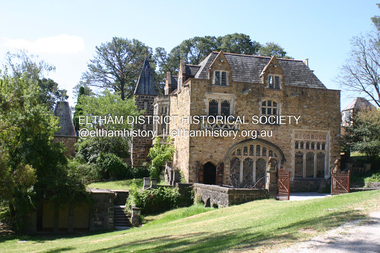
Photograph - Digital Photograph, Alan King, Great Hall, Montsalvat, 8 January 2008
... Born in 1894 and brought up a Catholic, Jörgensen had trained as an architect. He later studied painting at the National Gallery School under artist, Frederick McCubbin, then joined the studio of artist Max Meldrum. ...Born in 1894 and brought up a Catholic, Jörgensen had trained as an architect. He later studied painting at the National Gallery School under artist, Frederick McCubbin, then joined the studio of artist Max Meldrum. ...Great Hall at Montsalvat built 1938-52, designed by Justus Jorgensen Covered under National Estate, National Trust of Australia (Victoria) State Significance, Victorian Heritage and Heritage Overlay, Nillumbik Planning Scheme. Published: Nillumbik Now and Then / Marguerite Marshall 2008; photographs Alan King with Marguerite Marshall.; p129 At first glance, Montsalvat, the artists’ community at Hillcrest Avenue, Eltham, could belong to another time and place. The French provincial Gothic-style buildings blend picturesquely with the introduced and native trees and farm animals on the five hectare property. But Montsalvat belongs very much to today’s Eltham, having inspired much of its creative activity and style. The use of mud-brick and recycled building materials, for which Eltham is so well-known, was largely popularised by Montsalvat. Montsalvat – unique in Victoria and probably in Australia – is registered by the National Trust and National Estate.1 Montsalvat, named after the castle of the Knights of the Holy Grail, has attracted artists and intellectuals since it was founded in 1934. For years at weekends, artists, lawyers, philosophers, politicians and others, who shared a love for what Montsalvat stood for, gathered for a meal and stimulating discussion. The focus for this gathering of talent was Justus Jörgensen, an eccentric man with vision and charisma. It was Jörgensen’s foresight that saw the creation of Montsalvat, which in 1975 was formed into a trust to benefit the Victorian people. The property was then valued at about three million dollars. It is now visited by thousands of people annually. Born in 1894 and brought up a Catholic, Jörgensen had trained as an architect. He later studied painting at the National Gallery School under artist, Frederick McCubbin, then joined the studio of artist Max Meldrum. In 1924, Jörgensen married medical student Lillian Smith, and with artist friends they travelled to Europe to study the great masters. In London Jörgensen exhibited in several major galleries. One of his still life paintings was included in the book The Art of Still Life by Herbert Furst, which featured 100 of the greatest ever still life paintings.2 In 1929, Jörgensen returned to Melbourne where Lil, now qualified, worked as an anaesthetist at St Vincent’s Hospital. They bought a small house in Brighton and Jörgensen rented a large building in Queen Street for his studio until the Royal Automobile Club of Victoria bought it in 1955. While designing and overseeing the building of a studio for his friend the famous cartoonist Percy Leason, in Lavender Park Road, Jörgensen decided to buy land for a country retreat in Eltham. So the building of Montsalvat began. Jörgensen gathered around a dozen of his friends and students from his Queen Street studio. They set to work, first at weekends then some decided to live permanently on the site. Jörgensen had seen mud-brick buildings in Spain and recognised that Eltham’s clay soil was ideal for mud-bricks and although labour intensive, it was a very cheap way of building. Jörgensen’s students and friends worked under his direction with the help of local tradesmen, including carpenter, Len Jarrold and later stone mason, Horrie Judd. In return Jörgensen would give the students a painting lesson or two. It was the Great Depression when many were out of work. Jörgensen also inspired people to give generously of money and materials. With their help Jörgensen found second-hand materials for building. Friends donated slate for roofing, discarded firebricks were used for flooring and windows and doors and a cast-iron circular staircase came from a wrecker. The students’ day started at 7am with building and domestic chores, shared equally between the sexes. The first building was used by his friends at weekends and then became a home for his wife Lil. It consisted of three rooms and an attic under a high-pitched roof. Jörgensen then built a similar structure with the same high-pitched roof as a more permanent home for his students. The two buildings were joined together with a tower and a studio for Jörgensen. While excavating for the studio a reef of yellow mud-stone was found and then used in construction. The next building was the Great Hall, to be used for dining, exhibitions and meetings and completed in 1958, after a halt during the war. Whelan the Wrecker donated the stone-framed windows from the building that housed the Victorian Insurance Co. in Collins Street, which had been demolished in the 1930s. The swimming pool was donated and cubicles were built for the students with their initials marked in tiles on each doorstep.1 One of Jörgensen’s great abilities was to recognise how to use material which harmonised. He would comb through wreckers’ yards for what he needed. Regarding his buildings as sculptural pieces, his first consideration was for the aesthetic quality of a building and only then for its functionality.2 At Montsalvat, Jörgensen found he was able to put his ideas into practice without compromise and those who worked with him had to conform to his ideas. With the Jörgensens, the colony’s original nucleus consisted of the Skipper family – Mervyn and wife Lena, daughters Helen and Sonia and son Matcham,who was to become an eminent jeweller and sculptor represented in National Gallery collections throughout Australia and in European museums.3 Other members were Arthur Munday, Lesley Sinclair, Helen Lempriere, Ian Robertson, John Smith, George Chalmers, John Busst and Sue Van der Kellan; also Jörgensen’s three sons – Max, Sebastian and Sigmund – and Saskia, Sonia Skipper and Arthur Munday’s daughter. Montsalvat went through some hard times when local gossips spread rumours of sexual shenanigans at Montsalvat. However Montsalvat also had many local supporters – especially amongst the local tradespeople. The colony was certainly unconventional – with Jörgensen’s wife Lil (and son Max) and life-time partner Helen Skipper, (mother of Sebastian and Sigmund) living at Montsalvat. Sonia Skipper says in her biography that the group were ‘very conscious of their responsibilities to each other and a desire to make their relationships work’.4 By World War Two many buildings around the Great Hall were completed. Jörgensen was a pacifist, as were most of his students. Some of the Montsalvat community enlisted while others engaged in essential services like dairy farming and market gardening for the war effort. It was then that Jörgensen constructed farm buildings. After the war many well-known personalities such as Clifton Pugh, landscape gardener Gordon Ford, and builder Alistair Knox, were drawn to Montsalvat. They learnt that building was not a ‘sacred cow’ only for professionals, but that anyone who was willing to get their hands dirty could do it. The post-war shortage of materials also encouraged builders to follow Montsalvat’s lead in reusing materials. When Jörgensen died in 1975, his influence did not – thanks largely to the vigilance of his son, Sigmund, who became its administrator. The weekend dinners have gone, but in 2008 about 14 artists still work at Montsalvat – some living there – including a couple who have been there since its early days. Under Sigmund’s direction Montsalvat further expanded its activities which included festivals, art exhibitions, concerts and weddings. Sigmund completed the Chapel, then the Long Gallery next to the pool, After the barn burnt down, he replaced it in 1999 (the builder was Hamish Knox, Alistair’s son) with a new gallery and entrance and added a restaurant. Sigmund has been careful that any new building blends in with the character of Montsalvat. In 2006 Montsalvat was restructured for its continued financial viability and with the help of Arts Victoria a new executive officer was appointed. A representative board from the wider community was established, which includes members from the former Montsalvat Trust including Sigmund Jörgensen – who is now the heritage and arts adviser to the new company Montsalvat Ltd.5 Today, visiting Montsalvat one still sees artists, students and visitors enjoying the unique and beautiful surroundings.This collection of almost 130 photos about places and people within the Shire of Nillumbik, an urban and rural municipality in Melbourne's north, contributes to an understanding of the history of the Shire. Published in 2008 immediately prior to the Black Saturday bushfires of February 7, 2009, it documents sites that were impacted, and in some cases destroyed by the fires. It includes photographs taken especially for the publication, creating a unique time capsule representing the Shire in the early 21st century. It remains the most recent comprehenesive publication devoted to the Shire's history connecting local residents to the past. nillumbik now and then (marshall-king) collection, eltham, great hall, montsalvat -
 Warrnambool and District Historical Society Inc.
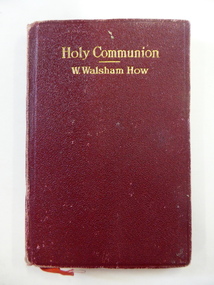
Book, The Holy Communion, Early 20th century
... Lorna Otelia Steller was born in Warrnambool in 1923, the daughter of Max and Felie Steller. ...Lorna Otelia Steller was born in Warrnambool in 1923, the daughter of Max and Felie Steller. ...This book was given to Lorna Steller on the occasion of her Confirmation in 1939. Lorna Otelia Steller was born in Warrnambool in 1923, the daughter of Max and Felie Steller. Max Steller was a Warrnambool hairdresser who hailed originally from Germany. Lorna married Arthur George (Bill) Rogers and they lived in MacDonald Street in South Warrnambool. The Anglican Archbishop of Melbourne in 1939 was Frederick Head. No information has been found on the Rev. Crossley. This book is of interest because it belonged to a 20th century Warrnambool resident, Lorna Steller. It is also of interest as an example of religious texts given at confirmation in 1939.This is a hard cover book of 96 pages. The cover is red with gold lettering on the front cover. A red ribbon for marking a place in the pages is attached to the binding. The inscription is handwritten in black ink.‘Lorna Otelia Steller Confirmed by the Archbishop of Melbourne Aug. 21st 1939 C.L. Crossley (Vicar)’ lorna steller, history of warrnambool -
 Bendigo Historical Society Inc.
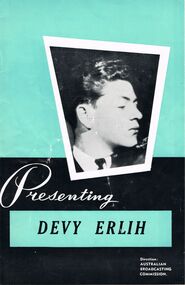
Document - DEVY ERLIH CONCERT
... born in Paris and studied at Paris national Conservatory of Music. Established an international status at a young age.1956 engaged in international concerts. 1955 won first prize in the international Margurite Long-Jacques Thibaud competition. Concerts in Japan.1956 won the French Record Academy prize. Concert in Vienna. Bartok Concert with the Berlin Philharmonic Orchestra at Strasbourg International Festival of a concerto dedicated to him by Pierre Max...born in Paris and studied at Paris national Conservatory of Music. Established an international status at a young age.1956 engaged in international concerts. 1955 won first prize in the international Margurite Long-Jacques Thibaud competition. Concerts in Japan.1956 won the French Record Academy prize. Concert in Vienna. Bartok Concert with the Berlin Philharmonic Orchestra at Strasbourg International Festival of a concerto dedicated to him by Pierre Max ...Devy Erlih, Town Hall, Bendigo, The Australian Broadcasting Commission presents Final Concert in the International Celebrity Concert Series. Devy Erlih-Violinist, Raymond Lambert-Piano. Thursday, 22nd October 1959, 8pm. Article with photograph about Devy Erlih. Erlih is 30, born in Paris and studied at Paris national Conservatory of Music. Established an international status at a young age.1956 engaged in international concerts. 1955 won first prize in the international Margurite Long-Jacques Thibaud competition. Concerts in Japan.1956 won the French Record Academy prize. Concert in Vienna. Bartok Concert with the Berlin Philharmonic Orchestra at Strasbourg International Festival of a concerto dedicated to him by Pierre Max Dubois. . . Article with photograph on Raymond Lambert. Lambert has made the full Commonwealth tour with some of the A.B.C.'s. most outstanding visiting artists, including Australian signers as well as several from overseas. Inherited voice of chamber music from his father, the late Edouard Lambert. He first toured Australia with his father. Australian tour 1952. Tour Europe and America in 1953 and 1955. Australia 1956.Accompaist for Mattiwilda Dobbs . . . Programme. Analytical Notes. News; of Music and Musicians. Advertisements: Philips, The Ace of Clubs, Barossa Pearl. The Australian Broadcasting Commission, Sir Richard Boyer, K.B.E., M.A., Chairman. E R Dawes, SEQ., C.M.G., - Vice Chairman. Sir John Medley, KT., D.C.L., LL.D., M.A. The Hon. Dame Enid Lyons, G.B.E. Mrs. G.L. Blyth, O.B.E., B.A. A G Lowndes, M.SC. HB Halvorsen, F.C.A., F.C.I.S. Charles Moses, C.B.E. General Manager. Ewart Chapple, Manager for Victoria. Ray Humphrey, Concert Manager for Victoria.entertainment, music, classical -
 Bendigo Historical Society Inc.
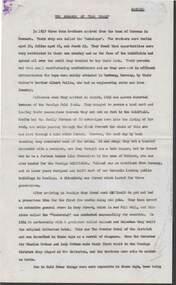
Document - COHN BROTHERS COLLECTION: THE ROMANCE OF 100 YEARS, undated
... A 6 page document containing the history of the Cohn Family including where they were born, when they arrived in Bendigo and the times leading up to when they opened the Brewery, also there is a single page outlying the history of Max Cohn...ORGANIZATION Business cohn family COHN BROTHERS A 6 page document containing the history of the Cohn Family including where they were born, when they arrived in Bendigo and the times leading up to when they opened the Brewery, also there is a single page outlying the history of Max Cohn Document COHN BROTHERS COLLECTION: THE ROMANCE OF 100 YEARS ...A 6 page document containing the history of the Cohn Family including where they were born, when they arrived in Bendigo and the times leading up to when they opened the Brewery, also there is a single page outlying the history of Max Cohnorganization, business, cohn family, cohn brothers -
 Eltham District Historical Society Inc
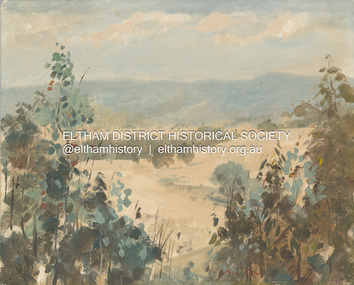
Artwork, other - Painting, Peter Glass, Summer Landscape, Kangaroo Ground, 1968
... born August 28, 1917. During the 1930s, Peter Glass and a young Graeme Bell were studying painting under Max Meldrum. ...born August 28, 1917. During the 1930s, Peter Glass and a young Graeme Bell were studying painting under Max Meldrum. ...Arthur William Glass known as Peter was born August 28, 1917. During the 1930s, Peter Glass and a young Graeme Bell were studying painting under Max Meldrum. Graeme Bell at that time was undecided whether to devote his life to music or painting. In 1938, inspired by what they had seen at 'Montsalvat', Peter Glass along with Graeme and Roger Bell (whose names were to become internationally known as the leaders of Australia's most famous jazz band) agreed to purchase land at Eltham to build themselves a mud brick house. For some time, Eltham had been their chosen place for painting and sketching, but it was not until they visited the 'Jorgensen Colony', as it was then known, and saw the possibilities of building in earth, that they decided to establish a permanent base in Eltham. In July, the three of them bought a few acres of land at the top of John Street and started making mud bricks for a proposed sixty square sized house. Following the Second World War, Peter Glass returned in 1946 to live permanently in Eltham. He resumed work on building of the adobe house which he had commenced before the war. During some years spent in England and France he married a French girl and on returning to Eltham he built another adobe house in which he lived with his wife, Cecile Madeleine, and two children, Julian and Marie-Luce on land adjoining the original house. Peter Glass died in December 1997 aged 80, his wife Cecile in 2006, aged 79. They are memorialised in Eltham Cemetery. Much of the inspiration for his landscape painting comes from the Eltham bush and the Yarra flowing through it.oil on chipboard 33 x 40.5 x 1.0 cm Signed 'Peter Glass in red paint lower right of centre Evidence of some paint rub-off at edges from previous frame mounting (frame removed).Reverse side painted in pale yellow cream and inscribed: 'Summer Landscape - 1968 Kangaroo Ground' in black paint1968, arthur william glass, artwork, kangaroo ground, paintings, peter glass -
 Eltham District Historical Society Inc
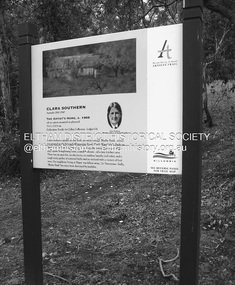
Photograph - Digital Photograph, Alan King, Sign: Clara Southern, Heidelberg School Artists Trail, Main Road, Research, 2008
... They camped near Bible and Pitt Streets and along the Diamond Creek where the Eltham Retirement Centre now stands.4 In 1921, painter Peter Newbury (father to painter David Newbury, who was born in Eltham) moved to Cromwell Street, Eltham. Max Meldrum, the first Australian painter to formulate a consistent theory of art largely based on tone,5 taught local artists Alan Martin, Clarice Beckett, Peter Glass and Justus Jörgensen. ...They camped near Bible and Pitt Streets and along the Diamond Creek where the Eltham Retirement Centre now stands.4 In 1921, painter Peter Newbury (father to painter David Newbury, who was born in Eltham) moved to Cromwell Street, Eltham. Max Meldrum, the first Australian painter to formulate a consistent theory of art largely based on tone,5 taught local artists Alan Martin, Clarice Beckett, Peter Glass and Justus Jörgensen. ...Warrandyte artist, Clara Southern, features on the Artists Trail. Published: Nillumbik Now and Then / Marguerite Marshall 2008; photographs Alan King with Marguerite Marshall.; p189 Since early in the 20th century this district has attracted artists and other creative people. So much so, that Eltham has been compared to the Left Bank in Paris, New York’s Greenwich Village and London’s Bloomsbury. That is until the 1970s when Eltham rapidly expanded into a suburb. However many artists still flourish not only in Montsalvat, Dunmoochin and the Bend of Islands but elsewhere in Nillumbik. Some artists who have worked or lived in Nillumbik are well-known nationally and internationally. Artists are attracted to the hilly district’s subtle colours, unique light and the Yarra River and Diamond Creek. The railway’s extension to Eltham in 1902 brought artists to paint for the day or to camp. Then many settled in Eltham, perhaps also because the poor quality land, far from the city, was cheap. Following World War Two they found they could build houses and studios cheaply by making their own mud-bricks. The flexible material, with its warm tones blending into the bush, also satisfied their aesthetic sensibilities. As early as 1900, Will Longstaff, known for his painting The Ghosts of Menin Gate at the National War Memorial in Canberra, lived at Stanhope in Peter Street, Eltham, later to become the home of intellectuals Clem and Nina Christensen. Members of Australia’s first significant art movement, the Heidelberg School of Artists, painted in Eltham, Warrandyte and Diamond Creek. Walter Withers lived at the corner of Bolton and Brougham Street, Eltham and taught Sir Hans Heysen, who for a short while stayed with the Withers family. In Warrandyte were Clara Southern, whom Frederick McCubbin taught at the National Gallery School and Penleigh Boyd, who is represented in all Australian state galleries and the National Collection in Canberra. May Vale, daughter of politician William, lived in Diamond Creek. With Jane Price they feature on the Heidelberg School Artists Trail, part of which runs through Nillumbik. The trail includes signs each displaying a reproduction of a painting by an artist and located near where the artist lived or painted. In Nillumbik the trail includes parts of Warrandyte, Eltham in the Alistair Knox Park, Main Road shopping precinct and Wingrove Park, the Research walking track on Main Road and the Diamond Creek Reserve. In 1916 artist William ‘Jock’ Frater lived at the corner of Arthur and Bible Streets, Eltham. Before then, Frater, with other artists including Percy Leason (who moved to Eltham in the mid 1920s) painted in Eltham on weekends. They camped near Bible and Pitt Streets and along the Diamond Creek where the Eltham Retirement Centre now stands.4 In 1921, painter Peter Newbury (father to painter David Newbury, who was born in Eltham) moved to Cromwell Street, Eltham. Max Meldrum, the first Australian painter to formulate a consistent theory of art largely based on tone,5 taught local artists Alan Martin, Clarice Beckett, Peter Glass and Justus Jörgensen. Meldrum visited Eltham then rented a house there for 18 months opposite Wingrove Park. In 1934, artist and architect Justus Jörgensen and his doctor wife Lil and friends built Montsalvat, the artists’ colony. Montsalvat has played an important part in attracting artists to Eltham and its mud-brick, pisé, stone and recycled building materials has had a major influence on Eltham’s built environment. Jörgensen’s students who also helped him build Monstalvat included Arthur Munday, Lesley Sinclair, Helen Lempriere, Joe Hannan, Helen, Sonia and jeweller/sculptor, Matcham Skipper. Among artists who visited Montsalvat were Clifton Pugh and Angry Penguins’ artists Albert Tucker and Arthur Boyd. Some who painted after World War Two were Alan Martin of Eltham and Warrandyte artists Frank Crozier and Harry De Hartog6, one of Melbourne’s first painters influenced by Cubism.This collection of almost 130 photos about places and people within the Shire of Nillumbik, an urban and rural municipality in Melbourne's north, contributes to an understanding of the history of the Shire. Published in 2008 immediately prior to the Black Saturday bushfires of February 7, 2009, it documents sites that were impacted, and in some cases destroyed by the fires. It includes photographs taken especially for the publication, creating a unique time capsule representing the Shire in the early 21st century. It remains the most recent comprehenesive publication devoted to the Shire's history connecting local residents to the past. nillumbik now and then (marshall-king) collection, clara southern, main road, research (vic), heidelberg school artists trail -
 Uniting Church Archives - Synod of Victoria
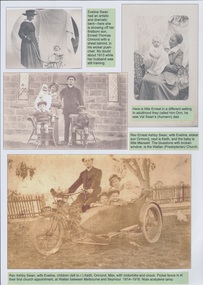
Copy of a photograph album page, Photographs of the era 1900 - 1920
... Max. Ormond Swan was the Rev. Val Aumann's father, and Rev. Ashby Swan was her grandfather. Ernest Ashby Swan: born 1885 Geelong; educated at Melbourne University and the Theological Hall. ...Max. Ormond Swan was the Rev. Val Aumann's father, and Rev. Ashby Swan was her grandfather. Ernest Ashby Swan: born 1885 Geelong; educated at Melbourne University and the Theological Hall. ...The photographs show members of the Swan family: the Rev. Ashby Swan, his wife Elvie and children Ormond, Keith and Max. Ormond Swan was the Rev. Val Aumann's father, and Rev. Ashby Swan was her grandfather. Ernest Ashby Swan: born 1885 Geelong; educated at Melbourne University and the Theological Hall. Ordained in 1913. Served at Gawler, Wallan, Burnley, Mornington, Balaclava and Caulfield Central - St. Giles. Died in 1950.Four photographs, annotated on an album page of members of the Swan family.swan, ashby, aumann, presbyterian, minister. -
 Sunshine and District Historical Society Incorporated
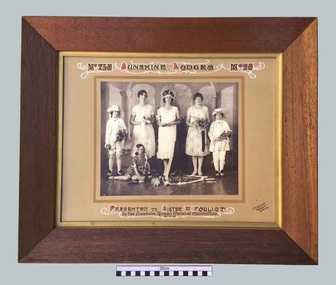
Photograph - QUEEN CARNIVAL 1926, J. W. Symons, 1926
... Minnie Pouliot was born in 1900 and lived at 169 Morris St, Sunshine from 1910 until her passing in 1983. She married John Caithness on 16 April 1939, and had one son Max Caithness. ...Minnie Pouliot was born in 1900 and lived at 169 Morris St, Sunshine from 1910 until her passing in 1983. She married John Caithness on 16 April 1939, and had one son Max Caithness. ...The Queen Carnival was conducted by the Melbourne and Metropolitan Council under the patronage of the Loyal Orange Institution. Minnie Pouliot became the Queen of Victory in Sunshine, and later (2 October 1926) she was crowned Queen of Queens in the district coronation ceremony at Footscray, competing with Footscray, Yarraville, and Williamstown districts. Miss Pouliot was again crowned Queen of Queens at the final coronation (6 October 1926) which was held at the Temperance Hall in Melbourne. The other women in the photograph are: Misses E. Thompson and J. Milne (Maids of Honour), Misses Marie Pritchard and Joyce Dedrick (train-bearers), and the flower girl is Jean Percy. Minnie Pouliot was born in 1900 and lived at 169 Morris St, Sunshine from 1910 until her passing in 1983. She married John Caithness on 16 April 1939, and had one son Max Caithness. Minnie Pouliot was an active member of the Sunshine Choral Society, and she also served on the Sunshine Hospital Auxiliary. Miss Pouliot was employed as Secretary at H. V. McKay until 1939, and she was also generally involved in community activities. Details sourced from the Trove web site indicate that she was involved in the Sunshine Tennis Club (1925), the Sunshine Flower Show (1925), as the Treasurer of the Playground Committee (1927), and as Secretary and exercise participant of the Sunshine Presbyterian Girls' Club (1937). Minnie Pouliot was the singer at a wedding (1938), and in 1925 Pouliot and Caithness are recorded as being members of the Loyal Sunshine Lodge. The above details have been compiled from information on the Trove web site including the Sunshine Advocate of 9 October 1926, and also from information supplied by Mr Max Caithness.This item is of historical significance because it indicates that an event such as the Queen Carnival used to be held 90 years ago, and It also reminds us that in the past membership of a Lodge was a normal part of the life of many citizens.Photographic image held within a glass faced brown wooden frame.No. 230 SUNSHINE LODGES No. 90 / PRESENTED TO SISTER M. POULIOT By the Sunshine Queen Carnival Committee 30-9-26 J. W. Symons Hopkins St Footscraym.pouliot, minnie pouliot, queen carnival, sunshine queen carnival, queen of queens, 30 september 1926, caithness, sunshine lodges 230 and 90, e. thompson, j. milne, marie pritchard, joyce dedrick, jean percy, 169 morris st sunshine, loyal orange institution, j. w. symons -
 Williamstown Historical Society Inc
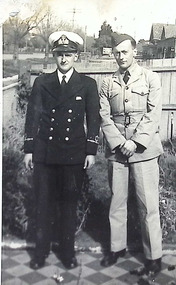
Photograph - Lt. Stan L. Heriot, RANR, and, Flt. Sgt. Max Heriot, RAAF, 1940's
... Max Heriot RAAF 1940's Royal Australian Navy WW2 Lt. Stanley Laurence HERIOT was born in Moonee Ponds on 26 March 1916. ...Lt. Stanley Laurence HERIOT was born in Moonee Ponds on 26 March 1916. He enlisted in the Royal Australian Navy on 21 August 1941 and reached the level of Lieutenant. Flight Sergeant Geoffrey Maxwell HERIOT (Service no: 401693) was in Moonee Ponds on 21 October 1914. He enlisted in the Royal Australian Air Force on 28 March 1941. Source: vwma.org.au lt. stan l. heriot, ranr, flt. sgt. max heriot, raaf, 1940's, royal australian navy, ww2 -
 Williamstown Historical Society Inc
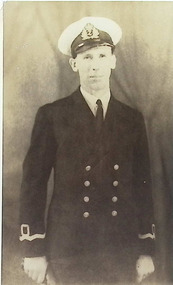
Postcard - Lt. Max Douglas Barnes, RNVR
... Lieutenant Max Douglas Barnes was born in Newport on 23 September 1911 and enlisted in the Royal Australian Navy on 27 August 1939 Source: vwma.org.au ...Max Douglas Barnes RNVR postcard Royal Australian Navy WW2 Lieutenant Max Douglas Barnes was born in Newport on 23 September 1911 and enlisted in the Royal Australian Navy on 27 August 1939 Source: vwma.org.au Postcard Lt. ...Lieutenant Max Douglas Barnes was born in Newport on 23 September 1911 and enlisted in the Royal Australian Navy on 27 August 1939 Source: vwma.org.au lt. max douglas barnes, rnvr, postcard, royal australian navy, ww2 -
 Surrey Hills Historical Society Collection
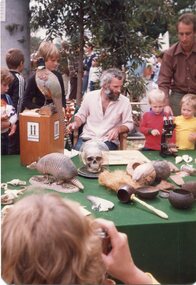
Photograph, Rudi Mineur at Surrey Hills Day, 1981, 1981
... born in Holland and grew up in Tasmania. He came to live in Surrey Hills with his wife Betsie and their 3 sons in 1974. Rudi worked as a taxidermist. With a keen interest in natural science, he is also a talented watercolourist and model-maker. His work included model-making for the Melbourne Museum and creating special effects for films including 'Mad Max...born in Holland and grew up in Tasmania. He came to live in Surrey Hills with his wife Betsie and their 3 sons in 1974. Rudi worked as a taxidermist. With a keen interest in natural science, he is also a talented watercolourist and model-maker. His work included model-making for the Melbourne Museum and creating special effects for films including 'Mad Max ...Rudi Mineur was born in Holland and grew up in Tasmania. He came to live in Surrey Hills with his wife Betsie and their 3 sons in 1974. Rudi worked as a taxidermist. With a keen interest in natural science, he is also a talented watercolourist and model-maker. His work included model-making for the Melbourne Museum and creating special effects for films including 'Mad Max'. He is also renowned for his sculpting of netsuke. He illustrated the book 'Growing up in the Goldrush' by Michael Dugan (pubd. 1989), who also lived locally. A colour photo in portrait format taken on Surrey Hills Day. He has greying hair and beard and seated behind a table on which are an assortment of stuffed animals / birds, shells, bones and a microscope.Nilrudi mineur, taxidermy, artist, netsuke, surrey hills day -
 Whitehorse Historical Society Inc.
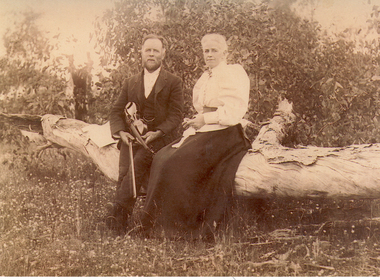
Photograph, Grandparents of Max Grant
... Black and white photo of Grandparents of Max Grant, Society Member.|Grandfather born October 1845 died 1916 Grandmother born May 1849 died 1925 Married 22 June 1873....Black and white photo of Grandparents of Max Grant, Society Member.|Grandfather born October 1845 died 1916 Grandmother born May 1849 died 1925 Married 22 June 1873. ...Grandfather, W.F. Grant, 1845 - 1916|Grandmother, C.J. Grant, 1849 - 1925|Married June 22, 1873Black and white photo of Grandparents of Max Grant, Society Member.|Grandfather born October 1845 died 1916 Grandmother born May 1849 died 1925 Married 22 June 1873.grant, max, william fraser, catherine .jane. -
 Melton City Libraries
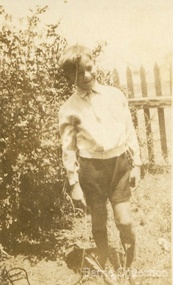
Photograph, Bruce Myers, 1931
... born in 1877 in Melton the youngest of four boys. Bruce the fourth son of Frederick and Martha, brother Frederick the eldest was followed by Marjorie and Edna. His brother Max...born in 1877 in Melton the youngest of four boys. Bruce the fourth son of Frederick and Martha, brother Frederick the eldest was followed by Marjorie and Edna. His brother Max ...My Story by Bruce Myers – June 2001 Arthur Bruce Myers was born on Wednesday morning on the 29/4/1925 at Kelvin Grove Hospital Bacchus Marsh. Background Information: Prepared by Niece Wendy Barrie. The early life of Bruce Myers “Burnbank” Ballarat Road Melton. The family home was built by his grandparents Ann nee Dowling and Henri Miers in 1867. His father Frederick was born in 1877 in Melton the youngest of four boys. Bruce the fourth son of Frederick and Martha, brother Frederick the eldest was followed by Marjorie and Edna. His brother Max was the youngest child. Father Frederick Myers attended Melton State School No 430 enrolling in 1881 and leaving in 1888 gaining his Merit Certificate No 116343. Bruce enrolled in July 1931 and completed and gaining his Merit Certificate in 1937. In 1938 he travelled to Melbourne Boys High School. Bruce was taught piano by his sister Marjorie, a respected Melton music teacher. He entered many Piano competitions and at the age of 10 winning the radio cup in the Junior Cavalcade at 3AW at Latrobe Street. At Melbourne Boys High School during his lunchtime was allowed to practice the piano in the basement for his recreation. He was pestered by another boy (name I have forgotten) a teacher intervened telling him to leave Myers alone. As a young child when listening to music he was able to on hearing it identify the key it was written in, due to his perfect pitch. I remember “Mum” Myers telling about the time they went to see Artur Rubeinstein at a concert, when Bruce was a small boy, it may have been on this occasion that he had noted the key of the piano composition. Bruce writes – In my early teens Max and I frequently accompanied the Williams boys, Wally and Jim on expeditions up the Toolern Creek near where the Gisborne exit now crosses it. The dogs would chase the rabbits into their burrows after placing nets over the burrows a ferret would be let in to burrow, much excitement would be involved in the rush to grab the rabbits as they bolted into the nets. In the same area I used too accompany Dad on an evening rabbit shoot (summer time). After the heat of the day the rabbits would emerge from their burrows at dusk. We would his behind the tree in silence, a mark contrast to the ferreting scene. Dad with the shotgun cocked would wait until 2 or 3 rabbits were close together then fire (Bang!). Hopefully killing two rabbits. They would have to be killed outright, otherwise they would run back into their burrows. Needless to say, one deafening shot ended the event, also it only cost one cartridge. Our only swimming pool was hole in the Toolern Creek at its junction with the blind creek at the eastern entrance to Melton. Dad swum there in the 1880’s teaching many of the youngsters to swim. Females never swum there to my knowledge. The dressing shed consisted of a 4 corrugated iron nailed to a wooden frame about 4 metres by 3 no floor or roof. We always walked the kilometre in our bathers anyway. The swimming hole once dried up leaving about 2 ft of mud. We Melton boys had so much fun fossicking around with our hands and feet and yanking out numerous eels, some very bid. I don’t know what happened to them all. No doubt Dad would have skun one or two for Mum to cook after cutting them up into short lengths. They used to jump around the pan when they were cooking. Dad accompanied by Max and I, frequently fished for eels in the Gillespie’s waterhole just below our place using a rod, line, sinker, hook baited with a worm, and a white floater so as to easily see when an eel was on the hook, so that it could quickly be pulled before it could anchor itself on and under water snag such as a tree root making it impossible to catch, or causing the line to be lost. At about the age of 8, I suddenly discovered amazingly easily means of movement. One day when I was riding the bike on rough bluestone road near the Presbyterian Church [Uniting Church] in Melton when the front fork broke and I landed on my right knee and right eye gashing both, the knee severely. I have carried the scars ever since. I started getting mobile by riding a scooter with good leg on the scooter and swinging the right leg, keeping is straight because bending it was too painful.Childhood photo of Brucelocal identities -
 Melton City Libraries
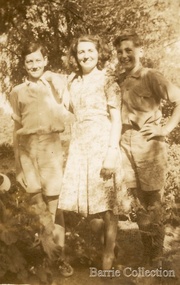
Photograph, Bruce, Marjorie and Max Myers, Unknown
... Maxwell Douglas MYERS was born on 10 August 1927 in Melton, Victoria, Australia.He died on 03 May 2005 in Geelong, Victoria, Australia. local identies Three of Frederick Thomas Myers and Martha Mary Watson' children Bruce, Marjorie and Max Myers Photograph Barrie Collection ...Marjorie Gretchen MYERS was born on 21 February 1912 in Melton, Victoria, Australia.She died on 10 September 2004 in Frankston, Victoria, Australia. Arthur Bruce MYERS was born on 29 April 1925 in Melton, Victoria, Australia.He died on 26 March 2015 in Melbourne, Victoria, Australia. Maxwell Douglas MYERS was born on 10 August 1927 in Melton, Victoria, Australia.He died on 03 May 2005 in Geelong, Victoria, Australia.Three of Frederick Thomas Myers and Martha Mary Watson' childrenlocal identies -
 Melton City Libraries
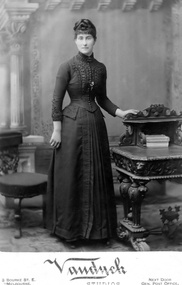
Photograph, Elizabeth (Lizzie) Daley, 1907, Unknown
... born c.1865, died 8 Aug 1949. Daughter of William and Eliza, Melton, sister of Ann. The Daley family's cottage was on High St north nearest to Alexander St. The photo of William Daley was taken in front of his Bootmaker Shop. The shop remained in the family later being run as a Haberdashery shop by Lizzie his second daughter John Lugg rented the cottage after Lizzie death. Max...born c.1865, died 8 Aug 1949. Daughter of William and Eliza, Melton, sister of Ann. The Daley family's cottage was on High St north nearest to Alexander St. The photo of William Daley was taken in front of his Bootmaker Shop. The shop remained in the family later being run as a Haberdashery shop by Lizzie his second daughter John Lugg rented the cottage after Lizzie death. Max ...Elizabeth (Lizzie) Daley, born c.1865, died 8 Aug 1949. Daughter of William and Eliza, Melton, sister of Ann. The Daley family's cottage was on High St north nearest to Alexander St. The photo of William Daley was taken in front of his Bootmaker Shop. The shop remained in the family later being run as a Haberdashery shop by Lizzie his second daughter John Lugg rented the cottage after Lizzie death. Max Myers built a house on the east side of the cottage in 1952. The cottage was demolished and the weatherboard house was eventually moved to another location when the street became a shopping area 1970’s. The Condon family lived beside Lizzie’s ShopPhotographs of Elizabeth Daley taken different periods of her lifelocal identities, pioneer families -
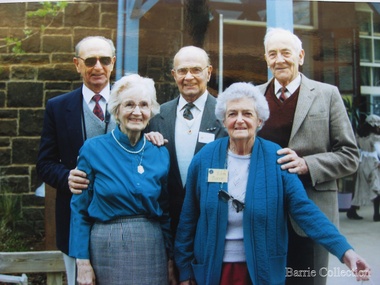 Melton City Libraries
Photograph, Max, Marjorie (Butler), Fred, Edna (Barrie) and Bruce Myers, 1995
... born on 10 August 1927 in Melton, Victoria, Australia.He died on 03 May 2005 in Geelong, Victoria, Australia. Local identities pioneer families education Frederick Thomas Myers and Martha Mary Watson's children at Melton Primary School 125 year anniversary, 1995 Max, Marjorie (Butler), Fred, Edna (Barrie) and Bruce Myers Photograph Barrie Collection ...Past students of Melton State School 430. Frederick John Watson MYERS was born on 01 October 1908 in Melton, Victoria,Australia.He died on 07 February 2001. Marjorie Gretchen MYERS was born on 21 February 1912 in Melton, Victoria, Australia.She died on 10 September 2004 in Frankston, Victoria, Australia. Eva Edna MYERS was born on 15 October 1918 in Melton, Victoria, Australia.She died on 31 January 2008 in Bacchus Marsh, Victoria, Arthur Bruce MYERS was born on 29 April 1925 in Melton, Victoria, Australia.He died on 26 March 2015 in Melbourne, Victoria, Australia. Maxwell Douglas MYERS was born on 10 August 1927 in Melton, Victoria, Australia.He died on 03 May 2005 in Geelong, Victoria, Australia.Frederick Thomas Myers and Martha Mary Watson's children at Melton Primary School 125 year anniversary, 1995local identities, pioneer families, education
