
Showing 8627 items matching " canning"
-
 Tatura Irrigation & Wartime Camps Museum
Book, The Australian Deciduous Canning Fruitgrowing Industry, 1971
... The Australian Deciduous Canning Fruitgrowing Industry...canning...An economic survey 1965/66 to 1968/69 of the Australian deciduous canning fruitgrowing industry...An economic survey 1965/66 to 1968/69 of the Australian deciduous canning fruitgrowing industry canning fruitgrowing decidious fruitgrowing economic survey Cream and blue cover, black writing. ...An economic survey 1965/66 to 1968/69 of the Australian deciduous canning fruitgrowing industryCream and blue cover, black writing.canning, fruitgrowing, decidious fruitgrowing, economic survey -
 Sunbury Family History and Heritage Society Inc.
Photograph, Rabbit Canning
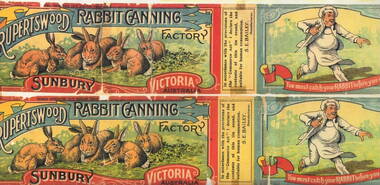
... Rabbit Canning...The Rabbit Canning Factory was established on land that was part of the Rupertswood estate, near the present site of Sunbury Secondary College. ...Rupertswood Rabbit Canning Factory Sunbury...Rabbit Canning Photograph ...The Rabbit Canning Factory was established on land that was part of the Rupertswood estate, near the present site of Sunbury Secondary College. Tins of rabbit meat produced at the factory were sold on the local and overseas markets. .The venture to can rabbit meat was seen as a lucrative move to try and manage the multitude of rabbits that had been introduced into Australia in the early days of European settlement.A digital coloured photograph of a coloured label that was used on tins of rabbit meat.Rupertswood Rabbit Canning Factory Sunburyrabbits, labels, rabbit canning factory, sunbury -
University of Melbourne, Burnley Campus Archives
Document, Notes on the growing of garden peas for seed crops; or for canning
... Notes on the growing of garden peas for seed crops; or for canning......canning...department of agriculture vegetables garden peas canning Notes produced by Dept. of Agriculture, Victoria Notes on the growing of garden peas for seed crops; or for canning Document ...Notes produced by Dept. of Agriculture, Victoriadepartment of agriculture, vegetables, garden peas, canning -
 University of Melbourne, Burnley Campus Archives
Booklet - List, Department of Agriculture, List of Fruit Trees, etc., Recommended for Cultivation as Suitable for Marketing, Canning, Drying, Exporting, etc, 1892-1893
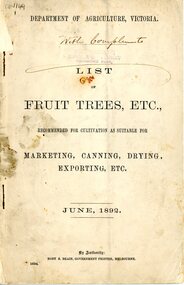
... List of Fruit Trees, etc., Recommended for Cultivation as Suitable for Marketing, Canning, Drying, Exporting, etc....List of Fruit Trees, etc., Recommended for Cultivation as Suitable for Marketing, Canning, Drying, Exporting, etc. Booklet List Department of Agriculture Government Printer ...1. Booklet issued by Dept. of Agriculture. Includes: Name, Size, Use, Quality, Season, Colour, Origin and Remarks. dated June, 1892. 2. Exercise book with a cover stating "List of Fruit Trees, etc., Grown at the Royal Horticultural Gardens, Richmond Park, Burnley. 1893. but nothing in it except a prospectus. 3. Small card with the logo of the Department of Agriculture Victoria and Burnley Horticultural College Burnley Gardens Swan Street, Richmond, 3121 Phone (03) 81 1346.1.With Compliments handwritten and stamp Geo. Neilson, Curator, R. H. Gardens, Richmond Park.department of agriculture, department of agriculture victoria, george neilson, list of fruit trees, 1892, marketing of fruit trees, canning of fruit, drying fruit, exporting fruit, prospectus 1893 -
University of Melbourne, Burnley Campus Archives
Article, F.M Read, A census of Goulburn Valley canning fruit trees, 1953
... A census of Goulburn Valley canning fruit trees...department of agriculture journal f.m. read Reprint of article by F.M Read from Journal of the Department of Agriculture No.167/53. 2 copies A census of Goulburn Valley canning fruit trees Article F.M Read ...Reprint of article by F.M Read from Journal of the Department of Agriculture No.167/53. 2 copiesdepartment of agriculture, journal, f.m. read -
 Kingston Arts
Painting, John Canning, Twilight
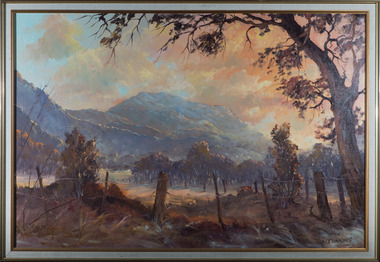
... John Canning...Twilight Painting John Canning ... -
 Kingston Arts
Painting, John Canning, Chelsea Beach
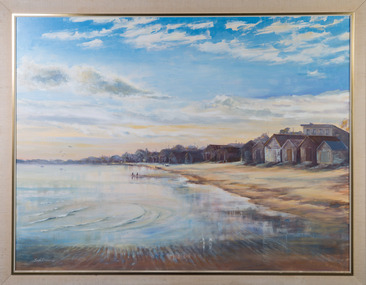
... John Canning...Chelsea Beach Painting John Canning ... -
Moorabbin Air Museum
Book - CHARLIE MIKE CHARLIE, Clive Canning, 1978
... Clive Canning...CHARLIE MIKE CHARLIE Book CHARLIE MIKE CHARLIE Clive Canning C.J. Publications ... -
 Kiewa Valley Historical Society
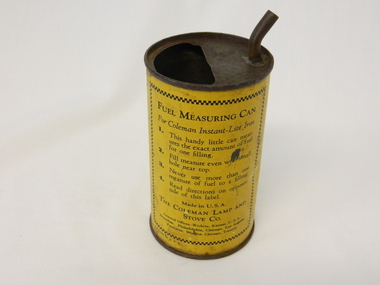
Can Fuel Measuring, circa 1950
... The hand held self heating(kerosene) iron for which this filling can was provided ,was introduced as a time saving and more convenient iron for pressing clothes and other cloth fabrics. ...The can is made from tin. See KVHS 0347B- Instruction sheet; KVHS 0347C- Wrench....On one side of the can in black print on yellow background is "FUEL MEASURING CAN" underneath is "For Coleman Instant-Lite Iron" underneath are four numbered paragraphs detailing the use of this can. ...Can Fuel Measuring Coleman Lamp and Stove Co. ...The 1950's saw a revolution in small appliances for use in the average household. The hand held self heating(kerosene) iron for which this filling can was provided ,was introduced as a time saving and more convenient iron for pressing clothes and other cloth fabrics. It replaced irons needing an external fire source to heat the ironing plate. These irons continued to be in service, even when electricity was available in cities and larger rural towns. This item was used before and during the electricity supplies available from the Kiewa Hydro Electricity Scheme. These irons remained in use within regional rural areas that had limited or unreliable electrical reticulation and the ability to service them from this filling can was an essential part.n the 1950s and later the Kiewa Valley was still a relatively isolated region which was home to rural properties and small settlements. The availability of electricity and or the financial means to afford new types of electric hand irons ensured that older and sometimes less efficient ironing appliances remained for an extended period covering the 1960s to 1970s. Kerosene products, such as the kerosene self heating (KVHS 0347A) iron and this kerosene filling item, was a cheaper method for farm based domestic and other rural activities requiring a heat source. The use of kerosene as a heat/light source was able to be supplied in bulk and able to be used when floods severed vital roads into this region. The supply of electricity was in summer time subject to interruption from bush fire damaged wooden poles carrying the electrical cables. Self sufficiency by rural populations was the backbone of survival and the ability to store energy sources "on the farm" was a prerequisite of isolated regions, such as the Kiewa Valley, circa 1950s.This specially spout fitted can was provided with the Coleman self heating kerosene iron (see KVHS 0347A). On one side of the half enclosed top of the can there is a small spout(for poring the appropriate liquid into the egg shaped fount container) at the rear end of the hand iron. The can is made from tin. See KVHS 0347B- Instruction sheet; KVHS 0347C- Wrench.On one side of the can in black print on yellow background is "FUEL MEASURING CAN" underneath is "For Coleman Instant-Lite Iron" underneath are four numbered paragraphs detailing the use of this can. Below this is the name and places of manufacture. On the other side of the can is printed "BE SURE" with filling and maintenance instructionskerosene can, ironing, domestic appliances, household appliances -
 National Wool Museum
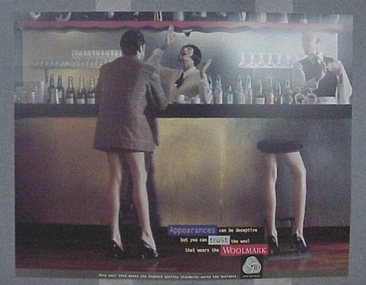
Archive - Woolmark Poster, The Woolmark Company, 1975
... Laminated poster depicting a bar scene with a man sitting on a stool with women's legs, with the wording "Appearances can be deceptive but you can trust the wool that wears the WOOLMARK."...Appearances can be deceptive/ but you can trust the wool/ that wears the WOOLMARK....Wool Marketing Poster Gender Bar Ephemera Advertising Appearances can be deceptive/ but you can trust the wool/ that wears the WOOLMARK. ...Poster, promoting Pure New Wool.Laminated poster depicting a bar scene with a man sitting on a stool with women's legs, with the wording "Appearances can be deceptive but you can trust the wool that wears the WOOLMARK."Appearances can be deceptive/ but you can trust the wool/ that wears the WOOLMARK.wool marketing, poster, gender, bar, ephemera, advertising -
 Dandenong/Cranbourne RSL Sub Branch
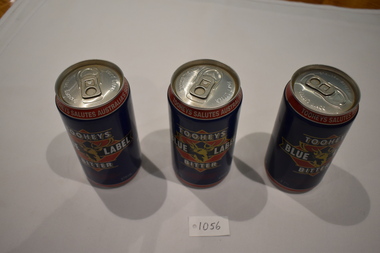
Memorabilia - 3 x Tooheys Blue Bitter cans
... Cans of Tooheys Blue Label Bitter cans. Depicting the three Services in pictures....On front of can Thanks for the Freedom. " Air crews wanted now for the RAAF " Can 1. ..."Join the A.I.F This is serious! Enlist now. Can 3. James Northfield V6723 Cans of Tooheys Blue Label Bitter cans. ...Special Edition produced by Toohey's Commemorating the Armed Services of Australia.Cans of Tooheys Blue Label Bitter cans. Depicting the three Services in pictures.Around the rim at the top of each can the words - Tooheys Salutes Australia's Second World War Veterans. On front of can Thanks for the Freedom. " Air crews wanted now for the RAAF " Can 1. Artist unknown V4297 Thanks for the Freedom. "Sail the seas with the Navy " Can 2. Roland Hilder N3 Thanks for the Freedom. "Join the A.I.F This is serious! Enlist now. Can 3. James Northfield V6723beer, tooheys, commemorative beer can -
 Flagstaff Hill Maritime Museum and Village
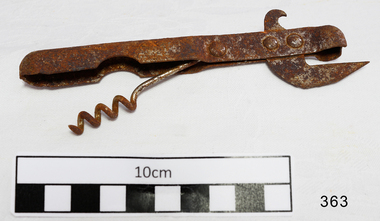
Domestic object - Can Opener, Bottle Opener & Corkscrew
... ...Canning...In the 19th century, decades after the invention of canning, there were virtually no can openers. ...Metal can opener, chromed, with bottle opener, and a corkscrew seated in the handle....In the 19th century, decades after the invention of canning, there were virtually no can openers. ...It took 15 years to invent the can. It took 100 more to invent a standard way to open it. In the 19th century, decades after the invention of canning, there were virtually no can openers. Canned food, such as sardines, came with its own "key" to peel back the tin lid. Birth of the can One of the oddest things about the can opener is that the can predates it by almost 150 years. Though common today, cans were once military-grade technology. In 1795, Napoleon, to whom the phrase "an army marches on its stomach" is attributed, offered 12,000 francs to anyone who could find a way to preserve food. Without any knowledge of bacteria or their role in food spoilage, scientists didn't even know where to begin. It took 15 years before a chef named Nicholas Appert claimed the prize after successfully jarring food. Soon after that, his countryman Philippe de Girard came up with a variant on Appert's method—metal tins—and sold the idea to the British. Spoiled food, and the sickness it caused, was a widespread problem. The public would have benefited from canned food, but for decades cans were almost exclusively for the army and the navy. The canning process, with its hours of boiling and steaming, its scrupulous cleanliness, its heated metal, and its need for a great deal of disposable material, made canned food far too expensive for anyone but the military. No can openers were needed or even possible. The metal of early cans was too thick to make openers practical. Soldiers and sailors had plenty of sharp objects on hand and made ample use of them when they wanted to eat. During the 19th century, the process of canning was refined and mechanised, and the metal wall of the average can slimmed down enough that a civilian could get it open—if that civilian had the right tool. No one had that tool yet, so early cans had to open themselves. In other words, they came with built-in openers. The result was a confusing but pleasing free-for-all, in terms of product engineering. Each type of food came with its own kind of can, and each kind of can came with its own kind of opener. Tinned fish and meat were often sold in rectangular cans. These cans were fitted with a "key" that would roll down the top of the can. Coffee, beans, and other types of meat were packaged in cylinders with metal strips that could be peeled back with their own kinds of built-in keys. Cans of milk, which didn't need to be completely opened, came with puncture devices. As tinned food became more common, its containers became more regular. A nice cylindrical can became the norm, and, as these cans filled kitchens, more engineers put their minds to finding a convenient way to open all of them. The first standalone can opener worked on a simple principle: point, stab, and pull. From the mid-19th century to the end of World War I, the typical can opener looked roughly like a wrench, if the lower 'jaw' of the wrench were replaced with a blade. People used the blade to puncture the top of the can near its edge, push the upper jaw against the side of the can, and drag the blade through the metal along the rim. Because meat was the first and most popular canned substance, these can openers were often shaped to look like cows and given the nickname 'bully beef can openers'. The bully beef can opener, popular in the mid-19th century, resulted in many lost fingers. Later, a corkscrew was added that was seated in the handle, and could be pulled out for use. Bully beef can openers were so common, effective, and sturdy that they are still frequently available on collectors' sites. Some are advertised as “still working,” and every last one of them is, without a doubt, soaked in the blood of our ancestors. Dragging a sharp blade along the edge of a can is certain to cause injury sooner or later. So once people got a reliable can shape and a reliable way to get the can open, the search was on for a reliable way to get a can open without the possibility of losing a finger. The answer came in 1925, from the Star Can Opener Company of San Francisco. This is probably the first can opener that resembles the one people have in their kitchens today. Instead of using a blade to pry open a metal can, buyers could clamp the edge of the can between two wheels and twist the handle of one of the wheels to move the blade around the lip. The Star can openers weren't perfect. Compared to the bully beef model, they were flimsy and breakable, but they probably prevented a few injuries. Six short years after the Star model came to market, the first electric can opener was invented. It was patented in 1931 by the Bunker Clancey Company of Kansas City, who had already been sued by the Star Can Opener Company for trying sell a double-wheeled can opener like the Star model (the case was dismissed). The electric can opener must have seemed like the wave of the future and a sure-fire seller, but it proved to be too far ahead of its time. In 1931 not that many households had electricity, and those that did weren't interested in buying can openers. The Bunker Clancey Company was subsequently bought by the Rival Company, which still makes small appliances like can openers today. It took another 25 years for electrically powered can openers to become practical. In the 1950s, Walter Hess Bodle and his daughter, Elizabeth Bodle, developed an electric can opener in the family garage. Walter came up with the opener's blades and motor, and Elizabeth sculpted the outside. Their can opener was a free-standing unit that could sit on the kitchen counter. The Udico brand of the Union Die Casting Company put it on the market in time for Christmas in 1956 and had great success with it. Over the next few years it came out in different styles and colours, and, like the bully beef can opener, has become a collector's item. Also like the bully beef model, Udico can openers often still work. They don't make 'em like they used to. Although there have been some design changes and refinements over the last sixty years, there have yet to be any more leaps forward in can opener technology. If you're resentfully opening a can, you are almost certainly doing it using the Star design, manually forcing the can between two wheels, or the Bodle design, clamping the can into a free-standing electrical opener. Whether or not you enjoy your holiday meals, at least you can be happy that you are not getting poisoned by your own food or cutting open your hand with the blade you use to get at it. That's something, right?The can opener, Bottle opener and the corkscrew are still very important and essential items in most kitchens.Metal can opener, chromed, with bottle opener, and a corkscrew seated in the handle.None.flagstaff hill, warrnambool, shipwrecked-coast, flagstaff-hill, flagstaff-hill-maritime-museum, maritime-museum, shipwreck-coast, flagstaff-hill-maritime-village, canning, can opener, corkscrew, bottle opener, kitchen equipment -
 Wodonga & District Historical Society Inc
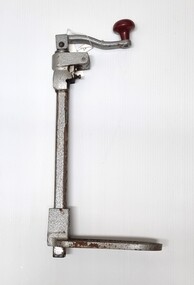
Functional object - Caterer's Can Opener, Mitchell & Cooper of England, 1950s
... Caterer's Can Opener...This Can opener was used at the Bandiana Golf Club near Wodonga. ...Cast iron commercial can opener with rotating handle including a red knob....Underneath base plate "THE BONZER /TRADEMARK/ CATERER'S/ CAN OPENER/ MADE IN ENGLAND"...Caterer's Can Opener Functional object Caterer's Can Opener Mitchell & Cooper of England ...This Can opener was used at the Bandiana Golf Club near Wodonga. Bonzer was a trademark of Mitchell & Cooper of England. Alfred Mitchell & Arthur Cooper started as silversmiths and engravers in 1879 in East London. The family owned business is still operated by Guy Cooper, great grandson of Arthur Cooper. Bandiana Army Golf Club 18 hole course opened in 1949. The Club reached its highest membership with 400 members in the late 1980s. Members played their last competition at this course on 30th October 2103.This utensil was used at the Bandiana Army Golf Course near Wodonga.Cast iron commercial can opener with rotating handle including a red knob.Underneath base plate "THE BONZER /TRADEMARK/ CATERER'S/ CAN OPENER/ MADE IN ENGLAND"caterers' utensils, kitchen utensils -
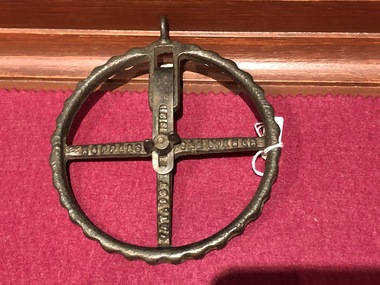 Mont De Lancey
Can opener, Koppers, Circa 1910
... Circular cast iron can opener with adjustable screw and spike to pierce can. ...Koppers Can Opener Pat. Oct 99 ...Tin openers Kitchen equipment Kitchenware Koppers Can Opener Pat. Oct 99 Circular cast iron can opener with adjustable screw and spike to pierce can. ...Circular cast iron can opener with adjustable screw and spike to pierce can. Outside edge is scalloped shaped and has a small knob to hold onto the can. c1890/1910Koppers Can Opener Pat. Oct 99 tin openers, kitchen equipment, kitchenware -
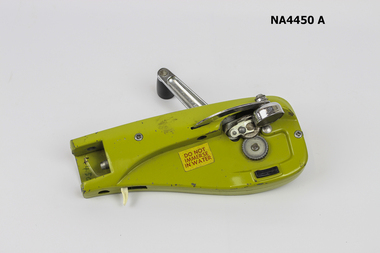 Whitehorse Historical Society Inc.
Domestic object - Can Opener
... Can opener. Green; wall mounting; with magnetic lid holder....Can-o-mat...domestic items utensils Can-o-mat Can opener. Green; wall mounting; with magnetic lid holder. ...Can opener. Green; wall mounting; with magnetic lid holder.Can-o-matdomestic items, utensils -
National Vietnam Veterans Museum (NVVM)
Functional Object, Can of Butter Concentrate
... Can of Butter Concentrate...Can...Stainless steel can. Black and gold label. Butter concentrate for use in warm climate...Instructions on can for use (unreadable)...Can Butter concentrate Instructions on can for use (unreadable) Stainless steel can. ...Stainless steel can. Black and gold label. Butter concentrate for use in warm climateInstructions on can for use (unreadable)can, butter concentrate -
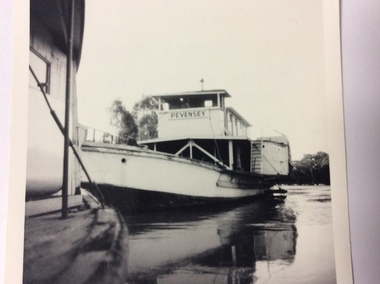 Port of Echuca
Black and white square photograph, 1974
... The height of the river can also be seen on the N.S.W bank. ...A very small portion of the Canberra can be seen. ...On the front of the photograph the words Pevensey can be seen. On the back of the photograph hand written in ink are the words" Pevensey 1974 floods. ...The fence on top of the wharf can be seen the other side of the Pevensey. ...This photograph shows the height of the river in the 1974 floods. The fence on top of the wharf can be seen the other side of the Pevensey. The height of the river can also be seen on the N.S.W bank. This photograph is significant because it shows the height of the river in the 1974 floods.This is a small square black and white photograph of the P.S Pevensey tied up to the Echuca wharf in the 1974 floods. The P.S Canberra is tied up in front of the Pevensey. A very small portion of the Canberra can be seen. On the front of the photograph the words Pevensey can be seen. On the back of the photograph hand written in ink are the words" Pevensey 1974 floods. Beside wharf. Canberra in foreground."1974 floods, flooding, p.s.pevensey, echuca wharf -
 Bacchus Marsh & District Historical Society
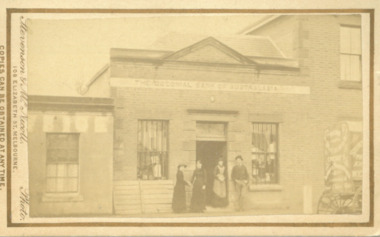
Photograph, Shop next to Royal Hotel 200A Main Street Bacchus Marsh 1883
... At a later stage the building became part of the Royal Hotel which can be seen to the right of the building. ...Three women and a man can be seen standing in front of the shop. ...Photo. 108 Elizabeth St. Melbourne. COPIES CAN BE OBTAINED AT ANY TIME. On the back: LIGHT & TRUTH inscribed on a banner surmounted by a representation of the rising sun. ...Three women and a man can be seen standing in front of the shop. ...The building in this image was built by J. I. Murray for use as a Bank premises. The National Bank of Australasia opened a branch in the building in 1862 and remained there until 1865. The Colonial Bank of Australasia then occupied the building from 1865 until 1872. At the time this image was taken in 1883 the building was in use as a shop, although a sign saying 'National Bank of Australasia' could still be seen on the building. Goods for sale can clearly be seen in the windows and the photographers’ wagon or cart can be partly seen to the right of the picture. At a later stage the building became part of the Royal Hotel which can be seen to the right of the building. The small building to the left of the picture was used as a printing office by the West Bourke and South Grant Guardian newspaper between 1865 and 1872.Small sepia unframed photograph on card with gold border framing photograph. Housed in the album, 'Photographs of Bacchus Marsh and District in 1883 by Stevenson and McNicoll'. The image shows a shop in Main Street Bacchus Marsh in 1883. Goods for sale can be seen in the windows but there is no signage on the building to indicate what type of shop it is. A sign across the upper facade reads 'Colonial Bank of Australasia' but this bank had vacated this location by 1872. Three women and a man can be seen standing in front of the shop. Two of the women appear to be shaking hands. The woman standing in the doorway is wearing an apron and may be the shop owner or assistant. Just visible at the edge of the photo can be seen a buggy with advertisements on the back and side. Letters that can be distinguished suggest that in all probability this is the carriage used by Stevenson and McNicoll, Photographers, on their trips around rural towns and countryside. On the front: Stevenson & McNicoll. Photo. 108 Elizabeth St. Melbourne. COPIES CAN BE OBTAINED AT ANY TIME. On the back: LIGHT & TRUTH inscribed on a banner surmounted by a representation of the rising sun. Copies of this Portrait can be had at any time by sending the Name and Post Office Money Order or Stamps for the amount of order to STEVENSON & McNICOLL LATE BENSON & STEVENSON, Photographers. 108 Elizabeth Street, MELBOURNE. stevenson and mcnicoll 1883 photographs of bacchus marsh and district, shops bacchus marsh vic., banks bacchus marsh vic., commercial vehicles -
 Friends of Westgarthtown
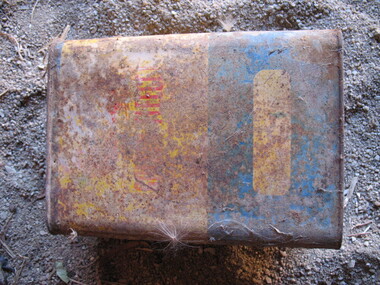
Container - Petrol can
... ...can...Bottom half of can is blue and top half is yellow with red writing....Printed on front of can is "Golden Fleece" in red writing. A picture of a ram is printed in red above the writing....Container Petrol can ...Rectangular petrol can with rounded edges. Small handle on top with opening and screw on lid. Bottom half of can is blue and top half is yellow with red writing.Printed on front of can is "Golden Fleece" in red writing. A picture of a ram is printed in red above the writing.containers, commercial, can, petrol, fuel, oil, golden fleece, rural, farming, machinery. -
 City of Moorabbin Historical Society (Operating the Box Cottage Museum)
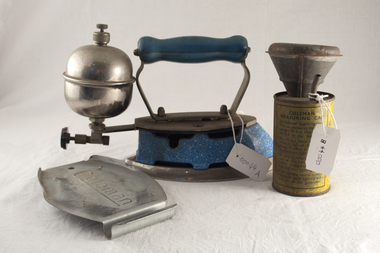
Domestic object - Kitchen equipment, spirit-fuelled sad iron, c1920
... A) spirit- fuelled, sad iron with chrome plated sole c1920, and metal trivet The iron is blue enamel with a white speckled body, with a hemispherical tank for the Coleman 'Lighting Petrol' that provided the heat for smoothing the material B) Coleman Fuel measuring can and funnell...Metal Trivet/stand " COLEMAN" ; Petrol can " COLEMAN" / MEASURING CAN / for INSTANT LIGHTING IRON/ with printed instructions...Metal Trivet/stand " COLEMAN" ; Petrol can " COLEMAN" / MEASURING CAN / for INSTANT LIGHTING IRON/ with printed instructions A) spirit- fuelled, sad iron with chrome plated sole c1920, and metal trivet The iron is blue enamel with a white speckled body, with a hemispherical tank for the Coleman 'Lighting Petrol' that provided the heat for smoothing the material B) Coleman Fuel measuring can and funnell Domestic object Kitchen equipment, spirit-fuelled sad iron Coleman Lamp Stove Company Ltd. ...Sad-irons or "solid" irons were made by blacksmiths and used to smooth out material by pressing the hot iron over it. A piece of sheet -iron was placed over the kitchen fire and the irons placed on it could be heated whilst remaining clean of ash.. The women used 2 irons - one heating while the other was used. Thick cloth or gloves protected their hands from the hot irons. The handle was removed from the cool iron and re- attached to remove the hot iron from the fire. The cool iron was replaced on the fire or stove to heat again. These irons were cleaned with steel wool to prevent them marking the material. If the iron was too hot the material would scorch. Most homes set aside one day for ironing and some large households had an ironing room with a special stove designed to heat irons. However, most women had to work with a heavy, hot iron close to the fireplace even in summer. Late in the 19thC designers experimented with heat retaining fillings for these irons. William Coleman began selling Kerosene lanterns in 1900 in Kingfisher, Oklahoma, USA. He moved to Wichita, Kansas in 1902 and the company became world wide. The company also produced a range of cooking stoves and domestic irons. This spirit- fuelled flat iron was very popular in 1920s - 30s These sad irons remind us of the difficult circumstances experienced in their daily routines by the pioneers and early settlers of Moorabbin Shire The family of Miss M Curtis were early settlers in Moorabbin ShireA) spirit- fuelled, sad iron with chrome plated sole c1920, and metal trivet The iron is blue enamel with a white speckled body, with a hemispherical tank for the Coleman 'Lighting Petrol' that provided the heat for smoothing the material B) Coleman Fuel measuring can and funnellMetal Trivet/stand " COLEMAN" ; Petrol can " COLEMAN" / MEASURING CAN / for INSTANT LIGHTING IRON/ with printed instructionssad iron, kitchen equipment, coleman william, kansas, oklahoma, pioneers, early settlers, market gardeners, sewing, craftwork, clothing, moorabbin, brighton, bentleigh, fireplaces, stoves, petrol fuelled irons, spirit flat irons, coleman lamp stove co. ltd. -
 National Vietnam Veterans Museum (NVVM)
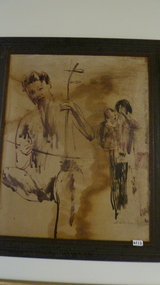
Painting, 'Tin Can Fiddle", c. 1962 - 1978
... 'Tin Can Fiddle"...Blackened frame depicting Vietnamese man playing a 'Tin Can Fiddle' Vietnamese woman holding child in arms in the side/background....(On Back) Joy with a beer can fiddle 60 Dollars....'Tin Can Fiddle" Painting Painting Bruce Fletcher ( Hon . ...Painting / Sketch in Black (Sienna?) in rough timber. Blackened frame depicting Vietnamese man playing a 'Tin Can Fiddle' Vietnamese woman holding child in arms in the side/background.(On Back) Joy with a beer can fiddle 60 Dollars.artwork - vietnamese -
 Sunshine and District Historical Society Incorporated
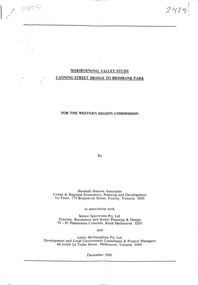
Document - Maribyrnong Valley Study Canning Street Bridge to Brimbank Park December 1990, Henshall Hansen Associates
... Maribyrnong Valley Study Canning Street Bridge to Brimbank Park December 1990...Typed Report Maribyrnong Valley Study Canning Street Bridge to Brimbank Park December 1990 for the Western Region Commission...Maribyrnong Valley Maribyrnong River Canning Street Bridge Typed Report Maribyrnong Valley Study Canning Street Bridge to Brimbank Park December 1990 for the Western Region Commission Maribyrnong Valley Study Canning Street Bridge to Brimbank Park December 1990 Document Maribyrnong Valley Study Canning Street Bridge to Brimbank Park December 1990 Henshall Hansen Associates ...Typed Report Maribyrnong Valley Study Canning Street Bridge to Brimbank Park December 1990 for the Western Region Commissionmaribyrnong valley, maribyrnong river, canning street, bridge -
 National Wool Museum
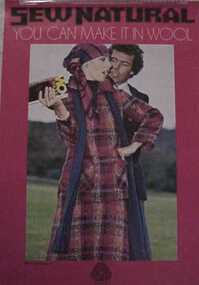
Poster, Sew natural: you can make it in wool
... Sew natural: you can make it in wool...Sew natural: you can make it in wool, c1960's...Sew natural: you can make it in wool...Sew natural: you can make it in wool, c1960's Textile Design Textile Industry - history Alexander Lau Pty Ltd Textile Design Textile Industry - history Sew natural: you can make it in wool Sew natural: you can make it in wool Poster ...Sew natural: you can make it in wool, c1960'sSew natural: you can make it in wooltextile design textile industry - history, alexander lau pty ltd, textile design, textile industry - history -
National Wool Museum
Poster, Sew natural: you can make it in wool
... Sew natural: you can make it in wool...Sew natural: you can make it in wool, c1960's....Sew natural: you can make it in wool...Sew natural: you can make it in wool, c1960's. Textile Design Textile Industry - history Alexander Lau Pty Ltd Textile Design Textile Industry - history Sew natural: you can make it in wool Sew natural: you can make it in wool Poster ...Sew natural: you can make it in wool, c1960's.Sew natural: you can make it in wooltextile design textile industry - history, alexander lau pty ltd, textile design, textile industry - history -
 Warrnambool and District Historical Society Inc.
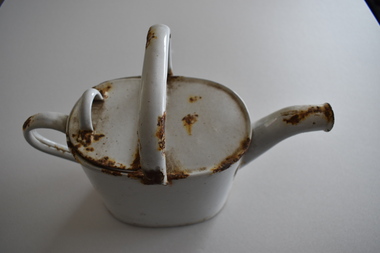
Watering Can, C1900
... Watering Can...Today watering cans are still used but mostly they are made of plastic although some cans are made in other materials for decorative reasons. ...The can is very rusted. ...It has two handles, a spout and a hinged lid. The can is very rusted. Watering Can Watering Can ...This watering can would have been used some decades ago to water pot plants and small plants in the garden requiring individual watering. Today watering cans are still used but mostly they are made of plastic although some cans are made in other materials for decorative reasons. Enamel is a hardy material but it chips when the object is knocked or dropped. This watering can has no known local provenance but is retained as an example of a common household item from early in the 20th century. This is an oval-shaped enamel watering can. It has two handles, a spout and a hinged lid. The can is very rusted. ‘Made in England’vintage household items, vintage watering can, enamel watering can, warrnambool -
 Puffing Billy Railway
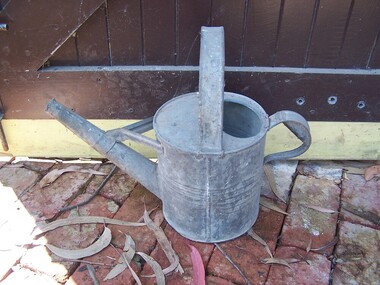
Watering Can with a large spout
... Watering Can A watering can, with a large spout. Its former use is currently no known, but may have been used for oil, chemicals or even sand....Watering Can with a large spout made of tin ...Historic - Railway Permanent Way and Works - track equipment - Watering Can puffing billy watering can Watering Can with a large spout made of tin Watering Can with a large spout ...Watering Can A watering can, with a large spout. Its former use is currently no known, but may have been used for oil, chemicals or even sand.Historic - Railway Permanent Way and Works - track equipment - Watering CanWatering Can with a large spout made of tin puffing billy, watering can -
 Halls Gap & Grampians Historical Society
Photograph - B/W, C 1960s
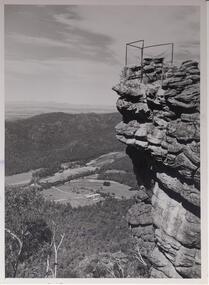
... The Mt. William range can be seen middle left in the photo....On back notes "bellfield' but neither Bellfield Peak or Bellfield lookout can be seen....The Mt. William range can be seen middle left in the photo. Photograph B/W ...Lookout is known as 'The Pinnacle'. Valley is the Fyans Valley.Photo shows rocky outcrop surrounded by a wire fence and overlooking a valley with roads,some cleared areas and buildings. The Mt. William range can be seen middle left in the photo.On back notes "bellfield' but neither Bellfield Peak or Bellfield lookout can be seen.scenery, lookouts -
 Bendigo Military Museum
Equipment - CONTAINER, OIL, 1919
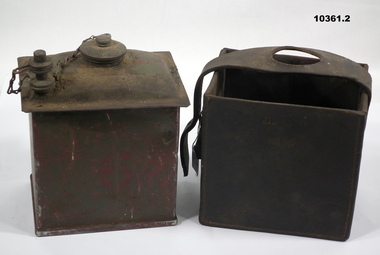
... This item is believed to be an oil can for use with a Vickers Machine Gun....A leather receptacle that holds the oil can. It has a long strap (with a hole in the centre). ...Stamped into the side of the leather holder is :- "Can Oil No. 3", "Rgd 1919". There is also a proof mark with a circle with 2 arrows crossed on it with letters "1B" under the circle....This item is believed to be an oil can for use with a Vickers Machine Gun. Vickers Machine Gun Oil Can Stamped into the side of the leather holder is :- "Can Oil No. 3", "Rgd 1919". ...Refer to the service of VX81693, "John Claude William Le Deux". This item is believed to be an oil can for use with a Vickers Machine Gun.1. Rectangular, strong, tin container. It was painted drab olive colour. It has a screw top oil filler on top. It is brass and the brass cap is secured with a small chain. The diameter of the threaded opening is approx 26mm. There is a small tube on the top in one corner. It is brass and its screw cap is also held with a chain. Its opening is about 2 mm diam. The top section has a protruding flange on edges. 2. A leather receptacle that holds the oil can. It has a long strap (with a hole in the centre). There is a metal buckle on the other side to hold the strap. Each end has a small leather loop.Stamped into the side of the leather holder is :- "Can Oil No. 3", "Rgd 1919". There is also a proof mark with a circle with 2 arrows crossed on it with letters "1B" under the circle.vickers machine gun, oil can -
The Ed Muirhead Physics Museum
Photograph, Cyclotron accelerator
... Black and white photo of cyclotron (nuclear physics accelerator): Shielding cans and final amplifier. ...Sticky typed labels on back from left to right: “SHIELDING CANS”, “FINAL AMPLIFIER” Handwritten in bottom right hand croner: “RF Power Amplifier”...Sticky typed labels on back from left to right: “SHIELDING CANS”, “FINAL AMPLIFIER” Handwritten in bottom right hand croner: “RF Power Amplifier” Black and white photo of cyclotron (nuclear physics accelerator): Shielding cans and final amplifier. ...Builit in 1950s and used till the mid 1970s within the Physics Department used in Melbourne. John Rouse and David Caro was involved in the construction.Black and white photo of cyclotron (nuclear physics accelerator): Shielding cans and final amplifier. Sticky typed labels on back from left to right: “SHIELDING CANS”, “FINAL AMPLIFIER” Handwritten in bottom right hand croner: “RF Power Amplifier” -
 Mont De Lancey
Domestic object - Bottle and Can Opener, 1950's
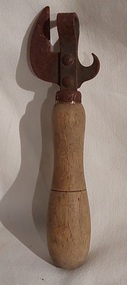
... Some had only a blade for the can opener....Rivets join the metal can and bottle opening sections....Rivets join the metal can and bottle opening sections. Domestic object Bottle and Can Opener ...Early openers were often a single tool for both purposes, a double-ended design that punctured cans with a triangle hole and opened bottles, with modern versions like pull tabs appearing later. Some had only a blade for the can opener.A dual metal can and bottle opener with a decorative line on the turned wooden handle. Rivets join the metal can and bottle opening sections.can openers, bottle openers, kitchen equipment
