
Showing 49 items matching " carl hiller"
-
 Bendigo Historical Society Inc.
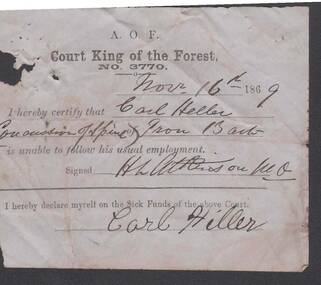
Document - ANCIENT ORDER OF FORESTERS NO. 3770 COLLECTION: MEDICAL CERTIFICATE
... ... Carl Hiller...Also signed at the end by Carl Hiller declaring himself on the Sick Funds of the Court....Also signed at the end by Carl Hiller declaring himself on the Sick Funds of the Court. ...Blue paper dated Nov 16th 1869. I hereby Certify that Carl Heller of Iron Bark is unable to follow his usual employment. Signed H. L. Atkinson. Also signed at the end by Carl Hiller declaring himself on the Sick Funds of the Court.societies, aof, correspondence, ancient order of foresters no. 3770 collection - medical certificate, court king of the forest, carl hiller, h l atkinson -
 Flagstaff Hill Maritime Museum and Village
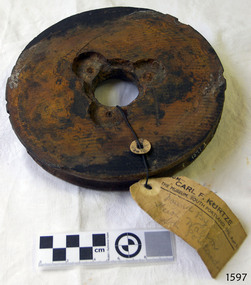
Block Sheave, c. 1840
... The sheave came to Flagstaff Hill from Carl F Kurtze, The Museum, South Portland. ...The sheave came to Flagstaff Hill from Carl F Kurtze, The Museum, South Portland. flagstaff hill warrnambool shipwrecked-coast flagstaff-hill flagstaff-hill-maritime-museum maritime-museum shipwreck-coast flagstaff-hill-maritime-village block wood sheave constant portland bay Tag on sheave from "Carl F Kurtze, The Museum, South Portland. ...Found by Keith Walton, Portland. From the 1840 wreck of the sailing boat "Constant" in Portland Bay near long pier. The sheave came to Flagstaff Hill from Carl F Kurtze, The Museum, South Portland. Block wood sheave, from the wreck of the sailing boat CONSTANT, 1840 . One side weathered, other side covered with rusty deposits, with iron bearing corroded away. Sheave has tag attached.Tag on sheave from "Carl F Kurtze, The Museum, South Portland. Found by Keith Walton, Portland. "flagstaff hill, warrnambool, shipwrecked-coast, flagstaff-hill, flagstaff-hill-maritime-museum, maritime-museum, shipwreck-coast, flagstaff-hill-maritime-village, block wood sheave, constant, portland bay -
 Federation University Historical Collection
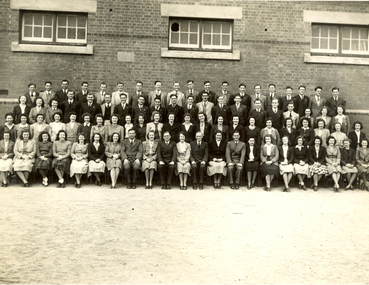
Photograph - Black and White, Ballarat Teachers' College, 1947, 1947
... Hill; Wal Henning; Burns Roddis; Fred Marshman; Dawn Doney; Pat Watts; Ann McKinnon. Third Row: Ethel Esmore; Joy Love; Pat Luxford; Jean Elliott; Josie Bunny; Phyllis Borley; Joyce Matheson; Val Witney; Ruth Tozer; Nancy Kerr; K.ath Tobin; Muriel Morrish; Jean Clode; Peg Purdue; Joyce Kennedy; Margaret Palmer; Marie Faulds; Thelma Ritchie. Fourth Row: Pat Lewin; Mavis Poland; Lorna Welsh; Lynette Lynch; Nancy Alexander; Betty Williams, Val Gorrie; Alan Sonsee; Trudy Kentish; Carl...Hill; Wal Henning; Burns Roddis; Fred Marshman; Dawn Doney; Pat Watts; Ann McKinnon. Third Row: Ethel Esmore; Joy Love; Pat Luxford; Jean Elliott; Josie Bunny; Phyllis Borley; Joyce Matheson; Val Witney; Ruth Tozer; Nancy Kerr; K.ath Tobin; Muriel Morrish; Jean Clode; Peg Purdue; Joyce Kennedy; Margaret Palmer; Marie Faulds; Thelma Ritchie. Fourth Row: Pat Lewin; Mavis Poland; Lorna Welsh; Lynette Lynch; Nancy Alexander; Betty Williams, Val Gorrie; Alan Sonsee; Trudy Kentish; Carl ...Ballarat Teachers' College was opened on may 4th, 1926, at S.S. 33, Dana Street, with an enrollment of sixty-one students, its original staff consisted of the Principal, Mr W. H. Ellwood, M.A., m.Ed. (Chairman of the Teachers' tribunal from its inception in 1946 until 1954), Miss A. Bouchier, B.A., and Mr A.B. Jones, B.A. (Lecturers). In 1927 Miss P.A. Hamano joined the staff. Teaching practice and special rural school work were carried on in schools in or near Ballarat - drawing, crafts and singing were taught by local teachers. In 1927 the college moved to the old Ballarat East Town Hall (remodelled for their use) in Barkly Street. During 1927 the numbers in the College were augmented by twenty-six Manual arts students who had formerly received their training at Ballarat High School. Manual Arts students continued till 1930, when, on grounds of economy, their training was concentrated at Melbourne Teachers' College.\During the four succeeding years approximately sixty students annually entered the primary course. Inclusive of Manual Arts students, and private fee-paying students, exactly 400 trainees passed through the college in its brief span of life (1926-1931) Fourteen years were to pass before they were again opened to students on February 2nd, 1946. The college was re-commenced at S.S. Dana Street under the guidance of Mr W.F. Lord, M.C., M.M., B.A., Dip.Ed., (Acting Principal 1946-1950), and a staff consisting of Miss E.B. Hughes, B.A., Dip. Ed., Mr C.B. Bryan, B.A., V.Com., Dip.Ed., Miss M.H. Miller, L.Mus.A., and Miss G. Kentish, Dip.Phys.Ed. The opening ceremony was performed by the Minister for education at that time, the Hon. F. Field, M.L.A., accompanied by the Hon. T.T. Hollway, M.L.A., and the then Director of Education, Mr J.A. Seitz. It was originally intended to cater for women students only (for whom 130 Victoria Street was purchased as a hostel) but, at the last moment, men were also accepted. A co-educational college was thus set up instead, and has continued as such. The original Staff has been considerable augmented, and the number of Students has been more than trebled. 1951 saw the introduction of the two-year course, successful students being presented with the Trained Primary Teachers' Certificate at the final College assembly each year. In December, 1855, College held its first Graduation Ceremony, with its own Graduation hymn, the words of which were written by Miss C.M. Canty of the staff. Mr Ellwood, former Principal,delivered the occasional address and presented the Ellwood Prize to the outstading student of the year (Mr C.P. Handreck). Students who had successfully completed the course received their certificates from Mr E.B. Pederick, Chief Inspector of Primary Schools. College accomodation having been strained for several years, it was pleasant news when tenders were called in July, 1956, for the building of the first section of the new Ballarat Teachers' College in Gillies Street, near the Botanical Gardens. At the beginning of 1958 the new College was occupied, and staff and students have appreciated greatly the appointments and cacilities of the new buildign. In 1968 the three-year Diploma Course began, co-existent with the other courses which will continue during the transitional period. Successful students in the course receive the Diploma of Teaching (Primary).Black and white photograph of students and staff of the Ballarat Teachers' College. The people are in four rows, and they stand in front of the Dana Street Primary School. Back Row: Jim Howlett; Milton Rice; Keith McLean; Jim Williams; George Nield, David Cooper, Ray Terrill, William Gleeson; Tom Pascoe; Lindsay Harley; Ron Carless; Robert Giddings; Colin Connelly; Alex Magill; Eddie Blake; William Punshon; Athol Aisbett; Kevin Collins; John O'Shannessy. Second Row: Beth Leslie; Faye Dreher; Gwen Pamphilon; Arthur Lelean; Howard Pattenden; Jack Tyers; Hugh Fraser; William Henderson; Jack Mallett; Alan Martin; Keith Boyd; John Ellifson; John Collins; Tom Hill; Wal Henning; Burns Roddis; Fred Marshman; Dawn Doney; Pat Watts; Ann McKinnon. Third Row: Ethel Esmore; Joy Love; Pat Luxford; Jean Elliott; Josie Bunny; Phyllis Borley; Joyce Matheson; Val Witney; Ruth Tozer; Nancy Kerr; K.ath Tobin; Muriel Morrish; Jean Clode; Peg Purdue; Joyce Kennedy; Margaret Palmer; Marie Faulds; Thelma Ritchie. Fourth Row: Pat Lewin; Mavis Poland; Lorna Welsh; Lynette Lynch; Nancy Alexander; Betty Williams, Val Gorrie; Alan Sonsee; Trudy Kentish; Carl Bryan; Monica Miller; W.F. Lord; Beth Hughes; Mephan McMcEwin; Mattie Hayes; Neila Vallance; Pat Robinson; Elva Surman; Joan Gunning; Norma Dally; Beatrice Freeman; Kath Crossett.ballarat teachers' college, education, dana street primary school, 1947 -
 Federation University Historical Collection
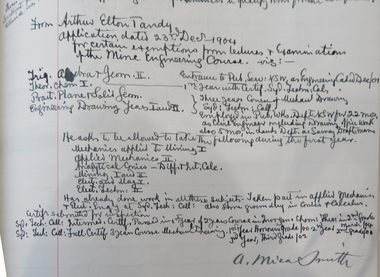
Book - Examiners Minute Book, Ballarat School of Mines Examiners Minute Book, 1896-1926, 1896-1926
... carl scache...louis h. vernon...c.h. beanland...j.h. griffiths...j.h. crittendenw.j.b. rankine...w. reis...professor dawbarn...frederick martell...tutorial board...charles burbury...s.b. vial...dav is robert...d.m.deane...a.j. hill...ballarat school of mines examinations exams ballarat school of mines examiners alfred mica smith thomas hart arthur tandy glyn evans university of melbourne robert allan w. playford associateship mine managers certificate norman mclean gordon kiely franceis c. hall grant taulor william kingston frank w. retallack victor e. millington john adam e. sleeman anderson maurice copland charles fenner j.k. sim p.o. buchanan l. vernon leslie de j. grud f.w. gibbs r.c. valentine heseltine noel brelaz l.h. vernon r.s. dale c. schache s. mayo guido brelaz l.g. leroux e.a. brophy e.h. schache reginald callister leslie coulter richard gaston walker s.h. mayo norman buley harry b. cooke arthur elton tandy j. sutherland mine mangers certificate board of examiners carl scache louis h. vernon c.h. beanland j.h. griffiths j.h. crittendenw.j.b. rankine w. reis professor dawbarn frederick martell tutorial board charles burbury s.b. vial dav is robert d.m.deane a.j. hill john harvey britannia united gold mine cecil eeles r.j. allan w. meldrum cliffor w. nash harry leggo john a. blayneyfrederick r. nettle l.p. seal norman mcleod robert w. ditchburn h.s. edgar j.h. crittenden victor nicol leonard p. seal f.c. futter frederick p. paul godfrey stephen hart arthur cryte d.a. runting ferdnand g. krause edgar mcconnon samuel lindsay wilfred avery paul v. barnard charles w. whyte melville gray ralph nevett hugh ellison smith wiliam c. kingston w.e. figgis john rae george kirkpatrick reginald robin alan d. galloway g.o. ramsay david wl bonar rhomas ramsay thomas k. sim ernest h. fraser john worthington george cornell loyal h. finch guy l. ditchburne guy o. ramsay e. mowbray boyer reginald a. raberts c.c. corrie f. retallick henry manchester charles purdy j.m. sutherland g.e. baragwanath f.e. prout h.a. lazarus r. young Brown hard covered book with read leather spine. ...Brown hard covered book with read leather spine. Lists names of examiners (such as Professor Alfred Mica Smith, Gilbert Dawbarn, Thomas Hart, index of letters received for the consideration of the Board of Examinersballarat school of mines, examinations, exams, ballarat school of mines examiners, alfred mica smith, thomas hart, arthur tandy, glyn evans, university of melbourne, robert allan, w. playford, associateship, mine managers certificate, norman mclean, gordon kiely, franceis c. hall, grant taulor, william kingston, frank w. retallack, victor e. millington, john adam, e. sleeman anderson, maurice copland, charles fenner, j.k. sim, p.o. buchanan, l. vernon, leslie de j. grud, f.w. gibbs, r.c. valentine, heseltine, noel brelaz, l.h. vernon, r.s. dale, c. schache, s. mayo, guido brelaz, l.g. leroux, e.a. brophy, e.h. schache, reginald callister, leslie coulter, richard gaston walker, s.h. mayo, norman buley, harry b. cooke, arthur elton tandy, j. sutherland, mine mangers certificate, board of examiners, carl scache, louis h. vernon, c.h. beanland, j.h. griffiths, j.h. crittendenw.j.b. rankine, w. reis, professor dawbarn, frederick martell, tutorial board, charles burbury, s.b. vial, dav is robert, d.m.deane, a.j. hill, john harvey, britannia united gold mine, cecil eeles, r.j. allan, w. meldrum, cliffor w. nash, harry leggo, john a. blayneyfrederick r. nettle, l.p. seal, norman mcleod, robert w. ditchburn, h.s. edgar, j.h. crittenden, victor nicol, leonard p. seal, f.c. futter, frederick p. paul, godfrey stephen hart, arthur cryte, d.a. runting, ferdnand g. krause, edgar mcconnon, samuel lindsay, wilfred avery, paul v. barnard, charles w. whyte, melville gray, ralph nevett, hugh ellison smith, wiliam c. kingston, w.e. figgis, john rae, george kirkpatrick, reginald robin, alan d. galloway, g.o. ramsay, david wl bonar, rhomas ramsay, thomas k. sim, ernest h. fraser, john worthington, george cornell, loyal h. finch, guy l. ditchburne, guy o. ramsay, e. mowbray boyer, reginald a. raberts, c.c. corrie, f. retallick, henry manchester, charles purdy, j.m. sutherland, g.e. baragwanath, f.e. prout, h.a. lazarus, r. young -
 Flagstaff Hill Maritime Museum and Village
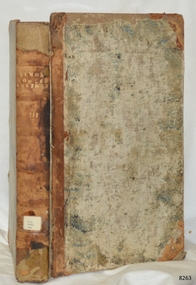
Book - Reference Fossils/Science, John Hill, A General Natural History, 1748
... Its greatest claim to fame is that in the Plants volume, John Hill became the very first writer to introduce Carl Linnaeus’s revolutionised system of biological classification to England. ...A General Natural History is a massive, ambitious three-volume compendium written to survey the natural world. It is divided into three distinct parts, which were published sequentially between 1748 and 1752. Volume One contains The History of Fossils (1748). Despite the modern name, "fossils" back then referred to anything dug out of the earth. This volume focuses heavily on mineralogy, gemstones, rocks, and minerals, mapping them out based on a microscopic examination. In Volume Two, A History of Plants (1751), Hill covers botany, describing the appearance, geographic range, and medicinal uses of various native and exotic plants (like the coffee tree, cacti, and various herbs). Volume Three concentrates on various animals and is called An History of Animals (1752). It's a zoological survey that starts with microscopic organisms before moving on to insects, marine life, reptiles, birds, and mammals. The book focused not just on describing these specimens, but also on outlining their "virtues and uses" in medicine and mechanics.A General Natural History Author: John Hill Publisher: Thomas Osborne Date: 1748 Badly damaged light brown hardcover with a damaged spine and lettering in gold. The spine has a Library label with an inscription.non-fictionA General Natural History is a massive, ambitious three-volume compendium written to survey the natural world. It is divided into three distinct parts, which were published sequentially between 1748 and 1752. Volume One contains The History of Fossils (1748). Despite the modern name, "fossils" back then referred to anything dug out of the earth. This volume focuses heavily on mineralogy, gemstones, rocks, and minerals, mapping them out based on a microscopic examination. In Volume Two, A History of Plants (1751), Hill covers botany, describing the appearance, geographic range, and medicinal uses of various native and exotic plants (like the coffee tree, cacti, and various herbs). Volume Three concentrates on various animals and is called An History of Animals (1752). It's a zoological survey that starts with microscopic organisms before moving on to insects, marine life, reptiles, birds, and mammals. The book focused not just on describing these specimens, but also on outlining their "virtues and uses" in medicine and mechanics.flagstaff hill, warrnambool, shipwrecked coast, flagstaff hill maritime museum, maritime museum, shipwreck coast, flagstaff hill maritime village, great ocean road, book, pattison collection, warrnambool library, warrnambool mechanics’ institute, ralph eric pattison, corangamite regional library service, warrnambool city librarian, mechanics’ institute library, victorian library board, warrnambool books and records, warrnambool children’s library, a general natural history, john hill -
 Flagstaff Hill Maritime Museum and Village
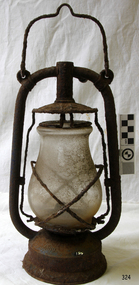
Functional object - Lamp, Carl Hermann Nier, 1928-1932
... hill maritime village...great ocean road...lamp...kerosene lamp...hurricane lamp...nier-feuerh...carl...A domestic item with an interesting history that now is sought after by collectors giving an insight into how hurricane kerosene lamps came into being from a manufacturer in Germany that held numerous patents for oil lamps from 1902 until 1940. flagstaff hill warrnambool shipwrecked coast flagstaff hill maritime museum shipwreck coast flagstaff hill maritime village great ocean road lamp kerosene lamp hurricane lamp nier-feuerh carl hermann nier Marked "Feuerhand Nr 327" "Made in Germany". ...Carl Hermann Nier in 1877 a silverware maker started to produce miners lamps and household lanterns in Beierfeld, Saxonia, East Germany. In January 1902 he established the Nier-Feuerh and company in his home town to produce kerosene lanterns. Carl's three sons Bruno, Curt and Woldemar Nier made the company into the largest lantern producer in the 1930s with Bruno Nier holding many patents for lamps. Lantern production was interrupted by World War II and ceased at the end of 1944 because of the shortage of materials and the advancing Russian army. After the Second World War the company restart the lantern production in 1947 at Luedenscheid and Hohenlockstedt north of Hamburg and fully re-establishing the company in 1950. A domestic item with an interesting history that now is sought after by collectors giving an insight into how hurricane kerosene lamps came into being from a manufacturer in Germany that held numerous patents for oil lamps from 1902 until 1940.Kerosene Lamp with handle, blue in colour, badly rusted. Lamp shade has lever to lift so you can light. Marked "Feuerhand Nr 327" "Made in Germany".flagstaff hill, warrnambool, shipwrecked coast, flagstaff hill maritime museum, shipwreck coast, flagstaff hill maritime village, great ocean road, lamp, kerosene lamp, hurricane lamp, nier-feuerh, carl hermann nier -
 Orbost & District Historical Society
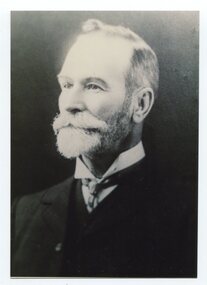
black and white photograph, late 19th / early 20th century
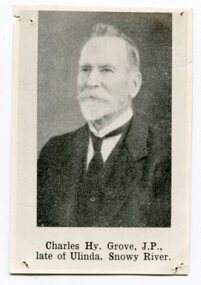
... Charles Henry [Carl] Grove died on 17/4/1938 at Box Hill at the age of 88 and was buried in Orbost. ...Charles Henry [Carl] Grove died on 17/4/1938 at Box Hill at the age of 88 and was buried in Orbost. ...This is a photograph of Councillor Charles Henry Grove who represented South Riding on the Orbost Shire Council. from 1893 - 1901. He was president in 1893-1894, 1895-1896 and 1900-1901. He also served on the Tambo Shire prior to the formation of the Croajingolong / Orbost Shire. Charles Henry [Carl] Grove died on 17/4/1938 at Box Hill at the age of 88 and was buried in Orbost. Prior to coming to the Snowy River district, Carl worked as overseer on Buchan Station. In 1880, he selected land at Newmerella after first coming here in 1874 with early selector James A Robertson. He married Annie Robertson in 1876. Carl was a farmer, hop and seed grower and nurseryman. He was an elected Councillor of the newly formed Tambo Shire in 1882, and then in 1892 to the Orbost Shire where he served for many years filling various public roles. In 1911, he shifted to Queensland, but later returned to Victoria and died at Box Hill. (info. Newsletter 113)This item is associated with the Orbost Shire Council. The shire covered an area of 9,347 square kilometres and existed from 1892 until 1994 when it became part of the East Gippsland Shire Council. It is associated with Carl Grove, a prominent early Orbost citizen.A black / white head and shoulders portrait photograph of a bearded man in a suit. There is also a framed copy.grove-charles-henry grove-carl orbost-shire-council -
 Orbost & District Historical Society
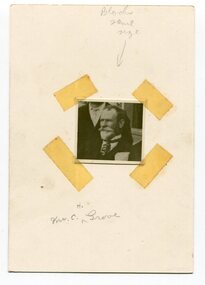
black and white photograph, early 20th century
... Charles Henry [Carl] Grove died on 17/4/1938 at Box Hill at the age of 88 and was buried in Orbost. ...Charles Henry [Carl] Grove died on 17/4/1938 at Box Hill at the age of 88 and was buried in Orbost. ...This is a photograph of Councillor Charles Henry Grove who represented South Riding on the Orbost Shire Council. from 1893 - 1901. He was president in 1893-1894, 1895-1896 and 1900-1901. He also served on the Tambo Shire prior to the formation of the Croajingolong / Orbost Shire. Charles Henry [Carl] Grove died on 17/4/1938 at Box Hill at the age of 88 and was buried in Orbost. Prior to coming to the Snowy River district, Carl worked as overseer on Buchan Station. In 1880, he selected land at Newmerella after first coming here in 1874 with early selector James A Robertson. He married Annie Robertson in 1876. Carl was a farmer, hop and seed grower and nurseryman. He was an elected Councillor of the newly formed Tambo Shire in 1882, and then in 1892 to the Orbost Shire where he served for many years filling various public roles. In 1911, he shifted to Queensland, but later returned to Victoria and died at Box Hill. (info. Newsletter 113Carl Grove was a prominent early Orbost citizen.A small square head and shoulders photograph of a man. It is attached to a white card with tape.on front - "Mr C. Grove"grove-charles -
 Orbost & District Historical Society
black and white photograph, Segerberg & Bulmer, late 19th century
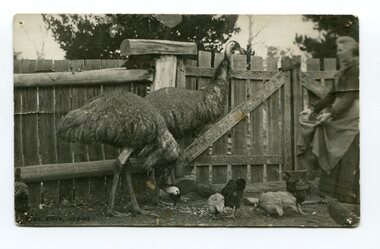
... Charles Henry [Carl] Grove died on 17/4/1938 at Box Hill at the age of 88 and was buried in Orbost. ...Charles Henry [Carl] Grove died on 17/4/1938 at Box Hill at the age of 88 and was buried in Orbost. ...Charles Henry [Carl] Grove died on 17/4/1938 at Box Hill at the age of 88 and was buried in Orbost. Prior to coming to the Snowy River district, Carl worked as overseer on Buchan Station. In 1880, he selected land at Newmerella after first coming here in 1874 with early selector James A Robertson. He married Annie Robertson in 1876. Carl was a farmer, hop and seed grower and nurseryman. He was an elected Councillor of the newly formed Tambo Shire in 1882, and then in 1892 to the Orbost Shire where he served for many years filling various public roles. In 1911, he shifted to Queensland, but later returned to Victoria and died at Box Hill. (info. Newsletter 113)Two black / white photographs of a woman in a pen feeding two emus and some chickens.grove-annie grove-carl -
 Orbost & District Historical Society
black and white photograph, late 19th century - early 20th century
... Charles Henry [Carl] Grove died on 17/4/1938 at Box Hill at the age of 88 and was buried in Orbost. ...Charles Henry [Carl] Grove died on 17/4/1938 at Box Hill at the age of 88 and was buried in Orbost. ...This is a photograph of Councillor Charles Henry Grove who represented South Riding on the Orbost Shire Council. from 1893 - 1901. He was president in 1893-1894, 1895-1896 and 1900-1901. He also served on the Tambo Shire prior to the formation of the Croajingolong / Orbost Shire. Charles Henry [Carl] Grove died on 17/4/1938 at Box Hill at the age of 88 and was buried in Orbost. Prior to coming to the Snowy River district, Carl worked as overseer on Buchan Station. In 1880, he selected land at Newmerella after first coming here in 1874 with early selector James A Robertson. He married Annie Robertson in 1876. Carl was a farmer, hop and seed grower and nurseryman. He was an elected Councillor of the newly formed Tambo Shire in 1882, and then in 1892 to the Orbost Shire where he served for many years filling various public roles. In 1911, he shifted to Queensland, but later returned to Victoria and died at Box Hill. (info. Newsletter 113)This item is associated with Carl Grove, a prominent early Orbost citizen.A small black / whitee head and shoulders photograph of a man with beard and moustache, He is wearing a suit and tie.grove-charles -
 Orbost & District Historical Society
book, Key to the System of Victorian Plants, 1887 - 1888
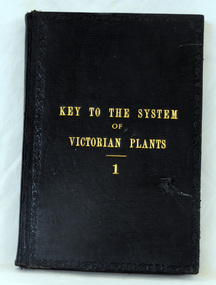
... Charles Henry [Carl] Grove died on 17/4/1938 at Box Hill at the age of 88 and was buried in Orbost. ...Charles Henry [Carl] Grove died on 17/4/1938 at Box Hill at the age of 88 and was buried in Orbost. ...Ferdinand von Mueller was born at Rostock, Germany, on 30 June 1825 , died at Melbourne, Australia, on 10 October 1896. He studied pharmacy and took his Doctor of Philosophy at the University of Kiel in 1847. He came to Australia in 1848 for health reasons and became a great botanical collector and writer. He was Victorian Government Botanist from 1853, and for a time Director of the Botanic Gardens. He travelled widely in Victoria and was on the A.C.Gregory expedition to northern Australia in 1855-57. He supported botanical exploration and collecting throughout the colonies. Charles Henry [Carl] Grove died on 17/4/1938 at Box Hill at the age of 88 and was buried in Orbost. Prior to coming to the Snowy River district, Carl worked as overseer on Buchan Station. In 1880, he selected land at Newmerella after first coming here in 1874 with early selector James A Robertson. He married Annie Robertson in 1876. Carl was a farmer, hop and seed grower and nurseryman. He was an elected Councillor of the newly formed Tambo Shire in 1882, and then in 1892 to the Orbost Shire where he served for many years filling varioius public roles. In 1911, he shifted to Queensland, but later returned to Victoria and died at Box Hill. (Ref. Nov 2014 Newsletter) Mueller was one of the first people to take a scientific interest in Victorian forests, and argued against indiscriminate clearing of land. This item is a useful research tool. It is associated with Carl Grove, a prominent early resident of Orbost.A black book with the title "Key To The System of Victorian Plants 1" in gold print.inside cover - "To Carl Grove from Baron Von Mueller March 1896"von-mueller-ferdinand botany-victoria plants-victoria grove-carl -
 Orbost & District Historical Society
books, Robt. S. Bain, Key to the System of Victorian Plants 2, 1885
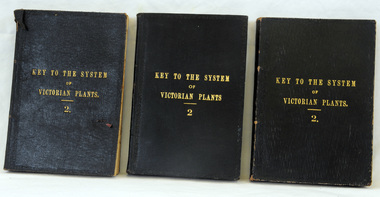
... Charles Henry [Carl] Grove died on 17/4/1938 at Box Hill at the age of 88 and was buried in Orbost. ...Charles Henry [Carl] Grove died on 17/4/1938 at Box Hill at the age of 88 and was buried in Orbost. ...Ferdinand von Mueller was born at Rostock, Germany, on 30 June 1825 , died at Melbourne, Australia, on 10 October 1896. He studied pharmacy and took his Doctor of Philosophy at the University of Kiel in 1847. He came to Australia in 1848 for health reasons and became a great botanical collector and writer. He was Victorian Government Botanist from 1853, and for a time Director of the Botanic Gardens. He travelled widely in Victoria and was on the A.C.Gregory expedition to northern Australia in 1855-57. He supported botanical exploration and collecting throughout the colonies. 681.3 was presented to Carl Grove from G. Tadgell of Flemington. Charles Henry [Carl] Grove died on 17/4/1938 at Box Hill at the age of 88 and was buried in Orbost. Prior to coming to the Snowy River district, Carl worked as overseer on Buchan Station. In 1880, he selected land at Newmerella after first coming here in 1874 with early selector James A Robertson.He was one of the first selectors at Orbost - in 1880 he selected 320 acres at Newmerella, which he called „Ulinda‟ He married Annie Robertson in 1876. Carl was a farmer, hop and seed grower and nurseryman. He was an elected Councillor of the newly formed Tambo Shire in 1882, and then in 1892 to the Orbost Shire where he served for many years filling varioius public roles. In 1911, he shifted to Queensland, but later returned to Victoria and died at Box Hill. (Ref. Nov 2014 Newsletter) Mueller was one of the first people to take a scientific interest in Victorian forests, and argued against indiscriminate clearing of land. This item is a useful research tool. It is associated with Carl Grove, a prominent early resident of Orbost.Three copies of fabric bound book with a deep blue cover and the title, "Key To The System Of Victorian plants" in gold print. It has an ornate border around the edge.inside cover of 681.1 - To H. Grove, March 1891 Ulinda, Newmerella, Victoriaferdinand-von-mueller grove-carl botany plants-victoria -
 Orbost & District Historical Society
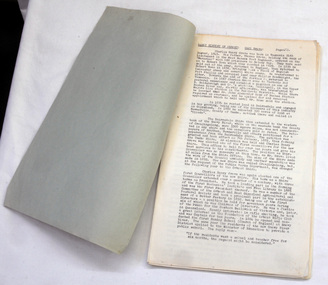
book, Grove, Carl, BUKAN MUNGEE
... Charles Henry [Carl] Grove died on 17/4/1938 at Box Hill at the age of 88 and was buried in Orbost. ...Charles Henry [Carl] Grove died on 17/4/1938 at Box Hill at the age of 88 and was buried in Orbost. ...C.H. Grove spent about 40 years in the area, information is mainly derived from his own recollections and "reliable sources". Charles Henry [Carl] Grove died on 17/4/1938 at Box Hill at the age of 88 and was buried in Orbost. Prior to coming to the Snowy River district, Carl worked as overseer on Buchan Station. In 1880, he selected land at Newmerella after first coming here in 1874 with early selector James A Robertson.He was one of the first selectors at Orbost - in 1880 he selected 320 acres at Newmerella, which he called „Ulinda‟ He married Annie Robertson in 1876. Carl was a farmer, hop and seed grower and nurseryman. He was an elected Councillor of the newly formed Tambo Shire in 1882, and then in 1892 to the Orbost Shire where he served for many years filling varioius public roles. In 1911, he shifted to Queensland, but later returned to Victoria and died at Box Hill. (Ref. Nov 2014 Newsletter) This is a useful reference tool.A carbon copy of a typeset manuscript / transcript book entitled "Bukan Mungee" containing historical and geographical information of the area "bounded by the Snowy River in the east, the Tambo river in the west...and with the following leaseholds, Ensay, Gillingall, and Gelantipy on the north, with Kilmore and Corringle stations on the south..."grove-carl bukan-mungee corringle newmerella snowy-river tambo-river -
 Flagstaff Hill Maritime Museum and Village
Instrument - Apothecary Set of Weights, 1903 – 1917
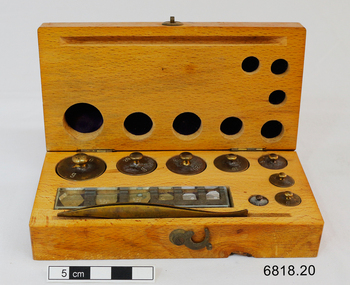
... Carl de Beer and traded under the name of his brother Ernest de Beer and Company. Herbert B Silberberg joined the de Beer partnership in 1903 and, later in the same year, bought the de Beers’ shares in the business. Silberberg carried on as de Beer, Silberberg & Company for four months, after which he changed the name to H B Silberberg & Company. (Australian National University Archives; H B Selby and Company Proprietary Limited) This apothecary weights set was donated to Flagstaff Hill...Carl de Beer and traded under the name of his brother Ernest de Beer and Company. Herbert B Silberberg joined the de Beer partnership in 1903 and, later in the same year, bought the de Beers’ shares in the business. Silberberg carried on as de Beer, Silberberg & Company for four months, after which he changed the name to H B Silberberg & Company. (Australian National University Archives; H B Selby and Company Proprietary Limited) This apothecary weights set was donated to Flagstaff Hill ...This apothecary weights set was supplied by the company 'H B Silberberg & Company, Melbourne.' The company used this name in Melbourne from 1903-1917, then changed their name to “H.B. Selby & Company”. The firm specialised in the manufacture, import and supply of scientific instruments, laboratory apparatus, chemicals and industrial equipment. It was founded in Melbourne around 1889 by Carl de Beer and traded under the name of his brother Ernest de Beer and Company. Herbert B Silberberg joined the de Beer partnership in 1903 and, later in the same year, bought the de Beers’ shares in the business. Silberberg carried on as de Beer, Silberberg & Company for four months, after which he changed the name to H B Silberberg & Company. (Australian National University Archives; H B Selby and Company Proprietary Limited) This apothecary weights set was donated to Flagstaff Hill Maritime Village by the family of Doctor William Roy Angus, Surgeon and Oculist. It is part of the “W.R. Angus Collection” that includes historical medical equipment, surgical instruments and material once belonging to Dr Edward Ryan and Dr Thomas Francis Ryan, (both of Nhill, Victoria) as well as Dr Angus’ own belongings. The Collection’s history spans the medical practices of the two Doctors Ryan, from 1885-1926 plus that of Dr Angus, up until 1969. ABOUT THE “W.R.ANGUS COLLECTION” Doctor William Roy Angus M.B., B.S., Adel., 1923, F.R.C.S. Edin.,1928 (also known as Dr Roy Angus) was born in Murrumbeena, Victoria in 1901 and lived until 1970. He qualified as a doctor in 1923 at University of Adelaide, was Resident Medical Officer at the Royal Adelaide Hospital in 1924 and for a period was house surgeon to Sir (then Mr.) Henry Simpson Newland. Dr Angus was briefly an Assistant to Dr Riddell of Kapunda, then commenced private practice at Curramulka, Yorke Peninsula, SA, where he was physician, surgeon and chemist. In 1926, he was appointed as new Medical Assistant to Dr Thomas Francis Ryan (T.F. Ryan, or Tom), in Nhill, Victoria, where his experiences included radiology and pharmacy. In 1927 he was Acting House Surgeon in Dr Tom Ryan’s absence. Dr Angus had become engaged to Gladys Forsyth and they decided he would take time to further his studies overseas in the UK in 1927. He studied at London University College Hospital and at Edinburgh Royal Infirmary and in 1928, was awarded FRCS (Fellow from the Royal College of Surgeons), Edinburgh. He worked his passage back to Australia as a Ship’s Surgeon on the on the Australian Commonwealth Line’s T.S.S. Largs Bay. Dr Angus married Gladys in 1929, in Ballarat. (They went on to have one son (Graham 1932, born in SA) and two daughters (Helen (died 12/07/1996) and Berenice (Berry), both born at Mira, Nhill ) Dr Angus was a ‘flying doctor’ for the A.I.M. (Australian Inland Ministry) Aerial Medical Service in 1928 . The organisation began in South Australia through the Presbyterian Church in that year, with its first station being in the remote town of Oodnadatta, where Dr Angus was stationed. He was locum tenens there on North-South Railway at 21 Mile Camp. He took up this ‘flying doctor’ position in response to a call from Dr John Flynn; the organisation was later known as the Flying Doctor Service, then the Royal Flying Doctor Service. A lot of his work during this time involved dental surgery also. Between 1928-1932 he was surgeon at the Curramulka Hospital, Yorke Peninsula, South Australia. In 1933 Dr Angus returned to Nhill where he’d previously worked as Medical Assistant and purchased a share of the Nelson Street practice and Mira hospital from Dr Les Middleton one of the Middleton Brothers, the current owners of what was once Dr Tom Ryan’s practice. Dr L Middleton was House Surgeon to the Nhill Hospital 1926-1933, when he resigned. [Dr Tom Ryan’s practice had originally belonged to his older brother Dr Edward Ryan, who came to Nhill in 1885. Dr Edward saw patients at his rooms, firstly in Victoria Street and in 1886 in Nelson Street, until 1901. The Nelson Street practice also had a 2 bed ward, called Mira Private Hospital ). Dr Edward Ryan was House Surgeon at the Nhill Hospital 1884-1902 . He also had occasions where he successfully performed veterinary surgery for the local farmers too. Dr Tom Ryan then purchased the practice from his brother in 1901. Both Dr Edward and Dr Tom Ryan work as surgeons included eye surgery. Dr Tom Ryan performed many of his operations in the Mira private hospital on his premises. He too was House Surgeon at the Nhill Hospital 1902-1926. Dr Tom Ryan had one of the only two pieces of radiology equipment in Victoria during his practicing years – The Royal Melbourne Hospital had the other one. Over the years Dr Tom Ryan gradually set up what was effectively a training school for country general-practitioner-surgeons. Each patient was carefully examined, including using the X-ray machine, and any surgery was discussed and planned with Dr Ryan’s assistants several days in advance. Dr Angus gained experience in using the X-ray machine there during his time as assistant to Dr Ryan. Dr Tom Ryan moved from Nhill in 1926. He became a Fellow of the Royal Australasian College of Surgeons in 1927, soon after its formation, a rare accolade for a doctor outside any of the major cities. He remained a bachelor and died suddenly on 7th Dec 1955, aged 91, at his home in Ararat. Scholarships and prizes are still awarded to medical students in the honour of Dr T.F. Ryan and his father, Dr Michael Ryan, and brother, John Patrick Ryan. ] When Dr Angus bought into the Nelson Street premises in Nhill he was also appointed as the Nhill Hospital’s Honorary House Surgeon 1933-1938. His practitioner’s plate from his Nhill surgery states “HOURS Daily, except Tuesdays, Fridays and Saturday afternoons, 9-10am, 2-4pm, 7-8pm. Sundays by appointment”. This plate is now mounted on the doorway to the Port Medical Office at Flagstaff Hill Maritime Village, Warrnambool. Dr Edward Ryan and Dr Tom Ryan had an extensive collection of historical medical equipment and materials spanning 1884-1926 and when Dr Angus took up practice in their old premises he obtained this collection, a large part of which is now on display at the Port Medical Office at Flagstaff Hill Maritime Village in Warrnambool. During his time in Nhill Dr Angus was involved in the merging of the Mira Hospital and Nhill Public Hospital into one public hospital and the property titles passed on to Nhill Hospital in 1939. In 1939 Dr Angus and his family moved to Warrnambool where he purchased “Birchwood,” the 1852 home and medical practice of Dr John Hunter Henderson, at 214 Koroit Street. (This property was sold in1965 to the State Government and is now the site of the Warrnambool Police Station. ). The Angus family was able to afford gardeners, cooks and maids; their home was a popular place for visiting dignitaries to stay whilst visiting Warrnambool. Dr Angus had his own silk worm farm at home in a Mulberry tree. His young daughter used his centrifuge for spinning the silk. Dr Angus was appointed on a part-time basis as Port Medical Officer (Health Officer) in Warrnambool and held this position until the 1940’s when the government no longer required the service of a Port Medical Officer in Warrnambool; he was thus Warrnambool’s last serving Port Medical Officer. (The duties of a Port Medical Officer were outlined by the Colonial Secretary on 21st June, 1839 under the terms of the Quarantine Act. Masters of immigrant ships arriving in port reported incidents of diseases, illness and death and the Port Medical Officer made a decision on whether the ship required Quarantine and for how long, in this way preventing contagious illness from spreading from new immigrants to the residents already in the colony.) Dr Angus was a member of the Australian Medical Association, for 35 years and surgeon at the Warrnambool Base Hospital 1939-1942, He served as a Surgeon Captain during WWII1942-45, in Ballarat, Victoria, and in Bonegilla, N.S.W., completing his service just before the end of the war due to suffering from a heart attack. During his convalescence he carved an intricate and ‘most artistic’ chess set from the material that dentures were made from. He then studied ophthalmology at the Royal Melbourne Eye and Ear Hospital and created cosmetically superior artificial eyes by pioneering using the intrascleral cartilage. Angus received accolades from the Ophthalmological Society of Australasia for this work. He returned to Warrnambool to commence practice as an ophthalmologist, pioneering in artificial eye improvements. He was Honorary Consultant Ophthalmologist to Warrnambool Base Hospital for 31 years. He made monthly visits to Portland as a visiting surgeon, to perform eye surgery. He represented the Victorian South-West subdivision of the Australian Medical Association as its secretary between 1949 and 1956 and as chairman from 1956 to 1958. In 1968 Dr Angus was elected member of Spain’s Barraquer Institute of Barcelona after his research work in Intrasclearal cartilage grafting, becoming one of the few Australian ophthalmologists to receive this honour, and in the following year presented his final paper on Living Intrasclearal Cartilage Implants at the Inaugural Meeting of the Australian College of Ophthalmologists in Melbourne In his personal life Dr Angus was a Presbyterian and treated Sunday as a Sabbath, a day of rest. He would visit 3 or 4 country patients on a Sunday, taking his children along ‘for the ride’ and to visit with him. Sunday evenings he would play the pianola and sing Scottish songs to his family. One of Dr Angus’ patients was Margaret MacKenzie, author of a book on local shipwrecks that she’d seen as an eye witness from the late 1880’s in Peterborough, Victoria. In the early 1950’s Dr Angus, painted a picture of a shipwreck for the cover jacket of Margaret’s book, Shipwrecks and More Shipwrecks. She was blind in later life and her daughter wrote the actual book for her. Dr Angus and his wife Gladys were very involved in Warrnambool’s society with a strong interest in civic affairs. Their interests included organisations such as Red Cross, Rostrum, Warrnambool and District Historical Society (founding members), Wine and Food Society, Steering Committee for Tertiary Education in Warrnambool, Local National Trust, Good Neighbour Council, Housing Commission Advisory Board, United Services Institute, Legion of Ex-Servicemen, Olympic Pool Committee, Food for Britain Organisation, Warrnambool Hospital, Anti-Cancer Council, Boys’ Club, Charitable Council, National Fitness Council and Air Raid Precautions Group. He was also a member of the Steam Preservation Society and derived much pleasure from a steam traction engine on his farm. He had an interest in people and the community He and his wife Gladys were both involved in the creation of Flagstaff Hill, including the layout of the gardens. After his death (28th March 1970) his family requested his practitioner’s plate, medical instruments and some personal belongings be displayed in the Port Medical Office surgery at Flagstaff Hill Maritime Village, and be called the “W. R. Angus Collection”. The W.R. Angus Collection is significant for still being located at the site it is connected with, Doctor Angus being the last Port Medical Officer in Warrnambool. The collection of medical instruments and other equipment is culturally significant, being an historical example of medicine from late 19th to mid-20th century. Dr Angus assisted Dr Tom Ryan, a pioneer in the use of X-rays and in ocular surgery. Apothecary or pharmacy weights set, metric, in fitted wooden box with metal hook latch. Part of the W.R. Angus Collection. Round brass weights (50g, 20g, 20g, 10g, 5g, 2g, 2g, 1g) and small silver sheet weights under glass (500mg, 200mg, 200mg, 50mg, 10mg, 5mg, & 5 other smaller ones), plus brass tweezers. Lid of the box has maker's plate "MADE SPECIALLY / FOR / H B SILBERBERG & CO. / MELBOURNE"flagstaff hill, warrnambool, shipwrecked coast, flagstaff hill maritime museum, maritime museum, shipwreck coast, flagstaff hill maritime village, great ocean road, dr w r angus, dr ryan, nhill base hospital, warrnambool base hospital, mira hospital, apothecary weights set, pharmacist weights, weights and measures, chemist weights -
 Flagstaff Hill Maritime Museum and Village
Book, The Life of Thomas Love Peacock
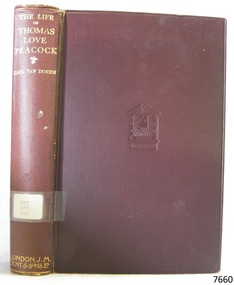
... Hill-Maritime-Village...Shipwrecked-artefact...Book...Pattison Collection...Warrnambool Library...Warrnambool Mechanics’ Institute...Ralph Eric Pattison...Corangamite Regional Library Service...Warrnambool City Librarian...Mechanics’ Institute Library...Victorian Library Board...Warrnambool books and records...Warrnambool Children’s Library...Great Ocean Road...The Life of Thomas Love Peacock...Carl...Warrnambool Shipwrecked-coast Flagstaff-Hill Flagstaff-Hill-Maritime-Museum Maritime-Museum Shipwreck-coast Flagstaff-Hill-Maritime-Village Shipwrecked-artefact Book Pattison Collection Warrnambool Library Warrnambool Mechanics’ Institute Ralph Eric Pattison Corangamite Regional Library Service Warrnambool City Librarian Mechanics’ Institute Library Victorian Library Board Warrnambool books and records Warrnambool Children’s Library Great Ocean Road The Life of Thomas Love Peacock Carl Van Doren Label on spine cover with typed text PAT 920 PEA Pastedown front endpaper has sticker from Warrnambool Mechanics Institute and Free Librarycovered by a sticker from Corangamite Regional Library Service Front loose endpaper has a stamp from Warrnambool Public Museum The Life of Thomas Love Peacock Author: Carl Van Doren Publisher: J M Dent & Sons Ltd Date: 1911 The Life of Thomas Love Peacock Book ...This item is from the ‘Pattison Collection’, a collection of books and records that was originally owned by the Warrnambool Mechanics’ Institute, which was founded in Warrnambool in 1853. By 1886 the Warrnambool Mechanics’ Institute (WMI) had grown to have a Library, Museum and Fine Arts Gallery, with a collection of “… choice productions of art, and valuable specimens in almost every branch and many wonderful national curiosities are now to be seen there, including historic relics of the town and district.” It later included a School of Design. Although it was very well patronised, the lack of financial support led the WMI in 1911 to ask the City Council to take it over. In 1935 Ralph Pattison was appointed as City Librarian to establish and organise the Warrnambool Library as it was then called. When the WMI building was pulled down in 1963 a new civic building was erected on the site and the new Warrnambool Library, on behalf of the City Council, took over all the holdings of the WMI. At this time some of the items were separated and identified as the ‘Pattison Collection’, named after Ralph Pattison. Eventually the components of the WMI were distributed from the Warrnambool Library to various places, including the Art Gallery, Historical Society and Flagstaff Hill. Later some were even distributed to other regional branches of Corangamite Regional Library and passed to and fro. It is difficult now to trace just where all of the items have ended up. The books at Flagstaff Hill Maritime Village generally display stamps and markings from Pattison as well as a variety of other institutions including the Mechanics’ Institute itself. RALPH ERIC PATTISON Ralph Eric Pattison was born in Rockhampton, Queensland, in 1891. He married Maude Swan from Warrnambool in 1920 and they set up home in Warrnambool. In 1935 Pattison accepted a position as City Librarian for the Warrnambool City Council. His huge challenge was to make a functional library within two rooms of the Mechanics’ Institute. He tirelessly cleaned, cleared and sorted a disarrayed collection of old books, jars of preserved specimens and other items reserved for exhibition in the city’s museum. He developed and updated the library with a wide variety of books for all tastes, including reference books for students; a difficult task to fulfil during the years following the Depression. He converted all of the lower area of the building into a library, reference room and reading room for members and the public. The books were sorted and stored using a cataloguing and card index system that he had developed himself. He also prepared the upper floor of the building and established the Art Gallery and later the Museum, a place to exhibit the many old relics that had been stored for years for this purpose. One of the treasures he found was a beautiful ancient clock, which he repaired, restored and enjoyed using in his office during the years of his service there. Ralph Pattison was described as “a meticulous gentleman whose punctuality, floorless courtesy and distinctive neat dress were hallmarks of his character, and ‘his’ clock controlled his daily routine, and his opening and closing of the library’s large heavy doors to the minute.” Pattison took leave during 1942 to 1945 to serve in the Royal Australian Navy, Volunteer Reserve as Lieutenant. A few years later he converted one of the Museum’s rooms into a Children’s Library, stocking it with suitable books for the younger generation. This was an instant success. In the 1950’s he had the honour of being appointed to the Victorian Library Board and received more inspiration from the monthly conferences in Melbourne. He was sadly retired in 1959 after over 23 years of service, due to the fact that he had gone over the working age of council officers. However he continued to take a very keen interest in the continual development of the Library until his death in 1969. The Pattison Collection, along with other items at Flagstaff Hill Maritime Village, was originally part of the Warrnambool Mechanics' Institute’s collection. The Warrnambool Mechanics’ Institute Collection is primarily significant in its totality, rather than for the individual objects it contains. Its contents are highly representative of the development of Mechanics' Institute libraries across Australia, particularly Victoria. A diversity of publications and themes has been amassed, and these provide clues to our understanding of the nature of and changes in the reading habits of Victorians from the 1850s to the middle of the 20th century. The collection also highlights the Warrnambool community’s commitment to the Mechanics’ Institute, reading, literacy and learning in the regions, and proves that access to knowledge was not impeded by distance. These items help to provide a more complete picture of our community’s ideals and aspirations. The Warrnambool Mechanics Institute book collection has historical and social significance for its strong association with the Mechanics Institute movement and the important role it played in the intellectual, cultural and social development of people throughout the latter part of the nineteenth century and the early twentieth century. The collection of books is a rare example of an early lending library and its significance is enhanced by the survival of an original collection of many volumes. The Warrnambool Mechanics' Institute’s publication collection is of both local and state significance. The Life of Thomas Love Peacock Author: Carl Van Doren Publisher: J M Dent & Sons Ltd Date: 1911Label on spine cover with typed text PAT 920 PEA Pastedown front endpaper has sticker from Warrnambool Mechanics Institute and Free Librarycovered by a sticker from Corangamite Regional Library Service Front loose endpaper has a stamp from Warrnambool Public Museum warrnambool, shipwrecked-coast, flagstaff-hill, flagstaff-hill-maritime-museum, maritime-museum, shipwreck-coast, flagstaff-hill-maritime-village, shipwrecked-artefact, book, pattison collection, warrnambool library, warrnambool mechanics’ institute, ralph eric pattison, corangamite regional library service, warrnambool city librarian, mechanics’ institute library, victorian library board, warrnambool books and records, warrnambool children’s library, great ocean road, the life of thomas love peacock, carl van doren -
 Flagstaff Hill Maritime Museum and Village
Book, The History of Ballarat
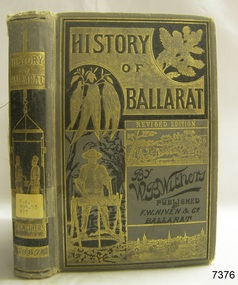
... hill-maritime-village...shipwrecked-artefact...book...the history of ballarat...carl...warrnambool shipwrecked-coast flagstaff-hill flagstaff-hill-maritime-museum maritime-museum shipwreck-coast flagstaff-hill-maritime-village shipwrecked-artefact book the history of ballarat carl archibald william bramwell withers Label on spine with typed text RA 994.53 WIT The History of Ballarat Has name Carl Archibald on front end page Author: William Bramwell Withers, Publisher: FW Niven and Co Date: 1877 The History of Ballarat Book ...The History of Ballarat Has name Carl Archibald on front end page Author: William Bramwell Withers, Publisher: FW Niven and Co Date: 1877 Label on spine with typed text RA 994.53 WIT warrnambool, shipwrecked-coast, flagstaff-hill, flagstaff-hill-maritime-museum, maritime-museum, shipwreck-coast, flagstaff-hill-maritime-village, shipwrecked-artefact, book, the history of ballarat, carl archibald, william bramwell withers -
 Flagstaff Hill Maritime Museum and Village
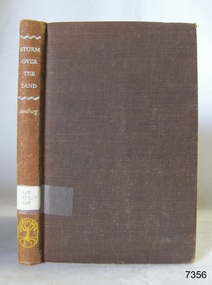
Book, Storm Over The Land
... Hill-Maritime-Village...Shipwrecked-artefact...Book...Warrnambool Mechanics’ Institute...Pattison Collection...Warrnambool Library...Ralph Eric Pattison...Warrnambool City Librarian...Mechanics’ Institute Library...Victorian Library Board...Warrnambool books and records...Storm Over The Land...Carl...Warrnambool Shipwrecked-coast Flagstaff-Hill Flagstaff-Hill-Maritime-Museum Maritime-Museum Shipwreck-coast Flagstaff-Hill-Maritime-Village Shipwrecked-artefact Book Warrnambool Mechanics’ Institute Pattison Collection Warrnambool Library Ralph Eric Pattison Warrnambool City Librarian Mechanics’ Institute Library Victorian Library Board Warrnambool books and records Storm Over The Land Carl Sandburg Label on spine with typed text PAT 973.7 SAN Front endpaper has a sticker from Corangamite Regional Library Service Storm Over The Land From Abraham Lincoln: The War Years 1864-1865 Author: Carl Sandburg Publisher: Readers Union Date: 1944 Storm Over The Land Book ...This item is from the ‘Pattison Collection’, a collection of books and records that was originally owned by the Warrnambool Mechanics’ Institute, which was founded in Warrnambool in 1853. By 1886 the Warrnambool Mechanics’ Institute (WMI) had grown to have a Library, Museum and Fine Arts Gallery, with a collection of “… choice productions of art, and valuable specimens in almost every branch and many wonderful national curiosities are now to be seen there, including historic relics of the town and district.” It later included a School of Design. Although it was very well patronised, the lack of financial support led the WMI in 1911 to ask the City Council to take it over. In 1935 Ralph Pattison was appointed as City Librarian to establish and organise the Warrnambool Library as it was then called. When the WMI building was pulled down in 1963 a new civic building was erected on the site and the new Warrnambool Library, on behalf of the City Council, took over all the holdings of the WMI. At this time some of the items were separated and identified as the ‘Pattison Collection’, named after Ralph Pattison. Eventually the components of the WMI were distributed from the Warrnambool Library to various places, including the Art Gallery, Historical Society and Flagstaff Hill. Later some were even distributed to other regional branches of Corangamite Regional Library and passed to and fro. It is difficult now to trace just where all of the items have ended up. The books at Flagstaff Hill Maritime Village generally display stamps and markings from Pattison as well as a variety of other institutions including the Mechanics’ Institute itself. RALPH ERIC PATTISON Ralph Eric Pattison was born in Rockhampton, Queensland, in 1891. He married Maude Swan from Warrnambool in 1920 and they set up home in Warrnambool. In 1935 Pattison accepted a position as City Librarian for the Warrnambool City Council. His huge challenge was to make a functional library within two rooms of the Mechanics’ Institute. He tirelessly cleaned, cleared and sorted a disarrayed collection of old books, jars of preserved specimens and other items reserved for exhibition in the city’s museum. He developed and updated the library with a wide variety of books for all tastes, including reference books for students; a difficult task to fulfil during the years following the Depression. He converted all of the lower area of the building into a library, reference room and reading room for members and the public. The books were sorted and stored using a cataloguing and card index system that he had developed himself. He also prepared the upper floor of the building and established the Art Gallery and later the Museum, a place to exhibit the many old relics that had been stored for years for this purpose. One of the treasures he found was a beautiful ancient clock, which he repaired, restored and enjoyed using in his office during the years of his service there. Ralph Pattison was described as “a meticulous gentleman whose punctuality, floorless courtesy and distinctive neat dress were hallmarks of his character, and ‘his’ clock controlled his daily routine, and his opening and closing of the library’s large heavy doors to the minute.” Pattison took leave during 1942 to 1942 to serve in the Royal Australian Navy, Volunteer Reserve as Lieutenant. A few years later he converted one of the Museum’s rooms into a Children’s Library, stocking it with suitable books for the younger generation. This was an instant success. In the 1950’s he had the honour of being appointed to the Victorian Library Board and received more inspiration from the monthly conferences in Melbourne. He was sadly retired in 1959 after over 23 years of service, due to the fact that he had gone over the working age of council officers. However he continued to take a very keen interest in the continual development of the Library until his death in 1969. The Pattison Collection, along with other items at Flagstaff Hill Maritime Village, was originally part of the Warrnambool Mechanics' Institute’s collection. The Warrnambool Mechanics’ Institute Collection is primarily significant in its totality, rather than for the individual objects it contains. Its contents are highly representative of the development of Mechanics' Institute libraries across Australia, particularly Victoria. A diversity of publications and themes has been amassed, and these provide clues to our understanding of the nature of and changes in the reading habits of Victorians from the 1850s to the middle of the 20th century. The collection also highlights the Warrnambool community’s commitment to the Mechanics’ Institute, reading, literacy and learning in the regions, and proves that access to knowledge was not impeded by distance. These items help to provide a more complete picture of our community’s ideals and aspirations. The Warrnambool Mechanics Institute book collection has historical and social significance for its strong association with the Mechanics Institute movement and the important role it played in the intellectual, cultural and social development of people throughout the latter part of the nineteenth century and the early twentieth century. The collection of books is a rare example of an early lending library and its significance is enhanced by the survival of an original collection of many volumes. The Warrnambool Mechanics' Institute’s publication collection is of both local and state significance. Storm Over The Land From Abraham Lincoln: The War Years 1864-1865 Author: Carl Sandburg Publisher: Readers Union Date: 1944 Label on spine with typed text PAT 973.7 SAN Front endpaper has a sticker from Corangamite Regional Library Service warrnambool, shipwrecked-coast, flagstaff-hill, flagstaff-hill-maritime-museum, maritime-museum, shipwreck-coast, flagstaff-hill-maritime-village, shipwrecked-artefact, book, warrnambool mechanics’ institute, pattison collection, warrnambool library, ralph eric pattison, warrnambool city librarian, mechanics’ institute library, victorian library board, warrnambool books and records, storm over the land, carl sandburg -
 Orbost & District Historical Society
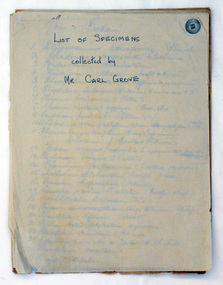
document, Grove, Carl, June 18 1910
... Charles Henry [Carl] Grove died on 17/4/1938 at Box Hill at the age of 88 and was buried in Orbost. ...Charles Henry [Carl] Grove died on 17/4/1938 at Box Hill at the age of 88 and was buried in Orbost. ...Charles Henry [Carl] Grove died on 17/4/1938 at Box Hill at the age of 88 and was buried in Orbost. Prior to coming to the Snowy River district, Carl worked as overseer on Buchan Station. In 1880, he selected land at Newmerella after first coming here in 1874 with early selector James A Robertson. He married Annie Robertson in 1876. Carl was a farmer, hop and seed grower and nurseryman. He was an elected Councillor of the newly formed Tambo Shire in 1882, and then in 1892 to the Orbost Shire where he served for many years filling varioius public roles. In 1911, he shifted to Queensland, but later returned to Victoria and died at Box Hill. (Ref. Nov 2014 Newsletter) Carl Grove was a prominent Orbost early settler. This document is a useful research tool.A document hand-written on foolscap sized paper. There is a "List of Species Collected by Mr Carl Grove" and a letter written by Carl Grove to the president and committee of the Mechanics Institute Orbost.document-species-list-orbost grove-carl -
 Flagstaff Hill Maritime Museum and Village
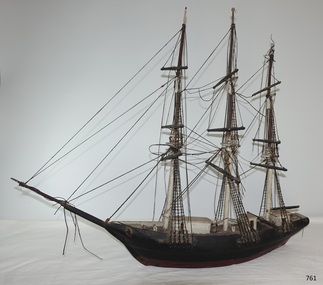
Craft - Ship model, Johann A. Landmann, Wilhelmsburg, 1853
... Landmann used his craftsmanship skills to make several early Warrnambool buildings, the first coffin in the cemetery, the first paddle boat on the Hopkins River as well as models of significant local buildings. flagstaff hill flagstaff hill maritime museum maritime museum warrnambool barque wilhelmsburg landmann johann landmann augustus landmann landman ozone hotel warrnambool presbyterian church warrnambool 30mickle street warrnambool ship model shipwreck coast 1853 fritz landmann Warrnambool Councillor Warrnambool Mayor Anna Rosina maiden voyage Bounty Scheme Hobson's Bay Hamburg Merry Kitty coffin maker cabinet maker paddle boat Henna Street Landmann Street Pioneer Memorial Board Model of the sailing ship Wilhelmsburg, carved in wood by Johann Carl Augustus Landmann in 1853. ...This ship model of the Wilhelmsburg was made by Johann Landmann during his journey on the very vessel, the sailing ship Wilhelmsburg. It was donated to Flagstaff Hill by the wife of Landmann's great-grandson. Landmann (or Landman, also known as August Landmann) was born in 1826 in Ganhor, Silesia, Prussia. At the age of 20, he travelled through Europe, working from town to town as a cabinet maker. At 26 years old he returned to Germany, married Anna Rosina in Wahlstatt, Prussia, and on the same day sailed for Australia on the Wilhelmsburg in 1853, the year the ship was registered. The Wilhelmsburg was a three-masted, square-rigged sailing ship built at Reiherstieg, Hamburg, and registered in Hamburg on 27th April 1853. On her maiden voyage in 1853, the ship sailed from Hamburg, Germany, to Australia with 510 passengers on board, including emigrants under the Bounty Scheme. Johan Landmann was one of the passengers. The Wilhelmsburg arrived in Hobson’s Bay, Melbourne after sailing for 100 days. Johann spent a week in Melbourne then travelled to Warrnambool aboard the Merry Kitty, arriving fourteen days later. Johann had landed in Melbourne with only 16 shillings in his pocket and by the time he arrived in Warrnambool, he only had one shilling and sixpence left. He also had very limited ability to speak English. He settled in the Allansford area, near Warrnambool, together with other families from Germany and went on to play a significant role in the history of Warrnambool. Johann worked as a cabinet maker in Warrnambool, making the first coffin in the Warrnambool cemetery. He also worked as a general merchant. He built many of the earliest shops in Warrnambool, and the first paddle boat used on the local Hopkins River. He made models of Warrnambool’s Ozone Hotel and Presbyterian Church; the model of the Hotel is now in the Warrnambool Art Gallery, and the model of the Presbyterian Church has been in the care of the Warrnambool & District Historical Society since around 2017. One of Landmann's residences was a two-storey building in Henna Street Warrnambool where he, lived upstairs and operated his business downstairs. After he retired Landmann built a ‘handsome stone residence’ at 30 Mickle Street, Warrnambool, where he lived until his death in June 1920; he was aged ninety-five. “Landmann Street” in Warrnambool has been named after Johann and appears on a map in 1872. He has also been honoured on Warrnambool’s Pioneer Memorial Board which is displayed at the Warrnambool and District Historical Society. Landmann's son Adolph Fritz Landmann (Fritz Landmann) born in 1861, was a Councillor from 1905 to 1915, and Mayor of Warrnambool from 1912 to 1915. The Wilhelmsburg sailed from Hamburg in 1863 heading for Queensland, Australia, but in December the vessel was wrecked off the coast of Holland during storms, with the loss of 247 lives.The ship model of the Wilhelmsburg is significant historically, having a connection to the maiden voyage of a ship that holds the record for the number of passengers carried in one journey on such a small vessel. It is also significant as it is believed to be the only existing model or representation of the ship. Johann Landmann, the maker of the model, was one of the earliest residents in Warrnambool and is a significant historical figure in colonial Warrnambool. He has the honour of appearing on the Memorial Pioneers’ Board. Landmann used his craftsmanship skills to make several early Warrnambool buildings, the first coffin in the cemetery, the first paddle boat on the Hopkins River as well as models of significant local buildings. Model of the sailing ship Wilhelmsburg, carved in wood by Johann Carl Augustus Landmann in 1853. The three-masted model barque is painted black. It has a long bow spit. flagstaff hill, flagstaff hill maritime museum, maritime museum, warrnambool, barque, wilhelmsburg, landmann, johann landmann, augustus landmann, landman, ozone hotel warrnambool, presbyterian church warrnambool, 30mickle street warrnambool, ship model, shipwreck coast, 1853, fritz landmann, warrnambool councillor, warrnambool mayor, anna rosina, maiden voyage, bounty scheme, hobson's bay, hamburg, merry kitty, coffin maker, cabinet maker, paddle boat, henna street, landmann street, pioneer memorial board -
 Flagstaff Hill Maritime Museum and Village
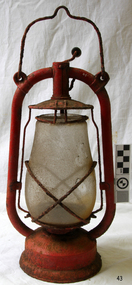
Functional object - Lamp, Carl Hermann Nier, 1928-1932
... hill maritime village...great ocean road...lamp...kerosene lamp...Hurricane Lamp...Nier-Feuerh...Carl...A domestic item with an interesting history that now is sought after by collectors giving an insight into how hurricane kerosene lamps came into being from a manufacturer in Germany that held numerous patents for oil lamps from 1902 until 1940. flagstaff hill warrnambool shipwrecked coast flagstaff hill maritime museum shipwreck coast flagstaff hill maritime village great ocean road lamp kerosene lamp Hurricane Lamp Nier-Feuerh Carl Hermann Nier Marked "Feuerhand Nr 327" "Made in Germany". ...Carl Hermann Nier in 1877 a silverware maker started to produce miners lamps and household lanterns in Beierfeld, Saxonia, East Germany. In January 1902 he established the Nier-Feuerh and company in his home town to produce kerosene lanterns. Carl's three sons Bruno, Curt and Woldemar Nier made the company into the largest lantern producer in the 1930s with Bruno Nier holding many patents for lamps. Lantern production was interrupted by World War II and ceased at the end of 1944 because of the shortage of materials and the advancing Russian army. After the Second World War the company restart the lantern production in 1947 at Luedenscheid and Hohenlockstedt north of Hamburg and fully re-establishing the company in 1950. A domestic item with an interesting history that now is sought after by collectors giving an insight into how hurricane kerosene lamps came into being from a manufacturer in Germany that held numerous patents for oil lamps from 1902 until 1940.Kerosene lamp with handle, red in colour, badly rusted. Lamp shade has lever to lift so you can light it.Marked "Feuerhand Nr 327" "Made in Germany".flagstaff hill, warrnambool, shipwrecked coast, flagstaff hill maritime museum, shipwreck coast, flagstaff hill maritime village, great ocean road, lamp, kerosene lamp, hurricane lamp, nier-feuerh, carl hermann nier -
 Flagstaff Hill Maritime Museum and Village
Container - Trinket Box, Johann A. Landmann, 1853
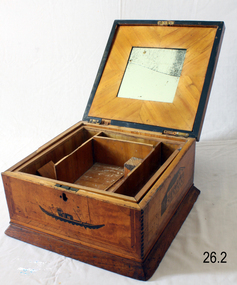
... hill maritime museum...maritime museum...shipwrecked artefact...warrnambool...trinket box...inlaid woodwork box...wilhelmsburg...landmann...johann landmann...augustus landmann...landman...fritz landmann (warrnambool mayor)...presbyterian church warrnambool...30 mickle st warrnambool...ozone hotel warrnambool...johann carl...First as a councilman and later the mayor of Warrnambool. shipwrecked coast flagstaff hill flagstaff hill maritime museum maritime museum shipwrecked artefact warrnambool trinket box inlaid woodwork box wilhelmsburg landmann johann landmann augustus landmann landman fritz landmann (warrnambool mayor) presbyterian church warrnambool 30 mickle st warrnambool ozone hotel warrnambool johann carl augustus landmann jewellery box Trinket box, wooden, with inlaid timber patterns and images. ...This trinket box was made by Johann Landmann during his journey on the sailing ship Wilhelmsburg and was donated to Flagstaff Hill by the wife of Landmann's great-grandson. Landmann (or Landman, also known as August Landmann) was born in 1826 in Ganhor, Silesia, Prussia. At the age of 20, he travelled through Europe, working from town to town as a cabinet maker. At 26 years old he returned to Germany, married Anna Rosina in Wahlstatt, Prussia, and on the same day sailed for Australia on the Wilhelmsburg in 1853, the year the ship was registered. The Wilhelmsburg was a three-masted, square-rigged sailing ship built at Reiherstieg, Hamburg, and registered in Hamburg on 27th April 1853. On her maiden voyage in 1853, the ship sailed from Hamburg, Germany, to Australia with 510 passengers on board, including emigrants under the Bounty Scheme. Johan Landmann was one of the passengers. The Wilhelmsburg arrived in Hobson’s Bay, Melbourne after sailing for 100 days. Johann spent a week in Melbourne then travelled to Warrnambool aboard the Merry Kitty, arriving fourteen days later. Johann had landed in Melbourne with only 16 shillings in his pocket and by the time he arrived in Warrnambool, he only had one shilling and sixpence left. He also had very limited ability to speak English. He settled in the Allansford area, near Warrnambool, together with other families from Germany and went on to play a significant role in the history of Warrnambool. Johann worked as a cabinet maker in Warrnambool, making the first coffin in the Warrnambool cemetery. He also worked as a general merchant. He built many of the earliest shops in Warrnambool, and the first paddle boat used on the local Hopkins River. He made models of Warrnambool’s Ozone Hotel and Presbyterian Church; the model of the Hotel is now in the Warrnambool Art Gallery, and the model of the Presbyterian Church has been in the care of the Warrnambool & District Historical Society since around 2017. One of Landmann's residences was a two-storey building in Henna Street Warrnambool where he, lived upstairs and operated his business downstairs. After he retired Landmann built a ‘handsome stone residence’ at 30 Mickle Street, Warrnambool, where he lived until his death in June 1920; he was aged ninety-five. “Landmann Street” in Warrnambool has been named after Johann and appears on a map in 1872. He has also been honoured on Warrnambool’s Pioneer Memorial Board which is displayed at the Warrnambool and District Historical Society. Landmann's son Adolph Fritz Landmann (Fritz Landmann) born in 1861, was a Councillor from 1905 to 1915, and Mayor of Warrnambool from 1912 to 1915. The Wilhelmsburg sailed from Hamburg in 1863 heading for Queensland, Australia, but in December the vessel was wrecked off the coast of Holland during storms, with the loss of 247 lives.The trinket box is significant as an early Warrnambool historical artefact with a connection to the maiden voyage of the ship Wilhelmsburg a vessel that holds the record for the number of passengers carried in one journey on a small vessel. Johann Landmann is regarded as a significant and historical figure in the development of Warrnambool as one of the earliest pioneers, not only as a businessman but the civic duties he undertook. First as a councilman and later the mayor of Warrnambool. Trinket box, wooden, with inlaid timber patterns and images. The design includes a mirror with a hidden compartment inside the hinged lid, a removable inner tray divided into compartments, and a fitted brass lock. The trim around the base is angled to widen the base. Images on the lid and three sides represent sailing vessels and a building. The lid and corners have a rope-edge design. Panels of the top and three sides have an intricate inlaid pattern featuring various wood grains. Images are framed by lines etched into the wood. The inside corners of the frames have inlaid quarter-circles of contrasting woods, resembling photograph corners.shipwrecked coast, flagstaff hill, flagstaff hill maritime museum, maritime museum, shipwrecked artefact, warrnambool, trinket box, inlaid woodwork box, wilhelmsburg, landmann, johann landmann, augustus landmann, landman, fritz landmann (warrnambool mayor), presbyterian church warrnambool, 30 mickle st warrnambool, ozone hotel warrnambool, johann carl augustus landmann, jewellery box -
 Eltham District Historical Society Inc
Journal, Peter Doughtery, ArtStreams: Arts & Culture in Banyule, Darebin, Manningham, Nillumbik & Whittlesea; Vol. 4, No. 4, Jul-Aug 1999, 1999
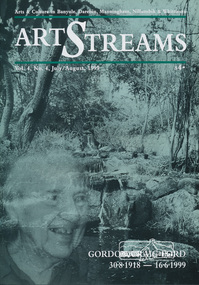
... Carl vine...Elizabeth Scarlett...William blake...National Gallery of Victoria...Peter Porter...willy wonka's ice cream gourmet food...katrina kincade...anthony marshall...Plenty Views Golf Park...lovegroves of cottles bridge...adams of north riding...adams of north riding...Arts Project Australia...Dorothy Berry...Julian Martin...Chris mason...John Gollings...John Hardcastle...montsalvat...Mon Feast...Evelyn Krape...Artspeak studio gallery...Karen throssell...Nillumbik Art Award...Andy cowan...wild dog hill...." - Eltham District Historical Society Newsletter No. 161, March 2005 art streams Gordon Ford Know & Grow dymocks booksellers Pam Dougherty sign writing Terry Pepperell Bruce Jackson carlucci's ona henderson Syd Tunn Carl vine Elizabeth Scarlett William blake National Gallery of Victoria Peter Porter willy wonka's ice cream gourmet food katrina kincade anthony marshall Plenty Views Golf Park lovegroves of cottles bridge adams of north riding adams of north riding Arts Project Australia Dorothy Berry Julian Martin Chris mason John Gollings John Hardcastle montsalvat Mon Feast Evelyn Krape Artspeak studio gallery Karen throssell Nillumbik Art Award Andy cowan wild dog hill Kerri Simpson Valonga Khosa Magenta Chirs Wilson Veronica Holland St Andrews Gallery Winter in Banyule volumes Colour front and back cover with feature articles and literary pieces with photographs and advertisements printed in black and white. 36 pages, 30 cm. ...Vol. 4, No. 4, Jul-Aug 1999 CONTENTS FOLLOWING THE SIGNS Master craftsmen of Melbourne 3 MAGNIFICENT OBSESSIONS Why we are artists 6 THE WILLIAM BLAKE EXHIBITION Closing a chapter at NGV 9 IAN McBRIDE REVIEWS Peter Porter 12 MAN OF BOOKS Anthony Marshall 13 THE INNER VIEW The book & exhibition at Arts Project Australia 16 SHORT STORY "The Angel's Paramour" 19 THE MELBOURNE BIENNALE Signs of Life 22 MONO FEAST Monologues at the Universal 23 COLLIDING RYTHYMS Blue House meets Lisa Young 25 POETRY 26 CD REVIEWS 8, 27 ARTIN' ABOUT 28 WINING & DINING 30 ART SERVICES AND TEACHING 32 "Peter Dougherty has been involved in the local art scene for many years. As publisher and editor of the arts magazine Artstreams, his comments on the various branches of the arts are widely respected. His "The Arts" column in the Diamond Valley Leader presents a brief summary for a much wider cross section of the local community. Peter also operates his own gallery and the Artstreams Cafe at the St Andrews market. Peter has a wealth of knowledge about present day and historical aspects of local art and artists." - Eltham District Historical Society Newsletter No. 161, March 2005Colour front and back cover with feature articles and literary pieces with photographs and advertisements printed in black and white. 36 pages, 30 cm. Vol. 1, no. 1 (Nov. 1996) - Vol. 10, no. 5 (summer ed. 2005/06) art streams, gordon ford, know & grow, dymocks booksellers, pam dougherty, sign writing, terry pepperell, bruce jackson, carlucci's, ona henderson, syd tunn, carl vine, elizabeth scarlett, william blake, national gallery of victoria, peter porter, willy wonka's ice cream gourmet food, katrina kincade, anthony marshall, plenty views golf park, lovegroves of cottles bridge, adams of north riding, adams of north riding, arts project australia, dorothy berry, julian martin, chris mason, john gollings, john hardcastle, montsalvat, mon feast, evelyn krape, artspeak studio gallery, karen throssell, nillumbik art award, andy cowan, wild dog hill, kerri simpson, valonga khosa, magenta, chirs wilson, veronica holland, st andrews gallery, winter in banyule, volumes -
 Eltham District Historical Society Inc
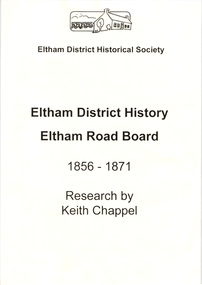
Binder, Eltham District History, Eltham Road Board, 1856-1871; Research by Keith Chappel, 1971-1974
... Eltham District History, Eltham Road Board, 1856-1871 a. foley a. harkness a. mackie a. mcintyre a. von ziegler a.a. vivian a.d. kinninmont a.d. quadri a.h. grimshaw a.w. page aboriginal reserve aborigines abraham quarman abraham rooks abraham taylor adam goudie aenaes harrison agnes black agnes charlton agnes dalrymple ah chong ah cock ah hein ah lie ah sing albert lunson albert ness albert parker albert ramseyor alert hunt alex cameron alex eason alex mcandrew alexander crichton alexander donaldson alexander falconer alexander innes alexander james alexander mcdonald alexander miller alexander thompson alexander walker alexander white alfred armstrong alfred burgess alfred davey alfred deschamp alfred eddy alfred hinley alfred hooper alfred hubbard alfred lowman alfred smith alfred whelpton alice power allen heeps allwood amelia neuman amos taylor anderson andersons creek andrew brown andrew byrne andrew harkness andrew herbert andrew ross andrew smith angus mcdonald ann emmott ann mcphee ann odea ann plunkett ann snell ann tatty annie ashmore annie herbert annie stuart anthony beale anthony currie ants nest archibald mcphee arthur connor arthur lyttle arthur rooke arthur young arthurs creek arthurs creek school august ostling b.o. wallis barkers creek barr belton benjamin bain benjamin jenken benjamin lawford benjamin rice benjamin shaw benjamin smith benjamin wallis benjamin walton berry bismark hotel black calf gully black thursday boomers gully bridget bunker bridget hailes bridget kearse bruno hirt burns bushranger c. twiss c.h. bade caleb sherar caledonia caledonia diggings campbell hunter carl euman caroline davey catherine kennedy cathren brock cecilia farman chamberlain chapman charles caldwell charles campbell charles dale charles draper charles fowler charles green charles hawkins charles hempel charles hirt charles hirtson charles jefer charles jesse charles kerchevell charles lidgerwood charles morris charles peake charles prince charles rielly charles roberts charles rowand charles simms charles souter charles swan charles verso charles wells charles whelpton charles williams charles wingrove charles woodley charleys gully charlotte beltison charlotte goodwin ching ah hock christine brennan christine mckenzie christmas hills hotel christmas hills school christopher battaila christopher twiss chune grove church of england church of england school clarissa milton cleir hills colin amos constable quirke constable talty cornelius haley cornelius stewart cottles bridge councillors hotel cricket cucksons brewery d. nicholson d.w. morrissey dalry daniel charleston daniel harding daniel jepps daniel mccarthy daniel mckenzie daniel mcloughlin daniel oloughlin david boyd david christian david clark david creighton david rogers david rolfe david sharp david shawcross david smith david stevenson diamond accommodation store diamond reef mine dickson dixon bertram donald cameron donald mcmillan donaldson dougald mcphee dr barclay dugald mcphee dugald taylor duncan fraser duncan smith dungey e. hildebrand e. stichlins e.f. falkiner e.j. hughes e.m. garsed e.w. morrissey edith staff edmund clarke edmund cuckson edmund hall edmund picket edward bage edward beltison edward bunker edward ford edward hindley edward jackson edward jones edward kelly edward qualtrough edward staff edward tresain edward weller edward whelpton edward whilpson edwin biley edwin cartwright edwin cohen edwin deschamp edwin mcleish edwin rodda edwin smith effie rodda eliza bellamy eliza dawson eliza howell eliza nield eliza smith elizabeth cockshutt elizabeth eiles elizabeth fitch elizabeth gillespie elizabeth harris elizabeth herbert elizabeth hollow elizabeth le juge elizabeth plunkett elizabeth whelpton ellen hurst ellen kearse ellen quarman ellen sweeney ellen white ellis eltham cemetery eltham hotel eltham lower park eltham market eltham police station eltham pound eltham quarry eltham racecourse eltham roads board eltham school emile hude emily anderson emily blamire emily coutie emma smith emma taylor ephraim wyett ernest baillie ernest henrick ernest steer esther porter ethel baillie evan jones evelyn hotel evelyn observer ewen cameron ewen jones f. chrimes f. grundel f.e. falkiner f.r. howard fanny benson fanny white felix hude felix noisette ferdinand ramseyer flora vale florence hurst fogarty forbes mackenzie fords creek frances kearse francis baker francis hales francis raselli francis steer frank eiles frank rogerson frank tanner fraser fred hurst frederick falkiner frederick hurst frederick muller frederick nink frederick walker frederick wharington friedrich muller fryers gully furphy g. donaldson g. houghton g. turnbull geanetta hude george assender george bear george beare george benson george bird george boston george brain george brandt george burley george buswell george coutie george eiles george ewings george ford george godber george goodman george gray george griffiths george hall george herbert george horn george kirk george langhorne george mann george mclelland george mosely george neumayer george orchard george parish george porter george purcell george ralph george reid george rocke george rogers george rolfe george stebbing george stebbings george stebbins george switzer george symons george thompson georgina hilton glenda moriss glengloy gold goulstone greensborough police station gulf station h. jennings h. mann h.h. farquason hannah sunderland happy valley harkness harold scarce harriet hunt harriet smith harry hollow hazel glen healesville heinrich hirt helena peters henrietta hill henry arthur henry ashmore henry austin henry brown henry dendy henry dineen henry fowler henry gardner henry green henry griffin henry hart henry hirst henry hirt henry hopkinson henry hude henry hurst henry inch henry jones henry mills henry scarce henry st paul henry stevens henry stooke henry thomson henry vogt henry wallace henry wilson herbert rodda herman henrick hermann lampe hermann steinmann hester staff hitchill holbert honoree hude hotel de france hugh mccann humphrey peers humphrey spicer hurstbridge hurstbridge general store i.h. clarke ida adelskold ignatz kinzel ira pimm irene donaldson isaac briggs isaac hickson isaac hill isaac kerr isaac varby isaac williams isabella donaldson isabelle herbert j. dungate j. eccleston j. harkness j. hartley j. hude j. irvine j. jones j. manduell j. mason j. mcdonald j. mcnamara j. nichenson j. renahen j. scott j. seymour j.a. goold j.a. panton j.c. hughes j.d. thompson j.f. hughes j.f. johnstone j.g. walter j.h. taylor j.p. morris jack ewart jacob belsham jacob goldstein jacob morast jam loon james alexander james anderson james andrew james andrews james baines james batchelor james bond james bradford james brennan james brock james brown james brunning james buchanan james cockburn james cowan james dalrymple james donaldson james duckworth james goodwin james harding james harrison james hartley james hawkins james hewish james holinger james hughes james inglis james jamieson james johnson james johnston james kaye james kew james lindsay james lindsey james lynan james macpherson james mann james martley james mayger james mccutcheon james mcmahon james mcpherson james mess james miller james mitton james morton james murdoch james murdock james nickinson james orford james purcell james qualtrough james rudall james simpson james smith james spence james stonachan james stuart james suman james surman james sutherland james thompson james thomson james walker james walters james watts jane cleave jane donaldson jane mess jane sadler jane shaw jane thomson janefield jean borelli jeanette hudi jeanne hude johann muller john ainsworth john andrew john baillie john barr john beale john bell john bellin john blake john blyth john brock john brown john byers john cameron john candler john carter john cobbock john cockshank john cockshutt john coleman john connell john crozier john darroch john dennis john donaldson john elsworthy john fenton john fitch john gardner john gast john graham john grimshaw john haines john haley john harper john harris john hassall john hayes john heales john herbert john holland john holman john hood john horner john horton john hughes john jardine john johns john johnston john jones john kearse john kilpatrick john knell john lawrey john macadam john mandell john manduell john marker john mccoll john mccolly john mcdonald john mcintyre john mckimmie john mcnamara john mitchell john moore john morgan john muller john murray john pearson john peterson john petty john pullen john quinn john rawlings john ryder john sabelberg john scott john semar john serman john seymour john shawcross john smith john staff john steer john stephens john sweeney john thompson john thomson john trahy john walker john weller john wells john williams john williamson john yates john yeoman john young johnn mcdonnell joseph bull joseph burns joseph caldwell joseph caudwell joseph coutie joseph elliott joseph emmott joseph fayver joseph furphy joseph hall joseph hibbert joseph hilton joseph johns joseph lithgow joseph panton joseph rodda joseph sands joseph sanson joseph schubert joseph scott joseph shaw joseph smith joseph spedder joseph stevenson joseph verco joseph wilson josiah hollis josiah hullis josiah thomas judith furphy julie williams junction hotel kangaroo forest kangaroo ground kangaroo ground cemetery kangaroo ground general store kangaroo ground hotel kangaroo ground police station kangaroo ground post office kangaroo ground school kate bolger kath scarce katherine kearse kidd kinglake kinglake hotel kingstown l. storey lan quan lang latimour laura henrick laurence paterson leon berlioz levinia henrick lillian gillan linton little eltham long gully louis henrick louis le juge louis smith louisa steinmann louise miller lower plenty bridge hotel lucy tidell lydia qualtrough m.j. careton m.s. adams macrudden maggs mail coach maplestone margaret graham margaret hollins margaret kearse margaret kennedy margaret kinrade margaret lynch margaret mcbirney margaret steinmann marguerite borelli maria reilly maria st paul maria trew marian trew marianne miller marie wright marion hillier mark bunker martha herbert martin brennan mary alexander mary beltison mary bradford mary bridgman mary brock mary bull mary eiles mary hopkinson mary kearse mary lean mary mcinerney mary miller mary parmington mary pearson mary pickles mary robertson mary rodda mary ross mary smith mary surman mary weller matilda jordan matilda mcmillan matthias watson mawson mechanics institute michael callanan michael fenton michael kearse michael mctyne michael merritt michael oday michael odea midgley hall mills minnie watts miss bellon morgans gully mount joy mr donnan mr omeare mr page mrs greenaway mrs havard mrs hude mrs morris muller murrays bridge n.d. whyte ned kelly new caledonia creek nicholas rodda nillumbik norman mcphee old caledonia gully oliver gourlay one tree hill owen finnegan panton hill panton hill hotel panton hill post office panton hill school parambool patrick armstrong patrick bourke patrick burke patrick callaghan patrick green patrick harrington patrick kearse patrick lynch patrick mcintyre patrick o'callaghan patrick rodgers patrick sheahan peach grove perinella bull perry peter carrucan peter flyn peter ford peter lawlor peter patterson peter snodgrass peter watson philip korfman phillip gakden phillip kaufman phillip korfman pierce brennan pierce power poo long pound bend pretty hill queenstown queenstown cemetery queenstown police station queenstown school r. mackie r.a. davidson rebecca noisette rebecca weller reefers hotel research research gully research gully hotel research hotel research school rev dobinson rhoda coutie richard brook richard capper richard dunstan richard goulding richard heales richard lane richard matthews richard rodda richard searle richard smith richard wallis richard warren richard woolcott robert alice robert bourke robert burke robert charlton robert clarke robert cunningham robert dugdale robert grant robert hall robert harris robert hempel robert hill robert hurst robert lowman robert mcadam robert mckee robert nink robert norman robert pontessey robert sharp robert smith robert steel robert stevenson robert strong robert surnam robert wood robina joyce rogerson roman catholic church rossiter rudolph muller ruth mess ruth sadler ruth stevenson s. smith s. stewart salters rush sam deacon samuel bird samuel brace samuel cameron samuel candler samuel cole samuel cracknell samuel dagley samuel flier samuel furphy samuel merriman samuel moseley samuel mosley samuel smith sarah howard sarah moseley sarah raston sarah walters second watery gully school self shin hun simon armstrong smiths gully smiths gully mechanics institute smiths gully school sophia greenaway spanish gully st andrews st andrews hotel st helena stack stanley smith stephen gonnet stephenson turner stephensons bridge steven anderson stevensons corner sumner susan dickson susan street susan walke sutherland t. davidson t. mclaughlin t. symons t.a. aldwell t.b. drummond t.b. henderson t.e. johnston t.h. subelly tarrawarra theis theodore sabelberg theresa lynch thomas anderson thomas armstrong thomas baillie thomas batt thomas bell thomas benson thomas bibbs thomas boardman thomas bradford thomas bull thomas cattery thomas cochrane thomas cook thomas cottle thomas cousins thomas downward thomas edwards thomas evans thomas grierson thomas haines thomas harmer thomas hunniford thomas huntford thomas hurry thomas jardine thomas jones thomas kearse thomas kennedy thomas marland thomas martin thomas mcinerney thomas morrison thomas mundy thomas murphy thomas murray thomas peacock thomas plunkett thomas postlethwaite thomas prior thomas qualtrough thomas smith thomas stone thomas sunderland thomas swatling thomas sweeney thomas symons thomas walke thomas wall thomas wright thomas young tim shaw toll gate tom collins tommys hut true upper diamond creek upper diamond creek school view hill virtue hall w. cockayne w. craig w. foster w. marriott w. ridley w. trenoweth w.a. page w.b. andrew w.b. burnley w.b. phillips w.c. shortt w.w. herbert walter barlow walter hillier walter joyce walter knell walter mckimmie walter mcnicoll walter thomson walter wippell warburton carr warrandyte warrens hotel watery gully watsons creek watsons creek hotel wattle glen school wellers hotel weymss donaldson whipstick gully white cloud wild dog creek wild dog gully wiliam albert william aitken william albert william anderson william andrews william barr william barrow william bell william bond william bowden william bremmer william brewer william bridgman william burnley william buswell william cant william clarke william cleave william crozier william dawson william dodging william ellis william finn william fitzgibbon william ford william foster william garland william ghosley william golding william goodwin william graham william gray william grimshaw william hall william harding william herbert william hoilett william hopkinson william howitt william howlett william hubbard william hunt william inglis william jarrold william joyce william kidd william kilpatrick william kommer william lodge william mclaughlin william mcmurray william mitton william moore william mosley william murphy william nicholson william normage william norman william nuttall william phillips william quarman william ronald william sadler william scott william seaville william sharp william smith william spicer william taylor william thomson william tobin william underwood william walsh william walshe william walters william watkins william west william wilmot william wilson william wolverston william woods wolfe woodley yarra bank yow yow creek a. brewer a. easson a. edwards a. melville a.m. ross a.r. larrimour aborigine reserve advertisements agricultural district alan bernhard horsley albert frederick charles glover albert h price albert h.c. price albert henry charles price alex easson alexander campbell alexander melville alexander thomas haley alexander thomson alfred j. lowman alice may peake alie haley alistair knox alistair samuel knox allandale road allendale road allwood run andrew andrew mckay anton william brinkkotter archibald brown argus arthur chichester allen arthur edwin cracknell arthur john braid arthur robert traynor atlas of australia 1886 b. lawford b. mess barry thale houston basil y hall basil yaldwyn hall bell street benjamin baxter benjamin bowater benjamin thomas taylor benjaomin o. wallis bible street billis bolton street brewery brisbane street buckingham bushrangers c. brown c. carroll c. hirt c.s. haley c.s. wingrove c.t. harris caledonia run cam cattle charis meta alexander pelling charles brown charles ellis charles hicks bath charles newman clara gonnet claude bryan gibbs clifford henry goulding seear coleraine colin t. bell collectors collingwood commissioner airey coplin thomas bell cornelius john stewart cornelius sharp haley cornelius sharpe haley county of evelyn culla hill cutto hill d. ryan daily news newspaper dalton street daniel jepp derek cecil o'beirne diamond creek diamond creek post office diamond creek railway station diamond creek run diamond creek station diamond creek township divisions doctor donald alfred neil donald charles maling donald ingersole donald kennedy douglas anderson e. cameron e. falkiner e. stooke e.t. peers edward dumaresq edward heller edward james edward wilson edwin stooke elections electoral districts electoral roll electrified railway eltham eltham district description eltham district history eltham district road board eltham post office eltham railway station eltham road district eltham road district board eltham shire council eltham shire councillors eltham shire history eltham town common eltham village eltham-hurstbridge railway ely street eric dudley butler eric nichol staff eric percival harmer ernest james andrews eve may edwards evelyn and mornington division evelyn division everard albert hale ewn hugh cameron f. stone f.d. wickham flour mill fountain of friendship hotel francis bradley francis joseph favier francis regiereals(?) ...Eltham District History, Eltham Road Board, 1856-1871Two binders containing 486 A4 pages (photocopied) of mostly handwritten notes from research undertaken of Public Office Records of Victoria various holdings. Some photocopies from source reference books. Includes 20 page subject index (handwritten) at front and 5 pages of notes and sources at rear and a photocopy of short biography of Keith Chappel.a. foley, a. harkness, a. mackie, a. mcintyre, a. von ziegler, a.a. vivian, a.d. kinninmont, a.d. quadri, a.h. grimshaw, a.w. page, aboriginal reserve, aborigines, abraham quarman, abraham rooks, abraham taylor, adam goudie, aenaes harrison, agnes black, agnes charlton, agnes dalrymple, ah chong, ah cock, ah hein, ah lie, ah sing, albert lunson, albert ness, albert parker, albert ramseyor, alert hunt, alex cameron, alex eason, alex mcandrew, alexander crichton, alexander donaldson, alexander falconer, alexander innes, alexander james, alexander mcdonald, alexander miller, alexander thompson, alexander walker, alexander white, alfred armstrong, alfred burgess, alfred davey, alfred deschamp, alfred eddy, alfred hinley, alfred hooper, alfred hubbard, alfred lowman, alfred smith, alfred whelpton, alice power, allen heeps, allwood, amelia neuman, amos taylor, anderson, andersons creek, andrew brown, andrew byrne, andrew harkness, andrew herbert, andrew ross, andrew smith, angus mcdonald, ann emmott, ann mcphee, ann odea, ann plunkett, ann snell, ann tatty, annie ashmore, annie herbert, annie stuart, anthony beale, anthony currie, ants nest, archibald mcphee, arthur connor, arthur lyttle, arthur rooke, arthur young, arthurs creek, arthurs creek school, august ostling, b.o. wallis, barkers creek, barr, belton, benjamin bain, benjamin jenken, benjamin lawford, benjamin rice, benjamin shaw, benjamin smith, benjamin wallis, benjamin walton, berry, bismark hotel, black calf gully, black thursday, boomers gully, bridget bunker, bridget hailes, bridget kearse, bruno hirt, burns, bushranger, c. twiss, c.h. bade, caleb sherar, caledonia, caledonia diggings, campbell hunter, carl euman, caroline davey, catherine kennedy, cathren brock, cecilia farman, chamberlain, chapman, charles caldwell, charles campbell, charles dale, charles draper, charles fowler, charles green, charles hawkins, charles hempel, charles hirt, charles hirtson, charles jefer, charles jesse, charles kerchevell, charles lidgerwood, charles morris, charles peake, charles prince, charles rielly, charles roberts, charles rowand, charles simms, charles souter, charles swan, charles verso, charles wells, charles whelpton, charles williams, charles wingrove, charles woodley, charleys gully, charlotte beltison, charlotte goodwin, ching ah hock, christine brennan, christine mckenzie, christmas hills hotel, christmas hills school, christopher battaila, christopher twiss, chune grove, church of england, church of england school, clarissa milton, cleir hills, colin amos, constable quirke, constable talty, cornelius haley, cornelius stewart, cottles bridge, councillors hotel, cricket, cucksons brewery, d. nicholson, d.w. morrissey, dalry, daniel charleston, daniel harding, daniel jepps, daniel mccarthy, daniel mckenzie, daniel mcloughlin, daniel oloughlin, david boyd, david christian, david clark, david creighton, david rogers, david rolfe, david sharp, david shawcross, david smith, david stevenson, diamond accommodation store, diamond reef mine, dickson, dixon bertram, donald cameron, donald mcmillan, donaldson, dougald mcphee, dr barclay, dugald mcphee, dugald taylor, duncan fraser, duncan smith, dungey, e. hildebrand, e. stichlins, e.f. falkiner, e.j. hughes, e.m. garsed, e.w. morrissey, edith staff, edmund clarke, edmund cuckson, edmund hall, edmund picket, edward bage, edward beltison, edward bunker, edward ford, edward hindley, edward jackson, edward jones, edward kelly, edward qualtrough, edward staff, edward tresain, edward weller, edward whelpton, edward whilpson, edwin biley, edwin cartwright, edwin cohen, edwin deschamp, edwin mcleish, edwin rodda, edwin smith, effie rodda, eliza bellamy, eliza dawson, eliza howell, eliza nield, eliza smith, elizabeth cockshutt, elizabeth eiles, elizabeth fitch, elizabeth gillespie, elizabeth harris, elizabeth herbert, elizabeth hollow, elizabeth le juge, elizabeth plunkett, elizabeth whelpton, ellen hurst, ellen kearse, ellen quarman, ellen sweeney, ellen white, ellis, eltham cemetery, eltham hotel, eltham lower park, eltham market, eltham police station, eltham pound, eltham quarry, eltham racecourse, eltham roads board, eltham school, emile hude, emily anderson, emily blamire, emily coutie, emma smith, emma taylor, ephraim wyett, ernest baillie, ernest henrick, ernest steer, esther porter, ethel baillie, evan jones, evelyn hotel, evelyn observer, ewen cameron, ewen jones, f. chrimes, f. grundel, f.e. falkiner, f.r. howard, fanny benson, fanny white, felix hude, felix noisette, ferdinand ramseyer, flora vale, florence hurst, fogarty, forbes mackenzie, fords creek, frances kearse, francis baker, francis hales, francis raselli, francis steer, frank eiles, frank rogerson, frank tanner, fraser, fred hurst, frederick falkiner, frederick hurst, frederick muller, frederick nink, frederick walker, frederick wharington, friedrich muller, fryers gully, furphy, g. donaldson, g. houghton, g. turnbull, geanetta hude, george assender, george bear, george beare, george benson, george bird, george boston, george brain, george brandt, george burley, george buswell, george coutie, george eiles, george ewings, george ford, george godber, george goodman, george gray, george griffiths, george hall, george herbert, george horn, george kirk, george langhorne, george mann, george mclelland, george mosely, george neumayer, george orchard, george parish, george porter, george purcell, george ralph, george reid, george rocke, george rogers, george rolfe, george stebbing, george stebbings, george stebbins, george switzer, george symons, george thompson, georgina hilton, glenda moriss, glengloy, gold, goulstone, greensborough police station, gulf station, h. jennings, h. mann, h.h. farquason, hannah sunderland, happy valley, harkness, harold scarce, harriet hunt, harriet smith, harry hollow, hazel glen, healesville, heinrich hirt, helena peters, henrietta hill, henry arthur, henry ashmore, henry austin, henry brown, henry dendy, henry dineen, henry fowler, henry gardner, henry green, henry griffin, henry hart, henry hirst, henry hirt, henry hopkinson, henry hude, henry hurst, henry inch, henry jones, henry mills, henry scarce, henry st paul, henry stevens, henry stooke, henry thomson, henry vogt, henry wallace, henry wilson, herbert rodda, herman henrick, hermann lampe, hermann steinmann, hester staff, hitchill, holbert, honoree hude, hotel de france, hugh mccann, humphrey peers, humphrey spicer, hurstbridge, hurstbridge general store, i.h. clarke, ida adelskold, ignatz kinzel, ira pimm, irene donaldson, isaac briggs, isaac hickson, isaac hill, isaac kerr, isaac varby, isaac williams, isabella donaldson, isabelle herbert, j. dungate, j. eccleston, j. harkness, j. hartley, j. hude, j. irvine, j. jones, j. manduell, j. mason, j. mcdonald, j. mcnamara, j. nichenson, j. renahen, j. scott, j. seymour, j.a. goold, j.a. panton, j.c. hughes, j.d. thompson, j.f. hughes, j.f. johnstone, j.g. walter, j.h. taylor, j.p. morris, jack ewart, jacob belsham, jacob goldstein, jacob morast, jam loon, james alexander, james anderson, james andrew, james andrews, james baines, james batchelor, james bond, james bradford, james brennan, james brock, james brown, james brunning, james buchanan, james cockburn, james cowan, james dalrymple, james donaldson, james duckworth, james goodwin, james harding, james harrison, james hartley, james hawkins, james hewish, james holinger, james hughes, james inglis, james jamieson, james johnson, james johnston, james kaye, james kew, james lindsay, james lindsey, james lynan, james macpherson, james mann, james martley, james mayger, james mccutcheon, james mcmahon, james mcpherson, james mess, james miller, james mitton, james morton, james murdoch, james murdock, james nickinson, james orford, james purcell, james qualtrough, james rudall, james simpson, james smith, james spence, james stonachan, james stuart, james suman, james surman, james sutherland, james thompson, james thomson, james walker, james walters, james watts, jane cleave, jane donaldson, jane mess, jane sadler, jane shaw, jane thomson, janefield, jean borelli, jeanette hudi, jeanne hude, johann muller, john ainsworth, john andrew, john baillie, john barr, john beale, john bell, john bellin, john blake, john blyth, john brock, john brown, john byers, john cameron, john candler, john carter, john cobbock, john cockshank, john cockshutt, john coleman, john connell, john crozier, john darroch, john dennis, john donaldson, john elsworthy, john fenton, john fitch, john gardner, john gast, john graham, john grimshaw, john haines, john haley, john harper, john harris, john hassall, john hayes, john heales, john herbert, john holland, john holman, john hood, john horner, john horton, john hughes, john jardine, john johns, john johnston, john jones, john kearse, john kilpatrick, john knell, john lawrey, john macadam, john mandell, john manduell, john marker, john mccoll, john mccolly, john mcdonald, john mcintyre, john mckimmie, john mcnamara, john mitchell, john moore, john morgan, john muller, john murray, john pearson, john peterson, john petty, john pullen, john quinn, john rawlings, john ryder, john sabelberg, john scott, john semar, john serman, john seymour, john shawcross, john smith, john staff, john steer, john stephens, john sweeney, john thompson, john thomson, john trahy, john walker, john weller, john wells, john williams, john williamson, john yates, john yeoman, john young, johnn mcdonnell, joseph bull, joseph burns, joseph caldwell, joseph caudwell, joseph coutie, joseph elliott, joseph emmott, joseph fayver, joseph furphy, joseph hall, joseph hibbert, joseph hilton, joseph johns, joseph lithgow, joseph panton, joseph rodda, joseph sands, joseph sanson, joseph schubert, joseph scott, joseph shaw, joseph smith, joseph spedder, joseph stevenson, joseph verco, joseph wilson, josiah hollis, josiah hullis, josiah thomas, judith furphy, julie williams, junction hotel, kangaroo forest, kangaroo ground, kangaroo ground cemetery, kangaroo ground general store, kangaroo ground hotel, kangaroo ground police station, kangaroo ground post office, kangaroo ground school, kate bolger, kath scarce, katherine kearse, kidd, kinglake, kinglake hotel, kingstown, l. storey, lan quan, lang, latimour, laura henrick, laurence paterson, leon berlioz, levinia henrick, lillian gillan, linton, little eltham, long gully, louis henrick, louis le juge, louis smith, louisa steinmann, louise miller, lower plenty bridge hotel, lucy tidell, lydia qualtrough, m.j. careton, m.s. adams, macrudden, maggs, mail coach, maplestone, margaret graham, margaret hollins, margaret kearse, margaret kennedy, margaret kinrade, margaret lynch, margaret mcbirney, margaret steinmann, marguerite borelli, maria reilly, maria st paul, maria trew, marian trew, marianne miller, marie wright, marion hillier, mark bunker, martha herbert, martin brennan, mary alexander, mary beltison, mary bradford, mary bridgman, mary brock, mary bull, mary eiles, mary hopkinson, mary kearse, mary lean, mary mcinerney, mary miller, mary parmington, mary pearson, mary pickles, mary robertson, mary rodda, mary ross, mary smith, mary surman, mary weller, matilda jordan, matilda mcmillan, matthias watson, mawson, mechanics institute, michael callanan, michael fenton, michael kearse, michael mctyne, michael merritt, michael oday, michael odea, midgley hall, mills, minnie watts, miss bellon, morgans gully, mount joy, mr donnan, mr omeare, mr page, mrs greenaway, mrs havard, mrs hude, mrs morris, muller, murrays bridge, n.d. whyte, ned kelly, new caledonia creek, nicholas rodda, nillumbik, norman mcphee, old caledonia gully, oliver gourlay, one tree hill, owen finnegan, panton hill, panton hill hotel, panton hill post office, panton hill school, parambool, patrick armstrong, patrick bourke, patrick burke, patrick callaghan, patrick green, patrick harrington, patrick kearse, patrick lynch, patrick mcintyre, patrick o'callaghan, patrick rodgers, patrick sheahan, peach grove, perinella bull, perry, peter carrucan, peter flyn, peter ford, peter lawlor, peter patterson, peter snodgrass, peter watson, philip korfman, phillip gakden, phillip kaufman, phillip korfman, pierce brennan, pierce power, poo long, pound bend, pretty hill, queenstown, queenstown cemetery, queenstown police station, queenstown school, r. mackie, r.a. davidson, rebecca noisette, rebecca weller, reefers hotel, research, research gully, research gully hotel, research hotel, research school, rev dobinson, rhoda coutie, richard brook, richard capper, richard dunstan, richard goulding, richard heales, richard lane, richard matthews, richard rodda, richard searle, richard smith, richard wallis, richard warren, richard woolcott, robert alice, robert bourke, robert burke, robert charlton, robert clarke, robert cunningham, robert dugdale, robert grant, robert hall, robert harris, robert hempel, robert hill, robert hurst, robert lowman, robert mcadam, robert mckee, robert nink, robert norman, robert pontessey, robert sharp, robert smith, robert steel, robert stevenson, robert strong, robert surnam, robert wood, robina joyce, rogerson, roman catholic church, rossiter, rudolph muller, ruth mess, ruth sadler, ruth stevenson, s. smith, s. stewart, salters rush, sam deacon, samuel bird, samuel brace, samuel cameron, samuel candler, samuel cole, samuel cracknell, samuel dagley, samuel flier, samuel furphy, samuel merriman, samuel moseley, samuel mosley, samuel smith, sarah howard, sarah moseley, sarah raston, sarah walters, second watery gully school, self, shin hun, simon armstrong, smiths gully, smiths gully mechanics institute, smiths gully school, sophia greenaway, spanish gully, st andrews, st andrews hotel, st helena, stack, stanley smith, stephen gonnet, stephenson turner, stephensons bridge, steven anderson, stevensons corner, sumner, susan dickson, susan street, susan walke, sutherland, t. davidson, t. mclaughlin, t. symons, t.a. aldwell, t.b. drummond, t.b. henderson, t.e. johnston, t.h. subelly, tarrawarra, theis, theodore sabelberg, theresa lynch, thomas anderson, thomas armstrong, thomas baillie, thomas batt, thomas bell, thomas benson, thomas bibbs, thomas boardman, thomas bradford, thomas bull, thomas cattery, thomas cochrane, thomas cook, thomas cottle, thomas cousins, thomas downward, thomas edwards, thomas evans, thomas grierson, thomas haines, thomas harmer, thomas hunniford, thomas huntford, thomas hurry, thomas jardine, thomas jones, thomas kearse, thomas kennedy, thomas marland, thomas martin, thomas mcinerney, thomas morrison, thomas mundy, thomas murphy, thomas murray, thomas peacock, thomas plunkett, thomas postlethwaite, thomas prior, thomas qualtrough, thomas smith, thomas stone, thomas sunderland, thomas swatling, thomas sweeney, thomas symons, thomas walke, thomas wall, thomas wright, thomas young, tim shaw, toll gate, tom collins, tommys hut, true, upper diamond creek, upper diamond creek school, view hill, virtue hall, w. cockayne, w. craig, w. foster, w. marriott, w. ridley, w. trenoweth, w.a. page, w.b. andrew, w.b. burnley, w.b. phillips, w.c. shortt, w.w. herbert, walter barlow, walter hillier, walter joyce, walter knell, walter mckimmie, walter mcnicoll, walter thomson, walter wippell, warburton carr, warrandyte, warrens hotel, watery gully, watsons creek, watsons creek hotel, wattle glen school, wellers hotel, weymss donaldson, whipstick gully, white cloud, wild dog creek, wild dog gully, wiliam albert, william aitken, william albert, william anderson, william andrews, william barr, william barrow, william bell, william bond, william bowden, william bremmer, william brewer, william bridgman, william burnley, william buswell, william cant, william clarke, william cleave, william crozier, william dawson, william dodging, william ellis, william finn, william fitzgibbon, william ford, william foster, william garland, william ghosley, william golding, william goodwin, william graham, william gray, william grimshaw, william hall, william harding, william herbert, william hoilett, william hopkinson, william howitt, william howlett, william hubbard, william hunt, william inglis, william jarrold, william joyce, william kidd, william kilpatrick, william kommer, william lodge, william mclaughlin, william mcmurray, william mitton, william moore, william mosley, william murphy, william nicholson, william normage, william norman, william nuttall, william phillips, william quarman, william ronald, william sadler, william scott, william seaville, william sharp, william smith, william spicer, william taylor, william thomson, william tobin, william underwood, william walsh, william walshe, william walters, william watkins, william west, william wilmot, william wilson, william wolverston, william woods, wolfe, woodley, yarra bank, yow yow creek, a. brewer, a. easson, a. edwards, a. melville, a.m. ross, a.r. larrimour, aborigine reserve, advertisements, agricultural district, alan bernhard horsley, albert frederick charles glover, albert h price, albert h.c. price, albert henry charles price, alex easson, alexander campbell, alexander melville, alexander thomas haley, alexander thomson, alfred j. lowman, alice may peake, alie haley, alistair knox, alistair samuel knox, allandale road, allendale road, allwood run, andrew, andrew mckay, anton william brinkkotter, archibald brown, argus, arthur chichester allen, arthur edwin cracknell, arthur john braid, arthur robert traynor, atlas of australia 1886, b. lawford, b. mess, barry thale houston, basil y hall, basil yaldwyn hall, bell street, benjamin baxter, benjamin bowater, benjamin thomas taylor, benjaomin o. wallis, bible street, billis, bolton street, brewery, brisbane street, buckingham, bushrangers, c. brown, c. carroll, c. hirt, c.s. haley, c.s. wingrove, c.t. harris, caledonia run, cam, cattle, charis meta alexander pelling, charles brown, charles ellis, charles hicks bath, charles newman, clara gonnet, claude bryan gibbs, clifford henry goulding seear, coleraine, colin t. bell, collectors, collingwood, commissioner airey, coplin thomas bell, cornelius john stewart, cornelius sharp haley, cornelius sharpe haley, county of evelyn, culla hill, cutto hill, d. ryan, daily news newspaper, dalton street, daniel jepp, derek cecil o'beirne, diamond creek, diamond creek post office, diamond creek railway station, diamond creek run, diamond creek station, diamond creek township, divisions, doctor, donald alfred neil, donald charles maling, donald ingersole, donald kennedy, douglas anderson, e. cameron, e. falkiner, e. stooke, e.t. peers, edward dumaresq, edward heller, edward james, edward wilson, edwin stooke, elections, electoral districts, electoral roll, electrified railway, eltham, eltham district description, eltham district history, eltham district road board, eltham post office, eltham railway station, eltham road district, eltham road district board, eltham shire council, eltham shire councillors, eltham shire history, eltham town common, eltham village, eltham-hurstbridge railway, ely street, eric dudley butler, eric nichol staff, eric percival harmer, ernest james andrews, eve may edwards, evelyn and mornington division, evelyn division, everard albert hale, ewn hugh cameron, f. stone, f.d. wickham, flour mill, fountain of friendship hotel, francis bradley, francis joseph favier, francis regiereals(?), francis watson rosier, frank haley, frank wayne maas, franklin william nankervis, frederick charles barrett, frederick edward falkiner, frederick eldred griffith, frederick filed durham, frederick gration, frederick kirk gration, frederick vincent squire, fredrick ninck, g. drabble, g. haley, g. hodgkins, g. lee, g. thomas, g. thomson, g.d. boursiquot, g.f. belcher, garden hill, geoffrey charles dreverman, geology, george d'arley boursiquot, george ellis parker, george fletcher, george frederick belcher, george haley, george hirt, george louie cresp, george love, george robertson, george turnbull, george wise, godalmin street, gold mining, goodman, gordon melville, government gazette, graham lindsay bride, grazing, greenhill, greensborough, grierson, gun maker, h. g. james, h. stooke, h. taylor, h.g. jhones, h.t. beams, harold edward bartlett, heatherleigh, heidelberg, helen louise wells, henry creswell, henry gilbert jones, henry holloway, henry peers, herbert eric rundle, herbert hewitt, herbert rutter, hoddle, holiday resort, horace hilton, house of assembly, hugh larimour, hurst, i. barrow, i. rooks, ian g smedley, ian gordon smedley, industry, isaac rooks, isidore t. wilmor, j. alison, j. brown, j. cameron, j. carfrae & co., j. ferguson, j. frank, j. garthwaite, j. greaves, j. greitzner, j. irish, j. lindsay, j. murray, j. o'brien, j. stevenson, j. wilson, j.b. phipps, j.b. rodda, j.f. imley, j.g. foxton, j.g. fraser, j.h.f. hawke, j.k. zahn, j.m. holloway, j.p. imley, jack cato, jack clendinnen gill, jacob belcham, jacob greitzner, jakeb greitzner, james bailey, james cox, james d mealy, james darley mealy, james frank, james frederick mackay, james graham, james johnstone, james kay bryce, james mclaren, james murray, james oliver white, james pearson imley, james pearsons imley, james rosier, james ryan, jane thompson, jersey, johann karl zahn, john a porter, john alexander hampton lewis, john alison, john b. wilson, john barter bennett, john blackmore phipps, john blakemore phipps, john carfrae, john dane, john g. foxton, john gerald searle, john greaves, john green foxton, john greenlaw foxton, john henry sabelberg, john johnstone, john lee smith, john lindsay, john lindsay beale, john mann, john mason, john pape, john porter, john samuel lithgow, john stevenson, john verran mcconnell, john wilson, jonathan scott, joseph anderson panton, joseph bromley shallard, joseph garthwaite, joseph smedley, joseph walter henry bradbury, josiah morris holloway, k.e. dunstan, m kinglake, keelbundora, kenneth chareles crompton, kenneth donald macmillan, kenneth frederick hines, kenyon, kerby street, kinglake school, krelbundora, l. jenyns, l.m. bill, lancefield, land act 1862, land act 1865, land act 1869, land alienation, land settlement, legislative council, leopold kershaw lawry, leslie christopher docksey, leslie edward clarke, little eltham school, m. o'shea, m.h. fitzpatrick, mail run, mail service, main road, map, margaret moody, martin fogarty, mary leak, maxwell alexander spence, medical practitioner, michael o'shea, miss haley, moira, morang, mr. ford, mrs galbraith, n. gillies, n. rodda, name, names, neil stewart roberts, norman ernest charles williams, opening, orchard district, p. ryan, p.a.c o'farrell, p.p. cotter, parish of nillumbik, parish of nillumbik 1856, patrick costello, patrick turnbull, percy downer, peter andrew charles o'farrell, peter fair, peter graham, petr lawlor, phillip cumming, photographer, plenty river, polling place, polling places, porter street, portrait, post office, post office directory 1868, princes bridge, proclamation, r. boston, r. hepburn, r. lane, r. wadeson, r.d. mess, r.s.h. moody, radley (rodney) douglas quin, rag mill, railway lines, raymond clive duncan, registrar, research state school no. 2959, reserve for aborigines, reynolds road, richard jones and co, richard robert woolcott, river plenty, robert alan bell, robert benn (ship), robert cadden, robert cunningham white, robert david taylor, robert hepburn, robert kenneth marshall, robert miller, robert reid, robert stewart hull moody, robinia joyce, rodda family, rosemount, rupert norman maskell, ryans road, s. evans, s. wekey, samuel evans, samuel phillips, samuel ramsden, samuel w. scott, searle, shire of diamond valley, sigismund wekey, sly grog seller, sources, south province, south yarra, st kilda, stanley simpson addison, strathbogie, strippers of bark, stuart alexander donaldson, sweeneys lane, sweeny, sylvia ruth houston, t. archer, t. huntley, t. murray, t. stephens, t. watkins, t.a. stork, t.b. daling, t.b. darling, t.c. darling, t.milthorpe, t.p. cross, tannery, tenders, terence alphonsus collins, the explorers and early colonists of victoria, the story of the camera in australia, thomas bell darling, thomas clarke, thomas darling, thomas foster chuck, thomas grant, thomas henry bowman, thomas herbert power, thomas irvine, thomas maltby, thomas mccombie, thomas scarce, thomas sweeny, thornton street, town of eltham, vaccinations act, victorian government gazette, virtue hall station, virtue hill, w. archer, w. brown, w. gordon, w. inglis, w. jones, w. matthew, w. mcdonald, w. williams, w. wilson, w.r. belcher, w.t. fitzpatrick, walter craig, walter wipple, warringal, water wheel, wattle glen, whittlesea, william acland, william adams, william b. burnley, william buckingham, william c. farrell, william cleve, william craig, william frederick ford, william george gray, william henry hull, william john taylor, william john turner clarke, william johnson, william jones, william lorimer, william morris, william redmond belcher, william thomas cochrane, william vasey houghton, william walker, william wandliss herbert, william white, willie haley, willie stanley dawson, yan yean, yarra flats, yarra river, yielima, york street, yow yow gully, zig zag road, frederick george hurst, grimshaw, mrs s marshall, mrs mcclelland, bushfire, parish of greensborough, f. baker, h. hude, j.l. caudwell, m. borelli, p.e. clarke, church of england reserve, m. miller, t.j. carr, i.d. marshall, t.c. pickering, m.e. lazarus, w.r. gathercole, j.p. adam, p.f. plunkett, state school reserve, t. wilkinson, a.e. hopkinson, m.l. merritt, w.e. apted, e. cohen, g. brandt, j.j. foubister, h. foubister, w.h. hopkinson, mechanics institute & free library, j.o. hughes, church of england trusts corporation, c.a. brennan, j.a.d. brennan, e.m. tucker, j. carter, e. carter, p.e. plunkett, j. plunkett, cricket and recreation reserve, d.j. & e.i. ross, w. wigham, l.s. mendes -
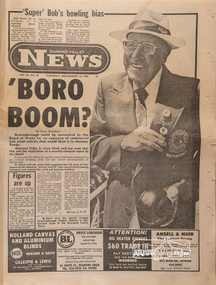 Eltham District Historical Society Inc
Newspaper, Diamond Valley News, 25 Nov 1980, 25 Nov 1980
... Possible explosion of commercial and retail activity at Greensborough Montmorency Bowling Club Rates Saturation limit When land values are a sore point Garbage Truck service – birds Lonie report on public transport recommended closing Eltham -Hurstbridge link Briar Hill Pre-School – vandalism Bills Up – Timber firm may close – Briar Hill Timber Company Controversy over DV tennis club lights Hurstbridge Primary School pets on parade Eltham District Cubs Yarrambat Plenty Waterworks Trust Plans for indoor pool complex at Hurstbridge Salvation Army Fair Montmorency Primary School Eltham Little Theatre Re-Zone application for shopping centre at Grimshaw St Greensborough 1st Grimshaw Cub pack (photo) Big sketch of and add for Greensborough Hotel p. 36 Green Valley – special section Carl Jensen – spiritualist and healer St Andrews Co-op – painter, potter, leather, woodwork and silver and paintings 10 years on after the introduction of the metric system New release – Diamond Hills Estate Greensborough Sewerage treatment plan Diamond Creek School honours its Olympian – Watsonia Primary School – Ian Campbell triple jump at Moscow Olympics ...Possible explosion of commercial and retail activity at Greensborough Montmorency Bowling Club Rates Saturation limit When land values are a sore point Garbage Truck service – birds Lonie report on public transport recommended closing Eltham -Hurstbridge link Briar Hill Pre-School – vandalism Bills Up – Timber firm may close – Briar Hill Timber Company Controversy over DV tennis club lights Hurstbridge Primary School pets on parade Eltham District Cubs Yarrambat Plenty Waterworks Trust Plans for indoor pool complex at Hurstbridge Salvation Army Fair Montmorency Primary School Eltham Little Theatre Re-Zone application for shopping centre at Grimshaw St Greensborough 1st Grimshaw Cub pack (photo) Big sketch of and add for Greensborough Hotel p. 36 Green Valley – special section Carl Jensen – spiritualist and healer St Andrews Co-op – painter, potter, leather, woodwork and silver and paintings 10 years on after the introduction of the metric system New release – Diamond Hills Estate Greensborough Sewerage treatment plan Diamond Creek School honours its Olympian – Watsonia Primary School – Ian Campbell triple jump at Moscow Olympics newspaper local newspapers diamond valley news Local newspaper (complete); 80 pages Diamond Valley News, 25 Nov 1980 Newspaper ...Possible explosion of commercial and retail activity at Greensborough Montmorency Bowling Club Rates Saturation limit When land values are a sore point Garbage Truck service – birds Lonie report on public transport recommended closing Eltham -Hurstbridge link Briar Hill Pre-School – vandalism Bills Up – Timber firm may close – Briar Hill Timber Company Controversy over DV tennis club lights Hurstbridge Primary School pets on parade Eltham District Cubs Yarrambat Plenty Waterworks Trust Plans for indoor pool complex at Hurstbridge Salvation Army Fair Montmorency Primary School Eltham Little Theatre Re-Zone application for shopping centre at Grimshaw St Greensborough 1st Grimshaw Cub pack (photo) Big sketch of and add for Greensborough Hotel p. 36 Green Valley – special section Carl Jensen – spiritualist and healer St Andrews Co-op – painter, potter, leather, woodwork and silver and paintings 10 years on after the introduction of the metric system New release – Diamond Hills Estate Greensborough Sewerage treatment plan Diamond Creek School honours its Olympian – Watsonia Primary School – Ian Campbell triple jump at Moscow Olympics Local newspaper (complete); 80 pagesnewspaper, local newspapers, diamond valley news -
 Bendigo Historical Society Inc.
Article - Pieper family of Piepers Hill in Bendigo
... Hill. On the back of the article in pencil is written 'Thursday's Advertiser Sept 22, 49 (Bendigo Advertiser 22/9/1949). Article two is from the Bendigo Sun 15/10/1925 and shows a photo of three male members of the Pieper family. The accompanying caption is in poor condition but the name Carl...Hill. On the back of the article in pencil is written 'Thursday's Advertiser Sept 22, 49 (Bendigo Advertiser 22/9/1949). Article two is from the Bendigo Sun 15/10/1925 and shows a photo of three male members of the Pieper family. The accompanying caption is in poor condition but the name Carl ...Article one 'In the Spotlight' details the history of the Pieper Family in Bendigo and the hotel at Piepers Hill. On the back of the article in pencil is written 'Thursday's Advertiser Sept 22, 49 (Bendigo Advertiser 22/9/1949). Article two is from the Bendigo Sun 15/10/1925 and shows a photo of three male members of the Pieper family. The accompanying caption is in poor condition but the name Carl Pieper is legible also the following information 'In Bendigo district since 1855. They came to Bendigo 70 years ago ...... Adelaide. They landed at Axe creek on February 5th, 1855. .....well-known Pieper's Hill on the main Strathfieldsaye Road.... was licensee of the hotel for 50 years, died at ......pieper family, piepers hill hotel, pieper's hill, bendigo pioneers -
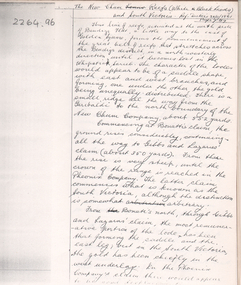 Bendigo Historical Society Inc.
Document - ALBERT RICHARDSON COLLECTION: NEW CHUM LINE OF REEF MINES 1861, 1970's
... Hill mine precint, is named in honour of Albert and his contribution to recording the mining history of Bendigo. In this document, Albert has listed some early mines on the New Chum reefline. The Garibaldi Gold Mining Company, near the corner of Rose and Mackenzie Streets, Bendigo, was listed in the Victorian Government Gazettes on October 26th, 1860. Gazette 136 Page 2035. All the shareholders gave their place of residence as either Swanston or Collins Street, Melbourne. Bonati's Gold Mining Company was gazetted on 13th January, 1871 Gazette 2 Page 55. Carl...Hill mine precint, is named in honour of Albert and his contribution to recording the mining history of Bendigo. In this document, Albert has listed some early mines on the New Chum reefline. The Garibaldi Gold Mining Company, near the corner of Rose and Mackenzie Streets, Bendigo, was listed in the Victorian Government Gazettes on October 26th, 1860. Gazette 136 Page 2035. All the shareholders gave their place of residence as either Swanston or Collins Street, Melbourne. Bonati's Gold Mining Company was gazetted on 13th January, 1871 Gazette 2 Page 55. Carl ...Albert Richardson was a past President of the Bendigo Historical Society. He had a great interest in the history of the Bendigo goldfield. A reserve in Marong Road, adjoining Victoria Hill mine precint, is named in honour of Albert and his contribution to recording the mining history of Bendigo. In this document, Albert has listed some early mines on the New Chum reefline. The Garibaldi Gold Mining Company, near the corner of Rose and Mackenzie Streets, Bendigo, was listed in the Victorian Government Gazettes on October 26th, 1860. Gazette 136 Page 2035. All the shareholders gave their place of residence as either Swanston or Collins Street, Melbourne. Bonati's Gold Mining Company was gazetted on 13th January, 1871 Gazette 2 Page 55. Carl Mueller was the Manager of the Company, which was situated on the 'New Chum Reef, Bendigo'. Fourteen page photocopy of information, written by Albert Richardson, regarding goldmines along the New Chum line of reef. Information includes owners of the mine; workings; reef and yield; cost and labor; drainage and machinery used, horses etc. Mines listed are: Garibaldi Company's Claim New Chum McDougall New Chum Quartz Mining Company Bonati and Company Denis's Claim Begelhole Company Watson and Company Gibbs and Lazarus Company Phoenix Company's Claim Burrows and Company gold mine, new chum reef line, garibaldi company's claim, new chum, mcdougall, new chum quartz mining company, bonati and company, denis's claim, begelhole company, watson and company, gibbs and lazarus company, phoenix company's claim, burrows and company -
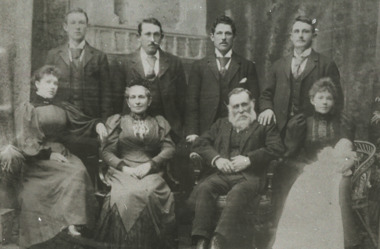 Bendigo Historical Society Inc.
Negative - GERMAN HERITAGE SOCIETY COLLECTION: NEGATIVES - BOLDT
... Carl Jess... Rais Hill State School...Monier bridge (collapse due to bad concreting) Edward Boldt under the rubble (app. 1900) near Gas Works, Bendigo. 13. Carl Jess, school teacher Rays Hill State School scholars. 14. ...NEGATIVE Bendigo German Heritage Society German Heritage Society Collection - Negatives - Boldt Ernst Carl Wilhelm Edward Hermina Elise Albert Boldt Charlotte Florence Marie Eugenie & August Boldt Lilli Weich Edward Boldt Wilhelm Boldt Elise Boldt Monier Bridge (King's Bridge near Gas Works) Gas Works Bendigo) Carl Jess Rais Hill State School Violet St State School Johanna Boldt Red and blue negatives folder with a Konica camera on the front and Boldt written on the front in texta. ...Red and blue negatives folder with a Konica camera on the front and Boldt written on the front in texta. It contains negatives of the Boldt Family. Also in the folder is a blue sheet of writing paper with the names of the people in the negatives. They are: 1 - 3 group back row L - R, Ernst, Carl, Wilhelm, Edward. Front row Hermina, Elise, Albert, d in law Charlotte & baby Florence. 4. Albert Boldt (1894). 5. Hermann & Marie lived in Wilhelmslust (Germany). 6. Herman & Marie. 7. Eugenie & August Boldt & Lilli Weich (adopted daughter). 8. Edward Boldt killed under Monier Bridge. 9. Wilhelm Boldt in front of present house with Tip Top stallion. 10. Wilhelm Boldt in front with axe (wood carting). 11. Elise wife of Albert Boldt. 12. Monier bridge (collapse due to bad concreting) Edward Boldt under the rubble (app. 1900) near Gas Works, Bendigo. 13. Carl Jess, school teacher Rays Hill State School scholars. 14. Teachers & Headmaster, Violet St. State School, Bendigo. 15. Elise Boldt (70 years old). 16. Johanna Boldt. negative, bendigo, german heritage society, german heritage society collection - negatives - boldt, ernst, carl, wilhelm, edward, hermina, elise, albert boldt, charlotte, florence, marie, eugenie & august boldt, lilli weich, edward boldt, wilhelm boldt, elise boldt, monier bridge (king's bridge near gas works), gas works bendigo), carl jess, rais hill state school, violet st state school, johanna boldt -
 Port Melbourne Historical & Preservation Society
Plan - Subdivision of area bounded by Nott Street, Rouse Street, Beach Street, Port Melbourne, Block Number 2067, 1884
... Hill and Sons...G W ROBINS...Carl...Copy of plan of area bordered by Nott Street, Rouse Street, Beach Street, showing subdivision of land with relevant property owners (HB DONALDSON, J NOLAN, J Hill and Sons, GW ROBINS, Carl ECKBURG, JM SMITHSON, J WALLACE) Block number 1, Port Melbourne 1884, Block number 20.67. ...Built Environment - Domestic J WHATMAN Henry Beveridge DONALDSON J NOLAN J Hill and Sons G W ROBINS Carl ECKBURG J M SMITHSON J WALLACE Copy of plan of area bordered by Nott Street, Rouse Street, Beach Street, showing subdivision of land with relevant property owners (HB DONALDSON, J NOLAN, J Hill and Sons, GW ROBINS, Carl ECKBURG, JM SMITHSON, J WALLACE) Block number 1, Port Melbourne 1884, Block number 20.67. ...Copy of plan of area bordered by Nott Street, Rouse Street, Beach Street, showing subdivision of land with relevant property owners (HB DONALDSON, J NOLAN, J Hill and Sons, GW ROBINS, Carl ECKBURG, JM SMITHSON, J WALLACE) Block number 1, Port Melbourne 1884, Block number 20.67. Water Mark on Paper "J Whatman 1883"built environment - domestic, j whatman, henry beveridge donaldson, j nolan, j hill and sons, g w robins, carl eckburg, j m smithson, j wallace -
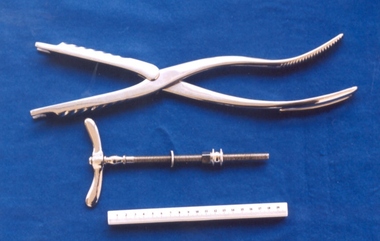 Royal Australian and New Zealand College of Obstetricians & Gynaecologists (RANZCOG)
Set of Braun's craniotomy forceps used by Box Hill Hospital labour ward, Allen & Hanburys, England
... Carl Rudolph Braun (1823-1891) was the inventor of this instrument, as well as a type of decapitation hook. Braun was born and practiced in Austria, and followed Semmelweis as assistant to Klein at the Vienna Maternity Clinic in 1847, before becoming its head in 1856. Braud added a gynaecology section to the clinic in 1858, being convinced that obstetrics and gynaecology should be together. (Source: Baskett, Thomas. 'On the Shoulders of Giants: Eponyms and Names in Obstetrics and Gynaecology'). This device was included with a range of other obstetric instruments, mostly destructive instruments, given to RANZCOG from Box Hill ...Carl Rudolph Braun (1823-1891) was the inventor of this instrument, as well as a type of decapitation hook. Braun was born and practiced in Austria, and followed Semmelweis as assistant to Klein at the Vienna Maternity Clinic in 1847, before becoming its head in 1856. Braud added a gynaecology section to the clinic in 1858, being convinced that obstetrics and gynaecology should be together. (Source: Baskett, Thomas. 'On the Shoulders of Giants: Eponyms and Names in Obstetrics and Gynaecology'). This device was included with a range of other obstetric instruments, mostly destructive instruments, given to RANZCOG from Box Hill Hospital labour ward in February- March 1998. The maternity service at Box Hill Hospital combined with St George's hospital in Kew to be known as Birralee Maternity Service. These instruments were collected by Julie Collette, Unit Manager, St George's Kew and given to RANZCOG Museum Curator, Susan Barnett.Craniotomy forceps, Braun's. Stainless steel forceps, with wingnut. Upper blade has open oval section and ridged grip section on the handle. Lower blade has serrated inner edge and ridged grip section on the handle. Wingnut is used for attaching the upper and lower blades of the forceps. Inscribed "B.H.H.L Ward" on forceps."B.H.H.L Ward"destructive instruments -
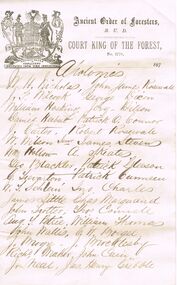 Bendigo Historical Society Inc.
Document - ANCIENT ORDER OF FORESTERS NO. 3770 COLLECTION: CORRESPONDENCE
... ogy, J Brocklesby, Richd Maker, John Cain, J Neal, Jas Henry Gribble, S Pearce, William R Gill, Jno T Hiller, Louis Miller, M Colledge, Con Masdyke, William Hall, William Williams, G Wiesmann, W Wilson Senr, Chas Donnelly, Jeremiah Dillon, Caleb Lewis, John Butler, Jas Thos Hall, Henry Newton, Matthew H Long, Jos Hertz, Adolph Witt, Fred Detmering, Fred Lohman, R Scott, W H Howard, Franz Hoffman, Jas Hooper, Jos Harry, Hos Harry Senr, Carl Mueller, Robert Right?...ogy J Brocklesby Richd Maker John Cain J Neal Jas Henry Gribble S Pearce William R Gill Jno T Hiller Louis Miller M Colledge Con Masdyke William Hall William Williams G Wiesmann W Wilson Senr Chas Donnelly Jeremiah Dillon Caleb Lewis John Butler Jas Thos Hall Henry Newton Matthew H Long Jos Hertz Adolph Witt Fred Detmering Fred Lohman R Scott W H Howard Franz Hoffman Jas Hooper Jos Harry Hos Harry Senr Carl Mueller Robert Right? ...List of names for apologies written on folded paper with printed letterhead and emblem. Names are: W H Nicholas, John James Rosewall, J F Wilcock, George Dixon, William Hosking, Jer Dillon, Daniel Herbert, Patrick O'Connor, J Carter, Robert Rosewall, W Wilson Senr, James Stevens, Wm Hollow, A Skeates, Geo Blackler, Patrick Gleeson, C Trevarton, Patrick Cunneen, W T Sohlan, Jno Charles, James Little, Chas Marquand, John Trotter, Thos Connell, Aug T Petrie, William Thomas, John Wallis, C W Boegel, J ?ogy, J Brocklesby, Richd Maker, John Cain, J Neal, Jas Henry Gribble, S Pearce, William R Gill, Jno T Hiller, Louis Miller, M Colledge, Con Masdyke, William Hall, William Williams, G Wiesmann, W Wilson Senr, Chas Donnelly, Jeremiah Dillon, Caleb Lewis, John Butler, Jas Thos Hall, Henry Newton, Matthew H Long, Jos Hertz, Adolph Witt, Fred Detmering, Fred Lohman, R Scott, W H Howard, Franz Hoffman, Jas Hooper, Jos Harry, Hos Harry Senr, Carl Mueller, Robert Right?, Samuel Fernby and William Cowling.societies, aof, correspondence, ancient order of foresters no. 3770 collection - correspondence, court king of the forest, w h nicholas, john james rosewall, j f wilcock, george dixon, william hosking, jer dillon, daniel herbert, patrick o'connor, j carter, robert rosewall, w wilson senr, james stevens, wm hollow, a skeates, geo blackler, patrick gleeson, c trevarton, patrick cunneen, w t sohlan, jno charles, james little, chas marquand, john trotter, thos connell, aug t petrie, william thomas, john wallis, c w boegel, j ?ogy, j brocklesby, richd maker, john cain, j neal, jas henry gribble, s pearce, william r gill, jno t hiller, louis miller, m colledge, con masdyke, william hall, william williams, g wiesmann, w wilson senr, chas donnelly, jeremiah dillon, caleb lewis, john butler, jas thos hall, henry newton, matthew h long, jos hertz, adolph witt, fred detmering, fred lohman, r scott, w h howard, franz hoffman, jas hooper, jos harry, hos harry senr, carl mueller, robert right?, samuel fernby, william cowling
