
Showing 179 items matching " church residences"
-
 Ringwood and District Historical Society
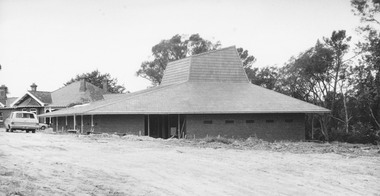
Photograph, St Paul's Anglican Church, Warrandyte Rd prior to opening, 1970
... Image shows the completed new church. Residence of Capt. E. T. Miles at left....Image shows the completed new church. Residence of Capt. E. T. Miles at left. Black and white photograph St Paul's Anglican Church, Warrandyte Rd prior to opening, 1970. ...Black and white photographImage shows the completed new church. Residence of Capt. E. T. Miles at left. -
 Ringwood and District Historical Society
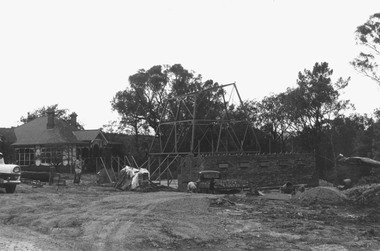
Photograph, St Paul's Church of England being built Warrandyte Road, Ringwood. 2/5/70
... Image shows early stage of construction of the new church. Residence of Capt E. T. Miles at left....Image shows early stage of construction of the new church. Residence of Capt E. T. Miles at left. Black and white photograph St Paul's Church of England being built Warrandyte Road, Ringwood. 2/5/70 Photograph ...Black and white photographImage shows early stage of construction of the new church. Residence of Capt E. T. Miles at left. -
 Glen Eira Historical Society
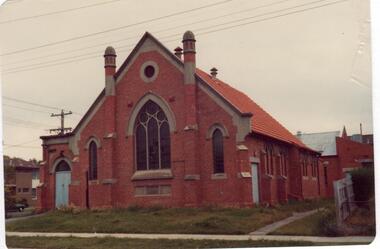
Article - Methodist Church, Grange Road, 183 – 185, Glen Huntly
... ... Church Residences...Presbyterian Church of Eastern Australia Monuments and Memorials Temples Religious Ceremonies Chinese Community Real Estate Agents Commercial Development Residential Development Child Care Glen Huntly Post Office Official Buildings Weatherboard Buildings Clergy Church Residences Meeting Rooms Article Methodist Church, Grange Road, 183 – 185, Glen Huntly ...1/A photocopy of a typed document of notes, source and date unknown, describing a brief history of the former Methodist Church in Grange Road, GlenHuntly. 2/Two colour photographs dated November 1980 of the front and side view of the church, and two undated photographs of the foundation stones, laid 1922 for the church and 1932 for the brick hall. 3/Also a newspaper article by Andrew Molloy dated 25/02/1990 discussing development options for potential buyers, source unknown.glen huntly, smith a. w. f. mr, foundation stones, grange road, molloy andrew, land sales, glen huntly road, methodist church, auctions, wattle ave., uniting church, churches, king f. l mr., presbyterian church of eastern australia, monuments and memorials, temples, religious ceremonies, chinese community, real estate agents, commercial development, residential development, child care, glen huntly post office, official buildings, weatherboard buildings, clergy, church residences, meeting rooms -
 Glen Eira Historical Society
Drawing - St Aloysius Church, Caulfield
... ... Clergy residences... Church...Catholic Church Churches Gothic (Revival) architecture Architectural features Architectural styles Architects Clergy residences Church furniture Religious ceremonies Nuns Communion rails Altars Fonts Pulpits Pews Stained glass Windows Organs Sculpture Cast Iron Work Drawing St Aloysius Church, Caulfield ...Two Photocopies of a pamphlet from May 1924 signed A. L Kenny about the newly built St Aloysius Catholic Church on Balaclava Road, Caulfield. The pamphlet features a detailed description of the architectural features of the interior and exterior, including Gothic spire and nuns tubrine. The pamphlet is across 6 A4 pages for both copies. Included within are several photographs, of varying sizes, of the interior and exterior of the church, a photograph of the architect Bart Moriarty and an illustration of the proposed Presbytery. Within is a list of benefactors, their gifts to the church and the value of each gift.st aloysius’ church, o’ brien fr., parish of caulfield, returned soldiers and nurses caulfield, balaclava road, altar society, moriarty bart, caulfield., kenny a. l., popular summer girls, kehoe miss, rattray mrs, power mr., power mrs., kelly mrs., gleeson t. mr., gleeson t. mrs, foley m., guilfoyle, beth mr., murphy i. l mrs., killorn mr., walsh mr, radcliffe mrs., klaer d. miss, hogan a. miss, hennessy lady, pilkington m. miss, pilkington e. miss, connolly mr., hogan brothers, o’ loughlin count, o’ loughlin mrs, levers miss, burke t. m. mr, burke t.m. mrs, confoy t. j. mr, confoy t. j. mrs., harrington mrs., eccles e. mr., eccles e. mrs., dorgan d. mr, dorgan d. mrs, wren j. mr, wren j. mrs., kisby mrs, charlton h. miss, foulshan w mr., pilington mrs, mcgrath m. mr., mcnamara mrs, cornack mrs., connolly e. a. mr., malone mrs., wharton mr., wharton mrs., donoghue d. mr, foulsham w. mrs, sweeney p. mr., sweeney p. mrs., adams h. m mr, adams h. m mrs., vaughan d. e. mr, vaughan d. e. mrs., mclennan mrs, morgan myra miss, boland catherine miss, hennessy n. mr., casey s.p. mr, casey s.p. mrs., mclntyre e. miss, mannion mr., bennett mrs., drummond mrs., lectie mrs., catholic church, churches, gothic (revival) architecture, architectural features, architectural styles, architects, clergy residences, church furniture, religious ceremonies, nuns, communion rails, altars, fonts, pulpits, pews, stained glass, windows, organs, sculpture, cast iron work -
 Stawell Historical Society Inc
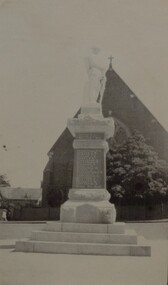
Photograph, Soldiers’ Memorial World War 1 in Main Street -- Different angle
... In the background is the Anglican Church, and doctors' residence & surgery. The photograph is taken in Main St....Another black and white side view of the Soldiers Memorial World War 1. looking towards the Anglican Church c1924 -1925. The view also shows the doctors residence and surgery on the left. ...In the background is the Anglican Church, and doctors' residence & surgery. The photograph is taken in Main St. stawell ww1 Another black and white side view of the Soldiers Memorial World War 1. looking towards the Anglican Church c1924 -1925. ...Side view Soldiers’ Memorial World War 1 c1924 -1925. In the background is the Anglican Church, and doctors' residence & surgery. The photograph is taken in Main St.Another black and white side view of the Soldiers Memorial World War 1. looking towards the Anglican Church c1924 -1925. The view also shows the doctors residence and surgery on the left. stawell ww1 -
 Lakes Entrance Historical Society
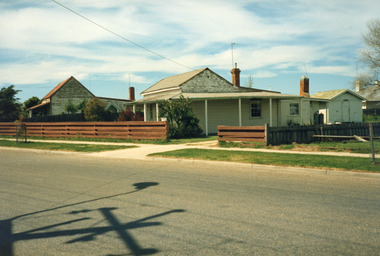
Photograph - Historic House, Church Street Lakes Entrance 1985
... Colour photograph of a private residence in Church Street, showing a timber cottage with a gable roof, rear extension, veranda across front and west side. ...Church House'. The site is now home to a furniture and Electrical store since 1990's Houses Heritage Study Colour photograph of a private residence in Church Street, showing a timber cottage with a gable roof, rear extension, veranda across front and west side. ...Dwelling relocated from New Works area c1919 by Joe Coate, at same time as 'Old Church House'. The site is now home to a furniture and Electrical store since 1990'sColour photograph of a private residence in Church Street, showing a timber cottage with a gable roof, rear extension, veranda across front and west side. 'Old Church House' also in image on adjacent block. Lakes Entrance Victoriahouses, heritage study -
 Stawell Historical Society Inc
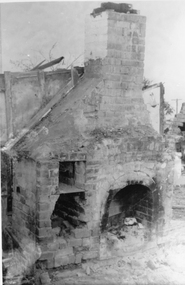
Photograph, Colonial Oven during Demolition
... Colonial Oven during Demolition at residence 18 Church Street originally used as a private hospital. ...Colonial Oven during Demolition at residence 18 Church Street originally used as a private hospital. ...Colonial Oven during Demolition at residence 18 Church Street originally used as a private hospital. Design shows chimney used in early homes. On right open fireplace for warmth hanging pots. On left a fire is used underneath oven .Black and white photograph of the remains of a large brick chimney with three openings, one arched. Also an enlarged photo copies June 2013.stawell -
Glenelg Shire Council Cultural Collection
Photograph - Sheet of 12 contact prints - Various historic Portland buildings and Landmarks, c. 1970
... Row - Jeweller, 16 Julia Street (d) All Saints Catholic Church (e) Residence at William Corney, 61 Bancroft Street (f) 'Claremont' (g) Victoria Hotel (h) Fire Station - Cof E grounds (i) 'Oak Park' (j) 'Greenmount' (k) Annie Clarks ladies school (l) Builders Inn, Julia Street...Row - Jeweller, 16 Julia Street (d) All Saints Catholic Church (e) Residence at William Corney, 61 Bancroft Street (f) 'Claremont' (g) Victoria Hotel (h) Fire Station - Cof E grounds (i) 'Oak Park' (j) 'Greenmount' (k) Annie Clarks ladies school (l) Builders Inn, Julia Street Photograph Sheet of 12 contact prints - Various historic Portland buildings and Landmarks ...Sheet of 12 contact prints of rephotographed photographs: Identifying numbers 5713 a, b, c, d, e, f, g, h, i, j, k, l, (a) A.R. Cruikshank & Co Warehouses, Cnr Percy and Julia Streets (b) Nuns Beach (c) F.H. Row - Jeweller, 16 Julia Street (d) All Saints Catholic Church (e) Residence at William Corney, 61 Bancroft Street (f) 'Claremont' (g) Victoria Hotel (h) Fire Station - Cof E grounds (i) 'Oak Park' (j) 'Greenmount' (k) Annie Clarks ladies school (l) Builders Inn, Julia StreetFront: (b) Nuns Beach (h) Fire Station -
 Bendigo Historical Society Inc.
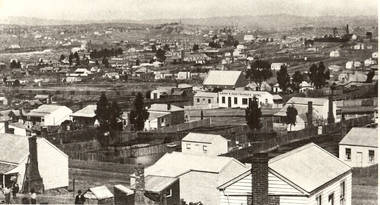
Photograph - NEW CHUM GULLY C 1875, C 1875
... Back and white photograph: panorama showing timber and brick residences, hotel, church ? Mines with poppet heads and chimneys in background. ...PLACE Landscape view new chum gully Bendigo cityscape Sandhurst panorama mining town Caire Back and white photograph: panorama showing timber and brick residences, hotel, church ? Mines with poppet heads and chimneys in background. ...Back and white photograph: panorama showing timber and brick residences, hotel, church ? Mines with poppet heads and chimneys in background. An image on building at centre ' Cleary's Honeysuckle Hotel' Ken Arnold captions this image ' New Chum Gully from Specimen Hill C 1875, photographer Caire 'Caireplace, landscape view, new chum gully, bendigo, cityscape, sandhurst, panorama, mining town -
 Tarnagulla History Archive
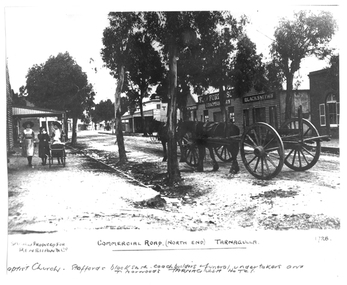
Photograph of the north end of Commercial Road, Tarnagulla, North end of Commercial Road, Tarnagulla, c. 1909
... From right: the brick Baptist Church (now private residence), Stafford's Blacksmith Coachbuilders and funeral/undertakers (since demolished), & Norwood's Tarnagulla Hotel. ...From right: the brick Baptist Church (now private residence), Stafford's Blacksmith Coachbuilders and funeral/undertakers (since demolished), & Norwood's Tarnagulla Hotel. ...Murray Comrie Collection. This photograph shows business on the north end of Commercial Road, Tarnagulla. From right: the brick Baptist Church (now private residence), Stafford's Blacksmith Coachbuilders and funeral/undertakers (since demolished), & Norwood's Tarnagulla Hotel. Information collated by Murray Comrie: Stafford's premises were built on land previously occupied by the stables of the George Hotel. The Stafford's building was later taken over and run by Frank McNamee. This photograph is a dark copy created from an older original. Copy probably made by Murray Comrie in the 1970s. Monochrome photograph depicting the north end of Commercial Road, Tarnagulla. A large wagon with team of horses is standing in the road. Three girls are walking down footpath at left side of image.Written on the original: 'Specially produced for Renshaw & Co' and 'Commercial Road (North End) Tarnagulla'. Written on this copy: 'Baptist Church Staffords Blacksmith Coachbuilders and funeral/undertakers, & Norwood's Tarnagulla Hotel'.tarnagulla, commerce, industry, blacksmithing, smithing, coachbuilding, businesses, stafford, norwood, mcnamee, buildings, hotels, churches, commercial road, main street -
 Melton City Libraries
Photograph, Melton Uniting Church Opportunity Shop volunteers, 1993
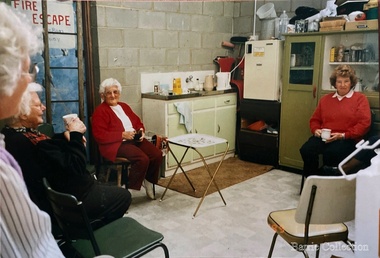
... In 1972 Ministers were appointed, and Melton's minister occupied one of the Bacchus Marsh Manses during the building of Melton's church residence in Y uille Street. Services were held at Scots Presbyterian Church Melton. ...In 1972 Ministers were appointed, and Melton's minister occupied one of the Bacchus Marsh Manses during the building of Melton's church residence in Y uille Street. Services were held at Scots Presbyterian Church Melton. ...In the early l 970's , when our population was increasing rapidly and resident ministers were needed at both Melton and Bacchus Marsh, and after discussion between both denominations over many months a decision was reached , that in both areas they would unite and be known as Methodist - Presbyterian joint parishes. In 1972 Ministers were appointed, and Melton's minister occupied one of the Bacchus Marsh Manses during the building of Melton's church residence in Y uille Street. Services were held at Scots Presbyterian Church Melton. Youth Club and church meetings were held in the Methodist Church at Brooklyn Road, Melton South. At a joint Parish Committee Meeting held in May 1975 at Melton South - a major item of business was finance, to meet the repayments on the recently built Church Manse and the minister's Stipend. The meeting closed without any solution to this problem being made. As the men restacked the chairs Maisie and I viewed the building with the possibility of opening an Opp Shop on the premises. We then made the suggestion to the other members and during the forthcoming weeks investigations concerning the feasibility of this idea were made, volunteers recruited and the shop opened in July 1975. The first contribution to the Church funds of $1,600 was made in 1976 and was followed by regular contributions to the church budget each year. In 1981 a 30'x 20' steel garage costing $2,000 was erected adjacent to the original Methodist Church to provide more space. Meanwhile an Opp Shop was opened in Melton Markets and operated from 1981 to 1985. Further accommodation was needed at Yuille Street and the Atco Hall was installed at the rear of the Bluestone Church (known as Melton Uniting Church - 1977). A large proportion of finance for this project was contributed by the Opp Shop $16,000. Simultaneously finance was being built up to provide further facilities at Brooklyn Rd, resulting in the commencement of a concrete block masonry and steel extension, with facilities & fittings, being commenced during 1986 & completed in 1989. The approximate total cost of this structure was $60,000. Over the 16 years, members and friends of our church have contributed many many hours to staff the shop and many other supportive works. As an acknowledgement of their efforts, our Minister prepared Certificates for Service and Dedication which were presented to 75 supporters at a special Church Service in June 1991. The assistance that has been given to the community of Melton & District has been extensive and much appreciated by many families. In addition many appeals for goods and clothing have been received and packages sent to many outside supportive agencies. Three volunteers having a tea break in the staffroom of the Op Shoplocal identities, churches -
 Bendigo Historical Society Inc.
Document - LONG GULLY HISTORY GROUP COLLECTION: OLD LONG GULLY FROM RAE'S HILL TO MCGOWAN ST
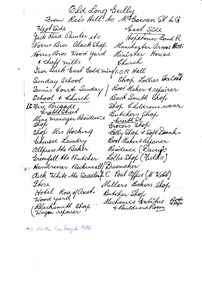
... Reef Mine Hotel) E Bryant, Mine Windmill, Church Residence, Minister. East Side - Hopetoun Band R, Manchester Arms Hotel, Minister House, Church, IOR Hall, Shop Lollies Icecream, Boot Maker & Repairer, Back Smith Shop, Shop Childrens Wear, Butchers Shop, Creeth Street, Grocers Shop, Lolly Shop & Soft Drinks, Boot Maker & Repairer, Residence (Davey's), Lollie Shop (Fields), Dressmaker, LG Post Office (M Webb), Millars Bakers Shop, Butcher Shop, Mechanics Institute Books & Paper & Billiard Room, Connell the Baker, Dr SElby, Pentreath Organ Builder & Tuner, Blacksmith Shop, Hexagon Toilet, Kocks Machine Shop, Kocks Mine Office, Kocks Material Shop, Police Station, Dyson's Dam Warm waer, Air Station, Mine Battery stone crusher 80 head approx, Kocks Mine, Needle Mine. ...Reef Mine Hotel) E Bryant, Mine Windmill, Church Residence, Minister. East Side - Hopetoun Band R, Manchester Arms Hotel, Minister House, Church, IOR Hall, Shop Lollies Icecream, Boot Maker & Repairer, Back Smith Shop, Shop Childrens Wear, Butchers Shop, Creeth Street, Grocers Shop, Lolly Shop & Soft Drinks, Boot Maker & Repairer, Residence (Davey's), Lollie Shop (Fields), Dressmaker, LG Post Office (M Webb), Millars Bakers Shop, Butcher Shop, Mechanics Institute Books & Paper & Billiard Room, Connell the Baker, Dr SElby, Pentreath Organ Builder & Tuner, Blacksmith Shop, Hexagon Toilet, Kocks Machine Shop, Kocks Mine Office, Kocks Material Shop, Police Station, Dyson's Dam Warm waer, Air Station, Mine Battery stone crusher 80 head approx, Kocks Mine, Needle Mine. ...Titled Old Long Gully From Rae's Hill to McGowan St. LG. West Side - Jack Read Painter etc, Norris Bros Black Shop, Norris Bros Wood Yard & Chaff Mills, Iron Bark East Gold Mine, Sunday School, Tennis Courts Sunday School & Church, LG Fire Brigade, Creeth Street, Mine Managers Residence, Shop, Shop Mrs Hocking, Chinese Laundry, Allpress the Baker, Greenfell the Butcher, Hairdresser Beckinsall was the Fire Brigade Hotel, Dick White the Saddler, Store, Hotel Rose of Australia, Woodyard, Blacksmith Shop Wagon Repairer, Hotel Kocks (Pioneer Hotel), 2 China Shops owned by Chinese, Hotel Silver mines Hotel, Police Station, Grocers Shop (per? Reef Mine Hotel) E Bryant, Mine Windmill, Church Residence, Minister. East Side - Hopetoun Band R, Manchester Arms Hotel, Minister House, Church, IOR Hall, Shop Lollies Icecream, Boot Maker & Repairer, Back Smith Shop, Shop Childrens Wear, Butchers Shop, Creeth Street, Grocers Shop, Lolly Shop & Soft Drinks, Boot Maker & Repairer, Residence (Davey's), Lollie Shop (Fields), Dressmaker, LG Post Office (M Webb), Millars Bakers Shop, Butcher Shop, Mechanics Institute Books & Paper & Billiard Room, Connell the Baker, Dr SElby, Pentreath Organ Builder & Tuner, Blacksmith Shop, Hexagon Toilet, Kocks Machine Shop, Kocks Mine Office, Kocks Material Shop, Police Station, Dyson's Dam Warm waer, Air Station, Mine Battery stone crusher 80 head approx, Kocks Mine, Needle Mine. Some notes written at the end - Norm Shotples used to have Barber Shop - he has gone to Queensland, Violet Street started off as the German School, Wells Street used to run through Victorian Consol ? the other side, Comet Hill would like a visit. Contact Helen Gorlay at Violet Street would line to some video. Alan has good info on the Long Gully School. Betty has book. Views of Bendigo. Frank Cusack - Bendigo Trust. Bendigo School Hisking? School, Violet Street. Older levels lo?ing at Architecture.bendigo, history, long gully history group, the long gully history group - old long gully from rae's hill to mcgowan st, jack read, norris bros, iron bark east gold mine, long gully fire brigade, mrs hicking, allpress, greenfell, beckinsall, dick white, rose of australia, hopetoun band r, manchester arms hotel, ior hall, davey's, fields, m webb, millars, mechanics institute & billiard room, kocks pioneer hoel, silver mines hotel, e bryant, windmill mine, pere? reef mine hotel, connell, dr selby, pentreath, kocks machine shop, kocks mine office, kocks material shop, dyson's dam, kocks mine, needle mine, norm shotples, german school, victoria consols, helen gorlay, long gully school, frank cusack, bendigo trust -
Glen Eira Historical Society
Article - Third Church of Christ, Scientist, Elsternwick
... The article is on continuing discussion on proposed plans for the building which previously was a historic church. Also mentioned, residence’s concern and complains about the plan. ...The article is on continuing discussion on proposed plans for the building which previously was a historic church. Also mentioned, residence’s concern and complains about the plan. ...5 Articles about the building which used to be Third Church of Christ, Scientist Elsternwick. The first one is an article from leader newspaper dated 27 July 2010 discussing the plan to convert former Christian Science Church and latterly Buddhist organisation into apartments. The second article is from Leader Newspaper dated 10 August 2010, commenting on disruptions that might occur with redevelopment. Third article is from Caulfield Leader, 07/09/2010. The article is on continuing discussion on proposed plans for the building which previously was a historic church. Also mentioned, residence’s concern and complains about the plan. The fourth article from Caulfield/ Port Phillip Leader, 24/05/2011, mainly talks about similar development at 221 -229 Glen Huntly Road. It also touches the subject of 233 – 147 Glen Huntly Road and 12 – 14 Ripon Grove as well. It is written that VCAT allowed the development of 10 storey building after overturning council decision. The fifth article is from Melbourne Bayside Weekly, 28/03/2012. It talks about the history of The Church of Christ, Scientist and about the old church building that still stands.ripon grove, gordon street, contour consultant, glen eira, historic sites, buddhist clubs and associations, elsternwick, glen huntly road, church, wait peter, wright kristen, kate ms, sinclair street, soka gakkaii, local government, local officials and employees, mc combie street, david street, ward camden, holden lars., connellan rose, connellan cathlea, connellan marilyn, third church of christ scientist elsternwick, heritage victoria, victorian civil and administration tribunal, eddy mary baker, clifton andrew, sammon jason, di paolo lucy, robinson andrew, ling jenny, church of christ scientist -
 Flagstaff Hill Maritime Museum and Village
Book - Reference Religious Ideology, Charles Taze Russell, Millennial Dawn Vol 1 The Plan of the Ages, 1905
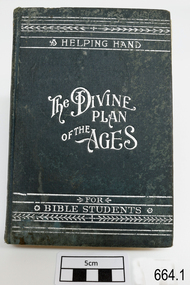
... residence or eternal torment in hellfire. Early editions famously featured a fold-out chart called the "Chart of the Ages" that compared biblical chronology with the proportions of the Great Pyramid of Giza, which Russell believed served as a "Stone Witness" confirming God's timeline. The author, Charles Taze Russell (1852–1916), was born in Allegheny, Pennsylvania. Raised Presbyterian, he later joined the Congregational Church...residence or eternal torment in hellfire. Early editions famously featured a fold-out chart called the "Chart of the Ages" that compared biblical chronology with the proportions of the Great Pyramid of Giza, which Russell believed served as a "Stone Witness" confirming God's timeline. The author, Charles Taze Russell (1852–1916), was born in Allegheny, Pennsylvania. Raised Presbyterian, he later joined the Congregational Church ...Millennial Dawn, Vol. 1 (The Plan of the Ages) was published in 1905 by the Watch Tower Bible & Tract Society and is a central text in the history of modern American millenarianism. The subject book was originally published in 1886 under the title The Plan of the Ages, and later re-titled The Divine Plan of the Ages as part of the Studies in the Scriptures series. Volume 1 lays out the foundational theological framework of Charles Taze Russell's religious movement. The book argues that God operates through distinct chronological "dispensations" or ages, such as the Patriarchal Age, the Jewish Age, and the Gospel Age, leading up to the "Millennial Age". Its primary themes include the harmonising of the scriptures while attempting to systematically reconcile Old and New Testament prophecies.Millennial Dawn Vol 1 (The Plan of The Ages) Author: Charles Taze Russell Publisher: Watch Tower Bible & Tract Society. Allegheny, PA USA 1905 Date: 1905 Further Information: Blue hard cover book with white text to lettering and front board edge pattern designnon-fictionMillennial Dawn, Vol. 1 (The Plan of the Ages) was published in 1905 by the Watch Tower Bible & Tract Society and is a central text in the history of modern American millenarianism. The subject book was originally published in 1886 under the title The Plan of the Ages, and later re-titled The Divine Plan of the Ages as part of the Studies in the Scriptures series. Volume 1 lays out the foundational theological framework of Charles Taze Russell's religious movement. The book argues that God operates through distinct chronological "dispensations" or ages, such as the Patriarchal Age, the Jewish Age, and the Gospel Age, leading up to the "Millennial Age". Its primary themes include the harmonising of the scriptures while attempting to systematically reconcile Old and New Testament prophecies.flagstaff hill, warrnambool, shipwrecked-coast, flagstaff-hill, flagstaff-hill-maritime-museum, maritime-museum, shipwreck-coast, millennial dawn vol 1 the plan of the ages, book, religious works, watch tower bible & tract society, charles taze russell, jehova witness, bible studies -
 Ballarat and Queen's Anglican Grammar School
Badge, Noopsi Badges celebrating 100 years of Anglican education
... Church Assembly (Synod) in November 1908. Classes began for the 38 boys enrolled on 14 February 1911. The first building accommodated 90 day boys and 25 boarders. It comprised the Headmaster’s residence...Church Assembly (Synod) in November 1908. Classes began for the 38 boys enrolled on 14 February 1911. The first building accommodated 90 day boys and 25 boarders. It comprised the Headmaster’s residence ...Ballarat Grammar’s 23 acre site facing Forest and Howitt Streets, Wendouree was chosen carefully by the Committee set up by the Church Assembly (Synod) in November 1908. Classes began for the 38 boys enrolled on 14 February 1911. The first building accommodated 90 day boys and 25 boarders. It comprised the Headmaster’s residence, three classrooms, one large dormitory, a small bathroom, two cubicles for assistant masters and the matron’s room. During the first year the property was fenced, trees and cypress hedges were planted, a carriage drive was constructed and work commenced for the School Cricket Oval. Three Noopsi Badges celebrating 100 years of Anglican education at Ballarat & Queens Anglican Grammar School. These are beaded badges in blue, yellow and brown with "100" in yellow, mounted on a safety pin. "100" in worked in yellow beadsballarat, badge, queens, 100, cegs, 2011, bgs, noopsi, century-celebration, grammar-school, qceggs -
 Ballarat and Queen's Anglican Grammar School
Badge, Noopsi Badges celebrating 100 years of Anglican education
... Church Assembly (Synod) in November 1908. Classes began for the 38 boys enrolled on 14 February 1911. The first building accommodated 90 day boys and 25 boarders. It comprised the Headmaster’s residence...Church Assembly (Synod) in November 1908. Classes began for the 38 boys enrolled on 14 February 1911. The first building accommodated 90 day boys and 25 boarders. It comprised the Headmaster’s residence ...Ballarat Grammar’s 23 acre site facing Forest and Howitt Streets, Wendouree was chosen carefully by the Committee set up by the Church Assembly (Synod) in November 1908. Classes began for the 38 boys enrolled on 14 February 1911. The first building accommodated 90 day boys and 25 boarders. It comprised the Headmaster’s residence, three classrooms, one large dormitory, a small bathroom, two cubicles for assistant masters and the matron’s room. During the first year the property was fenced, trees and cypress hedges were planted, a carriage drive was constructed and work commenced for the School Cricket Oval. Three Noopsi Badges celebrating 100 years of Anglican education at Ballarat & Queens Anglican Grammar School. These are beaded badges in blue, yellow and brown with "100" in yellow, mounted on a safety pin. "100" in worked in yellow beadsballarat, badge, queens, 100, cegs, 2011, bgs, noopsi, century-celebration, grammar-school, qceggs -
 Ballarat and Queen's Anglican Grammar School
Badge, Noopsi Badges celebrating 100 years of Anglican education
... Church Assembly (Synod) in November 1908. Classes began for the 38 boys enrolled on 14 February 1911. The first building accommodated 90 day boys and 25 boarders. It comprised the Headmaster’s residence...Church Assembly (Synod) in November 1908. Classes began for the 38 boys enrolled on 14 February 1911. The first building accommodated 90 day boys and 25 boarders. It comprised the Headmaster’s residence ...Ballarat Grammar’s 23 acre site facing Forest and Howitt Streets, Wendouree was chosen carefully by the Committee set up by the Church Assembly (Synod) in November 1908. Classes began for the 38 boys enrolled on 14 February 1911. The first building accommodated 90 day boys and 25 boarders. It comprised the Headmaster’s residence, three classrooms, one large dormitory, a small bathroom, two cubicles for assistant masters and the matron’s room. During the first year the property was fenced, trees and cypress hedges were planted, a carriage drive was constructed and work commenced for the School Cricket Oval. Three Noopsi Badges celebrating 100 years of Anglican education at Ballarat & Queens Anglican Grammar School. These are beaded badges in blue, yellow and brown with "100" in yellow, mounted on a safety pin. "100" in worked in yellow beadsballarat, badge, queens, 100, cegs, 2011, bgs, noopsi, century-celebration, grammar-school, qceggs -
 Federation University Historical Collection
Photograph - Photograph - Black and White, Ballarat School of Mines, c1980s, c1910
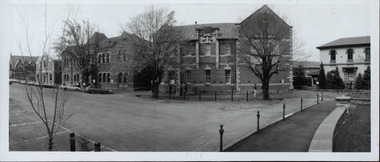
... church...lydiard street south...ballarat technical art school...governor's residence...From left to right - the Ballarat Uniting Church, School of Mines Museum (Former Wesleyan Church), New Classrooms and Administration Building, Ballarat Technical Art School, Gaol Governor's residence....The Ballarat School of Mines was estabished in 1870, making it the first site of technical education in Australia. ballarat school of mines ballarat school of mines museum former wesleyan church lydiard street south ballarat technical art school governor's residence Ballarat School of Mines from Lydiard Street South. ...The Ballarat School of Mines was estabished in 1870, making it the first site of technical education in Australia. Ballarat School of Mines from Lydiard Street South. From left to right - the Ballarat Uniting Church, School of Mines Museum (Former Wesleyan Church), New Classrooms and Administration Building, Ballarat Technical Art School, Gaol Governor's residence.ballarat school of mines, ballarat school of mines museum, former wesleyan church, lydiard street south, ballarat technical art school, governor's residence -
 Flagstaff Hill Maritime Museum and Village
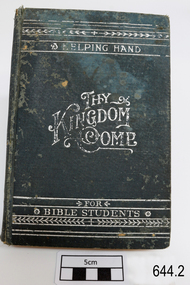
Book - Reference Religious Ideology, Charles Taze Russell, Millennial Dawn Vol 3 Thy Kingdom Come, 1905
... residence or eternal torment in hellfire. Early editions famously featured a fold-out chart called the "Chart of the Ages" that compared biblical chronology with the proportions of the Great Pyramid of Giza, which Russell believed served as a "Stone Witness" confirming God's timeline. The author, Charles Taze Russell (1852–1916), was born in Allegheny, Pennsylvania. Raised Presbyterian, he later joined the Congregational Church...residence or eternal torment in hellfire. Early editions famously featured a fold-out chart called the "Chart of the Ages" that compared biblical chronology with the proportions of the Great Pyramid of Giza, which Russell believed served as a "Stone Witness" confirming God's timeline. The author, Charles Taze Russell (1852–1916), was born in Allegheny, Pennsylvania. Raised Presbyterian, he later joined the Congregational Church ...Millennial Dawn, Vol. 3 (Thy Kingdom Come) was published in 1905 by the Watch Tower Bible & Tract Society and is a central text in the history of modern American millenarianism. The subject book was originally published in 1886 under the title The Plan of the Ages, and later re-titled The Divine Plan of the Ages as part of the Studies in the Scriptures series. Volume 1 lays out the foundational theological framework of Charles Taze Russell's religious movement. The book argues that God operates through distinct chronological "dispensations" or ages, such as the Patriarchal Age, the Jewish Age, and the Gospel Age, leading up to the "Millennial Age". Its primary themes include the harmonising of the scriptures while attempting to systematically reconcile Old and New Testament prophecies.Millennial Dawn Vol 3 (Thy Kingdom Come) Author: Charles Taze Russell Publisher: Watch Tower Bible & Tract Society. Allegheny, PA USA 1905 Date: 1905 Further Information: Blue hard cover book with white text to lettering and front board edge pattern designnon-fictionMillennial Dawn, Vol. 3 (Thy Kingdom Come) was published in 1905 by the Watch Tower Bible & Tract Society and is a central text in the history of modern American millenarianism. The subject book was originally published in 1886 under the title The Plan of the Ages, and later re-titled The Divine Plan of the Ages as part of the Studies in the Scriptures series. Volume 1 lays out the foundational theological framework of Charles Taze Russell's religious movement. The book argues that God operates through distinct chronological "dispensations" or ages, such as the Patriarchal Age, the Jewish Age, and the Gospel Age, leading up to the "Millennial Age". Its primary themes include the harmonising of the scriptures while attempting to systematically reconcile Old and New Testament prophecies.flagstaff hill, warrnambool, shipwrecked-coast, flagstaff-hill, flagstaff-hill-maritime-museum, maritime-museum, shipwreck-coast, millennial dawn vol 1 the plan of the ages, book, religious works, watch tower bible & tract society, charles taze russell, jehova witness, bible studies -
 Flagstaff Hill Maritime Museum and Village
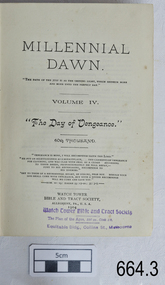
Book - Reference Religious Ideology, Charles Taze Russell, Millennial Dawn Vol 4 The Day of Vengeance, 1905
... residence or eternal torment in hellfire. Early editions famously featured a fold-out chart called the "Chart of the Ages" that compared biblical chronology with the proportions of the Great Pyramid of Giza, which Russell believed served as a "Stone Witness" confirming God's timeline. The author, Charles Taze Russell (1852–1916), was born in Allegheny, Pennsylvania. Raised Presbyterian, he later joined the Congregational Church...residence or eternal torment in hellfire. Early editions famously featured a fold-out chart called the "Chart of the Ages" that compared biblical chronology with the proportions of the Great Pyramid of Giza, which Russell believed served as a "Stone Witness" confirming God's timeline. The author, Charles Taze Russell (1852–1916), was born in Allegheny, Pennsylvania. Raised Presbyterian, he later joined the Congregational Church ...Millennial Dawn, Vol. 4 (The Day of Vengeance) was published in 1905 by the Watch Tower Bible & Tract Society and is a central text in the history of modern American millenarianism. The subject book was originally published in 1886 under the title The Plan of the Ages, and later re-titled The Divine Plan of the Ages as part of the Studies in the Scriptures series. Volume 1 lays out the foundational theological framework of Charles Taze Russell's religious movement. The book argues that God operates through distinct chronological "dispensations" or ages, such as the Patriarchal Age, the Jewish Age, and the Gospel Age, leading up to the "Millennial Age". Its primary themes include the harmonising of the scriptures while attempting to systematically reconcile Old and New Testament prophecies.Millennial Dawn Vol 4 (The Day of Vengeance) Author: Charles Taze Russell Publisher: Watch Tower Bible & Tract Society. Allegheny, PA USA 1905 Date: 1905 Further Information: Blue hard cover book with white text to lettering and front board edge pattern designMillennial Dawn, Vol. 4 (The Day of Vengeance) was published in 1905 by the Watch Tower Bible & Tract Society and is a central text in the history of modern American millenarianism. The subject book was originally published in 1886 under the title The Plan of the Ages, and later re-titled The Divine Plan of the Ages as part of the Studies in the Scriptures series. Volume 1 lays out the foundational theological framework of Charles Taze Russell's religious movement. The book argues that God operates through distinct chronological "dispensations" or ages, such as the Patriarchal Age, the Jewish Age, and the Gospel Age, leading up to the "Millennial Age". Its primary themes include the harmonising of the scriptures while attempting to systematically reconcile Old and New Testament prophecies.flagstaff hill, warrnambool, shipwrecked-coast, flagstaff-hill, flagstaff-hill-maritime-museum, maritime-museum, shipwreck-coast, millennial dawn vol 1 the plan of the ages, book, religious works, watch tower bible & tract society, charles taze russell, jehova witness, bible studies -
 Flagstaff Hill Maritime Museum and Village
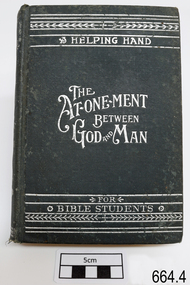
Book - Reference Religious Ideology, Charles Taze Russell, Millennial Dawn Vol 4 The Atonement of Man, 1905
... residence or eternal torment in hellfire. Early editions famously featured a fold-out chart called the "Chart of the Ages" that compared biblical chronology with the proportions of the Great Pyramid of Giza, which Russell believed served as a "Stone Witness" confirming God's timeline. The author, Charles Taze Russell (1852–1916), was born in Allegheny, Pennsylvania. Raised Presbyterian, he later joined the Congregational Church...residence or eternal torment in hellfire. Early editions famously featured a fold-out chart called the "Chart of the Ages" that compared biblical chronology with the proportions of the Great Pyramid of Giza, which Russell believed served as a "Stone Witness" confirming God's timeline. The author, Charles Taze Russell (1852–1916), was born in Allegheny, Pennsylvania. Raised Presbyterian, he later joined the Congregational Church ...Millennial Dawn, Vol. 4 (The Atonement of Man) was published in 1905 by the Watch Tower Bible & Tract Society and is a central text in the history of modern American millenarianism. The subject book was originally published in 1886 under the title The Plan of the Ages, and later re-titled The Divine Plan of the Ages as part of the Studies in the Scriptures series. Volume 1 lays out the foundational theological framework of Charles Taze Russell's religious movement. The book argues that God operates through distinct chronological "dispensations" or ages, such as the Patriarchal Age, the Jewish Age, and the Gospel Age, leading up to the "Millennial Age". Its primary themes include the harmonising of the scriptures while attempting to systematically reconcile Old and New Testament prophecies.Millennial Dawn Vol 4 (The Atonement of Man) Author: Charles Taze Russell Publisher: Watch Tower Bible & Tract Society. Allegheny, PA USA 1905 Date: 1905 Further Information: Blue hard cover book with white text to lettering and front board edge pattern designnon-fictionMillennial Dawn, Vol. 4 (The Atonement of Man) was published in 1905 by the Watch Tower Bible & Tract Society and is a central text in the history of modern American millenarianism. The subject book was originally published in 1886 under the title The Plan of the Ages, and later re-titled The Divine Plan of the Ages as part of the Studies in the Scriptures series. Volume 1 lays out the foundational theological framework of Charles Taze Russell's religious movement. The book argues that God operates through distinct chronological "dispensations" or ages, such as the Patriarchal Age, the Jewish Age, and the Gospel Age, leading up to the "Millennial Age". Its primary themes include the harmonising of the scriptures while attempting to systematically reconcile Old and New Testament prophecies.flagstaff hill, warrnambool, shipwrecked-coast, flagstaff-hill, flagstaff-hill-maritime-museum, maritime-museum, shipwreck-coast, millennial dawn vol 1 the plan of the ages, book, religious works, watch tower bible & tract society, charles taze russell, jehova witness, bible studies -
Glenelg Shire Council Cultural Collection
Photograph - Photograph - Julia Street Portland, c. 1970
... Church' - blue biro Photographic print of a rephotographed photograph. Image shows buildings on north side of Julia Street, between Percy and Hurd Street. Single story building on right, then double storey, bluestone building - residence of Dr Grier; laneway, then single storey building. ...Photographic print of a rephotographed photograph. Image shows buildings on north side of Julia Street, between Percy and Hurd Street. Single story building on right, then double storey, bluestone building - residence of Dr Grier; laneway, then single storey building. Man holding horse at entrance to lane.Front: 'guest house ops Lutheran Church' - blue biro -
Glenelg Shire Council Cultural Collection
Photograph - Photograph - 'Kenley' House Percy Street Portland, c. 1970
... 'Kenley' residence of George Goodwin Crouch, first Portland Postmaster, next to Church of England, no. 37 Percy Street Portland....'Kenley' residence of George Goodwin Crouch, first Portland Postmaster, next to Church of England, no. 37 Percy Street Portland. ...Photographic print of a rephotographed photograph. Image shows front and one side of a single storey building. Fence and shrubs obscure some of the building. 'Kenley' residence of George Goodwin Crouch, first Portland Postmaster, next to Church of England, no. 37 Percy Street Portland. -
 Orbost & District Historical Society
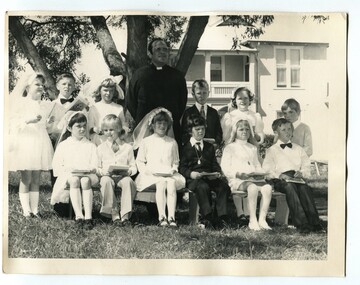
Photograph - Catholic Church, Orbost
... Church, Orbost. The building in the background is the nunnery/priest's residence in Browning Street, Orbost. ...Church, Orbost. The building in the background is the nunnery/priest's residence in Browning Street, Orbost. ...This photograph is of a group of Orbost children and a Catholic Priest, Fr. Spiteri, taken in association with a ceremony of confirmation at St Josephs Catholic Church, Orbost. The building in the background is the nunnery/priest's residence in Browning Street, Orbost. This building is still in existence (2023) though now privately owned. It is located adjacent to the Catholic Church. Indicated the continuing significance of the Catholic Church in Orbost. A b/w photograph of 12 children and one man. This group of people is posted in front of tree and a two-story building in the background. The man is dressed in black with a white collar and the children have white dresses and white shirts and black trousers. Many of the girls are wearing white veils over their hair.On back of photo: Back row L-R Cheryl Fourter, Tony Fourter, Sharon Barr, Father Spiteri, Fred Jonkers, Catherine Murphy, Tom Robinson. Front row L-R Josephine McMahon, Michael Young, Louise Shanahan, John Sanna, Geoffrey Fourterst josephs catholic church, orbost -
 Ringwood and District Historical Society
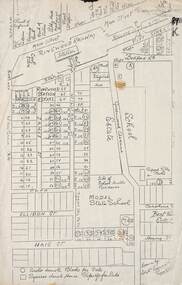
Plan, Ringwood Station Estate, Subdivision, Ringwood, Victoria - circa 1925
... Other features marked include location of businesses along Main Street (Maroondah Highway), cool store, railway station, shop and police station on Bedford Road, church on Station Street, site of schoolmaster's residence and State School, and location of proposed public baths. ...Other features marked include location of businesses along Main Street (Maroondah Highway), cool store, railway station, shop and police station on Bedford Road, church on Station Street, site of schoolmaster's residence and State School, and location of proposed public baths. ...ID 5224 note: Further information relating to squares marked H, F, G, J, and K included in ID 5225 - Ringwood Shop and Dwelling Estate.Hand drawn plan of Ringwood Station Estate showing allotments for sale, with two typed pages attached showing land title information and sale prices.Drawn by Edyth Greenwood, phone 988 Central. Subdivision includes Station Street, Pitt Street, Bedford Road, Wantirna Road, James Street, William Street (later Kendall Street), Greenwood Avenue, Ellison Street, and Haig Street. Circles denote blocks for sale. Squares denote house properties for sale. Other features marked include location of businesses along Main Street (Maroondah Highway), cool store, railway station, shop and police station on Bedford Road, church on Station Street, site of schoolmaster's residence and State School, and location of proposed public baths. Ryner & Langford, Solicitors -
 Ringwood and District Historical Society
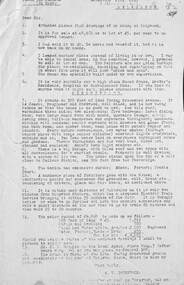
Letter, Property for sale - Ringwood Shop and Dwelling Estate, Ringwood, Victoria - circa 1925
... Other features marked include location of businesses along Main Street (Maroondah Highway), cool store, railway station, shop and police station on Bedford Road, church on Station Street, site of schoolmaster's residence and State School, and location of proposed public baths...Other features marked include location of businesses along Main Street (Maroondah Highway), cool store, railway station, shop and police station on Bedford Road, church on Station Street, site of schoolmaster's residence and State School, and location of proposed public baths Typewritten letter from A.V. ...ID 5225 note: Further information relating to allotments marked on the hand-drawn plan are included in ID 5224 - Ringwood Station Estate.Typewritten letter from A.V. Greenwood with hand drawn plan of Ringwood Shop and Dwelling Estate, detailed description of property for sale, and top and side elevation views of house. (7 pages)(Transcript of first page - to unknown recipient) Phone 988 Central, 331 Canty Greenwood Pty. Ltd. 5 Flinders Street Melbourne. Dear Sir, 1. Attached please find drawings of my house at Ringwood. 2. It is for sale at £4,865 or to let at £5 per week to an approved tenant. 3. I sold it to Mr. De Garis and vacated it, but it is now back on my hands. 4. I leased another place instead of living in my own. I may be able to cancel same; in the meantime, however, I propose to sell or let my own. The painters are now going through the place; re-varnishing, re-oiling and re-polishing so that in about five days it will look "spick and span". 5. The house was specially built under my own supervision. 6. It is very suitable for a high class Guest House, Doctor's residence, Hospital or Convalescent Home. If you know of anyone whom it might suit, please communicate with them. DESCRIPTION 7. It stands on 305 feet of land facing Greenwood Avenue. It is cement, roughcast and hardwood, well oiled, and is now being redone so that the house is as good as new; red tile roof; verandahs three sides; two sleep-outs; five bedrooms; large dining room; very large music room with nooks, upstairs lounge, study; sewing room; built-in wardrobes and cupboards throughout; handsome kitchen with handsome pantry cupboard with drawers and glass front; one bath room; one shower room; wash house with patent copper and laundry. Every modern convenience, hot water system (through copper pipes with large copper cylinder) electric lights everywhere, outside and in, Yan Yean water laid on everwhere throughout house and gardens. Floors throughout are the very best, close set, stained and polished; dainty lead light windows etc. 8. There is a big garage, with tiled roof and two rooms with all conveniences for a married couple. Property is well drained with a system of its own. The house stands upon the top of a hill close to Railway Station, say 500 feet from the Footbridge. 9. The garden has expansive shrubs; sheds; fernery; tennis court. 10. A handsome piece of furniture goes with the house; a combination pantry and storeroom for groceries, milk, bread etc., consisting of drawers, glass and wire doors, as mentioned above. 11. It is within easy distance of Melbourne as it is only two minutes from Ringwood Station, which is a frequent electric train service bringing it within 39 minutes of the City. It is thought better by some to go further out into the country atmosphere and walk a short distance at the end than to go by train 20 minutes then walk 15 to 20 minutes. 12. The price quoted of £4,865 is made up as follows - 305 feet of land @ £5 ... £1,515 Garage and dwelling ... £300 House hot water system, American cupboard ... £2,600 Water, fencing, sheds & drain ... £250 For the lot ... £4,865 Should you require copies of the enclosed drawings I shall be pleased to supply same. 13. Mr. J.B. McAlpin is the local agent, Phone Ring. 7 (after hours Ring. 44) or you may phone me Central 988. 14. The house is south of the line, facing Greenwood Avenue and immediately at the back of Ringwood House, which is also my property. Yours sincerely, A.V. Greenwood (illegible) ..... (Transcript of second page) RINGWOOD SHOP AND DWELLING ESTATE See these letters on plan attached (H.) Ringwood House and Shops on 100 by 150 feet of land fronting Bedford Road 100 feet @ £10 per foot - £1,000 House and shops - £2,400 ... £3,400 Ringwood House consists of Boarding House, (Phone 101) and two shops, mainly brick; 9 inch walls. Will carry another story. Has music room, dining room, entrance halls, 10 bedrooms, large verandahs, all conveniences, hot and cold water, and stands on what will become a most valuable business corner. (F.)(G.) Mr. Greenwood's house, garage and sheds, stands on 307 feet of land fronting Greenwood Avenue. See detailed description attached ... £4,865 (J.) Cottage on Block 81 in William Street ... £750 (K.) Cottage in Pitt Street ... £650 (Total) £9,665 ..... (Description of third page - Subdivision Plan) Drawn by Edyth Greenwood, phone 988 Central. Subdivision includes Station Street, Pitt Street, Bedford Road, Wantirna Road, James Street, William Street (later Kendall Street), Greenwood Avenue, Ellison Street, and Haig Street. Circles denote blocks for sale. Squares denote house properties for sale. Other features marked include location of businesses along Main Street (Maroondah Highway), cool store, railway station, shop and police station on Bedford Road, church on Station Street, site of schoolmaster's residence and State School, and location of proposed public baths -
 Glenelg Shire Council Cultural Collection
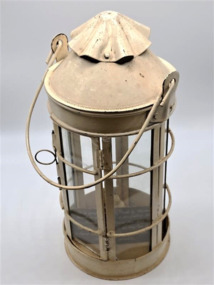
Domestic object - Lantern, Thomas Ward, 1884
... The above mentioned church was built in 1870, and is now part of a private residence. Thomas Ward City of Portland lantern Alice Ward Church Admella Shipwreck Portland Lifeboat Hand written label: This lantern was made by Thomas Ward in 1884 for his daughter Alice Fawthrop Ward to see her way to the little church Wellington Road, where she played the organ for the mid week service. ...This lantern was made by Thomas Ward in 1884 for his daughter Alice Fawthrop Ward to see her way to the little church Wellington Road, where she played the organ for the mid week service. An early example of lighting used in the late 1800s. Additionally this particular light was made by Thomas Ward who was a part of a prominent family in Portland at the time. Thomas was part of the crew that went out to the Admella Shipwreck. The above mentioned church was built in 1870, and is now part of a private residence. Metal lantern painted cream. Round base with 6 rectangle shaped glass panels with 2 curved reinforced metal braces rounding the circumference of the body. One of the panels is a functioning door to allow candle access, door is secured by a thin pin with a ring pull to slide pin up and down. Top is domed with a decorative waves cap. Thin metal carry handle attached by two side braces. Cylinder holder in the base for a candle, and contains a small new looking candle.Hand written label: This lantern was made by Thomas Ward in 1884 for his daughter Alice Fawthrop Ward to see her way to the little church Wellington Road, where she played the organ for the mid week service.thomas ward, city of portland, lantern, alice ward, church, admella shipwreck, portland lifeboat -
 Mission to Seafarers Victoria
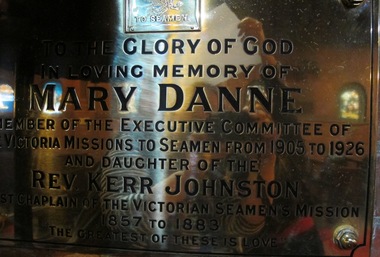
Plaque - Memorial plaque, Mary Danne, 1927
... residence, Seymour Grove in Camberwell. The plaque was erected on the 9 October 1927 (AR 1927). The Kerr Johnston Family migrated to Tasmania in 1854. The Reverend took up his appointment with the Victorian Bethel Union for Seamen in 1857 and moved all his family in the "floating church", the ex water police hulk Emily, first Chaplain serving the seamen in Hobsons' Bay. mary alice isabelle danne nee johnston, 1851-1926 reverend kerr johnston reverend richard vallencey danne, 1846-1904 bethel hulk emily hobson's bay glenfern flinders street st peter chapel Mission to Seamen. ...Mary was the fifth daughter of Reverend Kerr Johnston and his wife Elizabeth. Mary married Reverend Richard Vallencey Danne (1846-1904), they had 8 children. One of their son Noel also became a reverend. She continued her father's work by becoming part of the Mission's committee in 1905. On 9 November 1906, for King's Birthday, she hosted a sailors' picnic at the property she rented, Glenfern on Inkerman Road (see item 1637), where she was running a school, Newington. She died on the 30th of July 1926 at her residence, Seymour Grove in Camberwell. The plaque was erected on the 9 October 1927 (AR 1927).The Kerr Johnston Family migrated to Tasmania in 1854. The Reverend took up his appointment with the Victorian Bethel Union for Seamen in 1857 and moved all his family in the "floating church", the ex water police hulk Emily, first Chaplain serving the seamen in Hobsons' Bay.Large rectangular brass plaque with smaller plaque mounted onto it of Mission to Seamen insignia. The Larger plaque is mounted to a brick wall.Mission to Seamen. To the glory of God In loving memory of Mary Danne member of the executive committee of the Victoria Missions to Seamen from 1905 to 1920 and daughter of the REv. Kerr -Johnston chaplain of the Victorian Seamen's Mission 1857 to 1883 "The greatest of these is love"mary alice isabelle danne nee johnston, 1851-1926, reverend kerr johnston, reverend richard vallencey danne, 1846-1904, bethel, hulk emily, hobson's bay, glenfern, flinders street, st peter chapel -
 Flagstaff Hill Maritime Museum and Village
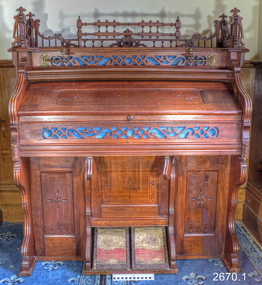
Instrument - Organ and stool, 1897-1901
... The donor advised that it was played for many years in the Winslow Presbyterian Church, southwestern Victoria (on Caramut Road, now a private residence). The serial number of the organ dates to be no older than 1887 and no younger than 1901, according to The Pump Organ Society. ...The donor advised that it was played for many years in the Winslow Presbyterian Church, southwestern Victoria (on Caramut Road, now a private residence). The serial number of the organ dates to be no older than 1887 and no younger than 1901, according to The Pump Organ Society. ...This chapel organ, or pump organ, was made by the Packard Company of Fort Wayne, USA. It was purchased locally from John Broadwood Shepherd & Son of Liebig St, Warrnambool. The donor advised that it was played for many years in the Winslow Presbyterian Church, southwestern Victoria (on Caramut Road, now a private residence). The serial number of the organ dates to be no older than 1887 and no younger than 1901, according to The Pump Organ Society. The goals of The Packard Company, as quoted from the Fort Wayne Gazette, 6th August 1873 are summarised as such; “In the first place, it was determined to make an organ which should be excelled by none. …. It is interesting to the uninitiated to watch the different processes which literally convert the trees of the forest into the marvellous instruments which sound the praises of God in thousands of churches and Sabbath Schools, or make sweet music in multitudes of homes.” The music store of John Broadwood Shepherd and Son had an “impressive” stand at The Great Warrnambool Exhibition of 1896 – 1897 and received a medal for its exhibit. It was also involved in the community, sponsoring prizes for the Musical and Recital Competition, which was part of the entertainment for the Exhibition. The “Warrnambool Standard” newspaper has reference to John Broadwood Shepherd and Son in a newspaper of 1887 and another dated April 13, 1901. A brief history of the Packard Company: 1850, Isaac T. Packard joined with Nelson J. Foss and Calvin Hatch to form Packard, Foss, & Co., manufacturing reed organs, seraphines, and melodeons 1871 the Fort Wayne Organ Company was formed, and Isaac Packard has 40 shares. 1872 the first organ was completed 5th Sept 1899, “Fort Wayne Organ Company” was officially changed to “The Packard Company” 1908 – 1914 (different dates given) the Packard Company ceased producing organs and specialised in pianos. 1930 company went into receivership 1935 the city of Fort Wayne acquired the former Packard Company property, tore the buildings down and turned it into a park, now known as Packard Park. The organ is significant to local history for being sold by a Warrnambool business and played at a local chape or church. It represents community and religious life in late Victorian times.Chapel organ or pump organ (with stool), dated not before 1897 and not after 1901. Medium brown timber with fretwork and turned spindles, Manufactured by Packard, Fort Wayne U.S.A. Organ was purchased from John Broadwood Shepherd & Son, Liebig St, Warrnambool. Serial number is stamped into the wood, rear of organ. lower right panel. Pedals are covered in carpet and each has the maker's name on the lower part of the pedal frame. The keyboard has five octaves and twelve stoppers.Words on front panel “Packard Organ / Fort Wayne Ind. U.S.A. / JOHN BORADWOOD SHEPHERD & SON, / LIEBIG STREET, WARRNAMBOOL.” Serial Number "48870"flagstaff hill, warrnambool, shipwreck coast, flagstaff hill maritime village, flagstaff hill maritime museum, maritime museum, great ocean road, pump organ, packard organ, fort wayne usa, john broadwood shepherd & son, john broadwood, winslow victoria, church music, musical instrument, john broadwood shepherd and son, presbyterian church, winslow presbyterian church, the great warrnambool exhibition 1896-1897 -
 Orbost & District Historical Society
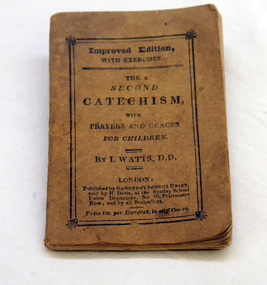
book, The Second Catechism, ? early 19th century
... Church, Berry St., London. In 1702, he became pastor. In 1712, he accepted an invitation to visit Sir Thomas Abney, at his residence of Abney Park, and made it his home for the remainder of his life. ...Church, Berry St., London. In 1702, he became pastor. In 1712, he accepted an invitation to visit Sir Thomas Abney, at his residence of Abney Park, and made it his home for the remainder of his life. ...Isaac Watts is most well-known as a Nonconformist hymn-writer. Many of his compositions are still in common use today and his Divine Songs, first published in 1715, is considered the first hymn-book for children. Watts’s non-hymnal writings include catechisms composed for children of various ages: the first set for children under seven years of age and the second set for children from seven to twelve years of age. Isaac Watts was the son of a schoolmaster, and was born in Southampton, July 17, 1674. He is said to have shown remarkable precocity in childhood, beginning the study of Latin, in his fourth year, and writing respectable verses at the age of seven. At the age of sixteen, he went to London to study in the Academy of the Rev. Thomas Rowe, an Independent minister. In 1698, he became assistant minister of the Independent Church, Berry St., London. In 1702, he became pastor. In 1712, he accepted an invitation to visit Sir Thomas Abney, at his residence of Abney Park, and made it his home for the remainder of his life. Watts died November 25, 1748, and was buried at Bunhill Fields. (Ref: hymnary web-site)This item is an example of an early religious text book for children.A small brown covered paperback book. Text on the cover is black - Improved Edition With Excercises ; The Second Catechism ; With Prayers and Graces for Children. There is also a gold paper bookmark.religious-text watts-isaac catechism
