
Showing 65 items matching " communist - australia"
-
 Unions Ballarat
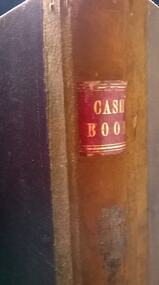
Cash book: Communist Party Australia (Victoria?), Community Party Australia (CPA), 1915-1954
... Cash book: Communist Party Australia (Victoria?)......communist party australia...Income and expenditure of the Communist Party Australia (Victoria Branch?) from 1915-1954. ...Income and expenditure of the Communist Party Australia (Victoria Branch?) from 1915-1954. ...Income and expenditure of the Communist Party Australia (Victoria Branch?) from 1915-1954. Includes memberships/affiliations. Wikipedia (https://en.wikipedia.org/wiki/Communist_Party_of_Australia) describes the Party as originating in 1920 although the beginning of these records precedes that date by five years. It is also noted that the party officially dissolved in 1992, although the record held ceases at 1954 when the funds were transferred to Building Trades Federation Trust Account. The records are contemporaneous with Robert Menzies' attempted ban of the Party in 1951. The records cease in 1954 which was a time of active paranoia in Australia about Communism. The Labor Party split happened in 1955 leading to the formation of the Democratic Labor Party (a party describing itself at anti-communist).Politics and government. Financial records keeping - Communist Party of Australia.Book; 191 pages. Cover: brown background; gold lettering; title ("Cash Book"). Loose pages - account balances, Commonwealth Trading Bank of Australia, Victoria Street, Melbourne.Preliminary pages, in pencil: "Relief Fund see page 47".btlc, ballarat trades hall, ballarat trades and labour council, communist party australia, cpa, politics and government, financial records, democratic labor party, australian labor party, communism -
 Unions Ballarat
The reds: the Communist Party of Australia from origins to illegality, 1998
... The reds: the Communist Party of Australia from origins to illegality......communist party australia...Story of the Communist Party of Australia and its beginnings in 1920 in Sydney. ...Story of the Communist Party of Australia and its beginnings in 1920 in Sydney. ...Story of the Communist Party of Australia and its beginnings in 1920 in Sydney. References to Ballarat Trades Hall and associated entities.Relevant to the trade union movement and the Australian political landscape.Paper; book. Dust jacket: brown background; red, black and white lettering; author's name and title. Cover: black; white lettering.btlc, ballarat trades hall, ballarat trades and labour council, communist party australia, communism, politics and government, trade unions - australia, trade unions - history, rowe, e.j. - ted -
 Unions Ballarat
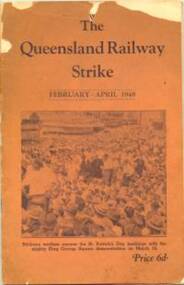
Book - E.J. Rowe (Ted Rowe) - collected documents, Sydney Morning Herald, 1949-2019
... ...communist party australia...He was also an activist in the Communist Party of Australia. The collection includes a memoir from one of Rowe's descendants. ...Olive, Doug (Communist Party Australia)...He was also an activist in the Communist Party of Australia. The collection includes a memoir from one of Rowe's descendants. ...Ted Rowe was a delegate of the Amalgamated Engineering Union and was Ballarat Trades Hall President for two years - 1941-1942. He was also an activist in the Communist Party of Australia. The collection includes a memoir from one of Rowe's descendants. Original documents not held. Items are print-outs and photocopies. 1. Sydney Morning Herald (NSW), 18/5/1949, Communists Seek Control of Powerful A.E.U. 2. Tribune (NSW), 25/8/48, Party Life 3. Tribune (NSW), 5/10/60, Passing of "Ted" Rowe 4. Tribune (NSW), 12/10/60, FUNERAL ORATION FOR E.J. (TED) ROWE: "Outstanding son of working class, Party" 5. Tribune (NSW), 12/10/1960, TED ROWE'S FUNERAL 6. Tribune (NSW), 19/10/60, Ted Rowe: Last Respects 7. Olive, Doug (Communist Party of Australia, Queensland), n.d., "The Queensland Railway Strike" (excerpts) 8. Moloney, Gary (descendent/grandson), "Memories of E.J. Rowe"Trade union history and of particular significance to Ballarat Trades and Labour Council and the Amalgamated Engineering Union.Copies of press clippings and other documents.btlc, ballarat trades and labour council, ballarat trades hall, rowe, e.j. - ted, aeu, railway strike, queensland, communist party australia, obituaries - death notices - funeral notices, industrial action, memoir, amalgamated engineering union -
Unions Ballarat
What's wrong with Australia, Hogan, EJ, 1953
... ...communist party - australia...claims to analyse Australia's "Communist menace" and the damage it has done to the country. ...claims to analyse Australia's "Communist menace" and the damage it has done to the country. ..."What's Wrong With Australia?" claims to analyse Australia's "Communist menace" and the damage it has done to the country. The book reflects paranoia about Communism that was typical of the 1950s. There are reflections upon Communist influence upon the Tramways Union, Waterside Workers Federation, the building industry, strikes, railway services, the Labor Party and more.The book was written in 1953 by the Hon EJ Hogan who was a former leader of the Victorian Labor Party, who twice served as state premier. Relevant to Australian political and union history.Paper; hardback book. Title and author's name on the front of the book.communism, btlc, ballarat trades hall, ballarat trades and labour council, communist party - australia, tramways union, waterside workers federation, building industry, strikes, unions, railway services, victorian labor party, economic, cold war, reds under the bed -
 National Vietnam Veterans Museum (NVVM)
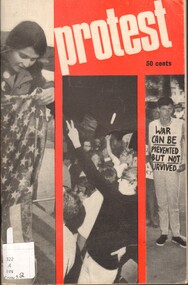
Book, Findlay, P. T, Protest Politics And Psychological Warfare (Copy 2)
... ... Communist - Australia...Vietnam War 1961-1975 - Protest movements - Australia Propaganda Communist - Australia The Communist role in the Anti-vietnam and Anit-Conscription movement. ...The Communist role in the Anti-vietnam and Anit-Conscription movement.The Communist role in the Anti-vietnam and Anit-Conscription movement.vietnam war, 1961-1975 - protest movements - australia, propaganda, communist - australia -
 National Vietnam Veterans Museum (NVVM)
Book, Findlay, P. T, Protest Politics and psychological Warfare
... ... Communist - Australia...Vietnam War 1961-1975 - Protest movements - Australia Propaganda Communist - Australia The Communist role in the anti-Vietnam War and Anti-Conscription Movement In Australia Protest Politics and psychological Warfare. ...The Communist role in the anti-Vietnam War and Anti-Conscription Movement In AustraliaThe Communist role in the anti-Vietnam War and Anti-Conscription Movement In Australiavietnam war, 1961-1975 - protest movements - australia, propaganda, communist - australia -
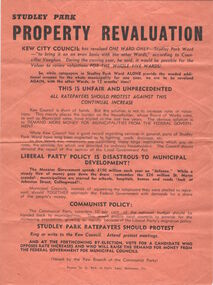 Kew Historical Society Inc
Document, Studley Park Property Revaluation
... communist party of Australia -- kew (vic.)...Lloyd ‘... had strong ties to the trade union movement and belonged to the Communist Party of Australia’ (Barbara Falk, 2000)....Lloyd ‘... had strong ties to the trade union movement and belonged to the Communist Party of Australia’ (Barbara Falk, 2000). communist party of Australia -- kew (vic.) political flyers -- kew (Vic.) ...A search of the Dictionary of Biography returned the names of thirty-two individuals with a connection to Kew, who were claimed to be supporters, members or opponents of the Communist Party of Australia. Some were only linked to communism by reputation. The historian, Geoffrey Serle, in the entry on Vance Palmer (1885-1959) wrote that: ‘From 1942 he was a member of the Commonwealth Literary Fund's advisory committee and from 1947 to 1953 chairman; he suffered despicable allegations that he was a communist’ (Serle, 1988). Serle also noted that Palmer, a liberal socialist of the broad left, was defended by R.G. Menzies. Others were linked through marriage. Gwendolyn Kent Hughes (1889-1965), the third daughter of Wilfred Kent Hughes, was married to Victor Reginald Lloyd (1895-1964) in 1930 in Holy Trinity Church. Lloyd ‘... had strong ties to the trade union movement and belonged to the Communist Party of Australia’ (Barbara Falk, 2000).Single page flyer used in a City of Kew election for Studley Ward protesting about Rate Increases in the Ward. The Society has only one item of this communist legacy in its files. It is an undated electoral tract, appropriately printed on red paper, advising electors in a local government election to vote against rate rises in Studley Ward. communist party of australia -- kew (vic.), political flyers -- kew (vic.) -
Unions Ballarat
Final Speech by the late Rt Hon JB Chifley MP, Sunday 10 June 1951, 10 June 1951
... ...communist party - australia...Australia and a former railway engine driver. He was treasurer in the Curtin government and became Prime Minister after Curtain's death. He lost the 1949 and 1951 federal elections. The 1951 loss was due to his opposing Menzies' proposal to ban the Communist...Australia. Pertinent to political issues in the 1950s. BTLC Ballarat Trades Hall Unions Ballarat Ballarat Trades and Labour Council Chifley, JB Chifley, Ben Curtin, John Prime Minister Treasurers Elections Communism communist party - australia Political speeches Photograph on the front cover of JB Chifley, title and price (3D). ...Mr Chifley's last major public speech, made at the annual conference of the NSW Branch of the Australian Labor Party on the day before his passing away. Chifley spoke at the State Banquet at Parliament House, Canberra, on Tuesday 12 June 1951, and in the House of Representatives on the afternoon of the day that he died (13 June 1951), but those speeches were more formal. Ben Chifley was the sixteenth Prime Minister of Australia and a former railway engine driver. He was treasurer in the Curtin government and became Prime Minister after Curtain's death. He lost the 1949 and 1951 federal elections. The 1951 loss was due to his opposing Menzies' proposal to ban the Communist Party. The document was donated by Mr John Mildren, former federal member for Ballarat and former lecturer at Ballarat College of Advanced Education.Rare. Significant to the history of the Labor Party and to political commentary in Australia. Pertinent to political issues in the 1950s.Paper, A5, stapled, two tone (brown and white)Photograph on the front cover of JB Chifley, title and price (3D). Back cover: sketch of JB Chifley (creator of the sketch is unknown).btlc, ballarat trades hall, unions ballarat, ballarat trades and labour council, chifley, jb, chifley, ben, curtin, john, prime minister, treasurers, elections, communism, communist party - australia, political speeches -
Unions Ballarat
Work on paper - Unions and Unionists in Australia (D.J. Spiers Collection), Rawson, D.W, 1978
... ...communist party australia...Australia. Considers legal frameworks, organising, politics, communist party, industrial action, class distinction....Relevance to the union movement in Australia and thus to the purpose of the Ballarat Trades and Labour Council. ballarat trades and labour council btlc trade unions politics communist party australia industrial action Front cover: author's name and title. ...Trade unions - Australia. Considers legal frameworks, organising, politics, communist party, industrial action, class distinction.Relevance to the union movement in Australia and thus to the purpose of the Ballarat Trades and Labour Council.PaperFront cover: author's name and title.ballarat trades and labour council, btlc, trade unions, politics, communist party australia, industrial action -
4th/19th Prince of Wales's Light Horse Regiment Unit History Room
Booklet, J T Lang MP, Communism is Treason, Late 1940's
... A soft covered booklet on various members of the Communist Party in Australia etc....Communism A soft covered booklet on various members of the Communist Party in Australia etc. Communism is Treason Booklet J T Lang MP Walter Brown ...A soft covered booklet on various members of the Communist Party in Australia etc.communism -
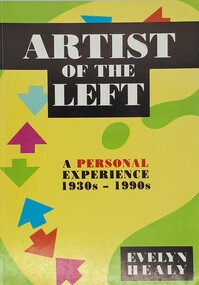 Women's Art Register
Book, Evelyn Healy, Artist of the Left. A Personal Experience 1930s to 1990s, 1993
... ...Communist Party of Australia...Complements other material held in the Women's Art Register Trade Unions Social Realism Communist Party of Australia Peace Art Australia Council Community Arts Art and Working Life International Co-operation Art Award CPA political cartoons Cabramatta and Districts Art Society Noel Counihan Contemporary Art Society of Victoria A history of the authors life as an artist, teacher, and political activist in Australia. ...A history of the authors life as an artist, teacher, and political activist in Australia.non-fictionA history of the authors life as an artist, teacher, and political activist in Australia.trade unions, social realism, communist party of australia, peace art, australia council, community arts, art and working life, international co-operation art award, cpa, political cartoons, cabramatta and districts art society, noel counihan, contemporary art society of victoria -
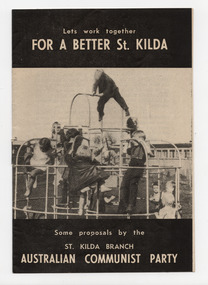 St Kilda Historical Society
Ephemera - Brochure, Lets work together for a better St. Kilda, mid-1940s
... Brochure outlining proposals of the St Kilda Branch of the Australian Communist Party, focusing in particular on post-war needs and opportunities....Brochure outlining proposals of the St Kilda Branch of the Australian Communist Party, focusing in particular on post-war needs and opportunities. ...Brochure outlining proposals of the St Kilda Branch of the Australian Communist Party, focusing in particular on post-war needs and opportunities.Three pages, folded and printed on both sides in black and white, and stapled st kilda council elections, australian communist party, mrs n pearson, mr g blackburn, mr e stein -
 Sunshine and District Historical Society Incorporated
Archive - Gwen Goedecke Collection - International Studies
... Australian International Studies Association Newsletters| Communist Party of Australia - Newsletters, conferences, newspaper articles, Australian Communist Publication 1995, excerpts from "Book of the Rule - How the Government is Ruled" (2004)| Indonesia - "Life of the Poor in Indonesian Cities" Monash University (1978) "The Life of a Jakarta Street Trader" Working Paper #9 and #13 by Lea Jellinek - Monash University (1977)| Jewish Study Group - Invitations to events 1980 to 1991| Germany - "NATO's plans are a menace to Peace" (1979) by Erich Honecker, newsclippings - Nazi War Criminals (1983)| Vietnam - publications "Vietnam Today" bulletin of the Australia - Vietnam Society (1983)| "Vietnam - Social + Cultural Background" - Van Nha Nguyen (1978)| USSR - The Soviet Peace Committee publication "XX Century + Peace" Magazine #7 (1987 - 1990), A statement re: Mikail Gorbachev's August 1986 televised statement on the moratium on nuclear explosions (1986), speech by Mikhail Gorbachev in Vladivostok (July 1986), Soviet News Bulletins by the Press Office in the USSR Embassy in Canberra (1974 - 1980s), publications - "News Times", a Soviet Weekly of World Affairs (11974 - 1980), Australian - USSR Friendship Society Inc (1979 - 1991), Journals, bulletns, newsletters, Australia - Russia + Affiliates Friendship Society (formerly Australia - USSR Friendship Society) 2 newsletters (March - Nov 1994), Australia - Ussr Association notces, journal articles, newsletters (1987 - 1991), newsclippimgs (70s, 80s), publication "Why was the World Misled?"...Australian International Studies Association Newsletters| Communist Party of Australia - Newsletters, conferences, newspaper articles, Australian Communist Publication 1995, excerpts from "Book of the Rule - How the Government is Ruled" (2004)| Indonesia - "Life of the Poor in Indonesian Cities" Monash University (1978) "The Life of a Jakarta Street Trader" Working Paper #9 and #13 by Lea Jellinek - Monash University (1977)| Jewish Study Group - Invitations to events 1980 to 1991| Germany - "NATO's plans are a menace to Peace" (1979) by Erich Honecker, newsclippings - Nazi War Criminals (1983)| Vietnam - publications "Vietnam Today" bulletin of the Australia - Vietnam Society (1983)| "Vietnam - Social + Cultural Background" - Van Nha Nguyen (1978)| USSR - The Soviet Peace Committee publication "XX Century + Peace" Magazine #7 (1987 - 1990), A statement re: Mikail Gorbachev's August 1986 televised statement on the moratium on nuclear explosions (1986), speech by Mikhail Gorbachev in Vladivostok (July 1986), Soviet News Bulletins by the Press Office in the USSR Embassy in Canberra (1974 - 1980s), publications - "News Times", a Soviet Weekly of World Affairs (11974 - 1980), Australian - USSR Friendship Society Inc (1979 - 1991), Journals, bulletns, newsletters, Australia - Russia + Affiliates Friendship Society (formerly Australia - USSR Friendship Society) 2 newsletters (March - Nov 1994), Australia - Ussr Association notces, journal articles, newsletters (1987 - 1991), newsclippimgs (70s, 80s), publication "Why was the World Misled?" ... -
 Uniting Church Archives - Synod of Victoria
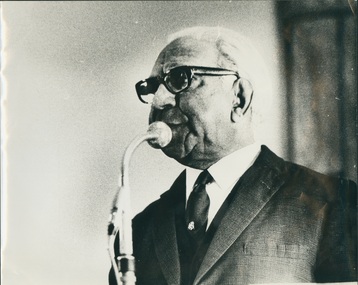
B&W photo of another photo or newspaper photograph of Pastor Sir Douglas Nicholls, Undated
... He co-operated with any group that aided the cause, including the Council of Aboriginal Rights, whose executive were members of the Communist Party of Australia. This association attracted the attention of the Australian Security Intelligence Organization, which in 1957 began to keep a file on Nicholls. ...He co-operated with any group that aided the cause, including the Council of Aboriginal Rights, whose executive were members of the Communist Party of Australia. This association attracted the attention of the Australian Security Intelligence Organization, which in 1957 began to keep a file on Nicholls. ...Sir Douglas Ralph Nicholls (1906-1988), footballer, pastor, activist and governor, was born on 9 December 1906 at Cummeragunja Aboriginal mission, New South Wales, fifth child of Herbert Nicholls, seasonal worker, and his wife Florence, née Atkinson. Doug grew up at Cummeragunja, on the Murray River near Barmah, in its golden years of Aboriginal autonomy. Thomas Shadrach James gave him and other Yorta Yorta children a sound primary education, reinforcing the pride and self-assurance gained from their parents. As Doug grew, so too did the powers of the State’s Aboriginal Protection Board. Doug’s elder sister Hilda was removed about 1915. When Doug reached 14, he was moved off under the Aborigines Protection Act (1909) to find work. He took a job with dredging teams constructing levees on the Murray. Like other youths in the region Nicholls played Australian rules football, emulating kinsmen who had won local premierships since the 1890s. Doug and his brother Herbert (‘Dowie’) played with Tongala in the mid-1920s. Melbourne football beckoned, Doug trying out unsuccessfully for Carlton in 1927. He signed with the Northcote Victorian Football Association team, despite his nervousness about his Aboriginality, and was given a job with Northcote City Council. ‘Dowie’ joined him for a season. Doug was short at 5 ft 2 ins (158 cm), but muscular and lightning fast. He competed regularly during a boom in professional running, winning many heat and place prizes. In 1929 he won the Nyah and Warracknabeal gifts, earning a sash and £100 in each, together with a case of cutlery in the latter. Using his speed on the wing for Northcote, he produced great spring and agility from his compact body. The Sporting Globe reported in 1929 that ‘he flashes through packs of big men, whisks around small men . . . and attempts marks at the back of any six-footer’. In front-on clashes he was flattened only to rise again. The sole Aborigine in the VFA, he was known affectionately as the ‘flying Abo’ but called worse by his opponents’ barrackers. He competed for five seasons, being named ‘best and fairest’ twice, appearing in three association grand finals and winning in 1929. Keen to earn more than a seasonal wage, in 1931 Nicholls accepted a three-year contract with Jimmy Sharman’s travelling boxing show. The bouts matched opposites, local against tent boxer, white against black, and sometimes men of different sizes. He faced stiff competition from those who wanted to best the noted Melbourne black footballer, the crowd adding racial abuse. A far better footballer than boxer, he copped some punishment. Fighting in the Melbourne Stadium in December 1931, he was described by Truth as ‘slow and awkward’, but packing a ‘good wallop’. In 1932 Sharman, who treated his boxers fairly, released Nicholls to join the Fitzroy Victorian Football League team, which agreed to employ him as its groundsman. He played fifty-four games for Fitzroy over six seasons until knee trouble forced him out in 1937. Winning cups in 1934 and 1935, he played alongside Haydn Bunton and Wilfred (‘Chicken’) Smallhorn. Grand finals eluded him but he represented Victoria twice. Following his mother’s death, Nicholls revisited the Church of Christ chapel in Northcote, where they had worshipped together. On 17 July 1932 he experienced a conversion. He was soon baptised and witnessed openly, leading his fellow footballers to occasional church parades. Nicholls exhibited leadership qualities. William Cooper, founder of the Australian Aborigines’ League and Nicholls’ Yorta Yorta kinsman and fellow Christian, encouraged the young footballer. In February 1935 Cooper, Nicholls and others lobbied Thomas Paterson, the Commonwealth minister for the interior, over the need for Federal control of Aboriginal affairs. Nicholls attended the Day of Mourning protest for Aborigines held in Sydney on 26 January 1938, declaring: ‘after 150 years our people are still influenced and bossed by white people. I know we can proudly hold our own with others if given the chance’. When Cooper retired in November 1940 Nicholls became secretary of the AAL. On 2 June 1941 Nicholls enlisted in the Citizen Military Forces. He trained at Seymour and Bonegilla before being posted to the 29th Battalion. As Major Frank Corr’s batman, he was popular with other soldiers who tolerated his preaching and Bible reading. His army service was brief, however, and he was discharged in Melbourne on compassionate grounds on 22 January 1942. His biographer claimed that the Fitzroy police requested his return to mediate in the racial tensions developing between servicemen and the mostly respectable Aboriginal families living in crowded and dilapidated Fitzroy housing; Aboriginal people maintain that they requested his release. Nicholls began welfare work and religious services from an Aboriginal home in Gertrude Street, Fitzroy. In April 1942, ‘Dowie’ died of road accident trauma, leaving his wife, Gladys, née Bux, and three children. On 26 December 1942 at Moama Methodist Church, New South Wales, Nicholls married her, a caring gesture which developed into a loving partnership. In January 1943 he initiated ‘Aboriginal Sunday’, featuring a gum leaf orchestra and choir. By 1955 this service had moved to July and later evolved into National Aborigines and Islanders Day Observance Committee (NAIDOC) week. Ordained a Churches of Christ pastor in 1945, Nicholls conducted a vigorous ministry from a chapel in Gore Street, Fitzroy. His work survived on donations, a small honorarium, and his employment as team coach (1947) and curator at the Northcote Football Ground. In the 1950s Gladys established grocery and opportunity shops to earn income and provide services. Their house soon overflowed with people in need or visitors to Melbourne. Nicholls also hosted inspiring African American visitors such as the pianist Winifred Attwell and the singer Harry Belafonte. His ministry extended to Aboriginal country communities. Gladys taught Sunday school, undertook endless fund-raising and welfare work beside her husband, and became his greatest supporter and financial manager. They formed an Aboriginal Girls’ Hostel in 1956, for which they acted as house parents, and bought holiday units for Aborigines at Queenscliff. Persistently advocating Aboriginal rights, Nicholls protested about the impact of the Woomera rocket range on the people of the Warburton Ranges, co-ordinated the production of a concert, Out of the Dark, scripted by Jean Campbell, to rectify the omission of Aborigines from Victoria’s Commonwealth jubilee celebrations, and criticised the Victorian Aboriginal Protection Board. In 1957 when the board was transformed into the Aborigines’ Welfare Board, he and Harold Blair were appointed as Aboriginal representatives. Maintaining the stance of a political moderate, he did not bear grudges and sought to build bridges between black and white. He co-operated with any group that aided the cause, including the Council of Aboriginal Rights, whose executive were members of the Communist Party of Australia. This association attracted the attention of the Australian Security Intelligence Organization, which in 1957 began to keep a file on Nicholls. In May 1957 Nicholls formed the Victorian Aborigines Advancement League with Doris Blackburn and Gordon Bryant, a Federal parliamentarian. As its paid field officer and spokesman, Nicholls contested assimilation policies and used film to raise awareness of issues. When the Welfare Board attempted to close Lake Tyers reserve, Gippsland, he resigned in disgust and led a protest march on parliament in May 1963. The AAL also petitioned the United Nations on land rights in June, perhaps the first indigenous body to do so. He argued for new premises at 58 Cunningham Street, Northcote, opened in 1966 as the ‘Doug Nicholls Centre’. In 1958 Nicholls was a foundation member of the Federal Council for Aboriginal Advancement (Federal Council for the Advancement of Aboriginal and Torres Strait Islanders after 1964), which he served as national field officer (1961) and Victorian secretary (1962-63). While an innovator in tactics, he was alarmed by the influence of confrontational ‘black power’ politics in the AAL and resigned as a director amid turmoil on this issue in 1969, claiming the concept was a ‘bitter word’, not needed in Australia. Similar tensions in FCAATSI led him to join with Kath Walker (Oodgeroo Noonuccal) in establishing the short-lived National Tribal Council as an alternative forum. As the AAL leadership moderated their stance, he returned as president (1969-74) of the new all-Aboriginal organisation. He was also a keen patron of the National Aboriginal Sports Foundation, founded in 1969. Many honours were conferred on Nicholls: he was appointed MBE (1957) and OBE (1968) and knighted (1972). In 1962 he was named Victorian ‘Father of the Year’ and the State’s second Aboriginal justice of the peace. Crowned Melbourne’s 1973 King of Moomba, he was declared Bapu Mamus (a Torres Strait term for ‘headman’) by the NTC. On 1 December 1976 Sir Douglas was appointed Governor of South Australia, but his health deteriorated within weeks, making it difficult for him to perform his official duties. In March 1977 he hosted Queen Elizabeth during her royal tour and was appointed KCVO. He relinquished his governorship on 30 April 1977 following a stroke. Ill health continued to dog him during retirement, but he played his Nelson Eddy records, enjoyed his expanding family, and when able, ministered to the Aboriginal Church at the League’s premises. Sir Douglas Nicholls died on 4 June 1988 at Mooroopna, predeceased (1981) by his wife and survived by his five children. He was given a state funeral and buried in tribal ground at Cummeragunja cemetery. Among the many tributes to him are an oval at Northcote, handed to the AAL in 1982, a Canberra suburb gazetted in 1991, and a fellowship for Indigenous leadership established in 2003, all in his name, and a statue of Sir Doug and Lady Nicholls by Louis Laumen, unveiled in 2007 in Parliament Gardens, Melbourne. Sir Douglas Nicholls is shown speaking at a microphone; head and shoulders; dressed in a suit.Pastor Douglas Nicholls -
 Lara RSL Sub Branch
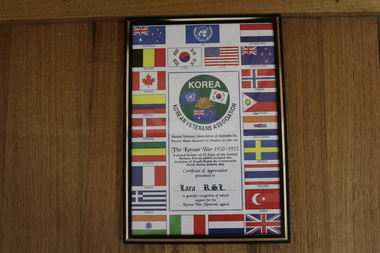
The Korean War 1950-1953 Certificate of Appreciation
... A Recognition of the United Nations Forces which resisted the invasion of South Korea by Communist North Korean Forces. certificate of appreciation lara r.s.l. the korean war 1950-1953. korea Korean veterians Association of Australia Inc United Nations Certificate of Appreciation presented to LARA R.S.L. ...The Korean War was a war between North Korea and South Korea. The war began on 25 June 1950 when North Korea invaded South Korea following a series of clashes along the border. The United Nations, with the United States as the principal force, came to the aid of South Korea. China came to the aid of North Korea, and the Soviet Union also gave some assistance to the North..A Recognition of the United Nations Forces which resisted the invasion of South Korea by Communist North Korean Forces.Rectangular shaped Glass covered picture frame showing the certificate of AppreciationCertificate of Appreciation presented to LARA R.S.L.certificate of appreciation, lara r.s.l., the korean war 1950-1953., korea, korean veterians association of australia inc, united nations -
 Lara RSL Sub Branch
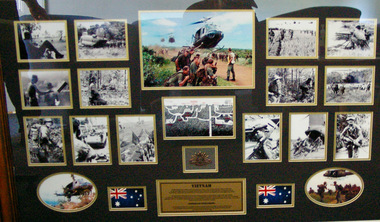
Artwork, other - Vietnam Photo Photo Collage, Australia
... The war was fought between the communist North Vietnam supported by its communist allies, and the government of South Vietnam, supported by the United States and other member nations of the South East Asia Treaty Organisation (SEATO) Australian Involvement For a decade from 1962 ton 1972, Australian Forces were actively involved in the bitter war that tore Vietnam apart. ...Photo collage of Australians in the Vietnam war Vietnam the Vietnam War was a Military conflict that occurred in Vietnam, Laos and Cambodia from 1959 to 30 April 1975. The war was fought between the communist ...Photo collage of Australians in the Vietnam warFramed Picture Collage of Photos of VietnamVietnam the Vietnam War was a Military conflict that occurred in Vietnam, Laos and Cambodia from 1959 to 30 April 1975. The war was fought between the communist North Vietnam supported by its communist allies, and the government of South Vietnam, supported by the United States and other member nations of the South East Asia Treaty Organisation (SEATO) Australian Involvement For a decade from 1962 ton 1972, Australian Forces were actively involved in the bitter war that tore Vietnam apart. They served with distinction, and in battles such the decisive battle of Long Tan. They proved that they were more than a match for the Viet Cong. -
 Ringwood and District Historical Society
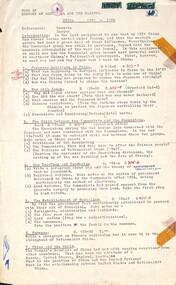
Document, Ringwood High School - Form IV - 1967 - History of Australia and the Pacific Assignment- China 1931-1960
... Communists and the Kuomintang. 4. Mao Tse-Tung and Communism. 5. The Establishment of Socialism. 6. Formosa. 7. China and the World. Most parts have several sub-sections. One single sided foolscap sheet Ringwood High School - Form IV - 1967 - History of Australia and the Pacific Assignment- China 1931-1960 Document ...One single sided foolscap sheet This paper consists of eight parts - Introduction, 1. Japanese Ambitions in China. 2. War with Japan. 3. The Split between the Communists and the Kuomintang. 4. Mao Tse-Tung and Communism. 5. The Establishment of Socialism. 6. Formosa. 7. China and the World. Most parts have several sub-sections. -
 Bendigo Military Museum
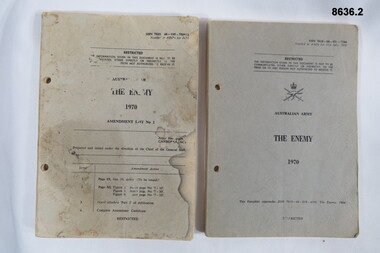
Manual - THE ENEMY, Australian Army, 1970
... Medium size grey Manual providing information about typical Asian Communist Military Forces detailing their organisations characteristics, weapons and tactics. 2. Amendment list No. 1 The Enemy, updating the information to the manual described in 1. Manual THE ENEMY Australian ...1. Medium size grey Manual providing information about typical Asian Communist Military Forces detailing their organisations characteristics, weapons and tactics. 2. Amendment list No. 1 The Enemy, updating the information to the manual described in 1.passchendaele barracks trust, manuals, booklets, -
 Eltham District Historical Society Inc
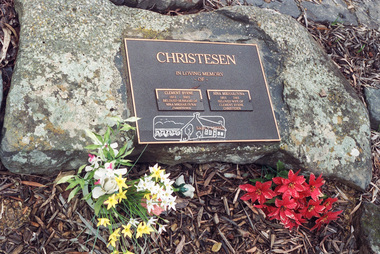
Negative - Photograph, Harry Gilham, Memorial for Clem and Nina Christesen, Eltham Cemetery, Victoria, 1 Aug 2007
... Australia. Nina was married to Clem Christesen, founder and editor of the respected (if left-leaning) literary magazine "Meanjin". They lived at "Stanhope" in Peter Street, Eltham. Visitors included writers Patrick White and Xavier Herbert, painters Arthur Boyd and Clifton Pugh, and historians Manning Clark and Geoffrey Blainey. In 1955, both Nina and Clem were interrogated by the Petrov Royal Commission on suspicion of being Communist...Australia. Nina was married to Clem Christesen, founder and editor of the respected (if left-leaning) literary magazine "Meanjin". They lived at "Stanhope" in Peter Street, Eltham. Visitors included writers Patrick White and Xavier Herbert, painters Arthur Boyd and Clifton Pugh, and historians Manning Clark and Geoffrey Blainey. In 1955, both Nina and Clem were interrogated by the Petrov Royal Commission on suspicion of being Communist ...Russian-born Nina Christesen (nee Maximoff) is regarded as the pioneer of Russian academic studies in Australia. In 1946 she became a lecturer in Russian at Melbourne University, and in 1947 established the Department of Russian Language and Literature, remaining its head until her retirement in 1977. In 1987 she was made a Member of the Order of Australia. Nina was married to Clem Christesen, founder and editor of the respected (if left-leaning) literary magazine "Meanjin". They lived at "Stanhope" in Peter Street, Eltham. Visitors included writers Patrick White and Xavier Herbert, painters Arthur Boyd and Clifton Pugh, and historians Manning Clark and Geoffrey Blainey. In 1955, both Nina and Clem were interrogated by the Petrov Royal Commission on suspicion of being Communist sympathisers, which they reputedly rebutted wittily. Nina died in 2001 and Clem in 2003. They are buried together at Eltham Cemetery. There is also a memorial to Nina at the Eltham Living and Learning Centre, in the form of a bluestone amphitheatre with a floor of hand-painted tiles. Christesen In Loving Memory Of Clement Byrne 1911 - 2003 Beloved husband of Nina Mikhailovna Christesen and Nina Mikhailovna 1911 - 2001 Beloved wife of Clement Byrne Christesen also In Memoriam Captain Mikhail Ivanovich Maximoff 1885 - 1967 Tatiana Semenovna Maximoff 1888 - 1979eltham cemetery, gravestones, memorials, captain mikhail ivanovich maximoff, clem christesen, clement byne christesen, nina mikhailovna christesen, tatiana semenovna maximoff -
 Eltham District Historical Society Inc
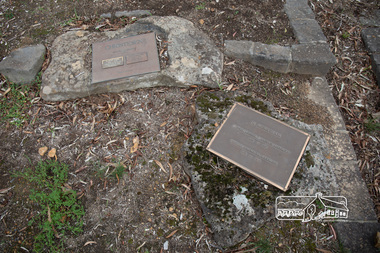
Photograph, Peter Pidgeon, Memorial for Clem and Nina Christesen, Eltham Cemetery, Victoria, 5 April 2021
... Australia. Nina was married to Clem Christesen, founder and editor of the respected (if left-leaning) literary magazine "Meanjin". They lived at "Stanhope" in Peter Street, Eltham. Visitors included writers Patrick White and Xavier Herbert, painters Arthur Boyd and Clifton Pugh, and historians Manning Clark and Geoffrey Blainey. In 1955, both Nina and Clem were interrogated by the Petrov Royal Commission on suspicion of being Communist...Australia. Nina was married to Clem Christesen, founder and editor of the respected (if left-leaning) literary magazine "Meanjin". They lived at "Stanhope" in Peter Street, Eltham. Visitors included writers Patrick White and Xavier Herbert, painters Arthur Boyd and Clifton Pugh, and historians Manning Clark and Geoffrey Blainey. In 1955, both Nina and Clem were interrogated by the Petrov Royal Commission on suspicion of being Communist ...Russian-born Nina Christesen (nee Maximoff) is regarded as the pioneer of Russian academic studies in Australia. In 1946 she became a lecturer in Russian at Melbourne University, and in 1947 established the Department of Russian Language and Literature, remaining its head until her retirement in 1977. In 1987 she was made a Member of the Order of Australia. Nina was married to Clem Christesen, founder and editor of the respected (if left-leaning) literary magazine "Meanjin". They lived at "Stanhope" in Peter Street, Eltham. Visitors included writers Patrick White and Xavier Herbert, painters Arthur Boyd and Clifton Pugh, and historians Manning Clark and Geoffrey Blainey. In 1955, both Nina and Clem were interrogated by the Petrov Royal Commission on suspicion of being Communist sympathisers, which they reputedly rebutted wittily. Nina died in 2001 and Clem in 2003. They are buried together at Eltham Cemetery. There is also a memorial to Nina at the Eltham Living and Learning Centre, in the form of a bluestone amphitheatre with a floor of hand-painted tiles. Christesen In Loving Memory Of Clement Byrne 1911 - 2003 Beloved husband of Nina Mikhailovna Christesen and Nina Mikhailovna 1911 - 2001 Beloved wife of Clement Byrne Christesen also In Memoriam Captain Mikhail Ivanovich Maximoff 1885 - 1967 Tatiana Semenovna Maximoff 1888 - 1979Born Digitaleltham cemetery, gravestones, heritage excursion, clem christesen, clement byne christesen, nina mikhailovna christesen, captain mikhail ivanovich maximoff, tatiana semenovna maximoff -
 Bendigo Military Museum
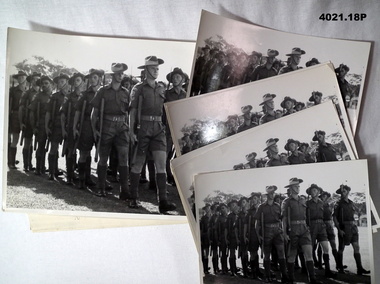
Photograph - MILITARY PHOTOGRAPHS, 1960 - 61
... Communist terrorists in the south and central Perak north Malaya. A number of the soldiers are named. (.9) The same parade as (.1) with a number of soldiers named in the fore front. The photos relate to the collection of Francis William (Dinky) DEAN BEM, VX93960 2nd AIF, 3742 1 RAR 1943 - 1975. Refer Cat No 124.2 for his service details. Photography Military Malaya On the rear of (.1 - .8) stamped in purple. “Public Relations Australian ...(.1) The attached sheet in brief. The parade is being inspected by the Premier of the State of PERAK, Mohammed GAZALI BIN JAWI, the troops are 1 RAR marking the end of the successful battle against the Communist terrorists in the south and central Perak north Malaya. A number of the soldiers are named. (.9) The same parade as (.1) with a number of soldiers named in the fore front. The photos relate to the collection of Francis William (Dinky) DEAN BEM, VX93960 2nd AIF, 3742 1 RAR 1943 - 1975. Refer Cat No 124.2 for his service details.All photos are B &W. (.1) A parade of Australian soldiers being inspected by a foreign dignitary. Attached to the photo is a typed paper with detail of the proceedings. (.2 - .8) Same photo as (.1) smaller without the attached details. (.9) A parade of Australian soldiers in 3 ranks, attached to the photo is a typed paper with detail of the proceedings. (.10 - .18) Same photo as (.9) smaller with out the attached details.On the rear of (.1 - .8) stamped in purple. “Public Relations Australian Army Force GHQ FARELF GUN 63 MC” On rear of (.9 - .18) Has the same as above except the GUN No is 64.photography, military, malaya -
 Bendigo Military Museum
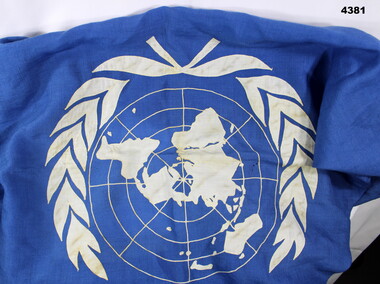
Flag - UNITED NATIONS FLAG, GAIRS, C.1950 - 1960
... This UN flag was flown at a YMCA centre in South Korea under a U.N Protectorate against Communist aggression, the YMCA supported the Australian Army....This UN flag was flown at a YMCA centre in South Korea under a U.N Protectorate against Communist aggression, the YMCA supported the Australian Army. u.n ymca flags Cloth badge on spine, “ Aust Flag”, “Gairs of Melbourne”. ...This UN flag was flown at a YMCA centre in South Korea under a U.N Protectorate against Communist aggression, the YMCA supported the Australian Army.Flag, blue colour with circular motif of the world in white with Oak leaf around, The spine has a pole sewn in, the spine has a cloth badge on with wording as well as a stamp.Cloth badge on spine, “ Aust Flag”, “Gairs of Melbourne”. Stamp on spine in blue ink, “Australian YMCA” Around stamp in green ink, “.......National Council........YMCA.........”u.n, ymca, flags -
 Eltham District Historical Society Inc
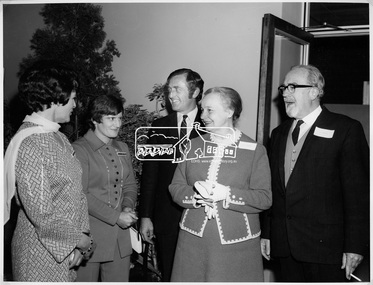
Photograph, Book launch "Pioneers & Painters", 7 Jul 1971
... Australia. Nina was married to Clem Christesen, founder and editor of the respected (if left-leaning) literary magazine "Meanjin". They lived at "Stanhope" in Peter Street, Eltham. Visitors included writers Patrick White and Xavier Herbert, painters Arthur Boyd and Clifton Pugh, and historians Manning Clark and Geoffrey Blainey. In 1955, both Nina and Clem were interrogated by the Petrov Royal Commission on suspicion of being Communist...Australia. Nina was married to Clem Christesen, founder and editor of the respected (if left-leaning) literary magazine "Meanjin". They lived at "Stanhope" in Peter Street, Eltham. Visitors included writers Patrick White and Xavier Herbert, painters Arthur Boyd and Clifton Pugh, and historians Manning Clark and Geoffrey Blainey. In 1955, both Nina and Clem were interrogated by the Petrov Royal Commission on suspicion of being Communist ...Launch of "Pioneers and Painters: One Hundred years of Eltham and its Shire" by Alan Marshall. The history was commissioned by the Shire of Eltham and published as part of the Shire of Eltham centenary celebrations. Left to Right: Cr. (Mrs.) Charis M. Pelling, Mrs Dreverman, Cr. G. C. Dreverman, Mrs Nina Christesen, Mr Clem Christesen, Editor of the literary journal "Meanjin". "Russian-born Nina Christesen (nee Maximoff) is regarded as the pioneer of Russian academic studies in Australia. In 1946 she became a lecturer in Russian at Melbourne University, and in 1947 established the Department of Russian Language and Literature, remaining its head until her retirement in 1977. In 1987 she was made a Member of the Order of Australia. Nina was married to Clem Christesen, founder and editor of the respected (if left-leaning) literary magazine "Meanjin". They lived at "Stanhope" in Peter Street, Eltham. Visitors included writers Patrick White and Xavier Herbert, painters Arthur Boyd and Clifton Pugh, and historians Manning Clark and Geoffrey Blainey. In 1955, both Nina and Clem were interrogated by the Petrov Royal Commission on suspicion of being Communist sympathisers, which they reputedly rebutted wittily. Nina died in 2001 and Clem in 2003. They are buried together at Eltham Cemetery. There is also a memorial to Nina at the Eltham Living and Learning Centre, in the form of a bluestone amphitheatre with a floor of hand-painted tiles. Main sources: Wikipedia, obituaries in The Age and The Sunday Age. " - Eltham District Historical Society newsletter No. 247, August 2019.This photo forms part of a collection of photographs gathered by the Shire of Eltham for their centenary project book, "Pioneers and Painters: 100 years of the Shire of Eltham" by Alan Marshall (1971). The collection of over 500 images is held in partnership between Eltham District Historical Society and Yarra Plenty Regional Library (Eltham Library) and is now formally known as 'The Shire of Eltham Pioneers Photograph Collection.' It is significant in being the first community sourced collection representing the places and people of the Shire's first one hundred years.Digital imagesepp, shire of eltham pioneers photograph collection, shire of eltham, shire of eltham centenary, pioneers and painters, book launch, cr. g.c. dreverman, mrs. dreverman, nina christesen, charris pelling -
 Eltham District Historical Society Inc
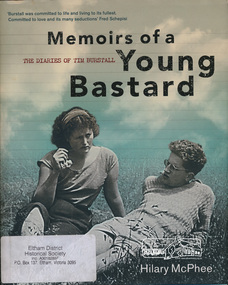
Book, Miegunyah Press, Memoirs of a Young Bastard: the diaries of Tim Burstall compiled by Hilary McPhee, 2012
... Communist Party branch meetings and film societies, of political rallies and the first Herald Outdoor Art Show. Somehow, while holding down a public relations job in the Antarctic Division and juggling his love affairs and obsession with the beautiful, brainy Fay, he wrote 500 words almost every day. Betty, according to the diaries, kept the show on the road, feeding friends after the pub, milking goats and working in her pottery making bowls and mugs, which Tim sometimes decorated at weekends. These Memoirs of a Young Bastard, as Burstall dubbed himself and them, are among the most evocative Australian...Communist Party branch meetings and film societies, of political rallies and the first Herald Outdoor Art Show. Somehow, while holding down a public relations job in the Antarctic Division and juggling his love affairs and obsession with the beautiful, brainy Fay, he wrote 500 words almost every day. Betty, according to the diaries, kept the show on the road, feeding friends after the pub, milking goats and working in her pottery making bowls and mugs, which Tim sometimes decorated at weekends. These Memoirs of a Young Bastard, as Burstall dubbed himself and them, are among the most evocative Australian ...Diaries of Tim Burstall November 1953 to December 1954. Tim Burstall lived in Eltham. Tim Burstall, the celebrated director of Stork, Alvin Purple and numerous other definitive 'ocker' comedies, is credited with shaking the moribund Australian film industry out of its torpor. But long before that, in the early 1950s, he began keeping a diary to record the world of the group of 'arties' and 'intellectuals' he was living among in Eltham, then a rural area outside Melbourne, where cheap land was available for mudbrick houses and studios, and where suburban rigidities could be mercilessly flouted. Burstall was in his mid-twenties, with two young sons and an open marriage with his wife, Betty. Eager to become a writer, to go against the grain, he kept a record almost daily-of the parties and the talk in pubs and studios, about art and politics and sex, of Communist Party branch meetings and film societies, of political rallies and the first Herald Outdoor Art Show. Somehow, while holding down a public relations job in the Antarctic Division and juggling his love affairs and obsession with the beautiful, brainy Fay, he wrote 500 words almost every day. Betty, according to the diaries, kept the show on the road, feeding friends after the pub, milking goats and working in her pottery making bowls and mugs, which Tim sometimes decorated at weekends. These Memoirs of a Young Bastard, as Burstall dubbed himself and them, are among the most evocative Australian diaries of modern times. Burstall can write. He has an eye for the telling detail, an unerring ear for cant and pomposity and, most endearingly, an ability to mock himself-always from the perspective of a bloke of his generation. Source: Publisherxxiv, 343 p., [18] p. of plates : ill., maps, ports., facsims. ; 27 cm.ISBN 9780522858143diary, motion picture director, film director, author -
 Monbulk RSL Sub Branch
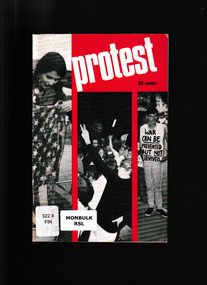
Book, Hawthorn Press, Protest politics and psychological warfare : the communist role in the Anti-Vietnam War and anti-conscription movement in Australia, 1968
... Protest politics and psychological warfare : the communist role in the Anti-Vietnam War and anti-conscription movement in Australia...Vietnam war - 1961-1975 - Politics and government - Australia Political movements - Australia Examines the communist role in the Anti-Vietnam War and anti-conscription movement in Australia Ill, p.63. ...Examines the communist role in the Anti-Vietnam War and anti-conscription movement in AustraliaIll, p.63.non-fictionExamines the communist role in the Anti-Vietnam War and anti-conscription movement in Australiavietnam war - 1961-1975 - politics and government - australia, political movements - australia -
 Australian Multicultural Community Services
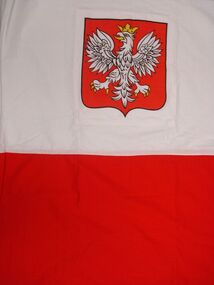
Polish flag, 1986
... The falg was displayed during the meeting of Pope John Paul II with Poles from Australia on MCG in 1986; the eagle on the flag (national Polish emblem) has a crown on its head, which was not allowed during a communist regime in Poland...The falg was displayed during the meeting of Pope John Paul II with Poles from Australia on MCG in 1986; the eagle on the flag (national Polish emblem) has a crown on its head, which was not allowed during a communist regime in Poland commemorate the visit of Pope John Paul II in Australia Pope flag Pol Polish emblem red and white, cotton Polish flag ...The falg was displayed during the meeting of Pope John Paul II with Poles from Australia on MCG in 1986; the eagle on the flag (national Polish emblem) has a crown on its head, which was not allowed during a communist regime in Polandcommemorate the visit of Pope John Paul II in Australiared and white, cottonPolish emblempope, flag, pol -
 National Vietnam Veterans Museum (NVVM)
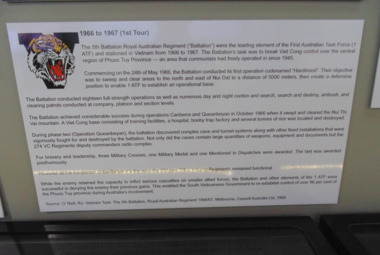
Poster - Poster, Information Board, 5 RAR 1966 - 1967 (1st Tour)
... Australian Task Force (1 ATF) and stationed in Vietnam from 1966 to 1967. The Battalion's task was to break Viet Cong control over the central region of Phuoc Tuy Province - an area that communists had freely operated in since 1945. ...Australian Task Force (1 ATF) and stationed in Vietnam from 1966 to 1967. The Battalion's task was to break Viet Cong control over the central region of Phuoc Tuy Province - an area that communists had freely operated in since 1945. ...An Poster, Information Board of 5 RAR 1966 to 1967 (tst Tour). The 5th Battalion Royal Australian Regiment ("Battalion") were the leading element of the First Australian Task Force (1 ATF) and stationed in Vietnam from 1966 to 1967. The Battalion's task was to break Viet Cong control over the central region of Phuoc Tuy Province - an area that communists had freely operated in since 1945. Commencing of the 24th May 1966, the Battalion conducted its first operation codenamed "Hardihood". Their objective was to sweep and clear areas to the north and east of Nui Dat to a distance of 5000 meters, then create a defensive position to enable 1 ATF to establish an operation base. The Battalion conducted eighteen full-lenght operations as well as numerous day and night cordon and search, search and destroy, ambush and clearing patrols conducted at company, platoon and section levels. the Battalion achieved considerable success during Operations Canberra and Queanbeyan in October 1966 when it swept and cleared the Nui Thi Vai mountain. A Viet Cong base consisting of training facilities, a hospital, booby trap factory and several tonnes of rice was located and destroyed. during phase two (Operation Queanbeyan) the battalion discovered complex cave and tunnel systems along with other fixed installations that were vigorously fought for and destroyed by the battalion. Not only di the caves contain large quantities of weapons, equipment and documents but the 274 VC Regiments deputy commanders radio complex. For bravery and leadership, three Military Crosses, one Military Medal and one Mentioned in Dispatches were awarded. The last was awarded posthumously. However, at the completion of the battalion's first tour, the 274 and 275 Viet Cong Regiments remained functional. While the enemy retained the capacity to inflict serious casualities on smaller allied forces, the Battalion and other elements of the 1 AFt were successful in denying the enemy their previous gains. This enabled the South Vietnamese Government to re-establish control of over 96 per cent of the Phuoc Tuy Province during Australia's involvement. Source O'Neill, RJ Vietnam Task, the 5th Battalion, Royal Australian Regiment 1966/67, Melbourne. Cassell Australia Ltd, 19685 rar, 1st tour 1966 - 1967, operation hardihood, 1st atf base, poster, information board, nui dat, nui thai vai mountains, operation canberra, operation queanbeyan, viet cong, 274 vc regiments, military cross, bravery, military medal, mention in dispatches, capt robert john o'neill, 335113, royal australian infantry corps, 5th battalion, the royal australian regiment -
 National Vietnam Veterans Museum (NVVM)
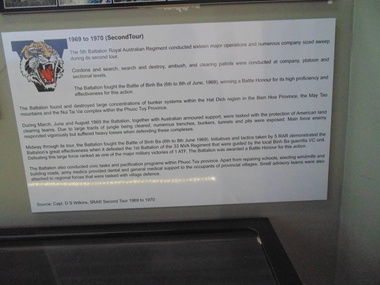
Poster - Information Board, 5 RAR 1969 - 1970 (2nd Tour)
... Australian Task Force (1 ATF) and stationed in Vietnam from 1966 - 1967. The Battalion's task was to break Viet Cong control over the central region of Phuoc Tuy Province - an area that communists had freely operated in since 1945. ...Australian Task Force (1 ATF) and stationed in Vietnam from 1966 - 1967. The Battalion's task was to break Viet Cong control over the central region of Phuoc Tuy Province - an area that communists had freely operated in since 1945. ...An Poster, Information Board of The 5th Battalion Royal Australian Regiment ("Battalion") were the leading element of the First Australian Task Force (1 ATF) and stationed in Vietnam from 1966 - 1967. The Battalion's task was to break Viet Cong control over the central region of Phuoc Tuy Province - an area that communists had freely operated in since 1945. See media for more information Commencing of the 24th May 1966, the Battalion conducted its first operation codenamed "Hardihood". Their objective was to sweep and clear areas of the north and east of Nui Dat to a distance of 5000 meters, then create a defensive position to enable 1 ATF to establish an operational base.5 rar, 1 atf, viet cong, phuoc tuy province, nui dat, nui thai vai mountains, 274 vc regiments, 275 vc regiments, military awards, operation canberra, operation queanbeyan, operation hardihood, poster, information board, battle of binh ba, 1st australian task force, hat dich, bien hoa province, may tao mountains, 33 nva regiment, capt david symon wilkins, 235241, royal australian infantry corps, the royal australian regiment -
 National Vietnam Veterans Museum (NVVM)
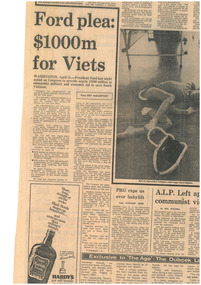
Newspaper - Articles about attitudes to end of war and Operation Babylift, The Age, 12 April, 1975
... Australian servicemen. The Age President Ford ALP Vietnam Babylift Operation Babylift Post-war vietnam Military aid fall of saigon communist take-over Two newspaper article from The Age, Saturday April 12, 1975 The Age, 12 April, 1975 Newspaper Articles about attitudes to end of war and Operation Babylift ...Two newspaper articles from The Age in 1975 that contributes to an understanding of those involved in the war in Vietnam (1962 -1972) other than Australian servicemen.Two newspaper article from The Age, Saturday April 12, 1975the age, president ford, alp, vietnam, babylift, operation babylift, post-war vietnam, military aid, fall of saigon, communist take-over -
 National Vietnam Veterans Museum (NVVM)
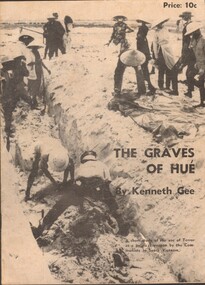
Booklet - Propaganda booklet, The Graves of Hue
... Australian Army Ordnance Corps. Booklet The Graves of Hue Kenneth Gee Vietnam Atrocities - Vietnam Vietcong Hue Hue Massacre Tet Offensive The Graves of Hue/ By Kenneth Gee/ A short story of the use of terror/ as a political weapon by the/ communists in South Vietnam. ...Following a month of intense, bloody street fighting during the 1968 Tet Offensive, the city of Hue in Vietnam became the site of mass graves for approximately 2,800 bodies of civilians and South Vietnamese officials. They were executed by North Vietnamese forces in what is called the Hue Massacre, which lasted for 26 days from 31 January 1968. The graves were located in and around the city, Object collected by WO2 Robert Palmer Matthews (# 34974) of the Royal Australian Army Ordnance Corps.Booklet by Kenneth Gee. 10 pages of graphic black and white images of bodies and ugliness of war.The Graves of Hue/ By Kenneth Gee/ A short story of the use of terror/ as a political weapon by the/ communists in South Vietnam.booklet, the graves of hue, kenneth gee, vietnam, atrocities - vietnam, vietcong, hue, hue massacre, tet offensive
