
Showing 14 items matching " containment"
-
 University of Melbourne, Burnley Campus Archives
Document, Trial of Microgarden Compost/Waste Containment System Final Report, 1999
... Trial of Microgarden Compost/Waste Containment System Final Report...urban horticulture burnley compost waste Prepared by Centre for Urban Horticulture, Burnley Trial of Microgarden Compost/Waste Containment System Final Report Document ...Prepared by Centre for Urban Horticulture, Burnleyurban horticulture, burnley, compost, waste -
 Coal Creek Community Park & Museum
Oil Lantain
... Handle Glass Containment for the flame Rusted Handle...255 - Handle Glass Containment for the flame Rusted Handle Oil Lantain ...Handle Glass Containment for the flame Rusted Handle255 - -
 Trafalgar Holden Museum
Container - Kendalls Spavin Cure
... Bottle for the containment of Spavins Cure for treatment of abrasions and bruises Ca1900...Bottle for the containment of Spavins Cure for treatment of abrasions and bruises Ca1900 Imported and sold by Holden and Frost Bottle Kendalls Kendalls Spavin Cure Enosburgh Falls. ...Bottle for the containment of Spavins Cure for treatment of abrasions and bruises Ca1900Imported and sold by Holden and Frost11 sided amber glass bottle with longer neck suited to a glass stopperKendalls Spavin Cure Enosburgh Falls. VT.bottle, kendalls -
Women's Art Register
Archive (Collection) - Carlier Makigawa Artist Archive
... Containment...Containment Jewellery Archive Carlier Makigawa Artist Archive ...containment, jewellerycontainment, jewellery -
Women's Art Register
Archive (Series) - Makigawa, Carlier. Artist File 1
... Containment...Containment Jewellery Foolscap white archival 4 flap folder or document wallet Archive Makigawa, Carlier. ...Newspaper Clippings, Invitations,Catalogues, Promotional Material, Reviewscontainment, jewellerycontainment, jewellery -
Women's Art Register
Archive (Series) - Carlier Makigawa. Duplicate File 1
... ... Containment...Jewellery Containment Foolscap manilla file Archive Carlier Makigawa. ...Newspaper Clippings, Invitations,Catalogues, Promotional Material, Reviewsjewellery, containmentjewellery, containment -
Linton and District Historical Society Inc
Scrapbook, Toxic Waste Dump Protest, 2003-2004
... Large yellow "Spicers Olympic" scrapbook which contains newspaper clippings related to the Victorian Government proposal in 2003 to locate a toxic waste dump ("industrial waste containment facility") at Pittong....Toxic waste dump Pittong Action Group Community action Newspaper clippings Large yellow "Spicers Olympic" scrapbook which contains newspaper clippings related to the Victorian Government proposal in 2003 to locate a toxic waste dump ("industrial waste containment facility") at Pittong. Toxic Waste Dump Protest, 2003-2004 Scrapbook ...In response to the proposal, the Pittong Action Group, chaired by Alice Knight, and three local municipalities (Golden Plains, Pyrenees, Corangamite) joined together to fight against it.Large yellow "Spicers Olympic" scrapbook which contains newspaper clippings related to the Victorian Government proposal in 2003 to locate a toxic waste dump ("industrial waste containment facility") at Pittong.toxic waste dump, pittong action group, community action, newspaper clippings -
 Kiewa Valley Historical Society
Pouch Tobacco, unknown, circa 1900s
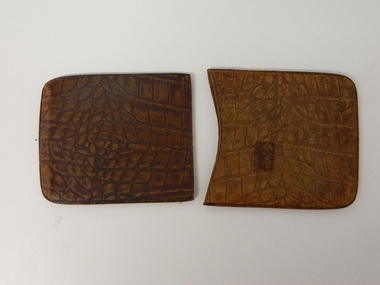
... This tobacco pouch is the bottom or main containment pouch for rubbed tobacco leaf to be smoked either as "roll your own" cigarettes or in a pipe. ...This tobacco pouch is the bottom or main containment pouch for rubbed tobacco leaf to be smoked either as "roll your own" cigarettes or in a pipe. ...These type of tobacco pouches were used mostly by the outdoor/outback type of male. They were a product of an earlier period in time when males in the outback were considered "red back" adventurers. This pouch is more of a statement than a useful tobacco pouch. It comes from a younger time in bush folk law when the outback appearances was in fashion and before the "new age" male emerged(circa early 1900s).This tobacco pouch was admired in the outback scene and spoke of adventure and "the wild". It was a time when travel in the outback was, in the top end of Australia especially, considered unsafe and "frontier" type adventure filled environment. It was a time when colloquially speaking 'men were men', in other words tough and resourceful, and could tackle anything. This attitude was more so in isolated country areas such as in the Kiewa Valley before "the sensitive new age" male evolved. The pouch presents the early presentation of the outback male as rugged, independent and resourceful. The Kiewa Valley and the tobacco fields, especially during the construction stages of the Hydro Electricity Scheme, was the right environment for such a display.This tobacco pouch is the bottom or main containment pouch for rubbed tobacco leaf to be smoked either as "roll your own" cigarettes or in a pipe. The pouch is of crocodile skin and is light brown on one side and darker brown on the other. The pocket is fashioned with the top section curved to allow fingers to remove the top cover, see KVHS 0059(2). The pocket has fine, but strong stitching holding the bottom and sides together. It is made of relatively medium thick hide and the crocodile markings are both outside and inside. See KVHS 00059(2) for insert pouchThe markings are crocodile in shape.loose tobacco, pipe smoking, rural smoking, red neck workers. -
 Kiewa Valley Historical Society
Pouch Tobacco, unknown, mid 1900s
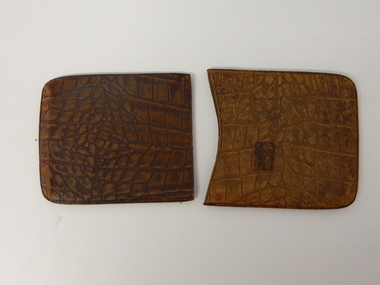
... This tobacco pouch is the bottom or main containment pouch for rubbed tobacco leaf to be smoked either as "roll you own" cigarettes or in a pipe. ...The Kiewa Valley and the tobacco fields, especially during the construction stages of the Hydro Electricity Scheme, was the right environment for such a display. loose tobacco pipe smoking rural smoking rural red neck workers. tobacco Crocodile markings (not hand made) This tobacco pouch is the bottom or main containment pouch for rubbed tobacco leaf to be smoked either as "roll you own" cigarettes or in a pipe. ...These type of tobacco pouches were used mostly by the outdoor/outback type of male. They were a product of an earlier period in time when males in the outback were considered "red back" adventurers. This pouch is more of a statement than a useful tobacco pouch. It comes from a younger time in bush folk law when the outback appearances was in fashion and before the "new age" male emerged(circa early 1900s).This tobacco pouch was admired in the outback scene and spoke of adventure and "the wild". It was a time when travel in the outback was, in the top end of Australia especially, considered unsafe and "frontier" type adventure filled environment. It was a time when colloquially speaking 'men were men', in other words tough and resourceful, and could tackle anything. This attitude was more so in isolated country areas such as in the Kiewa Valley before "the sensitive new age" male was evolved. The pouch presents the early presentation of the outback male as rugged, independent and resourceful. The Kiewa Valley and the tobacco fields, especially during the construction stages of the Hydro Electricity Scheme, was the right environment for such a display.This tobacco pouch is the bottom or main containment pouch for rubbed tobacco leaf to be smoked either as "roll you own" cigarettes or in a pipe. The pouch is of crocodile skin and is light brown on one side and darker brown on the other. The pocket is fashioned with the top section curved to allow fingers to remove the top cover, see KVHS 0059(2). The pocket has fine , but strong stitching holding the bottom and sides together. It is made of relatively medium thick hide and the crocodile markings are both outside and inside. See KVHS 00059(01) for main pouchCrocodile markings (not hand made)loose tobacco, pipe smoking, rural smoking, rural red neck workers., tobacco -
 City of Melbourne Libraries
Photograph, Bull, Hugh Jones, 1897-1993, Gregory hits for four for Vict in match v Eng at MCG Nov 1936
... Notice that the MCC had abandoned the slip-heavy field placements of earlier in the day, and were relying more on containment, hoping Victoria would play more errant shots in front of the wicket. ...Notice that the MCC had abandoned the slip-heavy field placements of earlier in the day, and were relying more on containment, hoping Victoria would play more errant shots in front of the wicket. ...A close call for ROSS GREGORY: an edge falls agonisingly close to Maurice Leyland, MCC’s most reliable fieldsman. Towards the end of the second day’s play, and after being at the crease nearly all day, ROSS GREGORY had a lapse in concentration, edging the ball towards the second slip, but it fortuitously fell short. He returned to the Pavilion, 108 not out, having played a big role in putting Victoria in the box seat for first innings win. Notice that the MCC had abandoned the slip-heavy field placements of earlier in the day, and were relying more on containment, hoping Victoria would play more errant shots in front of the wicket. Featured in "Newsworthy : Melbourne in photographs 1933-1936", an exhibition held at East Melbourne Library from October to December 2023. Exhibition caption by project volunteer, Ernie Ward.Photographer notations on slide: "Gregory hits for four for Vict in match v Eng at MCG Nov 1936 B114".cricket, 1930-1939 -
 Kiewa Valley Historical Society
Scoop metal, no makers identification, circa mid to late 1900's
... It has a half circle scoop extending from a full circular base which has a small containment ridge which acts as a collection rim. ...It has a half circle scoop extending from a full circular base which has a small containment ridge which acts as a collection rim. ...This scoop was professionally made and well before plastics and aluminium scoops were manufactured. It was in a period when mass production and cheap imports where not common. This item would have been produced well after World War II and before the cheap Asian imports. It was a period in time(the last years) when items such as this scoop were made to last and consumerism was not at the "throw away" mass consumption time of the late 1900's. The rural sector in the Kiewa Valley used this type of "made to last" domestic implement when home made cakes and pastries were commonly made in the household kitchen. Because of the relatively isolation of the valley, bulk supplies of flour, sugar and other cooking ingredients were the required quantity for both domestic household and farm use. Local general stores also had these scoops to provide clients with their required flour, sugar and other bulk loose grains (processed or unprocessed) This lite galvanised rolled steel flour/sugar scoop has a tapered handle extruding from a small cone shaped base. It has a half circle scoop extending from a full circular base which has a small containment ridge which acts as a collection rim. The collection scoop has its front shovel end tapered and rolled edge (outwards) presenting a barrier and air relief when thrust into the flour/sugar. All the edges are rolled and connection links have been soldered. The handle is not of solid steel which accounts for the light weight. The base of the "shovel" is slightly concave to allow gravitational forces to keep the flour centre of mass. The handle has a ridge pressed in the sheet metal at about two thirds up the shaft All metal to metal joins have been pressed and soldered together.loose grains, sugar, millet, nus, nails, loose grocery items. -
 Melbourne Tram Museum
Magazine, Metropolitan Transit Authority (MTA), "Headway News", July 1983 to July 1984
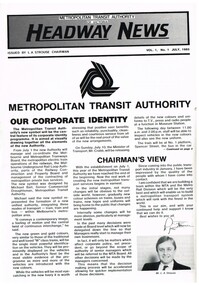
... MURLA. .3 - Vol 1 No. 3 - September 1983 - four pages - Flinders St station redevelopment, METROL, AVM - vehicle monitoring, Employees Board Member election and sports roundup. .4 - Vol 1 No. 4 - October 1983 - six pages (one sheet folded) - Refurbishment of W5 trams - fitting of sliding doors, Bundoora Extension, Tram Priority, management changes - Level 3 - John Grigg and Geoff Carkeek, early retirement seminars, transport loan, upgrade to rail overhead, Bob Drummond Retires, flat fares, Gail Moody project engineer for Bundoora Extension and MTA at Royal Show. .5 - Vol 1 No. 5 - November 1983 - eight pages - two sheets - intro of new fare system on 13/11/1983 - "the Met", (Travel Cards and neighbourhood tickets), tram priority, training in new ticketing system, profile of Paul Riboni, restructure of the Metro Rail division, New A class trams, notes restarting of alphabet, cost containment, early retirements, election of employee Reps (Norm Maddock and Tony Tuohey), sporting news, Preston Workshops redevelopment and tram 520 goes to Elton John. .6 - Vol 1 No. 6 - December 1983 - single sheet, two pages with a Christmas message and consultation committees will work during 1984. .7 - Special Edition 1984 - one page - message from the Chairman and Managing director, - re on time running, METROL and planning for 1984. .8 - Vol 2 No. 1-2, January - February 1984 - four pages - METROL now in operation, new managers - John Coulson ex MMTB Assistant Secretary and financial manager, tram and bus appointments, "trams that bend in the middle" - launch of B class trams, sport - Cricket carnival. .9 - Vol 2 No. 3 - March 1984 - four pages- "charting the football crows, proposed head office at 60 Market St (did the World Trade Centre in first issue ever happen?)...MURLA. .3 - Vol 1 No. 3 - September 1983 - four pages - Flinders St station redevelopment, METROL, AVM - vehicle monitoring, Employees Board Member election and sports roundup. .4 - Vol 1 No. 4 - October 1983 - six pages (one sheet folded) - Refurbishment of W5 trams - fitting of sliding doors, Bundoora Extension, Tram Priority, management changes - Level 3 - John Grigg and Geoff Carkeek, early retirement seminars, transport loan, upgrade to rail overhead, Bob Drummond Retires, flat fares, Gail Moody project engineer for Bundoora Extension and MTA at Royal Show. .5 - Vol 1 No. 5 - November 1983 - eight pages - two sheets - intro of new fare system on 13/11/1983 - "the Met", (Travel Cards and neighbourhood tickets), tram priority, training in new ticketing system, profile of Paul Riboni, restructure of the Metro Rail division, New A class trams, notes restarting of alphabet, cost containment, early retirements, election of employee Reps (Norm Maddock and Tony Tuohey), sporting news, Preston Workshops redevelopment and tram 520 goes to Elton John. .6 - Vol 1 No. 6 - December 1983 - single sheet, two pages with a Christmas message and consultation committees will work during 1984. .7 - Special Edition 1984 - one page - message from the Chairman and Managing director, - re on time running, METROL and planning for 1984. .8 - Vol 2 No. 1-2, January - February 1984 - four pages - METROL now in operation, new managers - John Coulson ex MMTB Assistant Secretary and financial manager, tram and bus appointments, "trams that bend in the middle" - launch of B class trams, sport - Cricket carnival. .9 - Vol 2 No. 3 - March 1984 - four pages- "charting the football crows, proposed head office at 60 Market St (did the World Trade Centre in first issue ever happen?) ...Magazine, published by the Metropolitan Transit Authority of Victoria "Headway News" - A4 printed on white gloss paper, with the MTA logo or symbol. Issued under the name of L. A. Strouse as Chairman of the body which commenced on 1/7/1983. Major tram and bus items listed. .1 - Vol 1 No. 1 - July 1983 - four pages - gives details of corporate identity, including notes on the design of the logo, notes from the Chairman, details of the Management Team, the Board, move to the new head office - World Trade Centre, Preston Workshops Project. Management Team - Albrecht Scholer (Metro rail), Dudley Snell (trams), John Wagstaff (GM Marketing and Sales), Michael Maude (GM Personnel) and Paul Riboni (GM - Finance and Corporate). .2 - Vol 1 No. 2 - August 1983 - four pages - details the MTA Board with a photo, gives details of the intended directions that the MTA is planning to take, western suburbs and Doncaster bus changes, new bus workshop at Northcote. Photo notes Bill (W) Aird as Interim Secretary of the MTA. MURLA. .3 - Vol 1 No. 3 - September 1983 - four pages - Flinders St station redevelopment, METROL, AVM - vehicle monitoring, Employees Board Member election and sports roundup. .4 - Vol 1 No. 4 - October 1983 - six pages (one sheet folded) - Refurbishment of W5 trams - fitting of sliding doors, Bundoora Extension, Tram Priority, management changes - Level 3 - John Grigg and Geoff Carkeek, early retirement seminars, transport loan, upgrade to rail overhead, Bob Drummond Retires, flat fares, Gail Moody project engineer for Bundoora Extension and MTA at Royal Show. .5 - Vol 1 No. 5 - November 1983 - eight pages - two sheets - intro of new fare system on 13/11/1983 - "the Met", (Travel Cards and neighbourhood tickets), tram priority, training in new ticketing system, profile of Paul Riboni, restructure of the Metro Rail division, New A class trams, notes restarting of alphabet, cost containment, early retirements, election of employee Reps (Norm Maddock and Tony Tuohey), sporting news, Preston Workshops redevelopment and tram 520 goes to Elton John. .6 - Vol 1 No. 6 - December 1983 - single sheet, two pages with a Christmas message and consultation committees will work during 1984. .7 - Special Edition 1984 - one page - message from the Chairman and Managing director, - re on time running, METROL and planning for 1984. .8 - Vol 2 No. 1-2, January - February 1984 - four pages - METROL now in operation, new managers - John Coulson ex MMTB Assistant Secretary and financial manager, tram and bus appointments, "trams that bend in the middle" - launch of B class trams, sport - Cricket carnival. .9 - Vol 2 No. 3 - March 1984 - four pages- "charting the football crows, proposed head office at 60 Market St (did the World Trade Centre in first issue ever happen?), Colin West Group Manager Personnel - ex MMTB Personnel, Robin Ould employee relations - ex MMTB Industrial Officer. Has a profile on John Wagstaff, interstate cricket and new apprentices. Includes an item on the down fall of Sydney tram network - "The fall of the Giant" .10 - Vol 2 No. 4 - April 1984 - four pages - John Grigg appointed as Chief GM Metro Rail, OH&S Bill, train defects, Tony Jackson bus mechanic wins award, Beppie - Welfare Counsellor for MTA Tram and Bus based at Hawthorn depot. .11 - Special Edition - 1984 - single page- "Met Birthday address by Chairman". The continues to:trams, tramways, mta, preston workshops, board members, management, northcote bus workshops, avm, flinders st, w5 class, bundoora, tram priority, retirements, fares, royal show, funding, sale of trams, a class, travel cards, neighbourhood tickets, b class, cricket, sydney, welfare -
 Flagstaff Hill Maritime Museum and Village
Ceramic - Stoneware Bottle, Dundas Pottery, 1856-1910
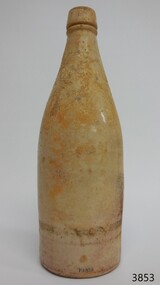
... The bottle that was in common use throughout the British colonies and America for the containment of ale The bottle is also significant as it was recovered by John Chance, a diver, from a wreck on the coast of Victoria in the 1960s-70s. ...This bottle is part of the John Chance Collection of shipwreck artefacts. The Dundas Pottery works were established in 1828 by William Johnstone in partnership with John Forsyth and John Mc Coll. Located where the Forth and Clyde Canal joined the Monkland Canal, North of Glasgow. Johnstone sold the pottery in 1835 to Robert Cochran and James Couper. Mc Coll was retained as manager until 1837when in 1839 Cochran & Couper sold the pottery and purchased the St Rollex Glass Works. George Duncan took over briefly but died in 1841, with the pottery possibly being run by his widow Helen and a potter named Alexander Paul. James Miller was the manager at the time and he bought the pottery in 1856, in partnership with John Moody. Miller's long and careful stewardship of the pottery saw success from the export market which allowed him to purchase the North British pottery in 1867 until 1874 when it was sold. In 1875, Miller, in partnership with John Young, leased part of Caledonian Pottery, naming it Crown Pottery, however, it burned down in 1879. In the early 1880s, Young extended the pottery and named it Milton Pottery. Miller’s son, James W., became a partner in Milton pottery in 1905. James Miller Snr died in 1905 and the company continued as a limited liability company, being sold to the Borax Consolidation Ltd in 1929, but it was unsuccessful and Possil pottery purchased some of the company's equipment before it finally closed in 1932. From 1828 until the James Miller period of circa 1856, the pottery produced salt-glazed stoneware for the local industrial trade; mainly bottles and drain pipes. James Miller produced various bottles, whisky and acid jars, casks, butter crocks, jam jars and domestic wares in Bristol glaze. He streamlined the water filter manufacturing, which had become a speciality of the pottery, and a dedicated section of the pottery was created solely for their production, which was exported worldwide. A significant item of salt-glazed ceramic stoneware made by the Dundas potteries in Scotland who were renowned for making quality ironstone pottery. The bottle that was in common use throughout the British colonies and America for the containment of ale The bottle is also significant as it was recovered by John Chance, a diver, from a wreck on the coast of Victoria in the 1960s-70s. Items that come from several wrecks along Victoria's coast have since been donated to the Flagstaff Hill Maritime museum collection by his family Illustrating the level of historical value the subject item has.Beige salt glazed stoneware, bottle with discolorations above base. Manufacturer's oval Inscription lozenge stamped near base. Stamp: [symbol of concentric ovals], text within the symbol "PORT DUNDAS POTTERY COY." and "GLASGOW". Stamp:[Symbol - square with short vertical line in centre of base line]flagstaff hill, warrnambool, flagstaff hill maritime museum, maritime museum, shipwreck coast, flagstaff hill maritime village, great ocean road, john chance, stoneware bottle, pottery, port dundas pottery, william johnstone, bottles, shipwreck artefact, stoneware, ironstone, bottle, glasgow, antique bottle -
 Lilydale RSL Sub Branch
Book, Dr Alan Glynn, Witness to Vietnam, 1968
... The Containment of Communism in Southeast Asia Book Witness to Vietnam Book Book Dr Alan Glynn Johnson Publications Ltd Cahill & Co Ltd ...The Containment of Communism in Southeast AsiaBooknon-fictionThe Containment of Communism in Southeast Asia
