
Showing 37 items matching " contamination"
-
 Bendigo Military Museum
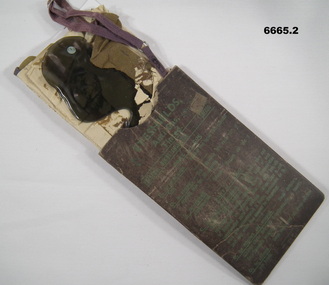
Equipment - GAS EYESHIELDS & CASE
... Cardboard case has detailed instructions on treatment of person and equipmentin relation to gas contamination and instructions on a gas attack....Cardboard case has detailed instructions on treatment of person and equipmentin relation to gas contamination and instructions on a gas attack. 1. ...Issued to soldiers for protection from gas attacks during World War 2. Plastic Eye Protection for use and instructions on how to react.1. Hard cardboard case, brown in colour, with green writing instructions. 2. 3 sets of tinted eye shields with purple elastic strap that goes around head in between paper.1. Cardboard case has detailed instructions on treatment of person and equipmentin relation to gas contamination and instructions on a gas attack.passchendaele barracks trust, eye protection, anti gas -
 Whitehorse Historical Society Inc.
Article, Fuel clean-up, 2013
... Clean up of fuel contamination in Blackburn Road from J & J Automotive and Caltex petrol station is due to commence soon...J & J Automotive Caltex service station Blackburn Road Blackburn Clean up of fuel contamination in Blackburn Road from J & J Automotive and Caltex petrol station is due to commence soon Clean up of fuel contamination in Blackburn Road from J & J Automotive and Caltex petrol station is due to commence soon Fuel clean-up Article Article ...Clean up of fuel contamination in Blackburn Road from J & J Automotive and Caltex petrol station is due to commence soonClean up of fuel contamination in Blackburn Road from J & J Automotive and Caltex petrol station is due to commence soonClean up of fuel contamination in Blackburn Road from J & J Automotive and Caltex petrol station is due to commence soonj & j automotive, caltex service station, blackburn road blackburn -
 Sunshine and District Historical Society Incorporated
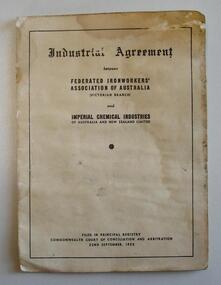
Booklet - Industrial Agreement between Federated Ironworkers Association of Australia Victorian Branch and Imperial Chemical Industries of Australia and New Zealand, 1952
... 20 page white paper booklet with brown stains and some wrinkling both possibly resulting from water contamination. The document is legible....Federated Ironworkers' Association Industrial Agreement ICI ICIANZ Ironworkers' 1952 Filed on Principal Registry Commonwealth Court of Conciliation and Arbitration 22nd September 1952 20 page white paper booklet with brown stains and some wrinkling both possibly resulting from water contamination. The document is legible. Booklet Industrial Agreement between Federated Ironworkers Association of Australia Victorian Branch and Imperial Chemical Industries of Australia and New Zealand ...This 1952 document provides a historical record of the type of some of the manufacturing jobs at ICI Deer Park, and the pay scales and working conditions for the various jobs.20 page white paper booklet with brown stains and some wrinkling both possibly resulting from water contamination. The document is legible.Filed on Principal Registry Commonwealth Court of Conciliation and Arbitration 22nd September 1952federated ironworkers' association, industrial agreement, ici, icianz, ironworkers', 1952 -
 Ringwood RSL Sub-Branch
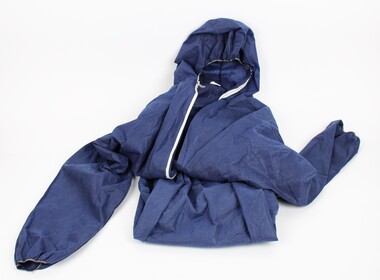
Navy Contamination Suit
... Navy blue RAN contamination suit. Zip from neck to waist. Full arms and legs coverage. ...Item also has a hood. Navy Contamination Suit ...Navy blue RAN contamination suit. Zip from neck to waist. Full arms and legs coverage. Item also has a hood. -
Port Melbourne Historical & Preservation Society
Archive - File, papers of Terry Chumbley, 1987 - 1989
... The de-contamination work took several years and was reported to have cost $43 million. ...The de-contamination work took several years and was reported to have cost $43 million. ...Terry Chumbley raised the issue of contamination of the Bayside site. His actions, particularly the correspondence included here, led to the EPA imposing a clean up notice on the site. The de-contamination work took several years and was reported to have cost $43 million. The discovery of site contamination indirectly led to the collapse of the S.C.D.C. proposal for the Bayside siteCollection of papers of Terry Chumbley, including newsletter 'Port Action', newsclippings and correspondence to relevant authorities, 1987 to 1989town planning - proposals shelved - bayside, environmental issues, local government - city of port melbourne, t chumbley, e walker, b robertson, r j (john) kirby, f w jackson, h bocquet, environment protection authority, epa, ronald 'bunna' walsh -
 Port Melbourne Historical & Preservation Society
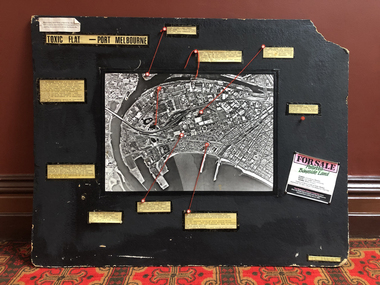
Mixed media, Robert Frost, Toxic Flat - Port Melbourne, 1987
... Large black display board with captions of environmental information connected by string to points on an aerial photo of Port Melbourne/Fishermen's Bend; indicates sources of contamination in Port Melbourne and on the bend....Produced by Robert Frost of Alfred Street for use in Bay Street informational stalls by Port Melbourne 'Residents' Picket Group' against the SCDC Bayside development, 1988 public action campaigns environmental issues town planning - proposals shelved - bayside fishermans bend industry - manufacturing robert frost residents picket group british petroleum group elders ixl glazebrook paints csiro state electricity commission Large black display board with captions of environmental information connected by string to points on an aerial photo of Port Melbourne/Fishermen's Bend; indicates sources of contamination in Port Melbourne and on the bend. ...Produced by Robert Frost of Alfred Street for use in Bay Street informational stalls by Port Melbourne 'Residents' Picket Group' against the SCDC Bayside development, 1988Large black display board with captions of environmental information connected by string to points on an aerial photo of Port Melbourne/Fishermen's Bend; indicates sources of contamination in Port Melbourne and on the bend.public action campaigns, environmental issues, town planning - proposals shelved - bayside, fishermans bend, industry - manufacturing, robert frost, residents picket group, british petroleum group, elders ixl, glazebrook paints, csiro, state electricity commission -
 Sunshine and District Historical Society Incorporated
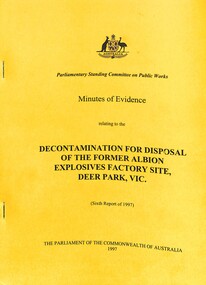
Document - Decontamination For Deposal Of The Former Albion Explosive Factory Site Deer Park Vic, Commonwealth of Australia, 1997
... ... Contamination...Albion Explosive Factory Deer Park Contamination Parliamentary Standing Committee On Public Works Minutes Of Evidence Relating To the Decontamination For Deposal Of The Former Albion Explosive Factory Site Deer Park Vic (Sixth Report of 1997) The Parliament Of The Commonwealth Of Australia 1997 Soft cover report with yellow cover and black text Document Decontamination For Deposal Of The Former Albion Explosive Factory Site Deer Park Vic Commonwealth of Australia ...Parliamentary Standing Committee On Public Works Minutes Of Evidence Relating To the Decontamination For Deposal Of The Former Albion Explosive Factory Site Deer Park Vic (Sixth Report of 1997) The Parliament Of The Commonwealth Of Australia 1997albion explosive factory, deer park, contamination -
 Sunshine and District Historical Society Incorporated
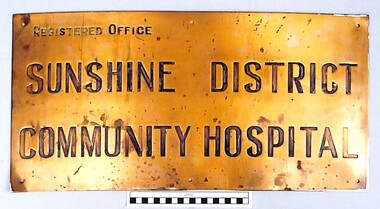
Plaque - Sunshine District Community Hospital Brass Plate
... There is also a small amount of paint contamination on the edges....There is also a small amount of paint contamination on the edges. Plaque Sunshine District Community Hospital Brass Plate ...This brass registration plate was once attached to the former Sunshine District Community Hospital in King Edward Avenue, Albion, 3020. The hospital, under several names, served the local community since the 1920's. It became the Sunshine District Community Hospital in 1946 and was closed in 1989. The building was demolished and replaced by residential units. The plate was preserved by Carol Duvall, a long serving nurse from 1976 to 1989, who 20 years later donated it to the Sunshine and District Historical Society.This brass plate is a rare physical relic of what was once the main hospital serving the Sunshine area, and in which many local babies were born.Tarnished brass plate with indented or carved lettering finished in black paint. The black paint is showing signs of deterioration. The plate has six holes for attaching it to a wall, and two of the corners have been bent probably during the removal of the plate. There is also a small amount of paint contamination on the edges.REGISTERED OFFICE SUNSHINE DISTRICT COMMUNITY HOSPITALsunshine district community hospital, albion, king edward avenue, sunshine district hospital -
Port Melbourne Historical & Preservation Society
Document - Report, Ewan Ogilvy's Bayside Papers, Bayside EES Inquiry, Ewan Ogilvy's Bayside Papers, Box One, 1988
... Appendix 5: Panel's recommendation re site contamination (one page)...Appendix 5: Panel's recommendation re site contamination (one page) Ewan Ogilvy's Bayside Papers, Box One Document Report, Ewan Ogilvy's Bayside Papers, Bayside EES Inquiry ...Ewan Ogilvy, former Melbourne Councillor and also of Community Services Victoria, Inner Urban Ministerial Advisory Committee and Uniting Church's Centre for Urban Research and Action (CURA), was instrumental in social justice approaches to town planning. He and CURA's Social Justice and the City Project funded Port Melbourne community groups protesting against the SCDC development in 1987. His files were presented to the Society in May 2001 on his preparation for leaving Victoria.From Ewan Ogilvy's chronologically organised 'Bayside Papers' relating to the proposed development of Port Melbourne industrial land in the late 1980s: EES Inquiry report to the Minister for Planning and Environment 7 April 1988, included in bound black file. Appendix 5: Panel's recommendation re site contamination (one page)All items signed 'Ewan Ogilvy'town planning, town planning - proposals shelved - bayside, public action campaigns, environmental issues, ewan ogilvy, centre for urban research and action, sandridge city development co pty ltd, scdc, linton r lethlean, judy arndt, francis b barnes -
 Musculoskeletal Health Australia (now held by the Glen Eira Historical Society)
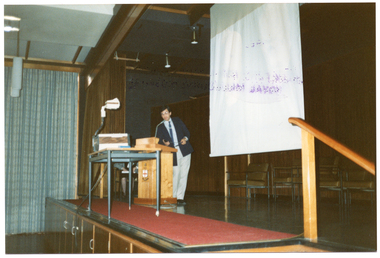
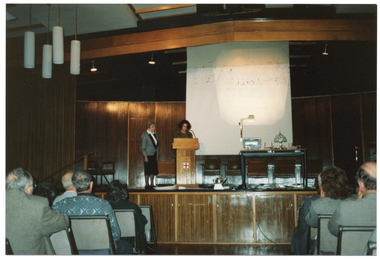
Photograph - Solo photo, Greek Fund for Arthritis Research, Royal Melbourne Hospital, 28/05/1989
... There is some ink contamination on the image surface from a purple ink stamp that was stamped on the verso of another photo....There is some ink contamination on the image surface from a purple ink stamp that was stamped on the verso of another photo. ...On the 28th of May 1989, the Greek Fund for Arthritis held an educational seminar for the Greek community. The seminar was held at the Merlyn Myer Hall at the Royal Melbourne Hospital. A raffle was held during the event to raise money for the Arthritis Foundation of Victoria (AFV). This photo depicts one of the presenters on the stage during his presentation.COL photo of a man, standing on a wood-panelled stage. He is facing sideways as he leans into a lectern while presenting to an audience. On a table beside him is a slide projector, and there is a large screen behind him. There is some ink contamination on the image surface from a purple ink stamp that was stamped on the verso of another photo.[Stamped in purple ink] GREEK FUND FOR ARTHRITIS RESEARCH ROYAL MELBOURNE HOSPITALarthritis foundation of victoria, afv, culturally and linguistically diverse, cald, languages other than english, lote, migrant communities, greek, greek fund for arthritis research, seminar, fundraising, merlyn myer hall, royal melbourne hospital, rmh, 1989 -
 Musculoskeletal Health Australia (now held by the Glen Eira Historical Society)
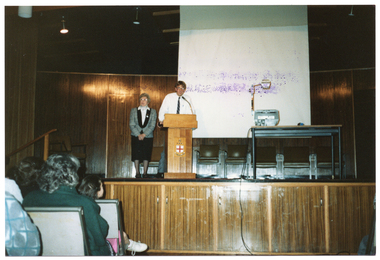
Photograph - Group photo, Greek Fund for Arthritis Research, Royal Melbourne Hospital, 28/05/1989
... There is some ink contamination on the image surface from a purple ink stamp that was stamped on the verso of another photo....There is some ink contamination on the image surface from a purple ink stamp that was stamped on the verso of another photo. ...On the 28th of May 1989, the Greek Fund for Arthritis held an educational seminar for the Greek community. The seminar was held at the Merlyn Myer Hall at the Royal Melbourne Hospital. A raffle was held during the event to raise money for the Arthritis Foundation of Victoria (AFV). In this photo, Patricia Papadopoulos is on the stage with one of the presenters.COL photo of a man and a woman standing on a wood-panelled stage, with an audience partially visible in the foreground. The man is speaking at a lectern while the woman stands beside him. Beside them is a table with a slide projector on it, behind which is a large screen. There is some ink contamination on the image surface from a purple ink stamp that was stamped on the verso of another photo.[Stamped in purple ink] GREEK FUND FOR ARTHRITIS RESEARCH ROYAL MELBOURNE HOSPITALarthritis foundation of victoria, afv, culturally and linguistically diverse, cald, languages other than english, lote, migrant communities, greek, greek fund for arthritis research, seminar, fundraising, merlyn myer hall, royal melbourne hospital, rmh, patricia papadopoulos, 1989 -
 Musculoskeletal Health Australia (now held by the Glen Eira Historical Society)
Photograph - Group photo, Greek Fund for Arthritis Research, Royal Melbourne Hospital, 28/05/1989
... There is a small degree of ink contamination on the image surface from a purple ink stamp that was stamped on the verso of another photo....There is a small degree of ink contamination on the image surface from a purple ink stamp that was stamped on the verso of another photo. ...On the 28th of May 1989, the Greek Fund for Arthritis held an educational seminar for the Greek community. The seminar was held at the Merlyn Myer Hall at the Royal Melbourne Hospital. A raffle was held during the event to raise money for the Arthritis Foundation of Victoria (AFV). In this photo, Patricia Papadopoulos is on the stage with one of the presenters.COL photo of two women standing on a wood-panelled stage, presenting to an audience. One woman is speaking at a lectern while the other woman stands beside her. Beside them is a table with a slide projector on it, behind which is a large screen. There is a small degree of ink contamination on the image surface from a purple ink stamp that was stamped on the verso of another photo.[Stamped in purple ink] GREEK FUND FOR ARTHRITIS RESEARCH ROYAL MELBOURNE HOSPITALarthritis foundation of victoria, afv, culturally and linguistically diverse, cald, languages other than english, lote, migrant communities, greek, greek fund for arthritis research, seminar, fundraising, merlyn myer hall, royal melbourne hospital, rmh, patricia papadopoulos, 1989 -
 Bendigo Historical Society Inc.
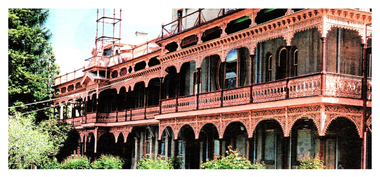
Newspaper - Fortuna Articles - "Decision on Villa's future moves closer", June 26 2009
... The Defence Department is finalizing due diligence investigations into Fortuna Villa, including heritage, environmental contamination, and unexploded ordnance studies. ...The Defence Department is finalizing due diligence investigations into Fortuna Villa, including heritage, environmental contamination, and unexploded ordnance studies. ...The Defence Department is finalizing due diligence investigations into Fortuna Villa, including heritage, environmental contamination, and unexploded ordnance studies. These investigations have taken longer than expected, with completion delayed by almost six months. Once the due diligence report is completed (expected by early next month), it will be shared with the State Government and the City of Greater Bendigo.State or local government will have the first opportunity to purchase the property before it is offered on the open market. The site has not yet been valued, and the timing for the disposal process remains uncertain, pending full consideration of the due diligence studies. Dr. Mike Kelly, the parliamentary secretary for Defence Support responsible for Defence property disposals, plans to visit Fortuna Villa, though his visit has been delayed.Fortuna Articles - "Decision on Villa's future moves closer" June 26 2009 The Bendigo Advertiser by Nino Bucci and pictures by Julian Prowd This item contains the following: 11217.42a Colour photo of the Villa Fortuna 11217.42b Part of Page - Fortuna Articles - "Decision on Villa's future moves closer"non-fictionbendigo, fortuna, george lansell, dr mike kelly -
 Sunshine and District Historical Society Incorporated
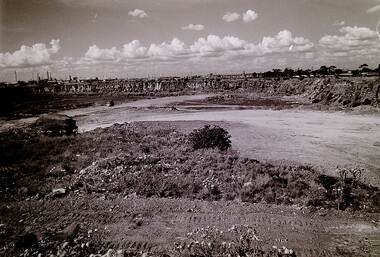
Photograph - Sunshine Tip Albion 1990 Photographs, Carmel Bazzano, 22nd March 1990
... The most authoritative, recent public reporting confirms long‑term methane and other landfill gas concerns, plus legacy contamination risks that were not consistently disclosed to buyers....The most authoritative, recent public reporting confirms long‑term methane and other landfill gas concerns, plus legacy contamination risks that were not consistently disclosed to buyers. ...The history of this land dates back many decades, when at first in the late 19th century, the site started as a quarry, and this continued until the late 1960's. During this time large quantities of bluestone was extracted from the site, The site was then purchased by the City of Sunshine which subsequently turned it into a tip. In the 1970’s and 1980’s, this disused quarry then became one of the main waste disposal sites for metropolitan Melbourne. The site now has long and documented history of toxic gas leakage and contaminated soil risks, especially where residential and community buildings were later constructed on or near uncompacted waste. The most authoritative, recent public reporting confirms long‑term methane and other landfill gas concerns, plus legacy contamination risks that were not consistently disclosed to buyers.These photographs show the tip in action when it was accepting waste. The photographs also provide a good indication of the depth of the quarry hole in the 1990's.Sunshine Tips 164.2sunshine tip -
 Sunshine and District Historical Society Incorporated
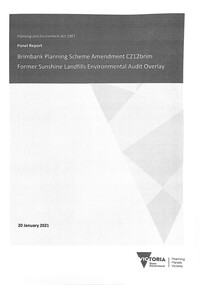
Archive - Sunshine Tip Hulett Street Albion Environmental Issues
... The most authoritative, recent public reporting confirms long‑term methane and other landfill gas concerns, plus legacy contamination risks that were not consistently disclosed to buyers....The most authoritative, recent public reporting confirms long‑term methane and other landfill gas concerns, plus legacy contamination risks that were not consistently disclosed to buyers. ...The history of this land dates back many decades, when at first in the late 19th century, the site started as a quarry, and this continued until the late 1960's. During this time large quantities of bluestone was extracted from the site, The site was then purchased by the City of Sunshine which subsequently turned it into a tip. In the 1970’s and 1980’s, this disused quarry then became one of the main waste disposal sites for metropolitan Melbourne. The site now has long and documented history of toxic gas leakage and contaminated soil risks, especially where residential and community buildings were later constructed on or near uncompacted waste. The most authoritative, recent public reporting confirms long‑term methane and other landfill gas concerns, plus legacy contamination risks that were not consistently disclosed to buyers.The City of Brimbank is now responsible for managing the legacy impacts of the closed Sunshine Tip, even though Brimbank did not operate the tip, but as it was operated by the former City of Sunshine, Brimbank inherited the consequences due to the council amalgamations of 1994. This site demonstrates how legacy contamination can create long‑term constraints and risks for later development, long after the original waste‑disposal activities have ended. Land effected by the environmental issues include but not limited to; Ballarat Road Albion Nos 570, 570A, 576, 562-568, 556-560, 528A and 528B Carrington Drive Albion Nos 19, 20 and 27 Denton Avenue St. Albans Nos 39, 41, 43, 45, 47, 49, 51, 53, 55, 57 (House Demolished), 59, 61, 63 (House Demolished), 65, 67, 69, 71, 73, 75, 77, 79, 81, 83, 85, 87, 89, 91, 93, 95, 97, 99, 101, 103, 1/105, 2/105, 107, 109, 111, 113, 115, 117, 119, 121A, 121B, 121, 123A, 123B, 123, 125, 127, 129, 131, 133, 135, 137, 137A, 139, 141 and 14 Toora Court St. Albans Nos 4, 5, 6, 7 and 8 Other land effected includes; Karen Place St. Albans City of Brimbank owned land (21.8 hectares) Hulett Street Albion (0.54 hectares) M80 Western Ring Road (7.74 hectares)Planning and Environment Act 1987 Panel Report Brimbank Planning Scheme Amendment C212brim Former Sunshine Landfills Environmental Audit Overlaysunshine tip, hulett street, albion, sunshine landfill, ballarat road, carrington drive, denton avenue, toora court, m80 western ring road, st. albans, karen place -
 The Beechworth Burke Museum
Geological specimen - Chalcopyrite
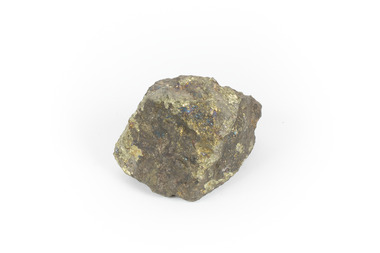
... The environmental impacts from this complex of mines are extensive, with waste tailings and heavy metal contamination flowing directly into the King and Queen River catchments. ...The environmental impacts from this complex of mines are extensive, with waste tailings and heavy metal contamination flowing directly into the King and Queen River catchments. ...This specimen originated from Mount Lyell on the west coast of Tasmania, where a large group of open cut and underground copper-silver-gold mines began operating in 1883. Between 1893-1994, the Mt Lyell Mining and Railway Company were responsible for operations. The Mt Lyell copper-gold mines produce some excellent crystallised specimens of chalcopyrite and other minerals. The deposits are generally considered to be of Cambrian volcanic origin, but there are indications of Devonian granitic influence on the ores, plus local remobilisation during Devonian deformation. Over 120 million tonnes of ore was produced from several workings, including the main Prince Lyell mine and the North Lyell mine, which was also of great importance. The Mount Lyell mines have a long history of human and environmental disasters, including the 1912 North Lyell fire that killed 42 miners, and two separate incidents in 2013 in which three people lost their lives. The environmental impacts from this complex of mines are extensive, with waste tailings and heavy metal contamination flowing directly into the King and Queen River catchments. In 1954, the eminent Australian historian, Geoffrey Blainey, published 'The Peaks of Lyell' which delves into the history of the 1912 North Mount Lyell Disaster.Chalcopyrite does not contain the most copper in its structure relative to other minerals, but it is the most important copper ore since it can be found in many localities and occurs in a variety of ore types. The brassy-yellow colours in Chalcopyrite mean it is often confused with pyrites and gold, leading to use of the term, "fool's gold." Chalcopyrite has been the primary ore of copper since smelting began five thousand years ago. This specimen is part of a larger collection of geological and mineral specimens collected from around Australia (and some parts of the world) and donated to the Burke Museum between 1868-1880. A large percentage of these specimens were collected in Victoria as part of the Geological Survey of Victoria that begun in 1852 (in response to the Gold Rush) to study and map the geology of Victoria. Collecting geological specimens was an important part of mapping and understanding the scientific makeup of the earth. Many of these specimens were sent to research and collecting organisations across Australia, including the Burke Museum, to educate and encourage further study.This hand sized solid mineral specimen has shades of brass-yellow with spots of iridescent green-black tarnish. Chalcopyrite is a copper iron sulphide mineral and a major ore of copper common in sulphide veins and disseminated in igneous rocks. Chalcopyrite has a hardness of 3.5-4 on the Mohs Scale. It is a member of the tetragonal crystal system and has metallic lustre and opaque transparency.burke museum, beechworth, indigo shire, beechworth museum, geology, geological specimen, chalcopyrite, copper pyrites, copper mining, tasmanian geology, mount lyell, mount lyell mines, fools gold, mohs scale, crystals, minerals, historical geological collection, victorian geological survey, a.r.c selwyn, gold rush, van diemans land -
 National Wool Museum
Film - Promotional Films, Australian Wool Corporation, 26 April 1991
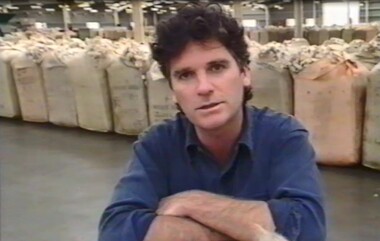
... Film includes colour footage and audio. 00:01 - titles 00:21 - scenes herding sheep 01:18 - titles 'Wool Testing' 01:34 - Hugh Beggs, Chairman of Australian Wool Corporation, speaking about history of wool marketing and measuring of wool in Australia 02:29 - wool bales on truck 02:35 - interior of factory showing process of wool sampling, measuring and testing 04:04 - AWTA Ltd building exterior, and interior scenes of workers testing and measuring wool samples 11:41 - scenes at wool auction 12:14 - factory interior showing wool processing 13:05 - Beggs speaking about wool industry 13:13 - fashion runways 13:52 - end titles 14:17 - end 14:22 - titles 'Contaminants in Wool Processing' 14:42 - fashion runway 14:52 - man speaking on location at a sheep farm 15:04 - Mark Kent, Vice-President Kent Manufacturing, speaking about contamination of wool and Australia's reputation 15:25 - interior scenes of G H Michell & Sons wool mill in South Australia 16:22 - Judy Turk, in office at G H Michell & Sons speaking about problems of contamination 16:36 - interior factory scenes 17:46 - John McIntosh, Aweave Textile Corporation, talking about contaminants 20:02 - scenes in shearing shed 20:42 - Chip Sawers, President Wool Council, talking about contamination 28:46 - end credits 29:04 - end 29:13 - Bill Peach exits car on sheep property, introduces a story about wool 29:46 - titles 'Working for Wool' 30:04 - farm scenes 32:12 - shearing shed scenes, interior 34:28 - Wool Testing Authority labratory, interior scenes 36:44 - wool store interior 38:20 - Australian Wool Corporation office interior and exterior, Parkville, Melbourne 43:26 - end credits 44:00 - end 44:05 - wool advertisement featuring man and woman in car 44:34 - end 44:41 - titles 'Fleece Clean' 44:42 - various scenes, fashion, factories 45:14 - titles 45:15 - fashion runways 45:43 - farm scenes 51:02 - titles 51:10 - scenes of China, including Great Wall 53:44 - textile factories in China, interior scenes 57:46 - fashion runways, Shanghai China 01:00:31 - rural scenes of China 01:02:03 - end 01:02:13 - titles 'Wool Top Making' 01:02:19 - scenes of Williamstown, Victoria 01:02:27 - Port Phillip Mills, interior scenes 01:06:33 - end credits 01:07:08 - end 01:07:11 - titles 'Shearer Fitness' 01:07:21 - shearing shed, interior 01:09:54 - shearers talking about health and fitness 01:19:28 - end credits 01:19:48 - end 01:19:50 - titles 'Shearing Training' 01:19:51 - shearing scenes 01:26:24 - end credits 01:26:45 - end 01:26:50 - titles 'Wool Press Duties' 01:26:58 - wool pressing scenes 01:34:29 - end credits 01:34:51 - end 01:34:54 - woollen carpet advertisement, including carpet scenes and farm scenes 01:35:38 end...Film includes colour footage and audio. 00:01 - titles 00:21 - scenes herding sheep 01:18 - titles 'Wool Testing' 01:34 - Hugh Beggs, Chairman of Australian Wool Corporation, speaking about history of wool marketing and measuring of wool in Australia 02:29 - wool bales on truck 02:35 - interior of factory showing process of wool sampling, measuring and testing 04:04 - AWTA Ltd building exterior, and interior scenes of workers testing and measuring wool samples 11:41 - scenes at wool auction 12:14 - factory interior showing wool processing 13:05 - Beggs speaking about wool industry 13:13 - fashion runways 13:52 - end titles 14:17 - end 14:22 - titles 'Contaminants in Wool Processing' 14:42 - fashion runway 14:52 - man speaking on location at a sheep farm 15:04 - Mark Kent, Vice-President Kent Manufacturing, speaking about contamination of wool and Australia's reputation 15:25 - interior scenes of G H Michell & Sons wool mill in South Australia 16:22 - Judy Turk, in office at G H Michell & Sons speaking about problems of contamination 16:36 - interior factory scenes 17:46 - John McIntosh, Aweave Textile Corporation, talking about contaminants 20:02 - scenes in shearing shed 20:42 - Chip Sawers, President Wool Council, talking about contamination 28:46 - end credits 29:04 - end 29:13 - Bill Peach exits car on sheep property, introduces a story about wool 29:46 - titles 'Working for Wool' 30:04 - farm scenes 32:12 - shearing shed scenes, interior 34:28 - Wool Testing Authority labratory, interior scenes 36:44 - wool store interior 38:20 - Australian Wool Corporation office interior and exterior, Parkville, Melbourne 43:26 - end credits 44:00 - end 44:05 - wool advertisement featuring man and woman in car 44:34 - end 44:41 - titles 'Fleece Clean' 44:42 - various scenes, fashion, factories 45:14 - titles 45:15 - fashion runways 45:43 - farm scenes 51:02 - titles 51:10 - scenes of China, including Great Wall 53:44 - textile factories in China, interior scenes 57:46 - fashion runways, Shanghai China 01:00:31 - rural scenes of China 01:02:03 - end 01:02:13 - titles 'Wool Top Making' 01:02:19 - scenes of Williamstown, Victoria 01:02:27 - Port Phillip Mills, interior scenes 01:06:33 - end credits 01:07:08 - end 01:07:11 - titles 'Shearer Fitness' 01:07:21 - shearing shed, interior 01:09:54 - shearers talking about health and fitness 01:19:28 - end credits 01:19:48 - end 01:19:50 - titles 'Shearing Training' 01:19:51 - shearing scenes 01:26:24 - end credits 01:26:45 - end 01:26:50 - titles 'Wool Press Duties' 01:26:58 - wool pressing scenes 01:34:29 - end credits 01:34:51 - end 01:34:54 - woollen carpet advertisement, including carpet scenes and farm scenes 01:35:38 end Film Promotional Films Australian Wool Corporation ...Tape contains ten separate short films created by the Australian Wool Corporation, including promotional videos, advertisements and industry news.Black VHS tape with white and orange stickers and printed text. Tape is housed in a black plastic case. Film includes colour footage and audio. 00:01 - titles 00:21 - scenes herding sheep 01:18 - titles 'Wool Testing' 01:34 - Hugh Beggs, Chairman of Australian Wool Corporation, speaking about history of wool marketing and measuring of wool in Australia 02:29 - wool bales on truck 02:35 - interior of factory showing process of wool sampling, measuring and testing 04:04 - AWTA Ltd building exterior, and interior scenes of workers testing and measuring wool samples 11:41 - scenes at wool auction 12:14 - factory interior showing wool processing 13:05 - Beggs speaking about wool industry 13:13 - fashion runways 13:52 - end titles 14:17 - end 14:22 - titles 'Contaminants in Wool Processing' 14:42 - fashion runway 14:52 - man speaking on location at a sheep farm 15:04 - Mark Kent, Vice-President Kent Manufacturing, speaking about contamination of wool and Australia's reputation 15:25 - interior scenes of G H Michell & Sons wool mill in South Australia 16:22 - Judy Turk, in office at G H Michell & Sons speaking about problems of contamination 16:36 - interior factory scenes 17:46 - John McIntosh, Aweave Textile Corporation, talking about contaminants 20:02 - scenes in shearing shed 20:42 - Chip Sawers, President Wool Council, talking about contamination 28:46 - end credits 29:04 - end 29:13 - Bill Peach exits car on sheep property, introduces a story about wool 29:46 - titles 'Working for Wool' 30:04 - farm scenes 32:12 - shearing shed scenes, interior 34:28 - Wool Testing Authority labratory, interior scenes 36:44 - wool store interior 38:20 - Australian Wool Corporation office interior and exterior, Parkville, Melbourne 43:26 - end credits 44:00 - end 44:05 - wool advertisement featuring man and woman in car 44:34 - end 44:41 - titles 'Fleece Clean' 44:42 - various scenes, fashion, factories 45:14 - titles 45:15 - fashion runways 45:43 - farm scenes 51:02 - titles 51:10 - scenes of China, including Great Wall 53:44 - textile factories in China, interior scenes 57:46 - fashion runways, Shanghai China 01:00:31 - rural scenes of China 01:02:03 - end 01:02:13 - titles 'Wool Top Making' 01:02:19 - scenes of Williamstown, Victoria 01:02:27 - Port Phillip Mills, interior scenes 01:06:33 - end credits 01:07:08 - end 01:07:11 - titles 'Shearer Fitness' 01:07:21 - shearing shed, interior 01:09:54 - shearers talking about health and fitness 01:19:28 - end credits 01:19:48 - end 01:19:50 - titles 'Shearing Training' 01:19:51 - shearing scenes 01:26:24 - end credits 01:26:45 - end 01:26:50 - titles 'Wool Press Duties' 01:26:58 - wool pressing scenes 01:34:29 - end credits 01:34:51 - end 01:34:54 - woollen carpet advertisement, including carpet scenes and farm scenes 01:35:38 endLabel on tape: Australian Wool Corporation / TITLE AWC VIDEOS TAPE 2 / PLAYING TIME / TAPING DATE 26/4/91 / PRODUCTION DATE / SYSTEM / WOOL HOUSE 369 Royal Parade, PARKVILLE, VIC, 3052victoria, film, working life, factory, textile industry, farming, sheep, australian wool corporation, hugh beggs, wool testing, wool measuring, awta, g h michell & sons, fashion, runway, contaminants, mark kent, wool mills, judy turk, john mcintosh, aweave textile corporation, chip sawers, bill peach, advertisements, china, top making, shearing sheds, shearing, health, training, wool pressers, carpet -
 Sunshine and District Historical Society Incorporated
Photograph - Albion Quarry Photographs
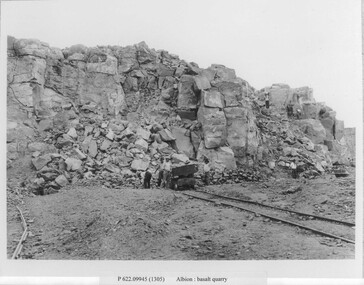
... In 2019, the former quarry made national news due to ground contamination affecting 69 residential homes, 6 commercial properties and a community park. ...In 2019, the former quarry made national news due to ground contamination affecting 69 residential homes, 6 commercial properties and a community park. ...Albion Quarry began operations in 1888, and became one of the largest bluestone quarries in Australia, later it became the Sunshine municipal tip. In 1888, quarrying first began on the site by the Wales family. The quarry extracted high quality bluestone, ideal for road construction, railway ballast, culverts, bridges and public buildings and private homes. The site quickly became one of the most productive basalt quarries in the region. In 1907, the Albion Quarry Company was formed as a partnership between Alexander Wales, James Watter, Peter Rumpf, Thomas Adams, William Wright Wales and Alexander George Wales (later Sir George Wales, Lord Mayor of Melbourne) The company became the largest producer of quarry products in the Commonwealth. The quarry pit was, at one time, the largest in Australia. In January 1965, Boral acquired both Albion Quarry and Reid Quarry, merging them into Albion Reid Pty Ltd. Quarrying there continued until the late 1960s–early 1970s. After quarrying ceased, the enormous pit was used as the Sunshine municipal tip. Dumped into the hole included household waste, industrial waste, chemical waste, radioactive waste and large quantities of unknown fill. Dumping continued until 1990. In the 1990’s, a methane powered electricity plant was installed on the site, but it failed due to insufficient methane production. In 2019, the former quarry made national news due to ground contamination affecting 69 residential homes, 6 commercial properties and a community park. The site is now being reserved for the future Sunshine Energy Park and is awaiting redevelopment. This quarry is historically significant for its scale, its role in Melbourne’s infrastructure, and its later environmental legacy.These photographs document the initial phase of quarrying, featuring manual labour and transportation by horse and cart.Albion basalt quarryalbion quarry, ballarat road, albion, basalt, hulett street -
 Sunshine and District Historical Society Incorporated
Book - Joseph 'Joe' Wlodarczyk Collection - Morgan's Official Street Directory 1951, Val Morgan & Sons Pty Ltd, Morgan's Official Street Directory 1951, 1951
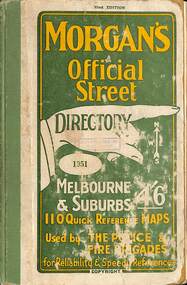
... Environmental and Planning Use - Identify past industries: Useful for environmental audits and contamination checks—e.g., locating former factories or dry cleaners on a site. - Support heritage studies: They help planners and historians assess the historical significance of buildings or precincts. ...Environmental and Planning Use - Identify past industries: Useful for environmental audits and contamination checks—e.g., locating former factories or dry cleaners on a site. - Support heritage studies: They help planners and historians assess the historical significance of buildings or precincts. ...Hard copy book that includes a set of maps that cover the streets of MelbourneSmall hard covered book with green & yellow text on front. Inside has maps, index of street names & advertisementsnon-fictionHard copy book that includes a set of maps that cover the streets of Melbournedirectory, joseph 'joe' wlodarczyk, street directory -
 Northern District School of Nursing. Managed by Bendigo Historical Society Inc.
Administrative record - Northern District School of Nursing Progress Report for Nurse M. C. Dunn and other items pertaining to her exams, 1974
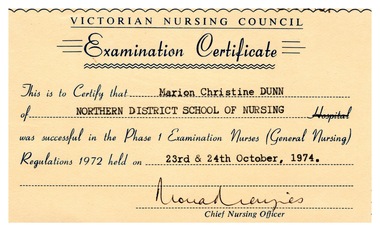
... Some gaps in knowledge about blood volume, urea formation, and water contamination. Generally strong answers on patient care, conversions between measurement systems, and infection prevention.Areas for improvement: dilution of lotions, suitable lotions for skin prep, definitions of pH and specific gravity of urine, and details on sterilization (especially destruction of spores). ...Some gaps in knowledge about blood volume, urea formation, and water contamination. Generally strong answers on patient care, conversions between measurement systems, and infection prevention.Areas for improvement: dilution of lotions, suitable lotions for skin prep, definitions of pH and specific gravity of urine, and details on sterilization (especially destruction of spores). ...Managed by a committee including hospital administrators, medical professionals, and nursing leaders from several regional hospitals. Associated with major hospitals in the Northern District, including Bendigo Base, Mildura Base, Castlemaine, Echuca, Swan Hill, St. Arnaud, and Kyneton District Hospitals. Provide high-quality theoretical and practical nursing training. Raise the standard of nursing education in the region. Maintain the highest principles of nursing practice. Applicants must be at least 17 years old and hold a Proficiency Certificate or higher educational qualification. Application involves submitting forms, certificates, an interview, an aptitude test, and a medical examination. A three-month probationary period follows initial acceptance. Preliminary Training School: Four-week introductory course covering basic nursing, anatomy, hygiene, and practical skills. Practical experience in various hospital departments, guided by senior staff. Study Block Plan: Includes several blocks of theoretical and practical instruction throughout the three-year program. Regular school exams and two state exams (First Professional and Final State) are required for progression and graduation. Nurses work a 40-hour week with at least one or two days off per week and three weeks of annual leave. Accommodation is provided in comfortable hostels with good facilities. Uniforms are supplied free; nurses provide their own shoes and stockings. Salaries and allowances are regulated, with deductions for board and free medical care. Additional Information Post-Graduate Opportunities. Senior positions require further experience and additional certificates (e.g., Midwifery, Infant Welfare).Diploma courses available in administration, teaching, and specialized nursing fields. Bursaries are available for advanced study.Career Prospects: Graduates can pursue roles in administration, teaching, ward and departmental leadership, district and visiting nursing, industrial and school nursing, and more. Opportunities exist both within hospitals and in community or specialized settings.FAQs and Practical Details. Minimal training costs (mainly exam fees and personal items).Living out allowances and travel expenses are covered. Four training intakes per year; waiting periods are short if qualifications are met.Northern District School of Nursing Progress Report for Nurse M. C. Dunn and other items pertaining to her exams. This item contains the following six documents: 3791.15a This document is a progress examination report for Nurse M.C. Dunn from the Northern District School of Nursing, summarizing her performance in the Phase 1 Progress Examination held in July 1974. Examination Results Outstanding Performance Passed both Anatomy & Physiology and General Nursing with distinction. Eligible to attend the First Year Study Block and required to sit for the First Professional State Examination in October 1974. Chemistry & Physics will be included in the upcoming examination, with no repeat lectures during the study block. Examiner's General Comments: Anatomy & PhysiologyMost questions were well answered, especially on tissue distribution, limb movement, and muscle functions.Areas needing revision: functions of the skin, diagrams (vertebra, kidney, leaf), function of chordae tendinae, factors maintaining venous return, difference between inspired and expired air, and formation/circulation of cerebrospinal fluid. Some gaps in knowledge about blood volume, urea formation, and water contamination. Generally strong answers on patient care, conversions between measurement systems, and infection prevention.Areas for improvement: dilution of lotions, suitable lotions for skin prep, definitions of pH and specific gravity of urine, and details on sterilization (especially destruction of spores). Good understanding of pressure sore prevention, patient bathing, and care of valuables, though some answers lacked detail or used outdated expressions. 3791.15b This document is a formal acceptance letter addressed to Marion from the Northern District School of Nursing. Marion has been accepted into the Preliminary Training School at the Northern District School of Nursing. Medical and Dental ApprovalHer medical and dental certificates have been reviewed and approved. Marion is scheduled to begin training on 4th February. She is expected to attend on Thursday, 31st January, 1974, prior to the official start. 3791.15c The Victorian Nursing Council's examination instructions for nursing candidates 3791.15d Invitation to a dinner to congratulate the 1973 pilot students in their examination successes 3791.15e Signature of Examiner Card Victorian Nursing Council 3791.15f Examination certificate from the Victorian Nursing Councilnurse training, lister house, marion dunn -
 Flagstaff Hill Maritime Museum and Village
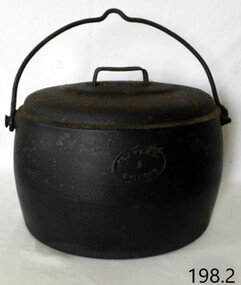
Domestic object - Cooking pot and lid, T & C Clark, 1880-1910
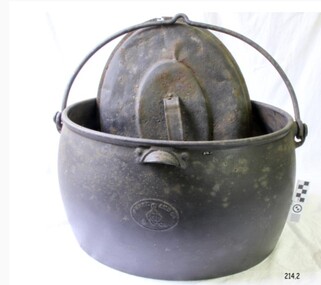
... T C Clark innervates the first manufacturing process of cast iron cook ware to have enamel lining in his products to alleviate the possibility of lead or arsenic contamination of food. flagstaff hill warrnambool shipwrecked coast flagstaff hill maritime museum flagstaff hill maritime village great ocean road cooking pot stew pot food kitchen utensil shakespeare foundry tc clark Inscription on base "Clark & Co Patent", "Best Quality", "9 Gallons" and a Trade Mark of a "C" inside two triangles to side of pot Oval cast iron boiler or cooking pot, with lid, pot is oval shaped lid is dented and handle buckled. ...T & C Clark & Company Limited, based at Shakespeare Foundry, was founded in 1795 by Thomas and Charles Clark and grew to be one of the largest iron foundries in Wolverhampton. The firm was the pioneers of Enamelled Cast ironware and the founder Charles Clerk went on to became mayor of Wolverhampton in 1860 after also serving as a Councilor, Alderman, and later Chief Magistrate. The company exhibited many products at the International Exhibition of 1862 at South Kensington, alongside the gardens of the Royal Horticultural Society. The company was also awarded the silver medal for its products at the International Paris Exhibition in 1878. The company's product range included thousands of items, both domestic and industrial. T & C Clark pioneered the use of enamelled cast ironware, after taking out a patent in 1839 guaranteed to be free of lead or arsenic. In the late 1940s and 1950s the company produced acid-resisting enamelled cast iron boiling pans; steam-jacketed pans; stills; square and rectangular tanks; open and closed mixing vessels; flanged pipes; bends and tees; laboratory equipment; small scale plant; evaporating bowls; beakers; sulphonates; and glass-lined mild steel tanks for beer, mineral water, and food. The company is listed as enamelled chemical plant manufacturers in Kelly's 1962 Wolverhampton Directory, but within a few years, the company had ceased trading.The item is significant as it was used as a domestic kitchen or camp fire item used to cook food safely without the concern that the metal may contain lead or arsenic as earlier cooking utensils had. T C Clark innervates the first manufacturing process of cast iron cook ware to have enamel lining in his products to alleviate the possibility of lead or arsenic contamination of food.Oval cast iron boiler or cooking pot, with lid, pot is oval shaped lid is dented and handle buckled.Inscription on base "Clark & Co Patent", "Best Quality", "9 Gallons" and a Trade Mark of a "C" inside two triangles to side of potflagstaff hill, warrnambool, shipwrecked coast, flagstaff hill maritime museum, flagstaff hill maritime village, great ocean road, cooking pot, stew pot, food, kitchen utensil, shakespeare foundry, tc clark -
 Flagstaff Hill Maritime Museum and Village
Currency - Guinea Coin, The Royal Mint, 1793 George III Spade Guinea, 1793
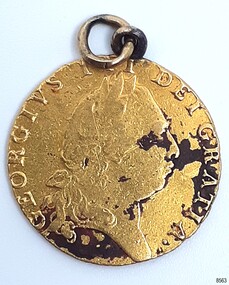
... Flagstaff Hill Maritime Museum and Village Warrnambool Great Ocean Road Shipwreck Coast Royal Mint British coin currency guinea military guinea Australian currency British guinea gold coin spade guinea King George III George III fifth portrait Arms of England and Scotland Arms of France Arms of Ireland Arms of the House of Hanover coins gold coins gold medallion Georgian era 1793 numismatics contamination phenomena gold corrosion good luck lucky charm pendant lucky coin trade Loch Ard wreck of the Loch Ard 1878 Mutton Bird Island Peterborough scuba diver 1980s guinea coin gold guinea shipwreck artefact relic Julie Wilkins Obverse text; 'GEORGIVS III DEI GRATIA' (translates to George the Third, by the Grace of God) Obverse relief; (King George III bust, facing right, laurel wreath on head) Reverse text; 'M.B.E.ET.H.REX.F. ...The coin was discovered by Julie Wilkins, a Victorian scuba diver who had already experienced more than 500 dives in Australia and overseas. She was holidaying in Peterborough, Victoria, and looking forward to discovering more about the famous Loch Ard ship, wrecked in June 1878 at Mutton Bird Island. The fast Glasgow-built clipper ship was only five years old when the tragedy occurred. There were 54 people on board the vessel and only two survived Julie's holiday photograph of Boat Bay reminds her of her most memorable dive. Submerged in the calm, flat sea, she was carefully scanning around the remains of the old wreck when, to her amazement, a gold coin and a small gold cross suddenly came up towards her. She excitedly cupped them in her hands, then stowed the treasures safely in her wetsuit and continued her dive. She soon discovered a group of brass carriage clock parts and some bottles of champagne. It was a day full of surprises. The items were easily recognisable, without any build-up of encrustations or concretion. Julie secretly enjoyed her treasures for twenty-four years then packed them up for the early morning train trip to Warrnambool. After a short walk to Flagstaff Hill Maritime Museum and Village, her photograph was taken as she handed over her precious find. She told her story to a local newspaper reporter, lunched a café in town then took the late afternoon train home. Her generous donation is now part of a vast collection of Loch Ard shipwreck artefacts, including the gold watch and the Minton Majolica model peacock. The coin is a British 1793 George III Gold Spade Guinea. It was already 83 years old when the Loch Ard had set sail. The loop and ring have been added, perhaps as a pendant, pocket watch accessory or similar purpose. It may have been worn for ‘good luck’ on the long journey to Australia, where ships had to carefully navigate the treacherous Bass’s Strait before arriving at their destination of Melbourne. Sadly, many met their fate on that short stretch of ocean aptly named the Shipwreck Coast. The coin is very recognisable even though it was exposed to the wrecking of the ship, its consequent movement, and the sea's turbulence. Its bent, scratched, buckled, split, dinted and worn condition is part of its story. The red-brown-black discolouration is similar to that found on other gold coins, sometimes called the ‘corrosion phenomena’. Studies suggest the possible cause is contaminants in the minting process reacting to the coins’ environment. The GEORGE III GOLD SPADE GUINEA: - The British Guinea was introduced in 1663 and was circulated until 1814. It was made of 22 carat gold, was 25 to 26 cm in diameter and weighed 8.35 grams. It had a value of 21 British shillings. The guinea coin ceased circulation after 1816 and was replaced by the one-pound note. However, the term ‘guinea’ continued to represent 21 shillings. King George (1738-1820) had six gold guinea designs minted during his reign from 1760 and 1820. Each of the six had different obverse portraits, all facing the right. There were three different reverse sides. The Spade Guinea was the fifth issue of the coin, introduced in 1787 and produced until 1799. The reverse shows a royal crown over a flat-topped shield with the Royal Arms of Great Britain, used in Scotland between 1714 and 1800. The shield images are, from left to right, top to bottom, the Arms of England and Scotland, the Arms of France, the Arms of Ireland, and the Arms of the House of Hanover. The Gold Guinea is also part of Australia’s history. It was the first coin mentioned in the announcement of Governor King of New South Wales his Australian Proclamation of a limited variety and denomination of coins accepted for use in the Australian Colony. The historic and decorative George III Spade Guinea has been reproduced for special collections of coins. However, replicas and imitations have also been made as souvenirs for tourists, as gaming tokens and chips for gamblers, and as ‘fake’ coins for profit. These coins differ in many ways; they may be only half the weight of the genuine coin. Often have a small stamp on the obverse with “COPY” or the manufacturer’s name or initials. Some have scalloped edges, some have dates that are different to the original dates of issue, and some even have text in Latin that translates as something very different to the original coin.The King George III Guinea was only produced from 1663 to 1814 and was the first English coin to be mechanically minted. The coin is the fifth edition of the King George III Guinea, the Spade Guinea, was only produced between 1787 and 1799. It is the only edition with this portrait of King George and the only one with the Royal Coat of Arms of Great Britain in Scotland on the reverse side. This edition was also the last guinea in circulation, because the sixth edition was reserved as the Military guinea. This edition of the Guinea is unique; This coin is the only guinea in our collection. It was minted in 1793, so it is now over 230 years old. The Gold Guinea is part of Australia’s history; it was the first coin in the list of coins for use in the Australian Colonies, mentioned by Governor King of New South Wales in his Australian Proclamation speech of 1800. The George III Spade Guinea was included in the Limited Edition Sherwood 12 Coin Collection of Notable Coinage of Australia. This coin is the only known guinea coin recovered from the wreck of the Loch Ard. It was already 85 years old when the ship was wrecked.Gold coin; British. 1793, King George III of the United Kingdom of Great Britain and Ireland (1760-1820), Spade Guinea. Yellow gold coin with gold metal loop mount and a gold ring through the loop. The design is the fifth issue of the George III Gold Guinea. The obverse relief is a portrait of George III facing right. Reverse relief is a crown above the Coats of Arms (1801-1816) of flat top spade-shaped shield divided into four quadrants that depict crowned lions, fleur de lies, a harp. These images are identified as, from left to right, top to bottom, England and Scotland, France, Ireland and Hanover. Inscriptions are minted around the rims of each side. The coin is dated 1793. Its surface has dark areas on both sides and the reed edge and surfaces are well worn. The loop mount is bent and the ring is buckled. The coin was recovered from the wreck of the ship Loch Ard.Obverse text; 'GEORGIVS III DEI GRATIA' (translates to George the Third, by the Grace of God) Obverse relief; (King George III bust, facing right, laurel wreath on head) Reverse text; 'M.B.E.ET.H.REX.F. D.B.ET.L.D. S.R.I.A.T.ET.E' '1793' (translates to: King of Great Britain, France and Ireland, Defender of the Faith, Duke of Brunswick and Lüneburg, Arch-Treasurer and Elector of the Holy Roman Empire) Reverse relief; a spade-shaped image i.e. (Crown with fleer de lies, above Shield with crowned lions in different postures, a harp, and other details)flagstaff hill maritime museum and village, warrnambool, great ocean road, shipwreck coast, royal mint, british coin, currency, guinea, military guinea, australian currency, british guinea, gold coin, spade guinea, king george iii, george iii, fifth portrait, arms of england and scotland, arms of france, arms of ireland, arms of the house of hanover, coins, gold coins, gold medallion, georgian era, 1793, numismatics, contamination phenomena, gold corrosion, good luck, lucky charm, pendant, lucky coin, trade, loch ard, wreck of the loch ard, 1878, mutton bird island, peterborough, scuba diver, 1980s, guinea coin, gold guinea, shipwreck artefact, relic, julie wilkins -
 Flagstaff Hill Maritime Museum and Village
Accessory - Gold Cross, Bef. 01-06-1878
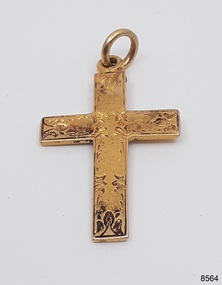
... Flagstaff Hill Maritime Museum and Village Warrnambool Great Ocean Road Shipwreck Coast gold cross religious cross religious trinket religious jewellery engraved cross cross pendant cross with ring Victorian era 1878 antique cross crucifix religious symbol Christian symbol Christian jewellery contamination phenomena gold corrosion good luck lucky charm blessing pendant Loch Ard wreck of the Loch Ard Mutton Bird Island Peterborough scuba diver 1980s shipwreck artefact relic Latin cross Roman cross pectoral cross Julie Wilkins Engraved foliage design. ...The gold cross was discovered by Victorian scuba diver Julie Wilkins, who had already experienced more than 500 dives in Australia and overseas. She was holidaying in Peterborough, Victoria, and looking forward to discovering more about the famous Loch Ard ship, wrecked in June 1878 at Mutton Bird Island. The fast Glasgow-built clipper ship was only five years old when the tragedy occurred. There were 54 people on board the vessel and only two survived Julie's holiday photograph of Boat Bay reminds her of her most memorable dive. Submerged in the calm, flat sea, she was carefully scanning around the remains of the old wreck when, to her amazement, a gold coin and a small gold cross suddenly came up towards her. She excitedly cupped them in her hands, then stowed the treasures safely in her wetsuit and continued her dive. She soon discovered a group of brass carriage clock parts and some bottles of champagne. It was a day full of surprises. The items were easily recognisable, without any build-up of encrustations or concretion. Julie secretly enjoyed her treasures for twenty-four years then packed them up for the early morning train trip to Warrnambool. After a short walk to Flagstaff Hill Maritime Museum and Village, her photograph was taken as she handed over her precious find. She told her story to a local newspaper reporter, lunched a café in town then took the late afternoon train home. Her generous donation is now part of a vast collection of Loch Ard shipwreck artefacts, including the gold watch and the Minton Majolica model peacock. The small decorative cross dates back to on or before 1878, when the Loch Ard had set sail. The loop and ring have been added, perhaps as a pendant, pocket watch accessory or similar purpose. It may have been worn for ‘good luck’ or a ‘blessing’ on the long journey to Australia, where ships had to carefully navigate the treacherous Bass’s Strait before arriving at their destination of Melbourne. Sadly, many met their fate on that short stretch of ocean aptly named the Shipwreck Coast. The cross is very recognisable even though it was exposed to the wrecking of the ship, its consequent movement, and the sea's turbulence. Its scratched, pitted and worn condition, and the damage near the loop, is part of its story. The red-brown-black discolouration is similar to that found on other gold coins, sometimes called the ‘corrosion phenomena’. Studies suggest the possible cause is contaminants in the minting process reacting to the coins’ environment. Three edges of the cross have slightly raised narrow ridges of gold which could have been cause by the gold being cast liquid gold into a mould.This gold cross pendant is significant as a symbol of Christianity, a sign of hope and safety, and a sample of the religious following on board the Loch Ard, although not everyone wears a cross for this reason. This cross is a sample of jewellery owned by people migrating to Australia in the late 19th century. The cross and the guinea recovered together from the wreck of the Loch Ard are made of gold and help interpret the financial status of some of those on board.Gold cross; yellow gold with decorative hand engraved foliage design on the front, fitted loop and ring on top. The simple Latin or Roman variation of the cross, with an elongated vertical arm, has no figure on it and the reverse has no decoration. The right, left and base edges have sections of narrow, long slightly raised ridges. The top edge has remnants of red-black colour. Victorian era cross, ca. 1878. The cross was recovered from the wreck of the ship Loch Ard.Engraved foliage design. Slightly raised long ridges on sides and base edges. flagstaff hill maritime museum and village, warrnambool, great ocean road, shipwreck coast, gold cross, religious cross, religious trinket, religious jewellery, engraved cross, cross pendant, cross with ring, victorian era, 1878, antique cross, crucifix, religious symbol, christian symbol, christian jewellery, contamination phenomena, gold corrosion, good luck, lucky charm, blessing, pendant, loch ard, wreck of the loch ard, mutton bird island, peterborough, scuba diver, 1980s, shipwreck artefact, relic, latin cross, roman cross, pectoral cross, julie wilkins -
 Flagstaff Hill Maritime Museum and Village
Domestic object - Cooking pot and lid, T & C Clarke and Co Ltd, 1880-1900
... T C Clark innervates the first manufacturing process of cast iron cook ware to have enamel lining in his products to alleviate the possibility of lead or arsenic contamination of food. flagstaff hill warrnambool shipwrecked coast flagstaff hill maritime museum flagstaff hill maritime village great ocean road kettle cooking pot cook ware kitchen ware cast iron kettle t c clark ltd Shakespeare Foundry "T & C Clark and Co Ltd" (Star of David) "ENGLAND", "RD 455279" "3 GALLS" "FIRST QUALITY" Lid marked "CLARK" Cooking pot cast iron with lid and handle and lid pressed sheet steel oval shaped. ...T. & C. Clark & Company Limited was based at Shakespeare Foundry in Wolverhampton England and was founded in 1795 by Thomas and Charles Clark. The company grew to be one of the largest iron foundries in Wolverhampton and were pioneering in the manufacture of enamelled cast iron cookware and sanitary wares. The company's product range included thousands of items, both domestic and industrial. T. & C. Clark were pioneers in the use of enamelled cast ironware, after taking out a patent in 1839 guaranteeing their products to be free of lead or arsenic. The company became the largest employer in Wolverhampton employing between 600 to 700 people.The item is significant as it was used as a domestic kitchen or camp fire item used to cook food safely without the concern that the metal may contain lead or arsenic as earlier cooking utensils had. T C Clark innervates the first manufacturing process of cast iron cook ware to have enamel lining in his products to alleviate the possibility of lead or arsenic contamination of food.Cooking pot cast iron with lid and handle and lid pressed sheet steel oval shaped."T & C Clark and Co Ltd" (Star of David) "ENGLAND", "RD 455279" "3 GALLS" "FIRST QUALITY" Lid marked "CLARK" flagstaff hill, warrnambool, shipwrecked coast, flagstaff hill maritime museum, flagstaff hill maritime village, great ocean road, kettle, cooking pot, cook ware, kitchen ware, cast iron kettle, t c clark ltd, shakespeare foundry -
 Kiewa Valley Historical Society
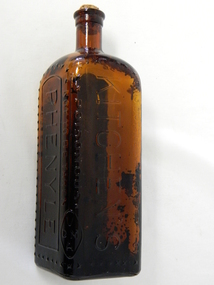
Bottle - Phenyle, Circa 1920
... Sanitation was of greater importance in rural areas, due to the greater distances to hospitals and doctors if contamination occurred. City homes at this time frame had lounge rooms for the daily get together of the family unit. ...Bottled Phenyle cleaner was used throughout the 1900's in domestic kitchens, toilets and other "clean, germ free" environments. Some of these environments would encompass dairying milk handling rooms and hospital kitchens and ablution areas. It is a product which has resulted in the poisoning of some unwitting users (newspaper accounts of a woman in 1928 who drank some phenyle mistakenly for wine and died). The reliance of effective poisonous cleaning products in kitchens, especially in the 1900's was and is still a very hazardous element that the "most pivotal place in a house" contains. In the era when this particular bottle was used (1920's) the main means where consumed around the kitchen table, and this was especially so in rural areas. Keeping this area "germ" free was a mandatory requirement.This bottle is significant to the Kiewa Valley because this area was mostly rural with "out houses" and milk collection areas that required that "extra attention" of sanitation. Rural areas also where more prone to have the kitchen area as a general meeting place for the family before dinner and other meals. Sanitation was of greater importance in rural areas, due to the greater distances to hospitals and doctors if contamination occurred. City homes at this time frame had lounge rooms for the daily get together of the family unit. This was an era before the television and computer age fragmented and isolated family members from one another. This was a time that family members grouped together in the kitchen to find out "the latest news".This amber glass, diamond shaped bottle with cork stopper once contained Phenyle. Phenyle is a highly poisonous liquid. The amber opaque glass was used and not a clear glass to highlight it's content. It has a cork stopper at the top of a slender neck. All the glass embossed writing is highlighted by a string of crosses. The cross was used to enforce a visual danger sign.On one side "THIS BOTTLE IS THE PROPERTY OF" and in large print underneath "KITCHEN'S" and below this and underlined "POISONOUS". On the next side "NOT TO BE TAKEN" and next side in very large print and surrounded by a border "PHENYLE" with crosses enclosing it. On the bottom of a "blank side is "REGd. No. 2140" On the base is M 959 and Mkitchen cleaners, food preparation area, ablutions -
 Kiewa Valley Historical Society
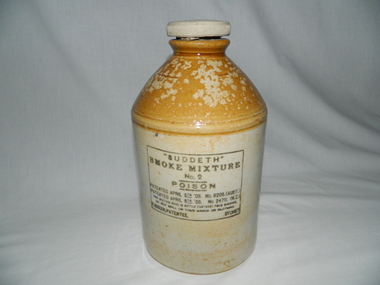
Jug Glazed, 1930s to 1950s
... Rabbit warrens causing farm machinery instabilities and also horseback activities eg mustering herds. ceramic bowls contamination of farm produce domestic farm hygiene vermin extermination poisons On one side below the neck and within a black boundary mark "SUDDETH" and below "SMOKE MIXTURE No. 2" and sandwiched between two black lines "POISON". ...This item was used in conjunction with the Suddeth (Sudden Death) Carbon Bi-siilphide fumigator during many rabbit plagues that invaded Victoria and NSW before CSIRO introduced the myxomatosis virus in 1950.The contents of this jug was very important pre 1950 for all rural areas which suffered under the annual mice plagues, especially the wheat producing regions. Milk producers suffered from the mice by products contaminating their fresh milk containers and storage facilities. Rabbit warrens causing farm machinery instabilities and also horseback activities eg mustering herds.This glazed pottery jug has a screw on lid and a cream coloured body with a caramel brown neck. The remnance of a handle, which has been broken off is located at the top just below the the rim of the lid.On one side below the neck and within a black boundary mark "SUDDETH" and below "SMOKE MIXTURE No. 2" and sandwiched between two black lines "POISON". Below this and in five lines "PATENTED APRIL 6th '08 No. 11205(AUST.)" "PATENTED APRIL 6th '08 No. 24711 (N.Z.)" "THIS MIXTURE GOES IN BOTTLE FURTHEST FROM MACHINE" "DO NOT SPILL ON YOUR HANDS OR CLOTHING" "F, GREER, PATENTEE SYDNEY"ceramic bowls, contamination of farm produce, domestic farm hygiene, vermin extermination poisons -
 National Vietnam Veterans Museum (NVVM)
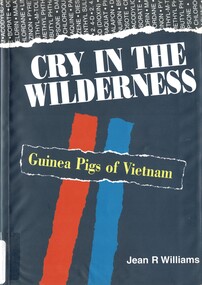
Book, Williams, Jean R, Cry In The Wilderness: Guinea Pigs of Vietnam (Copy 6)
... Vietnam War 1961-1975 - Chemical warfare Veterans - Diseases - United States Agent Orange - TBoxicology Herbicides - War use Veterans - Diseases - Australia When we military scitntists iniiated the herbicide program in the 60's we were awae pf the potential for damage due to dioxin contamination in the herbicide. We were even aware that the military formulation had a higher concentration that the civilian version due to lower cost and speed of manufacture. ...When we military scitntists iniiated the herbicide program in the 60's we were awae pf the potential for damage due to dioxin contamination in the herbicide. We were even aware that the military formulation had a higher concentration that the civilian version due to lower cost and speed of manufacture. However, because the material was to used on the enemy, none of us were overly concerned.When we military scitntists iniiated the herbicide program in the 60's we were awae pf the potential for damage due to dioxin contamination in the herbicide. We were even aware that the military formulation had a higher concentration that the civilian version due to lower cost and speed of manufacture. However, because the material was to used on the enemy, none of us were overly concerned. vietnam war, 1961-1975 - chemical warfare, veterans - diseases - united states, agent orange - tboxicology, herbicides - war use, veterans - diseases - australia -
 National Vietnam Veterans Museum (NVVM)
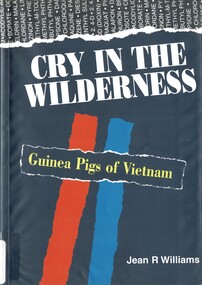
Book, Williams, Jean R, Cry In The Wilderness: Guinea Pigs of Vietnam (Copy 1)
... Vietnam War 1961-1975 - Chemical warfare Veterans - Diseases - United States Agent Orange - TBoxicology Herbicides - War use Veterans - Diseases - Australia Major General Alan Stretton When we military scitntists iniiated the herbicide program in the 60's we were awae pf the potential for damage due to dioxin contamination in the herbicide. We were even aware that the military formulation had a higher concentration that the civilian version due to lower cost and speed of manufacture. ...When we military scitntists iniiated the herbicide program in the 60's we were awae pf the potential for damage due to dioxin contamination in the herbicide. We were even aware that the military formulation had a higher concentration that the civilian version due to lower cost and speed of manufacture. However, because the material was to used on the enemy, none of us were overly concerned.When we military scitntists iniiated the herbicide program in the 60's we were awae pf the potential for damage due to dioxin contamination in the herbicide. We were even aware that the military formulation had a higher concentration that the civilian version due to lower cost and speed of manufacture. However, because the material was to used on the enemy, none of us were overly concerned. vietnam war, 1961-1975 - chemical warfare, veterans - diseases - united states, agent orange - tboxicology, herbicides - war use, veterans - diseases - australia, major general alan stretton -
 National Vietnam Veterans Museum (NVVM)
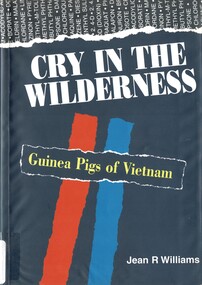
Book, Williams, Jean R, Cry In The Wilderness: Guinea Pigs of Vietnam (Copy 2)
... Vietnam War 1961-1975 - Chemical warfare Agent Orange - TBoxicology Herbicides - War use Veterans - Diseases - United States Veterans - Diseases - Australia Major General Alan Stretton When we military scitntists iniiated the herbicide program in the 60's we were awae pf the potential for damage due to dioxin contamination in the herbicide. We were even aware that the military formulation had a higher concentration that the civilian version due to lower cost and speed of manufacture. ...When we military scitntists iniiated the herbicide program in the 60's we were awae pf the potential for damage due to dioxin contamination in the herbicide. We were even aware that the military formulation had a higher concentration that the civilian version due to lower cost and speed of manufacture. However, because the material was to used on the enemy, none of us were overly concerned.When we military scitntists iniiated the herbicide program in the 60's we were awae pf the potential for damage due to dioxin contamination in the herbicide. We were even aware that the military formulation had a higher concentration that the civilian version due to lower cost and speed of manufacture. However, because the material was to used on the enemy, none of us were overly concerned. vietnam war, 1961-1975 - chemical warfare, agent orange - tboxicology, herbicides - war use, veterans - diseases - united states, veterans - diseases - australia, major general alan stretton -
 Alfred Hospital Nurses League - Nursing History Collection
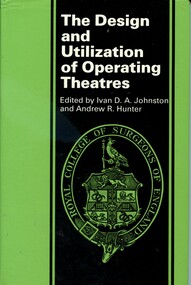
Book - Illustrated text book, Ivan D A Johnston, The design and utilization of operating theatres, 1984
... Published in 1984 Insight into recommendations for operating theatre design in the 1980's Operating rooms operating theatres Historic guide focusing on operating room layout construction, ventilation layout design , and preventing airborne bacterial cross-contamination during surgery Bookseller's sticker inside front cover at lower right. ...Historic guide focusing on operating room layout construction, ventilation layout design , and preventing airborne bacterial cross-contamination during surgeryIllustrated textbook with green dustjacket. The front of the dustjacket has a black vertical panel on which the title and editors' names are printed in white above the coat of arms of the Royal College of Surgeons of England. Editors, title and publisher are printed in black on spine. Book itself has a black cover, editors, title and publisher are printed in gilt on spinenon-fictionHistoric guide focusing on operating room layout construction, ventilation layout design , and preventing airborne bacterial cross-contamination during surgeryoperating rooms, operating theatres
