
Showing 168 items matching " early 18th century"
-
 Wodonga & District Historical Society Inc
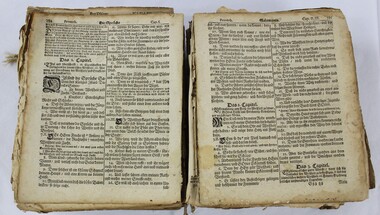
Book - Haeusler Collection Family Bible early 18th century, Sebastian Göbels, 1702
... Haeusler Collection Family Bible early 18th century ...Haeusler Collection Family Bible early 18th century ...Haeusler Collection Family Bible early 18th century Book Haeusler Collection Family Bible early 18th century Sebastian Göbels ...The Wodonga Historical Society Haeusler Collection provides invaluable insight into life in late nineteenth and early twentieth century north east Victoria. The collection comprises manuscripts, personal artefacts used by the Haeusler family on their farm in Wodonga, and a set of glass negatives which offer a unique visual snapshot of the domestic and social lives of the Haeusler family and local Wodonga community. The Haeusler family migrated from Prussia (Germany) to South Australia in the 1840s and 1850s, before purchasing 100 acres of Crown Land made available under the Victorian Lands Act 1862 (also known as ‘Duffy’s Land Act’) in 1866 in what is now Wodonga West. The Haeusler family were one of several German families to migrate from South Australia to Wodonga in the 1860s. This object is a German bible printed in 1702. It was published by Sebastian Göbels at the town of Schleusingen in the Thüringian Forest, and has 1770 pages. The bible was brought to Australia by the Haeusler-Klinge family when they migrated to South Australia in 1846. Ferdinand Haeusler came to Wodonga with other German families in 1866, bringing the bible with him. This item significant due to its age and rarity. It has well documented provenance and a known owner. It forms part of a significant and representative historical Haeusler Collection, which reflects the local history of Wodonga. It contributes to our understanding of European colonisation and settlement in Wodonga and north east Victoria in the mid nineteenth-century. A large bible printed in German and bound with brown leather. bible, christianity, german, germany, immigration, 1800s, 1700s, prussia -
 Embroiderers Guild, Victoria
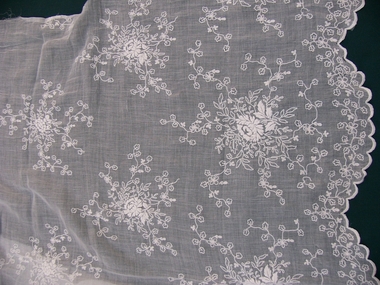
Textile - Flounce (part), Coggeshall Lace Flounce, Early 1800
... ... Early 18th century...Today Coggeshall lace is made by some members of the Lacemakers Guild and is taught as part of the City and Guilds course. https://coggeshallmuseum.org.uk/lace1.htm Embroidery Garments Whitework England Tambour work Early 18th century White muslin, with sprays of roses in white satin stitch, surrounded by delicate tambour embroidery known as Coggeshall embroidery. ...Miss Bostock, Foundation member of the EGV, travelled to England and met with The Hon. Rachel Kay-Shuttleworth of Gawthorpe Hall. Rachel "cut" off many pieces from her extensive lace collection which were gifted to the EGV. A Brief History (Information from the work of the late Jean Dudding) About 1812 a French émigré, M. Drago and his two daughters settled in Coggeshall, Essex. Here they hired a room and began to teach the women and small children a method of decorating this net by using a tambour hook. Thus began the making of Coggeshall Lace (sometimes called tambour lace). Tambouring produces a line of chain stitches and originated in the Far East, where the workers used a round frame resembling a tambourine or drum. This they could grip between the knees, thereby releasing both hands for tambouring. Coggeshall workers used a rectangular frame and this type is still used today. Throughout the 19th century this tamboured net lace was made in the tambour rooms and cottages of Coggeshall, and also in the homes of surrounding villages. Lace manufacturers and lace dealers co-ordinated these workers by obtaining orders from London and elsewhere. Sometimes more sophisticated designs were introduced and these would be tamboured by the more proficient workers. Besides the designs, all the necessary net and threads would also be distributed to the lace workers. Liberty & Co., amongst others, were supplied with Coggeshall Lace. The fluctuations in prosperity of the tambour lacemakers were governed by many factors. Fashion requiring flounces and frills gave great encouragement but the invention of chain stitch sewing machines and of machine made laces imitating the hand made article, together with a deterioration in the quality of design meant hard times for the laceworkers. Just after 1900 there was a great improvement in the quality of Coggeshall Lace. This was due largely to the activities of two ladies, the Misses Spurge, who were the chief employers in the district. Their brother William was an art teacher who improved the general standard of design and also introduced some old Italian designs. The First World War resulted in a decline in the making of Coggeshall Lace. The workers found it more profitable to do tambour beading. In the 1930's a determined effort was made to revive the making of Coggeshall Lace, and three handkerchiefs were given to Princess Marina on her marriage (See below). Coggeshall Lace was made into dresses for the Queen, Princess Margaret and Princess Alexandra. This work was undertaken by three very proficient workers in Great Tey. Queen Mary also chose two lace dresses and a teacloth in Coggeshall Lace. It was hoped that this Royal Patronage would encourage a revival of the craft. However the financial return was too meagre and after the Second World War both net and threads disappeared. Today Coggeshall lace is made by some members of the Lacemakers Guild and is taught as part of the City and Guilds course. https://coggeshallmuseum.org.uk/lace1.htm White muslin, with sprays of roses in white satin stitch, surrounded by delicate tambour embroidery known as Coggeshall embroidery. Coggeshall being a town in Essex.embroidery, garments, whitework, england, tambour work, early 18th century -
 Whitehorse Historical Society Inc.
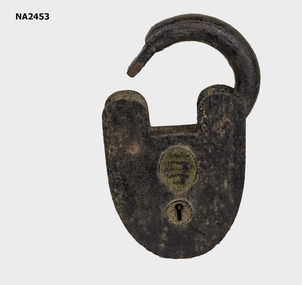
Functional object - Padlock, 1780 - 1820
... Large 'Horseshoe' or Horse Lock made in England late 17th early 18th century....Newsletter Series 2 - April 1999. security - locks Patented Leavers Lock Large 'Horseshoe' or Horse Lock made in England late 17th early 18th century. Functional object Padlock ...History is set out in N.H.S. Newsletter Series 2 - April 1999.Large 'Horseshoe' or Horse Lock made in England late 17th early 18th century.Patented Leavers Locksecurity - locks -
 Mont De Lancey
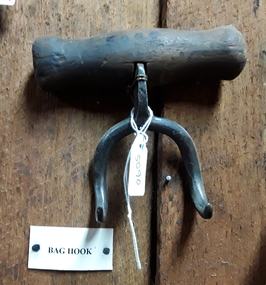
Tool - Bag Hook, Unknown
... Used in the late 18th or early 19th century....It was used to assist with lifting large bags of wheat, fertiliser and so on in the late 18th or early 19th century. ...Used in the late 18th or early 19th century. Agricultural equipment Farm equipment Bag hooks A small steel double curved pointy hooked bag hook with a turned wooden handle on the top. ...Used in the late 18th or early 19th century.A small steel double curved pointy hooked bag hook with a turned wooden handle on the top. The handle is attached through a hole in the steel and riveted to the the hook. It was used to assist with lifting large bags of wheat, fertiliser and so on in the late 18th or early 19th century. agricultural equipment, farm equipment, bag hooks -
 Clunes Museum
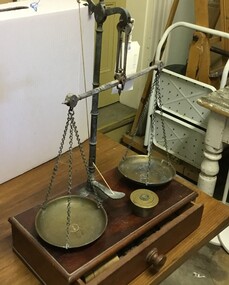
Functional object - APOTHECARY BALANCE SCALES, W & T AVERY, 1800'S
... Founded in the early 18th century, the company was renamed W & T Avery in 1818. ...Founded in the early 18th century, the company was renamed W & T Avery in 1818. ...Founded in the early 18th century, the company was renamed W & T Avery in 1818. In 1979, GEC took over the company and renamed it GEC-Avery. In 2000, the US-American company Weigh-Tronix acquired the business and it is now known as Avery Weigh-Tronix. BELONGED TO JOHN PATIENCE OF CLUNES, FORMERLY IN HIS GROCERY SHOP ON ALBERT ST NORTH CLUNES FOR DAILY USEWOODEN BOX WITH DRAWER AND THREADED HOLE IN LID TO ACCOMODATE THE CENTRAL POLE OF THE SCALE ASSEMBLY. BOX CONTAINS SCALES ASSSEMBLY AND WEIGHTS .1 WOODEN BOX .2 DRAWER TO FIT BOX .3 .4 PIECES OF WOOD FINISHED ON ONE SIDE WITH BLUE FELT - ORIGINALLY AFFIXED TO THE DRAWER TO CREATE A SMALL COMPARTMENT WITHIN THE DRAWER .5 WOODEN CYLINDER WITH LID CONTAINS A SET OF METAL PENNYWEIGHTS RANGING FROM ONE TO SIX, W & T A STAMPED ON THE REVERSE OF EACH WEIGHT, ONE SINGLE WEIGHT 2OZ AND ONE SINGLE WEIGHT 1/2 OZ STAMPED ON REVERSE, THREE OTHER LIKE WEIGHTS WITH NO STAMPING. FOUR SQUARE BRASS SCRUPLES WITH "6" STAMPED INTO EACH. .6 ONE SET OF SIX BRASS TROY WEIGHTS NESTED .7 METAL ASSEMBLY PIN FOR THE SCALES .8 SCALE ASSEMBLY OF UPRIGHT POLE, BALANCE BAR, TWO METAL DISHES WITH METAL CHAIN ATTACHED .9 TWO UNSTAMPED METAL CIRCULAR WEIGHTS .2 YELLOW LABEL AFFIXED TO THE BACK OF THE DRAWER: W & T AVERY, LATE T BEACH MANUFACTURERS OF ALL KINDS OF SCALES, SCALE BEAMS,STEELYARDS, PATENT WEIGHING, MACHINES, SCREW PLATES, DIE STOCKS, SCALE DIGBETH BIRMINGHAM .5 STAMPED ON REVERSE OF PENNYWEIGHTS: "STANDARD" WITH A CROWN IMAGE AND W & T A - FADING LABEL WITH F C DEIG PRINTED OTHER INFORMATION ILLEGIBLE .8 DISHES STAMPED WITH: ROYAL BY HIS MAJESTIES LETTERS PATENT weighing instrument, apothecary scales, gold scales -
 Australian Lace Guild - Victorian Branch
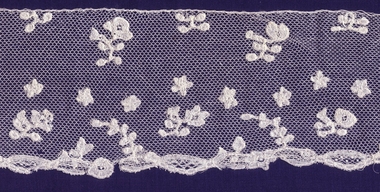
Textile - Flemish or Honiton
... Here motifs have been reclaimed from an earlier 18th Century lace (probably damaged) and appliqued onto machine made cotton net probably early in the 19th Century. ...Here motifs have been reclaimed from an earlier 18th Century lace (probably damaged) and appliqued onto machine made cotton net probably early in the 19th Century. ...Valuable old lace was often salvaged to be used again. Here motifs have been reclaimed from an earlier 18th Century lace (probably damaged) and appliqued onto machine made cotton net probably early in the 19th Century. The original motifs are either Flemish or Honiton. Use: as a costume trimmingBobbin lace motifs appliqued onto a machine made net. Edging. -
 Australian Lace Guild - Victorian Branch
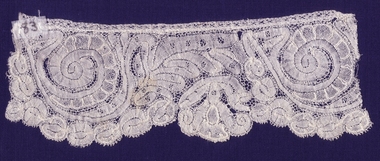
Textile - Honiton lace, Early 18th Century
... Early 18th Century ...Very fine lace used for costume trimmingBobbin lace edging. Sample -
 Australian Lace Guild - Victorian Branch
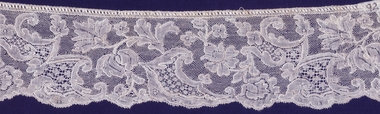
Textile - Mechlin lace, Early 18th century
... Early 18th century ...Very fine old Mechlin lace used as a costume trimmingBobbin lace edging -
 Australian Lace Guild - Victorian Branch
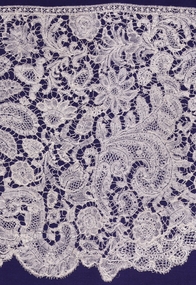
Textile - Flemish lace, Early 18th century
... Early 18th century ...Very fine old Flemish lace. Use - Fashion trimming or ecclesiasticalBobbin lace Flouncing -
 Australian Lace Guild - Victorian Branch
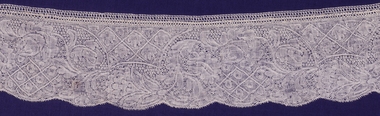
Textile - Valenciennes lace, Early 18th Century
... Early 18th Century ...Very fine linen thread. Fine lace used for costume trimmingBobbin lace edging. Sample -
 Australian Lace Guild - Victorian Branch
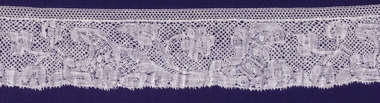
Textile - Flemish lace, Early 18th Century
... Early 18th Century ...Very fine Flemish lace possibly from Antwerp. Fine lace used for costume trimmingBobbin lace edging. Sample -
 Wodonga & District Historical Society Inc
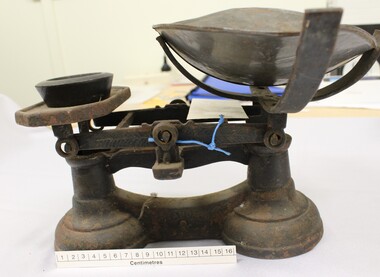
Functional object - Metal table balance scales, W & T Avery Ltd, 1900
... The company was founded in the early 18th century and took the name W & T Avery in 1818. ...The company was founded in the early 18th century and took the name W & T Avery in 1818. ...Sets of scales similar to these were very common in households throughout Australia in the 19th and 20th centuries. Avery of Birmingham were a British manufacturer of weighing machines. The company was founded in the early 18th century and took the name W & T Avery in 1818. The company produced a wide range of scales ranging from industrial scales and weighbriges to small scales for domestic use, such as these scales. At the time of the death of the last Avery family member in 1918, it employed over 3,000 people and had businesses all over the world. Today it has evolved to become part of the conglomerate, Avery Weigh-Tronix.Domestic scales such as these were common throughout Australian homes. They are now primarily superceded by plastic items, often electronic.Metal balance table scales and a set of imperial weightsOn weights "AVERY/ B'HAM"weights and measures australia, domestic scales -
 Warrnambool and District Historical Society Inc.
Book, Popes The Iliad of Homer, 1818
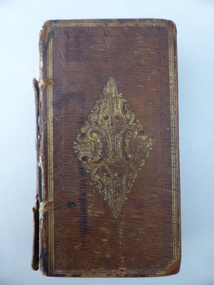
... This copy of Alexander Pope’s early 18th century translation of Homer’s Iliad dates from 1818. ...This copy of Alexander Pope’s early 18th century translation of Homer’s Iliad dates from 1818. ...This copy of Alexander Pope’s early 18th century translation of Homer’s Iliad dates from 1818. It has two signatures – Thomas Smith and Mary Riley. Nothing is known of the latter person. There were two people named Thomas Smith who were prominent in the Warrnambool district in the 19th century. One was Thomas Smith the printer and the other was Thomas Smith, a farmer from Wangoom who had a daughter named Mary. It is not clear which of these may have owned the book but the signature suggests an educated person and we know that the son of Thomas Smith the farmer was illiterate so it is unlikely that the father owned a copy of Homer’s Iliad. This book is of interest because of its age (1818) and because of the inscriptions. There may be no connection between Thomas Smith and Mary Riley – merely two owners of the book. The book will have greater interest when its exact provenance can be established. This is a brown leather-bound book of 536 pages. The front cover and spine have gold ornamentation with gold lettering. The spine covering is partly torn away and the binding is coming apart. The pages show some staining. The two inscriptions are handwritten in black ink. The front pages have two black and white illustrations separated with tissue paper. ‘Tho. Smith’ ‘Mary G. Riley, Tillside, 20 George Street, East Melbourne, 24/5/1900’ homer’s iliad, history of warrnambool, thomas smith, mary riley -
 Mont De Lancey
Decorative object - Glass - Vase, c.1920
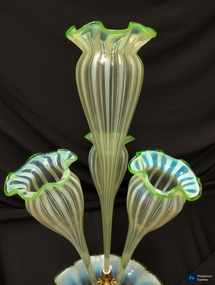
... Epergne's were first created during the early 18th century France as a table centrepiece to display 'exotic' fruits and cakes from France's colonies. ...Epergne's were first created during the early 18th century France as a table centrepiece to display 'exotic' fruits and cakes from France's colonies. ...This glass epergne was first owned by John Sanderson's grandmother, who lived in Wandin (Clegg Road) until the 1940s. She first purchased it in 1920 and used it as a vase before passing it on to her daughter Norma Spicer. Epergne's were first created during the early 18th century France as a table centrepiece to display 'exotic' fruits and cakes from France's colonies. They were originally made of silver, however, the late 18th century saw a rise in epergnes made of porcelain due to the growing status of the European porcelain industry. The late 19th century saw another shift as Victorian and Art glass became the name of the day, and most epergne's became increasingly more complex glass works, no longer used for holding food. This epergne is the product of these later glasswork vases, reflecting 1920s interest in uranium glass and clouded geometric patterns. Epergnes like this filtered out of popularity after World War II as large dining sets and table centrepieces became less important to every day life. Those that remained transferred to more useful roles within the household: this one being used as a vase for most of its life. Green tinted glass epergne with white clouded vertical stripes. Glass thick and slightly opaque, possibly uranium glass. Base is a fruit bowl with scalloped/ruffle edges and middle coming up into a triangle. The very edges of the fruit bowl and clouded with white and blue. A golden metal notion attaches to the middle of the fruit bowl with a globe shaped connector. Notion looks like a flat gold flower with six petals and three small leaves, with middle of the flower having a screw on which to screw the largest flute. The flower has three small bucket-shaped containers attached to it in which the smaller flutes are placed. Four flutes attach from the very middle, all bell shaped with very ends flaring out into a scalloped/ruffle edge. One large flute is screwed into the middle of the fruit bowl and stands straight up. Three smaller flutes are placed in around the larger one leaning slightly away from the centre.vases, epergne, 1920, 1920s, 20s, twenties, glass, glassware, uranium glass, radium glass, clouded glass, art deco, decorative objects, tableware, wandin, clegg road -
 Embroiderers Guild, Victoria
Accessory - 18th C White Muslin Fichu, 18th - early 19th century
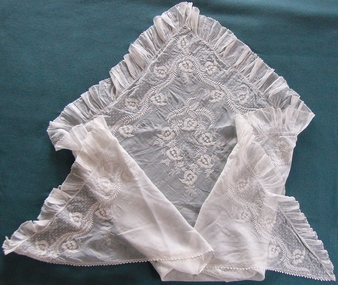
... An 18th-century fichu was a lightweight, typically white triangular or square neckerchief made of muslin, linen, or cotton, worn by women to cover the chest and neck. Popular from the early...18th - early 19th century...An 18th-century fichu was a lightweight, typically white triangular or square neckerchief made of muslin, linen, or cotton, worn by women to cover the chest and neck. Popular from the early ...An 18th-century fichu was a lightweight, typically white triangular or square neckerchief made of muslin, linen, or cotton, worn by women to cover the chest and neck. Popular from the early-to-late 18th century, these versatile garments were often folded, draped, or pinned over low-cut bodices, acting both as a modest covering and a fashionable accessory. Muslin with embroidered frill - fichu has design of wheat scrolling above the frill and in the corner. Flowers in drawn thread.embroidery, whitework, drawn thread, fischu, early 19th century, france -
 Flagstaff Hill Maritime Museum and Village
Book - Reference Book/History, Henry Smith Williams, The Historians History of the World Vol 16 set 1 - Edited by Henry Smith Williams L.L.D. Published by “The Times” 1908, 1908
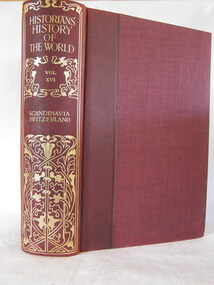
... This volume ends its primary coverage at the early 18th century, with the remaining Swiss history continuing in Volume 17....This volume ends its primary coverage at the early 18th century, with the remaining Swiss history continuing in Volume 17. ...Henry Smith Williams’ “The Historians' History of the World” is a chronological and geographical "tapestry" of human events, these twenty five volumes occupy a very specific and prestigious place in historical research. The primary subjects of Volume 16 are Scandinavia (including the history of Norway, Sweden, and Denmark) and the history of Switzerland up to the year 1715.The Book is part of a 25 volume set with red cloth bindings and gold filigree design to rib.non-fictionHenry Smith Williams’ “The Historians' History of the World” is a chronological and geographical "tapestry" of human events, these twenty five volumes occupy a very specific and prestigious place in historical research. The primary subjects of Volume 16 are Scandinavia (including the history of Norway, Sweden, and Denmark) and the history of Switzerland up to the year 1715.flagstaff hill, warrnambool, shipwrecked-coast, flagstaff-hill, flagstaff-hill-maritime-museum, maritime-museum, shipwreck-coast, flagstaff-hill-maritime-village, book, the historians history of the world vol 16 set 1 -
 Williamstown Historical Society Inc
Certificate - Certificate, MUIOOF
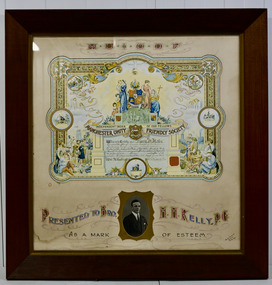
... Members and office bearers of societies in the late 18th and early 19th centuries were often honoured for their work in their societies with the presentation of ornate certificates....Members and office bearers of societies in the late 18th and early 19th centuries were often honoured for their work in their societies with the presentation of ornate certificates. friendly societies Certificate shows the Coat of Arms of the Independent Order of Odd Fellows, Manchester Unity Friendly Society: "PRESENTED TO BRO. ...Friendly societies were member-owned organisations that provided services to their members such as health, sickness, and funeral benefits to members. They fell into abeyance once government and private companies began providing such services. Members and office bearers of societies in the late 18th and early 19th centuries were often honoured for their work in their societies with the presentation of ornate certificates.Framed ornate and hand coloured certificate presented to Grand Master Barry Kelly, from the Manchester Unity Friendly Society, 1932.Certificate shows the Coat of Arms of the Independent Order of Odd Fellows, Manchester Unity Friendly Society: "PRESENTED TO BRO. H.H. KELLY. AS A MARK OF ESTEEM".friendly societies -
 Flagstaff Hill Maritime Museum and Village
Decorative object - Ornament, ca. 19th century
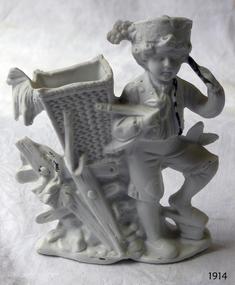
... Figurine ornaments were popular for table decorations between the mid-18th to early 19th centuries. This ornament was made in Germany, and German manufacturers began to use bisque material to make realistic faces for dolls in the 1850s....Figurine ornaments were popular for table decorations between the mid-18th to early 19th centuries. This ornament was made in Germany, and German manufacturers began to use bisque material to make realistic faces for dolls in the 1850s. ...This fine white unglazed porcelain figurine is one of six donated together. The bisque material was easy to carve and allowed fine detail. Figurine ornaments were popular for table decorations between the mid-18th to early 19th centuries. This ornament was made in Germany, and German manufacturers began to use bisque material to make realistic faces for dolls in the 1850s.The set of six bisque figurines is representative of popular table decorations during the 19th and early 20th centuries.Fine unglazed white porcelain ornament, carved to represent a boy holding a basket on his back. One of a pair, the other being a girl holding a basket on her back. The hollow basket is a vase. It was made in Germany. No 0847. Marked "0847" "GERMANY GASP"flagstaff hill, flagstaff hill maritime museum and village, warrnambool, maritime museum, maritime village, great ocean road, shipwreck coast, bisque, china ornament, white china ornament, german, porcelain, unglazed porcelain, 19th century, 18th century, european ornament, pottery, unglazed pottery, domestic ornament, decoration, table decoration, germany, boy with basket, vase -
 Flagstaff Hill Maritime Museum and Village
Decorative object - Ornament, ca. 19th century
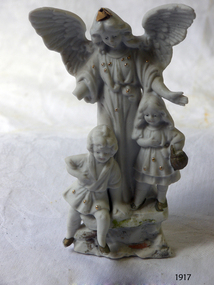
... Figurine ornaments were popular for table decorations between the mid-18th to early 19th centuries. This ornament was likely made in Germany, and German manufacturers began to use bisque material to make realistic faces for dolls in the 1850s....Figurine ornaments were popular for table decorations between the mid-18th to early 19th centuries. This ornament was likely made in Germany, and German manufacturers began to use bisque material to make realistic faces for dolls in the 1850s. ...This fine white unglazed porcelain figurine is one of six donated together. The bisque material was easy to carve and allowed fine detail. Figurine ornaments were popular for table decorations between the mid-18th to early 19th centuries. This ornament was likely made in Germany, and German manufacturers began to use bisque material to make realistic faces for dolls in the 1850s.The set of six bisque figurines is representative of popular table decorations during the 19th and early 20th centuries.Figurine; unglazed white porcelain ornament, hollow inside. It is carved to represent an angel with two children, a boy and a girl. The surface is decorated with tiny gold balls and the angel wears a gold tiara. There are remnants of gold, orange, green and brown paint. No 1914. "1914"flagstaff hill, flagstaff hill maritime museum and village, warrnambool, maritime museum, maritime village, great ocean road, shipwreck coast, bisque, china ornament, white china ornament, german, porcelain, unglazed porcelain, 19th century, 18th century, european ornament, pottery, unglazed pottery, domestic ornament, decoration, table decoration, figurine, angel figurine, germany, angel with children -
 Flagstaff Hill Maritime Museum and Village
Decorative object - Ornament, ca. 19th century
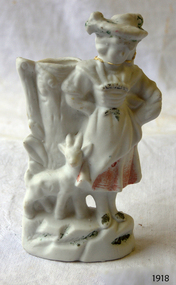
... Figurine ornaments were popular for table decorations between the mid-18th to early 19th centuries. This ornament was likely made in Germany, and German manufacturers began to use bisque material to make realistic faces for dolls in the 1850s....Figurine ornaments were popular for table decorations between the mid-18th to early 19th centuries. This ornament was likely made in Germany, and German manufacturers began to use bisque material to make realistic faces for dolls in the 1850s. ...This fine white unglazed porcelain figurine is one of six donated together. The bisque material was easy to carve and allowed fine detail. Figurine ornaments were popular for table decorations between the mid-18th to early 19th centuries. This ornament was likely made in Germany, and German manufacturers began to use bisque material to make realistic faces for dolls in the 1850s.The set of six bisque figurines is representative of popular table decorations during the 19th and early 20th centuries.Fine unglazed white porcelain ornament, hollow inside. It is carved to represent a peasant girl and goat with a vase shaped like a tree stump in the background. The ornament has remnants of gold, red, brown and green paint. There is an inscription on the base."3943:warrnambool, shipwrecked-coast, flagstaff-hill-maritime-museum, maritime-museum, shipwreck-coast, ornament, flagstaff hill, flagstaff hill maritime museum and village, maritime museum, maritime village, great ocean road, shipwreck coast, bisque, china ornament, white china ornament, german, germany, porcelain, unglazed porcelain, 19th century, 18th century, european ornament, pottery, unglazed pottery, domestic ornament, decoration, table decoration, girl and goat, vase -
 Flagstaff Hill Maritime Museum and Village
Decorative object - Ornament, ca. 19th century
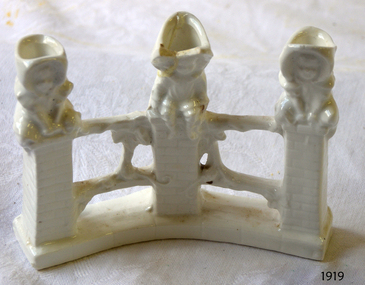
... Figurine ornaments were popular for table decorations between the mid-18th to early 19th centuries. This ornament was likely made in Germany, and German manufacturers began to use bisque material to make realistic faces for dolls in the 1850s....Figurine ornaments were popular for table decorations between the mid-18th to early 19th centuries. This ornament was likely made in Germany, and German manufacturers began to use bisque material to make realistic faces for dolls in the 1850s. ...This fine white glazed porcelain figurine is one of six donated together. The bisque material was easy to carve and allowed fine detail. Figurine ornaments were popular for table decorations between the mid-18th to early 19th centuries. This ornament was likely made in Germany, and German manufacturers began to use bisque material to make realistic faces for dolls in the 1850s.The set of six bisque figurines is representative of popular table decorations during the 19th and early 20th centuries.Fine glazed white porcelain ornament, carved to represent three children sitting on three brick fence pillars. There are gold highlights on the surface. The hats on the children are vases. An inscription is on the base of the centre pillar."6946"flagstaff hill, flagstaff hill maritime museum and village, warrnambool, maritime museum, maritime village, great ocean road, shipwreck coast, bisque, china ornament, white china ornament, german, germany, porcelain, unglazed porcelain, 19th century, 18th century, european ornament, pottery, unglazed pottery, domestic ornament, decoration, table decoration, children on a fence, vase, candle holder -
 Flagstaff Hill Maritime Museum and Village
Book - Fictional stories, Sir Walter Scott, Waverley Novels Vol 8 Rob Roy, 1838
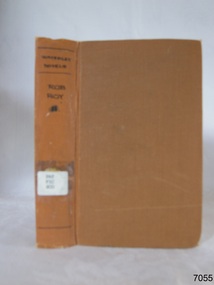
... Set against the backdrop of the 1715 Jacobite rising, it blends historical events with fictional adventure, focusing on themes of loyalty, outlaw life, and economic intrigue in early 18th-century Scotland and England. Though the real Rob Roy MacGregor was a Highland cattle driver and rebel, Scott's portrayal fictionalises him as a cunning folk hero akin to Robin Hood, aiding protagonist Francis Osbaldistone in recovering stolen business documents from the villainous Rashleigh. ...Set against the backdrop of the 1715 Jacobite rising, it blends historical events with fictional adventure, focusing on themes of loyalty, outlaw life, and economic intrigue in early 18th-century Scotland and England. Though the real Rob Roy MacGregor was a Highland cattle driver and rebel, Scott's portrayal fictionalises him as a cunning folk hero akin to Robin Hood, aiding protagonist Francis Osbaldistone in recovering stolen business documents from the villainous Rashleigh. ...The subject volume from the “Waverley Novels Rob Roy Vol 8” published by Fisher Son & Co (1838) is part of a collected edition of Sir Walter Scott's works, containing stories from the "Tales of My Landlord" series. "Tales of My Landlord" forms a key subset of Scott's Waverley Novels, presented as fictional tales gathered by characters like Peter Pattieson from the landlord of the Wallace “Inn at Gandercleugh”. The series spans multiple books across four sub-series, including “The Black Dwarf” (1707 setting), “Old Mortality” (1679–1689), “The Heart of Midlothian” (1736), “The Bride of Lammermoor” (1709–1711), “A Legend of Montrose” (1644–1645), “Count Robert of Paris” (1097), and “Castle Dangerous” (1307). Vol 46 in the 1838 Fisher edition reprints later entries like “Count Robert of Paris” or “Castle Dangerous” from the fourth series, as these stories originally appeared in Scott's Magnum Opus collected volume editions, the first from 1816. With the influential 48-volume “Magnum Opus” edition from 1829–1833 by Robert Cadell, serving as the basis for later collected published sets like Fisher's. First appearing as a three-volume set in December 1817, Rob Roy became one of Scott's most popular works, later standardised as Volume 8 in various Waverley Novels editions from the 1820's onward, such as the 1830 Magnum Opus issue. Early collected editions, like those from Adam & Charles Black (1878) or Fisher, Son & Co. (1836), often split it across two physical volumes labelled as "Vol. VIII," reflecting the series' format for lengthy novels.Waverley Novels Vol 8 Rob Roy, Light brown hardcover lettering in black text. Author: Sir Walter Scott Publisher: Fisher Son & Co Date: 1838fictionThe subject volume from the “Waverley Novels Rob Roy Vol 8” published by Fisher Son & Co (1838) is part of a collected edition of Sir Walter Scott's works, containing stories from the "Tales of My Landlord" series. "Tales of My Landlord" forms a key subset of Scott's Waverley Novels, presented as fictional tales gathered by characters like Peter Pattieson from the landlord of the Wallace “Inn at Gandercleugh”. The series spans multiple books across four sub-series, including “The Black Dwarf” (1707 setting), “Old Mortality” (1679–1689), “The Heart of Midlothian” (1736), “The Bride of Lammermoor” (1709–1711), “A Legend of Montrose” (1644–1645), “Count Robert of Paris” (1097), and “Castle Dangerous” (1307). Vol 46 in the 1838 Fisher edition reprints later entries like “Count Robert of Paris” or “Castle Dangerous” from the fourth series, as these stories originally appeared in Scott's Magnum Opus collected volume editions, the first from 1816. With the influential 48-volume “Magnum Opus” edition from 1829–1833 by Robert Cadell, serving as the basis for later collected published sets like Fisher's. First appearing as a three-volume set in December 1817, Rob Roy became one of Scott's most popular works, later standardised as Volume 8 in various Waverley Novels editions from the 1820's onward, such as the 1830 Magnum Opus issue. Early collected editions, like those from Adam & Charles Black (1878) or Fisher, Son & Co. (1836), often split it across two physical volumes labelled as "Vol. VIII," reflecting the series' format for lengthy novels.warrnambool, shipwrecked-coast, flagstaff-hill, flagstaff-hill-maritime-museum, maritime-museum, shipwreck-coast, flagstaff-hill-maritime-village, shipwrecked-artefact, book, waverley novels vol 46 tales of my landlord, sir walter scott, pattison collection, warrnambool library, warrnambool mechanics’ institute, ralph eric pattison, corangamite regional library service, warrnambool city librarian, mechanics’ institute library, victorian library board, warrnambool books and records, warrnambool children’s library -
 Flagstaff Hill Maritime Museum and Village
Decorative object - Ornament, 19th century
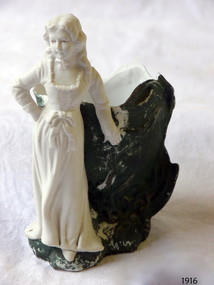
... Figurine ornaments were popular for table decorations between the mid-18th to early 19th centuries. This ornament was most likely made in Germany, and German manufacturers began to use bisque material to make realistic faces for dolls in the 1850s....Figurine ornaments were popular for table decorations between the mid-18th to early 19th centuries. This ornament was most likely made in Germany, and German manufacturers began to use bisque material to make realistic faces for dolls in the 1850s. ...This fine white unglazed porcelain figurine is one of six donated together. The bisque material was easy to carve and allowed fine detail. Figurine ornaments were popular for table decorations between the mid-18th to early 19th centuries. This ornament was most likely made in Germany, and German manufacturers began to use bisque material to make realistic faces for dolls in the 1850s.The set of six bisque figurines is representative of popular table decorations during the 19th and early 20th centuries.Ornament, fine unglazed white porcelain, carved to represent a woman standing in front of a green vase. flagstaff hill, flagstaff hill maritime museum and village, warrnambool, maritime museum, maritime village, great ocean road, shipwreck coast, bisque, china ornament, white china ornament, german, porcelain, unglazed porcelain, 19th century, 18th century, european ornament, pottery, unglazed pottery, domestic ornament, decoration, table decoration, vase, woman with vase, germany -
 Flagstaff Hill Maritime Museum and Village
Octant, Late 18th to mid-19th century
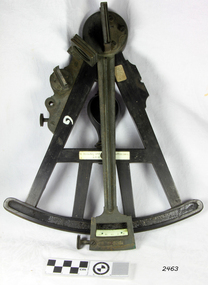
... Henry Hemsley was a lesser-known instrument maker and optician working in London in the late 17th and early 18th century. However, it should be noted that there were two Henry Hemsley opticians and instrument makers around this period. ...Henry Hemsley was a lesser-known instrument maker and optician working in London in the late 17th and early 18th century. However, it should be noted that there were two Henry Hemsley opticians and instrument makers around this period. ...An Octant is a doubly reflecting navigation instrument used primarily by sailors to measure the angular distance between two visible objects and was a forerunner of the sextant. The name comes from the Latin octo, or “one-eighth of a circle,” for the Octant’s arc which spans 45°, or one-eighth of a circle. The primary use of an Octant is to measure the angle between an astronomical object and the horizon for the purposes of celestial navigation. The estimation of this angle is known as sighting or shooting the object, or taking a sight. The angle, and the time when it was measured, can be used to calculate a position line on a nautical chart (latitude), for example, sighting the Sun at noon or Polaris at night (in the Northern Hemisphere) gives an angle by which the latitude can then be estimated. Sighting the height of a landmark on land can also give a measure of distance. History: The principle of the Octant as an instrument to measure ones latitude was first implemented around 1742-present but was superseded by the improvement of the octant to a sextant, a very similar instrument, better made and able to measure bigger angles 120°, allowing the measurement of Luna distances to give longitude when used with an accurate chronometer. The sextant started to appear around 1730 and had been attributed to by John Hadley (1682–1744) and Thomas Godfrey (1704–1749), but reference to the sextant was also found later in the unpublished writings of Isaac Newton (1643–1727). Earlier links can be found to Bartholomew Gosnold (1571–1607) indicating that the use of a Sextant for nautical navigation predates Hadley's implementation. In 1922, the sextant was modified for aeronautical navigation by Portuguese navigator and naval officer Gago Coutinho. Henry Hemsley was a lesser-known instrument maker and optician working in London in the late 17th and early 18th century. However, it should be noted that there were two Henry Hemsley opticians and instrument makers around this period. (Henry Hemsley 1, 1786-89, who had premises at 85 Fleet St London and Henry Hemsley 2, 1828-56), whose workshop was at 135-138 Radcliff Highway London. Therefore, based on the inscribed workshop address Henry Hemsley 2 is responsible for making this example.The octant is representative of its type and although not fully complete it demonstrates how 18th and 19th-century mariners determined their latitude on a chart to navigate their way across the world's oceans in the 18th and 19th century. It also demonstrates the skill and workmanship of the early instrument makers that operated from London at this time and provided most of the navigational instrumentation use by commercial and military navies of the time.Octant, ebony wooden frame and handle. Scale is missing from recess in frame. "H. Hemsley 135-138 Ratliff Highway, London", no box"H. Hemsley 135-138 Ratcliff Highway, London"flagstaff hill, warrnambool, shipwrecked-coast, flagstaff-hill, flagstaff-hill-maritime-museum, maritime-museum, shipwreck-coast, flagstaff-hill-maritime-village, navigation, navigational instrument, instrument used for navigation, sextant, henry hemsley, instrument maker, london, octant -
 Flagstaff Hill Maritime Museum and Village
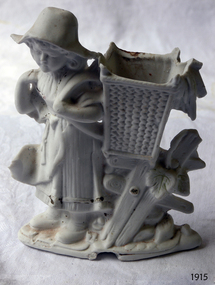
Decorative object - Ornament, ca. 19th century
... Figurine ornaments were popular for table decorations between the mid-18th to early 19th centuries. This ornament was made in Germany, and German manufacturers began to use bisque material to make realistic faces for dolls in the 1850s....Figurine ornaments were popular for table decorations between the mid-18th to early 19th centuries. This ornament was made in Germany, and German manufacturers began to use bisque material to make realistic faces for dolls in the 1850s. ...This fine white unglazed porcelain figurine is one of six donated together, and one of a pair of two children carrying baskets on thei. The bisque material was easy to carve and allowed fine detail. Figurine ornaments were popular for table decorations between the mid-18th to early 19th centuries. This ornament was made in Germany, and German manufacturers began to use bisque material to make realistic faces for dolls in the 1850s.The set of six bisque figurines is representative of popular table decorations during the 19th and early 20th centuries.Fine unglazed white porcelain ornament, carved to represent a girl holding a basket on her back. One of a pair, the other being a boy holding a basket on his back. The hollow basket is a vase. It was made in Germany. "1084" "105" "GERMANY"flagstaff hill, warrnambool, maritime museum, bisque, china ornament, white china ornament, german, porcelain, unglazed porcelain, 19th century, 18th century, european ornament, pottery, unglazed pottery, domestic ornament, decoration, table decoration, germany, girl with basket, vase -
 Flagstaff Hill Maritime Museum and Village
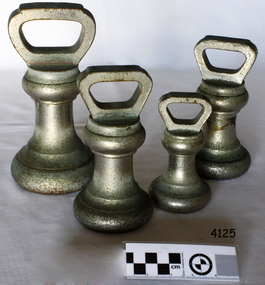
Functional object - Standard avoirdupois weights, Avery Ltd, 1950s
... The company was founded in the early 18th century and took the name W & T Avery in 1818. ...The company was founded in the early 18th century and took the name W & T Avery in 1818. ...A weight made in England by W&T Avery a British manufacturer of weights and weighing machines. The company was founded in the early 18th century and took the name W & T Avery in 1818. The undocumented origin of the company goes back to 1730 when James Ford established the business in the town of Digbeth. On Joseph Balden, the then company’s owner’s death in 1813 William and Thomas Avery took over his scale making business and in 1818 renamed it W & T Avery. The business rapidly expanded and in 1885 they owned three factories: the Atlas Works in West Bromwich, the Mill Lane Works in Birmingham and the Moat Lane Works in Digbeth. In 1891 the business became a limited company with a board of directors and in 1894 the shares were quoted on the London Stock Exchange. In 1895 the company bought the legendary Soho Foundry in Smethwick, a former steam engine factory owned by James Watt & Co. In 1897 the move was complete and the steam engine business was gradually converted to pure manufacture of weighing machines. The turn of the century was marked by managing director William Hipkins who was determined to broadening the renown of the Avery brand and transforming the business into specialist manufacture of weighing machines. By 1914 the company occupied an area of 32,000m² and had some 3000 employees. In the inter-war period, the growth continued with the addition of specialized shops for cast parts, enamel paints and weighbridge assembly and the product range diversified into counting machines, testing machines, automatic packing machines and petrol pumps. During the second world war, the company also produced various types of heavy guns. At that time the site underwent severe damage from parachute mines and incendiary bombs. Then from 1931 to 1973, the company occupied the 18th-century Middlesex Sessions House in Clerkenwell as its headquarters. Changes in weighing machine technology after World War II led to the closure of the foundry, the introduction of electronic weighing with the simultaneous gradual disappearance of purely mechanical devices. The continued expansion was partly achieved through a series of acquisitions of other companies. After almost a century of national and international expansion, the company was taken over by GEC in 1979. Keith Hodgkinson, managing director at the time, completed the turn-around from mechanical to electronic weighing with a complete overhaul of the product range of retail sales of industrial platform scales. In 1993 GEC took over the Dutch-based company Berkel and the Avery-Berkel name was introduced. In 2000 the business was in turn acquired by the US-American company Weigh-Tronix, who already owned Salter, and is today operating as Avery Weigh-Tronix. An item used used by grocers and merchants to weigh store bought goods around the 1950s. This item gives an insight into social history of the time.Weights, metal, silver electroplated, 1 x 2lb, 2 x 4lb, 1 x 7lb. (4) all government stamped, made by Avery Ltd.Noneflagstaff hill, warrnambool, shipwrecked-coast, flagstaff-hill, flagstaff-hill-maritime-museum, maritime-museum, shipwreck-coast, flagstaff-hill-maritime-village, weight, imperial weight, imperial standard weights and measures, imperial standard weight -
 Flagstaff Hill Maritime Museum and Village
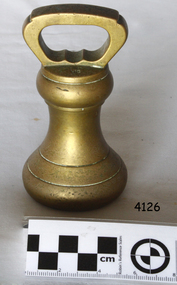
Functional object - Weight Avoirdupois, Avery Ltd, 1940-1950s
... The company was founded in the early 18th century and took the name W & T Avery in 1818. ...The company was founded in the early 18th century and took the name W & T Avery in 1818. ...A weight made in England by W&T Avery a British manufacturer of weights and weighing machines. The company was founded in the early 18th century and took the name W & T Avery in 1818. The undocumented origin of the company goes back to 1730 when James Ford established the business in the town of Digbeth. On Joseph Balden, the then company’s owner’s death in 1813 William and Thomas Avery took over his scale making business and in 1818 renamed it W & T Avery. The business rapidly expanded and in 1885 they owned three factories: the Atlas Works in West Bromwich, the Mill Lane Works in Birmingham and the Moat Lane Works in Digbeth. In 1891 the business became a limited company with a board of directors and in 1894 the shares were quoted on the London Stock Exchange. In 1895 the company bought the legendary Soho Foundry in Smethwick, a former steam engine factory owned by James Watt & Co. In 1897 the move was complete and the steam engine business was gradually converted to pure manufacture of weighing machines. The turn of the century was marked by managing director William Hipkins who was determined to broadening the renown of the Avery brand and transforming the business into specialist manufacture of weighing machines. By 1914 the company occupied an area of 32,000m² and had some 3000 employees. In the inter-war period, the growth continued with the addition of specialized shops for cast parts, enamel paints and weighbridge assembly and the product range diversified into counting machines, testing machines, automatic packing machines and petrol pumps. During the second world war, the company also produced various types of heavy guns. At that time the site underwent severe damage from parachute mines and incendiary bombs. Then from 1931 to 1973, the company occupied the 18th-century Middlesex Sessions House in Clerkenwell as its headquarters. Changes in weighing machine technology after World War II led to the closure of the foundry, the introduction of electronic weighing with the simultaneous gradual disappearance of purely mechanical devices. The continued expansion was partly achieved through a series of acquisitions of other companies. After almost a century of national and international expansion, the company was taken over by GEC in 1979. Keith Hodgkinson, managing director at the time, completed the turn-around from mechanical to electronic weighing with a complete overhaul of the product range of retail sales of industrial platform scales. In 1993 GEC took over the Dutch-based company Berkel and the Avery-Berkel name was introduced. In 2000 the business was in turn acquired by the US-American company Weigh-Tronix, who already owned Salter, and is today operating as Avery Weigh-Tronix. An item used used by grocers and merchants to weigh store bought goods around the 1950s. This item gives an insight into social history of the time.Weight, brass, Stamped F27, 2lb.flagstaff hill, warrnambool, shipwrecked-coast, flagstaff-hill, flagstaff-hill-maritime-museum, maritime-museum, shipwreck-coast, flagstaff-hill-maritime-village, weight, brass weight -
 Flagstaff Hill Maritime Museum and Village
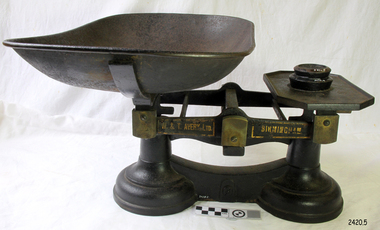
Equipment - Scale and weights, 1860-1900
... The company was founded in the early 18th century and took the name W & T Avery in 1818. ...The company was founded in the early 18th century and took the name W & T Avery in 1818. ...The subject item was made in England by W&T Avery a British manufacturer of weights and weighing machines. The company was founded in the early 18th century and took the name W & T Avery in 1818. The undocumented origin of the company goes back to 1730 when James Ford established the business in the town of Digbeth. On Joseph Balden, the then company’s owner’s death in 1813 William and Thomas Avery took over his scale making business and in 1818 renamed it W & T Avery. The business rapidly expanded and in 1885 they owned three factories: the Atlas Works in West Bromwich, the Mill Lane Works in Birmingham and the Moat Lane Works in Digbeth. In 1891 the business became a limited company with a board of directors and in 1894 the shares were quoted on the London Stock Exchange. In 1895 the company bought the legendary Soho Foundry in Smethwick, a former steam engine factory owned by James Watt & Co. In 1897 the move was complete and the steam engine business was gradually converted to pure manufacture of weighing machines. The turn of the century was marked by managing director William Hipkins who was determined to broaden the renown of the Avery brand and transform the business into specialist manufacture of weighing machines. By 1914 the company occupied an area of 32,000m² and had some 3000 employees. In the inter-war period, the growth continued with the addition of specialized shops for cast parts, enamel paints and weighbridge assembly and the product range diversified into counting machines, testing machines, automatic packing machines and petrol pumps. During the second world war, the company also produced various types of heavy guns. At that time the site underwent severe damage from parachute mines and incendiary bombs. Then from 1931 to 1973, the company occupied the 18th-century Middlesex Sessions House in Clerkenwell as its headquarters. Changes in weighing machine technology after World War II led to the closure of the foundry, the introduction of electronic weighing with the simultaneous gradual disappearance of purely mechanical devices. The continued expansion was partly achieved through a series of acquisitions of other companies. After almost a century of national and international expansion, the company was taken over by GEC in 1979. Keith Hodgkinson, managing director at the time, completed the turn-around from mechanical to electronic weighing with a complete overhaul of the product range of retail sales of industrial platform scales. In 1993 GEC took over the Dutch-based company Berkel and the Avery-Berkel name was introduced. In 2000 the business was in turn acquired by the US-American company Weigh-Tronix, who already owned Salter, and is today operating as Avery Weigh-Tronix.An item used by grocers and merchants throughout the then British colonies of England to weigh store-bought goods around the mid to late 19th century. This item gives an insight into the daily lives of early colonial settlers and is a significant part of the era’s social history of the time.Balance scale and weights with removable dish, two round weights glued to tray 4oz and 8oz. Scales 'to weigh up to 28lb. Printed in gold on black labels each side "W & T AVERY LTD", "BIRMINGHAM" warrnambool, flagstaff-hill, flagstaff-hill-maritime-museum, maritime-museum, shipwreck-coast, flagstaff-hill-maritime-village, scale and weights, food preparation equipment, w t avery ltd, balance scale, grocers scales, james ford, william & thomas avery, birmingham uk -
 Queenscliffe Maritime Museum
Leisure object - Model Blue Nose I, Clive Barnard, 1982
... The name Bluenose originated as a nickname for Nova Scotians from as early as the late 18th century....The name Bluenose originated as a nickname for Nova Scotians from as early as the late 18th century. Model Schooner Blue Nose I Nova Scotia Canada Scale model of Bluenose I Leisure object Model Blue Nose I Clive Barnard ...Bluenose I was a fishing and racing gaff rig schooner built in 1921 in Nova Scotia, Canada. A celebrated racing ship and fishing vessel, Bluenose under the command of Angus Walters, became a provincial icon for Nova Scotia and an important Canadian symbol in the 1930s, serving as a working vessel until she was wrecked in 1946. Nicknamed the "Queen of the North Atlantic", she was later commemorated by a replica, Bluenose II, built in 1963. The name Bluenose originated as a nickname for Nova Scotians from as early as the late 18th century.Scale model of Bluenose Imodel, schooner, blue nose i, nova scotia, canada -
 Flagstaff Hill Maritime Museum and Village
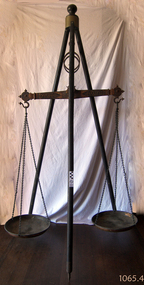
Equipment - Balance Scale, 1850s
... The company was founded in the early 18th century and took the name W & T Avery in 1818. ...The company was founded in the early 18th century and took the name W & T Avery in 1818. ...A Large Rare mid 19th Century Balance Scale (also called a Beam Scale) Made in England by W&T Avery a British manufacturer of weighing machines. The company was founded in the early 18th century and took the name W & T Avery in 1818. The undocumented origin of the company goes back to 1730 when James Ford established the business in the town of Digbeth. On Joseph Balden the then company’s owner’s death in 1813 William and Thomas Avery took over his scale making business and in 1818 renamed it W & T Avery. The business rapidly expanded and in 1885 they owned three factories: the Atlas Works in West Bromwich, the Mill Lane Works in Birmingham and the Moat Lane Works in Digbeth. In 1891 the business became a limited company with a board of directors and in 1894 the shares were quoted on the London Stock Exchange. In 1895 the company bought the legendary Soho Foundry in Smethwick, a former steam engine factory owned by James Watt & Co. In 1897 the move was complete and the steam engine business was gradually converted to pure manufacture of weighing machines. The turn of the century was marked by managing director William Hipkins who was determined to broadening the renown of the Avery brand and transforming the business into a specialist manufacture of weighing machines. By 1914 the company occupied an area of 32,000m² and had some 3000 employees. In the inter-war period the growth continued with the addition of specialized shops for cast parts, enamel paints and weighbridge assembly and the product range diversified into counting machines, testing machines, automatic packing machines and petrol pumps. During the second world war the company also produced various types of heavy guns. At that time the site underwent severe damage from parachute mines and incendiary bombs.Then from 1931 to 1973 the company occupied the 18th-century Middlesex Sessions House in Clerkenwell as its headquarters. Changes in weighing machine technology after World War II led to the closure of the foundry, the introduction of electronic weighing with the simultaneous gradual disappearance of purely mechanical devices. The continued expansion was partly achieved through a series of acquisitions of other companies. After almost a century of national and international expansion the company was taken over by GEC in 1979. Keith Hodgkinson, managing director at the time, completed the turn-around from mechanical to electronic weighing with a complete overhaul of the product range of retail scales and industrial platform scales. In 1993 GEC took over the Dutch-based company Berkel and the Avery-Berkel name was introduced. In 2000 the business was in turn acquired by the US-American company Weigh-Tronix, who already owned Salter, and is today operating as Avery Weigh-Tronix. Item made and used possibly around the 1850s by Victorian colonial government to check weights of goods being sold by early shop keepers on the gold fields item is very rare.James McEwan & Co were the retailers of W & T Avery scales in Victoria from 1852. A very rare item used probably to check weights used by merchants during colonial times by government inspectors in Victoria. A similar example exist in a NSW museum, the item is believed to have been made before W & T Avery expansion to the Soho foundry in Birmingham in 1885 and after 1818.Beam balance scale suspended from a wooden tripod, with metal trays suspended by three chain lengths. embossed on the balance beam W T Avery, Birmingham,flagstaff hill, warrnambool, shipwrecked coast, flagstaff hill maritime museum, maritime museum, shipwreck coast, flagstaff hill maritime village, great ocean road, scale, avery
