

Historical information
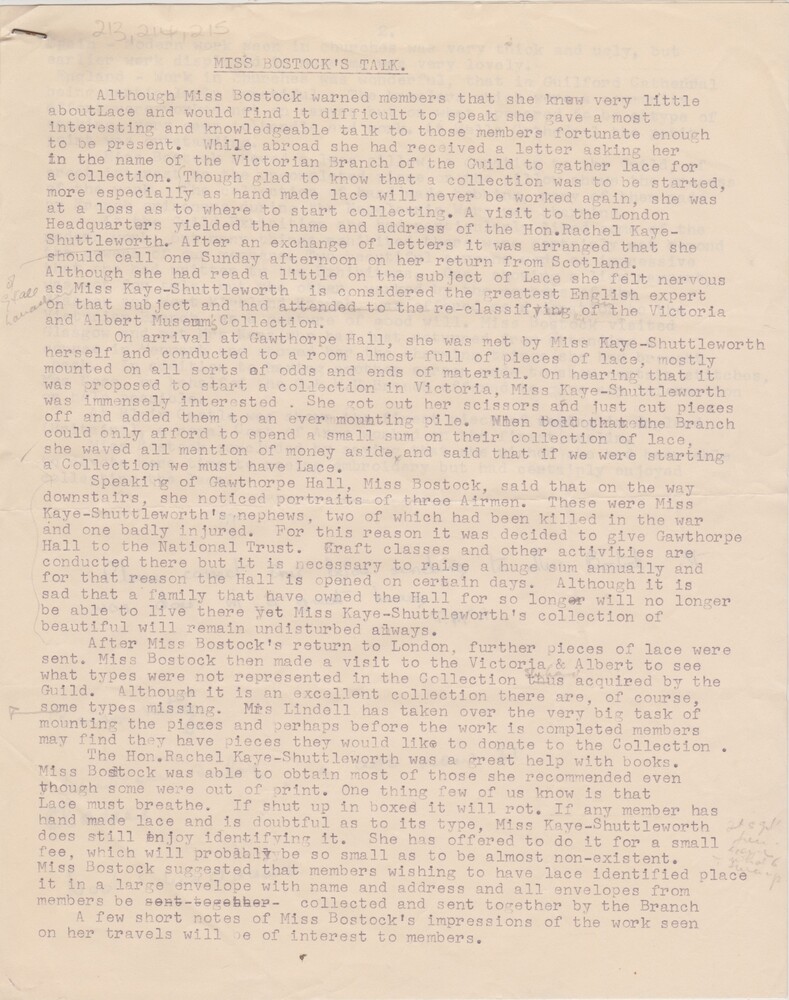
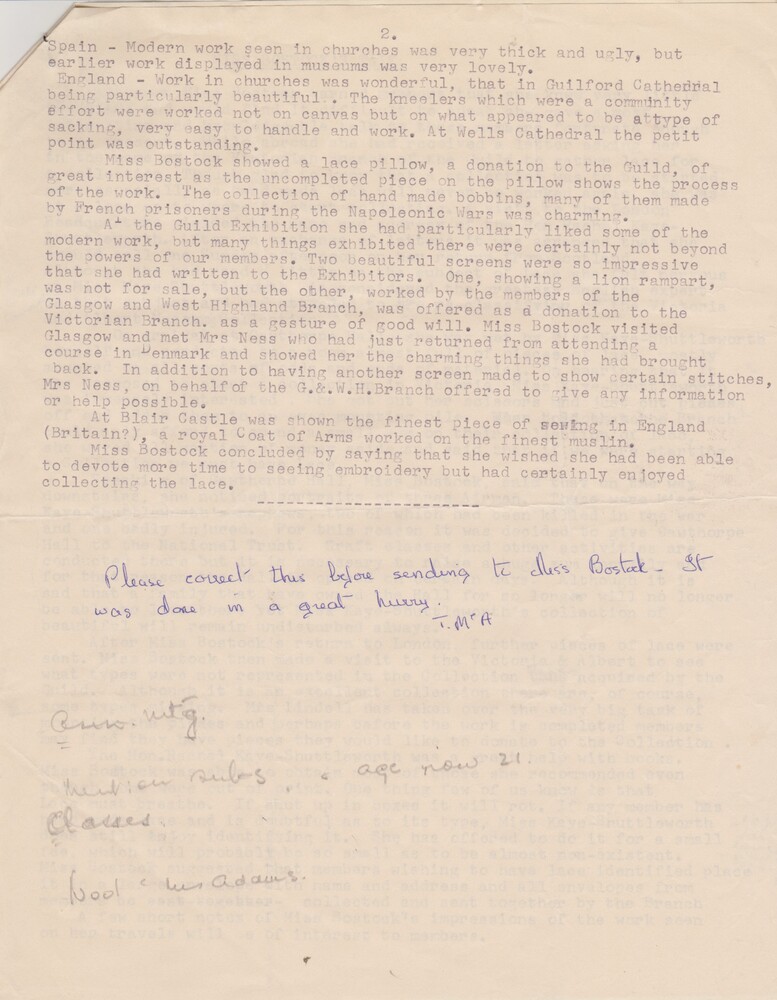
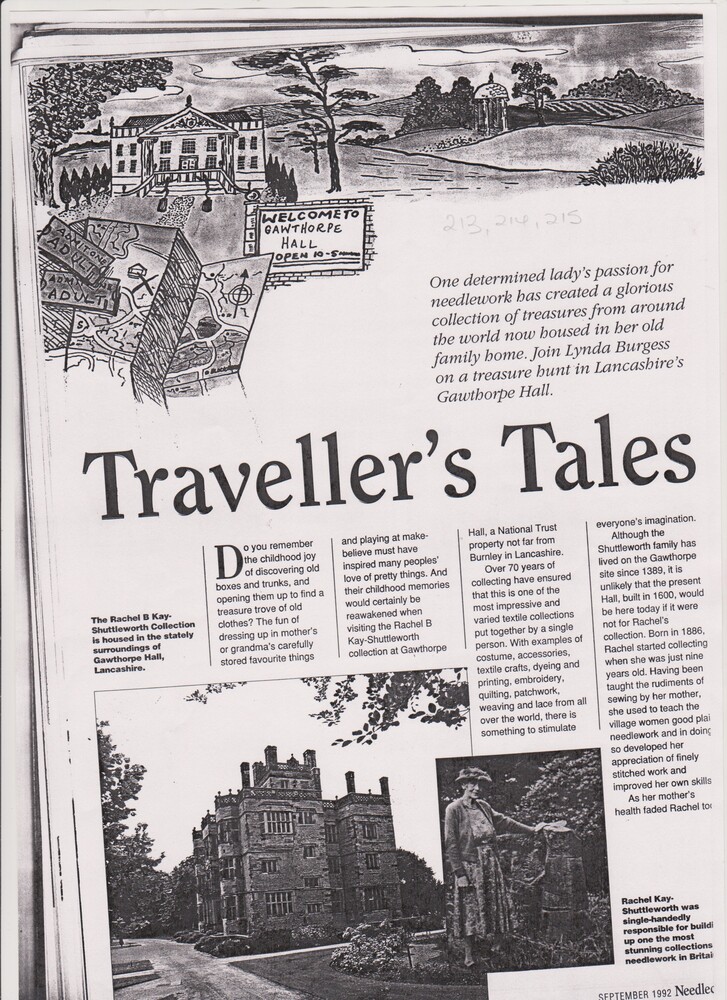
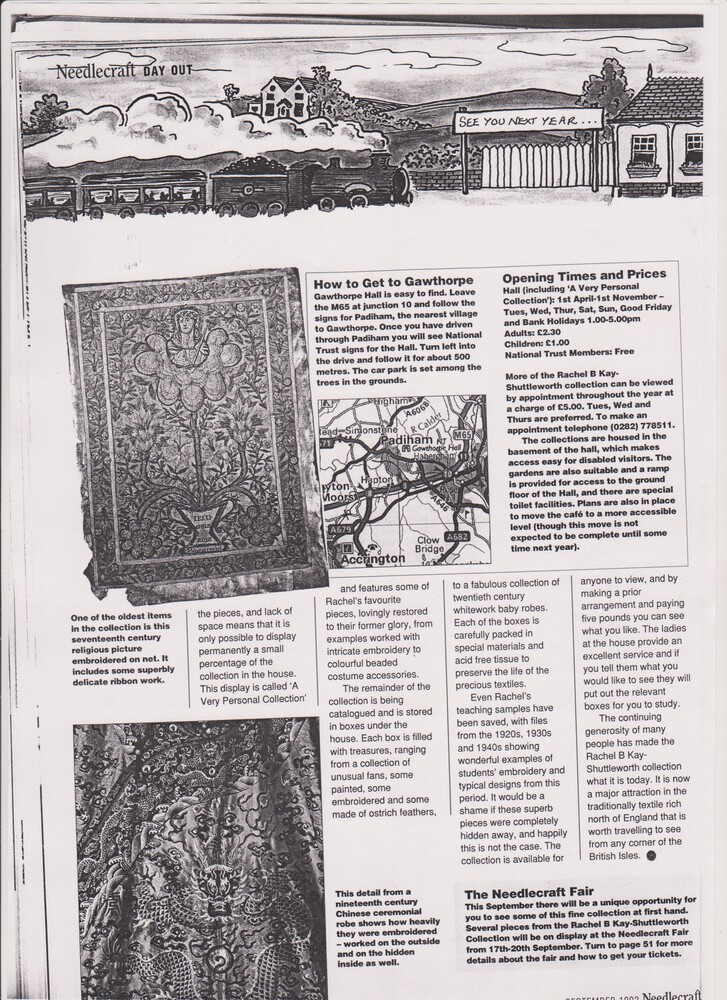
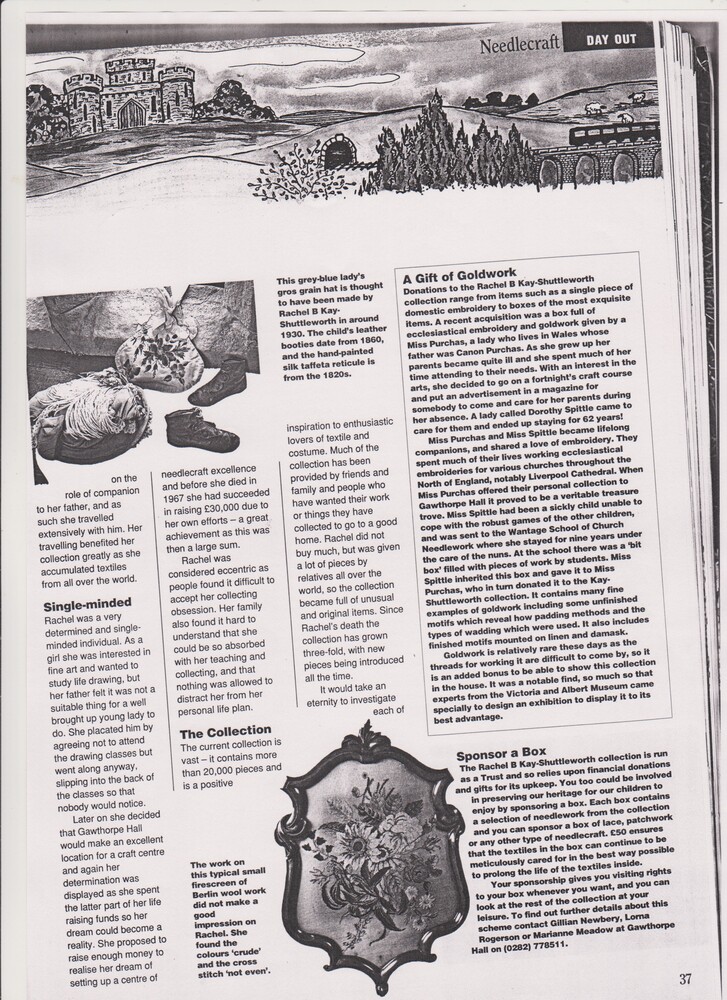
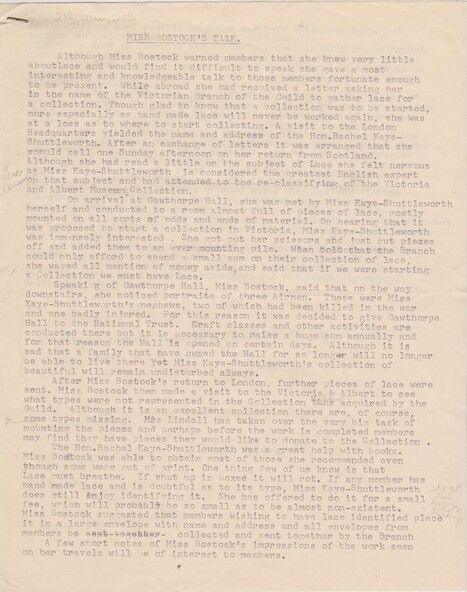
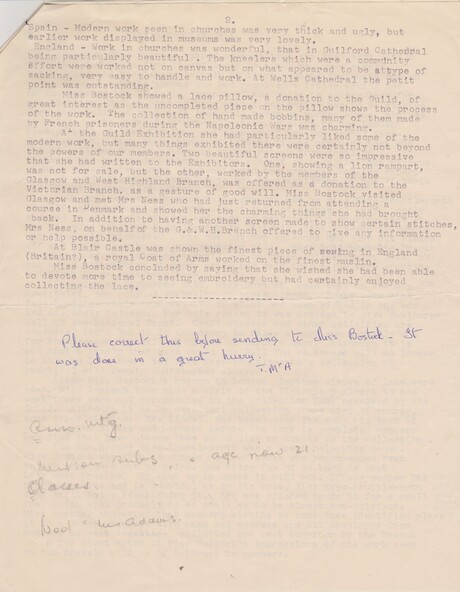
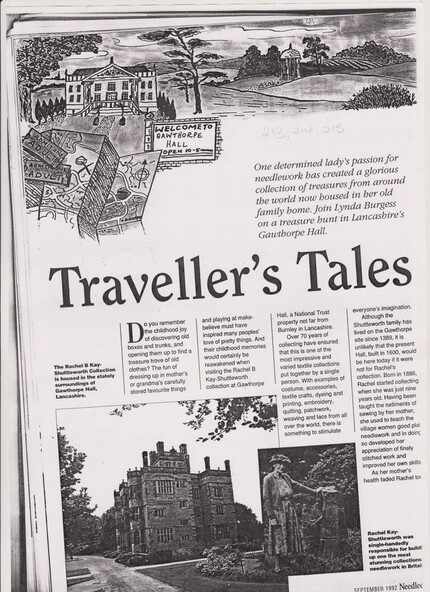
Miss Bostock, Foundation member of the EGV, travelled to England and met with The Hon. Rachel Kay-Shuttleworth of Gawthorpe Hall.
Rachel "cut" off many pieces from her extensive lace collection which were gifted to the EGV.
A Brief History (Information from the work of the late Jean Dudding)
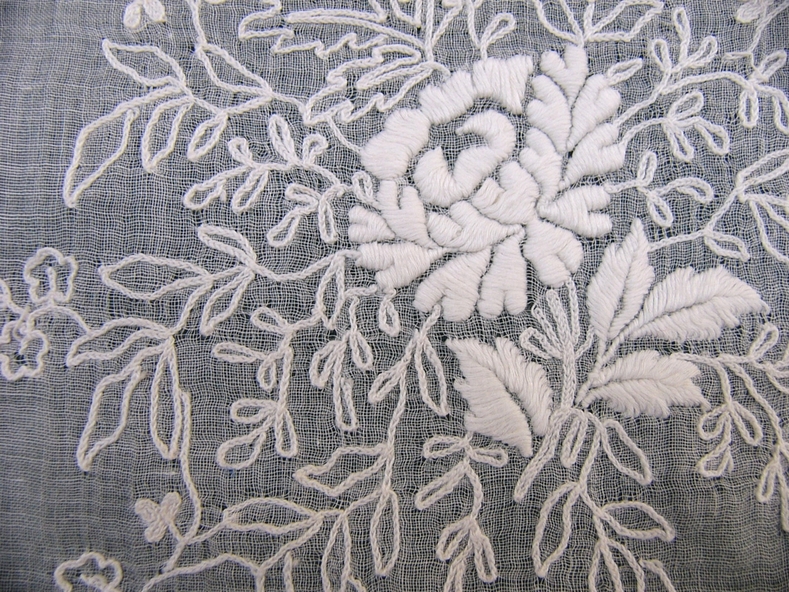
About 1812 a French émigré, M. Drago and his two daughters settled in Coggeshall, Essex. Here they hired a room and began to teach the women and small children a method of decorating this net by using a tambour hook. Thus began the making of Coggeshall Lace (sometimes called tambour lace). Tambouring produces a line of chain stitches and originated in the Far East, where the workers used a round frame resembling a tambourine or drum. This they could grip between the knees, thereby releasing both hands for tambouring. Coggeshall workers used a rectangular frame and this type is still used today.
Throughout the 19th century this tamboured net lace was made in the tambour rooms and cottages of Coggeshall, and also in the homes of surrounding villages. Lace manufacturers and lace dealers co-ordinated these workers by obtaining orders from London and elsewhere. Sometimes more sophisticated designs were introduced and these would be tamboured by the more proficient workers. Besides the designs, all the necessary net and threads would also be distributed to the lace workers. Liberty & Co., amongst others, were supplied with Coggeshall Lace.
The fluctuations in prosperity of the tambour lacemakers were governed by many factors. Fashion requiring flounces and frills gave great encouragement but the invention of chain stitch sewing machines and of machine made laces imitating the hand made article, together with a deterioration in the quality of design meant hard times for the laceworkers. Just after 1900 there was a great improvement in the quality of Coggeshall Lace. This was due largely to the activities of two ladies, the Misses Spurge, who were the chief employers in the district. Their brother William was an art teacher who improved the general standard of design and also introduced some old Italian designs. The First World War resulted in a decline in the making of Coggeshall Lace. The workers found it more profitable to do tambour beading.
In the 1930's a determined effort was made to revive the making of Coggeshall Lace, and three handkerchiefs were given to Princess Marina on her marriage (See below). Coggeshall Lace was made into dresses for the Queen, Princess Margaret and Princess Alexandra. This work was undertaken by three very proficient workers in Great Tey. Queen Mary also chose two lace dresses and a teacloth in Coggeshall Lace. It was hoped that this Royal Patronage would encourage a revival of the craft. However the financial return was too meagre and after the Second World War both net and threads disappeared. Today Coggeshall lace is made by some members of the Lacemakers Guild and is taught as part of the City and Guilds course.
https://coggeshallmuseum.org.uk/lace1.htm
Physical description
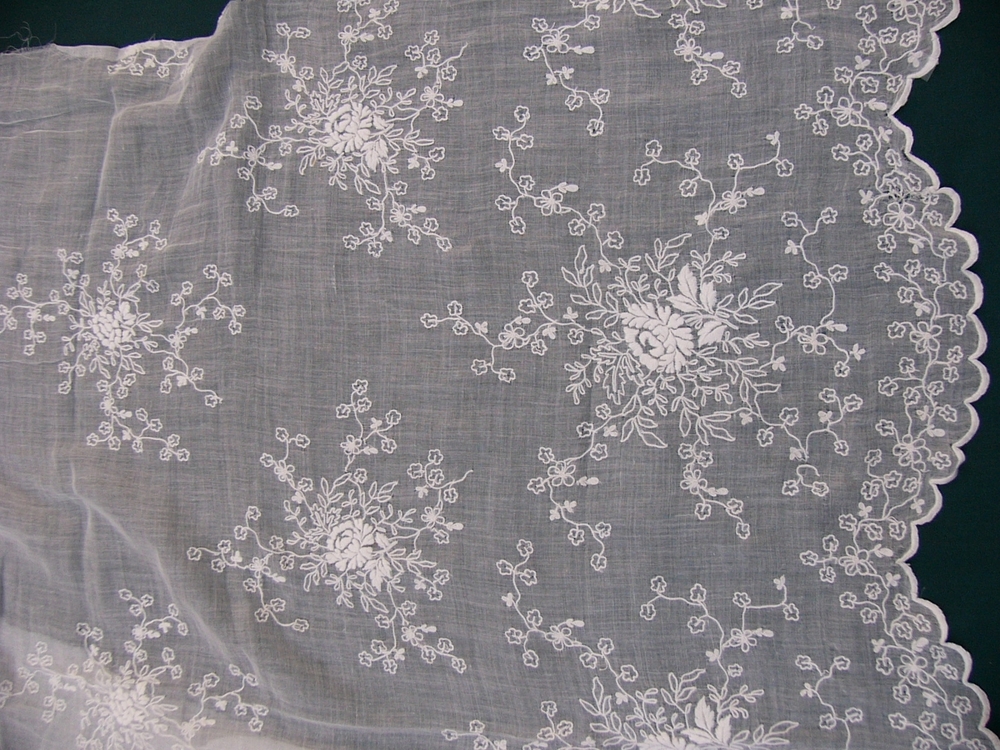
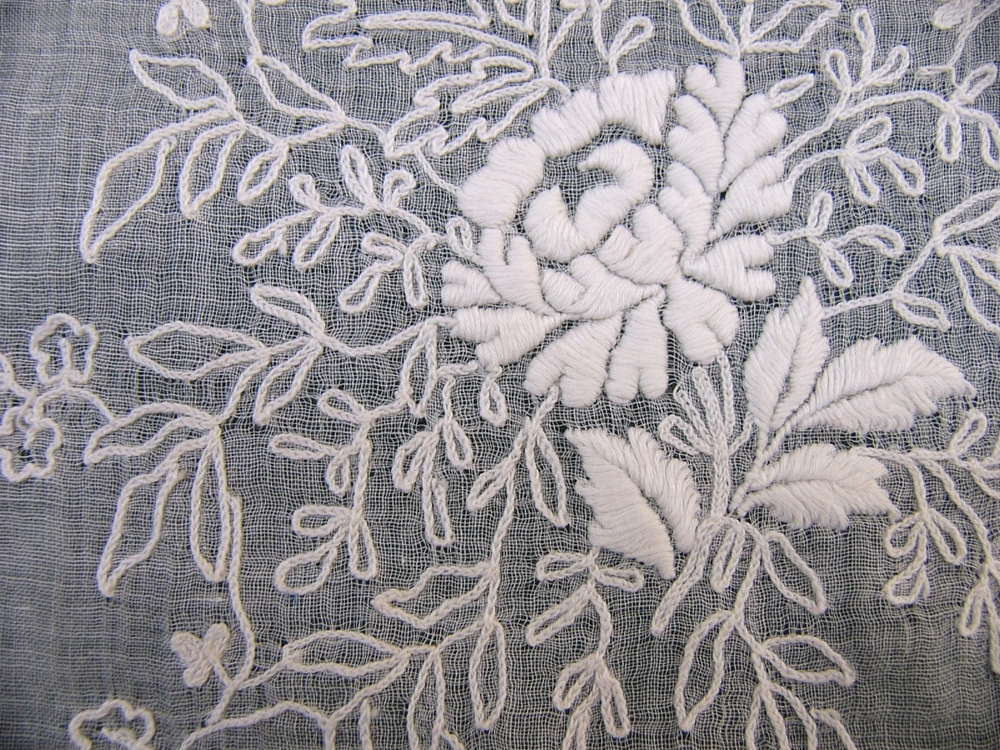
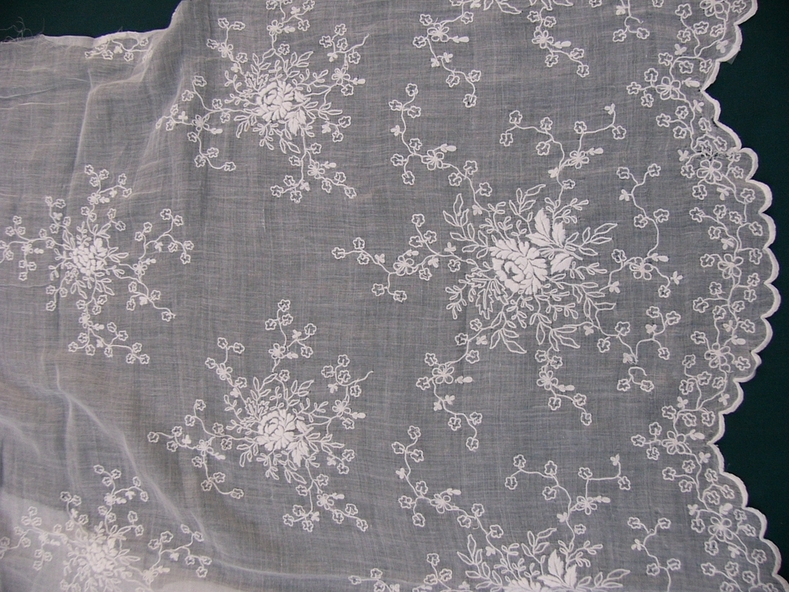
White muslin, with sprays of roses in white satin stitch, surrounded by delicate tambour embroidery known as Coggeshall embroidery.
Coggeshall being a town in Essex.