
Showing 28 items matching " german literature"
-
 Bendigo Historical Society Inc.
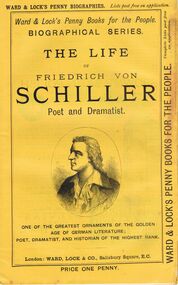
Book - LYDIA CHANCELLOR COLLECTION: THE LIFE OF FRIEDRICH VON SCHILLER
... ... German literature...One of the greatest ornaments of the golden age of German literature; poet, dramatist and historian of the highest rank.' ...One of the greatest ornaments of the golden age of German literature; poet, dramatist and historian of the highest rank.' ...A yellow book titled 'The Life of Friedrich von Schiller Poet and Dramatist. One of the greatest ornaments of the golden age of German literature; poet, dramatist and historian of the highest rank.' London : Ward, Lock & Co., Salisbury Square, E.C. 49 - 64 pgs. This booklet is one of a series of 53 ' Ward & Lock's Penny Books for the People.' 'Biographical Series.' Price one penny. Advertisements are of note.books, biography, friedrich von schiller, lydia chancellor, collection, friedrich von schiller, poetry, poet, drama, dramatist, entertainment, famous people, individual, person, male, german literature, literature, ward & lock's penny biographies, biographies, ward & lock's penny books for the people, book, biographical series, advertisements, penny books -
 Mrs Aeneas Gunn Memorial Library
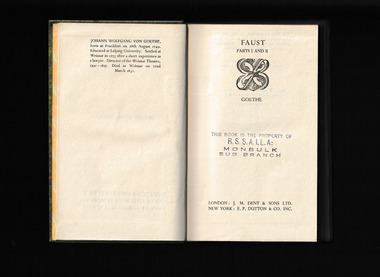
Book, JM Dent and sons, Goethe's Faust : Parts I and II, 1908
... German literature...German literature German drama Faust is the protagonist of a classic German legend. ...Faust is the protagonist of a classic German legend. He is a scholar who is highly successful yet dissatisfied with his life, so he makes a pact with the Devil, exchanging his soul for unlimited knowledge and worldly pleasures. The Faust legend has been the basis for many literary, artistic, cinematic, and musical works that have reinterpreted it through the ages. Faust and the adjective Faustian imply a situation in which an ambitious person surrenders moral integrity in order to achieve power and success for a delimited term. The Faust of early books - as well as the ballads, dramas, movies, and puppet-plays which grew out of them - is irrevocably damned because he prefers human to divine knowledge; "he laid the Holy Scriptures behind the door and under the bench, refused to be called doctor of Theology, but preferred to be styled doctor of Medicine". Plays and comic puppet theatre loosely based on this legend were popular throughout Germany in the 16th century, often reducing Faust and Mephistopheles to figures of vulgar fun. The story was popularised in England by Christopher Marlowe, who gave it a classic treatment in his play, The Tragical History of Doctor Faustus. In Goethe's reworking of the story two hundred years later, Faust becomes a dissatisfied intellectual who yearns for "more than earthly meat and drink" in his lifep.424.non-fictionFaust is the protagonist of a classic German legend. He is a scholar who is highly successful yet dissatisfied with his life, so he makes a pact with the Devil, exchanging his soul for unlimited knowledge and worldly pleasures. The Faust legend has been the basis for many literary, artistic, cinematic, and musical works that have reinterpreted it through the ages. Faust and the adjective Faustian imply a situation in which an ambitious person surrenders moral integrity in order to achieve power and success for a delimited term. The Faust of early books - as well as the ballads, dramas, movies, and puppet-plays which grew out of them - is irrevocably damned because he prefers human to divine knowledge; "he laid the Holy Scriptures behind the door and under the bench, refused to be called doctor of Theology, but preferred to be styled doctor of Medicine". Plays and comic puppet theatre loosely based on this legend were popular throughout Germany in the 16th century, often reducing Faust and Mephistopheles to figures of vulgar fun. The story was popularised in England by Christopher Marlowe, who gave it a classic treatment in his play, The Tragical History of Doctor Faustus. In Goethe's reworking of the story two hundred years later, Faust becomes a dissatisfied intellectual who yearns for "more than earthly meat and drink" in his lifegerman literature, german drama -
 Linton Mechanics Institute and Free Library Collection
Book - Essays, Carlyle, Thomas, Critical and miscellaneous essays : collected and republished : in seven volumes : Vol. I, 1872
... ...German literature...Thomas Carlyle English literature Essays German literature James Dodds Original collection Essays on German literature. ...Essays on German literature. Contents of Volume I: 'Jean Paul Friedrich Richter';' State of German Literature'; 'Life and Writings of Werner'; 'Goethe's Helena'; 'Goethe'; Appendix I; Appendix II; Summary Thomas Carlyle (1795-1881) was an influential essayist, historian and philosopher. Multi-volume reprints of his writings were first published in 1838, with later editions in 1840, 1847, 1857 and 1869. Each new edition incorporated additional material from Carlyle's continuing output. This seven-volume edition was published in 1872. The Linton Mechanic's Institute held the first three volumes.299 p. : decorative brown cover embossed in black. Title and Author's named embossed on front, and in gold on spine. Includes table of contents, five essays, appendices, and summaries of essays and appendices.non-fictionEssays on German literature. Contents of Volume I: 'Jean Paul Friedrich Richter';' State of German Literature'; 'Life and Writings of Werner'; 'Goethe's Helena'; 'Goethe'; Appendix I; Appendix II; Summary Thomas Carlyle (1795-1881) was an influential essayist, historian and philosopher. Multi-volume reprints of his writings were first published in 1838, with later editions in 1840, 1847, 1857 and 1869. Each new edition incorporated additional material from Carlyle's continuing output. This seven-volume edition was published in 1872. The Linton Mechanic's Institute held the first three volumes.thomas carlyle, english literature, essays, german literature, james dodds, original collection -
 Linton Mechanics Institute and Free Library Collection
Book - Essays, Carlyle, Thomas, Critical and miscellaneous essays : collected and republished : in seven volumes : Vol. III, 1872
... ...German literature...Thomas Carlyle Essays German literature English literature James Dodds Original collection Essays on German literature. ...Essays on German literature. Contents of Volume III: 'Jean Paul Friedrich Richter again'; 'Luther's Psalm'; 'Schiller'; 'The Nibelungen Lied'; 'German Literature of the XIV. and XV. Centuries'; 'Taylor's Historic Survey of German Poetry'; Summary. Thomas Carlyle (1795-1881) was an influential essayist, historian and philosopher. Multi-volume reprints of his writings were first published in 1838, with later editions in 1840, 1847, 1857 and 1869. Each new edition incorporated additional material from Carlyle's continuing output. This seven-volume edition was published in 1872. The Linton Mechanic's Institute held the first three volumes.256 p. : decorative brown cover embossed in black. Title and Author's named embossed on front, and in gold on spine. Includes table of contents, six essays, summaries of essays.non-fictionEssays on German literature. Contents of Volume III: 'Jean Paul Friedrich Richter again'; 'Luther's Psalm'; 'Schiller'; 'The Nibelungen Lied'; 'German Literature of the XIV. and XV. Centuries'; 'Taylor's Historic Survey of German Poetry'; Summary. Thomas Carlyle (1795-1881) was an influential essayist, historian and philosopher. Multi-volume reprints of his writings were first published in 1838, with later editions in 1840, 1847, 1857 and 1869. Each new edition incorporated additional material from Carlyle's continuing output. This seven-volume edition was published in 1872. The Linton Mechanic's Institute held the first three volumes.thomas carlyle, essays, german literature, english literature, james dodds, original collection -
Linton Mechanics Institute and Free Library Collection
Book - Essays, Carlyle, Thomas, Critical and miscellaneous essays : collected and republished : in seven volumes : Vol. II, 1872
... ...German literature...Thomas Carlyle English literature German literature James Dodds Original collection Essays Essays on various writers, and on German playwrights. ...Essays on various writers, and on German playwrights. Also includes an essay on the rise of the Industrial Revolution, and an essay in which Carlyle outlines his philosophy of history. Contents of Volume II: 'Burns'; 'Life of Heyne'; 'German Playwrights'; 'Voltaire'; 'Novalis'; 'Signs of the Times';'On History'. Appendix No. 1; Appendix No. 2; Summary. Thomas Carlyle (1795-1881) was an influential essayist, historian and philosopher. Multi-volume reprints of his writings were first published in 1838, with later editions in 1840, 1847, 1857 and 1869. Each new edition incorporated additional material from Carlyle's continuing output. This seven-volume edition was published in 1872. The Linton Mechanic's Institute held the first three volumes.303 p. : decorative brown cover embossed in black. Title and Author's named embossed on front, and in gold on spine. Includes table of contents, seven essays, appendices, and summaries of essays and appendices.non-fictionEssays on various writers, and on German playwrights. Also includes an essay on the rise of the Industrial Revolution, and an essay in which Carlyle outlines his philosophy of history. Contents of Volume II: 'Burns'; 'Life of Heyne'; 'German Playwrights'; 'Voltaire'; 'Novalis'; 'Signs of the Times';'On History'. Appendix No. 1; Appendix No. 2; Summary. Thomas Carlyle (1795-1881) was an influential essayist, historian and philosopher. Multi-volume reprints of his writings were first published in 1838, with later editions in 1840, 1847, 1857 and 1869. Each new edition incorporated additional material from Carlyle's continuing output. This seven-volume edition was published in 1872. The Linton Mechanic's Institute held the first three volumes.thomas carlyle, english literature, german literature, james dodds, original collection, essays -
 Royal Australian and New Zealand College of Obstetricians & Gynaecologists (RANZCOG)
Instrument - Two Veres needles used by Dr Geoff Bishop, WISAP Medical Technology GmbH
... It was not until 1938, when he published his invention in the German literature, that the needle became more broadly known outside of Hungary. ...It was not until 1938, when he published his invention in the German literature, that the needle became more broadly known outside of Hungary. ...Used for laparoscopy in gynaecology as well as in general surgery. Named for János Veres(s) (1903–1979), a Hungarian internist working with tuberculosis patients. At the time, one of the mainstays of treatment was to collapse an infected lung and allow lesions to heal. The needle was introduced as a safer technique to give patients such pneumothoraces. It was not until 1938, when he published his invention in the German literature, that the needle became more broadly known outside of Hungary. (Wikipedia) Believed to have been used and donated by Dr Geoff Bishop.Two Veres needles of differing lengths. Metal, spring loaded needle with an outer cannula and an inner stylus. Consists of a thin, hollow shaft with a bevelled point at one end, encasing a spring loaded needle/stylus with an eyelet at the end. Opposite end of needle consists of an open valve leading to the inner needle with a bulbous connection point. There is a round protrusion at the bottom of the bulbous connection point, and a small oval shaped grip at the top of this point, running parallel to the body of the instrument. A metal barrel containing the spring sits adjacent to the connection point. The barrel can be unscrewed to access the spring inside. The oval shaped grip on the shorter needle is engraved with the text 'WISAP/W. GERMANY'. The oval shaped grip on the longer needle is engraved with the number '3'. The number '30 is also engraved at the base of the barrel on the longer needle. 'WISAP/W.GERMANY', '3'gynaecology, surgery -
 Flagstaff Hill Maritime Museum and Village
Book - A Fictional Story, William Heinemann Ltd, Ultima Thule, 1929
... Robertson, a professor of German literature, and lived in England and Europe for most of her adult life. ...Robertson, a professor of German literature, and lived in England and Europe for most of her adult life. ...Ultima Thule (1929) is the landmark third and final novel in the acclaimed trilogy The Fortunes of Richard Mahony by Ethel Florence Lindesay ( Pen Name Henry Handel Richardson). The synopsis of Ultima Thule follows the final, tragic chapter of Dr Richard Mahony's life. Having lost his wealth due to poor investments and misplaced trust, the forty-nine-year-old Mahony returns to Australia financially ruined. Forced to restart his medical practice in the rural Victorian towns of Chiltern and Koroit, Mahony suffers a severe physical and mental breakdown driven by early-onset neurosyphilis and profound alienation from his surroundings. The narrative focuses on mental and physical decay, with a harrowing and realistic depiction of Mahony's descent into dementia and insanity. The psychological struggle of his steadfast wife, Mary (Polly), is also depicted, as she steps up to support the family amidst social stigma and poverty within the harsh Australian landscape, alongside her own alienation as an exile in an unyielding environment.Hard cover book. Ulima Thule Author: Ethel Florence Lindesay ( Pen Name Henry Handel Richardson) Publisher: William Heinemann & Co Date: 1929 Further Information: Black Cloth front hardcover with lettering and embossed patterning. Rebound brown spine with red reinforced cloth strip. The spine has a Library label with an inscription.fictionUltima Thule (1929) is the landmark third and final novel in the acclaimed trilogy The Fortunes of Richard Mahony by Ethel Florence Lindesay ( Pen Name Henry Handel Richardson). The synopsis of Ultima Thule follows the final, tragic chapter of Dr Richard Mahony's life. Having lost his wealth due to poor investments and misplaced trust, the forty-nine-year-old Mahony returns to Australia financially ruined. Forced to restart his medical practice in the rural Victorian towns of Chiltern and Koroit, Mahony suffers a severe physical and mental breakdown driven by early-onset neurosyphilis and profound alienation from his surroundings. The narrative focuses on mental and physical decay, with a harrowing and realistic depiction of Mahony's descent into dementia and insanity. The psychological struggle of his steadfast wife, Mary (Polly), is also depicted, as she steps up to support the family amidst social stigma and poverty within the harsh Australian landscape, alongside her own alienation as an exile in an unyielding environment.shipwrecked-coast, flagstaff-hill, flagstaff-hill-maritime-museum, warrnambool, maritime-museum, shipwreck-coast, flagstaff-hill-maritime-village, shipwrecked-artefact, book, pattison collection, warrnambool library, warrnambool mechanics’ institute, ralph eric pattison, corangamite regional library service, warrnambool city librarian, mechanics’ institute library, victorian library board, warrnambool books and records, warrnambool children’s library, ultima thule, henry handel richardson, ethel florence lindesay -
 Flagstaff Hill Maritime Museum and Village
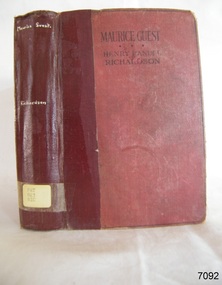
Book - A Fictional Story, Ethel Florence Lindesay ( Pen Name Henry Handel Richardson), Maurice Guest, 1929
... Robertson, a professor of German literature, and lived in England and Europe for most of her adult life. ...Robertson, a professor of German literature, and lived in England and Europe for most of her adult life. ...Set in the 1890s music world of Leipzig, Germany, the novel follows Maurice Guest, a young Englishman studying piano at the Conservatorium, who falls into an obsessive, ultimately destructive love affair with Louise Dufrayer, an Australian woman already entangled with a gifted but caddish violinist, Eugen Schilsky. The story follows Maurice's violent passion for the indolent, sensuous Louise, who is the mistress of the talented violinist Eugen Schilsky. Maurice consoles himself with another woman, but a scandal drives Schilsky away, after which Maurice and Louise come together. Maurice is forced to confront his own mediocrity as a musician, and Louise's chequered past comes to light through a former lover, leading to a violent confrontation, further betrayals, a suicide, and finally Louise leaving Maurice, who then walks into the countryside and shoots himself. It is essentially a naturalist tragedy of obsessive love and thwarted artistic ambition, set against a vividly rendered expatriate music-student milieu.Hard cover book. Maurice Guest Author: Ethel Florence Lindesay ( Pen Name Henry Handel Richardson) Publisher: William Heinemann & Co Date: 1929 Further Information: Red Cloth front hardcover with lettering in black. Rebound reinforced spine with red reinforced cloth strip. The spine has a Library label with an inscription.fictionSet in the 1890s music world of Leipzig, Germany, the novel follows Maurice Guest, a young Englishman studying piano at the Conservatorium, who falls into an obsessive, ultimately destructive love affair with Louise Dufrayer, an Australian woman already entangled with a gifted but caddish violinist, Eugen Schilsky. The story follows Maurice's violent passion for the indolent, sensuous Louise, who is the mistress of the talented violinist Eugen Schilsky. Maurice consoles himself with another woman, but a scandal drives Schilsky away, after which Maurice and Louise come together. Maurice is forced to confront his own mediocrity as a musician, and Louise's chequered past comes to light through a former lover, leading to a violent confrontation, further betrayals, a suicide, and finally Louise leaving Maurice, who then walks into the countryside and shoots himself. It is essentially a naturalist tragedy of obsessive love and thwarted artistic ambition, set against a vividly rendered expatriate music-student milieu.warrnambool, shipwrecked-coast, flagstaff-hill, flagstaff-hill-maritime-museum, maritime-museum, shipwreck-coast, flagstaff-hill-maritime-village, shipwrecked-artefact, book, maurice guest, henry handel richardson -
Mission to Seafarers Victoria
Article, A Woman's Melbourne Letter
... literature. Books in French, English, Spanish, Scandinavian, Norwegian, and German may be found on the shelves. ...literature. Books in French, English, Spanish, Scandinavian, Norwegian, and German may be found on the shelves. ...A detailed description of the Mission and its activities written by a woman: Western Mail (Perth, WA : 1885 - 1954), Friday 13 December 1918, page 34 A WOMAN'S MELBOURNE LETTER. Melbourne, Dec. 4. There is an idea abroad, which as regards Melbourne, at any rate, is quite erroneous, that our sailors are not as well looked after as our soldiers, and that the noble men of the Mercantile Marine are much neglected ! For once, perhaps, my readers will pardon a letter dealing with only one subject, but the steady, unostentatious work done by the Ladies' Harbour Light Guild, in connection with the mission to seamen in Melbourne could not be adequately explained if dismissed in the usual short paragraph. Some of the most prominent names in Melbourne are associated with this guild and with the Mission Chaplain, and Mrs. Gurney Goldsmith, the members have made the Seamen's Institute a real home for those sailors of the Mercantile Marine, who touch our port. What we as a community owe to those men by their heroism in recent hostilities is certainly more understood by this band of enthusiastic workers than by the community generally. By using their unflagging energies, and influence on the sailor's behalf they endeavour to discharge a debt to which in some way or other we could and should all contribute. Even the most casual person can, if he thinks at all, sum up a few of the things our sailors - other than those belonging to our glorious navy - have done for us. On the spur of the moment we remember that those of the Mercantile Marine, are the men who manned our transports, who carried our wheat and wool, to oversea markets; who kept us in touch with our loved ones abroad; who kept the fires going in the furnaces of the great leviathans, bringing our wounded soldiers home again; who never flinched when self-sacrifice was demanded; who cared, with that tenderness, innate in all sailors, for the women and children, when the passenger ships were struck a dastardly blow by the wicked enemy; who, mocking death, gave up life with a heroism all the more heroic because it was always taken as a matter of course! Is it any wonder, then, that the members of the Ladies' Harbour Light Guild make it their business to provide a bright, homelike, spot in Melbourne, where the sailors are always certain of a cherry welcome ashore? The members of the guild are admirably drafted! The 360 non-workers each pay £1 1s. per annum. The workers, of whom there are between 700 and 800, donate 2s. 6d. and school members - it is confidently hoped that gradually all the schools will take an active interest in the mission - 1s. a year. The knights of the guild - as the men members are designated - are responsible for any sum they wish to name, from 5s. a year upwards. Everything is paid for out of these revenues, with the exception of a small grant from the Home Mission Fund - and such is the organisation, and management, that the entire concern is quite free from debt. The Seamen's Church and Institute, where the "Harbour Lights" gleam so brightly, is situated right in the midst of all the bustle and turmoil of the wharves, at the end of Flinders-street. The building, comprising chapel, and institute under the one red tiled roof, is grey stuccoed, with a small tower, from which flaunts the flag of 'The Flying Angel" - the badge of the guild. A visit to the institute makes one fully appreciate the boon the place must be to the voyage worn, weary, sailor. The atmosphere is eminently social in its best sense. While the architecture imparts an elegance, and quiet dignity which soothes by the very subtlety of its charm. With its comfortable furniture, its wealth of flowers, and the happy, wholesome, feminine influence which prevails everywhere, the quality which stands for the magic word "home" abounds. The Chaplain in the course of conversation said: -"We try to make this really a free club for sailors." But the habitues would probably tell you it was far more than that to them. The Institute is excellently appointed, and every little corner seems to have its particular history. It was built after the model of one of the old mission churches in California, and retains something of the old world attraction, while yet it combines all the advantages of modern, practical, conveniences. On entering the door the first thing, one notices is a huge compass, inlaid upon the floor, evidently to indicate one's proper bearings for it points due north - to the chapel! Only one other seamen's mission in the world boasts such a compass. As the sailor swings through the entrance he finds the office on his right, and there is, here, always a smiling face to welcome the shy, or timid, new comer. Quite a real post office is staffed by members of the guild, and all the letters received are listed alphabetically. Therefore, the expectant sailor has just to run his eye down the list, and he can immediately see whether there is a letter for him or not. If he is fortunate, he comes up to the member in charge, who unlocks the box, and produces the longed for missive. The boys are always encouraged to answer letters - and to write them. Often a few words about their mother, and their own home, will provoke a sleeping memory into activity. The writing room is well stocked with paper, envelopes, pens, and ink. The tables are so divided to ensure the utmost privacy, and through a calculated chain of circumstances, many an anxious mother receives a letter from her sailor lad, who, perhaps, might not have written but for these kindly inducements. The central hall - where social evenings are held every other night besides two special concerts a week - is inviting in the extreme. A handsome piano affords opportunity for those musically inclined. The tables are strewn with papers. The walls are bright with pictures, and here, and there, is a carved model, of a ship. One, of especial interest, is a model of "The Roon" carved, and presented by a French sailor. This German vessel will always be remembered in Australia. For it was across her bows that the first hostile shot was ever fired in Australian waters. In the corner is the canteen. It was fitted up entirely from the proceeds of a quotation calendar compiled by one of the members. The sailors may at any time, get a teapot of tea, or a tray of eatables, at a nominal cost. Before the canteen was in existence they had to go out for refreshments! - and sometimes they did not come back! Groups of sailors sit chatting at the tables. Half a dozen Swedes laugh and talk among themselves, for the simple reason they know no other language than their own. Several British sailors cluster about a dark-eyed Welsh lad - a perfect Celtic type - who, although only about twenty years of age, has been the victim of the Hun five times. Mines and torpedoes sank the ships he was in, either in the Channel or off the English coast, four times; and it is to his fifth experience, when the Inverness was wrecked, that everyone is eagerly listening. "We were in the boats eight days," he was saying, "I was pretty well mangled when they picked me up. The sufferings we endured were awful. At last we managed to reach Rapa, a Hawaiian island. The natives thought we were Germans, and came at us with spears. When they found we were British, they were awfully good to us. They even cried when we left, and the day before the rescue boat arrived they begged us to go into the hills and hide." At another table a Canadian lad - once a sailor - then a soldier, who trained at the Broadmeadows camp - was telling his experiences : - "The voyage which will always stick in my memory," he said, "was to a place which must be nameless. We left the United States not knowing whether we were bound, or what we were going to do. After some weeks we sighted a group of wonderfully beautiful islands, and we headed for the most remote and most lovely of them all. Then, and only then, we learned our mission from the skipper. We were taking their year's supply to a leprosy station! Oh no! I don't blame the skipper for not telling us ! Someone has to do these things, you know. A naval guard saw they didn't come near - and we all got sixty dollars extra. When the job was over we were quarantined on another island for two months, and one little chap - the baby of the crew, not eighteen - developed leprosy, and died before we left. Yes! I'll never forget that voyage, mates! Sometimes, I seem to see Leper's Island yet, with its lavish tropical vegetation and the gorgeous sunsets which stained all the water with blood. Then, too" - here the voice deepened - "there was an English girl - a leper - there. We heard she used to be an actress, and she contracted the disease somehow or other. She was always alone, and always watching us. In the distance we could see her come to the water's edge, and from there she would watch. Just watch . .. . watch . . .watch. ..." "Here come a couple of North Sea chaps," broke in an elderly man after pause. "One of them wounded, too, poor lad." It is not strange that all the sailors flock to the Institute. It is so comfortable, and essentially inviting, besides being full of human interest. The men's quarters comprise reading, writing and dressing rooms - hot and cold baths are always available - billiard room, and a special baggage room, where any sailor may leave his kit for as long as he likes. The payment of 3d. covers its complete insurance. Upstairs are the officers' quarters. These also have their own billiard room, writing and reading rooms, bath and dressing rooms. Just close are the apprentices' quarters - "The Half Deck," as popular parlance has it! The lads also have a billiard room of their own, and indulge in an easy armchair - amongst others - which was a donation from the Milverton School branch of the Guild. It is hoped by the committee to some day utilise the huge empty rooms, which run the length of the whole building. Their ultimate intention is to fit them up as cubicles, or "cabins," as they are to be called. They trust these "cabins" will be donated, either in memory, or in honour, of someone dear to the donor. Another forward movement soon to be put in hand, now that materials are available, is the establishment of "Norla Gymnasium." In a sailors' club such facility for exercise is absolutely essential. The men both need, and miss, exertion. As one boy, who had been backsliding, once said pathetically : -"If only there was something to do to get me into a good sweat, I would be all right." Soon such an one will be helped to swing from the trapese of the Norla Gymnasium into the right track! Sunday is always a fete day at the Institute, for 40 or 50 sailors generally come into tea. The up-to-date kitchen, which is fitted with every labour-saving appliance - all paid for out of working members' half crowns - is then a hive of animation, and methodical order. A formidable row of teapots await filling. Mrs. Goldsmith -, the chaplain's wife - rightly thinks it is far more homely to pour out the tea from a pot, than to serve it straight from the urns. So tea is poured out by a member, who sits at the head of a table gay with flowers, and chats to the guests. These latter are of all nationalities. But the French, the Spanish, Scandinavian, Norwegian - or any other sailor is equally welcome with the British. Two enthusiasts belonging to the Guild actually learnt Norwegian, so that men of this nation would have someone to talk to, and so be less lonely when they reached this, to them, foreign port ! The members of the Guild have their own private suite where they arrange the flow-err and do other necessary odds and ends undisturbed. No one appreciates flowers like a sailor, and the earliest and most beautiful may always be seen adorning the tables and rooms. Teas are served and lectures are held in the "Celia Little Hall," one of the most beautiful portions of the institute. It was erected by the chaplain in memory of his aunt from whom the hall takes its name. The Gothic windows open upon the cloisters, where, in the hot weather, the sailors enjoy their meals out of doors. The cloisters, indeed, form an exquisite spot. They are between a series of sweeping arches which lead to the chapel, and are sheltered by the open balcony of the chaplain's quarters. Grace of contour marks the architecture on every turn. Just around the corner is the chaplain's garden - a patch of green and colour, transformed from a desert waste, by a well-known woman horticulturist. The book room is a department especially valued by the sailors. There are two secretaries, one for home and the other for foreign literature. Books in French, English, Spanish, Scandinavian, Norwegian, and German may be found on the shelves. Each week about 36 convenient parcels of reading stuff are made up. These contain illustrated papers, books in various languages, and magazines. These parcels are eagerly accepted by the sailor with a long monotonous voyage before him. But complete as is every corner of the institute, no part is so well equipped as the memorial chapel erected by the Ladies' Harbour Light Guild, in memory of the officers and men, who have lost their lives during the war. St Peter's - for it is called after the sailor's patron saint - with its hallowed gentle dignity is a veritable sanctuary of peace, perhaps all the more so because it sprang out of war. The fittings are entirely of Australian wood. The pews, given in memory of some loved one by one of the members, are of Tasmanian hardwood. The reredos and altar chairs of carved blackwood. The rich carpet was provided by the members' magical half-crowns. Already this chapel holds memorials of peculiar historical interest. The altar lectern was given in memory of Commander Elwell, who, it will be remembered, was killed at Rabaul, in the early part of the war. The font commemorates two heroes - Nigel Hockley and Fred Hyde, who lost their lives at the hands of the Germans, although they survived the actual torpedoing of their ships, the Galgorn Castle off the coast of Ireland. The mother of one of them wrote out that her son had died as an Englishman should - fighting for the right. This noble sentiment is suitably paraphrased upon the inscription engraved upon the font. Practically every-hing enshrined in the chapel has its own sentimental value. The alms salver of beaten copper, studded with agate, is fragrant with the memory of a saintly woman.The eye of the sailor is caught and held by the pulpit, which is fashioned like a ship's hull and only a twist of rope guides the chaplain up the steps. For the last 13 years the Rev. A. Gurney Goldsmith, M.A., has acted as chaplain to the Seamen's Mission in Melbourne. Before that he and his wife worked in China. Mr Goldsmith visits all the boats and gets in touch personally with the sailor, over whom he has great influence. He is not only their chaplain and friend, but, amongst a wide range of other things, their banker besides. An exchange system exists between the various Missions, and the sailor who has "banked" his money with the chaplain, upon going away, receives a cheque which is cashed - minus exchange - by the chaplain of the next port. Mr. Goldsmith will tell you he has a soft spot in his heart for on old sailor he calls "Paddy." This ancient mariner has been wrecked ten times. It was a long time before the chaplain prevailed upon "Paddy" to partake of the spiritual and secular advantages afforded by the institute. He would not come, he said, until he could do so "with a good heart." Finally he frankly admitted that he had no "friends like those of 'the Flying Angel,' " and that he eventually proved his own "good heart" will be shown in this story. One day he came in to the chaplain and said bluffly, "Well, sir, I've been payin' off some old scores up Carlton way, an' I tells yer, plain, sir, not one of 'em would have seen a penny of their money but for the Mission." The Ladies' Harbour Light Guild has over thirty working suburban branches, and the excellent results achieved at the Institute now will no doubt be considerably augmented in the future. The practical actions of the members do more than anything else to convey the subtle meaning of the name of the Guild. To the visiting sailors the word "ladies" signifies the bread givers; "harbour" safety ; "lights" welcome; "guild" the welding of fraternity, and they one and all tell you the ideals thus embodied are unselfishly carried out by all the ladies who have banded together to care for the sailors' welfare.The article describes the Mission and the use of several spaces a year after its opening and gives details about the daily activities.Digital copy of an article published in the Western Mail on the 13th of December 1918. 717 flinders street, seamen's mission, norla dome, lhlg, reverend alfred gurney goldsmith, celia little room, garden, frederica godfrey -
 Uniting Church Archives - Synod of Victoria
BW photo, Undated
... literature, bookshops, adult literacy and theological training. He opened Bible schools for village evangelists and sent suitable clergy overseas for further studies. He encouraged initiative in others, helped them to find and use their talents, and gave them his unstinted confidence and support. Fresh finance was required for new ventures. This led him to travel widely in Germany...literature, bookshops, adult literacy and theological training. He opened Bible schools for village evangelists and sent suitable clergy overseas for further studies. He encouraged initiative in others, helped them to find and use their talents, and gave them his unstinted confidence and support. Fresh finance was required for new ventures. This led him to travel widely in Germany ...STANWAY, ALFRED (b. 9 Sept 1908; d. Melbourne, Vic, 27 June 1989). Anglican bishop, missionary. Stanway grew up in the Wimmera district of western Victoria, and left school when 14 years old. He found work in Melbourne, trained as an accountant, and at the age of 20, held a responsible position with a publishing company. This background, allied with an uncommon flair for figures and finance, was to stand him in good stead throughout his life. But he had little knowledge and no experience of the grace of God until 29 July 1928. At the Evening Service in the parish church of Fairfield on 29 July, he heard the Rev C H Nash (q.v.) preach a sermon which led to his conversion. Within two years he made up his mind to become a missionary and began night studies in order to matriculate. He entered Ridley College in March 1932 to prepare for ordination undertaking week-end duties as a catechist at Deer Park and St Albans. He joined the CMS League of Youth, became chairman, and gathered a fine band of young people many of whom were to become missionaries. He was closely involved with the Belgrave Heights Convention (then at Upwey) and established a League of Youth camp on the site. All his energies were thrown into the task of building up its members in personal holiness and vigorous evangelism. Stanway was ordained in St Paul's Cathedral, Melbourne on St Thomas Day 1934 and was placed in charge of the Old Mission Church of St James and St John, Melbourne. The duties were light enough to allow him to enrol in the Melbourne Teachers College and to complete the Diploma in Teaching. On 26 January 1937, he sailed for Africa to become a missionary in the Anglican Diocese of Mombasa, which at that time embraced the whole of Kenya. He was sent to the hot coastal town of Kaloleni as principal of a Secondary Boys School. Before he left Melbourne, he had become engaged to Marjory Harrison: she followed him to Africa and their marriage took place in Mombasa Cathedral in June 1939. He remained at Kaloleni until 1944 when he was transferred to the inland station of Maseno where all his gifts were to be deployed as rural dean of Nyanza. His oversight of some 500 village churches as well as a widespread primary school system was so efficient that in 1948 he was appointed archdeacon of Kenya with his home and office in Nairobi. As secretary of the African Church Council and of the African Education Board, he was responsible for all African work in the diocese. His contacts with government ministers and public servants were of first class significance at the time when the cry of Uhuru and the demand for independence was travelling throughout the colonial world. On 2 Feb 1951, Alfred Stanway was consecrated in Westminster Abbey as the third Anglican Bp of Central Tanganyika. This Diocese was the special sphere of the CMS Australia, and he already knew most of the missionary personnel. He brought with him the understanding and experience of one who had fully shared the lot and problems of a district missionary, but he came to the diocese at a time when it had yet to recover from its losses in personnel and finance as a result of the war. His immediate task was to provide the impetus of fresh leadership and a long-term overall policy. His aim from-the outset was to build up a strong autonomous church with its own indigenous pastorate. With the whole-hearted confidence of the home base, he was able to enlist the service of new missionaries. He saw a great increase in the number of African clergy and he encouraged village evangelists to open new fields of work. Simple structures were built as new churches at the rate of two a week, week in and week out, year by year. He worked hard to meet the need for Christian literature, bookshops, adult literacy and theological training. He opened Bible schools for village evangelists and sent suitable clergy overseas for further studies. He encouraged initiative in others, helped them to find and use their talents, and gave them his unstinted confidence and support. Fresh finance was required for new ventures. This led him to travel widely in Germany and America, where he raised large funds for these projects. Mackay House was built in Dodoma as the central administrative base for the diocese, hospitals such as those at Mvumi and Hombolo were modernised or established, schools were built and upgraded. In keeping with his vision for ultimate leadership by African personnel, he consecrated Yohana Omari in 1955 as his assistant, he was the first national to become a bp in East Africa. Bp Stanway then set on foot the long and complicated process for the division of his sprawling diocese. In 1963, the diocese of Victoria Nyanza came into being; in 1965, that of Morogoro; in 1966, that of Western Tanganyika. Yet in 1971, his own diocese of Central Tanganyika, though greatly reduced in size, had more churches and more clergy than in its undivided state in 195 l. Stanway then played a leading part in the formation of the Province of Tanzania in 1970, with an African abp as metropolitan. A year later, after 35 years in East Africa and 20 years as bishop of Central Tanganyika, he resigned. His leadership and achievements throughout those years had placed him in the front rank as a great missionary statesman. Stanway had returned to Melbourne at the time when his resignation took effect in August 1971. His early love for Ridley College reasserted itself and he went into residence as deputy principal under the Rev Dr Leon Morris. He was put in charge of chapel worship and the pastoral oversight of the students. All his gifts and experience were called into play as he sought to guide and encourage those who were on the threshold of their ministry. The whole bent of his heart was to foster the spiritual life and missionary calling of those whose hearts the Lord had touched. It was during those years that his life-long zeal for the spread of the gospel through Christian literature had its ultimate flowering. It had begun in his Nairobi days with a small church bookstall, this had developed into a major book-shop in the heart of the city. Then in Dodoma he had established the Central Tanganyika Press in order to promote the publication and distribution of Christian literature at all levels. He had marked out Kevin Engel, trained him, and launched him on the international scene. Hence it was natural that in Melbourne he and Kevin Engel should found the Australian Christian Literature Society. But his time at Ridley College was not to last. Unknown to him, the Rev J R W Stott had put his name forward as that of a person who could head a new school of theology in the United States to provide a sound training for evangelical ordinands. Such a task would have been formidable enough for a younger man who had grown up in America. How could an Australian who had spent half his life in Africa hope to succeed in a venture of that kind in America? How could one who had been a missionary, not a theologian, found a new school to train men for ordination? Nevertheless he rose to the challenge. In Sept 1975, he and Mrs Stanway left Melbourne for Sewickly, an outer suburb of Pittsburg, with the promise of three years' service. He had to start from scratch. He found a house to live in, but there was no land for the school, no funds in hand, no staff yet appointed, no students, and no buildings. His drive, his infections enthusiasm, and his flair for practical enterprise carried the day. One by one, obstacles were overcome and support grew in volume and strength. Twelve months after his arrival, in Sept 1976, the Trinity Episcopal School for Ministry was opened with three staff members, seventeen students, and the goodwill of the whole American Episcopal Church to win. During the next two years, the school took shape and was firmly established. Bp Stanway left an indelible stamp on every aspect of its life and work, its spiritual tone and ideals, its financial and administrative principles. He had inspired widespread support among evangelical episcopalians and had imparted a strong sense of divine guidance and purpose. The council would gladly have extended his term in office beyond three years, but at 75 years of age he knew that his health had begun to fail. When he finally relinquished his office in Nov 1978, he could look back on those three years as the crown of his ministry. It is not too much to say that his name was even more highly honoured and revered in the Trinity School of Ministry than in his own dearly loved Africa. His return to Melbourne led to quiet retirement at Mount Waverley where he settled down to a long battle with the ever worsening effects of Parkinson's Disease. The slow loss of physical capacity and the ultimate failure in powers of speech were a great trial, but he never complained. His faith was summed up in his brief reply when he was asked why he had not prayed for healing: 'What God allows, I accept'. That acceptance was without reserve; his testimony was never brighter. His mental powers were undiminished and his spiritual concerns were as wide as ever. He kept in touch with CMS, he went to church, he met with missionaries, he led Bible studies in his home as long as he was able. Africa was always in his heart, news from Sewickly always gave him great pleasure. He had left a mark for God on three great continents and his death left sad but thankful hearts in them all. It was the close of a life in which he had felt that he could never do enough for God who had done so much for him. One of Bp Stanway's sayings was 'when the Holy Spirit takes hold of you, anything can happen'. So it was in his case. He was very human, with his full share of human foibles and frailties. He had a great zest for life and an endless fund of stories drawn from his own experience. He was himself the subject of many stories, some true, others legendary. His vibrant personality always seemed to fill the house where he was, his presence could not be overlooked. His own home was one in which Mrs Stanway had a paramount influence. She was a trained teacher, a skilled artist, a born hostess and a first-class linguist. They had no children of their own, but were devoted Godparents and always deeply interested in the children of missionaries. Home life allowed him to relax in a serene and contented atmosphere and to exercise his gifts for friendship and hospitality. He was always on the watch for souls, a person-to-person evangelist par excellence. He was a man of faith and prayer who dared to believe in the God of the impossible. His love for Africa, his total dedication as a missionary; his gifts as a soulwinner; his genius for finance; his shrewd practical initiatives, and his statesmanlike vision were outstanding characteristics. But great or small, all his gifts were laid out in the service of the gospel, and that service marked him out as one of the most remarkable Australian missionaries of his generation. M L Loane, Men to Remember (Sydney, 1987) Rev. Alfred Stanway is standing with open book in hand, dressed in clerical garb.Bishop Alfred Stanwaybishop alfred stanway -
Linton Mechanics Institute and Free Library Collection
Book - Novels, Lytton, Lord [Edward George Earle Lytton Bulwer-Lytton] [=Baron Lytton, Lord Lytton], Leila, or the siege of Granada; Calderon, the courtier : a tale; The pilgrims of the Rhine, [n.d.] [works first published 1830s, this edition c.1879?]
... literature Folklore Three separate novellas published together. 'Leila' and 'Calderon' are historical fiction, set in Spain in the 15th and17th centuries. 'Pilgrims' is a set of loosely connected stories based in German ...Three separate novellas published together. 'Leila' and 'Calderon' are historical fiction, set in Spain in the 15th and17th centuries. 'Pilgrims' is a set of loosely connected stories based in German folklore.Three works published in one volume. 'Leila', p. 1-121, with Preface; 'Calderon' p. 123-164; 'Pilgrims', page numbers recommence, xii p. (with Dedication, Advertisement to the First Edition, Preface, Table of Contents), then p. 1-172. Brown cover embossed with decorative pattern in black. Spine similarly embossed in gold and black.fictionThree separate novellas published together. 'Leila' and 'Calderon' are historical fiction, set in Spain in the 15th and17th centuries. 'Pilgrims' is a set of loosely connected stories based in German folklore.james dodds, original collection, lord lytton, historical fiction, english literature, folklore -
![Book - Novel, Lytton, Lord [Edward George Earle Lytton Bulwer-Lytton] [=Baron Lytton, Lord Lytton], The pilgrims of the Rhine : with poem "The ideal world", 1855](/media/collectors/641920217f0478323d8a47a8/items/68785867544da409502f935d/item-media/68788779fc3ae00ce1db08f0/item-fit-380x285.jpg?cb=6) Linton Mechanics Institute and Free Library Collection
Linton Mechanics Institute and Free Library CollectionBook - Novel, Lytton, Lord [Edward George Earle Lytton Bulwer-Lytton] [=Baron Lytton, Lord Lytton], The pilgrims of the Rhine : with poem "The ideal world", 1855
... Fiction Lord Lytton James Dodds Original collection English literature Folklore A set of loosely connected stories based in German literature, Inscribed in pencil across top of title page: "George Smith". ...A set of loosely connected stories based in German literature,xii, 172 p. : paper-covered, decorative green cardboard cover, cover has text: "THE NEW LIBRARY / PILGRIMS OF THE RHINE / EDWARD BULWER LYTTON / ONE SHILLING / GEO. ROUTLEDGE / 2 FARRINGDON ST." Includes Dedication to the author's brother, Henry Lytton Bulwer, p.iii; Advertisement to the First Edition, p. v.; Preface, p. vii and viii. Table of Contents p. ix-xii. Book shows signs of repair with tape, on spine and between cover and first page. Some loose pages.fictionA set of loosely connected stories based in German literature,fiction, lord lytton, james dodds, original collection, english literature, folklore -
 Linton Mechanics Institute and Free Library Collection
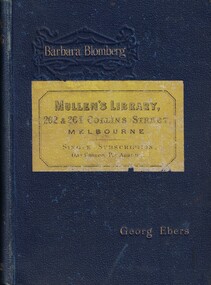
Book - Novel, Ebers, Georg, Barbara Blomberg : a historical romance : in two volumes : Vol. 2 ; by Georg Ebers, translated by Mary J. Stafford, 1807
... It is considered one of Ebers' most notable works and a classic of German literature. Sticker: "Mullen's Library, 262$264 Collins Street Melbourne" 333p. ; dark blue cover with sicker form Mullen's Library on the front cover ; gold lettering on spine and front cover ; embossed pattern on front cover Barbara Blomberg : a historical romance : in two volumes : Vol. 2 ; by Georg Ebers, translated by Mary J. ...The story is set in the 16th century and follows the life of Barbara Blomberg, a young woman who becomes the mistress of Charles V, the Holy Roman Emperor. Barbara, the daughter of a shoemaker, is known for her beauty and charm. She captures the attention of Charles V, who falls deeply in love with her and takes her as his mistress. Their relationship is a scandal and causes outrage among the nobility. As Charles V becomes embroiled in political conflicts and wars, Barbara remains by his side, offering him comfort and support. However, their relationship is ultimately doomed, and Charles is forced to end it for the sake of his political alliances. The novel provides a vivid depiction of the court life and political intrigues of the 16th century, as well as exploring the themes of love, loyalty, and the price of power. It is considered one of Ebers' most notable works and a classic of German literature.333p. ; dark blue cover with sicker form Mullen's Library on the front cover ; gold lettering on spine and front cover ; embossed pattern on front cover fictionThe story is set in the 16th century and follows the life of Barbara Blomberg, a young woman who becomes the mistress of Charles V, the Holy Roman Emperor. Barbara, the daughter of a shoemaker, is known for her beauty and charm. She captures the attention of Charles V, who falls deeply in love with her and takes her as his mistress. Their relationship is a scandal and causes outrage among the nobility. As Charles V becomes embroiled in political conflicts and wars, Barbara remains by his side, offering him comfort and support. However, their relationship is ultimately doomed, and Charles is forced to end it for the sake of his political alliances. The novel provides a vivid depiction of the court life and political intrigues of the 16th century, as well as exploring the themes of love, loyalty, and the price of power. It is considered one of Ebers' most notable works and a classic of German literature.fiction, romance, georg ebers, mary j. stafford [translator] -
Linton Mechanics Institute and Free Library Collection
Book - Novel, Lytton, Bulwer [Edward George Earle Bulwer-Lytton, Lord Lytton], Paul Clifford ; with appendix 'Tomlinsoniana : or the posthumous writings of the celebrated Augustus Tomlinson', [n.d.] [First published 1830, this Ward, Lock & Co. edition after 1881]]
... literature By day Paul Clifford is a young man about town, by night a highwayman. After numerous adventures, discovering his family origins, and narrowly escaping the hangman's noose, Paul eventually escapes to America with his beloved, Lucy. "The novel serves as a loud cry for social reform . . . appeal to society to amend the circumstances that breed crime". 'Tomlinsoniana' is a satirical appendix to the novel. The novel's character Augustus Tomlinson, who throughout the novel uses ethical and political arguments to justify highway robbery and pickpocketing, has become a Professor of Moral Philosophy at a (unnamed, fictional) German ...By day Paul Clifford is a young man about town, by night a highwayman. After numerous adventures, discovering his family origins, and narrowly escaping the hangman's noose, Paul eventually escapes to America with his beloved, Lucy. "The novel serves as a loud cry for social reform . . . appeal to society to amend the circumstances that breed crime". 'Tomlinsoniana' is a satirical appendix to the novel. The novel's character Augustus Tomlinson, who throughout the novel uses ethical and political arguments to justify highway robbery and pickpocketing, has become a Professor of Moral Philosophy at a (unnamed, fictional) German university. This section of the book is supposedly a collection of his writings on 'The popular art of cheating' and other moral issues.312 p. : brown cover, leather trim on spine, marbled page edges. The name 'LYTTON' embossed in centre of fromt cover. 'Paul Clifford' p. 1-289 ; 'Tomlinsoniana' p. 291-312. fictionBy day Paul Clifford is a young man about town, by night a highwayman. After numerous adventures, discovering his family origins, and narrowly escaping the hangman's noose, Paul eventually escapes to America with his beloved, Lucy. "The novel serves as a loud cry for social reform . . . appeal to society to amend the circumstances that breed crime". 'Tomlinsoniana' is a satirical appendix to the novel. The novel's character Augustus Tomlinson, who throughout the novel uses ethical and political arguments to justify highway robbery and pickpocketing, has become a Professor of Moral Philosophy at a (unnamed, fictional) German university. This section of the book is supposedly a collection of his writings on 'The popular art of cheating' and other moral issues.lord lytton, fiction, english literature -
 Flagstaff Hill Maritime Museum and Village
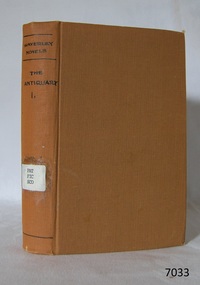
Book - Fictional stories, Sir Walter Scott, Waverley Novels Vol 5 The Antiquary-1, 1836
... Scott's enduring legacy is his vivid narratives on tradition versus change that still remain relevant, his stories and poetry impacted Victorian literature, architecture inspiring the public in a medieval revival at the time, and global views of Scotland. Goethe the German ...The subject volume of Waverley Novels Vol 5 published by Fisher Son & Co (1836) is part of a collected 48 volume set of Sir Walter Scott's works, containing various stories. Vol 5 in the 1836 Fisher edition reprints later entries from the fourth series, as these stories originally appeared in Scott's Magnum Opus collected 48 volume editions, the first from 1816. With the influential “Magnum Opus” editions from 1829–1833 by Robert Cadell, serving as the basis for later reprinted published sets like Fisher's. The Antiquary is one of Sir Walter Scott’s best known Scottish novels of the set, first published in 1816, and it mixes social comedy, mystery, romance, and historical atmosphere. It centres on Jonathan Oldbuck, an obsessive collector of antiquities, and follows a tangled story involving old family secrets, financial trouble, buried treasure schemes, and questions of identity. The story is set in late 18th century Scotland, mainly around Fairport and nearby estates, and brings together several linked families.Scott uses the novel to explore the tension between the past and the present, showing how antiquarian obsession can be both comic and revealing. He also deals with inheritance, class, old guilt, false appearances, and the way history shapes personal lives.Waverley Novels Vol 5 The Antiquary-1, Light brown hardcover lettering in black text. Author: Sir Walter Scott Publisher: Fisher Son & Co Date: 1838fictionThe subject volume of Waverley Novels Vol 5 published by Fisher Son & Co (1836) is part of a collected 48 volume set of Sir Walter Scott's works, containing various stories. Vol 5 in the 1836 Fisher edition reprints later entries from the fourth series, as these stories originally appeared in Scott's Magnum Opus collected 48 volume editions, the first from 1816. With the influential “Magnum Opus” editions from 1829–1833 by Robert Cadell, serving as the basis for later reprinted published sets like Fisher's. The Antiquary is one of Sir Walter Scott’s best known Scottish novels of the set, first published in 1816, and it mixes social comedy, mystery, romance, and historical atmosphere. It centres on Jonathan Oldbuck, an obsessive collector of antiquities, and follows a tangled story involving old family secrets, financial trouble, buried treasure schemes, and questions of identity. The story is set in late 18th century Scotland, mainly around Fairport and nearby estates, and brings together several linked families.Scott uses the novel to explore the tension between the past and the present, showing how antiquarian obsession can be both comic and revealing. He also deals with inheritance, class, old guilt, false appearances, and the way history shapes personal lives.warrnambool, shipwrecked-coast, flagstaff-hill, flagstaff-hill-maritime-museum, maritime-museum, shipwreck-coast, flagstaff-hill-maritime-village, shipwrecked-artefact, book, waverley novels vol 46 tales of my landlord, sir walter scott, pattison collection, warrnambool library, warrnambool mechanics’ institute, ralph eric pattison, corangamite regional library service, warrnambool city librarian, mechanics’ institute library, victorian library board, warrnambool books and records, warrnambool children’s library -
 Flagstaff Hill Maritime Museum and Village
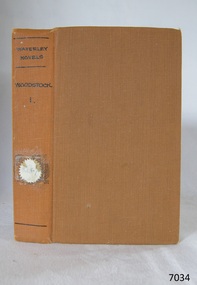
Book - Fictional stories, Sir Walter Scott, Waverley Novels Vol 39 Woodstock or The Cavalier, 1838
... Scott's enduring legacy is his vivid narratives on tradition versus change that still remain relevant, his stories and poetry impacted Victorian literature, architecture inspiring the public in a medieval revival at the time, and global views of Scotland. Goethe the German ...The subject volume of Waverley Novels Vol 39 published by Fisher Son & Co (1838) is part of a collected 48 volume set of Sir Walter Scott's works, containing various stories. Vol 39 in the 1836 Fisher edition reprints later entries from the fourth series, as these stories originally appeared in Scott's Magnum Opus 48 volume editions, the first from 1816. With the influential “Magnum Opus” editions from 1829–1833 by Robert Cadell, serving as the basis for later reprinted published sets like Fisher's. Scott's "Woodstock," or “The Cavalier” is a historical novel originally published in 1826 as the 22nd in the Waverley series. Set in 1651 at Woodstock Manor during the English Commonwealth after the Battle of Worcester, it dramatises Charles II's daring escape from Cromwell's forces. The story is about a royalist Sir Henry Lee and his daughter Alice, they lose their Woodstock home to Colonel Markham Everard, a sympathetic round head relative, who seeks protection for them from Cromwell, who suspects the site as a hideout for fugitive Charles II (disguised as a royal page "Louis Kerneguy"). Charles as the page courts Alice, sparking jealousy with Everard, amid duels, haunting in secret passages, and Cromwell's siege. Charles escapes with help from allies like Wildrake and Albert Lee, who impersonates him. The key themes to this novel are that it contrasts Cavalier loyalty and Puritan zeal, loyalty across divides, romance amid politics, and supernatural folklore masking intrigue. In the Fisher Son & Co edition, it reprints this story from Scott's revised collected original work in 1826.Waverley Novels Vol 39 Woodstock or the Cavalier, Light brown hardcover lettering in black text. Author: Sir Walter Scott Publisher: Fisher Son & Co Date: 1838fictionThe subject volume of Waverley Novels Vol 39 published by Fisher Son & Co (1838) is part of a collected 48 volume set of Sir Walter Scott's works, containing various stories. Vol 39 in the 1836 Fisher edition reprints later entries from the fourth series, as these stories originally appeared in Scott's Magnum Opus 48 volume editions, the first from 1816. With the influential “Magnum Opus” editions from 1829–1833 by Robert Cadell, serving as the basis for later reprinted published sets like Fisher's. Scott's "Woodstock," or “The Cavalier” is a historical novel originally published in 1826 as the 22nd in the Waverley series. Set in 1651 at Woodstock Manor during the English Commonwealth after the Battle of Worcester, it dramatises Charles II's daring escape from Cromwell's forces. The story is about a royalist Sir Henry Lee and his daughter Alice, they lose their Woodstock home to Colonel Markham Everard, a sympathetic round head relative, who seeks protection for them from Cromwell, who suspects the site as a hideout for fugitive Charles II (disguised as a royal page "Louis Kerneguy"). Charles as the page courts Alice, sparking jealousy with Everard, amid duels, haunting in secret passages, and Cromwell's siege. Charles escapes with help from allies like Wildrake and Albert Lee, who impersonates him. The key themes to this novel are that it contrasts Cavalier loyalty and Puritan zeal, loyalty across divides, romance amid politics, and supernatural folklore masking intrigue. In the Fisher Son & Co edition, it reprints this story from Scott's revised collected original work in 1826. warrnambool, shipwrecked-coast, flagstaff-hill, flagstaff-hill-maritime-museum, maritime-museum, shipwreck-coast, flagstaff-hill-maritime-village, shipwrecked-artefact, book, waverley novels vol 46 tales of my landlord, sir walter scott, pattison collection, warrnambool library, warrnambool mechanics’ institute, ralph eric pattison, corangamite regional library service, warrnambool city librarian, mechanics’ institute library, victorian library board, warrnambool books and records, warrnambool children’s library -
 Flagstaff Hill Maritime Museum and Village
Book - Fictional stories, Sir Walter Scott, Waverley Novels Vol 40 Woodstock or the Cavalier-2, 1838
... Scott's enduring legacy is his vivid narratives on tradition versus change that still remain relevant, his stories and poetry impacted Victorian literature, architecture inspiring the public in a medieval revival at the time, and global views of Scotland. Goethe the German ...The subject volume of Waverley Novels Vol 40 published by Fisher Son & Co (1838) is part of a collected 48 volume set of Sir Walter Scott's works, containing various stories. Vol 40 in the 1838 Fisher edition reprints later entries from the fourth series, as these stories originally appeared in Scott's Magnum Opus 48 volume editions, the first from 1816. With the influential “Magnum Opus” editions from 1829–1833 by Robert Cadell, serving as the basis for later reprinted published sets like Fisher's. Scott's "Woodstock," or “The Cavalier” is a historical novel originally published in 1826 as the 22nd in the Waverley series. Volume 40 continues Woodstock, or The Cavalier from Vol 39 in the Fisher Son & Co edition. It picks up the 1651 story line at Woodstock Manor, where disguised Charles II hides amid escalating tension with Cromwell's forces. The plot continues with Cromwell storming the lodge after suspecting Charles's presence disguised as "Louis Kerneguy", arresting Colonel Everard and searching secret passages haunted by "ghosts". Albert Lee impersonates the king to aid his escape, while Alice guides Charles away; dramatic confrontations ensue with duels, revelations, and Cromwell's rage continuing. As in volume 39 the tale resolves family divisions, loyalty, and supernatural folklore masking political intrigue during the Commonwealth era. This split-volume format is standard in collected 1830 s editions like Fisher's, reprinting of Scott's 1826 original with revisions.Waverley Novels Vol 40 Woodstock or the Cavalier-2, Light brown hardcover lettering in black text. Author: Sir Walter Scott Publisher: Fisher Son & Co Date: 1838fictionThe subject volume of Waverley Novels Vol 40 published by Fisher Son & Co (1838) is part of a collected 48 volume set of Sir Walter Scott's works, containing various stories. Vol 40 in the 1838 Fisher edition reprints later entries from the fourth series, as these stories originally appeared in Scott's Magnum Opus 48 volume editions, the first from 1816. With the influential “Magnum Opus” editions from 1829–1833 by Robert Cadell, serving as the basis for later reprinted published sets like Fisher's. Scott's "Woodstock," or “The Cavalier” is a historical novel originally published in 1826 as the 22nd in the Waverley series. Volume 40 continues Woodstock, or The Cavalier from Vol 39 in the Fisher Son & Co edition. It picks up the 1651 story line at Woodstock Manor, where disguised Charles II hides amid escalating tension with Cromwell's forces. The plot continues with Cromwell storming the lodge after suspecting Charles's presence disguised as "Louis Kerneguy", arresting Colonel Everard and searching secret passages haunted by "ghosts". Albert Lee impersonates the king to aid his escape, while Alice guides Charles away; dramatic confrontations ensue with duels, revelations, and Cromwell's rage continuing. As in volume 39 the tale resolves family divisions, loyalty, and supernatural folklore masking political intrigue during the Commonwealth era. This split-volume format is standard in collected 1830 s editions like Fisher's, reprinting of Scott's 1826 original with revisions.warrnambool, shipwrecked-coast, flagstaff-hill, flagstaff-hill-maritime-museum, maritime-museum, shipwreck-coast, flagstaff-hill-maritime-village, shipwrecked-artefact, book, waverley novels vol 46 tales of my landlord, sir walter scott, pattison collection, warrnambool library, warrnambool mechanics’ institute, ralph eric pattison, corangamite regional library service, warrnambool city librarian, mechanics’ institute library, victorian library board, warrnambool books and records, warrnambool children’s library -
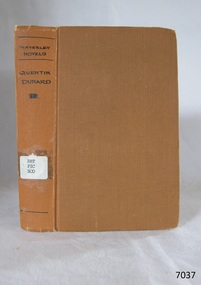 Flagstaff Hill Maritime Museum and Village
Book - Fictional stories, Sir Walter Scott, Waverley Novels Quentin Durward Vol 32, 1838
... Scott's enduring legacy is his vivid narratives on tradition versus change that still remain relevant, his stories and poetry impacted Victorian literature, architecture inspiring the public in a medieval revival at the time, and global views of Scotland. Goethe the German ...The subject volume of Waverley Novels Vol 32 published by Fisher Son & Co (1838) is part of a collected 48 volume set of Sir Walter Scott's works, containing various stories. Vol 32 in the 1836 Fisher edition reprints later entries from the fourth series, as these stories originally appeared in Scott's Magnum Opus 48 volume editions, the first from 1816. With the influential “Magnum Opus” editions from 1829–1833 by Robert Cadell, serving as the basis for later reprinted published sets like Fisher's. Quentin Durward, often listed as volume 32 in some Waverley Novels editions, is a historical novel set in 15th century France and Burgundy. Its story follows a young Scottish archer who gets drawn into the power struggle between Louis XI and Charles the Bold, while also escorting the Burgundian heiress Isabelle de Croye and eventually winning her hand. The story centres around Quentin arriving in France seeking service, he joins Louis XI’s Scottish Guard, and is pulled into court intrigue, kidnapping plots, and the violent conflict around Liege. The novel’s main historical drama is Louis XI using covert politics to weaken Burgundy, while Quentin’s personal plot tracks loyalty, danger, and romance.Waverley Novels Vol 32 Quentin Durward, Light brown hardcover lettering in black text. Author: Sir Walter Scott Publisher: Fisher Son & Co Date: 1838fictionThe subject volume of Waverley Novels Vol 32 published by Fisher Son & Co (1838) is part of a collected 48 volume set of Sir Walter Scott's works, containing various stories. Vol 32 in the 1836 Fisher edition reprints later entries from the fourth series, as these stories originally appeared in Scott's Magnum Opus 48 volume editions, the first from 1816. With the influential “Magnum Opus” editions from 1829–1833 by Robert Cadell, serving as the basis for later reprinted published sets like Fisher's. Quentin Durward, often listed as volume 32 in some Waverley Novels editions, is a historical novel set in 15th century France and Burgundy. Its story follows a young Scottish archer who gets drawn into the power struggle between Louis XI and Charles the Bold, while also escorting the Burgundian heiress Isabelle de Croye and eventually winning her hand. The story centres around Quentin arriving in France seeking service, he joins Louis XI’s Scottish Guard, and is pulled into court intrigue, kidnapping plots, and the violent conflict around Liege. The novel’s main historical drama is Louis XI using covert politics to weaken Burgundy, while Quentin’s personal plot tracks loyalty, danger, and romance.warrnambool, shipwrecked-coast, flagstaff-hill, flagstaff-hill-maritime-museum, maritime-museum, shipwreck-coast, flagstaff-hill-maritime-village, shipwrecked-artefact, book, waverley novels vol 46 tales of my landlord, sir walter scott, pattison collection, warrnambool library, warrnambool mechanics’ institute, ralph eric pattison, corangamite regional library service, warrnambool city librarian, mechanics’ institute library, victorian library board, warrnambool books and records, warrnambool children’s library, quentin durward, quinten durward -
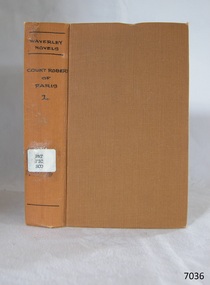 Flagstaff Hill Maritime Museum and Village
Book - Fictional stories, Sir Walter Scott, Waverley Novels Vol 47 Count Robert of Paris-2, 1838
... Scott's enduring legacy is his vivid narratives on tradition versus change that still remain relevant, his stories and poetry impacted Victorian literature, architecture inspiring the public in a medieval revival at the time, and global views of Scotland. Goethe the German ...The subject volume of the Waverley Novels Vol 47 published by Fisher Son & Co (1838) is part of a collected 48 volume set of Sir Walter Scott's works, containing various stories. Vol 47 in the 1838 Fisher edition reprints later entries from the fourth series, as these stories originally appeared in Scott's Magnum Opus 48 volume editions, the first from 1816. With the influential “Magnum Opus” editions from 1829–1833 by Robert Cadell, serving as the basis for later reprinted published sets like Fisher's. Volume 47 "Count Robert of Paris-2" completes the novel in the Fisher Son & Co edition. It continues the 1097 Constantinople intrigue from Vol 47's first part (or prior volume), resolving crusader-Byzantine clashes. The plot concludes with Count Robert freed by Hereward, fights in Brenhilda's duel against Nicephorus. Hereward reunites with Bertha (Brenhilda's attendant), regains English lands via Robert's influence, and joins him in Palestine as a vassal; crusaders depart after Alexius out maneuvers various plots. Volume 47 often splits Count Robert of Paris Part two before starting Castle Dangerous part one, matching 1830 s collected formats like Fisher's revisions of Scott's 1832 original.Blending chivalry, conspiracy, and cultural satire.Waverley Novels Vol 47 Count Robert of Paris- 2, Light brown hardcover lettering in black text. Author: Sir Walter Scott Publisher: Fisher Son & Co Date: 1838fictionThe subject volume of the Waverley Novels Vol 47 published by Fisher Son & Co (1838) is part of a collected 48 volume set of Sir Walter Scott's works, containing various stories. Vol 47 in the 1838 Fisher edition reprints later entries from the fourth series, as these stories originally appeared in Scott's Magnum Opus 48 volume editions, the first from 1816. With the influential “Magnum Opus” editions from 1829–1833 by Robert Cadell, serving as the basis for later reprinted published sets like Fisher's. Volume 47 "Count Robert of Paris-2" completes the novel in the Fisher Son & Co edition. It continues the 1097 Constantinople intrigue from Vol 47's first part (or prior volume), resolving crusader-Byzantine clashes. The plot concludes with Count Robert freed by Hereward, fights in Brenhilda's duel against Nicephorus. Hereward reunites with Bertha (Brenhilda's attendant), regains English lands via Robert's influence, and joins him in Palestine as a vassal; crusaders depart after Alexius out maneuvers various plots. Volume 47 often splits Count Robert of Paris Part two before starting Castle Dangerous part one, matching 1830 s collected formats like Fisher's revisions of Scott's 1832 original.Blending chivalry, conspiracy, and cultural satire.warrnambool, shipwrecked-coast, flagstaff-hill, flagstaff-hill-maritime-museum, maritime-museum, shipwreck-coast, flagstaff-hill-maritime-village, shipwrecked-artefact, book, waverley novels vol 46 tales of my landlord, sir walter scott, pattison collection, warrnambool library, warrnambool mechanics’ institute, ralph eric pattison, corangamite regional library service, warrnambool city librarian, mechanics’ institute library, victorian library board, warrnambool books and records, warrnambool children’s library -
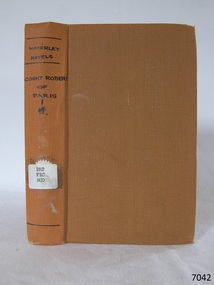 Flagstaff Hill Maritime Museum and Village
Book - Fictional stories, Sir Walter Scott, Waverley Novels Vol 46-1 Tales of My Landlord, 1838
... Scott's enduring legacy is his vivid narratives on tradition versus change that still remain relevant, his stories and poetry impacted Victorian literature, architecture inspiring the public in a medieval revival at the time, and global views of Scotland. Goethe the German ...The subject volume “Waverley Novels Vol 46” published by Fisher Son & Co (1838) is part of a collected edition of Sir Walter Scott's works, containing stories from the "Tales of My Landlord" series. "Tales of My Landlord" forms a key subset of Scott's Waverley Novels, presented as fictional tales gathered by characters like Peter Pattieson from the landlord of the Wallace “Inn at Gandercleugh”. The series spans multiple books across four sub-series, including “The Black Dwarf” (1707 setting), “Old Mortality” (1679–1689), “The Heart of Midlothian” (1736), “The Bride of Lammermoor” (1709–1711), “A Legend of Montrose” (1644–1645), “Count Robert of Paris” (1097), and “Castle Dangerous” (1307). Vol 46 in the 1838 Fisher edition reprints later entries like “Count Robert of Paris” or “Castle Dangerous” from the fourth series, as these stories originally appeared in Scott's Magnum Opus collected volume editions, the first from 1816. With the influential 48-volume “Magnum Opus” edition from 1829–1833 by Robert Cadell, serving as the basis for later collected published sets like Fisher's.Waverley Novels Vol 46 Tales of My Landlord, Light brown hardcover lettering in black text. Author: Sir Walter Scott Publisher: Fisher Son & Co Date: 1838fictionThe subject volume “Waverley Novels Vol 46” published by Fisher Son & Co (1838) is part of a collected edition of Sir Walter Scott's works, containing stories from the "Tales of My Landlord" series. "Tales of My Landlord" forms a key subset of Scott's Waverley Novels, presented as fictional tales gathered by characters like Peter Pattieson from the landlord of the Wallace “Inn at Gandercleugh”. The series spans multiple books across four sub-series, including “The Black Dwarf” (1707 setting), “Old Mortality” (1679–1689), “The Heart of Midlothian” (1736), “The Bride of Lammermoor” (1709–1711), “A Legend of Montrose” (1644–1645), “Count Robert of Paris” (1097), and “Castle Dangerous” (1307). Vol 46 in the 1838 Fisher edition reprints later entries like “Count Robert of Paris” or “Castle Dangerous” from the fourth series, as these stories originally appeared in Scott's Magnum Opus collected volume editions, the first from 1816. With the influential 48-volume “Magnum Opus” edition from 1829–1833 by Robert Cadell, serving as the basis for later collected published sets like Fisher's. warrnambool, shipwrecked-coast, flagstaff-hill, flagstaff-hill-maritime-museum, maritime-museum, shipwreck-coast, flagstaff-hill-maritime-village, shipwrecked-artefact, book, waverley novels vol 46 tales of my landlord, sir walter scott, pattison collection, warrnambool library, warrnambool mechanics’ institute, ralph eric pattison, corangamite regional library service, warrnambool city librarian, mechanics’ institute library, victorian library board, warrnambool books and records, warrnambool children’s library -
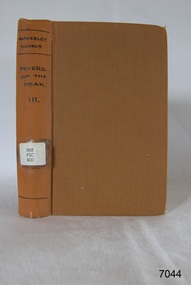 Flagstaff Hill Maritime Museum and Village
Book - Fictional stories, Sir Walter Scott, Waverley Novels Peveril of the Peak- 3 Vol 30, 1838
... Scott's enduring legacy is his vivid narratives on tradition versus change that still remain relevant, his stories and poetry impacted Victorian literature, architecture inspiring the public in a medieval revival at the time, and global views of Scotland. Goethe the German ...The subject volume “Waverley Novels Vol 30” published by Fisher Son & Co (1838) is part of a collected edition of Sir Walter Scott's works, containing stories from the "Tales of My Landlord" series. "Tales of My Landlord" forms a key subset of Scott's Waverley Novels, presented as fictional tales gathered by characters like Peter Pattieson from the landlord of the Wallace “Inn at Gandercleugh”. The series spans multiple books across four sub-series, including “The Black Dwarf” (1707 setting), “Old Mortality” (1679–1689), “The Heart of Midlothian” (1736), “The Bride of Lammermoor” (1709–1711), “A Legend of Montrose” (1644–1645), “Count Robert of Paris” (1097), and “Castle Dangerous” (1307). Vol 46 in the 1838 Fisher edition reprints later entries like “Count Robert of Paris” or “Castle Dangerous” from the fourth series, as these stories originally appeared in Scott's Magnum Opus collected volume editions, the first from 1816. With the influential 48-volume “Magnum Opus” edition from 1829–1833 by Robert Cadell, serving as the basis for later collected published sets like Fisher's. Peveril of the Peak is Walter Scott's longest novel, published in 1823 and set during the late 17th century amid the Popish plot hysteria under Charles II. It follows young Cavalier Julian Peveril's forbidden romance with Alice Bridgenorth a Puritan's daughter. The story covers political intrigue, family feuds, and conspiracies drawing the characters into events spanning Derbyshire's Peak District, the Isle of Man, and London. The story continues on the Peveril family's royalist loyalties clashing with the Bridgenorths' Puritan resentment, fuelled by past Civil War grievances like the execution of William Christian. Julian and Alice's love is tested when Julian's parents face Popish Plot accusations with subplots involving a scheming dwarf, the Countess of Derby, and court figures like the Duke of Buckingham. It resolves with royal intervention, exposing intrigues and eventually uniting the lovers.Waverley Novels Peveril of the Peak- 3 Vol 30, Light brown hardcover lettering in black text. Author: Sir Walter Scott Publisher: Fisher Son & Co Date: 1838fictionThe subject volume “Waverley Novels Vol 30” published by Fisher Son & Co (1838) is part of a collected edition of Sir Walter Scott's works, containing stories from the "Tales of My Landlord" series. "Tales of My Landlord" forms a key subset of Scott's Waverley Novels, presented as fictional tales gathered by characters like Peter Pattieson from the landlord of the Wallace “Inn at Gandercleugh”. The series spans multiple books across four sub-series, including “The Black Dwarf” (1707 setting), “Old Mortality” (1679–1689), “The Heart of Midlothian” (1736), “The Bride of Lammermoor” (1709–1711), “A Legend of Montrose” (1644–1645), “Count Robert of Paris” (1097), and “Castle Dangerous” (1307). Vol 46 in the 1838 Fisher edition reprints later entries like “Count Robert of Paris” or “Castle Dangerous” from the fourth series, as these stories originally appeared in Scott's Magnum Opus collected volume editions, the first from 1816. With the influential 48-volume “Magnum Opus” edition from 1829–1833 by Robert Cadell, serving as the basis for later collected published sets like Fisher's. Peveril of the Peak is Walter Scott's longest novel, published in 1823 and set during the late 17th century amid the Popish plot hysteria under Charles II. It follows young Cavalier Julian Peveril's forbidden romance with Alice Bridgenorth a Puritan's daughter. The story covers political intrigue, family feuds, and conspiracies drawing the characters into events spanning Derbyshire's Peak District, the Isle of Man, and London. The story continues on the Peveril family's royalist loyalties clashing with the Bridgenorths' Puritan resentment, fuelled by past Civil War grievances like the execution of William Christian. Julian and Alice's love is tested when Julian's parents face Popish Plot accusations with subplots involving a scheming dwarf, the Countess of Derby, and court figures like the Duke of Buckingham. It resolves with royal intervention, exposing intrigues and eventually uniting the lovers. warrnambool, shipwrecked-coast, flagstaff-hill, flagstaff-hill-maritime-museum, maritime-museum, shipwreck-coast, flagstaff-hill-maritime-village, shipwrecked-artefact, book, waverley novels vol 46 tales of my landlord, sir walter scott, pattison collection, warrnambool library, warrnambool mechanics’ institute, ralph eric pattison, corangamite regional library service, warrnambool city librarian, mechanics’ institute library, victorian library board, warrnambool books and records, warrnambool children’s library -
 Flagstaff Hill Maritime Museum and Village
Book - Fictional stories, Sir Walter Scott, Waverley Novels Tales of My Landlord-5 Vol 13, 1836
... Scott's enduring legacy is his vivid narratives on tradition versus change that still remain relevant, his stories and poetry impacted Victorian literature, architecture inspiring the public in a medieval revival at the time, and global views of Scotland. Goethe the German ...The subject volume “Waverley Novels Vol 13” published by Fisher Son & Co (1836) is part of a collected edition of Sir Walter Scott's works, containing stories from the "Tales of My Landlord" series. "Tales of My Landlord" forms a key subset of Scott's Waverley Novels, presented as fictional tales gathered by characters like Peter Pattieson from the landlord of the Wallace “Inn at Gandercleugh”. The series spans multiple books across four sub-series, including “The Black Dwarf” (1707 setting), “Old Mortality” (1679–1689), “The Heart of Midlothian” (1736), “The Bride of Lammermoor” (1709–1711), “A Legend of Montrose” (1644–1645), “Count Robert of Paris” (1097), and “Castle Dangerous” (1307). Vol 46 in the 1838 Fisher edition reprints later entries like “Count Robert of Paris” or “Castle Dangerous” from the fourth series, as these stories originally appeared in Scott's Magnum Opus collected volume editions, the first from 1816. With the influential 48-volume “Magnum Opus” edition from 1829–1833 by Robert Cadell, serving as the basis for later collected published sets like Fisher's. "Tales of My Landlord" set five of vol 13 is part of a series of historical novels by Sir Walter Scott, published in four series between 1816 and 1832 as part of his Waverley Novels. They are framed as stories collected by a fictional landlord at the Wallace Inn in Gandercleugh, edited by "Jedediah Cleishbotham." The series includes major works like The Black Dwarf and Old Mortality (1st series, 1816), The Heart of Midlothian (2nd series, 1818), The Bride of Lammermoor and A Legend of Montrose (3rd series, 1819), and Count Robert of Paris with Castle Dangerous (4th series, 1832). Themes of this volume cover Scottish Lowland life, justice, and Presbyterian fervour post 1736. Alternatively, in 3rd series tales like “The Bride of Lammermoor”, advances the Gothic romance of Edgar Ravenswood and Lucy Ashton. Slowly building towards tragedy over family feuds and inheritance.Waverley Novels Vol 46 Tales of My Landlord, Light brown hardcover lettering in black text. Author: Sir Walter Scott Publisher: Fisher Son & Co Date: 1836fictionThe subject volume “Waverley Novels Vol 13” published by Fisher Son & Co (1836) is part of a collected edition of Sir Walter Scott's works, containing stories from the "Tales of My Landlord" series. "Tales of My Landlord" forms a key subset of Scott's Waverley Novels, presented as fictional tales gathered by characters like Peter Pattieson from the landlord of the Wallace “Inn at Gandercleugh”. The series spans multiple books across four sub-series, including “The Black Dwarf” (1707 setting), “Old Mortality” (1679–1689), “The Heart of Midlothian” (1736), “The Bride of Lammermoor” (1709–1711), “A Legend of Montrose” (1644–1645), “Count Robert of Paris” (1097), and “Castle Dangerous” (1307). Vol 46 in the 1838 Fisher edition reprints later entries like “Count Robert of Paris” or “Castle Dangerous” from the fourth series, as these stories originally appeared in Scott's Magnum Opus collected volume editions, the first from 1816. With the influential 48-volume “Magnum Opus” edition from 1829–1833 by Robert Cadell, serving as the basis for later collected published sets like Fisher's. "Tales of My Landlord" set five of vol 13 is part of a series of historical novels by Sir Walter Scott, published in four series between 1816 and 1832 as part of his Waverley Novels. They are framed as stories collected by a fictional landlord at the Wallace Inn in Gandercleugh, edited by "Jedediah Cleishbotham." The series includes major works like The Black Dwarf and Old Mortality (1st series, 1816), The Heart of Midlothian (2nd series, 1818), The Bride of Lammermoor and A Legend of Montrose (3rd series, 1819), and Count Robert of Paris with Castle Dangerous (4th series, 1832). Themes of this volume cover Scottish Lowland life, justice, and Presbyterian fervour post 1736. Alternatively, in 3rd series tales like “The Bride of Lammermoor”, advances the Gothic romance of Edgar Ravenswood and Lucy Ashton. Slowly building towards tragedy over family feuds and inheritance.warrnambool, shipwrecked-coast, flagstaff-hill, flagstaff-hill-maritime-museum, maritime-museum, shipwreck-coast, flagstaff-hill-maritime-village, shipwrecked-artefact, book, waverley novels vol 46 tales of my landlord, sir walter scott, pattison collection, warrnambool library, warrnambool mechanics’ institute, ralph eric pattison, corangamite regional library service, warrnambool city librarian, mechanics’ institute library, victorian library board, warrnambool books and records, warrnambool children’s library -
 Flagstaff Hill Maritime Museum and Village
Book - Fictional stories, Sir Walter Scott, Waverley Novels The Pirate- 2 Vol 25, 1838
... Scott's enduring legacy is his vivid narratives on tradition versus change that still remain relevant, his stories and poetry impacted Victorian literature, architecture inspiring the public in a medieval revival at the time, and global views of Scotland. Goethe the German ...The subject volume “Waverley Novels Vol 46” published by Fisher Son & Co (1838) is part of a collected edition of Sir Walter Scott's works, containing stories from the "Tales of My Landlord" series. "Tales of My Landlord" forms a key subset of Scott's Waverley Novels, presented as fictional tales gathered by characters like Peter Pattieson from the landlord of the Wallace “Inn at Gandercleugh”. The series spans multiple books across four sub-series, including “The Black Dwarf” (1707 setting), “Old Mortality” (1679–1689), “The Heart of Midlothian” (1736), “The Bride of Lammermoor” (1709–1711), “A Legend of Montrose” (1644–1645), “Count Robert of Paris” (1097), and “Castle Dangerous” (1307). Vol 25 in the 1838 Fisher edition reprints later entries like “Count Robert of Paris” or “Castle Dangerous” from the fourth series, as these stories originally appeared in Scott's Magnum Opus collected volume editions, the first from 1816. With the influential 48-volume “Magnum Opus” edition from 1829–1833 by Robert Cadell, serving as the basis for later collected published sets like Fisher's. The Pirate is Walter Scott’s historical novel set in 17th-century Shetland and Orkney, centred on a shipwreck, piracy, family conflict, and rival love interests. It’s typically presented as a three set novel. In this edition, volume 25 is the second part of “The Pirate”, and the work continues across the surrounding other two volumes in the set. The story follows the Troil family and a shipwrecked captain Cleveland along with Mordaunt, whose relationships with Minna and Brenda Troil drive much of the plot. As Cleveland’s pirate identity is revealed, the novel shifts into rescue, capture, and reconciliation, ending with the pirates subdued and the family ties resettled. The novel itself is commonly divided into three volumes or parts in standard editions, and the Waverley Novels collected edition spreads it across multiple numbered volumes.Waverley Novels The Pirate- 2 Vol 25, Light brown hardcover lettering in black text. Author: Sir Walter Scott Publisher: Fisher Son & Co Date: 1838fictionThe subject volume “Waverley Novels Vol 46” published by Fisher Son & Co (1838) is part of a collected edition of Sir Walter Scott's works, containing stories from the "Tales of My Landlord" series. "Tales of My Landlord" forms a key subset of Scott's Waverley Novels, presented as fictional tales gathered by characters like Peter Pattieson from the landlord of the Wallace “Inn at Gandercleugh”. The series spans multiple books across four sub-series, including “The Black Dwarf” (1707 setting), “Old Mortality” (1679–1689), “The Heart of Midlothian” (1736), “The Bride of Lammermoor” (1709–1711), “A Legend of Montrose” (1644–1645), “Count Robert of Paris” (1097), and “Castle Dangerous” (1307). Vol 25 in the 1838 Fisher edition reprints later entries like “Count Robert of Paris” or “Castle Dangerous” from the fourth series, as these stories originally appeared in Scott's Magnum Opus collected volume editions, the first from 1816. With the influential 48-volume “Magnum Opus” edition from 1829–1833 by Robert Cadell, serving as the basis for later collected published sets like Fisher's. The Pirate is Walter Scott’s historical novel set in 17th-century Shetland and Orkney, centred on a shipwreck, piracy, family conflict, and rival love interests. It’s typically presented as a three set novel. In this edition, volume 25 is the second part of “The Pirate”, and the work continues across the surrounding other two volumes in the set. The story follows the Troil family and a shipwrecked captain Cleveland along with Mordaunt, whose relationships with Minna and Brenda Troil drive much of the plot. As Cleveland’s pirate identity is revealed, the novel shifts into rescue, capture, and reconciliation, ending with the pirates subdued and the family ties resettled. The novel itself is commonly divided into three volumes or parts in standard editions, and the Waverley Novels collected edition spreads it across multiple numbered volumes.warrnambool, shipwrecked-coast, flagstaff-hill, flagstaff-hill-maritime-museum, maritime-museum, shipwreck-coast, flagstaff-hill-maritime-village, shipwrecked-artefact, book, waverley novels vol 46 tales of my landlord, sir walter scott, pattison collection, warrnambool library, warrnambool mechanics’ institute, ralph eric pattison, corangamite regional library service, warrnambool city librarian, mechanics’ institute library, victorian library board, warrnambool books and records, warrnambool children’s library -
 Flagstaff Hill Maritime Museum and Village
Book - Fictional stories, Sir Walter Scott, Waverley Novels Kenilworth- 1 Vol 22, 1837
... Scott's enduring legacy is his vivid narratives on tradition versus change that still remain relevant, his stories and poetry impacted Victorian literature, architecture inspiring the public in a medieval revival at the time, and global views of Scotland. Goethe the German ...The subject volume “Waverley Novels Kenilworth-1 Vol 22” published by Fisher Son & Co (1837) is part of a collected edition of Sir Walter Scott's works, containing stories from the "Tales of My Landlord" series. "Tales of My Landlord" forms a key subset of Scott's Waverley Novels, presented as fictional tales gathered by characters like Peter Pattieson from the landlord of the Wallace “Inn at Gandercleugh”. The series spans multiple books across four sub-series, including “The Black Dwarf” (1707 setting), “Old Mortality” (1679–1689), “The Heart of Midlothian” (1736), “The Bride of Lammermoor” (1709–1711), “A Legend of Montrose” (1644–1645), “Count Robert of Paris” (1097), and “Castle Dangerous” (1307). Vol 25 in the 1837 Fisher edition reprints later entries like “Count Robert of Paris” or “Castle Dangerous” from the fourth series, as these stories originally appeared in Scott's Magnum Opus collected volume editions, the first from 1816. With the influential 48-volume “Magnum Opus” edition from 1829–1833 by Robert Cadell, serving as the basis for later collected published sets like Fisher's. Kenilworth is Sir Walter Scott’s 1821 historical novel about the secret marriage of Amy Robsart and Robert Dudley, Earl of Leicester, set against Queen Elizabeth I’s court and the 1575 festivities at Kenilworth Castle. It mixes political ambition, romance, deception, and tragedy, with the plot turning on Leicester’s desire for power and the fatal consequences of hiding his marriage. The novel follows Amy Robsart, of Leicester, and the scheming Richard Varney, while also bringing in Queen Elizabeth and other figures from Elizabethan England. Its tension comes from the clash between private love and public ambition, and it ends in tragedy rather than reconciliation.Waverley Novels Vol 22 Kenilworth- 1, Light brown hardcover lettering in black text. Author: Sir Walter Scott Publisher: Fisher Son & Co Date: 1837fictionThe subject volume “Waverley Novels Kenilworth-1 Vol 22” published by Fisher Son & Co (1837) is part of a collected edition of Sir Walter Scott's works, containing stories from the "Tales of My Landlord" series. "Tales of My Landlord" forms a key subset of Scott's Waverley Novels, presented as fictional tales gathered by characters like Peter Pattieson from the landlord of the Wallace “Inn at Gandercleugh”. The series spans multiple books across four sub-series, including “The Black Dwarf” (1707 setting), “Old Mortality” (1679–1689), “The Heart of Midlothian” (1736), “The Bride of Lammermoor” (1709–1711), “A Legend of Montrose” (1644–1645), “Count Robert of Paris” (1097), and “Castle Dangerous” (1307). Vol 25 in the 1837 Fisher edition reprints later entries like “Count Robert of Paris” or “Castle Dangerous” from the fourth series, as these stories originally appeared in Scott's Magnum Opus collected volume editions, the first from 1816. With the influential 48-volume “Magnum Opus” edition from 1829–1833 by Robert Cadell, serving as the basis for later collected published sets like Fisher's. Kenilworth is Sir Walter Scott’s 1821 historical novel about the secret marriage of Amy Robsart and Robert Dudley, Earl of Leicester, set against Queen Elizabeth I’s court and the 1575 festivities at Kenilworth Castle. It mixes political ambition, romance, deception, and tragedy, with the plot turning on Leicester’s desire for power and the fatal consequences of hiding his marriage. The novel follows Amy Robsart, of Leicester, and the scheming Richard Varney, while also bringing in Queen Elizabeth and other figures from Elizabethan England. Its tension comes from the clash between private love and public ambition, and it ends in tragedy rather than reconciliation.warrnambool, shipwrecked-coast, flagstaff-hill, flagstaff-hill-maritime-museum, maritime-museum, shipwreck-coast, flagstaff-hill-maritime-village, shipwrecked-artefact, book, waverley novels vol 46 tales of my landlord, sir walter scott, pattison collection, warrnambool library, warrnambool mechanics’ institute, ralph eric pattison, corangamite regional library service, warrnambool city librarian, mechanics’ institute library, victorian library board, warrnambool books and records, warrnambool children’s library -
 Flagstaff Hill Maritime Museum and Village
Book - Fictional stories, Sir Walter Scott, Waverley Novels Tales of my Landlord-2 Vol 10, 1836
... Scott's enduring legacy is his vivid narratives on tradition versus change that still remain relevant, his stories and poetry impacted Victorian literature, architecture inspiring the public in a medieval revival at the time, and global views of Scotland. Goethe the German ...The subject volume “Waverley Novels Vol 10” published by Fisher Son & Co (1838) is part of a collected edition of Sir Walter Scott's works, containing stories from the "Tales of My Landlord" series. "Tales of My Landlord" forms a key subset of Scott's Waverley Novels, presented as fictional tales gathered by characters like Peter Pattieson from the landlord of the Wallace “Inn at Gandercleugh”. The series spans multiple books across four sub-series, including “The Black Dwarf” (1707 setting), “Old Mortality” (1679–1689), “The Heart of Midlothian” (1736), “The Bride of Lammermoor” (1709–1711), “A Legend of Montrose” (1644–1645), “Count Robert of Paris” (1097), and “Castle Dangerous” (1307). Vol 46 in the 1838 Fisher edition reprints later entries like “Count Robert of Paris” or “Castle Dangerous” from the fourth series, as these stories originally appeared in Scott's Magnum Opus collected volume editions, the first from 1816. With the influential 48-volume “Magnum Opus” edition from 1829–1833 by Robert Cadell, serving as the basis for later collected published sets like Fisher's. In the “Second Series” is the one that includes The Heart of MidLothian, a major Scott novel set around the 1736 Porteous riots in Edinburgh. The story was presented as a collection of stories gathered from a fictional landlord, edited by the imagined figures Peter Pattieson and Jedediah Cleishbotham. In the second series, the central novel, “The Heart of MidLothian, follows crime, justice, and moral conflict in 18th-century Scotland, especially the case of Effie Deans the fictional character in the novel. She is Jeanie Dean’s younger sister presented as pretty, impulsive, and more socially vulnerable than her sister Jeanie. In the novel, she is accused of killing her illegitimate child, though the truth is more complicated, and Jeanie travels to London to seek a pardon for her. Therefore her story centres on an out-of-wedlock pregnancy, a charge of child murder, and the efforts made to save her life, as well as the social consequences of her trial.Waverley Novels Tales of my Landlord Set-2 Vol 10, Light brown hardcover lettering in black text. Author: Sir Walter Scott Publisher: Fisher Son & Co Date: 1836fictionThe subject volume “Waverley Novels Vol 10” published by Fisher Son & Co (1838) is part of a collected edition of Sir Walter Scott's works, containing stories from the "Tales of My Landlord" series. "Tales of My Landlord" forms a key subset of Scott's Waverley Novels, presented as fictional tales gathered by characters like Peter Pattieson from the landlord of the Wallace “Inn at Gandercleugh”. The series spans multiple books across four sub-series, including “The Black Dwarf” (1707 setting), “Old Mortality” (1679–1689), “The Heart of Midlothian” (1736), “The Bride of Lammermoor” (1709–1711), “A Legend of Montrose” (1644–1645), “Count Robert of Paris” (1097), and “Castle Dangerous” (1307). Vol 46 in the 1838 Fisher edition reprints later entries like “Count Robert of Paris” or “Castle Dangerous” from the fourth series, as these stories originally appeared in Scott's Magnum Opus collected volume editions, the first from 1816. With the influential 48-volume “Magnum Opus” edition from 1829–1833 by Robert Cadell, serving as the basis for later collected published sets like Fisher's. In the “Second Series” is the one that includes The Heart of MidLothian, a major Scott novel set around the 1736 Porteous riots in Edinburgh. The story was presented as a collection of stories gathered from a fictional landlord, edited by the imagined figures Peter Pattieson and Jedediah Cleishbotham. In the second series, the central novel, “The Heart of MidLothian, follows crime, justice, and moral conflict in 18th-century Scotland, especially the case of Effie Deans the fictional character in the novel. She is Jeanie Dean’s younger sister presented as pretty, impulsive, and more socially vulnerable than her sister Jeanie. In the novel, she is accused of killing her illegitimate child, though the truth is more complicated, and Jeanie travels to London to seek a pardon for her. Therefore her story centres on an out-of-wedlock pregnancy, a charge of child murder, and the efforts made to save her life, as well as the social consequences of her trial. warrnambool, shipwrecked-coast, flagstaff-hill, flagstaff-hill-maritime-museum, maritime-museum, shipwreck-coast, flagstaff-hill-maritime-village, shipwrecked-artefact, book, waverley novels vol 46 tales of my landlord, sir walter scott, pattison collection, warrnambool library, warrnambool mechanics’ institute, ralph eric pattison, corangamite regional library service, warrnambool city librarian, mechanics’ institute library, victorian library board, warrnambool books and records, warrnambool children’s library, waverley novels -
 Flagstaff Hill Maritime Museum and Village
Book - Fictional stories, Sir Walter Scott, Waverley Novels Tales of my Landlord-3 Vol 11, 1836
... Scott's enduring legacy is his vivid narratives on tradition versus change that still remain relevant, his stories and poetry impacted Victorian literature, architecture inspiring the public in a medieval revival at the time, and global views of Scotland. Goethe the German ...The subject volume “Waverley Novels Vol 11” published by Fisher Son & Co (1838) is part of a collected edition of Sir Walter Scott's works, containing stories from the "Tales of My Landlord" series. "Tales of My Landlord" forms a key subset of Scott's Waverley Novels, presented as fictional tales gathered by characters like Peter Pattieson from the landlord of the Wallace “Inn at Gandercleugh”. The series spans multiple books across four sub-series, including “The Black Dwarf” (1707 setting), “Old Mortality” (1679–1689), “The Heart of Midlothian” (1736), “The Bride of Lammermoor” (1709–1711), “A Legend of Montrose” (1644–1645), “Count Robert of Paris” (1097), and “Castle Dangerous” (1307). Vol 46 in the 1838 Fisher edition reprints later entries like “Count Robert of Paris” or “Castle Dangerous” from the fourth series, as these stories originally appeared in Scott's Magnum Opus collected volume editions, the first from 1816. With the influential 48-volume “Magnum Opus” edition from 1829–1833 by Robert Cadell, serving as the basis for later collected published sets like Fisher's. "Tales of My Landlord" is part of a series of historical novels by Sir Walter Scott, published pseudonymous as works edited by "Jedediah Cleishbotham." It forms part of his broader Waverley Novels, framed as stories gathered from a fictional innkeeper. The third series, published in 1819, spans four volumes total. Volumes 1–3 primarily cover The Bride of Lammermoor (a tragedy of feuding families in early 18th-century Scotland), while Volume 4 contains A Legend of Montrose (set during the 1640s Wars of the Three Kingdoms, focusing on Highland clans and battles like Inverlochy. The subject Fishers "Vol 11" refers to a misremembered or edition specific chapter in this series (e.g., a pivotal scene in The Bride of Lammermoor), not a standalone volume.Waverley Novels Vol 11 Tales of My Landlord, Light brown hardcover lettering in black text. Author: Sir Walter Scott Publisher: Fisher Son & Co Date: 1836fictionThe subject volume “Waverley Novels Vol 11” published by Fisher Son & Co (1838) is part of a collected edition of Sir Walter Scott's works, containing stories from the "Tales of My Landlord" series. "Tales of My Landlord" forms a key subset of Scott's Waverley Novels, presented as fictional tales gathered by characters like Peter Pattieson from the landlord of the Wallace “Inn at Gandercleugh”. The series spans multiple books across four sub-series, including “The Black Dwarf” (1707 setting), “Old Mortality” (1679–1689), “The Heart of Midlothian” (1736), “The Bride of Lammermoor” (1709–1711), “A Legend of Montrose” (1644–1645), “Count Robert of Paris” (1097), and “Castle Dangerous” (1307). Vol 46 in the 1838 Fisher edition reprints later entries like “Count Robert of Paris” or “Castle Dangerous” from the fourth series, as these stories originally appeared in Scott's Magnum Opus collected volume editions, the first from 1816. With the influential 48-volume “Magnum Opus” edition from 1829–1833 by Robert Cadell, serving as the basis for later collected published sets like Fisher's. "Tales of My Landlord" is part of a series of historical novels by Sir Walter Scott, published pseudonymous as works edited by "Jedediah Cleishbotham." It forms part of his broader Waverley Novels, framed as stories gathered from a fictional innkeeper. The third series, published in 1819, spans four volumes total. Volumes 1–3 primarily cover The Bride of Lammermoor (a tragedy of feuding families in early 18th-century Scotland), while Volume 4 contains A Legend of Montrose (set during the 1640s Wars of the Three Kingdoms, focusing on Highland clans and battles like Inverlochy. The subject Fishers "Vol 11" refers to a misremembered or edition specific chapter in this series (e.g., a pivotal scene in The Bride of Lammermoor), not a standalone volume. warrnambool, shipwrecked-coast, flagstaff-hill, flagstaff-hill-maritime-museum, maritime-museum, shipwreck-coast, flagstaff-hill-maritime-village, shipwrecked-artefact, book, waverley novels vol 46 tales of my landlord, sir walter scott, pattison collection, warrnambool library, warrnambool mechanics’ institute, ralph eric pattison, corangamite regional library service, warrnambool city librarian, mechanics’ institute library, victorian library board, warrnambool books and records, warrnambool children’s library -
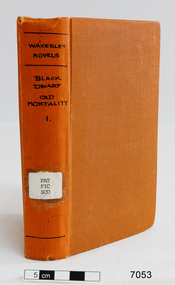 Flagstaff Hill Maritime Museum and Village
Book - Fictional stories, Sir Walter Scott, Waverley Novels Tales of my Landlord Vol 9, 1836
... Scott's enduring legacy is his vivid narratives on tradition versus change that still remain relevant, his stories and poetry impacted Victorian literature, architecture inspiring the public in a medieval revival at the time, and global views of Scotland. Goethe the German ...The subject volume “Waverley Novels Vol 9” published by Fisher Son & Co (1836) is part of a collected edition of Sir Walter Scott's works, containing stories from the "Tales of My Landlord" series. This edition of set 1,of Vol. 9” is the beginning of the first series of “Tales of My Landlord” in which is included “The Black Dwarf” and “The Tale of Old Mortality”. In many multi volume collected edition runs, Vol. 9 will be the first volume of “The Tale of Old Mortality” a more substantial and famous novel in the series, with the other half of the story following in Vol 10. The opening volume of “The Tale of Old Mortality”, is about the Scottish Presbyterian movement that supported two agreements made by the National Covenant of 1638, or the Solemn League and Covenant of 1643. These agreements were intended to defend and extend through the Scottish Presbyterianism resistance that occurred between 1679–1689. The story is told through the journey of the young landowner Henry Morton and the Covenanters’ guerrilla struggle against royal and Episcopal authority of the time. The “Tales of My Landlord” is framed and introduced through the fictional narrator editor, the stories are supposedly gathered from the landlord of the Wallace Inn at Gandercleugh, compiled by “Peter Pattieson” and edited by the schoolmaster and parish clerk Jedediah Cleishbotham. This framework is laid out in the introductions and prefatory material to the first series, especially in the prefatory pages to “The Black Dwarf” and the opening of Old Mortality.Waverley Novels Tales of my Landlord Set-1 Vol 9, Light brown hardcover lettering in black text. Author: Sir Walter Scott Publisher: Fisher Son & Co. Date: 1836fictionThe subject volume “Waverley Novels Vol 9” published by Fisher Son & Co (1836) is part of a collected edition of Sir Walter Scott's works, containing stories from the "Tales of My Landlord" series. This edition of set 1,of Vol. 9” is the beginning of the first series of “Tales of My Landlord” in which is included “The Black Dwarf” and “The Tale of Old Mortality”. In many multi volume collected edition runs, Vol. 9 will be the first volume of “The Tale of Old Mortality” a more substantial and famous novel in the series, with the other half of the story following in Vol 10. The opening volume of “The Tale of Old Mortality”, is about the Scottish Presbyterian movement that supported two agreements made by the National Covenant of 1638, or the Solemn League and Covenant of 1643. These agreements were intended to defend and extend through the Scottish Presbyterianism resistance that occurred between 1679–1689. The story is told through the journey of the young landowner Henry Morton and the Covenanters’ guerrilla struggle against royal and Episcopal authority of the time. The “Tales of My Landlord” is framed and introduced through the fictional narrator editor, the stories are supposedly gathered from the landlord of the Wallace Inn at Gandercleugh, compiled by “Peter Pattieson” and edited by the schoolmaster and parish clerk Jedediah Cleishbotham. This framework is laid out in the introductions and prefatory material to the first series, especially in the prefatory pages to “The Black Dwarf” and the opening of Old Mortality. warrnambool, shipwrecked-coast, flagstaff-hill, flagstaff-hill-maritime-museum, maritime-museum, shipwreck-coast, flagstaff-hill-maritime-village, shipwrecked-artefact, book, waverley novels vol 46 tales of my landlord, sir walter scott, pattison collection, warrnambool library, warrnambool mechanics’ institute, ralph eric pattison, corangamite regional library service, warrnambool city librarian, mechanics’ institute library, victorian library board, warrnambool books and records, warrnambool children’s library, waverley novels -
 Flagstaff Hill Maritime Museum and Village
Book - Fictional stories, Sir Walter Scott, Waverley Novels Vol 8 Rob Roy, 1838
... Scott's enduring legacy is his vivid narratives on tradition versus change that still remain relevant, his stories and poetry impacted Victorian literature, architecture inspiring the public in a medieval revival at the time, and global views of Scotland. Goethe the German ...The subject volume from the “Waverley Novels Rob Roy Vol 8” published by Fisher Son & Co (1838) is part of a collected edition of Sir Walter Scott's works, containing stories from the "Tales of My Landlord" series. "Tales of My Landlord" forms a key subset of Scott's Waverley Novels, presented as fictional tales gathered by characters like Peter Pattieson from the landlord of the Wallace “Inn at Gandercleugh”. The series spans multiple books across four sub-series, including “The Black Dwarf” (1707 setting), “Old Mortality” (1679–1689), “The Heart of Midlothian” (1736), “The Bride of Lammermoor” (1709–1711), “A Legend of Montrose” (1644–1645), “Count Robert of Paris” (1097), and “Castle Dangerous” (1307). Vol 46 in the 1838 Fisher edition reprints later entries like “Count Robert of Paris” or “Castle Dangerous” from the fourth series, as these stories originally appeared in Scott's Magnum Opus collected volume editions, the first from 1816. With the influential 48-volume “Magnum Opus” edition from 1829–1833 by Robert Cadell, serving as the basis for later collected published sets like Fisher's. First appearing as a three-volume set in December 1817, Rob Roy became one of Scott's most popular works, later standardised as Volume 8 in various Waverley Novels editions from the 1820's onward, such as the 1830 Magnum Opus issue. Early collected editions, like those from Adam & Charles Black (1878) or Fisher, Son & Co. (1836), often split it across two physical volumes labelled as "Vol. VIII," reflecting the series' format for lengthy novels.Waverley Novels Vol 8 Rob Roy, Light brown hardcover lettering in black text. Author: Sir Walter Scott Publisher: Fisher Son & Co Date: 1838fictionThe subject volume from the “Waverley Novels Rob Roy Vol 8” published by Fisher Son & Co (1838) is part of a collected edition of Sir Walter Scott's works, containing stories from the "Tales of My Landlord" series. "Tales of My Landlord" forms a key subset of Scott's Waverley Novels, presented as fictional tales gathered by characters like Peter Pattieson from the landlord of the Wallace “Inn at Gandercleugh”. The series spans multiple books across four sub-series, including “The Black Dwarf” (1707 setting), “Old Mortality” (1679–1689), “The Heart of Midlothian” (1736), “The Bride of Lammermoor” (1709–1711), “A Legend of Montrose” (1644–1645), “Count Robert of Paris” (1097), and “Castle Dangerous” (1307). Vol 46 in the 1838 Fisher edition reprints later entries like “Count Robert of Paris” or “Castle Dangerous” from the fourth series, as these stories originally appeared in Scott's Magnum Opus collected volume editions, the first from 1816. With the influential 48-volume “Magnum Opus” edition from 1829–1833 by Robert Cadell, serving as the basis for later collected published sets like Fisher's. First appearing as a three-volume set in December 1817, Rob Roy became one of Scott's most popular works, later standardised as Volume 8 in various Waverley Novels editions from the 1820's onward, such as the 1830 Magnum Opus issue. Early collected editions, like those from Adam & Charles Black (1878) or Fisher, Son & Co. (1836), often split it across two physical volumes labelled as "Vol. VIII," reflecting the series' format for lengthy novels.warrnambool, shipwrecked-coast, flagstaff-hill, flagstaff-hill-maritime-museum, maritime-museum, shipwreck-coast, flagstaff-hill-maritime-village, shipwrecked-artefact, book, waverley novels vol 46 tales of my landlord, sir walter scott, pattison collection, warrnambool library, warrnambool mechanics’ institute, ralph eric pattison, corangamite regional library service, warrnambool city librarian, mechanics’ institute library, victorian library board, warrnambool books and records, warrnambool children’s library
