
Showing 132 items matching " heirloom"
-
 Eltham District Historical Society Inc
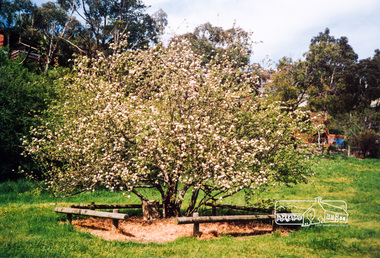
Photograph, The Batman Tree; heirloom apple tree purchased by John Batman and planted by Mr Frederick Flintoff in 1838 in the orchard of Mr Bosch, near Greensborough, now a small river flat near the Maroondah aqueduct crossing, Plenty River Walk, Greensborough, c.1989, 1989c
... The Batman Tree; heirloom apple tree purchased by John Batman and planted by Mr Frederick Flintoff in 1838 in the orchard of Mr Bosch, near Greensborough, now a small river flat near the Maroondah aqueduct crossing, Plenty River Walk, Greensborough, c.1989...The Batman Tree; heirloom apple tree purchased by John Batman and planted by Mr Frederick Flintoff in 1838 in the orchard of Mr Bosch, near Greensborough, now a small river flat near the Maroondah aqueduct crossing, Plenty River Walk, Greensborough, c.1989 Photograph ...Colour photograph originally located in a magnetic style album titled 'Greensborough Bypass 1990s 5' suffering significant degradation. No information contained in album or on reverse of photos except where noted. Relocated to archival photosafe storage.greensborough, plenty river walk, maroondah aqueduct, batman apple tree -
 Mrs Aeneas Gunn Memorial Library
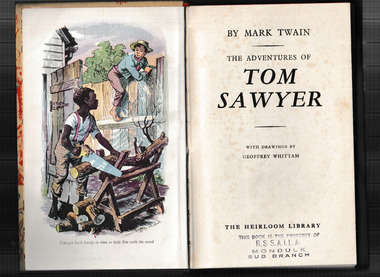
Book, The heirloom library, The adventures of Tom Sawyer, ????
... The heirloom library...The adventures of Tom Sawyer Book The heirloom library Mark Twain ...The classic story of a mischievous 19th-century boy in a Mississippi River town and his friends, Huck Finn and Becky Thatcher, as they run away from home, witness a murder, and find treasure in a cave.Ill, p.285.fictionThe classic story of a mischievous 19th-century boy in a Mississippi River town and his friends, Huck Finn and Becky Thatcher, as they run away from home, witness a murder, and find treasure in a cave. adventure fiction, juvenile fiction -
 Mrs Aeneas Gunn Memorial Library
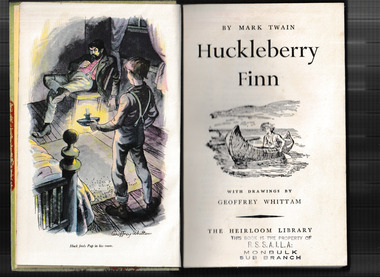
Book, The heirloom library, Huckleberry Finn, ????
... The heirloom library...Huckleberry Finn Book The heirloom library Mark Twain ...The classic story of a mischievous 19th-century boy in a Mississippi River town and his friends, Huck Finn and Becky Thatcher, as they run away from home, witness a murder, and find treasure in a cave.Ill, p.287.fictionThe classic story of a mischievous 19th-century boy in a Mississippi River town and his friends, Huck Finn and Becky Thatcher, as they run away from home, witness a murder, and find treasure in a cave. adventure fiction, juvenile fiction -
 Wycheproof & District Historical Society Inc.
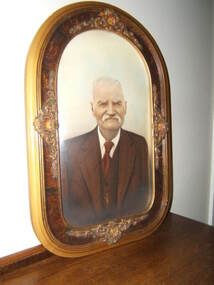
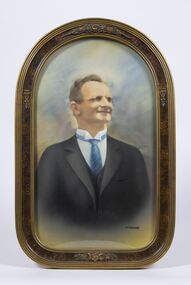
Photograph - Coloured photograph, framed, 1940
... Large glass framed 'Heirloom' photo reproduced from a 1940 photo- ornate and oval framed.Coloured formal photo with bronze attachment with words, "portrayed by the artist in a manner and quality befitting work to be passed on to future genertions as a priceless heirloom.Workmanship and materials guaranteed." ...Heirloom Product Style 37. F.L. Wirth Art Director. ...This photograph is of Michael Forrester a local member of the community who spent most of his adult life in the area. michael forester branxholme Heirloom Product Style 37. F.L. Wirth Art Director. ...Michael Forrester b.1866 Branxholme,Victoria,d.1945 age 79 years. Buried Quambatook,he was the 8th of 10 children of parents, Pat and Johanna Forrester, both buried at Wycheproof. A bachelor farmer, Michael worked on the selection property at East Towaninnie.He and his unmarried sister, Ellen Forrester, inherited some of the parents' land, sold it and lived out their final years at Quambatook. Typical of many early local residents,Michael was born into a large family and did not move far from his beginnings. Farming and family was his life. This photograph is of Michael Forrester a local member of the community who spent most of his adult life in the area.Large glass framed 'Heirloom' photo reproduced from a 1940 photo- ornate and oval framed.Coloured formal photo with bronze attachment with words, "portrayed by the artist in a manner and quality befitting work to be passed on to future genertions as a priceless heirloom.Workmanship and materials guaranteed." Heirloom Product Style 37. F.L. Wirth Art Director. Price 5 Guineas.michael forester, branxholme -
 Bacchus Marsh & District Historical Society
Painting, Portrait of Thomas Manly, 1930
... 'Heirloom' inscribed at the bottom right hand corner of the painting...Thomas Manly 1863-1937 Bacchus Marsh and District Biographies 'Heirloom' inscribed at the bottom right hand corner of the painting A framed painting based on a 1930 photograph of Tom Manly. ...Thomas Manly was a well-known resident of Bacchus Marsh. Born at Rowsley in 1863, Mr. Manly was a grandson in a family who had been in the service of the Greene family at "Greystones" from the time of its arrival in Victoria. The woolsheds at "Greystones" were built by deceased's grandfather, who also conducted a jeweller's shop at Rowsley. Like his forebears, Mr. Thomas Manly entered the service at "Greystones" and later worked for Messrs. Chomley and Boyd at "Glenmore." After his marriage to Miss Mary Johnston, whose mother arrived as an infant in Bacchus Marsh as early as 1839, Mr. Manly took up residence in the Main Street, Bacchus Marsh, where he has lived ever since. Deceased was a great walker, and mostly walked to his work, both at Rowsley and for the past 27 years to the Darley brickworks. Never a prominent man in public affairs, he was essentially a home-lover, and adopted horticulture as his hobby, gaining many prizes for both flowers and lucerne. Text for this description taken from the obituary for Thomas Manly in the Bacchus Marsh Express, 26 June, 1937, page 3, column 2.A framed painting based on a 1930 photograph of Tom Manly.'Heirloom' inscribed at the bottom right hand corner of the paintingthomas manly 1863-1937, bacchus marsh and district biographies -
 Whitehorse Historical Society Inc.
Article, Schwerkolt Cottage, 1965
... A family heirloom patchwork quilt was donated by former Ringwood residents Mr and Mrs Ewan French for display in Schwerkolt Cottage....Schwerkolt Cottage French Ewan French (Mrs) A family heirloom patchwork quilt was donated by former Ringwood residents Mr and Mrs Ewan French for display in Schwerkolt Cottage. ...A family heirloom patchwork quilt was donated by former Ringwood residents Mr and Mrs Ewan French for display in Schwerkolt Cottage.A family heirloom patchwork quilt was donated by former Ringwood residents Mr and Mrs Ewan French for display in Schwerkolt Cottage.A family heirloom patchwork quilt was donated by former Ringwood residents Mr and Mrs Ewan French for display in Schwerkolt Cottage.schwerkolt cottage, french, ewan, french (mrs) -
 Embroiderers Guild, Victoria
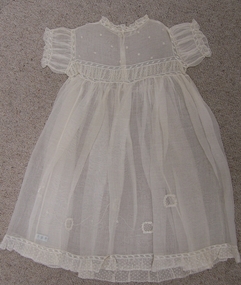
Clothing - Heirloom Cotton Baby's Dress, Misses Walsh, 1940's
... Very fine cotton heirloom sewing, hand embroidery. Circles on net inset circled with tiny flowers. ...Towards the end of the 1940's the shop closed. Embroidery Heirloom sewing Garments 1920-40 Australia Very fine cotton heirloom sewing, hand embroidery. ...Mrs Myer (donor) acquired this baby dress in about 1948. It was made in the workroom of the Misses Walsh, who ran an exclusive children's wear shop 'The Nursery' in Little Collins in the 1930's and 1940's. Towards the end of the 1940's the shop closed.Very fine cotton heirloom sewing, hand embroidery. Circles on net inset circled with tiny flowers. Lace band inset at waist. Lace frill at neck and hem. Tiny fabric covered buttons on back.embroidery, heirloom sewing, garments, 1920-40, australia -
 Embroiderers Guild, Victoria
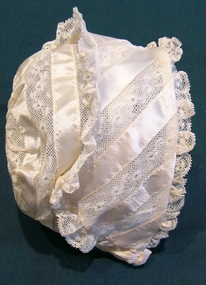
Headwear - Ribbon and Lace Baby's Bonnet, Early 20th century
... ... Heirloom...Lace Bonnets 1900-20 Heirloom Lining is net, attached are rows of cream ribbon and insertion lace. ...Lining is net, attached are rows of cream ribbon and insertion lace. Bonnet has a flap of ribbon and lace folded back over top of bonnet. No ties.lace, bonnets, 1900-20, heirloom -
 Sunshine and District Historical Society Incorporated
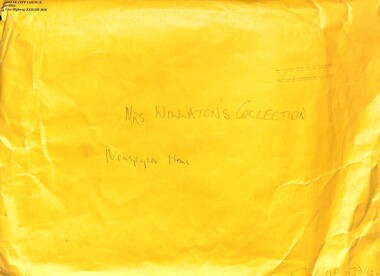
Mixed media - Collection of Mrs Willaton, various
... Clark family of Euroa family heirloom which is over 100 years old (1997)....Clark family of Euroa family heirloom which is over 100 years old (1997). ...myrtle gertrude willaton -
 Embroiderers Guild, Victoria
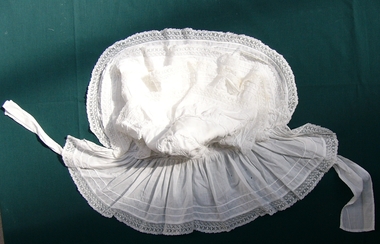
Headwear - Victorian Ladies Bonnet, 1882
... ... Heirloom...Prince George became King George V. Lace Heirloom White work Bonnets Australia 1880-1900 White cotton trimmed with four frills of pin tucks and lace. ...Made for, and worn by Sarah Gibb, Birchip, Victoria in 1882, on a picnic arranged to celebrate the arrival in Victoria of the two Princes Albert and George, Dukes of Clarence and York. They were serving in the Royal Navy, on the ship Baccaute. Sarah would have been about 18 years old, and lived to 99. Prince George became King George V.White cotton trimmed with four frills of pin tucks and lace. Two frills are missing. There is a 16 cm. neck frill, and wide ties.lace, heirloom, white work, bonnets, australia, 1880-1900 -
 Warrnambool and District Historical Society Inc.
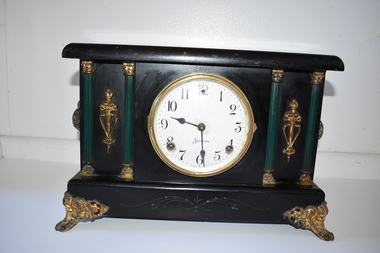
Clock, Mantle Clock, Early 20th century
... It would have been a common item in a household in the 20th century and was often an heirloom passed down from grandparents. This type of clock is an attractive item and is still regarded as highly desirable today....It would have been a common item in a household in the 20th century and was often an heirloom passed down from grandparents. This type of clock is an attractive item and is still regarded as highly desirable today. ...This is a mantel clock used probably in the dining room or lounge room of a house. It would have been a common item in a household in the 20th century and was often an heirloom passed down from grandparents. This type of clock is an attractive item and is still regarded as highly desirable today.This clock has no known local significance but is retained as an attractive and historical item and serves as an example of a high quality household object of the past. This is a black wooden clock with a rectangular base with ornamental metal corner pieces and two ornamental gilt metal patterns. The clock has an overhanging rectangular top with two gilt handles on the side. Also on the sides of the lock are two green inset faux columns with two metal ornaments in between. The brass mechanism at the back of the clock has four wheels. The clock face has a glass front, black numbers and metal hands. There is a strip of brass around the outside of the face. There are two key holes on the face. 'Sessions'warrnambool, mantel clock -
 Bendigo Historical Society Inc.
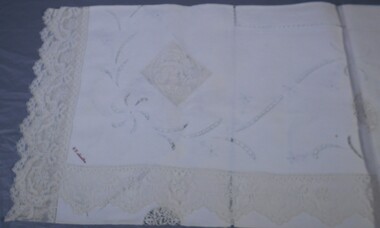
Domestic object - Linen Tablecloth
... The tablecloth was passed down through the family as a family heirloom. The donor has no grandchildren so has donated the tablecloth to the BHS....The tablecloth was passed down through the family as a family heirloom. The donor has no grandchildren so has donated the tablecloth to the BHS. ...Linen tablecloth created by Charlotte Elizabeth Moullin, grandmother of the donor. Last used by family for the christening donor's son Cameron, 50 years ago (From 2019). The tablecloth was passed down through the family as a family heirloom. The donor has no grandchildren so has donated the tablecloth to the BHS.Large rectangular white white tablecloth bordered in lace with lace inserts and extensive cut work. There is a central rectangular insert with geometric pattern."C E Moullin" embroidered in red cotton on one corner.late victorian needlework, handmade embroidery, tablecloth -
 Blacksmith's Cottage and Forge
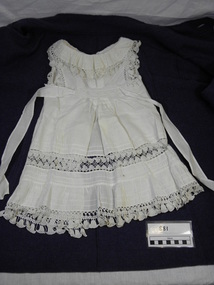
Pinafore, 1900 (estimated)
... The pinafore was a treasured family heirloom, and was not worn again. It is a rare example of a modest, homemade christening costume. ...The pinafore was a treasured family heirloom, and was not worn again. It is a rare example of a modest, homemade christening costume. ...This handmade pinafore was worn by the donor, Ellen Brown, at her christening in 1905. It was made by Ellen's grandmother, Mrs Beeching, for the first daughter born in the Fagg family. The pinafore was a treasured family heirloom, and was not worn again. It is a rare example of a modest, homemade christening costume. Most costumes were gowns, but this humble pinafore still shows loving attention to detail.The connection between milestone moments and the wearing of a particular garment carries great significance. The christening gown represents the rites of passage: great importance is placed on the clothing, as well as the ceremony.This is a white cotton infant's christening pinafore, round neck with a flounce, sleeveless with a sash attached at the front and tied at the back. There are lace inserts and lace at the hemline. Tucks are machined as embellishments and a tie at the back of the neck.lace, celebrations, handmade, white, brown, ceremony, textile, cotton, bacchus marsh, brown family, 1905, mrs beeching, fagg family, pinafore, infants clothes, rituals, fagg, costumes, family heirloom, christening, ellen brown -
 Yarrawonga and Mulwala Pioneer Museum
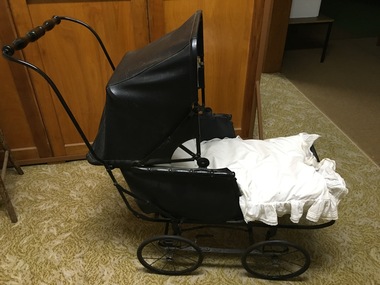
Folding pusher pram
... The pram contains a soft kapok fitted mattress with white heirloom lace frilled cover and a soft pillow covered with a white cotton pillowcase with a chicken and flowers embroidered on it....The pram contains a soft kapok fitted mattress with white heirloom lace frilled cover and a soft pillow covered with a white cotton pillowcase with a chicken and flowers embroidered on it. ...The pram is light in weight. Made of black vinyl with a metal frame. A handle with wooden grips is used to push the pram from behind. It has four spoked wheels with rubber tyres. The hood can be unlocked and folded down as can the handle which folds over the top of the pram body for ease of transport. The pram contains a soft kapok fitted mattress with white heirloom lace frilled cover and a soft pillow covered with a white cotton pillowcase with a chicken and flowers embroidered on it.None -
 Warrnambool and District Historical Society Inc.
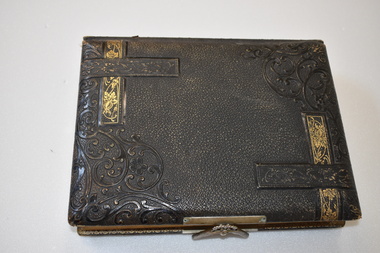
Album - Photograph Album, Late 19th century/early 20th century
... Albums such as this one, with photographs, would then become family heirlooms and treasured as such. They would have been expensive to buy at the time so were the province of the more affluent. ...Albums such as this one, with photographs, would then become family heirlooms and treasured as such. They would have been expensive to buy at the time so were the province of the more affluent. ...This item is a photograph album that would have been owned by a person or family in the late 19th or early 20th centuries. In most cases (but not in this one) family photographs would have been mounted in the pages and kept as part of a family’s history. Albums such as this one, with photographs, would then become family heirlooms and treasured as such. They would have been expensive to buy at the time so were the province of the more affluent. This album, in very good condition, is beautiful, aesthetically-pleasing and redolent with the history of earlier times. This album is retained as a beautiful example of the type of photograph album that the more affluent members of society would have owned over a 100 years ago. This is a leather covered photograph album. The cover is brown with ornamental floral scrolls and ornamental gold panels. Some of the gold etching and some of the leather areas have worn away. The spine has ridged gold bands with the gold etching heavily faded. The metal clasp that closes the pages is made of silver (tarnished) and is of a decorative pattern. The sixteen pages are made of heavy stiffened cardboard and have centre cut-outs (to contain photographs). These cut-outs are oval and rectangular (arched at the top) in shape and are outlined in gold. On every second page, the cut-out is decorated with sprigs of flowers delicately painted in colour. The pages are gilt-edged. There are three loose sheets of paper which look to be original backing pieces for photographs. There are no photographs in the album.warrnambool, antiquarian, photograph, album -
 Emerald Museum & Nobelius Heritage Park
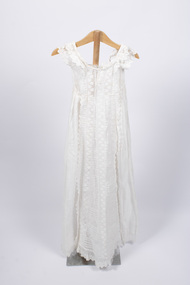
Clothing - Christening Gown, c. 1891
... They were long-lasting family heirlooms, typically passed from mother to daughter....They were long-lasting family heirlooms, typically passed from mother to daughter. ...This christening gown belonged to Frances Nobelius (1920-2015) and is believed to have been given to her by her mother Nina Ayers (nee Casement, 1891-1872). It was likely passed to Nina by her own mother, Mary Frances Balharry (1869-1898), and reused by the family over multiple generations of christenings. At the time it was made - before Nina's christening in 1891 - christening gowns usually featured a very long skirt decorated with extensive embroidery - often modelled on contemporary women's fashion. They were long-lasting family heirlooms, typically passed from mother to daughter.This gown was passed through several generations living in the local area, including members of the Nobelius family. It is an example of an element of late 19th century christening practices, and shows the reuse of christening gowns through decades and generations.This white lawn cotton christening dress is a long line gown with a simple bodice. It is almost sleeveless with a lace trim. It has a lace trimmed neckline, and a back opening with ribbon ties at the neckline and waistline. The skirt is gathered with a broderie anglais panel of lace on the front, extending from the neckline to the hemline.clothing, nobelius family -
 Bendigo Historical Society Inc.
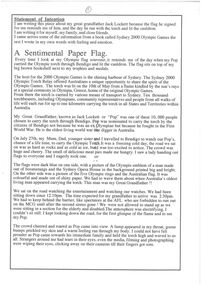
Essay - Jack Lockett Collection: Memories of Jack by Bryana Jones, Bryana Jones, 2000
... Lockett 109"which she will treasure forever, and it will be an heirloom to be passed on to future generations. ...Lockett 109"which she will treasure forever, and it will be an heirloom to be passed on to future generations. ...John Henry Lockett OAM (22 January 1891 – 25 May 2002) was the oldest man ever in Australia when he died aged 111 years, 123 days. As one of the last surviving veterans of World War I, he was acclaimed as a national hero during the last decade of his life. Lockett was born in the small Victorian town of Waanyarra, near Bendigo. He left school aged nine to work on a local farm. Later, he worked for his uncles in the Mallee. On 24 March 1916, he travelled to Mildura to enlist in the Australian Imperial Force. He served in France with the 38th Battalion, earning promotion to sergeant and was discharged on 20 September 1919. https://en.wikipedia.org/wiki/Jack_Lockett After the war, Jack returned to The Mallee and selected a 640 acres (260 ha) block of land in Linga, Victoria, deciding to make his living as a farmer. In 1923, he married Maybell Ingwerson and they had four children together. In 1963, the couple retired to Bendigo, leaving the farmland (which now covered more than 130,000 acres (53,000 ha), in the care of their children and grandchildren . The 2000 Olympic flame was relayed from Olympia in Greece to Sydney by 13400 carriers including 11000 Australians, each carrier had their own torch. Two white A4 paper pages with black print and a black line 10 centimeters from each edge. Titled - A Sentimental Paper Flag written by Bryana Jones A beautifully written essay about her Great Grandfather Jack Lockett or "Pop" who was part of the Olympic flame relay from Greece to Sydney in 2000 and he was part of the relay because he was the oldest living World War Digger in Australia and the oldest man in Australia. Bryana tells us about travelling with her family to Bendigo on July 27, a freezing cold day. She mentions the anticipation and excitement building as the crowd was waiting for Pop, then wonderful pride she felt as the crowd cheered when he came into view. Later Jack signed for her a souvenir Olympic Flag "J. H. Lockett 109"which she will treasure forever, and it will be an heirloom to be passed on to future generations. jack lockett, mabel ingwersen, olympic flame in bendigo, bryana jones -
 Royal Australian and New Zealand College of Obstetricians & Gynaecologists (RANZCOG)
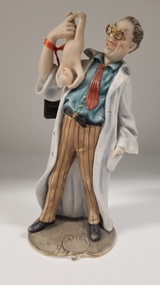
Sculpture - Porcelain figurine of a doctor holding a newborn baby, Pucci
... The tag reads 'TREASURES/TODAY/HEIRLOOMS/TOMORROW'....The tag reads 'TREASURES/TODAY/HEIRLOOMS/TOMORROW'. Sculpture Porcelain figurine of a doctor holding a newborn baby Pucci ...This piece bears an export mark associated with Arnart Imports. Arnart was an importer and distributor, rather than a manufacturer. It is likely that this is a Pucci porcelain piece, distibuted and sold by Arnart.Porcelain figurine of a male doctor holding a newborn baby. The figure has grey hair and is wearing an unbuttoned white surgical gown. Beneath the gown the figure is wearing brown, striped trousers, a blue shirt, a red tie and black shoes. The buttons on the shirt and his belt buckle are golden coloured. The figure is wearing gold framed glasses with round frames, and is smiling. The figure is standing with his left hand in the pocket of his surgical coat, while holding a baby in his right hand by its left leg. The baby is head down and facing away from the doctor figure. The figurine is standing on a oval shaped base and there is a gold coloured, abstract, decorative embellishment at the front of the base. There is a stamp on the underside of the base of the figurine consisting of the initial 'A' below a stylised crown. The number '44/768' is printed on the base below this stamp. A retail sale tag is tied to the right arm of the doctor figure with a small piece of orange ribbon. The tag reads 'TREASURES/TODAY/HEIRLOOMS/TOMORROW'. -
 Flagstaff Hill Maritime Museum and Village
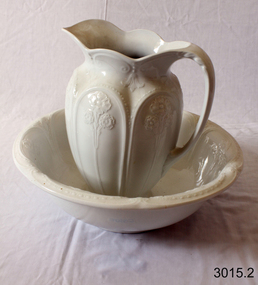
Domestic object - Ewer and Bowl, J & G Meakin, 1912 - 1925
... From around 1970, designs included Liberty, Sterling, Trend, Classic, and Heirloom. Some of these were influenced by earlier designs. ...From around 1970, designs included Liberty, Sterling, Trend, Classic, and Heirloom. Some of these were influenced by earlier designs. ...J & G Meakin was an English pottery manufacturing company founded in 1851 and based in Hanley, Stoke-on-Trent, Staffordshire. In the 19th century, J & G Meakin was known for the vast quantities of cheap ironstone china it produced for the domestic English market and export to Australia, Canada, New Zealand, and the United States. From around 1970, designs included Liberty, Sterling, Trend, Classic, and Heirloom. Some of these were influenced by earlier designs. The newer wares can be distinguished by back stamp markings such as 'permanent colours', 'everlasting colour', or 'dishwasher proof'. J & G Meakin had close family and corporate affiliations to the potteries Johnson Brothers, and Alfred Meakin Ltd, which explains why many patterns are similar, if not almost the same. There was a takeover by J. & G. Meakin in 1968 of Midwinter Pottery. The firm was then taken over by the Wedgwood Group in 1970. In 2000 production under the Meakin name ceased and their long-established works, Eagle Pottery, was then used for the production of Johnson Bros pottery. Eagle Pottery closed in 2004 when production was transferred abroad; the works were demolished in 2005.Item is significant as it is believed to be an early example of the SOL trademark made between 1913-1925.Ironstone wash jug and bowl set, white, often referred to as a ewer and bowl. Both jug and bowl have matching raised embossing of panels with floral motifs within them.Both items have marks "Ironstone China Reqd SOL 39/4/3 STG Meakin England" Trademark of J & G Meakin with sun emblem .flagstaff hill, warrnambool, shipwrecked-coast, flagstaff-hill, flagstaff-hill-maritime-museum, maritime-museum, shipwreck-coast, flagstaff-hill-maritime-village, jug china white and basin, jug, jug and basin, jug & bowl, ewer, bowl, ewer & bowl, j and g meakin, ironstone ware, bathing, washing, personal hygiene -
 Flagstaff Hill Maritime Museum and Village
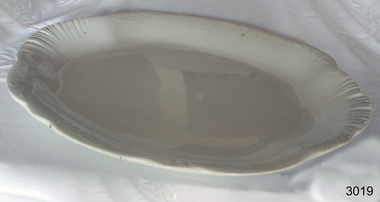
Ceramic - Serving Plate, Alfred Meakin, 1930s
... From around 1970, designs included Liberty, Sterling, Trend, Classic, and Heirloom. Some of these were influenced by earlier designs. ...From around 1970, designs included Liberty, Sterling, Trend, Classic, and Heirloom. Some of these were influenced by earlier designs. ...J & G Meakin was an English pottery manufacturing company founded in 1851 and based in Hanley, Stoke-on-Trent, Staffordshire. In the 19th century, J & G Meakin was known for the vast quantities of cheap ironstone china it produced for the domestic English market and export to Australia, Canada, New Zealand, and the United States and one of these pottery lines was called "EMPRESS" and was in production through the 1930s. From around 1970, designs included Liberty, Sterling, Trend, Classic, and Heirloom. Some of these were influenced by earlier designs. The newer wares can be distinguished by back stamp markings such as 'permanent colours', 'everlasting colour', or 'dishwasher proof'. J & G Meakin had close family and corporate affiliations to the potteries Johnson Brothers, and Alfred Meakin Ltd, which explains why many patterns are similar, if not almost the same. There was a takeover by J. & G. Meakin in 1968 of Midwinter Pottery. The firm was then taken over by the Wedgwood Group in 1970. In 2000 production under the Meakin name ceased and their long-established works, Eagle Pottery, was then used for the production of Johnson Bros pottery. Eagle Pottery closed in 2004 when production was transferred abroad; the works were demolished in 2005.Item is significant as today the "EMPRESS" china pattern from the 1930s by Meakin is today a collectable item and a good example of the Meakin range of china.Plate china white oval with a pattern inscribed along the edge Inscription to base "EMPRESS" warrnambool, flagstaff-hill, flagstaff-hill-maritime-museum, maritime-museum, shipwreck-coast, flagstaff-hill-maritime-village, alfred meakin, staffordshire potteries, iron stone pottery, serving dish -
 Flagstaff Hill Maritime Museum and Village
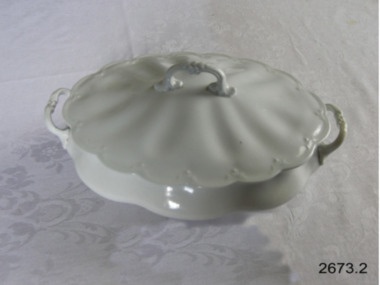
Ceramic - Serving Dish, J & G Meakin, 1880 to 1900
... From around 1970, designs included Liberty, Sterling, Trend, Classic, and Heirloom. Some of these were influenced by earlier designs. ...From around 1970, designs included Liberty, Sterling, Trend, Classic, and Heirloom. Some of these were influenced by earlier designs. ...J & G Meakin was an English pottery manufacturing company founded in 1851 and based in Hanley, Stoke-on-Trent, Staffordshire. In the 19th century, J & G Meakin was known for the vast quantities of cheap ironstone china it produced for the domestic English market and export to Australia, Canada, New Zealand, and the United States and one of these pottery lines was called "EMPRESS" and was in production through the 1930s. From around 1970, designs included Liberty, Sterling, Trend, Classic, and Heirloom. Some of these were influenced by earlier designs. The newer wares can be distinguished by back stamp markings such as 'permanent colours', 'everlasting colour', or 'dishwasher proof'. J & G Meakin had close family and corporate affiliations to the potteries Johnson Brothers, and Alfred Meakin Ltd, which explains why many patterns are similar, if not almost the same. There was a takeover by J. & G. Meakin in 1968 of Midwinter Pottery. The firm was then taken over by the Wedgwood Group in 1970. In 2000 production under the Meakin name ceased and their long-established works, Eagle Pottery, was then used for the production of Johnson Bros pottery. Eagle Pottery closed in 2004 when production was transferred abroad; the works were demolished in 2005.Item is significant as today the "EMPRESS" china pattern from the 1930s by Meakin is today a collectable item and a good example of the Meakin range of china.Serving vegetable bowl with two handles on either end, plus a lid with a handle on the top lid also has a pattern around the edge.Inscription to base "J & G Meakin Manley England " warrnambool, flagstaff-hill, flagstaff-hill-maritime-museum, maritime-museum, shipwreck-coast, flagstaff-hill-maritime-village, alfred meakin, staffordshire potteries, iron stone pottery, serving dish -
 National Wool Museum
Tool - Knitting Pins, 1960-69
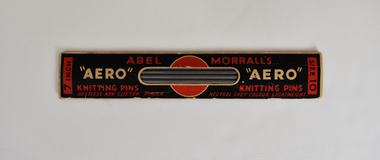
... Being a long-lasting product, they are often given as heirlooms. Abel Morrall was a major needle manufacturer from Studley, a town near Redditch. ...Being a long-lasting product, they are often given as heirlooms. Abel Morrall was a major needle manufacturer from Studley, a town near Redditch. ...The donor (Lynn Fitzpatrick) purchased these knitting needles 20 years ago from an opportunity shop. Aero Knitting Pins are a discontinued brand that were popular in the 1960s, 70s and 80s. They are made of smooth, aircraft-quality anodized aluminium. To this day, they are a popular and sort after knitting needle. Being a long-lasting product, they are often given as heirlooms. Abel Morrall was a major needle manufacturer from Studley, a town near Redditch. In 1785, Michael Morrall who was taught the art of needle making by a maternal uncle, moved to Studley. He founded the Abel Morrall company with his brother Abel, and another unnamed brother-in-law. Within five years the company was producing 40% of the 2.5 million needles that were made each week in the Redditch area. In 1811 the company introduced the concept of creating the eyes by using a stamping press. Additional machines were invented by them throughout the 19th century leading to major improvements in the way needles were produced. Abel Morrall demonstrated their needle making machinery at the Great Exhibition of 1851 and Queen Victoria personally inspected it. The company selected the demi-griffin for its trademark in 1861, which can be seen on older products produced by the company. Set of four knitting needles stored within paper packaging. Packaging features black, red, and white ink, detailing the selling points of the Aero Knitting Pins. The packaging folds with 3 main sections, each providing different insights into the knitting needles. Examples of this are " CANNOT SOIL LIGHT WOOL", "...SPECIALLY TAPERED POINTS WHICH WILL NOT INJURE THE FINGERS" and "RUSTLESS-NON-GLITTER FINISH". As the packaging unfolds, the grey knitting needles become visible. The needles can be removed from the packaging by sliding them through small bands of paper that hold the needles secure while in transportation. The four knitting needles are a “NEUTRAL” grey colour finished in a double point style.Printed. Orange, White and Black Ink Numerous, see multimediaabel morrall, knitting needles, knitting pins, 1960s home knitting -
 Chiltern Athenaeum Trust
Medal
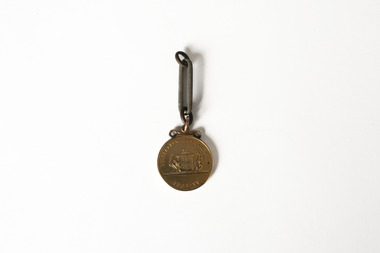
... ...heirloom...This item is significant for the information it provides about the development of industry and local culture in Victoria in the 1880s. medal rutherglen agricultural show chiltern north-east victoria gold fields gold mining gold rush 1885 heirloom farming horticulture rutherglen historical society indigo shire wilfred clarence busse golden plague authors writers victorian writers victorian literature historical fiction blue beyond wesley college Federal Standard Inscription on obverse: Illegible Indistinct inscription on reverse may read: Rutherglen Agricultural Society Bronze coloured medal attached to single large-format chain link; embossed medal markings are indistinct but appear to show Coat of Arms on reverse side. ...This medal from the estate of W.C. Busse is believed to have been awarded to a recipient at the Rutherglen Agricultural Show in 1885. Due to degradation of the embossed markings, it is uncertain what the medal was awarded for or whom it was awarded to. It may have been awarded to a member of the Busse family prior to W.C. Busse's birth. Rutherglen is located approximately 18 kilometres from Chiltern. European agriculture and horticulture in the area was well established prior to the discovery of gold in the region in the 1860s. It held its first yearly Agricultural Show in 1880; in the present day it has a sister event focusing on showcasing the region's wines. Wilfred Clarence Busse was born in Chiltern in 1898. He went to school at Wesley College in Melbourne, studied law at the University of Melbourne and became a barrister. Additionally, after spending time on a Victorian station in his early twenties, he wrote two historical novels about bush life. His first novel was 'The Blue Beyond: a Romance of the Early Days in South Eastern Australia', written in 1928 and published in 1930. Busse's second novel was titled 'The Golden Plague: A Romance of the Early Fifties'. The judges of the Henry Lawson Society's T.E. Rofe competition to advance Australian literature unanimously awarded it the Gold Medal in 1931 for the best historical novel of 1930. Newspaper articles about the award mention the writer's meticulous documentary and oral history research regarding life on the Gold Fields in the 1850s. It became a best-seller. Busse also wrote a series of articles about local history for "The Federal Standard" newspaper in Chiltern. He was a member of the Chiltern Athenaeum. He died in 1960. This item is significant for the information it provides about the development of industry and local culture in Victoria in the 1880s. Bronze coloured medal attached to single large-format chain link; embossed medal markings are indistinct but appear to show Coat of Arms on reverse side. Inscription on obverse: Illegible Indistinct inscription on reverse may read: Rutherglen Agricultural Society medal, rutherglen agricultural show, chiltern, north-east victoria, gold fields, gold mining, gold rush, 1885, heirloom, farming, horticulture, rutherglen historical society, indigo shire, wilfred clarence busse, golden plague, authors, writers, victorian writers, victorian literature, historical fiction, blue beyond, wesley college, federal standard -
 Flagstaff Hill Maritime Museum and Village
Book - Reference Bible, Mark & Charles Kerr, The Holy Bible 1789 (King James Version), 1789
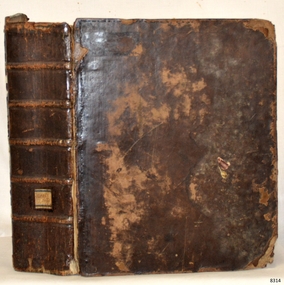
... Because these Bibles were built to endure, they often became cherished family heirlooms. Interestingly, Bibles from this exact 1789 Mark & Charles Kerr run are highly sought after by museums and universities today. ...Because these Bibles were built to endure, they often became cherished family heirlooms. Interestingly, Bibles from this exact 1789 Mark & Charles Kerr run are highly sought after by museums and universities today. ...The subject Bible is an incredible piece of history in the Pattison Collection. A Bible printed in 1789 with a personal handwritten inscription from 1792 is a true artefact of the late 18th century. The information on the book's title page refers to King George III, as Mark and Charles Kerr were prominent Scottish printers and stationers based in Edinburgh. In the 18th century, printing the Holy Bible wasn't something just anyone could do; it required a royal patent granted by the Crown to ensure textual accuracy and high-quality production. The Kerr family held the coveted title of "King's Printers for Scotland" during the late 1700s. Bibles from their press were highly regarded for their clear typography, sturdy leather bindings, and standard-setting quality. Owning an Edinburgh-printed royal edition like the subject publication was a point of pride for families across the English-speaking world.The Holy Bible 1789 Publisher: Mark & Charles Kerr His Majesty's Printers Date: 1789 Further Information : non-fictionThe subject Bible is an incredible piece of history in the Pattison Collection. A Bible printed in 1789 with a personal handwritten inscription from 1792 is a true artefact of the late 18th century. The information on the book's title page refers to King George III, as Mark and Charles Kerr were prominent Scottish printers and stationers based in Edinburgh. In the 18th century, printing the Holy Bible wasn't something just anyone could do; it required a royal patent granted by the Crown to ensure textual accuracy and high-quality production. The Kerr family held the coveted title of "King's Printers for Scotland" during the late 1700s. Bibles from their press were highly regarded for their clear typography, sturdy leather bindings, and standard-setting quality. Owning an Edinburgh-printed royal edition like the subject publication was a point of pride for families across the English-speaking world.flagstaff hill, warrnambool, shipwrecked coast, flagstaff hill maritime museum, maritime museum, shipwreck coast, flagstaff hill maritime village, great ocean road, book, pattison collection, warrnambool library, warrnambool mechanics’ institute, ralph eric pattison, corangamite regional library service, warrnambool city librarian, mechanics’ institute library, victorian library board, warrnambool books and records, warrnambool children’s library, the holy bible 1789, the holy bible -
 Bendigo Historical Society Inc.
Photograph - Lansell Articles - Wotton Lansell - Myrtle House Bendigo, abt 1982
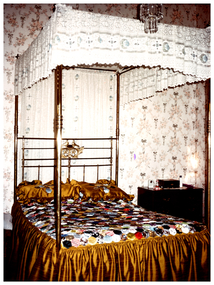
... The family has preserved the home's historical character, with careful updates and retention of original furnishings and heirlooms. The Lansell name is closely associated with Bendigo's early gold-mining history and development. ...The family has preserved the home's historical character, with careful updates and retention of original furnishings and heirlooms. The Lansell name is closely associated with Bendigo's early gold-mining history and development. ...Georg Lansell's brother Wootton Lansell's was Born in Margate, Kent, England, son of a grocer and tallow chandler.Worked as a seaman, with a mariner's certificate issued in 1844, he Arrived in Australia in 1850, initially working as a mounted trooper in Adelaide before moving to Bendigo in 1852 during the gold rush. After some success in gold prospecting, Lansell became a carpenter and then opened a butcher's store in View Point, Bendigo. He Invited his brothers George and William to join him; together they expanded into soap, candle, and tallow businesses. The partnership dissolved after three years, with Wootton turning to farming on 500 acres at Leichardt, while George became known as Bendigo's 'Gold King. Wotton Married Helen Hall in 1854 in Adelaide; they had one son (Thomas George William) and three daughters. Wootton invested in mining and was involved in several mining directorates. Around 1879, Wootton built a substantial brick and stone house (Myrtle Villa) with eight main rooms, which remains in the family. The house is notable for its original features, such as sand-colored tile-patterned wallpaper and a four-poster bed where nine of his ten grandchildren were born. The garden is sustained by a permanent spring and retains much of its original character. The house is still occupied by his descendants, notably his twin granddaughters Alice Lansell and Neva (Mrs. D. W. Jenkins). The family has preserved the home's historical character, with careful updates and retention of original furnishings and heirlooms. The Lansell name is closely associated with Bendigo's early gold-mining history and development. Myrtle Villa stands as a testament to the family's enduring presence and influence in the region.Lansell Articles - Wotton Lansell - Myrtle House Bendigo This item contains the following document: 11217.67a Colour photo 7.5 x 10 inches of four poster bed at "Myrtle House", Bendigo. The photo is of the elegant four-poster bed in which nine of Wotton Lansell's grandchildren - the family of his son Thomas William, were born. On the rear of the photo is written in ink. "Main bedroom, Myrtle Villa c 1982; a gift to Wotton and Helen Lansell from Edith Lansell."non-fictionbendigo, fortuna, george lansell, edith lansell, wotton lansell, helen hall lansell -
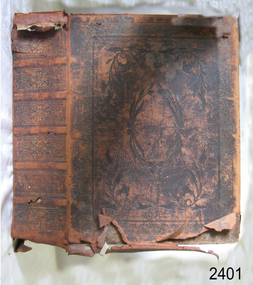 Flagstaff Hill Maritime Museum and Village
Book - Reference/Bible, Rev. John Eadie, The Holy Bible (with the Commentaries of Scott and Henry 1862), 1862
... By pricing large, illustrated, commented Bibles at the revolutionary price of around £1 or selling them via weekly/monthly subscription parts, he placed a massive heirloom book into tens of thousands of working-class homes....By pricing large, illustrated, commented Bibles at the revolutionary price of around £1 or selling them via weekly/monthly subscription parts, he placed a massive heirloom book into tens of thousands of working-class homes. ...This specific 1862 Bible is a fascinating artifact from the height of 19th-century British industrial printing, combining massive theological authority with an effort to make large-scale Family Bibles accessible to the general public.The Holy Bible with the Commentaries of Scott and Henry 1862 Edited by Rev John Eadie Publisher: W R McPhun Date: 1862non-fictionThis specific 1862 Bible is a fascinating artifact from the height of 19th-century British industrial printing, combining massive theological authority with an effort to make large-scale Family Bibles accessible to the general public.flagstaff hill, warrnambool, shipwrecked-coast, flagstaff-hill, flagstaff-hill-maritime-museum, maritime-museum, shipwreck-coast, flagstaff-hill-maritime-village, book, bible, the holy bible, scott and henry -
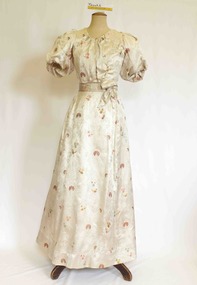 Brighton Historical Society
Clothing - Dress, Evening dress, circa 1890 (bodice), circa 1840 (skirt)
... The donor and family of this gown were long-term Brighton residents, and the gowns were held by them as family heirlooms prior to donation to Brighton Historical Society. ...The donor and family of this gown were long-term Brighton residents, and the gowns were held by them as family heirlooms prior to donation to Brighton Historical Society. ...The donor and family of this gown were long-term Brighton residents, and the gowns were held by them as family heirlooms prior to donation to Brighton Historical Society. Originally owned by Elizabeth Emma Adams and Cecilia Elizabeth Adams, it is believed that the dress was brought to Australia by either a half brother, James Smith Adams, or a younger sister, Sophia Charlotte Louisa Adams (later known as Mother Rose Columba Adams). Elizabeth and Cecilia were the daughters of James Smith Adams (a squire, 1780-1860) and Elizabeth Emma McTaggart (1793-1843) of Tower House, Woodchester in Gloucester, a property which Elizabeth later inherited. Originally a monastery, Tower House had been converted into a stately home after the Reformation. According to information originally provided by the donor, the skirt portion of this dress (along with the bodice T0004.3) was made for either Elizabeth or Cecilia to be worn at the young Queen Victoria’s first 'drawing room ball' following the end of court mourning in 1838 for her uncle William IV who died in 1837. In 1838 Cecilia would have been twelve years old and Elizabeth would have been ten years old. It is possible that this dress was worn by one of the girls to this event as it is of appropriate dimensions for a child of that age, although its design is very formal and adult. Elizabeth was born on 30 June 1828 at Tower House and died on 1 May 1909. She created a scandal when she eloped with her first husband, Thomas Charles Gardiner at the age of 18. The validity of the marriage was later formally investigate and, while it was confirmed as valid, a second church wedding was subsequently held. Thomas died in 1878. Elizabeth subsequently remarried Reverend R. E. Blackwell, but was widowed again by 1889. Cecilia was born on 17 December 1826 and died in 1902 a spinster recluse in England. At the inquest into Cecelia's death in 1904 it was revealed that she had clearly come from a family of means as her home was filled to the brim with highly valuable goods, many in boxes. She was buried in the family vault at Woodchester. Elizabeth and Cecilia's sister Sophia converted to Roman Catholicism in 1851 and became a nun, taking the religious name 'Rose Columba'. In 1883 Mother Rose Columba led a group of eight to Australia, answering a call for Dominican sisters to nurse the sick in Adelaide. Upon arrival, she founded St. Dominic's Priory and the Church of Perpetual Adoration in North Adelaide, using her inheritance to build the chapel. Elizabeth's second son, George Henry Somerset, who inherited the Adams family estate dropped the 'i' in Gardiner and added the maiden name of his grandmother. Therefore, the family name has now become Gardner McTaggart. These Adams family entries have been updated with information provided by Dr Herbert Gardner McTaggart, great-grandson of George Henry Somerset in April 2016. Mr McTaggart contacted the society after finding our entries online.A hand and machine sewn cream, pale blue, orange and gold embroidered satin formal dress, the bodice dates from circa 1890. This dress shares a skirt with T0004.3, which dates from circa 1840. The bodice features a high scoop neckline with gathers at the base of the scoop and directly below where the bodice finishes creating fullness over the bust. The bodice front encloses the bust with a right panel over the top of a left panel and securing with two hook and eye closures over the left shoulder. The panels are secured together with 15 hook and eye closures. The sleeves are set neatly on the true shoulder and are elongated full puffs to just above the elbow. The fullness is created by nine pleats from the top of the shoulder over the back of the shoulder. At the base of the sleeve the fullness is gathered just above the elbow. At the centre back of the bodice are four inward facing pleats running from the centre neck to the waist. The bodice is secured around the waist with a tape and four hook and eye closures. The bodice is boned around the sides and back of the torso with eight bones. This bodice is finished at the waist with a pleated cummerbund of the dress fabric that is designed to appear to be a sash with two decorative bows. One front left of centre and one back right of centre. The skirt secures at the waist with an opening to the left of centre at the back. The skirt gathers tightly at the centre back with a dart on either side. The skirt has a front central panel and the skirt falls to floor length. At the back, the skirt is also floor length. The back of the skirt may have been modified at some time and may have originally finished in a train. It would be more appropriate to the period of the bodice, and the believed use of the dress with a train.cecilia elizabeth adams, elizabeth emma adams, queen victoria, tower house, woodchester, james smith adams, elizabeth emma mctaggart, sophia charlotte louisa adams, 1890s fashion -
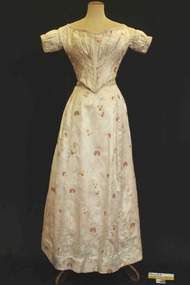 Brighton Historical Society
Clothing - Dress, Evening dress, circa 1840
... The donor and family of this gown were long-term Brighton residents, and the gowns were held by them as family heirlooms prior to donation to Brighton Historical Society. ...The donor and family of this gown were long-term Brighton residents, and the gowns were held by them as family heirlooms prior to donation to Brighton Historical Society. ...The donor and family of this gown were long-term Brighton residents, and the gowns were held by them as family heirlooms prior to donation to Brighton Historical Society. Originally owned by Elizabeth Emma Adams and Cecilia Elizabeth Adams, it is believed that the dress was brought to Australia by either a half brother, James Smith Adams, or a younger sister, Sophia Charlotte Louisa Adams (later known as Mother Rose Columba Adams). Elizabeth and Cecilia were the daughters of James Smith Adams (a squire, 1780-1860) and Elizabeth Emma McTaggart (1793-1843) of Tower House, Woodchester in Gloucester, a property which Elizabeth later inherited. Originally a monastery, Tower House had been converted into a stately home after the Reformation. According to information originally provided by the donor, both this dress and the dress T0004.1 were made for Elizabeth and Cecilia, to be worn at the young Queen Victoria’s first 'drawing room ball' following the end of court mourning in 1838 for her uncle William IV who died in 1837. In 1838 Cecilia would have been twelve years old and Elizabeth would have been ten years old. It is possible that this dress was worn by one of the girls to this event as it is of appropriate dimensions for a child of that age, although its design is very formal and adult. Elizabeth was born on 30 June 1828 at Tower House and died on 1 May 1909. She created a scandal when she eloped with her first husband, Thomas Charles Gardiner at the age of 18. The validity of the marriage was later formally investigate and, while it was confirmed as valid, a second church wedding was subsequently held. Thomas died in 1878. Elizabeth subsequently remarried Reverend R. E. Blackwell, but was widowed again by 1889. Cecilia was born on 17 December 1826 and died in 1902 a spinster recluse in England. At the inquest into Cecelia's death in 1904 it was revealed that she had clearly come from a family of means as her home was filled to the brim with highly valuable goods, many in boxes. She was buried in the family vault at Woodchester. Elizabeth and Cecilia's sister Sophia converted to Roman Catholicism in 1851 and became a nun, taking the religious name 'Rose Columba'. In 1883 Mother Rose Columba led a group of eight to Australia, answering a call for Dominican sisters to nurse the sick in Adelaide. Upon arrival, she founded St. Dominic's Priory and the Church of Perpetual Adoration in North Adelaide, using her inheritance to build the chapel. Elizabeth's second son, George Henry Somerset, who inherited the Adams family estate dropped the 'i' in Gardiner and added the maiden name of his grandmother. Therefore, the family name has now become Gardner McTaggart. These Adams family entries have been updated with information provided by Dr Herbert Gardner McTaggart, great-grandson of George Henry Somerset in April 2016. Mr McTaggart contacted the society after finding our entries online.A hand sewn cream, pale blue, orange and gold embroidered satin formal dress, the bodice dates from circa 1840. This dress shares a skirt with T0004.2, which dates from a different period (circa 1890). The bodice features a wide shallow neckline finished with a beige coloured cord in two decorative lines. The sleeve is set on the true shoulder and is a short fitted sleeve with decorative gathering and two lines of corded detail. The bodice is shaped to the body with 2 sets of six fine knife pleats diagonally positioned narrower over the waist and spreading out over the bust. These pleats are secured with six double lines of stitching. The bodice finishes high on the waistline at either side and points down to a point over the centre front. The base of the bodice is finished with a piped edge and beige decorative cording. The bodice encloses the body at the centre back where it has holes that presumably would have held lacing. The back features four diagonal knife pleats finishing at the centre back and splaying out over the shoulders. The waistline at the back features only a very gentle point.cecilia elizabeth adams, elizabeth emma adams, james smith adams, elizabeth emma mctaggart, sophia charlotte louisa adams, queen victoria, drawing room ball, 1840s fashion, tower house, woodchester -
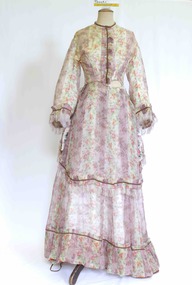 Brighton Historical Society
Clothing - Dress, Day dress, circa 1870
... The donor and family of this gown were long-term Brighton residents, and the gowns were held by them as family heirlooms prior to donation to Brighton Historical Society. ...The donor and family of this gown were long-term Brighton residents, and the gowns were held by them as family heirlooms prior to donation to Brighton Historical Society. ...The donor and family of this gown were long-term Brighton residents, and the gowns were held by them as family heirlooms prior to donation to Brighton Historical Society. Originally owned by Elizabeth Emma Adams and Cecilia Elizabeth Adams, it is believed that the dress was brought to Australia by either a half brother, James Smith Adams, or a younger sister, Sophia Charlotte Louisa Adams (later known as Mother Rose Columba Adams). Elizabeth and Cecilia were the daughters of James Smith Adams (a squire, 1780-1860) and Elizabeth Emma McTaggart (1793-1843) of Tower House, Woodchester in Gloucester, a property which Elizabeth later inherited. Originally a monastery, Tower House had been converted into a stately home after the Reformation. According to information originally provided by the donor, both this dress and the dress T0004.3 were made for Elizabeth and Cecilia, to be worn at the young Queen Victoria’s first 'drawing room ball' following the end of court mourning in 1838 for her uncle William IV who died in 1837. In 1838 Cecilia would have been twelve years old and Elizabeth would have been ten years old. It is possible that the dress T0004.3 was worn by one of the girls to this event as it is of appropriate dimensions for a child of that age, although its design is very formal and adult. However, it is unlikely that either of the girls wore this dress at the ball due to the size and styling of the dress. It is likely that the dress belonged to one of the girls, but was worn at a later date. Elizabeth was born on 30 June 1828 at Tower House and died on 1 May 1909. She created a scandal when she eloped with her first husband, Thomas Charles Gardiner at the age of 18. The validity of the marriage was later formally investigate and, while it was confirmed as valid, a second church wedding was subsequently held. Thomas died in 1878. Elizabeth subsequently remarried Reverend R. E. Blackwell, but was widowed again by 1889. Cecilia was born on 17 December 1826 and died in 1902 a spinster recluse in England. At the inquest into Cecelia's death in 1904 it was revealed that she had clearly come from a family of means as her home was filled to the brim with highly valuable goods, many in boxes. She was buried in the family vault at Woodchester. Elizabeth and Cecilia's sister Sophia converted to Roman Catholicism in 1851 and became a nun, taking the religious name 'Rose Columba'. In 1883 Mother Rose Columba led a group of eight to Australia, answering a call for Dominican sisters to nurse the sick in Adelaide. Upon arrival, she founded St. Dominic's Priory and the Church of Perpetual Adoration in North Adelaide, using her inheritance to build the chapel. Elizabeth's second son, George Henry Somerset, who inherited the Adams family estate dropped the 'i' in Gardiner and added the maiden name of his grandmother. Therefore, the family name has now become Gardner McTaggart. These Adams family entries have been updated with information provided by Dr Herbert Gardner McTaggart, great-grandson of George Henry Somerset in April 2016. Mr McTaggart contacted the society after finding our entries online.A hand sewn white purple, pink, green, blue and yellow floral silk chiffon dress from circa 1870. The dress consists of two pieces worn together as a dress. This dress has received a great deal of mending and alteration and so it is difficult to be sure of what constitutes its original state. The following description is of its current state. The bodice has a high neck with a simple shallow band collar, an olive braid and a press stud closure. The bodice fastens down the centre front with ten hook and eyes closures and two sets of ribbon ties . The bodice has three darts providing shaping into the waistline. The bodice finishes at the waist and gently tapers towards the front creating a 'V' line. Down the centre front from the neck to the waist concealing the bodice opening is a pressed pleated ruffle of the dress fabric and a line of olive braid. The dress features pagoda sleeves finished at the hem with pressed pleated ruffle of the dress fabric, a line of olive braid and a silk fringe of 4 cm pale pink and white. The skirt part of the bodice section attaches to the front of the dress with two hooks and eyes on the left hand side of the waist. The fabric drops down to approximately the knees at the front, curving up and splitting on either side over the hip. The edge of this piece is also trimmed with a pressed pleated ruffle of the dress fabric and a line of olive braid. Just below the hip on either side is a large bow of pink, cream, purple and green taffeta. The bodice at the back is shaped with four panels into the waistline. Where it joins the bodice skirt the skirt is pleated, creating fullness. The skirt of the dress ensemble secures at the waist on the left hand side. At the front it has two pleats (that may have been repositioned during repair), and is fully gathered at the back. At the front the dress falls to the floor whilst at the back it is longer to accommodate the bustle and possibly a small train.cecilia elizabeth adams, elizabeth emma adams, 1870s fashion, tower house, woodchester, james smith adams, elizabeth emma mctaggart, mary rose columba adams, sophia charlotte louisa adams -
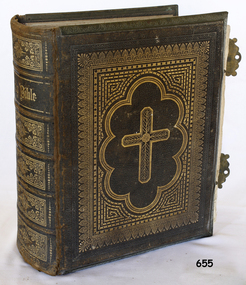 Flagstaff Hill Maritime Museum and Village
Book - Reference/ Religious Study, James Semple, The Holy Bible, Old & New Testaments, c. 1875
... Victorian family Bibles are extremely common in today's antiquarian market, as millions were produced and carefully preserved as family heirlooms. (For more information on the Pattison Collection see item 3678 Flagstaff Hill collections) https://victoriancollections.net.au/items/5580c7e72162f114d8b758db flagstaff hill warrnambool shipwrecked-coast flagstaff-hill flagstaff-hill-maritime-museum maritime-museum shipwreck-coast flagstaff-hill-maritime-village the holy bible the old testament and the new testament bible book religion holy bible rev geo leo haydock latin vulgate family bible This edition is part of what Bible bibliographers classify as the Haydock Quarto Series. ...This edition is part of what Bible bibliographers classify as the Haydock Quarto Series. It uses the Douay Rheims version (the standard English translation of the Latin Vulgate for Roman Catholics) and is heavily updated with extensive annotations. The subject volume is a large, decorative family Bible. Bibles of this style were peak Victorian subscription publishing, and publishers like Semple typically issued these in unbound parts or sold them via travelling canvassers, bound in heavy, blind stamped or gilt leather meant to serve as a visual centerpiece in a Victorian home.Hard cover book: Bible, Old & New Testaments Editor: Rev. George Leo Haydock Publisher: James Semple, 7 Stirling Road, Glasgow Date: 1875 Further Information: Brown leather bound with extensive gilt pattering to Spine and Front Board, Cross icon to front board and brass book clasps to corners.non-fictionThis edition is part of what Bible bibliographers classify as the Haydock Quarto Series. It uses the Douay Rheims version (the standard English translation of the Latin Vulgate for Roman Catholics) and is heavily updated with extensive annotations. The subject volume is a large, decorative family Bible. Bibles of this style were peak Victorian subscription publishing, and publishers like Semple typically issued these in unbound parts or sold them via travelling canvassers, bound in heavy, blind stamped or gilt leather meant to serve as a visual centerpiece in a Victorian home.flagstaff hill, warrnambool, shipwrecked-coast, flagstaff-hill, flagstaff-hill-maritime-museum, maritime-museum, shipwreck-coast, flagstaff-hill-maritime-village, the holy bible the old testament and the new testament, bible, book, religion, holy bible, rev geo leo haydock, latin vulgate, family bible
