
Showing 825 items matching " history of london"
-
 Flagstaff Hill Maritime Museum and Village
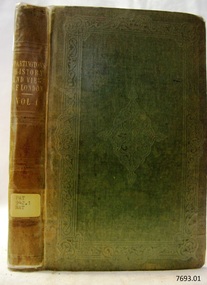
Book, National History and Views of London Vol 1
... National History and Views of London Vol 1...National History and Views of London Vol 1...National History and Views of London Vol 1 Edited by C F Partington Publisher: George Virtue Date: 1837...Warrnambool Shipwrecked-coast Flagstaff-Hill Flagstaff-Hill-Maritime-Museum Maritime-Museum Shipwreck-coast Flagstaff-Hill-Maritime-Village Shipwrecked-artefact Book Pattison Collection Warrnambool Library Warrnambool Mechanics’ Institute Ralph Eric Pattison Corangamite Regional Library Service Warrnambool City Librarian Mechanics’ Institute Library Victorian Library Board Warrnambool books and records Warrnambool Children’s Library Great Ocean Road National History and Views of London Vol 1 C F Partington Label on spine cover with typed text RH 942 PAR Pastedown front endpaper has sticker from Warrnambool Mechanics Institute and Free Library covered by a sticker from Corangamite Regional Library Service National History and Views of London Vol 1 Edited by C F Partington Publisher: George Virtue Date: 1837 National History and Views of London Vol 1 Book ...National History and Views of London Vol 1 Edited by C F Partington Publisher: George Virtue Date: 1837Label on spine cover with typed text RH 942 PAR Pastedown front endpaper has sticker from Warrnambool Mechanics Institute and Free Library covered by a sticker from Corangamite Regional Library Service warrnambool, shipwrecked-coast, flagstaff-hill, flagstaff-hill-maritime-museum, maritime-museum, shipwreck-coast, flagstaff-hill-maritime-village, shipwrecked-artefact, book, pattison collection, warrnambool library, warrnambool mechanics’ institute, ralph eric pattison, corangamite regional library service, warrnambool city librarian, mechanics’ institute library, victorian library board, warrnambool books and records, warrnambool children’s library, great ocean road, national history and views of london vol 1, c f partington -
 Flagstaff Hill Maritime Museum and Village
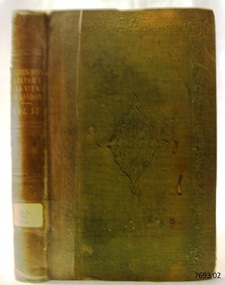
Book, National History and Views of London Vol 2
... National History and Views of London Vol 2...National History and Views of London Vol 2...National History and Views of London Vol 2 Edited by C F Partington Publisher: George Virtue Date: 1837...Warrnambool Shipwrecked-coast Flagstaff-Hill Flagstaff-Hill-Maritime-Museum Maritime-Museum Shipwreck-coast Flagstaff-Hill-Maritime-Village Shipwrecked-artefact Book Warrnambool Library Warrnambool Mechanics’ Institute Corangamite Regional Library Service Warrnambool City Librarian Mechanics’ Institute Library Victorian Library Board Warrnambool books and records Warrnambool Children’s Library Great Ocean Road National History and Views of London Vol 2 C F Partington Label on spine cover with typed text RH 942 PAR Pastedown front endpaper has sticker from Warrnambool Mechanics Institute and Free Library Front loose endpaper has a sticker from Corangamite Regional Library Service National History and Views of London Vol 2 Edited by C F Partington Publisher: George Virtue Date: 1837 National History and Views of London Vol 2 Book ...National History and Views of London Vol 2 Edited by C F Partington Publisher: George Virtue Date: 1837Label on spine cover with typed text RH 942 PAR Pastedown front endpaper has sticker from Warrnambool Mechanics Institute and Free Library Front loose endpaper has a sticker from Corangamite Regional Library Servicewarrnambool, shipwrecked-coast, flagstaff-hill, flagstaff-hill-maritime-museum, maritime-museum, shipwreck-coast, flagstaff-hill-maritime-village, shipwrecked-artefact, book, warrnambool library, warrnambool mechanics’ institute, corangamite regional library service, warrnambool city librarian, mechanics’ institute library, victorian library board, warrnambool books and records, warrnambool children’s library, great ocean road, national history and views of london vol 2, c f partington -
 Victorian Railway History Library
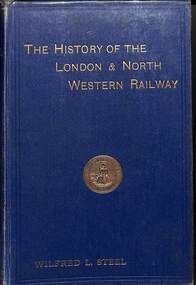
Book, Steel, Wilfred L, The History of the London & North Western Railway Illustrated, 1914
... The History of the London & North Western Railway Illustrated....history...Railroads - London & North Western Railway - history...Railroads - Great Britain - history Railroads - London & North Western Railway - history An illustrated history of the London & North Western Railway in Great Britain. index, ill, p.502. ...An illustrated history of the London & North Western Railway in Great Britain.index, ill, p.502.non-fictionAn illustrated history of the London & North Western Railway in Great Britain.railroads - great britain - history, railroads - london & north western railway - history -
 Bendigo Historical Society Inc.
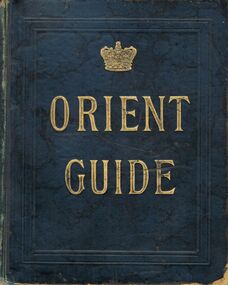
Book - BOOK: ORIENT GUIDE ORIENT LINE OF ROYAL MAIL STEAMSHIPS
... Author of 'A History of london ' / Sampson Low ...Edited for the Managers of the Line by W.J.Loftie, B.A., F.S.A., Author of 'A History of London ‘, 'Windsor ' 'Authorised guide to the Tower 'Etc. ...Author of 'A History of london ' / Sampson Low Marston Searle & Rivington Limited St. ...Green coloured hardbound Book / gold lettering -Orient Guide /-front and back inside covers show - Orient line of Royal Mail Steamships Henry Jones & co Agents for Orient Line , View Point , Sandhurst , Orient Line of Royal Mail Steamships' / Title page shows 'Orient Line Guide -Chapters for Travellers by sea and land , Illustrated . The third Edition, Re- written, with maps and plans. Edited for the Managers of the Line by W.J.Loftie, B.A., F.S.A., Author of 'A History of London ‘, 'Windsor ' 'Authorised guide to the Tower 'Etc. Etc. . . . Price 2/6 London : Sampson Low , Marston , Searle , & Rivington , Limited , St. Dunstan's House , Fetter lane , Edward Stanford , 26 , & 27 Cockspur St . S.W. 1888 Entered at Stationers Hall / this page also has a rubber stamp ' Eaglehawk Public Library / first page of chapter 1 shows 'With compliments of Henry Jones & Co , View point Sandhurst / contents include a list of Orient Line Steam ships , illustrations and ships 'plans ,maps , advertsorganization, business, -orient guide / orient line of royal mail steamships henry jones & co agents for orient line , view point , sandhurst , orient line of royal mail steamships' / w.j.loftie , b.a., f.s.a. , author of 'a history of london ' / sampson low , marston , searle , & rivington , limited , st. dunstan's house , fetter lane , edward stanford , 26 , & 27 cockspur st . s.w. 1888 entered at stationers hall /henry jones & co , view point sandhurst -
 Friends of St Brigids Association
Book - An Atlas of Irish History, Edwards, Ruth Dudley. 1989. An Atlas of Irish History. London ; New York : Methuen, 1981 1 atlas (286 p.) : maps ; 24 cm
... An Atlas of Irish History. London ; New York : Methuen, 1981 1 atlas (286 p.) : maps ; 24 cm. ...An Atlas of Irish History. London ; New York : Methuen, 1981 1 atlas (286 p.) : maps ; 24 cm. ... -
 Robin Boyd Foundation
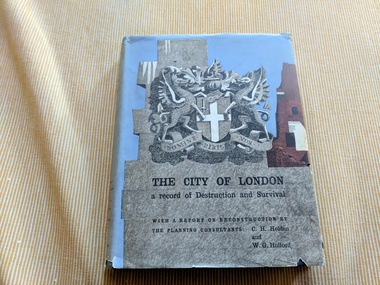
Book, C.H. Holden and W.G. Holford, The City of London - a record of Destruction and Survival, 1951
... ... city of london... history...London city of london history of london Walsh St library Hardcover w/dust jacket The City of London - a record of Destruction and Survival Book C.H. ...Hardcover w/dust jacketlondon, city of london, history of london, walsh st library -
Port Melbourne Historical & Preservation Society
Document - Menu, SS Strathnaver, Feb 1953
... Menu from SS Strathnaver for 24.2.1953. History of London Law Courts on back....transport - shipping p&o lines Menu from SS Strathnaver for 24.2.1953. History of London Law Courts on back. Document Menu, SS Strathnaver ...Menu from SS Strathnaver for 24.2.1953. History of London Law Courts on back.transport - shipping, p&o lines -
 Bendigo Historical Society Inc.
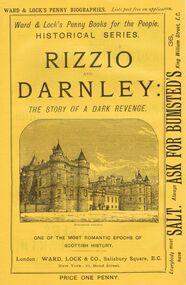
Book - LYDIA CHANCELLOR COLLECTION: RIZZIO AND DARNLEY: THE STORY OF A DARK REVENGE
... One of the most r omantic epochs of Scottish History.' London : Ward, Lock & Co., Salisbury., E.C. ...BOOKS Biography scotland Lydia Chancellor collection Ward & Lock's Penny Biographies Ward & Lock's Penny Books for the People Historical Series history Scotland Scottish history book books advertisements penny books A book titled ' Rizzio and Darnlely: the story of a Dark Revenge. One of the most r omantic epochs of Scottish History.' London ...A book titled ' Rizzio and Darnlely: the story of a Dark Revenge. One of the most r omantic epochs of Scottish History.' London : Ward, Lock & Co., Salisbury., E.C. New York : 10 Bond Street. 721 - 736 pgs. (ill.) This booklet is one of a series of 37 ' Ward & Lock's Penny Books for the People.' ' Historical Series.' Price one penny. There are also advertisements of note.books, biography, scotland, lydia chancellor, collection, ward & lock's penny biographies, ward & lock's penny books for the people, historical series, history, scotland, scottish history, book, books, advertisements, penny books -
 Bendigo Historical Society Inc.
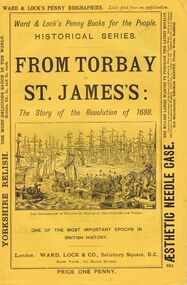
Book - LYDIA CHANCELLOR COLLECTION: FROM TORBAY TO ST. JAMES'S: THE STORY OF THE REVOLUTION OF 1688
... One of the most important epochs in British History.' London : Ward, Lock & Co., Sallisbury Square, E.C. ...BOOKS Biography british history Lydia Chancellor collection Ward & Lock's Penny Biographies biographies Ward & Lock's Penny Books for the People Historical Series history British history revolutions book books advertisements penny books A book titled ' From Torbay to St. James's: the story of the Revolution of 1688. One of the most important epochs in British History.' London ...A book titled ' From Torbay to St. James's: the story of the Revolution of 1688. One of the most important epochs in British History.' London : Ward, Lock & Co., Sallisbury Square, E.C. New York : 10 Bond Street. 449 - 464 pgs. (ill.) This booklet is one of a series of 37 ' Ward & Lock's Penny Books for the People.' ' Historical Series.' Price one penny, There are also advertisements of note.books, biography, british history, lydia chancellor, collection, ward & lock's penny biographies, biographies, ward & lock's penny books for the people, historical series, history, british history, revolutions, book, books, advertisements, penny books -
 Bendigo Historical Society Inc.
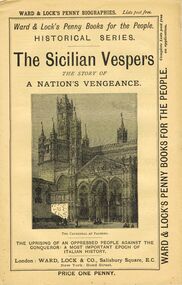
Book - LYDIA CHANCELLOR COLLECTION: THE SICILIAN VESPERS, THE STORY OF A NATION'S VENGEANCE
... The uprising of an oppressed people against the conqueror : a most important epoch of Italian history.' London : Ward, Loc k & Co., Salisbury Square, E.C. ...history advertisements book books penny books A book titled ' The Sicilian Vespers. The story of a Nation's Vengeance. The uprising of an oppressed people against the conqueror : a most important epoch of Italian history.' London ...A book titled ' The Sicilian Vespers. The story of a Nation's Vengeance. The uprising of an oppressed people against the conqueror : a most important epoch of Italian history.' London : Ward, Loc k & Co., Salisbury Square, E.C. New York : Bond Street. 433 - 448 pgs. (ill.) This booklet is one of a series of 37 ' Ward & Lock's Penny Books for the People.' 'Historical Series.' Price one penny. There are also advertisements of note.books, biography, italy, lydia chancellor, collection, ward & lock's penny biographies, biographies, ward & lock's penny books for the people, historical series, history, italy, italian history, advertisements, book, books, penny books -
 The Beechworth Burke Museum Research Collection
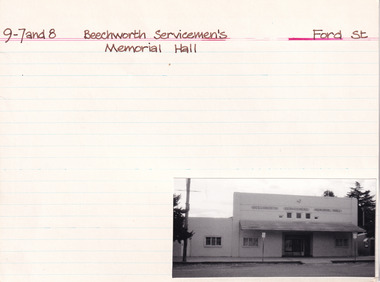
Card (Series) - Index Card, George Tibbits, Ford Street, Beechworth, 1976
... Property - Beechworth Servicemen's Memorial Hall, Ford Street Beechworth - Section 9, Town Allotment 7 and 8 Ownership details and history - 25 Aug 1857 - London Chartered Bank Architectural Index Card - Brian Pump and Tony Dugan - Photographers ...Property - Beechworth Servicemen's Memorial Hall, Ford Street Beechworth - Section 9, Town Allotment 7 and 8 Ownership details and history - 25 Aug 1857 - London Chartered Bank Architectural Index Card - Brian Pump and Tony Dugan - Photographers Beechworth George Tibbits Ford Street, Beechworth Card Index Card George Tibbits Brian Pump and Tony Dugan from the Block Camera Store Bruce Trethowen Philip Harmer Elizabeth Vines ...George Tibbits, University of Melbourne. Faculty of Architecture, Building and Town & Regional PlanningIndex system that support the research for Beechworth : historical reconstruction / [by] George Tibbits ... [et al]Arranged by street names of BeechworthEach index card includes: street name and number of property, image of property, allotment and section number, property owners and dates of ownership, description of the property according to rate records, property floor plan with dimensions.beechworth, george tibbitsbeechworth, george tibbits -
 Bendigo Historical Society Inc.
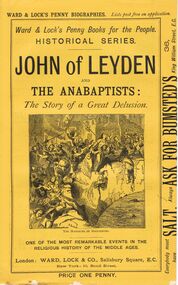
Book - LYDIA CHANCELLOR COLLECTION: JOHN OF LEYDEN
... One of the most remarkable events in the religious history of the Middle Ages.' London : Ward, Lock & Co., Salisbury Square, E.C. ...One of the most remarkable events in the religious history of the Middle Ages.' London : Ward, Lock & Co., Salisbury Square, E.C. ...A book titled ' John of Leyden and The Anabaptists : the Story of a Great delusion. One of the most remarkable events in the religious history of the Middle Ages.' London : Ward, Lock & Co., Salisbury Square, E.C. New York : 10 Bond Street. 609 - 624 pgs. (ill.). This booklet is one of a series of 37 ' Ward & Lock's Penny Books for the People.' 'Historical Series.' Price one penny. There are also advertisements of note.books, biography, christianity, lydia chancellor, collection, ward & lock's penny biographies, ward & lock's penny books for the people, historical series, christianity, religion, book, books, advertisements, biographies, history, penny books -
 Warrnambool and District Historical Society Inc.
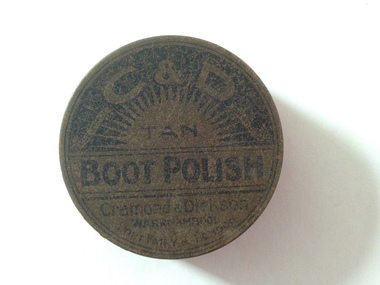
Tin, Boot polish Cramond & Dickson, Early 20th century
... John Glass Cramond and James Dickson established their business in Warrnambool in 1855 and this general store operated (firstly in Timor Street and later in Liebig Street) until 1973, making it one of the longest-running and one of the most important businesses in Warrnambool’s history. By 1868 a London agency had been established and direct imports from England began on a large scale. ...John Glass Cramond and James Dickson established their business in Warrnambool in 1855 and this general store operated (firstly in Timor Street and later in Liebig Street) until 1973, making it one of the longest-running and one of the most important businesses in Warrnambool’s history. By 1868 a London agency had been established and direct imports from England began on a large scale. ...This tin of boot polish was a common household item in the 20th century (and is still used to a lesser extent today). This tan boot polish was sold under the brand name of ‘C & D’ at the general store of Cramond and Dickson in Liebig Street, Warrnambool. John Glass Cramond and James Dickson established their business in Warrnambool in 1855 and this general store operated (firstly in Timor Street and later in Liebig Street) until 1973, making it one of the longest-running and one of the most important businesses in Warrnambool’s history. By 1868 a London agency had been established and direct imports from England began on a large scale. Many of the articles they sold, including the boot polish, were made expressly for the Cramond and Dickson store. This tin of boot polish is of great interest as an example of the goods sold by Cramond and Dickson that were made expressly for the Warrnambool store. Cramond and Dickson were one of the most important stores ever to operate in Warrnambool.This is a round metal tin originally gold-coloured and with a red tape binding to prevent its opening. The front of the tin has printing and the image of a stylized rising sun and the bottom has more printing. The bottom of the tin is indented to allow the tin to rest on the rim only. The printing is legible but much faded. The tin contains the original polish. Top: ‘Use only C & D brand of Tan Boot Polish, Cramond & Dickson, Warrnambool. Port Fairy and London’ Bottom: ‘For best results remove all dust, apply a little C & D dressing, brush briskly. Rubbing finally with a soft cloth produces a brilliant surface. Weight when packed 1½ ozs. net’ cramond and dickson store -
 Warrnambool and District Historical Society Inc.
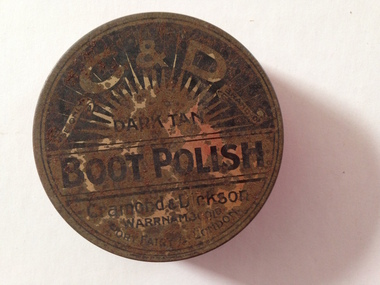
Tin, Boot polish Cramond & Dickson
... John Glass Cramond and James Dickson established their business in Warrnambool in 1855 and this general store operated (firstly in Timor Street and later in Liebig Street) until 1973, making it one of the longest-running and one of the most important businesses in Warrnambool’s history. By 1868 a London agency had been established and direct imports from England began on a large scale. ...John Glass Cramond and James Dickson established their business in Warrnambool in 1855 and this general store operated (firstly in Timor Street and later in Liebig Street) until 1973, making it one of the longest-running and one of the most important businesses in Warrnambool’s history. By 1868 a London agency had been established and direct imports from England began on a large scale. ...A tin of boot polish was a common household item in the 20th century (and is still in use to a lesser extent today). This dark tan boot polish was sold under the brand name of ‘C & D’ at the general store of Cramond and Dickson in Liebig Street, Warrnambool. John Glass Cramond and James Dickson established their business in Warrnambool in 1855 and this general store operated (firstly in Timor Street and later in Liebig Street) until 1973, making it one of the longest-running and one of the most important businesses in Warrnambool’s history. By 1868 a London agency had been established and direct imports from England began on a large scale. Many of the articles they sold, including the boot polish, were made expressly for the Cramond and Dickson store.This tin of boot polish is of great interest as an example of the goods sold by Cramond and Dickson that were made expressly for the Warrnambool store. Cramond and Dickson were one of the most important stores ever to operate in Warrnambool. This is a round metal tin, originally gold-coloured and with a red tape binding to prevent its opening. The front of the tin has printing and the image of a stylized rising sun and the bottom has more printing. The bottom of the tin is indented to allow the tin to rest on the rim only. The printing is legible but much faded. The tin contains the original polish. Top: ‘Use only C & D brand of Dark Tan Boot Polish, Cramond & Dickson, Warrnambool, Port Fairy and London’ Bottom: ‘For best results remove all dust, apply a little C & D dressing, brush briskly. Rubbing finally with a soft cloth produces a brilliant surface. Weight when packed 1½ ozs. net’ cramond and dickson store, warrnambool -
 Flagstaff Hill Maritime Museum and Village
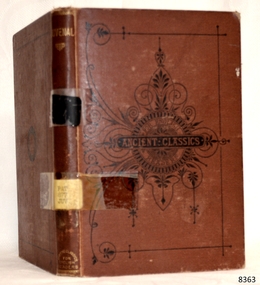
Book - Reference Book / Classics, Rev. W. Lucas Collins, Juvenal, 1872
... He was an incredibly prolific compiler of history, best known for editing Burke's Peerage and co-authoring the massive multi-volume history Old and New London. His background made him the perfect candidate to distill Juvenal's complex historical and political context into something a layman could appreciate....He was an incredibly prolific compiler of history, best known for editing Burke's Peerage and co-authoring the massive multi-volume history Old and New London. His background made him the perfect candidate to distill Juvenal's complex historical and political context into something a layman could appreciate. ...The subject book is a specific volume from a highly popular Victorian series called "Ancient Classics for English Readers." While Rev. W. Lucas Collins was the overarching editor of the entire 28-volume series (which explains why his name is prominently attached to it), the specific volume on Juvenal published in 1872 was actually written by a scholar named Edward Walford, M.A. The book is an introduction to Juvenal (Decimus Iunius Iuvenalis), a famous Roman poet active in the late 1st and early 2nd centuries AD. Juvenal is renowned for his Satires, which fiercely attacked the corruption, decadence, vice, and hypocrisy of Roman society under the Empire. In line with the rest of the series, this volume provides a translated, summarized, and curated overview of Juvenal's work. Because Juvenal's raw, unedited Latin can be incredibly explicit and vulgar, the Victorian authors heavily sanitized ("bowdlerized") the text, smoothing over the more scandalous elements to make his brilliant satire safe for a general English audience.Juvenal Author: Edward Walford, M.A. Editor:Rev. W. Lucas Collins Publisher: William Blackwood & Sons Date: 1872non-fictionThe subject book is a specific volume from a highly popular Victorian series called "Ancient Classics for English Readers." While Rev. W. Lucas Collins was the overarching editor of the entire 28-volume series (which explains why his name is prominently attached to it), the specific volume on Juvenal published in 1872 was actually written by a scholar named Edward Walford, M.A. The book is an introduction to Juvenal (Decimus Iunius Iuvenalis), a famous Roman poet active in the late 1st and early 2nd centuries AD. Juvenal is renowned for his Satires, which fiercely attacked the corruption, decadence, vice, and hypocrisy of Roman society under the Empire. In line with the rest of the series, this volume provides a translated, summarized, and curated overview of Juvenal's work. Because Juvenal's raw, unedited Latin can be incredibly explicit and vulgar, the Victorian authors heavily sanitized ("bowdlerized") the text, smoothing over the more scandalous elements to make his brilliant satire safe for a general English audience.flagstaff hil, warrnambool, flagstaff hill maritime museum, maritime museum, shipwreck coast, flagstaff hill maritime village, great ocean road, book, pattison collection, warrnambool library, warrnambool mechanics’ institute, ralph eric pattison, corangamite regional library service, warrnambool city librarian, mechanics’ institute library, victorian library board, warrnambool books and records, warrnambool children’s library, juvenal, lucas collins -
 Glen Eira Historical Society
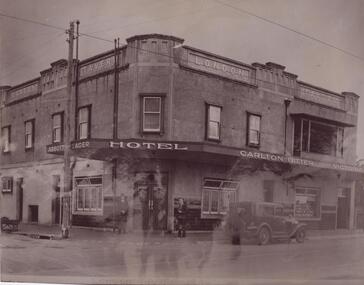
Document - London Tavern
... This file contains eight items: 1/A one page typed summary of the history of the London Tavern by (noted in pencil) author J O'Donnell. ...This file contains eight items: 1/A one page typed summary of the history of the London Tavern by (noted in pencil) author J O'Donnell. ...This file contains eight items: 1/A one page typed summary of the history of the London Tavern by (noted in pencil) author J O'Donnell. Includes information on the licensees of the hotel from 1873-1927 (in duplicate) 2/Photocopy of black and white photo of London Tavern c. 1878. Shows sign 'J. Riordan, London Tavern and Store'. Shows Boot and Shoe Repair shop at end and two women outside and horse and buggy on road. 3/Photocopy of black and white photograph entitled 'London Tavern 1935' with handwritten note on reverse by unknown author identifying Mrs. A.C. Scott as Nominee 1929-1969 and identifying a man in the photograph as John Chas (Jack) Scott on left. Car parked at curb. Original print held in album 'Historical Caulfield to 1972'. 4/Half page written note listing the names of Nominees of the London Tavern from 1873-1895. Author unknown; undated. 5/'now&then' article on London Tavern showing three photos (from our files) and brief history. Melbourne Weekly Bayside 22/02/2012. 6/Black and white photograph of London Tavern, established 1886, currently 414 Hawthorn Road. Foreground includes a large crowd with bicycles noted by an unattributed source to be members of Camden Town Sports Club after a bicycle race c.1888. 7/Handwritten note showing John Guess as the proprietor of the London Tavern in 1867 and 1874. Noet is undated and author unknown. 8/Black and white photograph of the London Tavern with a 1970s style car parked in Sycamore Street. Date and photographer unknownhawthorn road, caulfield, london tavern, woods a.j., camden town sports club, gribble c., hotels, sporting clubs, scott a.c., guess john, guess louisa, evans rowland, riordan john, scott mrs., boot and shoe repair shop, vine beer house, balaclava road, hawthorn road, sycamore street, caulfield south, elsternwick, harley susan, mott h, nichols william h, o'donnell j, rosstown hotel, caulfield club hotel, grocer -
 Uniting Church Archives - Synod of Victoria
BW photo, Undated
... After a degree in history at King’s College, London he prepared for ministry at Wesley House from 1933 to 1937. ...After a degree in history at King’s College, London he prepared for ministry at Wesley House from 1933 to 1937. ...E Gordon Rupp, 1910-1986, was one of the leading historians of his generation, specialising in the Protestant Reformation (particularly Luther) and eighteenth-century England. After a degree in history at King’s College, London he prepared for ministry at Wesley House from 1933 to 1937. After further study in Strasbourg and Basel and a period of circuit ministry he taught at Richmond College from 1947 to 1952, when he became a lecturer in Divinity at Cambridge University, taking his Doctorate in Divinity in 1955. In 1956 he became the first Professor of Ecclesiastical History at Manchester University before moving to Wesley House as Principal in 1967. The following year he combined that appointment with the Dixie Professorship of Ecclesiastical History at Cambridge and a Fellowship at Emmanuel College. He retired from Wesley House in 1974 and from the Professorship three years later. He published extensively and was an active ecumenist, one of the founders of the Cambridge Theological Federation, a member of the Central Committee of the World Council of Churches and an official Observer at the Second Vatican Council. He was elected President of the Methodist Conference in 1968 and was made a Fellow of the British Academy in 1970.Rev. Professor E. Gordon Rupp, head and shoulders portrait, wearing clerical collar and dark coat.Rev. Professor E. Gordon Rupp; Office of Public Affairs, Drew University, New Jerseyrev. professor gordon rupp; english protestant historian -
 Flagstaff Hill Maritime Museum and Village
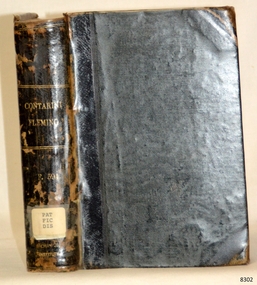
Book - Fictional Novel, Benjamin Disraeli, Contarini Fleming: A Psychological Romance, 1871
... The publisher, Longmans, Green & Co., is one of the oldest and most prestigious names in English publishing history. Founded in London by Thomas Longman in 1724, the firm published landmark works including Ephraim Chambers' Cyclopaedia, Wordsworth and Coleridge's Lyrical Ballads, and the works of popular historians like Thomas Babington Macaulay. ...The publisher, Longmans, Green & Co., is one of the oldest and most prestigious names in English publishing history. Founded in London by Thomas Longman in 1724, the firm published landmark works including Ephraim Chambers' Cyclopaedia, Wordsworth and Coleridge's Lyrical Ballads, and the works of popular historians like Thomas Babington Macaulay. ...This specific book brings together two distinct works written early in the career of one of Victorian Britain's most fascinating political and literary figures. The subject 1871 volume is Volume VII of the first major "Collected Edition" of Disraeli's novels and tales issued by Longmans, Green & Co. The first novel, Contarini Fleming, published in 1832, is an intensely autobiographical, romantic and experimental work. It follows the development of a young man, Contarini Fleming, the son of a Scandinavian nobleman and an Italian mother. The story charts his emotional and artistic growth as he struggles with his identity, travels across Europe and the Levant, and attempts to become a poet. It explores the inner consciousness, imagination and the formation of a creative mind which is why Disraeli subtitled it a "Psychological Romance".Contarini Fleming: A Psychological Romance - and - The Rise of Iskander Author: Benjamin Disraeli (Right Honorable B. Disraeli) Publisher: Longmans Green & Co., London Date: 1871 (new edition) Black cloth hardcover book with embossed gold text on the spine. Inscriptions include stickers, stamps and handwriting. fictionThis specific book brings together two distinct works written early in the career of one of Victorian Britain's most fascinating political and literary figures. The subject 1871 volume is Volume VII of the first major "Collected Edition" of Disraeli's novels and tales issued by Longmans, Green & Co. The first novel, Contarini Fleming, published in 1832, is an intensely autobiographical, romantic and experimental work. It follows the development of a young man, Contarini Fleming, the son of a Scandinavian nobleman and an Italian mother. The story charts his emotional and artistic growth as he struggles with his identity, travels across Europe and the Levant, and attempts to become a poet. It explores the inner consciousness, imagination and the formation of a creative mind which is why Disraeli subtitled it a "Psychological Romance".flagstaff hill, flagstaff hill maritime museum and village, warrnambool, maritime museum, maritime village, great ocean road, shipwreck coast, pattison collection, ralph eric pattison, warrnambool mechanics’ institute, mechanics’ institute library, warrnambool library, free library, corangamite regional library service, longmans green and co. london, benjamin disraeli, queen victoria's friend, longmans green & co, earl of beaconsfield, british politician, british prime minister, contarini fleming, psychological romance, the rise of iskander, right honourable b. disraeli, 1871 -
 Flagstaff Hill Maritime Museum and Village
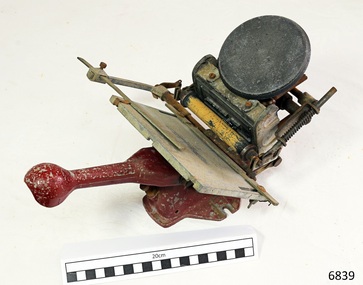
Printing Press, C. 1934
... HISTORY Donald Aspinall, born in London in 1899, suffered shell shock while serving in World War 1. ...HISTORY Donald Aspinall, born in London in 1899, suffered shell shock while serving in World War 1. ...This small Adana letterpress was based on a larger press. It was intended for printing stationery such as business cards, visitor’s cards, shop price cards and notepaper headers, Used for letterpress printing, and advertised as “Virtually indestructible”. Used for hobby printing, schools, and similar uses. When donated to Flagstaff Hill the chase still had letter type in it, which was printed out "THE SHADOWS / apahc / the aauage / shaboogie ". Currently, the machine is used by the Flagstaff Hill "Examiner" office to make business cards for use by some of the Volunteers in the Village. HISTORY Donald Aspinall, born in London in 1899, suffered shell shock while serving in World War 1. During his recovery, while still a teenager, he worked his hobby, the design of a small flatbed printing press, then advertised it in The Model Engineer’ in 1918 and received an overwhelming response of orders. In 1922 Aspinall founded the Adana Agency, in Twickenham. His had great success in his sales of flatbed, self-inking wooden presses to hobby printing enthusiasts. Over the years Adana made a variety of machines; flatbed, lever, treadle and powered presses Adana cast its own type in 1925 and has a number of patents for press parts. In the 1980’s the company wound down, and was purchased by Caslon, who still service and supply part for the Adana machines. Printing press; hand operated small letterpress machine made by Adana. Tiny platen style. Model Five-Three (5 inch x 3 inch). Cast metal base and lever handle with rounded end, both painted dark red, rounded red metal lever handle. C. 1934 Marks on foot of stand " REG. NO. / ISIL 46 & S00575 / PATENTS PENDING" and "REG. TRADE MARK / ADANA"flagstaff hill, warrnambool, shipwrecked coast, flagstaff hill maritime museum, maritime museum, shipwreck coast, flagstaff hill maritime village, great ocean road, adana letterpress, adana model three-five, mini letterpress, printing machine, donald aspinall -
 Flagstaff Hill Maritime Museum and Village
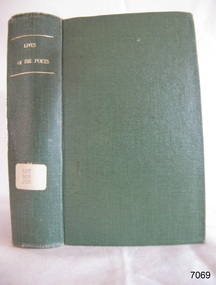
Book - Essays on Poetry, Dr. Samuel Johnson, The Lives of the Most Eminent English Poets, 1857
... It appears to have been a fairly minor, provincial publishing house of the time, not one with a well-documented history the way major London publishing houses have....It appears to have been a fairly minor, provincial publishing house of the time, not one with a well-documented history the way major London publishing houses have. This volume of Lives of the Poets is a landmark of English literary criticism and biography still read, studied, and cited today and central to Johnson's reputation as, in the words of the Concise Oxford Companion, one of the most influential critics in the language, although the work was also criticised for its omissions, notably of women poets, and for some prejudiced judgements. ...The Lives of the Most Eminent English Poets (often called Lives of the Poets) is Samuel Johnson's collection of 52 short biographies and critical essays on English poets, most from the 17th and 18th centuries, arranged roughly by date of death. Originally commissioned by a group of London booksellers as prefaces to a multi-volume anthology of poetry, Johnson ended up writing far more than intended the "prefaces" grew into full biographical-critical essays. It was first published in 1779–81 (as Prefaces, Biographical and Critical), then reissued under this now-familiar title. His essays on Cowley, Milton, Dryden, Swift, and Pope in particular were quickly recognised as setting a new standard for English literary biography.Hard cover book. The Lives of the Most Eminent English Poets Author: Samuel Johnson Publisher: George Clark & Co Date: 1857 Further Information: Green Cloth hardcover reprinted edition with lettering to spine in gilt. The spine has a Library label with an inscription.fictionThe Lives of the Most Eminent English Poets (often called Lives of the Poets) is Samuel Johnson's collection of 52 short biographies and critical essays on English poets, most from the 17th and 18th centuries, arranged roughly by date of death. Originally commissioned by a group of London booksellers as prefaces to a multi-volume anthology of poetry, Johnson ended up writing far more than intended the "prefaces" grew into full biographical-critical essays. It was first published in 1779–81 (as Prefaces, Biographical and Critical), then reissued under this now-familiar title. His essays on Cowley, Milton, Dryden, Swift, and Pope in particular were quickly recognised as setting a new standard for English literary biography.shipwrecked-coast, flagstaff-hill, flagstaff-hill-maritime-museum, warrnambool, maritime-museum, shipwreck-coast, flagstaff-hill-maritime-village, shipwrecked-artefact, book, pattison collection, warrnambool library, warrnambool mechanics’ institute, ralph eric pattison, corangamite regional library service, warrnambool city librarian, mechanics’ institute library, victorian library board, warrnambool books and records, warrnambool children’s library, the lives of the most eminent english poets, samuel johnson -
 Flagstaff Hill Maritime Museum and Village
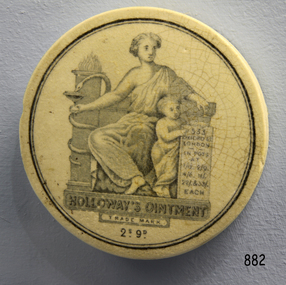
Ceramic - Lid, circa 1878
... London address was an important part of his promotional appeal and was displayed prominently on the packaging of his products. Holloway’s attention to marketing is also observed in the pseudo-Classical emblems that decorated his containers. The sign of a snake curled around a staff is a longstanding and commonly recognised symbol of the physician’s power to heal. Similar reference on this lid is also being made to an ancient goddess of healing and her healthy young offspring. History...London address was an important part of his promotional appeal and was displayed prominently on the packaging of his products. Holloway’s attention to marketing is also observed in the pseudo-Classical emblems that decorated his containers. The sign of a snake curled around a staff is a longstanding and commonly recognised symbol of the physician’s power to heal. Similar reference on this lid is also being made to an ancient goddess of healing and her healthy young offspring. History ...This ceramic lid is from a Holloway’s Ointment pot. It was retrieved from the wreckage of the LOCH ARD. The vessel was laden with an up-to-date, high-value cargo, including luxury items intended for the Melbourne International Exhibition in 1880. Britain exported her manufactures to the Australasian colonies and the Americas. Holloway’s Ointment was one nineteenth-century pharmaceutical product that was advertised in both these markets. The price of this particular jar and its contents was printed on the label as “2S 9D” (2 shillings and nine pence). This value calculated to the approximate price in 2014, would be £51.31 (UK pounds and decimal pence) or $85 AU ― quite an expensive ointment. The label also shows a picture of a stone tablet with the inscription "IN POTS AT 1/½, 2/9, 4/6,11/-, 22/- & 33/- EACH”, which is most likely the alternative prices that the ointment was available for in differently sized containers. Holloway’s claims for his “great remedy” included the cure of sores, wounds, ulcers and boils, gout, rheumatism, diphtheria, bronchitis, influenza, sore throats, coughs and colds, “all varieties of skin diseases”, scrofula, ringworm, scurvy, “dropsical swellings” and liver disease, piles, fistulas, and internal inflammation. The salve cream was said to penetrate the skin when rubbed on; purifying internal tissues and organs, cleansing all bodily fluids particularly the blood, and eradicating all disease from the body. Purchasers were assured that if Holloway’s Ointment alone did not affect immediate cure, then the combination of it and Holloway’s Pills (sold separately) most certainly would. Thomas Holloway began manufacturing and marketing his miraculous ointment from premises at 244 Strand in the 1840s, moving to the more prestigious address of 533 Oxford in the late 1860s. The London address was an important part of his promotional appeal and was displayed prominently on the packaging of his products. Holloway’s attention to marketing is also observed in the pseudo-Classical emblems that decorated his containers. The sign of a snake curled around a staff is a longstanding and commonly recognised symbol of the physician’s power to heal. Similar reference on this lid is also being made to an ancient goddess of healing and her healthy young offspring. History of the Loch Ard: The Loch Ard got its name from ”Loch Ard” a loch which lies to the west of Aberfoyle, and the east of Loch Lomond. It means "high lake" in Scottish Gaelic. The vessel belonged to the famous Loch Line which sailed many vessels from England to Australia. The Loch Ard was built in Glasgow by Barclay, Curdle and Co. in 1873, the vessel was a three-masted square-rigged iron sailing ship that measured 79.87 meters in length, 11.58 m in width, and 7 m in depth with a gross tonnage of 1693 tons with a mainmast that measured a massive 45.7 m in height. Loch Ard made three trips to Australia and one trip to Calcutta before its fateful voyage. Loch Ard left England on March 2, 1878, under the command of 29-year-old Captain Gibbs, who was newly married. The ship was bound for Melbourne with a crew of 37, plus 17 passengers. The general cargo reflected the affluence of Melbourne at the time. Onboard were straw hats, umbrella, perfumes, clay pipes, pianos, clocks, confectionery, linen and candles, as well as a heavier load of railway irons, cement, lead and copper. There were other items included that were intended for display in the Melbourne International Exhibition of 1880. The voyage to Port Phillip was long but uneventful. Then at 3 am on June 1, 1878, Captain Gibbs was expecting to see land. But the Loch Ard was running into a fog which greatly reduced visibility. Captain Gibbs was becoming anxious as there was no sign of land or the Cape Otway lighthouse. At 4 am the fog lifted and a lookout aloft announced that he could see breakers. The sheer cliffs of Victoria's west coast came into view, and Captain Gibbs realised that the ship was much closer to them than expected. He ordered as much sail to be set as time would permit and then attempted to steer the vessel out to sea. On coming head-on into the wind, the ship lost momentum, the sails fell limp and Loch Ard's bow swung back towards land. Gibbs then ordered the anchors to be released in an attempt to hold its position. The anchors sank some 50 fathoms - but did not hold. By this time the ship was among the breakers and the tall cliffs of Mutton Bird Island rose behind. Just half a mile from the coast, the ship's bow was suddenly pulled around by the anchor. The captain tried to tack out to sea, but the ship struck a reef at the base of Mutton Bird Island, near Port Campbell. Waves subsequently broke over the ship and the top deck became loosened from the hull. The masts and rigging came crashing down knocking passengers and crew overboard. When a lifeboat was finally launched, it crashed into the side of Loch Ard and capsized. Tom Pearce, who had launched the boat, managed to cling to its overturned hull and shelter beneath it. He drifted out to sea and then on the flood tide came into what is now known as Lochard Gorge. He swam to shore, bruised and dazed, and found a cave in which to shelter. Some of the crew stayed below deck to shelter from the falling rigging but drowned when the ship slipped off the reef into deeper water. Eva Carmichael a passenger had raced onto the deck to find out what was happening only to be confronted by towering cliffs looming above the stricken ship. In all the chaos, Captain Gibbs grabbed Eva and said, "If you are saved Eva, let my dear wife know that I died like a sailor". That was the last Eva Carmichael saw of the captain. She was swept off the ship by a huge wave. Eva saw Tom Pearce on a small rocky beach and yelled to attract his attention. He dived in and swam to the exhausted woman and dragged her to shore. He took her to the cave and broke the open case of brandy which had washed up on the beach. He opened a bottle to revive the unconscious woman. A few hours later Tom scaled a cliff in search of help. He followed hoof prints and came by chance upon two men from nearby Glenample Station three and a half miles away. In a complete state of exhaustion, he told the men of the tragedy. Tom then returned to the gorge while the two men rode back to the station to get help. By the time they reached Loch Ard Gorge, it was cold and dark. The two shipwreck survivors were taken to Glenample Station to recover. Eva stayed at the station for six weeks before returning to Ireland by steamship. In Melbourne, Tom Pearce received a hero's welcome. He was presented with the first gold medal of the Royal Humane Society of Victoria and a £1000 cheque from the Victorian Government. Concerts were performed to honour the young man's bravery and to raise money for those who lost family in the disaster. Of the 54 crew members and passengers on board, only two survived: the apprentice, Tom Pearce and the young woman passenger, Eva Carmichael, who lost her family in the tragedy. Ten days after the Lochard tragedy, salvage rights to the wreck were sold at auction for £2,120. Cargo valued at £3,000 was salvaged and placed on the beach, but most washed back into the sea when another storm developed. The wreck of Lochard still lies at the base of Mutton Bird Island. Much of the cargo has now been salvaged and some items were washed up into Lochard Gorge. Cargo and artefacts have also been illegally salvaged over many years before protective legislation was introduced in March 1982. One of the most unlikely pieces of cargo to have survived the shipwreck was a Minton majolica peacock- one of only nine in the world. The peacock was destined for the Melbourne 1880 International Exhibition in. It had been well packed, which gave it adequate protection during the violent storm. Today the Minton peacock can be seen at the Flagstaff Hill Maritime Museum in Warrnambool. From Australia's most dramatic shipwreck it has now become Australia's most valuable shipwreck artifact and is one of very few 'objects' on the Victorian State Heritage Register.The shipwreck of the Loch Ard is of significance for Victoria and is registered on the Victorian Heritage Register ( S 417). Flagstaff Hill has a varied collection of artefacts from Loch Ard and its collection is significant for being one of the largest accumulation of artefacts from this notable Victorian shipwreck of which the subject items are a small part. The collections objects give us a snapshot of how we can interpret the story of this tragic event. The collection is also archaeologically significant as it represents aspects of Victoria's shipping history that allows us to interpret Victoria's social and historical themes of the time. Through is associated with the worst and best-known shipwreck in Victoria's history. The ceramic lid off a Holloway’s Ointment container, retrieved from the wreckage of the LOCH ARD. The artefact is white with the pale blue image of a woman (seated) and a child (standing). The woman is draped in a soft white robe and her throne is beside a pillar that is entwined by a serpent. The child points to an inscribed stone tablet he is holding on the other side of seated woman. The front face of the lid, at the base of the woman on the throne, bears the label “HOLLOWAY’S OINTMENT”. Below this, in smaller letters, is written “TRADE MARK” and “2S.9D.” On the stone tablet pointed to by the child is inscribed “533 OXFORD ST. LONDON”, and beneath this, “IN POTS AT 1/½, 2/9, 4/6,11/-, 22/- & 33/- EACH”.flagstaff hill, warrnambool, flagstaff hill maritime museum, shipwreck coast, flagstaff hill maritime village, great ocean road, loch line, loch ard, captain gibbs, eva carmichael, tom pearce, glenample station, mutton bird island, loch ard gorge, holloway’s ointment, ceramic lid, pot lid, nineteenth-century medicines, pharmaceutical marketing -
 Flagstaff Hill Maritime Museum and Village
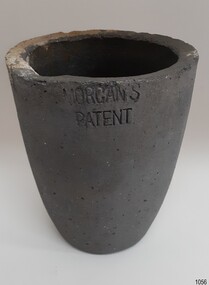
Functional object - Crucible, The Patent Plumbago Crucible Company, circa 1878
... The collection is also historically significant for its association with the LOCH ARD, which was one of the worst and best-known shipwrecks in Victoria’s history. flagstaff hill warrnambool maritime museum shipwreck coast great ocean road loch line loch ard captain gibbs eva carmichael tom pearce glenample station mutton bird island loch ard gorge graphite crucible plumbago crucible morgans crucible company Flagstaff Hill Maritime Museum and Village Fluxing pots crucible Morgan’s Patent Morgan brothers Patent Plumbago Crucible Co Battersea Works London Port Campbell Number “8”. ...This crucible was raised from the wreck of the LOCH ARD. It is one of six similar relics, in a range of sizes, now in the Flagstaff Hill collection. All bear markings to indicate their manufacture by the Morgan brothers of Battersea, trading as the Patent Plumbago Crucible Co. A crucible is a container used for purifying and melting metals so that they can be cast in a mould to a predetermined shape and use. They must withstand extremely high temperatures, and abrupt cooling, and shed their contents with minimal adherence. The addition of graphite to the traditional firing clays greatly enhanced the durability of industrial crucibles in mid-Victorian Britain, a significant technological advance at a time of great activity in foundries and expansion of demand for refined metals. The Morgans first noticed the advantages of graphite crucibles at the Great Exhibition held in London in 1851. Initially, they contracted to be sole selling agents for the American-made products of Joseph Dixon and Co. from New Jersey, but in 1856 they obtained that firm’s manufacturing rights and began producing their own graphite crucibles from the South London site. The Morgans imported crystalline graphite in 4-5 cwt casks from the British colony of Ceylon (now Sri Lanka) and mixed it with conventional English (Stourbridge) clays to be fired in kilns. Their products were purchased by the Royal Mints in London and India, and exported to official mints in France and Germany. They were successful exhibitors of their crucibles and furnaces at the London Exhibition held in 1861 (Class 1, Mining, quarrying, metallurgy and mineral products, Exhibit 265, Patent Plumbago Crucible Co). The range of sizes represented by the six crucibles retrieved from the LOCH ARD, suggests they may have been part of a sample shipment intended for similar promotion in the Australian colonies ― at Melbourne’s International Exhibition to be held in 1880. The summary of the LOCH ARD cargo manifest, by Don Charlwood in ‘Wrecks and Reputations’, does not mention any crucibles, implying that they were not a large consignment of uniform items. A newspaper account of an 1864 tour of the Morgan brothers’ ‘Black Potteries’ at Battersea indicates: “All the pots were numbered according to their contents, each number standing for one kilogram, or a little over two pounds; a No. 2 crucible contains two kilogrammes; a No. 3, three kilogrammes, and so on.” These numbers are obscured by marine sediment on three of the crucibles in the Flagstaff Hill collection, but those legible on the remaining three are 5, 6, and 8. None of the six is of the same size from a visual appraisal. A brief history of the Loch Ard (1873-1878): - The sailing ship Loch Ard was one of the famous Loch Line of ships that sailed the long voyage from England to Australia. Barclay, Curdle and Co. built the three-masted iron vessel in Glasgow in 1873. It had sailed three trips to Australia and one trip to Calcutta before its fateful voyage. Loch Ard left England on March 2, 1878, under the command of recently married, 29-year-old Captain Gibbs. It was bound for Melbourne with a crew of 37, plus 17 passengers. The general cargo reflected the affluence of Melbourne at the time. Onboard were straw hats, umbrellas, perfumes, clay pipes, pianos, clocks, confectionery, linen and candles, and a heavier load of railway irons, cement, lead and copper. Other cargo included items intended for display in the Melbourne International Exhibition of 1880. The Loch Ard had been sailing for three months and was close to its destination on June 1, 1878. Captain Gibbs had expected to see land at about 3 am but the Loch Ard ran into a fog that greatly reduced visibility and there was no sign of land or the Cape Otway lighthouse. The fog lifted at 4 am and the sheer cliffs of Victoria's west coast were much closer to them than Captain Gibbs expected. He tried to manage the vessel but failed and the ship struck a reef at the base of Mutton Bird Island, near Port Campbell. The top deck loosened from the hull, and the masts and rigging crashed down, knocking passengers and crew overboard. The lifeboat was launched by Tom Pearce but crashed into the side of Loch Ard and capsized. He clung onto its overturned hull and sheltered under it. He drifted out to sea and the tide brought him back to what is now called Loch Ard Gorge. He swam to shore and found a cave for shelter. A passenger, Eva Carmichael, had raced onto the deck to find out what was happening and was confronted by towering cliffs above the ship. She was soon swept off the ship by a huge wave. Eva saw Tom Pearce on a small rocky beach and yelled to attract his attention. He swam out and dragged her to the shelter of the cave. He revived her with a bottle of brandy from a case that had washed up on the beach. Tom scaled a cliff in search of help and followed some horse hoof prints. He came from two men from Glenample Station, three and a half miles away. He told the men of the tragedy and then returned to the gorge while the two men rode back to the station to get help. They reached Loch Ard Gorge and took the two shipwreck survivors to Glenample Station to recover. Eva stayed at the station for six weeks before returning to Ireland by steamship. In Melbourne, Tom Pearce received a hero's welcome and was presented with a medal and some money. Of the 54 crew members and passengers on board, only two survived: the apprentice, Tom Pearce and the young woman passenger, Eva Carmichael, who lost her family in the tragedy. The shipwreck of the LOCH ARD is of State significance ― Victorian Heritage Register S417. Flagstaff Hill’s collection of artefacts from LOCH ARD is significant for being one of the largest collections of artefacts from this shipwreck in Victoria. It is significant for its association with the shipwreck, which is on the Victorian Heritage Register (VHR S417). The collection is significant because of the relationship between the objects, as together they have a high potential to interpret the story of the LOCH ARD. The LOCH ARD collection is archaeologically significant as the remains of a large international passenger and cargo ship. The LOCH ARD collection is historically significant for representing aspects of Victoria’s shipping history and its potential to interpret sub-theme 1.5 of Victoria’s Framework of Historical Themes (living with natural processes). The collection is also historically significant for its association with the LOCH ARD, which was one of the worst and best-known shipwrecks in Victoria’s history.A Morgan’s Patent graphite crucible No.8 (i.e. 8kgs capacity), one of a set. It was recovered from the wreck of the LOCH ARD. It is in its original grey colouring with minimal sediment accretion on the top rim. It rises in a slight curve from a flat circular base to a wider rim with a pouring lip. Maker’s marks on the side of the container clearly identify the manufacturer. The maker's details are stamped into the base around and within a circle. A white sticker is attached. Made by the Patent Plumbago Crucible Company at the Battersea Works in London. Number “8”. Letters “MORGAN’S PATENT”. Details on the base "MORGAN'S PATENT" "THE PATENT PLUMBAGO CRUCIBLE COMPANY" Symbol [8] above "BATTERSEA WORKS LONDON" Handwritten on a white sticker in black pen "LA/89"flagstaff hill, warrnambool, maritime museum, shipwreck coast, great ocean road, loch line, loch ard, captain gibbs, eva carmichael, tom pearce, glenample station, mutton bird island, loch ard gorge, graphite crucible, plumbago crucible, morgans crucible company, flagstaff hill maritime museum and village, fluxing pots, crucible, morgan’s patent, morgan brothers, patent plumbago crucible co, battersea works, london, port campbell -
 Flagstaff Hill Maritime Museum and Village
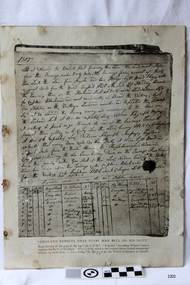
Document - Log Book page, 21/10/1805
... london...lloyd’s patriotic fund...napoleonic battles...british naval history...London is a large insurance company in the United Kingdom. In 1803 Lloyd’s founded the Lloyd’s Patriotic Fund to honour the brave and provide for the wounded and dependents of those killed in major Napoleonic battles. Over the years Lloyd’s has accumulated an assorted collection of artefacts and memorabilia associated with Nelson, including this log book from HMS Euryalus. In 2003 Lloyds created a temporary exhibition to mark the bicentennial of Nelson’s Battle of Trafalgar. The display included key items from the Nelson Collection celebrating Nelson’s role in British Naval History...London is a large insurance company in the United Kingdom. In 1803 Lloyd’s founded the Lloyd’s Patriotic Fund to honour the brave and provide for the wounded and dependents of those killed in major Napoleonic battles. Over the years Lloyd’s has accumulated an assorted collection of artefacts and memorabilia associated with Nelson, including this log book from HMS Euryalus. In 2003 Lloyds created a temporary exhibition to mark the bicentennial of Nelson’s Battle of Trafalgar. The display included key items from the Nelson Collection celebrating Nelson’s role in British Naval History ...This document is a reproduction of the page of the log book from the vessel HMS Euryalus, recording Nelson's famous signal at the Battle of Trafalgar. On October 21, 1805, Admiral Lord Nelson led the British Navy to victory against the French and Spanish navies in the Atlantic Ocean. The event became known as the Battle of Trafalgar. To commence the battle Nelson commanded his now-famous flag signal “England expects that every man will do his duty”. Nelson’s signal was transmitted from his ship HMS Victory in 12 separate flag-hoists, according to Sir Home Popham’s Telegraphic Code that had been supplied to the fleet as an experiment, with the numerical flags of the Admiralty official Day Signal book (1799 issue). The signal flags comprised eight that represented whole words and four that represented single letters - [ENGLAND] [EXPECTS] [THAT] [EVERY] [MAN] [WILL] [DO] [HIS] [D] [U] [T] [Y]. Nelson’s signal was received by the ‘reporting frigates’ who would then send them on to the other vessels. The signal was recorded by Captain Henry Blackwood who was in command of the HMS Euryalus. Captain Blackwood led a squadron of frigates, reporting back to Nelson on the movement of the French and Spanish fleets. Nelson’s famous signal was recorded in the log book of Euryalus and repeated to other vessels. The original log book is a canvas-backed manuscript written up from hour to hour during the battle. It is in the Nelson Collection at Lloyd's. Lloyd’s of London is a large insurance company in the United Kingdom. In 1803 Lloyd’s founded the Lloyd’s Patriotic Fund to honour the brave and provide for the wounded and dependents of those killed in major Napoleonic battles. Over the years Lloyd’s has accumulated an assorted collection of artefacts and memorabilia associated with Nelson, including this log book from HMS Euryalus. In 2003 Lloyds created a temporary exhibition to mark the bicentennial of Nelson’s Battle of Trafalgar. The display included key items from the Nelson Collection celebrating Nelson’s role in British Naval History. Lloyd’s now has a department called The Nelson Collection and Heritage Floor where historical artifacts are displayed and the story of Lloyd’s 300 years of history is told. This document, being a reproduction, is not significant in itself. However it's content is of historical significance for its connection to Admiral Nelson and The Battle of Trafalgar. Through the leadership and victory of Nelson, the British obtained the mastery of the seas over the French and Spanish and opened up the way for Britain to colonise many countries including Australia. The document is also associated with a wood sample from Napoleon's ship Victory that is in our Collection.Reproduction of a page of the log book of HMS Euryalus recording Nelson's famous signal at the Battle of Trafalgar. The original log book entry was handwritten, dated 21 Oct 1805.flagstaff hill, warrnambool, shipwrecked-coast, flagstaff-hill, flagstaff-hill-maritime-museum, maritime-museum, shipwreck-coast, flagstaff-hill-maritime-village, log book, flag signal, hms euryalus, nelson's famous signal, battle of trafalgar, october 21, 1805, admiral lord nelson, french and spanish navies, england expects that every man will do his duty, hms victory, sir home popham’s telegraphic code, admiralty official day signal book (1799 issue), reporting frigates, captain henry blackwood, canvas-backed manuscript, nelson collection at lloyd's, lloyd’s of london, lloyd’s patriotic fund, napoleonic battles, british naval history -
 Flagstaff Hill Maritime Museum and Village
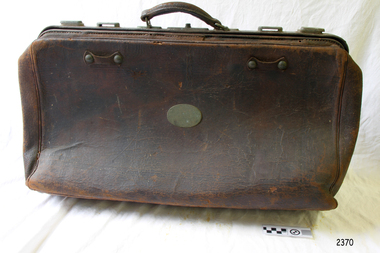
Functional object - Portmanteau, 1930-1950
... History: English merchant Thomas Witherings established mail routes throughout Europe in the 1620s. He drew up a proposal in 1635 for an English mail system based in London in which portmanteaux (containing 2 leather bags lined with cotton) could travel to European towns with sealed bags of mail for protection against spies. ...History: English merchant Thomas Witherings established mail routes throughout Europe in the 1620s. He drew up a proposal in 1635 for an English mail system based in London in which portmanteaux (containing 2 leather bags lined with cotton) could travel to European towns with sealed bags of mail for protection against spies. ...The etymology of the word portmanteau: A portmanteau was a travelling bag used as a mailbag. During the eighteenth and nineteenth centuries, both newspapers and letters were transported in these leather mailbags that opened into two sections. A portmanteau is a word created by the blending of two other words in terms of the sounds and meaning. Portmanteau itself is a portmanteau; made up of the French ‘porter’ meaning ‘to carry’ and ‘manteau’ meaning ‘cloak’. The other meaning of this word is ‘a travelling case or bag' but was coined by Lewis Carroll with its new meaning in 1882. History: English merchant Thomas Witherings established mail routes throughout Europe in the 1620s. He drew up a proposal in 1635 for an English mail system based in London in which portmanteaux (containing 2 leather bags lined with cotton) could travel to European towns with sealed bags of mail for protection against spies. The system was put into motion and some 26,000 letters were mailed safely and unopened between London and European towns each week. In the nineteenth century, the official portmanteau was used to carry the mail, letters and newspapers on Americas New England stagecoaches that travelled the postal routes. Before 1789 newspapers were mostly excluded from the mail and the official portmanteau. After the first United States Congress (1789–1791) the postmaster general allowed printers free postage to communicate reports and articles of Congressional informational newspapers with other publishers in other towns and cities for distribution. Example of a mid-20th-century leather bag not connected to a person of significance from history or a historic event. The significance lies in the historic social aspect of this type of bag and how it got its name. This type of bag was popular from the mid 19th century for personal use and fell out of favour in until the 1950s and the origin and meaning of the word used to describe this type of leather bag "portmanteau". Portmanteau leather bag, with brass oval badge, tan interior with compartment separator. Inscribed "Allchin Bros Makers Ballarat". flagstaff hill, warrnambool, shipwrecked-coast, flagstaff-hill, flagstaff-hill-maritime-museum, maritime-museum, shipwreck-coast, flagstaff-hill-maritime-village, portmanteau, allchin bros -
 Flagstaff Hill Maritime Museum and Village
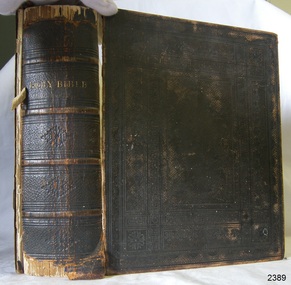
Book - Religious Book/Bilble, Oxford University Press, The Holy Bible, 1866
... history through the births and deaths noted on its end papers. Spine: "Holy Bible" “The holy Bible containing the old and new Testaments” Additional title information: Translated out of The Original Tongues, and with the Former translations Diligently Compared and Revised by His Majesty’s Special Command “Appointed to be Read in Churches” Publisher: Oxford University Press for the British and Foreign Bible Society Instituted in London in The Year 1804. ...To understand the nature of your 1866 Oxford University Press (OUP) Bible, it helps to look at how Bibles were produced in the 19th century and the massive historical scale of the publisher. The context of the King James Version Bible is indicated by the standard phrase on the flyleaf: "Translated out of the Original Tongues... By His Majesty's Special Command." This work is a historical 1866 reprint of the original version published in 1611. This particular volume served as the family Bible for Joseph and Elizabeth Bell, documenting their family history through the births and deaths noted on its end papers.Book, black hard cover with embossed pattern and gold test, metal locking clasp. King James Version of the Holy Bible, containing the Old and New Testaments. It was published by Oxford University Press in 1866. Inscriptions on the loose endpaper list the marriage of Joseph and Elizabeth Bell in 1854 at St Paul's, Bristol, England, and their ten children born from 1856 to 1878.non-fictionTo understand the nature of your 1866 Oxford University Press (OUP) Bible, it helps to look at how Bibles were produced in the 19th century and the massive historical scale of the publisher. The context of the King James Version Bible is indicated by the standard phrase on the flyleaf: "Translated out of the Original Tongues... By His Majesty's Special Command." This work is a historical 1866 reprint of the original version published in 1611. This particular volume served as the family Bible for Joseph and Elizabeth Bell, documenting their family history through the births and deaths noted on its end papers.flagstaff hill, flagstaff hill maritime museum and village, warrnambool, maritime museum, maritime village, great ocean road, shipwreck coast, holy bible, book, religious book, bell family, bell family bible, elizabeth bell, joseph bell, 1826, 1833, 1854, st paul's bristol -
 Flagstaff Hill Maritime Museum and Village
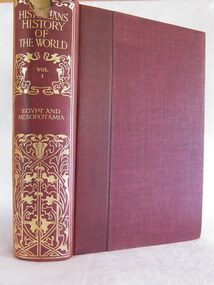
Book - Reference Book/History, Henry Smith Williams, The Historians History of the World Vol 01 set 1 - Edited by Henry Smith Williams L.L.D. Published by “The Times” 1908, 1908
... London). In the early 20th century, The Times entered the book trade to boost its prestige and revenue, notably marketing this set and the “Encyclopedia Britannica”. In the grand architectural plan of Henry Smith Williams’ series of world history...history" where the goal was to synthesise all human knowledge into a single narrative. Volume 1 is titled "Egypt and Mesopotamia," it is divided into two distinct parts Part I concentrates on ancient Egypt, covering the Nile Valley from its legendary beginnings through the various dynasties. Flyleaf has the title with edited by Henry Smith Williams L.L.D. In twenty five volumes-Vol. 1 and London ...The 1908 edition of The Historians' History of the World is a monumental work of Edwardian scholarship, representing a specific era of "universal history" where the goal was to synthesise all human knowledge into a single narrative. Volume 1 is titled "Egypt and Mesopotamia," it is divided into two distinct parts Part I concentrates on ancient Egypt, covering the Nile Valley from its legendary beginnings through the various dynasties.Book is part of a 25 volume set with red cloth bindings and gold filigree design to rib.non-fictionThe 1908 edition of The Historians' History of the World is a monumental work of Edwardian scholarship, representing a specific era of "universal history" where the goal was to synthesise all human knowledge into a single narrative. Volume 1 is titled "Egypt and Mesopotamia," it is divided into two distinct parts Part I concentrates on ancient Egypt, covering the Nile Valley from its legendary beginnings through the various dynasties. flagstaff hill, warrnambool, shipwrecked-coast, flagstaff-hill, flagstaff-hill-maritime-museum, maritime-museum, shipwreck-coast, flagstaff-hill-maritime-village, book, the historians history of the world vol 1 set 1 -
 Flagstaff Hill Maritime Museum and Village
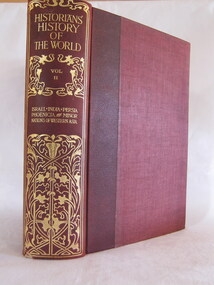
Book - Reference Book/History, Henry Smith Williams, The Historians History of the World Vol 21 set 1 - Edited by Henry Smith Williams L.L.D. Published by “The Times” 1908, 1908
... London). In the early 20th century, The Times entered the book trade to boost its prestige and revenue, notably marketing this set and the “Encyclopedia Britannica”. Volume 2 of The Historians' History...Volume 2 of The Historians' History of the World focuses on "Israel, India, Persia, Phoenicia, Minor Nations of Western Asia." Flyleaf has the title with edited by Henry Smith Williams L.L.D. In twenty five volumes-Vol.2 and London ...The 1908 edition of The Historians' History of the World is a monumental work of Edwardian scholarship, representing a specific era of "universal history" where the goal was to synthesise all human knowledge into a single narrative. Volume 2 of The Historians' History of the World focuses on "Israel, India, Persia, Phoenicia, Minor Nations of Western Asia."Book is part of a 25 volume set with red cloth bindings and gold filigree design to rib.non-fictionThe 1908 edition of The Historians' History of the World is a monumental work of Edwardian scholarship, representing a specific era of "universal history" where the goal was to synthesise all human knowledge into a single narrative. Volume 2 of The Historians' History of the World focuses on "Israel, India, Persia, Phoenicia, Minor Nations of Western Asia."flagstaff hill, warrnambool, shipwrecked-coast, flagstaff-hill, flagstaff-hill-maritime-museum, maritime-museum, shipwreck-coast, flagstaff-hill-maritime-village, book, the historians history of the world vol 2 set 1 -
 Flagstaff Hill Maritime Museum and Village
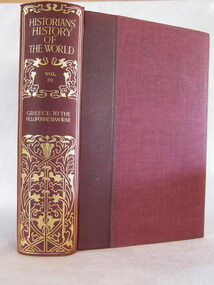
Book - Reference Book/History, Henry Smith Williams, The Historians History of the World Vol 3 set 1 - Edited by Henry Smith Williams L.L.D. Published by “The Times” 1908, 1908
... history" where the goal was to synthesise all human knowledge into a single narrative. Volume 3 is a pivotal installment in the series, shifting the narrative from the "stagnant" (as viewed by 1904 scholars) empires of the East to the dynamic birth of Western civilisation. Flyleaf has the title with edited by Henry Smith Williams L.L.D. In twenty five volumes-Vol. iii and London ...The 1908 edition of The Historians' History of the World is a monumental work of Edwardian scholarship, representing a specific era of "universal history" where the goal was to synthesise all human knowledge into a single narrative. Volume 3 is a pivotal installment in the series, shifting the narrative from the "stagnant" (as viewed by 1904 scholars) empires of the East to the dynamic birth of Western civilisation.Book is part of a 25 volume set with red cloth bindings and gold filigree design to rib.non-fictionThe 1908 edition of The Historians' History of the World is a monumental work of Edwardian scholarship, representing a specific era of "universal history" where the goal was to synthesise all human knowledge into a single narrative. Volume 3 is a pivotal installment in the series, shifting the narrative from the "stagnant" (as viewed by 1904 scholars) empires of the East to the dynamic birth of Western civilisation.flagstaff hill, warrnambool, shipwrecked-coast, flagstaff-hill, flagstaff-hill-maritime-museum, maritime-museum, shipwreck-coast, flagstaff-hill-maritime-village, book, the historians history of the world vol 3 set 1 -
 Flagstaff Hill Maritime Museum and Village
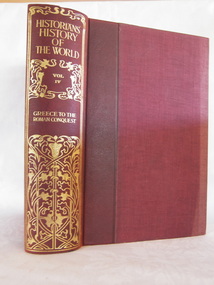
Book - Reference Book/History, Henry Smith Williams, The Historians History of the World Vol 4 set 1 - Edited by Henry Smith Williams L.L.D. Published by “The Times” 1908, 1908
... London). In the early 20th century, The Times entered the book trade to boost its prestige and revenue, notably marketing this set and the “Encyclopedia Britannica”. Volume 4 is a deep dive into the later history...history of Ancient Greece, specifically focusing on the period from the aftermath of the Peloponnesian War through to the Roman conquest. This volume bears the subtitle "Greece to the Roman Conquest." It covers several pivotal shifts in power regards the post war struggle (404 to 374 BC.) Flyleaf has the title with edited by Henry Smith Williams L.L.D. In twenty five volumes-Vol. IV and London ...The 1908 edition of The Historians' History of the World is a monumental work of Edwardian scholarship, representing a specific era of "universal history" where the goal was to synthesise all human knowledge into a single narrative. Volume 4 is a deep dive into the later history of Ancient Greece, specifically focusing on the period from the aftermath of the Peloponnesian War through to the Roman conquest. This volume bears the subtitle "Greece to the Roman Conquest." It covers several pivotal shifts in power regards the post war struggle (404 to 374 BC.)Book is part of a 25 volume set with red cloth bindings and gold filigree design to rib.non-fictionThe 1908 edition of The Historians' History of the World is a monumental work of Edwardian scholarship, representing a specific era of "universal history" where the goal was to synthesise all human knowledge into a single narrative. Volume 4 is a deep dive into the later history of Ancient Greece, specifically focusing on the period from the aftermath of the Peloponnesian War through to the Roman conquest. This volume bears the subtitle "Greece to the Roman Conquest." It covers several pivotal shifts in power regards the post war struggle (404 to 374 BC.)flagstaff hill, warrnambool, shipwrecked-coast, flagstaff-hill, flagstaff-hill-maritime-museum, maritime-museum, book, the historians history of the world vol 4 set 1, henry smith williams -
 Flagstaff Hill Maritime Museum and Village
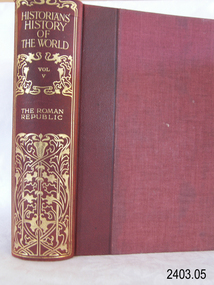
Book - Reference Book/History, Henry Smith Williams, The Historians History of the World Vol 5 set 1 - Edited by Henry Smith Williams L.L.D. Published by “The Times” 1908, 1908
... history" where the goal was to synthesise all human knowledge into a single narrative. This specific volume focuses on the Roman Republic. It covers the transition from the early legends of the founding of Rome through the Punic Wars, the rise of the Republic's supremacy in the Mediterranean, and the internal reforms and conflicts that eventually led to its collapse. Flyleaf has the title with edited by Henry Smith Williams L.L.D. In twenty five volumes-Vol. V and London ...The 1908 edition of The Historians' History of the World is a monumental work of Edwardian scholarship, representing a specific era of "universal history" where the goal was to synthesise all human knowledge into a single narrative. This specific volume focuses on the Roman Republic. It covers the transition from the early legends of the founding of Rome through the Punic Wars, the rise of the Republic's supremacy in the Mediterranean, and the internal reforms and conflicts that eventually led to its collapse.Book is part of a 25 volume set with red cloth bindings and gold filigree design to rib.non-fictionThe 1908 edition of The Historians' History of the World is a monumental work of Edwardian scholarship, representing a specific era of "universal history" where the goal was to synthesise all human knowledge into a single narrative. This specific volume focuses on the Roman Republic. It covers the transition from the early legends of the founding of Rome through the Punic Wars, the rise of the Republic's supremacy in the Mediterranean, and the internal reforms and conflicts that eventually led to its collapse. flagstaff hill, warrnambool, shipwrecked-coast, flagstaff-hill, flagstaff-hill-maritime-museum, maritime-museum, shipwreck-coast, flagstaff-hill-maritime-village
