
Showing 130 items matching " leather t"
-
 Flagstaff Hill Maritime Museum and Village
Boots
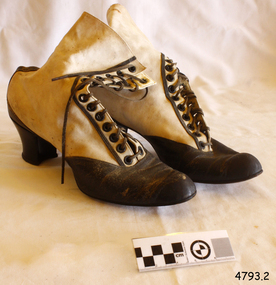
... Stamped into leather "T. Jerome'...flagstaff hill warrnambool shipwrecked-coast flagstaff-hill flagstaff-hill-maritime-museum maritime-museum shipwreck-coast flagstaff-hill-maritime-village short boots ladies boots ladies footwear ladies clothing accessories ladies fashion women's footwear women's boots Stamped into leather "T. Jerome' A pair of women's short boots, black & white lace-up style. ...A pair of women's short boots, black & white lace-up style. Brand T. Jerome.Stamped into leather "T. Jerome'flagstaff hill, warrnambool, shipwrecked-coast, flagstaff-hill, flagstaff-hill-maritime-museum, maritime-museum, shipwreck-coast, flagstaff-hill-maritime-village, short boots, ladies boots, ladies footwear, ladies clothing accessories, ladies fashion, women's footwear, women's boots -
 Glen Eira Historical Society
Document - St David’s Uniting Church, Glen Huntly
... ... Leather T...Fenton Leo Johnston E Leather T Moyle B Ness R Peden A Pregnell Max Rockell D. ...Order of service for the induction of Rev. K Moorhead into the Parish of Glen Huntly 19/01/1984 Order of service for the celebration of the life of Ronald. Henry Summers 1921 – 1999 at St David’s Uniting Church, Glen Huntly, dated June 08/06/1999. Reprinted service of holy communion for Glen Huntly Uniting Parish date unknown. Pamphlet, including photograph of St David’s Uniting Church Parish of Glen Huntly, for the rededication of the Peace Memorial. Pipe organ; for the uniting of the Congregational Methodist and Presbyterian in the Glen Huntly Parish. Reprinted leaflet, with order of service for re-dedication of organ at St David’s 03/03/1985.moorhead kenneth h rev., st david’s uniting church., glen huntly, hunkin edward rev., grange road, waters r rev., rayment rosalie rev, stuart-murray j. dr., duke s. mrs., wallis ken, denholm robin rev., summers ronald henry, gray robin dr., roach harry, roach rene, purcell mr., purcell mrs., stephen cathy, harkness jeff, funston neil, funston robin, sypott e., neerim road, hutchison a, rosedale avenue, barnes peter, fenton r, rockell d, clarke j miss, ness p miss, osborne ivy miss, brownbill jim, courtnay s., fenton leo, johnston e, leather t, moyle b, ness r, peden a, pregnell max, rockell d., jones a., halls, uhe mrs., milligan m miss, chapman may, choirs, abhaywickrema m, theobald j, jones f, abhaywickrema p, riegelhuth j, riegelhuth j, bates t, bates l, ballantyne m, kuhn m, kite l, cameron m, hoare j, roach r, avery d, holmes j, havie j, chapman m, brownbill ella, barren b, pregnall joy, hearn edward henry, toolambool road, mcintyre ted, moyle jenny, avery daisy, powney maisie, vertigan olwyn, dawson harry, davidson eileen, mitchell mabel, mccowan roger, wright lyn, yeaman j, courtnay j, smith j, yeaman d, fenton s, jones f, penfound j, wright l, lord e, brownbill j, brownbill e, hunter j, mitchell m, barren b, moores e, donaldson j, coulson o, moyle b, johnston e, peden a, osbourne i, mccowan r, waters r rev, duke s mrs., adam a. j. rev, hewitt john, davis lyle, organs, cowan john n, organists, scotland betty, musicians, vertigan earle l rev., muirhead j, andrewartha c. w., lomas chas., foundation stone, anderson george rev., fraser finley dr., hadley s. c. rev., simon r. p., mcnair mr, fender mr, forster k rev., flynn john dr., vertigan s. a. rev., muirhead j, smith a.w.f., glen huntly plant nursery, alcock bruce, callen graeme, murrumbeena, neerim road -
 Kew Historical Society Inc
Footwear - Pair of Brown Leather Shoes, Yves Saint Laurent, 1980s
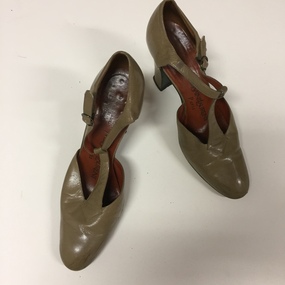
... Throughout the 1970s and 1980s Yves Saint Laurent drew inspiration from early 20th century silhouettes releasing premium leather T-bar and T-strap pumps....Throughout the 1970s and 1980s Yves Saint Laurent drew inspiration from early 20th century silhouettes releasing premium leather T-bar and T-strap pumps. Footwear Pair of Brown Leather Shoes Yves Saint Laurent ...The extensive fashion and design collection of the Kew Historical Society has been assembled over a number of decades. One subsection of this collection is shoes, designed and manufactured for Australian women by Australian and European designers. Many of the shoes, while often mass-produced, were generally constructed by skilled artisans using traditional shoe-making techniques. Pair of brown leather court shoes with deep tan leather uppers, designed by Yves Saint Laurent, Paris. Throughout the 1970s and 1980s Yves Saint Laurent drew inspiration from early 20th century silhouettes releasing premium leather T-bar and T-strap pumps.YVES SAINT LAURENT / Pariswomen's shoes, yves saint laurent, footwear, court shoes, fashion -1970s, fashion 1980s -
 Waverley RSL Sub Branch
WWI Identity (dog) tags
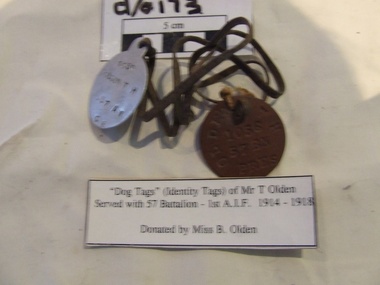
... Aluminium tag - 1056 OLDEN T N 57 A1 CE Leather- OLDEN T E 1056 57 BTN PRES...Of interest is that the Aluminium tag has the this soldiers religion as CE (Church of England) while the leather tag has the religion recorder as PRES (Presbyterian) Few of the leather tags have survived Dog tags identity tags WWI Aluminium tag - 1056 OLDEN T N 57 A1 CE Leather- OLDEN T E 1056 57 BTN PRES 2 round identity tags on leather thong One of silver coloured metal and one of copper WWI Identity (dog) tags ...Worn by all Australian Forces in WWI. Few of the leather tags have survived. They were used to identify the Dead and Injured soldiers, one tag being removed for records and the other being left on the deceased serviceman. Of interest is that the Aluminium tag has the this soldiers religion as CE (Church of England) while the leather tag has the religion recorder as PRES (Presbyterian) Few of the leather tags have survived2 round identity tags on leather thong One of silver coloured metal and one of copperAluminium tag - 1056 OLDEN T N 57 A1 CE Leather- OLDEN T E 1056 57 BTN PRESdog tags, identity tags, wwi -
 City of Melbourne Libraries
Photograph, Bull, Hugh Jones, 1897-1993, Leather Exhibition, Melbourne Town Hall
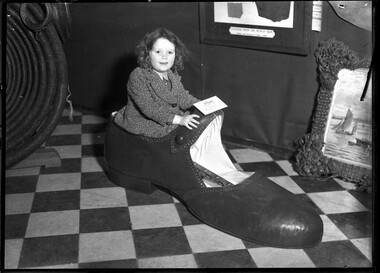
... Photographer notations on slide: At the Leather Exhib. at T. Hall Melb 1933 Age Published: Age (Melbourne, Vic.: 1854- ), 1933 THE EXHIBITS. (1933, September 20). ...Photographer notations on slide: "At the Leather Exhib. at T. Hall Melb 1933 Age B5"....Photographer notations on slide: At the Leather Exhib. at T. Hall Melb 1933 Age Published: Age (Melbourne, Vic.: 1854- ), 1933 THE EXHIBITS. (1933, September 20). ...Photographer notations on slide: At the Leather Exhib. at T. Hall Melb 1933 Age Published: Age (Melbourne, Vic.: 1854- ), 1933 THE EXHIBITS. (1933, September 20). The Age (Melbourne, Vic. : 1854 - 1954), p. 16. Retrieved January 25, 2026, from http://nla.gov.au/nla.news-article205109730 Published title: THE EXHIBITS. A COMPREHENSIVE RANGE. Curios, Novelties, Working Displays Published Caption: ONE OF THE NOVELTIES – AN OUTSIZE IN SHOES Research by Project Volunteer, Louise McKenzie: Our photo is dated 20 September 1933, and shows a happy, chubby-faced young girl sitting in a very over-sized girl’s shoe. It is labelled – “Shoe, An Out Size, loaned by Messrs Blackman & Rose”. (1) It is an effective way to capture the attention of the readership and alert them to the Melbourne Leather Show 1933. This show was designed to be a drawcard of extraordinary proportion, and there is no doubt that this leather exhibition was a really big deal for Melbourne. It completely took over the Melbourne Town Hall, and was open from 10.30 am until 10.30 pm. It seemed to contain something for everyone – the military, the man about town, the home handyman, the housewife, the child, the sporting types, the domestic workers, the outdoor enthusiasts, the horseracing fans, car enthusiasts, those wishing to show off the latest fashion – both men and women - and those just intrigued by a lot of fascinating and wide ranging exhibits. One of the most comprehensive descriptions of the Exhibition accompanies the photograph, and is worth quoting in full: “PROMINENT among exhibits which first attract attention in the foyer of the Town Hall is a comprehensive display of leather articles used by the defence forces. A conspicuous legend states that leather plays an important part in national defence, being used for saddlery, tool containers, holdalls, range-finding, surveying and signalling equipment, explosives factories, harness accoutrement, bandsmen's equipment and clothing. Three models of horses and several figures of soldiers wearing leather equipment illustrate the lesson, and a great range of leather goods used in military training and work variegate the display. Nearby are Texas cowboy, buckjumping and breaking-in saddles; whips, a walking stick, made of leather and numerous other curios. The general exhibition occupies the whole floor space of the main Town Hall, and is subdivided by partitions running most of the length of the hall. A bewildering variety, of leather goods presses for close and leisured inspection. Here and there operatives in charge of working machinery give practical demonstrations of factory processes in the production of footwear. Polishing materials are well represented. One attractive exhibit includes two bush huts constructed of leather, with wattle bark for roofing. Opossums, rosellas and a kookaburra add touches of bush realism. Adjacent exhibits include bags, fishing boots, leggings, leather covers in all colours. Factory Processes. One exhibitor has installed an automatic cinema apparatus and screen, which projects various factory processes in making a shoe, the operator being shown at work. Elsewhere an interesting exhibit depicts the five stages in the manufacture of sole leather, and the tanning materials employed. "Very handsome effects are achieved in the interior appointments of motor cars, which are attended by figures of smart chauffeurs in leather coats. Motor-trimming leather is said to be more durable and hygienic than fabric materials, and cheaper. The neat finish of the material, its excellent appearance, certainly make a very favourable impression. It takes the hides of three beasts to cover the cushions, squabs and door panels of a full-sized sedan, while to finish the entire interior, including quarter-panels and head linings would take four or even five. Special Exhibits. Amongst the special sections the display arranged by the handicrafts and home industries- committee of the Country Women's Association of Victoria is a notable one. In all there are about 130 entries which are in four classifications, viz., hand-tooled or embossed leathers, suede, hand-made gloves and undecorated leather. The glove section attracted the most numerous entries, a number being the work of members and craft subscribers of the Country Women's Association. In the leathercraft competition, organised by the Country Women's Association, the judges yesterday awarded the first prize for bookbinding (the only prize given in this division) to Miss M. Alston, of South Yarra. There is also a creditable display of exhibits submitted by boys of the orthopaedic section of the Children's Hospital at Frankston. Amongst the novelties on view in other portions of the exhibition were the following: — Leather coats worn by Sir C. Kingsford Smith on his Atlantic flight. Model Wellington boot, Phar Lap's saddle. Melbourne Cup winner's saddle. Longest whip in world, 108 feet long. (33 metres) [See our photo, to left of Girl in Shoe] Diminutive shoes. Pair of shoes 65 years old. Pair of men's working boots 75 years old. Larwood's, Tate’s and Pataudi’s cricket boots. [Three internationally revered cricketers of the day] (2) Picture frame made of leather bought 63 years ago. [See our photo, to right of Girl in Shoe] Leather frame, powder bowl, &c. Saddle used by world's champion buckjumper in U.S.A. Mexican cowboy outfit. Miniature saddle and bridle. A fireman's helmet made of sole leather. (3) Sample of the leather hat worn by porters at the Billingsgate Fish Market, London. (4) From South Australia there have been obtained sets of harness for donkeys, goats and camels, the equipment being displayed to good advantage on stuffed representations of the animals mentioned. Close to the platform is a glass case containing snow shoes and coats which have been used in Antarctic exploration work. Trade Display. Amongst the trade exhibits may be seen in operation a slipper turn shoe sewing machine, with heeling and channelling facilities, and the various stages in the production of ladies' sandals are shown. There is a wide contrast between sole leather of varying degrees of thickness on view in one stall and the choice samples of ladies' footwear in another — footwear, by the way, which could almost be used as ornaments, so dainty in colour and production are they. Again, there are displays of upholstering leathers of such soft texture that they could he readily mistaken for some of the finest cloth. Those who may be particularly interested in the production of chamois leather may gain an insight into the materials and chemicals used in the "working up” of this variety of leather. Supplies of glace kid (5) are tastefully arranged, and there may also be seen bags of all shapes and sizes, including satchels, suit cases and "sporting" cases, and bags for tennis players and golfers. Further variety is given to the exhibition by the display of antique hides, brightly coloured, with punching balls, boxing gloves and batsman's pads. There are crocodile skins and snake skins so cleverly "Worked up" that one could be almost pardoned for betraying an affection for such unpopular creatures.” “ Another wonderful article on this Exhibition, published the same day in one of the opposition daily newspapers, The Argus, is in the weekly article “Women to Women”, entitled “A Great Victorian Industry: Many Uses for Leather”. This weekly column was penned by Vesta, and she writes, with much purpose: “Yesterday afternoon I paid a hurried visit to the Leather Exhibition now being held in the Melbourne Town Hall and I was disappointed to find that the early visitors to the main exhibition were almost all men. Women, I think, should make a point of seeing every exhibition of our great industries, for women are the buyers of household requisites and goods for their own use and their tastes, and opinion influence also, to a large extent, the purchases of men. So, the welfare of industries is more or less in their hands and it becomes a duty for them to inform themselves fully of the extent and the quality of the manufacturing that is done here. The value of the output of the Australian boot and shoe factories alone was in 1930-31, the latest year for which the figures are given, Stg 3,750,000. Fully two thirds of that amount must have been spent by women on boots and shoes for themselves and their children. In a host of other directions, in the purchase of handbags, travelling bags, belts and straps, cushions, furniture coverings, purses, notebooks, spectacle cases, their annual expenditure must be very high. Their interest, therefore, in this industry is practical, and their support of it should be governed by knowledge of comparable values and qualities of the goods they buy. From the point of view of women, however, the exhibition itself is rather disappointing. There is an amazing collection of good stuff on show, but most of it is not displayed in a fashion that attracts attention. I was surprised, for example, at the range and quality of the leathers displayed, the suppleness of the finer qualities, and the varied range of colours and designs. But they are shown in such a fashion that if one set out deliberately to look for them it would be quite easy to miss most of them.” …It was surprising, too, that no one seemed to have taken advantage of the present fashion of wearing coloured gloves, or the cult of glove making, which the Country Women’s Association has fostered so successfully. Outside the collection of chamois leathers I saw no skins which were suitable to glove making. (6) However, it is perhaps a little unfair to be highly critical of the exhibition, inasmuch as it is the first of its kind. The material is there, undoubtedly, for a splendid show of every phase of this enterprising industry, and I am confident that experience will prove to those concerned that it will be worth while next time to devote a great deal of attention of the method of display.” With further research, it transpires that “Vera” is in fact NZ born Stella May Allen (nee Henderson) (1871-1962), a journalist, the first woman in NZ to begin a law course, in 1890-91). She later worked at a law firm while she completed her degree. Study of the law had always been open to women in NZ, but its practice was still barred to them. Her case “…led to amending legislation in 1896 allowing women to practise as barristers or solicitors. However, on gaining her LL.B. in November 1897 she did not apply for admission to the Bar. Instead, she became the Wellington-based correspondent and leader-writer for the Lyttelton Times. Her appointment, the first for a woman, was not welcomed by the all-male Press Gallery, and special permission had to be obtained from a subcommittee of the House before her presence was accepted. In 1900 she married Edwin Allen, a senior leader-writer for the Wellington Evening Post, and they moved to Australia in 1903 when Edwin Allen took up the post of foreign affairs leader-writer and parliamentary man for the Melbourne Argus. As Patricia Keep notes in her excellent entry of Stella Allan in the Australian Dictionary of Biography: “In 1907 The Argus commissioned her to write a series of articles on the first Australian Women's Work Exhibition held in October. They aroused much interest and next year The Argus invited her to join its full-time staff and begin a weekly section on the particular interests of women. She adopted the nom de plume 'Vesta' and called the column 'Women to Women'. Her work was unique in an Australian daily paper at that time. Her pages extended to cover every aspect of women's affairs, children's interests and community welfare, and 'Vesta' became a household word for authoritative information and advice on such matters. An excellent needlewoman and first-rate cook herself, she thoroughly tutored her staff in the work and needs of women in both country and city, as well as providing the usual training for cadet journalists. She conducted interviews and also visited the country to see at first hand the results of bushfires, mouse plagues, droughts and floods. In 1910 she was one of three women foundation members of the Australian Journalists' Association. “…she found time to become deeply involved in community affairs. She was an original committee-member of the Victorian Association of Crèches and of the Free Kindergarten Union of Victoria, and had much to do with the early days of the Victorian Bush Nursing Association, the Baby Health Centres Association and the Queen Victoria Hospital. She was a member of the National Council of Women, first in New Zealand and then in Melbourne, and of the Country Women's Association from its inception. … in 1924 she was appointed substitute delegate for Australia to the fifth assembly of the League of Nations at Geneva and was a delegate to the second Pan Pacific Women's Conference in Hawaii in 1930. A meeting held in the Melbourne Town Hall in 1938 by representatives of all the main Victorian women's organizations paid special tribute to her work and influence. She retired next year to England where she continued to write for the Argus, contributing articles on the experiences of women and children in wartime.” It is little wonder that “Vesta” was unafraid to take to task both the women of Victoria, and those who created the exhibition! One item which appears to have gone unnoticed, or at least unreported, is a framed article in the background of the photo of the chubby girl in the shoe. The display frame is labelled “Leather from the Human Skin, Tanned and Dressed by French artists.” The exhibition was certainly a cabinet of curiosities! A charming article in The Argus is a nice note on which to end. It gives a quick history and overview of the Australian leather industry and its unprecedented, and possibly unexpected, development and success, and states with pride: “Though Victoria is the largest leather producer in the Commonwealth all tanners in the Commonwealth can look back with pride on the long march of progress.” Footnotes: (1) “Blackman and Rose”. Messrs Blackman and Rose were shoe manufacturers, from 1927 located at 200 Noone Street, Clifton Hill. The Melbourne Circle describes their building as a “fine-looking building in the Federation ‘blood and bandage’ style.” It was built around 1912 for Puttifoot and Bloom, boot manufacturers, and today the building is apartments. (2) These cricketers were household names in the day: Tate: Maurice Tate, “English cricketer of the 1920s and 1930s, and leader of England’s Test bowling attack for a long time during this period. The founder of modern seam bowling. “ Larwood: Harold Larwood, “English right-arm fast bowler and the main exponent of the bowling style known as “bodyline”. Used to considerable effect in the 1932-33 Test series in Australia. Pataudi: Iftikhar A K Pataudi, “an Indian prince who in the 1930s played Test cricket for England, and in the 1940s played Test cricket for India (as Captain) – the only test cricketer to have played for both India and England. (3) “sole” leather “… is the thickest and most resistant material existing in the tanning industry … made from vegetable tanned leathers, usually bovine butts, processed in a special way to make them the hardest type of leather in existence.” (4) The hats worn by porters at Billingsgate Fish Market were also known as a “Bobbin” and look quite squat and rather unsophisticated. They were made of wood and tarred leather, with a “flat, hardened top designed to support large rectangular boxes of fish. The upturned brim protected the porter’s head against fish juice draining from the boxes of fish which would be carried on top of the hat. Some hats featured a small drain hole at the rear to allow this collected juice to drain down the back of the carrier. The hats were made using the ‘cuir bouilli’ technique. The leather was immersed in water which was heated until the leather began to shrink. It was then removed and put on a wooden former. The leather was stitched together to make the hat while still wet, and then held in place until dry.” (See article and photo on the London Museum website) (5) Glace kid – described on the Boston Museum of Fine Arts’ Cameo database as “A smooth glossy leather originally prepared from goat or sheepskin. Early glace kid had a shiny surface that was originally prepared by tawing the skin in a mixture of alum, table salt, flour, and egg yolk. Today, glace kid is prepared from many types of vegetable or chrome tanned leathers. The smooth polished surface is obtained mechanically by shaving, glazing, ironing, and/or rolling the dry leather.” (6) In the 1930s, Melbourne’s glovemaking industry was characterised by local manufacturing, with key producers like Simpson’s Gloves Pty Ltd in Richmond and the Stagg Glove Company in Clifton Hill leading the market. These factories produced high-quality leather gloves, handbags, and specialty gear, often employing a clear gendered division of labour and training young, local women. Museum Victoria holds the Simpson’s Gloves Collection, comprising over 1200 items, and the University of Melbourne Archives holds the company’s business records. References: THE EXHIBITS. (1933, September 20). The Age (Melbourne, Vic. : 1854 - 1954), p. 16. Retrieved January 25, 2026, from http://nla.gov.au/nla.news-article205109730 EXPORT LEATHER. (1929, September 17). The Argus (Melbourne, Vic. : 1848 - 1957), p. 17. Retrieved January 19, 2026, from http://nla.gov.au/nla.news-article4037647 LEATHER EXHIBITION (1933, September 18). The Argus (Melbourne, Vic. : 1848 - 1957), p. 10. Retrieved January 19, 2026, from http://nla.gov.au/nla.news-article11693362 (1933, September 23). The Argus (Melbourne, Vic. : 1848 - 1957), p. 21. Retrieved January 19, 2026, from http://nla.gov.au/nla.news-page522766 WOMEN TO WOMEN (1933, September 20). The Argus (Melbourne, Vic. : 1848 - 1957), p. 13. Retrieved January 19, 2026, from http://nla.gov.au/nla.news-article11694034 Australian Dictionary of Biography, Stella May Allan (1871–1962) https://adb.anu.edu.au/biography/allan-stella-may-4998 WOMEN TO WOMEN (1930, January 22). The Argus (Melbourne, Vic. : 1848 - 1957), p. 13. Retrieved January 19, 2026, from http://nla.gov.au/nla.news-article4063888 Museums Victoria, Simpson’s Gloves, 486-496 Victoria Street, North Richmond, VIC, Australia https://collections.museumsvictoria.com.au/articles/2702 The Argus. (1927, October 31). The Argus (Melbourne, Vic. : 1848 - 1957), p. 20. Retrieved February 7, 2026, from http://nla.gov.au/nla.news-article3888451 Melbourne Circle: stories from the suburbs: “Boots and all in Clifton Hill” https://melbournecircle.net/2015/11/20/bootmakers-of-clifton-hill/ Wikipedia, Maurice Tate, https://en.wikipedia.org/wiki/Maurice_Tate Wikipedia, Harold Larwood, https://en.wikipedia.org/wiki/Harold_Larwood Wikipedia, Iftikhar Ali Khan Pataudi, https://en.wikipedia.org/wiki/Iftikhar_Ali_Khan_Pataudi Buy Leather Online Italy, Sole leather: https://buyleatheronline.com/en/blog/outsole-and-insole-leather-n7 London Museum, Porters hats, https://www.londonmuseum.org.uk/collections/v/object-731122/hat-porters-hat/ Cameo Database, Museum of Fine Arts, Boston, Glace Kid, https://cameo.mfa.org/wiki/Glac%C3%A9_kid VICTORIAN LEATHER HAS WON RENOWN (1937, September 22). The Argus (Melbourne, Vic. : 1848 - 1957), p. 31 (March of Progress Supplement). Retrieved February 7, 2026, from http://nla.gov.au/nla.news-article1108704 Photographer notations on slide: "At the Leather Exhib. at T. Hall Melb 1933 Age B5".displays, melbourne town hall, leather, children, shoes, 1930-1939, industry, hats, gloves -
Bendigo Historical Society Inc.
Document - Gair's Melbourne Canvas Goods Catalogue, October 1933
... In 1876, the leather business of T Baulderstone was purchased, and operations were further expanded later by the acquisition of the Edinburgh Tannery at Sheepwash Creek, and The Edinburgh Leather & Grindery warehouse in Bull Street, Sandhurst. ...In 1876, the leather business of T Baulderstone was purchased, and operations were further expanded later by the acquisition of the Edinburgh Tannery at Sheepwash Creek, and The Edinburgh Leather & Grindery warehouse in Bull Street, Sandhurst. ...Joseph Henry Abbott founded the business in 1853 with a store that supplied everyday essential items to those seeking their fortune on the goldfields. The timing and choice of store ensured that he would become a prominent part of the Bendigo business scene. Abbott's next venture was to establish the New Times Boot Market & Factory in Pall Mall, Sandhurst. In 1867, his wife took over running the shop which was located next to the Bendigo Arcade near Williamson Street. In 1876, the leather business of T Baulderstone was purchased, and operations were further expanded later by the acquisition of the Edinburgh Tannery at Sheepwash Creek, and The Edinburgh Leather & Grindery warehouse in Bull Street, Sandhurst. In 1889, Joseph Abbott passed all interests in the business to his son, who shared the same name, in partnership with an adopted son, Richard Hartley Smith Abbott. The business continued trading under the name J H Abbott & Co.Price List from Gair's Melbourne Canvas Goods Manufacturers 36 Pages: All types of canvas bags and buckets; saddle bags; tents and flys; grass catchers; umbrellas; dust covers; blinds, curtains and awnings; wagon and lorry covers; tennis nets; capenters' aprons; hoses; hammocks; swings; chairs; quoits; sleeping bags; pennants; flags; etc.history, bendigo, abbott collection, gair's melbourne canvas manufacturers -
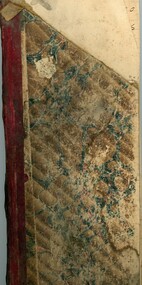 Bendigo Historical Society Inc.
Document - Abbott Supply Petty Cash Book, 1890s
... In 1876, the leather business of T Baulderstone was purchased, and operations were further expanded later by the acquisition of the Edinburgh Tannery at Sheepwash Creek, and The Edinburgh Leather & Grindery warehouse in Bull Street, Sandhurst. ...In 1876, the leather business of T Baulderstone was purchased, and operations were further expanded later by the acquisition of the Edinburgh Tannery at Sheepwash Creek, and The Edinburgh Leather & Grindery warehouse in Bull Street, Sandhurst. ...Joseph Henry Abbott founded the business in 1853 with a store that supplied everyday essential items to those seeking their fortune on the goldfields. The timing and choice of store ensured that he would become a prominent part of the Bendigo business scene. Abbott's next venture was to establish the New Times Boot Market & Factory in Pall Mall, Sandhurst. In 1867, his wife took over running the shop which was located next to the Bendigo Arcade near Williamson Street. In 1876, the leather business of T Baulderstone was purchased, and operations were further expanded later by the acquisition of the Edinburgh Tannery at Sheepwash Creek, and The Edinburgh Leather & Grindery warehouse in Bull Street, Sandhurst. In 1889, Joseph Abbott passed all interests in the business to his son, who shared the same name, in partnership with an adopted son, Richard Hartley Smith Abbott. The business continued trading under the name J H Abbott & Co.Hard covered Ledger Petty Cash Bookhistory, bendigo, abbott collection -
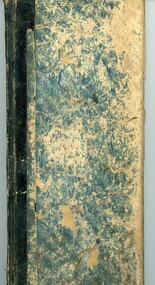 Bendigo Historical Society Inc.
Document - Abbott Supply Petty Cash Book, 1900s
... In 1876, the leather business of T Baulderstone was purchased, and operations were further expanded later by the acquisition of the Edinburgh Tannery at Sheepwash Creek, and The Edinburgh Leather & Grindery warehouse in Bull Street, Sandhurst. ...In 1876, the leather business of T Baulderstone was purchased, and operations were further expanded later by the acquisition of the Edinburgh Tannery at Sheepwash Creek, and The Edinburgh Leather & Grindery warehouse in Bull Street, Sandhurst. ...Joseph Henry Abbott founded the business in 1853 with a store that supplied everyday essential items to those seeking their fortune on the goldfields. The timing and choice of store ensured that he would become a prominent part of the Bendigo business scene. Abbott's next venture was to establish the New Times Boot Market & Factory in Pall Mall, Sandhurst. In 1867, his wife took over running the shop which was located next to the Bendigo Arcade near Williamson Street. In 1876, the leather business of T Baulderstone was purchased, and operations were further expanded later by the acquisition of the Edinburgh Tannery at Sheepwash Creek, and The Edinburgh Leather & Grindery warehouse in Bull Street, Sandhurst. In 1889, Joseph Abbott passed all interests in the business to his son, who shared the same name, in partnership with an adopted son, Richard Hartley Smith Abbott. The business continued trading under the name J H Abbott & Co.Hard covered Ledger Petty Cash Bookhistory, bendigo, abbott collection -
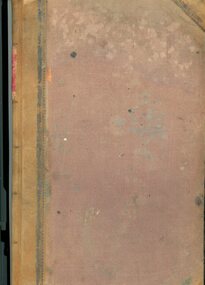 Bendigo Historical Society Inc.
Document - Abbott Supply Transaction and debtors Book, 1880s
... In 1876, the leather business of T Baulderstone was purchased, and operations were further expanded later by the acquisition of the Edinburgh Tannery at Sheepwash Creek, and The Edinburgh Leather & Grindery warehouse in Bull Street, Sandhurst. ...In 1876, the leather business of T Baulderstone was purchased, and operations were further expanded later by the acquisition of the Edinburgh Tannery at Sheepwash Creek, and The Edinburgh Leather & Grindery warehouse in Bull Street, Sandhurst. ...Joseph Henry Abbott founded the business in 1853 with a store that supplied everyday essential items to those seeking their fortune on the goldfields. The timing and choice of store ensured that he would become a prominent part of the Bendigo business scene. Abbott's next venture was to establish the New Times Boot Market & Factory in Pall Mall, Sandhurst. In 1867, his wife took over running the shop which was located next to the Bendigo Arcade near Williamson Street. In 1876, the leather business of T Baulderstone was purchased, and operations were further expanded later by the acquisition of the Edinburgh Tannery at Sheepwash Creek, and The Edinburgh Leather & Grindery warehouse in Bull Street, Sandhurst. In 1889, Joseph Abbott passed all interests in the business to his son, who shared the same name, in partnership with an adopted son, Richard Hartley Smith Abbott. The business continued trading under the name J H Abbott & Co.Abbott Supply Transaction and debtors Bookhistory, bendigo, abbott collection -
Bendigo Historical Society Inc.
Document - F. Collins and Co. Wholesale Price List, 1903
... In 1876, the leather business of T Baulderstone was purchased, and operations were further expanded later by the acquisition of the Edinburgh Tannery at Sheepwash Creek, and The Edinburgh Leather & Grindery warehouse in Bull Street, Sandhurst. ...In 1876, the leather business of T Baulderstone was purchased, and operations were further expanded later by the acquisition of the Edinburgh Tannery at Sheepwash Creek, and The Edinburgh Leather & Grindery warehouse in Bull Street, Sandhurst. ...Joseph Henry Abbott founded the business in 1853 with a store that supplied everyday essential items to those seeking their fortune on the goldfields. The timing and choice of store ensured that he would become a prominent part of the Bendigo business scene. Abbott's next venture was to establish the New Times Boot Market & Factory in Pall Mall, Sandhurst. In 1867, his wife took over running the shop which was located next to the Bendigo Arcade near Williamson Street. In 1876, the leather business of T Baulderstone was purchased, and operations were further expanded later by the acquisition of the Edinburgh Tannery at Sheepwash Creek, and The Edinburgh Leather & Grindery warehouse in Bull Street, Sandhurst. In 1889, Joseph Abbott passed all interests in the business to his son, who shared the same name, in partnership with an adopted son, Richard Hartley Smith Abbott. The business continued trading under the name J H Abbott & Co.F. Collins and Co. Wholesale Price List 1903; Sporting Equipment/Wear. 4 pageshistory, bendigo, abbott collection -
Bendigo Historical Society Inc.
Document - The Tanners and Curriers' Journal and Shoe Trade Review, 1/5/1884
... In 1876, the leather business of T Baulderstone was purchased, and operations were further expanded later by the acquisition of the Edinburgh Tannery at Sheepwash Creek, and The Edinburgh Leather & Grindery warehouse in Bull Street, Sandhurst. ...In 1876, the leather business of T Baulderstone was purchased, and operations were further expanded later by the acquisition of the Edinburgh Tannery at Sheepwash Creek, and The Edinburgh Leather & Grindery warehouse in Bull Street, Sandhurst. ...Joseph Henry Abbott founded the business in 1853 with a store that supplied everyday essential items to those seeking their fortune on the goldfields. The timing and choice of store ensured that he would become a prominent part of the Bendigo business scene. Abbott's next venture was to establish the New Times Boot Market & Factory in Pall Mall, Sandhurst. In 1867, his wife took over running the shop which was located next to the Bendigo Arcade near Williamson Street. In 1876, the leather business of T Baulderstone was purchased, and operations were further expanded later by the acquisition of the Edinburgh Tannery at Sheepwash Creek, and The Edinburgh Leather & Grindery warehouse in Bull Street, Sandhurst. In 1889, Joseph Abbott passed all interests in the business to his son, who shared the same name, in partnership with an adopted son, Richard Hartley Smith Abbott. The business continued trading under the name J H Abbott & Co.The Tanners and Curriers' Journal and Shoe Trade Review London May 1st 1884, Cover and two other pages of the document; wanted Ads; latest trade news. 32 pageshistory, bendigo, abbott collection -
Bendigo Historical Society Inc.
Document - Francis Chapman, Sons and Deekes - Monthly Circular - Current Prices and Shipping List, 1926
... In 1876, the leather business of T Baulderstone was purchased, and operations were further expanded later by the acquisition of the Edinburgh Tannery at Sheepwash Creek, and The Edinburgh Leather & Grindery warehouse in Bull Street, Sandhurst. ...In 1876, the leather business of T Baulderstone was purchased, and operations were further expanded later by the acquisition of the Edinburgh Tannery at Sheepwash Creek, and The Edinburgh Leather & Grindery warehouse in Bull Street, Sandhurst. ...Joseph Henry Abbott founded the business in 1853 with a store that supplied everyday essential items to those seeking their fortune on the goldfields. The timing and choice of store ensured that he would become a prominent part of the Bendigo business scene. Abbott's next venture was to establish the New Times Boot Market & Factory in Pall Mall, Sandhurst. In 1867, his wife took over running the shop which was located next to the Bendigo Arcade near Williamson Street. In 1876, the leather business of T Baulderstone was purchased, and operations were further expanded later by the acquisition of the Edinburgh Tannery at Sheepwash Creek, and The Edinburgh Leather & Grindery warehouse in Bull Street, Sandhurst. In 1889, Joseph Abbott passed all interests in the business to his son, who shared the same name, in partnership with an adopted son, Richard Hartley Smith Abbott. The business continued trading under the name J H Abbott & Co.Francis Chapman, Sons and Deekes - Monthly Circular (34th Year of Issue; No.397 - Current Prices and Shipping List January 1926, Castlereagh House, Castlereagh Street Sydney; Australian, New Zealand, South African and General Overseas, Buying Shipping, insurance and Chartering Agents. 35 pageshistory, bendigo, abbott collection, francis chapmen sons & deekes -
Bendigo Historical Society Inc.
Document - The Australasian Trade Review, Mercantile Shipping Gazette and Manufacturers' Journal, 1887
... In 1876, the leather business of T Baulderstone was purchased, and operations were further expanded later by the acquisition of the Edinburgh Tannery at Sheepwash Creek, and The Edinburgh Leather & Grindery warehouse in Bull Street, Sandhurst. ...In 1876, the leather business of T Baulderstone was purchased, and operations were further expanded later by the acquisition of the Edinburgh Tannery at Sheepwash Creek, and The Edinburgh Leather & Grindery warehouse in Bull Street, Sandhurst. ...Joseph Henry Abbott founded the business in 1853 with a store that supplied everyday essential items to those seeking their fortune on the goldfields. The timing and choice of store ensured that he would become a prominent part of the Bendigo business scene. Abbott's next venture was to establish the New Times Boot Market & Factory in Pall Mall, Sandhurst. In 1867, his wife took over running the shop which was located next to the Bendigo Arcade near Williamson Street. In 1876, the leather business of T Baulderstone was purchased, and operations were further expanded later by the acquisition of the Edinburgh Tannery at Sheepwash Creek, and The Edinburgh Leather & Grindery warehouse in Bull Street, Sandhurst. In 1889, Joseph Abbott passed all interests in the business to his son, who shared the same name, in partnership with an adopted son, Richard Hartley Smith Abbott. The business continued trading under the name J H Abbott & Co.The Australasian Trade Review, Mercantile Shipping Gazette and Manufacturers' Journal - 60 pages - Front and internal pages shown.history, bendigo, abbott collection, australian trade review -
 Bendigo Historical Society Inc.
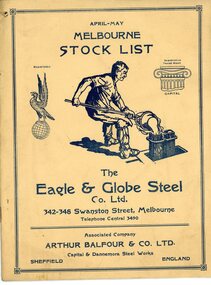
Document - The Eagle and Globe Steel Co Ltd Melbourne Stock List, 1924
... In 1876, the leather business of T Baulderstone was purchased, and operations were further expanded later by the acquisition of the Edinburgh Tannery at Sheepwash Creek, and The Edinburgh Leather & Grindery warehouse in Bull Street, Sandhurst. ...In 1876, the leather business of T Baulderstone was purchased, and operations were further expanded later by the acquisition of the Edinburgh Tannery at Sheepwash Creek, and The Edinburgh Leather & Grindery warehouse in Bull Street, Sandhurst. ...Joseph Henry Abbott founded the business in 1853 with a store that supplied everyday essential items to those seeking their fortune on the goldfields. The timing and choice of store ensured that he would become a prominent part of the Bendigo business scene. Abbott's next venture was to establish the New Times Boot Market & Factory in Pall Mall, Sandhurst. In 1867, his wife took over running the shop which was located next to the Bendigo Arcade near Williamson Street. In 1876, the leather business of T Baulderstone was purchased, and operations were further expanded later by the acquisition of the Edinburgh Tannery at Sheepwash Creek, and The Edinburgh Leather & Grindery warehouse in Bull Street, Sandhurst. In 1889, Joseph Abbott passed all interests in the business to his son, who shared the same name, in partnership with an adopted son, Richard Hartley Smith Abbott. The business continued trading under the name J H Abbott & Co.Booklet from the Eagle and Steel Melbourne Stocklist sent to Abbott Supply in 1923; 20 pageshistory, bendigo, abbott collection, eagle and globe steel -
 Sunshine and District Historical Society Incorporated
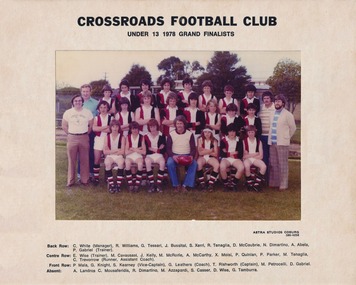
Photograph - Crossroads Football Club Under 13 Grand Finalists 1978 Team Photograph, 197
... Kearney (Vice Captain), G. Leathers (Coach), T. Rishworth (Captain), M. Petrocelli, D. ...Kearney (Vice Captain), G. Leathers (Coach), T. Rishworth (Captain), M. Petrocelli, D. ...Crossroads Football Club Under 13 Grand Finalists 1978 Team Photograph|Back Row L to R - C. White (Manager), R. Williams, G. Tessari, J. Bussital, S. Xerri, R. Tenaglia, D. McCoubrie, N. Dimartino, A. Abela, P. Gabriel (Trainer)|Centre Row L to R - E. Wide (Trainer), M. Cavausasi, J. Kelly, M. McRorie, A. McCarthy, X. Moisi, P. Quinlan, P. Parker, M. Tenaglia, C. Trevorrow (Runner & Assistant Coach)|Front Row L to R - P. Mala, G. Knight, S. Kearney (Vice Captain), G. Leathers (Coach), T. Rishworth (Captain), M. Petrocelli, D. Gabriel|Absent - A. Landro, C. mousaferidis, R. Dimartino, M. Azzapardi, S. Casser, D. Wise, G. Tamburracrossroads football club, football, team photograph -
 Bendigo Historical Society Inc.
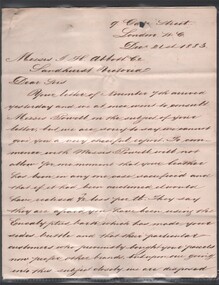
Administrative record - Abbott Collection: 1883 Correspondence between J. H. Abbott and suppliers, 1883
... Abbott tegarding the condition of hides supplied and their investigation of the issues 2403.98b 20 Mar - Dec 1883 correspondence regarding 18 bales of Australian leather, between T. J. & T. Powell 36 Lime Street, London and Mr Ullathorne (Melbourne) and J. ...Abbott tegarding the condition of hides supplied and their investigation of the issues 2403.98b 20 Mar - Dec 1883 correspondence regarding 18 bales of Australian leather, between T. J. & T. Powell 36 Lime Street, London and Mr Ullathorne (Melbourne) and J. ...business records/correspondenceAbbott Collection: correspondence regarding a dispute on the condition of hides supplied to Messrs. Powell & Ullathorne throughout 1883: 2403.98a five page handwritten correspondence between Mr Ullathorne of 9 Gate Street, London nd J. H. Abbott tegarding the condition of hides supplied and their investigation of the issues 2403.98b 20 Mar - Dec 1883 correspondence regarding 18 bales of Australian leather, between T. J. & T. Powell 36 Lime Street, London and Mr Ullathorne (Melbourne) and J. H. Abbott (Sandhurst/Bendigo) regarding the hides 2403.98 c 28 Msay - Dec 1883 coprrespondence from Ullathorne & Co. with J. H> Abbott re th condition of the hides 2403.98d 10 Nov 1883 A3 page letter folded as a an encvelope ddressed to Messr J. H. Abbott & Co. Market Place, Sandhurst , Viuctoria from John Horischer regarding Valencia plants shipped dispute on condition of sales -
 City of Greater Bendigo - Civic Collection
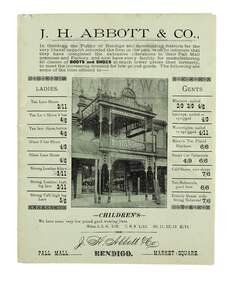
Flyer, Bolton Brothers Printers, J.H. Abbott & Co, c 1880
... In 1876, the leather business of T. Baulderstone was purchased, and operations were further expanded later by the acquisition of the Edinburgh Tannery at Sheepwash Creek, and The Edinburgh Leather & Grindery warehouse in Bull Street, Sandhurst. ...In 1876, the leather business of T. Baulderstone was purchased, and operations were further expanded later by the acquisition of the Edinburgh Tannery at Sheepwash Creek, and The Edinburgh Leather & Grindery warehouse in Bull Street, Sandhurst. ...In 1867 J.H. Abbott established the New Times Boot Market & Factory in Pall Mall, Sandhurst. In 1867, his wife Anne took over running the shop which was located next to the Bendigo Arcade near Williamson Street and was successful in creating a successful business. In 1876, the leather business of T. Baulderstone was purchased, and operations were further expanded later by the acquisition of the Edinburgh Tannery at Sheepwash Creek, and The Edinburgh Leather & Grindery warehouse in Bull Street, Sandhurst. In 1889, Joseph Abbott passed all interests in the business to his son, who shared the same name, in partnership with an adopted son, Richard Hartley Smith Abbott. The business continued trading under the name J. H. Abbott & Co. A number of branches of the business had been established in the early 1900s. In 1959 the Pall Mall business relocated to 291 Hargreaves Street. The whole business was soon after consolidated and conducted from the Market Square branch (Lyttleton Terrace) as the Abbott Supply Company. Harold Abbott, the last of the family to work in the business, died in 1979. In 1980 the business shifted to a new purpose-built store and warehouse on the corner of Abel & Deborah Streets, Bendigo. Sandhurst Trustees administered the business from 1979 until its sale in 1986. He was elected to the Sandhurst Borough Council and in 1860 became chairman of the municipality.Two single colour printed gatefold flyer on green paper advertising J.H. Abbott and Co.'s boot and shoe store on Pall Mall Bendigo. Contains information on products and the fitting services provided in store for customers. chairman of sandhurst borough, anne abbott, city of greater bendigo commerce -
 Bendigo Historical Society Inc.
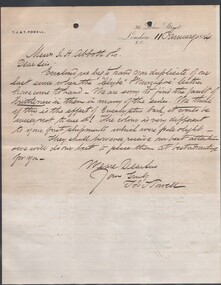
Administrative record - Abbott Collection: 1884 correspondence between J. H. Abbott and suppliers, 1884
... T. Powell reporting the market for Australian leather has improved with increased prices, no report of the "Carlisle Castle" anmd its cargo arrival 2403.99t 3/05/1884 letter from T.J. & T. ...T. Powell reporting the market for Australian leather has improved with increased prices, no report of the "Carlisle Castle" anmd its cargo arrival 2403.99t 3/05/1884 letter from T.J. & T. ...business records/correspondenceAbbott Collection: 1884 correspondence between J. H. Abbott and suppliers ( all handwritten correspondence, but difficult to decifer): 2403.99a 10/01/1884 T. J. & T. Powell issues with leather shipment from Abbott to London 2403.99b 11/01/1884 Ullathorne & Co. 12 bales of leather 2403.99c 18/01/1884 Memorandum from Ullathorne & Co. confirming 11 Jan consignment of leather 2403.99d 1/02/1884 Ullathorne & Co. confirming the assignment issues 2403.99e 8/02/1884 J.J. Schweizer & Co. concerning consignment quantities of not less than 5 to 10 tons 2403.99f 8/02/1884 T.J. & J. Powell acknowledging 19 Dec exchange re 12 bales pf leather per "Carlisle Castle" 2403.99g 5/02/1884 2-page letter Ullathorne & Co. requesting authorisation by Abbott of a consignment of leather for sale at 10/04 2403.99h 8/02/1884 most difficult to decipher double page letter re "Oakwood Buffalo Brand" 2403.99i 7/03/1884 T.J. & J. Powell acknowledging past correspondence of 29/02 and that they have sold 12 bales @ 10/4; also noting past shipment contained a good many brittle grained sides. 2403.99j 29/02/1884 T.J. & J. Powell referring to issues with shipment of plants (a supply of ripe acorns) 2403.99k 7/03/1884 Ullathorne & Co. pleased with the shipment and sale 2403.99l 21/03/1884 Ullathorne & Co. confirming correspondence of 7/03 re the consignment sent by the "Clyde" 2403.99m 7/03/1884 two-page letter from Ullathorne & Co. noting costs for a shipment and adjustment in favour of Abbotts. 2403.99n 27/03/1884 two-page letter from T.J. & J. Powell noting agreement that "a good market is better than a good article" when there is a bad market things are dull and people look with magnifying spectacles at faults in goods" 2403.99o 28/03/1884 memorandum from Ullathorne & Co re financial issue quoted surplus should be noted as a deficit 2403.99p 18/04/1844 letter from T.J. & t. Powell acknowledging the shipment of hides, and reporting a good market and firm prices 2403.99q 21/03/1884 small double-sided letter (difficult to decipher) 2403.99r 24/04/1884 small note (even more difficult to decipher) 2403.99s 1/05/1884 letter from T.J. & T. Powell reporting the market for Australian leather has improved with increased prices, no report of the "Carlisle Castle" anmd its cargo arrival 2403.99t 3/05/1884 letter from T.J. & T. Powell leather from the "Carlisle Castle" has arrived 2403.99u 30/05/1884 letter from Ullathorne & Co. reporting on the arrival of goods from the "Castlisle Castlre" and coment the "your tanning has improved" 2403.99v 5/06/1884 W. & A. Shammers (!) discussion on the quality of goods provided, notably hunting and jig whips 2403.99w 6/06/1884 Ullathorne & Co. a report on prices achieved and charged to Abbott 2403.99x 10/06/1884 Ullathorne & Co. reports on prices for Abbott's goods received and sold from both the "MacCallum More and Carlisle Castle" 2403.99y 20/06/1884 Ullathorne & Co. reports on rerceipt of an order, shipping documents fo the "Peterborough" noting prices are presently favourable to consigners. 2403.99z 27/06/1884 T.J. & T. Powell referencing goods anticipated from the "Peterborough", and looking forward to goods on the "Loch Katrine" 2403.99za 4/07/1884 Ullathorne & Co. acknowledges receoipt of and order from 16/06 2403.99zb 11/07/1884 Ullathorne & Co. encloses acount sales from the "Carlisle Castle" 2403.99zc 25/07/1884 T.J. & T. Powell encloses their monthly report. Noting the "Loch Katrine" has arrived but goods has not yet been discharged 2403.99zd 15/08/1884 two-page letter from W & A Shamman (!) difficult to decipher re dispute or query on prices quoted, charged and received for goods. 2403.99ze 22/08/1884 two-page letter from Ullathorne & Co. referencing costs, beeswax, honey and shipments coming by "Dumbarton , Loch Katrine and Hereward (!)" 2403.99zf 22/08/1884 T.J. & T. Powel re sales from the "Loch Katrine" and acknowledge letter advising 15 bales per the "Narvenne" 2403.99zg 5/09/1884 two-page letter orders dispatched from "Dumbarton and Hereward" make orders up to date; but could not obtain a quotation for Australian honey either by tins or kegs - suggesting a small trial consignment as the best plan to introduce the honey 2403.99zh 10/09/1884 doubler sided letter on blue paper from Ullathorne & Co. difficult to decipher 2403.99zi 26/09/1884 T.J. & T. Powell letter - difficult to decipher 2403.99zj 13/09/1884 Ullathorne & Co. a two-page report on 15 bales of Australian leather from "Ravenna" and per the "Peterborough" 2403.99zk 5/10/1884 T.J. & T. Powell letter 2403.99zl 9/10/1884 two-page blue notes, addressed to Ullathorne & Co.; referencing 7 casks beeswax from "Peterborough" and 3 casks beeswax from "Raveena" 2403.99zm 16/10/1884 T.J. & T. Powell letter reports "since last writing there is nothing fresh to report.... you may rely on our best attention to your consignments and interests" 2403.99zn 17/10/1884 T.J. & T. Powell memorandum re sales of leather from the "Peterborough" 2409.99zo 5/12/1884 small letter from A Shamman (!) Birmingham re late invoice 2403.99zp 12/12/1884 T.J. & T. Powell letter reporting on arrival leather from "Ballarat", "Peterborough", and "Rome" 2403.99zq 19/12/1884 Ullathorne & Co. also reports on sales from leather arriving on the "Ballarat", "Peterborough", and "Rome" 2403.99zr 23/12/1884 two-page letter from T.J. & T. Powell references quality, notably colour of hides, and possible classing as inferior - leaving Abbott to decide options for tanning improvement through Sydney or Melbourne, and therefore sales 2403.99zs 10/12/1884 T.J. & T. Powell reports on 13 bales of Australian leather from the "Rome" shipment, noting four different classifications for sales, focused on colour 2403.99t 3/01 to 21/05/1884 Abbott documentation of hides produced through its Edinburgh Tannery, Bendigodispute on condition of sales, sales of australian leather, shipments ofhides to england -
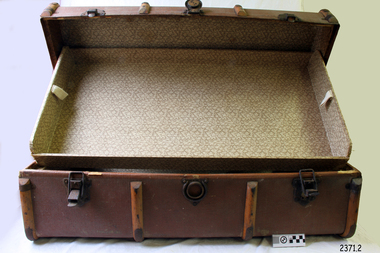 Flagstaff Hill Maritime Museum and Village
Functional object - Suitcase/Trunk
... leather goods business, but they soon became the very symbol of travel. An 1897 wholesale price list included the words "suitcase" only twice in a 20-page list of luggage types. In America a 1907 T...leather goods business, but they soon became the very symbol of travel. An 1897 wholesale price list included the words "suitcase" only twice in a 20-page list of luggage types. In America a 1907 T ...The suitcase didn't catch on until the end of the 19th century, it was quite literally as a case for suits. A typical suitcase came equipped with an inner sleeve for storing shirts, and sometimes a little hatbox on the side. But even in the early 20th century, the "dress-suit case" was only one of countless styles of container travellers could buy, from steamer trunks to club bags. By the late 19th century a significant point was reached in the history of transportation, it was the beginning of mass tourism, rather than travel for travels sake made use of by the wealthy in society. Travel wasn't just for the wealthy any more but everyone. Suitcases began as an afterthought in the luggage and leather goods business, but they soon became the very symbol of travel. An 1897 wholesale price list included the words "suitcase" only twice in a 20-page list of luggage types. In America a 1907 T. Eaton & Co. Catalogue, trunks took up a full page while suitcases share a page with club bags and valises. In a 1911 a United Company catalogue, now displayed around 40 per cent of the advertisements were for suitcases. Early suitcases were lighter and more portable than trunks, but they were still bulky by today's standards. Leather, canvas, wicker or thick rubbery cloth was stretched over a rigid wood or steel frame. Corners were rounded out using brass or leather caps and some had wooden rails running around the case. Until steamship travel declined during the mid-20th century, many of these types of the case were advertised as waterproof with some lightweight models marketed specifically to women. The item gives us a snap-shot as to how people undertook travelling during a time when undertaking a journey for pleasure at the end of the 19th century was mainly only for the wealthy. This time saw the beginnings of change from the wealthy in society being able to travel, to the onset of mass tourism. Along with this change in societal norms saw many innervation's to the design of luggage as it became a fashionable item.Suitcase/trunk with inner tray, brown canvas covered with 2 hinge clamps and a central Eagle lock, four wooden lateral buffer railed slats running around the case, leather handles each end. noneflagstaff hill, warrnambool, shipwrecked-coast, flagstaff-hill, flagstaff-hill-maritime-museum, maritime-museum, shipwreck-coast, flagstaff-hill-maritime-village, suitcase -
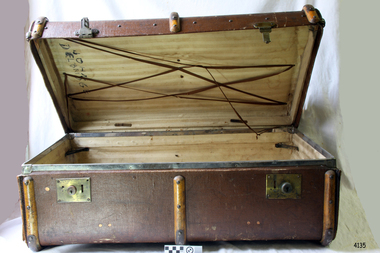 Flagstaff Hill Maritime Museum and Village
Functional object - Suitcase, 1930-1945
... leather goods business, but they soon became the very symbol of travel. An 1897 wholesale price list included the words "suitcase" only twice in a 20-page list of luggage types. In America a 1907 T...leather goods business, but they soon became the very symbol of travel. An 1897 wholesale price list included the words "suitcase" only twice in a 20-page list of luggage types. In America a 1907 T ...The suitcase didn't catch on until the end of the 19th century, it was quite literally as a case for suits. A typical suitcase came equipped with an inner sleeve for storing shirts, and sometimes a little hat box on the side. But even in the early 20th century, the "dress-suit case" was only one of countless styles of container travellers could buy, from steamer trunks to club bags. By the late 19th century a significant point was reached in the history of transportation, it was the beginning of mass tourism, rather than travel for travels sake made use of by the wealthy in society. Travel wasn't just for the wealthy any more but everyone. Suitcases began as an afterthought in the luggage and leather goods business, but they soon became the very symbol of travel. An 1897 wholesale price list included the words "suitcase" only twice in a 20-page list of luggage types. In America a 1907 T. Eaton & Co. Catalogue, trunks took up a full page while suitcases share a page with club bags and valises. In a 1911 a United Company catalogue, now displayed around 40 per cent of the advertisements were for suitcases. Early suitcases were lighter and more portable than trunks, but they were still bulky by today's standards. Leather, canvas, wicker or thick rubbery cloth was stretched over a rigid wood or steel frame. Corners were rounded out using brass or leather caps and some had wooden rails running around the case. Until steamship travel declined during the mid-20th century, many of these types of the case were advertised as waterproof with some lightweight models marketed specifically to women. The item gives us a snap-shot as to how people undertook travelling during a time when undertaking a journey for pleasure at the end of the 19th century was mainly only for the wealthy. This time saw the beginnings of change from the wealthy in society being able to travel, to the onset of mass tourism. Along with this change in societal norms saw many innervations to the design of luggage as it became a fashionable item.Suitcase, brown canvas with three wooden reinforcing lateral rails running around the case, leather handle each end (one broken), two locks.. Maker Pettigrew & Stephens Ltd Glasgow. "A.T.Cox 354/3 Riversdale Rd Campberwell, Vic Australia" and "W.ON" painted over on each endflagstaff hill, warrnambool, shipwrecked-coast, flagstaff-hill, flagstaff-hill-maritime-museum, maritime-museum, shipwreck-coast, flagstaff-hill-maritime-village, suitcase, -
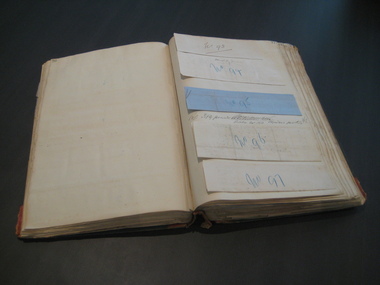 Federation University Historical Collection
Book, Ballarat School of Mines Invoice Book, 1870 - 1875
... The works done to the former Ballarat Circuit Court House were overseen by Robert Davidson (architect and Surveyor) with the contractor being James Williams. ballarat school of mines redmond barry hugh gray henry richards caselli henry caselli joseph flude ballarat court house harrie wood clock invoice book robert davison james williams ballarat circuit court house old ballarat court emanuel steinfeld j.t. sleep c.b. retallack john phillips eyres bros ballaarat gas company national insurance company broadbent bros charles evans niven and co william johnson william ford george robertson william vale m.d. hamilton plumbago crucible company morgans crucibles h.r. caselli henry richards caselli george evans bateman, clark & co, klug bros. j. armstrong w. gooch, william l. mullen a.h. king richard tunbridge henry gough, william murfet, james curtis william blomeley, thomas rogers george shannon wreford william mcculloch j.j. mcdonald frank pinkerton ben franklin printing and stationary house j. donovan edward rand matthew hamilton c.b. retallack, james harrington smith brothers, james fayle, maxwell morrow, s. stansfield walhalla Brunswick House T Rogers "VOUCHER" inscribed on spine in gold Each invoice pasted into the scrapbook has a number written onto it. The numbers are in chronological order at start at 1 in each calendar year. Large book, green leather ...Scrap book containing invoices relating to accounts to be paid by the Ballarat School of Mines between 1870 until 1875. The School of Mines at Ballarat was the first school of Mines in Australia and was established in 1870. The works done to the former Ballarat Circuit Court House were overseen by Robert Davidson (architect and Surveyor) with the contractor being James Williams. Large book, green leather with red binding, numerous original invoices pasted onto the pages. The first pages of the scrapbook includes correspondence relating to the refurbishment of the former Ballarat Court House which was used as the Ballarat School of Mines from 1870. The building was demolished c1913 to make way for the Ballarat Technical Art School (still standing). * 23 August 1870 - Bateman, Clark & Co, The Ballarat Courier * August 1870 - Klug Bros. Furniture and Bedding Warehouse * April 1870 - J. Armstrong * Statement of Receipts and Expenditure from 23rd Aug. 1870 to 19 January 1871 * W. Gooch, * 1870 - William L. Mullen, Ballarat Stationery Warehouse & Printing Office, * 31Jany. 1871 - A.H. King, Iron Merchant, * 1 February 1871 - Richard Tunbridge, Timber Merchant, * January 4th 1871- Henry Gough, * 8th March 1871 William Murfet, * March 1871- Maxwell Morrow, * 1 February 1871- James Curtis, Caxton Steam Printing Works, * May 4th 1871 - William Blomeley, Iron and Brass Founder, * 4 May 1871 - Thomas Rogers, Draper, Milliner, Haberdasher & c. * May14 1871- George Shannon & Co, Importers of China, Glass & Earthenware, * May 31st 1871, Wreford & Co, Machine Printers, *1st July 1871 William McCulloch & Co,( late Reynolds and English) General Carriers to all parts of the Colony, * 1871- J.J. McDonald, Plumber and Gas Fitters, * August 29th 1871 - Eyres Brothers, Furnishing and General Ironmongers, * 1st August 1871, Frank Pinkerton,H Ben. Franklin Printing and Stationary House 18, Armstrong Street, Ballarat. * 12TH July 1871 J. Donovan, * 10th August, 1871 - Edward Rand, Wholesale Druggist & Importer, *11 Nov 1871 - Matthew Hamilton, * October 2nd 1871 - C.B. Retallack, Engineer and General Smith, *December 8 1871 - James Harrington, * June 1871 - Wayne, Wholesale Druggist * 21st Nov. 1871 - Smith Brothers, Timber Merchants. * 5 January 1872 - T. Eggington, Carpenter, * 12 January 1872 - James Fayle, Plumbers & Ironwork * January 26th 1872 - S. Stansfield, * August 10th 1872 - John H. Hammond Wholesale and Retail, Bookseller, Commercial and General Stationer, etc. etc."VOUCHER" inscribed on spine in gold Each invoice pasted into the scrapbook has a number written onto it. The numbers are in chronological order at start at 1 in each calendar year. ballarat school of mines, redmond barry, hugh gray, henry richards caselli, henry caselli, joseph flude, ballarat court house, harrie wood, clock, invoice book, robert davison, james williams, ballarat circuit court house, old ballarat court, emanuel steinfeld, j.t. sleep, c.b. retallack, john phillips, eyres bros, ballaarat gas company, national insurance company, broadbent bros, charles evans, niven and co, william johnson, william ford, george robertson, william vale, m.d. hamilton, plumbago crucible company, morgans crucibles, h.r. caselli, henry richards caselli, george evans, bateman, clark & co,, klug bros., j. armstrong, w. gooch,, william l. mullen, a.h. king, richard tunbridge, henry gough,, william murfet,, james curtis, william blomeley,, thomas rogers, george shannon, wreford, william mcculloch, j.j. mcdonald, frank pinkerton, ben franklin printing and stationary house, j. donovan, edward rand, matthew hamilton, c.b. retallack,, james harrington, smith brothers,, james fayle,, maxwell morrow,, s. stansfield, walhalla, brunswick house, t rogers -
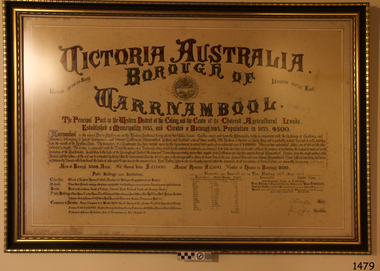 Flagstaff Hill Maritime Museum and Village
Document - Framed Poster, Borough of Warrnambool, Victoria, Australia, after 30/06/1875
... . --- Exports and Imports for the Year Ending 30th June 1875 –-- --Exports Total Tonnage 27,800 (Calculated at the Current Warrnambool Market Prices) Potatoes Wool Wheat Barley Hides Skins Fowls Butter Cheese Eggs Tallow Leather Ale Pigs Sheep Sundries --Imports 13,000 Tons Of the Estimated Value of £520,000 Total Tonnage of Exports and Imports 40m900 Tons, Value £806,627 Passenger Travels, to ad from Warrnambool during year, 10,000 persons Revenue from all sources paid through Warrnambool Sub Treasury From 1860 to June 1875 £1, 292, 300 Thomas King [signed] Mayor Henry T Read [signed] Town Clerk” - - - - - - - - - - - - - - -- - - - - - - - - - - - - - -- - - - - - - - - - - - - - -- - - - - - - - - - - - - - - .... --- Exports and Imports for the Year Ending 30th June 1875 –-- --Exports Total Tonnage 27,800 (Calculated at the Current Warrnambool Market Prices) Potatoes Wool Wheat Barley Hides Skins Fowls Butter Cheese Eggs Tallow Leather Ale Pigs Sheep Sundries --Imports 13,000 Tons Of the Estimated Value of £520,000 Total Tonnage of Exports and Imports 40m900 Tons, Value £806,627 Passenger Travels, to ad from Warrnambool during year, 10,000 persons Revenue from all sources paid through Warrnambool Sub Treasury From 1860 to June 1875 £1, 292, 300 Thomas King [signed] Mayor Henry T Read [signed] Town Clerk” - - - - - - - - - - - - - - -- - - - - - - - - - - - - - -- - - - - - - - - - - - - - -- - - - - - - - - - - - - - - The document is of historical, social, economic and local significance in that it summarises activities, business, community, trade, travel and government at a point in time in Warrnambool’s history – 30th June 1875. flagstaff hill warrnambool shipwrecked coast flagstaff hill maritime museum maritime museum shipwreck coast flagstaff hill maritime village great ocean road borough of warrnambool municipality of warrnambool document borough of warrnambool 1875 word picture of warrnambool 1875 tablet of borough of warrnambool 1875 statistics borough of warrnambool 1875 lithograph borough of warrnambool 1875 coat of arms warrnambool warrnambool city motto – in these we flourish establishment of warrnambool warrnambool history thomas king mayor of warrnambool henry t read town clerk of warrnambool warrnambool breakwater warrnambool jetty warrnambool imports and exports 1875 warrnambool agriculture 1875 warrnambool business 1875 warrnambool population 1875 centennial exhibition philadelphia 1876 framed certificate Signatures - "Thomas King" Mayor and "Henry T Read" Town Clerk. ...This document, also referred to as a word picture or Tablet, is framed in glass and timber with gilt trim, is handwritten with colour highlights. The penned letters rest on ruled guide lines, decorated where the lines intersect. The writing gives a description of the state of Borough of Warrnambool around 1875; its location, the area it covers, its population, Harbour and facilities, public buildings and institutions, imports and exports, financial worth, number of houses, connection with other areas of the Colony. A possible reason and origin for the document is found in an article ‘Link with US Exhibition’ from the Warrnambool Standard of December 19, 1981, written by local historian Bruce Morris. The writer mentions that the Warrnambool Borough Council met on 15th June 1875 and recorded a letter from G.C. Levey , secretary to the Melbourne group of commissioners representing the Colony, and Victoria in particular, for the Philadelphia Centennial Exhibition of 1876. The letter asks Council to provide “statistics as to the population, social condition and commercial and industrial state of the district in and around Warrnambool.” A sub committee was formed for the project. The Mayor, Cr. Thomas King, wrote and signed a Report, presented to the council on July 14, 1875, in which “The Committee … begs to recommend that a Tablet be prepared setting for the particulars respecting the following matters relating to the Borough”. The matters included area, population, annual income, churches, schools, other public buildings, societies and companies, general description of houses erected, and returns of exports and imports for 1874. The minutes note that the Report was adopted. The article above also notes the opinion of Warrnambool printers who have examined the document; it is almost certainly to be an old lithograph, which means there could be several copies. It is possible that there may be a copy in Melbourne and another in Philadelphia. It is interesting to note that (1) the quoted location co-ordinates are for an “Unnamed Road, Packsaddle NSW 2880, Australia”, and that the DMS co-ordinates for Warrnambool’s Council Offices differ, being 38.23.9.12 South, 142.28.52.887. (2) the date for “Exports and Imports for the Year Ending 30th June 1875” is different to the period mentioned by Cr. King in the sub committee’s Report of recommendation “returns of exports and imports for 1874”. The information required to have the figures for the end of June 1875 would need to have been compiled very quickly for the Tablet to be ready for the opening of the Philadelphia Exhibition on 10 May 1876. The document/certificate shows the following – - - - - - - - - - - - - - - -- - - - - - - - - - - - - - -- - - - - - - - - - - - - - -- - - - - - - - - - - - - - - “Victoria Australia, Borough of Warrnambool. Latitude, 30.24.50 South, Longitude 142.32 East The Principal Port in the Western District of the Colony and the Centre of its Choicest Agricultural Lands. Established a Municipality in 1855, and Created a Borough 1863. Population in 1875 4,500. Warrnambool is the nearest Port to Melbourne on the Western Seaboard, being about 160 miles distant. Coaches run to and from the Metropolis daily, in connexion [connection] with the Railway of Geelong and Steamers belonging to Local Companies sail between Melbourne, Warrnambool, Belfast [renamed Port Fairy], and Portland several times weekly. The Harbour is known as Lady Bay, and is partially protected by a reef of rocks stretching from the mouth of the Hopkins River. The formation of a Breakwater has been decided upon by the Government, to extend 600 yards, at an estimated cost of £100,000. There are two substantial Jetties, one of 800 and the other of 600 feet in length. The former is connected with the Town by means of a Tramroad, along which Goods, inwards & outwards, are conveyed, & the latter has been constructed solely for the purpose of facilitating the transit of material for the formation of the Breakwater. In addition to the trade of the Borough and District, the principal Townships up country receive their supplies from Melbourne and ship their exports through Warrnambool. Potatoes form the staple produce of the district, and the richness of the soil can be estimated by the fact that the Government Statistics for 1875 give as the average yield a return of Seven Tons to the acre. Several thousand acres between Warrnambool and Tower Hill are now being laid down in Potatoes by Tenants who have leased the lands at rates up to £5 per acre for the season 1875-6. Wool, Tallow, hides &c are also largely exported, while the shipments of all descriptions of Farm Produce are annually increasing. Area of Borough, 3362 Acres. Net Annual Value £27,000. Annual Revenue £5,500. Number of Houses in Borough 800. Public Buildings and Institutions Churches. Church of England, Roman Catholic, Presbyterian, Wesleyan, Congregational and Baptist. Schools. Three State Schools, average attendance nearly 1000. New Building in course of erection. Several private establishments. Banks. Bank of Australasia, Bank of Victoria, National Bank, Colonial Bank and Savings Bank. Public Buildings. Court house, Custom house, Post & Telegraph Offices, Survey & Land Offices, Shire £, Town Hall, Mechanics Institute, Volunteer Orderly Room, Odd Fellows Hall, Hospital & Benevolent Asylum, Temperance Hall &c. Companies & Societies. Steam Navigation Co, Woolen Mill Co, Gas Co, Racing Club, Amateur Turf Club, Agricultural Society, Farmers’ Club, Cricket Club, Anglers’ Society, Building Society, Freemasons Odd Fellows, Foresters, Druids, Hibernians. Protestant Alliance, Rechabites, Sons of Temperance, &c, Fire Brigade &c. --- Exports and Imports for the Year Ending 30th June 1875 –-- --Exports Total Tonnage 27,800 (Calculated at the Current Warrnambool Market Prices) Potatoes Wool Wheat Barley Hides Skins Fowls Butter Cheese Eggs Tallow Leather Ale Pigs Sheep Sundries --Imports 13,000 Tons Of the Estimated Value of £520,000 Total Tonnage of Exports and Imports 40m900 Tons, Value £806,627 Passenger Travels, to ad from Warrnambool during year, 10,000 persons Revenue from all sources paid through Warrnambool Sub Treasury From 1860 to June 1875 £1, 292, 300 Thomas King [signed] Mayor Henry T Read [signed] Town Clerk” - - - - - - - - - - - - - - -- - - - - - - - - - - - - - -- - - - - - - - - - - - - - -- - - - - - - - - - - - - - - The document is of historical, social, economic and local significance in that it summarises activities, business, community, trade, travel and government at a point in time in Warrnambool’s history – 30th June 1875.Document, also referred to as a ‘word picture’ or ‘tablet’. Document is framed in glass and timber with gilt trim, handwritten with colour highlights. The penned letters rest on ruled guide lines, decorated where the lines intersect. Document outlines the establishment of Warrnambool as a Municipality in 1855 and Borough in 1863, with a population of 4,500 in 1875. It states geographic location, public buildings and institutions, harbor facilities and imports and exports for the year ending 30th June 1875. Two signatures "Thomas King" Mayor and "Henry T Read" Town Clerk. It shows the Coat of Arms of the Borough of Warrnambool.Signatures - "Thomas King" Mayor and "Henry T Read" Town Clerk. Warrnambool Coat of Arms; “British Coat of Arms, above sailing vessel and sheaf of wheat in sun, motto “By these we flourish” and around circumference “Borough of Warrnambool 1855”flagstaff hill, warrnambool, shipwrecked coast, flagstaff hill maritime museum, maritime museum, shipwreck coast, flagstaff hill maritime village, great ocean road, borough of warrnambool, municipality of warrnambool, document borough of warrnambool 1875, word picture of warrnambool 1875, tablet of borough of warrnambool 1875, statistics borough of warrnambool 1875, lithograph borough of warrnambool 1875, coat of arms warrnambool, warrnambool city motto – in these we flourish, establishment of warrnambool, warrnambool history, thomas king mayor of warrnambool, henry t read town clerk of warrnambool, warrnambool breakwater, warrnambool jetty, warrnambool imports and exports 1875, warrnambool agriculture 1875, warrnambool business 1875, warrnambool population 1875, centennial exhibition philadelphia 1876, framed certificate -
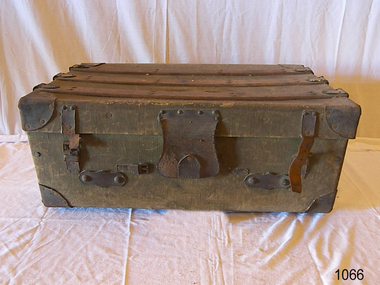 Flagstaff Hill Maritime Museum and Village
Functional object - Steamer luggage Trunk, First quarter of the 20th century
... leather goods business, but they soon became the very symbol of travel. An 1897 wholesale price list included the words "suitcase" only twice in a 20-page list of luggage types. In America a 1907 T...leather goods business, but they soon became the very symbol of travel. An 1897 wholesale price list included the words "suitcase" only twice in a 20-page list of luggage types. In America a 1907 T ...Item used around the first quarter of the 20th century The suitcase didn't catch on until the end of the 19th century, it was quite literally as a case for suits. A typical suitcase came equipped with an inner sleeve for storing shirts, and sometimes a little hat box on the side. But even in the early 20th century, the "dress-suit case" was only one of countless styles of container travellers could buy, from steamer trunks to club bags. By the late 19th century a significant point was reached in the history of transportation, it was the beginning of mass tourism, rather than travel for travels sake made use of by the wealthy in society. Travel wasn't just for the wealthy any more but everyone. Suitcases began as an afterthought in the luggage and leather goods business, but they soon became the very symbol of travel. An 1897 wholesale price list included the words "suitcase" only twice in a 20-page list of luggage types. In America a 1907 T. Eaton & Co. Catalogue, trunks took up a full page while suitcases share a page with club bags and valises. In a 1911 a United Company catalogue, now displayed around 40 per cent of the advertisements were for suitcases. Early suitcases were lighter and more portable than trunks, but they were still bulky by today's standards. Leather, canvas, wicker or thick rubbery cloth was stretched over a rigid wood or steel frame. Corners were rounded out using brass or leather caps and some had wooden rails running around the case. Until steamship travel declined during the mid-20th century, many of these types of the case were advertised as waterproof with some lightweight models marketed specifically to women. The item gives us a snap-shot as to how people undertook travelling during a time when undertaking a journey for pleasure at the end of the 19th and early 20th century was mainly only for the wealthy. This time saw the beginnings of change from the wealthy in society being able to travel, to the onset of mass tourism. Along with this change in societal norms saw many innervation's to the design of luggage as it became a fashionable item.Suitcase/trunk leather reinforced at corners with wooden slats to strengthen the lid. Leather straps to close lid with metal lock in the middle of the lid. Closing strap missing.Noneflagstaff hill, warrnambool, shipwrecked-coast, flagstaff-hill, flagstaff-hill-maritime-museum, maritime-museum, shipwreck-coast, flagstaff-hill-maritime-village -
The Beechworth Burke Museum
Audio - Oral History, Jennifer Williams, Mr John Clemens, 2000
... T Ford, produced 1908-1927, shows his experience with early cars in the town, which were owned by the richer people. He talks about the dominance of the Zwar Bros. Tannery over the town, by employing hundreds of people (dating John's recollection to approximately 1938). John's interview shows the changed that the town has gone through through his experiences as a driver for wood and drinks. It can be interpreted as historically significant to the Beechworth local area but also to a wider audience; Zwar Tannery supplies leather ...Mr John Clemens was born in 1913 to Australian parents. His father worked in building roads which led to the family's move from Sunnyside Gen Willis to Beechworth. His father was part of the road making team on the Buffalo River Road between Myrtleford and Beechworth. John worked as a motor mechanic in his early years, having left school in sixth grade. He later worked carting wood (independently) and drinks for Murray Breweries/Billson's Breweries. He delivered drinks and wood to the Old Hospital after its relocation in 1940, to Bonegilla Migrants Camp and got to know most of the townspeople. He recounts his interactions with various members of the community, highlighting the importance of the Zwar Tannery, which John recounts as employing approximately 200 people (dating this recollection to approximately 1938). This oral history recording was part of a project conducted by Jennifer Williams in the year 2000 to capture the everyday life and struggles in Beechworth during the twentieth century. This project involved recording seventy oral histories on cassette tapes of local Beechworth residents which were then published in a book titled: Listen to what they say: voices of twentieth century Beechworth. These cassette tapes were digitised in July 2021 with funds made available by the Friends of the Burke.John's interview demonstrates the dynamics of the Beechworth township in the 1920s-1940s, showing the important industries and connections of the town which he was involved in. His mention of the Model T Ford, produced 1908-1927, shows his experience with early cars in the town, which were owned by the richer people. He talks about the dominance of the Zwar Bros. Tannery over the town, by employing hundreds of people (dating John's recollection to approximately 1938). John's interview shows the changed that the town has gone through through his experiences as a driver for wood and drinks. It can be interpreted as historically significant to the Beechworth local area but also to a wider audience; Zwar Tannery supplies leather to General Motors Holden, the brewery was one of the largest in the country, and the Bonegilla Migrants Camp was the largest and longest running migrant camp in Australia. John's everyday interactions with all of these places and people within makes his story significant. The project is significant for its recording of stories from members of the local Beechworth community before they are lost. It tells of the everyday stories of the people and their memories of the town. The recordings were done in 2000, with interviewees such as John being in their 80s when interviewed. The interviews were recorded to cassette, before being digitised in 2021. This is a digital copy of a recording that was originally captured on a cassette tape. The cassette tape is black with a horizontal white strip and is currently stored in a clear flat plastic rectangular container. It holds up 40 minutes of recordings on each side. john clemens, burke museum, beechworth, bonegilla migrants camp, beechworth hospital, murray breweries, billson's breweries, zwar bros. tannery -
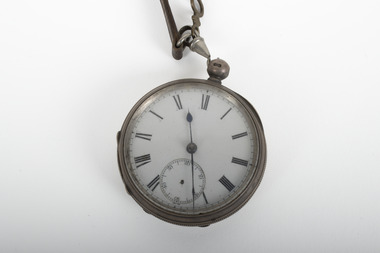 The Beechworth Burke Museum
Functional object - Pocket Watch, C.1853
... T Bar chain. Furthermore, the increasing use of the railways during the latter part of the 1800s significantly accelerated the popularity of pocket watches. This pocket watch is significant as they relate to the social history within the Burke Museum's collection playing a vital role in narrating the history of Beechworth, demonstrating the past of the town through insights into its social, cultural, and economic dimensions. clock pocketwatch timepiece Burke Museum A01153 A silver pocketwatch with a leather strap attached at the clasp. ...Although the exact creation of this pocket watch is unknown, the pocket watch was first invented in 1510, in Nuremberg, Germany. The inception of this invention can be attributed to Peter Henlein, a master locksmith who continued producing timepieces until the 16th century when their manufacturing expanded to other parts of Europe. During the 15th century, pocket watches served as a means of distinguishing between the lower classes and the affluent members of society since only the wealthy could afford them. In this era, an early version of the pocket watch was typically worn around the neck, as opposed to being attached to a pocket watch chain like the Albert T Bar chain. Furthermore, the increasing use of the railways during the latter part of the 1800s significantly accelerated the popularity of pocket watches.This pocket watch is significant as they relate to the social history within the Burke Museum's collection playing a vital role in narrating the history of Beechworth, demonstrating the past of the town through insights into its social, cultural, and economic dimensions.A silver pocketwatch with a leather strap attached at the clasp.A01153clock, pocketwatch, timepiece, burke museum -
Federation University Historical Collection
Book, Index to Governors (Ballarat School of Mines)
... ballarat school of mines governors richard t. vale Rough calf leather bound volume with labels on the spine and front cover. ...Rough calf leather bound volume with labels on the spine and front cover. Marbled endpapers. Alphabetical index of Ballarat School of Mines Governorsballarat school of mines, governors, richard t. vale -
 Federation University Historical Collection
Book - Act of Parliament, University of Ballarat Act, 2010, 2010
... t on 16 February 2010 and came into operation on 01 July 2010: Government Gazette 24 June 2010 page 1274. University of Ballarat is now Federation University Australia. university of ballarat act acts of parliament university of ballarat parliamentary acts Green, leather bound, 65 page Act of Parliament. ...The Minister's seconding reading speech took place on :- - Legislative Assembly: 25 November 2009 - Legislative Council: 10 December 2009 The long title for the Bill for this Act was "A Bill for an Act to re-enact with amendments the law relating to the University of Ballarat, to repeal the University of Ballarat Act 1993 and for other purposes." The University of Ballarat Act was assented t on 16 February 2010 and came into operation on 01 July 2010: Government Gazette 24 June 2010 page 1274. University of Ballarat is now Federation University Australia.Green, leather bound, 65 page Act of Parliament.university of ballarat act, acts of parliament, university of ballarat, parliamentary acts -
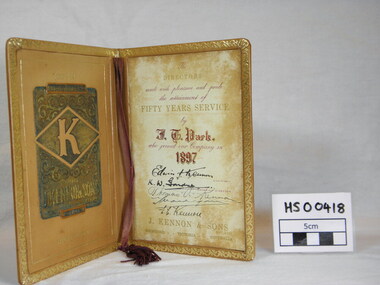 Richmond & Burnley Historical Society
Service Award, J. Kennon & Sons Pty Ltd, Kennon Tannery 50 Year Service Award to J.T.Park, c. 1897
... T Park Certificate No. 4 Years of Service, 1897 -1947 J. Kennon & Sons Tannery, River Street, Richmond. The/Directors/mark with pleasure and pride/the attainment of/Fifty Years Service/by/J.T.Parks/who joined our company in/1897/signed by the Chairman and Directors/ Edwin J. Kennon/K.W.Gardner/Thomas A. Kennon/E.C.Kennon/ J.Kennon & Sons Pty Ltd/ Richmond Victoria Australia Guilded Leather ...The Certificate was presented to the Society by J T Parks daughter after a presentation by John rose who spoke about the history of the Kennon Family and the Kennon Tannery.Limited number of certificates issued with 50 years of Service. The Certificate is representative of companies in Richmond and the extended loyalty and service of employees.Guilded Leather Certificate, Tan colour. Cover Engraving - J T Park Certificate No. 4 Years of Service, 1897 -1947 J. Kennon & Sons Tannery, River Street, Richmond. The/Directors/mark with pleasure and pride/the attainment of/Fifty Years Service/by/J.T.Parks/who joined our company in/1897/signed by the Chairman and Directors/ Edwin J. Kennon/K.W.Gardner/Thomas A. Kennon/E.C.Kennon/ J.Kennon & Sons Pty Ltd/ Richmond Victoria Australia service, award, kennon, tannery, j t parks, richmond -
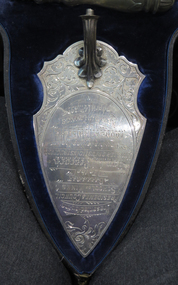 Federation University Historical Collection
Ceremonial object - Object, Presentation Trowel, 1876
... leather hinged presentation trowel with blue suade and satin lining. The trowel handle is silver plate and can be screwed off the trowel, and is hollow. The trowel is hallmarked H&T...leather hinged presentation trowel with blue suade and satin lining. The trowel handle is silver plate and can be screwed off the trowel, and is hollow. The trowel is hallmarked H&T ...Hilliard and Thomason was established in Birmingham, and closed in 1908.Sterling silver presentation trowel in blue leather hinged presentation trowel with blue suade and satin lining. The trowel handle is silver plate and can be screwed off the trowel, and is hollow. The trowel is hallmarked H&T = Hilliard and Thomason - Sovereign Head/Duty Stamp = 1784 - 1890 - Lion passant guardant = silver quality- Anchor = Birmingham - b in oval = 1876Engraved into the trowel "Presented by the President & Council School of Mines Ballarat to the Hon. A.J. Peacock Minister of Public Instruction on his laying the Foundation Stone of New Buildings April 14th 1899hilliard and thomason, silver, presentation trowel, ballarat school of mines, new classrooms, administration building, buildings, andrew peacock, andrew j. peacock, silversmith, a building -
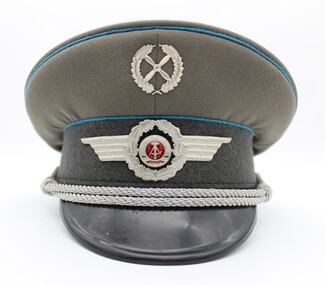 Shepparton RSL Sub Branch
Uniform, Hat
... T Inscriptions on yellow sticker on cap interior: HA.05 A grey fabric peaked cap with fine blue trims and a black plastic head cover. There is a silver fabric rope looped around a silver metallic stud on either side if the cap. Attached to the front/centre of the cap is a metallic ornament depicting the east German logo in red and silver, surrounded by a silver wreath and wings. Above this is a silver metallic ornament depicting a propeller surrounded by two curved pieces of foliage. There is a faux leather ...This is an East German cap which presumably would have been worn by a German airman. It is a fairly recently made piece, dating to the 1980’s or 90’s.This cap has historic significance as a piece of East German airforce uniform. Itnis a fairly recently made piece, dating to approximately the 1980’s-90’s. It is also in excellent condition.A grey fabric peaked cap with fine blue trims and a black plastic head cover. There is a silver fabric rope looped around a silver metallic stud on either side if the cap. Attached to the front/centre of the cap is a metallic ornament depicting the east German logo in red and silver, surrounded by a silver wreath and wings. Above this is a silver metallic ornament depicting a propeller surrounded by two curved pieces of foliage. There is a faux leather strap on the interior and a square of lighter grey fabric stitched into the underside of the cap. This contains inscriptions. There is also a round yellow sticker on the interior side of the plastic head cover. This also contains an inscription.Inscriptions on the grey square of fabric on cap interior: NVA 55 1856 T Inscriptions on yellow sticker on cap interior: HA.05military, airforce, german, cap, hat, east german
