
Showing 754 items matching " maltese"
-
 Whitehorse Historical Society Inc.
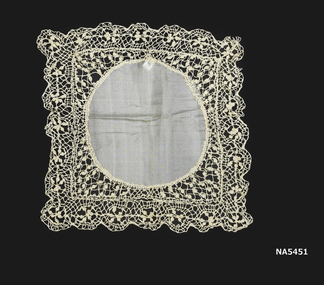
Accessory - Handkerchief, Silk Handkerchief with Maltese Lace Border, Unknown
... Silk Handkerchief with Maltese Lace Border...Possibly made in Italy, the Maltese lace is bobbin lace in the style of quipure....Square handkerchief with silk centre and Maltese lace border. The Maltese lace incudes leaves and tallies....Lace Handkechief Maltese lace Bobbin lace Silk Square handkerchief with silk centre and Maltese lace border. ...Possibly made in Italy, the Maltese lace is bobbin lace in the style of quipure.Square handkerchief with silk centre and Maltese lace border. The Maltese lace incudes leaves and tallies.lace, handkechief, maltese lace, bobbin lace, silk -
 Sunshine and District Historical Society Incorporated
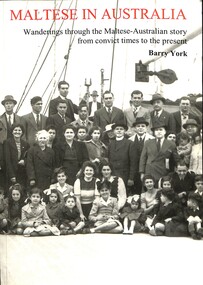
Book - Maltese in Australia, Barry York, Wandering through the Maltese - Australian story from convict times to the present
... Wandering through the Maltese - Australian story from convict times to the present...Maltese...Maltese in Australia - Wandering through the Maltese - Australian story from convict times to the present...Maltese Migration Immigration Reflections on the life of people from Malta immigrating to Australia. ...Reflections on the life of people from Malta immigrating to Australia. Specific references to Sunshine on pages 3, 31, 41, 53, 70, 72, 77, 78, 79, 137Soft cover book with photo on frontReflections on the life of people from Malta immigrating to Australia. Specific references to Sunshine on pages 3, 31, 41, 53, 70, 72, 77, 78, 79, 137maltese, migration, immigration -
 Alfred Hospital Nurses League - Nursing History Collection
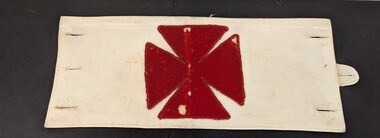
Uniform - Fabric cross on white armband, Welch Margetson & Co, Alfred Hospital red maltese cross [ca. 1900's] Leah Rosenthal, [ca.1900's]
... Alfred Hospital red maltese cross [ca. 1900's] Leah Rosenthal...There are two similar buttonholes at the right hand side of the armband and a third between on a protruding tab Alfred Hospital red maltese cross [ca. 1900's] Leah Rosenthal Uniform Fabric cross on white armband Welch Margetson & Co ...This emblem, was worn over the upper left sleeve of the uniform of nurses at the Alfred Hospital after they had passed their final exam. This item was owned by Leah Rosenthal who graduated in 1904Of significance to the AHNL as it part of an historical Alfred Hospital nurse's uniformRed fabric cross on a white armband. There are several small holes in the cross. On the left hand side of the armband there are three horizontal buttonholes in a vertical line. There are two similar buttonholes at the right hand side of the armband and a third between on a protruding tabOn the reverse side. Manufacture's name and item 'The Bangham H/FOUR-FOLD' have been stamped [black ink]. 'L. Rosenthal' handwritten and underlined [black ink]. Previous catalogue number handwritten [black ink]alfred hospital, alfred hospital school of nursing, nurse's uniform, leah rosenthal -
 Brimbank City Council Art Collection
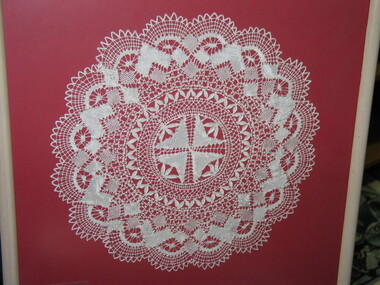
Lacework, Cecillia Vella, Maltese Lacework, 1985
... Maltese Lacework...circular 35cm diameter Lacework Maltese Lacework Lacework Cecillia Vella ...circular 35cm diameterLacework -
 Sunshine and District Historical Society Incorporated
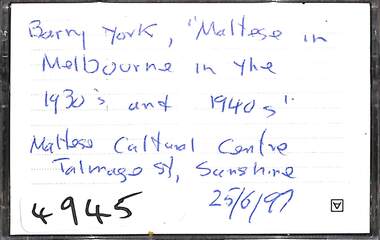
Audio - Barry York Talks About Maltese in Melbourne in the 1930s and 1940s Audio Tape, 25/6/1997
... ...Maltese...Discussion of the Maltese community in Melbourne in 1930s and 1940s...Barry York, "Maltese in Melbourne in the 1930's and 1940's Maltese Cultural Centre Talmage Street Sunshine 25/6/97...Discussion of the Maltese community in Melbourne in 1930s and 1940s Sunshine Maltese Immigration Barry York Barry York, "Maltese in Melbourne in the 1930's and 1940's Maltese Cultural Centre Talmage Street Sunshine 25/6/97 Audio tape This audio tape has been digitised. ...Discussion of the Maltese community in Melbourne in 1930s and 1940sBarry York, "Maltese in Melbourne in the 1930's and 1940's Maltese Cultural Centre Talmage Street Sunshine 25/6/97sunshine, maltese, immigration, barry york -
 Bendigo Military Museum
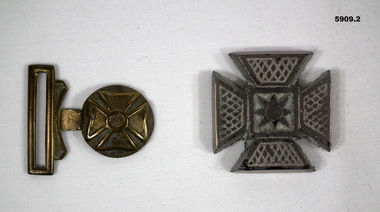
Accessory - BADGE AND BUCKLE, Possible pre WW1
... ...maltese....2) The 8 pointed central star could represent the 8 countries linked to the Maltese Cross. Items in the collection re John D Gardiner No 2832, refer Cat No 5892.2 for his service details.....1) Possible belt buckle part, brass with section for belt to pass through, face has a Maltese Cross in curved shape, nothing on rear. .2) Maltese Cross style cast metal with centre 8 pointed star, nothing on rear.....2) The 8 pointed central star could represent the 8 countries linked to the Maltese Cross. Items in the collection re John D Gardiner No 2832, refer Cat No 5892.2 for his service details. accessory belts maltese .1) Possible belt buckle part, brass with section for belt to pass through, face has a Maltese Cross in curved shape, nothing on rear. .2) Maltese Cross style cast metal with centre 8 pointed star, nothing on rear. ....2) The 8 pointed central star could represent the 8 countries linked to the Maltese Cross. Items in the collection re John D Gardiner No 2832, refer Cat No 5892.2 for his service details..1) Possible belt buckle part, brass with section for belt to pass through, face has a Maltese Cross in curved shape, nothing on rear. .2) Maltese Cross style cast metal with centre 8 pointed star, nothing on rear.accessory, belts, maltese -
 Kew Historical Society Inc
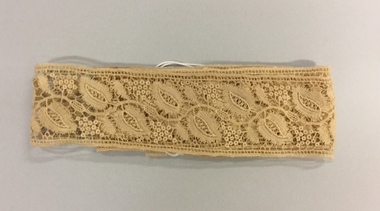
Textile - Lace Edging
... Maltese lace was shown at The Great Exhibition of 1851 and it became popular in Britain. ...Maltese lace edging. It shows the Wheat ears, characteristic of Maltese lace...These are plump and rounded in shape, rather than the long narrow leaves of other types of bobbin lace. lace maltese lace lace tape Maltese lace edging. ...The Fashion & Design collection of Kew Historical Society includes examples of textiles dating from the 18th, 19th and 20th centuries. Some of the textiles, were used as items of clothing, others as items of household decoration, or simply as travel souvenirs. These textiles were created both domestically and internationally. Predictably with the growth of an ethnically and culturally more diverse community in Kew after the Second World War, textiles, clothing and objects in the collection inevitably reflected this diversity. This form of bobbin lace is made in Malta. It is a guipure style of lace. Maltese lace is worked as a continuous width tape lace on a tall, thin, upright lace pillow called a "Trajbu" and the Bobbins are called "Combini" . Bigger pieces are made of two or more parts sewn together. Lace made in Malta was originally needle lace, from the 16th to the 19th century, when the economic depression in the islands nearly led to the extinction of lacemaking there. But in the mid 1800s, Lady Hamilton Chichester sent lacemakers from Genoa to Malta. They used the old needle lace patterns and turned them into bobbin lace, which was quicker. It was not long after its introduction that the Maltese lace developed its own style from Genoese lace. Maltese lace was shown at The Great Exhibition of 1851 and it became popular in Britain. The style was copied by lacemakers in the English Midlands, and it was one of the sources for Bedfordshire lace. Maltese lace usually has the following characteristics which are useful for identification: It is usually made from cream silk. There is often the 8 pointed Maltese cross as part of the pattern, worked in whole or cloth stitch.The pattern may also have closely worked leaves known as “wheat ears” or “oats”. These are plump and rounded in shape, rather than the long narrow leaves of other types of bobbin lace. Maltese lace edging. It shows the Wheat ears, characteristic of Maltese lacelace, maltese lace, lace tape -
 Waverley RSL Sub Branch
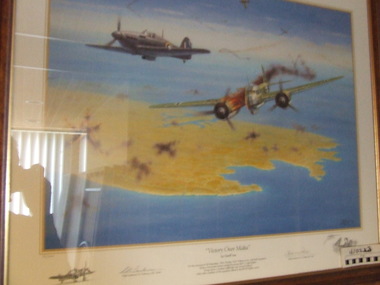
Print Victory over Malta 20/12/41, Victory over Malta 20/12/41
... Victory over Malta 20/12/41...Print of Painting Victory over Malta showing a Hurricane Night Fighter downing a Junkers JU88 By Geoff Lea...Victory over Malta...Victory over Malta Print of Painting Victory over Malta showing a Hurricane Night Fighter downing a Junkers JU88 By Geoff Lea Victory over Malta 20/12/41 Print Victory over Malta 20/12/41 ...Print of Painting Victory over Malta showing a Hurricane Night Fighter downing a Junkers JU88 By Geoff LeaVictory over Malta -
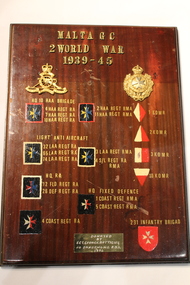 Dandenong/Cranbourne RSL Sub Branch
Memorabilia - Wooden Honour Board, Circa 1940s
... Badge 2 - Kings Own Regiment Malta Branch. Malta G C 2nd World War. 1939 - 1945....Has all names of Brigades and Regiments involved on Malta during WW11....Badge 2 - Kings Own Regiment Malta Branch. Malta G C 2nd World War. 1939 - 1945. ...Wooden Plaque with 2 badges attached. Badge 1 - Royal Artillery Badge. Badge 2 - Kings Own Regiment Malta Branch. Malta G C 2nd World War. 1939 - 1945.Has all names of Brigades and Regiments involved on Malta during WW11. -
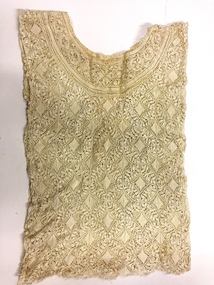 Kew Historical Society Inc
Clothing - Maltese Lace Chemisette, 1900s
... Characteristics of Maltese lace. Maltese lace usually has the following characteristics which are useful for identification. ...Shows the characteristic Maltese cross and wheat ears. Fabric is made of tape lace joined together...Malta...Characteristics of Maltese lace. Maltese lace usually has the following characteristics which are useful for identification. ...The Fashion & Design collection of Kew Historical Society includes examples of textiles dating from the 18th, 19th and 20th centuries. Some of the textiles, were used as items of clothing, others as items of household decoration, or simply as travel souvenirs. These textiles were created both domestically and internationally. Predictably with the growth of an ethnically and culturally more diverse community in Kew after the Second World War, textiles, clothing and objects in the collection inevitably reflected this diversity. This form of bobbin lace is made in Malta. It is a guipure style of lace. Maltese lace is worked as a continuous width tape lace on a tall, thin, upright lace pillow called a "Trajbu" and the Bobbins are called "Combini" . Bigger pieces are made of two or more parts sewn together. Lace made in Malta was originally needle lace, from the 16th to the 19th century, when the economic depression in the islands nearly led to the extinction of lacemaking there. But in the mid 1800s, Lady Hamilton Chichester sent lacemakers from Genoa to Malta. They used the old needle lace patterns and turned them into bobbin lace, which was quicker. It was not long after its introduction that the Maltese lace developed its own style from Genoese lace. Maltese lace was shown at The Great Exhibition of 1851 and it became popular in Britain. The style was copied by lacemakers in the English Midlands, and it was one of the sources for Bedfordshire lace. Characteristics of Maltese lace. Maltese lace usually has the following characteristics which are useful for identification. It is usually made from cream silk. There is often the 8 pointed Maltese cross as part of the pattern, worked in whole or cloth stitch.The pattern may also have closely worked leaves known as “wheat ears” or “oats”. These are plump and rounded in shape, rather than the long narrow leaves of other types of bobbin lace. Camisole, made of silk thread Maltese bobbin lace that is constructed of lengths of lace forming two rectangles with a hole for the neck. Shows the characteristic Maltese cross and wheat ears. Fabric is made of tape lace joined togethercamisoles, maltese lace, bodices -
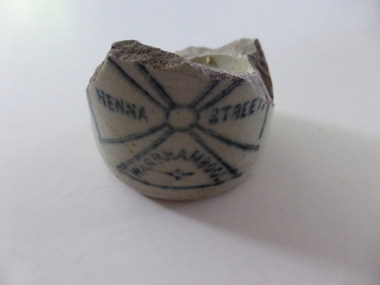 Warrnambool and District Historical Society Inc.
Bottle, Soft Drink Bottle Darby - broken, C 1890
... Alfred Darby operated a soft drink factory in Henna Street Warrnamboolaround 1890 where Alderdice Brass Foundry now stands. He used the Maltese cross as a trademark. There was also an Alfred Darby operating a soft drink factory at Rochester in 1897/1898 which also had the same Maltese cross as a trade mark on his bottles....Cream pottery fragment of lower part of bottle with outline of Maltese cross in dark blue on one side.very this and glazed inside and out....Alfred Darby operated a soft drink factory in Henna Street Warrnamboolaround 1890 where Alderdice Brass Foundry now stands. He used the Maltese cross as a trademark. There was also an Alfred Darby operating a soft drink factory at Rochester in 1897/1898 which also had the same Maltese cross as a trade mark on his bottles. ...Alfred Darby operated a soft drink factory in Henna Street Warrnamboolaround 1890 where Alderdice Brass Foundry now stands. He used the Maltese cross as a trademark. There was also an Alfred Darby operating a soft drink factory at Rochester in 1897/1898 which also had the same Maltese cross as a trade mark on his bottles. A small link to one of Warrnambool's many cordial and soft drink manufacturers.Cream pottery fragment of lower part of bottle with outline of Maltese cross in dark blue on one side.very this and glazed inside and out.Henna Street Warrnambool written in sections of cross design on front with The Bendigo Epsom Bendig(o) stamped on the other side.warrnambool, warrnambool cordial manufacturers -
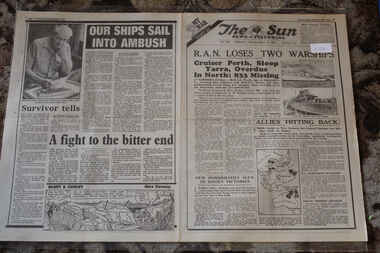 Lara RSL Sub Branch
Newspaper - The Sun Newspaper Dated 14/3/1942 - Special _ My War Part 24 - R.A.N. Loses Two Warships, Local Newspaper Dated 14/3/1942 - Special -My War Part 24
... Loses Two Warships - Malta Defies Hitler's Fury...Loses Two Warships - Malta Defies Hitler's Fury ...Loses Two Warships - Malta Defies Hitler's Fury Local Newspaper dated 14/4/1942 - My War Part 24 - R,A.N. ...Local Newspaper dated 14/4/1942 - R.A.N. Loses Two Warships - Malta Defies Hitler's FuryLocal Newspaper dated 14/4/1942 - My War Part 24 - R,A.N. Loses Two WarshipsLocal Newspaper reporting World War 2 events Dated 14/4/1942 - My War Part 24R.A.N. Loses Two Warships - Malta Defies Hitler's Fury world war 2 newspper dated 4/3/1942 - r.a.n. loses two warships -
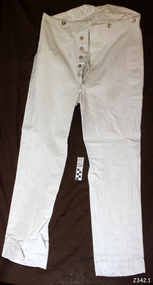 Flagstaff Hill Maritime Museum and Village
Trousers, Paislyo Ltd
... Trousers (3) white uniform with silver buttons, buttons inscribed "V.Falzon Malta". On inside - W R Angus, R Poore. Tailored in Glasgow, Scotland 1900s by Paislyo Ltd Glasgow. ...Inscribed on buttons "V.Falson Malta". Marked on fabric "W R Angus, R Poore" and "Paislyo Ltd Glasgow"...Dr Angus assisted Dr Tom Ryan, a pioneer in the use of X-rays and in ocular surgery. flagstaff hill warrnambool shipwrecked-coast flagstaff-hill flagstaff-hill-maritime-museum maritime-museum shipwreck-coast flagstaff-hill-maritime-village uniform trousers silver button trousers v.falzon malta w r angus paislyo ltd Inscribed on buttons "V.Falson Malta". ...This uniform, consisting of 3 pairs of trousers and 1 jacket, was owned by Dr W.R. Angus. Due to the manufacturer's label saying the uniform was made in Glasgow, it is likely that Dr Angus acquired the uniform around the time of his studies in Edinburgh. His name on the uniform suggests that it was part of his usual clothing and it was most likely worn on his homeward passage to Australia in 1928, during which time he worked as a Ship's Surgeon on T.S.S. LARGS BAY.. This uniform was donated to Flagstaff Hill Maritime Village by the family of Doctor William Roy Angus, Surgeon and Oculist. It is part of the “W.R. Angus Collection” that includes historical medical equipment, surgical instruments and material once belonging to Dr Edward Ryan and Dr Thomas Francis Ryan, (both of Nhill, Victoria) as well as Dr Angus’ own belongings. The Collection’s history spans the medical practices of the two Doctors Ryan, from 1885-1926 plus that of Dr Angus, up until 1969. ABOUT THE “W.R.ANGUS COLLECTION” Doctor William Roy Angus M.B., B.S., Adel., 1923, F.R.C.S. Edin.,1928 (also known as Dr Roy Angus) was born in Murrumbeena, Victoria in 1901 and lived until 1970. He qualified as a doctor in 1923 at University of Adelaide, was Resident Medical Officer at the Royal Adelaide Hospital in 1924 and for a period was house surgeon to Sir (then Mr.) Henry Simpson Newland. Dr Angus was briefly an Assistant to Dr Riddell of Kapunda, then commenced private practice at Curramulka, Yorke Peninsula, SA, where he was physician, surgeon and chemist. In 1926, he was appointed as new Medical Assistant to Dr Thomas Francis Ryan (T.F. Ryan, or Tom), in Nhill, Victoria, where his experiences included radiology and pharmacy. In 1927 he was Acting House Surgeon in Dr Tom Ryan’s absence. Dr Angus had become engaged to Gladys Forsyth and they decided he would take time to further his studies overseas in the UK in 1927. He studied at London University College Hospital and at Edinburgh Royal Infirmary and in 1928, was awarded FRCS (Fellow from the Royal College of Surgeons), Edinburgh. He worked his passage back to Australia as a Ship’s Surgeon on the on the Australian Commonwealth Line’s T.S.S. Largs Bay. Dr Angus married Gladys in 1929, in Ballarat. (They went on to have one son (Graham 1932, born in SA) and two daughters (Helen (died 12/07/1996) and Berenice (Berry), both born at Mira, Nhill ) Dr Angus was a ‘flying doctor’ for the A.I.M. (Australian Inland Ministry) Aerial Medical Service in 1928 . The organisation began in South Australia through the Presbyterian Church in that year, with its first station being in the remote town of Oodnadatta, where Dr Angus was stationed. He was locum tenens there on North-South Railway at 21 Mile Camp. He took up this ‘flying doctor’ position in response to a call from Dr John Flynn; the organisation was later known as the Flying Doctor Service, then the Royal Flying Doctor Service. A lot of his work during this time involved dental surgery also. Between 1928-1932 he was surgeon at the Curramulka Hospital, Yorke Peninsula, South Australia. In 1933 Dr Angus returned to Nhill where he’d previously worked as Medical Assistant and purchased a share of the Nelson Street practice and Mira hospital from Dr Les Middleton one of the Middleton Brothers, the current owners of what was once Dr Tom Ryan’s practice. Dr L Middleton was House Surgeon to the Nhill Hospital 1926-1933, when he resigned. [Dr Tom Ryan’s practice had originally belonged to his older brother Dr Edward Ryan, who came to Nhill in 1885. Dr Edward saw patients at his rooms, firstly in Victoria Street and in 1886 in Nelson Street, until 1901. The Nelson Street practice also had a 2 bed ward, called Mira Private Hospital ). Dr Edward Ryan was House Surgeon at the Nhill Hospital 1884-1902 . He also had occasions where he successfully performed veterinary surgery for the local farmers too. Dr Tom Ryan then purchased the practice from his brother in 1901. Both Dr Edward and Dr Tom Ryan work as surgeons included eye surgery. Dr Tom Ryan performed many of his operations in the Mira private hospital on his premises. He too was House Surgeon at the Nhill Hospital 1902-1926. Dr Tom Ryan had one of the only two pieces of radiology equipment in Victoria during his practicing years – The Royal Melbourne Hospital had the other one. Over the years Dr Tom Ryan gradually set up what was effectively a training school for country general-practitioner-surgeons. Each patient was carefully examined, including using the X-ray machine, and any surgery was discussed and planned with Dr Ryan’s assistants several days in advance. Dr Angus gained experience in using the X-ray machine there during his time as assistant to Dr Ryan. Dr Tom Ryan moved from Nhill in 1926. He became a Fellow of the Royal Australasian College of Surgeons in 1927, soon after its formation, a rare accolade for a doctor outside any of the major cities. He remained a bachelor and died suddenly on 7th Dec 1955, aged 91, at his home in Ararat. Scholarships and prizes are still awarded to medical students in the honour of Dr T.F. Ryan and his father, Dr Michael Ryan, and brother, John Patrick Ryan. ] When Dr Angus bought into the Nelson Street premises in Nhill he was also appointed as the Nhill Hospital’s Honorary House Surgeon 1933-1938. His practitioner’s plate from his Nhill surgery states “HOURS Daily, except Tuesdays, Fridays and Saturday afternoons, 9-10am, 2-4pm, 7-8pm. Sundays by appointment”. This plate is now mounted on the doorway to the Port Medical Office at Flagstaff Hill Maritime Village, Warrnambool. Dr Edward Ryan and Dr Tom Ryan had an extensive collection of historical medical equipment and materials spanning 1884-1926 and when Dr Angus took up practice in their old premises he obtained this collection, a large part of which is now on display at the Port Medical Office at Flagstaff Hill Maritime Village in Warrnambool. During his time in Nhill Dr Angus was involved in the merging of the Mira Hospital and Nhill Public Hospital into one public hospital and the property titles passed on to Nhill Hospital in 1939. In 1939 Dr Angus and his family moved to Warrnambool where he purchased “Birchwood,” the 1852 home and medical practice of Dr John Hunter Henderson, at 214 Koroit Street. (This property was sold in1965 to the State Government and is now the site of the Warrnambool Police Station. ). The Angus family was able to afford gardeners, cooks and maids; their home was a popular place for visiting dignitaries to stay whilst visiting Warrnambool. Dr Angus had his own silk worm farm at home in a Mulberry tree. His young daughter used his centrifuge for spinning the silk. Dr Angus was appointed on a part-time basis as Port Medical Officer (Health Officer) in Warrnambool and held this position until the 1940’s when the government no longer required the service of a Port Medical Officer in Warrnambool; he was thus Warrnambool’s last serving Port Medical Officer. (The duties of a Port Medical Officer were outlined by the Colonial Secretary on 21st June, 1839 under the terms of the Quarantine Act. Masters of immigrant ships arriving in port reported incidents of diseases, illness and death and the Port Medical Officer made a decision on whether the ship required Quarantine and for how long, in this way preventing contagious illness from spreading from new immigrants to the residents already in the colony.) Dr Angus was a member of the Australian Medical Association, for 35 years and surgeon at the Warrnambool Base Hospital 1939-1942, He served as a Surgeon Captain during WWII1942-45, in Ballarat, Victoria, and in Bonegilla, N.S.W., completing his service just before the end of the war due to suffering from a heart attack. During his convalescence he carved an intricate and ‘most artistic’ chess set from the material that dentures were made from. He then studied ophthalmology at the Royal Melbourne Eye and Ear Hospital and created cosmetically superior artificial eyes by pioneering using the intrascleral cartilage. Angus received accolades from the Ophthalmological Society of Australasia for this work. He returned to Warrnambool to commence practice as an ophthalmologist, pioneering in artificial eye improvements. He was Honorary Consultant Ophthalmologist to Warrnambool Base Hospital for 31 years. He made monthly visits to Portland as a visiting surgeon, to perform eye surgery. He represented the Victorian South-West subdivision of the Australian Medical Association as its secretary between 1949 and 1956 and as chairman from 1956 to 1958. In 1968 Dr Angus was elected member of Spain’s Barraquer Institute of Barcelona after his research work in Intrasclearal cartilage grafting, becoming one of the few Australian ophthalmologists to receive this honour, and in the following year presented his final paper on Living Intrasclearal Cartilage Implants at the Inaugural Meeting of the Australian College of Ophthalmologists in Melbourne In his personal life Dr Angus was a Presbyterian and treated Sunday as a Sabbath, a day of rest. He would visit 3 or 4 country patients on a Sunday, taking his children along ‘for the ride’ and to visit with him. Sunday evenings he would play the pianola and sing Scottish songs to his family. One of Dr Angus’ patients was Margaret MacKenzie, author of a book on local shipwrecks that she’d seen as an eye witness from the late 1880’s in Peterborough, Victoria. In the early 1950’s Dr Angus, painted a picture of a shipwreck for the cover jacket of Margaret’s book, Shipwrecks and More Shipwrecks. She was blind in later life and her daughter wrote the actual book for her. Dr Angus and his wife Gladys were very involved in Warrnambool’s society with a strong interest in civic affairs. Their interests included organisations such as Red Cross, Rostrum, Warrnambool and District Historical Society (founding members), Wine and Food Society, Steering Committee for Tertiary Education in Warrnambool, Local National Trust, Good Neighbour Council, Housing Commission Advisory Board, United Services Institute, Legion of Ex-Servicemen, Olympic Pool Committee, Food for Britain Organisation, Warrnambool Hospital, Anti-Cancer Council, Boys’ Club, Charitable Council, National Fitness Council and Air Raid Precautions Group. He was also a member of the Steam Preservation Society and derived much pleasure from a steam traction engine on his farm. He had an interest in people and the community He and his wife Gladys were both involved in the creation of Flagstaff Hill, including the layout of the gardens. After his death (28th March 1970) his family requested his practitioner’s plate, medical instruments and some personal belongings be displayed in the Port Medical Office surgery at Flagstaff Hill Maritime Village, and be called the “W. R. Angus Collection”. The W.R. Angus Collection is significant for still being located at the site it is connected with, Doctor Angus being the last Port Medical Officer in Warrnambool. The collection of medical instruments and other equipment is culturally significant, being an historical example of medicine from late 19th to mid-20th century. Dr Angus assisted Dr Tom Ryan, a pioneer in the use of X-rays and in ocular surgery. Trousers (3) white uniform with silver buttons, buttons inscribed "V.Falzon Malta". On inside - W R Angus, R Poore. Tailored in Glasgow, Scotland 1900s by Paislyo Ltd Glasgow. (said to be a Cadet naval officer's uniform)Inscribed on buttons "V.Falson Malta". Marked on fabric "W R Angus, R Poore" and "Paislyo Ltd Glasgow"flagstaff hill, warrnambool, shipwrecked-coast, flagstaff-hill, flagstaff-hill-maritime-museum, maritime-museum, shipwreck-coast, flagstaff-hill-maritime-village, uniform trousers, silver button trousers, v.falzon malta, w r angus, paislyo ltd -
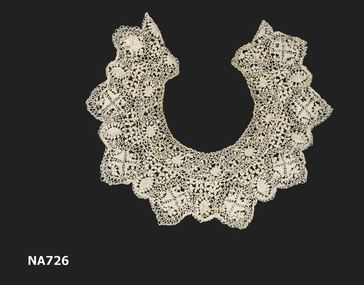 Whitehorse Historical Society Inc.
Textile - Collar
... Cream maltese lace collar...costume accessories female handcrafts lacemaking Cream maltese lace collar Textile Collar ...Cream maltese lace collarcostume accessories, female, handcrafts, lacemaking -
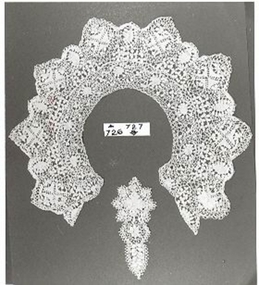 Whitehorse Historical Society Inc.
Textile - Lace Piece
... Piece of cream maltese lace...handcrafts lacemaking Piece of cream maltese lace Textile Lace Piece ...Piece of cream maltese lacehandcrafts, lacemaking -
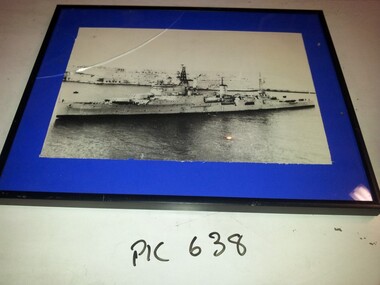 Running Rabbits Military Museum operated by the Upwey Belgrave RSL Sub Branch
Photo
... Photo of HMS Newfoundland at Malta 1953...photo 1953 rn Photo of HMS Newfoundland at Malta 1953 Photo ...Photo of HMS Newfoundland at Malta 1953photo, 1953, rn -
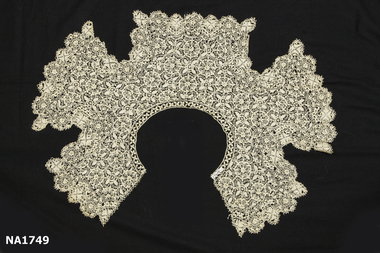 Whitehorse Historical Society Inc.
Clothing - Collar
... Large cream maltese lace collar....costume accessories collar accessories Large cream maltese lace collar. Clothing Collar ...Large cream maltese lace collar.costume accessories, collar accessories -
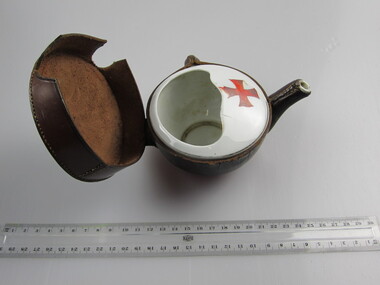 Ballarat RSL Sub-Branch Inc.
Teapot - Leather Cased
... Red Maltese Cross above spout...Collectables Ballarat RSL Ballarat Red Maltese Cross above spout Teapot - Leather Cased ...Red Maltese Cross above spoutcollectables, ballarat rsl, ballarat -
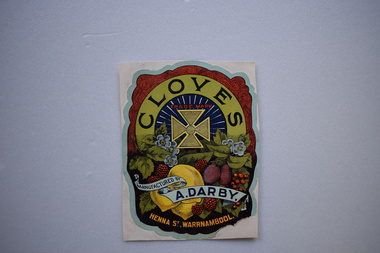 Warrnambool and District Historical Society Inc.
Label, A.Darby, 1890's
... Alfred Darby leased a cordial factory in Henna Street, Warrnambool in 1897. The Maltese cross was his well known trade mark. ...It features text , scrolls, a Maltese cross, lemons, flowers, leaves, berries, grapes and another puce coloured fruit.It is multi coloured. ...Alfred Darby leased a cordial factory in Henna Street, Warrnambool in 1897. The Maltese cross was his well known trade mark. ...Alfred Darby leased a cordial factory in Henna Street, Warrnambool in 1897. The Maltese cross was his well known trade mark. In 1899 he tried to start another cordial factory in Koroit Street but was prevented from doing so because it contravened the agreement he had with the owner of the Henna Street building. It is not known when he left Warrnambool but he had an interest in another cordial factory in Rochester, Victoria. This label is of considerable significance as details of Alfred Darby's cordial manufacturing business operations in Warrnambool are scant.Primarily a rectangular shaped label with all the edges curved. It features text , scrolls, a Maltese cross, lemons, flowers, leaves, berries, grapes and another puce coloured fruit.It is multi coloured. It is adhered to a piece of white card. CLOVES TRADE MARK MANUFACTURED BY A DARBY, HENNA ST., WARRNAMBOOLa.darby, cordials, warrnambool, cloves cordial, alfred darby -
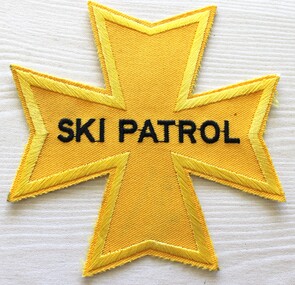 Falls Creek Historical Society
Uniform - Ski Patrol Star, 1960s
... The Maltese Cross has become a well-known symbol of protection, first-aid and assistance worldwide....A yellow cloth patch badge in the shape of the Maltese Cross. The outline of the star has been machine embroidered in yellow thread. ...The Maltese Cross has become a well-known symbol of protection, first-aid and assistance worldwide. ...The Falls Creek Ski Patrol dates back to the early 60s after skiing in Falls Creek became popular. The first ski patroller in Falls Creek was Brian Caddy with two casual ski patrollers Rob Sarroff and David Crooke. Bob Howe as President of the Albury Ski Club, and a few competent skiers from his club and Myrtleford Ski Club, successfully completed the St Johns Ambulance First Aid Certificate in the hope that the Management Committee of the day would roster on two patrollers a day in return for free ski lift tickets. This plan fell through, but the year after Brian Caddy was employed as head of Ski Patrol. In 1972 the “official” Falls Creek Ski Patrol was created under the advisement of Dr Rodney Moss with the support of the Management Committee. At that time, there was one or two patrollers on staff, increasing to five members at peak times. By 1977 there were six or seven patrollers, and currently there are around 40 patrollers on the team with 13-14 rostered on each day during peak season. In 1974 the Australian Ski Patrol Association (ASPA) was formed. On the 14th of March 1975, the Falls Creek Tourist Area Management Committee applied for membership to ASPA. At that time, Falls Creek Ski Patrol was known as Falls Creek Ski Rescue. This cloth badge is in the shape of the Maltese Cross. It was the insignia of the Knights Hospitallers of St John who ministered to sick and injured pilgrims as well as fighting in the Crusades. The Maltese Cross has become a well-known symbol of protection, first-aid and assistance worldwide.A yellow cloth patch badge in the shape of the Maltese Cross. The outline of the star has been machine embroidered in yellow thread. The words "SKI PATROL" are embroidered in black thread.SKI PATROLfalls creek ski patrol, skiing safety, falls creek services -
 Stawell Historical Society Inc
Accessory - Costume and Accessories, c1910
... Four Maltese crosses in alternate points. Mrs Blight....Four Maltese crosses in alternate points. Mrs Blight. ...Cream Silk Maltese Lace Collar. Flower Pattern printed edge finish. Four Maltese crosses in alternate points. Mrs Blight.stawell clothing material -
 Whitehorse Historical Society Inc.
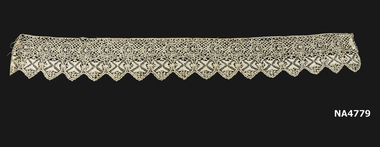
Accessory - Length of maltese lace, late 1800s -early 1900s
... Length of maltese lace, cream coloured. Maltese cross shaped medallions along one side. ...HANDCRAFTS Lacemaking Length of maltese lace, cream coloured. Maltese cross shaped medallions along one side. ...Lace belonged to Rob Innes' mother, Miriam Effie Innes (Drury), born 1895, may have belonged to her mother born 1856.Length of maltese lace, cream coloured. Maltese cross shaped medallions along one side. Pattern of flowers and leaves above medallionshandcrafts, lacemaking -
 Bendigo Military Museum
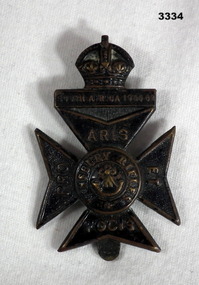
Badge - BADGE, SOUTH AFRICA, c.1905-1910
... Dark metal badge Maltese Cross shape....badges africa Top: "SOUTH AFRICA 1900-02" Centre: "FINSBURY RIFLES" Around centre: "PRO ARIS ET FOCIS" Dark metal badge Maltese Cross shape. Badge BADGE, SOUTH AFRICA. ...Dark metal badge Maltese Cross shape.Top: "SOUTH AFRICA 1900-02" Centre: "FINSBURY RIFLES" Around centre: "PRO ARIS ET FOCIS" badges, africa -
 Australian Lace Guild - Victorian Branch
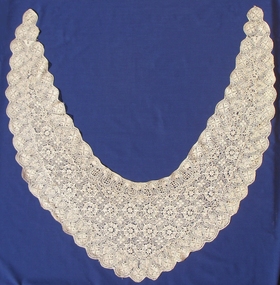
Textile - Maltese lace, Late 19th Century
... Bobbin lace. A large Maltese lace collar....Malta...Belonged to Mrs Calder Oliver (donor's mother) Bobbin lace. A large Maltese lace collar. Textile Maltese lace ...Belonged to Mrs Calder Oliver (donor's mother)Bobbin lace. A large Maltese lace collar. -
 Whitehorse Historical Society Inc.
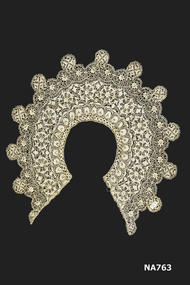
clothing - Collar
... Large cream silk Maltese lace collar...HANDCRAFTS Lacemaking COSTUME ACCESSORIES Female Large cream silk Maltese lace collar clothing Collar ...Large cream silk Maltese lace collarhandcrafts, lacemaking, costume accessories, female -
 Whitehorse Historical Society Inc.
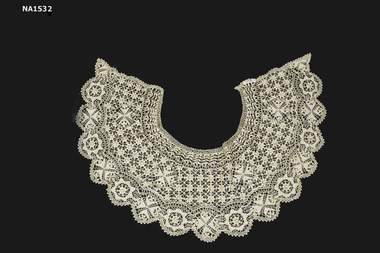
Textile - Collar
... Large cream maltese lace silk collar...COSTUME ACCESSORIES Collar Accessories Large cream maltese lace silk collar Textile Collar ...Large cream maltese lace silk collarcostume accessories, collar accessories -
 Royal District Nursing Service (now known as Bolton Clarke)
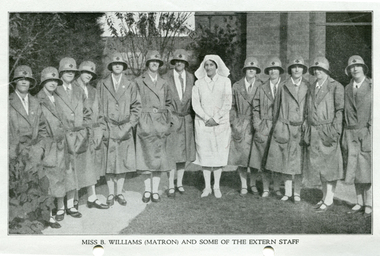
Photograph - Photograph, black and white, c.1929
... Their uniforms are grey and the Maltese cross on the Sisters hats is red....Black and white photograph of Matron Beatrice Williams wearing a white uniform and veil, with a group of twelve Melbourne District Nursing Society (MDNS) trained nurses (Sisters) wearing their calf length uniforms of grey coats, and grey brimmed hats with pale grey hat band with central Maltese cross, standing in the garden of the MDNS After-Care home....When bicycles were introduced in 1903 the headgear changed to a white pith helmet adorned with a red Maltese cross in the centre front. This was held on with a veil going over the hat and tied under the chin. ...This is a photographic record of Matron Beatrice Williams and the Trained nurses, (Sisters), of the District Nursing division of the Melbourne District Nursing Society who worked in the community give nursing care to patient's in their homes. Their uniforms are grey and the Maltese cross on the Sisters hats is red.From its earliest years when Melbourne District Nursing Society (MDNS) began to wear uniforms the chosen colour was grey, though the style changed throughout the years as fashions changed from the late 1800s through to the 1970s. The Trained nurses (Nurses), firstly wore long grey frocks and a white cap with a long white tail hanging from the centre back. When bicycles were introduced in 1903 the headgear changed to a white pith helmet adorned with a red Maltese cross in the centre front. This was held on with a veil going over the hat and tied under the chin. Over the years there were complaints that the veils became wet in the rain and they asked for a change of uniform, but this did not happen until 1921. Later the Nurses complained their skirts became wet when riding their bicycles in the rain and asked, when raining, to be able to wear breeches and gaiters. This was granted provided they wore aprons when attending patients. It was not long before the uniform changed to a shorter length grey frock, red cardigan, grey coat and grey brimmed hat; later changed to a peaked grey hat. In 1966 MDNS were granted Royal patronage. Now as Royal District Nursing Service, RDNS, the uniform was redesigned and colour changed in 1971. By 1972 the Trained nurses (Sisters) were wearing the new winter uniform of a blue/grey skivvie under a V neck tunic style frock made of blue/grey herringbone winter material with the RDNS insignia on the upper left, and a beret of the same material. In summer the uniform became a royal blue V neck tunic style frock, with the RDNS insignia on the upper left, worn over a short sleeve white blouse. A royal blue peaked hat with the RDNS insignia in the centre front was worn at first and then only worn on official occasions. This uniform was worn until changed to a corporate style in the mid 1980s,Black and white photograph of Matron Beatrice Williams wearing a white uniform and veil, with a group of twelve Melbourne District Nursing Society (MDNS) trained nurses (Sisters) wearing their calf length uniforms of grey coats, and grey brimmed hats with pale grey hat band with central Maltese cross, standing in the garden of the MDNS After-Care home.No. 8526 on rear of photographmelbourne district nursing society, mdns, mdns uniforms, rdns, royal district nursing service, mdns matron, miss beatrice mary williams -
![Alfred Hospital second year cross [ca.1900's]](/media/collectors/50187a8f023fd7201471f198/items/6986e0c6da4794b62fb46315/item-media/6986e17ada4794b62fb47079/item-fit-380x285.jpg?cb=6) Alfred Hospital Nurses League - Nursing History Collection
Alfred Hospital Nurses League - Nursing History CollectionUniform - Fabric cross, Alfred Hospital second year cross [ca.1900's], [ca.1900's]
... Red fabric skeleton maltese cross with signs of wear ...This item was owned by Leah Rosenthal who graduated in 1904 Of significance to the AHNL as it is an example of an historic part of an Alfred Hospital trainee nurse's uniform Alfred Hospital Alfred Hospital School of Nursing Nurses uniform Leah Rosenthal previous catalogue number handwritten [black ink] on reverse Red fabric skeleton maltese cross with signs of wear Alfred Hospital second year cross [ca.1900's] Uniform Fabric cross ...This emblem, when sewn onto a white armband, was worn over the upper left sleeve of the uniform of trainee nurses at the Alfred Hospital after they had passed their first exam. This item was owned by Leah Rosenthal who graduated in 1904Of significance to the AHNL as it is an example of an historic part of an Alfred Hospital trainee nurse's uniformRed fabric skeleton maltese cross with signs of wear previous catalogue number handwritten [black ink] on reversealfred hospital, alfred hospital school of nursing, nurses uniform, leah rosenthal -
Stawell Historical Society Inc
Accessory - Costume and Accessories, c1905
... Cream Maltese Lace Collar 11 cm. Handmade....Stawell Clothing Material Cream Maltese Lace Collar 11 cm. Handmade. Accessory Costume and Accessories ...Cream Maltese Lace Collar 11 cm. Handmade.stawell clothing material -
 Australian Lace Guild - Victorian Branch
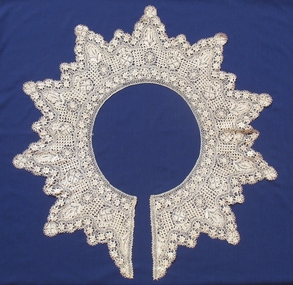
Textile - Maltese lace, Late 19th Century
... Large bertha collar of Maltese lace....Malta...Large bertha collar of Maltese lace. Textile Maltese lace ...Belonged to Mrs Calder Oliver (Donor's mother)Bobbin lace. Large bertha collar of Maltese lace.
