
Showing 173 items matching " middle european"
-
 Embroiderers Guild, Victoria
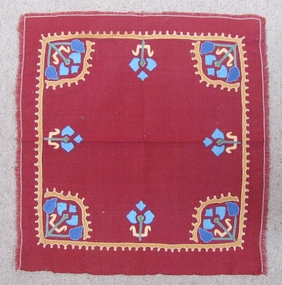
Textile - Mid European Embroidered Cushion Cover, Early 20th century?
... ... Middle European...Georgina Sweet, who was the first woman veterinarian in Victoria and who travelled extensively in Middle Europe in the Early 20th century....Middle European...Georgina Sweet, who was the first woman veterinarian in Victoria and who travelled extensively in Middle Europe in the Early 20th century. Embroidery Surface stitchery Middle European Cushion covers 1900-20 Dull red cotton ground fabric with gold, green and blue embroidery in Bokhara couching. ...From the collection of the late Dr. Georgina Sweet, who was the first woman veterinarian in Victoria and who travelled extensively in Middle Europe in the Early 20th century.Dull red cotton ground fabric with gold, green and blue embroidery in Bokhara couching. Design is an abstract floral.embroidery, surface stitchery, middle european, cushion covers, 1900-20 -
 Embroiderers Guild, Victoria
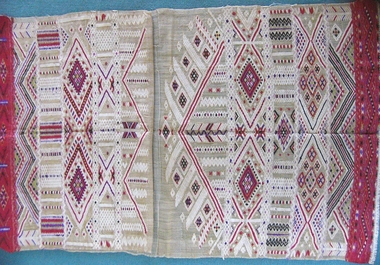
Accessory - Handwoven Yugoslavian Scarf
... ... Middle European...Georgina Sweet, who was the first woman veterinarian in Victoria and who travelled extensively in Middle Europe in the Early 20th century....Georgina Sweet, who was the first woman veterinarian in Victoria and who travelled extensively in Middle Europe in the Early 20th century. Weaving Stoles Middle European Yugoslavia Peshkir Handwoven scarf, probably cotton or linen, ecru ground. ...From the collection of the late Dr. Georgina Sweet, who was the first woman veterinarian in Victoria and who travelled extensively in Middle Europe in the Early 20th century.Handwoven scarf, probably cotton or linen, ecru ground. Woven ends in red, cream, purple, orange, silver and black in geometric diamond pattern and zig zag.weaving, stoles, middle european, yugoslavia, peshkir -
 Embroiderers Guild, Victoria
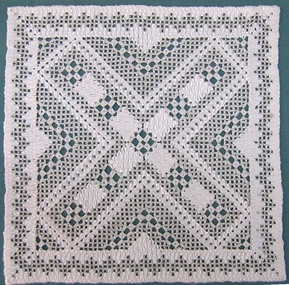
Textile - Swedish Näversöm Mat
... Middle European? ...Originating in Sweden as early as the 17th century, Näversöm embroidery gets its name from a piece of birch bark that was used as a frame. Since the birch bark frame could be easily rolled up and carried to protect her work, the Shepherdess did her Näversöm embroidery while tending her animals. The Näversöm embroidery technique is unusual because it is entirely stitched from the back. The birch bark protected the front of the piece, and the final design was not revealed until the folk art was completely finished. This embroidery would have become extinct had it not been for a Swedish woman, who owned a needlework shop in Hudiksvall, Sweden, who studied the Näversöm stitchery and began teaching this specialized embroidery in the late 1800s. Näversöm had a revival in the 1960s and '70s in Sweden when several instructional articles were published. Näversöm was used as household linens, and in earlier times as lampshades that would display the beautiful artistry as the light shined through the needlework. Examples of new and old patterns are still available from Sweden. Swedish Näversöm MatCream mat in Swedish Näversöm technique. Mat design forms a diagonal cross.embroidery, mats, drawn thread -
 Embroiderers Guild, Victoria
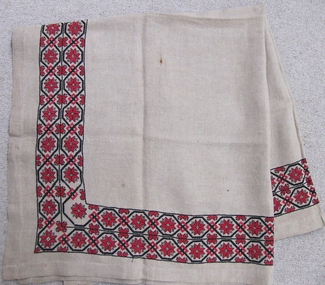
Textile - Eastern European Table Cloth, Early 20th century?
... ... Middle European...Embroidery Cross stitch Middle European Yugoslavia Table cloths Natural linen ground, cross stitched traditional patterns in red and black thread. ...From the collection of the late Dr. Georgina Sweet, who was the first woman veterinarian in Victoria and who travelled extensively in Europe in the Early 20th century.Natural linen ground, cross stitched traditional patterns in red and black thread.embroidery, cross stitch, middle european, yugoslavia, table cloths -
 Embroiderers Guild, Victoria
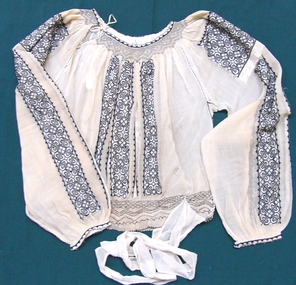
Clothing - Romanian Embroidered Folk Blouse, Early 20th century
... ... Middle European...Embroidery Garments 1900-20 Middle European Cross stitch "Made in Roumania" on small label. ...Made of local dark cream muslin with long sleeves, all the decoation is in a geometric design of black and white, with smocking at the waist and neck for shaping. The front panel and wide sleeves have been embroidered in bands of varying widths using silk and cotton threads. Sewn together using black thread and a form of faggotting stitch."Made in Roumania" on small label.embroidery, garments, 1900-20, middle european, cross stitch -
 Embroiderers Guild, Victoria
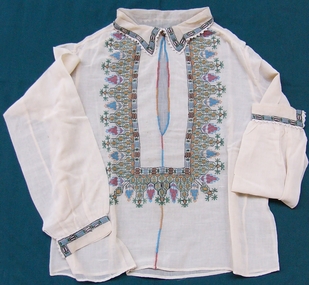
Clothing - Bukovina Romania Folk Blouse, 1900-20
... ... Middle European...Embroidery Garments 1900-20 Counted thread Middle European Romanian Blouse made of local (Bukovina, Romania) cream muslin with collar and cuffs and long sleeves. ...Blouse made of local (Bukovina, Romania) cream muslin with collar and cuffs and long sleeves. The cuffs and collar edges are decorated in blocks of brown, white, blue and gold plus metal thread and armenian needle lace. The front panel has an intricate design of hexagons with green and gold fillings plus counted thread floral designs in blues, pinks and greens. Buttonhole stich in colour outlines the front opening with an embroidered button.embroidery, garments, 1900-20, counted thread, middle european, romanian -
 Embroiderers Guild, Victoria
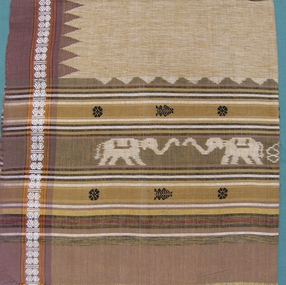
Textile - South East Asian Ikat Woven Cloth, Early 20th century?
... Georgina Sweet, who was the first woman veterinarian in Victoria and who travelled extensively in Middle Europe in the Early 20th century....Georgina Sweet, who was the first woman veterinarian in Victoria and who travelled extensively in Middle Europe in the Early 20th century. Weaving South East Asia Cloths Weaving in shades of brown. ...From the collection of the late Dr. Georgina Sweet, who was the first woman veterinarian in Victoria and who travelled extensively in Middle Europe in the Early 20th century.Weaving in shades of brown. Elephant pattern appears to have been in Ikat weaving style. Some small brown motifs which appear to have been darned into the fabric.weaving, south east asia, cloths -
 Embroiderers Guild, Victoria
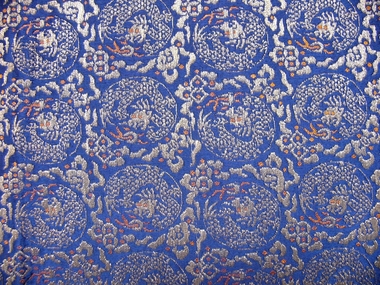
Textile - Chinese Dragon Silk Brocade Panel, Late 19th/early 20th century?
... Georgina Sweet, who was the first woman veterinarian in Victoria and who travelled extensively in Middle Europe in the Early 20th century....Georgina Sweet, who was the first woman veterinarian in Victoria and who travelled extensively in Middle Europe in the Early 20th century. Weaving China Late 19th century Woven silk brocade, dark blue ground, metal thread and orange silk roundels or dragons, all over pattern. ...From the collection of the late Dr. Georgina Sweet, who was the first woman veterinarian in Victoria and who travelled extensively in Middle Europe in the Early 20th century.Woven silk brocade, dark blue ground, metal thread and orange silk roundels or dragons, all over pattern. Roundels surrounded by 'clouds' in metallic gold thread and orange silk.weaving, china, late 19th century -
 Embroiderers Guild, Victoria
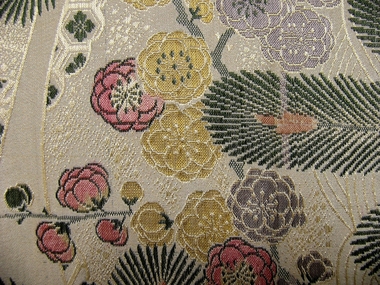
Textile - Japanese Woven Brocade Panel
... Georgina Sweet, who was the first woman veterinarian in Victoria and who travelled extensively in Middle Europe in the Early 20th century....Georgina Sweet, who was the first woman veterinarian in Victoria and who travelled extensively in Middle Europe in the Early 20th century. Weaving Japan Brocade woven silk square with ground of cream, motifs in green, pink, white, mauve, blue, gold and brown. ...From the collection of the late Dr. Georgina Sweet, who was the first woman veterinarian in Victoria and who travelled extensively in Middle Europe in the Early 20th century.Brocade woven silk square with ground of cream, motifs in green, pink, white, mauve, blue, gold and brown. Motifs of pine branches, blossoms, birds, fan and stylised tortoise shells.weaving, japan -
 Embroiderers Guild, Victoria
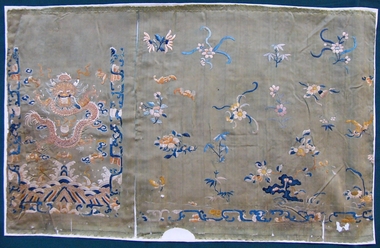
Textile - Strip of Chinese Embroidered Silk
... Georgina Sweet, who was the first woman veterinarian in Victoria and who travelled extensively in Middle Europe in the Early 20th century....Georgina Sweet, who was the first woman veterinarian in Victoria and who travelled extensively in Middle Europe in the Early 20th century. Embroidery Surface stitchery China Silk Embroidery Oriental Fragment Green silk, embroidered silks in blues and golds. ...From the collection of the late Dr. Georgina Sweet, who was the first woman veterinarian in Victoria and who travelled extensively in Middle Europe in the Early 20th century.Green silk, embroidered silks in blues and golds. Dragon with some metal threads. Fragile.embroidery, surface stitchery, china, silk embroidery, oriental, fragment -
 Embroiderers Guild, Victoria
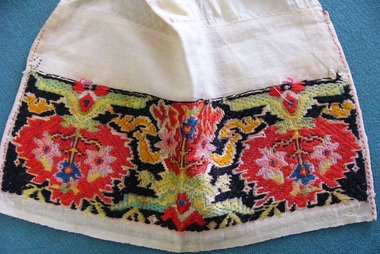
Headwear - Croatian Embroidered Cap, Late 19th/early 20th century
... Georgina Sweet, who was the first woman veterinarian in Victoria and who travelled extensively in Middle Europe in the Early 20th century....Georgina Sweet, who was the first woman veterinarian in Victoria and who travelled extensively in Middle Europe in the Early 20th century. Embroidery Surface stitchery Middle East Croatia Caps Red, green, pink, blue, gold and black thread (cotton?) ...From the collection of the late Dr. Georgina Sweet, who was the first woman veterinarian in Victoria and who travelled extensively in Middle Europe in the Early 20th century.Red, green, pink, blue, gold and black thread (cotton?) on open weave cotton. Mounted on close-woven cotton. Motifs worked in straight stitch. Two areas of embroidery, one on back of cap, other as a band over top and sides.embroidery, surface stitchery, middle east, croatia, caps -
 Embroiderers Guild, Victoria
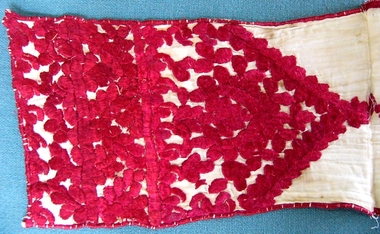
Textile - Middle Eastern Embroidered Scarf Ends, Early 20th century?
... Georgina Sweet, who was the first woman veterinarian in Victoria and who travelled extensively in Middle Europe in the Early 20th century....Georgina Sweet, who was the first woman veterinarian in Victoria and who travelled extensively in Middle Europe in the Early 20th century. Embroidery Stoles Middle East Surface stitchery Red silk on cotton, satin stitch floral motif. ...From the collection of the late Dr. Georgina Sweet, who was the first woman veterinarian in Victoria and who travelled extensively in Middle Europe in the Early 20th century.Red silk on cotton, satin stitch floral motif.embroidery, stoles, middle east, surface stitchery -
 Embroiderers Guild, Victoria
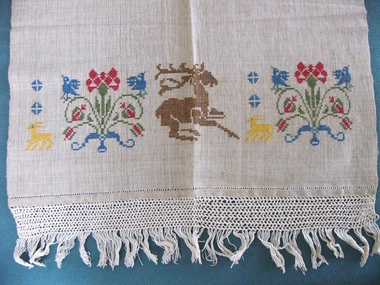
Textile - German Embroidered Towel, Early 20th century
... Georgina Sweet, who was the first woman veterinarian in Victoria and who travelled extensively in Middle Europe in the Early 20th century....Georgina Sweet, who was the first woman veterinarian in Victoria and who travelled extensively in Middle Europe in the Early 20th century. Embroidery Cross stitch Germany Towels Natural linen with cross stitched motifs of deer, fawns and stylised flowers in red, blue, green, yellow and brown cotton. 100 mm ecru fringe on one end, hem stitched other end. ...From the collection of the late Dr. Georgina Sweet, who was the first woman veterinarian in Victoria and who travelled extensively in Middle Europe in the Early 20th century.Natural linen with cross stitched motifs of deer, fawns and stylised flowers in red, blue, green, yellow and brown cotton. 100 mm ecru fringe on one end, hem stitched other end.embroidery, cross stitch, germany, towels -
 Embroiderers Guild, Victoria
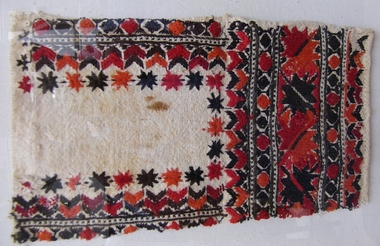
Accessory - Embroidered Fragment Greek Bag, Early 20th century?
... Georgina Sweet, who was the first woman veterinarian in Victoria and who travelled extensively in Middle Europe in the Early 20th century....Georgina Sweet, who was the first woman veterinarian in Victoria and who travelled extensively in Middle Europe in the Early 20th century. Embroidery Surface Embroidery Greece Fragment Small piece in natural wool or wool blend ground. ...From the collection of the late Dr. Georgina Sweet, who was the first woman veterinarian in Victoria and who travelled extensively in Middle Europe in the Early 20th century.Small piece in natural wool or wool blend ground. Geometric motifs in brown silk and red and orange wool. Straight, stem, cross, Algerian edge and satin stitches.embroidery, surface embroidery, greece, fragment -
 Embroiderers Guild, Victoria
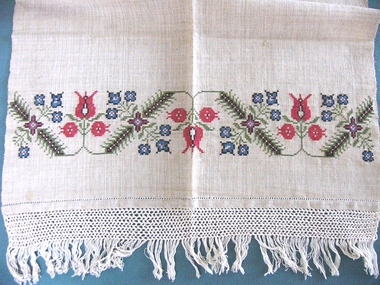
Textile - German Embroidered Towel, Eary 20th century?
... Georgina Sweet, who was the first woman veterinarian in Victoria and who travelled extensively in Middle Europe in the Early 20th century....Georgina Sweet, who was the first woman veterinarian in Victoria and who travelled extensively in Middle Europe in the Early 20th century. Embroidery Cross stitch Germany Towels Natural linen woven ground with traditional stylised floral motfis, worked in red, blue, green and black cross stitch. ...From the collection of the late Dr. Georgina Sweet, who was the first woman veterinarian in Victoria and who travelled extensively in Middle Europe in the Early 20th century.Natural linen woven ground with traditional stylised floral motfis, worked in red, blue, green and black cross stitch. A 100 mm natural ecru fringe on one end.embroidery, cross stitch, germany, towels -
 Embroiderers Guild, Victoria
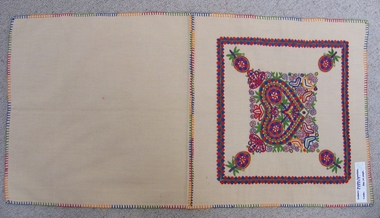
Textile - Hungarian Embroidery Cushion Cover, Early 20th century?
... Georgina Sweet, who was the first woman veterinarian in Victoria and who travelled extensively in Middle Europe in the Early 20th century....Georgina Sweet, who was the first woman veterinarian in Victoria and who travelled extensively in Middle Europe in the Early 20th century. Embroidery Surface stitchery Hungary 1900-20 Cushion covers heart flowers Szeged Natural ground, multi-coloured embroidery, peasant style motifs in satin, straight and chain stitches. ...From the collection of the late Dr. Georgina Sweet, who was the first woman veterinarian in Victoria and who travelled extensively in Middle Europe in the Early 20th century.Natural ground, multi-coloured embroidery, peasant style motifs in satin, straight and chain stitches.Szegedembroidery, surface stitchery, hungary, 1900-20, cushion covers, heart, flowers -
 Embroiderers Guild, Victoria
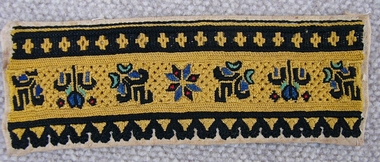
Textile - Eastern European Embroidered Cuff
... Georgina Sweet, who was the first woman veterinarian in Victoria and who travelled extensively in Middle Europe in the Early 20th century....Georgina Sweet, who was the first woman veterinarian in Victoria and who travelled extensively in Middle Europe in the Early 20th century. Embroidery Needle weaving Surface Embroidery Czechoslovakia Hungary Garment Probably a cuff band. ...From the collection of the late Dr. Georgina Sweet, who was the first woman veterinarian in Victoria and who travelled extensively in Middle Europe in the Early 20th century.Probably a cuff band. Silk embroidery thread in black and gold with touches of blue, red and turquoise. Needlewoven one edge in black and gold. Centre start, flower and other motif in stitched ground, other edge black and gold triangle patterns. Worked on a natural linen or cotton fabricembroidery, needle weaving, surface embroidery, czechoslovakia, hungary, garment -
 Bendigo Military Museum
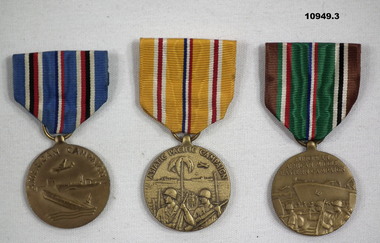
Award - MEDALS, U.S., WW2, Unknown
... European - African Medal - Awarded for qualifying service with the European, African & Middle Eastern Theatres of WW2....Pacific Campaign Medal. 3. European - African - Middle Easter Campaign Medal....Pacific Campaign Medal. 3. European - African - Middle Easter Campaign Medal. Award MEDALS, U.S., WW2 ...1. American Campaign Medal - For service in Active duty in the WW2 American Theatre of Operations up to 2 Mar 1946, including 1 year service in Continental USA. 2. Pacific Campaign Medal - For service in Asiatic - Pacific area during WW2. 3. European - African Medal - Awarded for qualifying service with the European, African & Middle Eastern Theatres of WW2.Three medals with ribbons - unmounted. 1. American Campaign Medal. 2. Pacific Campaign Medal. 3. European - African - Middle Easter Campaign Medal.No name inscriptions.ron mills collection, medals, us -
 Running Rabbits Military Museum operated by the Upwey Belgrave RSL Sub Branch
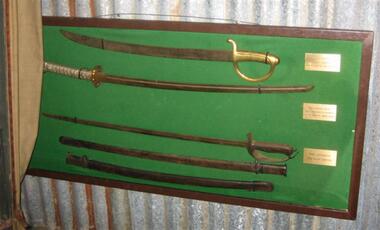
Swords
... A collection of 3 swords, Top- 'Hanger', European. Middle - Mass produced Jap sword Katana style & scabbard. ...Weapon A collection of 3 swords, Top- 'Hanger', European. Middle - Mass produced Jap sword Katana style & scabbard. ...A collection of 3 swords, Top- 'Hanger', European. Middle - Mass produced Jap sword Katana style & scabbard. Bottom - Japanese Cavalry sword & scabbardweapon -
 Embroiderers Guild, Victoria
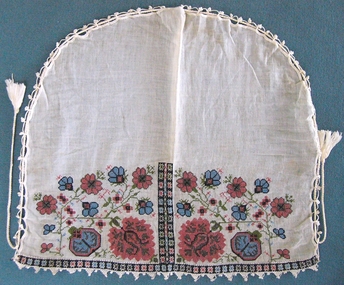
Headwear - Balkan or Southern European Embroidered Cap
... Georgina Sweet, who was the first woman veterinarian in Victoria and who travelled extensively in Middle Europe in the Early 20th century. This traditional folk costume cap or bonnet headdress is possibly from the Balkan or Southern/Eastern European region. ...Georgina Sweet, who was the first woman veterinarian in Victoria and who travelled extensively in Middle Europe in the Early 20th century. This traditional folk costume cap or bonnet headdress is possibly from the Balkan or Southern/Eastern European region. ...Donated by Mrs M.E. Bowley, from the collection of the late Dr. Georgina Sweet, who was the first woman veterinarian in Victoria and who travelled extensively in Middle Europe in the Early 20th century. This traditional folk costume cap or bonnet headdress is possibly from the Balkan or Southern/Eastern European region. It closely matches Croatian, Bosnian or Slovak folk dress (kroj). Flat linens were heavily embroidered, hemmed with handmade lace and precisely folded or structured over a frame to cover a married woman's hair. It is heavily characteristic of Balkan and regional Slavic textile traditions.Cream cotton muslin with stylised pattern in terracotta, blue, green and black cross stitch. It is edged in a triangular, Armenian needle lace pattern and has a draw-cord to shape the cap.embroidery, cross stitch, caps, southern european -
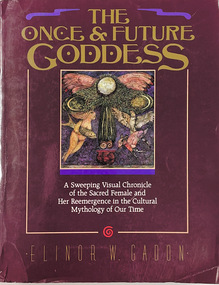 Women's Art Register
Book, Elinor W. Gaddon, The Once & Future Goddess. A Sweeping Visual Chronicle of the Sacred Female and Her Reemergence in the Cultural Mythology of our time, 1989
... An overview of Goddess imagery - both patriarchal and more women focussed - across Europe, the Middle East and the UK from the Ice Age until today....An overview of Goddess imagery - both patriarchal and more women focussed - across Europe, the Middle East and the UK from the Ice Age until today. ...An examination of the relationship between representations of ancient and contemporary goddesses, and how they are used by contemporary artists.Booknon-fictionAn examination of the relationship between representations of ancient and contemporary goddesses, and how they are used by contemporary artists.pre-history, spirituality, frida kahlo, judy chicago, religion, mythology, anna mendieta, ritual, sacred at, women's movement -
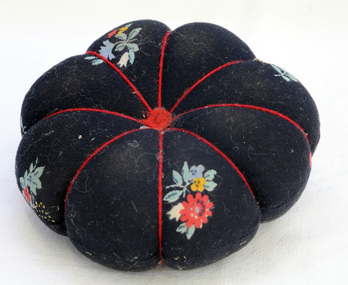 Orbost & District Historical Society
pin cushion, first half 20th century
... Pincushions or pin pillows date back to the Middle Ages in Europe. The tomato shaped pincushion grew from a Victorian Era superstition that tomatoes were good luck and so they were often given to newly weds as charms and placed on the mantle. ...Pincushions or pin pillows date back to the Middle Ages in Europe. The tomato shaped pincushion grew from a Victorian Era superstition that tomatoes were good luck and so they were often given to newly weds as charms and placed on the mantle. ...Pincushions or pin pillows date back to the Middle Ages in Europe. The tomato shaped pincushion grew from a Victorian Era superstition that tomatoes were good luck and so they were often given to newly weds as charms and placed on the mantle. When there were no actual tomatoes a fabric token was made and later used for pins. Some pincushions were stuffed with abrasive materials designed to sharpen the pins. This one would have a needlework accessory for an Orbost local.This item is a common sewing accessory reflecting the needlework skills of women in the first half of the 20th century.A soft padded fabric pin cushion. Material is a black background decorated with colourful flowers. It is divided into eight sections by red stitched lines and holds 3 needles and a bent pin. -
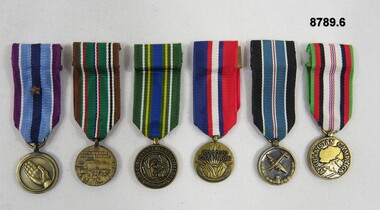 Bendigo Military Museum
Award - MEDALS, MINIATURE, Unknown
... USA - Humanitarian Services Medal. 2. USA - European - African - Middle East Campaign Medal (WW2). 3. ...USA - Humanitarian Services Medal. 2. USA - European - African - Middle East Campaign Medal (WW2). 3. ...Miniature Medals, all original, court mounted. 1. USA - Humanitarian Services Medal. 2. USA - European - African - Middle East Campaign Medal (WW2). 3. USA - Korean Defence Service Medal. 4. USA - Kosovo Campaign Medal. 5. USA - Humane Action Medal (Post WW2). 6. USA - Afghanistan Campaign Medal.passchendaele barracks trust, 495to500, bob english collection -
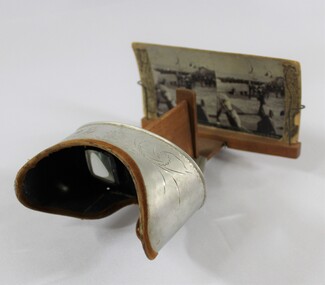 Wodonga & District Historical Society Inc
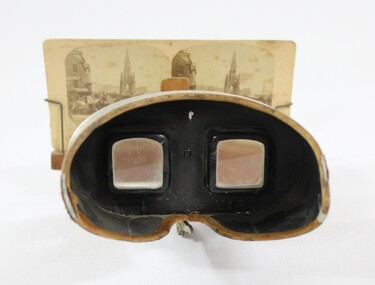
Leisure object - Stereoscope - late 1800s - early 1900s
... A popular form of entertainment among the middle classes in Europe and America, people could use a stereoscope to view images of real faraway places, or fantastical magic scenes. ...A popular form of entertainment among the middle classes in Europe and America, people could use a stereoscope to view images of real faraway places, or fantastical magic scenes. ...In the 1800s, the stereoscope was the only way to view with world in 3-D. A viewer would look through the lenses of the stereoscope's eyepiece to a card called a stereograph. On the stereograph, two of the same image were printed side by side, which when viewed through the stereograph transformed the one dimensional images into relatively life-like representations. A popular form of entertainment among the middle classes in Europe and America, people could use a stereoscope to view images of real faraway places, or fantastical magic scenes. The first patented stereo viewer was invented by Sir Charles Wheatstone in 1838, and remained a favoured leisure activity until the advent of cinema in the 1930s. This object contributes to our understanding of social life, leisure and entertainment in early twentieth century Wodonga, as well as providing interpretative capacity for themes including local history and social history. A wooden stereoscope with a cardboard 'view' of a streetscape.stereoscope, stereographs, entertainment, fun, leisure -
 Wodonga & District Historical Society Inc
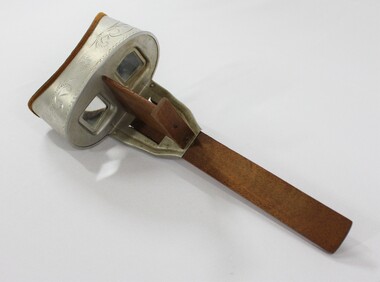
Leisure object - Stereoscope - late 1800s - early 1900s
... A popular form of entertainment among the middle classes in Europe and America, people could use a stereoscope to view images of real faraway places, or fantastical magic scenes. ...A popular form of entertainment among the middle classes in Europe and America, people could use a stereoscope to view images of real faraway places, or fantastical magic scenes. ...In the 1800s, the stereoscope was the only way to view with world in 3-D. A viewer would look through the lenses of the stereoscope's eyepiece to a card called a stereograph. On the stereograph, two of the same image were printed side by side, which when viewed through the stereograph transformed the one dimensional images into relatively life-like representations. A popular form of entertainment among the middle classes in Europe and America, people could use a stereoscope to view images of real faraway places, or fantastical magic scenes. The first patented stereo viewer was invented by Sir Charles Wheatstone in 1838, and remained a favoured leisure activity until the advent of cinema in the 1930s. This object contributes to our understanding of social life, leisure and entertainment in early twentieth century Wodonga, as well as providing interpretative capacity for themes including local history and social history.A wooden stereoscope with a cardboard 'view' of a streetscape.stereoscope, stereographs, entertainment, fun, leisure -
 Wodonga & District Historical Society Inc
Leisure object - Stereoscope - late 1800s - early 1900s
... A popular form of entertainment among the middle classes in Europe and America, people could use a stereoscope to view images of real faraway places, or fantastical magic scenes. ...A popular form of entertainment among the middle classes in Europe and America, people could use a stereoscope to view images of real faraway places, or fantastical magic scenes. ...In the 1800s, the stereoscope was the only way to view with world in 3-D. A viewer would look through the lenses of the stereoscope's eyepiece to a card called a stereograph. On the stereograph, two of the same image were printed side by side, which when viewed through the stereograph transformed the one dimensional images into relatively life-like representations. A popular form of entertainment among the middle classes in Europe and America, people could use a stereoscope to view images of real faraway places, or fantastical magic scenes. The first patented stereo viewer was invented by Sir Charles Wheatstone in 1838, and remained a favoured leisure activity until the advent of cinema in the 1930s. This object contributes to our understanding of social life, leisure and entertainment in early twentieth century Wodonga, as well as providing interpretative capacity for themes including local history and social history.A wooden stereoscope with a cardboard 'view' of a streetscape.stereoscope, stereographs, entertainment, fun, leisure -
 Wodonga & District Historical Society Inc
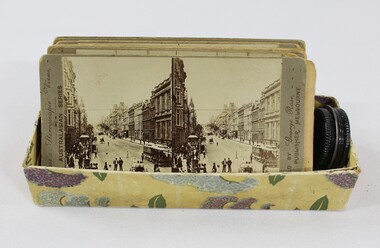
Card - Stereoscope Cards - late 1800s - early 1900s
... A popular form of entertainment among the middle classes in Europe and America, people could use a stereoscope to view images of real faraway places, or fantastical magic scenes. ...A popular form of entertainment among the middle classes in Europe and America, people could use a stereoscope to view images of real faraway places, or fantastical magic scenes. ...In the 1800s, the stereoscope was the only way to view with world in 3-D. A viewer would look through the lenses of the stereoscope's eyepiece to a card called a stereograph. On the stereograph, two of the same image were printed side by side, which when viewed through the stereograph transformed the one dimensional images into relatively life-like representations. A popular form of entertainment among the middle classes in Europe and America, people could use a stereoscope to view images of real faraway places, or fantastical magic scenes. The first patented stereo viewer was invented by Sir Charles Wheatstone in 1838, and remained a favoured leisure activity until the advent of cinema in the 1930s. This object contributes to our understanding of social life, leisure and entertainment in early twentieth century Wodonga, as well as providing interpretative capacity for themes including local history and social history. A cardboard box full of stereoscope cards showing street views and landscape scenery. stereoscope, stereographs, entertainment, fun, leisure -
 Mont De Lancey
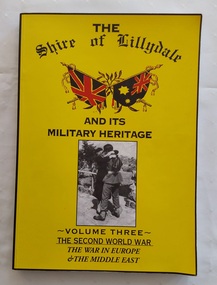
Book, J D Publishing, The Shire of Lillydale and its Military Heritage: Volume Three, 2001
... A large yellow paperback book titled: The Shire of Lillydale and its Military heritage - Volume Three - The Second World War: The War in Europe & the Middle East. It has English and Australian crossed flags underneath the title at the top, with a black and white photograph of a soldier embracing his mother. ...A large yellow paperback book titled: The Shire of Lillydale and its Military heritage - Volume Three - The Second World War: The War in Europe & the Middle East. It has English and Australian crossed flags underneath the title at the top, with a black and white photograph of a soldier embracing his mother. ...This book of Lillydale's military heritage covers The Second World War: The War in Europe and the Middle East. It has sections on - Between the Wars: The Spanish Civil War (1936 - 1939, Local Militia Forces (1918 - 1939), The Coming of the War. It details The Home Front, Patriotic Welfare, Our Service Personnel, V.E. Day, and Locals in Australian Military History.A large yellow paperback book titled: The Shire of Lillydale and its Military heritage - Volume Three - The Second World War: The War in Europe & the Middle East. It has English and Australian crossed flags underneath the title at the top, with a black and white photograph of a soldier embracing his mother. Inside is Contents, Introduction, Foreword are black and white photographs of significant people, advertisements, militia facts and stories as well as a Bibliography and Index at the back. Pp. 339.non-fictionThis book of Lillydale's military heritage covers The Second World War: The War in Europe and the Middle East. It has sections on - Between the Wars: The Spanish Civil War (1936 - 1939, Local Militia Forces (1918 - 1939), The Coming of the War. It details The Home Front, Patriotic Welfare, Our Service Personnel, V.E. Day, and Locals in Australian Military History.second world war, lilydale history, lilydale military history, military heritage -
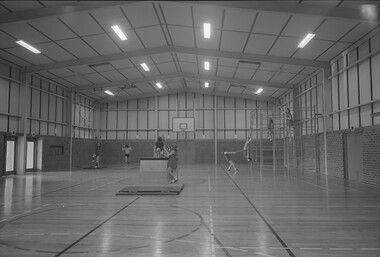 Sunshine and District Historical Society Incorporated
Photograph - Maribyrnong High School Gymnasium Photographs
... During the post war and migration era’s (1950s–1970s), the school became increasingly multicultural due to the nearby Maribyrnong Migrant Hostel (opened 1949) with many European, Middle Eastern, and later Asian migrant students. ...During the post war and migration era’s (1950s–1970s), the school became increasingly multicultural due to the nearby Maribyrnong Migrant Hostel (opened 1949) with many European, Middle Eastern, and later Asian migrant students. ...Maribyrnong High School opened in 1958. The school served in the rapidly growing Maidstone and Maribyrnong districts. During the post war and migration era’s (1950s–1970s), the school became increasingly multicultural due to the nearby Maribyrnong Migrant Hostel (opened 1949) with many European, Middle Eastern, and later Asian migrant students. The school became known for its multicultural student body and union activism in the 1970s. This included the 1971 teacher’s “Control of Entry” strike of 11 weeks, one of the most important industrial actions in Victorian education history that helped to establish the principle that all students must be taught by qualified teachers. The school was later renamed to the Maribyrnong Secondary College and then Maribyrnong College. The school is now well known for its sports academy program. maribyrnong high school, river street, maribyrong, maidstone -
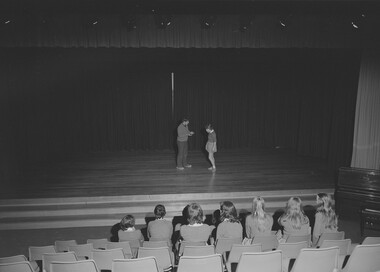 Sunshine and District Historical Society Incorporated
Photograph - Maribyrnong High School Drama Class Photograph
... During the post war and migration era’s (1950s–1970s), the school became increasingly multicultural due to the nearby Maribyrnong Migrant Hostel (opened 1949) with many European, Middle Eastern, and later Asian migrant students. ...During the post war and migration era’s (1950s–1970s), the school became increasingly multicultural due to the nearby Maribyrnong Migrant Hostel (opened 1949) with many European, Middle Eastern, and later Asian migrant students. ...Maribyrnong High School opened in 1958. The school served in the rapidly growing Maidstone and Maribyrnong districts. During the post war and migration era’s (1950s–1970s), the school became increasingly multicultural due to the nearby Maribyrnong Migrant Hostel (opened 1949) with many European, Middle Eastern, and later Asian migrant students. The school became known for its multicultural student body and union activism in the 1970s. This included the 1971 teacher’s “Control of Entry” strike of 11 weeks, one of the most important industrial actions in Victorian education history that helped to establish the principle that all students must be taught by qualified teachers. The school was later renamed to the Maribyrnong Secondary College and then Maribyrnong College. The school is now well known for its sports academy program. maribyrnong high school, river street, maribyrong, maidstone
