
Showing 60 items matching " munitions factory"
-
 Melbourne Tram Museum
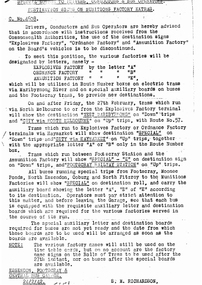
Document - Instruction, Melbourne & Metropolitan Tramways Board, Mal Rowe, Destination Signs on Munitions Factory Extras, 1942
... Destination Signs on Munitions Factory Extras...Printed copies of a digital copies of Instructions issued by the MMTB regarding World War 2 notices to crews. .1 - Notice C4608 - Destination Signs on Munitions Factory Extras - dated 24/2/1942 to Essendon, Footscray and Central Bus Garage crews - when the various signs and route number letters were to be used on Explosives Factory, Ordnance Factory and Ammunition Factory to be shown on trams. .2 - Notice C4551 - "Running to and from Explosives and Ordinance factories - Instructions regarding destination signs to be shown for trams from Brunswick, Malvern, Glenhuntly and Hanna St depots....Destination Signs on Munitions Factory Extras Document Instruction Melbourne & Metropolitan Tramways Board, Mal Rowe ...Printed copies of a digital copies of Instructions issued by the MMTB regarding World War 2 notices to crews. .1 - Notice C4608 - Destination Signs on Munitions Factory Extras - dated 24/2/1942 to Essendon, Footscray and Central Bus Garage crews - when the various signs and route number letters were to be used on Explosives Factory, Ordnance Factory and Ammunition Factory to be shown on trams. .2 - Notice C4551 - "Running to and from Explosives and Ordinance factories - Instructions regarding destination signs to be shown for trams from Brunswick, Malvern, Glenhuntly and Hanna St depots.trams, tramways, world war 2, footscray, destination roll, maribyrnong, west maribyrnong, explosives factory, ordnance factory, ammunition factory -
 Ballarat Tramway Museum
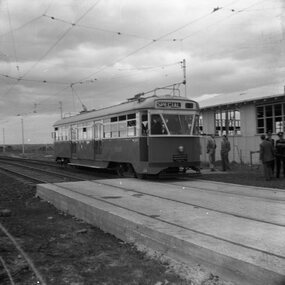
Print, Geoff Grant, 8/05/1954 12:00:00 AM
... ... Munitions Factory...Negative No. 272 and colour print made by colour laser printer (stored in folder ) of Melbourne PCC tram 980, at beginning of the then new Footscray connecting line at Munitions Factory, Maribyrnong during an AETA tour on 8/5/1954. ...Trams tramways Footscray PCC Munitions Factory AETA tram 980 Negative No. 272 and colour print made by colour laser printer (stored in folder ) of Melbourne PCC tram 980, at beginning of the then new Footscray connecting line at Munitions Factory, Maribyrnong during an AETA tour on 8/5/1954. ...Negative No. 272 and colour print made by colour laser printer (stored in folder ) of Melbourne PCC tram 980, at beginning of the then new Footscray connecting line at Munitions Factory, Maribyrnong during an AETA tour on 8/5/1954. Photo by Geoff Grant. Hi res scan of negative and image updated 19/5/2020.trams, tramways, footscray, pcc, munitions factory, aeta, tram 980 -
 Ballarat Tramway Museum
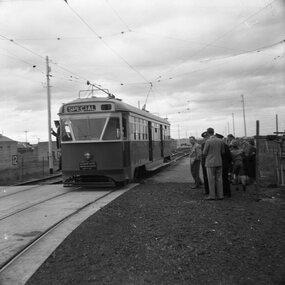
Print, Geoff Grant, 8/05/1954 12:00:00 AM
... ... Munitions Factory...Negative No. 275 and colour print made by colour laser printer (stored in folder ) of Melbourne PCC tram 980, in at the beginning of Footscray branch or connecting line to Footscray, at Munitions factory, during an AETA tour on 8/5/1954. ...Trams tramways Footscray PCC Munitions Factory AETA tram 980 Negative No. 275 and colour print made by colour laser printer (stored in folder ) of Melbourne PCC tram 980, in at the beginning of Footscray branch or connecting line to Footscray, at Munitions factory, during an AETA tour on 8/5/1954. ...Negative No. 275 and colour print made by colour laser printer (stored in folder ) of Melbourne PCC tram 980, in at the beginning of Footscray branch or connecting line to Footscray, at Munitions factory, during an AETA tour on 8/5/1954. Photo by Geoff Grant. Hi res scan of negative and image updated 19/5/2020.trams, tramways, footscray, pcc, munitions factory, aeta, tram 980 -
 Puffing Billy Railway
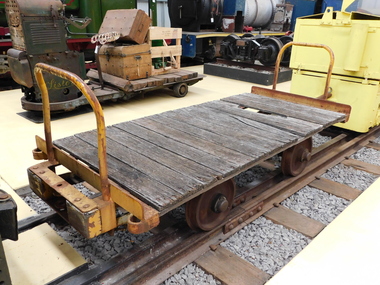
Explosives Wagon, unkown
... orica - deer park munitions factory...Orica - Deer Park Munitions factory Orica Deer Park in Melbourne’s west has been used since circa 1875 for various forms of manufacturing and storage of chemicals. ...Orica - Deer Park Munitions factory Orica Deer Park in Melbourne’s west has been used since circa 1875 for various forms of manufacturing and storage of chemicals. ...This 2 foot 6 inch (762mm) gauge wagon was used for carrying explosives and was used with the Greenbat Battery loco. It was donated to the Walhalla Goldfields Railway on long term loan in 2013 along with a large quantity of narrow gauge trollies and light rail from Orica’s now closed munitions factory in Melbourne’s western suburbs. Orica - Deer Park Munitions factory Orica Deer Park in Melbourne’s west has been used since circa 1875 for various forms of manufacturing and storage of chemicals. Although the site is bounded by Ballarat Road, Station Street, Tilburn Road and the Western Ring Road, the current entry point for industrial operations is situated at Gate 6 of Tilburn Road. Operations include: • a specialty chemicals facility producing products for mining services operations • quarry services • other chemical manufacture activities. The Deer Park factory complex The factory complex is of historical significance for the major role it played in Australia's manufacturing and mining industries through the development of progressively more efficient and safer explosives. It also contributed to wartime production in ammunition, initiators and the development of synthetic ammonia production and construction of the Defence Explosives Annexe No 5 (later the Albion Explosives Factory) during World War Two. The factory complex is also of technical significance for the unusual and specialised design of many of the buildings and structures, both in the layout of the works and the individual design of buildings. Blast protection and safety measures such as mounds around the buildings, 'cleanways' and buffer zones between production areas were employed extensively. A characteristic of many production buildings was the elimination of cavities where explosive compounds could lodge. The combination of concrete barriers and light-weight construction was designed to direct explosion debris away from operators or other buildings. The narrow gauge tramway, which ran through the explosives section, is a rare survivor of nineteenth century materials-handling methods. Historic - Industrial Narrow Gauge Railway - Wagon for carrying Explosives at the Orica - Deer Park Munitions factory, Deer park, Victoria, Australia Wagon for carrying explosives made from Timber and steelwagon for carrying explosives, puffing billy, industrial narrow gauge railway, orica - deer park munitions factory, explosives wagon -
 Puffing Billy Railway
Greenbat Battery Loco, Greenwood & Batley ltd
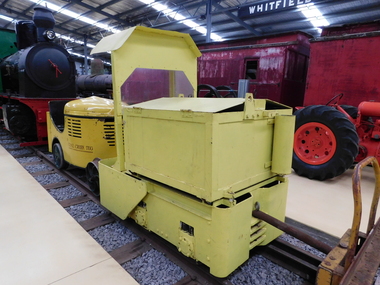
... orica - deer park munitions factory...Orica - Deer Park Munitions factory Orica Deer Park in Melbourne’s west has been used since circa 1875 for various forms of manufacturing and storage of chemicals. ...Orica - Deer Park Munitions factory Orica Deer Park in Melbourne’s west has been used since circa 1875 for various forms of manufacturing and storage of chemicals. ...Greenbat Battery Loco Built by Greenwood & Batley Ltd Builders No. 420363/2 This Greenbat Battery Loco has been loaned to the Museum by the Walhalla Goldfields Railway, who had acquired it in 2013 along with a large quantity of narrow gauge trollies and light rail from Orica’s now closed munitions factory in Melbourne’s western suburbs. The trolley on display was one of two in use from the 1970s. Orica - Deer Park Munitions factory Orica Deer Park in Melbourne’s west has been used since circa 1875 for various forms of manufacturing and storage of chemicals. Although the site is bounded by Ballarat Road, Station Street, Tilburn Road and the Western Ring Road, the current entry point for industrial operations is situated at Gate 6 off Tilburn Road. Operations include: • a specialty chemicals facility producing products for mining services operations • quarry services • other chemical manufacture activities. The Deer Park factory complex is of historical significance as the location of the first plant for the manufacture of high explosives in Australia and has been, for its entire history, the most important, if not only, commercial manufacturer of high explosives in Australia. It commenced operation under the importer Jones Scott and Co, and then the Australian Lithofracteur Company (Krebs Patent), a rival to Nobel's dynamite patent. The factory was producing nitro-glycerine based explosives in Australia only a couple of years after Nobel's Ardeer factory began operating in Scotland. The explosives factories complex is of historical significance for the association with the Australian Lithofracteur Company, Australian Explosives and Chemicals, the Nobel company and later ICIANZ, which grew to become one of the largest explosives, chemical and plastics manufacturers in Australia. It was the pioneer of the industry and retained its dominance through monopolistic practices, taking over most of its competitors in the Australasian region. Substantial parts of the pre-Second World War layout of the site remain which, with a number of significant buildings dating back to the 1920s and '30s, indicate past and present processes of manufacturing, the necessary safety measures required and the integrated nature of the explosives and chemical industry. The narrow gauge tramway, which ran through the explosives section, was a rare survivor of nineteenth century materials-handling methods into the 21st Century. Greenwood & Batley were a large engineering manufacturer with a wide range of products, including armaments, electrical engineering, and printing and milling machinery. They also produced a range of battery-electric railway locomotives under the brand name Greenbat. The works was in Armley, Leeds, UK. Greenbat was the trade name for the railway locomotives built by Greenwood & Batley. The company specialised in electric locomotives, particularly battery-powered types for use in mines and other hazardous environments. Historic - Industrial Narrow Gauge Railway - Battery Locomotive - Orica - Deer Park Munitions factory - Deep park, Victoria, Australia Battery Locomotive - made of iron puffing billy, greenbat battery loco, battery locomotive, industrial narrow gauge railway, orica - deer park munitions factory -
 Melbourne Tram Museum
Document - Report, Commonwealth of Australia, Melbourne and Metropolitan Tramways Board, "History of the Munitions War Effort 1939-45", 1950
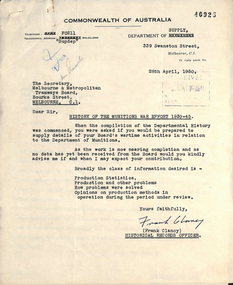
... ... Munitions Factory...Response dated 4/5/1950 saying the original letter had not been received, attaching further information. .2 - A second document (7 sheets) that was with the first, a response dated 3/8/48, primarily concerned with the provision of bus services to Munitions and aircraft factories, purchase of chassis, for buses, issues with supply, bus and tram numbers, services, Fisherman's Bend, patronage, tramcar construction and a table giving passenger numbers over the war period....Trams tramways World War 2 Buses Munitions Factory Fisherman's Bend Workshops Commonwealth Government In pencil and ink on top of the first sheet of 3843.2 - "Supplied to Official Historian Canberra 3/8/48" and a note "Affixed? ...Letter, response and report on quarto paper - 10 sheets .1 - Letter from Frank Clancy, Historical Records Officer of the Commonwealth of Australia, Department of Supply (with Munitions over typed), to the MMTB dated 28/4/1950 asking for a summary of the Board's wartime activities. Letter response by Lewis Russell, MMTB Publicity Officer. Response dated 4/5/1950 saying the original letter had not been received, attaching further information. .2 - A second document (7 sheets) that was with the first, a response dated 3/8/48, primarily concerned with the provision of bus services to Munitions and aircraft factories, purchase of chassis, for buses, issues with supply, bus and tram numbers, services, Fisherman's Bend, patronage, tramcar construction and a table giving passenger numbers over the war period.In pencil and ink on top of the first sheet of 3843.2 - "Supplied to Official Historian Canberra 3/8/48" and a note "Affixed? by Foreman? 2/8/48"trams, tramways, world war 2, buses, munitions factory, fisherman's bend, workshops, commonwealth government -
 Ballarat Tramway Museum
Document - Rule Book, Commonwealth Government, "Ballarat Gun Cotton Factory Rules", 1940's
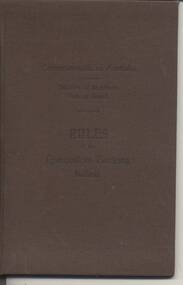
... Manufacture of Munitions... Factory...Trams tramways Manufacture of Munitions Factory rules Gun Cotton Ordnance Opposite page 6 - addendum date 21/7/1943. ...A commonwealth of Australia Rule Book - For use at the Gun Cotton Factory at Ballarat- WWII. 17 numbered pages- printed one side only. Cover sheet- addendum with hand stamp p6. Images of cover and inside page added 5/9/13.Opposite page 6 - addendum date 21/7/1943.trams, tramways, manufacture of munitions, factory rules, gun cotton, ordnance -
 Melbourne Tram Museum
Document - Personal Papers, Melbourne & Metropolitan Tramways Board (MMTB), "Tramway Acts", 1945 to 1954
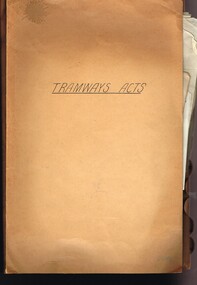
... ... Munitions Factory...Trams tramways MMTB ACTs of Parliament World War 2 Appeals Unions Essendon Airport West Maribyrnong Munitions Factory Brown coloured file folder marked "Tramway Acts" containing hand written and type written notes on the various MMTB Acts, generally c1945 to 1948 - multiple copies of the same document involving Land Acquisition, Appeals Board, powers under the Act, WW2 National Security Act (under which the Essendon Airport and Maribyrnong or Munitions tramways were built) repeal, buses, and orders in council. ...Brown coloured file folder marked "Tramway Acts" containing hand written and type written notes on the various MMTB Acts, generally c1945 to 1948 - multiple copies of the same document involving Land Acquisition, Appeals Board, powers under the Act, WW2 National Security Act (under which the Essendon Airport and Maribyrnong or Munitions tramways were built) repeal, buses, and orders in council.trams, tramways, mmtb, acts of parliament, world war 2, appeals, unions, essendon airport, west maribyrnong, munitions factory -
 Melbourne Tram Museum
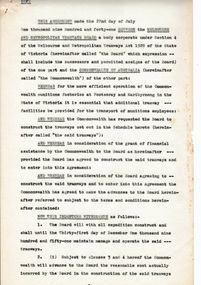
Document - Personal Papers, Melbourne & Metropolitan Tramways Board (MMTB), "Agreement between MMTB and the Commonwealth of Australia, c1940
... ... Munitions Factory...Trams tramways MMTB Tramways Commonwealth Government Agreements Munitions Factory Maribyrnong Footscray Set of personal papers - typed carbon copies - copy of "Agreement between MMTB and the Commonwealth of Australia for the construction of tramways to serve the Munition Factories at Footscray and Maribyrnong" dated 22/7/1941 and 21/6/1944 to extend tramways. ...Set of personal papers - typed carbon copies - copy of "Agreement between MMTB and the Commonwealth of Australia for the construction of tramways to serve the Munition Factories at Footscray and Maribyrnong" dated 22/7/1941 and 21/6/1944 to extend tramways. Covers maintenance, construction costs, finances, property issues and provides details in a schedule. .1 - agreement dated 22/7/1941 - Gordon St extensive, Raleigh's Road and West Road to Williamson Road and Raleigh's road to Park Road. .2 - dated 21/6/1944 - extension of Keilor Road to Essendon Airport. .3 - undated - agreement re double track Maribyrnong Road, Gordon St, West Road, Essendon Depot works, Maribyrnong River Images and record revised 20/5/2019.trams, tramways, mmtb, tramways, commonwealth government, agreements, munitions factory, maribyrnong, footscray -
 Melbourne Tram Museum
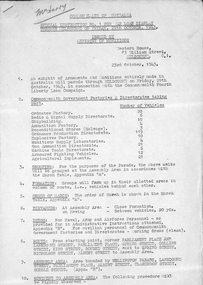
Document - Instruction, Ministry of Munitions, Special Instruction No 1 for War Loan Display through Melbourne on Friday 29 October 1943, Oct. 1943
... ... Munitions Factory...Trams tramways Instructions Events World War 2 Munitions Factory "Mr Harry" written in black in on top left corner. ...Special Instruction No 1 for War Loan Display through Melbourne on Friday 29 October 1943 Letter from Ministry of Munitions to MMTB advising of parade of munitions through Melbourne on Friday 29 October 1943. 4 page letter plus 13 pages of appendices"Mr Harry" written in black in on top left corner.trams, tramways, instructions, events, world war 2, munitions factory -
 Melbourne Tram Museum
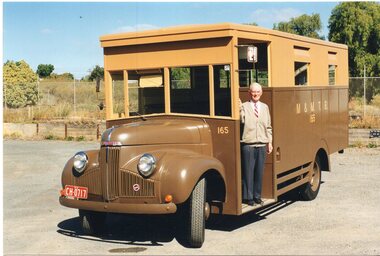
Photograph - Keith Kings and his Studebaker bus MMTB No. 165 set of 5, Dennis O'Hoy, 8/04/1999
... ... Munitions Factory...Trams tramways Bendigo Buses Studebaker Munitions Factory Austerity buses bus 165 Details in ink on each photo. ...Photographs Keith Kings and his Studebaker austerity or Munitions bus MMTB No. 165: Photo of the bus in Bendigo 8/4/1999, for the Easter Monday procession 5/4/1999. Photos by Dennis O'Hoy. 1 - Keith Kings standing on the front step. 2 - ditto 3 - showing the nature of the austere nature of the emergency wartime construction of these "Munitions" bus bodies. 4 - ditto 5 - Photo of the crew - dated 5/4/1999 - with Keith Kings, G Hartley and D. Bell - photo by M Bell.Yields information about the the restoration or reconstruction of MMTB bus 165 by Keith Kings.Set of five Colour prints on Kodak paper.Details in ink on each photo.trams, tramways, bendigo, buses, studebaker, munitions factory, austerity buses, bus 165 -
 Bendigo Historical Society Inc.
Booklet - Australian Defence Industries (ADI) - 38 assorted brochures covering Defence Technology
... Australian Defence Industries (ADI) - Thirty-eight assorted coloured brochures covering Defence Technology, Australian Government Munitions Factories and promotional material for manufactured items....ADI History Defence Technology Australian Defence Industries (ADI) - Thirty-eight assorted coloured brochures covering Defence Technology, Australian Government Munitions Factories and promotional material for manufactured items. ...Australian Defence Industries (ADI) - Thirty-eight assorted coloured brochures covering Defence Technology, Australian Government Munitions Factories and promotional material for manufactured items.adi, history, defence technology -
 Dandenong/Cranbourne RSL Sub Branch
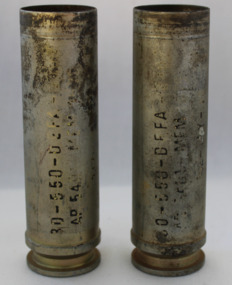
Weapon - 30mm Gun Cartridges
... According to the markings on these cartridges, they were manufactured by the Munitions Factory in Footscray Vic. in June 1971. ...According to the markings on these cartridges, they were manufactured by the Munitions Factory in Footscray Vic. in June 1971. ...Two alloy ammunition cartridges from a 30mm DEFA (Direction des Études et Fabrications d'Armement) revolving gun used in aircraft. According to the markings on these cartridges, they were manufactured by the Munitions Factory in Footscray Vic. in June 1971. They were most likely used in the guns of the Mirage aircraft of the RAAF. 30-550-DEFA, 6MF71, FR on base. 30-550-DEFA AP 5401MEM and some illegible marks on the side. -
 Ballarat Tramway Museum
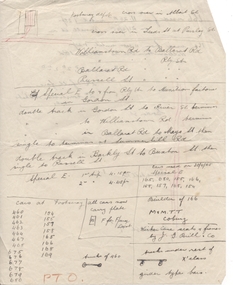
Document - Personal Papers - Footscray tram system, Wal Jack, 1945
... Document on the Footscray tram system of the MMTB, April 1945, noting the depot layout, the routes, special services to the Munitions factories, track layouts in various street, cars based at Footscray, cars used on 20/4/1945 to the Munitions, notes on the cars and types, fares and route map along Ballarat Road....Document on the Footscray tram system of the MMTB, April 1945, noting the depot layout, the routes, special services to the Munitions factories, track layouts in various street, cars based at Footscray, cars used on 20/4/1945 to the Munitions, notes on the cars and types, fares and route map along Ballarat Road. ...Document on the Footscray tram system of the MMTB, April 1945, noting the depot layout, the routes, special services to the Munitions factories, track layouts in various street, cars based at Footscray, cars used on 20/4/1945 to the Munitions, notes on the cars and types, fares and route map along Ballarat Road.Yields information about the MMTB Footscray system during 1945.Handwritten notes - two pages. Contained originally within Reg Item 5623 at the front of this note book. For items see btm5623 loose items list.pdf.trams, tramways, footscray, mmtb -
 Melbourne Tram Museum
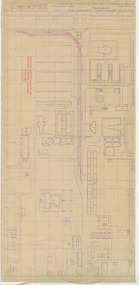
Drawing, Melbourne & Metropolitan Tramways Board (MMTB), "Explosive Factory Cordite Ave - Proposed Tramway Extension shown red", 1940's
... Original print from the Commonwealth of Australia, Dept of Munitions, Factory Board drawing number W-1163 titled "Explosives - Munitions Supply Laboratories Proof at Rest - Maribyrnong" and dated April 1933. ...Original print from the Commonwealth of Australia, Dept of Munitions, Factory Board drawing number W-1163 titled "Explosives - Munitions Supply Laboratories Proof at Rest - Maribyrnong" and dated April 1933. ...Drawing - red ink drawn on a print showing an extension to the single track, Maribyrnong tram line to run further into the Explosives Factory. Original print from the Commonwealth of Australia, Dept of Munitions, Factory Board drawing number W-1163 titled "Explosives - Munitions Supply Laboratories Proof at Rest - Maribyrnong" and dated April 1933. Marked in red ink is a "Explosive Factory Cordite Ave - Proposed Tramway Extension shown red". Not dated, possibly early 1940's. Also has pencil markings around the terminus showing an alternative loop.In blue pencil both edges on the rear "Cordite Ave" and in pencil on rear "Copy to Mr ?? to file"trams, tramways, footscray, maribyrnong, new tramway, explosives factory -
 Sunshine and District Historical Society Incorporated
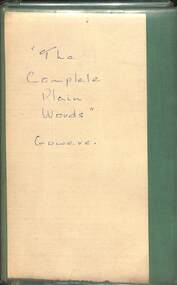
Book - The Complete Plain Words, Sir Ernesy Gowers, September 1960
... It became one of only four Government munitions factories operating at the start of World War II....It became one of only four Government munitions factories operating at the start of World War II. ...This book was written as the third book of two previous published books by Sir Ernest Gowers (Plain Words and ABC of Plain Words). All three books were written with the intention of improving English in written reports.Hard cover book with a plastic protective covernon-fictionThis book was written as the third book of two previous published books by Sir Ernest Gowers (Plain Words and ABC of Plain Words). All three books were written with the intention of improving English in written reports.ordnance factory, wests road, maribyrnong -
 Hume City Civic Collection
Book, Saltwater River History Trails
... Clarke, Ben Eadie, Rupertswood, Goonawarra Vineyard, Organ Pipes, Glenara, Walter Clark, Keilor, Overnewton, Avondale Heights, Solomons ford, Riverview Tea Gardens, Anglers Hotel, Aberfeldie Park, Humes Pipe Works, Powder Magazine, Maribyrnong, Munitions factories, Footscray Park, Flemington, Footscray, Yarraville, Newport, Williamstown, Commonwealth reserve, the blue stone lighthouse. ...Clarke, Ben Eadie, Rupertswood, Goonawarra Vineyard, Organ Pipes, Glenara, Walter Clark, Keilor, Overnewton, Avondale Heights, Solomons ford, Riverview Tea Gardens, Anglers Hotel, Aberfeldie Park, Humes Pipe Works, Powder Magazine, Maribyrnong, Munitions factories, Footscray Park, Flemington, Footscray, Yarraville, Newport, Williamstown, Commonwealth reserve, the blue stone lighthouse. ...This book which was printed in 1984 gives not only the geology of the area but also the history of the various areas that Jacksons Creek and the Saltwater River now known as the Maribyrnong River pass through. There are many drawings and photos accompanying the information relating to the various areas and buildings researched in this book. From Sunbury to Williamstown some of the names and places mentioned include John Aitken, George Evans, William J.T. Clarke, Ben Eadie, Rupertswood, Goonawarra Vineyard, Organ Pipes, Glenara, Walter Clark, Keilor, Overnewton, Avondale Heights, Solomons ford, Riverview Tea Gardens, Anglers Hotel, Aberfeldie Park, Humes Pipe Works, Powder Magazine, Maribyrnong, Munitions factories, Footscray Park, Flemington, Footscray, Yarraville, Newport, Williamstown, Commonwealth reserve, the blue stone lighthouse. One copy of this book has the author's signature on the inside first page. A small cream/olive green colour covered printed book of 74 pages. The front cover shows part of a pen and wash drawing of a homestead. It has the name of the book and the author Hugh Anderson printed at the top of the cover and Sunbury to the Sea printed at the bottom. There are many drawings and photos included in the book. The author Hugh Anderson has signed a copy on the inside first page.SALTWATER RIVER/HISTORY TRAILS/HUGH ANDERSON/Sunbury to the Seasaltwater river, maribyrnong river, jacksons creek, anderson hugh, sunbury, keilor, organ pipes national park, solomons ford, riverview tea gardens, humes pipe works, powder magazine, footscray, yarraville, newport, williamstown -
 Federation University Art Collection
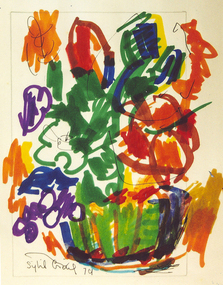
Drawing - Texta sketch, [Flower Bowl] by Sybil Craig, 1979
... She was the first woman to paint women working in the munitions’ factories. The Castlemaine Art Gallery & Historical Museum, held the first retrospective exhibition of Sybil Craig's in 2006. ...She was the first woman to paint women working in the munitions’ factories. The Castlemaine Art Gallery & Historical Museum, held the first retrospective exhibition of Sybil Craig's in 2006. ...Sybil CRAIG (18 November 1901-09 September 1989) Born London, England Arrived Australia 1902 The National Gallery School, Melbourne, gave Craig a sound training for her popular flower and portrait studies. However, her association with leading modernists between the wars led her to pursue her art in a deliberately experimental and spontaneous way. Sybil Craig was the third woman appointed by the Australian War Memorial as an official war artist. She was the first woman to paint women working in the munitions’ factories. The Castlemaine Art Gallery & Historical Museum, held the first retrospective exhibition of Sybil Craig's in 2006. The exhibition highlighted her wonderful use of colour and design in a diverse range of media, techniques and subject matter. This item is part of the Federation University Art Collection. The Art Collection features over 2000 works and was listed as a 'Ballarat Treasure' in 2007.ModernismDrawing in texta of a bright bowl of flowers.art, artwork, sybil craig, craig, texta, flowers -
 Federation University Art Collection
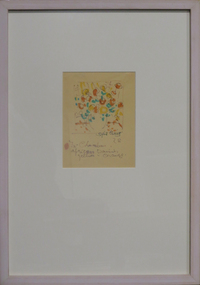
Drawing - Texta sketch, 'In Chamber African Daisies' by Sybil Craig', 1978
... She was the first woman to paint women working in the munitions’ factories. The Castlemaine Art Gallery & Historical Museum, held the first retrospective exhibition of Sybil Craig's in 2006. ...She was the first woman to paint women working in the munitions’ factories. The Castlemaine Art Gallery & Historical Museum, held the first retrospective exhibition of Sybil Craig's in 2006. ...Sybil CRAIG (18 November 1901-09 September 1989) Born London, England Arrived Australia 1902 The National Gallery School, Melbourne, gave Craig a sound training for her popular flower and portrait studies. However, her association with leading modernists between the wars led her to pursue her art in a deliberately experimental and spontaneous way. Sybil Craig was the third woman appointed by the Australian War Memorial as an official war artist. She was the first woman to paint women working in the munitions’ factories. The Castlemaine Art Gallery & Historical Museum, held the first retrospective exhibition of Sybil Craig's in 2006. The exhibition highlighted her wonderful use of colour and design in a diverse range of media, techniques and subject matter. This item is part of the Federation University Art Collection. The Art Collection features over 2000 works and was listed as a 'Ballarat Treasure' in 2007.ModernismFramed sketch of flowers undertaken in texta colour.art, artwork, sybil craig, craig, flora, texta, texta colour, available -
 Federation University Art Collection
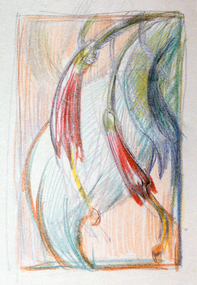
Drawing - Coloured pencil sketch, 'Untitled' by Sybil Craig
... She was the first woman to paint women working in the munitions’ factories. The Castlemaine Art Gallery & Historical Museum, held the first retrospective exhibition of Sybil Craig's in 2006. ...She was the first woman to paint women working in the munitions’ factories. The Castlemaine Art Gallery & Historical Museum, held the first retrospective exhibition of Sybil Craig's in 2006. ...Sybil CRAIG (18 November 1901-09 September 1989) Born London, England Arrived Australia 1902 The National Gallery School, Melbourne, gave Craig a sound training for her popular flower and portrait studies. However, her association with leading modernists between the wars led her to pursue her art in a deliberately experimental and spontaneous way. Sybil Craig was the third woman appointed by the Australian War Memorial as an official war artist. She was the first woman to paint women working in the munitions’ factories. The Castlemaine Art Gallery & Historical Museum, held the first retrospective exhibition of Sybil Craig's in 2006. The exhibition highlighted her wonderful use of colour and design in a diverse range of media, techniques and subject matter. This item is part of the Federation University Art Collection. The Art Collection features over 2000 works and was listed as a 'Ballarat Treasure' in 2007.Framed pencil drawing of a flower.art, artwork, sybil craig, craig, flowers, drawing -
 Federation University Art Collection
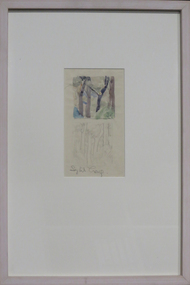
Drawing - Artwork, [Tree Study] by Sybil Craig
... She was the first woman to paint women working in the munitions’ factories. The Castlemaine Art Gallery & Historical Museum, held the first retrospective exhibition of Sybil Craig's in 2006. ...She was the first woman to paint women working in the munitions’ factories. The Castlemaine Art Gallery & Historical Museum, held the first retrospective exhibition of Sybil Craig's in 2006. ...Sybil CRAIG (18 November 1901-09 September 1989) Born London, England Arrived Australia 1902 The National Gallery School, Melbourne, gave Craig a sound training for her popular flower and portrait studies. However, her association with leading modernists between the wars led her to pursue her art in a deliberately experimental and spontaneous way. Sybil Craig was the third woman appointed by the Australian War Memorial as an official war artist. She was the first woman to paint women working in the munitions’ factories. The Castlemaine Art Gallery & Historical Museum, held the first retrospective exhibition of Sybil Craig's in 2006. The exhibition highlighted her wonderful use of colour and design in a diverse range of media, techniques and subject matter. This item is part of the Federation University Art Collection. The Art Collection features over 2000 works and was listed as a 'Ballarat Treasure' in 2007.Framed pencil and watercolour sketchart, artwork, sybil craig, craig, available, pencil drawing, watercolour -
 Federation University Art Collection
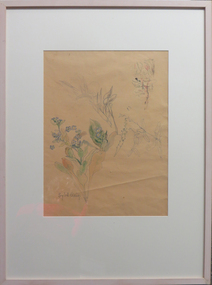
Drawing - Pencil ink & Water colour on paper, [Flower Study] by Sybil Craig
... She was the first woman to paint women working in the munitions’ factories. The Castlemaine Art Gallery & Historical Museum, held the first retrospective exhibition of Sybil Craig's in 2006. ...She was the first woman to paint women working in the munitions’ factories. The Castlemaine Art Gallery & Historical Museum, held the first retrospective exhibition of Sybil Craig's in 2006. ...Sybil CRAIG (18 November 1901-09 September 1989) Born London, England Arrived Australia 1902 The National Gallery School, Melbourne, gave Craig a sound training for her popular flower and portrait studies. However, her association with leading modernists between the wars led her to pursue her art in a deliberately experimental and spontaneous way. Sybil Craig was the third woman appointed by the Australian War Memorial as an official war artist. She was the first woman to paint women working in the munitions’ factories. The Castlemaine Art Gallery & Historical Museum, held the first retrospective exhibition of Sybil Craig's in 2006. The exhibition highlighted her wonderful use of colour and design in a diverse range of media, techniques and subject matter. This item is part of the Federation University Art Collection. The Art Collection features over 2000 works and was listed as a 'Ballarat Treasure' in 2007.Framed sketches of plantsSigned lower left side "Sybil Craig"art, artwork, sybil craig, craig, flora, plants, flowers, available -
 Federation University Art Collection
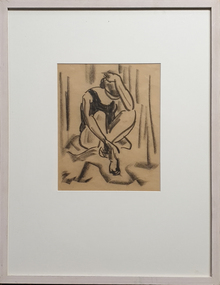
Drawing - Drawing - charcoal sketch, [Seated Woman] by Sybil Craig
... She was the first woman to paint women working in the munitions’ factories. The Castlemaine Art Gallery & Historical Museum, held the first retrospective exhibition of Sybil Craig's in 2006. ...She was the first woman to paint women working in the munitions’ factories. The Castlemaine Art Gallery & Historical Museum, held the first retrospective exhibition of Sybil Craig's in 2006. ...Sybil CRAIG (18 November 1901-09 September 1989) Born London, England Arrived Australia 1902 The National Gallery School, Melbourne, gave Craig a sound training for her popular flower and portrait studies. However, her association with leading modernists between the wars led her to pursue her art in a deliberately experimental and spontaneous way. Sybil Craig was the third woman appointed by the Australian War Memorial as an official war artist. She was the first woman to paint women working in the munitions’ factories. The Castlemaine Art Gallery & Historical Museum, held the first retrospective exhibition of Sybil Craig's in 2006. The exhibition highlighted her wonderful use of colour and design in a diverse range of media, techniques and subject matter. This item is part of the Federation University Art Collection. The Art Collection features over 2000 works and was listed as a 'Ballarat Treasure' in 2007.Framed life drawing by Sybil Craigart, artwork, sybil craig, craig, life drawing, life model, charcoal, drawing, available -
![Drawing - Pencil on Paper, [Group of sketches] by Sybil Craig, 1935](/media/collectors/530576742162ef0fa09a2288/items/534748169821f420f8c0373d/item-media/5eff422b21ea6712bcf90559/item-fit-380x285.jpg?cb=6) Federation University Art Collection
Federation University Art CollectionDrawing - Pencil on Paper, [Group of sketches] by Sybil Craig, 1935
... Based in Melbourne she worked for fourth months at the Commonwealth Ordinance Factory at Maribyrnong, becoming the first female artist to paint women working in the munitions factories. In her work Craig was attracted to many changing ideas and continued to explore line, rhythm, colour, simplicity and design. ...Based in Melbourne she worked for fourth months at the Commonwealth Ordinance Factory at Maribyrnong, becoming the first female artist to paint women working in the munitions factories. In her work Craig was attracted to many changing ideas and continued to explore line, rhythm, colour, simplicity and design. ...Sybil CRAIG (18/11/1901-09/09/1989) Born London, England Arrived Melbourne 1902 Died Melbourne, Victoria Sybil Frances Craig was a student of John Shirlow in 1920 who introduced her to French avant-garde artists such as Matisse and Gauguin. In 1924 she studied at the National Gallery of Victoria Art School. She also underook private classes with George Bellfor several months where individual expression was encouraged, and she became associated with a group of Modernist artists including Sam Atyeo. In 1945 Sybil Craig became the third woman to be appointed as an official war artist. Based in Melbourne she worked for fourth months at the Commonwealth Ordinance Factory at Maribyrnong, becoming the first female artist to paint women working in the munitions factories. In her work Craig was attracted to many changing ideas and continued to explore line, rhythm, colour, simplicity and design. This item is part of the Federation University Art Collection. The Art Collection features over 2000 works and was listed as a 'Ballarat Treasure' in 2007.Framed pencil sketch.art, artwork, sybil craig, australian war artist, kitchen -
![Drawing - Texta on paper, [Flower Study] by Sybil Craig, 2001](/media/collectors/530576742162ef0fa09a2288/items/534748169821f420f8c0373e/item-media/58cf4cb1d0ce1e3314911c72/item-fit-380x285.jpg?cb=6) Federation University Art Collection
Federation University Art CollectionDrawing - Texta on paper, [Flower Study] by Sybil Craig, 2001
... Based in Melbourne she worked for fourth months at the Commonwealth Ordinance Factory at Maribyrnong, becoming the first female artist to paint women working in the munitions factories. In her work Craig was attracted to many changing ideas and continued to explore line, rhythm, colour, simplicity and design. ...Based in Melbourne she worked for fourth months at the Commonwealth Ordinance Factory at Maribyrnong, becoming the first female artist to paint women working in the munitions factories. In her work Craig was attracted to many changing ideas and continued to explore line, rhythm, colour, simplicity and design. ...Sybil CRAIG (18/11/1901-09/09/1989) Born London, England Arrived Melbourne 1902 Died Melbourne, Victoria Sybil Frances Craig was a student of John Shirlow in 1920 who introduced her to French avant-garde artists such as Matisse and Gauguin. In 1924 she studied at the National Gallery of Victoria Art School. She also underook private classes with George Bellfor several months where individual expression was encouraged, and she became associated with a group of Modernist artists including Sam Atyeo. In 1945 Sybil Craig became the third woman to be appointed as an official war artist. Based in Melbourne she worked for fourth months at the Commonwealth Ordinance Factory at Maribyrnong, becoming the first female artist to paint women working in the munitions factories. In her work Craig was attracted to many changing ideas and continued to explore line, rhythm, colour, simplicity and design. This item is part of the Federation University Art Collection. The Art Collection features over 1000 works and was listed as a 'Ballarat Treasure' in 2007.Framed texta sketch of a correa.art, artwork, sybil craig, craig, flora, available, leaves, texta, texta colour, correa -
 Sunshine and District Historical Society Incorporated
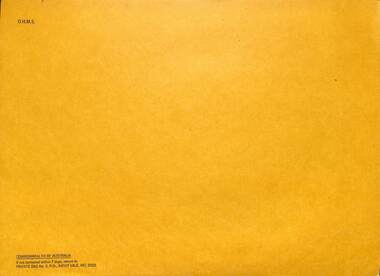
Archive - Commonwealth Of Australia Stationary
... Commonwealth Of Australia Munitions Filling Factory St. Mary NSW Envelope 4869.03 - Commonwealth Of Australia Stationary - Australian Defence Industries (ADI) Benalla VIC Envelope 4869.04 - Commonwealth Of Australia Stationary - Blank WW2 Secret Writing Paper 4869.05 - Commonwealth Of Australia Stationary - Blank WW2 Confidential Writing Paper...Commonwealth Of Australia Munitions Filling Factory St. Mary NSW Envelope 4869.03 - Commonwealth Of Australia Stationary - Australian Defence Industries (ADI) Benalla VIC Envelope 4869.04 - Commonwealth Of Australia Stationary - Blank WW2 Secret Writing Paper 4869.05 - Commonwealth Of Australia Stationary - Blank WW2 Confidential Writing Paper Collection of various Commonwealth Of Australia Stationary Archive Commonwealth Of Australia Stationary ...These items were typicaly used by the Department of Defense Departments which were located throughout Australia including Footscray, Maribyrnong & Ascot Vale. The blank WW2 "Secret" & "Confidential" writing paper were used by all Commonwealth of Australia Departments during WW24869.01 - Commonwealth Of Australia Stationary - O.H.M.S. Commonwealth Of Australia Ascot Vale VIC Envelope 4869.02 - Commonwealth Of Australia Stationary - O.H.M.S. Commonwealth Of Australia Munitions Filling Factory St. Mary NSW Envelope 4869.03 - Commonwealth Of Australia Stationary - Australian Defence Industries (ADI) Benalla VIC Envelope 4869.04 - Commonwealth Of Australia Stationary - Blank WW2 Secret Writing Paper 4869.05 - Commonwealth Of Australia Stationary - Blank WW2 Confidential Writing Paperstationary -
 Lara RSL Sub Branch
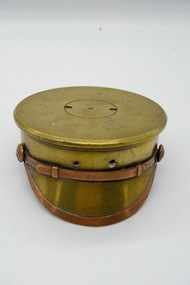
18 Pounder shell ashtray, Souvenir, 1927
... Artillery shells were designed to be recycled and spent shells were returned to the munitions factory for re-filling, a mark engraved upon the head-stamp at each re-filling. ...Artillery shells were designed to be recycled and spent shells were returned to the munitions factory for re-filling, a mark engraved upon the head-stamp at each re-filling. ...Artillery shells were designed to be recycled and spent shells were returned to the munitions factory for re-filling, a mark engraved upon the head-stamp at each re-filling. Millions upon millions of shells were recycled and re-fired. Relationships with ‘objects’ were forged as recycled objects of conflict were welcomed into people’s homes. Such objects were embodied with personal experiences of war, later to become objects textured with memory, remembrance, and longing – attributes that clearly go beyond an object’s form and function. 18-Pounder Artillery Shells: The Great War Recycled and Re-Circulated Categories :Material Culture Machine Subscribe Share on facebook Share on twitter The intention of war is to kill, to maim and to destroy using, for example, the agency of 18-pounder artillery shells (so-called because they weighed 18 pounds). The shells were loaded in to the 18-pounder field guns used by the Royal Artillery and targeted to destroy German batteries and trenches as well as to shoot down aeroplanes. Horse-drawn field gun, Canal du Nord, France. Taken by First World War photographer David McLellan. Available via the National Library of Scotland as CC BY-NC-SA Horse-drawn field gun, Canal du Nord, France. Taken by First World War photographer David McLellan. Available via the National Library of Scotland as CC BY-NC-SA In Under Fire, Henri Barbusse recounts how the incessant and diabolical din of war constantly bombarded the soldier body with the unendurable noise of bursting shells that caused pain to the ears (Barbusse 2010 [1933]: 207). The noise was so ‘monstrously resounding’ that one felt ‘annihilated by the mere sound of the downpour of thunder’ (Barbusse 2010 [1933]: 206). Artillery shells were designed to be recycled and spent shells were returned to the munitions factory for re-filling, a mark engraved upon the head-stamp at each re-filling. Millions upon millions of shells were recycled and re-fired. A mound of spent shell cases, Nord, Nord-pas-de-Calais, France. Taken by war photographer, Tom Aitken, 1918. Available via the National Library of Scotland as CC BY-NC-SA. A mound of spent shell cases, Nord, Nord-pas-de-Calais, France. Taken by war photographer, Tom Aitken, 1918. Available via the National Library of Scotland as CC BY-NC-SA. People’s experience of the First World War did not end with the armistice. Whilst the noise of the artillery had ceased, the noise of war was remembered. Harry Patch on arriving home injured recalled being ‘jumpy for a while’ with the least noise prompting him to dive for cover (2009: 114). Something else materialised. Relationships with ‘objects’ were forged as recycled objects of conflict were welcomed into people’s homes. Such objects were embodied with personal experiences of war, later to become objects textured with memory, remembrance, and longing – attributes that clearly go beyond an object’s form and function. The head-stamp of these particular shells displays the British broad arrow and the initials ‘EOC’ indicates that they were made at the Elswick Ordnance Company, England; the initials ‘CF’ signal that the charge was loaded with cordite, a standard propellant. Spent shells were illicitly scavenged from massive mounds by both soldiers and civilians alike to become personal souvenirs or to swap or sell. Spent artillery shells were crafted, often using a hammer and a bent nail. The crafting of trench art reflects the construction of an identity that offers momentary relief from the hell experienced in the trenches. The lid of an 18Pounder shell which has been adapted for use as an ash tray.Lot 27 1927, 18Pr, III, EOC, C/F, Defence broad arrow, -
 Flagstaff Hill Maritime Museum and Village
Drill Press, early to mid-20th century
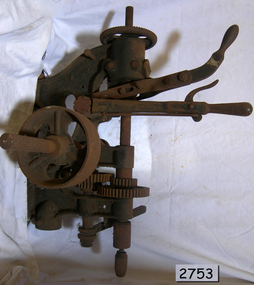
... Dawn was contracted to supply vices and clamps to the Australian Defence Department and munitions factory during the World War II. - 1959 the company was taken over by G.N. ...Dawn was contracted to supply vices and clamps to the Australian Defence Department and munitions factory during the World War II. - 1959 the company was taken over by G.N. ...This post drill press has been made by Melbourne business, Dawn Manufacturing Company. It can be operated manually or by a pulley driven flywheel, with the aid of an engine connected to a power supply. In the late 1800s early 1900s a drill press like this would have been driven by steam from a boiler, the main power source for manufacturer’s power at that time. Dawn’s Golden Anniversary 1917-1967 Catalogue describes this model 611 drill as … “Ruggedly constructed with accurately reamed bearings. The coupling between the main spindle and feed screw engages the full circumference of the spindle, and embraces a ball-bearing thrust race. The pillar, as in all “Dawn Drilling Machines” is a solid bright steel bar, in place of the usual light tubing. Adjustable automatic feed.” And “F. & l. Pulleys extra, if required”. DAWN MANUFACTURING CO. The Dawn Manufacturing Co. was founded in Coburg, Melbourne, in 1917 by the four Blake brothers, who were all engineers. After World War I Dawn was supplying drills Australia wide and the company was growing at a healthy rate. During the depression they remained busy, with employees working 60-80 hour weeks. Dawn was contracted to supply vices and clamps to the Australian Defence Department and munitions factory during the World War II. - 1959 the company was taken over by G.N. Raymond Group. - 1967 the Dawn Manufacturing Co. had distributors in Australia and overseas, including USA, Canada, New Zealand, Asia and the Middle East. - 1973 the Siddons Ramset Limited acquired Dawn. - December 1991, Dawn became a unit of the United States owned Stanley Works Pty. Ltd. - November 1998 Dawn became 100 per cent Australian owned. The drill is a typical tool of a blacksmith, cart wright, wheelwright and garage business. It is an example of the tools of the blacksmiths’ trade in Victoria in the early to mid-20th century.Post type drill press machine with gear driven flywheel. Drill press is attached to a post and is fitted with a pulley belt and will run at a speed of maxim 200 r.p.m. The machine can also be manually operated. It has an aperture in the centre, a chuck, for the drill bit and has two metal handles at the centre, on the right hand side. Gear ratio 2:1 main drive, 6" diam, 3:1 reduction gear. Made by Dawn of Melbourne, Australia. Model No. 611, Code No. 9157"DAWN MFG COY”, “MELB. AUSTRALIA", " 611"flagstaff hill, warrnambool, shipwrecked-coast, flagstaff-hill, flagstaff-hill-maritime-museum, maritime-museum, shipwreck-coast, flagstaff-hill-maritime-village, blacksmiths, blacksmith’s drill, blacksmith tools, dawn drill model no. 611, dawn drill code no. 9157, dawn manufacturing coy melbourne, dawn manufacturing coy coburg, dawn post drill, drilling machine, drill with gear driven flywheel, forging tool, metal working tool, post drill, steam powered drill, trade tool, warrnambool district 1900s -
 Bendigo Military Museum
Document - MECHANICAL TEST RESULTS, Thompson's Engineering and Pipe Works, 1942
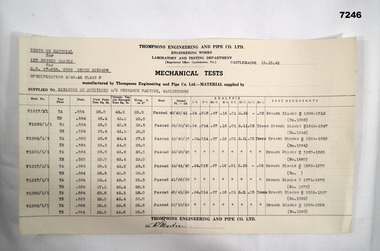
... To: Ministry of Munitions A/C Ordnance Factory Maribyrnong. The tests cover Breech Blocks. (1508 - 1513) (1542 - 1547) (1554 - 1559) (1560 - 1565) (1571 - 1575) (1582 - 1587) ...To: Ministry of Munitions A/C Ordnance Factory Maribyrnong. The tests cover Breech Blocks. (1508 - 1513) (1542 - 1547) (1554 - 1559) (1560 - 1565) (1571 - 1575) (1582 - 1587) Document MECHANICAL TEST RESULTS Thompson's Engineering and Pipe Works. ...By referring to Cat No 7237.2 will bring up all items associated with Thompsons.Single sheet of paper. Tests on material for 150 Breech blocks for QF 17 PDR Guns. From: Thompson's Engineering & Pipe Co. Ltd. dated 19/10/1942. To: Ministry of Munitions A/C Ordnance Factory Maribyrnong. The tests cover Breech Blocks. (1508 - 1513) (1542 - 1547) (1554 - 1559) (1560 - 1565) (1571 - 1575) (1582 - 1587) Signed off at bottom by (??) Martin.17 pdr a/tn gun, steel testing, ww2 -
 Flagstaff Hill Maritime Museum and Village
Drill Press, 1920s-1950s
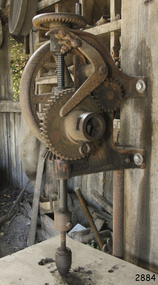
... Dawn was contracted to supply vices and clamps to the Australian Defence Department and munitions factory during the World War II. In 1959 the company was taken over by G.N. ...Dawn was contracted to supply vices and clamps to the Australian Defence Department and munitions factory during the World War II. In 1959 the company was taken over by G.N. ...This drill once belonged to Goodall and Sons, who were blacksmiths in Terang. The smith was called upon to do a variety of work. In the early 1900s he was often the nearest person to be able to perform an engineer’s services for many miles around. The Dawn Ball-bearing Post Drill no. 611 is described in McPherson’s Catalogue as a “drilling machine with adjustable automatic feed, with improved Dawn coupler and ball-bearing thrust’. The heavy design of the flywheel enables it to maintain momentum” and is “fitted with pulleys for belt drive if desired” The hand crank drives an automatic feed to work off a cam-follow system opposite a large wheel. Made by Dawn Manufacturing Co. Australia 1920-1950. DAWN MANUFACTURING CO. Dawn Manufacturing Co. was founded in Coburg, Melbourne, in 1917 by the four Blake brothers, who were all engineers. After World War I Dawn was supplying drills Australia wide and the company was growing at a healthy rate. During the depression they remained busy, with employees working 60-80 hour weeks. Dawn was contracted to supply vices and clamps to the Australian Defence Department and munitions factory during the World War II. In 1959 the company was taken over by G.N. Raymond Group, then in 1973 the Siddons Ramset Limited acquired Dawn. In December 1991, Dawn became a unit of the United States owned Stanley Works Pty. Ltd. In November 1998 Dawn became 100 per cent Australian owned. HENRY GOODALL & SONS Henry Goodall (1870-1936) was proprietor of garages as H. Goodall & Sons Pty. Ltd., at both Terang (McKinnon and High Streets) and Mortlake (Dunlop Street). His business was in operation in at least in 1916 and perhaps well before, considering the date of the tyre bender and its use for wagons with wooden wheels. It was still in operation in 1953, chasing up debtors in Mount Gambier Court. Amongst the employees of H. Goodall & Sons Pty. Ltd. was Ernie Entwistle, a blacksmith (a soldier who died in 1916 ) and Alfred Hodgetts, radio expert (killed in a fatal accident in 1943, when he was in his early 30s ). Henry Goodall was involved in the community as a Justice of Peace, a deputy coroner, President of the Mortlake Hospital, trustee of the Soldiers’ Memorial Hall, and as a prominent Freemason. He and his wife had two sons (Charles and John) and one daughter (Mrs. Chas. Newton, of Skipton). The drill is locally significant as it was used by a local company in Terang and Mortlake in their blacksmith, wheelwright and garage business. It is an example of the tools of the blacksmiths’ trade in Victoria in the 1920s-1950s.Dawn Ball-bearing Post Drill no. 611, made by Dawn of Melbourne, model no 611. Hand operated drill press. Self-feeding blacksmiths’ drill-press. This drill once belonged to Harry Goodall & Sons, blacksmiths of Terang. Dated 1920s-1950s. Gear ratio 2:1 main drive, 6" diam, 3:1 reduction gear. "Dawn", "Melbourne"flagstaff hill, warrnambool, shipwrecked-coast, flagstaff-hill, flagstaff-hill-maritime-museum, maritime-museum, shipwreck-coast, flagstaff-hill-maritime-village, h. goodall & sons of terang, terang blacksmith, h. goodall & sons pty ltd, mortlake, ernie entwistle blacksmith, alfred hodgetts radio expert, charles goodall, john goodall, mrs. chas. newton nee goodall, terang 1900s, warrnambool district 1900s, post drill, blacksmith’s drill, dawn post drill, dawn ball-bearing post drill no. 611, blacksmiths, dawn of melbourne
