
Showing 134 items matching " notes on eras"
-
 Bendigo Historical Society Inc.
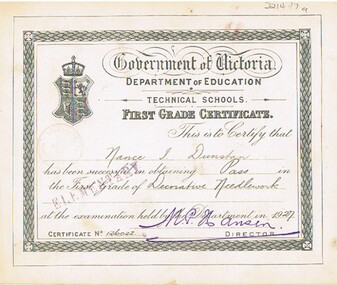
Document - NORMAN PENROSE COLLECTION: CERTIFICATES & NOTES ON ART ERAS, 1927 to 1931
... NORMAN PENROSE COLLECTION: CERTIFICATES & NOTES ON ART ERAS...... Notes on Eras...Document NORMAN PENROSE COLLECTION: CERTIFICATES & NOTES ON ART ERAS ...Document. Norman Penrose collection: 10 Department of Education Technical Schools Certificates (9 First Grade and 1 Second Grade.) with notes pertaining to art written on the back. Ballarat School of Mines No 10. 2 Department of Education Technical Schools Certificates. Ballarat School of Mines No 10.person, bendigo, norman william penrose, norman penrose collection, notes on eras, department of education technical schools certificates -
 Bendigo Historical Society Inc.
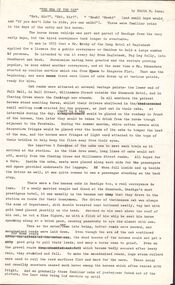
Document - THE ERA OF THE CAB BY EDITH M LUNN
... Typed notes titled 'The Era of the Cab' by Edith M. Lunn. ...DOCUMENT The Era of the Cab Edith M Lunn Mr Bruby Camp Hotel Mr Edmondson Shamrock Hotel Typed notes titled 'The Era of the Cab' by Edith M. ...Typed notes titled 'The Era of the Cab' by Edith M. Lunn. Notes mention the cabs in Bendigo, where the cab ranks were, hansom cabs and their drivers, travel from Eaglehawk to Sandhurst and from Epsom to Kangaroo Flat. Also mentions the coming of the motor car and the effect it had on the cabs and the horses.document, the era of the cab, edith m lunn, mr bruby, camp hotel, mr edmondson, shamrock hotel -
 Flagstaff Hill Maritime Museum and Village
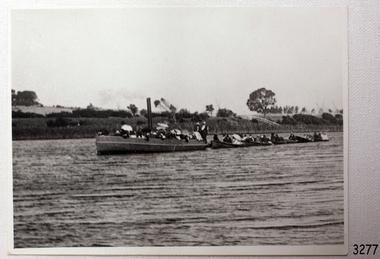
Photograph - Vessel, Steam Launch, Mrs. A. Dawson, Lady Loch, Feb 1907 - Jun 1910
... NOTE: - at least three vessels in Victoria were named Lady Loch; a river launch (ca 1884-ca 1916), a steamer ferry (1884-1920s) and a government steam lighthouse tender HMS Lady Loch (1886-1962) The photograph of the Lady Loch pleasure steamer represents the social and recreational activities of late 19th-century people from Warrnambool and the local district. It shows an example of the pleasure craft of that era ...The photograph shows the steam launch Lady Loch towing five rowing boats full of passengers on the Hopkins River at Warrnambool. The boat is travelling downstream from the riverbank near Jubilee Park towards Warrnambool and the river mouth. A similar trip in 1909 was a fund-raising excursion when the Lady Loch was to tow boats from Flett & Sons' boating establishment on the Hopkins River, travelling towards Jubilee Park. The photograph was taken between February 1907 and June 1910 by Mrs A. G. Dawson from the Hopkins River Bank at “Allandale”, which she was leasing. She took another photograph that day, which was published in the Warrnambool Standard on 24th March 1973. At the time of the photograph the launch Lady Loch was owned by James Flett & Son who operated a boatshed on the bend of the Hopkins River. The boat was described as “a fine little steamer”. In 1916 it was licenced to carry 42 passengers. The LADY LOCH: - In February 1884 Mr Sutton’s steam launch had the name of Lady of the Lake. The boat was part of the entertainment for a Sunday school picnic at Ballarat Lake and Gardens. In October 1884 Mr Ivey from Lake Wendouree purchased two vessels, the steamer Ballarat and Mr Sutton’s well-known and popular launch, Lady of the Lake, to join his own fleet of pleasure boats. In November 1887 Mr Mark Hooper’s purchase of a ‘new’ pleasure boat, Lady of the Lake, arrived in Colac to be an addition to his boating business. The launch had been transported by road from Ballarat, but the boiler and the engine had travelled by rail the previous day. In June 1888, Fanny Nelson purchased the steam launch Lady of the Lake for her Nelson’s Boating and Fishing Establishment on the Hopkins River, Warrnambool. She renamed it Lady Loch. People have suggested the mane was in honour of the wife of the then-current Governor of Victoria, Sir Henry Loch, and the local paper stated that Lady Loch flew the Governor’s colours of yellow, black and blue on her first trip under Nelson’s ownership, Sunday 12th August 1888. In 1890 Fanny Nelson sold her complete business, including Lady Loch, to Mr Chapman. in January 1897 James Flett & Sons, already involved in boating, purchased the business from Chapman. In January 1916, Flett advertised everything for sale, including the boatshed and the steam launch Lady Loch. NOTE: - at least three vessels in Victoria were named Lady Loch; a river launch (ca 1884-ca 1916), a steamer ferry (1884-1920s) and a government steam lighthouse tender HMS Lady Loch (1886-1962)The photograph of the Lady Loch pleasure steamer represents the social and recreational activities of late 19th-century people from Warrnambool and the local district. It shows an example of the pleasure craft of that era. The history of the Lady Loch includes the history of fishing and boat hire businesses of that period. The photograph is also connected with an early Warrnambool buat builder James Flett & Sons. representing the maritime history of the town.Photograph, black and white, of the steam launch Lady Loch towing five rowing boats downstream on the Hopkins River from Jubilee Park towards the river mouth. There are many figures on the boats. The photograph was taken from a property called Allandale on the south river bank between February 1907 and June 1910. The photographer was Mrs A. G. Dawson. The Lady Loch was owned by Mr James Flett & Sons at that time. The photograph is mounted on card.flagstaff hill, warrnambool, shipwrecked-coast, flagstaff-hill, flagstaff-hill-maritime-museum, maritime-museum, shipwreck-coast, flagstaff-hill-maritime-village, lady of the lake, lady of the lake steamer, lady loch steamer, lake colac steamer, hopkins river warrnambool, jubilee park warrnambool, francis maria mann, andrew abernathy nelson iiird, hopkins hotel, nelson's boathouse, chapman's boathouse, flett's boathouse, fanny (francis) nelson, james flett & sons -
 Flagstaff Hill Maritime Museum and Village
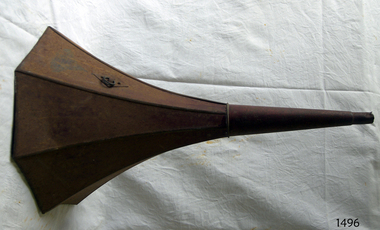
Audio - Phonograph Horn, Thomas A. Edison, Edison Laboratory, c.1909
... [NOTE: a phonograph machine plays cylinders, a gramophone plays records] This Edison external phonograph horn is significant for its connection to the c.1909 Edison Fireside phonograph model. The phonograph machine brought a new era ...This external horn is part of an Edison Fireside Phonograph made in c.1909. The horn was attached to the machine when in use. The rings on the side of the horn allowed the horn to be suspended above the machine. The narrow opening on the horn was attached to the sound outlet on the machine and the conical shape of the horn amplified the sound. The horn was suspended to allow a clear sound. This was done by attaching the ring fitted to the outside of the horn to a chain or chord, which in turn was attached to a curved wire fitted to the phonograph machine. The phonograph machine was invented by Thomas Alva Edison in the late 19th century. Edison adapted the idea used when sending messages over a telegraph machine. He patented the phonograph in early 1878. The phonograph was able to record sound and play it back sound. This amazing invention opened up a whole new world of entertainments, where wax cylinders of pre-recorded sound could be purchased with a wide variety of music and played over and over. The first wax cylinders were white and used a combination of bees' wax and animal fax or tallow. By 1892 Edison was using 'brown wax' cylinders that ranged from cream through to dark brown. The Edison Phonograph Company was formed in 1887 to produce these machines. He sold the company in 1855 to the North American Phonograph Company but bought that company in 1890. He started the Edison Spring Motor factory in 1895 and then the National Phonograph Company in 1896. In 1910 the company became Thomas A. Edison Inc. In 1898 Edison produced the Edison Standard Phonograph, the first phonograph to carry his own trade mark. He began mass producing duplicate copies of his wax cylinders in 1901 using moulds instead of engraving the cylinders. The wax was black and harder than the brown wax. The ends of the cylinders were bevelled so that the title's label could be added. The last phonograph machine to use an external horn was produced in 1912 due to the much more robust records being invented. In 1913 Edison started producing the Edison Disc Phonograph. The company stopped trading in 1929. [NOTE: a phonograph machine plays cylinders, a gramophone plays records]This Edison external phonograph horn is significant for its connection to the c.1909 Edison Fireside phonograph model. The phonograph machine brought a new era of music into the homes of everyday people but was only popular for a few decades due to the growing popularity of records, which gave a much higher quality sound and were more robust.Phonograph horn; open horn, a conical shape with the lower part flaring out. The horn's shape on the opening half is octagonal, made from eight joined sheets of metal with a scalloped finish at the opening. The narrow end is hollow and ready to fit onto a phonograph outlet. There are two rings attached together on the side of the horn, perhaps for storing on a hook. The inner surface of the horn has remnants of deep red paint. This horn is from the Edison Fireside phonograph. (There is a mark on the outside of the horn where the Edison brand would be)flagstaff hill, maritime museum, maritime village, warrnambool, great ocean road, shipwreck coast, gramophone, phonograph, music player, entertainment, audio equipment, edison, thomas a edison, horn, phonograph horn, amplifier, audio, sound recording, sound playback, phonograph machine, external horn, edison phonograph company, wax cylinders, edison spring motor factory, national phonograph company, thomas a. edison inc, phonographic cylinder, sound reproduction -
 Greensborough Historical Society
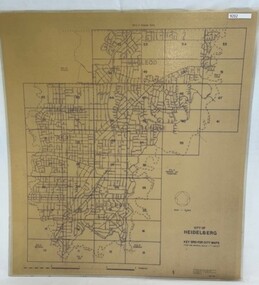
Poster - Map, City of Heidelberg, 1984
... note Ward boundaries not updated on this plan. An example of hard copy plans from the 1960s. Mainly from the Shire of Diamond Valley era (1964-1994). city of heidelberg mmbw Map printed on brown paper and laminated. ...Numbered grid map of the City of Heidelberg showing municipal boundaries in 1984 . Scale 1 inch to 160 feet. Side 2: MMBW Plans Yarra 2000, note Ward boundaries not updated on this plan.An example of hard copy plans from the 1960s. Mainly from the Shire of Diamond Valley era (1964-1994).Map printed on brown paper and laminated. Double sided.city of heidelberg, mmbw -
 Federation University Historical Collection
Sheet Music, Boosey & Hawkes Ltd, Sirius, Diversions on an Original Theme, mid 1900's
... era. 3). As well there are two distinct copies of all the printed parts for the music, one in portrait by Boosey & Hawkes Brass Band Journal 4). and the other in landscape by Molenaar. 5). The Molenaar edition also includes one large buff coloured edition of the printed music, 6). one blue covered printed edition of the music 7). and four small paper copies of the music. 8). Lastly is a hand written note...note 'Parts of Sirius' 1). This includes the original thirty-one page handwritten Full Military Band Score of 'Sirius, Diversions on an Original Theme' arranged by Frank Wright. It was written in pen in small, neat writing. 2). There is also a copied Full Orchestral Score, which was originally hand written in the style of the era ...Frank Wright was a renown resident of Smeaton, where he was born on 2 August 1901. He lived at Laura Villa, and attended Smeaton State School. His father William was a gold miner and his mother's name was Sarah. Their family won many singing and instrumental awards. Frank was tutored by Percy Code and was awarded a gold medal for the highest marks in the ALCM examinations in the British Colonies at the age of seventeen years. He became the Australian Open Cornet Champion by the age of eighteen. A year later, Frank conducted the City of Ballarat Band, and later the Ballarat Soldiers’ Memorial Band. He formed the Frank Wright Frisco Band and Frank Wright and his Coliseum Orchestra. These bands won many South Street awards, and Frank as conductor won many awards in the Australian Band Championship contest. In 1933 Frank Wright sailed to England to conduct the famous St Hilda’s Band and was later appointed Musical Director of the London County Council, where he organized many amazing concerts in parks, in and around the London district. He was made Professor of Brass and Military Band Scoring and conducted at the Guildhall of Music and Drama. Frank was often invited to adjudicate Brass Band Championships around Europe, in Australia, including South Street and in New Zealand. The Frank Wright Medal at the Royal South Street competition is awarded to an individual recognized as making an outstanding contribution to brass music in Australia.1). This includes the original thirty-one page handwritten Full Military Band Score of 'Sirius, Diversions on an Original Theme' arranged by Frank Wright. It was written in pen in small, neat writing. 2). There is also a copied Full Orchestral Score, which was originally hand written in the style of the era. 3). As well there are two distinct copies of all the printed parts for the music, one in portrait by Boosey & Hawkes Brass Band Journal 4). and the other in landscape by Molenaar. 5). The Molenaar edition also includes one large buff coloured edition of the printed music, 6). one blue covered printed edition of the music 7). and four small paper copies of the music. 8). Lastly is a hand written note from Frank Wright showing all the instruments used in this piece.The original score is handwritten as is the note 'Parts of Sirius'frank wright, musical arranger, sheet music, score, sirius diversions on an original theme, original score -
 Federation University Historical Collection
Article - Article - Women, Federation University: Women of Note; Anne Beggs-Suntar, Historical Studies, Lecturer and Author
... era, to the history of Ballarat and its heritage conservation, and the significance and commemoration of the Eureka Stockade. Anne is actively involved with a number of cultural institutions, including the Art Gallery of Ballarat, the Gold Museum and the Buninyong Historical Society, and serves on a number of City of Ballarat committees. She has written a number of books, exhibition catalogues and articles for different audiences ranging from specialised academic journals to newspapers. women of note ...Dr. Anne Beggs-Sunter is an historian who lectures in the School of Arts at Federation University Ballarat in Wathawurrung country. Her major interests are in Australian social, cultural and political history. Her special interests relate to the colonial era, to the history of Ballarat and its heritage conservation, and the significance and commemoration of the Eureka Stockade. Anne is actively involved with a number of cultural institutions, including the Art Gallery of Ballarat, the Gold Museum and the Buninyong Historical Society, and serves on a number of City of Ballarat committees. She has written a number of books, exhibition catalogues and articles for different audiences ranging from specialised academic journals to newspapers.women of note, dr anne beggs-suntar, historian, school of arts, federation university, social cultural political histories, history of ballarat, heritage conservation, eureka stockade, ballarat art gallery, gold museum, author, books articles, lecturer, historical studies -
 Federation University Historical Collection
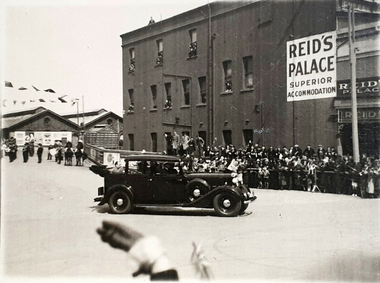
Photograph, Reid's Coffee Palace, Lydiard Street, Ballarat, c1930s ?
... Note the folded back roof which allows the passenger to be seen by the public. https://architectureau.com/articles/heritage-listed-gold-rush-era-ballarat-coffee-palace-receives-700000-conservation-grant/...Note the folded back roof which allows the passenger to be seen by the public. https://architectureau.com/articles/heritage-listed-gold-rush-era-ballarat-coffee-palace-receives-700000-conservation-grant/ reid's coffee palace ballarat railway station visitor bunting celebration Ballarat Verso - Post (Correspondence) Black and white photos of a car leaving the Ballarat Station (possibly carrying William Birdwood?). ...The special guest in the car appears to have arrived in Ballarat by train. Could it be William Birdwood to plant trees in the Ballarat Avenue of Honour? There is a band in the background. Note the folded back roof which allows the passenger to be seen by the public. https://architectureau.com/articles/heritage-listed-gold-rush-era-ballarat-coffee-palace-receives-700000-conservation-grant/Black and white photos of a car leaving the Ballarat Station (possibly carrying William Birdwood?). Reid's Coffee Palace is in the background Verso - Post (Correspondence)reid's coffee palace, ballarat railway station, visitor, bunting, celebration, ballarat -
 Flagstaff Hill Maritime Museum and Village
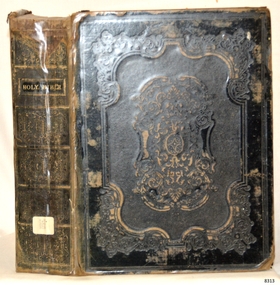
Book - Reference /Bible (King James Version), Dr Benjamin Blayney (Editor), The Holy Bible containing the Old and New Testaments 1871, 1871
... The BFBS had a strict constitutional rule during this era that they would only distribute English Bibles "without note or comment" to avoid sectarian bias, and they exclusively used the King James Version for English readers at this time (the English Revised Version wasn't published until 1881–1885). ...The BFBS had a strict constitutional rule during this era that they would only distribute English Bibles "without note or comment" to avoid sectarian bias, and they exclusively used the King James Version for English readers at this time (the English Revised Version wasn't published until 1881–1885). ...This specific 1871 Bible is a fascinating artifact from the height of 19th-century British industrial printing, combining massive theological authority with an effort to make large-scale family Bibles accessible to the general public. This specific edition represents a collaboration between two powerhouse institutions of 19th-century publishing. As one of the privileged "Royal Patent" holders in England, Oxford University Press (OUP) had the legal monopoly—alongside Cambridge University Press and the King's/Queen's Printer—to print the authorised King James Version of the Bible. Founded in 1804, the British and Foreign Bible Society (BFBS) was a massive charitable organisation dedicated to making Bibles affordable and accessible worldwide. Because they were a society and not a printer, they commissioned official presses like OUP to mass-produce Bibles according to strict guidelines.Hard cover book,The Holy Bible. Editor. Dr. Benjamin Blayney of Hertford College, Oxford. Publisher: Oxford University Press, Oxford. Date: 1871 Further Information: Black heaverly embossed pattered hardcover with a brown spine and lettering in gilt. The spine has a Library label with an inscription.non-fictionThis specific 1871 Bible is a fascinating artifact from the height of 19th-century British industrial printing, combining massive theological authority with an effort to make large-scale family Bibles accessible to the general public. This specific edition represents a collaboration between two powerhouse institutions of 19th-century publishing. As one of the privileged "Royal Patent" holders in England, Oxford University Press (OUP) had the legal monopoly—alongside Cambridge University Press and the King's/Queen's Printer—to print the authorised King James Version of the Bible. Founded in 1804, the British and Foreign Bible Society (BFBS) was a massive charitable organisation dedicated to making Bibles affordable and accessible worldwide. Because they were a society and not a printer, they commissioned official presses like OUP to mass-produce Bibles according to strict guidelines.flagstaff hill, warrnambool, shipwrecked coast, flagstaff hill maritime museum, maritime museum, shipwreck coast, flagstaff hill maritime village, great ocean road, book, pattison collection, warrnambool library, warrnambool mechanics’ institute, ralph eric pattison, corangamite regional library service, warrnambool city librarian, mechanics’ institute library, victorian library board, warrnambool books and records, warrnambool children’s library, the holy bible containing the old and new testaments 1871, dr benjamin blayney -
 Flagstaff Hill Maritime Museum and Village
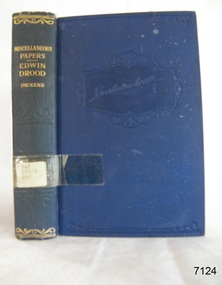
Book - Unfinished Fictional story, Charles Dickens, Miscellaneous Papers with (The Mystery of Edwin Drood), 1935
... era’s industrial society. Later, he edited magazines like “Household Words” and toured with dramatic readings. A train crash in 1865 worsened his health, leading to his death at age 58 while writing “The Mystery of Edwin Drood”. Buried in Westminster Abbey, his vivid characters and social commentary remain influential. (See note...era’s industrial society. Later, he edited magazines like “Household Words” and toured with dramatic readings. A train crash in 1865 worsened his health, leading to his death at age 58 while writing “The Mystery of Edwin Drood”. Buried in Westminster Abbey, his vivid characters and social commentary remain influential. (See note ...Charles Dickens (1812–1870) was one of the great English novelists of the Victorian era, famous for vivid characters, social criticism, and stories that were first published in serial form. He began as a journalist, rose to enormous popularity during his lifetime, and wrote major works such as Oliver Twist, David Copperfield, and Great Expectations. The subject novel “Miscellaneous Papers” with excerpts from “The Mystery of Edwin Drood” collects mid 19th century essays on topics like agriculture, crime, education, capital punishment, and includes tributes to figures such as W.M. Thackeray and Adelaide Anne Procter. Appended to the novel is “The Mystery of Edwin Drood,” Dickens's 1870 unfinished novel about Edwin Drood's disappearance amid opium addiction, obsession, and intrigue in Cloisterham, involving various suspects like John Jasper.Miscellaneous Papers and (The Mystery of Edwin Drood) Author: Charles Dickens Publisher: Hazell Watson and Viney Limited Date: 1935 Light blue leather embossed hardcover with a blue spine and lettering in gold. The spine has a Library label.fictionCharles Dickens (1812–1870) was one of the great English novelists of the Victorian era, famous for vivid characters, social criticism, and stories that were first published in serial form. He began as a journalist, rose to enormous popularity during his lifetime, and wrote major works such as Oliver Twist, David Copperfield, and Great Expectations. The subject novel “Miscellaneous Papers” with excerpts from “The Mystery of Edwin Drood” collects mid 19th century essays on topics like agriculture, crime, education, capital punishment, and includes tributes to figures such as W.M. Thackeray and Adelaide Anne Procter. Appended to the novel is “The Mystery of Edwin Drood,” Dickens's 1870 unfinished novel about Edwin Drood's disappearance amid opium addiction, obsession, and intrigue in Cloisterham, involving various suspects like John Jasper.book, the old curiosity shop, charles dickens, shipwrecked-coast, flagstaff-hill, flagstaff-hill-maritime-museum, warrnambool, maritime-museum, flagstaff-hill-maritime-village, pattison collection, warrnambool library, warrnambool mechanics’ institute, ralph eric pattison, corangamite regional library service, warrnambool city librarian, mechanics’ institute library, victorian library board, warrnambool books and records, warrnambool children’s library, great ocean road -
 Flagstaff Hill Maritime Museum and Village
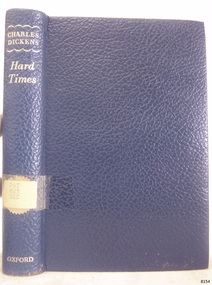
Book - A Political Critique, Charles Dickens et al, Hard Times for These Times, 1955
... era in Britain. The label on the spine with typed text PAT. 823. DIC Front fly cover has Title and Publisher Details for year 1955. Hard Cover edition, Hard Times for These Times Author: Charles Dickens. Publisher: Oxford University Press, London. Date: 1955 first published in book form 1854 (See note ...Charles Dickens (1812–1870) was one of the great English novelists of the Victorian era, famous for vivid characters, social criticism, and stories that were first published in serial form. He began as a journalist, rose to enormous popularity during his lifetime, and wrote major works such as Oliver Twist, David Copperfield, and Great Expectations. “Hard Times For These Times” is a short but fiercely satirical novel by Charles Dickens, first published in 1854. It is set in the grim industrial town of Coketown and attacks the worship of utilitarianism, the dehumanising effects of factory labour, and the wider social divide between the wealthy owners and the impoverished workers of the Victorian industrial era in Britain.Hard Cover edition, Hard Times for These Times Author: Charles Dickens. Publisher: Oxford University Press, London. Date: 1955 first published in book form 1854 (See note section this document for more information on Edition). Blue leather hardcover, Spine has Author and Title in gold lettering. The spine has a Library label and no Volume information.fictionCharles Dickens (1812–1870) was one of the great English novelists of the Victorian era, famous for vivid characters, social criticism, and stories that were first published in serial form. He began as a journalist, rose to enormous popularity during his lifetime, and wrote major works such as Oliver Twist, David Copperfield, and Great Expectations. “Hard Times For These Times” is a short but fiercely satirical novel by Charles Dickens, first published in 1854. It is set in the grim industrial town of Coketown and attacks the worship of utilitarianism, the dehumanising effects of factory labour, and the wider social divide between the wealthy owners and the impoverished workers of the Victorian industrial era in Britain.book, the old curiosity shop, charles dickens, shipwrecked-coast, flagstaff-hill, flagstaff-hill-maritime-museum, warrnambool, maritime-museum, flagstaff-hill-maritime-village, pattison collection, warrnambool library, warrnambool mechanics’ institute, ralph eric pattison, corangamite regional library service, warrnambool city librarian, mechanics’ institute library, victorian library board, warrnambool books and records, warrnambool children’s library, great ocean road, hard times for these times -
 Flagstaff Hill Maritime Museum and Village
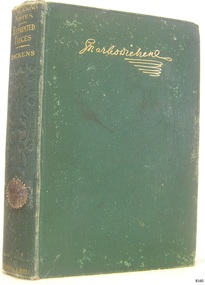
Book - A Fictional Story, Charles Dickens et al, American Notes and Reprinted Pieces, 1913
... era, famous for vivid characters, social criticism, and stories that were first published in serial form. He began as a journalist, rose to enormous popularity during his lifetime, and wrote major works such as Oliver Twist, David Copperfield, and Great Expectations. Dickens wrote “American Notes ...Charles Dickens (1812–1870) was one of the great English novelists of the Victorian era, famous for vivid characters, social criticism, and stories that were first published in serial form. He began as a journalist, rose to enormous popularity during his lifetime, and wrote major works such as Oliver Twist, David Copperfield, and Great Expectations. Dickens wrote “American Notes” for general circulation, it is Dickens’s travel account of his 1842 trip through the United States and Canada, written as a sequence of observations on travel, cities, institutions, and society in general. It includes chapters on the voyage to America visiting Boston, New York, Philadelphia, Washington. The American railway and steamboat systems, Canada, and a concluding chapter on slavery. The “Reprinted Pieces” part of the book is a companion gathering of shorter Dickens items, so the subject volume is not just a travel book but a collected volume pairing it with miscellaneous prose.American Notes and Reprinted Pieces. Author: Charles Dickens. Publisher: Chapman & Hall Ltd, London. Date: 1913. (See note section this document for more information on Edition). Green leather hardcover with title on spine in gold lettering, Charles Dickens signature on front cover written in gold lettering. The spine has a Library label and no Volume information.fictionCharles Dickens (1812–1870) was one of the great English novelists of the Victorian era, famous for vivid characters, social criticism, and stories that were first published in serial form. He began as a journalist, rose to enormous popularity during his lifetime, and wrote major works such as Oliver Twist, David Copperfield, and Great Expectations. Dickens wrote “American Notes” for general circulation, it is Dickens’s travel account of his 1842 trip through the United States and Canada, written as a sequence of observations on travel, cities, institutions, and society in general. It includes chapters on the voyage to America visiting Boston, New York, Philadelphia, Washington. The American railway and steamboat systems, Canada, and a concluding chapter on slavery. The “Reprinted Pieces” part of the book is a companion gathering of shorter Dickens items, so the subject volume is not just a travel book but a collected volume pairing it with miscellaneous prose.book, the old curiosity shop, charles dickens, shipwrecked-coast, flagstaff-hill, flagstaff-hill-maritime-museum, warrnambool, maritime-museum, flagstaff-hill-maritime-village, pattison collection, warrnambool library, warrnambool mechanics’ institute, ralph eric pattison, corangamite regional library service, warrnambool city librarian, mechanics’ institute library, victorian library board, warrnambool books and records, warrnambool children’s library, great ocean road -
 City of Moorabbin Historical Society (Operating the Box Cottage Museum)
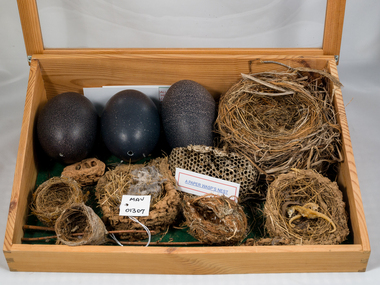
Education, Nests, Eggs in a Glass Case, c1900
... notes that often accompany the eggs can be as valuable to curators as the eggs themselves. Details have helped scientists understand the changes in bird nesting behavior in the past century and some of these historical eggs have also played a role in major scientific discoveries. Early settlers in Moorabbin Shire were fascinated by the new flora and fauna they found in the local and wider countryside. This is a typical collection of natural objects of an early settler in Moorabbin Shire 19thC when Charles Darwin inspired a general interest in the evolution of species bird's eggs c1900, bird's nests c1900, victorian era ...Egg and nest collecting was considered a hobby for the 19thC Victorian gentlemen and the handwritten notes that often accompany the eggs can be as valuable to curators as the eggs themselves. Details have helped scientists understand the changes in bird nesting behavior in the past century and some of these historical eggs have also played a role in major scientific discoveries. Early settlers in Moorabbin Shire were fascinated by the new flora and fauna they found in the local and wider countryside.This is a typical collection of natural objects of an early settler in Moorabbin Shire 19thC when Charles Darwin inspired a general interest in the evolution of speciesA collection of bird eggs, nests and a seahorse in a wooden display box with a glass lid .bird's eggs c1900, bird's nests c1900, victorian era collectors, early settlers, pioneers, moorabbin shire, bentleigh, cheltenham, natural sciences, ornithology, darwin charles, -
 Ringwood and District Historical Society
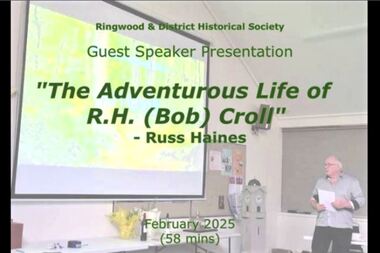
Mixed media - Video, RDHS Meeting Presentation - "The Adventurous Life of R.H. (Bob) Croll" - Russ Haines
... In this presentation, Ringwood and District Historical Society President Russ Haines provides a brief profile of Bob Croll, man of adventure, pioneer of amateur athletics in Victoria, a writer of collective note, an explorer of indigenous culture, as well as mixing with important artists, sculptors and authors of the pre-WW1 era. ...In this presentation, Ringwood and District Historical Society President Russ Haines provides a brief profile of Bob Croll, man of adventure, pioneer of amateur athletics in Victoria, a writer of collective note, an explorer of indigenous culture, as well as mixing with important artists, sculptors and authors of the pre-WW1 era. ...Digitised video (2.67GB). Duration: 58minutes. Recorded February, 2025 (Video is available for viewing at Ringwood & District Historical Society Archives by appointment)In this presentation, Ringwood and District Historical Society President Russ Haines provides a brief profile of Bob Croll, man of adventure, pioneer of amateur athletics in Victoria, a writer of collective note, an explorer of indigenous culture, as well as mixing with important artists, sculptors and authors of the pre-WW1 era. Bob shared his travels with eminent psychologist Stanley Porteus, the son of Ringwood Methodist David Porteus and his wife, Katherine, who attended Ringwood State School. Bob's walking adventures included following Canterbury Road up into the hills, through the Ringwood area of "heath" into the wonderful hamlets around Mount Dandenong. -
 Seaworks Maritime Museum
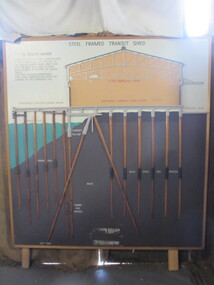
Diagram
... "Steel Frames Transit Shed/ 15 South Wharf/ Model of Typical wharf construction/ of 1940- made for the opening of/ the "new" 15 South wharf shed (1944),/ Note the deep piles and elevated/ rear of the shed to allow for the truck/ trays./ This shed feature disappeared/ from port construction with the/ coming of the container era/ reinforced wharf apron/ 3 ton travelling crane/ reinforced concrete shed floor/ concrete road/ water level/ concrete pile cap/ cradled piles/ timber pile splices/ mud/ mild steel pile splices/ 110 ft pile" "On loan from Port of Melbourne Authority"..."Steel Frames Transit Shed/ 15 South Wharf/ Model of Typical wharf construction/ of 1940- made for the opening of/ the "new" 15 South wharf shed (1944),/ Note the deep piles and elevated/ rear of the shed to allow for the truck/ trays./ This shed feature disappeared/ from port construction with the/ coming of the container era/ reinforced wharf apron/ 3 ton travelling crane/ reinforced concrete shed floor/ concrete road/ water level/ concrete pile cap/ cradled piles/ timber pile splices/ mud/ mild steel pile splices/ 110 ft pile" "On loan from Port of Melbourne Authority" Wooden diagram of a transit shed featuring a shed sitting atop mud with some water. ...Cross section of wharves and steel framed sheds built along the Yarra river between the 1920s and 1960s. The South Melbourne side of the Yarra River is reclaimed swamp land. Without a solid foundation for the construction of the wharves and transit sheds, extended piles were sunk into the mud to support the wharf and shed structures. An example of this design may be found at 5 South Wharf which was built in the 1930s. The transit sheds gave shelter for cargo while waiting to be loaded onto a ship or to be collected by truck after being unloaded from a ship. The transit shed became surplus to requirements with the introduction of containers.Wooden diagram of a transit shed featuring a shed sitting atop mud with some water. It shows the splices sitting in the mud to support the shed. "Steel Frames Transit Shed/ 15 South Wharf/ Model of Typical wharf construction/ of 1940- made for the opening of/ the "new" 15 South wharf shed (1944),/ Note the deep piles and elevated/ rear of the shed to allow for the truck/ trays./ This shed feature disappeared/ from port construction with the/ coming of the container era/ reinforced wharf apron/ 3 ton travelling crane/ reinforced concrete shed floor/ concrete road/ water level/ concrete pile cap/ cradled piles/ timber pile splices/ mud/ mild steel pile splices/ 110 ft pile" "On loan from Port of Melbourne Authority" -
 The Beechworth Burke Museum
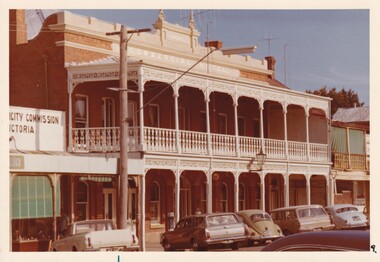
Photograph, 1970-71
... era ended in 1967, after almost a century. Over its long history, the hotel hosted figures such as the Governor of Victoria in 1906, and reputedly even Ned Kelly. The photos depict the hotel's prominent exterior and antique interiors and furnishings, as well as Gray’s personal interest in antiques. One photograph shows Gray’s family at a Chinese burning tower. The reverse of the photographs contain Gray's handwritten notes...era ended in 1967, after almost a century. Over its long history, the hotel hosted figures such as the Governor of Victoria in 1906, and reputedly even Ned Kelly. The photos depict the hotel's prominent exterior and antique interiors and furnishings, as well as Gray’s personal interest in antiques. One photograph shows Gray’s family at a Chinese burning tower. The reverse of the photographs contain Gray's handwritten notes ...This is a Kodak film packet of colour photographs of the historic Tanswell's Commercial Hotel, Beechworth. They were taken by William Gray in 1970–71, soon after the Tanswell era ended in 1967, after almost a century. Over its long history, the hotel hosted figures such as the Governor of Victoria in 1906, and reputedly even Ned Kelly. The photos depict the hotel's prominent exterior and antique interiors and furnishings, as well as Gray’s personal interest in antiques. One photograph shows Gray’s family at a Chinese burning tower. The reverse of the photographs contain Gray's handwritten notes. He later opened his own studio in Ivanhoe. These photographs have historic significance as they depict the Tanswell's Commercial Hotel- a notable example of Australian country hotel architecture and a prominent local landmark. Furthermore, these photographs were taken prior to the restoration works hence depicting the original colour and texture of the facade's brickwork. These photographs also have artistic significance as they beautifully capture the antique interiors of the hotel.Colour rectangular photographs printed on matte photographic paper unmounted8496.1: Obverse: 9. 8496.1: Reverse: Tanswell's Historic Hotel/Beechworth/About 1970-71?/8496 8496.2: Obverse: 12. 8496.2: Reverse: Tanswell's Historic Hotel/Beechworth/Remarkable ____ ____/1971/8496 8496.3: Obverse: 10. 8496.3: Reverse: Upstairs Antique Furniture/Incl: Triple 'Love Seat'/Tanswells Historic Hotel/Beechworth/About 1970-71/8496 8496.4: Obverse: 16. 8496.4: Reverse: Tanswell's Historic Pub/Beechworth/Upstairs Antique Room/1971/8496 8496.8: Reverse: 1971?/Tanswell's Historic Hotel/Beechworth/Upstairs Antique Room/Triple "Love Seat"/Later.../I bought a red _____/'Double' Love Seat for/__ studio+_____/It was not successful/8496 8496.5: Obverse: 15. 8496.5: Reverse: Bard, Susan, Rosemary Gray/+Sasha (Dalmatian)/Probably Beechworth Cemetry/About 1970-71?/8496 8496.6: Obverse: 14. 8496.6: Reverse: Tanswells Historic Hotel/Beechworth/Upstairs Dining Room/1971/8496 8496.7: Obverse: 11. 8496.7: Reverse: Tanswells Historic Hotel/Beechworth/1st ___/Antique Lounge/About 1970-71/8496 8496.8: Obverse: 13.tanswells commercial hotel, tanswells hotel, beechworth 1970s, william gray, antique furniture -
 Ringwood and District Historical Society
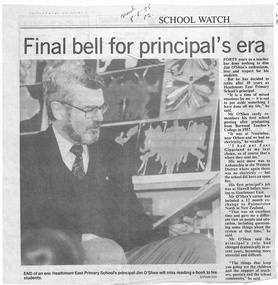
Newspaper, Heathmont East Primary School Article: "Final Bell for principal's era" (Jim O'Shea) 8 Aug 1995
... era. Summary: "Jim O’Shea, long‑serving principal of Heathmont East Primary School, is retiring after a 40‑year teaching career, including a decade leading the school. The article highlights his enthusiasm, his strong rapport with students, and the respect he earned from the school community. It traces his career from his graduation in 1957 through various teaching posts across Victoria and a year in New Zealand. Although he notes...era. Summary: "Jim O’Shea, long‑serving principal of Heathmont East Primary School, is retiring after a 40‑year teaching career, including a decade leading the school. The article highlights his enthusiasm, his strong rapport with students, and the respect he earned from the school community. It traces his career from his graduation in 1957 through various teaching posts across Victoria and a year in New Zealand. Although he notes ...Newspaper article with a photo. Final Bell for Principal Jim O'Shea's era. Summary: "Jim O’Shea, long‑serving principal of Heathmont East Primary School, is retiring after a 40‑year teaching career, including a decade leading the school. The article highlights his enthusiasm, his strong rapport with students, and the respect he earned from the school community. It traces his career from his graduation in 1957 through various teaching posts across Victoria and a year in New Zealand. Although he notes that the principal’s role has become increasingly stressful, he says the students and the support of staff and families have kept him motivated. The accompanying photo caption marks his retirement as “the end of an era.”' (Co Pilot AI Summary) -
Glen Eira Historical Society
Letter - Bellecourt, Seymour Road, 85, Elsternwick
... Also included is a document giving additional details on Bellecourt with a black and white illustration (85mm x 130mm) of the house, source unknown though handwritten notes provide that it is a duplicate from the book Caulfield’s Building Heritage Bellecourt Buildings Heritage studies Architectural features History Johnston Mr Hart Trevor Town clerks Caulfield South Filbert Street Beemery Glen Eira Road Kooyong Road Seymour Road Blanche Street Kooyong Estate Caulfield Caulfield North Langdon Charles Pettey Rosecraddock Rose Craddock Tarqua Hengar Victorian style Seymour Street Kooyong Estate Beemery Park Extension Langdon H J Langdon Montague Lirrewa Rennick Samuel The Garrell Langdon family Victorian era Neringa Little Gromer Little Cromer Parson Charles Moloney James Trezise Alex Vassy Albert Johnston Mrs Solomon G Caulfield’s Heritage Volume 1 City of Caulfield City of Glen Eira Heritage Management Plan Ward Andrew Belemery Park Johnston Archibald Letter Bellecourt, Seymour Road, 85, Elsternwick ...A typewritten letter to Mr Johnston from the National Trust Victoria, concerning the listing of Bellecourt by the Trust. The file also includes a print of the Victorian Heritage Database web page on Bellecourt with a black and white photograph (60mm x 45mm) of the house. Also included is a document giving additional details on Bellecourt with a black and white illustration (85mm x 130mm) of the house, source unknown though handwritten notes provide that it is a duplicate from the book Caulfield’s Building Heritagebellecourt, buildings, heritage studies, architectural features, history, johnston mr, hart trevor, town clerks, caulfield south, filbert street, beemery, glen eira road, kooyong road, seymour road, blanche street, kooyong estate, caulfield, caulfield north, langdon charles pettey, rosecraddock, rose craddock, tarqua, hengar, victorian style, seymour street, kooyong estate, beemery park extension, langdon h j, langdon montague, lirrewa, rennick samuel, the garrell, langdon family, victorian era, neringa, little gromer, little cromer, parson charles, moloney james, trezise alex, vassy albert, johnston mrs, solomon g, caulfield’s heritage , volume 1 city of caulfield, city of glen eira heritage management plan, ward andrew, belemery park, johnston archibald -
Glen Eira Historical Society
Article - Murrumbeena Cricket Club
... Paul Amy, SIR DONS LAST STAND, clipping from Caulfield/Port Phillip Leader. 13/03/2012, on Don McDermott, member of the Club for sixty years, includes photograph PORT’S DAY KIN FINDS FORM WITH CLASSY CENTURY, from Glen Eira/Port Phillip Leader, 06/11/2012, includes recent match by Murrumbeena against Chelsea Brad Beitzel, WICKETS FALL BUT PORT STILL A CHANCE, clipping from Glen Eira/Port Phillip Leader, 26/02/2013, notes recent match by Murrumbeena against Cheltenham FOUR DAY MATCH SHOULD YIELD A RESULT, clipping from Glen Era/Port Phillip Leader, 19/03/2013, notes loss in match by Murrumbeena to Brighton District...Paul Amy, SIR DONS LAST STAND, clipping from Caulfield/Port Phillip Leader. 13/03/2012, on Don McDermott, member of the Club for sixty years, includes photograph PORT’S DAY KIN FINDS FORM WITH CLASSY CENTURY, from Glen Eira/Port Phillip Leader, 06/11/2012, includes recent match by Murrumbeena against Chelsea Brad Beitzel, WICKETS FALL BUT PORT STILL A CHANCE, clipping from Glen Eira/Port Phillip Leader, 26/02/2013, notes recent match by Murrumbeena against Cheltenham FOUR DAY MATCH SHOULD YIELD A RESULT, clipping from Glen Era/Port Phillip Leader, 19/03/2013, notes loss in match by Murrumbeena to Brighton District Murrumbeena Cricket Club Murrumbeena Sporting Clubs Cricket Clubs Armstrong J.R. ...MURRUMBEENA CRICKET CLUB HISTORY (1890-2005) by David Hardham, thirty-four pages printed from computer of the history of the Club, with photographs and accounts of major players and figures, dated January 2005. MURRUMBEENA CRICKET CLUB HISTORY by David Hardham, fifteen pages printed from computer of the history of the Club, dated October 2002. No photographs. Also includes a CD, submitted by David Hardham, with the text of the 2002 history, and photograph of THE PETER ROBERTSON OVAL sign Large and small black and white photocopies of photograph of THE PETER ROBERTSON OVAL sign, with persons standing underneath, no date but possibly from late 1930s Collection of EPHEMERA TO ADD TO MURRUMBEENA CRICKET CLUB’S FILE, THEIR CENTENARY CELEBRATIONS, 21/11/2010. Includes invitation to attend dinner, with information about payment options and sales of club memorabilia. Murrumbeena Cricket Club, Inc Annual Report, Season 2002-2003, foutry-eight page pamphlet with historical lists of office bearers, and results of matches in 2002-2003. Includes lists of RECORDED NOTABLE PERFORMANCES, FROM SEASON 1945-55 by John Dennis, Club Historian ‘BEENA QUINELLA clipping from Caulfield/Port Phillip Leader, 17/05/2010, an recent match SEVEN UP FOR POYAS AS SAINTS HAVE THEIR WAY WITH MORDI, clipping from Caulfield/Port Phillip Leader, 24/05/2011, includes recent match by Murrumbeena, and VAMPIRES RISE, SAINTS DRAINED, clipping from Caulfield/Port Phillip Leader, 31/05/2011, notes that MURRUMBEENA HAD THE BYE. Paul Amy, IT’S BEENS TOP TON, clipping from Caulfield/Port Phillip Leader, 16/11/2010, article on forthcoming Club 100th Anniversary Dinner, with photograph of Club STALWARTS David Hartham, Don McDermott and Leigh Hardham. Paul Amy, SIR DONS LAST STAND, clipping from Caulfield/Port Phillip Leader. 13/03/2012, on Don McDermott, member of the Club for sixty years, includes photograph PORT’S DAY KIN FINDS FORM WITH CLASSY CENTURY, from Glen Eira/Port Phillip Leader, 06/11/2012, includes recent match by Murrumbeena against Chelsea Brad Beitzel, WICKETS FALL BUT PORT STILL A CHANCE, clipping from Glen Eira/Port Phillip Leader, 26/02/2013, notes recent match by Murrumbeena against Cheltenham FOUR DAY MATCH SHOULD YIELD A RESULT, clipping from Glen Era/Port Phillip Leader, 19/03/2013, notes loss in match by Murrumbeena to Brighton Districtmurrumbeena cricket club, murrumbeena, sporting clubs, cricket clubs, armstrong j.r., riley t.j., robertson p.t., watson j.f., glenie f., armstrong f., backman e.r., bristowe l.l., moore r., ridgeway j.j., schrape f., walker t., wolsley e., forscutt a., whelan f., rundell c.m., berry j., gilbert j.j., watson a.j., kirk t.e., schrape a.j., mcalister j.w., watson e.a., williams v.j., hardham m.f., hindmarsh j., stevens b.t., macwhirter j.c., harbour n.l., mcdermott j.a., watson k.g., graham a.m., johnston d.c., white p.o., mcdermott r.e.s., pugh g.h., trevethan w.j., macwhirter d.j., blaze r.e., healy d.l., hidson p.e., way p.j., hardham d.m., mcdermott d.a., dennis j.r., hardham. l.a., wilkinson d.j., graham j.e., gifford s., goold s.c., walker i.l., harbour mrs e., newton p.s., weaver d.a., fielder j.g., hay g.i., paton a., hay s.j., bailes j., gray j., dutton w., gray r., martin s., martin j., horton m., pugh v., west j., day e.j., wilde w.j., watson j.f., watson a.j., hanna r., butler w.g., wanliss t.n., cooke a.r., coghill r.g., ryan g.m., parker r.j., hayes h.j., hay p.g., de laine g., thompson h., dick r.l., rees v., burns g.m., crook mr., day w.e., cooper h., day e.j., mudge l.v., wilde w.j., cooper a.k., pellissier m.t., hardham mrs g.l., blum p.a., allamby d., smale r., mark j., hancock s., kivell d., fitts b., murphy d., roach a., walker w., jayasuriya k., driver w., gilbert j.a., hiland p., vandersluys m., singelton w., mcnabb j., taylor b., burne n. -
 Kiewa Valley Historical Society
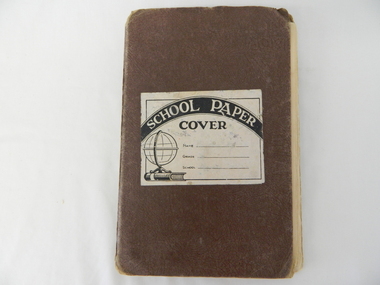
Binder Victorian Education 1947, Circa 1947
... era" in general knowledge, was used by schools in Victoria as a basic starting point for a particular level of perceived knowledge. The general articles and extracts contained within, were not targeting a specific gender or socio economic sector but designed for all children at a particular stage of their development. This publication did have a format of: 1st page topical, e.g. ANZAC day scouting (U.N.), one page of regional Victoria, one page of poetry, one page of short stories, one page of world history and the last page of a song, complete with appropriate notes...era" in general knowledge, was used by schools in Victoria as a basic starting point for a particular level of perceived knowledge. The general articles and extracts contained within, were not targeting a specific gender or socio economic sector but designed for all children at a particular stage of their development. This publication did have a format of: 1st page topical, e.g. ANZAC day scouting (U.N.), one page of regional Victoria, one page of poetry, one page of short stories, one page of world history and the last page of a song, complete with appropriate notes ...These educational publications covering a topical monthly theme and providing a slice "of the era" in general knowledge, was used by schools in Victoria as a basic starting point for a particular level of perceived knowledge. The general articles and extracts contained within, were not targeting a specific gender or socio economic sector but designed for all children at a particular stage of their development. This publication did have a format of: 1st page topical, e.g. ANZAC day scouting (U.N.), one page of regional Victoria, one page of poetry, one page of short stories, one page of world history and the last page of a song, complete with appropriate notes. These publications were produced during the second World War and made special references to it. This publication occurred during a period when the Education Department was highly authoritarian in its approach to State levels of learning. Fragmenting "special" schools like later "New Age" teaching methods and doctrines (home schooling) were repressed with considerable force.This binder full of monthly educational studies was particularly important to "hidden away" rural communities such as in the Kiewa Valley, especially at this point in time (World War II). The teaching methods used by local schools provided the necessary break through required by local school children to stop any adverse knowledge deficiencies due to factors of regional isolation. School children with in the Kiewa Valley would be able to integrate with children from all regions, weather in cities or larger towns. This hard cover (card) binder contains 11 monthly publications produced by the Victorian Department of Education for Grades 7 and 8 in the year 1947. Each issue has 16 pages with the cover page covering the major theme for the month. Each issue is placed within the folder by the folded middle page constrained by a thin cord. This is the only method to contain each monthly edition as they have no clasp or are stapled.The folder"SCHOOL PAPER COVER" underneath and to the left is a sketch of the world (revolving desk top stand) on top of a book and next to this "Name ------------ " underneath "Grade-----------" underneath "School---------" all enclosed by a thin border line.school paper, victorian education curriculum, education news letters, loose leaf educational binders -
 Kiewa Valley Historical Society
Book - Reference Teaching Infants, Royal School Series Royal Readers No. VI, circa 1889
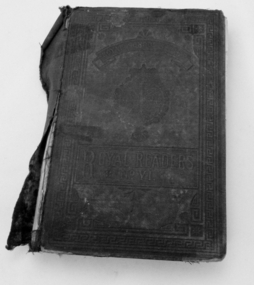
... notes and questions on the text in each section for guidance of the teachers. It is doubtful that this book was used in any schools in the Kiewa Valley but is valuable as a resource to explore how and what topics were being taught in this era . education schools 19th century There is a red stamp on the first page and apart from 'Education Department' the remaining four lines are almost illegible. ...A typical book of general education considered suitable for use in schools in the last two decades of the 19th century. It contains a variety of subjects e.g. Victorian Constitution, Australian Zoology, Life in Saxon England, and poetical pieces, with notes and questions on the text in each section for guidance of the teachers.It is doubtful that this book was used in any schools in the Kiewa Valley but is valuable as a resource to explore how and what topics were being taught in this era .Book, hard cover, dark blue in colour with embossing on the front cover. Spine cover has separated from most of book. There are pages missing from the back of the book.There is a red stamp on the first page and apart from 'Education Department' the remaining four lines are almost illegible. Above the stamp is handwritten in blue ink S.S. 2733. The front cover is embossed and is titled Royal School Series, and underneath this is Royal Readers VI. education, schools, 19th century -
 Warrnambool and District Historical Society Inc.
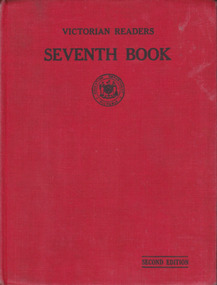
Book, Victorian Readers, Seventh Book. 2nd Edition, 1940
... notes and comments related to each contribution. The significance lies in that it was in common use for a period of approximately 30 years by students in Victoria. It shows the breadth of reading material and the educational standard of that era ...Seventh part of series of Victorian Readers, Education Department of Victoria. It contains a selection of plays, newspaper articles, legends, diary excerpts, prose and poetry by Australian writers as well as from the classic works of Shakespeare, Scott, Byron and Tennyson. There are notes and comments related to each contribution. The significance lies in that it was in common use for a period of approximately 30 years by students in Victoria. It shows the breadth of reading material and the educational standard of that era.Red cloth, hard book cover, 242 Pages. Contents text is black with black and white drawings, interspersed with stories and poemsBarbara Sizeland, Form 1C WHS written in dark blue ink RH top corner.”Education Department of Victoria logo in black on front cover. “He who loveth a book will never want a faithful friend, a wholesome counselor, a cheerful friend or an effectual comforter.” is printed on title page.warrnambool high school, victorian readers, seventh book, sizeland education of children, reading matter. authors: international england, us, australia, africa. sir walter scott, john masefield, john bunyan, henry kendall, rudyard kipling, lord byron, tennyson, abraham lincoln, a.b paterson, mark twain. illustrators john rowell, r c fricke, a.t bernaldo. -
 Eltham District Historical Society Inc
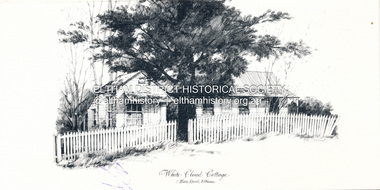
Greeting Card, Bill Caldwell, Sketch (reprint): White Cloud Cottage, Bill Caldwell n.d, c.1982
... era. Built in the 1850s, this small cottage, also known as White Cloud or Skippers Cottage, is one of the oildest buildings in Eltham. In the tiny shop at the side of the cottage locals could have their boots soled by Mr. John Henry Clark, the boot and harness maker (and former photographer of note...era. Built in the 1850s, this small cottage, also known as White Cloud or Skippers Cottage, is one of the oildest buildings in Eltham. In the tiny shop at the side of the cottage locals could have their boots soled by Mr. John Henry Clark, the boot and harness maker (and former photographer of note ...Greeting card from Neville Emerson and Staff with sketch commissioned by Neville Emerson Real Estate. The image was also used on the Wiregrass Gallery calendar for 1982 or 1983 Jarrold Cottage Set only metres from Eltham's busy Main Road is this striking reminder of a bygone era. Built in the 1850s, this small cottage, also known as White Cloud or Skippers Cottage, is one of the oildest buildings in Eltham. In the tiny shop at the side of the cottage locals could have their boots soled by Mr. John Henry Clark, the boot and harness maker (and former photographer of note) who boarded with the Jarrolds. "he did a first rate job!" recalls one enthusiastic local. Aside from its early temporary use as Eltham's first Police Station, Jarrold Cottage also attracted attention from one writer in 1902 because of its "Surrey or Sussex village" qualities and its " essentially English" village pond. Remnants of the original pond are still visible amongst the willows.Christmas card 9.5 x 19.5 cmart, bill caldwell, main road, white cloud cottage, artist, fay bridge collection, neville emerson real estate, sketches, wiregrass gallery calendar -
 Eltham District Historical Society Inc
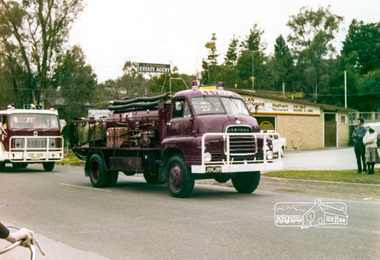
Photograph, Eltham Fire Brigade, Eltham Community Festival Parade, Main Road opposite Wingrove Park, 4 August 1978, 04/08/1978
... notes will continue to be available from the Eltham Shire Offices and the tour may be under-taken at any time. The exhibition was divided into two sections. The Eltham Society displayed early photographs associated with the walking tour, whilst the Warrandyte Society showed their photographs and artefacts of the Warrandyte gold era. ...notes will continue to be available from the Eltham Shire Offices and the tour may be under-taken at any time. The exhibition was divided into two sections. The Eltham Society displayed early photographs associated with the walking tour, whilst the Warrandyte Society showed their photographs and artefacts of the Warrandyte gold era. ...Eltham Community Festival, 4-13 August 1978 Newsletter No. 3 September 1978 Eltham Community Festival. This year’s Eltham Community Festival was held from August 4th to 13th. The society was involved with the Warrandyte Historical Society in arranging an exhibition at the Community Centre and also provided notes and a map for a self-guided walking tour of historic buildings and locations around Eltham. Copies of notes will continue to be available from the Eltham Shire Offices and the tour may be under-taken at any time. The exhibition was divided into two sections. The Eltham Society displayed early photographs associated with the walking tour, whilst the Warrandyte Society showed their photographs and artefacts of the Warrandyte gold era. An outstanding feature was the large "blow-up" photos of early Warrandyte. Colour photographeltham, main road, eltham festival, alan whitmore estate agents, shell service station, mount pleasant road, parade, parade float, wingrove park, fire brigrade -
 Eltham District Historical Society Inc
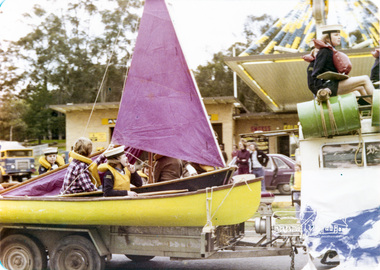
Photograph, 2nd Eltham Sea Scouts, Eltham Parade, Main Road opposite Wingrove Park, August 1978, 04/08/1978
... notes will continue to be available from the Eltham Shire Offices and the tour may be under-taken at any time. The exhibition was divided into two sections. The Eltham Society displayed early photographs associated with the walking tour, whilst the Warrandyte Society showed their photographs and artefacts of the Warrandyte gold era. ...notes will continue to be available from the Eltham Shire Offices and the tour may be under-taken at any time. The exhibition was divided into two sections. The Eltham Society displayed early photographs associated with the walking tour, whilst the Warrandyte Society showed their photographs and artefacts of the Warrandyte gold era. ...Eltham Community Festival, 4-13 August 1978 Newsletter No. 3 September 1978 Eltham Community Festival. This year’s Eltham Community Festival was held from August 4th to 13th. The society was involved with the Warrandyte Historical Society in arranging an exhibition at the Community Centre and also provided notes and a map for a self-guided walking tour of historic buildings and locations around Eltham. Copies of notes will continue to be available from the Eltham Shire Offices and the tour may be under-taken at any time. The exhibition was divided into two sections. The Eltham Society displayed early photographs associated with the walking tour, whilst the Warrandyte Society showed their photographs and artefacts of the Warrandyte gold era. An outstanding feature was the large "blow-up" photos of early Warrandyte. Two colour photographseltham, main road, eltham festival, alan whitmore estate agents, shell service station, mount pleasant road, parade, parade float, wingrove park, 2nd eltham sea scouts -
 Eltham District Historical Society Inc
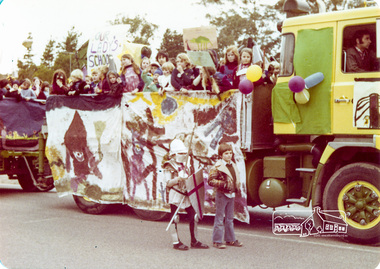
Photograph, Our Lady's School, Eltham Community Festival Parade, Main Road opposite Wingrove Park, 4 August 1978, 04/08/1978
... notes will continue to be available from the Eltham Shire Offices and the tour may be under-taken at any time. The exhibition was divided into two sections. The Eltham Society displayed early photographs associated with the walking tour, whilst the Warrandyte Society showed their photographs and artefacts of the Warrandyte gold era. ...notes will continue to be available from the Eltham Shire Offices and the tour may be under-taken at any time. The exhibition was divided into two sections. The Eltham Society displayed early photographs associated with the walking tour, whilst the Warrandyte Society showed their photographs and artefacts of the Warrandyte gold era. ...Eltham Community Festival, 4-13 August 1978 Newsletter No. 3 September 1978 Eltham Community Festival. This year’s Eltham Community Festival was held from August 4th to 13th. The society was involved with the Warrandyte Historical Society in arranging an exhibition at the Community Centre and also provided notes and a map for a self-guided walking tour of historic buildings and locations around Eltham. Copies of notes will continue to be available from the Eltham Shire Offices and the tour may be under-taken at any time. The exhibition was divided into two sections. The Eltham Society displayed early photographs associated with the walking tour, whilst the Warrandyte Society showed their photographs and artefacts of the Warrandyte gold era. An outstanding feature was the large "blow-up" photos of early Warrandyte. Colour photographeltham, main road, eltham festival, alan whitmore estate agents, shell service station, mount pleasant road, parade, parade float, wingrove park, our ladys school -
 Eltham District Historical Society Inc
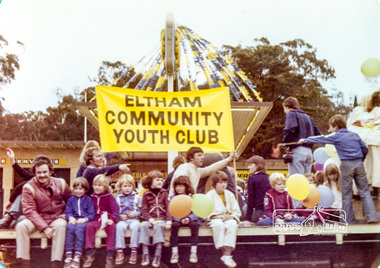
Photograph, Eltham Community Youth Club, Eltham Community Festival Parade, Main Road opposite Wingrove Park, 4 August 1978, 04/08/1978
... notes will continue to be available from the Eltham Shire Offices and the tour may be under-taken at any time. The exhibition was divided into two sections. The Eltham Society displayed early photographs associated with the walking tour, whilst the Warrandyte Society showed their photographs and artefacts of the Warrandyte gold era. ...notes will continue to be available from the Eltham Shire Offices and the tour may be under-taken at any time. The exhibition was divided into two sections. The Eltham Society displayed early photographs associated with the walking tour, whilst the Warrandyte Society showed their photographs and artefacts of the Warrandyte gold era. ...Eltham Community Festival, 4-13 August 1978 Newsletter No. 3 September 1978 Eltham Community Festival. This year’s Eltham Community Festival was held from August 4th to 13th. The society was involved with the Warrandyte Historical Society in arranging an exhibition at the Community Centre and also provided notes and a map for a self-guided walking tour of historic buildings and locations around Eltham. Copies of notes will continue to be available from the Eltham Shire Offices and the tour may be under-taken at any time. The exhibition was divided into two sections. The Eltham Society displayed early photographs associated with the walking tour, whilst the Warrandyte Society showed their photographs and artefacts of the Warrandyte gold era. An outstanding feature was the large "blow-up" photos of early Warrandyte. Colour photographeltham, main road, eltham festival, alan whitmore estate agents, shell service station, mount pleasant road, parade, parade float, wingrove park -
 Eltham District Historical Society Inc
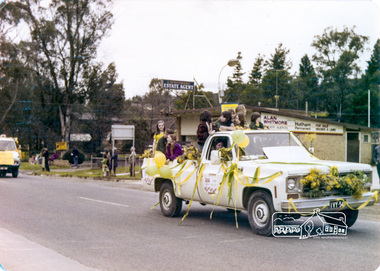
Photograph, Eltham Community Festival Parade, Main Road opposite Wingrove Park, 4 August 1978, 04/08/1978
... notes will continue to be available from the Eltham Shire Offices and the tour may be under-taken at any time. The exhibition was divided into two sections. The Eltham Society displayed early photographs associated with the walking tour, whilst the Warrandyte Society showed their photographs and artefacts of the Warrandyte gold era. ...notes will continue to be available from the Eltham Shire Offices and the tour may be under-taken at any time. The exhibition was divided into two sections. The Eltham Society displayed early photographs associated with the walking tour, whilst the Warrandyte Society showed their photographs and artefacts of the Warrandyte gold era. ...Eltham Community Festival, 4-13 August 1978 Newsletter No. 3 September 1978 Eltham Community Festival. This year’s Eltham Community Festival was held from August 4th to 13th. The society was involved with the Warrandyte Historical Society in arranging an exhibition at the Community Centre and also provided notes and a map for a self-guided walking tour of historic buildings and locations around Eltham. Copies of notes will continue to be available from the Eltham Shire Offices and the tour may be under-taken at any time. The exhibition was divided into two sections. The Eltham Society displayed early photographs associated with the walking tour, whilst the Warrandyte Society showed their photographs and artefacts of the Warrandyte gold era. An outstanding feature was the large "blow-up" photos of early Warrandyte. Colour photographeltham, main road, eltham festival, alan whitmore estate agents, shell service station, mount pleasant road, parade, parade float, wingrove park -
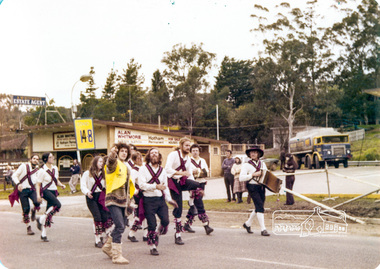 Eltham District Historical Society Inc
Photograph, Eltham Community Festival Parade, Main Road opposite Wingrove Park, 4 August 1978, 04/08/1978
... notes will continue to be available from the Eltham Shire Offices and the tour may be under-taken at any time. The exhibition was divided into two sections. The Eltham Society displayed early photographs associated with the walking tour, whilst the Warrandyte Society showed their photographs and artefacts of the Warrandyte gold era. ...notes will continue to be available from the Eltham Shire Offices and the tour may be under-taken at any time. The exhibition was divided into two sections. The Eltham Society displayed early photographs associated with the walking tour, whilst the Warrandyte Society showed their photographs and artefacts of the Warrandyte gold era. ...Eltham Community Festival, 4-13 August 1978 Newsletter No. 3 September 1978 Eltham Community Festival. This year’s Eltham Community Festival was held from August 4th to 13th. The society was involved with the Warrandyte Historical Society in arranging an exhibition at the Community Centre and also provided notes and a map for a self-guided walking tour of historic buildings and locations around Eltham. Copies of notes will continue to be available from the Eltham Shire Offices and the tour may be under-taken at any time. The exhibition was divided into two sections. The Eltham Society displayed early photographs associated with the walking tour, whilst the Warrandyte Society showed their photographs and artefacts of the Warrandyte gold era. An outstanding feature was the large "blow-up" photos of early Warrandyte. Colour photographeltham, main road, eltham festival, alan whitmore estate agents, shell service station, mount pleasant road, parade, parade float, wingrove park -
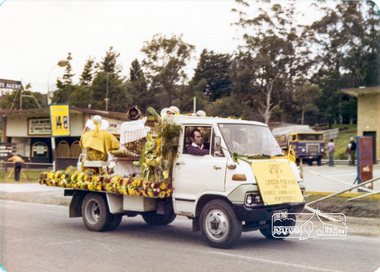 Eltham District Historical Society Inc
Photograph, Country Womens Association Montmorency, Eltham Community Festival Parade, Main Road opposite Wingrove Park, 4 August 1978, 04/08/1978
... notes will continue to be available from the Eltham Shire Offices and the tour may be under-taken at any time. The exhibition was divided into two sections. The Eltham Society displayed early photographs associated with the walking tour, whilst the Warrandyte Society showed their photographs and artefacts of the Warrandyte gold era. ...notes will continue to be available from the Eltham Shire Offices and the tour may be under-taken at any time. The exhibition was divided into two sections. The Eltham Society displayed early photographs associated with the walking tour, whilst the Warrandyte Society showed their photographs and artefacts of the Warrandyte gold era. ...Eltham Community Festival, 4-13 August 1978 Second photo of 5 ladies very motion blurred but ladies named are L to R: Edi Levi, Joyce Finster, Thelma Smith, Jean Spencer, Norma Williams. Newsletter No. 3 September 1978 Eltham Community Festival. This year’s Eltham Community Festival was held from August 4th to 13th. The society was involved with the Warrandyte Historical Society in arranging an exhibition at the Community Centre and also provided notes and a map for a self-guided walking tour of historic buildings and locations around Eltham. Copies of notes will continue to be available from the Eltham Shire Offices and the tour may be under-taken at any time. The exhibition was divided into two sections. The Eltham Society displayed early photographs associated with the walking tour, whilst the Warrandyte Society showed their photographs and artefacts of the Warrandyte gold era. An outstanding feature was the large "blow-up" photos of early Warrandyte. Two colour photographs (one very blurry but with members names on it)eltham, main road, eltham festival, alan whitmore estate agents, shell service station, mount pleasant road, parade, parade float, wingrove park, country women's association, montmorency, edi levi, joyce finster, thelma smith, jean spencer, norma williams
