
Showing 30 items matching " pacific art"
-
 Bendigo Military Museum
Memorabilia - TRENCH ART, PACIFIC STAR, Late 1945 (estimated)
... TRENCH ART, PACIFIC STAR...Two rings on back of Pacific Star Ribbon. Memorabilia TRENCH ART, PACIFIC STAR ...Belonged to Keith David Livingston VX136969 2nd AIF. Refer Cat No 1911P for service history. Made from sections of 5 colours of tooth brush handles to represent a "Pacific Star" Service Ribbon. Two rings on back of Pacific Star Ribbon.model making, military history - souvenirs, trench art -
 Women's Art Register
Archive (Series) - Eye of the Storm, The. Subject File 1
... ... Pacific Art...Indigenous Cotemporary Pacific Art Fiona Foley Emily Kame Kngwarreye Lisa Bellear Foolscap white archival 4 flap folder or document wallet Archive Eye of the Storm, The. ...indigenous, cotemporary, pacific art, fiona foley, emily kame kngwarreye, lisa bellearindigenous, cotemporary, pacific art, fiona foley, emily kame kngwarreye, lisa bellear -
Women's Art Register
Archive (Collection) - Eye of the Storm, The Exhibition Archive
... ... Pacific Art...1977 Indigenous Cotemporary Pacific Art Fiona Foley Emily Kame Kngwarreye Lisa Bellear Archive Eye of the Storm, The Exhibition Archive ...indigenous, cotemporary, pacific art, fiona foley, emily kame kngwarreye, lisa bellearindigenous, cotemporary, pacific art, fiona foley, emily kame kngwarreye, lisa bellear -
Women's Art Register
Archive (Collection) - New Zealand Women's Art Archive Research Archive
... Pacific... National Art Gallery...1971-1984 Women Feminism Aotearoa Pacific National Art Gallery Wellington WAA Archive New Zealand Women's Art Archive Research Archive ...women, feminism, aotearoa, pacific, national art gallery, wellington, waawomen, feminism, aotearoa, pacific, national art gallery, wellington, waa -
Women's Art Register
Archive (Series) - New Zealand Women's Art Archive. Subject File 1
... Pacific... National Art Gallery...Women Feminism Aotearoa Pacific National Art Gallery Wellington WAA Foolscap white archival 4 flap folder or document wallet Archive New Zealand Women's Art Archive. ...Catalogues, Articles, Newsletterwomen, feminism, aotearoa, pacific, national art gallery, wellington, waawomen, feminism, aotearoa, pacific, national art gallery, wellington, waa -
 RMIT Design Archives
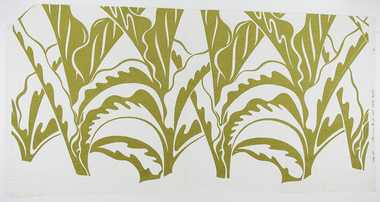
Textile lengths, Canna leaf
... Burke’s modern abstract textile designs incorporated motifs and colours inspired by Australian Indigenous art, Pacific Island cultures, Australian flora and fauna, English gardens, and the sea and its wildlife. ...Burke’s modern abstract textile designs incorporated motifs and colours inspired by Australian Indigenous art, Pacific Island cultures, Australian flora and fauna, English gardens, and the sea and its wildlife. ...Dr. Frances Mary Burke (1907 - 1994) was a textile designer and printer, businesswoman, artist and Australian design advocate and retailer. Burke’s modern abstract textile designs incorporated motifs and colours inspired by Australian Indigenous art, Pacific Island cultures, Australian flora and fauna, English gardens, and the sea and its wildlife. Following Burke’s death in 1994, her life-long companion Miss Fabie Chamberlain donated the contents of Burke’s studio to RMIT University.Single colour screenprint, white fabric with chartreuse coloured print of positive large format design featuring large stylised canna leaf motif.Printed on selvedge 'CANNA LEAF' a "Frances Burke" UNIT COLOUR DESIGN'textile, australian flora, rmit design archives -
 Federation University Historical Collection
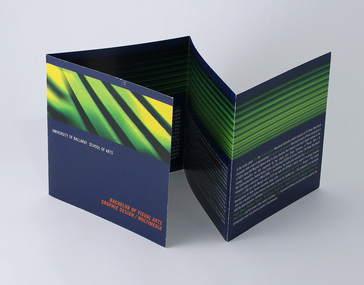
Pamphlet - Promotional brochure, Bachelor of Visual Arts, Graphic Design/Multimedia, c1999
... Pacific region." The brochure lists student awards received including Platinum and Gold in the AGFA International Young Designer Contest, 1999; two meritorious awards in The Art Directors Club Student Awards, New York, USA 1999; Graphis New Talent 1999; two Gold in Souther Cross Packaging Awards, 1998. ...Pacific region." The brochure lists student awards received including Platinum and Gold in the AGFA International Young Designer Contest, 1999; two meritorious awards in The Art Directors Club Student Awards, New York, USA 1999; Graphis New Talent 1999; two Gold in Souther Cross Packaging Awards, 1998. ...Promoting the Graphic Design/Multimedia program being offered by the University of Ballarat at the Mt Helen Campus. Promoted course as "one of the smallest and arguably the best three year programs of its kind in Australia and the South Pacific region." The brochure lists student awards received including Platinum and Gold in the AGFA International Young Designer Contest, 1999; two meritorious awards in The Art Directors Club Student Awards, New York, USA 1999; Graphis New Talent 1999; two Gold in Souther Cross Packaging Awards, 1998. At time of publication, the School of Arts, Visual Arts reportedly had 210 students with majors in Graphic Design/Multimedia, Ceramics/3D, Painting, Drawing, and Multidiscipline. Minors studies included Printmaking, Photography, 3D, 2D, and Graphic Communication. ___ Course aimed to train "independent, flexible thinkers". The course promised to "Promote creativity, originality and imaginative thinking; Develop self-directed learners, displaying initiative in the formation of ideas and the confidence to construct personal responses; Develop appropriate conceptual, technical and professional skills; Develop the student's critical process: ability to undertake research, and to make informed decisions; Clarify thinking, concepts and understanding and deep knowledge, attitudes and skills enabling the designer to respond to community needs." Studio and working environment described as "one open space with working facilities for approximately 75 students across 3 year levels. The area is divided up into work stations where 1st, 2nd and 3rd year students intermix, allowing a natural interaction. These workstations are configurations of six, consisting of two students from each year level. This reinforces the area's ongoing development with an open ethos and cross-level delivery and learning. This maximises the use of information in order for it to be applied throughout all levels of the learning process, whilst allowing a natural mentor arrangment to be developed for all first year students, " "The open ethos approach also encourages students and staff to freely express their opinions in relation to design via cross-level critiques, whilst allowing for a liberal arts approach and structure to the development of the creative process." "Emphasis is placed on experimentation, innovation, expression and the development of the individual's design philosophies, concepts and style." Also notes the 24 hour access Macintosh laboratory, with 34 Power Macintosh computers, ratio of one for every 2.5 students. Each with a Fujitsu Dyna Magneto Optical drive for file storage and transport. Two Sharp scanners, Phaser Dye-Sublimation Extra Tabloid colour printer and Ricoh A3 colour printer. Two large format printers. Digital and video cameras. Software: Adobe Photoshop, Illustrator, Acrobat; QuarkXpress; Macromedia Freehand; Pagemaker; Premier; Director; 3D Extreme; Sound Eidt, Shockwave, Infinite 3D and After Effects. Approx 4.5 staff, "all of whom are practicing designers. They have a full understanding of industry requirements and trends which assists in the development of industrial contacts when specialists are required." Prospective students interviewed in late Nov/ early Dec, face to face. Present a "comprehensive folio of work", academic records, references. "Selection is determined by the perceived potential of the student, their motivation and reason for study within the field as well as their previous experience in the Visual Arts. Folio work should be representative of the individual's ideas and abilities. Qualities of importance are: originality, innovation, imagination, experimentation and a competent display of the basic skills associated with visual arts [evidence of drawing skills should be included]." Demonstration of GD/MM computer skills an advantage. Students also asked to bring sketch books. Promotional brochure for prospective students. 8pp Double fold brochureuniversity of ballarat, federation university, graphic design, multimedia, bachelor, degree -
 Flagstaff Hill Maritime Museum and Village
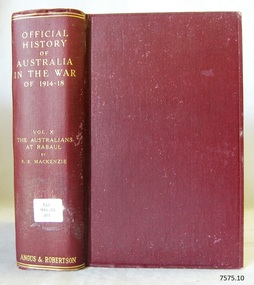
Book, Official History of Australia In The War of 1914-18 Vol 10
... Art Gallery in 1886 while his son Jules Francois Archibald founded the Archibald Prize through his bequest of 1919. His aim was to foster portraiture, as well as support artists, and perpetuate the memory of great Australians. warrnambool shipwrecked-coast flagstaff-hill flagstaff-hill-maritime-museum maritime-museum shipwreck-coast flagstaff-hill-maritime-village shipwrecked-artefact book warrnambool mechanics’ institute pattison collection warrnambool library ralph eric pattison warrnambool city librarian mechanics’ institute library victorian library board warrnambool books and records the australians at rabaul. s s mackenzie the capture and administration of the german possessions in the southern pacific Label on spine cover with typed text PATT 994.04 OFF Front pastedown endpaper has sticker from Warrnambool Public Library Front loose endpaper has a sticker from Corangamite Regional Library Service Official History of Australia In The War of 1914-18 Vol 10 The Australians at Rabaul. ...This item is from the ‘Pattison Collection’, a collection of books and records that was originally owned by the Warrnambool Mechanics’ Institute, which was founded in Warrnambool in 1853. By 1886 the Warrnambool Mechanics’ Institute (WMI) had grown to have a Library, Museum and Fine Arts Gallery, with a collection of “… choice productions of art, and valuable specimens in almost every branch and many wonderful national curiosities are now to be seen there, including historic relics of the town and district.” It later included a School of Design. Although it was very well patronised, the lack of financial support led the WMI in 1911 to ask the City Council to take it over. In 1935 Ralph Pattison was appointed as City Librarian to establish and organise the Warrnambool Library as it was then called. When the WMI building was pulled down in 1963 a new civic building was erected on the site and the new Warrnambool Library, on behalf of the City Council, took over all the holdings of the WMI. At this time some of the items were separated and identified as the ‘Pattison Collection’, named after Ralph Pattison. Eventually the components of the WMI were distributed from the Warrnambool Library to various places, including the Art Gallery, Historical Society and Flagstaff Hill. Later some were even distributed to other regional branches of Corangamite Regional Library and passed to and fro. It is difficult now to trace just where all of the items have ended up. The books at Flagstaff Hill Maritime Village generally display stamps and markings from Pattison as well as a variety of other institutions including the Mechanics’ Institute itself. RALPH ERIC PATTISON Ralph Eric Pattison was born in Rockhampton, Queensland, in 1891. He married Maude Swan from Warrnambool in 1920 and they set up home in Warrnambool. In 1935 Pattison accepted a position as City Librarian for the Warrnambool City Council. His huge challenge was to make a functional library within two rooms of the Mechanics’ Institute. He tirelessly cleaned, cleared and sorted a disarrayed collection of old books, jars of preserved specimens and other items reserved for exhibition in the city’s museum. He developed and updated the library with a wide variety of books for all tastes, including reference books for students; a difficult task to fulfil during the years following the Depression. He converted all of the lower area of the building into a library, reference room and reading room for members and the public. The books were sorted and stored using a cataloguing and card index system that he had developed himself. He also prepared the upper floor of the building and established the Art Gallery and later the Museum, a place to exhibit the many old relics that had been stored for years for this purpose. One of the treasures he found was a beautiful ancient clock, which he repaired, restored and enjoyed using in his office during the years of his service there. Ralph Pattison was described as “a meticulous gentleman whose punctuality, floorless courtesy and distinctive neat dress were hallmarks of his character, and ‘his’ clock controlled his daily routine, and his opening and closing of the library’s large heavy doors to the minute.” Pattison took leave during 1942 to 1942 to serve in the Royal Australian Navy, Volunteer Reserve as Lieutenant. A few years later he converted one of the Museum’s rooms into a Children’s Library, stocking it with suitable books for the younger generation. This was an instant success. In the 1950’s he had the honour of being appointed to the Victorian Library Board and received more inspiration from the monthly conferences in Melbourne. He was sadly retired in 1959 after over 23 years of service, due to the fact that he had gone over the working age of council officers. However he continued to take a very keen interest in the continual development of the Library until his death in 1969. WARRNAMBOOL PUBLIC LIBRARY The Warrnambool Mechanics’ Institute (WMI) was formed by a voluntary community group in 1863, within six years of Warrnambool’s beginnings, and its Reading Room opened in 1854. The WMI operated until 1963, at which time it was one of the oldest Mechanics’ Institutes in Victoria. Mechanics’ Institutes offered important services to the public including libraries, reading rooms and places to display and store collections of all sorts such as curiosities and local historical relics. In 1886 a Museum and Fine Arts Gallery were added to the WMI and by the beginning of the 20th century there was also a billiards room and a School of Art. By this time all Mechanics’ Institutes in country Victoria had museums attached. Over the years the Warrnambool Mechanics’ Institute Library was also known as the Warrnambool Public Library the Warrnambool Library and the Free Library. Early funding from the government was for the “Free Library”. The inscription in a book “Science of Man” was for the “Warrnambool Public Library”, donated by Joseph Archibald in 1899. Another inscription in the book “Catalogue of Plants Under Cultivation in the Melbourne Botanic Gardens 1 & 2, 1883” was presented to the “Warrnambool Library” and signed by the author W.R. Guilfoyle. In 1903 the Warrnambool Public Library decided to add a Juvenile Department to library and stock it with hundreds of books suitable for youth. In 1905 the Public Library committee decided to update the collection of books and added 100 new novels plus arrangements for the latest novels to be included as soon as they were available in Victoria. In July 1911 the Warrnambool Council took over the management of the Public Library, Art Gallery, Museum and Mechanics’ Institute and planned to double the size of the then-current building. In 1953, when Mr. R. Pattison was Public Librarian, the Warrnambool Public Library’s senior section 10,000 of the 13,000 books were fiction. The children’s section offered an additional 3,400 books. The library had the equivalent of one book per head of population and served around 33 percent of the reading population. The collection of books was made up of around 60 percent reference and 40 percent fiction. The library was lending 400 books per day. In 1963 the Warrnambool City Council allocated the site of the Mechanics’ Institute building, which included the Public Library, Museum and Art Gallery, for the new Municipal Offices and the Collections were dispersed until 1971. The Warrnambool Library took over the Mechanics’ Institute Library’s holdings on behalf of the Warrnambool City Council. Since the closure of the Warrnambool Mechanics’ Institute the exact location and composition of the original WMI books and items has become unclear. Other materials have been added to the collection, including items from Terang MI, Warrnambool Court House and Customs House. Many of the books have been identified as the Pattison Collection, named after the Librarian who catalogued and numbered the books during his time as Warrnambool Public Librarian in the time before the Mechanics’ Institute closed. It seems that when Warrnambool became part of the Corangamite Regional Library some of the books and materials went to its head office in Colac and then back to Warrnambool where they were stored at the Art Gallery for quite some time. Some then went to the Warrnambool Historical Society, some stayed at the Art Gallery and some were moved to Flagstaff Hill Maritime Village. The various stamps and labels on the books held at Flagstaff Hill show the variety of the collection’s distribution and origin. The books in the collection at Flagstaff Hill Maritime Village date from the 1850’s to the late 1950’s and include rare and valuable volumes. Many of the books are part of the “Pattison Collection” after the Warrnambool’s Public Librarian, Mr. R. Pattison. The Pattison Collection, along with other items at Flagstaff Hill Maritime Village, was originally part of the Warrnambool Mechanics' Institute’s collection. The Warrnambool Mechanics’ Institute Collection is primarily significant in its totality, rather than for the individual objects it contains. Its contents are highly representative of the development of Mechanics' Institute libraries across Australia, particularly Victoria. A diversity of publications and themes has been amassed, and these provide clues to our understanding of the nature of and changes in the reading habits of Victorians from the 1850s to the middle of the 20th century. The collection also highlights the Warrnambool community’s commitment to the Mechanics’ Institute, reading, literacy and learning in the regions, and proves that access to knowledge was not impeded by distance. These items help to provide a more complete picture of our community’s ideals and aspirations. The Warrnambool Mechanics Institute book collection has historical and social significance for its strong association with the Mechanics Institute movement and the important role it played in the intellectual, cultural and social development of people throughout the latter part of the nineteenth century and the early twentieth century. The collection of books is a rare example of an early lending library and its significance is enhanced by the survival of an original collection of many volumes. The Warrnambool Mechanics' Institute’s publication collection is of both local and state significance. The Warrnambool Mechanics' Institute Collection is primarily significant in its totality, rather than for the individual objects it contains. Its contents are highly representative of the development of Mechanics' Institute libraries across Australia, particularly Victoria. A diversity of publications and themes has been amassed, and these provide clues to our understanding of the nature of and changes in the reading habits of Victorians from the 1850s to the middle of the 20th century. The collection also highlights the Warrnambool community’s commitment to the Mechanics’ Institute, and to reading, literacy and learning in the regions, and proves that access to knowledge was not impeded by distance. These items help to provide a more complete picture of our community’s ideals and aspirations. As with many Mechanics' Institutes in Australia, the one which operated in Warrnambool was established and overseen for many years by key individuals associated with the development of the city itself. The WMI publication collection is historically significant because of its association with local people, places and the key historical themes in the development of Warrnambool of rural development, industry, farming, education, and community. The collection documents and illustrates the changing interests, focus and tastes of Victorians, especially those in regional cities. Generally the individual items in the collection are not particularly rare, as examples of all probably exist in other public collections in Victoria. It is primarily because there are so very few surviving Mechanics' Institute collections in Victoria, which lends this overall collection its significance. Many items in the WMI Collection have the potential to support further research, both as individual objects and through the collection in its entirety. This material is significant for its ability to assist in the interpretation of the history of the area and adds to the general understanding of the development of the township. Many components of the WMI publication collection complement and reinforce the Flagstaff Hill Maritime Museum Collection, the Warrnambool Art Gallery Collection, and that in the Warrnambool Historical Society, and also contribute to a clearer understanding of the original Warrnambool Mechanics' Institute collections. This will greatly enhance the appreciation of the few surviving Mechanics' Institute collections across Victoria, and also in New South Wales. The similarities and differences between the small number of collections that have survived can provide further insights into how the people of Victoria in general, and Warrnambool in particular, constructed a civic culture of adult learning to foster an informed citizenry. The Warrnambool Mechanics' Institute publication collection is of both local and state significance. (This Statement of Significance is quoted from the Significance Assessment : Warrnambool Mechanics’ Institute Book Collection at Flagstaff Hill Maritime Museum, February 2009, by Annette Welkamp, Cultural Connections, for Delise Oldfied, FHMV) References Juvenile Department in Warrnambool Public Library In August 1903 The Age newspaper reported in its Warrnambool news section that “With the object of discouraging boys from reading literature of the “penny dreadful” class, the committee of the local public library has decided to open a juvenile department and to stock it with hundreds of suitable books attractive to the youthful mind.” 100 new novels added to Warrnambool Public Library Shelves In November 1905 The Argue newspaper’s Warrnambool news section announced “The committee of the Public Library is bringing the collection of books more up to date. It has recently added 100 new novels to the shelves, and arrangements have been made for a supply of the latest novels immediately they arrive in the state.” Warrnambool Town Council takes over Mechanics’ Institute, Art Gallery, Public Library, Museum – and will double the building’s size In 1912 The Age reported in its Warrnambool news section “Considerable improvements are being effected by the town council in the most picturesque part of Liebig Street. Between the fire brigade station and the mechanics’ institute and art gallery a vacant block of land is being transformed a garden for carpet bedding and flowering plants. The council, which recently took over the control of the art gallery, public library, museum and mechanics’ institute, is doubling the size of the substantial stone building containing these institutions. The new building will contain a supper room for use in conjunction with functions in the town hall, adjoining, and a new reading room.” Mr Pattison, Public Librarian, says Library has a book per head of population In 1953 The Age reported an interview with the Public Librarian, Mr. R. Pattison, who said “Warrnambool has an insatiable thirst for reading. And its reading recipe contains a strong dash of fiction – 73 percent of it. Fiction makes up 10,000 of the 13,000 books in the senior section of the public library. That works out at a book per head of population. Warrnambool today is really book minded. This city has an almost insatiable thirst for knowledge as well as fiction. We’re lending 400 books a day. We supply 33 percent of the reading population of Warrnambool.” The reporter goes on to say “Warrnambool Public Library also has an ultra-modern children’s section of 3,400 books, open to every boy and girl attending school in Warrnambool. Mr Pattison hopes to show travel-talk films and install a radiogram in the children’s section “later on”. But it won’t disturb adult reading next door because the junior section is sound proof. “ Mechanics’ Institutes and Museums Mechanics’ Institutes were important sites for collecting in country Victoria … Warrnambool … all had museums attached to Mechanics’ Institutes before the end of the twentieth century” Warrnambool Mechanics’ Institute Ms Tierney said FHMV holds the collection of the Warrnambool Mechanics’ Institute in three different locations on its site. “The Mechanics’ Institute opened in 1871, was demolished in the 1960s and was one of the oldest in Victoria. “FHMV intends to create a new storage area and bring the collection together in one place which will greatly facilitate access and research. “The collection consists of books and archives dating from the 1850s to 1959s. “Some of the books are rare and valuable but it is unclear as to their relevance to the history of Warrnambool or Victoria,” Ms Tierney said. Warrnambool TAFE History South West TAFE has a long and proud history of providing technical and specialist education, with links back to the formation of the Mechanic’s Institute in 1853. Warrnambool Art Gallery’s History The Warrnambool Art Gallery began in 1886 when retired police officer Joseph Archibald opened its doors in a building behind the mechanics institute in Liebig Street. The Gallery began with an eclectic mix of artworks and museum curios. Before long Archibald mobilised public support and paid for a new gallery annex. Loans and grants allowed the Gallery collection to grow with significant early acquisitions by French, German, and Belgian artists, which were less expensive than British works. Despite its enthusiastic start the economic downturn of the 1890s brought the Collection to a halt. In 1910 the Council took control of the Mechanics Institute and ran the Gallery there until 1963 when the building was allocated for municipal offices. The Collection was dispersed on loan to galleries in Shepparton and Hamilton and not reunited until 1971. In 1986 the Gallery’s Centenary year, a permanent home was built next to the ‘Civic Green’ and named in memory of one its champions Sir Fletcher Jones O.B.E. 2016 Warrnibald Entries Joseph Archibald established the Warrnambool Museum and Art Gallery in 1886 while his son Jules Francois Archibald founded the Archibald Prize through his bequest of 1919. His aim was to foster portraiture, as well as support artists, and perpetuate the memory of great Australians. Official History of Australia In The War of 1914-18 Vol 10 The Australians at Rabaul. The capture and Administration of the German possessions in the Southern Pacific Author: S S Mackenzie Publisher: Angus & Robertson Date: 1938 Label on spine cover with typed text PATT 994.04 OFF Front pastedown endpaper has sticker from Warrnambool Public Library Front loose endpaper has a sticker from Corangamite Regional Library Service warrnambool, shipwrecked-coast, flagstaff-hill, flagstaff-hill-maritime-museum, maritime-museum, shipwreck-coast, flagstaff-hill-maritime-village, shipwrecked-artefact, book, warrnambool mechanics’ institute, pattison collection, warrnambool library, ralph eric pattison, warrnambool city librarian, mechanics’ institute library, victorian library board, warrnambool books and records, the australians at rabaul., s s mackenzie, the capture and administration of the german possessions in the southern pacific -
 Glenelg Shire Council Cultural Collection
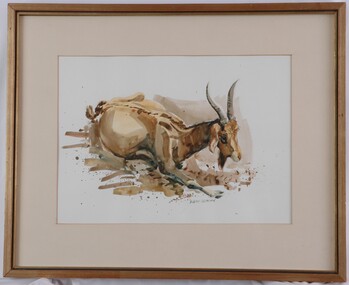
Painting, Robert Ulmann, Goat, c. 1974
... Art Society of Switzerland and in Paris, Munich and Stockholm. He migrated to Canada in 1956 and became a Canadian citizen. After working on the restoration of sculpture on the west wing of the Parliament Buildings Ottawa, he took up a Government appointment as one of six artist advisers to the Eskimos, initiating handicraft and sculpture programs in isolated settlements across the Central Arctic. He arrived in Australia with his Australian wife, Helen, in 1969, after two adventurous years backpacking and sketching through the United States, Central and South America and the South Pacific...Art Society of Switzerland and in Paris, Munich and Stockholm. He migrated to Canada in 1956 and became a Canadian citizen. After working on the restoration of sculpture on the west wing of the Parliament Buildings Ottawa, he took up a Government appointment as one of six artist advisers to the Eskimos, initiating handicraft and sculpture programs in isolated settlements across the Central Arctic. He arrived in Australia with his Australian wife, Helen, in 1969, after two adventurous years backpacking and sketching through the United States, Central and South America and the South Pacific ...Robert Ulmann was born in Zurich, Switzerland, where he studied sculpture and painting, exhibiting annually with the National Art Society of Switzerland and in Paris, Munich and Stockholm. He migrated to Canada in 1956 and became a Canadian citizen. After working on the restoration of sculpture on the west wing of the Parliament Buildings Ottawa, he took up a Government appointment as one of six artist advisers to the Eskimos, initiating handicraft and sculpture programs in isolated settlements across the Central Arctic. He arrived in Australia with his Australian wife, Helen, in 1969, after two adventurous years backpacking and sketching through the United States, Central and South America and the South Pacific. From 1970 to 1972 he was employed by the Northern Territory Administration as a manual arts instructor to the aboriginal people of Docker River, a remote settlement west of Ayers Rock. A series of drawings from this period was exhibited by the Department of the Interior in Canberra, Sydney and Adelaide. Robert Ulmann’s paintings and prints of wildlife from Australia and overseas fill a beautiful studio overlooking the famous Logans Beach whale nursery at Warrnambool in the Western District of Victoria. His previous studio and home, together with 13 years of field sketches and his best work collected together for two books were destroyed by the Ash Wednesday fires at Naringal in 1983. Rob exhibited in Sydney, Melbourne, Adelaide and Perth as well as in the Regional Galleries of Warrnambool, Ballarat, Portland and Horsham, and, among numerous prizes, he won the award for watercolour at six of the annual exhibitions of the Wildlife Art Society of Australasia, between 1978 and 1983. Although his principal interest was in drawing and painting, he retained a fascination with sculpture. His works range from two stone fountains with figures commissioned by the City of Zurich, while he was still a student, to a 4 ½ ton sculpture in bluestone commissioned in 1977 as a memorial to Sir Fletcher Jones., a five metre representation of whale tails in steel, and a life-size bronze of St. John of God commissioned for a private hospital.Image of a goat beginning to rise from a seated position, possible struggling out of mud. Painted in yellow and brown tones, with blue shadows. Earth colours form a rough ground area surrounding the goat. A brown wash provides a cursory background behind the goat's head. Dark cream matt surrounds image. Gold painted wooden frame, with glass.Front: Robert Ulmann (lower centre, paint) Back: (no inscriptions) -
 Flagstaff Hill Maritime Museum and Village
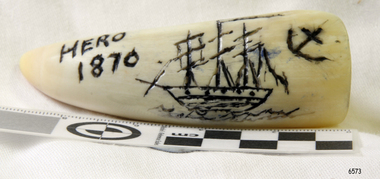
Craft - Scrimshaw, Hero 1870, Late 20th Century
... Scrimshaw is regarded as early folk art and is associated primarily with whaling that was opened up in the Pacific at the end of the eighteenth century by sailors mainly from American, English and French vessels. ...Scrimshaw is regarded as early folk art and is associated primarily with whaling that was opened up in the Pacific at the end of the eighteenth century by sailors mainly from American, English and French vessels. ...Scrimshaw is regarded as early folk art and is associated primarily with whaling that was opened up in the Pacific at the end of the eighteenth century by sailors mainly from American, English and French vessels. As a result, some of the best scrimshaw from Pacific whales can be found in collections in these countries. Even though sailors must have had plenty of spare time between periods of whaling scrimshaw on whale teeth seems a rarity before the 1830s. One reason may have been the high price paid for whale teeth ivory in this period making scrimshaw on teeth popular only after the market was saturated and the price dropped. The earliest identified engraver of whale teeth is the English whaling master Captain J. S. King who was active between 1817 and 1823. There have been six ships called the Hero in the Royal Navy and this ship was the fourth named Hero, it was a screw-propelled 91-gun and second-rate. In the rating system of the British Royal Navy, this term is used to categorise sailing warships, a second-rate was a ship of the line which by the start of the 18th century mounted 90 to 98 guns on three gun decks. Earlier 17th-century second rates had fewer guns and were originally two-deckers or had only partially armed third gun decks. The Hero was launched in 1858 and sold in 1971. On July 1860 the Prince of Wales embarked onboard HMS Hero, Albert Edward Prince of Wales, was the eldest son of Queen Victoria, and the future King Edward VII, at the time he was then nineteen years of age, and on route to Newfoundland, Canada and the United States on his first state tour. He was the first member of the British royal family to visit North America. In 1860 the Queen had intended to pay a visit to Canada however stress prevented her from travelling. The then Prime Minister Lord Palmerston suggested that “Bertie” the prince of Wales could represent the Queen and on July 10th 1860, Bertie boarded HMS Hero for a tour of Canada and the USA. On July 23rd the ship arrived at Terranova. By the second week of August, the HMS Hero had sailed up the St. Lawrence River and anchored at Quebec. The Prince was successful with Canadian society visiting Quebec and Montreal during his stay. He went on to visit the United States following an invitation by President James Buchanan. His American journey was regarded as a great success. President Buchanan wrote to Queen Victoria: "He “Bertie” has faced a very difficult task for a person his age and his behaviour in all this has been that of his age and position. He has shown himself honourable, Frank and affable and he won the respect of the sensible and wise people". The scrimshaw is believed to be a modern reproduction of a typical scrimshaw scene and engraved very crudely onto a synthetic substance. Scrimshaw art carved into non-natural material in the shape of a whale tooth. The line artwork images of a three-masted, fully rigged ship and an anchor are coloured black. Inscription is engraved into tooth.Engraved "Hero 1870"warrnambool, flagstaff-hill, flagstaff-hill-maritime-museum, maritime-museum, shipwreck-coast, flagstaff-hill-maritime-village, scrimshaw, plastic, resin, replica, prince of wales, british navy vessel, whaling, hms hero, reproduction, carving, engraving -
Eltham District Historical Society Inc
Document - Folder, Skipper, Sonia
... art built", The Age, 2009. Exhibition and sale at Montsalvat of paintings by Sonia Skipper. Sonia Skipper Frances Skipper John Michael Skipper Lena Wiltshire Justus Jorgenson Matcham Skipper Church of Mary Immaculate Ivanhoe Victoria School of Pacific Studies Canberra Alistair Knox Helen Skipper Saskia Munday Arthur Munday Mervyn Hannan Joe Hannan Jenni Mitchell Lena Skipper Walter Burley Griffin Justus Jorgensen Julian Ashton Sebastian Jorgensen Helen Lempriere Saskia Killingbeck nee Munday Newspaper clippings, A4 photocopies, etc Skipper, Sonia Document Folder ...Sonya Skipper was a painter, sculptor, jeweller and writer. She lived at Montsalvat and later Renmark, South Australia. Contents Newspaper article: "Sonia Skipper", Network, April/May 1991. Biography of Sonia Skipper. Newspaper article: "A skipper's story", Diamond Valley Leader, 22 June 2005. Launch of Sonia Skipper's book "My Story: Tales from a pioneer of Montsalvat". Newspaper article: "Fine focus on everyday life", Diamond Valley Leader, 6 July 2005. Exhibition at Montsalvat of paintings by Sonia Skipper. Newspaper article: "A 'leading matriarch'", Diamond Valley Leader, 4 June 2008. Obituary of Sonia Skipper. Newspaper article: "Painter who left her mark at Montsalvat", The Age, ~June 2008. Obituary of Sonia Skipper. Newspaper article: " Vast vista by a Montsalvat pioneer", Diamond Valley Leader, 25 February 2009. Exhibition of works by Sonia Skipper held at Montsalvat. Newspaper article: "Sonia Skipper art for show", Diamond Valley Leader, 21 June 2009. Exhibition and sale at Montsalvat of paintings by Sonia Skipper. Newspaper article: "Life in the house that art built", The Age, 2009. Exhibition and sale at Montsalvat of paintings by Sonia Skipper. Newspaper clippings, A4 photocopies, etcsonia skipper, frances skipper, john michael skipper, lena wiltshire, justus jorgenson, matcham skipper, church of mary immaculate ivanhoe victoria, school of pacific studies canberra, alistair knox, helen skipper, saskia munday, arthur munday, mervyn hannan, joe hannan, jenni mitchell, lena skipper, walter burley griffin, justus jorgensen, julian ashton, sebastian jorgensen, helen lempriere, saskia killingbeck nee munday -
Port Melbourne Historical & Preservation Society
Book - Exhibition Catalogue, Gillian Upton, "Splash - St Kilda beach and Baths
... Art and heritage Unit. The exhibit was a project involving the memories and photos from the community. South Pacific ...Instigated by COPP Manager of Urban Design, Jim HOLDSWORTH. Produced by the Art and heritage Unit. The exhibit was a project involving the memories and photos from the community."Splash - St Kilda beach and Baths" exhibition catalogue 200. Curated by City of Port Phillip Art and Heritage Unit and guest Curator Gillian UPTON to mark the rebuilding of the St Kilda Sea Baths. 40 pagessouth pacific st kilda pty ltd, celebrations fetes and exhibitions, gillian upton, jim holdsworth -
Moorabbin Air Museum
Manual (Item) - Hawker Pacific Engineer's Basic Turbine Course Syllabi, Hawker Pacific Aerospace Training School
... Soft-cover manual with yellow and black cover art Hawker Pacific Aerospace Training School Manual Hawker Pacific Engineer's Basic Turbine Course Syllabi ... -
 Nillumbik Shire Council
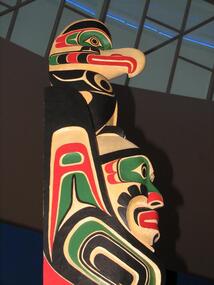
Public Art: Wayne ALFRED (b.1958 Alert Bay, British Columbia), Wayne Alfred C/- High Commision of Canada, Commonwealth Games Totem Pole, Location: Eltham Library Foyer, Panther Place, Eltham, 2006
... art...kwakwaka'wakw...namgis...alfred...north pacific...The Commonwealth Games Totem Pole was presented to the people of Nillumbik on behalf of the Canadian Government in recognition of Melbourne as the hosts of the Melbourne Commonwealth Games Team in 2006. public art kwakwaka'wakw namgis alfred north pacific coast british columbia canada totem pole carved commonwealth games melbourne festival cedar No inscriptions. ...Wayne Alfred is a member of the Namgis Tribe of the Kwakwaka'wakw people. As a master carver he has an extremely high level of carving skill and knowledge about his peoples cultural objects, customs, tribal stories and legends. The Totem Poles of the North Pacific Coast in British Columbia and Alaska are traditionally carved out of red or yellow cedar, which has a spiritual and practical purpose. The wood was known for its durability, its resistance to rotting and the inner bark was utilised in ropemaking, clothing, hats, baskets and so forth. The Kwakitul People consider the cedar tree to be among the most sacred of all things provided by the Creator. They believed the Cedar tree to be the axis of the world and a pathway to the upper world. The wood is shaped using implements such as adzes, axes, chisels, carving knives, and chainsaws. Misinterpreted as Gods and idols to be worshipped, totems usually serve six purposes, such as a house pillar for support, a memorial or mortuary pole to commemorate (and house) the deceased, a potlatch pole (used for important traditional indigenous celebrations), a ridicule pole used to shame and a heraldic or family crest pole. Characters and symbols on these totem poles usually display family crests, history, wealth, social rank, inheritance, and privilege, as well as animalistic imagery derived from native animals and mythological creatures. Their sequence are indicative of past family events, ancestors, myths, and heraldic crests, with the bottom figure usually being the most prominent. In this work the 'thunderbird' is symbolic of power, strength and of ancestory. The Commonwealth Games Totem Pole was presented to the people of Nillumbik on behalf of the Canadian Government in recognition of Melbourne as the hosts of the Melbourne Commonwealth Games Team in 2006. Carved in cedar wood, this totem pole incorporates bold cuts and colours (such as red and green) offset by strong black. A relative degree of realism is used to depict the alligator located on the bottom of the pole, a man and a 'thunderbird'/eagle located on the top. With protuding element. No inscriptions. Bold cuts used to outline the characters and symbols as well as decorative and stylised features all over the pole. public art, kwakwaka'wakw, namgis, alfred, north pacific coast, british columbia, canada, totem pole, carved, commonwealth games, melbourne festival, cedar -
 Sunshine and District Historical Society Incorporated
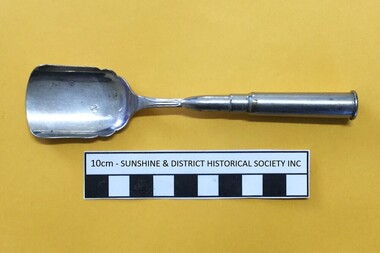
Artwork, other - Bullet Spoon / Trench art, Stewart Noble, Circa 1940
... This piece of functional Trench Art was made by Stewart Noble during World War 2 (circa 1940) while serving on a Mine Sweeper among the Pacific Islands. ...This piece of functional Trench Art was made by Stewart Noble during World War 2 (circa 1940) while serving on a Mine Sweeper among the Pacific Islands. ...This piece of functional Trench Art was made by Stewart Noble during World War 2 (circa 1940) while serving on a Mine Sweeper among the Pacific Islands. It is believed that the bullet spoon was chrome plated after the war, while he worked at the Government Aircraft Factory. Trench art is described as any decorative item made by soldiers, prisoners of war, or civilians where the manufacture is directly linked to a war. The making of trench art was a popular past time during leisure hours at the front, where skilled military personnel created the items. Common examples of trench art are decorated shell and bullet casings, and items carved from wood and bone. Trench art has been in existence since the Napoleonic wars however it was most common during World War 1, and to a lesser extent during World War 2. This bullet spoon has historic significance because it is an example of the type of functional or artistic small items, that were made from war scrap during spare time by soldiers or other personnel associated with a war. This particular item indicates that a reasonably high degree of skill was required to make the bullet spoon.Chrome plated teaspoon with a discharged .303 bullet for the handle.trench art, bullet spoon, .303 bullet, stewart noble, war souvenier, chrome teaspoon -
Koorie Heritage Trust
Book, Department of Pacific and Southeast Asian History, Australian National University, Aboriginal History - Volume 08. 1-2 1984, 1984
... Art motifs | This volume of 'Australian History' is devoted to studies of the south-eastern corner of the Australian continent. The papers arose from a series of meetings convened with Professer R. W. Dixon in 1981. They involved scholars from the disciplines listed, all concerned with the south-east. A series of articles by leading writers on Aboriginal History. 237 P.; ill,; figs.; tables; notes; reviews; 24 cm. Aboriginal History - Volume 08. 1-2 1984. Book Department of Pacific ...This volume of 'Australian History' is devoted to studies of the south-eastern corner of the Australian continent. The papers arose from a series of meetings convened with Professer R. W. Dixon in 1981. They involved scholars from the disciplines listed, all concerned with the south-east. A series of articles by leading writers on Aboriginal History.237 P.; ill,; figs.; tables; notes; reviews; 24 cm.This volume of 'Australian History' is devoted to studies of the south-eastern corner of the Australian continent. The papers arose from a series of meetings convened with Professer R. W. Dixon in 1981. They involved scholars from the disciplines listed, all concerned with the south-east. A series of articles by leading writers on Aboriginal History.aboriginal australians -- periodicals. | ethnology -- australia -- periodicals. | settlement and contacts - colonisation - 1788-1850 | race relations - violent - massacres, murders, poisonings etc. - to 1900 | sex relations | indigenous knowledge - world view | language - personal names | language - semantics | social identity | language - sociolinguistics | government policy - state and territory - new south wales | socioeconomic conditions - living conditions | language - linguistics - language classification | language - vocabulary - word lists | language - linguistics | geography - territories and boundaries | art - rock art - painting | art - production - materials / techniques | art - art motifs | -
Koorie Heritage Trust
Journal - Serials, Department of Pacific and Southeast Asian History, Australian National University, Aboriginal History - Volume 05. 1-2 1981, 1981
... . | Settlement and contacts - Chinese | Language - Change | Mining industry - Gold | Settlement and contacts - Afghans | Animals - Mammals - Camels | Race relations - Racism - Stereotyping | Language - Texts and translations - Aboriginal to non-Aboriginal language | Art - Drawing | Art - Artists | Settlement and contacts - Macassans and Indonesians | Language - Kriol | Language - Linguistics - Language classification | Language - Semantics | Settlement and contacts - Explorers | Articles on various aspects of Australian History articles. 178 p.; ill.; tables; footnotes; bibs.; maps; 25 cm. Aboriginal History - Volume 05. 1-2 1981. Journal Serials Department of Pacific ...Articles on various aspects of Australian History articles.178 p.; ill.; tables; footnotes; bibs.; maps; 25 cm.Articles on various aspects of Australian History articles.aboriginal australians -- periodicals. | ethnology -- australia -- periodicals. | settlement and contacts - chinese | language - change | mining industry - gold | settlement and contacts - afghans | animals - mammals - camels | race relations - racism - stereotyping | language - texts and translations - aboriginal to non-aboriginal language | art - drawing | art - artists | settlement and contacts - macassans and indonesians | language - kriol | language - linguistics - language classification | language - semantics | settlement and contacts - explorers | -
 Sunshine and District Historical Society Incorporated
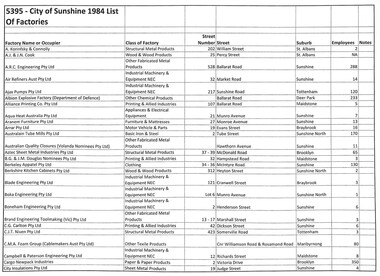
Archive - City of Sunshine 1984 List Of Factories, K.G. Wilson, L.R. Dryer & R.A. Scaramella, 1984
... Cabinets Pty Ltd Maidstone Cabinet Works Marble Art Company Marib Cutter Sharpening Service Massey-Ferguson (Aust) Ltd McIntyre Steel Industries (Vic) Pty Ltd Midway Press Business Forms Mirna Cabinets Manufacturers Pty Ltd Monsanto Aust Ltd Morgan Cabinets Morris Structural & Engineering Newroll Industries Pty Ltd North Sunshine Cases Novio Insulation (Vic) Pty Ltd Olex Cables (Dunlop Olympic Ltd) Ordnance Factory (Department of Defence Support) P. & S. Siegel Pty Ltd P.S. Fenech Pty Ltd Pacific...Cabinets Pty Ltd Maidstone Cabinet Works Marble Art Company Marib Cutter Sharpening Service Massey-Ferguson (Aust) Ltd McIntyre Steel Industries (Vic) Pty Ltd Midway Press Business Forms Mirna Cabinets Manufacturers Pty Ltd Monsanto Aust Ltd Morgan Cabinets Morris Structural & Engineering Newroll Industries Pty Ltd North Sunshine Cases Novio Insulation (Vic) Pty Ltd Olex Cables (Dunlop Olympic Ltd) Ordnance Factory (Department of Defence Support) P. & S. Siegel Pty Ltd P.S. Fenech Pty Ltd Pacific ...This list of factories in the City of Sunshine is an extract from a report by K.G. Wilson, L.R. Dryer & R.A. Scaramella, prepared for the Melbourne Western Region Commission (WRC). The Melbourne Western Region Commission was a major inter‑municipal planning and advocacy body operating across Melbourne’s western suburbs in the late 1970s and 1980s. It coordinated planning, heritage studies, and regional development across multiple councils. The Commission brought together a broad sweep of western-region councils City of Altona, City of Essendon, City of Footscray, City of Keilor, City of Sunshine, City of Williamstown, Shire of Bacchus Marsh, Shire of Melton & Shire of Werribee. The Melbourne Western Region Commission was one of the most important institutional predecessors to the region’s later heritage, planning, and community‑development frameworks.This report records the business name, type of industry and address of businesses operating in the City of Sunshine in 1984.Factory Name or Occupier A. Korinfsky & Connolly A.J. & J.N. Cook A.R.C. Engineering Pty Ltd Air Refiners Aust Pty Ltd Ajax Pumps Pty Ltd Albion Explosive Factory (Department of Defence) Alliance Printing Co. Pty Ltd Aqua Heat Australia Pty Ltd Aranem Furniture Pty Ltd Arrar Pty Ltd Australain Tube Mills Pty Ltd Australian Quality Closures (Volanda Nominees Pty Ltd) Aztec Sheet Metal Industries Pty Ltd B.G. & J.M. Douglas Nominees Pty Ltd Berkeley Appatel Pty Ltd Berkshire Kitchen Cabinets Pty Ltd Blade Engineering Pty Ltd Boka Engineering Pty Ltd Boneham Engineering Pty Ltd Brand Engineering Toolmaking (Vic) Pty Ltd C.G. Carlton Pty Ltd C.J.T. Niven Pty Ltd C.M.A. Foam Group (Cablemakers Aust Pty Ltd) Campbell & Paterson Engineering Pty Ltd Cargo Newpack Industries City Insulations Pty Ltd Classic Garage Construction Cliff Poole Industries Pty Ltd Collie Cooke Consolidated Conlo Constructions Pty Ltd Connor Shea & Co. Pty Ltd Consolidated Partition Industries Holding Pty Ltd Cosmoplitan Clothing Manfacturers Crea Fashions Pty Ltd Currie Furniture Manufacturing Pty Ltd D. Richardson & Son Ltd Dalco Hardware (Dalco Pty Ltd) Daveyduke Industries (Mimvic Nominees Pty Ltd) Debora Downs Pty Ltd Deer Park Engineering Pty Ltd Deer Park Flyscreens (Azzopardi & Associates Pty Ltd) Dieselflex Pty Ltd Donald Minahan Pty Ltd Drava Continental Butchers & Smallgoods Manufacturer Drilling Equipment (Van Dyke Pty Ltd) Dunham Welding Engineering Pty Ltd E. & F. Industries Pty Ltd E.P. Morrisey & Co. Pty Ltd Elite-Built Holdings Ltd Englehold Engineering Pty Ltd Everlast Steel Products Explosive Factory (Department of Defence Support) Extruded Metals Pty Ltd Exy-Fit Screens F. & D.M. Costa Pty Ltd F. & I. Pfeffer Holdings Pty Ltd F.J. Humphrey Pty Ltd Fallshaw Holdings Pty Ltd Ferrous Forgings Pty Ltd Fleet Engineering Pty Ltd Fletcher Chemical Co. Ltd Franklin Printing & Lithographic Co. Pty Ltd Fraser Cabinets Pty Ltd G. & L. Stone Pty Ltd G.A.M. Engineering Industries Pty Ltd G.P.I. Automotive Products Pty Ltd G.U.D. Manufacturing Co. Pty Ltd G.W. Gregory Engineering (Aust) Pty Ltd General Printing Ink (Aust) Pty Ltd George Press Pty Ltd Griffiths & Beeren Pty Ltd Gubbata Nominess Pty Ltd Harkrome Electroplaters Pty Ltd Hills & Mason Pty Ltd Hydraulic Equipment & Cylinder Service Pty Ltd Hy-Du-Ex I.C.I. Australia Operations Pty Ltd I.H. Mono & Co. Idea General Engineering Industrial Engineering Invicta Group Industries Pty Ltd K. & B. Windows Pty Ltd K.C. Furniture & Cabinets K.D.S. Manufacturing K.M. Tubular Industries (Aust) Pty Ltd K.P.T. Clothing Manufacturers (K.T.P. Fashions Pty Ltd) Kanga Engineering Pty Ltd Keilor Footwear Pty Ltd Kelgrif Patterns Pty Ltd Klipspringer Pty Ltd Krueger Transports Equipment Pty Ltd Langmar Pty Ltd Layton Granite Industries Pty Ltd Lesvos General Products (Gabbia Pty Ltd) Lewis Foundry Lysaght Durham Chemical Company (Austram Corporation Ltd) M.C.I. (Aust) Pty Ltd M.J. Billings M.S.M. Cabinets Pty Ltd Maidstone Cabinet Works Marble Art Company Marib Cutter Sharpening Service Massey-Ferguson (Aust) Ltd McIntyre Steel Industries (Vic) Pty Ltd Midway Press Business Forms Mirna Cabinets Manufacturers Pty Ltd Monsanto Aust Ltd Morgan Cabinets Morris Structural & Engineering Newroll Industries Pty Ltd North Sunshine Cases Novio Insulation (Vic) Pty Ltd Olex Cables (Dunlop Olympic Ltd) Ordnance Factory (Department of Defence Support) P. & S. Siegel Pty Ltd P.S. Fenech Pty Ltd Pacific Carpets Internations Pty Ltd Pattern Productions Pauls Woodworking Pty Ltd Penthouse Furniture Co. Pty Ltd Peter Bouris General Steel Work Pomona Printers Pty Ltd Presstool Manufacturing & Grinding R.E.M. Constructions Pty Ltd R.J. Thompson Nominees Pty Ltd R.M.D. Press Co. Pty Ltd Ralph McMay Ltd Reeco Industries Pty Ltd Regina Terrazzo Tile Robcliff Printing Rockwell Standard of Australia Ltd Saturn Quality Trailers Pty Ltd Sedco Pty Ltd & Sunshine Extrusion Die Co. Pty Ltd Sign City Pty Ltd Smithweld Pty Ltd Smorgan Consolidated Industries Solo Signs Spafco Pty Ltd Stafford Engineering Pty Ltd Star of Paris Pty Ltd Steel Improvement Pty Ltd Sunset Joinery Pty Ltd Sunshine Engineering Pty Ltd Sunshine Group Industries Pty Ltd Sunshine Joinery Pty Ltd Sunshine Metal Polishing Pty Ltd Sunshine Trailers Sunshine Vitreous Enamellers Pty Ltd Sunshine Wrought Iron Super Cartridge Superstyle Tubular Manufacturers Pty Ltd Talkprint Pty Ltd Tenderfoot Shoes Treble Printing Co. Trifoleum Pty Ltd Ultra Scales Pty Ltd United Scales Pty Ltd V.P. Hawthorne Nominees Pty Ltd Vinidex Tubemakers Pty Ltd Vitas Engineering W. & H. General Engineering Pty Ltd W. Pridham (Aust) (Peerless Processing Co Pty Ltd) W.G. Engels Pty Ltd W.L. Allen Foundry Co. Pty Ltd Wakefield Repetition & General Engineers Warren & Brown Co. (Repco Ltd) Westbury Joinery Co. Holdings Pty Ltd Western Containers Pty Ltd & Chanel Press Pty Ltd Westgate Engineering Westside Joinery Pty Ltd (The Bulman Family Trust) Westwork Industries Wiltshire Tools Pty Ltd Worsted Finishers (Aust) Pty Ltd melbourne western region commission -
 Ringwood RSL Sub-Branch
Photograph - Various Photos of ladies painted on aircraft WW2, c. WW2
... Set of photographs documenting ‘pin up’ nose artwork on American bombers in the Pacific theatre. pin up art On Back of .1) Coulsan, 120 Hampden Road, Artarmon, NSW, 2064 27 black and white photographs of aircraft nose artwork. .1) ‘Officers Mess’ .2) ‘The Strip Polka’ .3) ‘Lazy Lady’ .4) ‘Norma’ .5) ‘ The Rube’ .6) ‘Bubbles’ .7) ‘Cookie’ .8) ? ...Set of photographs documenting ‘pin up’ nose artwork on American bombers in the Pacific theatre. 27 black and white photographs of aircraft nose artwork. .1) ‘Officers Mess’ .2) ‘The Strip Polka’ .3) ‘Lazy Lady’ .4) ‘Norma’ .5) ‘ The Rube’ .6) ‘Bubbles’ .7) ‘Cookie’ .8) ? .9) ‘Windy City Kitty’ .10) ‘Heaven Can Wait’ .11) ‘Baby’ .12) ‘Jose’s El D’ablo’ .13) ‘Pride of the Yanks’ .14) ‘Nobody’s Baby’ .15) ‘Pistol Packin’ Mama .16) “Target for Tonight’ .17) ‘Louisiana Lullaby’ .18) ‘Jack Pot’ .19) ‘The Lonesome Angel’ .20) ‘Whooo’ .21) ‘Sky Witch’ .22) ‘ Flying High’ .23) ‘Yankee Doodle Dandy’ .24) ‘Margie’ .25) ‘Twin Nifty’s’ .26) ‘Blonde Baby Eva’ .27) No name .28) No Name .29) Un redable .30) ‘Gone With the Wind’ .31) ‘The Strip Polka’On Back of .1) Coulsan, 120 Hampden Road, Artarmon, NSW, 2064pin up art -
 8th/13th Victorian Mounted Rifles Regimental Collection
Ceremonial object - Regimental Guidon 20 LH, circa 1990
... Well provenanced and fine example of military heraldic art. guidons flags embroidery citizen military forces heraldry light horse regiments "South Africa 1899-1902, Gallipoli 1915, Palestine 1917-18, Anzac, Egypt 1915-17, South West Pacific 1944-45" Burgundy corded cotton flag with gold thread fringe with rope and tassels. at centre is 20th Light Horse badge surrounded by wattle wreath with purple and gold rectangular colour patch under. ...The 20th Light Horse was raised as part of the reorganised Citizen Military Forces (Militia) following the end of WWI. It had Headquarters at Seymour Victoria and sub-units along the Goulburn Valley. The guidon, emblazoned with the South African and WWI battle honours, was presented in 1927. The 20th Light Horse served overseas during WWII being the only Light Horse unit to do so and received the battle honour South West Pacific 1944-45. In 1948 when 8/13 Victorian Mounted Rifles was raised as the descendent regiment of the 8th, 13th and 20th Light Horse Regiments it became the custodian of the three guidons including that of the 20th Light Horse. In 1991, the two Victorian mounted regiments 8/13th VMR and 4/19th Prince of Wales's Light Horse were linked to form a single regiment which had custodianship of six guidons, 4th, 8th 13th, 17th 19th and 20th Light Horse Regiments. All except the 4th Light Horse Guidon were laid up at the Shrine in August 2005. The 4th guidon is to be laid up in November 2017.A representative example of a symbol of the esprit de corps and achievements of a regiment of citizen soldiers drawn from Victoria. Well provenanced and fine example of military heraldic art.Burgundy corded cotton flag with gold thread fringe with rope and tassels. at centre is 20th Light Horse badge surrounded by wattle wreath with purple and gold rectangular colour patch under. XX in top left corner and battle honours on either side of centre motif."South Africa 1899-1902, Gallipoli 1915, Palestine 1917-18, Anzac, Egypt 1915-17, South West Pacific 1944-45"guidons, flags, embroidery, citizen military forces, heraldry, light horse regiments -
 Federation University Art Collection
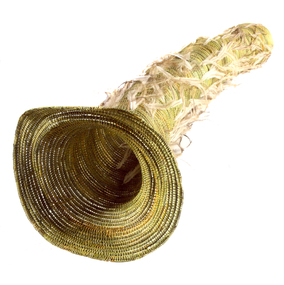
Artwork, other, 'Eel Trap with Emu Feathers' by Bronwyn Razem, 2013
... Pacific Arts Festival in Western Samoa. Bronwyn’s mother, Aunty Zelda Couzens, was a well-respected basket weaver and elder who taught Bronwyn basket-making techniques. Bronwyn now regularly conducts basket weaving workshops with Victorian Indigenous communities in order to facilitate the revival of cultural traditions. She has a Bachelor of Arts with Honours at Deakin University, and in 2008 she was enrolled in a Master by Research degree at Deakin Institute of Koorie Education, Geelong, and was living in Ballarat. (https://www.daao.org.au/bio/bronwyn-razem/biography/, accessed 18 April 2016) This item is part of the Federation University Art...Pacific Arts Festival in Western Samoa. Bronwyn’s mother, Aunty Zelda Couzens, was a well-respected basket weaver and elder who taught Bronwyn basket-making techniques. Bronwyn now regularly conducts basket weaving workshops with Victorian Indigenous communities in order to facilitate the revival of cultural traditions. She has a Bachelor of Arts with Honours at Deakin University, and in 2008 she was enrolled in a Master by Research degree at Deakin Institute of Koorie Education, Geelong, and was living in Ballarat. (https://www.daao.org.au/bio/bronwyn-razem/biography/, accessed 18 April 2016) This item is part of the Federation University Art ..."The breeze going through the eel trap gives a feeling of water flowing through the vessel with the feathers softly waiving as the water flows. My grandfather Nicholas Couzens and my uncles made eel traps to fish the Hopkins River - this is how my mother learnt the techniques which she passed on to me."Bronwyn RAZEM Gunditjmara/Kirrae Whurrong Bronwyn Razem is an Indigenous Australian basket weaver and painter. She is a Gunditjmara woman of the Kirrae Whurrong clan of western Warrnambool on the Victorian coastline. Bronwyn’s practice involves an exploration of her Indigenous heritage and identity, and she creates symbolic representations of places and events that are meaningful to her family. She integrates ochres, sand and other materials into her paintings, and her works also draw on the possum skin cloak traditions of her ancestors. In 2008, Bronwyn was chosen by the Australia Council for the Arts to be part of a delegation of Indigenous artists to attend the 10th Pacific Arts Festival in Western Samoa. Bronwyn’s mother, Aunty Zelda Couzens, was a well-respected basket weaver and elder who taught Bronwyn basket-making techniques. Bronwyn now regularly conducts basket weaving workshops with Victorian Indigenous communities in order to facilitate the revival of cultural traditions. She has a Bachelor of Arts with Honours at Deakin University, and in 2008 she was enrolled in a Master by Research degree at Deakin Institute of Koorie Education, Geelong, and was living in Ballarat. (https://www.daao.org.au/bio/bronwyn-razem/biography/, accessed 18 April 2016) This item is part of the Federation University Art Collection. The Art Collection features over 1000 works and was listed as a 'Ballarat Treasure' in 2007.Bronwyn RAZEM (1953- ) Gunditjmara/Kirraw Wurrong A woven New Zealand flax eel trap with emu feathers. This work won the University of Ballarat Acquisitive Award for work reflecting Victoria's Western District. The judges were impressed by Bronwyn Razem's translation of the traditional eel trap into a sculptural form evocative of the flow of water and possible the passage of time. The design and technical knowhow which Razem inherited from her mother, uncles, and grandfather connects this work to the family;s life and traditions. She then enhances the simplicity of this very functional object by the addition of delicate emu feathers, creating a work that creatively and symbolically transcends its original form. art, artwork, bronwyn razem, razem, eel trap, aboriginal, indigenous, available -
 Federation University Art Collection
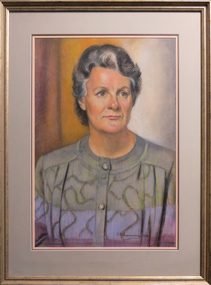
Painting - Artwork - Drawing, 'Professor Shirley Randell,' 1989 by Geoffrey Mainwaring, 1989
... art artwork available geoff mainwaring geoffrey mainwaring mainwarring pastel drawing portrait portraiture woman professor shirley randell ballarat g. r. mainwaring shirley randell signature bottom right - "G. R. Mainwaring 1989." A framed and triple mounted pastel portrait of Professor Shirley Randell. Shirley Randell is a long-time activist for gender equality and women's empowerment in education, employment, public service and civil society in Australia, the Pacific ...Geoffrey MAINWARING (29 October 1912-13 April 2000) Born Adelaide South Australia Geoffrey Mainwaring studied at the South Australian School of Arts and Crafts before becoming an art teacher at Thebarton Technical School (1928-36). Mainwaring was adept at depicting a variety of subjects, from landscapes to portraits, and was very competent using a variety of media, including pencil, oils, and watercolour. He was a confident draftsperson, and completed many sensitively rendered portraits that give an insight into the character of the sitter. In June 1941 Geoffrey Mainwaring (SX13471) joined the 2nd Australian Imperial Force, and after five months was transferred to the Engineers and employed as a Sergeant-Instructor, specialising in demolitions. In late 1942, he was sent to New Guinea as an Australian army artist on probation. On 27 May 1947, Mainwaring was discharged from the Army, having served for five and a half years. He was appointed as an artist on a civilian basis until his paintings were completed in March 1948. In 1949 he was appointed Head of the Art School at the Ballarat School of Mines (now Federation University Australia). He continued to paint commissioned portraits for the Australian War Memorial until the late 1950s. Geoffrey Mainwaring died at Ballarat in April 2000. This item is part of the Federation University Art Collection. The Art Collection features over 2000 works and was listed as a 'Ballarat Treasure' in 2007.A framed and triple mounted pastel portrait of Professor Shirley Randell. Shirley Randell is a long-time activist for gender equality and women's empowerment in education, employment, public service and civil society in Australia, the Pacific, Asia and Africa. She was the first female dean at Ballarat College of Advanced Education (later Federation University Australia). Her appointment as Dean of Academic Affairs made her the first woman to hold a senior management position at the college. In 2019 Shirley Randell is a Member of the Order of Australia, having received the Officer of the Order (AO) award in 2010 for her services to international relations through education, public sector, institutional reform and economic empowerment of women in Australia, the Pacific, Asia and Africa. She is a member of many important boards and committees including the Australian Government Women’s Alliance – Economic Security for Women and the indigo foundation. An Ambassador of Dignity Ltd, the Australian Centre for Leadership for Women, Women’s International Cricket League/FairBreak and The International Alliance for Women, Shirley Randell is also a member of the Independent Scholars Association of Australia Council, Graduate Women International Projects Committee, and sits on the several editorial boards including the BioMedical-Central Women’s Health Journal. Gift of Professor Shirley Kaye Randell, AO, PhD, Hon.DLitt, FACE, FAICD, FIML, first woman in the Executive Team of the Ballarat College of Advanced Education as Dean of Academic Affairs, 1989- 1990signature bottom right - "G. R. Mainwaring 1989."art, artwork, available, geoff mainwaring, geoffrey mainwaring, mainwarring, pastel, drawing, portrait, portraiture, woman, professor shirley randell, ballarat, g. r. mainwaring, shirley randell -
 Ringwood RSL Sub-Branch
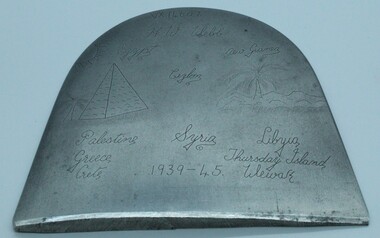
Object, Trench Art, C 1940
... Pacific War. The end of a propeller said to be from a Japanese Zero mounted in a piece of wood. Object, Trench Art ...Brought home as a souvenir from the Pacific War.The end of a propeller said to be from a Japanese Zero mounted in a piece of wood. -
 Hymettus Cottage & Garden Ballarat
Work on paper - sketch, Off the New Guinea Coast
... One of a series of sketches in 1943 by war artist Geoffrey Mainwaring while covering the war in the Pacific. Mainwaring went on to take charge of the Art department at the School of Mines Ballarat, SMB now Federation University....One of a series of sketches in 1943 by war artist Geoffrey Mainwaring while covering the war in the Pacific. Mainwaring went on to take charge of the Art department at the School of Mines Ballarat, SMB now Federation University. ...One of a series of sketches in 1943 by war artist Geoffrey Mainwaring while covering the war in the Pacific. Mainwaring went on to take charge of the Art department at the School of Mines Ballarat, SMB now Federation University.war, landing craft, mainwaring, ballarat smb, sketch, war in the pacific, new guinea, war artist -
 Wodonga & District Historical Society Inc
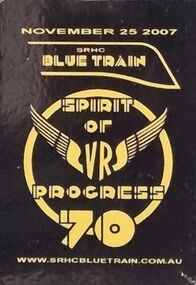
Memorabilia - Spirit of Progress 70th Anniversary, Seymour Railway Heritage Centre, 2007
... The “Spirit” was Australia's first streamlined, air-conditioned, all-steel express train, styled in a 1930s Art Deco design with royal blue and gold paintwork . It was hauled by streamlined S-class 3-cylinder Pacific steam locomotives capable of travelling at around 75 to 100 kilometres per hour. ...The “Spirit” was Australia's first streamlined, air-conditioned, all-steel express train, styled in a 1930s Art Deco design with royal blue and gold paintwork . It was hauled by streamlined S-class 3-cylinder Pacific steam locomotives capable of travelling at around 75 to 100 kilometres per hour. ...This magnet commemorates the 70th Anniversary of the inaugural journey of the Spirit of Progress express passenger train. Its first journey was on 2nd November 1937 when it was launched by Victorian Premier Albert Dunstan and Chief Commissioner Harold Clapp at Spencer Street Station in Melbourne. It originally ran non-stop between Melbourne and the New South Wales border at Albury. The route was extended to Sydney in April 1962 after standard-gauge track was completed. The “Spirit” was Australia's first streamlined, air-conditioned, all-steel express train, styled in a 1930s Art Deco design with royal blue and gold paintwork . It was hauled by streamlined S-class 3-cylinder Pacific steam locomotives capable of travelling at around 75 to 100 kilometres per hour. It ceased operations in August 1986 due to competition from cars and air travel. Magnet Details & Event Background • The Anniversary Run: The magnet highlights the date November 25, 2007 when the Seymour Railway Heritage Centre (SRHC) operated a special celebratory commemorative run to mark exactly 70 years since the first journey of the Spirit of Progress. • The "Blue Train": The text at the top features the SRHC Blue Train. Seymour Railway Heritage Centre maintains a preserved fleet of original, iconic 1937 royal blue and gold all-steel passenger carriages and a dining car from the Spirit of Progress • Design Motifs: The centre of the magnet incorporates the classic winged "VR" logo used historically by the Victorian Railways, flanked by the stylized text "Spirit of Progress" and a large "70" at the bottom. • The Commemorative Journey: For this special anniversary event, the SRHC ran the original train from Melbourne to Albury using freshly repainted, heritage diesel locomotives B74 and S303 in their original Victorian Railways colours. This magnet is significant because it celebrates the Spirit of Progress which serviced Wodonga for 48 years and 8 months between 1937 and 1986.A small commemorative magnet with black background and gold lettering. It was used to celebrate the 70th anniversary of the inaugural run of the "Spirit of Progress".November 25 2007| SRHC BLUE TRAIN SPIRIT OF PROGRESS VR 70 www.SRCHBLUETRAIN.COM.AU"spirit of progress", spirit of progress 70th anniversary, spirit of progress memorabilia -
 Merri-bek City Council
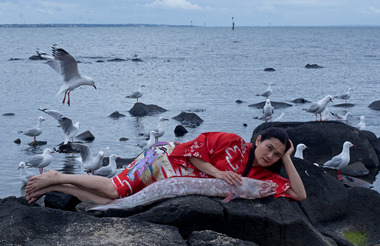
Photograph - Photographic print, Where is a Place for Us to Sleep in Peace?, 2021
... She has participated in the Hong Kong & Myanmar Performance art exchange, 12th AsiaTopia International Performance Festival (Thailand), PanAsia International Performance Festival (Korea), The Longest Day Performance Festival (Switzerland), ZAZ Performance Festival (Israel) and participated in contemporary artist residencies and programs in London, Sweden, USA, Japan and Australia. In 2021, Ma Ei presented work in the 10th Asia Pacific ...myanmar, conflict, displacement, resilience -
 Merri-bek City Council
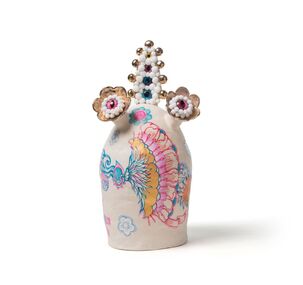
Ceramic - Ceramic, acrylic paint, gold lustre and mix media, Bundit Puangthong et al, FLESH, 2018
... URL: https://www.smh.com.au/entertainment/art-and-design/how-does-your-culture-change-when-you-adopt-a-new-country-20190612-p51wx8.html “Installation Underway for 10th Asia Pacific Triennial at QAGOMA.” ...In creating these pieces, Vipoo Srivilasa initiated the process by sculpting three figures with bare surfaces. Bundit Puangthong then added his artistic touch by painting each sculpture. The artists' conceptual visions harmonized perfectly, especially considering their shared commitment to Buddhist principles, which frequently inspire their respective artistic practices. After Bundit completed his painting, Vipoo enlivened the pieces by adding eyes to the figures. He also embellished the works with pom-poms, lending them a softness that makes them appear both approachable and innocent, despite the weightiness of their themes. Each sculpture embodies a specific teaching from Buddhism: "FLESH" features a golden umbrella, serving as a metaphor for sex. -
 Merri-bek City Council
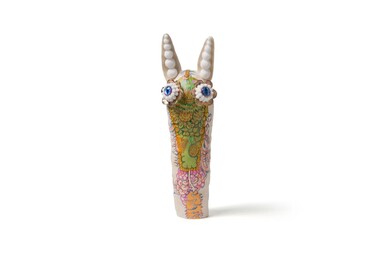
Ceramic - Ceramic, acrylic paint, gold lustre and mix media, Bundit Puangthong et al, FOOD, 2018
... URL: https://www.smh.com.au/entertainment/art-and-design/how-does-your-culture-change-when-you-adopt-a-new-country-20190612-p51wx8.html “Installation Underway for 10th Asia Pacific Triennial at QAGOMA.” ...These captivating pieces are part of a series called "FOOD / FLESH / FAME," a collaborative effort between Melbourne-based Thai artists Bundit Puangthong and Vipoo Srivilasa. Drawing from Buddhist teachings, the series explores the three elements of attachment: Food (consumption), Flesh (sex), and Fame (power). Although these elements are known to cause suffering, they remain persistently alluring, a paradox that the artists intend to explore further in the future. In creating these pieces, Vipoo Srivilasa initiated the process by sculpting three figures with bare surfaces. Bundit Puangthong then added his artistic touch by painting each sculpture. The artists' conceptual visions harmonized perfectly, especially considering their shared commitment to Buddhist principles, which frequently inspire their respective artistic practices. After Bundit completed his painting, Vipoo enlivened the pieces by adding eyes to the figures. He also embellished the works with pom-poms, lending them a softness that makes them appear both approachable and innocent, despite the weightiness of their themes. Each sculpture embodies a specific teaching from Buddhism: "FOOD" depicts a durian, the king of fruits, painted by Bundit Puangthong. He notes, "Despite its pungent aroma, many people still love to eat it."Donated the by the artists -
Women's Art Register
Archive (Collection) - New Zealand Women Artists Compilation Archive
... Art Gallery... Hearth Land (1990) Ex. Cat.... Distance Looks One Way (1993/94) Ex. Cat.... Women's Suffrage Exhibition (1994)... Aotearoa... Pacific...Art Gallery Hearth Land (1990) Ex. Cat. Distance Looks One Way (1993/94) Ex. Cat. Women's Suffrage Exhibition (1994) Aotearoa Pacific Archive New Zealand Women Artists Compilation Archive ...museum of new zealand te papa tongarewa, city gallery wellington, auckland city art gallery, hearth land (1990) ex. cat., distance looks one way (1993/94) ex. cat., women's suffrage exhibition (1994), aotearoa, pacificmuseum of new zealand te papa tongarewa, city gallery wellington, auckland city art gallery, hearth land (1990) ex. cat., distance looks one way (1993/94) ex. cat., women's suffrage exhibition (1994), aotearoa, pacific -
Women's Art Register
Archive (Series) - New Zealand Women Artists. Subject File 1
... Art Gallery... Hearth Land (1990) Ex. Cat.... Distance Looks One Way (1993/94) Ex. Cat.... Women's Suffrage Exhibition (1994)... Aotearoa... Pacific...Art Gallery Hearth Land (1990) Ex. Cat. Distance Looks One Way (1993/94) Ex. Cat. Women's Suffrage Exhibition (1994) Aotearoa Pacific Foolscap white archival 4 flap folder or document wallet Archive New Zealand Women Artists. ...museum of new zealand te papa tongarewa, city gallery wellington, auckland city art gallery, hearth land (1990) ex. cat., distance looks one way (1993/94) ex. cat., women's suffrage exhibition (1994), aotearoa, pacificmuseum of new zealand te papa tongarewa, city gallery wellington, auckland city art gallery, hearth land (1990) ex. cat., distance looks one way (1993/94) ex. cat., women's suffrage exhibition (1994), aotearoa, pacific
