
Showing 138 items matching " robert plant"
-
 Bendigo Historical Society Inc.
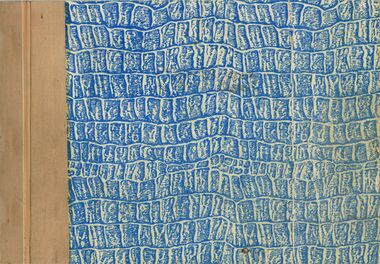
Book - BENDIGO SALEYARDS COLLECTION: PURCHASE REQUISITION BOOK
... ... Robert Plant...BENDIGO Council cattle markets Bendigo Saleyards Collection - Purchase Requisition Book Alan Richie Geoff Williams V/Line Goods BRB Electrical J M Crimmins Fletcher & Sons Ballarat Hume & Iser BP Bury Toledo Scales W C Bury McIlwraith Northern Seed Prymac Abbott Supply R W Dixon Waterfall Quarries Golden City Bond Batteries Dalgety Golden Triangle Boltons Primac Northern Seed Obrien Glass J Richmond Toledo Scales Agriculture Mining Services Boltons Abbotts Supply Midland Irrigation R Fletcher McIlwraith CVC Cranes Bury Abbotts All Bull Allweld Construction Country Scales Shep. Robert Plant Dick Fletcher R Fletcher Dalgety Toledo All Bull Pro Forma Peter Atkins John Howard Bolton Bros Stationary Bury B P McIlwraith Charlton Feed Lot J Richmond City of Bendigo Purchase Requisition, dated from 18/7/1988 to 1723/8/1989. ...City of Bendigo Purchase Requisition, dated from 18/7/1988 to 1723/8/1989. Numbered from 64101 to 64200 Book has a blue and white crocodile skin pattern on the cover. The spine is bound with tan coloured tape. Pages are white with a blue carbon copy. A blue card attached to the back cover is used between each requisition. Purchases and repairs were authorised by J Richmond and J M Crimmins. Purchase Requisitions were used for repairs, stationary, purchase of small equipment and tools.bendigo, council, cattle markets, bendigo saleyards collection - purchase requisition book, alan richie, geoff williams, v/line goods, brb electrical, j m crimmins, fletcher & sons ballarat, hume & iser, bp bury, toledo scales, w c bury, mcilwraith, northern seed prymac, abbott supply, r w dixon, waterfall quarries, golden city, bond batteries, dalgety, golden triangle, boltons, primac northern seed, obrien glass, j richmond, toledo scales, agriculture mining services, boltons, abbotts supply, midland irrigation, r fletcher, mcilwraith, cvc cranes, bury, abbotts, all bull, allweld construction, country scales shep., robert plant, dick fletcher, r fletcher, dalgety, toledo, all bull pro forma, peter atkins, john howard, bolton bros stationary, bury b p, mcilwraith, charlton feed lot, j richmond -
 Bendigo Historical Society Inc.
Document - GOLDEN SQUARE METHODIST CHURCH, c1957
... Plant... Robert Payne. Pianist: Leila Watson. Organist: Hedley R Jones. ...Soloists: Jenifer Eddy, Joyce Manley, Kevin Plant, Robert Payne. Pianist: Leila Watson. Organist: Hedley R Jones. ...Soloists: Jenifer Eddy Joyce Manley Kevin Plant Robert Payne. Pianist: Leila Watson. Organist: Hedley R Jones. ...Golden Square Methodist Church. a/ Good Friday. Stainer's Crucifixion by Augmented Choir. Solo Artists: Mr Cyril Warne, Mr Jack Mamouney, Mr E C Warne, Mr I Carne. Words by Rev J Sparrow-Simpson. Sopranos: Mrs R Munro, Miss M Medlin. Altos: Mrs F Warne, Miss P Chamney. Tenors: Mr W Holland, Mr G Collett. Basses: Mr A Tilson, Mr A Evans. Choir: Mr Cecil Jones, remainder of choir unnamed. b/ Golden Square Methodist Church Choral Society Conducted by Cyril Warne Presents 'Elijah' (Mendelssohn. Soloists: Jenifer Eddy, Joyce Manley, Kevin Plant, Robert Payne. Pianist: Leila Watson. Organist: Hedley R Jones. Tuesday September 24, 1957. Ladies of the Choir: Mrs E Arnold, J Chamney, G Doenau, Miss G Douglas, R Douglas, Mrs R Duguid, Miss E Glen, A Graham, K Harry, Mrs J Jenkins, H Jones, G Leech, Miss B Mamouney, D Mauger, Mrs G Mayne, Mrs R Mellis, H Mustery, Miss G Perry, E Randall, Mrs J Samson, M Smith, A Spiller, H Trabinger, E Vapp, Miss E Vercoe, Mrs M Warne, Miss E Wilson, L Winzar, Mrs L Woodman. Gentlemen of the Choir: Mr R Every, J Gowty, E Hallett, W Harry, J Jenkins, L Jones, F Mamouney, F McCallum, R Mellis, A Nicholls, E Pearce, C Phillips, R Phillips, H Sims, M Warne, T Washington. Hon. Sec. J E Mamouney.program, theatre, golden square methodist church, golden square methodist church. good friday. stainer's crucifixion by augmented choir. solo artists: mr cyril warne, mr jack mamouney, mr e c warne, mr i carne. words by rev j sparrow-simpson. sopranos: mrs r munro, miss m medlin. altos: mrs f warne, miss p chamney. tenors: mr w holland, mr g collett. basses: mr a tilson, mr a evans. choir: mr cecil jones, . b/ golden square methodist church choral society conducted by cyril warne presents 'elijah' (mendelssohn. soloists: jenifer eddy, joyce manley, kevin plant, robert payne. pianist: leila watson. organist: hedley r jones. tuesday september 24, 1957. ladies choir: mrs e arnold, j chamney, g doenau, miss g douglas, r douglas, mrs r duguid, miss e glen, a graham, k harry, mrs j jenkins, h jones, g leech, miss b mamouney, d mauger, mrs g mayne, mrs r mellis, h mustery, miss g perry, e randall, mrs j samson, m smith, a spiller, h trabinger, e vapp, miss e vercoe, mrs m warne, miss e wilson, l winzar, mrs l woodman. gentlemen of the choir: mr r every, j gowty, e hallett, w harry, j jenkins, l jones, f mamouney, f mccallum, r mellis, a nicholls, e pearce, c phillips, r phillips, h sims, m warne, t washington. hon. sec. j e mamouney. -
 Old Colonists' Association of Ballarat Inc.
Photograph - Portrait, Robert U. Nicholls
... ...robert nicholls...nursery...plant...Robert Nicholls died in 1910, and is buried at the Ballaarat New Cemetery. r.u. nicholls robert nicholls nursery plant nursury Ballarat Hortucultual Society robert u. nicholls Photographic portrait of R.U. ...Robert Uriah Nicholls was born in Devonshire, England, and arrived in Victoria in 1853, and Ballarat in 1854.] He ran R.U. Nicholls & Co., nurserymen in Doveton Street North, Ballarat. He was a member of the Ballarat Horticultural Society for 51 years, and was President of the Old Colonists' Association in 1907. Robert Nicholls died in 1910, and is buried at the Ballaarat New Cemetery.Photographic portrait of R.U. Nicholls who arrived in Australia in 1853.r.u. nicholls, robert nicholls, nursery, plant nursury, ballarat hortucultual society, robert u. nicholls -
Clunes Museum
Magazine, VICTORIAN ROSE NEWS, 2003
... SEE PAGE 20 CLUNES ROSARIAN BARBARA KINLOCH AND HEPBURN COUNCILS' PARK AND GARDENS MANAGER ROBERT BEARD PLANTING VICTORIAN GOLD - PHOTO BY MARK GRIFFIN COURTESY OF THE WEEKLY TIMES....SEE PAGE 20 CLUNES ROSARIAN BARBARA KINLOCH AND HEPBURN COUNCILS' PARK AND GARDENS MANAGER ROBERT BEARD PLANTING VICTORIAN GOLD - PHOTO BY MARK GRIFFIN COURTESY OF THE WEEKLY TIMES. ...SEE PAGE 20 CLUNES ROSARIAN BARBARA KINLOCH AND HEPBURN COUNCILS' PARK AND GARDENS MANAGER ROBERT BEARD PLANTING VICTORIAN GOLD - PHOTO BY MARK GRIFFIN COURTESY OF THE WEEKLY TIMES.PLANTING OF ROSES TO COMMEMORATE 150TH ANNIVERSARY OF DISCOVERY OF GOLDPERIODICAL MAGAZINE TITLED VICTORIAN ROSE NEWS ISSUE SPRING VOL.29 NO.3 PRINTED 2003 COST $2.20 A5 COLOURED MAGAZINE ISSUED QUARTERLY. PAGE 20 REFERS TO 'VICTORIA GOLD ON THE VICTORIAN GOLDFIELDS'',' INITIATIVE INSTIGATED BY BARBARA KINLOCK OF CLUNES.local history, book, periodical -
 Bendigo Historical Society Inc.
Newspaper - JENNY FOLEY COLLECTION: BEST DAYS OF YOUR LIFE
... Second row: Ian Dalrymple, Graeme Rawiller, Nola Dalrymple (standing), Margret Wallace, Rosemary Bennett, Julie Powell, Jeanie Rawiller, Cathy Nicholson, Beth Nicholson, Maureen Horby, Robert Plant and Laurie Bayliss. Front row: Roger Jackman, Wallace Baker, Terry Powell, Lance Lakey, Des Nicholson, Kevin Jackman, Neville Williamson, Brian Kenworthy, Cliff Rawiller and Barry Baker. ...Second row: Ian Dalrymple, Graeme Rawiller, Nola Dalrymple (standing), Margret Wallace, Rosemary Bennett, Julie Powell, Jeanie Rawiller, Cathy Nicholson, Beth Nicholson, Maureen Horby, Robert Plant and Laurie Bayliss. Front row: Roger Jackman, Wallace Baker, Terry Powell, Lance Lakey, Des Nicholson, Kevin Jackman, Neville Williamson, Brian Kenworthy, Cliff Rawiller and Barry Baker. ...Opened 4/7/1891 and closed 1/1/1982Bendigo Advertiser '' The way we were'' from 2002. Best days of your life: Dingee School (3127) in 1950. Back row: Bruce Baker, Joan Bayliss, Dorothy Dalrymple, Elaine Plant, Janette Kenworthy and Geoffrey Jackman. Fifth row: Jim Powell, Ronald Lakey, Faye Dalrymple, Bob Coulson, Neil Vincent, Morris Jackman, Ken Coulson, Keith Ansett, Jim Nicholson and Peter Williams. Fourth row: Geoffry Dalrymple, Bill Baker, Judith Baker and Leo Nicholson. Third row: Colin Howells, Laurie Ansett,, Barry Raynor, Marie Ludby, Heather Nicholson, Pam Baker, Margaret Nicholson, Maureen Kemworthy, Joyce Dalrymple, Shirley Kelynack, Esma Bayliss, Aileen Nicholson and Dorothy Baker. Second row: Ian Dalrymple, Graeme Rawiller, Nola Dalrymple (standing), Margret Wallace, Rosemary Bennett, Julie Powell, Jeanie Rawiller, Cathy Nicholson, Beth Nicholson, Maureen Horby, Robert Plant and Laurie Bayliss. Front row: Roger Jackman, Wallace Baker, Terry Powell, Lance Lakey, Des Nicholson, Kevin Jackman, Neville Williamson, Brian Kenworthy, Cliff Rawiller and Barry Baker. The clip is in a folder.newspaper, bendigo advertiser, tramways -
 Flagstaff Hill Maritime Museum and Village
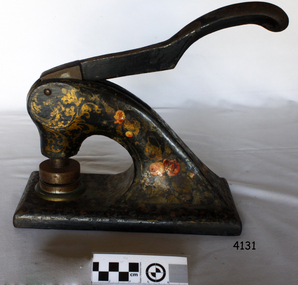
Functional object - Hand operated embossing document press, 1910
... The site was sold again in 1876 to grazer Robert Hood of Sherwood, who was chairman of directors of the failed company, which couldn’t raise sufficient capital to keep the works operating. The entrepreneurial Hood then used the existing plant...The site was sold again in 1876 to grazer Robert Hood of Sherwood, who was chairman of directors of the failed company, which couldn’t raise sufficient capital to keep the works operating. The entrepreneurial Hood then used the existing plant ...The woollen mill was a vital part of Warrnambool for all but 22 years of the town’s history since it's the establishment in 1847 when the first land sales were held and white settlement began. In 1869 the Warrnambool Meat Preserving Company began operations on the mill site, in 1875, shareholders of the then defunct Warrnambool Meat Preserving Company happily sold the land and buildings on the Merri river to Warrnambool Woollen Mill Company Ltd for £5,000. The site was sold again in 1876 to grazer Robert Hood of Sherwood, who was chairman of directors of the failed company, which couldn’t raise sufficient capital to keep the works operating. The entrepreneurial Hood then used the existing plant to turn his own wool into tweed cloth. But just as the mill was starting to show a profit, a fire destroyed the building and plant on the night of 25 March 1882. So again, the mill was operational for six short years. Insurers only paid a fraction over 10% of the damage, Hood couldn't raise sufficient capital to rebuild on his own, and so the site lay unused until 1910. In 1908 Marcus Saltau and Peter John McGennan convinced the Warrnambool Chamber of Commerce to invest in a secondary industry with local capital. A public meeting in September 1908 agreed to raise £40,000, electing Saltau chairman of directors, a post he held for 34 years. A year later, using mostly local money, the Warrnambool Woollen Mill Company dispatched its first manager, John E. Bennett, to buy a plant and recruit 20 experienced staff from the Yorkshire woollen industry in December 1909. Another year more, the new mill was officially opened on 14 November 1910 by Marcus Saltau as company chairman and town mayor. Eighteen months on, in May 1912, the mill paid its first half-yearly dividend of 2 ½%. It was now working two shifts, with a year's orders to fill. In 1914 the mill ordered its own generator, providing the town with electricity and effectively doubling its plant size by October 1915, six months after Gallipoli. Thereafter, government orders for cloth and military supplies assured the mill’s success right through the First World War and on until 1923. A plant upgrade in 1922 for machinery to make worsted fabric drained profits, which, with a fall in demand, led to a loss in 1925. Profits were restored by the 1930s, despite the Depression, mostly due to tight management and robust marketing. Production boomed again during the Second World War, but soon foreign competition bit into profits, forcing the company to consolidate operations. The ‘50s and ‘60s were golden years for the mill. Security and growth gave the company confidence to trial Australia’s first electric blanket in 1958 and to install Swiss Sulzer looms in 1965. Over time, the building facades took on the modern look that the mill presented until it closed. The Dunlop company bought the mill in 1968, fending off a challenge from Onkaparinga in South Australia, and continued to expand by adding Wendouree Woollen Mill in the same year and Dream-spun Textiles a decade later, in 1979. Soon after that purchase, however, the mill began its slippery slide into decline. Dunlop sold to its former rival bidder Onkaparinga Woollen Co. Ltd in 1982, which in turn was taken over by Macquarie Worsted's only a year later, in 1983. Operations remained stable for a decade until 1994 when the Macquarie Group signaled that its newly rationalised operations left no room for the Warrnambool investment. The final operator of the mill was The Smith Family charity group, which ran the site by agreement with the Warrnambool City Council and a state government grant in that same year, 1994. The mill became more of a fabric recycler than a manufacturer. The site was sold to private operators in February 2003 and rezoned four months later to allow for the mixed housing development. The embossing press is significant for its association with the Warrnambool Woollen Mills 1910-1968, a major employer in the Warrnambool district. The press is also significant as an example of commercial office equipment used in the 19th and 20th century.Press, metal, for Company seal of Warrnambool Woollen Mill, stamping their brand as Western District Worsted Mills Pty Ltd. Metal is black with red and gold floral markings. Inscription of stamp reads "WESTERN DISTRICT WORSTED MILLS PROPRIETRY LIMITED" flagstaff hill, warrnambool, shipwrecked-coast, flagstaff-hill, flagstaff-hill-maritime-museum, maritime-museum, warrnambool woollen mills, western district worsted mills proprietry limited, worsted fabric, printing press, logo printing press, stamp printing press, shipwreck-coast, flagstaff-hill-maritime-village -
 Federation University Historical Collection
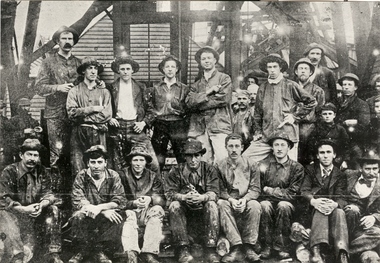
Book, Ballarat School of Mines, Ballarat School of Mines Annual Reports 1895-1902, 1902 (estimated); Bound copies of reports from 1895-1902
... robert e weir...assaying...mineralogy...petrography...algebra...trigonometry...applied...mechancis...land surveying...mine surveying...dynamics and heat...sound and light...magnetism and electricity...carpentry and joinery...architecture...photography...john warrington rogers...james bickett...thomas wanliss...henry cuthbert...museum...william huey...steele...and...gas...engines...mine managers certificate...john m sutherland...charles e campbell...cyanide plant...The Ballarat School of Mines was established in 1970 and was the first school of Mines in Australia. mining mining alumni geometry steam botany ballarat school of mines alfred mica smith j f usher andrew anderson chemistry metallurgy a e c kerr henry j hall veterinary science robert e weir assaying mineralogy petrography algebra trigonometry applied mechancis land surveying mine surveying dynamics and heat sound and light magnetism and electricity carpentry and joinery architecture photography john warrington rogers james bickett thomas wanliss henry cuthbert museum william huey steele and gas engines mine managers certificate john m sutherland charles e campbell cyanide plant mining laboratory samuel thornton daniel walker percy osborne robert allan hubert murphy charles deane ernest trend thomas evans alfred johnston boer war richard maddern underground ferdinand Krause A number of Ballarat School of Mines Annual General reports bounds in a dark blue hardcover with black leather spine. ...The Ballarat School of Mines was established in 1970 and was the first school of Mines in Australia.A number of Ballarat School of Mines Annual General reports bounds in a dark blue hardcover with black leather spine. Includes some illustrations such as the Ballarat School of Mines Senior Staff.mining, mining alumni, geometry, steam, botany, ballarat school of mines, alfred mica smith, j f usher, andrew anderson, chemistry, metallurgy, a e c kerr, henry j hall, veterinary science, robert e weir, assaying, mineralogy, petrography, algebra, trigonometry, applied, mechancis, land surveying, mine surveying, dynamics and heat, sound and light, magnetism and electricity, carpentry and joinery, architecture, photography, john warrington rogers, james bickett, thomas wanliss, henry cuthbert, museum, william huey, steele, and, gas, engines, mine managers certificate, john m sutherland, charles e campbell, cyanide plant, mining laboratory, samuel thornton, daniel walker, percy osborne, robert allan, hubert murphy, charles deane, ernest trend, thomas evans, alfred johnston, boer war, richard maddern, underground, ferdinand krause -
 Federation University Historical Collection
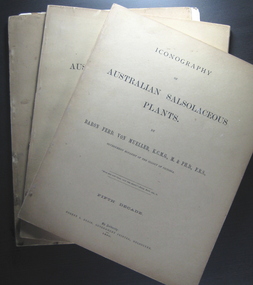
Book, Ferdinand Von Mueller, Iconography of Australian Salsolaceous Plants, 1889 and 1890
... Iconography of Australian Salsolaceous Plants Book Ferdinand Von Mueller Robert Brain, Government Printer ...Ferdinand Von Mueller was the Government Botanist for the Colony of Victoria. He was an early examiner in Botany at the Ballarat School of Mines. Three volumes of a book by Ferdinand Von Mueller (First, Third, and Fifth Decade). The soft cover is brown, and the book includes text and black and white illustrations.botany, ferdinand von mueller, ballarat school of mines, eucalypts, botanist, bookplate -
 Federation University Historical Collection
Booklet, F.C. Mc C. Crisp, Bacchus Marsh Centenary Celebrations, 10/1936
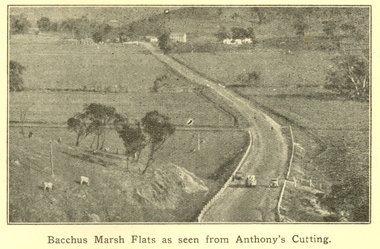
... Robert Elliott (treasurer), R.H. Lambert (Decorations manager) bacchus marsh merrimu guest house anthony's cutting captain bacchus manor house maddingley maddingley park werribee gorge bacchus marsh shire bacchus marsh shire council Brown covered book of 28 pages. The book includes an historical essay, official centenary programme, Electric Light Plant ...Bacchus Marsh celebrated 100 years of white settlement in 1936. The centenary celebrations committee comprised of L.M. Dugdale (President), A.W. Bond (Hon. Secretary), Charles Dickie, W. Grant Morton, W.R. Vigor, C.J. McFarlane, G.H. Anderson, T.J. Shea, F.C. McC Crisp, Dr E. McDonald, Robert Elliott (treasurer), R.H. Lambert (Decorations manager)Brown covered book of 28 pages. The book includes an historical essay, official centenary programme, Electric Light Plant, Patriotic Bacchus Marsh, milk industry, Pioneer Women's Memorial Avenue, Bacchus Marsh Gas Works . The book includes numerous advertisement, some illustrated. Images include: * Bacchus Marsh Flats from Anthony's Cutting; * Manor house; * Scene in Maddingley Park * Werribee Valley; * Werribee Gorge * Maddingley Park lake; * ANA Hall and Post Office * Shire Hall and Soldiers' Memorial Hall, * State School No 28 * At Werribee Gorge ** The Gas Supply Co, Bacchus Marsh * Bacchus Marsh Shire Council, 1935-6 (named) Images depicted in the book were supplied by H.J.M. Vallancebacchus marsh, merrimu guest house, anthony's cutting, captain bacchus, manor house, maddingley, maddingley park, werribee gorge, bacchus marsh shire, bacchus marsh shire council -
 Federation University Historical Collection
Booklets, Melbourne Movie Club
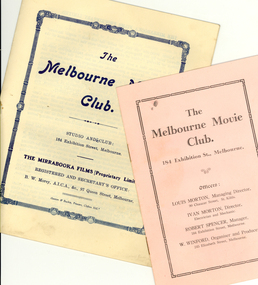
... plant, stage effects, scenery, and cameras. The Melbourne Movie Club saw themselves ad the nursery and basis for a National Film Industry. .1) The secretary was Burnard W. Morey (AICA), the director was L. Morton, and the Managing director of Mirrabooka Films was James Weston. .2) The Managing Director was Louis Morton, the director was Ivan Morton, the Manager Robert Spencer and the organiser and Producer was W. ...plant, stage effects, scenery, and cameras. The Melbourne Movie Club saw themselves ad the nursery and basis for a National Film Industry. .1) The secretary was Burnard W. Morey (AICA), the director was L. Morton, and the Managing director of Mirrabooka Films was James Weston. .2) The Managing Director was Louis Morton, the director was Ivan Morton, the Manager Robert Spencer and the organiser and Producer was W. ...Mirrabooka means Southern Cross. The Melbourne Movie Club was established for those interested in Moving Pictures and all its branches. 'A place to go to spend a few leisure hours, a select dance, parties, picnics, amusements, to learn the art of picture acting and make up, to take part in the Company's productions, dramatic art, to have a jolly good time, etc.' The Melbourne Movie Club has a spacious premises at 184 Exhibition Street, Melbourne, with a floor space of 10,000 square feet, where scenes and sets were erected for the use of Club Members. The Club had full moving picture producing equipment such as big light plant, stage effects, scenery, and cameras. The Melbourne Movie Club saw themselves ad the nursery and basis for a National Film Industry. .1) The secretary was Burnard W. Morey (AICA), the director was L. Morton, and the Managing director of Mirrabooka Films was James Weston. .2) The Managing Director was Louis Morton, the director was Ivan Morton, the Manager Robert Spencer and the organiser and Producer was W. Winford.Two booklets relating to the Melbourne Movie Club. .1) Eight page white booklet of the Melbourne Movie Club - The Mirrabooka Films Pty Ltd. The booklet discusses the place of film in Australia. .2) Eight page pink booklet of the Melbourne Movie Club.melbourne movie club, movie, theatre, james weston, mirrabooka, mirrabooka films, burnard morey -
 Flagstaff Hill Maritime Museum and Village
Machine - Dioptric Apparatus, mid 19th century
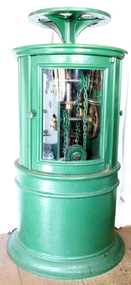
... plant was set up to manufacture crown and flint glass for lighthouse optics, telescopes and cameras. Bontemps agreed to share his processes that up to then had been secret with the Chance Brothers and stayed in England to collaborate with them for six years. In 1900 a baronetcy was created for James Timmins Chance (1814–1902), a grandson of William Chance, who had started the family business in 1771 with his brother Robert...plant was set up to manufacture crown and flint glass for lighthouse optics, telescopes and cameras. Bontemps agreed to share his processes that up to then had been secret with the Chance Brothers and stayed in England to collaborate with them for six years. In 1900 a baronetcy was created for James Timmins Chance (1814–1902), a grandson of William Chance, who had started the family business in 1771 with his brother Robert ...Before the introduction of electricity, lighthouses had a clockwork mechanism that caused the lens to rotate with a light source inside that was either powered by Kerosene or Colza oil. The mechanism consisted of a large weight attached by a cable through the centre of the lighthouse to the top where the cable wrapped around a barrel, drum or wheels that controlled the speed of the lights rotation by a clockwork mechanism. The keeper would crank the clockwork mechanism, which would lift the weight ready for the next cycle similar to an old grandfather clock mechanism. Once the weight lifted to its apex at the bottom of the first landing, the keeper would let it fall, which would pull on the cable, which would, in turn, operate a series of gears activating the rotation of the Fresnel optical lens, which would then rotate to create the lighthouse’s unique light speed of rotation characteristic. Creating a specific characteristic required a way to regulate the speed of the rotation, and was important as sailors could identify a particular light by its speed and time between flashes. The weight had to fall at a certain rate to create the proper rotation speed of the lens and a regulator within the mechanism accomplished this. History: From 1851, Chance Brothers became a major lighthouse engineering company, producing optical components, machinery, and other equipment for lighthouses around the world. James Timmins Chance pioneered placing lighthouse lamps inside a cage surrounded by Fresnel lenses to increase the available light output these cages, are known as optics and they revolutionised lighthouse design. Another important innovation from Chance Brothers was the introduction of rotating optics, allowing adjacent lighthouses to be distinguished from each other by the number of times per revolution the light flashes. The noted English physicist and engineer, John Hopkins invented this system while employed at Chance Brothers. Chance Brothers and Company was a glass works and originally based in Spon Lane, Smethwick, West Midlands England. The company became a leading glass manufacturer and a pioneer of British glass making technology. The Chance family originated in Bromsgrove as farmers and craftsmen before setting up a business in Smethwick near Birmingham in 1824. They took advantage of the skilled workers, canals and many other industrial advances taking place in the West Midlands at the time. Robert Lucas Chance (1782–1865), known as 'Lucas', bought the British Crown Glass Company's works in Spon Lane in 1824. The company specialised in making crown window glass, the company ran into difficulty and its survival was guaranteed in 1832 by investment from Chance's brother, William (1788 – 1856). William owned an iron factoring business in Great Charles Street, Birmingham. After a previous partnership that Lucas had dissolved in 1836, Lucas and William Chance became partners in the business which was renamed, Chance Brothers and Company. Chance Brothers invented many innovative processes and became known as the greatest glass manufacturer in Britain. In 1848 under the supervision of Georges Bontemps, a French glass maker from Choosy-le-Roi, a new plant was set up to manufacture crown and flint glass for lighthouse optics, telescopes and cameras. Bontemps agreed to share his processes that up to then had been secret with the Chance Brothers and stayed in England to collaborate with them for six years. In 1900 a baronetcy was created for James Timmins Chance (1814–1902), a grandson of William Chance, who had started the family business in 1771 with his brother Robert. Roberts grandson, James became head of Chance Brothers until his retirement in 1889 when the company became a public company and its name changed to Chance Brothers & Co. Ltd. Additional information: Lighthouses are equipped with unique light characteristic or flashing pattern that sailors can use to identify specific lighthouses during the night. Lighthouses can achieve distinctive light characteristics in a few different ways. A lighthouse can flash, which is when brief periods of light interrupt longer moments of darkness. The light can occult, which is when brief periods of darkness interrupt longer moments of light. The light can be fixed, which is when the light never goes dark. A lighthouse can use a combination of flashing, oscillating, or being fixed in a variety of combinations and intervals to create individual light characteristics. It is a common misconception that a lighthouse's light source changes the intensity to create a light characteristic. The light source remains constant and the rotating Fresnel lens creates the various changes in appearance. Some Fresnel lenses have "bulls-eye" panels create beams of light that, when rotated between the light and the observer, make the light appear to flash. Conversely, some lenses have metal panels that, when rotated between the light and the observer, make the light appear to go dark. This Dioptric clockwork apparatus used to turn a lighthouse optical lens is very significant as it is integral to a lighthouses operation, we can also look at the social aspect of lighthouses as being traditionally rich with symbolism and conceptual meanings. Lighthouses illustrate social concepts such as danger, risk, adversity, challenge and vigilance but they also offers guidance, salvation and safety. The glowing lamp reminds sailors that security and home are well within reach, they also symbolize the way forward and help in navigating our way through rough waters not just on the oceans of the world but in our personal lives be it financial, personal, business or spiritual in nature. Nothing else speaks of safety and security in the face of adversity and challenge quite the way a lighthouse does. Revolving dioptric clockwork apparatus used to turn a Fresnel optical lighthouse lens. A cylindrical cast metal pillar and cabinet painted green with 3 glass doors enclosing the top section. Inside the pillar/cabinet is a large clockwork mechanism used to turn and regulate a lighthouse light by means of weights and a chain attached to same. One door has the name "Adams Mare" in metallic dots similar to "Braille" to the inside edge of door frame.shipwrecked-coast, flagstaff-hill, flagstaff-hill-maritime-museum, flagstaff hill, maritime-museum, shipwreck-coast, warrnambool, flagstaff-hill-maritime-village, revolving dioptric mechanism, dioptric mechanism for lighthouse, lighthouse clockwork timing mechanism, acetylene lighthouse light mechanism, 19th century lighthouse mechanism, kerosene light, fresnel lenses, colza oil, chance brothers -
 Federation University Historical Collection
Booklet, Ballarat School of Mines Calendar for the Year 1900 with Annual Report and Balance Sheet for 1899, 1900
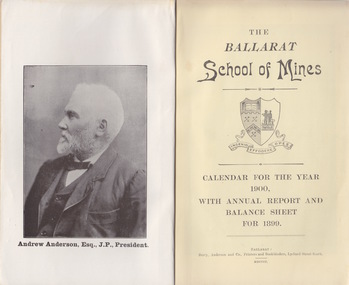
... robert j. allan...a. e. c. kerr...henry j. hall...john m. sutherland...g. f. fryer...j. f. usher...chas, e. campbell...charles kent - auditor...engineering lecture room...cyanide plant...Annual Report, Associateship and Certificates, Calendar for 1901, Examination Fees, Fees, Full Certificates Issued prior to 1899, Honorary Correspondents, Life Governors, Meteorological Observations, Office Bearers, Passes obtained since 1892 in Final Examinations, Professors and Lecturers, Report of the Superintendent of Laboratories, Report of the Lecturer of Geology and Botany, Report of the Professor of Engineering, Report of the Lecturer in Engineering Drawing, Report of the Lecturer in Electricity, Report of the Teacher of Drawing, Report of the Teacher of Photography, Results of Examinations Conducted by Education Department 1899, Statement of Receipts and Expenditure for year 1899, Statistics - Students attending Lectures, Subscriptions and Donations, Subjects included in Regulations Technical Schools, Time Table annual report 1900 andrew anderson - president r. denham pinnock - vice president hon. r.t. vale - vice president the hon. john warrington rogers - trustee the right reverend samuel thornton bishop of ballarat - trustee james millhinch - trustee james oddie - trustee the hon. henry cuthbert - honorary solicitor r. g. middleton - honorary treasurer thomas s. hart - curator of museum chas. kent - auditor fred j. martell - director professor alfred mica smith daniel walker hubert r. murphy charles a. deane percy r. osborne arthur garrad thomas evans stanley b. vial harry lego thomas s. hart godfrey hart professor g. j. dawbarn robert j. allan a. e. c. kerr henry j. hall john m. sutherland g. f. fryer j. f. usher chas, e. campbell charles kent - auditor engineering lecture room cyanide plant senior chemistry laboratory chemistry laboratory junior chemistry laboratory Ballarat School of Mines Calendar for the Year 1900 with Annual Report and Balance Sheet for 1899, Pale grey soft cover, 73 Pages, including photos of a number of lecture theatres. ...Annual Report, Associateship and Certificates, Calendar for 1901, Examination Fees, Fees, Full Certificates Issued prior to 1899, Honorary Correspondents, Life Governors, Meteorological Observations, Office Bearers, Passes obtained since 1892 in Final Examinations, Professors and Lecturers, Report of the Superintendent of Laboratories, Report of the Lecturer of Geology and Botany, Report of the Professor of Engineering, Report of the Lecturer in Engineering Drawing, Report of the Lecturer in Electricity, Report of the Teacher of Drawing, Report of the Teacher of Photography, Results of Examinations Conducted by Education Department 1899, Statement of Receipts and Expenditure for year 1899, Statistics - Students attending Lectures, Subscriptions and Donations, Subjects included in Regulations Technical Schools, Time TableBallarat School of Mines Calendar for the Year 1900 with Annual Report and Balance Sheet for 1899, Pale grey soft cover, 73 Pages, including photos of a number of lecture theatres. annual report 1900, andrew anderson - president, r. denham pinnock - vice president, hon. r.t. vale - vice president, the hon. john warrington rogers - trustee, the right reverend samuel thornton bishop of ballarat - trustee, james millhinch - trustee, james oddie - trustee, the hon. henry cuthbert - honorary solicitor, r. g. middleton - honorary treasurer, thomas s. hart - curator of museum, chas. kent - auditor, fred j. martell - director, professor alfred mica smith, daniel walker, hubert r. murphy, charles a. deane, percy r. osborne, arthur garrad, thomas evans, stanley b. vial, harry lego, thomas s. hart, godfrey hart, professor g. j. dawbarn, robert j. allan, a. e. c. kerr, henry j. hall, john m. sutherland, g. f. fryer, j. f. usher, chas, e. campbell, charles kent - auditor, engineering lecture room, cyanide plant, senior chemistry laboratory, chemistry laboratory, junior chemistry laboratory -
 Federation University Historical Collection
Photograph - Honour Board, Herbert Henry Smith, Ballarat Junior Technical School World War I Honor Board, c1921
... Davis, planted a tree in the grounds of the Junior Technical School in memory of his deceased son. The following names are on the Honour Board Adair, S.H. Allen, W.I Bennett, H.G Bernaldo, Allan Borradale, Robert...Davis, planted a tree in the grounds of the Junior Technical School in memory of his deceased son. The following names are on the Honour Board Adair, S.H. Allen, W.I Bennett, H.G Bernaldo, Allan Borradale, Robert ...The Ballarat Junior Technical School (BJTS) was the junior division of the Ballarat School of Mines.The honor board was unveiled on 17 June 1922 by Sir Alexander Peacock, the Minister for Public Instruction. it was witnessed by a large gathering of parents, friends, students, past student, Albert Steane (Headmaster) and the president, Council and Staff of the Ballarat School of Mines. At the conclusion of the ceremony the junior Technical School was opened for public inspection and afternoon tea was provided by a ladies committee. The Honour Board contains 28 names and of these only one lost his life on active service. this was Francis G. Davis. After the unveiling his father, A. Davis, planted a tree in the grounds of the Junior Technical School in memory of his deceased son. The following names are on the Honour Board Adair, S.H. Allen, W.I Bennett, H.G Bernaldo, Allan Borradale, Robert Brittain, C.C.. Burge, A.A. Burrow, B.C. Carmichael, N.C. Carnegie, G Collins, H.A. Crick, R.J Cunningham, C Davis, Francis G (killed) Edwards, S.F. Frank, P.C. Gilbert, J.H. James, J.F. Leech, G.J. McGrath, D.G. McNab, J.C. Parkin, R. Paterson, W.J Ronaldson, L.A. Shannon, G.O. Steele, S.L. Terry, W.R. Townsend, S.H. A timber honour board with names written in gold. The board was designed by H.H. Smith, Principal of the Ballarat Technical Art School. A central case holds a copy of the Victorian Education Department War Service Book. The Photorgraph was taken when it was in the SMB A Building. C1923 it was taken to J Building - the former Ballarat Junior Techncial School. world war one, ww1, ballarat school of mines, ballarat junior technical school, alexander peacock, world war 1, world war i, honour roll, hh herbert, francis davis, frank davis, s.h. adair, w.i. allen, h.g. bennett, allan bernaldo, robert borradale, c.c. brittain, a.a. burge, b.c. burrow, n.c. carmichael, g. carnegie, h.a. collins, r.j. crick, c. cunningham, s.f. edwards, p.c. frank, j.h. gilbert, j.f. james, g.j. leech, d.g. mcgrath, j.c. mcnab, r. parkin, w.j. paterson, l.a. ronaldson, g.o. shannon, s.l. steele, w.r. terry, s.h. townsend -
 Federation University Historical Collection
Newspaper, Overland Telegraph Centenary, 1972, 1972
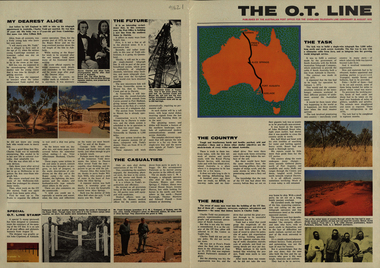
... Robert Patterson, Charles Todd, A.J. Mitchell (surveyor), Maps of the sections (Begot's contract, Central Sections, Darwent and Dalwood contract, Patterson contract), planting of the first pole at Darwin, Roper River Camp, Charles Todd, Alice Todd, Alice Springs Repeater Station, Grave of Kavenagh, Roper River, Frank Kraegem, Maryvale station....Robert Patterson, Charles Todd, A.J. Mitchell (surveyor), Maps of the sections (Begot's contract, Central Sections, Darwent and Dalwood contract, Patterson contract), planting of the first pole at Darwin, Roper River Camp, Charles Todd, Alice Todd, Alice Springs Repeater Station, Grave of Kavenagh, Roper River, Frank Kraegem, Maryvale station. ....1) Overland Centenary Supplement to The Australian. Six pages of information and images including the Roper River Camp, First Telegraph Pole at Port Darwin, Route of the Overland Telegraph, Australian Telecommunications Development Association, Alice Springs, Frew's Ponds. Charles Todd, Alice ToddFrank Kraegen, Pony Express. .2) 'The O.T. Line' - four page coloured news shhet published of by the Australian Post Office for the Overland Telegraph Line Centenary, 22 August 1972. Includes articles and images such as J.A.G. Little (Darwin Poatmaster), Robert Patterson, Charles Todd, A.J. Mitchell (surveyor), Maps of the sections (Begot's contract, Central Sections, Darwent and Dalwood contract, Patterson contract), planting of the first pole at Darwin, Roper River Camp, Charles Todd, Alice Todd, Alice Springs Repeater Station, Grave of Kavenagh, Roper River, Frank Kraegem, Maryvale station.roper river camp, telegraph pole, port darwin, overland telegraph route, australian telecommunications development association, alice springs, frew's ponds, charles todd, alice todd, frank kraegen, pony express -
 Federation University Historical Collection
Book - Scrapbook, Ballarat School of Mines Scrapbook, 1899, 1872-1908
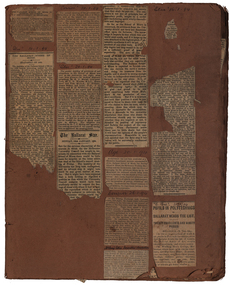
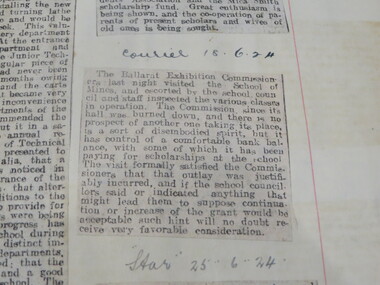
... plant donation...h. rosales...thomas hart...ballarat observatory...robert...newsclips newspaper cuttings schools of mines sale school of mines bairnsdale school of mines daylesford school of mines castlemaine school of mines bendigo school of mines stawell school of mines st arnaud school of mines alfred mica smith industrial institute james bickett redmond barry ballarat school of mines opening mining engineering pottery charles fenner pottery classes maurice copland plumbing harold herbert ballarat school of mines statistics andrew anderson j.c. molloy art schools ballarat west art school herbert h. smith amelia h. troon martha pinkerton r.t. vale david ham clunes rivett bland obituary university of melbourne affiliation gilbert dawbarn kernot james patterson john rowe cassilis chlorination r.w. lamb j. flegeltaub tasmanian examination balarat school of mines museum latham watson state school students w. longstafff daisy ditchburn e. grownow ballarat east art school art gallery association technical art school e. guse j.g. williamson m.f. williamson george biknell print engraving a.e.c. kerr a.n.a. fete hannay electro-cyanide process james oddie r.m. serjeant xrays roentgen xrays lizzie drape mines bill henry forster technical education in germany deeble's patent p. cohen deeble's cyanide plant donation h. rosales thomas hart ballarat observatory robert denham pinnock isaac james jones edward ivan rosenblum samuel ernest figgis r.w. best thomas f. morkham beatrice j. flude bertha craig drucilla hopwood george bird james galbally Mining Exchange transit theodilite Univerisity of Melbourne affiliation t.d. wanliss scrapbook S.e. figgis j. dawbarn Gilbert Dawbarn g.g. simpson Brown coal parwan bacchus marsh A. ....1) Scrapbook of newspaper clipping in oversize scrapbook .2) White file of newspaper clippings 1872-1908newsclips, newspaper cuttings, schools of mines, sale school of mines, bairnsdale school of mines, daylesford school of mines, castlemaine school of mines, bendigo school of mines, stawell school of mines, st arnaud school of mines, alfred mica smith, industrial institute, james bickett, redmond barry, ballarat school of mines opening, mining engineering, pottery, charles fenner, pottery classes, maurice copland, plumbing, harold herbert, ballarat school of mines statistics, andrew anderson, j.c. molloy, art schools, ballarat west art school, herbert h. smith, amelia h. troon, martha pinkerton, r.t. vale, david ham, clunes, rivett bland obituary, university of melbourne affiliation, gilbert dawbarn, kernot, james patterson, john rowe, cassilis chlorination, r.w. lamb, j. flegeltaub, tasmanian examination, balarat school of mines museum, latham watson, state school students, w. longstafff, daisy ditchburn, e. grownow, ballarat east art school, art gallery association technical art school, e. guse, j.g. williamson, m.f. williamson, george biknell, print engraving, a.e.c. kerr, a.n.a. fete, hannay electro-cyanide process, james oddie, r.m. serjeant, xrays, roentgen xrays, lizzie drape, mines bill, henry forster, technical education in germany, deeble's patent, p. cohen, deeble's cyanide plant donation, h. rosales, thomas hart, ballarat observatory, robert denham pinnock, isaac james jones, edward ivan rosenblum, samuel ernest figgis, r.w. best, thomas f. morkham, beatrice j. flude, bertha craig, drucilla hopwood, george bird, james galbally, mining exchange, transit theodilite, univerisity of melbourne, affiliation, t.d. wanliss, scrapbook, s.e. figgis, j. dawbarn, gilbert dawbarn, g.g. simpson, brown coal, parwan, bacchus marsh, a. berry, f.m. krause, practical mining, cassilis, tasmanian exhibition, ballarat school of mines dilapidated, thomas bath, cyanide, elextirc rock drills, herbert franklin, frank bruce, henry rivett bland, j.n. dunn, dr pinnick, theo williams, steiglitz gold mines, meredith, a.f. balderson, j.m. bickett, f.j. martell, cosmo newberry, m. lindsay, pyrites, pyrites roaster, blucjer amagamator, ludovico hart, photographer, art gallery association's technical art school, ballarat east school of art, otto riegelbuth, hugh colquhoun, louis lemp, g.a.f. soderstron, e. gude, a.f. tweedie, m.l. tuxen, george h. bicknell, c.v. brind, a.h. troon, r. flohm, c.s. proctor, m. oddie, b.s. williamson, f.h.w. robinson, photography classes, i.g. wittkowski, h.r. murphy, mary browne, technical education, andrew berry, r-ray, xray, watson's focus tubes, rohmkorff coil, treloar, wooster, t.e. molloy, w/m/ acheson, ladies art association, ballarat art gallery association, maud glover, bertha s. williamson, hnery foster, native telurides of gold, eliza kershaw, edith curnow -
Federation University Historical Collection
Correspondence, Correspondence concerning the Burke Family, 1954, 20/05/1954
... Robert O'Hara Burke Mrs Burke Kearney F.G. Elford letterhead F.H. Johnston Morris Machine Works air letter aerograme Two letters typed .1) An air letter form J.L. Lonergan of Eastern Pensylvania addressed to Ballaratt University, and eventuallty delivered to the Ballarat School of Mines. The letter requests information on a Mrs Burke of Ballarat, whose husband was lost in the Bush. Mrs Burke ran a boading house. The author worked for Morris Machine Works and remembered a Chief Engineery from Ballarat visiting the plant ...Some possibility the author is writing about Robert O'Hara Burke, but he was not married.Two letters typed .1) An air letter form J.L. Lonergan of Eastern Pensylvania addressed to Ballaratt University, and eventuallty delivered to the Ballarat School of Mines. The letter requests information on a Mrs Burke of Ballarat, whose husband was lost in the Bush. Mrs Burke ran a boading house. The author worked for Morris Machine Works and remembered a Chief Engineery from Ballarat visiting the plant at the beginning of World War One. .2) A letter on University of Melbourne letterhead redurecting the letter to Ballarat. The letter was signed by F.G. Elford for F.H. Johnston (Registrar)/j.l. lonergan, robert o'hara burke, mrs burke, kearney, f.g. elford, letterhead, f.h. johnston, morris machine works, air letter, aerograme -
 Federation University Historical Collection
Book - Scrapbook, Ballarat School of Mines Scrapbook 1921-1924, 1921-1924
... The clippings in this book relate to the Ballarat School of Mines. ballarat school of mines scrapbook ballarat technical art school clay ceramics pottery native clay maurice copland h.h. smith c.h. beanland technical schools albert e. dowling john dulfer jenkin swimming shield r.s. dale j.y. mcdonald a.f. heseltine stained glass windows amalie feild richard dale ballarat school of mines museum ballarat junior secondary school war criminal trials j.f. crichton repatriation department w.o.f. close soldiers vocational classes world war one alexander peacock ballarat junior technical school opening effie holmes cornell chemist w.k. moss ken moss obituary j. vickery w.d. hill r.w. richards shackelton antarctic exploration t.h. trengrove samuel mayo vera lindsay bessie robertson victor greenhalgh repatriation classes closure repatriation classes termination university college vocational training arbor day j.b. corbet ballarat school of mines procession ballarat junior technical school honour board harold herbert albert steane a.w. steane francis davis tree planting clyde lukeis trade classes old boys association alfred james higgin blackill color and oxide company electric supply company state school exhibition state education jubilee scholarships clay deposits james coad t.a. williams copland memorial e.j. mcconnon alfred mica smith ponsonby carew smyth d. maxwell lena rutherford dorothy whitehead examination results geoffrey nicholls robert dowling j.b. robinson percy trompf j.c. bush white flat reserve rubbish tip sports ground broken hill excursion old boy's association school of mines procession white flat improvements empire exhibition ballarat school of mines literary society school reunion john rowell d.e. mullins g. renkin t.m. shattock new law courts supreme court building transferred to ballarat school of mines buildings ballarat state offices ballarat school of mines museum closed ballarat school of mines and industries k.b. brown sir r. garran alf hannah macrobertson scholarship simone fraser violet hambley alfred bayley j. heriot c.r. pittock i.r. bradshaw ballarat exhbition e. parkin c.m. harris mica smith bust william henry nicholls daniel walker paul montford w.h. corbould j.w. sutherland Technical Training for girls girls education Amalie Colquhoun ken moss obituary OPening of the Ballarat Junior Technical School J.S. ...The clippings in this book relate to the Ballarat School of Mines. Hard covered scrapbook with newspaper clippings relating to the Ballarat School of Mines.ballarat school of mines, scrapbook, ballarat technical art school, clay, ceramics, pottery, native clay, maurice copland, h.h. smith, c.h. beanland, technical schools, albert e. dowling, john dulfer, jenkin swimming shield, r.s. dale, j.y. mcdonald, a.f. heseltine, stained glass windows, amalie feild, richard dale, ballarat school of mines museum, ballarat junior secondary school, war criminal trials, j.f. crichton, repatriation department, w.o.f. close, soldiers vocational classes, world war one, alexander peacock, ballarat junior technical school opening, effie holmes, cornell chemist, w.k. moss, ken moss, obituary, j. vickery, w.d. hill, r.w. richards, shackelton, antarctic exploration, t.h. trengrove, samuel mayo, vera lindsay, bessie robertson, victor greenhalgh, repatriation classes closure, repatriation classes termination, university college, vocational training, arbor day, j.b. corbet, ballarat school of mines procession, ballarat junior technical school honour board, harold herbert, albert steane, a.w. steane, francis davis, tree planting, clyde lukeis, trade classes, old boys association, alfred james higgin, blackill color and oxide company, electric supply company, state school exhibition, state education jubilee, scholarships, clay deposits, james coad, t.a. williams, copland memorial, e.j. mcconnon, alfred mica smith, ponsonby carew smyth, d. maxwell, lena rutherford, dorothy whitehead, examination results, geoffrey nicholls, robert dowling, j.b. robinson, percy trompf, j.c. bush, white flat reserve, rubbish tip, sports ground, broken hill excursion, old boy's association, school of mines procession, white flat improvements, empire exhibition, ballarat school of mines literary society, school reunion, john rowell, d.e. mullins, g. renkin, t.m. shattock, new law courts, supreme court building transferred to ballarat school of mines, buildings, ballarat state offices, ballarat school of mines museum closed, ballarat school of mines and industries, k.b. brown, sir r. garran, alf hannah, macrobertson scholarship, simone fraser, violet hambley, alfred bayley, j. heriot, c.r. pittock, i.r. bradshaw, ballarat exhbition, e. parkin, c.m. harris, mica smith bust, william henry nicholls, daniel walker, paul montford, w.h. corbould, j.w. sutherland, technical training for girls, girls education, amalie colquhoun, ken moss obituary, opening of the ballarat junior technical school, j.s. vickery, j.s. vickery obituary, ida v. johnson, john rowell exhibition, max meldrum, w.g. coates, g.f. fitches, walter white, sewerage plumbing, villers brettonneux school -
 Federation University Historical Collection
Booklet - Annual Report, Greater Ballarat Association Annual Report 1952-1974, 1952-1974
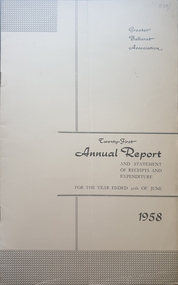
... Robert J. Cooke. greater ballarat association annual report edgar bartrop g.b. richmond a.w. nicholson g.e. deeble r.g> caddell l.j. fraser t.u. haymes a.w. lynch keith rash tourist bureau botanical gardens telepone booth pryor park tree planting ballarat zoological gardens centenary window dressing competition soldier settlement proposal for university for ballarat caravan park ballarat common ballarat common development t.t. hollway housing commission wendouree housing commission industrial development s.s. ballarat begomia festiva r.g. caddell w.gordon smith f.h. menzies olympic rowing royal tour decorations begonia float widening of railway bridge j. chatham l.g. chester s.v. playsted n. ellis langi kal kal langi kal kal training centre migrants to victoria flood lighting of the arch of victory olympics holidays ballarat's projected olympic pool ballarat fish hatcheries olympic hostel town planning murray byrne titles for residence areas service club signs railway level crossing traffic ploughing competition w. fraser young australia league removal of raaf from ballarat renumbering of streets renumbering of streets to the block system miners' racecourse reserve historical museum ballarat historical society c.m. canty mavis canty university status ballarat university college j.w. murray p.r. gray b.c. mcorist n.c. ellis w.h. heinz save the lake campaign lake wendouree weed home host scheme b. walker develop victoria council eureka development victorian decentralization league r.h. ramsay allan c. pittard w. gordon smith c.h. davis b.c. hedgcock les kennedy p.j. rice a.f. waddington john p. cook historic markers maze traffic lights bungal dam camera clubs sunraysia way map centre of road parking paddle steamer wendouree apex local government women's association may nelson wes sobey melton foo l.l. zilles dulcie sullivan m. barnes lou zilles john wesley sobey e.r. ingles herb warren kryal castle Eighteen annual reports of the Greater Ballarat Association. ...The first presedent of the Greater Ballarat Association in 1938 was Robert J. Cooke. Eighteen annual reports of the Greater Ballarat Association. Each one discussed the work of the association and lists the subscribers. greater ballarat association, annual report, edgar bartrop, g.b. richmond, a.w. nicholson, g.e. deeble, r.g> caddell, l.j. fraser, t.u. haymes, a.w. lynch, keith rash, tourist bureau, botanical gardens telepone booth, pryor park tree planting, ballarat zoological gardens, centenary window dressing competition, soldier settlement, proposal for university for ballarat, caravan park, ballarat common, ballarat common development, t.t. hollway, housing commission, wendouree housing commission, industrial development, s.s. ballarat, begomia festiva, r.g. caddell, w.gordon smith, f.h. menzies, olympic rowing, royal tour decorations, begonia float, widening of railway bridge, j. chatham, l.g. chester, s.v. playsted, n. ellis, langi kal kal, langi kal kal training centre, migrants to victoria, flood lighting of the arch of victory, olympics holidays, ballarat's projected olympic pool, ballarat fish hatcheries, olympic hostel, town planning, murray byrne, titles for residence areas, service club signs, railway level crossing, traffic, ploughing competition, w. fraser, young australia league, removal of raaf from ballarat, renumbering of streets, renumbering of streets to the block system, miners' racecourse reserve, historical museum, ballarat historical society, c.m. canty, mavis canty, university status, ballarat university college, j.w. murray, p.r. gray, b.c. mcorist, n.c. ellis, w.h. heinz, save the lake campaign, lake wendouree, weed, home host scheme, b. walker, develop victoria council, eureka development, victorian decentralization league, r.h. ramsay, allan c. pittard, w. gordon smith, c.h. davis, b.c. hedgcock, les kennedy, p.j. rice, a.f. waddington, john p. cook, historic markers, maze, traffic lights, bungal dam, camera clubs, sunraysia way, map, centre of road parking, paddle steamer, wendouree apex, local government women's association, may nelson, wes sobey, melton foo, l.l. zilles, dulcie sullivan, m. barnes, lou zilles, john wesley sobey, e.r. ingles, herb warren, kryal castle -
 Federation University Historical Collection
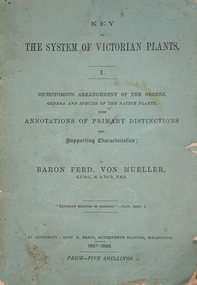
Book, Robert S. Brain, Government Printer, Key to the System of Victorian Plant I: Dichotomous Arrangement of the Orders, Genera and Species of the Native Plants, with Annotations of Primary Distinctions and Supporting Caracteristics, 1887-1888
... von mueller bookplate ballarat school of mines library plate melbourne public library Geen covered book of 559 pages Key to the System of Victorian Plant I: Dichotomous Arrangement of the Orders, Genera and Species of the Native Plants, with Annotations of Primary Distinctions and Supporting Caracteristics Book Robert S. ...Geen covered book of 559 pages von mueller, bookplate, ballarat school of mines library plate, melbourne public library -
 City of Moorabbin Historical Society (Operating the Box Cottage Museum)
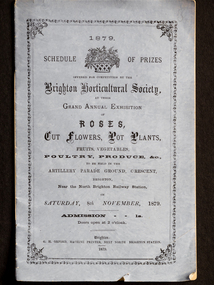
Booklet - Schedule Booklet, horticultural prizes, "1879 Schedule of Prizes Brighton Horticultural Society", 1879
... Robert Keys Leader Cup Trophy, 1882-1883 was re-discovered at 'Box Cottage' Museum in 2009. The Leader Cup Trophy, MAV 00001, is also itemised in this booklet (p9) The Leader Newspaper offered the 'Silver Cup, value Five Guineas for the best fruit garden in the Brighton District. The Proprietors of the English, Scottish and Australian Chartered Bank offered an second prize of three Guineas Commencing in 1856, the Brighton Horticultural Society only disbanded in 2009, and most of their archival holdings were given to the Brighton Historical Society. This booklet gives a good idea of the large varieties of plants...Robert Keys Leader Cup Trophy, 1882-1883 was re-discovered at 'Box Cottage' Museum in 2009. The Leader Cup Trophy, MAV 00001, is also itemised in this booklet (p9) The Leader Newspaper offered the 'Silver Cup, value Five Guineas for the best fruit garden in the Brighton District. The Proprietors of the English, Scottish and Australian Chartered Bank offered an second prize of three Guineas Commencing in 1856, the Brighton Horticultural Society only disbanded in 2009, and most of their archival holdings were given to the Brighton Historical Society. This booklet gives a good idea of the large varieties of plants ...This booklet from 1879 was given to the Moorabbin Historical Society when the Robert Keys Leader Cup Trophy, 1882-1883 was re-discovered at 'Box Cottage' Museum in 2009. The Leader Cup Trophy, MAV 00001, is also itemised in this booklet (p9) The Leader Newspaper offered the 'Silver Cup, value Five Guineas for the best fruit garden in the Brighton District. The Proprietors of the English, Scottish and Australian Chartered Bank offered an second prize of three Guineas Commencing in 1856, the Brighton Horticultural Society only disbanded in 2009, and most of their archival holdings were given to the Brighton Historical Society. This booklet gives a good idea of the large varieties of plants, poultry and the skills of the pioneer settlers of the Brighton District.This Booklet describes the Schedule of Prizes for the 1879 Grand Annual Exhibition of the Brighton Horticultural Society in Brighton Victoria. The Booklet was donated to the Moorabbin Historical Society in 2009 upon the disbanding of the Brighton Horticultural Society..at that time. The Moorabbin Historical Society possesses the 1882 'Leader Cup Trophy' (cat 00001) presented to Robert Keys for the best Fruit Garden. This booklet is kept in the same cabinet as the Robert Key's Silver Trophy. After Henry Dendy's Special Survey in 1841 allotments of land were sold or rented to pioneer settlers who developed market gardens , fruit gardens and poultry farms in the Brighton area. Their produce was sold at the St Kilda and Melbourne Markets for the growing population of MelbourneBooklet with mauve paper cover and 16 pages listing the Schedule of prizes for the 1879 annual exhibition of the Brighton Horticultural Society to be held in Brighton, Victoria."1879/ SCHEDULE OF PRIZES/OFFERED FOR COMPETITION BY THE/ BRIGHTON HORTICULTURAL SOCIETY,/ AT THEIR/ GRAND ANNUAL EXHIBITION/ OF / ROSES,/ CUT FLOWERS, POT PLANTS,/ FRUITS, VEGETABLES,/ POULTRY, PRODUCE, &c.,/TO BE HELD IN THE/ ARTILLERY PARADE GROUND, CRESCENT, / BRIGHTON,/ Near the North Brighton Railway Station, / ON / SATURDAY, 8th NOVEMBER, 1879./ ADMISSION 1s. / Doors open at 2 o'clock. / Brighton: / G. H. ORFORD, MACHINE PRINTER, NEXT NORTH BRIGHTON STATION. / 1879 ;melbourne, keys robert, trophy, leader newspaper, leader cup, brighton, silver, moorabbin, bentleigh, markets, dendy henry, st kilda, bent thomas, market gardens, brighton horticultural society, fruit gardens, banks chartered -
 Greensborough Historical Society
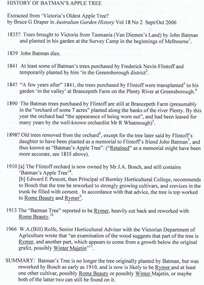
Article, History of Batman's Apple Tree, 1835o
... It was planted on the banks of the Plenty River in 1841. apples john batman robert whatmough frederick nevin flintoff plenty river batman apple tree 2 typed pages, 2 copies. ...This is a timeline of the Apple Tree's history from c1835 to 1966. Information is taken from various printed sources.This is possibly the oldest apple tree in Victoria. It was planted on the banks of the Plenty River in 1841.2 typed pages, 2 copies.apples, john batman, robert whatmough, frederick nevin flintoff, plenty river, batman apple tree -
 Greensborough Historical Society
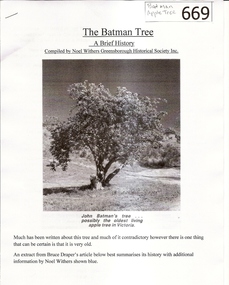
Article, The Batman Tree: a brief history, 1835o
... It was planted on the banks of the Plenty River in 1841. batmans apple tree noel withers john batman robert whatmough frederick nevin flintoff plenty river 1841 5 pages of text and illustrations. ...A compilation of information on the Batman Apple Tree collected and written by Noel Withers.This is possibly the oldest apple tree in Victoria. It was planted on the banks of the Plenty River in 1841.5 pages of text and illustrations.batmans apple tree, noel withers, john batman, robert whatmough, frederick nevin flintoff, plenty river, 1841 -
 Greensborough Historical Society
Photograph - Digital image, Willis Vale [2], 1950c
... View of Greensborough in the distance from Willis Vale and surrounding land: House built by Edward Maygar, The flowering Hawthorne Bushes were planted by William Partington. Note the prominent house on upper right where Robert Whatmough lived in the mid 19th century and later sold to Partington family. ...View of Greensborough in the distance from Willis Vale and surrounding land: House built by Edward Maygar, The flowering Hawthorne Bushes were planted by William Partington. Note the prominent house on upper right where Robert Whatmough lived in the mid 19th century and later sold to Partington family. ...View of Greensborough in the distance from Willis Vale and surrounding land: House built by Edward Maygar, The flowering Hawthorne Bushes were planted by William Partington. Note the prominent house on upper right where Robert Whatmough lived in the mid 19th century and later sold to Partington family. It was located on the Plenty River across from Partington's Flat. The derelict Willis Vale house was destroyed in 1964 when a fire originating from North Plenty Gorge - Kurrak Road - was lit by two teenage boys and made its way several kilometres down to Partington's Flat Greensborough. In 1946, Alan Partington built the Alwyn Farmhouse in place of the original Robert Whatmough home seen in this photo which became Whatmough Park circa 1976.Home of the Partington familyDigital copy of black and white photograph.willis vale, partington family, maygar family, whatmough -
 Glenelg Shire Council Cultural Collection
Artwork, other - Mural, Mitchell Parker and the Portland Community, Aruolumnantiquitous, n.d
... Opened by Robert Halliday Large mural painted against foreshore wall. Sea creatures and plant life are depicted between framing pedastals and capitals, forming a colonade along the wall. ...Opened by Robert HallidayLarge mural painted against foreshore wall. Sea creatures and plant life are depicted between framing pedastals and capitals, forming a colonade along the wall. In background is abstract pattern of 3 shades of blue in horizontal sections. Along wall fish are stencilled in red and blue. -
 Orbost & District Historical Society
albums
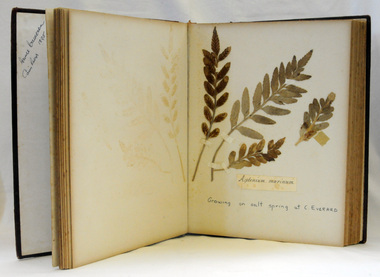
... Robert Pullar Cameron was a Shire Councillor for many years. He married Penuel Hossack and had a family of James, Flora, Penuel and Alex. He was listed as a significant plant...Robert Pullar Cameron was a Shire Councillor for many years. He married Penuel Hossack and had a family of James, Flora, Penuel and Alex. He was listed as a significant plant ...Annie Cameron was the daughter of John and Elizabeth Cameron. Her father was a keen geologist and botanist. Robert Pullar Cameron was a Shire Councillor for many years. He married Penuel Hossack and had a family of James, Flora, Penuel and Alex. He was listed as a significant plant collector at Orbost, Victoria who collected on the Bemm, Cann and Snowy Rivers. (Based on the list published by J.H. Willis, D. Pearson, M.T. Davis, and J.W. Green, Western Australian Herbarium Research Notes Number 12, August 1986. Enhanced with information from George, A.S. (2009) Australian Botanist's Companion, Four Gables Press, WA.)These items are significant as a record of the occurrence of a plant species at a particular place and time and are a useful research resource. They are associated with the Cameron family, early Orbost settlers. Two albums of pressed flowers. 765.1 has a red cover with gold trim and printing. 765.2 has a blue cover. 765.1 - "Collected at Cann River 1874-98 by Annie Cameron " 765.2 - "Collected we believe by Robert P. Cameron in 1890's"botany australian-plants-flowers cameron-robert-pullar cameron-annie -
 Ringwood and District Historical Society
Book, Helen Tolpliss, The Artists Camps: Plein Air Painting In Melbourne 1885-1898, 1984
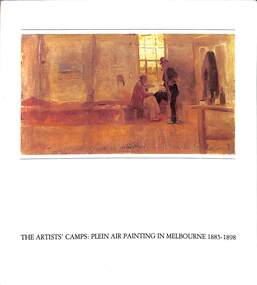
... Plant - Department of Visual Arts, Monash University. The paintings of the 'Heidelberg school" are the best loved group of works in Australian art. The affection is linked in the national mind with a recognition that the authentic Australian landscape had been discovered and colonial bonds broken. The painting activity of the 1880s and 1890s was by no means confined to Heidelberg. Helen Topliss painstakingly presents the variety of sites around Melbourne, in the bush and on the coast, reconstructing their original character and the history of their accessibility. The major figures are well known — Roberts...Plant - Department of Visual Arts, Monash University. The paintings of the 'Heidelberg school" are the best loved group of works in Australian art. The affection is linked in the national mind with a recognition that the authentic Australian landscape had been discovered and colonial bonds broken. The painting activity of the 1880s and 1890s was by no means confined to Heidelberg. Helen Topliss painstakingly presents the variety of sites around Melbourne, in the bush and on the coast, reconstructing their original character and the history of their accessibility. The major figures are well known — Roberts ...Image of a Charles Conder painting on front of soft covered book titled The Artists' Camps: Plein Air Painting In Melbourne 1885-1898. FOREWORD by Margaret Plant - Department of Visual Arts, Monash University. The paintings of the 'Heidelberg school" are the best loved group of works in Australian art. The affection is linked in the national mind with a recognition that the authentic Australian landscape had been discovered and colonial bonds broken. The painting activity of the 1880s and 1890s was by no means confined to Heidelberg. Helen Topliss painstakingly presents the variety of sites around Melbourne, in the bush and on the coast, reconstructing their original character and the history of their accessibility. The major figures are well known — Roberts, McCubbin, Streeton and Conder — but there were a number of 'minor' artists associated with the various painting spots that have been too long neglected. A research programme is here initiated in the hope that some of these figures might be more fully returned to us. The restoration of the sites provokes a more extensive roll-call of artists involved in the plein air phenomenon. Various expressions of nationalism in the late nineteenth century have been accorded attention: the painters contributed in varying degrees. But it is, finally, the quality of the painting, the freshness, the particularity of nuance, the calculated aesthetic angles that have governed response and inspired affection. The elegant relaxation themes of many of the paintings have in fact been overlooked in the intellectualization of the quest for 'national identity'. The orchards and the beaches, the ladies promenading a la mode on the beach at Mentone or in the grasses of Box Hill are as important to our artistic tradition and social history as the shearers of rams. -
 Mission to Seafarers Victoria
Photograph - Photograph, Black and white, Herald, Captain R. Sunter of the M.S. Manunda , at the invitation of the War memorial in Melbourne, plants a tree, 04 August 1934
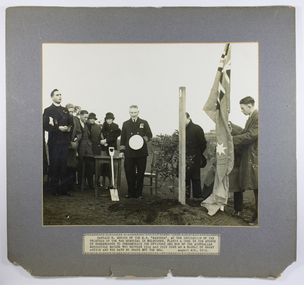
... planted, during a ceremony, on the lawns of the newly created garden of the Shrine of Remembrance. The Shrine of Remembrance was built to provide a place to grieve and remember Victorians killed in the First World War (1914-18). Prince Henry, the Duke of Gloucester and son of King George V, officially opened the Shrine before a crowd of 300,000 people in November 1934. Captain Robert...planted, during a ceremony, on the lawns of the newly created garden of the Shrine of Remembrance. The Shrine of Remembrance was built to provide a place to grieve and remember Victorians killed in the First World War (1914-18). Prince Henry, the Duke of Gloucester and son of King George V, officially opened the Shrine before a crowd of 300,000 people in November 1934. Captain Robert ...On the 4 August 1934, to mark the 20th anniversary of the Great Britain declaration of war on Germany, 106 trees were planted, during a ceremony, on the lawns of the newly created garden of the Shrine of Remembrance. The Shrine of Remembrance was built to provide a place to grieve and remember Victorians killed in the First World War (1914-18). Prince Henry, the Duke of Gloucester and son of King George V, officially opened the Shrine before a crowd of 300,000 people in November 1934. Captain Robert Sunter, commander of the coastal liner Manunda, Adelaide Steamship Company, was chosen to plant a Queensland kauri (tree - number 100) on the main avenue from Domain Rd leading to the Shrine of Remembrance. The photograph was published in the Herald (4 August 1934, p. 40). In the Argus (Melbourne, Vic. : 1848 - 1957), Friday 3 August 1934, page 8 In Memory of the Merchant Service- Captain Sunter to Plant Tree at the Shrine Tomorrow will be the 20th anniversary of Great Britain's declaration of war on Germany, and at 10 and. Captain R. Sunter, the commander of the coastal liner Manunda, will plant a tree in the Shrine! of Remembrance reserve In memory of the officers and men of the Australian merchant service who gave their lives during the war. The tree, , which will be No.100 in the reserve, will bear the following inscription based on the wording of the ' British Mercantile Marine memorial at Tower Hill. London: "1914-1918. In remembrance of the officers and men of the Australian Mercantile Marine who died for King and Country and have no grave but the sea. Planted August 4, 1934." During the war 12 ships of the Australian merchant service were sunk and 95 officers and men lost their lives.The Shrine of Remembrance committee recently asked the director of navigation (Captain J. K. Davis) to nominate a member of the mercantile marine to plant a tree in the reserve. Captain Davis passed on the request to the secretary of the Merchant Service Guild of Australia (Captain T. D. Snape) and, after having conferred with various sections of the sea-going service, Captain Snape announced yesterday that Captain Sunter had been chosen unanimously. Captain Sunter has a distinguished war record as commander of the hospital ship Wandilla. Born at South Shields, in England, in 1878, he is a son of the late Canon Sunter, of Adelaide. He served an apprenticeship in sailing ships, and soon after obtaining his master a certificate entered the service of the Adelaide Steamship Company, where he has remained. In the Wandilla during the war Captain Sunter became known to thousands of wounded soldiers and troops." Padre Frank Oliver of MtS can be seen assisting with dedication at far left. Captain Robert Sunter who also served in WW1, a friend of the seamen and the mission, died a month later in Cairns. A window funded by crew of the Manunda and friends was dedicated to his memory in St Peter's Chapel, MtSV in February 1936 by Padre Oliver. (see item 0038).Depicts one of the few memorials specifically commissioned for Merchant seamen of WW1 and in later years also a focus for those who died in WW2 and other conflicts. Mounted black and white photograph of a group of people at a tree planting, minister of religion at far left, on dark grey mount with typed caption label on the lower edge of mountTyped caption in upper case: CAPTAIN R. SUNTER OF THE M.S. “MANUNDA”, AT THE INVITATION OF THE TRUSTEES OF THE WAR MEMORIAL IN MELBOURNE , PLANTS A TREE IN THE AVENUE OF REMEMBRANCE TO COMMEMORATE THE OFFICERS AND MEN OF THE AUSTRALIAN MERCANTILE MARINE WHO BETWEEN 1914 AND 1918 DIED AS A RESULT OF ENEMY ACTION AND WHO HAVE NO GRAVE BUT THE SEA. AUGUST 4TH 1934padre oliver, captain robert sunter, m.s. manunda, war memorial, mercantile marine memorial tree, melbourne, shrine of remembrance, wandilla, hospital ship, adelaide steamship company, memorial trees, queensland kauri -
 Phillip Island and District Historical Society Inc.
Photographs/Slides, Laurie Dixon, 1961
... Plant. wimbledon heights reservoir laurie dixon Inscriptions of slides 273-09. Tourerpull & crawler at reservoir Sep. 61 273-10. Reservoir Sep 61 273-11. Reservoir Sep 61 273-12. Building reservoir Sep 61 Five of a collection of slides taken by Laurie Dixon. (Photographs scanned by E Alexander). The photographs are of the machinery used to clear the land for the reservoir constructed at Wimbledon Heights in September 1961 273-08 Robert ...Five of a collection of slides donated by Laurie Dixon. Water was pumped from Candowie Reservoir to nearby Almurta Basin and gravity fed to Wimbledon Heights Storage Basin. These open water basins were two main components of the water distribution of the day and supplied the area from 1964 to 1989. The Almurta and Wimbledon Heights Storage Basins were decommissioned in 1999 when the San Remo Basin was improved an now is the vital link in the transfer of water from Candowie via the Purification Plant.Five of a collection of slides taken by Laurie Dixon. (Photographs scanned by E Alexander). The photographs are of the machinery used to clear the land for the reservoir constructed at Wimbledon Heights in September 1961 273-08 Robert Cleeland on TractorInscriptions of slides 273-09. Tourerpull & crawler at reservoir Sep. 61 273-10. Reservoir Sep 61 273-11. Reservoir Sep 61 273-12. Building reservoir Sep 61wimbledon heights reservoir, laurie dixon -
 Phillip Island and District Historical Society Inc.
Documents, Powlett Express, 1940 - 1960's
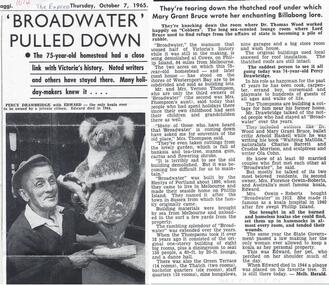
... Roberts was given permission to keep a koala as a pet - called Edward who died in 1944. He now resides in the museum. 358-02: A letter to the Powlett Express dated 8/11/1940, from Mr Clarrie Taberner correcting an article that stated it was roughly 65 years since the first settler arrived. Mr Taberner pointed out the his mother-in-law was living on the island over 83 years ago. 358-03: An article (1942) about a table made for the Phillip Island and Westernport Historical Society from the limb of a cypress tree planted by the late J. ...Roberts was given permission to keep a koala as a pet - called Edward who died in 1944. He now resides in the museum. 358-02: A letter to the Powlett Express dated 8/11/1940, from Mr Clarrie Taberner correcting an article that stated it was roughly 65 years since the first settler arrived. Mr Taberner pointed out the his mother-in-law was living on the island over 83 years ago. 358-03: An article (1942) about a table made for the Phillip Island and Westernport Historical Society from the limb of a cypress tree planted by the late J. ...A collection of articles all relating to Phillip Islanders.A collection of Press Cuttings relating to people, buildings, wildlife and history of Phillip Island. 358-01: Item relating to the Broadwater homestead being pulled down after 75 years. Mrs Oswin Roberts bought Broadwater in 1912 and made it a famous koala hospital in 1940 after fire swept Phillip Island. Mrs Roberts was given permission to keep a koala as a pet - called Edward who died in 1944. He now resides in the museum. 358-02: A letter to the Powlett Express dated 8/11/1940, from Mr Clarrie Taberner correcting an article that stated it was roughly 65 years since the first settler arrived. Mr Taberner pointed out the his mother-in-law was living on the island over 83 years ago. 358-03: An article (1942) about a table made for the Phillip Island and Westernport Historical Society from the limb of a cypress tree planted by the late J. D. McHaffie about 100 years ago. 358-04: An article in the Powlett Express about the proposed shift of the Speke Figurehead from the Cowes State School. The Figurehead now resides in the museum. 358-05: An article in the Powlett Express - July 6, 1961 - about the funeral of the late Mr Percy Herbert McFee of Rhyll. He died at 79 in the Warley Bush Nursing Hospital. Article tells of part of his life on Phillip Island. 358-06: An article in the Powlett Express - May 5, 1960 - telling about Mr Stan McFee who was at the 90th Anniversary of the Cowes church of England where he had been attending for 65 years. 358-07: An article in the Powlett Express - August 26th 1949 - telling about the life in a year of the "Mutton Birds of our Bass Strait". (Shearwaters) stan mcfee, percy mcfee, mrs oswin roberts, edward the koala, mutton birds, shearwaters, broadwater, st philip's church of england, speke figurehead, margaret rixon -
 Flagstaff Hill Maritime Museum and Village
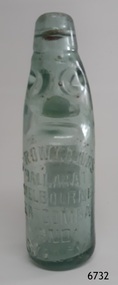
Domestic object - Codd neck bottle, E. Rowlands, 1921
... plant from Katoomba in the Blue Mountains. The water was brought to Sydney by rail. In the meantime, the Melbourne concern had progressed so rapidly that in 1888 a magnificent factory embodying all the latest ideas and equipment was built in King Street Melbourne. Robert...plant from Katoomba in the Blue Mountains. The water was brought to Sydney by rail. In the meantime, the Melbourne concern had progressed so rapidly that in 1888 a magnificent factory embodying all the latest ideas and equipment was built in King Street Melbourne. Robert ...The design of the bottle is called a Codd, sometimes referred to as a marble bottle or "Codd's patent bottle". During the mid-to-late 1800s, there were many inventions to keep the fizz in carbonated drinks such as ginger ale, soda water, and fruit drinks. Hiram Codd, an English engineer invented a successful process that he patented as "Codd's patented globe stopper bottle" in 1872. The Codd-neck bottle (commonly called Codd or marble bottle) is manufactured in two parts. The body of the bottle is cast in two sections. At the time of joining the sections, glass marble and rubber seal are inserted into the neck section. The lip is then applied to the top of the bottle. The Codd bottle is filled upside down as the pressure of the gas from the carbonated liquid holds the marble up and out of the way. When the bottle stands upright the gas pushes the marble up against the washer, creating a firm seal to keep the fizz inside. The bottle is opened by pushing the marble down firmly to allow some of the gas to escape. The marble drops down and is caught in a depression formed in the neck. When the bottle is tilted to pour or drink the liquid the marble rests in a dimple. Two Ballarat miners, Evan Rowland and Robert Lewis started manufacturing mineral and aerated waters, bitters, cordials, and liqueurs in 1854, in a tent on the shores of Lake Wendouree Ballarat. Another 13 firms at that time employed manual operations, whereas they introduced Taylor's No. 1 machine that speeded up the process and laid the foundation for their fortune. Evan Rowland was a pioneer in the aerated water trade in Australia. He was born on August 2, 1826, in North Wales. In 1852, during the gold rush, he emigrated to Melbourne, and in 1854 he went to Ballarat and formed a partnership with Robert Lewis, the firm being called ‘‘Rowlands & Lewis’’. Their next step was to secure a supply of pure water. Using mineral Waters that they found via a natural spring at Warrenheip, Victoria. From the outset, the beverages made from this water gained repute and were in great demand. Their business prospered so well that in 1858 they were able to build a factory at the corner of Sturt and Dawson Streets, Ballarat, and to fit with the most up-to-date machinery then in use. By 1870 their business had increased so much and demand had grown to such an extent that Mr. Rowlands erected another factory, covering over an acre of ground at the corner of Dana and Doveton Streets, costing £13,000. The factory was fitted with the most modern equipment of the time to manufacture cordials and aerated water. In 1873 Rowlands established an agency at 116 Collins St, Melbourne, because the demand for the products of the Melbourne factory became so large. The company expanded to Sydney opening a factory at the corner of Burns & Hay Streets Darling Harbour obtaining spring water to supply this plant from Katoomba in the Blue Mountains. The water was brought to Sydney by rail. In the meantime, the Melbourne concern had progressed so rapidly that in 1888 a magnificent factory embodying all the latest ideas and equipment was built in King Street Melbourne. Robert Lewis was a fellow Welshman born in 1816, and he arrived in Port Phillip in 1853 and became a partner in the early day with Evan Rowland but with lesser and shorter involvement in the firm, from which he retired in 1876. Robert Lewis was perhaps better known as Ballarat's first mayor and a Member of the Legislative Assembly. He was a strong supporter of local charities, president/treasurer of the Eisteddfod Committee, a major force in the development of the Ballarat Hospital, and he was the mayor of Ballarat five times, the first in 1863, (having been a counsellor as early as 1859) and for the last time in 1881. Lewis died in 1884 of a stroke in Ballarat. Rowlands continued in the firm and invented and patented an improved soda water bottle. The water used in Rowlands products was filtered four times but his attempts to use local corks failed on quality grounds. He was a stickler for quality, which was so good that many outside Victoria were prepared to pay the 'premium' imposed by inter-colonial customs duty payable at that time. By the 1890s, Rowlands had factories in Ballarat, Melbourne, Sydney, and Newcastle. He died in 1894 but his company continued until well after the Second World War when it was sold to Schweppes. Bottles such as this popular brand, containing soda water, were often used on paddle steamers for refreshments.An early manufacturing process producing the first mineral waters in Australia was invented and developed by an early Welsh migrant to Australia. The Evan Rowlands story gives an insight into the early development of manufacturing industries in Australia that allowed their workers and the towns they were situated in to prosper and develop into what they are today. A good example of hand blown glass.Bottle; clear glass Codd neck bottle with small marble in top. Once contained soda water or soft drink. Manufactured in 1921 by E. Rowlands of Ballarat, Melbourne, Katoomba and Sydney. The bottle is 'recyclable' - the message on the base says that it remains the property of E. Rowlands Pty Ltd. Inscriptions on three adhesive labels at time of donation"E. ROWLANDS BALLARAT MELBOURNE KATOOMBA AND SYDNEY". Imprinted into bas "1921" "THIS BOTTLE REMAINS THE PROPERTY OF E. ROWLANDS PTY LTD" On adhesive labels (3) " 1921 ON BASE (LASTED 1924) CODD PATENT 702" "SMALL SIZE. MARBLE TOP SODA WATER PAPER LABEL. USED" "ON PADDLE STEAMERS. POPULAR BRAND"flagstaff hill, warrnambool, shipwrecked-coast, flagstaff-hill, flagstaff-hill-maritime-museum, maritime-museum, shipwreck-coast, flagstaff-hill-maritime-village, bottle, codd bottle, hiram codd, glass marble bottle, e. rowlands bottle manufacturer, soda bottle australia, early recyclable bottle, codd's patent bottle, marble bottle, refreshments, soda water, marble top, 1920s, codd patent 702, handmade, blown
