
Showing 68 items matching " russian history"
-
 Lara RSL Sub Branch
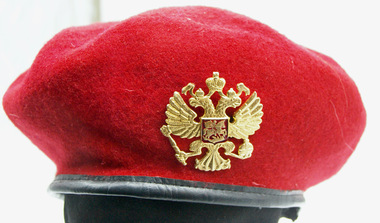
Uniform - Russian paratrooper red beret
... ...russian paratroopers history of russian paratroopers...In April 1930, Soviet industry produced its first run of domestic parachutes, not surprisingly patterned on the Irvin style. russian front 1918-1919 russian paratroopers history of russian paratroopers history of change in aircraft to cater for paratroopers fabric informatiion labelt i.e. dry clean Red felted wool beret withblack leather hat trim Uniform Russian paratrooper red beret ...The Soviet Union was one of the first countries to realize the unique potential of parachute forces. As early as 1927 there were reports of parachute troops being used against bandits in Central Asia. Within the next two to three years Leonid G. Minov began to organize the first military parachute units. He traveled to the United States to study parachute strategy and techniques employed in air rescue missions. He returned to his country with a supply of American-made Irvin parachutes. In April 1930, Soviet industry produced its first run of domestic parachutes, not surprisingly patterned on the Irvin style.Red felted wool beret withblack leather hat trimfabric informatiion labelt i.e. dry cleanrussian front 1918-1919, russian paratroopers history of russian paratroopers, history of change in aircraft to cater for paratroopers -
 Bendigo Historical Society Inc.
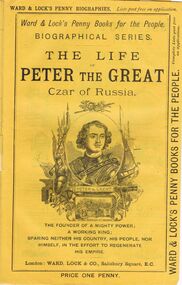
Book - LYDIA CHANCELLOR COLLECTION: THE LIFE OF PETER THE GREAT
... ... Russian history...BOOKS Biography peter the great Lydia Chancellor collection Peter the Great The Life of Peter the Great person individual male Russian history Russia Czars Ward & Lock's Penny Biographies Biographical Series biographies Ward & Lock's Penny Books for the People famous people penny books advertisements A book titled 'The Life of Peter the Great Czar of Russia. ...A book titled 'The Life of Peter the Great Czar of Russia. The founder of a mighty power; a working king; sparing neither his country, his people, nor himself, in the effort to regenerate his empire.' London : Ward, Lock & Co., Salisbury Square, E.C. 385 - 400 pgs. This booklet is one of a series of 53 ' Ward & Lock's Penny Books for the People.' 'Biographical Series.' Price one penny. There are also advertisements of note.books, biography, peter the great, lydia chancellor, collection, peter the great, the life of peter the great, person, individual, male, russian history, russia, czars, ward & lock's penny biographies, biographical series, biographies, ward & lock's penny books for the people, famous people, penny books, advertisements -
 Robin Boyd Foundation
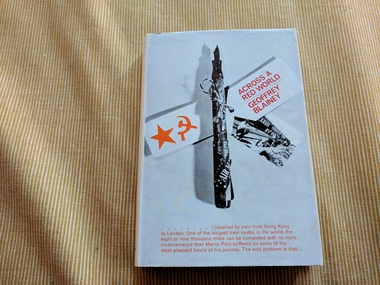
Book, Geoffrey Blainey, Across A Red World, 1968
... ... Russian history...China Soviet Union Chinese history Russian history Travel Walsh St library Hardcover w/Dust Jacket Across A Red World Book Geoffrey Blainey J.C. ...Hardcover w/Dust Jacketchina, soviet union, chinese history, russian history, travel , walsh st library -
 Monbulk RSL Sub Branch
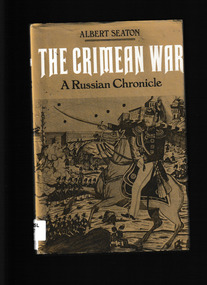
Book, Albert Seaton, The Crimean war : a Russian chronicle, 1977
... Crimean war - History...Russian...Crimean war - History Russian Empire - history This account looks at the Crimean war from the Russian perspective using lettwers diaries and eye witness accounts Index, ill, p.232. ...This account looks at the Crimean war from the Russian perspective using lettwers diaries and eye witness accountsIndex, ill, p.232.This account looks at the Crimean war from the Russian perspective using lettwers diaries and eye witness accountscrimean war - history, russian empire - history -
 Monbulk RSL Sub Branch
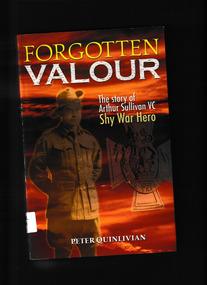
Book, New Holland et al, Forgotten valour : the story of Arthur Sullivan VC, shy war hero, 2006
... ...Russian civil war - History...Military participation - Australia Russian civil war - History The story of Arthur Sullivan VC and other Australian soldiers who enlisted in the Great War but went on the fight in the Russian Civil War Index, bib, ill, maps, p.304. ...The story of Arthur Sullivan VC and other Australian soldiers who enlisted in the Great War but went on the fight in the Russian Civil WarIndex, bib, ill, maps, p.304.non-fictionThe story of Arthur Sullivan VC and other Australian soldiers who enlisted in the Great War but went on the fight in the Russian Civil Warmilitary participation - australia, russian civil war - history -
 National Wool Museum
Book, Kazakh Folk Ornamental Art vol. 2
... Embroidery Handicrafts - history...Russian...Embroidery Handicrafts - history Russian Corriedale Delegation Embroidery Handicrafts - history Kazakh Folk Ornamental Art vol. 2 Book ..."Kazakh Folk Ornamental Art vol. 2" by A.Kh. Margulan, 1987. Catalogue of textile pieces and embroideries.embroidery handicrafts - history, russian corriedale delegation, embroidery, handicrafts - history -
 Flagstaff Hill Maritime Museum and Village
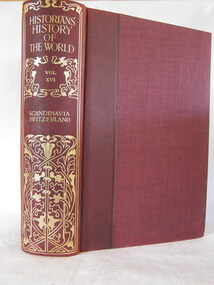
Book - Reference Book/History, Henry Smith Williams, The Historians History of the World Vol 16 set 1 - Edited by Henry Smith Williams L.L.D. Published by “The Times” 1908, 1908
... histories." Instead of a single author's perspective, Williams curated the best primary and secondary source accounts available at the time, making it a valuable archive of early 20th-century historical thought. It acts as the bridge between the Western European powers and the Eastern European/Slavic nations (Russia ...Henry Smith Williams’ “The Historians' History of the World” is a chronological and geographical "tapestry" of human events, these twenty five volumes occupy a very specific and prestigious place in historical research. The primary subjects of Volume 16 are Scandinavia (including the history of Norway, Sweden, and Denmark) and the history of Switzerland up to the year 1715.The Book is part of a 25 volume set with red cloth bindings and gold filigree design to rib.non-fictionHenry Smith Williams’ “The Historians' History of the World” is a chronological and geographical "tapestry" of human events, these twenty five volumes occupy a very specific and prestigious place in historical research. The primary subjects of Volume 16 are Scandinavia (including the history of Norway, Sweden, and Denmark) and the history of Switzerland up to the year 1715.flagstaff hill, warrnambool, shipwrecked-coast, flagstaff-hill, flagstaff-hill-maritime-museum, maritime-museum, shipwreck-coast, flagstaff-hill-maritime-village, book, the historians history of the world vol 16 set 1 -
 Flagstaff Hill Maritime Museum and Village
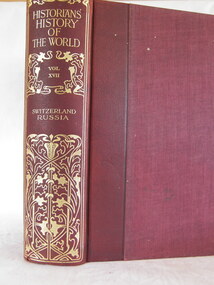
Book - Reference Book/History, The Times Newspaper, The Historians History of the World Vol 17 set 1 - Edited by Henry Smith Williams L.L.D. Published by “The Times” 1908, 1908
... Volume 17 focuses primarily on the history of Switzerland with concluding sections on Russia, and Poland. ...Volume 17 focuses primarily on the history of Switzerland with concluding sections on Russia, and Poland. ...Henry Smith Williams’ “The Historians' History of the World” is a chronological and geographical "tapestry" of human events, these twenty five volumes occupy a very specific and prestigious place in historical research. Volume 17 focuses primarily on the history of Switzerland with concluding sections on Russia, and Poland. The volume concludes the Swiss narrative began in volume 16.The Book is part of a 25 volume set with red cloth bindings and gold filigree design to rib.non-fictionHenry Smith Williams’ “The Historians' History of the World” is a chronological and geographical "tapestry" of human events, these twenty five volumes occupy a very specific and prestigious place in historical research. Volume 17 focuses primarily on the history of Switzerland with concluding sections on Russia, and Poland. The volume concludes the Swiss narrative began in volume 16.flagstaff hill, warrnambool, shipwrecked-coast, flagstaff-hill, flagstaff-hill-maritime-museum, maritime-museum, shipwreck-coast, flagstaff-hill-maritime-village, book, the historians history of the world vol 17 set 1 -
 Flagstaff Hill Maritime Museum and Village
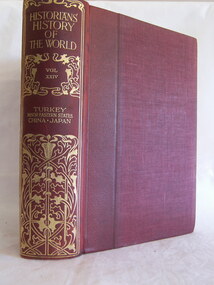
Book - Reference Book/History, Henry Smith Williams, The Historians History of the World Vol 24 set 1 - Edited by Henry Smith Williams L.L.D. Published by “The Times” 1908, 1908
... Russia, Prussia, and Austria, and its status at the turn of the 20th century. There is also a comprehensive look at the Ottoman Empire and the rise of the Turks, the fall of Constantinople, the peak of the Empire under Suleiman the Magnificent, and its long decline leading into the modern era. The Balkan states are covered with their early histories...Russia, Prussia, and Austria, and its status at the turn of the 20th century. There is also a comprehensive look at the Ottoman Empire and the rise of the Turks, the fall of Constantinople, the peak of the Empire under Suleiman the Magnificent, and its long decline leading into the modern era. The Balkan states are covered with their early histories ...In the 1908 edition of The Historians' History of the World, Volume 24 acts as the definitive survey of the "Eastern Question" and the peripheral powers of Europe. It shifts focus away from the Western powers of the time to examine the complex histories of the East and the South. The contents cover, Poland, the Balkans, Turkey, and Minor Nations Volume 24 becomes a geographically diverse volume that covers the history of several regions that were, in 1908, centres of intense geopolitical tension.The Book is part of a 25 volume set with red cloth bindings and gold filigree design to rib.non-fictionIn the 1908 edition of The Historians' History of the World, Volume 24 acts as the definitive survey of the "Eastern Question" and the peripheral powers of Europe. It shifts focus away from the Western powers of the time to examine the complex histories of the East and the South. The contents cover, Poland, the Balkans, Turkey, and Minor Nations Volume 24 becomes a geographically diverse volume that covers the history of several regions that were, in 1908, centres of intense geopolitical tension. flagstaff hill, warrnambool, shipwrecked-coast, flagstaff-hill, flagstaff-hill-maritime-museum, maritime-museum, shipwreck-coast, flagstaff-hill-maritime-village, book, the historians history of the world vol 24 set 1 -
 The Beechworth Burke Museum
Audio - Oral History, Jennifer Williams, Mrs Beth Miller, 8 June 2000
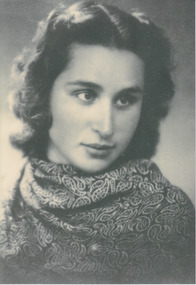
... Russian occupation was implemented in Latvia, and eventually sailed for Australia from Naples, Italy in 1949. A working contract and position at the Mayday Hills Mental Hospital brought her to Beechworth, where she settled with her husband and parents. Mrs Miller recounts the daily work in the Mental Hospital during the 1950s, life in Black Spring and the isolation of the immigrant experience. This oral history...Russian occupation was implemented in Latvia, and eventually sailed for Australia from Naples, Italy in 1949. A working contract and position at the Mayday Hills Mental Hospital brought her to Beechworth, where she settled with her husband and parents. Mrs Miller recounts the daily work in the Mental Hospital during the 1950s, life in Black Spring and the isolation of the immigrant experience. This oral history ...Mrs Beth Miller was born in February, 1924 in Latvia. Her family left for Germany after Russian occupation was implemented in Latvia, and eventually sailed for Australia from Naples, Italy in 1949. A working contract and position at the Mayday Hills Mental Hospital brought her to Beechworth, where she settled with her husband and parents. Mrs Miller recounts the daily work in the Mental Hospital during the 1950s, life in Black Spring and the isolation of the immigrant experience. This oral history recording was part of a project conducted by Jennifer Williams in the year 2000 to capture the everyday life and struggles in Beechworth during the twentieth century. This project involved recording seventy oral histories on cassette tapes of local Beechworth residents which were then published in a book titled: Listen to what they say: voices of twentieth century Beechworth. These cassette tapes were digitised in July 2021 with funds made available by the Friends of the Burke.Mrs Beth Millers account of her life in Beechworth and the local area during the 20th century is historically and socially significant to the cultural heritage of the region. She gives important insights into the life of post-war European immigrants in the area. This oral history account is socially and historically significant as it is a part of a broader collection of interviews conducted by Jennifer Williams which were published in the book 'Listen to what they say: voices of twentieth-century Beechworth.' While the township of Beechworth is known for its history as a gold rush town, these accounts provide a unique insight into the day-to-day life of the town's residents during the 20th century, many of which will have now been lost if they had not been preserved.This is a digital copy of a recording that was originally captured on a cassette tape. The cassette tape is black with a horizontal white strip and is currently stored in a clear flat plastic rectangular container. It holds up 40 minutes of recordings on each side.Mrs Beth Miller /beechworth, beth miller, miller, listen to what they say, jennifer williams, oral history, latvia, bonegilla, immigration, mayday, mayday hills, mental hospital, asylum, black spring, bakery, lutheran, immigrant -
 The Beechworth Burke Museum
Audio - Oral History, Valentina Witkowski
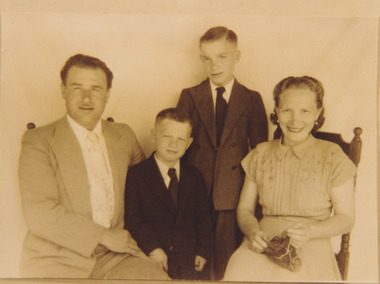
... history...witkowski...Valentina Witkowski...Russia...She retells her time moving from Russia, to Germany where she was in a camp, Canada, Argentina and then finally Australia. This oral history recording was part of a project conducted by Jennifer Williams in the year 2000 to capture the everyday life and struggles in Beechworth during the twentieth century. ...While the township of Beechworth is known for its history as a gold rush town, these accounts provide a unique insight into the day-to-day life of the town's residents during the 20th century, many of which will have now been lost if they had not been preserved. listen to what they say beechworth oral history witkowski Valentina Witkowski Russia Burke Museum Mrs Valentina Witkowski This is a digital copy of a recording that was originally captured on a cassette tape. ...Valentina Witkowski was born in 1922 in St. Petersberg (Leningrad at the time) in Russia. She moved to Australia post war with her husband and children. She retells her time moving from Russia, to Germany where she was in a camp, Canada, Argentina and then finally Australia. This oral history recording was part of a project conducted by Jennifer Williams in the year 2000 to capture the everyday life and struggles in Beechworth during the twentieth century. This project involves recording seventy oral histories on cassette tapes of local Beechworth residents which were then published in a book titled: Listen to what they say: voices of twentieth century Beechworth. These cassette tapes were digitised in July 2021 with funds made available by the Friends of the Burke. Mrs Valentina Witkowski account of her life before and after arriving in Beechworth and the local area during the 20th century is historically and socially significant to the cultural heritage of the region. She details her struggles in Germany before arriving in Beechworth with her new husband and children. This oral history account is socially and historically significant as it is a part of a broader collection of interviews conducted by Jennifer Williams which were published in the book 'Listen to what they say: voices of twentieth-century Beechworth'. While the township of Beechworth is known for its history as a gold rush town, these accounts provide a unique insight into the day-to-day life of the town's residents during the 20th century, many of which will have now been lost if they had not been preserved. This is a digital copy of a recording that was originally captured on a cassette tape. The cassette tape is black with a horizontal white strip and is currently stored in a clear flat plastic rectangular container. It holds up 40 minutes of recordings on each side. Mrs Valentina Witkowskilisten to what they say, beechworth, oral history, witkowski, valentina witkowski, russia, burke museum -
 The Beechworth Burke Museum
Geological specimen - Malachite, Unknown
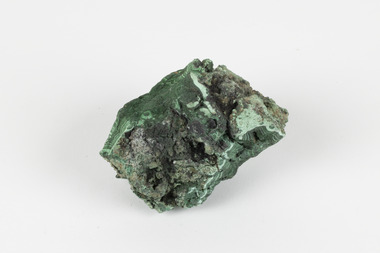
... Russia and the Democratic Republic of Congo. Malachite has historically been used to produce copper, with mining of the mineral dating back over a period of four thousand years. Due to its beautiful green colourations, it is also commonly used for aesthetic purposes such as in the production of sculptures and jewellery. This particular specimen was collected from the town of Burra, South Australia as part of a geological survey undertaken during the nineteenth century. The locality (located on Ngadjuri Country) has a long history...Russia and the Democratic Republic of Congo. Malachite has historically been used to produce copper, with mining of the mineral dating back over a period of four thousand years. Due to its beautiful green colourations, it is also commonly used for aesthetic purposes such as in the production of sculptures and jewellery. This particular specimen was collected from the town of Burra, South Australia as part of a geological survey undertaken during the nineteenth century. The locality (located on Ngadjuri Country) has a long history ...Malachite is a copper carbonate hydroxide mineral. It has a chemical composition of Cu2(CO3)(OH)2. It often forms within limestone where a subsurface chemical environment favourable for the formation of carbonate minerals can occur. It is a substance that can be found in many different parts of the world including: Australia, USA, Russia and the Democratic Republic of Congo. Malachite has historically been used to produce copper, with mining of the mineral dating back over a period of four thousand years. Due to its beautiful green colourations, it is also commonly used for aesthetic purposes such as in the production of sculptures and jewellery. This particular specimen was collected from the town of Burra, South Australia as part of a geological survey undertaken during the nineteenth century. The locality (located on Ngadjuri Country) has a long history of mining, particularly in copper mining, as the area is rich in copper deposits. The first significant discovery of this was made in Burra (Burra Burra Mine) in 1845 and, at the time, the mine was the largest and richest of its kind in the world, producing nearly five percent of the total world copper output. This specimen is significant as it is considered to be a rare gemstone, as many of the original deposits for the stones are significantly depleted, leaving behind very few sources. This specimen is part of a larger collection of geological and mineral specimens collected from around Australia (and some parts of the world) and donated to the Burke Museum between 1868-1880. A large percentage of these specimens were collected in Victoria as part of the Geological Survey of Victoria that begun in 1852 (in response to the Gold Rush) to study and map the geology of Victoria. Collecting geological specimens was an important part of mapping and understanding the scientific makeup of the earth. Many of these specimens were sent to research and collecting organisations across Australia, including the Burke Museum, to educate and encourage further study.A solid palm-sized copper carbonate hydroxide mineral with patterns of green colourations Existing Label: MALACHITE / Locality: Burra / S. Aust. Other Label: Confirmed / as Malachite / C. Willman / 15/4/1 / + Bill Birch burke museum, beechworth, geological, geological specimen, malachite, gemstone, green gemstone, burra, burra burra mine, burra south australia, carbonate mineral, copper, copper mining, copper mining burra, carbonate hydroxide mineral, copper carbonate, malachite mining, malachite burra, monster mine -
Federation University Historical Collection
Book - Book - Scrapbook, Ballarat College of Advanced Education: Scrapbook of newspaper cutting, Book 13; May 1983 to October 1983
... The cuttings cover the period from 23 May 1983 to 26 October 1983. . employment advertisements application for enrolment outline of courses deputation to see minister re gas levy role for colleges computing at bcae engineering students may transfer institutions fear information act bust of prof smith presented to smb western mining corporation awards john de vries ian carroll wayne herbertson soil conservationists bust of dick richards chinese actress visits ballarat bcae host to hundreds tertiary orientation program russian violinist at founders hall teachers not out of touch employment prospects for teacher graduates bcae open day dr alan reid from csiro short course on micro computers victoria howlett potter charles fahey on oral histories computers becoming part of school system mining raises living standards antarctic oldtimer remembers ethel reynolds - sculptor tribute in bronze dick richards beaufort house 'home for students' jacqueline culvenor - potter deaf and smart `students condemn council sacking brendan mcauley jump rope for heart students give papers on engineering projects australians lucky says uk artist selwyn hoffman shows in exhibition Book with beige cover, front. ...Newspaper cuttings relating to Ballarat College of Advanced Education. These are from various newspapers and include The Age, Ballarat Courier, The Australian, The Herald. The cuttings cover the period from 23 May 1983 to 26 October 1983. . Book with beige cover, front. Spiral bound.employment advertisements, application for enrolment, outline of courses, deputation to see minister re gas levy, role for colleges, computing at bcae, engineering students may transfer, institutions fear information act, bust of prof smith presented to smb, western mining corporation awards, john de vries, ian carroll, wayne herbertson, soil conservationists, bust of dick richards, chinese actress visits ballarat, bcae host to hundreds, tertiary orientation program, russian violinist at founders hall, teachers not out of touch, employment prospects for teacher graduates, bcae open day, dr alan reid from csiro, short course on micro computers, victoria howlett potter, charles fahey on oral histories, computers becoming part of school system, mining raises living standards, antarctic oldtimer remembers, ethel reynolds - sculptor, tribute in bronze, dick richards, beaufort house 'home for students', jacqueline culvenor - potter, deaf and smart, `students condemn council sacking, brendan mcauley, jump rope for heart, students give papers on engineering projects, australians lucky says uk artist, selwyn hoffman shows in exhibition -
 Flagstaff Hill Maritime Museum and Village
Uniform - Tunic, 1899-1903
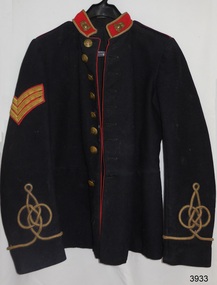
... BRIEF MILITARY HISTORY- The Crimean War began In 1854 and many people in colonial Australia were afraid of a Russian attack. ...BRIEF MILITARY HISTORY- The Crimean War began In 1854 and many people in colonial Australia were afraid of a Russian attack. ...This original tunic or jacket is part of the full dress uniform of the pre-Federation Victorian Permanent Artillery regiment. Its owner had the rank of Sergeant, as indicated by the three inverted chevrons. The Artillery design of the badges and buttons indicate the date of the tunic to be from 1893 to 1903. However the maker of the tunic, W. Moncton, began manufacture in Melbourne in 1899, so this the tunic can be dated between 1899 and 1903. The donor's grandfather was given this tunic but not the name of the original owner. It has since been suggested to the family that the tunic was worn by a local Western District Light Horse member. This could very well have been the case because mounted troops were officially referred to as the Light Horse in the late 19th to early 20th century. Several local men were involved in the Light Horse during the First World War. The donor's grandfather wore this tunic in the local district when riding a penny farthing bicycle. The donor's father also wore the tunic when dressed as a 'Captain' hosting a local disco dance. BRIEF MILITARY HISTORY- The Crimean War began In 1854 and many people in colonial Australia were afraid of a Russian attack. Volunteer forces were established to strengthen the British Imperial troops posted here. A battery of artillery was raised in Victoria as well as in other Australian states. In 1870 Australia became responsible for its own naval and military defence. The Volunteer Corps and Victorian Navy shared the responsibility of defending the existing forts, assisted by volunteer coastal and mobile field batteries. The Permanent Victorian Artillery force was established. It was disbanded in 1880 then re-formed in 1882 as the Victorian Garrison Artillery Corps. In 1895 the Geelong, Warrnambool, Port Fairy and Portland Batteries became part of the Western District Garrison Artillery. Many of the volunteers who served in the Artillery were from rural areas. They belonged to rifle clubs and were experience horsemen as well. Australia's defence at this time relied on these mounted troops, or Light Horse men. In 1899 the Victorian Garrison Artillery Corps amalgamated with the New South Wales and Queensland Permanent Artillery to become the Victorian Regiment of the Royal Australian Artillery (RAA). Then prior to Federation, the RAA and the Permanent Artillery of South Australia, Western Australia and Tasmania all combined, becoming the Royal Australian Artillery Regiment with two Batteries of Field Artillery; Battery A from Sydney and Battery B from Melbourne.This original uniform tunic of the pre-Federation Victorian Permanent Artillery is significant for its association with Australia's military defence and the fortifications of our district, state and country. The tunic is also significant, representing part of the history and evolution of uniforms in the Australian military forces. The tunic is also significant in its representation of Australia's independence in forming its own defences. The tunic has local significance in its connection with local social events.Tunic or jacket, part of the full dress uniform of the pre-Federation Victorian Permanent Artillery operating from 1893 to 1903. Original, single-breasted tunic of dark blue wool, red piping trim, black cotton lining in body. Sleeves lined with blue striped, white cotton. Front closure has eight brass buttons. Red band-style collar with hook-and-eye closure has gold bullion braid trim and a brass badge pinned each side at the front. Upper right sleeve has three inverted chevrons on red fabric with gold bullion braid trim (rank of Sergeant). Both sleeves have gold bullion braid 'Austrian knot' emblems stitched onto lower arm, with ends finishing on the inner sleeve. Shoulder epaulettes have red piping and smaller brass buttons. Closed back vent has vertical scalloped design with six brass buttons, in two columns of three, and red piping trim. Brass belt hook is attached to the left back waist, close to the seam (right side has a mark indicating a previous similar clip). Inside left breast is a concealed pocket. Tunic has both machine and hand stitching. All brass shank-style buttons have matching Artillery emblems with inscriptions on the back. The two brass collar badges have additional artillery emblems of exploding grenade and star as well as an inscription. Buttons were made for W. Moncton, of Melbourne and marked with his name. He traded from 1899, dating the tunic to between 1899 and 1903.Button front: Artillery emblem on front (field cannon facing left, in front of a muzzle-loading ram rod). Button back: engraved "W. MONCTON . MELBOURNE ." Collar badges: Artillery emblem (field cannon facing right | stars | exploding grenade | "AUSTRALIA")flagstaff hill, warrnambool, shipwrecked coast, flagstaff hill maritime museum, maritime museum, shipwreck coast, flagstaff hill maritime village, great ocean road, uniform jacket, uniform tunic, garrison volunteer uniform, fortifications in victoria, victorian permanent artillery, pre-federation military uniform, sergeant's uniform, jacket, militia, victoria, victorian volunteer forces, victorian regiment, royal australian artillery, raa, field gun, sergeant, w. moncton, garrison, dress uniform, tunic, scarlet collar, red collar, scarlet piping, red piping, gold bullion, artillery emblem, light horse, artillery, mounted troops, victorian garrison artillery corps -
 Flagstaff Hill Maritime Museum and Village
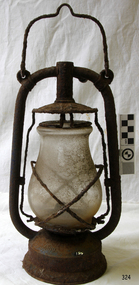
Functional object - Lamp, Carl Hermann Nier, 1928-1932
... Russian army. After the Second World War the company restart the lantern production in 1947 at Luedenscheid and Hohenlockstedt north of Hamburg and fully re-establishing the company in 1950. A domestic item with an interesting history ...Carl Hermann Nier in 1877 a silverware maker started to produce miners lamps and household lanterns in Beierfeld, Saxonia, East Germany. In January 1902 he established the Nier-Feuerh and company in his home town to produce kerosene lanterns. Carl's three sons Bruno, Curt and Woldemar Nier made the company into the largest lantern producer in the 1930s with Bruno Nier holding many patents for lamps. Lantern production was interrupted by World War II and ceased at the end of 1944 because of the shortage of materials and the advancing Russian army. After the Second World War the company restart the lantern production in 1947 at Luedenscheid and Hohenlockstedt north of Hamburg and fully re-establishing the company in 1950. A domestic item with an interesting history that now is sought after by collectors giving an insight into how hurricane kerosene lamps came into being from a manufacturer in Germany that held numerous patents for oil lamps from 1902 until 1940.Kerosene Lamp with handle, blue in colour, badly rusted. Lamp shade has lever to lift so you can light. Marked "Feuerhand Nr 327" "Made in Germany".flagstaff hill, warrnambool, shipwrecked coast, flagstaff hill maritime museum, shipwreck coast, flagstaff hill maritime village, great ocean road, lamp, kerosene lamp, hurricane lamp, nier-feuerh, carl hermann nier -
 Flagstaff Hill Maritime Museum and Village
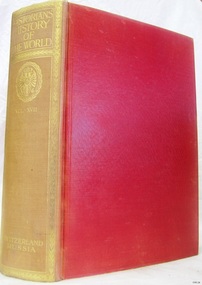
Book, The Historians History of The World Vol 17
... The Historians History of The World Vol 17 Switzerland Russia A comprehensive narrative of the rise and development of Nations as recorded by the great writers of all ages Edited by Henry Smith Williams Publisher: The Times Date: 1911...The Warrnambool Mechanics' Institute’s publication collection is of both local and state significance. warrnambool shipwrecked-coast flagstaff-hill flagstaff-hill-maritime-museum maritime-museum shipwreck-coast flagstaff-hill-maritime-village shipwrecked-artefact book pattison collection warrnambool library warrnambool mechanics’ institute ralph eric pattison corangamite regional library service warrnambool city librarian mechanics’ institute library victorian library board warrnambool books and records warrnambool children’s library great ocean road The Historians History of The World Vol 17 Henry Smith Williams Front loose endpaper has a sticker from Corangamite Regional Library Service Front loose endpaper has a stamp from Corangamite Regional Library Service The Historians History of The World Vol 17 Switzerland Russia A comprehensive narrative of the rise and development of Nations as recorded by the great writers of all ages Edited by Henry Smith Williams Publisher: The Times Date: 1911 The Historians History of The World Vol 17 Book ...This item is from the ‘Pattison Collection’, a collection of books and records that was originally owned by the Warrnambool Mechanics’ Institute, which was founded in Warrnambool in 1853. By 1886 the Warrnambool Mechanics’ Institute (WMI) had grown to have a Library, Museum and Fine Arts Gallery, with a collection of “… choice productions of art, and valuable specimens in almost every branch and many wonderful national curiosities are now to be seen there, including historic relics of the town and district.” It later included a School of Design. Although it was very well patronised, the lack of financial support led the WMI in 1911 to ask the City Council to take it over. In 1935 Ralph Pattison was appointed as City Librarian to establish and organise the Warrnambool Library as it was then called. When the WMI building was pulled down in 1963 a new civic building was erected on the site and the new Warrnambool Library, on behalf of the City Council, took over all the holdings of the WMI. At this time some of the items were separated and identified as the ‘Pattison Collection’, named after Ralph Pattison. Eventually the components of the WMI were distributed from the Warrnambool Library to various places, including the Art Gallery, Historical Society and Flagstaff Hill. Later some were even distributed to other regional branches of Corangamite Regional Library and passed to and fro. It is difficult now to trace just where all of the items have ended up. The books at Flagstaff Hill Maritime Village generally display stamps and markings from Pattison as well as a variety of other institutions including the Mechanics’ Institute itself. RALPH ERIC PATTISON Ralph Eric Pattison was born in Rockhampton, Queensland, in 1891. He married Maude Swan from Warrnambool in 1920 and they set up home in Warrnambool. In 1935 Pattison accepted a position as City Librarian for the Warrnambool City Council. His huge challenge was to make a functional library within two rooms of the Mechanics’ Institute. He tirelessly cleaned, cleared and sorted a disarrayed collection of old books, jars of preserved specimens and other items reserved for exhibition in the city’s museum. He developed and updated the library with a wide variety of books for all tastes, including reference books for students; a difficult task to fulfil during the years following the Depression. He converted all of the lower area of the building into a library, reference room and reading room for members and the public. The books were sorted and stored using a cataloguing and card index system that he had developed himself. He also prepared the upper floor of the building and established the Art Gallery and later the Museum, a place to exhibit the many old relics that had been stored for years for this purpose. One of the treasures he found was a beautiful ancient clock, which he repaired, restored and enjoyed using in his office during the years of his service there. Ralph Pattison was described as “a meticulous gentleman whose punctuality, floorless courtesy and distinctive neat dress were hallmarks of his character, and ‘his’ clock controlled his daily routine, and his opening and closing of the library’s large heavy doors to the minute.” Pattison took leave during 1942 to 1945 to serve in the Royal Australian Navy, Volunteer Reserve as Lieutenant. A few years later he converted one of the Museum’s rooms into a Children’s Library, stocking it with suitable books for the younger generation. This was an instant success. In the 1950’s he had the honour of being appointed to the Victorian Library Board and received more inspiration from the monthly conferences in Melbourne. He was sadly retired in 1959 after over 23 years of service, due to the fact that he had gone over the working age of council officers. However he continued to take a very keen interest in the continual development of the Library until his death in 1969. The Pattison Collection, along with other items at Flagstaff Hill Maritime Village, was originally part of the Warrnambool Mechanics' Institute’s collection. The Warrnambool Mechanics’ Institute Collection is primarily significant in its totality, rather than for the individual objects it contains. Its contents are highly representative of the development of Mechanics' Institute libraries across Australia, particularly Victoria. A diversity of publications and themes has been amassed, and these provide clues to our understanding of the nature of and changes in the reading habits of Victorians from the 1850s to the middle of the 20th century. The collection also highlights the Warrnambool community’s commitment to the Mechanics’ Institute, reading, literacy and learning in the regions, and proves that access to knowledge was not impeded by distance. These items help to provide a more complete picture of our community’s ideals and aspirations. The Warrnambool Mechanics Institute book collection has historical and social significance for its strong association with the Mechanics Institute movement and the important role it played in the intellectual, cultural and social development of people throughout the latter part of the nineteenth century and the early twentieth century. The collection of books is a rare example of an early lending library and its significance is enhanced by the survival of an original collection of many volumes. The Warrnambool Mechanics' Institute’s publication collection is of both local and state significance. The Historians History of The World Vol 17 Switzerland Russia A comprehensive narrative of the rise and development of Nations as recorded by the great writers of all ages Edited by Henry Smith Williams Publisher: The Times Date: 1911Front loose endpaper has a sticker from Corangamite Regional Library Service Front loose endpaper has a stamp from Corangamite Regional Library Service warrnambool, shipwrecked-coast, flagstaff-hill, flagstaff-hill-maritime-museum, maritime-museum, shipwreck-coast, flagstaff-hill-maritime-village, shipwrecked-artefact, book, pattison collection, warrnambool library, warrnambool mechanics’ institute, ralph eric pattison, corangamite regional library service, warrnambool city librarian, mechanics’ institute library, victorian library board, warrnambool books and records, warrnambool children’s library, great ocean road, the historians history of the world vol 17, henry smith williams -
 Flagstaff Hill Maritime Museum and Village
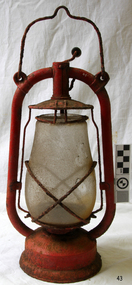
Functional object - Lamp, Carl Hermann Nier, 1928-1932
... Russian army. After the Second World War the company restart the lantern production in 1947 at Luedenscheid and Hohenlockstedt north of Hamburg and fully re-establishing the company in 1950. A domestic item with an interesting history ...Carl Hermann Nier in 1877 a silverware maker started to produce miners lamps and household lanterns in Beierfeld, Saxonia, East Germany. In January 1902 he established the Nier-Feuerh and company in his home town to produce kerosene lanterns. Carl's three sons Bruno, Curt and Woldemar Nier made the company into the largest lantern producer in the 1930s with Bruno Nier holding many patents for lamps. Lantern production was interrupted by World War II and ceased at the end of 1944 because of the shortage of materials and the advancing Russian army. After the Second World War the company restart the lantern production in 1947 at Luedenscheid and Hohenlockstedt north of Hamburg and fully re-establishing the company in 1950. A domestic item with an interesting history that now is sought after by collectors giving an insight into how hurricane kerosene lamps came into being from a manufacturer in Germany that held numerous patents for oil lamps from 1902 until 1940.Kerosene lamp with handle, red in colour, badly rusted. Lamp shade has lever to lift so you can light it.Marked "Feuerhand Nr 327" "Made in Germany".flagstaff hill, warrnambool, shipwrecked coast, flagstaff hill maritime museum, shipwreck coast, flagstaff hill maritime village, great ocean road, lamp, kerosene lamp, hurricane lamp, nier-feuerh, carl hermann nier -
 Bendigo Military Museum
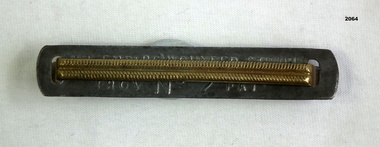
Uniform - EMPIRE WOUNDED STRIPE WW1, 1916 onwards
... history, metal work. Wounded stripe empire "The Empire Wounded Stripe, prov No 2 Pat." Empire Wounded Stripe. Metal stripe resembling Russian gold braid. ...First approved for wearing in 1916. A stripe was worn for each time wounded enough to take the person out of the front line. Worn vertically on the left forearm. This one was worn by Harold Hall No 270, 10th Batt and 7th Field Ambulance. Refer 2062, 2063, 2065.Empire Wounded Stripe. Metal stripe resembling Russian gold braid. Came with a metal backing plate for attachment to a uniform."The Empire Wounded Stripe, prov No 2 Pat."military, uniform, history, metal work., wounded stripe, empire -
 Warrnambool and District Historical Society Inc.
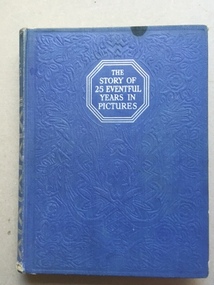
Book, Odhams Press Ltd, The story of 25 Eventful years in Pictures, early 20th century
... Russia and other world events such as the vote for women. It is mainly a British perspective with a number of items relating to the royal family and British politics of the time. This book has historical and social significance as it records in photographs many events which occurred in a very turbulent period of world history. ...A collection of photographs of events of the years from 1911 to 1935. It shows many world wide events such as events around World War 1, sports events such as horse racing and cricket, scouting, flights over Mt Everest, fashion, the fall of the tzars in Russia and other world events such as the vote for women. It is mainly a British perspective with a number of items relating to the royal family and British politics of the time.This book has historical and social significance as it records in photographs many events which occurred in a very turbulent period of world history. While it has no direct link to Warrnambool it would have been of general interest to local people.Blue cover with silver print on front cover and spine. Front cover has embossing in a floral pattern.Inside front and back covers the paper is patterned in silver and blue with crowns and flags.512 pages with mainly photographs in sepia colours.the story of 25 eventful years in pictures,, world events -
 Warrnambool and District Historical Society Inc.
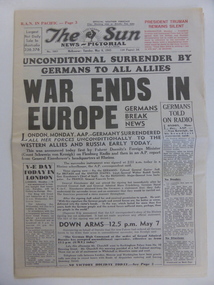
News Sheet, The Sun News-Pictorial 1945, 1945
... Russia, France and the United States of America. This paper has no local significance but the event it describes (the end of the war in Europe in May 1945) is of signal importance in world history and affected all in Australia at the time and still does today. ...This Melbourne Sun newspaper of May 8, 1945 contains details of the surrender of Germany in World War Two. The first surrender document was signed at Rheims, France by representatives of Germany, Britain, Russia, France and the United States of America. This paper has no local significance but the event it describes (the end of the war in Europe in May 1945) is of signal importance in world history and affected all in Australia at the time and still does today. The newspaper will be of interest to researchers and useful for display. This is a Melbourne newspaper (The Sun News-Pictorial 1945). It has 16 pages and is printed in black print on a white (now creamy-coloured) background. It has the news of the end of the war in Europe with the surrender of Germany. The newspaper includes black and white photographs, advertisements, cartoons, comic strips and a crossword puzzle. world war two, v.e. day, warrnambool, history -
 Eltham District Historical Society Inc
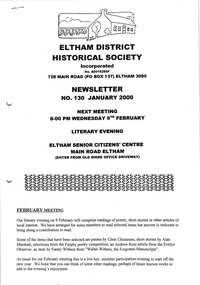
Newsletter, Newsletter, No. 130 January 2000
... Russian Cabbage Pie – Nina and Clem Christesen (Flavour of Eltham) The Shire of Eltham Historical Society was formed in October 1967. The first newsletter of the Society was issued May 1978 and has been published continuously ever since on a bi-monthly basis. With the cessation of the Shire of Eltham in late 1994, the Society's name was revised to Eltham District Historical Society and this name first appeared with issue No. 103, July 1995. The collection of the Society's newsletters provides a valuable resource on the history ...Contents: • Next meeting, Literary Evening • February Meeting • Annual General Meeting • Society Program 2000 • Hume and Hovell Update • Other Activities • Russian Cabbage Pie – Nina and Clem Christesen (Flavour of Eltham) The Shire of Eltham Historical Society was formed in October 1967. The first newsletter of the Society was issued May 1978 and has been published continuously ever since on a bi-monthly basis. With the cessation of the Shire of Eltham in late 1994, the Society's name was revised to Eltham District Historical Society and this name first appeared with issue No. 103, July 1995. The collection of the Society's newsletters provides a valuable resource on the history of the Society's activities, office bearers and committee members, guest speakers and subjects of historical interest pertinent to the former Shire of Eltham and the Eltham District.A4 photocopied newsletter distributed to membersnewsletter, eltham district historical society, shire of eltham historical society -
 Eltham District Historical Society Inc
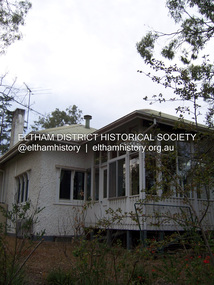
Photograph - Digital Photograph, Alan King, Stanhope, Peter Street, Eltham, 15 March 2008
... Politicians included: Jim Cairns, Pauline Toner, Lance Barnard, Sir Paul Hasluck, Sheryl Garbutt and performance artists included: film star Olivia Newton-John, members of the Bolshoi ballet and the Russian State Ballet of Siberia.5 Nina Christensen was honoured in 2006 at the Eltham Living and Learning Centre with the building of an amphitheatre designed by V Sverdlin. This collection of almost 130 photos about places and people within the Shire of Nillumbik, an urban and rural municipality in Melbourne's north, contributes to an understanding of the history of the Shire. ...On the crest of Stanhope Hill at Peter Street, Eltham, stands the former home of a couple, Clem and Nina Christensen who had a major influence on the literary development of post World War 2 Australia. Covered under Heritage Overlay, Nillumbik Planning Scheme. Published: Nillumbik Now and Then / Marguerite Marshall 2008; photographs Alan King with Marguerite Marshall.; p109 On the crest of Stanhope Hill at Peter Street, Eltham, stands the former home of a couple, who had a major influence on the literary development of post World War Two Australia. In 1946, Clem and Nina Christensen bought the house, which had been designed by Harold Desbrowe Annear, considered to be one of Australia’s most innovative architects in the first quarter of the 20th century.1 That year the stucco building with a metal roof, built in 1910, was extended to the north and south. The main residence was built of jarrah, with stucco walls, floors of Tasmanian hardwood and rooms panelled with Californian redwood (sequoia). The property included a cottage, former stables, a dairy and meat-house. From its beginnings the property has attracted artists and intellectuals. Official World War One artist, Will Longstaff, bought the property – then 15½ acres (6ha) around 1900. Famous for his painting The Ghosts of Menin Gate, now in the Australian War Memorial Canberra, Longstaff was the cousin of another well-known painter, Sir John Longstaff. Several leading artists visited Longstaff at Stanhope including Walter Withers of the Heidelberg School, who lived in Brougham Street, Eltham. In 1919, Theo Handfield, father of author and journalist John Handfield, bought the property from Mrs Longstaff. Then in 1924 the land was subdivided and most of the estate (80 blocks) was auctioned. The next owner was related to novelist Virginia Woolf. Bishop Reginald Stephen, Warden of Trinity College, bought the house and five acres (2 ha) in 1928. He was related to Sir Leslie Stephen, the first editor of the Dictionary of National Biography and Woolf’s father. Novelist and music critic John Harcourt, was the next tenant, while he and his wife Fay, built their mud-brick house Clay Nuneham, at the foot of Stanhope Hill. Dr Clem and Mrs Nina Christensen, lived in the house until their deaths. Clem Christensen – who died aged 91 in 2003 – was a poet, short story writer and painter. However, he is most noted for founding Australia’s foremost literary journal2 Meanjin (originally Meanjin Papers), which he described as ‘democratic left of centre’, in Brisbane in 1940. Clem brought Meanjin to Melbourne in 1945 and remained editor until 1975. Enormously influential, Meanjin spawned and encouraged many of Australia’s best literary talents and it had an international reputation. Meanjin was the first to publish such writers as Judith Wright and David Malouf and it encouraged writers like Patrick White and Peter Carey. Nina Christensen – who died aged 89 in 2001 – was founding Editor of the Melbourne Slavonic Studies Journal and pioneered the study of Russian in Australia. In 1946 she established the Department of Russian Language and Literature at The University of Melbourne, which she led until 1977. Nina’s graduates largely staffed subsequent departments, in other Australian universities.3 However Nina’s Russian heritage and Clem’s outspoken views caused problems. They were forced to defend themselves in the Petrov inspired Royal Commission on Espionage in the 1950s, but were exonerated. The Christensens attracted and hosted many distinguished Australian and foreign writers, artists and academics, including Nobel prize-winning novelist, Patrick White and the world’s then leading cellist, Mstislav Rostropovich.4 Other writers and intellectuals who visited Stanhope were: Vance Palmer, Alan Marshall, A D Hope, Xavier Herbert, Nevil Shute, Geoffrey Dutton, Martin Boyd, Judah Waten, Bruce Grant, Dorothy Hewett and Sir Herbert Read. Painters included: Danila Vassilieff, Arthur Boyd, Albert Tucker, Justus Jörgensen, Robert Hughes and Clifton Pugh. Academics included: Manning Clark, Geoffrey Blainey, W Macmahon Ball, Richard Downing, Geoffrey Serle and scientist Tim Marshall. Politicians included: Jim Cairns, Pauline Toner, Lance Barnard, Sir Paul Hasluck, Sheryl Garbutt and performance artists included: film star Olivia Newton-John, members of the Bolshoi ballet and the Russian State Ballet of Siberia.5 Nina Christensen was honoured in 2006 at the Eltham Living and Learning Centre with the building of an amphitheatre designed by V Sverdlin.This collection of almost 130 photos about places and people within the Shire of Nillumbik, an urban and rural municipality in Melbourne's north, contributes to an understanding of the history of the Shire. Published in 2008 immediately prior to the Black Saturday bushfires of February 7, 2009, it documents sites that were impacted, and in some cases destroyed by the fires. It includes photographs taken especially for the publication, creating a unique time capsule representing the Shire in the early 21st century. It remains the most recent comprehenesive publication devoted to the Shire's history connecting local residents to the past. nillumbik now and then (marshall-king) collection, clem christesen, eltham, nina christesen, peter street, stanhope -
 Eltham District Historical Society Inc
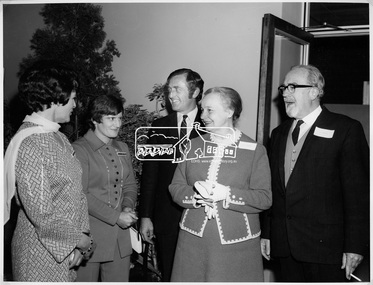
Photograph, Book launch "Pioneers & Painters", 7 Jul 1971
... history was commissioned by the Shire of Eltham and published as part of the Shire of Eltham centenary celebrations. Left to Right: Cr. (Mrs.) Charis M. Pelling, Mrs Dreverman, Cr. G. C. Dreverman, Mrs Nina Christesen, Mr Clem Christesen, Editor of the literary journal "Meanjin". "Russian...history was commissioned by the Shire of Eltham and published as part of the Shire of Eltham centenary celebrations. Left to Right: Cr. (Mrs.) Charis M. Pelling, Mrs Dreverman, Cr. G. C. Dreverman, Mrs Nina Christesen, Mr Clem Christesen, Editor of the literary journal "Meanjin". "Russian ...Launch of "Pioneers and Painters: One Hundred years of Eltham and its Shire" by Alan Marshall. The history was commissioned by the Shire of Eltham and published as part of the Shire of Eltham centenary celebrations. Left to Right: Cr. (Mrs.) Charis M. Pelling, Mrs Dreverman, Cr. G. C. Dreverman, Mrs Nina Christesen, Mr Clem Christesen, Editor of the literary journal "Meanjin". "Russian-born Nina Christesen (nee Maximoff) is regarded as the pioneer of Russian academic studies in Australia. In 1946 she became a lecturer in Russian at Melbourne University, and in 1947 established the Department of Russian Language and Literature, remaining its head until her retirement in 1977. In 1987 she was made a Member of the Order of Australia. Nina was married to Clem Christesen, founder and editor of the respected (if left-leaning) literary magazine "Meanjin". They lived at "Stanhope" in Peter Street, Eltham. Visitors included writers Patrick White and Xavier Herbert, painters Arthur Boyd and Clifton Pugh, and historians Manning Clark and Geoffrey Blainey. In 1955, both Nina and Clem were interrogated by the Petrov Royal Commission on suspicion of being Communist sympathisers, which they reputedly rebutted wittily. Nina died in 2001 and Clem in 2003. They are buried together at Eltham Cemetery. There is also a memorial to Nina at the Eltham Living and Learning Centre, in the form of a bluestone amphitheatre with a floor of hand-painted tiles. Main sources: Wikipedia, obituaries in The Age and The Sunday Age. " - Eltham District Historical Society newsletter No. 247, August 2019.This photo forms part of a collection of photographs gathered by the Shire of Eltham for their centenary project book, "Pioneers and Painters: 100 years of the Shire of Eltham" by Alan Marshall (1971). The collection of over 500 images is held in partnership between Eltham District Historical Society and Yarra Plenty Regional Library (Eltham Library) and is now formally known as 'The Shire of Eltham Pioneers Photograph Collection.' It is significant in being the first community sourced collection representing the places and people of the Shire's first one hundred years.Digital imagesepp, shire of eltham pioneers photograph collection, shire of eltham, shire of eltham centenary, pioneers and painters, book launch, cr. g.c. dreverman, mrs. dreverman, nina christesen, charris pelling -
 Monbulk RSL Sub Branch
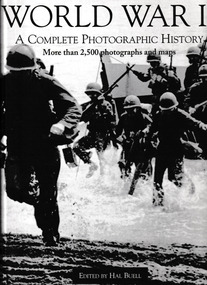
Book, Tess Press, an imprint of Black Dog & Leventhal Publishers, Inc, World War II album : the complete chronicle of the world's greatest conflict, 2002
... World War 1939-1945 - Pictorial works World War 1939-1945 - History World War II Album presents a simultaneous documentary view of every theater of the war, from the steppes of Russia to the jungles of Malaysia and the Solomons; from the freezing cold of the northernmost fjords to the scorching sands of the Libyan desert; from the bunkers of the West Wall to the boundless oceans. ...World War II Album presents a simultaneous documentary view of every theater of the war, from the steppes of Russia to the jungles of Malaysia and the Solomons; from the freezing cold of the northernmost fjords to the scorching sands of the Libyan desert; from the bunkers of the West Wall to the boundless oceans.Index, ill, maps, p.740.non-fictionWorld War II Album presents a simultaneous documentary view of every theater of the war, from the steppes of Russia to the jungles of Malaysia and the Solomons; from the freezing cold of the northernmost fjords to the scorching sands of the Libyan desert; from the bunkers of the West Wall to the boundless oceans.world war 1939-1945 - pictorial works, world war 1939-1945 - history -
 Monbulk RSL Sub Branch
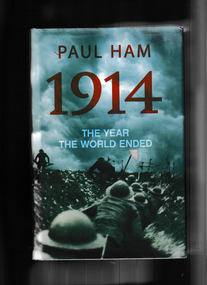
Book, William Heineman, 1914 : the year the world ended, 2013
... World War 1914 - 1918 - History world war 1914-1918 - causes Few years can justly be said to have transformed the earth: 1914 did. In July that year, Germany, Austria-Hungary, Russia, Britain and France were poised to plunge the world into a war that would kill or wound 37 million people, tear down the fabric of society, uproot ancient political systems and set the course for the bloodiest century in human history. ...Few years can justly be said to have transformed the earth: 1914 did. In July that year, Germany, Austria-Hungary, Russia, Britain and France were poised to plunge the world into a war that would kill or wound 37 million people, tear down the fabric of society, uproot ancient political systems and set the course for the bloodiest century in human history. In the longer run, the events of 1914 set the world on the path toward the Russian Revolution, the Treaty of Versailles, the rise of Nazism and the Cold War. In 1914: The Year the World Ended, award-winning historian Paul Ham tells the story of the outbreak of the Great War from German, British, French, Austria-Hungarian, Russian and Serbian perspectives.Index, bib, ill, maps, p.640.non-fictionFew years can justly be said to have transformed the earth: 1914 did. In July that year, Germany, Austria-Hungary, Russia, Britain and France were poised to plunge the world into a war that would kill or wound 37 million people, tear down the fabric of society, uproot ancient political systems and set the course for the bloodiest century in human history. In the longer run, the events of 1914 set the world on the path toward the Russian Revolution, the Treaty of Versailles, the rise of Nazism and the Cold War. In 1914: The Year the World Ended, award-winning historian Paul Ham tells the story of the outbreak of the Great War from German, British, French, Austria-Hungarian, Russian and Serbian perspectives.world war 1914 - 1918 - history, world war 1914-1918 - causes -
 Monbulk RSL Sub Branch
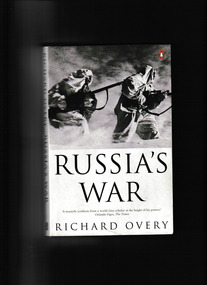
Book, Richard Overy, Russia's war, 1997
... Russia...Soviet Union - History...World War 1939-1945 - Campaigns - Russia Soviet Union - History A scholarly history of the Russian German conflict in World War two Index, bib, ill, maps, p.330. ...A scholarly history of the Russian German conflict in World War twoIndex, bib, ill, maps, p.330.non-fictionA scholarly history of the Russian German conflict in World War twoworld war 1939-1945 - campaigns - russia, soviet union - history -
 Monbulk RSL Sub Branch
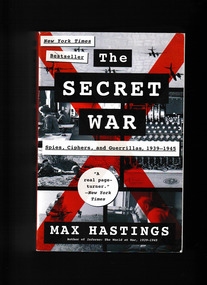
Book, Harper Collins, The secret war : spies, codes and guerillas 1939-45, 2026
... World war 1939-1945 - Espionage World War 1914-1918 - Secret service Packed with insight and terrific spy stories, this masterly book looks at the secret war on a global basis, bringing together the British, American, German, Russian and Japanese histories. In 'The Secret War', Max Hastings examines the espionage and intelligence machines of all sides in World War II, and the impact of spies, code-breakers and partisan operations on events. ...Packed with insight and terrific spy stories, this masterly book looks at the secret war on a global basis, bringing together the British, American, German, Russian and Japanese histories. In 'The Secret War', Max Hastings examines the espionage and intelligence machines of all sides in World War II, and the impact of spies, code-breakers and partisan operations on events. Written on a global scale, the book brings together accounts from British, American, German, Russian and Japanese sources to tell the story of a secret war waged unceasingly by men and women often far from the battlefields but whose actions profoundly influenced the outcome.Index, bib, ill, p.558.Packed with insight and terrific spy stories, this masterly book looks at the secret war on a global basis, bringing together the British, American, German, Russian and Japanese histories. In 'The Secret War', Max Hastings examines the espionage and intelligence machines of all sides in World War II, and the impact of spies, code-breakers and partisan operations on events. Written on a global scale, the book brings together accounts from British, American, German, Russian and Japanese sources to tell the story of a secret war waged unceasingly by men and women often far from the battlefields but whose actions profoundly influenced the outcome. world war 1939-1945 - espionage, world war 1914-1918 - secret service -
 Monbulk RSL Sub Branch
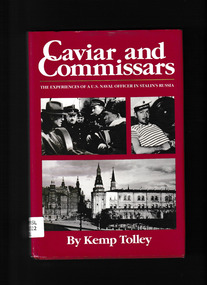
Book, United States Naval Institute, Caviar and commissars : the experiences of a U.S. naval officer in Stalin's Russia, 1983
... military attaches - us - history world war 1939-1945 - personal narratives The experiences of Kemp Tolley, the assistant US naval attache in the Soviet Union from 1942-1944 Index, bibliography, ill, p.289. Caviar and commissars : the experiences of a U.S. naval officer in Stalin's Russia ...The experiences of Kemp Tolley, the assistant US naval attache in the Soviet Union from 1942-1944Index, bibliography, ill, p.289.non-fictionThe experiences of Kemp Tolley, the assistant US naval attache in the Soviet Union from 1942-1944military attaches - us - history, world war 1939-1945 - personal narratives -
 Monbulk RSL Sub Branch
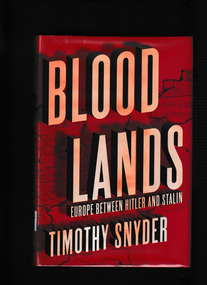
Book, The Bodley head, Bloodlands : Europe between Hitler and Stalin, 2010
... eastern europe - history - twentieth century massacres - eastern europe - twentieth century In the middle of the 20th century the Nazi and Soviet regimes starved, shot and gassed, 14 million people in the zone of death between Berlin and Moscow ... today's Ukraine, Belarus, Poland, western Russia and the eastern Baltic coast Index, bibliography, notes, maps, p.524. ...In the middle of the 20th century the Nazi and Soviet regimes starved, shot and gassed, 14 million people in the zone of death between Berlin and Moscow ... today's Ukraine, Belarus, Poland, western Russia and the eastern Baltic coastIndex, bibliography, notes, maps, p.524.non-fictionIn the middle of the 20th century the Nazi and Soviet regimes starved, shot and gassed, 14 million people in the zone of death between Berlin and Moscow ... today's Ukraine, Belarus, Poland, western Russia and the eastern Baltic coasteastern europe - history - twentieth century, massacres - eastern europe - twentieth century -
 Monbulk RSL Sub Branch
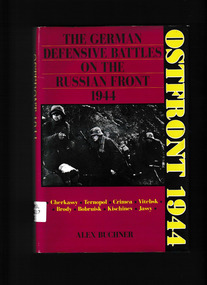
Book, Schiffer Military History, Ostfront 1944 : the German defensive battles on the Russian front, 1944, 1991
... Ostfront 1944 : the German defensive battles on the Russian front, 1944 Book Schiffer Military History Alex Buchner ...This book describes the battles on the Eastern front in 1944 which resulted in the destruction of Army Group CentreBibliography, ill, maps, p.304.non-fictionThis book describes the battles on the Eastern front in 1944 which resulted in the destruction of Army Group Centreworld war 1939-1945 - campaigns - soviet union, operation bagration
