
Showing 254 items matching " st. kilda house"
-
 Melbourne Tram Museum
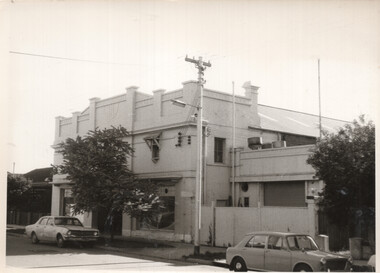
Photograph - Former St Kilda Engine house, Wellington St - Set of 2, Clive M Gibson, 1960s
... Former St Kilda Engine house, Wellington St - Set of 2...The photos show the former St Kilda or Windsor engine or winding house at 105 Wellington St. ...Photograph Former St Kilda Engine house, Wellington St - Set of 2 Clive M Gibson ...The photos show the former St Kilda or Windsor engine or winding house at 105 Wellington St. This building is now known as the "Engine house".Yields information about the former engine house in Wellington St that powered the Windsor (Chapel St) to St Kilda (Acland St) cable trams.Set of two Black and white images, one with a plain back.On rear of one print "Wellington St Windsor, cable tram engine house. C M Gibson Photo"tramways, cable trams, wellington st, engine houses, winding houses, windsor, st kilda -
 Melbourne Tram Museum
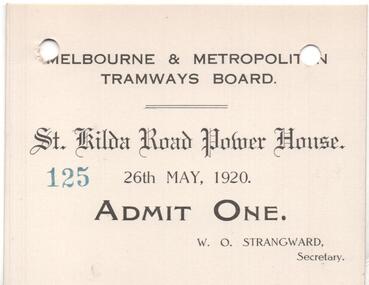
Ephemera - Ticket, Melbourne & Metropolitan Tramways Board (MMTB), "St Kilda Road Power House", May. 1920
... "St Kilda Road Power House"...St Kilda Rd... Winding Houses... Power house...Ticket or entry card printed on a card entitling the person to visit the St Kilda Road Power house on 26/5/1920. Issued by the MMTB. ...Trams tramways MMTB St Kilda Rd Winding Houses Power house Cable Trams Ticket or entry card printed on a card entitling the person to visit the St Kilda Road Power house on 26/5/1920. ...Ticket or entry card printed on a card entitling the person to visit the St Kilda Road Power house on 26/5/1920. Issued by the MMTB. Two copies held - Nos. 124 and 125. Background not known.trams, tramways, mmtb, st kilda rd, winding houses, power house, cable trams -
 Glen Eira Historical Society
Article - REGENT LODGE, REGENT STREET, 46, ELSTERNWICK
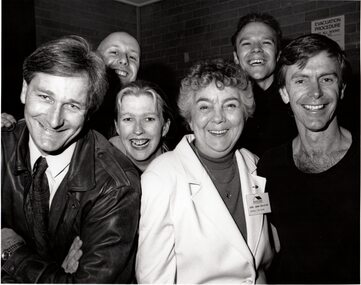
... ... St. Kilda House...Heathlands, Camden Court, Lovell House, Clarence Court, Regent Lodge and St. Kilda House all received funds. The second, ‘Lodge building appeal launched’, describes the Regent Lodge Extension Appeal and its launch, and includes brief comment by appeal patron Joan Child. ...Regent Lodge Regent Street Elsternwick Emma Street Caulfield South Heathlands Camden Court Lovell House St. Kilda House Balaclava Caulfield Grammar School Glen Eira Road St. ...This file contains 10 items about the Regent Lodge Extension Appeal: 1/Three promotional pamphlets, all called ‘Regent Lodge: A special kind of care’, stating that a building appeal will be launched early next year. The pamphlets also list office bearers. 2/A letter from Rodney Horsfield, Chairperson of the Project Working group, to Betty Freeland of the Elsternwick-Caulfield South Parish, dated 25/03/1992, asking for her to consider becoming a member of the Appeal Team. The letter also contains information on the history of Regent Lodge, the plans for development and progress on raising funds to date. 3/A letter from Ian Clark, Chairman of the Regent Lodge Extension Appeal, to Betty Freeland, dated 18/05/1992, inviting her to the official launch of the Regent Lodge Extension Appeal at Caulfield Grammar School, 217 Glen Eira Road Caulfield on 31/05/1992. The letter gives brief details on the launch, saying it will be attended by the appeal’s patron, the Honourable Joan Child, AO, and the Playback Theatre company. 4/A letter, recipient and sender unknown, dated 26/05/1992, giving details of the appeal launch and a brief history of Regent Lodge. 5/Two newspaper articles from the Southern Cross, Caulfield, dated 16/06/1992. The first, ‘Grant boost for dementia sufferers’, discusses a federal government grant of $8 million to dementia services, and $9 million to disability services. Heathlands, Camden Court, Lovell House, Clarence Court, Regent Lodge and St. Kilda House all received funds. The second, ‘Lodge building appeal launched’, describes the Regent Lodge Extension Appeal and its launch, and includes brief comment by appeal patron Joan Child. The article describes the plans for the appeal and extension, and outlines how readers can make donations. Included is a black-and-white photograph of Joan Child with members of the Playback Theatre Group at the Appeal Launch. 6/The original of the photograph used in the newspaper article in item 5, showing Joan Child with members of the Playback Theatre Group at the launch of the Regent Lodge Extension Appeal. 7/A letter from Rod Horsfield, Convenor of the Project Working Group, to Betty Freeland, dated 22/06/1992, discussing the launch and asking for the opportunity to meet with her Parish council or Finance Committee. 8/The plans for the extension of Regent Lodge, as well as a colour drawing of what the front of the extension will look like. 9/Preliminary photographs taken for the appeal brochure ‘Regent Lodge: Committed to Caring’. Twelve black-and-white photographs of two elderly residents at tea. Also, one black-and-white photographs of an elderly resident being assisted by another person, likely a staff member. 10/Three copies of the appeal brochure ‘Regent Lodge: Committed to Caring’. The brochure contains information about the lodge, the plans for the development, including a floorplan for a typical six bedroom unit, the costs of the extension and breakdown of how the appeal target amount would be spent, and messages from patron Joan Child, Appeal Committee Chairman Ian Clark, and Convenor of the Project Working Group Reverend Rod Horsfield. Also included is a list of the members of the Appeal Committee and Project Working Group. Black-and-white photographs of residents and workers at the Lodge are included in the brochure.regent lodge, regent street, elsternwick, emma street, caulfield south, heathlands, camden court, lovell house, st. kilda house, balaclava, caulfield grammar school, glen eira road, st. georges road, caulfield, uniting church, uniting church lodge program, regent lodge alzeimer appeal, regent lodge extension appeal, tansley hunt and partners, nepean presbytery, child joan the honourable, horsefield rod rev., horsfield rod rev., horsfield rodney rev., lukies noela mrs., campbell jack, cardell bob, davies gail mrs., greensmith duncan, tansley vern, merrick ruth ms., seccull barbara ms., freeland betty miss, clark ian, wilcox rosemary mrs., coleman julie, playback theatre company, martens veronica mayor, brown george, terrell tom, diseases, disabled people, nursing homes, fundraising events, aged people -
 Inverloch Historical Society
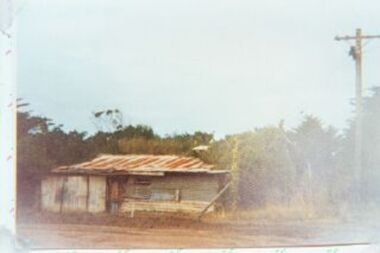
001014 - Photograph - 1957 - Inverloch - Pine Lodge power house St Kilda St - from James Wyeth
... 001014 - Photograph - 1957 - Inverloch - Pine Lodge power house St Kilda St - from James Wyeth...001014 - Photograph - 1957 - Inverloch - Pine Lodge power house St Kilda St - from James Wyeth ... -
 St Kilda Historical Society
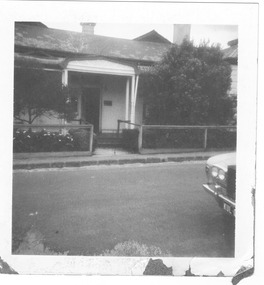
Photograph, Joseph Kane, Residence, 3/10/1976
... Photographer aged 15,small residence, street frontage of St Kilda house...Photographer aged 15,small residence, street frontage of St Kilda house black and white polaroid, unmounted, original,poor condition Residence Photograph Joseph Kane ...Photographer aged 15,small residence, street frontage of St Kilda houseblack and white polaroid, unmounted, original,poor condition -
 Glen Eira Historical Society
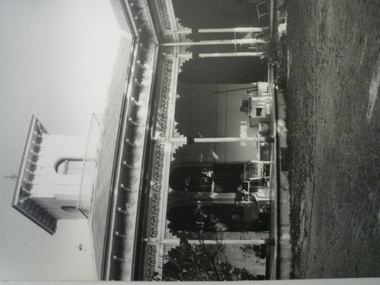
Photograph - Craigellachie
... ... St Kilda East... House...house. 2/An undated black and white interior photograph of the Chinese drawing room. 3/An undated black and white photograph showing detail of the etched glass panels in the entrance door. File also contains a research note about the possible provenance of the photographs being either previous resident Mrs C. S. Elliott, or a photographer member of the then Caulfield Historical Society. Craigellachie Lynedoch Avenue St Kilda ...This file contains three black and white photographs of the property 'Craigellachie': 1/An undated black and white photograph of the west front exterior of the house. 2/An undated black and white interior photograph of the Chinese drawing room. 3/An undated black and white photograph showing detail of the etched glass panels in the entrance door. File also contains a research note about the possible provenance of the photographs being either previous resident Mrs C. S. Elliott, or a photographer member of the then Caulfield Historical Society.craigellachie, lynedoch avenue, st kilda east, house names, mansions, elliott c s mrs, green r w -
 Glen Eira Historical Society
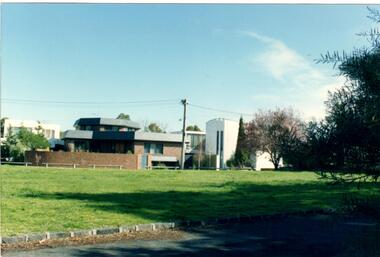
Article - East Caulfield Park
... St. Kilda... Grimwade House...Caulfield Sub District Cricket Club Caulfield Lacross Club Anderson Sandy Michelson David Balaclava Road Hawthorn Road Victorian Cricket Association CBC St. Kilda Grimwade House St. Aloysius Primary School St. ...This file contains two items about this Park. An article featuring Caulfield Park and East Caulfield Park, which was developed as the districts principal sporting areas, relating to development and restoration. Includes copies of four photographs relating to the parks featured. One colour photograph of the Park: undated, source unknown. Noted on reverse 'E. Caulf. Reserve Pavilion'.caulfield, caulfield park, east caulfield park, crown reserves, caulfield council, east caulfield park, committee of management, caulfield park committee of management, little harold, lidsey p. mrs., hannan lynette ms., leskie mr., caulfield sub district cricket club, caulfield lacross club, anderson sandy, michelson david, balaclava road, hawthorn road, victorian cricket association, cbc st. kilda, grimwade house, st. aloysius primary school, st. anthony’s primary school, monash university caulfield campus, committees of management, cypress trees, mahogany gym trees, parks and reserves, gardens, parks, sport, sports and recreations, leisure, cultural events, cultural activities, sportsgrounds, sports people, ovals, playing fields, sports establishments, recreations establishments, clubs and associations, associations, organisations, societies, athletic clubs, community groups, pavilions, playground equipment, playgrounds, gardens, barbecues, picnics, tennis courts, lawn bowls, bowls, bowling clubs, schools, educational establishments, trees, plants -
 St Kilda Historical Society
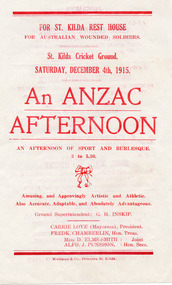
Ephemera - Special event program, An ANZAC Afternoon, 1915
... ...St Kilda Rest House...Program for an afternoon of sport and entertainment at St Kilda Cricket Ground to raise funds for wounded soldiers ANZAC WWI World War I St Kilda Rest House St Kilda Soldiers Lounge WWI fund-raising St Kilda Cricket Ground Yellowed cream coloured paper folded in half to create four pages and printed in red on all pages An ANZAC Afternoon Ephemera Special event program ...Program for an afternoon of sport and entertainment at St Kilda Cricket Ground to raise funds for wounded soldiersYellowed cream coloured paper folded in half to create four pages and printed in red on all pagesanzac, wwi, world war i, st kilda rest house, st kilda soldiers lounge, wwi fund-raising, st kilda cricket ground -
 St Kilda Historical Society
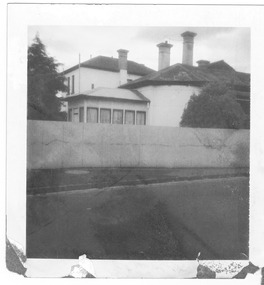
Photograph, Residence, 3/10/1977
... Photographer aged 15, residence, side view of St Kilda house behind fence...Photographer aged 15, residence, side view of St Kilda house behind fence black and white polaroid, unmounted, original,poor condition Residence Photograph ...Photographer aged 15, residence, side view of St Kilda house behind fenceblack and white polaroid, unmounted, original,poor condition -
 St Kilda Historical Society
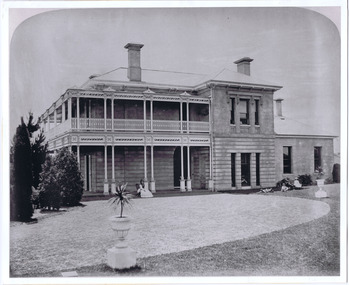
Photograph - Building, Donald McDonald, Evera, 01/01/1872
... Part of collection of photos of St Kilda houses for Vienna exhibition 1873...Part of collection of photos of St Kilda houses for Vienna exhibition 1873 Mansions St Kilda Evera black and white photograph of original double storey large family home Italianate style gravel forecourt, people on verandah building building Evera Photograph Building Donald McDonald ...Residence of Frank G Smith, Banker in 1860s and 1870s. Part of collection of photos of St Kilda houses for Vienna exhibition 1873black and white photograph of original double storey large family home Italianate style gravel forecourt, people on verandah building building mansions, st kilda, evera -
 Returned Nurses RSL Sub-branch
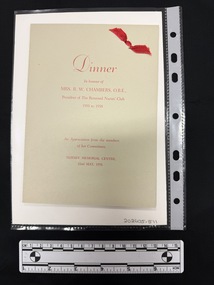
Souvenir - Menu, Dinner in honour of Mrs R.W. Chambers, OBE, President of The Returned Nurses Club, 1953 to 1958, 1958
... On the right fold is the programme including a small black and white photograph with caption: "The Achievement of Five years Work-The Official Opening of RSL (St Kilda) House" with Governor Sir Dallas Brooks standing in front of the microphone...On the right fold is the programme including a small black and white photograph with caption: "The Achievement of Five years Work-The Official Opening of RSL (St Kilda) House" with Governor Sir Dallas Brooks standing in front of the microphone Dinner in honour of Mrs R.W. ...The dinner took place at the Nurses' Memorial Centre on the 22nd of May 1958 to honour Returned Nurses Club President (1953-58) Mrs R W Chambers [Maud Isabel Chambers (neé Baker)] OBE who served in WWI.Grey card two fold menu with a Scarlet red ribbon on top right corner on cover. Lettering in red. On the left fold is the menu. On the right fold is the programme including a small black and white photograph with caption: "The Achievement of Five years Work-The Official Opening of RSL (St Kilda) House" with Governor Sir Dallas Brooks standing in front of the microphonethe returned nurses club, maud isabel chambers (neé baker) obe, wwi, ww1, world war one -
 Glen Eira Historical Society
Photograph - Elsternwick
... ... St Kilda East... Lisbon House...George’s Road Elizabeth Street Allison Road Gladstone Park Myrtle Street Victoria Street Caulfield St Kilda East Lisbon House Orrong Road House names Rippon Lea Estate Caulfield South Carnegie Gordon Street Carre Street Main Street Clarence Street Elsternwick Club Jewish Holocaust Museum Daily Planet Brothels Wesley College Elsternwick Primary St. ...This file contains three items. Photocopied and three page retyped article, undated c.1930s and source unknown from Real Estate Agent Philippe Batters 03/09/1997. Three page document from Keith James Smith, undated, on research on Elsternwick and Glen Huntly Road shops and traders. Three articles from THE AGE 13/05/2000 and 15-16/02/2013 and MELB BAYSIDE WEEKLY 03/11/2010 giving snap shots of Elsternwick housing and facts.batters philippe, real estate agents, elsternwick, paddocks, glen huntly road, walter kelly, elsternwick park, slaughter yards, glen eira roads, point ormond, glenhuntly railway station, nepean highway, grange road, holdsworth’s jewellers, staniland grove, coles store, shops, orrong road, fosseys, hattams mensware, woolworths, dalgarnos crockery and kitchenware, chapmans gifts, garth’s shoe store, garth jack, allen’s furniture and auction rooms, elsternwick market, adam’s cakes, mr. green’s pet shop, turner mr., grocer shop, moores lendring library, hopetown gardens, gardens, jack hatheralls butchershop, butchers, chinese laundry, chinese community, laundries, mr. & mrs. darbyshires milkbar, st. johns church, kooyong road, hasseles garage, garages, royal parade, glenhuntly, camden, hawthorn road, blacksmiths, camden town, dolls hospital, caulfield state school 773, independent picture, theatres, camden theatre, southern indoor bowl centre, larch street, montessorie school, collins milk bar, milk bars, collins lin, hartrick miss, armond mr., lennie mr., rothells sausage factory, north road, red bus service transport, furlonger miss, dance studio, moran and cato grocery, cato family, newsagent, tozer brook, furniture store, green gables american style soda fountain and milk bar, hoyts renown theatre, state savings bank, riddell parade, clarence street, aileen avenue, smith keith james, camden town, sports club, peer gary, gary peer & associates, brukarz jack, ray white real estate, real estate agents, classic cinema theatres, st. george’s road, elizabeth street, allison road, gladstone park, myrtle street, victoria street, caulfield, st kilda east, lisbon house, orrong road, house names, rippon lea estate, caulfield south, carnegie, gordon street, carre street, main street, clarence street, elsternwick club, jewish holocaust museum, daily planet, brothels, wesley college, elsternwick primary, st. joseph’s primary, scholem aleichen college, liebler yavneh, hopetoun gardens, harleston park -
 St Kilda Historical Society
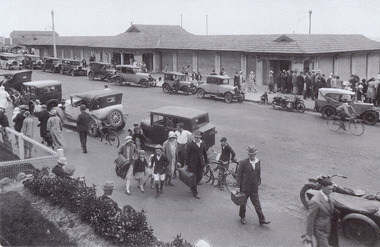
Photograph, The Pavilion, St Kilda Beach
... postcard of an old photograph (1920s-30s?) St Kilda Baths House Post card made 1980s-90s? 40 Jacka Boulevard St Kilda Photo: City of Port Phillip collection...postcard of an old photograph (1920s-30s?) St Kilda Baths House Post card made 1980s-90s? 40 Jacka Boulevard St Kilda Photo: City of Port Phillip collection The Pavilion, St Kilda beach. 40 Jacka Boulevard St Kilda VIC 3182 Australia. ...postcard of an old photograph (1920s-30s?) St Kilda Baths House Post card made 1980s-90s? 40 Jacka Boulevard St Kilda Photo: City of Port Phillip collectionblack and white post card good conditionThe Pavilion, St Kilda beach. 40 Jacka Boulevard St Kilda VIC 3182 Australia. Telephone 03 9534 8221, Faxsimile 03 9525 3595. Open for lunch and dinner 7 days. Photo City of Port Phillip Collection. -
 St Kilda Historical Society
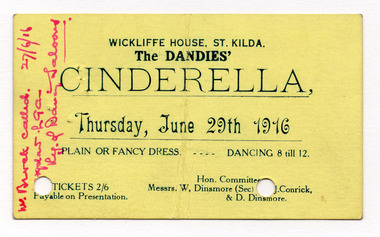
Ephemera - Ticket, The Dandies' Cinderella, 1916
... For Cinderella dance at the Dandies' at Wickliffe House St Kilda. Wickcliffe House was an elaborate wedding cake of a house, built in 1873 on one of the prime pieces of land in St Kilda overlooking the bay. ...For Cinderella dance at the Dandies' at Wickliffe House St Kilda. Wickcliffe House was an elaborate wedding cake of a house, built in 1873 on one of the prime pieces of land in St Kilda overlooking the bay. ...For Cinderella dance at the Dandies' at Wickliffe House St Kilda. Wickcliffe House was an elaborate wedding cake of a house, built in 1873 on one of the prime pieces of land in St Kilda overlooking the bay. In 1912 it was converted to cafe and theatre called Arcadia and subsequently The Dandies open Air Theatre. It was demolished in.the 1970's and the land is now occupied by Arrandale, one of the last high rises to be built along the foreshore. Wickliffe was built for John Dickson Wyelaskie who was a higly successful parstoralist in the Western District. Yellow cardboard printed one side in dark blueHandwritten notation in red ink, mostly illegible, dated 27/6/16 wickliffe house, the dandies -
 St Kilda Historical Society
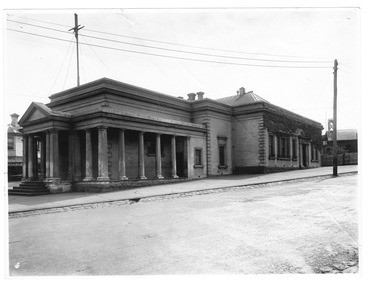
Postcard, Sears Studio, First St Kilda Town Hall, 1930
... Old Court House, St Kilda Town Hall behind, Cnr Grey and Barkly Sts, St Kilda, built in 1859, demolished 1930, side view...Old Court House, St Kilda Town Hall behind, Cnr Grey and Barkly Sts, St Kilda, built in 1859, demolished 1930, side view Old Town Hall Crs Barkly & Grey St built 1859 black and white photograph, copy, fair image quality, unmounted First St Kilda Town Hall Postcard Sears Studio ...Old Court House, St Kilda Town Hall behind, Cnr Grey and Barkly Sts, St Kilda, built in 1859, demolished 1930, side viewblack and white photograph, copy, fair image quality, unmountedOld Town Hall Crs Barkly & Grey St built 1859 -
 Brighton Historical Society
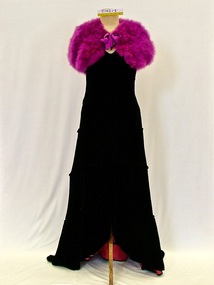
Outfit, Evening outfit, 1930s
... Her family migrated to Australia, living first in St Kilda before building the house 'Avon' at 42 Bay Street, Brighton, where Bertha lived with her husband Ambrose Reginald Dudfield until 1975....Her family migrated to Australia, living first in St Kilda before building the house 'Avon' at 42 Bay Street, Brighton, where Bertha lived with her husband Ambrose Reginald Dudfield until 1975. evening dress feather cape bertha dudfield brighton 1930s Evening outfit comprising magenta feathered cape, full-length black velvet dress and a spray of silk flowers. ...This evening outfit was made and worn by Bertha Frances Dudfield (nee Bruere, 1892-1982). Bertha was born in Christchurch, New Zealand in 1892, one of twelve surviving children. Her family migrated to Australia, living first in St Kilda before building the house 'Avon' at 42 Bay Street, Brighton, where Bertha lived with her husband Ambrose Reginald Dudfield until 1975.Evening outfit comprising magenta feathered cape, full-length black velvet dress and a spray of silk flowers. Hem of dress lined with magenta and yellow silk. .1 - cape .2 - dress .3 - floral sprayevening dress, feather cape, bertha dudfield, brighton, 1930s -
 St Kilda Historical Society
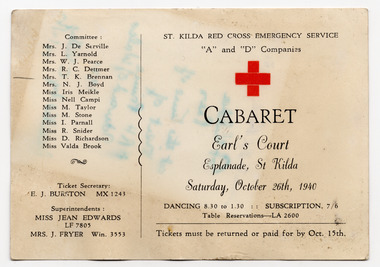
Ephemera - Ticket, Cabaret, 1940
... St Kilda Red Cross Emergency Service on 26 October 1940. Earl's Court Theatre opened in the early 1930's at 17 The Esplanade, St Kilda. The building formerly housed...St Kilda Red Cross Emergency Service on 26 October 1940. Earl's Court Theatre opened in the early 1930's at 17 The Esplanade, St Kilda. The building formerly housed ...Ticket to a cabaret at Earl's Court in aid of the St Kilda Red Cross Emergency Service on 26 October 1940. Earl's Court Theatre opened in the early 1930's at 17 The Esplanade, St Kilda. The building formerly housed the Lyric Theatre (from 1913-1922), which presented live entertainment and movies. After initially operating as a theatre, Earl’s Court became a ballroom and nightclub. Earl's Court Nightclub closed in the late-1980’s and a retirement home named Earl’s Court now stands on the site.Cream coloured card, printed in black and red on one sidest kilda red cross, earl's court theatre, lyric theatre, wwii fund-raising -
 Ballarat Tramway Museum
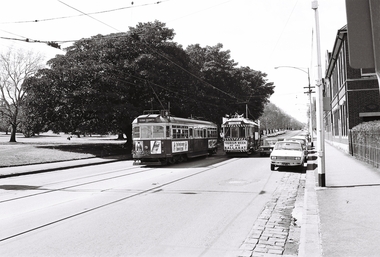
Negative - SECV Ballarat 36 in Melbourne set of 6, Robert Green, 9/1971
... Set of 6 photographs by Robert Green during Sept 1971 when Ballarat Tram No. 36 operated in Melbourne following the closure of the SECV Ballarat system. 1 -Trams 959, 36 Domain Road 2 -Tram 36 Domain Road 3 -Tram 36 ditto 4 -Trams 36, 919 turning back into St Kilda Road with BP house in the background 5 -Trams 36, 985 Swanst St at Flinders St with extensive traffic congestion 6 -Trams 36, 985 with the Classic Restaurant café, Portmans, ANZ and Coles in the background....Set of 6 photographs by Robert Green during Sept 1971 when Ballarat Tram No. 36 operated in Melbourne following the closure of the SECV Ballarat system. 1 -Trams 959, 36 Domain Road 2 -Tram 36 Domain Road 3 -Tram 36 ditto 4 -Trams 36, 919 turning back into St Kilda Road with BP house in the background 5 -Trams 36, 985 Swanst St at Flinders St with extensive traffic congestion 6 -Trams 36, 985 with the Classic Restaurant café, Portmans, ANZ and Coles in the background. ...Set of 6 photographs by Robert Green during Sept 1971 when Ballarat Tram No. 36 operated in Melbourne following the closure of the SECV Ballarat system. 1 -Trams 959, 36 Domain Road 2 -Tram 36 Domain Road 3 -Tram 36 ditto 4 -Trams 36, 919 turning back into St Kilda Road with BP house in the background 5 -Trams 36, 985 Swanst St at Flinders St with extensive traffic congestion 6 -Trams 36, 985 with the Classic Restaurant café, Portmans, ANZ and Coles in the background.Yields information about the operation of Ballarat tram 36 in Melbourne to promote tourism for Ballarat.35mm negative in a film strip - set of 6 - Black and white print of each photograph held.tramways, ballarat tourism, tram 36, domain road, st kilda road, tourism, trams, swanston st, tram 985, tram 919, tram 959 -
Melbourne Tram Museum
Audio - AV Presentation, Robert Green, "The Melbourne cable tramways - 1885 - 1940", 5/2008
... houses, and its replacement by electric trams or buses. Includes images of remnants of the former system in Abbotsford St North Melbourne, horse omnibuses, other cable tram systems, the grip, George Duncan, F B Clapp, the tramcars, cables or the rope, engine houses, St Kilda and passengers changing at Victoria St from electric to cable tram ...houses, and its replacement by electric trams or buses. Includes images of remnants of the former system in Abbotsford St North Melbourne, horse omnibuses, other cable tram systems, the grip, George Duncan, F B Clapp, the tramcars, cables or the rope, engine houses, St Kilda and passengers changing at Victoria St from electric to cable tram Demonstrates the work of Robert Green's research work into cable tram history and research and yields information about the history and development of Melbourne's cable tram network, the largest single operator network in the world. ...Presentation by Robert Green to the Engineering Heritage Victoria, 22 May 2008 comprising a Powerpoint slides with the actual audio of the presentation. Gives the background to the establishment of the Melbourne cable tram system, its construction, operation, power or engine houses, and its replacement by electric trams or buses. Includes images of remnants of the former system in Abbotsford St North Melbourne, horse omnibuses, other cable tram systems, the grip, George Duncan, F B Clapp, the tramcars, cables or the rope, engine houses, St Kilda and passengers changing at Victoria St from electric to cable tram Demonstrates the work of Robert Green's research work into cable tram history and research and yields information about the history and development of Melbourne's cable tram network, the largest single operator network in the world.Digital Audio Visual Presentation of a lecture by Robert Green 2008 cable trams, melbourne, mtoco, trackwork, engine houses, tramcars, george duncan, f b clapp, horse buses, abbotsford st -
 Mission to Seafarers Victoria
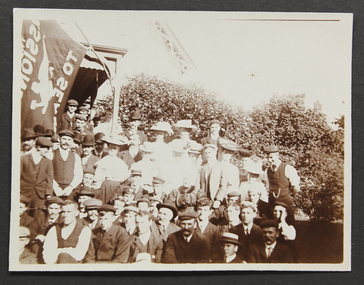
Photograph - Photograph, Sepia, Anne Treverton Goldsmith (nee Lobb), Picnic at Glenfern, King's Birthday 1906, 9 November 1906
... Danne, of "Glenfern," St. Kilda, threw her house and grounds open tor sports and tea. ...Danne, of "Glenfern," St. Kilda, threw her house and grounds open tor sports and tea. ...Gathering of seafarers and MTS clergy and LHLG members, at Glenfern 1906. Mrs Mary Danne daughter of Reverend Kerr Johnston was a widow at the time and was renting Glenfern, the property once owned by the Boyd family, and started a private primary school she called Newington College. A member of the Mission's committee from 1905 to 1926 when she passed away, a bras plaque was made in her memory and placed in the chapel of the Flinders Street Mission. (see item 0690) In the Standard published on Saturday 17 November 1906, page 4 we could read: "In connection with the Victoria Missions to Seamen a successful and pleasant outing, was given to the sailors in port on King's Birth day. Mrs. Danne, of "Glenfern," St. Kilda, threw her house and grounds open tor sports and tea. Cricket, football and sports were enthusiastically pursued, and ample justice was done to the substantial tea provided by Mrs. Danne and her friends. The Misses Danne, Miss Godfrey and other ladies were untiring in their attentions. Mr. Axell, first officer of brig Fairy Rock, in a few appropriate words thanked Mrs. Danne and the ladies, on behalf of the sailors, for their kind hospitality. Snapshots of the party were taken by Mrs. Goldsmith. Mr. C A. Holmes and Mr. Cedric Campbell acted as stewards and starters for the races. On the invitation of the chaplain (Rev. A G. Goldsmith*) ringing cheers were given for Mrs. Danne and the ladies. Before the party broke up Mrs Danne addressed a few kind words to the men and gave them all a shake of the band at the gate. The rest of the evening was spent at the Institute, Beach street, where games and competitions were carried on to the accompaniment of vocal and instrumental music. The prizes won at the sports etc., were distributed, and after singing the National Anthem the party broke up."Thanks to the article in the Standard, Saturday 17 November 1906, page 4, we learn that some of the early sepia photographs were taken by Mrs Gurney Goldsmith herself.Small monochrome photograph depicting a group of seamen and ladies with the Mission's Flagstaff.1906, glenfern, st kilda east, picnic, lhlg, king's birthday, edward vii, mary alice isabelle danne nee johnston, 1851-1926, reverend kerr johnston, 1812-1887, boyd family, sailors, seamen, seafarers, bowler hat, cap, boater hat, snapshots, camera, photographer, sports, cricket, football, ethel augusta godfrey 1861-1935, mr axell, fairy rock, charles arthur holmes (-1947), mrs gurney goldsmith, anne treverton goldsmith (nee lobb), cedric campbell -
 Kew Historical Society Inc
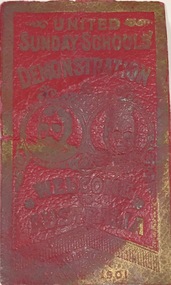
Souvenir, United Sunday schools, Red Leather Bookmark, United Sunday Schools' Demonstration, Melbourne, 6 May 1901, 1901
... They occupied the frontage to St. Kilda-road, from Government House gates to the intersecting thoroughfare beyond. ...They occupied the frontage to St. Kilda-road, from Government House gates to the intersecting thoroughfare beyond. ...SUNDAY SCHOOL DEMONSTRATION. With three times three we coo-ee, The Prince we meet again; Our Princess May we welcome, With heart and voice amain. This was the welcome of the children of the Melbourne Sunday schools. The greeting came from over 30,000 youthful voices to the accompaniment of as many waving flags of diminutive size, held by the children. Probably not one of those who sang so lustily had witnessed the previous visit of his Royal Highness; or knew anything of it except as a traditional event, but the sentiment was a good and proper one all the same. The children were massed on the rising ground in the Domain, and apparently the long wait was not at all wearying. It was to most of them a huge picnic. They lunched on the grass, and filled in the intervening lime with games such as the juvenile heart delights in. At intervals something approaching order, was observed, and then songs, which have been in rehearsal for some weeks past, were sung under the baton of Mr. D. R. Davies, musical director, and to the lead of a united brass band of over a hundred instrumentalists under Bandmaster E; T. Code. A solo was also sung by Mr. H. J. Floyd. At all times the scene was an exceedingly animated one. Most of the children were attired in light costumes, and those in whose dress there was some color provided the necessary variety to make up a most picturesque scene. Probably there were nearly 35,000 adults and children at this spot. They occupied the frontage to St. Kilda-road, from Government House gates to the intersecting thoroughfare beyond. As the children were confined to the high ground, there was a green strip in front of them, and the dark green of the fir trees at the top of the slope made a most suitable background. Between these two lines of even coloring the children, with the easy freedom of youth, made perhaps as pretty a feature of the pageant as could be found anywhere in the whole route of the procession." (The Age, Tues 7 May 1901, p.6)This tiny battered piece of ephemera recording the United Sunday School Demonstration of 1901 must once have been exceedingly common, however in the context of the growing collection that the Society has relating to the opening of the first Commonwealth Parliament in Melbourne it has historic and social significance.Embossed red leather bookmark commemorating the 'United Sunday Schools Demonstration' in St Kilda Road in 1901 to welcome the Prince and Princess of Wales to open the first Commonwealth Parliament in the Royal Exhibition Building."United Sunday Schools Demonstration, Melbourne Australia, Melbourne May 6 1901"opening of the first commonwealth parliament - 1901, sunday schools - victoria, federation events - victoria - 1901, ephemera -
 City of Melbourne Libraries
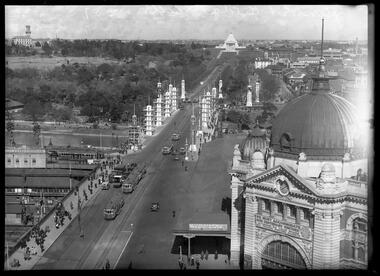
Photograph, Bull, Hugh Jones, 1897-1993, Princes Bridge Centenary pylons under construction
... St Kilda Road, stretching towards the Shrine of Remembrance, and diverting past it. The Shrine had not yet been officially dedicated, and looks very white and dominant on the skyline. On the LHS of St Kilda Road, Government House...St Kilda Road, stretching towards the Shrine of Remembrance, and diverting past it. The Shrine had not yet been officially dedicated, and looks very white and dominant on the skyline. On the LHS of St Kilda Road, Government House ...Princes Bridge Centenary pylons under construction Possibly taken from Young and Jacksons Hotel (formerly Princes Bridge Hotel) on the corner of Flinders and Swanston streets, Flinders Street Station’s clocks and main entrance dominate, along with its distinctive copper dome and decorative façade. The time on the main clock is 1.40pm, and the sign underneath, reflecting Melbourne’s upcoming Centenary reads, “We must accommodate our Centenary visitors! Citizens! Do your share by taking paying guests.” At left is the original Princes Bridge Station, today the site of Federation Square. The riverside tram terminus advertises a Café/Tobacconist/Refreshment Room selling cigars & cigarettes, fountain drinks & confectionery, and in smaller text: “Leave your boot repairs here”. Nearly everyone is dressed in dark suits, coats and hats. The footpaths are wide and there are no traffic lights. The roadway stretches towards the Shrine of Remembrance, not yet dedicated but very dominant on the skyline. Government House is clearly visible across the wide parkland that would come to be known as Kings Domain and that is an area of deep importance to the people of the Eastern Kulin. Originally, Birrarung was part of a network of swamps and lagoons linked to the course of the river. From 1896, Public Works Department engineer Carlo Catani, oversaw a new channel to straighten the river and the swamps and lagoons were filled with spoil from the channel works. From the same vantage point today, only the top of the tower of Government House would be visible. The photo captures the pylons along Princes Bridge, mid-construction and being installed to mark Melbourne’s Centenary. The pylons were not without controversy. Both The Argus and The Age bemoaned them for being “made almost entirely of imported softwood timber”, denying work to native hardwood timber workers and sawmillers, and leading visitors to think Australia did not have its own exceptional native hardwoods. The pylons were also variously described in their incomplete state, as unimaginative and resembling an oilfield. Published: The Age 5 September 1934 Featured in "Newsworthy: Melbourne in photographs 1933-1936" exhibition at East Melbourne Library, October to December 2023. Exhibition caption by project volunteer, Louise McKenzie Photographer notations on slide: "Pylons + St Kilda Rd C57" Published: Age (Melbourne, Vic. : 1854 - 1954), Wednesday 5 September 1934, page 11 Published title: DECORATIONS -- THEN AND NOW. Published caption: "Although not completed yet, some impression of the effect of the decorations on Princes-bridge may be obtained from the first picture which shows the majestic sweep of St Kilda road with the Shrine of Remembrance and Government House dominating the horizon. The area to the left of St. Kilda-road and in front of Government House is portion of the area which it is proposed to call the King's Domain, which extends to Domain-road and Anderson-street..." Description: East-facing, elevated view of Flinders Street Station and Princes Bridge, featuring partially completed pylons erected for Melbourne's Centenary celebrations. The Shrine of Remembrance and Government House can be seen in the distance. In the foreground are trams, cars and trucks, pedestrians, Batman Avenue tram terminus and refreshment rooms. Signage on Flinders Street Station encourages citizens to accommodate Centenary visitors. The Melbourne Centenary was held 1934-35 in celebration John Batman's proclamation that Melbourne "the place for a village". Centenary events included a visit by Prince Henry, Duke of Gloucester. A Centenary Cake measuring 50 feet in height and ten tons in weight was cut into 250,000 pieces and sold at 1 shilling per piece for charity. Spectacular floodlighting of city landmarks, the creation of the Pioneer Women's Memorial Garden, and the MacRobertson Air Race from London, were other notable activities. Research by project volunteer, Louise McKenzie: The photo in The Age collage of 5 September 1934 has a slightly cropped foreground. The original photo has been taken from an elevated vantage point, most probably the roof of the Nicholas Building on the corner of Flinders and Swanston streets. The right foreground is dominated by the main “clocks” entrance to Flinders Street Station, showing its distinctive copper dome and decorative façade. The time on the main clock is 1.40 pm. The main sign on the front of the Station reads, "We Must Accommodate our Centenary Visitors! Citizens! Do your share by taking paying guests. Write to The Official Centenary Accommodation Bureau, 436 Collins St. City. Tel M 4671”. Another sign at eye level at the main entrance says: “Cheap Trips on Sundays”. The sign on the end of the roof along the eastern side of the station reads, “The Babies Need Your Help! Support Broadmeadows Foundling Hospital Appeal. July and August”. Run by the Sisters of St Joseph of the Sacred Heart, St Joseph’s Foundling Hospital was a purpose built infants’ home for up to 300 babies, plus accommodation for expectant mothers, mainly single women. In the early 1930s, the department (Victorian Children’s Welfare Department) contracted St Joseph’s Foundling Hospital to care for an additional 60 infant state wards, and up to 175 non wards at any given time. In 1931 it also operated a mothercraft training school. The centre foreground shows the commencement of Princes Bridge. Beneath the left side of the bridge was the site of the original Princes Bridge Station, by this time incorporated into Flinders Street Station, and today the area is the site of Federation Square. It was linked to Flinders Street station by the railway tracks that ran underneath the northern approach to the bridge. This photo shows a tram terminus which has a Café/Tobacconist/Refreshment Room, selling cigars & cigarettes, fountain drinks & confectionary, and a sign: Leave your boot repairs here. In the foreground is a wide roadway running south/north, comprising two vehicle lanes each heading north/south, and a central section containing two sets of tram tracks. There are cars, buses and delivery vans on the roadway. The trams visible are Glen Iris (Route No. 6; tram no. 448), Toorak (Route No. 8, tram no. 333), ? (No. 7), ? (No. 1), and ? (No. 2A). The footpaths are extremely wide. There is a square newspaper/magazine stand on the eastern side footpath. And also a “Ferry” sign. There are no traffic lights, but a policeman is visible on the roadway. There are pedestrians – men, women, children, a porter with trolley, women with prams. Clothing comprises dark suits, coats and hats for nearly everyone. There are double headed “Collins Street” lights along the side of the roadway, and along the northern riverbank. The roadway in the foreground is an extension of Swanston Street, which becomes Princes Bridge, then St Kilda Road, stretching towards the Shrine of Remembrance, and diverting past it. The Shrine had not yet been officially dedicated, and looks very white and dominant on the skyline. On the LHS of St Kilda Road, Government House is clearly visible across the wide parkland to be known as Kings Domain. The Kings Domain area is important to the people of the Eastern Kulin nation, and also has historical importance for its association with the early settlement of Melbourne and the foundation of British colonial administration in Victoria. On the southern side of the Yarra River (Birrarung) an historic rowing boathouse is visible, located adjacent to the Alexandra Gardens. Originally Birrarung was part of a network of swamps and lagoons linked to the course of the river. From 1896, under the guidance of engineer Carlo Catani* a new channel to straighten the river was created and the swamps and lagoons were filled with spoil from the channel works. The gardens were then created and completed in time for a Royal visit by the Duke of York in May 1901. The gardens are named after Alexandra of Denmark, the wife of King Edward VII. Both these areas, plus the Royal Botanic Gardens Victoria, Shrine of Remembrance Reserve, Sidney Myer Music Bowl, Government House, and the Queen Victoria Gardens together form the Domain Parklands. The extent of the subsequent plantings is evident today, where from the same vantage point only the top of the tower of Government House would be visible. *Catani was born in Florence in 1852, but after arriving in Melbourne worked as a civil engineer for the Victorian Government. His last major project was the reclamation of the foreshore of St Kilda, envisaged in the style of a European resort, complete with a split level esplanade, bathing pavilions, dance halls, amusements and a French-Italian style of landscape complete with palms. The gardens at the end of Fitzroy Street, St Kilda, now bear his name. The historic boathouse visible across the Yarra is another glimpse into Melbourne’s past. “Boathouse Row” comprises 7 amateur rowing clubs, the first established in 1859 (Melbourne University Boat Club). Other Clubs were Richmond, Melbourne, Banks, Melbourne Grammar School, Yarra Yarra and Mercantile. South of the river and west of the bridge is an area today developed into the Melbourne arts precinct of Hamer Hall and the Arts Centre. But at this time it was the home of Wirths Olympia Circus, which comprised Wirths Pleasure Park (an amusement park), a 5,000 seat auditorium – Hippodrome, a roller skating rink, a glaciarium, a cinema, and the Green Mill Dance Hall. Dog shows were also held at Olympia. The Green Mill Dance Hall closed in 1950, and the remainder of the Wirth buildings on site were destroyed by fire in December 1953. The feature of the photo is the pylons erected along Princes Bridge to mark Melbourne’s Centenary in 1934. The sixteen plastered pylons were designed by Roy Prentice, the second person to qualify as an architect at The University of Melbourne’s Bachelor of Architecture degree, in 1933, aged 27. Simon Reeves in his article marking the 100th birthday of Roy Prentice on 20 June 2006 reports that the State Electricity Commission sponsored this work, and the Argus reported that “… the pylons were “illuminated from within to give the effect of soft radiance”. Australia Home Beautiful 1 Oct 1934 reports in a very detailed and comprehensive article: The 10 taller pylons, including flagpole, were 48 ft, with a base of 8 ft. Timber-framed and faced with fibrous plaster and galvanised sheet iron, each structure was securely bolted to a concrete foundation three feet in depth. Panels of glass let into the shaft of each pylon were indirectly lit by 40, 100 watt lamps, and the upper bank of internal lamps were dyed so as to flood the panels with a deep red light. The decorative painted shields and flagpoles/pennants were illuminated by three 200 watt projectors concealed in the roof of each pylon, and were part of an electric night light decoration scheme involving 28 miles of wire to supply more than 20,000 lights. An article in the Argus on 18 October 1934 provided minute detail of the lighting erected in Melbourne for the Centenary, converting it “… into a coloured fairyland by night.” The estimated cost of 10 pounds per hour the lights were on. The display included 800 standard light poles 30 feet high which were tiered with electric bulbs concealed in inverted cones, 138 specially designed “Venetian poles” draped in flags trophies and streamers. The streets included in the electric night light decoration scheme were Bourke Street from Spring to William, the entire length of Collins Street, Flinders Street from Elizabeth to Spring, Lonsdale Street from Elizabeth to Swanston, Swanston and Elizabeth Streets from Flinders to Lonsdale, and parts of Springs and Spencer Streets. Together with the Princes Bridge pylons, approximately 28 miles of wire was required to supply power to the more than 20,000 lights. And that is just in the city of Melbourne. It was estimated the same amount of lighting was duplicated among other local councils. The pylons were not without controversy. The Argus on 28 August 1934 in an article headed “Imported Timber in Pylons” reported that the Princes Bridge pylons are “made almost entirely of imported softwood timber”, and have therefore denied work to native hardwood timber workers and sawmillers. The same day the Melbourne Age ran a similar story, bemoaning the fact that foreign oregon had been used which may lead tourists to think Australia did not have its own exceptional native hardwoods. A Camberwell City Councillor described the pylons as unimaginative, and the Herald reported that skeletons of pylons for the Centenary decorations in their present form led the area to resemble an oilfield! The Yarra River and Princes Bridge have long been a focal point of Melbourne life. In the early days of European settlement in Melbourne a rope-hauled punt carried people across the Yarra River. A surge in population and increased shipping traffic created a need for a bridge. There was difficulty in agreeing on a suitable site for the bridge (options were crossing at Elizabeth, Swanston, Queen or Market Streets), but the NSW Government favoured Swanston Street and the Melbourne Town Council decided on a temporary bridge across the Yarra spanning from the foot of Swanston Street. This first bridge was a single span timber toll bridge designed by Scottish born bridge designer David Lennox, and completed in 1845. It was 120 feet long, had a roadway of 17 feet wide, and a footpath on one side of 4 feet. It was leased to the Melbourne Bridge Company in the name of Robert A Balbirnie. The tollhouse was on the north side of the river and the toll keeper, Patrick Doherty, was credited with saving nine lives during the four years he was in charge of the toll station. The second bridge was stone (completed 1850), and named Prince’s Bridge after the HRH Prince of Wales, later Edward VII. It was designed with an elliptical single arc and an exceedingly small rise in proportion to the span. However, this design created an obstacle for flood waters, and together with Melbourne’s increasing population it was quickly apparent that a new bridge was required. At its opening on 15 November 1850 coincided with the imminent declaration of Victoria as a separate colony, it provided a moment of great celebration for Melbournians and “The opening ceremony was described as the grandest processional display witnessed in the colony.” (ToMelbourne.com.au) Princes Bridge in its present form, as depicted in this photograph, was designed by Jenkins, D’Ebro and Grainger, and constructed in 1886-88 by David Munro. John Grainger (father of Australian composer Percy Grainger) did the majority of the design work for the bridge. The structure was to have three arches each 96 feet wide measured across the river, and the banks on both sides were raised to allow more space for floodwater to flow. St Kilda Road was originally many feet below the current level. The bridge is of architectural significance for its substantial size, giant half columns, extensive use of wrought and cast iron, decorative elements (cast-iron lamps) and the skilled stonemasonry in the construction of the abutments and piers. Its main design features are similar to those of Blackfriars Bridge in London (1870). The bluestones were quarried from Footscray, the Malmsbury stones were from quarries at Kyneton, and the granite from Harcourt. The cost was met by the State of Victoria, City of Melbourne, and six out of seven of its municipalities, and their coats of arms feature on the bridge. The building of the bridge reflected the boom period of Melbourne, including the Victorian gold rush 1851- late 1860s, and its contractor, David Munro, was also responsible for the construction of Queens Bridge and Sandridge Railway Bridge. The Centenary pylons are no longer in place, but today this intersection still plays a major part in Melbourne’s daily life: people still meet “under the clocks” at Flinders Street station, and the route in and out of the city along St Kilda Road is often a feature of parades such as Moomba, the Grand Final Parade, and of course the Anzac Day Parade which commences at the Princes Bridge intersection and finishes at the Shrine of Remembrance. There are many tram routes, which cross the Bridge, and it directs pedestrians towards the Arts Precinct, the various components of Domain Park, plus the Southbank restaurant and rowing precincts. Even though this is a street scene, it feels very intimate; the viewer is instantly immersed in the activity of a Melbourne afternoon, looking down St Kilda Road from a viewpoint near today’s Federation Square. References: DECORATIONS -- THEN AND NOW. (1934, September 5). The Age (Melbourne, Vic. : 1854 - 1954), p. 11. Retrieved September 21, 2023, from http://nla.gov.au/nla.news-article205880269 'Flinders Street railway station', Wikipedia, https://en.wikipedia.org/wiki/Flinders_Street_railway_station 'St Joseph’s Foundling Hospital (1901-75)', Finding Records, Department of Health and Human Services, State of Victoria, https://www.findingrecords.dhhs.vic.gov.au/collectionresultspage/St-JosephsFoundling-Hospital-Babies-Home#departmental-administration 'Alexandra Gardens', City of Melbourne, https://www.melbourne.vic.gov.au/community/parks-open-spaces/major-parks-gardens/Pages/alexandra-gardens.aspx 'Wirths Circus', Wikipedia, https://en.wikipedia.org/wiki/Wirth's_Circus 'Roy Prentice: Centenary Architect', Built Heritage Pty Ltd, Simon Reeves, https://www.builtheritage.com.au/downloads/prentice.pdf 'Princes Bridge', Heritage Council Victoria, https://vhd.heritagecouncil.vic.gov.au/places/817 PORT PHILLIP. (1846, April 1). The Sydney Morning Herald (NSW : 1842 - 1954), p. 3. Retrieved September 21, 2023, from http://nla.gov.au/nla.news-article12886251 'Edward VII', Wikipedia, https://en.wikipedia.org/wiki/Edward_VII 'Princes Bridge', ToMelbourne.com, https://tomelbourne.com.au/princes-bridge/ 'Princes Bridge', eMelbourne, https://www.emelbourne.net.au/biogs/EM01189b.htm 'Princes Bridge', Australia for everyone, http://australiaforeveryone.com.au/files/melbourne/princes-bridge.html 'Victorian gold rush', Wikipedia, https://en.wikipedia.org/wiki/Victorian_gold_rush IMPORTED TIMBER IN PYLONS (1934, August 28). The Argus (Melbourne, Vic. : 1848 - 1957), p. 9. Retrieved September 21, 2023, from http://nla.gov.au/nla.news-article10952507 Princes-Bridge Pylons. (1934, August 28). The Age (Melbourne, Vic. : 1854 - 1954), p. 7. Retrieved September 21, 2023, from http://nla.gov.au/nla.news-article205532235 Pylons Appear Near Princes Bridge (1934, August 18). The Herald (Melbourne, Vic. : 1861 - 1954), p. 1. Retrieved September 21, 2023, from http://nla.gov.au/nla.news-article243104375 PRINCES-BRIDGE PYLONS. (1934, September 20). The Age (Melbourne, Vic. : 1854 - 1954), p. 10. Retrieved September 21, 2023, from http://nla.gov.au/nla.news-article205873535 28 Miles of Wire (1934, October 18). The Argus (Melbourne, Vic. : 1848 - 1957), p. 1 (The Junior Argus). Retrieved September 21, 2023, from http://nla.gov.au/nla.news-article10977836 'Historical references for Boathouse Row, Melbourne', http://boathouserowmelbourne.com.au/history/ 'ITALIAN DELEGATION TO HONOUR CARLO CATANI, DESIGNER OF THE ST KILDA FORESHORE, St Kilda Historical Society, 2001, https://web.archive.org/web/20070928061938/http://www.skhs.org.au/~SKHSarticles/articles/Carlo_Catani.html# HISTORY IN LIGHTS (1934, July 12). The Herald (Melbourne, Vic. : 1861 - 1954), p. 16. Retrieved September 21, 2023, from http://nla.gov.au/nla.news-article243172436 'Dressing Melbourne for the Duke', The Australian home beautiful: a journal for the home builder. Vol 12 No. 10 (1 October 1934), page 21, 58. Retrieved September 14, 2023, from http://nla.gov.au/nla.obj-2950922209Photographer notations on slide: "Pylons + St Kilda Rd C57".centenaries, bridges, lighting, flinders street railway station -
 Federation University Historical Collection
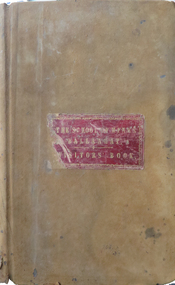
Book, Ballarat School of Mines Visitors' Book, 1879-1890, 1879-1890
... Holtermann Out of business Adelaide 1890 21 May Mr and Mrs Fairchild, gentleman. Yarra house, Dalgety St, St Kilda...Holtermann Out of business Adelaide 1890 21 May Mr and Mrs Fairchild, gentleman. Yarra house, Dalgety St, St Kilda Ballarat School of Mines Visitors' Book, 1879-1890 Book Book ...James Redmond Gilbert (sr) was born in 1837 at Hamilton, Ontario, Canada. He married Ellen Spouse. He , James Gilbert died on 26 July 1900 at Melbourne, and is buried at Boroondara Cemetery (Kew). J.R Gilbert lived at Running Creek (later Havilah) for some time, and during that time was employed in one of the bigger mines in the district. (Research by Ren at Havilah Research, 2019) Leatherbound ledger with hand written names, professions, residence and remarks relating to visitors to the Ballarat School of Mines. Sample Names: 1881 May 2 David Kerr Diamond Miner South Africa May 2 S. R. Dodds Diamond Miner South Africa May 3 Albert E. King Accountant Adelaide, South Australia "see signature 6 leaves back" May 6 William Morley Wesleyan Minister Auckland, New Zealand May 6 Rainsford Ravin Wellington, New Zealand May 7 Frank E. Lawrence, Lake River, Tasmania May 9 M. Richter Engineer Germany May 9 Dr Wilhelm Landall naturalist Berlin, Germany May 10 William Ralph Heaton Mercantile Birmingham May 11 Arthur I. Traill Grazier Llanpollen, New South Wales May 10 Marian Traill 1882 July 10 Arthur W.W. Brown London July 10 Benjamin Spargo Mining Mananger and owner Snowy Creek July 10 Thomas Cooke Miner Ballarat July 14 Robert H. Kenny July 14 Mr and Mrs Buston, [Indigo Planter?] Bengal, Indonesia July 14 Samuel H. Halker Ballarat July 14 Charles Phelan Talbot July 14 E. Walker Ballarat 1884 June 30 M.N. Cooper Dunedin, new Zealand June 30 Richard Hosking gardiner Gong Gong Well pleased with School June 30 Humphrey John Ballarat July 1 Cecily Gilbert Melbourne July 1 Florence Shrivall Melbourne July 1 [W.N. Marsh?] Colonial Secretary Hong Kong July 1 Louis Fause Engine Driver Dunolly July 1 John L. Bertram Blacksmith Melbourne July 1 Thomas Eardley Coachmaker London "Exceedingly obliged to Mr Oddie for a very pleasant instruction time spent in inspection of the various scientific appliances in the Ballarat School of Mines." (Donation 2/6) July 4 E. Goodwin [David?] Artist Spellbound July 4 W. Glumley Station Master Murtoa July July 4 James Thomas Miner Corrinondie, New Zealand "Very pleased with the School in all its branches. I hope to contribute to the specimen department. J.T." July 8 Robert Wall Engine Driver 1885 September 16 J.W. Springthorpe, M.D., Melbourne (very much pleased in every way) September 26 M. Oddie, Ballarat 1886 January 12 William Piekard, Leicester, England January 12 Robert Linford, Norwich, England January 12 H. Tipping, Draughtsman, Adelaide (Very instructive and should be taken advantage of by all who can) January 12 Fred H.K. Dreslecher, London (ditto) January 23 Walter Redgate, Manchester (ditto) April 7 Annie Bellingham, Richmond April 9 Fred Kruger, Landscape Photo, Geelong April 14 Mary Barry, Murtoa April 19 N.J. Tabuteau Accountant Napier, New Zealand April 19 George N. [Baroft?] Gentleman Cheshire, England April 21 Hon. George D'Almaine, Peer of England, London April 21 Lord Augustus Honour April 21 William Holt, South Melbourne April 21 H. Bartell, Gentleman, Smythes April 21 Fred Musgrove, Gentleman April 21 A. Chirnside, Squatter April 23 Alice Cravino, student, Buninyong April 24 East Melbourne Bicycle Club April 28 J. Kinnear, Kyneton April 28 J.P. Kinnear, Kyneton May 19 Bob Selby, Doctor, Ballarat May 19 J.W.M.. Quiggin, globe trotter, Picton (NS Wales) May 25 Arthur Night, Sutton Hotel, Ballarat (very fair) May 28 D. Kelly, attendant, China May 28 J. Kelly, schoolboy, China June 1 Joseph Jelbart, Blacksmith, Harrow September 9 David Ham, M.L.C. Ballarat ( A right to be pleased) September 9 J.J. Green, Merchant, Adelaide (Very much pleased with my visit to this intitiution it has my hearty sympathy and appreciation, Much pleased at what I have seen its value to the community) 9 December James H. Tappin, Agent, Ballarat (very pleased with instruction 1887 March 20 Thomas Bath Learmonth March 20 James R. Gilbert= Miner Running Creek March 20 C. Holtermann Out of business Adelaide 1890 21 May Mr and Mrs Fairchild, gentleman. Yarra house, Dalgety St, St Kildaballarat school of mines, visitors, j.w. springthorpe, chinese visitors, visitors' book, running creek, james redmond gilbert sr, havilah -
 Marysville & District Historical Society
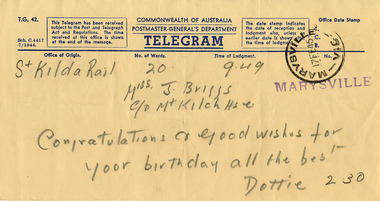
Ephemera (item) - Telegram, Commonwealth of Australia-Postmaster-General's Department, 17-02-1945
... Kitchener House in Marysville on the occasion of her birthday. The telegram was sent via the St. Kilda...Kitchener House in Marysville on the occasion of her birthday. The telegram was sent via the St. Kilda...Kitchener House in Marysville on the occasion of her birthday. The telegram was sent via the St. Kilda ...A telegram that was sent to a Miss J. Briggs c/of Mt. Kitchener House in Marysville on the occasion of her birthday. The telegram was sent via the St. Kilda Rail office on 17th February, 1945, and was from someone named Dottie.A telegram that was sent to a Miss J. Briggs c/of Mt. Kitchener House in Marysville on the occasion of her birthday. The telegram was sent via the St. Kilda Rail office on 17th February, 1945, and was from someone named Dottie.marysville, victoria, australia, mount kitchener house, mt kitchener house, kitchener house, accommodation, miss j. briggs, telegram, commonwealth of australia, postmaster-general department -
 City of Moorabbin Historical Society (Operating the Box Cottage Museum)
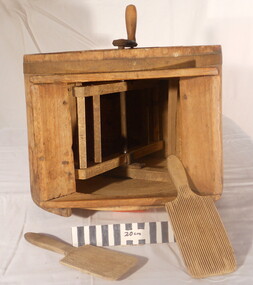
Functional object - Butter churn domestic, circa 1800s
... house cow to produce their milk supply. An unsigned note states it was used by a Chinese market-gardener’s family. From the mid 1800s into the1900s, there were numbers of Chinese market gardeners working in Bentleigh, Moorabbin, Mc Kinnon, and Cheltenham in the Shire of Moorabbin. After the sale of land following 'Dendy's Special Survey' 1841 many Chinese settlers rented allotments and established market gardens in the area and sold their produce to the increasing population of Melbourne at the markets in St Kilda and Melbourne. chinese melbourne brighton moorabbin butter cows milk pioneers dairy settlers fruit bentleigh markets mckinnon cheltenham vegetables dendy henry 'BUTTER CHURN' written in chalk undated, unsigned Circa late 1800s. ...Circa late 1800s. Wooden domestic butter-churn. This is a paddle churn, a barrel that contains a paddle, which is operated by a handle. The paddle churned the butter inside the container when the handle was turned. Early settlers had to be self sufficient, growing their own vegetables, making tools and clothing and usually had a house cow to produce their milk supply. An unsigned note states it was used by a Chinese market-gardener’s family. From the mid 1800s into the1900s, there were numbers of Chinese market gardeners working in Bentleigh, Moorabbin, Mc Kinnon, and Cheltenham in the Shire of Moorabbin. After the sale of land following 'Dendy's Special Survey' 1841 many Chinese settlers rented allotments and established market gardens in the area and sold their produce to the increasing population of Melbourne at the markets in St Kilda and Melbourne.Circa late 1800s. Wooden domestic butter-churn consisting of a wooden barrel with a lid and a crank that manually turned a paddle inside to separate the butter fat from the butter milk 'BUTTER CHURN' written in chalk undated, unsignedchinese, melbourne, brighton, moorabbin, butter, cows, milk, pioneers, dairy, settlers, fruit, bentleigh, markets, mckinnon, cheltenham, vegetables, dendy henry -
 City of Moorabbin Historical Society (Operating the Box Cottage Museum)
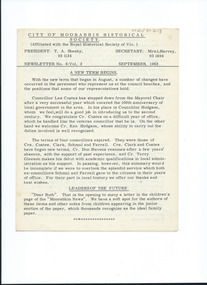
Newsletter - City of Moorabbin Historical Society No. 6 Vol. 2 September 1962, City of Moorabbin Historical Society Newsletter No. 6 Vol. 2 September 1962, 1962
... housed’ The Original Newsletters reflect the history and heritage of the former City of Moorabbin — derived from Mooroobin, ‘a resting place’ in the Bunurrung spoken language. In 1994, the City of Moorabbin was integrated into the Cities of Bayside, Glen Eira, Kingston and Monash Moorabbin City Council elections results are recorded. A description of Moorabbin c 1850 , the Gold Rush and installation of the Toll Gates in St Kilda...housed’ The Original Newsletters reflect the history and heritage of the former City of Moorabbin — derived from Mooroobin, ‘a resting place’ in the Bunurrung spoken language. In 1994, the City of Moorabbin was integrated into the Cities of Bayside, Glen Eira, Kingston and Monash Moorabbin City Council elections results are recorded. A description of Moorabbin c 1850 , the Gold Rush and installation of the Toll Gates in St Kilda ...This is Newsletter No. 6 Vol. 2 produced in September 1962 by Mr T. A. Sheehy President CMHS for members and visitors Topic ; Council Elect, Moorabbin1851 The Aims of the CMHS are ‘to record the history of the City, and register something of the Australian Atmosphere, which the necessary speed-up in post-world-war two (WW11) immigration has caused to be lost; to produce a magazine at regular intervals, featuring the work of pioneers and the changing Australian scene; to work constantly with a long range view towards building a hall where records and exhibits can be housed’ The Original Newsletters reflect the history and heritage of the former City of Moorabbin — derived from Mooroobin, ‘a resting place’ in the Bunurrung spoken language. In 1994, the City of Moorabbin was integrated into the Cities of Bayside, Glen Eira, Kingston and Monash Moorabbin City Council elections results are recorded. A description of Moorabbin c 1850 , the Gold Rush and installation of the Toll Gates in St Kilda Rd This is Newsletter No. 6 Vol. 2 of CMHS September 1962 CMHS obtained a Kingston City Council Community Grant 2016 for the digitization and preservation of these Original CMHS Newsletters commenced in 1961 Foolscap L34cm x W 21cm paper folded into 4 pagesCITY OF MOORABBIN HISTORICAL / SOCIETY / (Affiliated with the Royal Historical Society of Victoria ). President T.A.Sheehy …… Secretary Mrs L. Harvey……. NEWSLETTER No 6 Vol. 2 SEPTEMBER 1962 city of moorabbin historical society 1961, sheehy t.a., harvey l, cheltenham & district co-operative society limited, -
 City of Moorabbin Historical Society (Operating the Box Cottage Museum)
Photographs x 3 B/W Box Cottage Front House with Pine Trees at Ormond, Frieda in garden c 1921, c1921
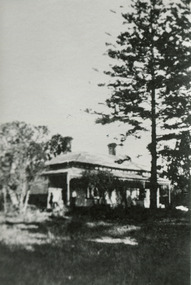
... St Kilda Road. After August’s death in 1951, his family continued the business ‘Rietman’s Landscaping Ltd.’, at Highett and Carrum. box william box elizabeth box cottage museum ormond dendy henry dendy's special survey brighton 1841 market gardeners seedling nurseries rietmann august rietman august rietmann frieda rietman frieda stonnington city town hall war memorials world war 1 1914-1918 rietman stefanie rennick stefanie francis stefanie rietman william rietman ray mountford paul malvern city town hall joyce park ormond rietman's landscaping pty ltd bay road highett macrobertson pty ltd coleraine soldier memorial 1921 Handwritten a) path to Front House c 1921; b) Pine trees and Front House c) Frieda in garden c1921 Photographs x 3 Black & White of the Front House with Pine Trees at Ormond and Frieda Rietmann in garden c1921 Photograph x 1 Colour Digital by Glen Lewis of these Pine Trees in situ Lewis Timber Pty Ltd Ormond 2020 Photographs x 3 B/W Box Cottage Front House with Pine Trees at Ormond, Frieda in garden c 1921 Amateur photographer ...In 1855 William and Elizabeth Box migrated from Sussex England to Melbourne and in 1868, 1869 purchased 2 x 10acre Lots in part of Henry Dendy's Special Survey Brighton 1841. A Cottage was already on the land and they established a flower garden and raised 13 children. In 1888 William sold one Lot and built a new Front House . William died 1902 and Elizabeth sold the land except 1 acre and retained both the Cottage and the Front House. After her death in 1914, her daughters Violet and Ada leased the Cottage and Front House to tenants until August Rietmann purchased the property in 1935. August Rietmann (1877-1951) of Lustdorf ,Switzerland, married Maria Frieda Oesschlager (2/2/1878- 22/7/1942) of Baden Baden, Germany on 6/8/1910. In August 8th 1915 August and his wife Frieda migrated to Melbourne, Victoria, Australia sailing on the Steam Ship ‘Osterley’ from Marseilles to Melbourne They leased Box Cottage, Ormond in 1917 and raised two children, Stefanie (1918 -2006) and William (1920- 1997). 1935 August purchased the property and the family used the Cottage during the day and slept in the Front House. August was a monumental mason, potter and sculptor, and was employed at Corbens Ltd Clifton Hill, to carve war memorials in Victoria post WW1 c 1915-1922. During the 1920's August set up his own business in pressed cement making pot plants, columns,paving slabs and lampstands. He continued to carve headstones and figures and took contract work for Artists eg Paul Mountford. He built a workshop in the Barn and used the Cottage for plaster moulding. His son William joined the business and and the family continued to use the site after August died in 1951. Rietmann Landscaping Ltd moved to Bay Road Highett in 1953 and later to Carrum. The land, containing the Box Cottage, was sold to Lewis Timber Pty Ltd in 1970 and Mr Lewis proposed that Moorabbin City Council should preserve the heritage Cottage. In 1984 the Cottage was dismantled and reconstructed in the adjacent Joyce Park. The Rietman family is an example of the diverse nationalities that lived and worked productively in Moorabbin Shire 1871–1933 , the City of Moorabbin 1934-1994 and continues today in the Cities of Glen Eira, Kingston, Bayside, and Monash. August, a sculptor and stone mason, was employed by Corben Pty Ltd Clifton Hill to carve WW1 Memorials before establishing his own successful masonry business in the Box Cottage during the latter 1920s. After becoming interested in pressed cement casting, he took on apprentices (1930s Depression) and among his products were garden furniture, pots and also street lamp standards, some of which were installed in St Kilda Road. After August’s death in 1951, his family continued the business ‘Rietman’s Landscaping Ltd.’, at Highett and Carrum.Photographs x 3 Black & White of the Front House with Pine Trees at Ormond and Frieda Rietmann in garden c1921 Photograph x 1 Colour Digital by Glen Lewis of these Pine Trees in situ Lewis Timber Pty Ltd Ormond 2020Handwritten a) path to Front House c 1921; b) Pine trees and Front House c) Frieda in garden c1921box william, box elizabeth, box cottage museum ormond, dendy henry, dendy's special survey brighton 1841, market gardeners, seedling nurseries, rietmann august, rietman august, rietmann frieda, rietman frieda, stonnington city town hall, war memorials, world war 1 1914-1918, rietman stefanie, rennick stefanie, francis stefanie, rietman william, rietman ray, mountford paul, malvern city town hall, joyce park ormond, rietman's landscaping pty ltd, bay road highett, macrobertson pty ltd, coleraine soldier memorial 1921 -
 Mission to Seafarers Victoria
Photograph - Digital Image, series, 05/04/2019
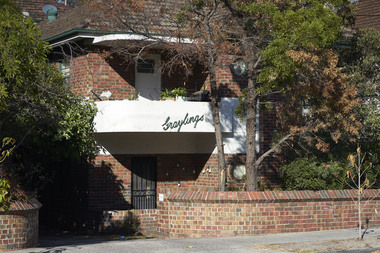
... house built on the estate. A brick building that may be what is now the Graylings apartments. According to electoral rolls, Ethel Godfrey and her sisters Frederica and Winifred lived at 95 Alma Road. Ferderica Godfrey, one of the earliest female student of Burnley Horticultural College (1899 or1900-1903) is thought to have created the landscaping of the Graylings gardens. graylings frederick race godfrey (1828-1910) ethel augusta godfrey alma road st kilda east burnley horticultural colleg frederica godfrey Rica godfrey rita godfrey Street signs in St Kilda East depicting the area surrounding the former Grayling estate owned by Frederick Race Godfrey until his death in 1910. ...Graylings estate was purchased by Frederick Race Godfrey around 1872 on return of a family trip to England. Reverend Gurney Goldsmith met Ethel Godfrey here while he was invited for lunch and rose her interest in the cause of the sailors. The Godfreys organised two picnics for sailors on their property, one in 1905 and one in 1910. The estate was auctioned and subdivided in 1910 after Fredrick's death. But early the same year he had a second house built on the estate. A brick building that may be what is now the Graylings apartments. According to electoral rolls, Ethel Godfrey and her sisters Frederica and Winifred lived at 95 Alma Road. Ferderica Godfrey, one of the earliest female student of Burnley Horticultural College (1899 or1900-1903) is thought to have created the landscaping of the Graylings gardens. Street signs in St Kilda East depicting the area surrounding the former Grayling estate owned by Frederick Race Godfrey until his death in 1910.graylings, frederick race godfrey (1828-1910), ethel augusta godfrey, alma road, st kilda east, burnley horticultural colleg, frederica godfrey, rica godfrey, rita godfrey -
Mission to Seafarers Victoria
Letter - Correspondence, 27/08 /1951
... It is addressed to Mrs K Hayes, 14 Fitzroy Street, St Kilda, Victoria, Australia. The return address is Allan Quinn, C/- Australia House, The Strand, London Oslo. ...It is addressed to Mrs K Hayes, 14 Fitzroy Street, St Kilda, Victoria, Australia. The return address is Allan Quinn, C/- Australia House, The Strand, London Oslo. ...Allan writes that he and Alette are unofficially engaged. He is returning to London in two weeks time. He asks his mother to send a food parcel to London and to include butter, eggs and tinned meat. He also asks her to send a parcel of currants and sultanas to the woman Alette lives with as she has been very kind..Quinn CollectionA self-folding letter written in black ink (0882.a) headed Oslo and dated 27/08/51. It is addressed to Mrs K Hayes, 14 Fitzroy Street, St Kilda, Victoria, Australia. The return address is Allan Quinn, C/- Australia House, The Strand, London Oslo. letters-from-abroad, allan quinn, norway, oslo, alette andersen -
Mission to Seafarers Victoria
Letter - Correspondence, 17/11/1951
... St Kilda, Victoria, Australia. The postmark is partly obscured but appears to be Paddington W 2. The return address is Allan Quinn, C/- Aust. House...St Kilda, Victoria, Australia. The postmark is partly obscured but appears to be Paddington W 2. The return address is Allan Quinn, C/- Aust. House ...Allan mentions that they are going to the Royal Performance Concert at the Festival Hall and that Alette had seen the Queen opening Parliament Quinn CollectionA pale blue self-folding letter (0889.a1) written in green ink, headed London and dated 17/11/51.. It is addressed to Mrs K Hayes, 14 Fitzroy Street, St Kilda, Victoria, Australia. The postmark is partly obscured but appears to be Paddington W 2. The return address is Allan Quinn, C/- Aust. House, London. Below this is written Fru. Andersen, Gamlegatan, Brumundoal Street, Norway.Letter commences "My dear Mum,..." and concludes "...from us both, Allan and Alette."letters-from-abroad, allan quinn, alette andersen, london-uk
