
Showing 183 items matching " superintendent's office"
-
 Glenelg Shire Council Cultural Collection
Document - Memo to superintendent's office - Hamilton Police Station - 1913, 10/10/1913
... Memo to superintendent's office - Hamilton Police Station - 1913...Handwritten memo to superintendent's office, Hamilton Police Station, from Superintendent Gleeson, Melbourne, re an escaped prisoner....Document Memo to superintendent's office - Hamilton Police Station - 1913 ...Hamilton Police Station records.Handwritten memo to superintendent's office, Hamilton Police Station, from Superintendent Gleeson, Melbourne, re an escaped prisoner. -
Moorabbin Air Museum
Administrative record (item) - CAC Correspondence Relating to the Ikara Project for the RAN - Ex. 200/220 Project 9.4/9.5: Secret - G.24, Notes on Meeting Held Supply Superintendent's Office 11/10/65 Present Messers Mann (Chairman), Smith Archer, Collins, Wall, Bisas, Hallett and Nougher - to discuss procedures
... Notes on Meeting Held Supply Superintendent's Office 11/10/65 Present Messers Mann (Chairman), Smith Archer, Collins, Wall, Bisas, Hallett and Nougher - to discuss procedures...Tan hard-cover folder bound with metal clasp Notes on Meeting Held Supply Superintendent's Office 11/10/65 Present Messers Mann (Chairman), Smith Archer, Collins, Wall, Bisas, Hallett and Nougher - to discuss procedures Administrative record CAC Correspondence Relating to the Ikara Project for the RAN - Ex. 200/220 Project 9.4/9.5: Secret - G.24 ... -
 Bendigo Historical Society Inc.
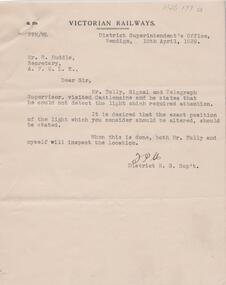
Document - BADHAM COLLECTION: VICTORIAN RAILWAYS LETTER TO R. HUDDLE
... ... Superintendent's Office...Huddle, Secretary, A.F.U.L.E, on Victorian Railways letterhead, and written from the District Superintendent's Office, Bendigo, dated from 4th. February through to 18th. ...Victorian Railways Superintendent's Office McKerlie Bendigo Document: 2 typed letters and 2 typed memos relating to installation of a station light at Castlemaine. ...Document: 2 typed letters and 2 typed memos relating to installation of a station light at Castlemaine. Letters are addressed to R. Huddle, Secretary, A.F.U.L.E, on Victorian Railways letterhead, and written from the District Superintendent's Office, Bendigo, dated from 4th. February through to 18th. April 1939. Staple removed from documents. Handwritten note on memo dated 18th. Feb. 1939, by R. Huddle, stating that 'Mr. McKerlie will interview you concerning this matter'.organisation, government, victorian railways, huddle, r., victorian railways, superintendent's office, mckerlie, bendigo -
Glenelg Shire Council Cultural Collection
Administrative record - Police Report - sheep theft, Hamilton, 1912, 07/06/1912
... Typed copy of crime report from Police Superintendent's office, Hamilton - sheep stealing...He retained these documents and donated them to the Cultural Collection. police report sheep theft livestock theft Hamilton Typed copy of crime report from Police Superintendent's office, Hamilton - sheep stealing Administrative record Police Report - sheep theft, Hamilton, 1912 ...Barry was a police officer stationed at Portland 1969 - 71. Stables were to be demolished. he was instructed to clean them out, and take the contents to the tip. He retained these documents and donated them to the Cultural Collection.Typed copy of crime report from Police Superintendent's office, Hamilton - sheep stealingpolice report, sheep theft, livestock theft, hamilton -
 Flagstaff Hill Maritime Museum and Village
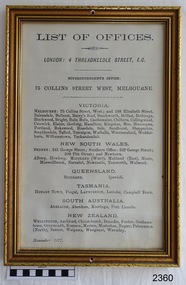
Document - Bank notice, List of Offices, ca Nov. 1877
... It refers to the Superintendent's Office address at 75 Collins Street West, Melbourne and is dated November 1877. ...Text includes: "LONDON: 4 THREADNEEDLE STREET, E.C." "SUPERINTENDENT'S OFFICE: / 75 COLLINS STREET WEST, MELBOURNE" "Warrnambool" " November 1877" ...It refers to the Superintendent's Office address at 75 Collins Street West, Melbourne and is dated November 1877. ...The addresses given on the List for the London and Melbourne offices have connected the document to the Bank of Australasia. The List is dated November 1877 and shows the number and the location of all of the branches of the Bank at that point in time., a total of 77. - Victoria 35, New South Wales 14, Queensland 2, Tasmania 5, South Australia 5, New Zealand 16 Copies of the notice would have been displayed in all branches of the bank in both Australia and New Zealand to inform customers and perhaps impress them too with a large number of locations and the reference to the bank's connection with London. This document gives information on all bank offices throughout Australia and New Zealand. It refers to the Superintendent's Office address at 75 Collins Street West, Melbourne and is dated November 1877. This places the document at the time just before the new Melbourne office opened on the corner of Collins Street and Queen's Street in 1879. The Bank of Australasia was incorporated by Royal Charter of England in March 1834. It came to Australia on 14th December 1835, opening in Sydney. The Acting Superintendent of the Bank of Australasia in Sydney at that time was David Charters McArthur. He was Superintendent from 1867-to 1876. The Melbourne branch of the Bank of Australasia opened on 28th August 1838 in a two-roomed brick cottage on the north side of Little Collins Street. Two huge mastiff dogs were kept in the backyard and let loose at night to guard the bank. The government also provided an armed military sentinel. Due to the bank's rapid growth, a new building for the Melbourne branch was opened in 1840 at 75 Collins Street West. By 1879 the bank had been upgraded to a magnificent two-storey building on the corners of Collins and Queens Streets, with the entry on Collins Street. In 1951 the Bank of Australasia amalgamated with the Union Bank to form the Australia and New Zealand Bank, now known as the ANZ. Then in 1970, the ANZ merged with both the ES&A and the London Bank of Australia to form the ANZ Banking Group Limited. The ANZ Banking Group Ltd kindly donated a variety of historic items from the Bank of Australasia. BANK of AUSTRALASIA, WARRNAMBOOL – In 1854 Warrnambool had two banks, the Union Back and the Bank of Australasia. Later, completely different bank businesses opened; in 1867 the National Bank of Australasia, then in 1875 the Colonial Bank of Australasia. The original Bank of Australasia was established in Warrnambool in July 1854, and operated from a leased cottage on Merri Street, close to Liebig Street. The bank bought a stone building previously erected by drapers Cramond & Dickson on the corner of Timor and Gibson Streets. Samuel Hannaford was a teller and then Manager at the Warrnambool branch from 1855 to 1856. Warrnambool’s Council chose the Bank of Australasia as its bank 1856-57. In 1859 Roberts & Co. was awarded the contract to build the new Bank of Australasia branch for the sum of £3,000. The land was on a sand hill on the northeast corner of Timor and Kepler Streets and had been bought in 1855 from investor James Cust. The new building opened on May 21, 1860. The bank continued to operate there until 1951 when it merged with the Union Bank to form the ANZ Bank, which continued operating from its Liebig Street building. Warrnambool City Council purchased the former Bank of Australasia building in 1971 and renovated it, then on 3rd December 1973 it was officially opened as the Art Gallery by Cr. Harold Stephenson and Gallery Director John Welsh. The Gallery transferred to the purpose-built building in Liebig Street in 1986 and the old bank building is now the Gallery club. The List of Offices of the Bank of Australasia has early Australian historical significance through its association with the Bank, which was established in 1834 by Royal Charter and opened in Sydney, Australia, in Sydney in 1835. The List is significant for showing the number and location of all of the Offices of the Bank of Australia in November 1877. This shows that Victoria had 45 percent of all Offices. The framed document is locally significant for its association with the Bank of Australasia, Warrnambool's first bank, established in 1854. The bank continued to operate until the organisation's merger in 1951. It became the ANZ Bank, which is still in operation today. The Bank was an integral part of the establishment and growth of commerce in Colonial Warrnambool and throughout Australia.Document in a decorative gilt frame. Titled List of Bank Offices and dated November 1877, facsimile. Offices include London, and a variety of offices in Victoria, New South Wales, Queensland, Tasmania, South Australia and New Zealand. Round holes in the centre top and bottom of the frame. Text includes: "LONDON: 4 THREADNEEDLE STREET, E.C." "SUPERINTENDENT'S OFFICE: / 75 COLLINS STREET WEST, MELBOURNE" "Warrnambool" " November 1877" flagstaff hill, warrnambool, bank of australasia 1877, branches of bank of australasia 1877, banks in australia 1877, commerce 1877, shipwreck-coast, document, bank document, flagstaff hill maritime museum & village, bank of australasia, 1877, branches in australia, bank of london, offices in australia, offices in new zealand, commerce, banking, finance, shipwrecked coast, flagstaff hill maritime museum, maritime museum, shipwreck coast, flagstaff hill maritime village, great ocean road, boa, union bank, australia & new zealand bank, anz bank, david charters mcarthur, d c mcarthur, sydney, new south wales, currency, banknote, legal tender, list of bank offices -
 Bendigo Historical Society Inc.
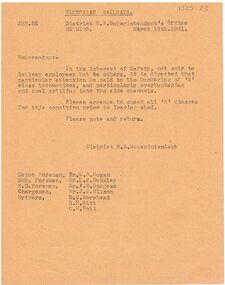
Document - BADHAM COLLECTION: VICTORIAN RAILWAYS MEMO 16.3.1961
... Typed on brown paper, ref JHB.BS District R.S. Superintendent's Office Bendigo 16.3.1961. Memo of bunkering of 'R' class locomotives....Typed on brown paper, ref JHB.BS District R.S. Superintendent's Office Bendigo 16.3.1961. Memo of bunkering of 'R' class locomotives. ...Victorian Railways memo 16.3.1961. Typed on brown paper, ref JHB.BS District R.S. Superintendent's Office Bendigo 16.3.1961. Memo of bunkering of 'R' class locomotives.document, memo, railway, victorian railway memo -
 Kew Historical Society Inc
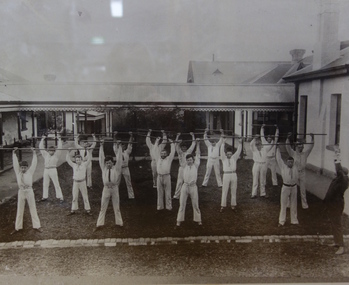
Photograph - Boys Exercising, Kew Cottages, c.1900
... Boys of the Cottages. The Superintendent's Office, right (until 1973). Wards 12 and 13 left."...Boys of the Cottages. The Superintendent's Office, right (until 1973). Wards 12 and 13 left." ...The Children's Cottages at Kew were first opened in 1887 as the "Idiot Ward" of Kew Asylum. Located on the asylum's grounds, the children's cottages were established to provide separate accommodation for child inmates who had previously been housed with adult patients. Although the Cottages only admitted children as patients, many of those children remained in residence at the Cottages as adults. The function of the institution was to provide accommodation and educational instruction for intellectually disabled children. Some Wards of the State and other various "difficult" children were also admitted.Shortly after opening, the Idiot Ward began functioning separately from the Kew Lunatic Asylum, and became known as the Kew Idiot Asylum from 1887 until c.1929. From 1929 they have been known as the "Children's Cottages, Kew" or alternatively "Kew Cottages Training Centre". The institution was finally closed in July 2008. [Source: Wikipedia, 2016]One of a series of framed historical photographs of the Kew Cottages that once formed part of the collection of the Kew Cottages Historical Society, founded by Dr. Cliff Judge and Fran Van Brummelen in the 1980s. The set contains both copies of originals in other collections such as the Public Record Office Victoria and photographs taken by Dr Judge for his books on intellectual disability in Victoria. The significance of the set of framed photographs is that they provide a curated collection of images of the development of the Cottages over a one hundred year period.Framed photograph, forming part of the Kew Cottages collection, donated by Kew Cottages Historical Society 1987-1993 in 1993. Dr. Judge was a consultant psychiatrist at the cottages for 14 years, as well as an author and vocal advocate for the intellectually disabled and their families."Kew Cottages - 1973 [sic] Boys exercising. Boys of the Cottages. The Superintendent's Office, right (until 1973). Wards 12 and 13 left."kew cottages, dr cliff judge, kew cottages historical society 1987-1993 -
 Glimpses of Old Melbourne - William Orr Gray Family of Brighton
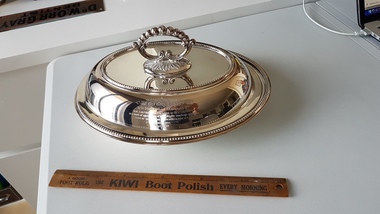
Silver Dish, Walker & Hall, Sterling Silver Serving Dish with lid, c.1905
... LDS DDS by the students and graduates of Australian College of Dentistry as a mark of appreciation of his teachings during his term of office as Superintendent 1901-1906 April 6th 1906...LDS DDS by the students and graduates of Australian College of Dentistry as a mark of appreciation of his teachings during his term of office as Superintendent 1901-1906 April 6th 1906...LDS DDS by the students and graduates of Australian College of Dentistry as a mark of appreciation of his teachings during his term of office as Superintendent 1901-1906 April 6th 1906 Presented to W.Orr Gray. ...Presented to W.Orr Gray. LDS DDS by the students and graduates of Australian College of Dentistry as a mark of appreciation of his teachings during his term of office as Superintendent 1901-1906 April 6th 1906Presented to W.Orr Gray. LDS DDS by the students and graduates of Australian College of Dentistry as a mark of appreciation of his teachings during his term of office as Superintendent 1901-1906 April 6th 1906. He was awarded a Doctorate of Dental Surgery in the US, after studying in Auckland, Edinburgh and Pennsylvania, in the period 1897 to 1900. Whilst at the Melbourne Dental Hospital and College he was a key person in the Odontological Society where he contributed many research papers and was instrumental in the establishment of the Dental School of the University of Melbourne.Oval Sterling Silver serving dish 30 cm length and 20.5 cm wide with decorative handle on the lidPresented to W.Orr Gray. LDS DDS by the students and graduates of Australian College of Dentistry as a mark of appreciation of his teachings during his term of office as Superintendent 1901-1906 April 6th 1906william orr gray, melbourne dental college, presentation, silver salver, university of melbourne -
 Melbourne Tram Museum
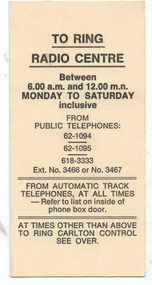
Document, Melbourne & Metropolitan Tramways Board (MMTB), "To Ring Radio Centre", c1970 & 80s
... Third copy has District Managers, District Superintendent numbers and Revenue office with red suffixes...Third copy has District Managers, District Superintendent numbers and Revenue office with red suffixes Demonstrates a tram crew information card regarding contact phone numbers. mmtb Radio Centre Carlton Control tramways Document - printed card on manila paper - set of 3 "To Ring Radio Centre" Document Melbourne & Metropolitan Tramways Board (MMTB) ...Information card for tram crews about the phone numbers to ring, either Radio Centre or Carlton Control (electrical) in the event if an incident. Gives the phone numbers, hours, and a public number. Has both 6 digit and 7 digit numbers. Second cards for Carlton Control and Fleet Operations Centre and district mangers/superintendents. Third copy has District Managers, District Superintendent numbers and Revenue office with red suffixesDemonstrates a tram crew information card regarding contact phone numbers.Document - printed card on manila paper - set of 3mmtb, radio centre, carlton control, tramways -
 Wodonga & District Historical Society Inc
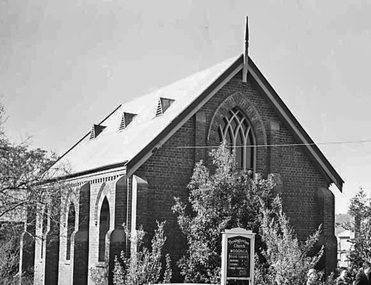
Photograph - First Presbyterian Church, Wodonga
... Mr John Whan was a Founding Member of the Church and was appointed Sunday School Superintendent, an office which he held for 46 years, rendering extensive and valued service to the church and congregation. ...Mr John Whan was a Founding Member of the Church and was appointed Sunday School Superintendent, an office which he held for 46 years, rendering extensive and valued service to the church and congregation. ...Members of the Presbyterian faith were among the first settlers in the North-east of Victoria, and in the year 1842 the Presbytery of Melbourne requested the Rev. Peter Gunn, Minister of the Gaelic Church, Melbourne, to visit Presbyterians along the Murray River. This was the first of a series of annual visits, and was of a missionary nature. In May 1851, the Rev. David Hunter Ballantyne was appointed to the Wodonga district based out of Albury. In 1860 the Presbytery of Beechworth was formed, and from it two large presbyteries have grown - Wagga Wagga and Beechworth. In the early days the services at Wodonga were held in the old court house, which still stands. Wodonga Presbyterian Church continued as part of the Parish of Albury until the end of 1887, when it was placed under the administration of the Session of the Beechworth Church, with a home missionary in charge. Mr William Cooper was placed in charge for the first months, then Mr William Smith, a city missionary who had recently arrived from Scotland, was appointed. Mr Smith conducted a cordage factory at Stonleigh. He remained as missionary in charge for the next 10 years, and in that time the church steadily progressed. Plans were made for the erection of the building which now stands in High Street, Wodonga. Mr John Whan was a Founding Member of the Church and was appointed Sunday School Superintendent, an office which he held for 46 years, rendering extensive and valued service to the church and congregation. With a growing congregation and realising the challenges presented to the Church by changing conditions, land for a new church was sought. In September 1950 property was purchased in Nilmar Avenue in Wodonga and the new Presbyterian Church St Stephens became their new home. With the amalgamation of the Presbyterian and Methodist Churches, the new Church became the Uniting Church. The original Presbyterian Church was later sold to the Free Serbian Orthodox Church.These photographs are significant because they provide evidence of the changing nature of religious worship and groups in Wodonga.A collection of black and white photographic images depicting the first Presbyterian Church at Wodonga. The Church was later taken over by the Free Serbian Orthodox Church.presbyterian church, free serbian orthodox church, wodonga churches -
 Federation University Historical Collection
Booklet - Annual Report and Calendar, Ballarat School of Mines Annual Report and Calendar, 1896
... office bearers...professors and lecturers...report of the superintendent...Associateship of The School, Calendar for 1896, Certificates Granted by Education Department 1894, Certificates Issued by The School 1895, Certificates Issued Prior to 1895, Certificates Issued by Education Department 1895, Examiners, Examination Fees, Fees, Honorary Correspondents, Life Governors, Meteorological Observations, Number of Students attended The School, Office Bearers, Professors and Lecturers, Report of the Superintendent of Laboratories, Report of the Professor of Mineralogy, Geology and Botany, Report of the Professor of Engineering, Report of the Lecturer on Mathematics, Report of the Instructor in Engineering Drawing, Report of the Lecturer on Electricity, Report of the Teacher of Drawing, Report of the Lecturer in Veterinary Science, Statement of Receipts and Expenditure for year 1895, Statistics - Student attending Lectures, Subscriptions and Donations, Subjects Included in Regulations Technical Schools, Time Table...Associateship of The School, Calendar for 1896, Certificates Granted by Education Department 1894, Certificates Issued by The School 1895, Certificates Issued Prior to 1895, Certificates Issued by Education Department 1895, Examiners, Examination Fees, Fees, Honorary Correspondents, Life Governors, Meteorological Observations, Number of Students attended The School, Office Bearers, Professors and Lecturers, Report of the Superintendent of Laboratories, Report of the Professor of Mineralogy, Geology and Botany, Report of the Professor of Engineering, Report of the Lecturer on Mathematics, Report of the Instructor in Engineering Drawing, Report of the Lecturer on Electricity, Report of the Teacher of Drawing, Report of the Lecturer in Veterinary Science, Statement of Receipts and Expenditure for year 1895, Statistics - Student attending Lectures, Subscriptions and Donations, Subjects Included in Regulations Technical Schools, Time Table Ballarat School of Mines Annual Report and Calendar, 1896 Booklet Annual Report and Calendar Berry, Anderson and Co., Printers, Bookbinders, &., ...The Ballarat School of Mines was the first Technical School on Australia..1) Ballarat School of Mines Annual Report .2) Ballarat School of Mines calendar The Ballarat School of Mines Calendar and Annual Report 1896. Associateship of The School, Calendar for 1896, Certificates Granted by Education Department 1894, Certificates Issued by The School 1895, Certificates Issued Prior to 1895, Certificates Issued by Education Department 1895, Examiners, Examination Fees, Fees, Honorary Correspondents, Life Governors, Meteorological Observations, Number of Students attended The School, Office Bearers, Professors and Lecturers, Report of the Superintendent of Laboratories, Report of the Professor of Mineralogy, Geology and Botany, Report of the Professor of Engineering, Report of the Lecturer on Mathematics, Report of the Instructor in Engineering Drawing, Report of the Lecturer on Electricity, Report of the Teacher of Drawing, Report of the Lecturer in Veterinary Science, Statement of Receipts and Expenditure for year 1895, Statistics - Student attending Lectures, Subscriptions and Donations, Subjects Included in Regulations Technical Schools, Time Tableballarat school of mines, examiners, examination fees, fees, honorary correspondents, life governors, meteorological observations, number of students attended the school, office bearers, professors and lecturers, report of the superintendent of laboratories, report of the professor of mineralogy, geology and botany, report of the professor of engineering, report of the lecturer on mathematics, report of the instructor in engineering drawing, report of the lecturer on electricity, report of the teacher of drawing, report of the lecturer in veterinary science, statement of receipts and expenditure for year 1895, statistics - student attending lectures, subscriptions and donations, subjects included in regulations technical schools, time table, annual report, calendar, andrew anderson j.p. - president, hon. r. t. vale - vice president, r. denham pinnock - vice president, the hon. sir w. j. clarke - trustee, the hon. john warrington rogers - trustee, the right reverend samuel thornton - trustee, andrew anderson - trustee, james millhinch - trustee, james oddie - trustee, the hon. henry cuthbert - honorary solicitor, r. g. middleton - honorary treasurer, charles kent - auditor, fred. j. martell - director and registrar, professor alf. mica smith - chemistry, metallurgy, natural philosophy, professor purdie - geology, mineralogy, principles of mining, professor g. j. dawbarn - mine and land surveying, mining mechanics, hydraulics, civil engineering, applied mechanics, j. rowe - practical mining, w. huey steele - electrical technology, electricity and magnetism, d. walker - chemistry and natural philosophy, w. e. bennett - mathematics, henry j. hall - freehand and perspective drawing, a. e. c. kerr - mechanical drawing (machine construction and design), j. f. usher - paleontology, zoology, materia medica, professor purdie - botany, george clegg - building construction, l. hart - photography, h. g. a. brown - carpentry, r. e. weir - veterinary science, daniel walker, henry cuthbert, james millhinch, jams oddie, j.f. usher -
 Federation University Historical Collection
Booklet, Charles Boyd, The School of Mines Ballaarat Annual Report, 1882, 1882
... Francis Ormond MLC, Extracts from Visitors' Book, Fees, Form of Bequest, Life Governors, Museum open to Visitors, Office Bearers, Paper of Particulars, Report of the Curator of the Museum and Library (with plans), Report of the Superintendent of Laboratories, Report of the Lecturer in Telegraphy, Report of the Lecturer in Mechanical Engineering, Statement of Receipts and Expenditure for the year 1881, Subjects and Lecturers, Subjects and Examiners, Subscriptions and Donations from 1 January to 31 December 1881, The Lignite Deposit at Skipton (with Section and Plan)...Francis Ormond MLC, Extracts from Visitors' Book, Fees, Form of Bequest, Life Governors, Museum open to Visitors, Office Bearers, Paper of Particulars, Report of the Curator of the Museum and Library (with plans), Report of the Superintendent of Laboratories, Report of the Lecturer in Telegraphy, Report of the Lecturer in Mechanical Engineering, Statement of Receipts and Expenditure for the year 1881, Subjects and Lecturers, Subjects and Examiners, Subscriptions and Donations from 1 January to 31 December 1881, The Lignite Deposit at Skipton (with Section and Plan) ballarat school of mines coal plan ballarat school of mines botanical gardens ballarat school of mines museum museum annual report james oddie w. p. bechervaise s. e. friggis f. j. martell w. h. nicholls, e. i. rosenblum h. r. caselli thomas mann theos. williams f. m. krause alf. mica smith walter d. campbell w. h. shaw charles kent andw. berry robert adam wm. lant carpenter henry parkinson h. b. de la poer wall w. h. brockenshire arthur parker c. davies simon richards c. r. blackett david jones wilberforce dyke kr. r. krauel duncan love william ralph heaton edward dowling octavius vaughan morgan william denton e. h. grimwade james hunter the honble. francis ormond ferdinand krause A.A. ...The School of Mines Ballaarat Annual Report 24 January 1882, Additional Examination Statute, Certificates Granted by Council, Copy of letter received from the Honble. Francis Ormond MLC, Extracts from Visitors' Book, Fees, Form of Bequest, Life Governors, Museum open to Visitors, Office Bearers, Paper of Particulars, Report of the Curator of the Museum and Library (with plans), Report of the Superintendent of Laboratories, Report of the Lecturer in Telegraphy, Report of the Lecturer in Mechanical Engineering, Statement of Receipts and Expenditure for the year 1881, Subjects and Lecturers, Subjects and Examiners, Subscriptions and Donations from 1 January to 31 December 1881, The Lignite Deposit at Skipton (with Section and Plan)Ballarat School of Mines Annual Report. Pale brown booklet of 64 pages. A plan of the Ballarat School of Mines shows the position of the Botanical Gardens, and the Ballarat School of Mines Museum. Geological Sketch Map of Country in the Neighbourhood of Skipton and Plan showing site of Coal Discovery. Skipton Coal Discovery - Section of Windlass Shaft. .2) is a leatherbound copyballarat school of mines, coal, plan, ballarat school of mines botanical gardens, ballarat school of mines museum, museum, annual report, james oddie, w. p. bechervaise, s. e. friggis, f. j. martell, w. h. nicholls,, e. i. rosenblum, h. r. caselli, thomas mann, theos. williams, f. m. krause, alf. mica smith, walter d. campbell, w. h. shaw, charles kent, andw. berry, robert adam, wm. lant carpenter, henry parkinson, h. b. de la poer wall, w. h. brockenshire, arthur parker, c. davies, simon richards, c. r. blackett, david jones, wilberforce dyke, kr. r. krauel, duncan love, william ralph heaton, edward dowling, octavius vaughan morgan, william denton, e. h. grimwade, james hunter, the honble. francis ormond, ferdinand krause, a.a. buley, j. cosmo newberry, w.c. kernot, john lewis, j.m. bickett, james bickett, fees, annie barnett, annette budden, isabel clinton, john dimsey, agnes pobjoy, charlotte shaw, bernard o'dowd, bernard patrick o'dowd, josiah wasley, ferdinand von mueller, william kernot, john lynch, william henderson, henry richards caselli, w.p. berchervaise, e.i. rosenblum, w.h. nicholls, lignate, samuel figgis, mary drury, w. longley, botanical reserve, botanical gardens, francis ormond, george russell, william foster stawell, w.j. clarke, rivett henry bland, john warrington rogers, j. lonie, s.e. figgis, r.f. hudson, w. robertson, e.l. rosenblum, theophilus williams, andrew berry, henry sutton, h. rosales, state school classes, calcutta international exhibition, examinations, h.b.m ship bounty, certicates, walter charles kernot, william tunbridge, mary skelton, cartherine moran, mary rose usher, margaret ellen brophy, william burbridge, andrea tuxen, elizabeth curnow, francis campigi, james s. morrison, arthur hogue -
 Flagstaff Hill Maritime Museum and Village
Certificate - Certificates of Discharge, Commonwealth Governments Shipping Offices, 1895 - 1919
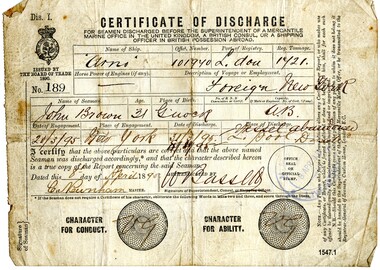
... Office (Government Gazette, 29 March 1859). In 1869, the names of Shipping Offices were changed to Mercantile Marine Offices and Shipping Masters to Superintendents of Mercantile Marine Offices. ..."CERTIFICATE OF DISCHARGE" "FOR SEAMEN DISCHARGED BEFORE THE SUPERINTENDENT OF A MERCANTILE / MARINE OFFICE IN THE UNITED KINGDOM, A BRITISH CONSUL, OR A SHIPPING/OFFICER IN BRITISH POSSESSION ABROAD" Headings filled out include - "Name of Ship", "Official number", "Reg. ...Office (Government Gazette, 29 March 1859). In 1869, the names of Shipping Offices were changed to Mercantile Marine Offices and Shipping Masters to Superintendents of Mercantile Marine Offices. ...The following information is taken from the PROV (Public Records Office of Victoria) website - "In Victoria regulation of the engagement and discharge of seamen was initially subject to New South Wales legislation. An Act to amend and consolidate the Laws relating to Seamen in the Merchant Service of the Colony of New South Wales, and for keeping a Register of Seamen belonging to Ships registered in the said Colony (13 Vic., No.28) of 1849 introduced requirements for ships masters to enter into written agreements with seamen engaged by them as crew, specifying wages and provisions, the capacity in which they would serve and the nature of the voyage. It also required masters to issue to seamen certificates of discharge upon their discharge or upon payment of their wages. The 1849 Act applied only to ships registered in the Colony. In 1854 the Imperial Merchant Shipping Act was passed, which had application to all British ships except those registered in the Colony. Consolidation of the separate laws occured with the passing of the Seamen Statute 1865 (28 Vic.,No.245) which adopted Part III of the Merchant Shipping Act 1854 (17 & 18 Vic, C 104) (see Parliamentary Debates, Session 1, 22 February 1865). The Imperial Act, like the New South Wales Act before it, required the master or owner of every British ship, over a certain tonnage, to enter a written agreement for the engagement and discharge of seamen. The Articles of Agreement (VPRS 566) were to be made at the start of a particular voyage, although running agreements were able to be made for a defined period in which short and frequent voyages would be made. At the end of the voyage the discharge and release of the crew was recorded. The date, place and reason for leaving the ship, and the balance of wages paid upon discharge, were recorded in the articles of agreement. Under the Merchant Shipping Act 1854 each seaman discharged was also to be issued with a certificate of discharge (this series) giving particulars of the ship, period of service and the seamans capacity, ability and conduct. No seaman could be engaged to work on a ship unless he delivered to the person engaging him a discharge from his last ship or a permit to sign articles. In the articles of agreement and in the Release Books (VPRS 945) the crew were required to sign their release of the ship, master or owner from any claims to wages or otherwise in respect of the voyage. In the release books the master also signed a release of the crew from all claims. It appears that in Victoria licensed shipping agents were initially able to facilitate the engagement and discharge of seamen. From 1 April 1859, however, the function was to be performed entirely in the Government Shipping Office (Government Gazette, 29 March 1859). In 1869, the names of Shipping Offices were changed to Mercantile Marine Offices and Shipping Masters to Superintendents of Mercantile Marine Offices. The role of the Shipping Office/Mercantile Marine Office was to facilitate and oversee the engagement and discharge of seamen and apprentices to the sea service. The facilities provided were subject to fees payable by ships masters. The Offices were located within the Department of Trade and Customs (VA 606) until 1901 and then within the Chief Secretarys Department (VA 475) to 1922. Responsibility for attesting master and seamen engagements and discharges transferred to the Commonwealth under Parts II and III of the Commonwealth Navigation Act 1912, which became effective on 1 March 1922 when the Navigation (Master and Seamen) Regulations were passed. Seamens Discharge Certificates 1882 to 1922 This series comprises counterfoils (or stubs) of Certificates of Discharge issued to seamen upon their discharge or upon payment of their wages between 1882 and 1922. The Certificates were signed by the Master of the ship and authorised by the Mercantile Marine Office. The counterfoils record details about the ships, the birthplaces and ages of the seamen, the dates of engagement and discharge, and the capacity, conduct and ability of the seamen." This particular set of Certificates of Discharge belonged to a seaman called John F. Brown. Little is known about him but information taken from the cerificates tell us that John F. Brown was born in Greenock, Scotland in about 1868 and that his rank was "Able Bodied Seaman". All of his cerificates describe his conduct and ability as "V. G. (Very Good). During the period from April 1895 to August 1908, he worked on about twenty two different ships - sailing on several Liverpool to New York voyages in 1895 and 1896. In September 1896 he began working on Australian coastal steamers - travelling up and down the coast of Australia (between the ports of Melbourne, Sydney, Newcastle, Adelaide and Brisbane) until August 1908. There is an eleven year gap in his records and his final certificate was issued in September 1919. Some of the ships he worked on include the "Arno", "Melbourne", "Burrumbeet", "Kalgoorlie", "New Guinea", "Buninyong", "Pilbarra", "Oakworth", "Cintra", "Lady Musgrave", "Dawn", "Moorabool", "Colac", "Ramazon", 'Brisbane", "City of Lincoln", "Peregrine" "Mareeba" and "Wear".Theses certificates are significant examples of the legal paperwork generated by the British and Australian governments in the day to day regulation of working seamen in the late 19th and early 20th centuries. They are also significant as they document the career of a working seaman at that time.This is a set of twenty three "Certificates of Discharge" issued to seaman John F. Brown primarily between the years 1895 and 1908 (although the last one is dated 1919). They have been issued by the Shipping Masters at U.K. Mercantile Marine Office (abroad), the Port of Melbourne Victoria, the Port of Sydney N.S.W., the Port of Newcastle N.S.W. and the Port of Brisbane. They are all of a similar size and layout with slight differences in their crests (depending on the port of issue) and the fonts used over the preceding years. They give a good overview into the career of John F. Brown as they list his place and date of birth, his voyages (places of engagement and discharge and the dates of the voyages), the ships he served on (with their tonnage, horsepower, official number and place of registry) plus his ranking, conduct and ability. All certificates are signed by the Master and authenticated by the Shipping Officer. Eight of the certificates have a purple circular stamp on the back with "S. F. 19 SEPT 1908 GLASGOW""CERTIFICATE OF DISCHARGE" "FOR SEAMEN DISCHARGED BEFORE THE SUPERINTENDENT OF A MERCANTILE / MARINE OFFICE IN THE UNITED KINGDOM, A BRITISH CONSUL, OR A SHIPPING/OFFICER IN BRITISH POSSESSION ABROAD" Headings filled out include - "Name of Ship", "Official number", "Reg. Tonnage", "Horse power of Engine (if any)", "Description of Voyage or Employment", "Name of Seaman", "Age", "Place of Birth", "No. of R.N.R. Commission or Certificate", "Capacity. If mate or Engineer. No of certificate (if any)", "Date of Engagement", "Place of Engagement", Date of Discharge", "Place of Discharge", "I certify that the above particulars are correct and that the abovenamed Seaman was discharged accordingly* and that the character described herein is a true copy of the report concerning the said seaman." "Dated this .... day of ... " , "Authenticated by ...." "Character for Conduct" , "Character for Ability".flagstaff hill, warrnambool, shipwrecked-coast, flagstaff-hill, flagstaff-hill-maritime-museum, maritime-museum, shipwreck-coast, flagstaff-hill-maritime-village, certificate of discharge for j.f.brown, certificate of discharge, certificate, discharge, discharge for j.f.brown, john f. brown, arno, s.s. melbourne, s.s. burrumbeet, s.s. kalgooli, s.s. new guinea, s.s. buninyong, s.s. pilbarra, s.s. oakworth, s.s. lady musgrave, s.s. dawn, s.s. moorabool, s.s. colac, s.s. city of lincoln, s.s. mareeba, s.s. wear, s.s. ramazon, s.s. peregrine -
 The Beechworth Burke Museum
Audio - Oral History, Jennifer Williams, Isabel Wells, 24th February 2000
... Superintendent Luke Reilly. A few other schemes deployed the following years, with all failing to sufficiently control the fires that occurred, until the creation of the first reliable fire brigade in the 1870s. The worst fire in the town's history happened on 23rd March 1867; it swept through many shops and the post office...Superintendent Luke Reilly. A few other schemes deployed the following years, with all failing to sufficiently control the fires that occurred, until the creation of the first reliable fire brigade in the 1870s. The worst fire in the town's history happened on 23rd March 1867; it swept through many shops and the post office ...Isabel Wells was born in Beechworth in 1914. Her father, Mr. Newey, was a butcher; his shop was in Ford street and he took over from his grandfather. The family business, along with the local residents, was supplying the main government institutions in the region, like Mayday Hills Hospital and The Ovens and Murray Home, making a large percentage of his profit. Mr. Newey was also a captain of the fire brigade and Isabel mentioned that there were more fires happening in those days. The menace of a huge fire was impending in Beechworth for many years, due to the lack of adequate water supply and the absence of trained firefighters. The first fire brigade in the town was voluntary and was formed in 1858 under Superintendent Luke Reilly. A few other schemes deployed the following years, with all failing to sufficiently control the fires that occurred, until the creation of the first reliable fire brigade in the 1870s. The worst fire in the town's history happened on 23rd March 1867; it swept through many shops and the post office, leaving behind a damage cost estimated at £12,000. Isabel's mother was in a wheelchair, suffering from osteoarthritis; thus, Isabel had taken over the responsibility for looking after her mother and assisting her with daily living needs and personal care activities. She used to play golf and tennis and she was a member of the town tennis club. In terms of social life, Boxing Day was a big occasion for the town, with horse-races and games taking place. According to her narration, the use of cars was a turning point in the town's social activities, since people were able to visit nearby places and take day trips, such as having a picnic at Lake Kerferd or Buffalo. This oral history recording was part of a project conducted by Jennifer Williams in the year 2000 to capture the everyday life and struggles in Beechworth during the twentieth century. This project involved recording seventy oral histories on cassette tapes of local Beechworth residents which were then published in a book titled: Listen to what they say: voices of twentieth century Beechworth. These cassette tapes were digitised in July 2021 with funds made available by the Friends of the Burke. Isabel's account of her life in Beechworth and the local area during the 20th century is historically and socially significant as it offers valuable information about the business activity in the region and provides a deeper insight into the operation of butcher shops and meat supply during the first half of the previous century. Additionally, it offers invaluable information about the everyday life of people living in Beechworth, and highlights aspects of the overall social life and activities.This is a digital copy of a recording that was originally captured on a cassette tape. The cassette tape is black with a horizontal white strip and is currently stored in a clear flat plastic rectangular container. It holds up 40 minutes of recordings on each side.Mrs Isabel Wells/ isabel wells, beechworth, mr. newey, ford street, butcher, mayday hills hospital, the ovens and murray home, fire brigade, 23rd march 1867, fire, osteoarthritis, boxing day, horseraces, lake kerferd, buffalo, picnic, cars, firefighters, luke reilly, wheelchair -
 The Beechworth Burke Museum
Photograph - Lantern Slide, c1900
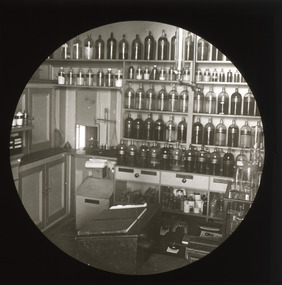
... She was a member of the Pharmaceutical Society of Victoria, a hospital committee and Board, the Red Cross and the Infant Welfare Association and held office for the Chiltern branch of the Country Women's Association. Her sister Helene Grey received an OBE for her work as Lady Superintendent of the Royal Melbourne Hospital. ...She was a member of the Pharmaceutical Society of Victoria, a hospital committee and Board, the Red Cross and the Infant Welfare Association and held office for the Chiltern branch of the Country Women's Association. Her sister Helene Grey received an OBE for her work as Lady Superintendent of the Royal Melbourne Hospital. ...Chiltern Pharmacy, now called Dow's Pharmacy, opened in 1859 at a time when the township of Chiltern was experiencing a second-wave gold rush that redistributed the balance of commercial and social activity in the region. David McEwan, father of Prime Minister John McEwan, was one of the first pharmacists practicing at the business. It was purchased in 1929 by pharmacist Hilda Dow who ran the business with her apprentice and husband, Roy Dow, until they closed the business in 1968. In 1988, after founding the North East branch of the National Trust, the Dows donated the premises with its entire fittings and stock. Some of the more than 4,000 items in stock at the time of closure in 1968 were present in the shop when the Dows took charge in 1929 and date to the late Nineteenth Century (around the time this image was taken). Hilda Dow (nee Grey) was born in 1897, the daughter of a police magistrate. She enrolled to study at the Victorian College of Pharmacy in 1919 and worked initially for Poynton's Pharmacy in Morwell before purchasing the Chiltern Pharmacy that was later named after her. She was a member of the Pharmaceutical Society of Victoria, a hospital committee and Board, the Red Cross and the Infant Welfare Association and held office for the Chiltern branch of the Country Women's Association. Her sister Helene Grey received an OBE for her work as Lady Superintendent of the Royal Melbourne Hospital. Although Hilda Dow was not Australia's first female pharmacist (this was Caroline Copp in 1880) the preservation of the pharmacy and the stories it presents sheds light on the general issue of recognition for female medical pioneers in Australia. Lantern slides, sometimes called 'magic lantern' slides, are glass plates on which an image has been secured for the purpose of projection. Glass slides were etched or hand-painted for this purpose from the Eighteenth Century but the process became more popular and accessible to the public with the development of photographic-emulsion slides used with a 'Magic Lantern' device in the mid-Nineteenth Century. Photographic lantern slides comprise a double-negative emulsion layer (forming a positive image) between thin glass plates that are bound together. A number of processes existed to form and bind the emulsion layer to the base plate, including the albumen, wet plate collodion, gelatine dry plate and woodburytype techniques. Lantern slides and magic lantern technologies are seen as foundational precursors to the development of modern photography and film-making techniques.This image is significant as it provides insight into social and commercial infrastructure available in the North-East region of Victoria in the late Nineteenth and early Twentieth Centuries. The business pictured is also associated with a Prime Minister of Victoria and some of Victoria's first female medical and pharmaceutical practitioners. Thin translucent sheet of glass with a circular image printed on the front and framed in a black backing. It is held together by metals strips to secure the edges of the slide.burke museum, beechworth, lantern slide, slide, glass slide, plate, burke museum collection, photograph, monochrome, hilda dow, roy dow, chiltern pharmacy, dow's pharmacy, chiltern, indigo shire, north east victoria, history of pharmacies, women in pharmacy, women in medicine, women in business, david mcewan, john mcewan, national trust, national trust victoria, north-east victoria national trust, heritage buildings, industrial heritage, helene grey, pharmaceutical society of victoria, victorian college of pharmacy, country women's association, caroline copp, royal melbourne hospital, red cross, infant welfare association -
 Nhill Aviation Heritage Centre
Book - Reference Book, Hughes' Tables for Sea and Air Navigation, 1938
... Late superintendent, H.M. Nautical Almanac Office...Late superintendent, H.M. Nautical Almanac Office Red with gold lettering on spine Hughes' Tables for Sea and Air Navigation Book Reference Book L.J.Comrie ...Red with gold lettering on spinenon-fiction -
 Federation University Historical Collection
Book - Annual Report 1880, The School of Mines Ballaarat Annual Report, 9 February, 1880, 1880
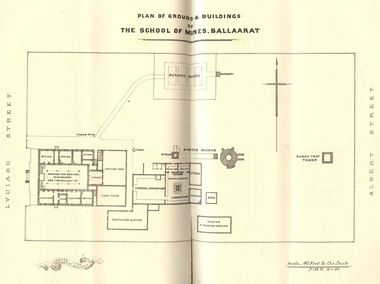
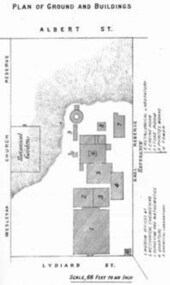
... office bearers...obituary...report of the lecturer in mathematics...report of the lecturer in mining-land and engineering-surveying...report of the lecturer in mechanical engineering...report of the lecturer in telegraphy...report of the curator of the museum (with plans)...report of the superintendent...The School of Mines Annual Report, 9 February, 1881, Additional Examination Statute 1880, Balance Sheet, Certificates Granted by Council, Donations and Fees - carriage of, Extracts from Visitors' Book, Fees, Form of Bequest, Honorary Correspondents, Life Governors, Mining and Mineral Contributions Invited - Paper of Particulars, Museum - open to visitors, Office Bearers, Obituary, Report of the Lecturer in Mathematics, Report of the Lecturer in Mining-Land- and Engineering-Surveying, Report of the Lecturer in Mechanical Engineering, Report of the Lecturer in Telegraphy, Report of the Curator of the Museum (with Plans), Report of the Superintendent of Laboratories, Subjects and Lecturers, Subjects and Examiners, Statement of Receipts and Expenditure for the year 1880, Subscriptions and Donations from 1 January to 31 December 1880, The Lal-Lal Iron Ore Deposits - (with Section and Plan)...The School of Mines Annual Report, 9 February, 1881, Additional Examination Statute 1880, Balance Sheet, Certificates Granted by Council, Donations and Fees - carriage of, Extracts from Visitors' Book, Fees, Form of Bequest, Honorary Correspondents, Life Governors, Mining and Mineral Contributions Invited - Paper of Particulars, Museum - open to visitors, Office Bearers, Obituary, Report of the Lecturer in Mathematics, Report of the Lecturer in Mining-Land- and Engineering-Surveying, Report of the Lecturer in Mechanical Engineering, Report of the Lecturer in Telegraphy, Report of the Curator of the Museum (with Plans), Report of the Superintendent of Laboratories, Subjects and Lecturers, Subjects and Examiners, Statement of Receipts and Expenditure for the year 1880, Subscriptions and Donations from 1 January to 31 December 1880, The Lal-Lal Iron Ore Deposits - (with Section and Plan) the school of mines annual report additional examination statute 1880 balance sheet certificates granted by council donations and fees - carriage of extracts from visitors' book fees form of bequest honorary correspondents life governors mining and mineral contributions invited-paper of particulars museum open to visitors office bearers obituary report of the lecturer in mathematics report of the lecturer in mining-land and engineering-surveying report of the lecturer in mechanical engineering report of the lecturer in telegraphy report of the curator of the museum (with plans) report of the superintendent of laboratories subjects and lecturers subjects and examiners statement of receipts and expenditure for the year 1880 subscriptions and donations from 1 january to 31 december 1880 the lal-lal iron ore deposits-(with section and plan) obituary - sir redmond barry - arthur leahy - jacob upfold - john day mr james oddie dr. r. f. hudson john victor chas. wm. thomas w. h. shaw walter d. campbell ferdinand m. krause joseph flude geo. perry w. hy. barnard examination statute his excellency sir wm. f. drummond jervois charles h. pearson t. brodribb professor pepper james mitchell robert adam wm. lant carperter h. b. de la poer wall w. h. brokenshire arthur parker henry parkinson c. davies simon richards c. v. gorton c. r. blackett david jones wilberforce dyke ferdinand krause ballarat school of mines museum ballarat school of mines museum plan lal lal ore deposits moorabool river William Land Carpenter William jervois William Henry TBarnard Pale green booklet of 70 pages, Annual Report 1880. ...The School of Mines Annual Report, 9 February, 1881, Additional Examination Statute 1880, Balance Sheet, Certificates Granted by Council, Donations and Fees - carriage of, Extracts from Visitors' Book, Fees, Form of Bequest, Honorary Correspondents, Life Governors, Mining and Mineral Contributions Invited - Paper of Particulars, Museum - open to visitors, Office Bearers, Obituary, Report of the Lecturer in Mathematics, Report of the Lecturer in Mining-Land- and Engineering-Surveying, Report of the Lecturer in Mechanical Engineering, Report of the Lecturer in Telegraphy, Report of the Curator of the Museum (with Plans), Report of the Superintendent of Laboratories, Subjects and Lecturers, Subjects and Examiners, Statement of Receipts and Expenditure for the year 1880, Subscriptions and Donations from 1 January to 31 December 1880, The Lal-Lal Iron Ore Deposits - (with Section and Plan)Pale green booklet of 70 pages, Annual Report 1880. Image of Guage Test Tower, Image of The School of Mines, Plan of Ground and Buildings - Albert Street, The School of Mines Ballaarat - The Museum - Plan of Groundfloor, Image of the Lal-Lal Iron Ore Deposits, Moorabool Riverthe school of mines, annual report, additional examination statute 1880, balance sheet, certificates granted by council, donations and fees - carriage of, extracts from visitors' book, fees, form of bequest, honorary correspondents, life governors, mining and mineral contributions invited-paper of particulars, museum open to visitors, office bearers, obituary, report of the lecturer in mathematics, report of the lecturer in mining-land and engineering-surveying, report of the lecturer in mechanical engineering, report of the lecturer in telegraphy, report of the curator of the museum (with plans), report of the superintendent of laboratories, subjects and lecturers, subjects and examiners, statement of receipts and expenditure for the year 1880, subscriptions and donations from 1 january to 31 december 1880, the lal-lal iron ore deposits-(with section and plan), obituary - sir redmond barry - arthur leahy - jacob upfold - john day, mr james oddie, dr. r. f. hudson, john victor, chas. wm. thomas, w. h. shaw, walter d. campbell, ferdinand m. krause, joseph flude, geo. perry, w. hy. barnard, examination statute, his excellency sir wm. f. drummond jervois, charles h. pearson, t. brodribb, professor pepper, james mitchell, robert adam, wm. lant carperter, h. b. de la poer wall, w. h. brokenshire, arthur parker, henry parkinson, c. davies, simon richards, c. v. gorton, c. r. blackett, david jones, wilberforce dyke, ferdinand krause, ballarat school of mines museum, ballarat school of mines museum plan, lal lal ore deposits, moorabool river, william land carpenter, william jervois, william henry tbarnard -
 Federation University Historical Collection
Booklet, Luplau, Hewood & Riderm Printers, The School of Mines Ballaarat Annual Report 1883, 1883
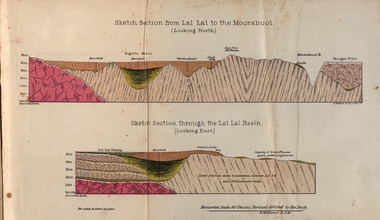
... office bearers...paper of particulars...rules of the ballaarat field club and science society...report of the curator of the museum and library...report of the superintendent...Life Governors, Museum - open to visitors, Notes on the Geology of Lal Lal (with Geological Plan & Sections), Obituary, Office Bearers, Paper of Particulars, Rules of the Ballaarat Field Club and Science Society (Appendix), Report of the Curator of the Museum and Library, Report of the Superintendent of Laboratories, Report of the Lecturer in Mathematics, Report of the Lecturer in Mechanical Engineering, Report of the Lecturer in Telegraphy, Report of the Lecturer in Materia Medica, Statement of Receipts and Expenditure for the year 1882, Subjects and Lectures, Subjects and Examiners, Subscriptions and Donations, from 1st January to 31st December 1882....Life Governors, Museum - open to visitors, Notes on the Geology of Lal Lal (with Geological Plan & Sections), Obituary, Office Bearers, Paper of Particulars, Rules of the Ballaarat Field Club and Science Society (Appendix), Report of the Curator of the Museum and Library, Report of the Superintendent of Laboratories, Report of the Lecturer in Mathematics, Report of the Lecturer in Mechanical Engineering, Report of the Lecturer in Telegraphy, Report of the Lecturer in Materia Medica, Statement of Receipts and Expenditure for the year 1882, Subjects and Lectures, Subjects and Examiners, Subscriptions and Donations, from 1st January to 31st December 1882. ballarat school of mines annual report balance sheet certificates granted by the council examination papers extracts from the visitors' book fees form of bequest honorary correspondents life governors museum notes on the geology of lal lal obituary: charles william thomas. one of the examiners in mining and surveying office bearers paper of particulars rules of the ballaarat field club and science society report of the curator of the museum and library report of the superintendent of laboratories report of the lecturer in mathematics report of the lecturer in mechanical engineering report of the lecturer in telegraphy report of the lecturer in materia medica statement of receipts and expenditure for the year 1882 subjects and lectures subjects and examiners subcriptions and donations, from 1st january to 31st december 1882 alf. mica smith, professor of chemistry alf. mica smith, metallurgy f. m. krause - professor of geology, mineralogy, scientific mining t. h. thompson, practical mining w. h. shaw mechanical engineering h. reid, mechanical enginnering, phoenix foundry company (limited) a. a. buley, mathematics f. m. krause, land, mining and engineering surveying w. d. campbell, telegraphy james oddie, vice-president alf. mica smith, natural philosophy (elementary mechanics and hydrostatics, magnetism and electricty, sound, light and heat) j. f. usher, materia medica, pharmacy and physiology examiner, professor h. m. andrew, m. a. examiner, h. d. de la poer wall, m. a, c. e. examiner, thomas mann, b. a. examiner, p. c. fitzpatrick, c. s. examiner, h. rosale, j.p., f.g.s, m.e. and m examiner, john lewis examiner, w. c. kernot, m.a., c.e. examiner, professor mccoy examiner, j. cosmo newbery, c.m.g., b. sc. examiner, baron von mueller, k.c.m.g., m. et ph. d., f. r.s. examiner, sam. w. macgowan examiner, w. p. bechervaise examiner, r. l. j. ellery, f.r.s. govt. astronomer examiner, f. m. krause, c.e. examiner, j. m. bickett examiner, n. kent examiner, a. martin examiner, r. s. mitchell examiner, w. h. keast examiner, p. matthews examiner, d. milliken examiner, j. t. richards examiner, jonathan robinson examiner, t. h. thompson examiner, h. brookes allen, m.d. examiner, joseph bosisto examiner, c. r. blackett, m.l.a. examiner, wm. johnson, analyst to the government of victoria ferdinand krause Ballarat Field Naturalists Club Ferdinand von mueller thomas mann a.a. buley ferrdinand krause Alfred Mica Smith James Oddie William Johnson jonathan robinson james bickett r.l.j. ellery cosmo newbery Ballarat Field Naturalists Ballaarat School of Mines annual Report. ...The School of Mines Ballaarat. Annual Report 1883. Statement of Receipts and expenditure, general balance sheet, and list of subscriptions donations 1882. Sketch of School of Mines. Sketch Section from Lal Lal to the Moorabool (looking north) Geological map of Lal Lal. In the County of Grant. Annual Report, Balance Sheet, Certificates granted by the Council, Examination Papers - Elementary Science Classes (Appendix), Extracts from Visitors' Book, Fees, Form of Bequest, Honorary Correspondents. Life Governors, Museum - open to visitors, Notes on the Geology of Lal Lal (with Geological Plan & Sections), Obituary, Office Bearers, Paper of Particulars, Rules of the Ballaarat Field Club and Science Society (Appendix), Report of the Curator of the Museum and Library, Report of the Superintendent of Laboratories, Report of the Lecturer in Mathematics, Report of the Lecturer in Mechanical Engineering, Report of the Lecturer in Telegraphy, Report of the Lecturer in Materia Medica, Statement of Receipts and Expenditure for the year 1882, Subjects and Lectures, Subjects and Examiners, Subscriptions and Donations, from 1st January to 31st December 1882.Ballaarat School of Mines annual Report. Hard cover red book of 101 pages. Includes plans on Lal Lal and surrounds. ballarat school of mines, annual report, balance sheet, certificates granted by the council, examination papers, extracts from the visitors' book, fees, form of bequest, honorary correspondents, life governors, museum, notes on the geology of lal lal, obituary: charles william thomas. one of the examiners in mining and surveying, office bearers, paper of particulars, rules of the ballaarat field club and science society, report of the curator of the museum and library, report of the superintendent of laboratories, report of the lecturer in mathematics, report of the lecturer in mechanical engineering, report of the lecturer in telegraphy, report of the lecturer in materia medica, statement of receipts and expenditure for the year 1882, subjects and lectures, subjects and examiners, subcriptions and donations, from 1st january to 31st december 1882, alf. mica smith, professor of chemistry, alf. mica smith, metallurgy, f. m. krause - professor of geology, mineralogy, scientific mining, t. h. thompson, practical mining, w. h. shaw mechanical engineering, h. reid, mechanical enginnering, phoenix foundry company (limited), a. a. buley, mathematics, f. m. krause, land, mining and engineering surveying, w. d. campbell, telegraphy, james oddie, vice-president, alf. mica smith, natural philosophy (elementary mechanics and hydrostatics, magnetism and electricty, sound, light and heat), j. f. usher, materia medica, pharmacy and physiology, examiner, professor h. m. andrew, m. a., examiner, h. d. de la poer wall, m. a, c. e., examiner, thomas mann, b. a., examiner, p. c. fitzpatrick, c. s., examiner, h. rosale, j.p., f.g.s, m.e. and m, examiner, john lewis, examiner, w. c. kernot, m.a., c.e., examiner, professor mccoy, examiner, j. cosmo newbery, c.m.g., b. sc., examiner, baron von mueller, k.c.m.g., m. et ph. d., f. r.s., examiner, sam. w. macgowan, examiner, w. p. bechervaise, examiner, r. l. j. ellery, f.r.s. govt. astronomer, examiner, f. m. krause, c.e., examiner, j. m. bickett, examiner, n. kent, examiner, a. martin, examiner, r. s. mitchell, examiner, w. h. keast, examiner, p. matthews, examiner, d. milliken, examiner, j. t. richards, examiner, jonathan robinson, examiner, t. h. thompson, examiner, h. brookes allen, m.d., examiner, joseph bosisto, examiner, c. r. blackett, m.l.a., examiner, wm. johnson, analyst to the government of victoria, ferdinand krause, ballarat field naturalists club, ferdinand von mueller, thomas mann, a.a. buley, ferrdinand krause, alfred mica smith, james oddie, william johnson, jonathan robinson, james bickett, r.l.j. ellery, cosmo newbery, ballarat field naturalists -
 Federation University Historical Collection
Booklet, The School of Mines Ballaarat Annual Report 1883, 1883
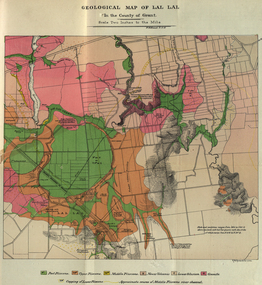
... office bearers...paper of particulars...ballarat school of mines museum...library...superintendent...Life Governors, Museum - open to visitors, Office Bearers, Paper of Particulars, Report of the Curator of the Museum and Library, Report of the Superintendent of Laboratories, Report of the Lecturer in Mathematics, Report of the Lecturer in Mechanical Engineering, Report of the Lecturer in Telegraphy, Report of the Lecturer in Materia Medica, Report of the Lecturer of Astronomy, Scale of Charges for Assays and Analyses, Examinations Held, Statement of Receipts and Expenditure for the year 1883, Subjects and Lectures, Subjects and Examiners, Subscriptions and Donations, from 1st January to 31st December 1883....Life Governors, Museum - open to visitors, Office Bearers, Paper of Particulars, Report of the Curator of the Museum and Library, Report of the Superintendent of Laboratories, Report of the Lecturer in Mathematics, Report of the Lecturer in Mechanical Engineering, Report of the Lecturer in Telegraphy, Report of the Lecturer in Materia Medica, Report of the Lecturer of Astronomy, Scale of Charges for Assays and Analyses, Examinations Held, Statement of Receipts and Expenditure for the year 1883, Subjects and Lectures, Subjects and Examiners, Subscriptions and Donations, from 1st January to 31st December 1883. ballarat school of mines annual report balance sheet certificates granted by the council examination papers fees honorary correspondents life governors museum office bearers paper of particulars ballarat school of mines museum library superintendent of laboratories mathematics mechanical engineering telegraphy lecturer in materia medica statement of receipts and expenditure for the year 1882 examiners subcriptions and donations alfred mica smith chemistry metallurgy f.m. krause ferdinand krause geology mineralogy scientific mining t.h. thompson practical mining w.h. shaw h. reid mechanical enginnering phoenix foundry company (limited) phoenix foundry arthur. a. buley mining engineering surveying walter. d. campbell j. wall astronomy james oddie natural philosophy elementary mechanics and hydrostatics magnetism and electricty sound, light and heat j.f. usher materia medica pharmacy physiology w.h. shawmechanical engineering h.m. andrew h.d. de la poer wall thomas mann p.c. fitzpatrick h. rosale john lewis w.c. kernot mccoy j. cosmo newbery baron von mueller samuel w. macgowan w.p. bechervaise r.l.j. ellery astronomer j.m. bickett james bickett n. kent a. martin r.s. mitchell w.h. keast p. matthews d. milliken j.t. richards jonathan robinson h. brookes allen joseph bosisto c.r. blackett, m.l.a. william. johnson government of victoria analyst moorabool lal lal skipton coal skipton coal discovery Lal Lal Creek Moorabool Falls Lal Lal Race Course Lal Lal Falls Moorabool River William H. ...The School of Mines Ballaarat. Annual Report 1883. Statement of Receipts and expenditure, general balance sheet, and list of subscriptions donations 1883. Annual Report, Balance Sheet, Certificates granted by the Council, Examination Papers - Elementary Science Classes (Appendix), Fees, Honorary Correspondents. Life Governors, Museum - open to visitors, Office Bearers, Paper of Particulars, Report of the Curator of the Museum and Library, Report of the Superintendent of Laboratories, Report of the Lecturer in Mathematics, Report of the Lecturer in Mechanical Engineering, Report of the Lecturer in Telegraphy, Report of the Lecturer in Materia Medica, Report of the Lecturer of Astronomy, Scale of Charges for Assays and Analyses, Examinations Held, Statement of Receipts and Expenditure for the year 1883, Subjects and Lectures, Subjects and Examiners, Subscriptions and Donations, from 1st January to 31st December 1883.Ballaarat School of Mines annual Report. Soft cover pale green booklet of 67 pages. Includes a colour Geological Map of Lal Lal and a sketch Section from Lal Lal to the Moorabool. Inscription on front cover 'Office Copy' On pages 4 and 5 some names have been crossed out and others added.ballarat school of mines, annual report, balance sheet, certificates granted by the council, examination papers, fees, honorary correspondents, life governors, museum, office bearers, paper of particulars, ballarat school of mines museum, library, superintendent of laboratories, mathematics, mechanical engineering, telegraphy, lecturer in materia medica, statement of receipts and expenditure for the year 1882, examiners, subcriptions and donations, alfred mica smith, chemistry, metallurgy, f.m. krause, ferdinand krause, geology, mineralogy, scientific mining, t.h. thompson, practical mining, w.h. shaw, h. reid, mechanical enginnering, phoenix foundry company (limited), phoenix foundry, arthur. a. buley, mining, engineering surveying, walter. d. campbell, j. wall, astronomy, james oddie, natural philosophy, elementary mechanics and hydrostatics, magnetism and electricty, sound, light and heat, j.f. usher, materia medica, pharmacy, physiology, w.h. shawmechanical engineering, h.m. andrew, h.d. de la poer wall, thomas mann, p.c. fitzpatrick, h. rosale, john lewis, w.c. kernot, mccoy, j. cosmo newbery, baron von mueller, samuel w. macgowan, w.p. bechervaise, r.l.j. ellery, astronomer, j.m. bickett, james bickett, n. kent, a. martin, r.s. mitchell, w.h. keast, p. matthews, d. milliken, j.t. richards, jonathan robinson, h. brookes allen, joseph bosisto, c.r. blackett, m.l.a., william. johnson, government of victoria analyst, moorabool, lal lal, skipton, coal, skipton coal discovery, lal lal creek, moorabool falls, lal lal race course, lal lal falls, moorabool river, william h. keast -
Federation University Historical Collection
Booklet, The School of Mines, Ballaarat, Annual Report 1881, 1882
... Francis Ormond, M.L.C., Extracts from the Visitors' Book, Fees, Form of Bequest, Life Governors, Museum - open to Visitors', Office Bearers, Paper of Particulars, Report of the Curator of the Museum and Library (with plans), Report of the Superintendent of Laboratories, Report of the Lecturer in Telegraphy, Report of the Lecturer in Mechanical Engineering, Statement of Receipts and Expenditure for the year 1881, Subjects and Lecturers, Subjects and Examiners, Subscriptions and Donations from 1st January to 31st December 1881, The Lignite Deposit at Skipton (with Section and Plan)...Francis Ormond, M.L.C., Extracts from the Visitors' Book, Fees, Form of Bequest, Life Governors, Museum - open to Visitors', Office Bearers, Paper of Particulars, Report of the Curator of the Museum and Library (with plans), Report of the Superintendent of Laboratories, Report of the Lecturer in Telegraphy, Report of the Lecturer in Mechanical Engineering, Statement of Receipts and Expenditure for the year 1881, Subjects and Lecturers, Subjects and Examiners, Subscriptions and Donations from 1st January to 31st December 1881, The Lignite Deposit at Skipton (with Section and Plan) annual report additional examination statute certificates granted by the council copy of letter received from the honble. francis ormond, m.l.c. extracts from visitors' book fees form of bequest paper of particulars life governors museum officer bearers report of the curator of the museum and library report of the lecturer in telegraphy report of the lecturer in mechanical engineering statement of receipts and expenditure for the year 1881 subjects and lecturers subjects and examiners subscriptions and donations from 1st january to 31st december 1881 the lignite deposit at skipton james oddie, esq., j.p. alf. mica smith, lecturer in chemistry, natural philosophy and botany f. m. krause, lecturer in geology, scientific mining, land, mining and engineering surveying t. h. thompson, lecturer in practical mining w. h. shaw, lecturer in mechanical engineering h. reid, lecturer in mechanical engineering a. a. buley, lecturer in mathematics w. d. campbell, lecturer in telegraphy j. f. usher, lecturer in materia medica, pharmacy and physiology a.a. buley w.d. campbell j.f. usher w.h. shaw ferdinand krause t.h. krause skipton lignite deposit skipton coal Ballarat school of mines annual report Soft covered pale green booklet of 63 pages. ...The School of Mines Ballaarat Annual Report 1881. Annual Report, Additional Examination Statute, Certificates Granted by the Council, Copy of letter received from the Honble. Francis Ormond, M.L.C., Extracts from the Visitors' Book, Fees, Form of Bequest, Life Governors, Museum - open to Visitors', Office Bearers, Paper of Particulars, Report of the Curator of the Museum and Library (with plans), Report of the Superintendent of Laboratories, Report of the Lecturer in Telegraphy, Report of the Lecturer in Mechanical Engineering, Statement of Receipts and Expenditure for the year 1881, Subjects and Lecturers, Subjects and Examiners, Subscriptions and Donations from 1st January to 31st December 1881, The Lignite Deposit at Skipton (with Section and Plan)Soft covered pale green booklet of 63 pages.annual report, additional examination statute, certificates granted by the council, copy of letter received from the honble. francis ormond, m.l.c., extracts from visitors' book, fees, form of bequest, paper of particulars, life governors, museum, officer bearers, report of the curator of the museum and library, report of the lecturer in telegraphy, report of the lecturer in mechanical engineering, statement of receipts and expenditure for the year 1881, subjects and lecturers, subjects and examiners, subscriptions and donations from 1st january to 31st december 1881, the lignite deposit at skipton, james oddie, esq., j.p., alf. mica smith, lecturer in chemistry, natural philosophy and botany, f. m. krause, lecturer in geology, scientific mining, land, mining and engineering surveying, t. h. thompson, lecturer in practical mining, w. h. shaw, lecturer in mechanical engineering, h. reid, lecturer in mechanical engineering, a. a. buley, lecturer in mathematics, w. d. campbell, lecturer in telegraphy, j. f. usher, lecturer in materia medica, pharmacy and physiology, a.a. buley, w.d. campbell, j.f. usher, w.h. shaw, ferdinand krause, t.h. krause, skipton lignite deposit, skipton coal, ballarat school of mines annual report -
Federation University Historical Collection
Booklet, Ballarat School of Mines Annual Report 1888, 1888
... Serjeant for Treatment of Ores, Balance Sheet: Liabilities and Assets, Certificates Granted by the Council, Fees, Honorary Correspondents, Life Governors, Number of Students attending the School of Mines, Office Bearers, Report of the Curator of the Museum and Library, Report of the Superintendent of Laboratories, Report of the Lecturer on Machine Drawing, Report of the Lecturer on Mechanical Engineering, Report of the Lecturer on Telegraphy, Report of the Lecturer on Botany, Report of the Lecturer on Freehand and Model Drawing, Report of the Lecturer on Materia, Medica and Physiology, Report of the Hon. ...Serjeant for Treatment of Ores, Balance Sheet: Liabilities and Assets, Certificates Granted by the Council, Fees, Honorary Correspondents, Life Governors, Number of Students attending the School of Mines, Office Bearers, Report of the Curator of the Museum and Library, Report of the Superintendent of Laboratories, Report of the Lecturer on Machine Drawing, Report of the Lecturer on Mechanical Engineering, Report of the Lecturer on Telegraphy, Report of the Lecturer on Botany, Report of the Lecturer on Freehand and Model Drawing, Report of the Lecturer on Materia, Medica and Physiology, Report of the Hon. ...Ballarat School of Mines Annual Report 1888. President's Annual Report, Constitution and Statute of Affiliation, Monetary prize by R. M. Serjeant for Treatment of Ores, Balance Sheet: Liabilities and Assets, Certificates Granted by the Council, Fees, Honorary Correspondents, Life Governors, Number of Students attending the School of Mines, Office Bearers, Report of the Curator of the Museum and Library, Report of the Superintendent of Laboratories, Report of the Lecturer on Machine Drawing, Report of the Lecturer on Mechanical Engineering, Report of the Lecturer on Telegraphy, Report of the Lecturer on Botany, Report of the Lecturer on Freehand and Model Drawing, Report of the Lecturer on Materia, Medica and Physiology, Report of the Hon. Secretary St John Ambulance Association, Examinations Held, Scale of Charges for Assays and Analyses, Statement of Receipts and Expenditure for the year 1888 and Special Trust Funds, Statistics - Students Attending Lectures, Subjects and Lecturers, Subscriptions and Donations from 1st January to 31st December 1888, Time Table. Ballarat School of Mines annual Report. Cover attached by tape on booklet, spine missing, 108 pages. ballarat school of mines, annual report, the hon sir william foster stawell, president, andrew anderson, vice president, alf. mica smith - professor of chemistry and metallurgy, f. m. krause - professor of geology and minealogy, j. h. horwood - mechanical engineering, machine drawing and design, mining, mathematics, henry j. hall - freehand and model drawing, daniel walker - chemistry and physics, w. e. burbridge - demonstrator of chemistry and metallurgy, w. d. campbell - telegraphy, george day - botany, j. f. usher - materia, medica, pharmacy and physiology, gilbert j. dawbarn, e. thornton, charles kent - auditor, andrew berry - registrar, t. h. thompson jp - mayor of the city of ballarat, james russell jp - mayor of the town of ballarat, daniel brophy jp - chairman of the band and albion consols, walter gude, elizabeth phillips, thomas commons, kate porritt, emily mary wheeler, grace shrigley, george clendinning, rose ditchburn, cecelia h. murphy, eliza a. turpie, rebecca walton, george g. zilles, william menzies, john waters sutherland, h.w. sutherland, alfred kerr, william coltman, alfred j. dunstan, arthur bregazzi, maggie miller, serna davey, william thomas grownow, sarah davies, anna bella cravno, william corbould, thomas copeland, robert john gribble, henry lipson hancock, leigh george hancock, harry m. martell, ivan rosenblum, john la gerche, samuel barrell, walter reed bechercaise, william treloar, adolf gode, arthur e. lilburne, carl werner, isaac bernstein, george kidd, arthur lynch, henry coltman, josiah wasley, david curtain, martha maud berry, mary ann cameron, harriet mary mitchell, anna s. schloo, ellen fussell, lavinia treloar, mary drury, annie winifred eastwood, annie louisa gatliff, mary gatliff, james edward gribble, frank uren, alfred curthoys, william edwin kernot, j. ditchburn, john bradshaw, david michael curtain, alfred ernest campbell kerr, walter nettleton, william henry keast, george ja,es, donald mcgregor, john king, john bailey bullen, john trevan, patrick murray, josiah curnow, tobert taplin, samuel earnest figgis, w.h. keast -
Federation University Historical Collection
Booklet, W. B. Macdonald, Ballarat School of Mines Annual Report 1889, 1889
... Annual Report, Crown Grant, Affiliation Statute, Constitution, Liabilities and Assets, Certificates Granted by Council, Fees, Honorary Correspondents, Life Governors, Meteorological Observations, Number of Students attended The School of Mines, Office Bearers, Report of the Curator of the Museum and Library, Report of the Superintendent of Laboratories, Report of the Lecturer on Engineering and Surveying, Report of the Lecturer on Freehand and Model Drawing, Report of the Lecturer on Telegraphy, Report of the Lecturer on Botany, Report of the Lecturer on Materia Medica and Physiology, Report of University Classes, Examinations Held, Scale of Charges for Assays and Analyses, Statement of Receipts and Expenditure for the year 1889 and Special Trust Funds, Statistics - Students attending Lectures, Subjects and Examiners, Subscriptions and Donations from 1st January to 31st December 1889, Time Table, Obituary - Sir William Foster Stawell and The Honorable Francis Ormond ...Annual Report, Crown Grant, Affiliation Statute, Constitution, Liabilities and Assets, Certificates Granted by Council, Fees, Honorary Correspondents, Life Governors, Meteorological Observations, Number of Students attended The School of Mines, Office Bearers, Report of the Curator of the Museum and Library, Report of the Superintendent of Laboratories, Report of the Lecturer on Engineering and Surveying, Report of the Lecturer on Freehand and Model Drawing, Report of the Lecturer on Telegraphy, Report of the Lecturer on Botany, Report of the Lecturer on Materia Medica and Physiology, Report of University Classes, Examinations Held, Scale of Charges for Assays and Analyses, Statement of Receipts and Expenditure for the year 1889 and Special Trust Funds, Statistics - Students attending Lectures, Subjects and Examiners, Subscriptions and Donations from 1st January to 31st December 1889, Time Table, Obituary - Sir William Foster Stawell and The Honorable Francis Ormond ballarat school of mines annual report andrew anderson j.p. - president rivett henry bland - trustee the hon. sir w. j. clarke - trustee the hon. john warrington rogers - trustee james oddie - trustee the hon. henry cuthbert - honorary solicitor i. j. jones - honorary treasurer chas. kent - auditor andrew berry - registrar sir william foster stawell the honorable francis ormond alf. mica. smith - professor of chemistry j. h. horwood - engineering and surveying h. j. hall - geometrical and free hand drawing w. d. campbell - telegraphy george day - botany j. f. usher - materia medica and physiology bella guerin - university classes henry krone - assistant registrar of titles henry b. loch Paris school of mines Ballarat School of Mines annual Report. ...Ballarat School of Mines Annual Report 1889. Annual Report, Crown Grant, Affiliation Statute, Constitution, Liabilities and Assets, Certificates Granted by Council, Fees, Honorary Correspondents, Life Governors, Meteorological Observations, Number of Students attended The School of Mines, Office Bearers, Report of the Curator of the Museum and Library, Report of the Superintendent of Laboratories, Report of the Lecturer on Engineering and Surveying, Report of the Lecturer on Freehand and Model Drawing, Report of the Lecturer on Telegraphy, Report of the Lecturer on Botany, Report of the Lecturer on Materia Medica and Physiology, Report of University Classes, Examinations Held, Scale of Charges for Assays and Analyses, Statement of Receipts and Expenditure for the year 1889 and Special Trust Funds, Statistics - Students attending Lectures, Subjects and Examiners, Subscriptions and Donations from 1st January to 31st December 1889, Time Table, Obituary - Sir William Foster Stawell and The Honorable Francis Ormond Ballarat School of Mines annual Report. Cover has brown marks on it, 106 pages. ballarat school of mines, annual report, andrew anderson j.p. - president, rivett henry bland - trustee, the hon. sir w. j. clarke - trustee, the hon. john warrington rogers - trustee, james oddie - trustee, the hon. henry cuthbert - honorary solicitor, i. j. jones - honorary treasurer, chas. kent - auditor, andrew berry - registrar, sir william foster stawell, the honorable francis ormond, alf. mica. smith - professor of chemistry, j. h. horwood - engineering and surveying, h. j. hall - geometrical and free hand drawing, w. d. campbell - telegraphy, george day - botany, j. f. usher - materia medica and physiology, bella guerin - university classes, henry krone - assistant registrar of titles, henry b. loch, paris school of mines -
Federation University Historical Collection
Booklet, W. B. Macdonald, The Ballarat School of Mines, Industries and Science, Annual Report 1890, 1890
... Annual Report, Crown Grant, Affiliation Statute, Constitution, Examination Statutes, Associateship of The School, Department of Agriculture, Certificates Granted by Council, Fees, Form of Bequest, Gauge-Testing Apparatus, General Balance Sheet and Liabilities and Assets, Honorary Correspondents, Life Governors, Meteorological Observations, Number of Students attended The School of Mines, Office Bearers, Report of the Professor of Mineralogy and Geology and Curator of the Museum, Report of the Superintendent of Laboratories, Report of the Lecturer on Engineering and Surveying, Report of the Lecturer on Geometrical and Freehand Drawing, Report of the Lecturer on Telegraphy, Report of the Lecturer on Botany, Report of the Lecturer on Materia Medica and Physiology, Report of University Classes, Examinations Held, Scale of Charges for Assays and Analyses, Statement of Receipts and Expenditure for the year 1890 and Special Trust Funds, Statistics - Students attending Lectures, Subjects and Examiners, Subscriptions and Donations from 1st January to 31st December 1890, Time Table...Annual Report, Crown Grant, Affiliation Statute, Constitution, Examination Statutes, Associateship of The School, Department of Agriculture, Certificates Granted by Council, Fees, Form of Bequest, Gauge-Testing Apparatus, General Balance Sheet and Liabilities and Assets, Honorary Correspondents, Life Governors, Meteorological Observations, Number of Students attended The School of Mines, Office Bearers, Report of the Professor of Mineralogy and Geology and Curator of the Museum, Report of the Superintendent of Laboratories, Report of the Lecturer on Engineering and Surveying, Report of the Lecturer on Geometrical and Freehand Drawing, Report of the Lecturer on Telegraphy, Report of the Lecturer on Botany, Report of the Lecturer on Materia Medica and Physiology, Report of University Classes, Examinations Held, Scale of Charges for Assays and Analyses, Statement of Receipts and Expenditure for the year 1890 and Special Trust Funds, Statistics - Students attending Lectures, Subjects and Examiners, Subscriptions and Donations from 1st January to 31st December 1890, Time Table ballarat school of mines annual report andrew anderson j.p. - President (Acting) and Vice president rivett henry bland - trustee the hon. sir w. j. clarke - trustee the hon. john warrington rogers - trustee james oddie - trustee the hon. henry cuthbert - honorary solicitor i. j. jones - honorary treasurer chas. kent - auditor andrew berry - registrar F. ...The Ballarat School of Mines Annual Report 1890. Annual Report, Crown Grant, Affiliation Statute, Constitution, Examination Statutes, Associateship of The School, Department of Agriculture, Certificates Granted by Council, Fees, Form of Bequest, Gauge-Testing Apparatus, General Balance Sheet and Liabilities and Assets, Honorary Correspondents, Life Governors, Meteorological Observations, Number of Students attended The School of Mines, Office Bearers, Report of the Professor of Mineralogy and Geology and Curator of the Museum, Report of the Superintendent of Laboratories, Report of the Lecturer on Engineering and Surveying, Report of the Lecturer on Geometrical and Freehand Drawing, Report of the Lecturer on Telegraphy, Report of the Lecturer on Botany, Report of the Lecturer on Materia Medica and Physiology, Report of University Classes, Examinations Held, Scale of Charges for Assays and Analyses, Statement of Receipts and Expenditure for the year 1890 and Special Trust Funds, Statistics - Students attending Lectures, Subjects and Examiners, Subscriptions and Donations from 1st January to 31st December 1890, Time TableThe Ballarat School of Mines annual Report, 1890. Cover is browning around the edges, back cover partly detached and is torn, 184 pages. ballarat school of mines, annual report, andrew anderson j.p. - president (acting) and vice president, rivett henry bland - trustee, the hon. sir w. j. clarke - trustee, the hon. john warrington rogers - trustee, james oddie - trustee, the hon. henry cuthbert - honorary solicitor, i. j. jones - honorary treasurer, chas. kent - auditor, andrew berry - registrar, f. m. krause - professor of mineralogy and geology, and curator of the museum, alf. mica. smith - superintendent of laboratories, mr e. wattis - manager, mining laboratory, j. h. horwood - lecturer on engineering and surveyin, h. j. hall - lecturer geometrical and free-hand drawing, george day - botany, j. f. usher - materia medica and physiology, miss bella guerin - university classes, charles kent - auditor, henry krone - assistant registrar of titles, henry b. loch, d. e. martin - secretary for agriculture, r. hedger wallace - department of agriculture -
 Federation University Historical Collection
Booklet - Annual Report, The Ballarat School of Mines, Industries and Science, Annual Report 1891, 1891
... Annual Report, Crown Grant, Affiliation Statute, Constitution, Examination Statutes, Associateship of The School, Certificates Granted by the Council, Clunes Branch Report, Departmental Expenditure, Fees, Form of Bequest, Gauge-Testing Apparatus, General Balance Sheet and Liabilities and Assets, Honorary Correspondents, Life Governors, Meteorological Observations, Number of Students attended The School of Mines, Office Bearers, Practical Treatment of Ores, Report of the Professor of Mineralogy and Geology and Curator of the Museum, Report of the Superintendent of Laboratories, Report of the Lecturer on Engineering and Surveying, Report of the Lecturer on Mathematics, Report of the Lecturer on Electrical Engineering and Telegraphy, Report of the Lecturer on Botany, Report of the Lecturer on Geometrical and Freehand Drawing, Report of the Lecturer on Materia Medica and Physiology, Report of University Classes, Report on Mining Laboratory, Examinations Held, Scale of Charges for Assays and Analyses, Statement of Receipts and Expenditure for the year 1891 and Special Trust Funds, Statistics - Students attending Lectures, Subjects and Lecturers, Subjects and Examiners, Subscriptions and Donations from 1st January to 31st December 1891, Syllabus of Lecture Courses...Annual Report, Crown Grant, Affiliation Statute, Constitution, Examination Statutes, Associateship of The School, Certificates Granted by the Council, Clunes Branch Report, Departmental Expenditure, Fees, Form of Bequest, Gauge-Testing Apparatus, General Balance Sheet and Liabilities and Assets, Honorary Correspondents, Life Governors, Meteorological Observations, Number of Students attended The School of Mines, Office Bearers, Practical Treatment of Ores, Report of the Professor of Mineralogy and Geology and Curator of the Museum, Report of the Superintendent of Laboratories, Report of the Lecturer on Engineering and Surveying, Report of the Lecturer on Mathematics, Report of the Lecturer on Electrical Engineering and Telegraphy, Report of the Lecturer on Botany, Report of the Lecturer on Geometrical and Freehand Drawing, Report of the Lecturer on Materia Medica and Physiology, Report of University Classes, Report on Mining Laboratory, Examinations Held, Scale of Charges for Assays and Analyses, Statement of Receipts and Expenditure for the year 1891 and Special Trust Funds, Statistics - Students attending Lectures, Subjects and Lecturers, Subjects and Examiners, Subscriptions and Donations from 1st January to 31st December 1891, Syllabus of Lecture Courses ballarat school of mines annual report andrew anderson j.p. - president f. j. martell - vice president r. denham pinnock - vice president rivett henry bland - trustee the hon. sir w. j. clarke - trustee the hon. john warrington rogers - trustee james oddie - trustee the hon. henry cuthbert - honorary solicitor c. eyres - honorary treasurer charles kent - auditor andrew berry - registrar f. m. krause - professor of mineralogy and geology, and curator of the museum alf. mica. smith - chemistry, metallurgy, natural philosophy f. m. krause - geology, mineralogy, geological surveying j. h. horwood - lecturer on engineering and surveying h. j. hall - lecturer free-hand and model drawing george day - botany j. f. usher - materia medica and physiology c. w. wilson - university classes isaac jaques jones j.p. mr e. wattis - manager, mining laboratory j. a. dawson - electrical engineering and telegraphy elder gray harry e. sando charles matthews - auditor j. h. daley - auditor henry crone - assistant registrar of titles henry b. loch isaac jacques jones charles eyres j.a j.a. dawson statistics university classes bella guerin c.w. wilson clunes branch of the ballarat school of mines w.e. burbridge h.j. hall museum state school students daniel walker a.j. higgins state school science classes The Ballarat School of Mines Industries and Science Annual Report, 1891. ...The Ballarat School of Mines Annual Report 1891. Annual Report, Crown Grant, Affiliation Statute, Constitution, Examination Statutes, Associateship of The School, Certificates Granted by the Council, Clunes Branch Report, Departmental Expenditure, Fees, Form of Bequest, Gauge-Testing Apparatus, General Balance Sheet and Liabilities and Assets, Honorary Correspondents, Life Governors, Meteorological Observations, Number of Students attended The School of Mines, Office Bearers, Practical Treatment of Ores, Report of the Professor of Mineralogy and Geology and Curator of the Museum, Report of the Superintendent of Laboratories, Report of the Lecturer on Engineering and Surveying, Report of the Lecturer on Mathematics, Report of the Lecturer on Electrical Engineering and Telegraphy, Report of the Lecturer on Botany, Report of the Lecturer on Geometrical and Freehand Drawing, Report of the Lecturer on Materia Medica and Physiology, Report of University Classes, Report on Mining Laboratory, Examinations Held, Scale of Charges for Assays and Analyses, Statement of Receipts and Expenditure for the year 1891 and Special Trust Funds, Statistics - Students attending Lectures, Subjects and Lecturers, Subjects and Examiners, Subscriptions and Donations from 1st January to 31st December 1891, Syllabus of Lecture CoursesThe Ballarat School of Mines Industries and Science Annual Report, 1891. Cover is browning around the edges, front cover has small tear on bottom of cover, 132 pages. ballarat school of mines, annual report, andrew anderson j.p. - president, f. j. martell - vice president, r. denham pinnock - vice president, rivett henry bland - trustee, the hon. sir w. j. clarke - trustee, the hon. john warrington rogers - trustee, james oddie - trustee, the hon. henry cuthbert - honorary solicitor, c. eyres - honorary treasurer, charles kent - auditor, andrew berry - registrar, f. m. krause - professor of mineralogy and geology, and curator of the museum, alf. mica. smith - chemistry, metallurgy, natural philosophy, f. m. krause - geology, mineralogy, geological surveying, j. h. horwood - lecturer on engineering and surveying, h. j. hall - lecturer free-hand and model drawing, george day - botany, j. f. usher - materia medica and physiology, c. w. wilson - university classes, isaac jaques jones j.p., mr e. wattis - manager, mining laboratory, j. a. dawson - electrical engineering and telegraphy, elder gray, harry e. sando, charles matthews - auditor, j. h. daley - auditor, henry crone - assistant registrar of titles, henry b. loch, isaac jacques jones, charles eyres, j.a, j.a. dawson, statistics, university classes, bella guerin, c.w. wilson, clunes branch of the ballarat school of mines, w.e. burbridge, h.j. hall, museum, state school students, daniel walker, a.j. higgins, state school science classes -
 Federation University Historical Collection
Booklet, The Ballarat School of Mines, Industries and Science, Calendar and Annual Report 1893, 1893
... Annual Report, Examination Papers, Associateship of The School of Mines, Syllabus for Technical Schools, Crown Grant, Affiliation Statute, Certificates Granted by the Council, Clunes Branch Report, Departmental Expenditure, Fees, Form of Bequest, General Balance Sheet and Liabilities and Assets, Honorary Correspondents, Life Governors, Meteorological Observations, Number of Students attended The School of Mines, Office Bearers, Practical Treatment of Ores, Report of the Professor of Mineralogy and Geology and Curator of the Museum, Report of the Superintendent of Laboratories, Report of the Lecturer on Engineering and Surveying, Report of the Lecturer on Mathematics, Report of the Lecturer in Mechanical Drawing, Machine Construction and Design, Report of the Lecturer on Electrical Engineering and Telegraphy, Report of the Lecturer on Botany, Report of the Lecturer on Biology, Pharmacy, Materia Medica, Report on Mining Laboratory, Examinations Held, Scale of Charges for Assays and Analyses, Statement of Receipts and Expenditure for the year 1892 and Special Trust Funds, Statistics - Students attending Lectures, Subjects and Lecturers, Subjects and Examiners, Subscriptions and Donations from 1st January to 31st December 1892, Syllabus of Lecture Courses...Annual Report, Examination Papers, Associateship of The School of Mines, Syllabus for Technical Schools, Crown Grant, Affiliation Statute, Certificates Granted by the Council, Clunes Branch Report, Departmental Expenditure, Fees, Form of Bequest, General Balance Sheet and Liabilities and Assets, Honorary Correspondents, Life Governors, Meteorological Observations, Number of Students attended The School of Mines, Office Bearers, Practical Treatment of Ores, Report of the Professor of Mineralogy and Geology and Curator of the Museum, Report of the Superintendent of Laboratories, Report of the Lecturer on Engineering and Surveying, Report of the Lecturer on Mathematics, Report of the Lecturer in Mechanical Drawing, Machine Construction and Design, Report of the Lecturer on Electrical Engineering and Telegraphy, Report of the Lecturer on Botany, Report of the Lecturer on Biology, Pharmacy, Materia Medica, Report on Mining Laboratory, Examinations Held, Scale of Charges for Assays and Analyses, Statement of Receipts and Expenditure for the year 1892 and Special Trust Funds, Statistics - Students attending Lectures, Subjects and Lecturers, Subjects and Examiners, Subscriptions and Donations from 1st January to 31st December 1892, Syllabus of Lecture Courses ballarat school of mines annual report andrew anderson j.p. - president f. j. martell - vice president r. denham pinnock - vice president rivett henry bland - trustee the hon. sir w. j. clarke - trustee the hon. john warrington rogers - trustee james oddie - trustee the hon. henry cuthbert - honorary solicitor r. g. middleton - honorary treasurer charles kent - auditor andrew berry - registrar alf. mica. smith - chemistry, metallurgy f. m. krause - geology, mineralogy, mining j. h. horwood - mechanical engineering, machine drawing and design, theoretica and applied mechanics, mathematics henry j. hall - freehand and model drawing j. a. dawson - electricity and magnetism george day - botany e. gutheil - biology, materia medica, pharmacy a. e. c. kerr - mechanical drawing, machine construction and design e. gutheil - biology, pharmacy, materia medica henry crone - assistant registrar of titles henry b. loch elder gray - president, clunes branch harry e. sando - registrar, clunes branch w. y. witherden - hon. treasurer, clunes branch 6188: The Ballarat School of Mines Industries and Science Calendar and Annual Report, 1893. ...The Ballarat School of Mines Annual Report 1893. Annual Report, Examination Papers, Associateship of The School of Mines, Syllabus for Technical Schools, Crown Grant, Affiliation Statute, Certificates Granted by the Council, Clunes Branch Report, Departmental Expenditure, Fees, Form of Bequest, General Balance Sheet and Liabilities and Assets, Honorary Correspondents, Life Governors, Meteorological Observations, Number of Students attended The School of Mines, Office Bearers, Practical Treatment of Ores, Report of the Professor of Mineralogy and Geology and Curator of the Museum, Report of the Superintendent of Laboratories, Report of the Lecturer on Engineering and Surveying, Report of the Lecturer on Mathematics, Report of the Lecturer in Mechanical Drawing, Machine Construction and Design, Report of the Lecturer on Electrical Engineering and Telegraphy, Report of the Lecturer on Botany, Report of the Lecturer on Biology, Pharmacy, Materia Medica, Report on Mining Laboratory, Examinations Held, Scale of Charges for Assays and Analyses, Statement of Receipts and Expenditure for the year 1892 and Special Trust Funds, Statistics - Students attending Lectures, Subjects and Lecturers, Subjects and Examiners, Subscriptions and Donations from 1st January to 31st December 1892, Syllabus of Lecture Courses6188: The Ballarat School of Mines Industries and Science Calendar and Annual Report, 1893. Red soft cover is browning around the edges, spine is tattered, 156 pages. 6188.2: Red soft covered booklet of 26 pages, Office Copyballarat school of mines, annual report, andrew anderson j.p. - president, f. j. martell - vice president, r. denham pinnock - vice president, rivett henry bland - trustee, the hon. sir w. j. clarke - trustee, the hon. john warrington rogers - trustee, james oddie - trustee, the hon. henry cuthbert - honorary solicitor, r. g. middleton - honorary treasurer, charles kent - auditor, andrew berry - registrar, alf. mica. smith - chemistry, metallurgy, f. m. krause - geology, mineralogy, mining, j. h. horwood - mechanical engineering, machine drawing and design, theoretica and applied mechanics, mathematics, henry j. hall - freehand and model drawing, j. a. dawson - electricity and magnetism, george day - botany, e. gutheil - biology, materia medica, pharmacy, a. e. c. kerr - mechanical drawing, machine construction and design, e. gutheil - biology, pharmacy, materia medica, henry crone - assistant registrar of titles, henry b. loch, elder gray - president, clunes branch, harry e. sando - registrar, clunes branch, w. y. witherden - hon. treasurer, clunes branch -
Federation University Historical Collection
Booklet, Berry Anderson & Co, The Ballarat School of Mines, Calendar and Annual Report 1894, 1894
... Associateship of The School, Calendar for 1894, Certificates Granted by the Council 1893, Comparative Statement of Receipts and Expenditure, Departmental Expenditure, Examiners, Examination Papers, Examination Fees, Fees, Honorary Correspondents, Life Governors, Meteorological Observations, Mining Engineering Scholarship, Number of Certificates Granted since Inception, Number of Students attended The School of Mines, Office Bearers, Plant and Appliances, Practical Treatment of Ores, Professors and Lecturers, Report of the Professor of Mineralogy and Geology and Curator of the Museum, Report of the Superintendent of Laboratories, Report of the Lecturer on Engineering and Surveying, Report of the Lecturer on Mathematics, Report of the Instructor in Mechanical Drawing and Machine Construction and Design, Report of the Lecturer on Electrical Engineering and Telegraphy, Report of the Lecturer on Geometrical Model and Perspective Drawing, Report of the Lecturer on Botany, Report of the Lecturer on Biology, Pharmacy, Materia Medica, Scale of Charges for Assays and Analyses, State School Science Classes, Statement of Receipts and Expenditure for year 1893 and Serjeant Scholarship Fund, Statistics - Student attending Lectures, Subscriptions and Donations, Syllabus of Lecture Courses, Time Table...Associateship of The School, Calendar for 1894, Certificates Granted by the Council 1893, Comparative Statement of Receipts and Expenditure, Departmental Expenditure, Examiners, Examination Papers, Examination Fees, Fees, Honorary Correspondents, Life Governors, Meteorological Observations, Mining Engineering Scholarship, Number of Certificates Granted since Inception, Number of Students attended The School of Mines, Office Bearers, Plant and Appliances, Practical Treatment of Ores, Professors and Lecturers, Report of the Professor of Mineralogy and Geology and Curator of the Museum, Report of the Superintendent of Laboratories, Report of the Lecturer on Engineering and Surveying, Report of the Lecturer on Mathematics, Report of the Instructor in Mechanical Drawing and Machine Construction and Design, Report of the Lecturer on Electrical Engineering and Telegraphy, Report of the Lecturer on Geometrical Model and Perspective Drawing, Report of the Lecturer on Botany, Report of the Lecturer on Biology, Pharmacy, Materia Medica, Scale of Charges for Assays and Analyses, State School Science Classes, Statement of Receipts and Expenditure for year 1893 and Serjeant Scholarship Fund, Statistics - Student attending Lectures, Subscriptions and Donations, Syllabus of Lecture Courses, Time Table ballarat school of mines annual report andrew anderson j.p. - president f. j. martell - vice president r. denham pinnock - vice president rivett henry bland - trustee the hon. sir w. j. clarke - trustee the hon. john warrington rogers - trustee james oddie - trustee the hon. henry cuthbert - honorary solicitor r. g. middleton - honorary treasurer charles kent - auditor andrew berry - registrar professor alf. mica smith - chemistry, metallurgy, natural philosophy professor krause - geology, mineralogy, principles of mining professor j. h. horwood - mine and land surveying, mining mechanics, hydraulics, civil engineering, applied mechanics j. a. dawson - electrical engineering d. walker - chemistry and natural philosophy w. e. bennetts - mathematics henry j. hall - freehand and perspective drawing a. e. c. kerr - mechanical drawing george p. day - botany e. gutheil - paleontology, zoology, materia medica w. d. snowball - veterinary science The Ballarat School of Mines Calendar and Annual Report, 1894. ...The Ballarat School of Mines Calendar and Annual Report 1894. Associateship of The School, Calendar for 1894, Certificates Granted by the Council 1893, Comparative Statement of Receipts and Expenditure, Departmental Expenditure, Examiners, Examination Papers, Examination Fees, Fees, Honorary Correspondents, Life Governors, Meteorological Observations, Mining Engineering Scholarship, Number of Certificates Granted since Inception, Number of Students attended The School of Mines, Office Bearers, Plant and Appliances, Practical Treatment of Ores, Professors and Lecturers, Report of the Professor of Mineralogy and Geology and Curator of the Museum, Report of the Superintendent of Laboratories, Report of the Lecturer on Engineering and Surveying, Report of the Lecturer on Mathematics, Report of the Instructor in Mechanical Drawing and Machine Construction and Design, Report of the Lecturer on Electrical Engineering and Telegraphy, Report of the Lecturer on Geometrical Model and Perspective Drawing, Report of the Lecturer on Botany, Report of the Lecturer on Biology, Pharmacy, Materia Medica, Scale of Charges for Assays and Analyses, State School Science Classes, Statement of Receipts and Expenditure for year 1893 and Serjeant Scholarship Fund, Statistics - Student attending Lectures, Subscriptions and Donations, Syllabus of Lecture Courses, Time TableThe Ballarat School of Mines Calendar and Annual Report, 1894. Green soft cover, 116 pages. ballarat school of mines, annual report, andrew anderson j.p. - president, f. j. martell - vice president, r. denham pinnock - vice president, rivett henry bland - trustee, the hon. sir w. j. clarke - trustee, the hon. john warrington rogers - trustee, james oddie - trustee, the hon. henry cuthbert - honorary solicitor, r. g. middleton - honorary treasurer, charles kent - auditor, andrew berry - registrar, professor alf. mica smith - chemistry, metallurgy, natural philosophy, professor krause - geology, mineralogy, principles of mining, professor j. h. horwood - mine and land surveying, mining mechanics, hydraulics, civil engineering, applied mechanics, j. a. dawson - electrical engineering, d. walker - chemistry and natural philosophy, w. e. bennetts - mathematics, henry j. hall - freehand and perspective drawing, a. e. c. kerr - mechanical drawing, george p. day - botany, e. gutheil - paleontology, zoology, materia medica, w. d. snowball - veterinary science -
Federation University Historical Collection
Booklet, Berry Anderson & Co, The Ballarat School of Mines, Calendar and Annual Report 1895, 1895
... Associateship of The School, Calendar for 1895, Certificates Granted by the Council 1894, Certificates Granted by the Education Department 1893, Comparative Statement of Receipts and Expenditure, Departmental Expenditure, Examiners, Examination Papers, Examination Fees, Fees, Honorary Correspondents, Life Governors, Meteorological Observations, Number of Students attended The School of Mines, Obituary, Office Bearers, Practical Treatment of Ores, Professors and Lecturers, Report of the Professor of Mineralogy and Geology and Curator of the Museum, Report of the Superintendent of Laboratories, Report of the Lecturer on Engineering and Surveying, Report of the Lecturer on Mathematics, Report of the Instructor in Engineering and Machine Construction and Design, Report of the Lecturer on Electrical Engineering, Report of the Lecturer on Geometrical Model and Perspective Drawing, Report of the Lecturer on Botany, Report of the Lecturer on Palaeontology, Materia Medica and Mining Ambulance, Scale of Charges for Assays and Analyses, Statement of Receipts and Expenditure for year 1894, Statistics - Student attending Lectures, Subscriptions and Donations, Syllabus of Lecture Courses, Time Table...Associateship of The School, Calendar for 1895, Certificates Granted by the Council 1894, Certificates Granted by the Education Department 1893, Comparative Statement of Receipts and Expenditure, Departmental Expenditure, Examiners, Examination Papers, Examination Fees, Fees, Honorary Correspondents, Life Governors, Meteorological Observations, Number of Students attended The School of Mines, Obituary, Office Bearers, Practical Treatment of Ores, Professors and Lecturers, Report of the Professor of Mineralogy and Geology and Curator of the Museum, Report of the Superintendent of Laboratories, Report of the Lecturer on Engineering and Surveying, Report of the Lecturer on Mathematics, Report of the Instructor in Engineering and Machine Construction and Design, Report of the Lecturer on Electrical Engineering, Report of the Lecturer on Geometrical Model and Perspective Drawing, Report of the Lecturer on Botany, Report of the Lecturer on Palaeontology, Materia Medica and Mining Ambulance, Scale of Charges for Assays and Analyses, Statement of Receipts and Expenditure for year 1894, Statistics - Student attending Lectures, Subscriptions and Donations, Syllabus of Lecture Courses, Time Table ballarat school of mines annual report andrew anderson j.p. - president f. j. martell - vice president r. denham pinnock - vice president the hon. sir w. j. clarke - trustee the hon. john warrington rogers - trustee The Right Reverend Samuel Thornton - Trustee Andrew Anderson - Trustee James Millhinch - Trustee james oddie - trustee the hon. henry cuthbert - honorary solicitor r. g. middleton - honorary treasurer charles kent - auditor andrew berry - registrar professor alf. mica smith - chemistry, metallurgy, natural philosophy professor krause - geology, mineralogy, principles of mining professor G. ...The Ballarat School of Mines Calendar and Annual Report 1895. Associateship of The School, Calendar for 1895, Certificates Granted by the Council 1894, Certificates Granted by the Education Department 1893, Comparative Statement of Receipts and Expenditure, Departmental Expenditure, Examiners, Examination Papers, Examination Fees, Fees, Honorary Correspondents, Life Governors, Meteorological Observations, Number of Students attended The School of Mines, Obituary, Office Bearers, Practical Treatment of Ores, Professors and Lecturers, Report of the Professor of Mineralogy and Geology and Curator of the Museum, Report of the Superintendent of Laboratories, Report of the Lecturer on Engineering and Surveying, Report of the Lecturer on Mathematics, Report of the Instructor in Engineering and Machine Construction and Design, Report of the Lecturer on Electrical Engineering, Report of the Lecturer on Geometrical Model and Perspective Drawing, Report of the Lecturer on Botany, Report of the Lecturer on Palaeontology, Materia Medica and Mining Ambulance, Scale of Charges for Assays and Analyses, Statement of Receipts and Expenditure for year 1894, Statistics - Student attending Lectures, Subscriptions and Donations, Syllabus of Lecture Courses, Time TableThe Ballarat School of Mines Calendar and Annual Report, 1895. Pale brown soft cover, 90 pages. ballarat school of mines, annual report, andrew anderson j.p. - president, f. j. martell - vice president, r. denham pinnock - vice president, the hon. sir w. j. clarke - trustee, the hon. john warrington rogers - trustee, the right reverend samuel thornton - trustee, andrew anderson - trustee, james millhinch - trustee, james oddie - trustee, the hon. henry cuthbert - honorary solicitor, r. g. middleton - honorary treasurer, charles kent - auditor, andrew berry - registrar, professor alf. mica smith - chemistry, metallurgy, natural philosophy, professor krause - geology, mineralogy, principles of mining, professor g. j. dawbarn - mine and land surveying, mining mechanics, hydraulics, civil engineering, applied mechanics, j. rowe - practical mining, j. a. dawson - electrical engineering, d. walker - chemistry and natural philosophy, w. e. bennett - mathematics, henry j. hall - freehand and perspective drawing, a. e. c. kerr - mechanical drawing (machine construction and design), george p. day - botany, e. gutheil - paleontology, zoology, materia medica, rivett henry bland - obituary, george gant scott - obituary, fiddian, bennett, r. allan, dawbarn, rosales, krause, joseph bryant, matthews, j. robinson, andrew robertson, john lynch, jonathan robinson, a.e.c. kerr, alfred mica smith, frederick mccoy, j. cosmo newberry, blackett, elelry, arnot, robert allan, bickett, kent, martin, mitchell, ferdinand von mueller, rivett henry bland, thomas bath, john rowe, museum, andrew anderson, george day, subscriptions and donations, examination papers -
Federation University Historical Collection
Booklet, Berry, Anderson & Co, Ballarat School of Mines Annual Report, 1897, 1897
... Annual Report, Associateship of the School, Calendar for 1899, Examination Fees, Fees, Full Certificates Issued prior to 1897, Honorary Correspondents, Life Governors, Meteorological Observations, Office Bearers, Passes obtained since 1892 in Final Examinations, Professors and Lecturers, Report of the Superintendent of Laboratories, Report of the Professor of Geology and Botany, Report of the Professor of Engineering, Instructor in Engineering Drawing, Report of the Lecturer in Electricity, Report of the Teacher of Drawing, Results of Examinations Conducted by Education Department 1897, Statement of Receipts and Expenditure for year 1897, Statistics - Students attending Lectures, Subscriptions and Donations, Subjects included in Regulations Technical Schools, Time Table...Annual Report, Associateship of the School, Calendar for 1899, Examination Fees, Fees, Full Certificates Issued prior to 1897, Honorary Correspondents, Life Governors, Meteorological Observations, Office Bearers, Passes obtained since 1892 in Final Examinations, Professors and Lecturers, Report of the Superintendent of Laboratories, Report of the Professor of Geology and Botany, Report of the Professor of Engineering, Instructor in Engineering Drawing, Report of the Lecturer in Electricity, Report of the Teacher of Drawing, Results of Examinations Conducted by Education Department 1897, Statement of Receipts and Expenditure for year 1897, Statistics - Students attending Lectures, Subscriptions and Donations, Subjects included in Regulations Technical Schools, Time Table Annual Report 1897 Andrew Anderson President R. ...Annual Report, Associateship of the School, Calendar for 1899, Examination Fees, Fees, Full Certificates Issued prior to 1897, Honorary Correspondents, Life Governors, Meteorological Observations, Office Bearers, Passes obtained since 1892 in Final Examinations, Professors and Lecturers, Report of the Superintendent of Laboratories, Report of the Professor of Geology and Botany, Report of the Professor of Engineering, Instructor in Engineering Drawing, Report of the Lecturer in Electricity, Report of the Teacher of Drawing, Results of Examinations Conducted by Education Department 1897, Statement of Receipts and Expenditure for year 1897, Statistics - Students attending Lectures, Subscriptions and Donations, Subjects included in Regulations Technical Schools, Time TableBallarat School of Mines Annual Report, Pale green soft cover, 62 Pages annual report 1897, andrew anderson president, r. denham pinnock - vice president, the hon. john warrington rogers - trustee, the right reverend samuel thornton bishop of ballarat - trustee, james millhinch - trustee, james oddie - trustee, the hon. henry cuthbert - honorary solicitor, r. g. middleton - honorary treasurer, thomas s. hart - curator of museum, chas. kent - auditor, fred j. martell - director, professor alfred mica smith, john m. sutherland, professor g. j. dawbarn, w. huey steel, henry j. hall, a. e. c. kerr, j. f. usher, l. hart, a. e. callow, daniel walker, hubert r. w. murphy -
Federation University Historical Collection
Booklet, Berry, Anderson & Co, Ballarat School of Mines Annual Report, 1898, 1898
... Annual Report, Associateship of the School, Calendar for 1900, Examination Fees, Fees, Full Certificates Issued prior to 1898, Honorary Correspondents, Life Governors, Meteorological Observations, Office Bearers, Passes obtained since 1892 in Final Examinations, Professors and Lecturers, Report of the Superintendent of Laboratories, Report of the Professor of Geology and Botany, Report of the Professor of Engineering, Report of the Instructor in Engineering Drawing, Report of the Lecturer in Electricity, Report of the Teacher of Drawing, Report of the Teacher of Photography, Results of Examinations Conducted by Education Department 1898, Statement of Receipts and Expenditure for year 1898, Statistics - Students attending Lectures, Subscriptions and Donations, Subjects included in Regulations Technical Schools, Time Table...Annual Report, Associateship of the School, Calendar for 1900, Examination Fees, Fees, Full Certificates Issued prior to 1898, Honorary Correspondents, Life Governors, Meteorological Observations, Office Bearers, Passes obtained since 1892 in Final Examinations, Professors and Lecturers, Report of the Superintendent of Laboratories, Report of the Professor of Geology and Botany, Report of the Professor of Engineering, Report of the Instructor in Engineering Drawing, Report of the Lecturer in Electricity, Report of the Teacher of Drawing, Report of the Teacher of Photography, Results of Examinations Conducted by Education Department 1898, Statement of Receipts and Expenditure for year 1898, Statistics - Students attending Lectures, Subscriptions and Donations, Subjects included in Regulations Technical Schools, Time Table annual report 1898 andrew anderson - president r. denham pinnock - vice president the hon. john warrington rogers - trustee the right reverend samuel thornton bishop of ballarat - trustee james millhinch - trustee james oddie - trustee the hon. henry cuthbert - honorary solicitor r. g. middleton - honorary treasurer thomas s. hart - curator of museum chas. kent - auditor fred j. martell - director professor alfred mica smith john m. sutherland professor g. j. dawbarn w. huey steel henry j. hall a. e. c. kerr j. f. usher l. hart Thomas S. ...Annual Report, Associateship of the School, Calendar for 1900, Examination Fees, Fees, Full Certificates Issued prior to 1898, Honorary Correspondents, Life Governors, Meteorological Observations, Office Bearers, Passes obtained since 1892 in Final Examinations, Professors and Lecturers, Report of the Superintendent of Laboratories, Report of the Professor of Geology and Botany, Report of the Professor of Engineering, Report of the Instructor in Engineering Drawing, Report of the Lecturer in Electricity, Report of the Teacher of Drawing, Report of the Teacher of Photography, Results of Examinations Conducted by Education Department 1898, Statement of Receipts and Expenditure for year 1898, Statistics - Students attending Lectures, Subscriptions and Donations, Subjects included in Regulations Technical Schools, Time TableBallarat School of Mines Annual Report 1898, Pale green soft cover, 68 Pages. INcludes photographs of The Ballarat School of Mines Junior Chemical Laboratory, Group of Students, Students at the Last Chance Mine. annual report 1898, andrew anderson - president, r. denham pinnock - vice president, the hon. john warrington rogers - trustee, the right reverend samuel thornton bishop of ballarat - trustee, james millhinch - trustee, james oddie - trustee, the hon. henry cuthbert - honorary solicitor, r. g. middleton - honorary treasurer, thomas s. hart - curator of museum, chas. kent - auditor, fred j. martell - director, professor alfred mica smith, john m. sutherland, professor g. j. dawbarn, w. huey steel, henry j. hall, a. e. c. kerr, j. f. usher, l. hart, thomas s. hart, a. e. callow, daniel walker, charles kent - auditor, andrew anderson, john warrington rogers, samuel thornton, thomas hart, charles e. campbell, james oddie, james millhinch, r.g> middleton, r. denham pinnock, g.j. dawburn, charles kent, james gibson -
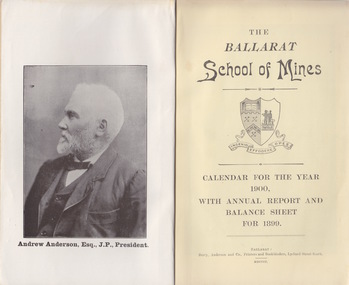 Federation University Historical Collection
Booklet, Ballarat School of Mines Calendar for the Year 1900 with Annual Report and Balance Sheet for 1899, 1900
... Annual Report, Associateship and Certificates, Calendar for 1901, Examination Fees, Fees, Full Certificates Issued prior to 1899, Honorary Correspondents, Life Governors, Meteorological Observations, Office Bearers, Passes obtained since 1892 in Final Examinations, Professors and Lecturers, Report of the Superintendent of Laboratories, Report of the Lecturer of Geology and Botany, Report of the Professor of Engineering, Report of the Lecturer in Engineering Drawing, Report of the Lecturer in Electricity, Report of the Teacher of Drawing, Report of the Teacher of Photography, Results of Examinations Conducted by Education Department 1899, Statement of Receipts and Expenditure for year 1899, Statistics - Students attending Lectures, Subscriptions and Donations, Subjects included in Regulations Technical Schools, Time Table...Annual Report, Associateship and Certificates, Calendar for 1901, Examination Fees, Fees, Full Certificates Issued prior to 1899, Honorary Correspondents, Life Governors, Meteorological Observations, Office Bearers, Passes obtained since 1892 in Final Examinations, Professors and Lecturers, Report of the Superintendent of Laboratories, Report of the Lecturer of Geology and Botany, Report of the Professor of Engineering, Report of the Lecturer in Engineering Drawing, Report of the Lecturer in Electricity, Report of the Teacher of Drawing, Report of the Teacher of Photography, Results of Examinations Conducted by Education Department 1899, Statement of Receipts and Expenditure for year 1899, Statistics - Students attending Lectures, Subscriptions and Donations, Subjects included in Regulations Technical Schools, Time Table annual report 1900 andrew anderson - president r. denham pinnock - vice president hon. r.t. vale - vice president the hon. john warrington rogers - trustee the right reverend samuel thornton bishop of ballarat - trustee james millhinch - trustee james oddie - trustee the hon. henry cuthbert - honorary solicitor r. g. middleton - honorary treasurer thomas s. hart - curator of museum chas. kent - auditor fred j. martell - director professor alfred mica smith daniel walker hubert r. murphy charles a. deane percy r. osborne arthur garrad thomas evans stanley b. vial harry lego thomas s. hart godfrey hart professor g. j. dawbarn robert j. allan a. e. c. kerr henry j. hall john m. sutherland g. f. fryer j. f. usher chas, e. campbell charles kent - auditor engineering lecture room cyanide plant senior chemistry laboratory chemistry laboratory junior chemistry laboratory Ballarat School of Mines Calendar for the Year 1900 with Annual Report and Balance Sheet for 1899, Pale grey soft cover, 73 Pages, including photos of a number of lecture theatres. ...Annual Report, Associateship and Certificates, Calendar for 1901, Examination Fees, Fees, Full Certificates Issued prior to 1899, Honorary Correspondents, Life Governors, Meteorological Observations, Office Bearers, Passes obtained since 1892 in Final Examinations, Professors and Lecturers, Report of the Superintendent of Laboratories, Report of the Lecturer of Geology and Botany, Report of the Professor of Engineering, Report of the Lecturer in Engineering Drawing, Report of the Lecturer in Electricity, Report of the Teacher of Drawing, Report of the Teacher of Photography, Results of Examinations Conducted by Education Department 1899, Statement of Receipts and Expenditure for year 1899, Statistics - Students attending Lectures, Subscriptions and Donations, Subjects included in Regulations Technical Schools, Time TableBallarat School of Mines Calendar for the Year 1900 with Annual Report and Balance Sheet for 1899, Pale grey soft cover, 73 Pages, including photos of a number of lecture theatres. annual report 1900, andrew anderson - president, r. denham pinnock - vice president, hon. r.t. vale - vice president, the hon. john warrington rogers - trustee, the right reverend samuel thornton bishop of ballarat - trustee, james millhinch - trustee, james oddie - trustee, the hon. henry cuthbert - honorary solicitor, r. g. middleton - honorary treasurer, thomas s. hart - curator of museum, chas. kent - auditor, fred j. martell - director, professor alfred mica smith, daniel walker, hubert r. murphy, charles a. deane, percy r. osborne, arthur garrad, thomas evans, stanley b. vial, harry lego, thomas s. hart, godfrey hart, professor g. j. dawbarn, robert j. allan, a. e. c. kerr, henry j. hall, john m. sutherland, g. f. fryer, j. f. usher, chas, e. campbell, charles kent - auditor, engineering lecture room, cyanide plant, senior chemistry laboratory, chemistry laboratory, junior chemistry laboratory
